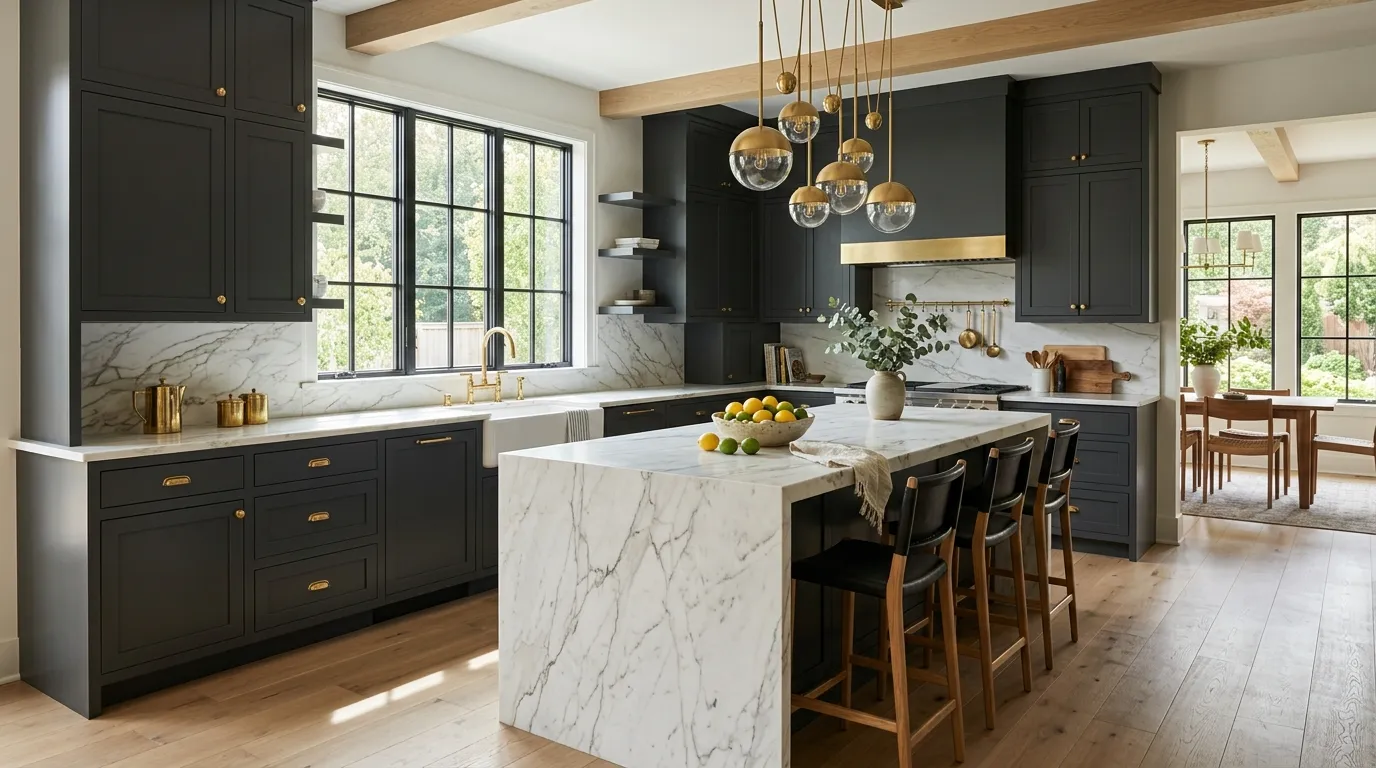
18 Dark Kitchen Ideas That Feel Bold and Sophisticated
A dark kitchen breaks the rule that kitchens have to be bright, white, and resale-neutral — and the best ones look better for it. Dark kitchen ideas work because kitchens are full of reflective surfaces already: tile, metal hardware, glass-front cabinets, polished counters. A deep cabinet color gives all that shine something rich to bounce against, instead of competing with white walls for the same visual space. The result is a kitchen that photographs beautifully and feels like a considered, finished room rather than a blank canvas waiting to be personalized.
This roundup covers 18 distinct approaches to dark kitchens, from charcoal lower cabinets paired with light uppers to fully committed black galley kitchens with brass hardware. Each idea explains the specific reasoning behind the color and material pairing, where that approach performs best based on kitchen size and light exposure, and how to execute it without the space feeling dark in the wrong way. Whether you’re working with a small apartment galley kitchen or a sprawling open-concept layout, there’s a version of bold and sophisticated here built for your exact space. Save the ones that fit your kitchen.
1. Two-Tone Cabinets with Dark Lowers and Light Uppers
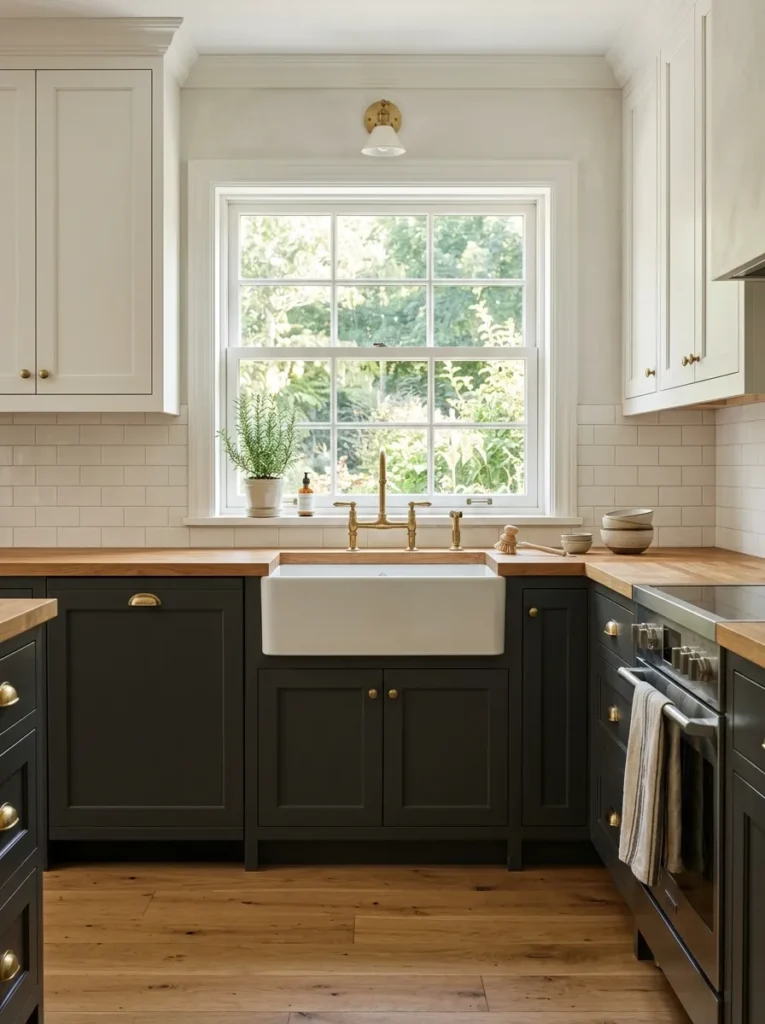
Pairing charcoal or black lower cabinets with white or light oak uppers keeps a kitchen from feeling weighed down, since the darkest color sits below eye level where it reads as grounding rather than looming. This is the most accessible entry point into dark kitchen ideas for anyone nervous about full commitment, and it works in nearly any kitchen shape because the upper cabinets keep the room feeling open near the ceiling. Pair with a light stone or butcher block counter to maintain a visible break between the two tones.
2. Fully Black Galley Kitchens with Brass Hardware
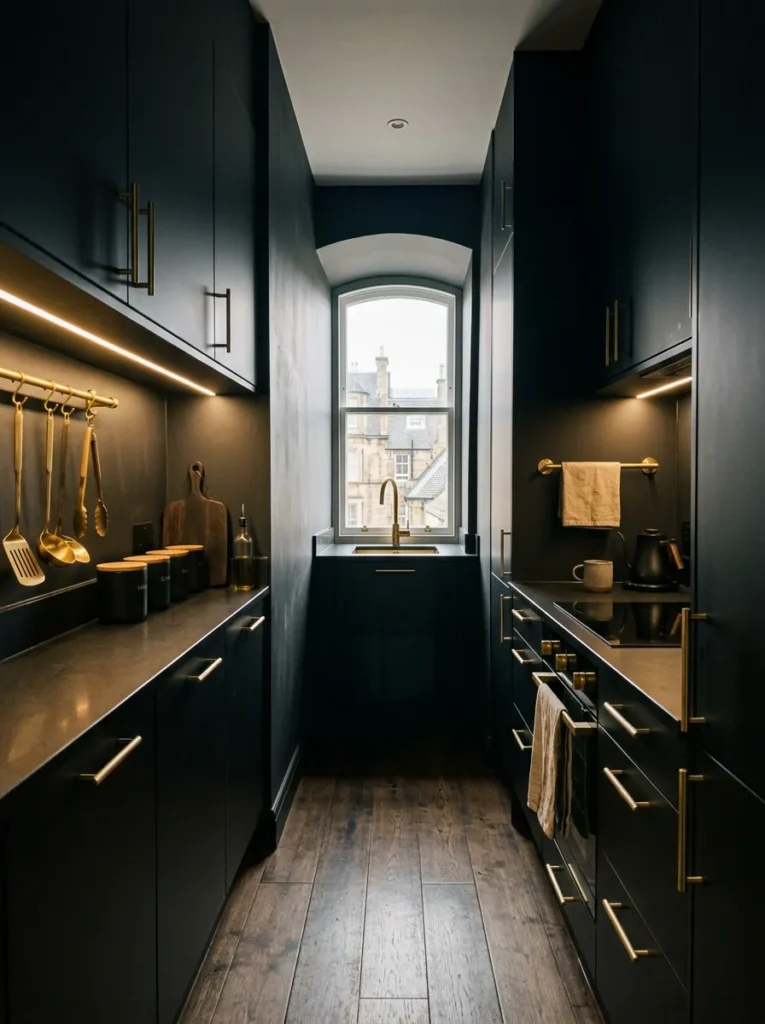
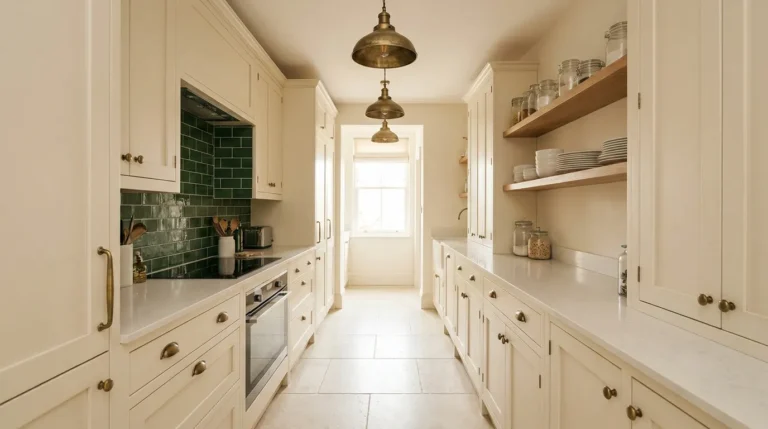
A galley kitchen painted entirely in matte black — cabinets, often the walls too — works because the narrow footprint already limits how much “room” there is for color to spread out and feel oppressive; instead, the black reads as a cohesive, tunnel-like design statement. Brass or unlacquered bronze hardware against the black cabinetry adds warmth and visual interest at hand height, where it gets noticed most during daily use. This approach depends heavily on strong overhead and under-cabinet task lighting, since a galley layout already has limited natural light to begin with.
3. Deep Green Cabinetry Paired with Brass and Marble
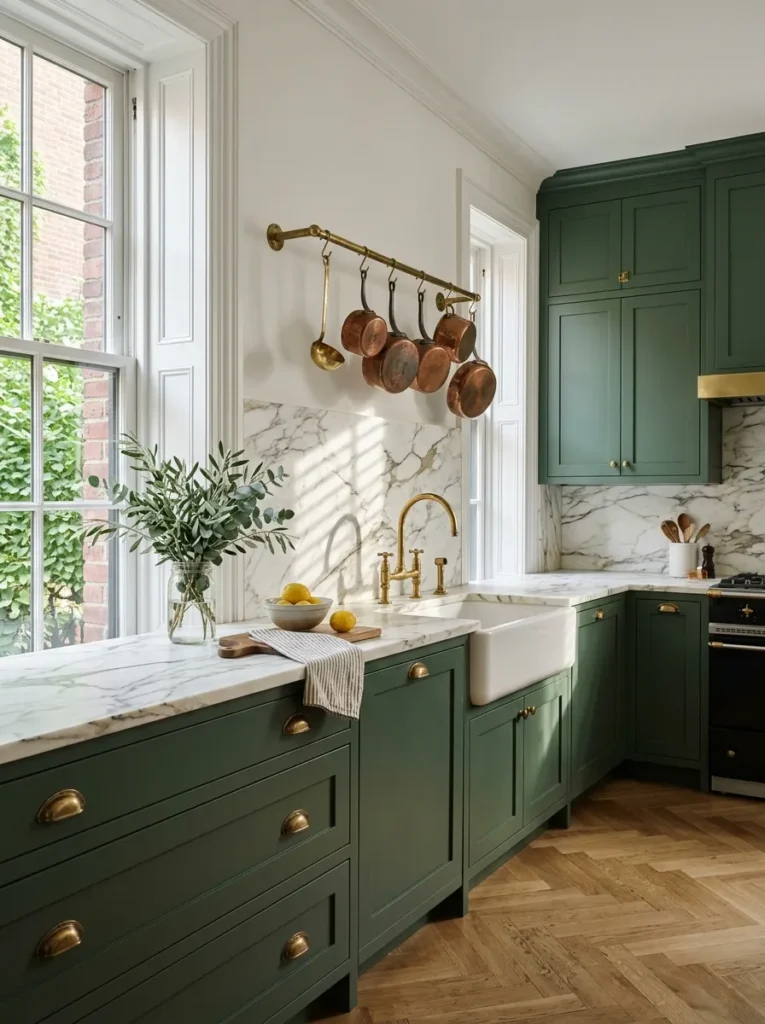
Hunter or forest green cabinets sit at the more approachable end of the dark kitchen spectrum, since green reads as organic and warm in a way pure black or charcoal sometimes doesn’t. The color pairs especially well with white or Calacatta marble counters and brass fixtures, a combination that has become a defining look for kitchens wanting drama without leaning industrial. This works in both small and large kitchens, but shows best in kitchens with at least one substantial window, since green cabinetry needs daylight to avoid reading muddy under warm artificial light alone.
4. Matte Black Kitchen Islands as a Standalone Anchor
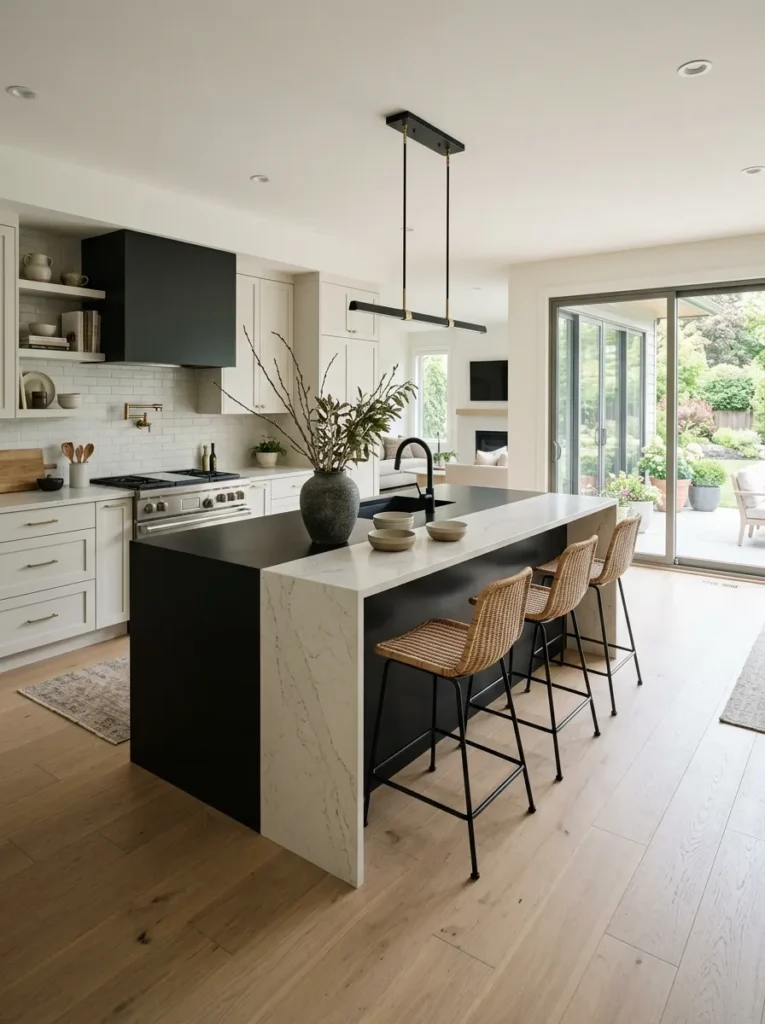
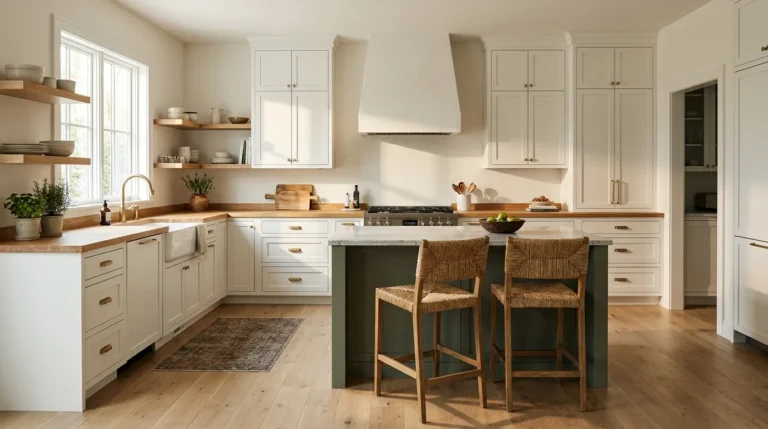
Keeping perimeter cabinets light while painting only the island matte black delivers a dark kitchen idea’s visual impact without committing the whole room, similar to how an accent wall works in a living room. The island becomes the kitchen’s clear focal point and gathering spot, which makes this approach especially effective in open-concept kitchens where the island also functions as a sightline anchor from the adjoining living space. Pair with a waterfall stone edge in a contrasting light tone to keep the island from reading as a single flat block.
5. Dark Kitchens with Exposed Black Steel Shelving
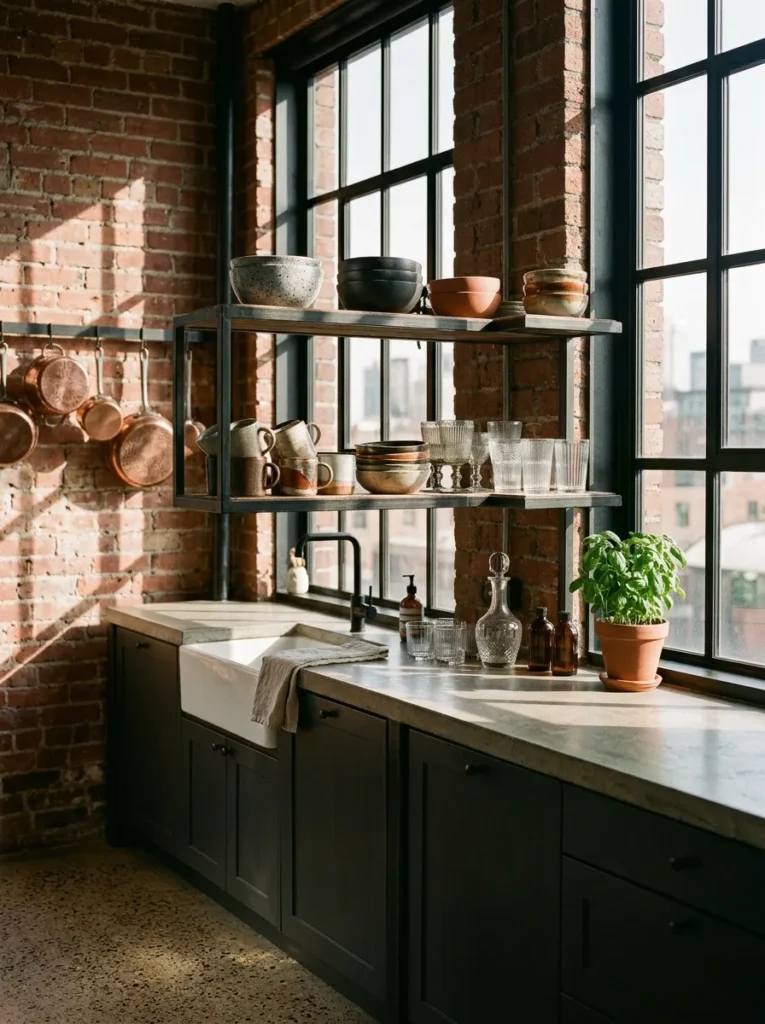
Replacing upper cabinets with open black steel shelving in an otherwise dark kitchen adds visual breathing room and a slightly industrial edge, since open shelving lets wall color show through between objects rather than presenting one unbroken cabinet front. This works best in kitchens with limited storage needs or a secondary pantry elsewhere, since open shelving requires more disciplined, curated styling than closed cabinets. Stock the shelves with a mix of ceramics in varying heights rather than uniform dishware to keep the display from looking sparse.
6. Espresso Wood Cabinetry for Warm, Traditional Drama
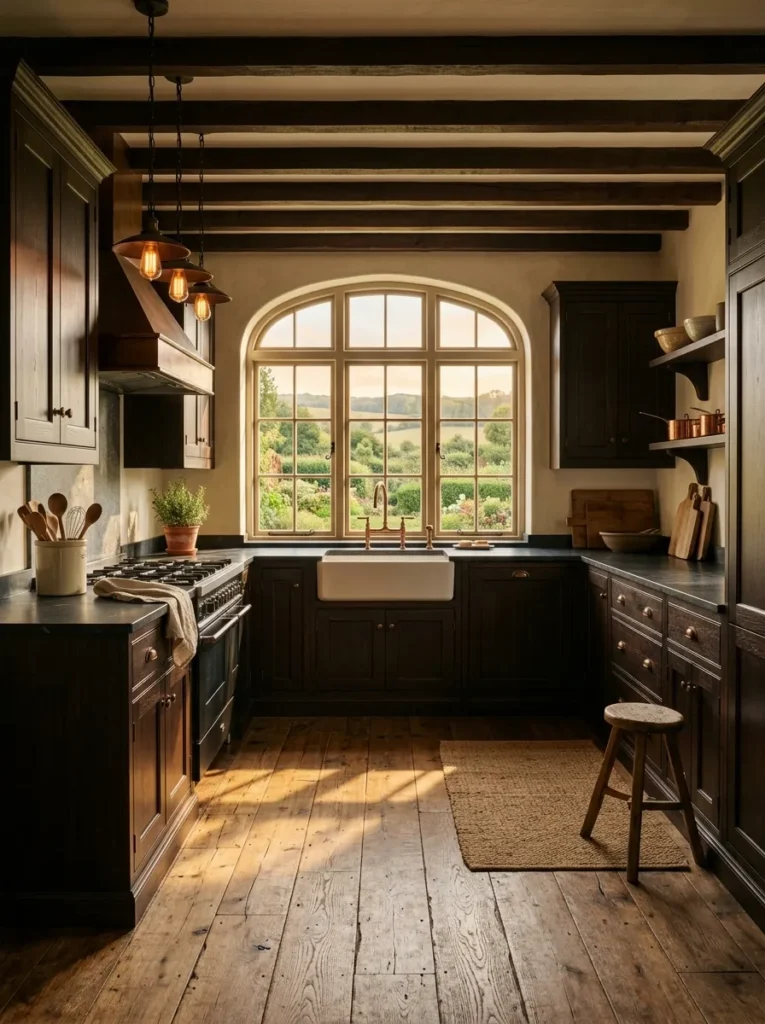
Cabinets in a deep espresso wood stain — rather than painted black or charcoal — bring warmth and natural grain texture to a dark kitchen, which suits traditional and transitional homes better than the flatter, more contemporary look of painted dark cabinetry. This approach works particularly well in kitchens with existing wood architectural details, like exposed beams or a wood-trimmed window, since the stained cabinetry can match or complement that existing material rather than introducing a conflicting finish.
7. Dark Kitchens with a Statement Range Hood
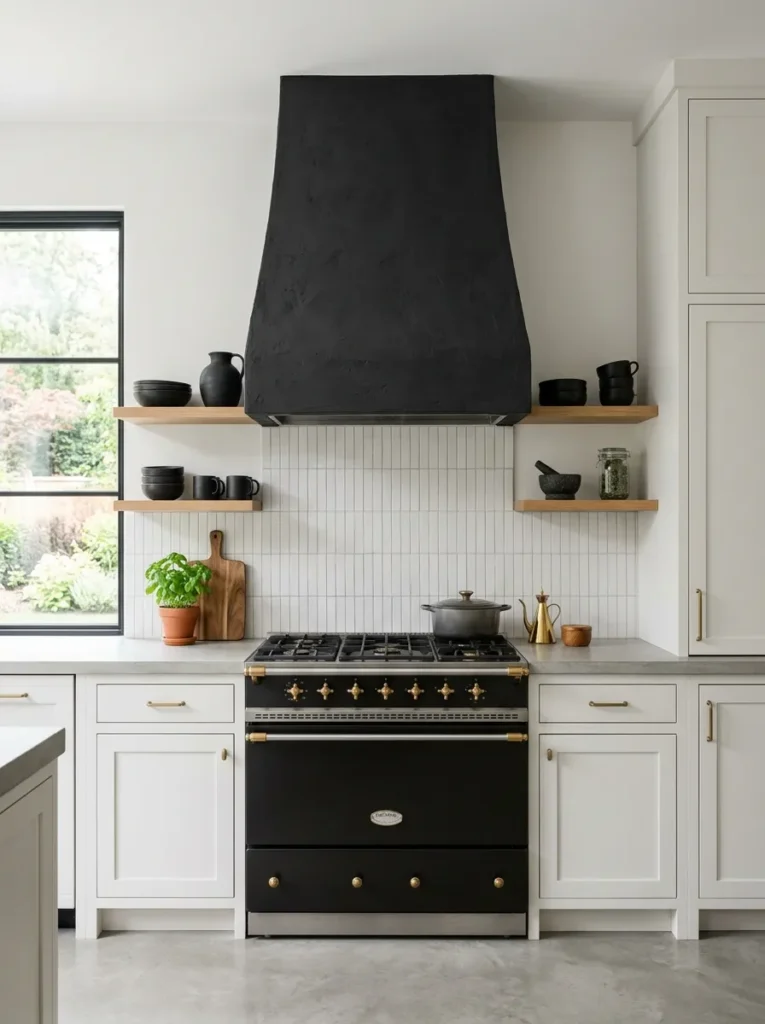
A oversized range hood in matte black plaster or blackened metal, set against otherwise lighter cabinetry, gives a kitchen a single dramatic focal point without a full dark palette commitment. This works especially well in kitchens where the cooking zone is the architectural centerpiece — a kitchen island layout facing the range, for instance — since the eye is naturally drawn there already. Pair with flanking open shelves or a tile backsplash in a complementary dark tone to keep the hood from feeling like an isolated object.
8. Charcoal Kitchens with Brass and Unlacquered Hardware
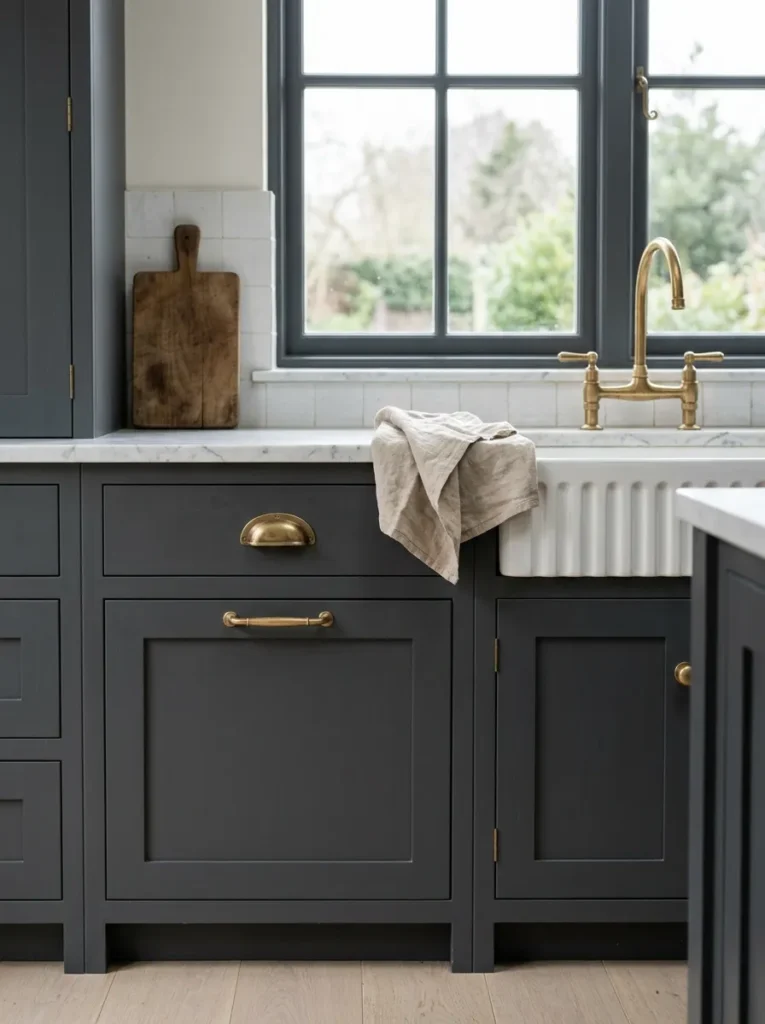
Choosing charcoal gray rather than true black softens a dark kitchen idea slightly while still delivering real depth and drama, making it a strong middle-ground choice for kitchens that need to feel sophisticated but not severe. Unlacquered brass hardware, which develops a natural living patina over time, suits charcoal particularly well since the hardware’s slow color shift mirrors the soft, evolving quality of the cabinet tone itself. This pairing works in both modern and traditional kitchens depending on the hardware style chosen.
9. Dark Kitchens with Light Wood Open Shelving for Contrast
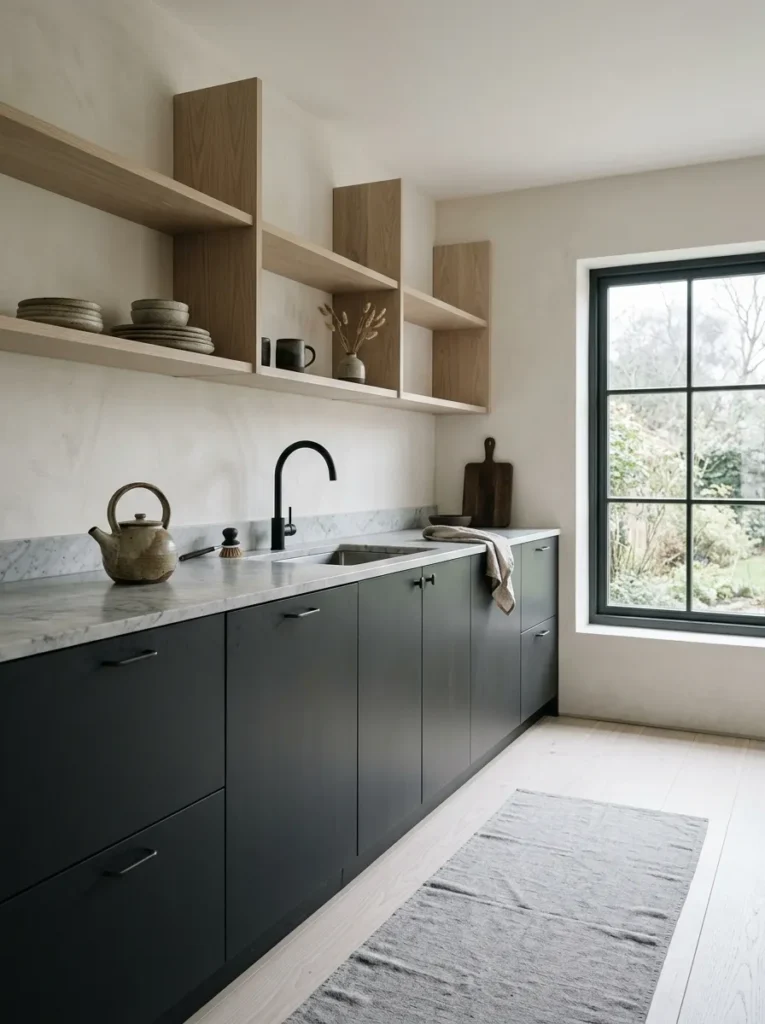
Pairing dark lower or full cabinetry with light oak or ash open shelving introduces warm material contrast that breaks up a dark kitchen’s visual weight without lightening the wall or cabinet color itself. This works especially well in kitchens with a Scandinavian or Japandi design influence, where light wood is already a defining material elsewhere in the home. The open shelving also gives the kitchen a place for everyday-use items, keeping the dark cabinetry below feeling purposeful rather than purely decorative.
10. Moody Kitchens with a Dark Tile Backsplash
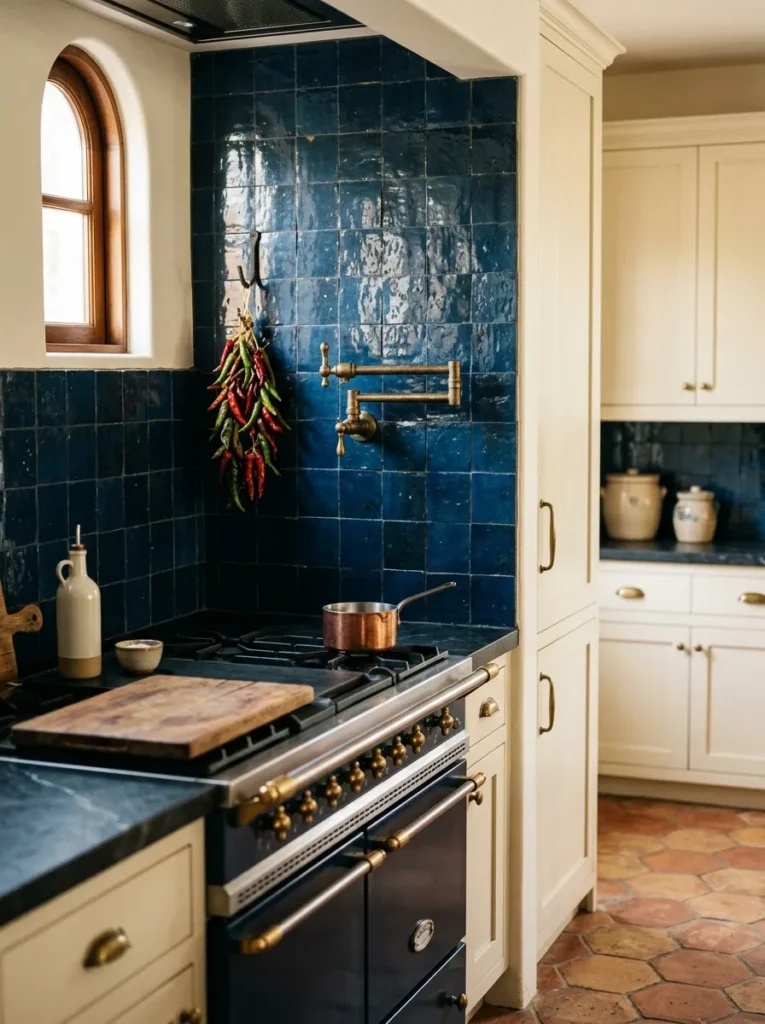
A dark zellige, subway, or fish-scale tile backsplash extends a dark kitchen’s palette up the wall in a way solid paint can’t, since tile’s glaze variation and handmade irregularity catch light differently across the surface. This approach works particularly well behind a range or sink, where the backsplash gets the most visual attention during actual kitchen use. Pair with a lighter grout in a near-match tone rather than stark white, which would otherwise create a harsh grid pattern across the dark tile.
11. Small Dark Kitchens Using Glossy Lacquered Cabinets
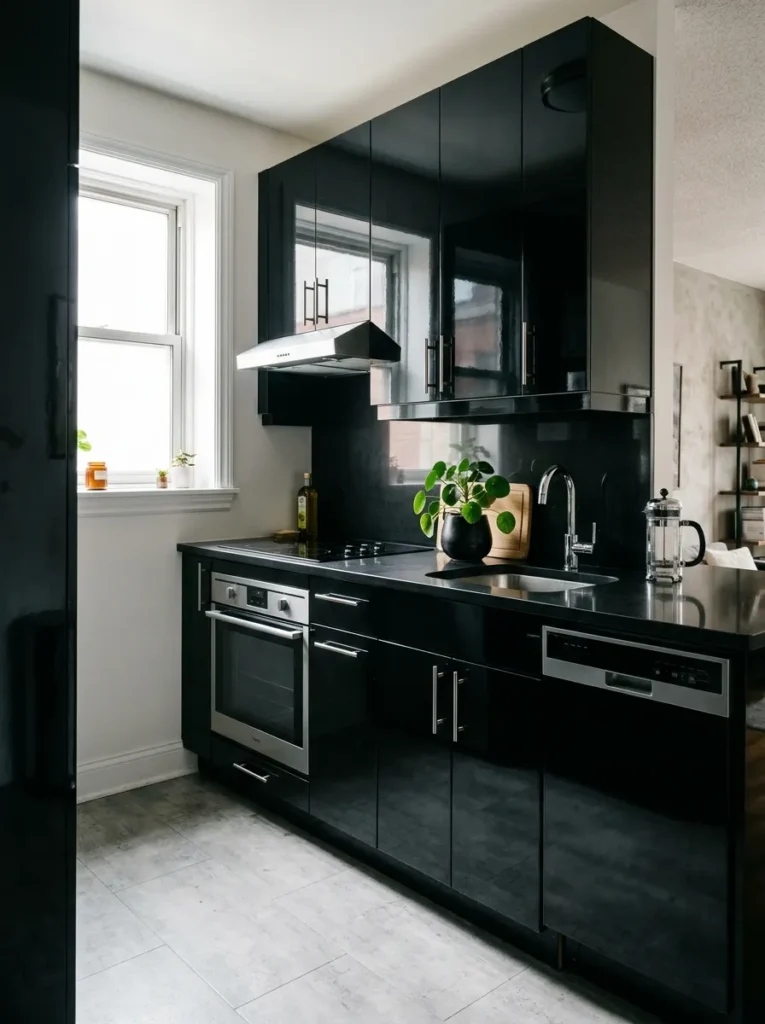
In small kitchens specifically, a high-gloss lacquer finish on dark cabinetry reflects more ambient light than a matte finish would, helping counteract the “shrinking” effect dark color can have in a tight footprint. This is one of the few dark kitchen approaches where glossy, rather than matte, is the better technical choice, since the reflective surface keeps the room from absorbing all available light the way a matte dark finish does in a small space. Pair with under-cabinet LED lighting to maximize the reflective benefit.
12. Dark Kitchens with a Bold Patterned Floor
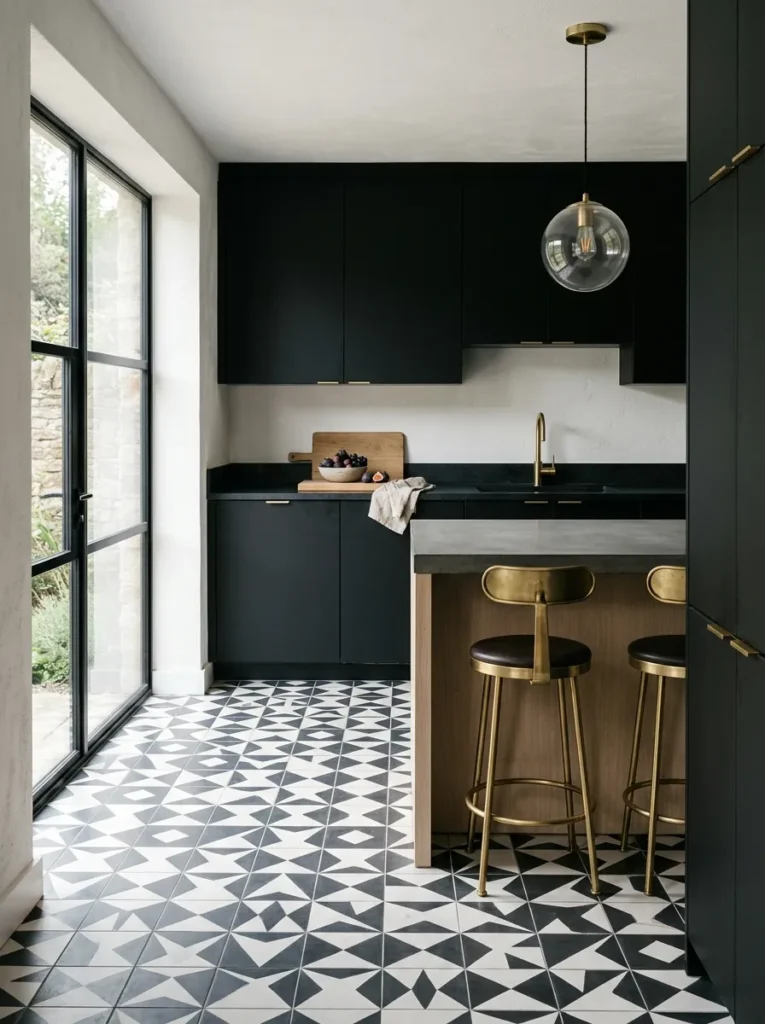
Encaustic or cement tile flooring in a dark geometric pattern gives a kitchen visual interest at floor level, which matters in dark kitchens where the cabinetry already commands most of the wall-height attention. This works best in kitchens with simpler, more restrained cabinetry — a single solid dark color rather than two-tone or heavily detailed panel doors — since the floor pattern needs visual space to be the room’s secondary focal point without competing against an equally busy cabinet design.
13. Dark Kitchens with a Single Suspended Pendant Cluster
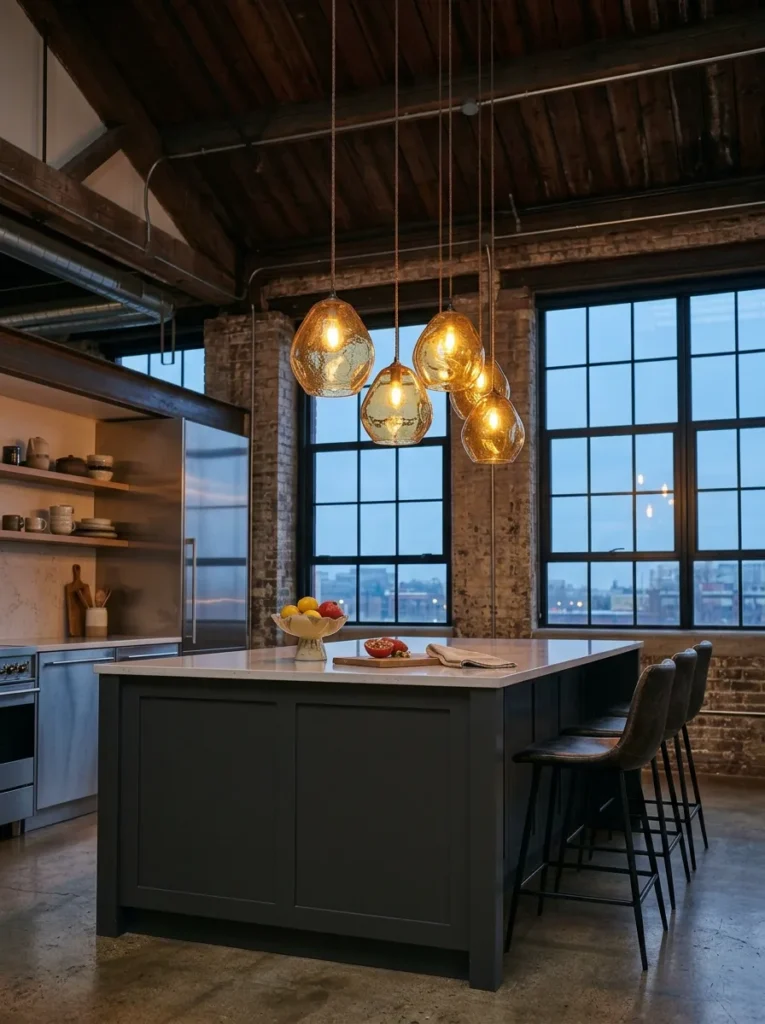
A cluster of three to five pendant lights in amber or smoked glass, suspended at varying heights over an island, gives a dark kitchen a sculptural lighting moment that does double duty as both task lighting and decor. This works especially well in kitchens with higher ceilings where a single flush-mount fixture would otherwise leave the upper room feeling empty and dim. Choose warm-toned bulbs and glass that diffuses rather than exposes the bulb directly, since exposed warm bulbs against dark cabinetry can read as a string of glowing dots rather than cohesive ambient light.
14. Dark Kitchens Paired with a Light Stone Waterfall Island
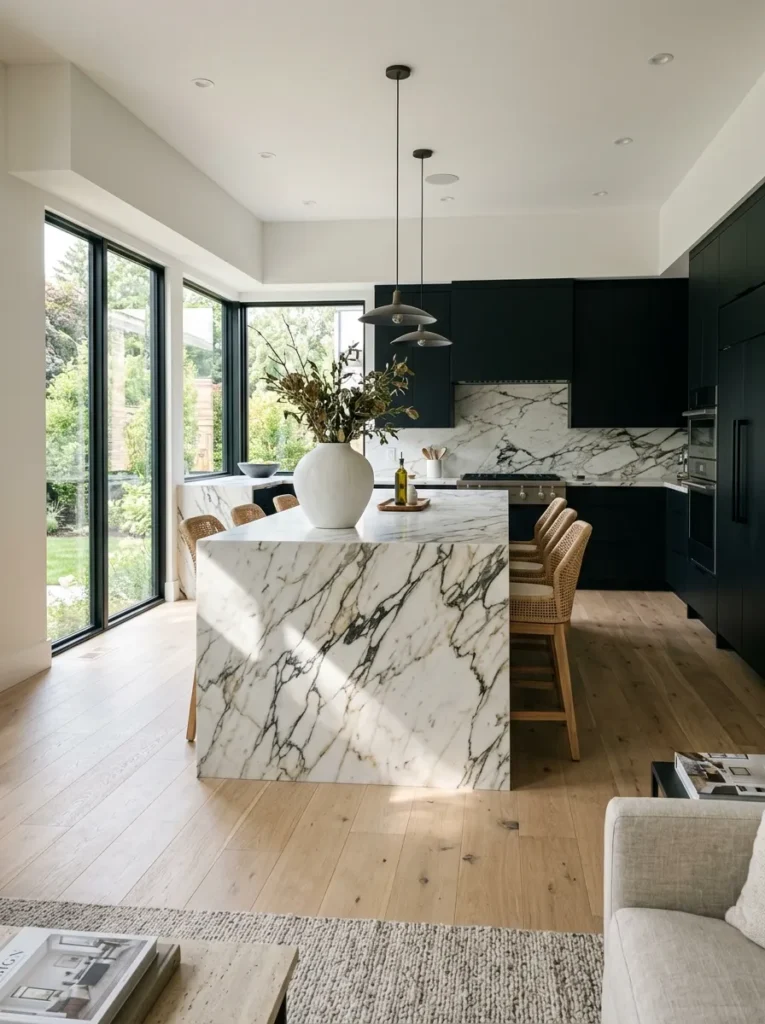
Topping a dark cabinet base with a dramatic light stone waterfall island — the stone wrapping down both vertical sides — creates strong material contrast that makes the island read as a sculptural centerpiece rather than just a counter extension. This pairing suits open-concept kitchens where the island is visible from the living or dining area, since the waterfall edge gives the piece a finished, furniture-like quality from every angle, not just from directly in front.
15. Dark Kitchens with Aged Copper or Bronze Fixtures
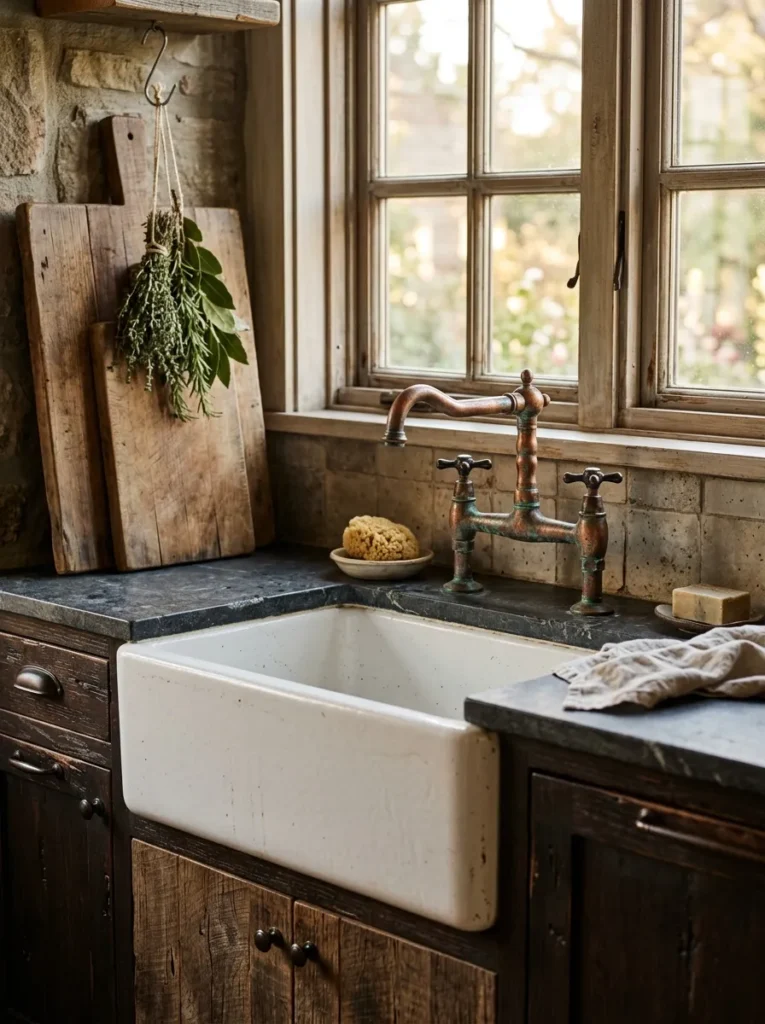
Choosing aged copper or dark bronze fixtures — faucet, cabinet pulls, pendant fixtures — instead of brass introduces a deeper, more weathered metal tone that suits rustic, farmhouse, or old-world dark kitchen styles better than brass’s brighter shine. This combination works particularly well alongside reclaimed or distressed wood elements, since copper and bronze both have an inherently aged quality that pairs naturally with already-worn materials rather than looking mismatched against them.
16. Dark Kitchens with a Hidden, Minimalist Hardware Approach
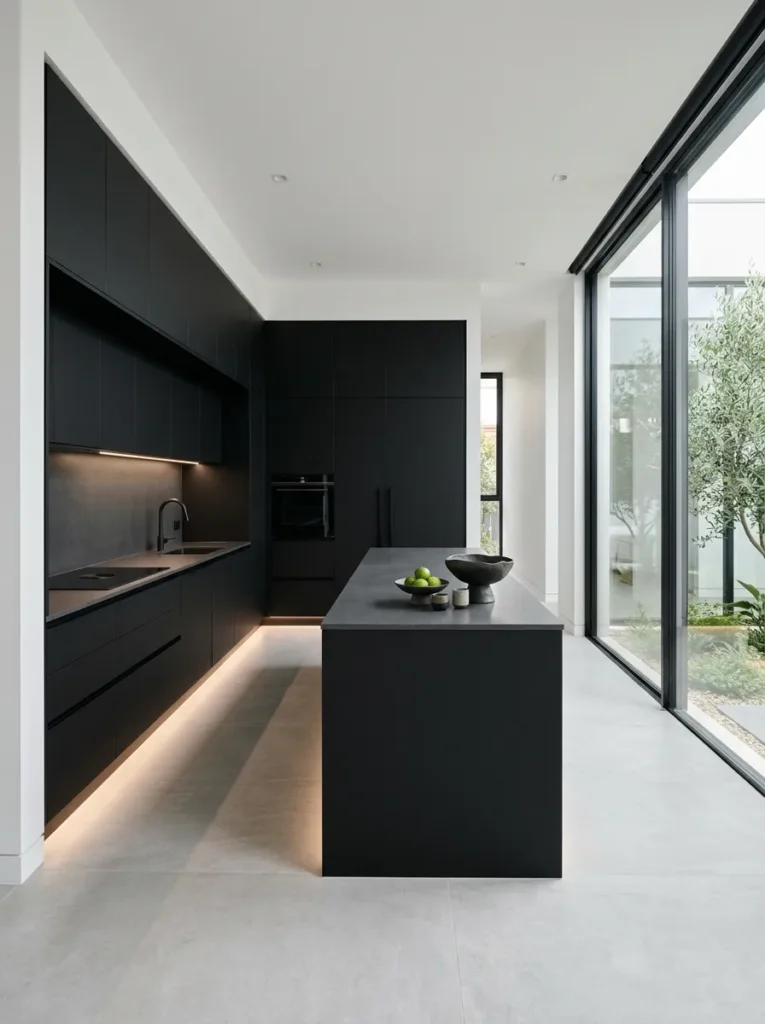
Choosing push-to-open cabinets or recessed integrated pulls instead of visible hardware lets a dark kitchen’s cabinet color read as one continuous, uninterrupted plane, which suits ultra-modern and minimalist kitchen styles where hardware would otherwise introduce unwanted visual noise. This approach depends on higher-quality cabinet hardware mechanisms to function well long-term, and works best in kitchens already committed to a pared-back, handle-free aesthetic throughout, rather than as an isolated choice within an otherwise traditional kitchen.
17. Dark Kitchens with a Vaulted Ceiling and Exposed Beams
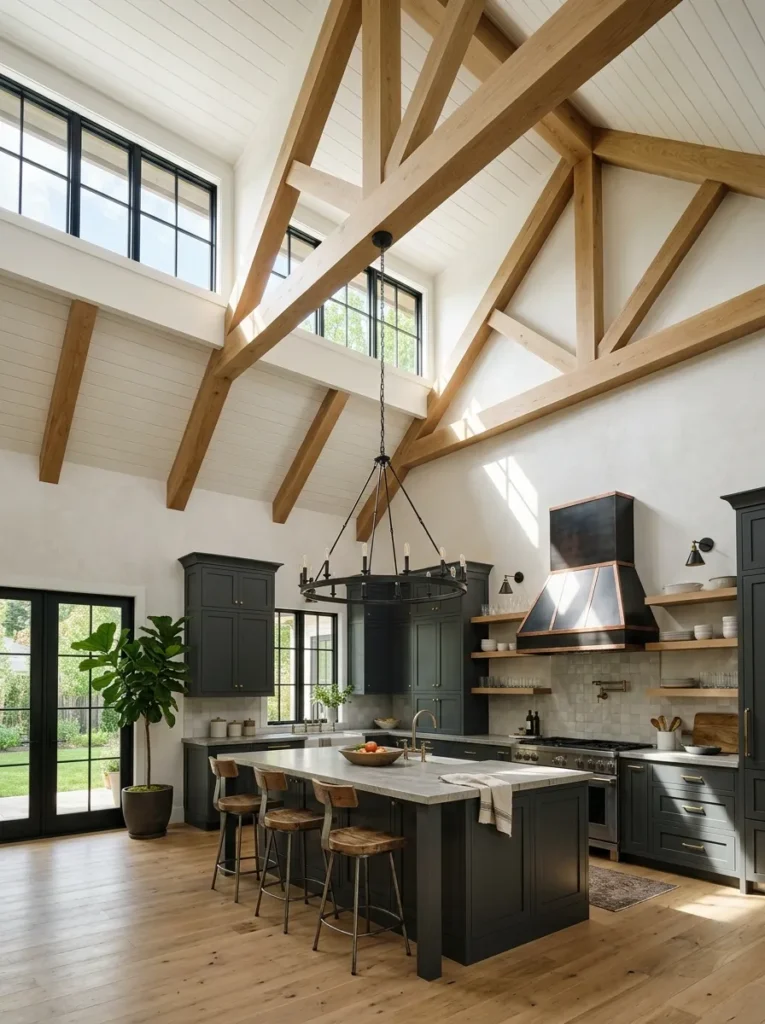
In kitchens with vaulted or cathedral ceilings, dark cabinetry paired with exposed natural wood beams overhead creates a striking high-low contrast between the grounded dark base and the airy, light-filled volume above. This works specifically in kitchens with significant ceiling height, since the vertical drama of the vault keeps the dark cabinetry from making the room feel short or compressed the way it might under a standard eight-foot ceiling. Keep wall color light around the beams to maintain that open, airy upper contrast.
18. Dark Kitchens with Warm Terracotta or Clay Tile Floors
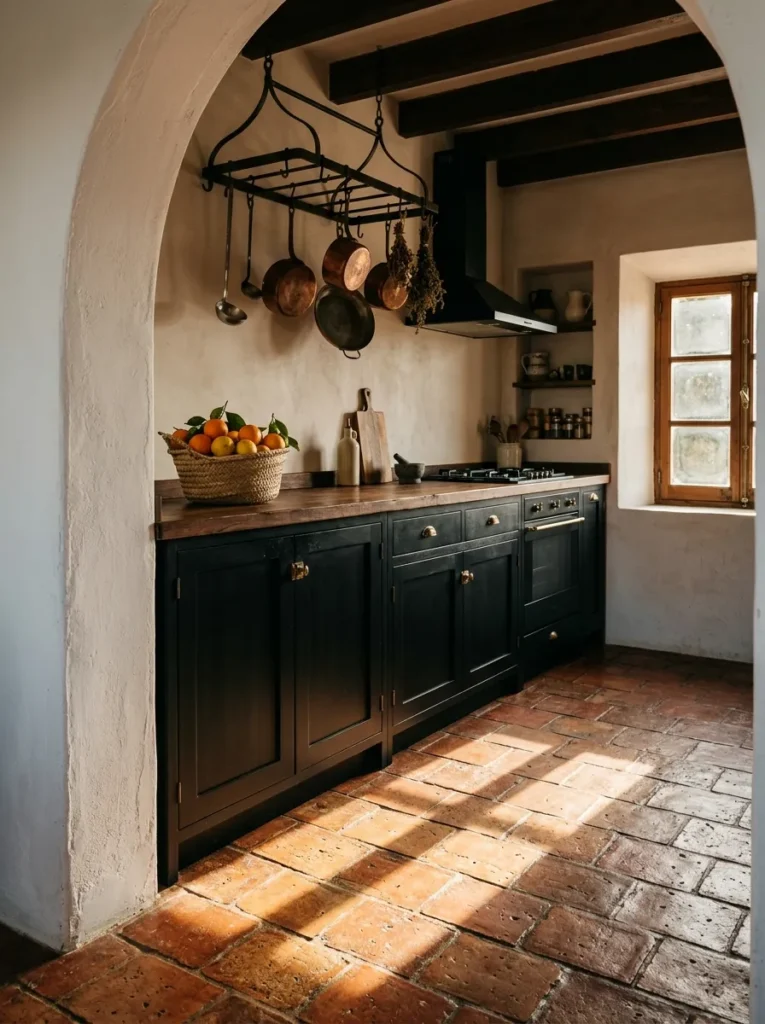
Pairing dark cabinetry with a warm terracotta or clay tile floor, rather than a cooler stone or wood tone, grounds a dark kitchen idea in a sun-warmed, Mediterranean or Spanish-influenced palette that feels distinct from the more common charcoal-and-white-oak combination. This works best in kitchens that get strong direct sunlight at some point in the day, since terracotta’s warmth intensifies under golden light in a way that keeps the overall room from skewing cold despite the dark cabinetry above it.
Final Thoughts on Dark Kitchen Ideas Worth Saving
The best dark kitchen ideas all balance a bold, saturated cabinet or wall color with enough warmth — through hardware, lighting, wood tone, or stone contrast — to keep the room feeling sophisticated rather than heavy. Whether you start with a single dark island, commit to a full charcoal galley kitchen, or build the palette around a statement range hood, these dark kitchen ideas prove that a kitchen doesn’t need to be bright white to feel welcoming and well-used. Choose the approach that matches your kitchen’s natural light and layout, and let the materials and hardware do the rest of the work.
Save this dark kitchen ideas guide to Pinterest so you have it ready for your next kitchen remodel or refresh.