19 Round Dining Table Ideas That Work Beautifully in Small Spaces
If your dining area is short on square footage, a round dining table might be the single best layout decision you can make. Round dining table ideas solve the problem that square and rectangular tables create in tight rooms: hard corners that eat walkway space and force awkward traffic patterns. A round table lets chairs tuck closer, lets people slide past without bumping a corner, and visually softens a room that might otherwise feel boxy and cramped.
This roundup pulls together 19 real-world approaches to round dining tables in small kitchens, breakfast nooks, apartment corners, and open-concept layouts — from pedestal bases that free up legroom to bistro-style two-tops for studio living. Each idea explains not just what it looks like, but why the layout works and how to pull it off in your own space. Save the ones that match your room shape, and start there.
1. Pedestal Base Tables for Maximum Legroom
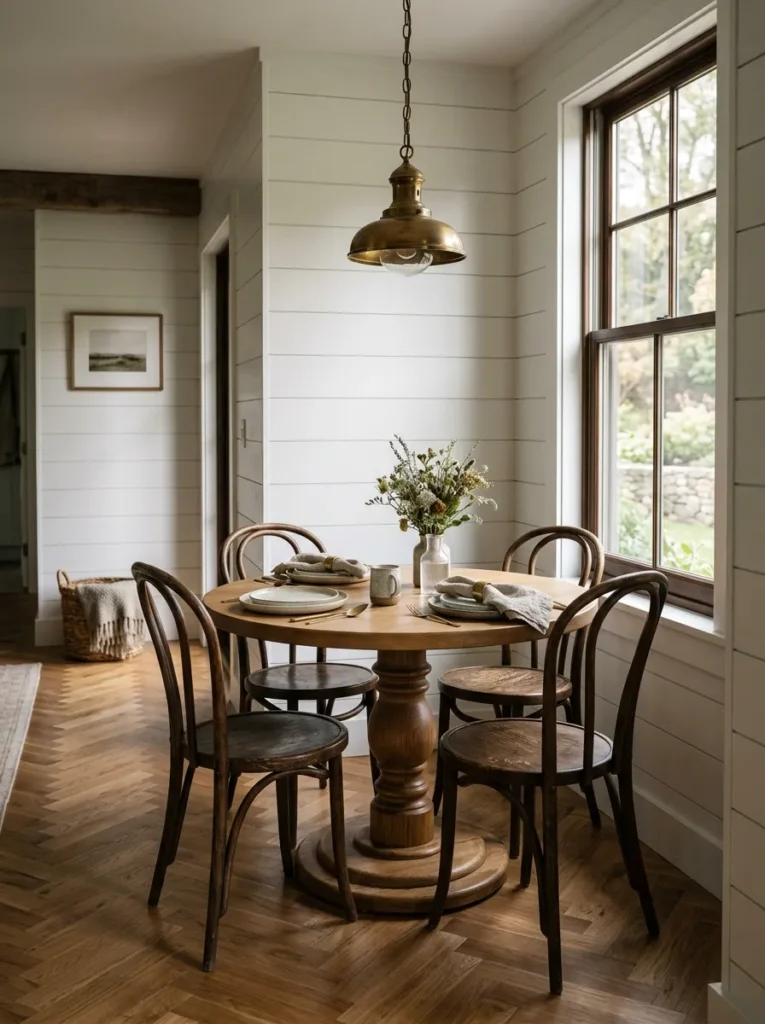
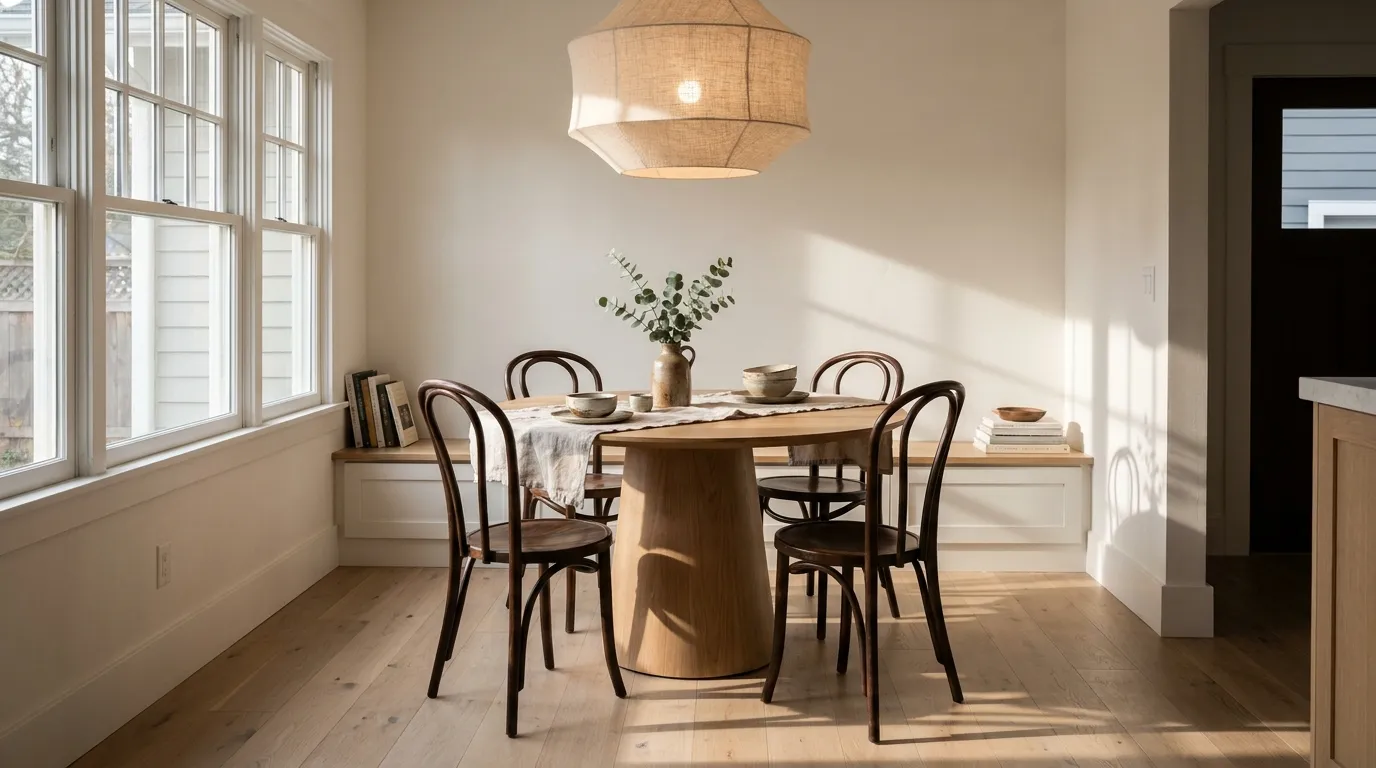
A single center pedestal eliminates the four-leg clutter that makes small dining areas feel congested. Without legs at the perimeter, chairs can be pushed all the way in and pulled out at any angle, which matters enormously when a table sits only a foot or two from a wall. Pedestal bases work especially well with bentwood or slipper chairs that can angle inward without catching on a leg. Choose a pedestal in turned wood, fluted plaster, or matte black metal depending on your existing finishes.
2. Glass-Top Round Tables to Visually Expand the Room
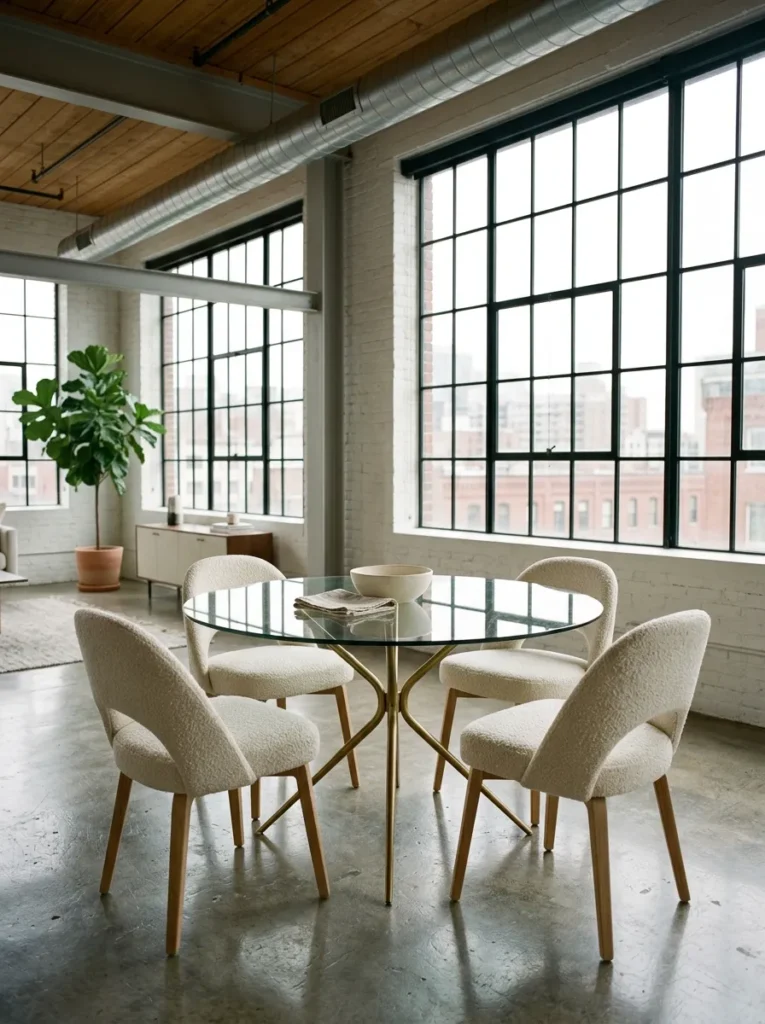
Glass tops read as “empty space” to the eye even when the table is in active use, which makes them one of the most effective small-space tricks available. A round glass top paired with a slim brass or black metal base keeps sightlines open across the entire room, so adjoining furniture, flooring, and wall color stay visible instead of being interrupted. This works best in rooms that already have good natural light, since glass can look cold in dim corners without it.
3. 36-Inch Bistro Round Tables for Studio Apartments
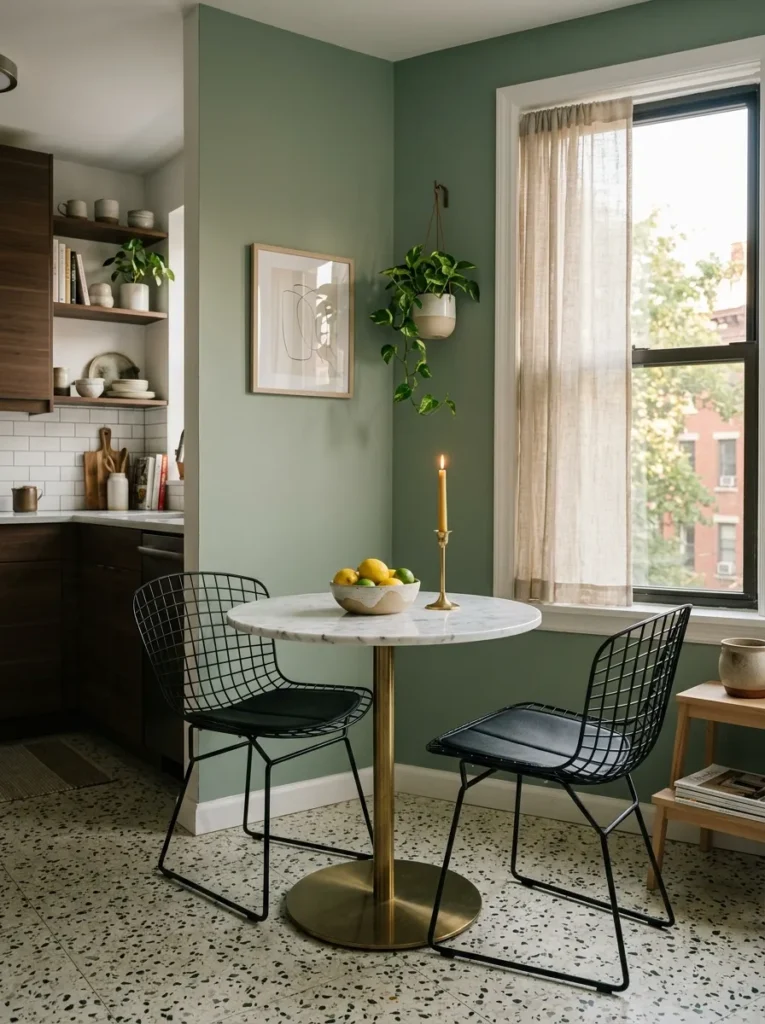
A 36-inch round table seats two comfortably and four in a pinch, making it the right scale for studios and one-bedroom apartments where the dining area might only be a 6-by-6-foot pocket near the kitchen. At this size, the table reads more like furniture than a room divider, so it can sit close to a sofa or kitchen island without dominating the space. Pair with two armless chairs for daily use and two folding chairs stored elsewhere for guests.
4. Drop-Leaf Round Tables for Flexible Square Footage
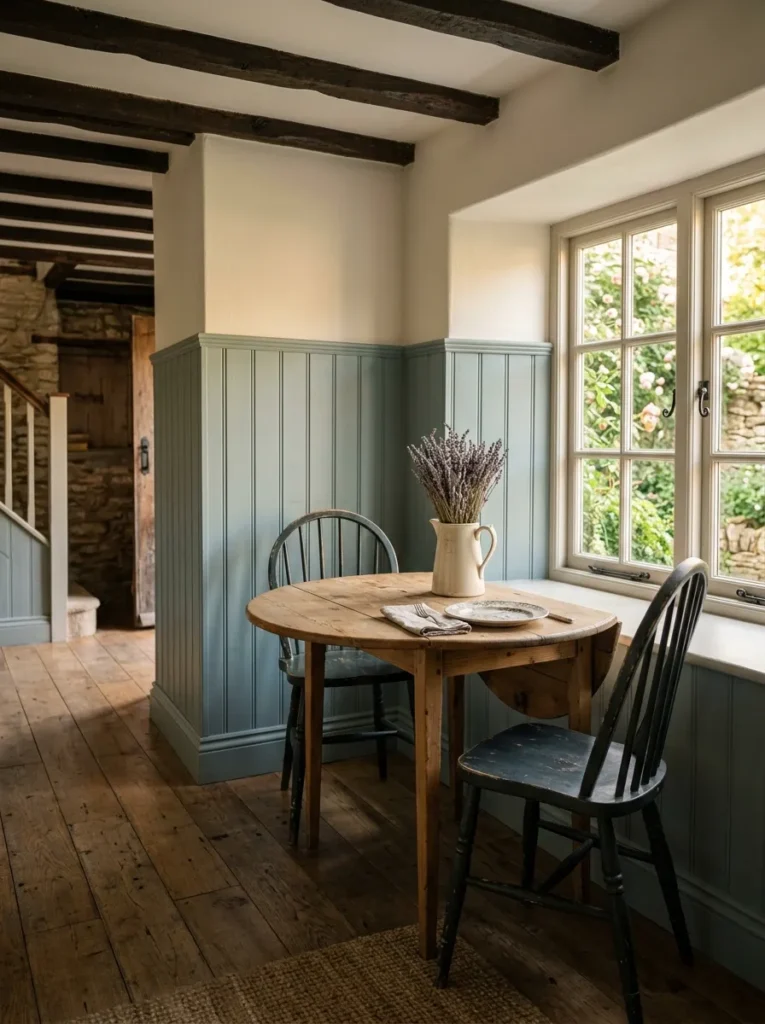
A round drop-leaf table lets you collapse the table to a half-moon silhouette against a wall on ordinary days, then unfold it to full diameter when company arrives. This solves the core tension in small-space dining: the table needs to seat six occasionally but shouldn’t claim that much floor space daily. Look for designs with a sturdy gate-leg or bracket support system, since cheaper drop-leaf hinges sag over time under everyday plate weight.
5. Corner-Anchored Round Tables with a Built-In Banquette
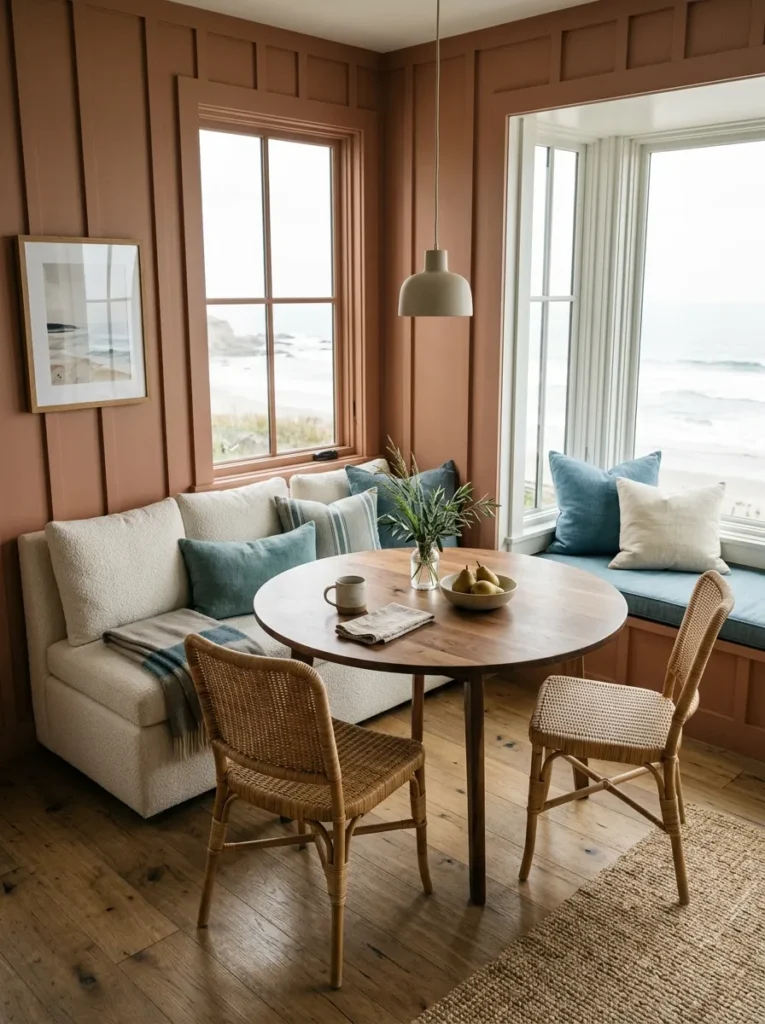
Pushing a round table into a corner and wrapping one side with a banquette bench reclaims the chair space that would otherwise sit empty along two sides. The curved table edge meets the straight banquette line in a way rectangular tables can’t manage gracefully, since there’s no hard corner fighting the bench’s right angle. This setup works best in kitchen nooks with at least one full wall corner free, and a cushioned bench seat makes the tight footprint feel intentional rather than cramped.
6. Pedestal Tables Paired with Mixed Seating
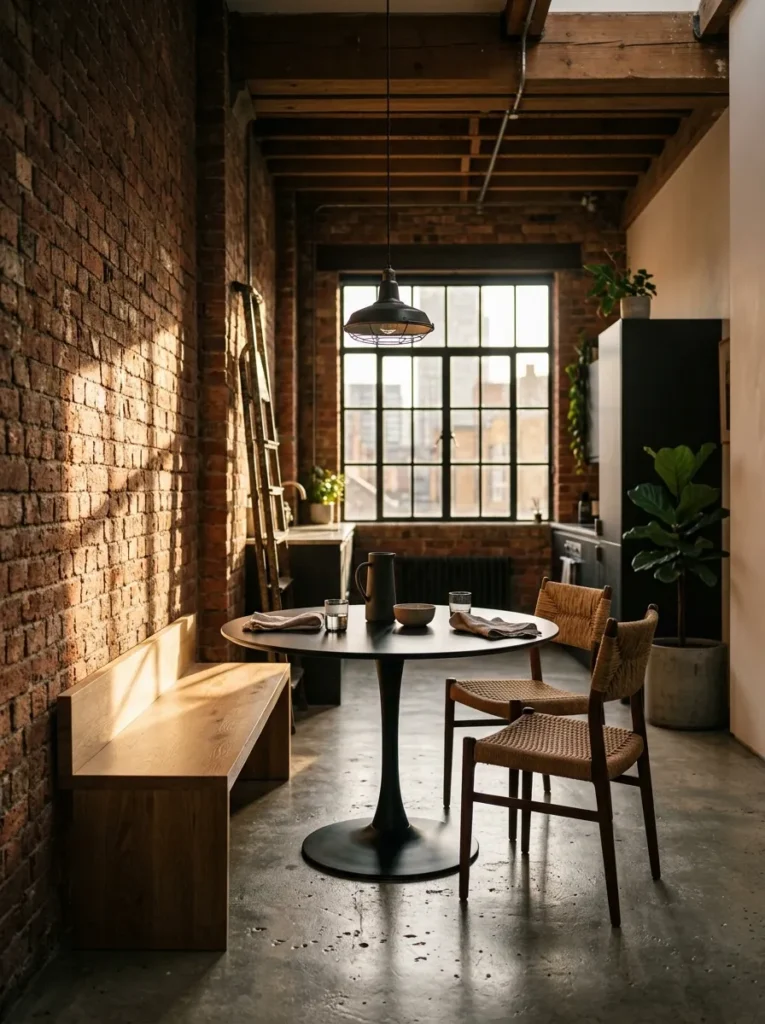
Combining a round pedestal table with one bench on the wall side and chairs on the open side maximizes seating count without requiring floor clearance on all four sides. The bench slides flush against the wall, so you only need pull-out room for two or three chairs instead of six. This is a strong option for narrow galley-style dining areas where one long side of the table sits within inches of a wall.
7. Marble-Look Round Tables for Elevated Small Rooms
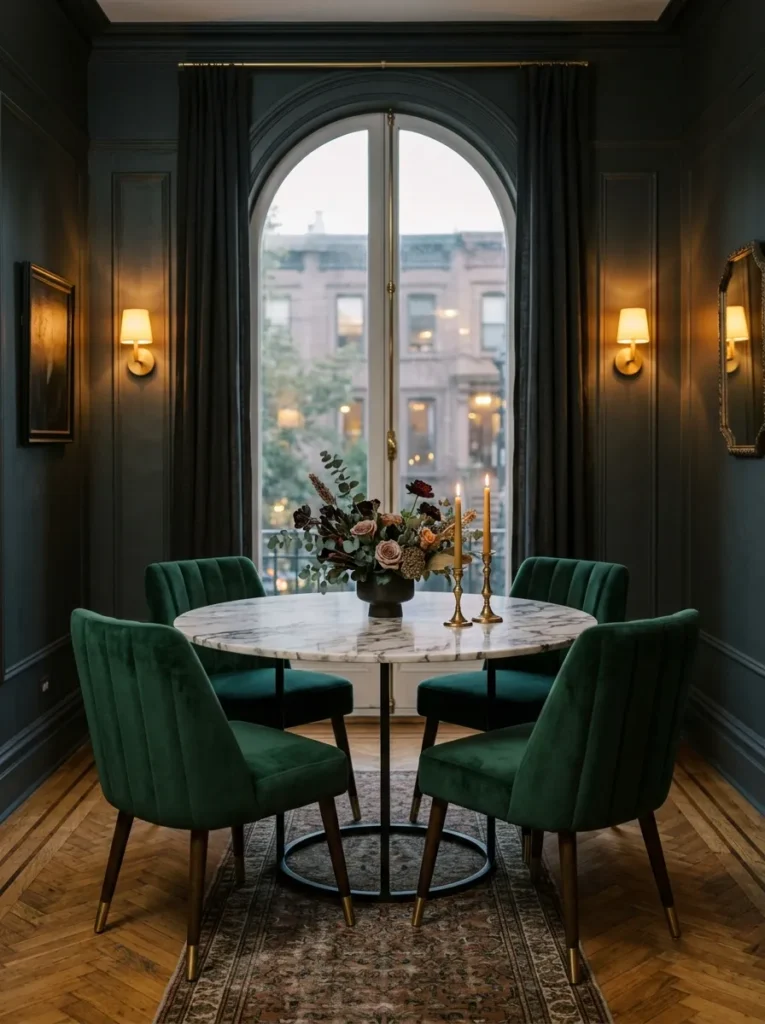
A round table with a marble or marble-look top brings visual weight and material richness to a room that might otherwise feel sparse from being small. Because the surface itself carries the design interest, you can keep the base simple — a slim black or brushed-brass pedestal — without the room feeling underdressed. This pairing works particularly well in small dining rooms adjacent to a living area, where the table needs to hold its own as a design statement without extra floor space for additional decor.
8. Round Tables with Nesting or Stacking Chairs
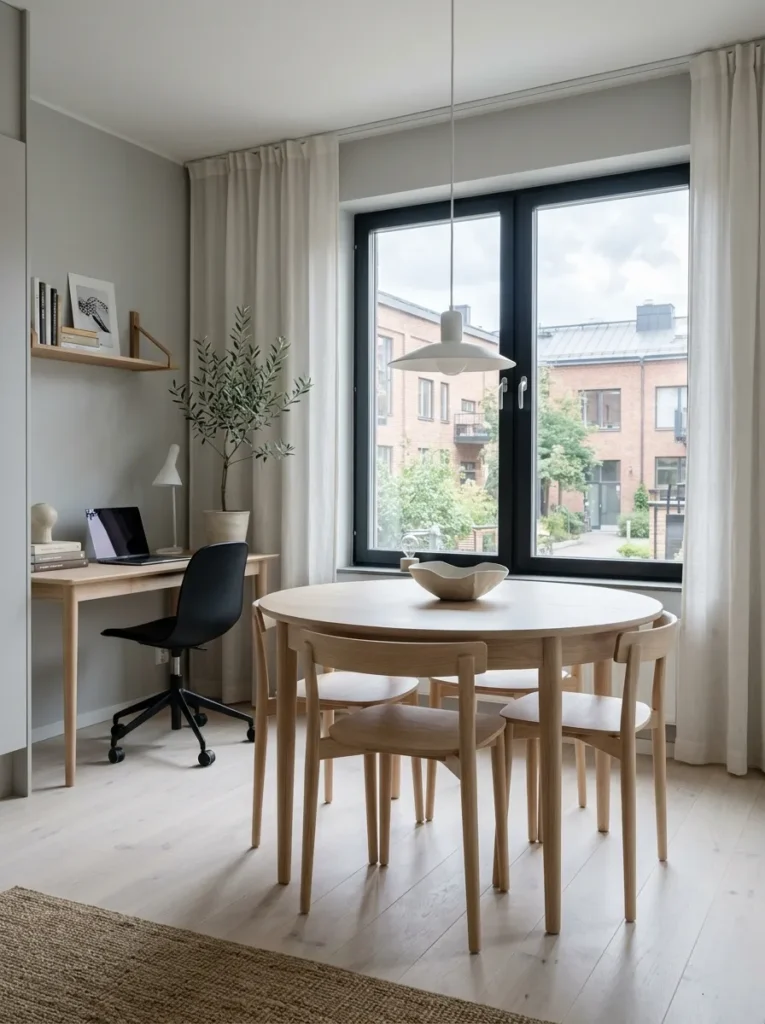
Chairs designed to nest under the table lip or stack in a corner let you reclaim walking space the moment a meal ends. This matters most in multi-purpose rooms where the dining area doubles as a home office or hallway pass-through during the day. Look for chair frames with a slight taper at the base, since true nesting chairs need to slide fully under the table apron without their backs jutting out past the table edge.
9. Extendable Round Tables with a Hidden Leaf
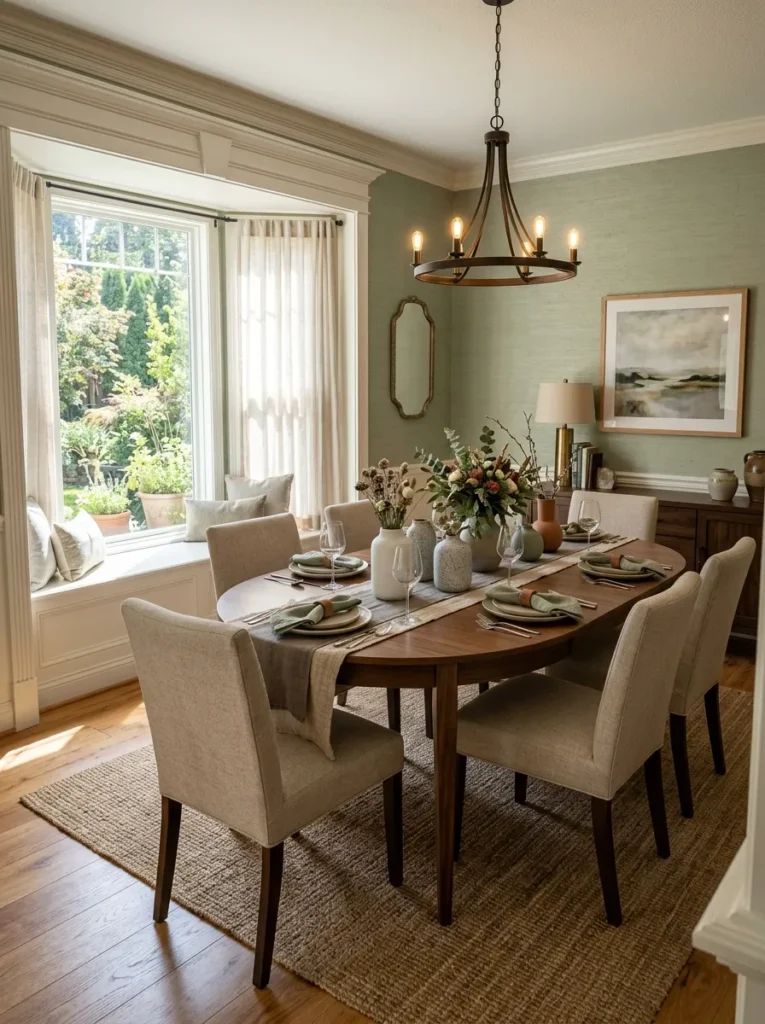
An extendable round table stores a leaf inside the base or beneath the tabletop, expanding from a 42-inch circle to an oval or larger round when needed. Unlike a drop-leaf, the table keeps a finished edge in both configurations rather than a flat cut side, so it never looks “in-between.” This is the best option for households that genuinely need flexible seating for four to eight people but only have permanent floor space for four.
10. Round Tables Floating in an Open-Concept Layout
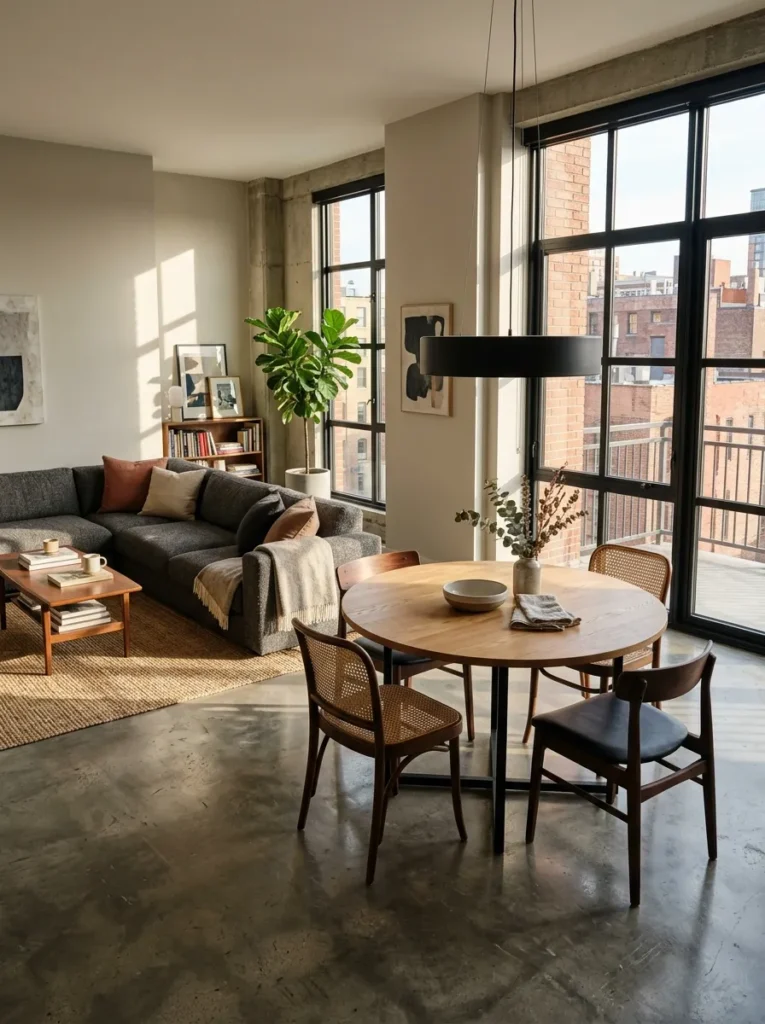
In open-concept homes, a round table placed slightly off the main walkway — rather than centered — can define a dining zone without a rug or partition. The curved edges make the table feel like a soft punctuation point in the room rather than a hard barrier, which is why round shapes read better than rectangles in transitional, undefined spaces. Anchor the zone with a pendant light directly above the table to reinforce that this spot is “dining,” even with no walls around it.
11. Round Tables Tucked Beneath a Window
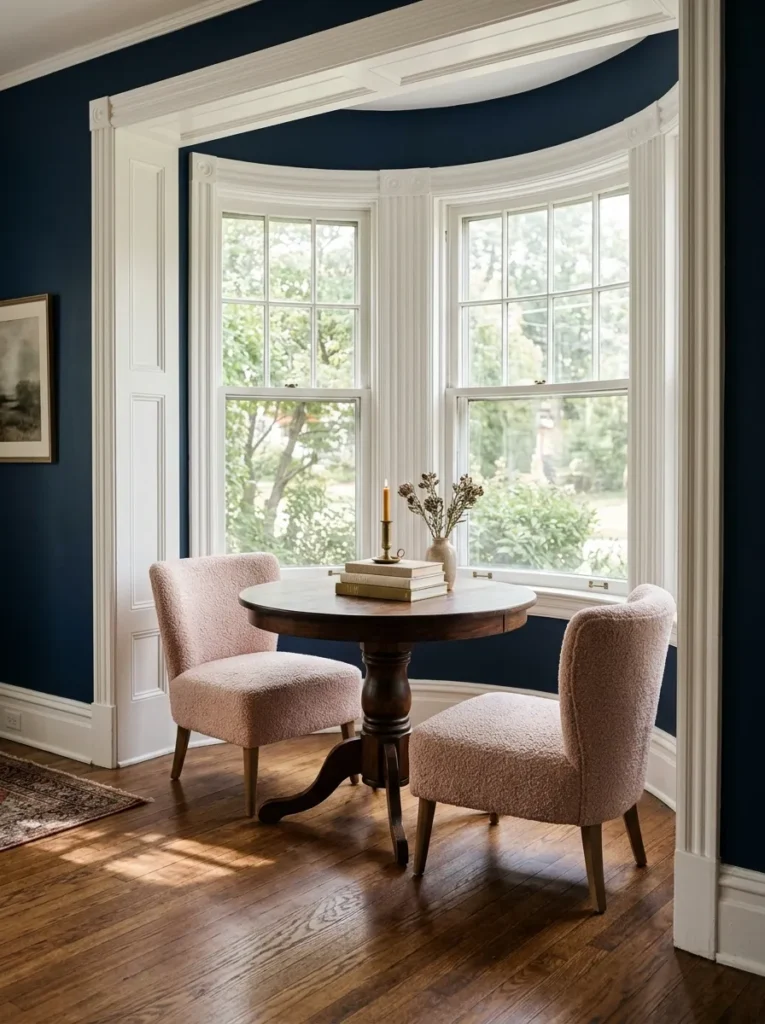
Positioning a round table directly under a window uses dead space that’s otherwise hard to furnish, since most furniture needs wall clearance a window can’t offer. The curve of the table keeps two diners from feeling boxed in by the sill the way a rectangular table’s flat edge would. This works particularly well with a bay or bow window, where the table’s roundness echoes the window’s own curve.
12. Scaled-Down Round Tables for L-Shaped Kitchens
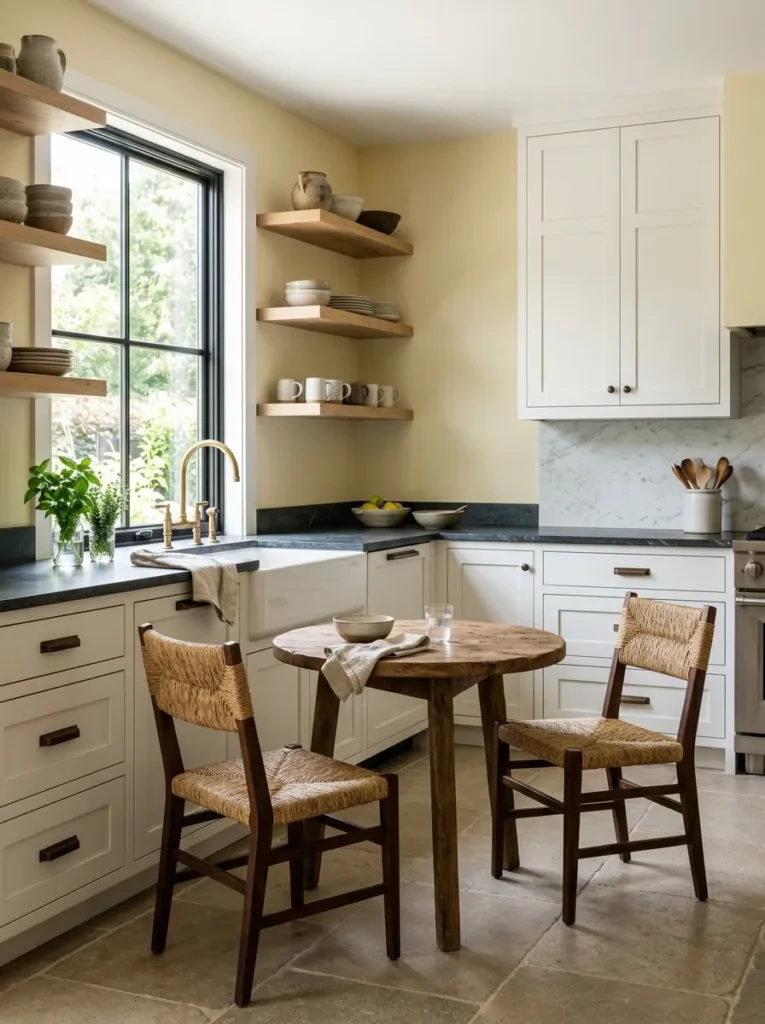
In an L-shaped kitchen, the inside corner of the L often creates a leftover pocket too small for a standard table but too large to waste. A 30- to 32-inch round table fits this pocket precisely, especially with two chairs angled toward the open kitchen rather than facing each other across the table. This placement also keeps the cook part of the conversation during meal prep, since the table sits within a few feet of the counter.
13. Round Tables with a Live-Edge or Reclaimed Wood Top
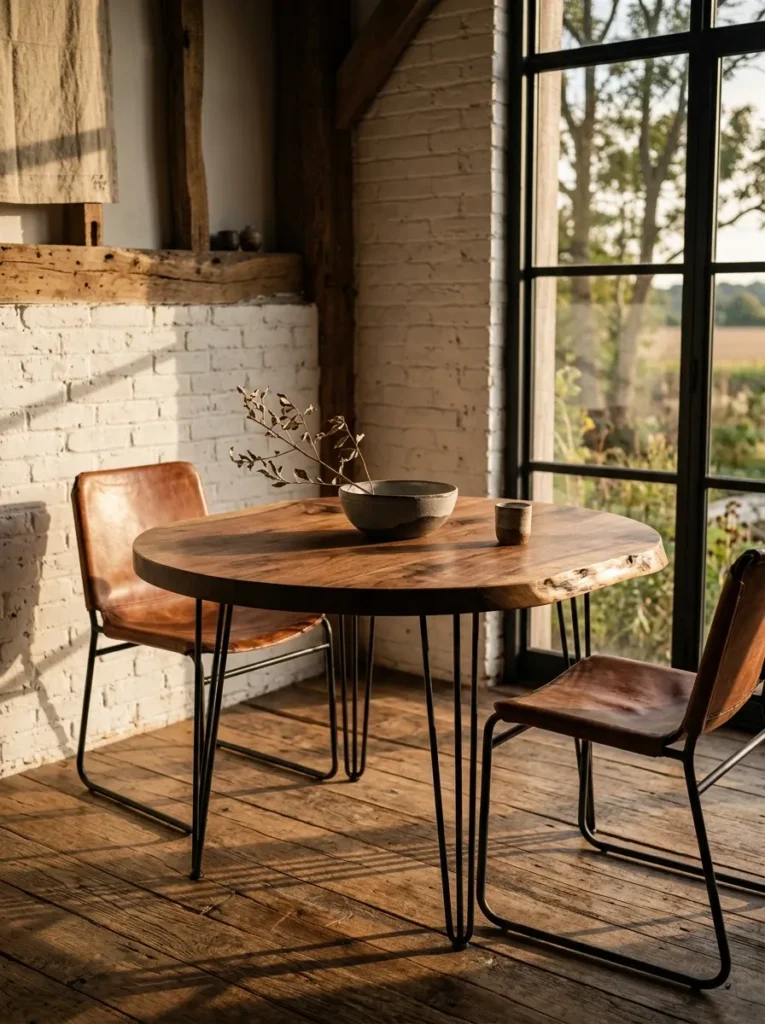
A live-edge round top brings organic texture into a small room without adding visual bulk, since the irregular grain and edge detail give the eye something to focus on besides the room’s limited square footage. Reclaimed wood tops also tend to come in slightly smaller diameters than mass-produced sets, which naturally suits compact dining nooks. Pair with simple black metal hairpin legs to keep the base from competing with the top’s natural character.
14. Round Tables in Black or Charcoal for Visual Anchoring
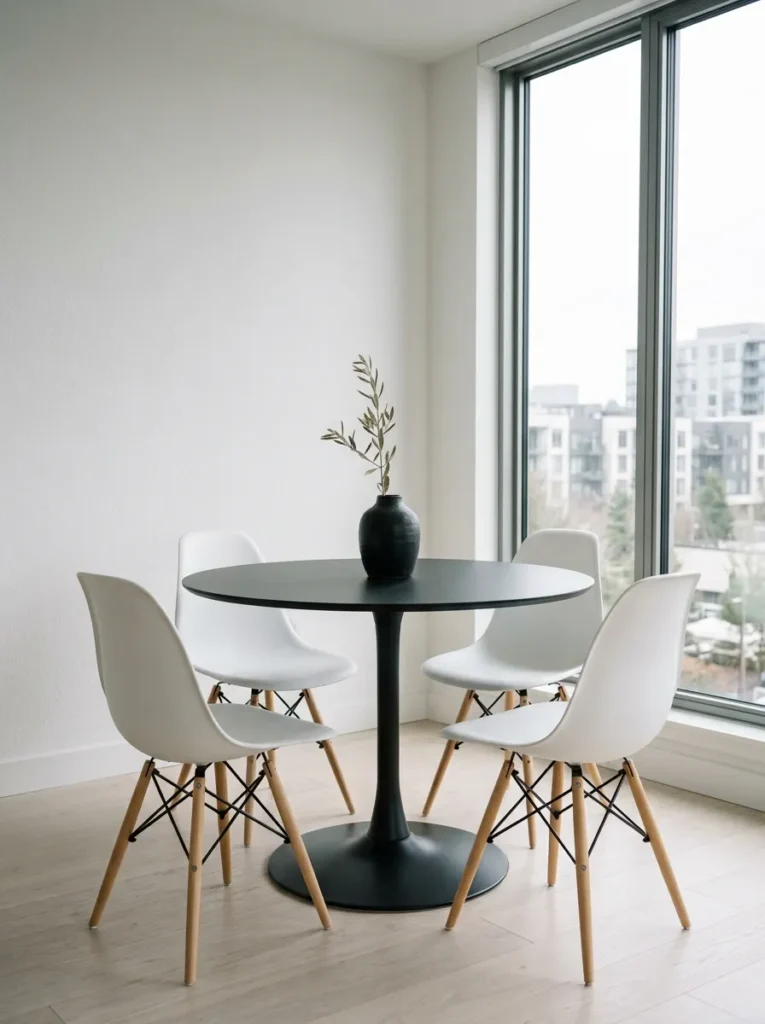
While glass and light wood expand a room, a dark round table does the opposite on purpose: it grounds a small space that feels too airy or undefined without a strong anchor point. This works in rooms with light walls and light flooring, where a black or charcoal table becomes the single grounding element instead of disappearing into a busy backdrop. Keep the surrounding palette neutral so the table reads as intentional contrast rather than visual heaviness.
15. Round Café Tables for Balcony-Adjacent Dining
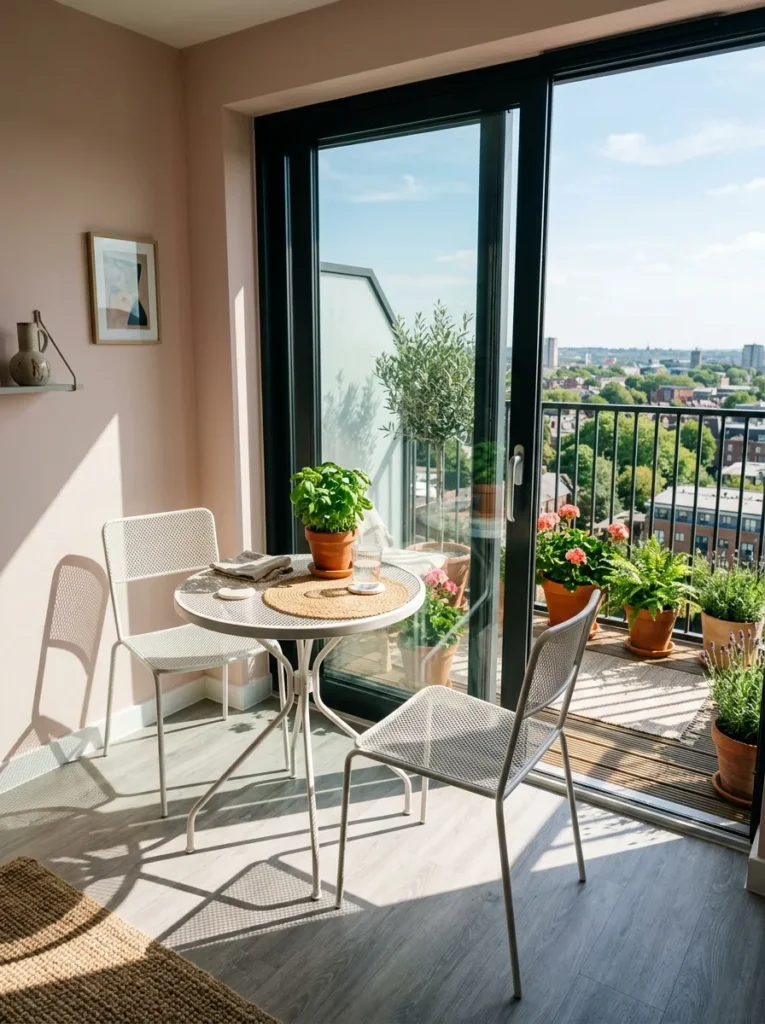
For apartments where the dining area sits beside sliding doors to a balcony or patio, a small round café table lets the indoor and outdoor seating feel like one continuous zone. Choose a table light enough to move outside seasonally, since the best small-space dining setups often shift function with the weather. Metal mesh or wire-frame tables hold up to this kind of moving and weather exposure better than upholstered or wood pieces.
16. Round Tables Paired with a Single Bench for Two
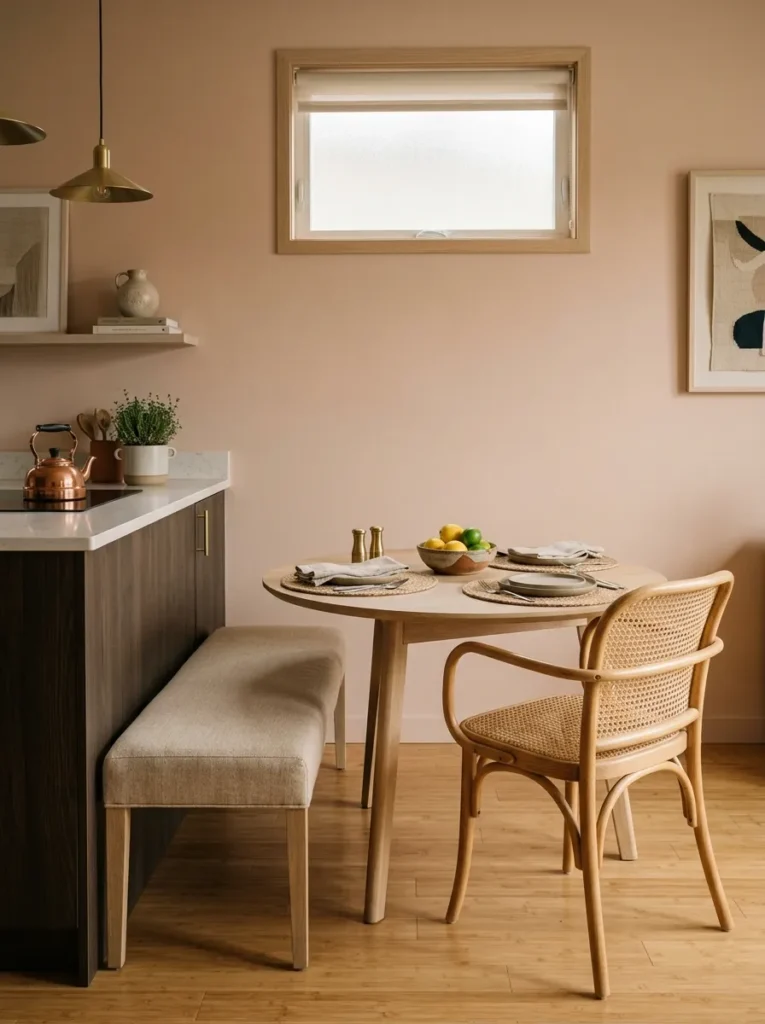
Replacing two chairs with one slim bench on one side of a round table frees enough clearance for the table to sit closer to a wall or kitchen island than chairs alone would allow. This is a particularly good fit for narrow apartment dining areas where only one side of the table has open floor space; the opposite side can back almost directly against furniture since the bench requires no chair-pull clearance.
17. Two-Tone Round Tables for Visual Interest in Minimal Rooms
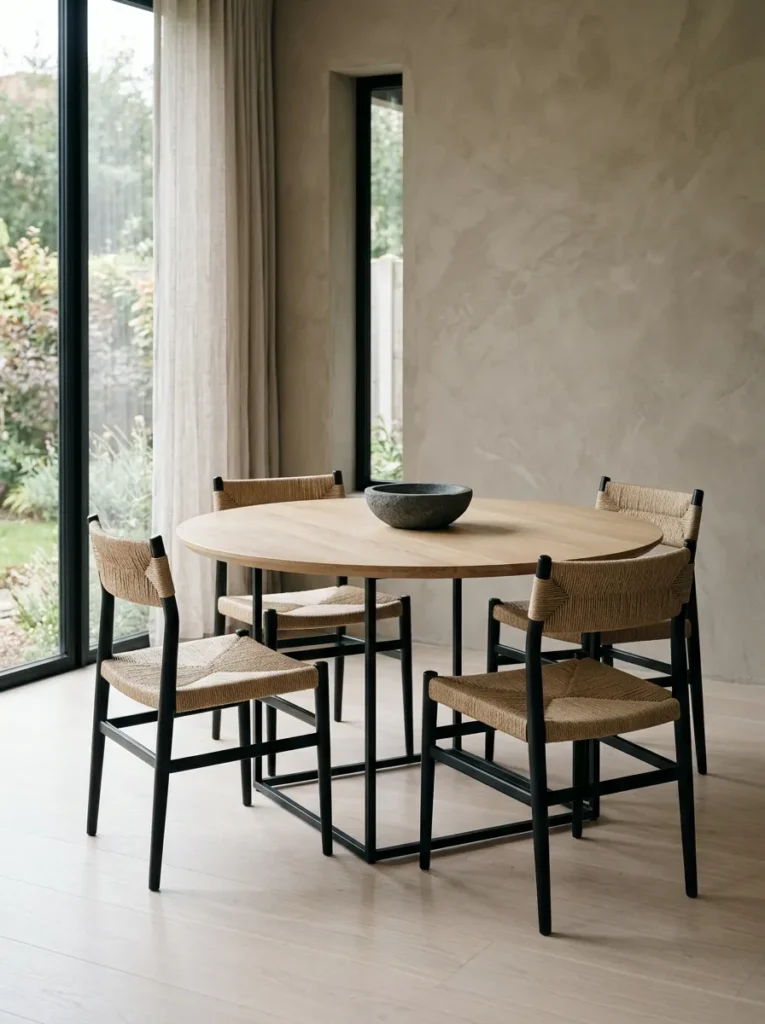
A round table with a contrasting top and base — light oak top with a black steel base, or white marble-look top with a natural wood pedestal — gives a small dining area a design focal point without adding a single extra object to the room. This is especially useful in minimalist small spaces where you can’t afford to clutter the floor with decorative pieces; the table itself becomes the room’s main visual statement.
18. Round Tables with Woven or Rattan Chairs for Texture
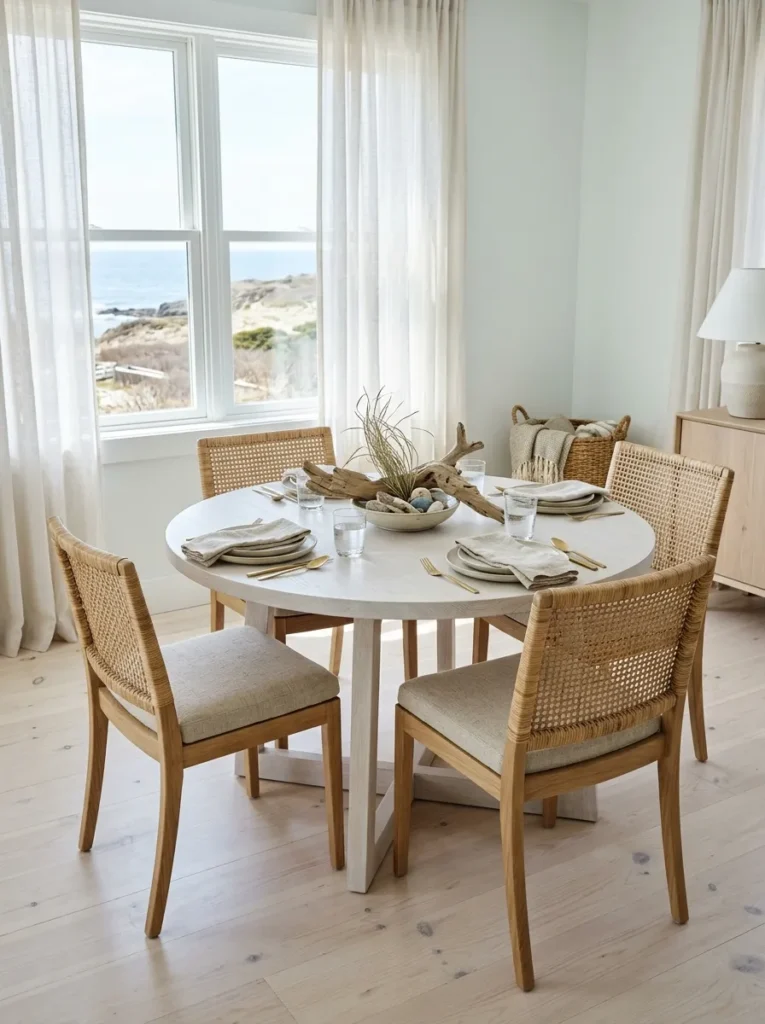
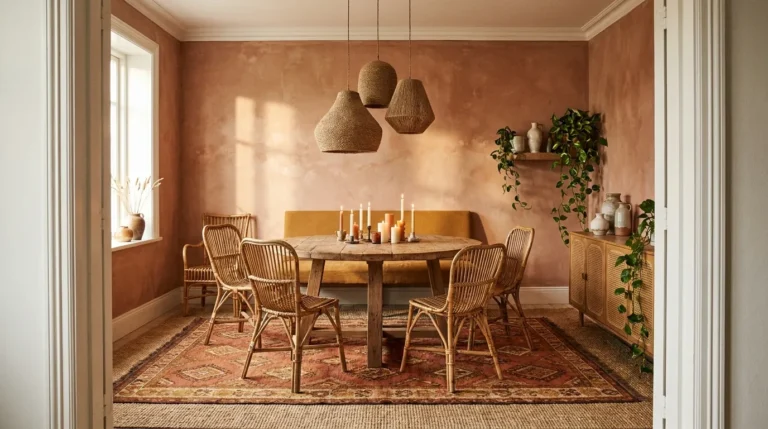
Pairing a round table with woven rattan or cane-back chairs adds tactile texture to a small room without adding visual weight, since rattan’s open structure lets light and sightlines pass through it the way a solid-back chair can’t. This combination works especially well in small dining spaces with a coastal, Scandinavian, or modern-organic palette, where texture needs to do the work that pattern or color would in a larger room.
19. Round Tables Sized to Match Rug Diameter for Defined Zones
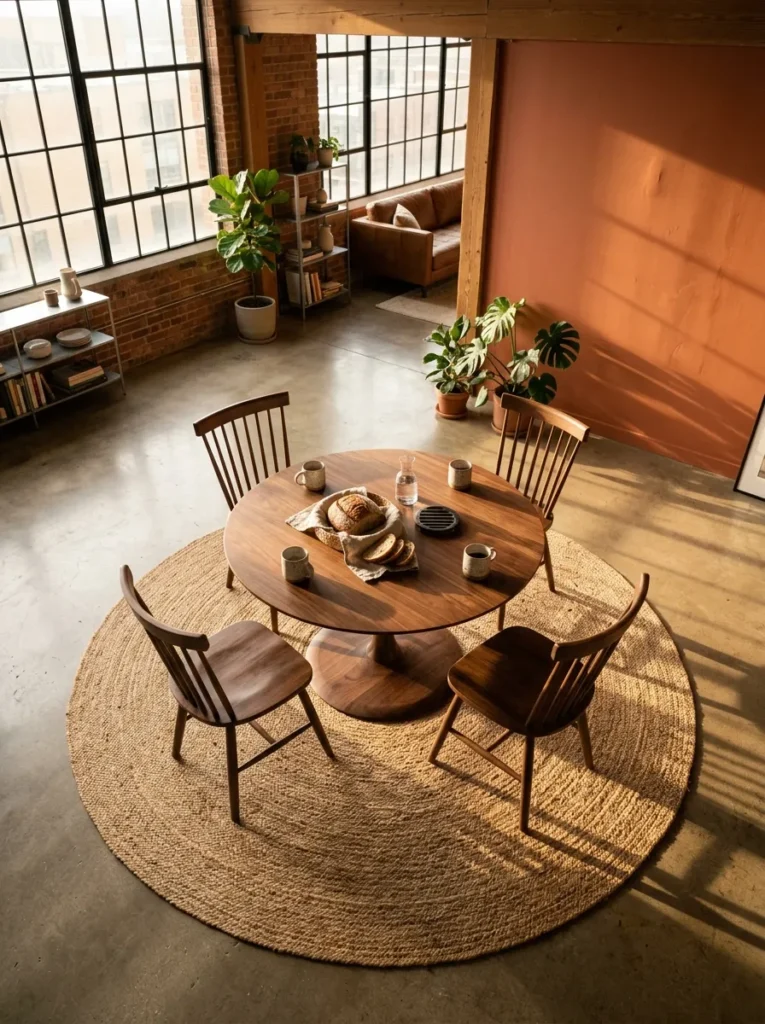
Choosing a round rug roughly 24 inches larger in diameter than the table creates a clearly defined dining zone in an open floor plan, with the chairs staying on the rug even when pulled out. Matching round shapes — table to rug — reads as more intentional than a round table on a rectangular rug, and the visual repetition of the circle helps a small dining area feel designed rather than squeezed into leftover space.
Final Thoughts on Round Dining Table Ideas for Small Spaces
The right round dining table idea comes down to matching the base style, top finish, and seating approach to the specific shape of your room — a corner nook calls for a different solution than an open-concept floor or a window alcove. Whether you choose a pedestal base for legroom, a drop-leaf for flexibility, or a glass top to expand the room visually, these round dining table ideas prove that small spaces don’t have to compromise on style or function. Start with the option that matches your room’s biggest constraint, and build the rest of the space around it.
Save this round dining table ideas guide to Pinterest so you can revisit it next time you’re furnishing a small dining space.