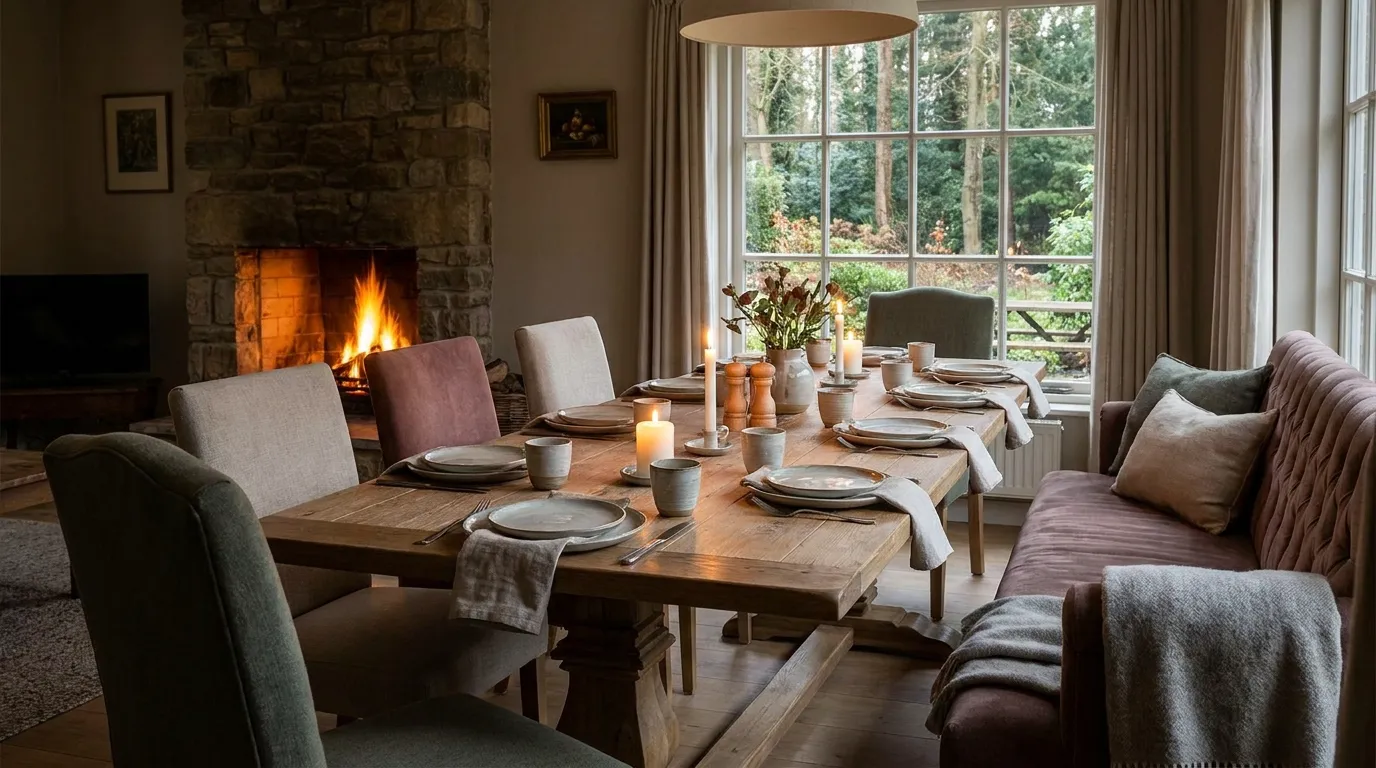
19 Cozy Dining Room Ideas That Feel Warm and Welcoming
Most dining rooms are designed to impress guests who aren’t coming. They get the formal table, the matched chair set, the chandelier that looks better in a showroom — and then they sit empty five nights a week, too stiff for a Tuesday dinner and too cold for a slow Sunday morning. The best cozy dining room ideas reject that entirely. They build rooms that people actually want to sit in, linger in, and come back to. This article is not about recreating a catalogue. It’s about understanding why certain dining rooms feel like somewhere you belong, and making yours one of them.
1. Layer Your Lighting — And Make None of It Overhead
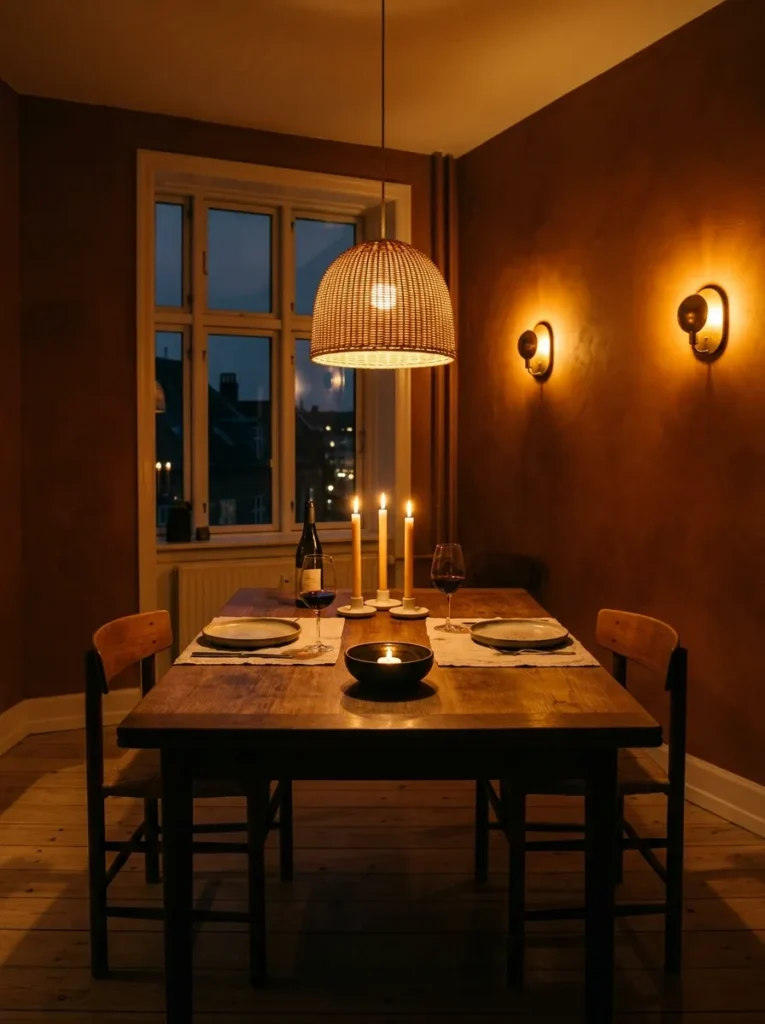
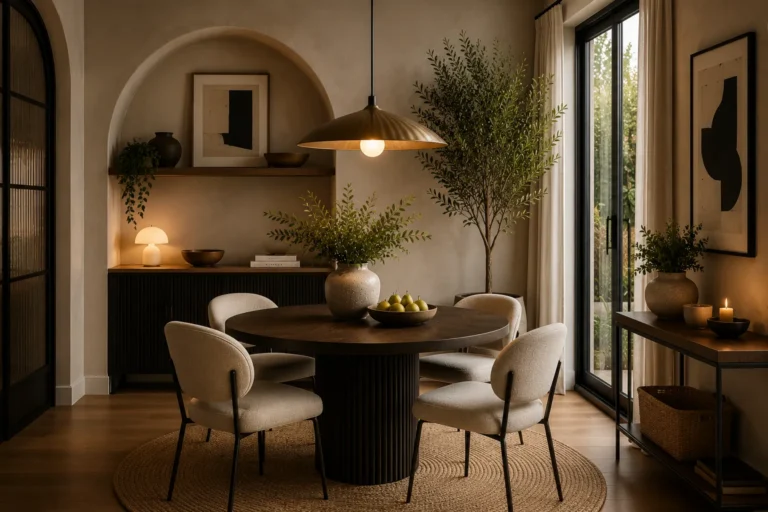
The dining table pendant is not the primary lighting source. This is the decision that changes everything, and almost no one makes it correctly. A single overhead pendant — even a beautiful one — casts a circle of light that makes everything outside it feel cold and institutional. The move is to treat that pendant as one of three or four sources working together: candles on the table, a wall sconce at 1.5 metres that throws amber light sideways, a small table lamp on a sideboard, and yes, a pendant, but hung low at 70 to 80 centimetres above the table surface so it creates intimacy rather than just illumination.
When you layer sources that are all slightly warm — 2700K is the right number, cooler than that and you’re in office territory — the room stops looking lit and starts feeling lit. That distinction is everything.
2. Choose a Round Table When the Space Will Allow It
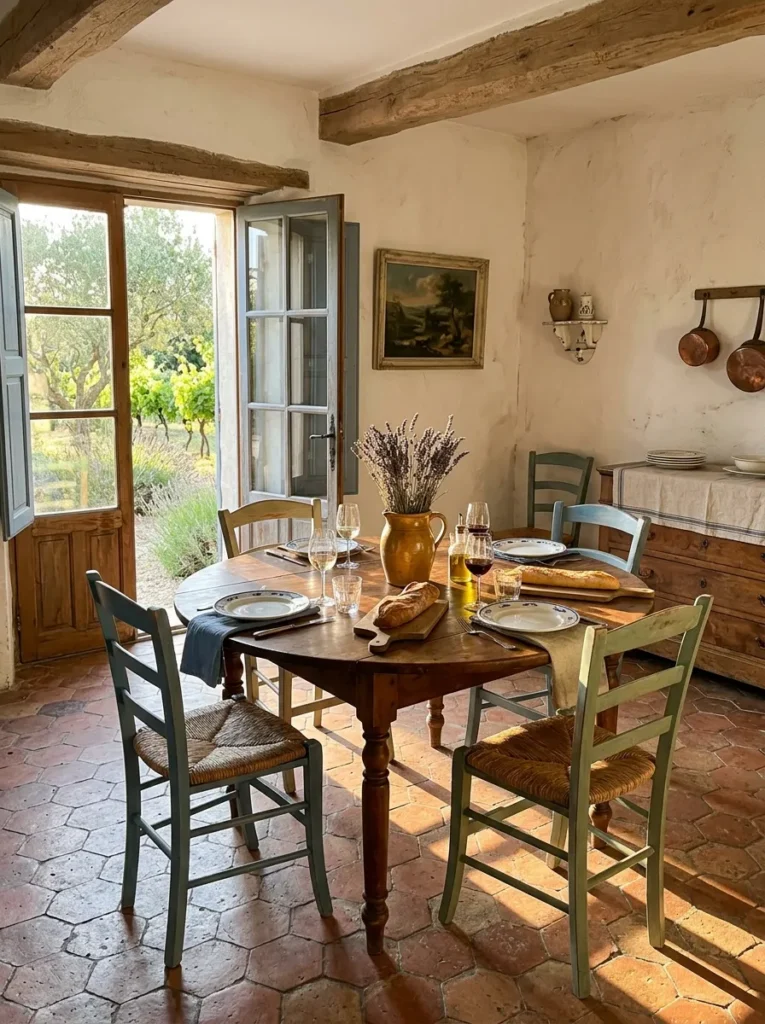
The psychological warmth of a round table is not a myth. When no one is at the head, no one is at the head. The conversation moves differently, the seating feels less hierarchical, and people naturally lean in rather than talking down a long rectangle. For an inviting dining room that actually functions as a gathering space, this is the furniture decision with the highest return.
A 120-centimetre diameter comfortably seats four. A 140-centimetre one manages six if you don’t mind the chairs touching. The sacrifice is wall space for a sideboard, which is real — but a round table with mismatched chairs is worth far more than a rectangular one with a matched set.
3. Add a Rug That Extends Well Past the Chair Legs
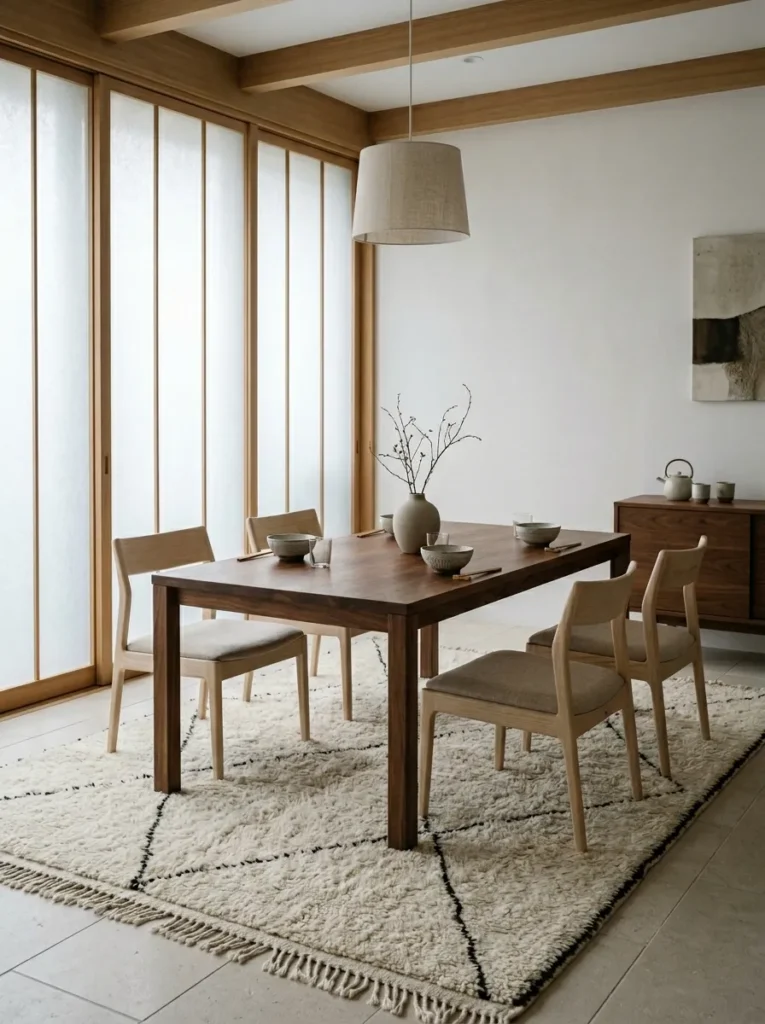
The single most common rug mistake in dining rooms is buying a rug that’s the right size when all the chairs are tucked in. Pull a chair out. Does it stay on the rug? It needs to. The general rule is a minimum of 60 centimetres of rug beyond every side of the table — which usually means people dramatically underestimate how large the rug should be.
What a correctly sized rug does is unify the whole dining area into a single zone. The table and chairs become one thing rather than a table surrounded by floating chairs. In terms of visual warmth and spatial coherence, a large, slightly worn natural-fibre rug — jute, sisal, or a flatweave wool — does more for a dining room than almost any furniture change.
4. Use Mismatched Chairs Deliberately, Not Accidentally
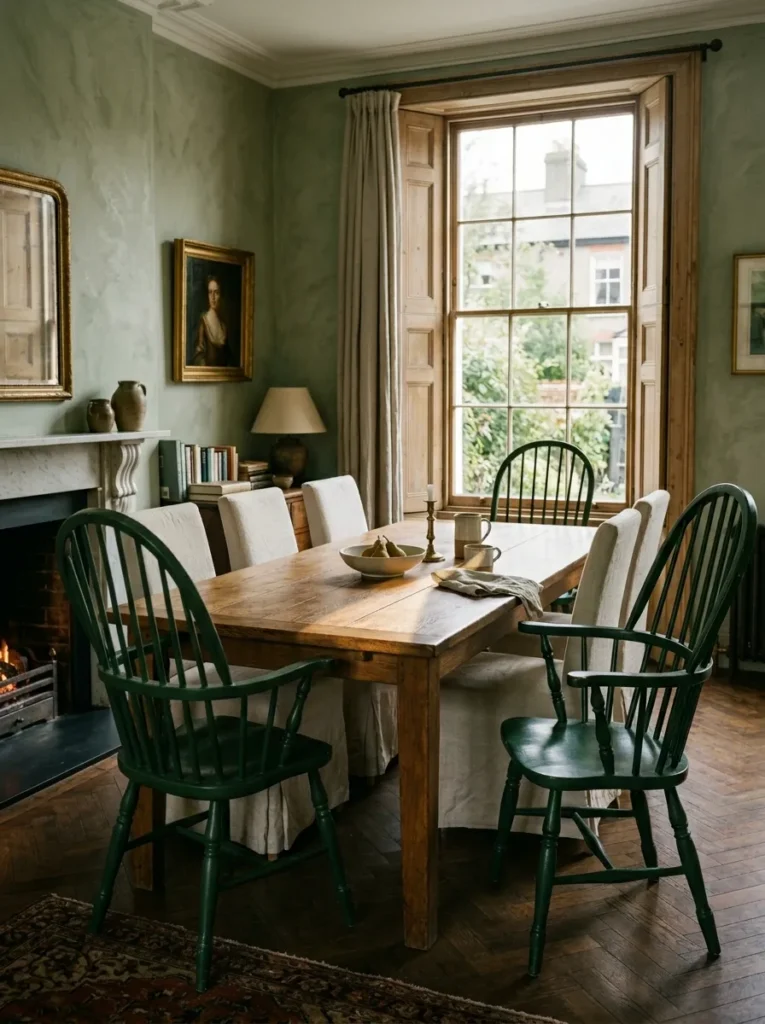
The matching chair set is always the safer choice and almost never the better one. A set of six identical chairs is visual silence — no texture, no story, nothing for the eye to land on. Two carver chairs at the heads of a rectangular table, paired with four slipcovered upholstered chairs along the sides, gives you instant hierarchy, tactile contrast, and the sense that this room has been lived in and adjusted over time.
The key word is deliberately. Mismatched chairs that share a single unifying element — all natural oak, or all painted the same deep green — read as intentional and considered. Mismatched chairs that share nothing look like a charity shop. Commit to one thread and vary everything else.
5. Bring in Wood in Its Least Processed Form
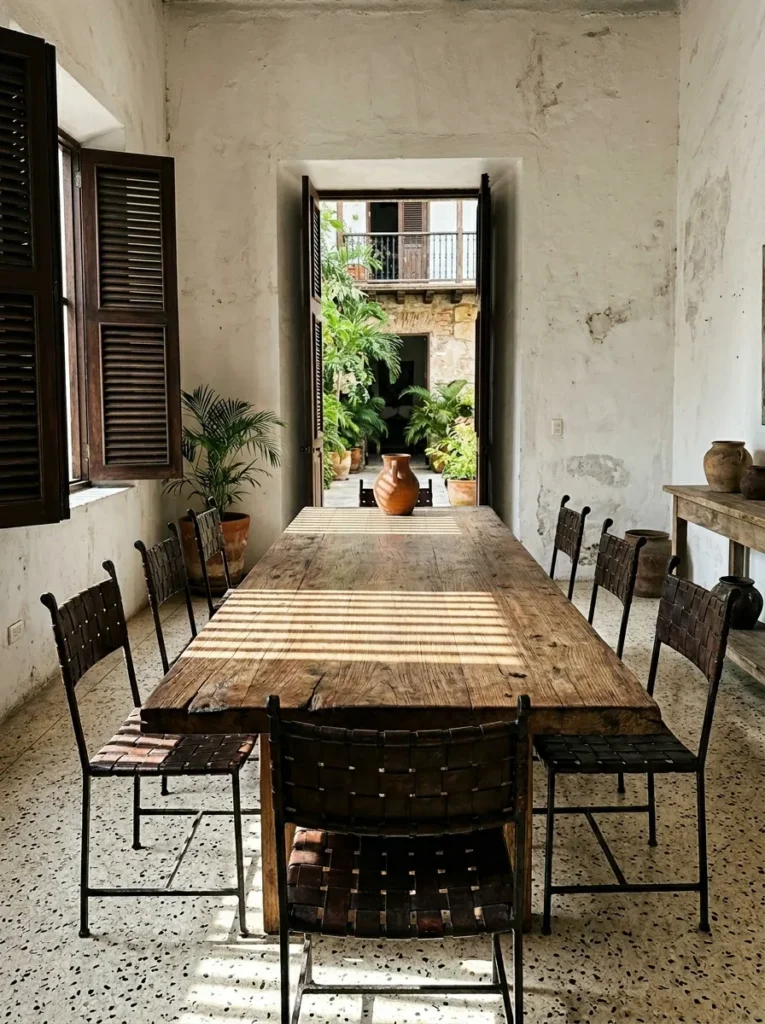
Highly lacquered, perfectly uniform wood furniture makes dining rooms feel like hotel lobbies. The material that creates warmth is wood with visible grain, slight imperfections, and an oil or wax finish rather than a hard lacquer — reclaimed elm, solid oak with an open grain, or walnut that shows its natural variation. These materials absorb and reflect light differently depending on the angle and time of day, which is exactly what makes them feel alive rather than static.
A dining table in unlacquered, oiled oak will look different at 7am with morning sun than it does at 8pm with candlelight. That responsiveness to light is the physical definition of warmth in a room.
6. Add a Cozy Dining Space with Upholstered Seating on at Least One Side
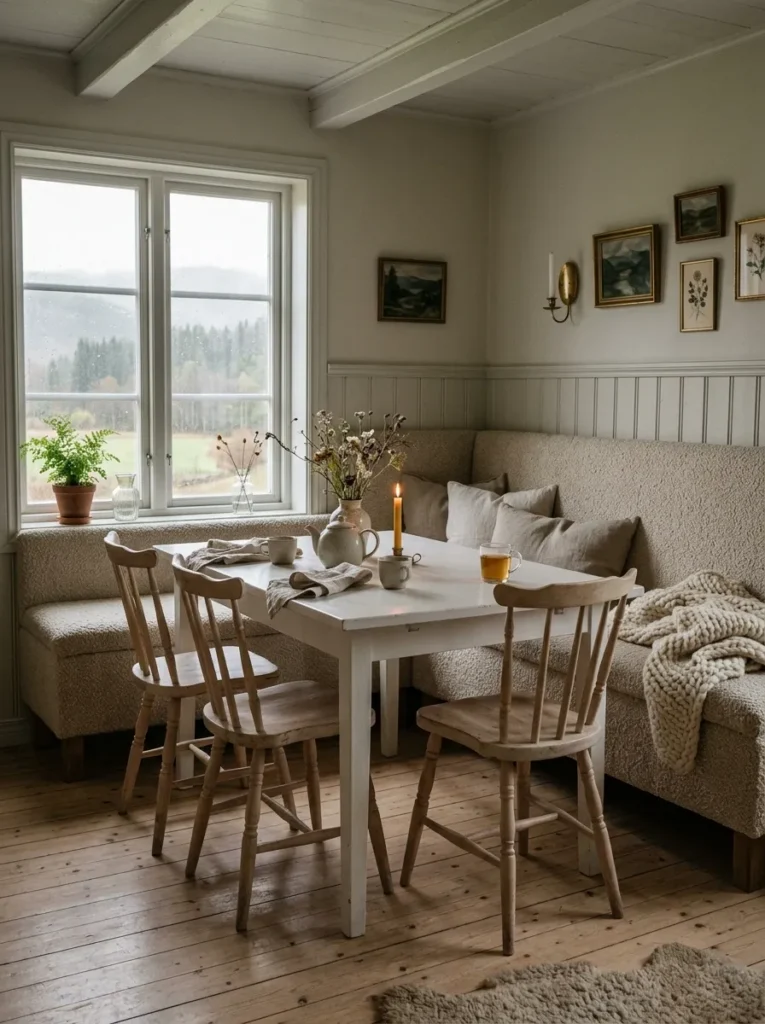
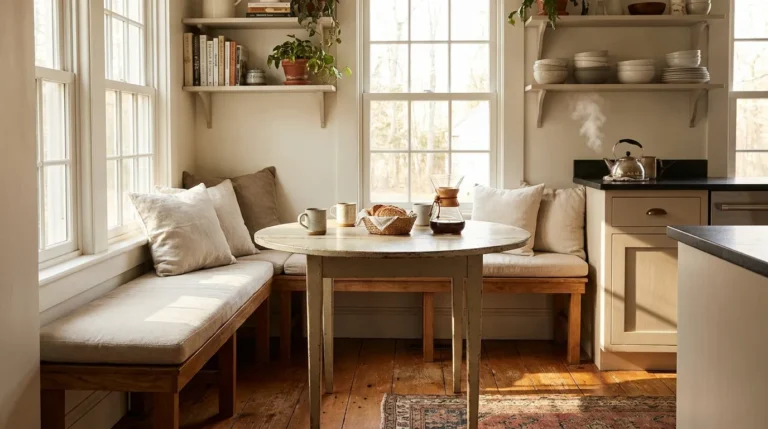
A dining bench with an upholstered seat and back is one of those additions that seems minor until you experience the difference. Hard chairs create a posture that communicates the meal should be efficient. Upholstered seating communicates that you can stay. It removes the constant unconscious friction of sitting on something unyielding, and people respond by relaxing, leaning back, and settling in for another glass.
If a full upholstered bench isn’t feasible, chair seat pads in a heavyweight linen or a medium-weight boucle make a real difference. They also add the kind of soft, matte texture that dining rooms almost always lack.
7. Hang Something Oversized on the Largest Wall
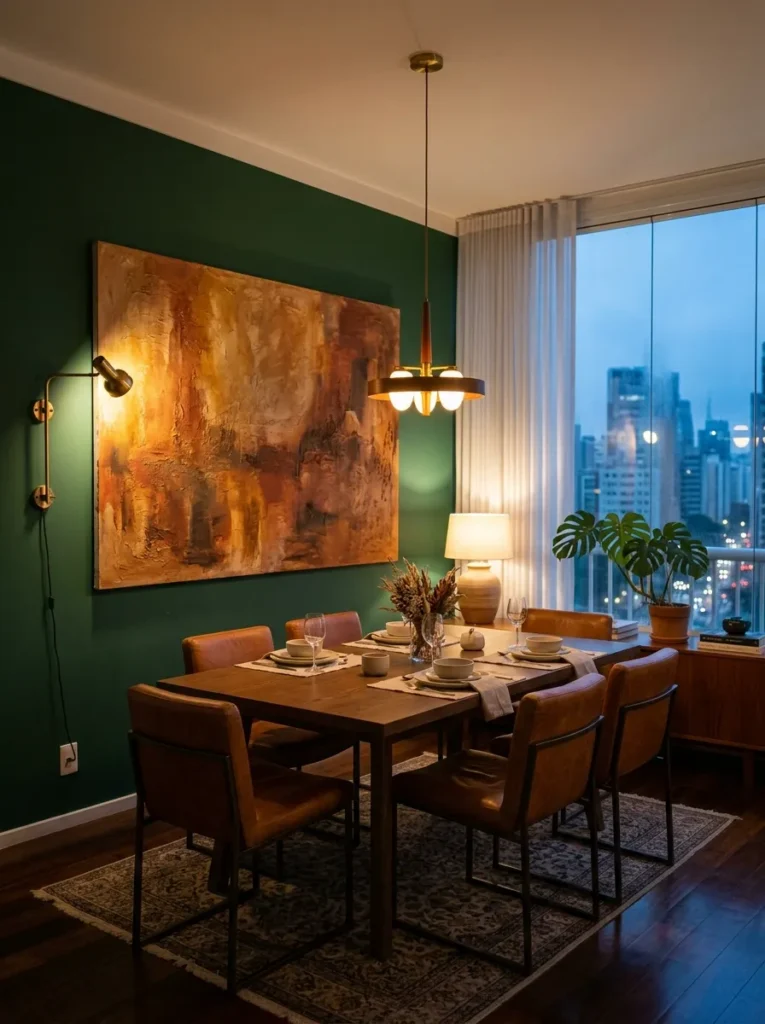
Empty wall space in a dining room is not neutral — it reads as unfinished, which creates a vague unease that most people can’t name but definitely feel. The solution is not a gallery wall with eight small frames. It’s one large piece at the right height. In a dining room, the centre of any artwork on the main wall should sit at approximately 150 to 155 centimetres from the floor, and the piece should fill at least 60 percent of the available wall width.
A large, slightly abstract painting in warm ochres and terracottas. A single oversized vintage textile. A collection of botanical prints in matching frames hung close enough together that they read as one unified piece. Any of these anchors the room in a way that a scatter of smaller works never does.
8. Let the Table Be Set Before Dinner Exists

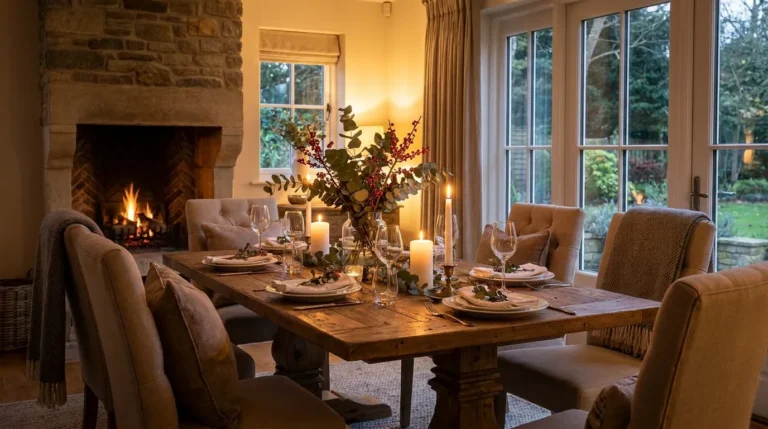
The dining room that feels warm at 3pm on a Tuesday is not the one with a bare table waiting for the meal. It’s the one where the table always has something on it — a runner in rough undyed linen, a cluster of candles in varying heights, a wooden bowl with a few pieces of fruit, a jug of water. These objects don’t need to be moved before dinner; they become the base layer that dinner is set on top of.
The specific detail that matters most is candlelight at dinner, every dinner. Not for special occasions. A box of dinner candles costs almost nothing, and the quality of light it creates cannot be replicated by any fixture. Most people know this and still don’t do it, for obvious reasons.
9. Choose a Paint Colour That Gets Darker After Dark
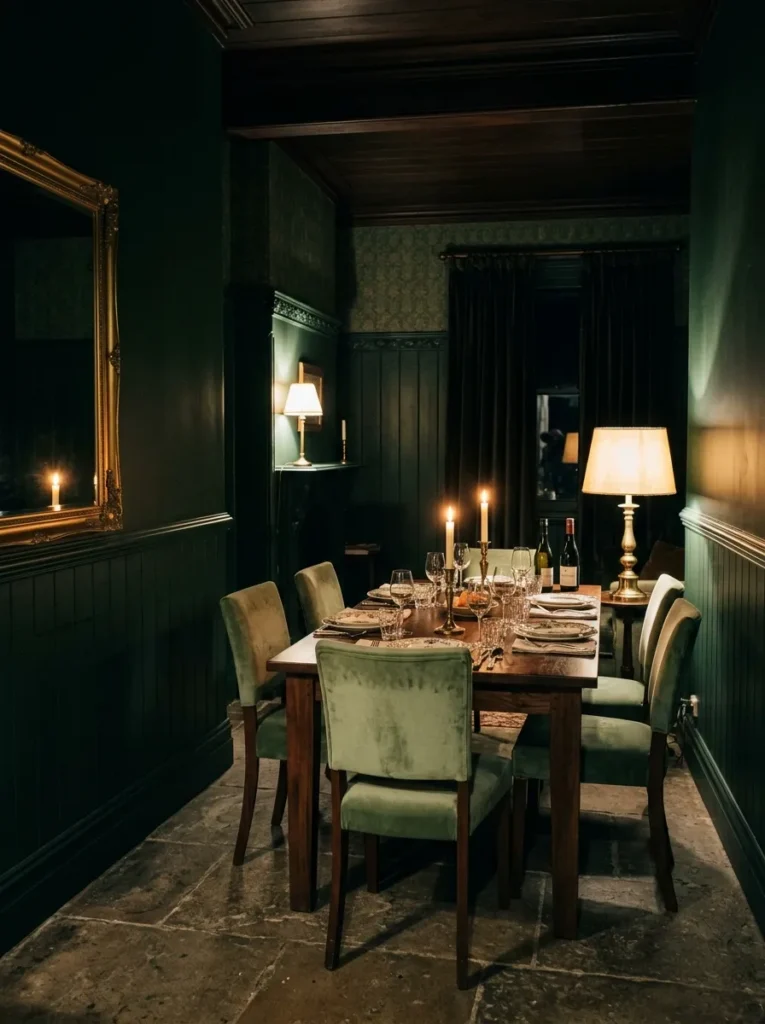
Light colours read differently in the evening, and for a warm dining room design this is a real problem. A pale greige that looks clean and warm in daylight often turns cold and slightly grey under artificial light — the yellow undertones that made it feel warm in sunshine simply disappear. Deep colours do the opposite. A forest green, a warm terracotta, a deep teal, a soft charcoal — these colours get richer and more enveloping at night, which is exactly when a dining room is actually used.
The practical advice is to look at paint samples under artificial light specifically, not in daylight. Most people do the opposite and then wonder why the paint looks wrong at dinner.
10. Install Lower Wainscoting to Break Up Tall Walls
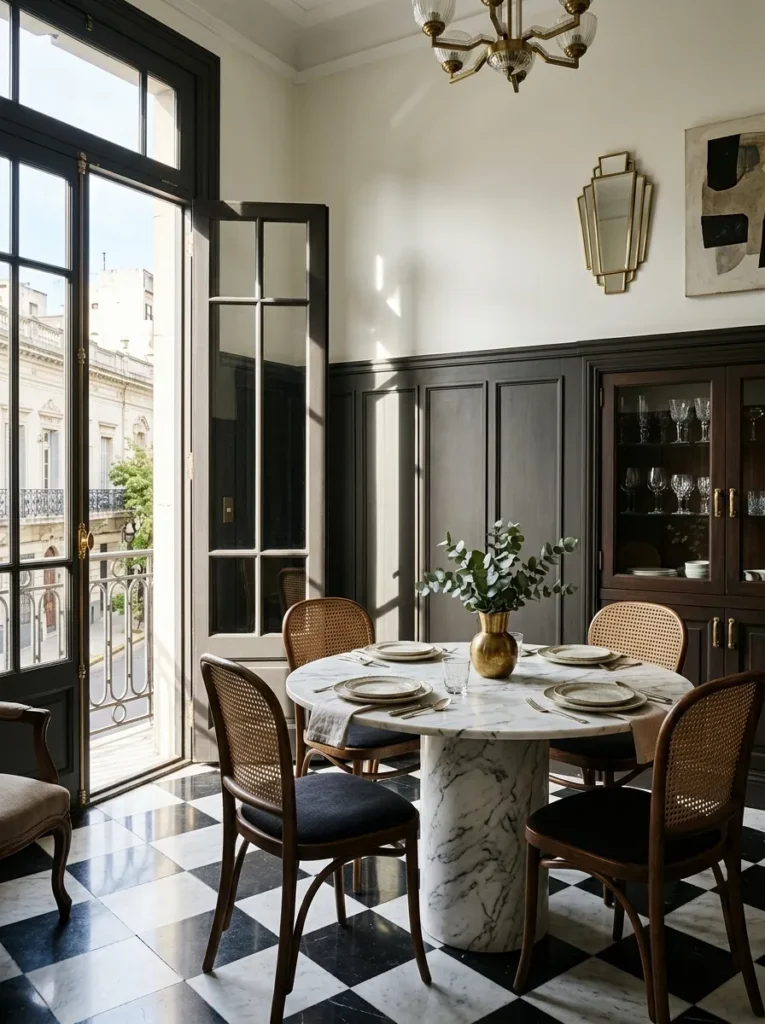
A dining room with nothing on the lower two-thirds of the wall feels like eating in a lobby. Wainscoting — wood panelling that runs from the skirting board to a chair rail at roughly 90 to 100 centimetres — divides the wall into two registers that can be treated differently. Paint the lower section in a deeper tone of the upper wall colour, or use a contrasting dark shade that grounds the room and makes the table feel like it belongs there.
This is one of those additions that transforms how a room feels without changing anything else. The proportions suddenly make sense, the furniture looks intentional, and the room acquires a gravity it simply didn’t have before.
11. Use Linen for Everything That Could Be Fabric
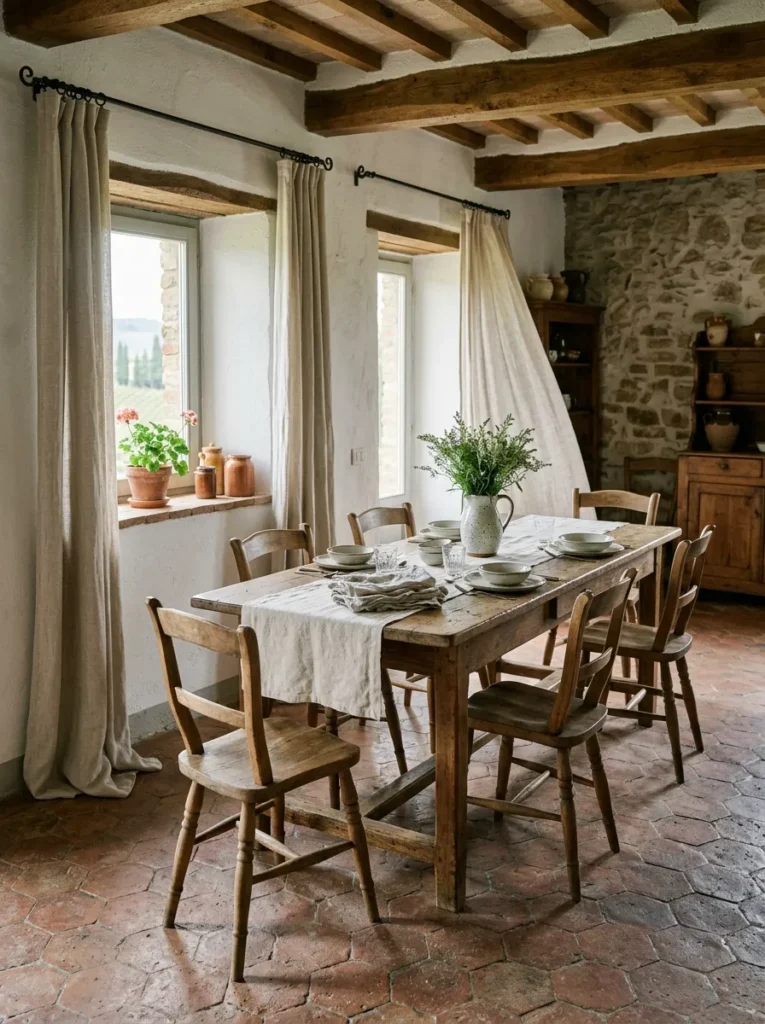
The textile that does the most work in a welcoming dining space is linen. Washed linen curtains that pool slightly on the floor. Linen napkins in an undyed or earthy tone stacked casually on the sideboard. A linen runner that’s slightly crumpled rather than ironed flat. Linen has a matte, textured quality that absorbs light softly, and its natural wrinkles communicate ease rather than effort — which is exactly the register a welcoming room operates in.
The alternative — crisp white cotton ironed smooth — looks like a restaurant. Fine if that’s what you want. Most people don’t.
12. Bring in a Sideboard and Make It Work Visually
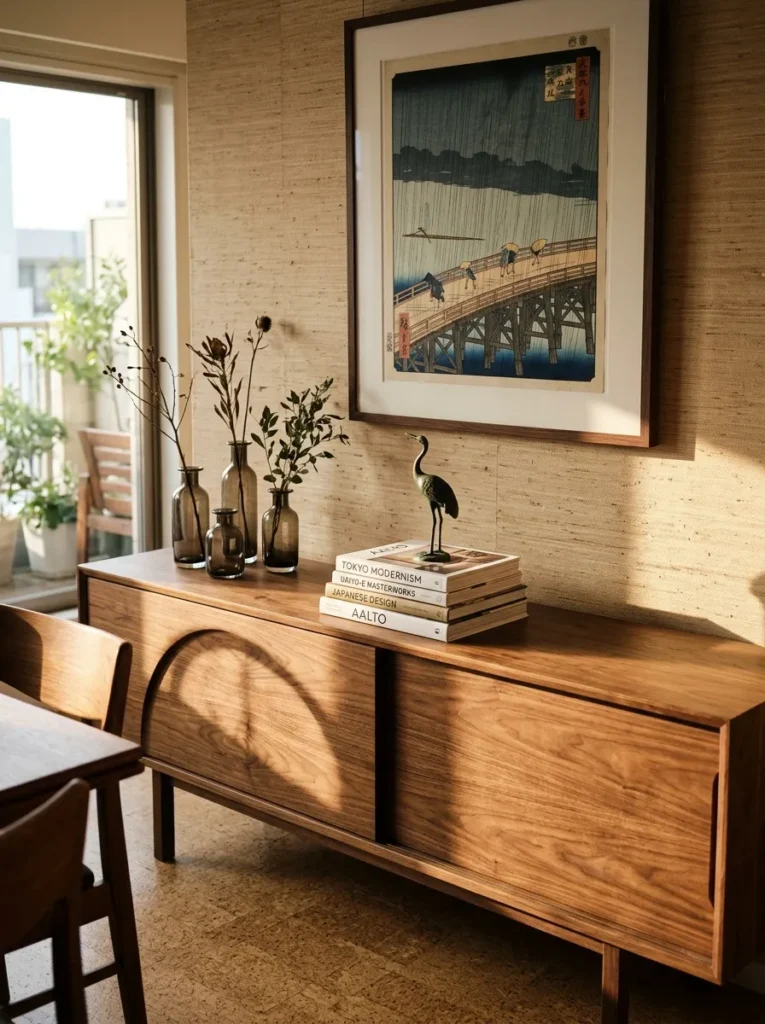
A dining room without a sideboard is missing its secondary character. The table does one job. The sideboard does everything else: it holds the wine glasses, the candles, the serving dishes, the objects that give the room a sense of personality. But it only does this if it’s styled properly. A bare sideboard is worse than no sideboard at all.
The rule is thirds. One third of the surface holds something tall — a lamp, a group of candlesticks, a large ceramic vase. One third holds something mid-height — a stack of art books, a wooden bowl, a tray with bottles. One third stays clear. That empty third is what makes the styled sections look intentional rather than cluttered.
13. Add Plants That Require Almost No Maintenance
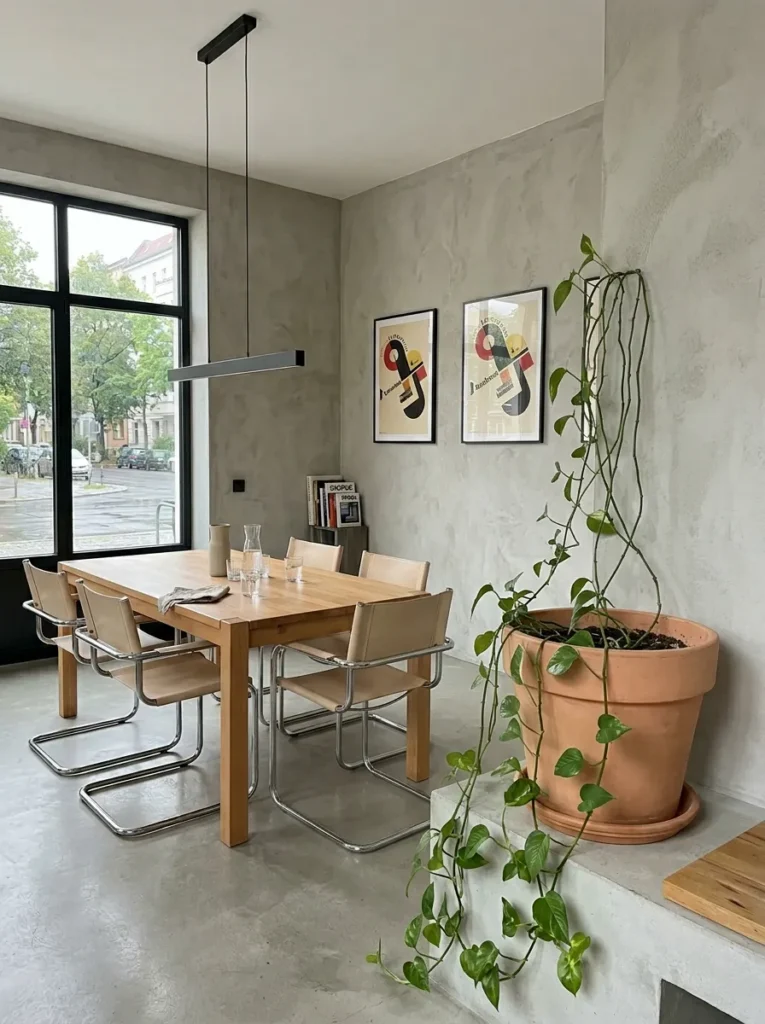
The fastest way to make a warm dining room feel slightly dead is to add a plant that’s clearly dying. This is an argument for the specific over the aspirational: choose plants with a genuine tolerance for low light and inconsistent watering. Pothos, ZZ plants, and cast iron plants are not glamorous, but they stay alive in the conditions that most dining rooms actually provide — and a single large healthy plant in an earthy ceramic pot adds more life to a room than a collection of struggling ones.
Size matters more than quantity. One large plant with broad leaves that can be seen from across the table does more than three small pots on a windowsill.
14. Consider Curtains That Start at the Ceiling
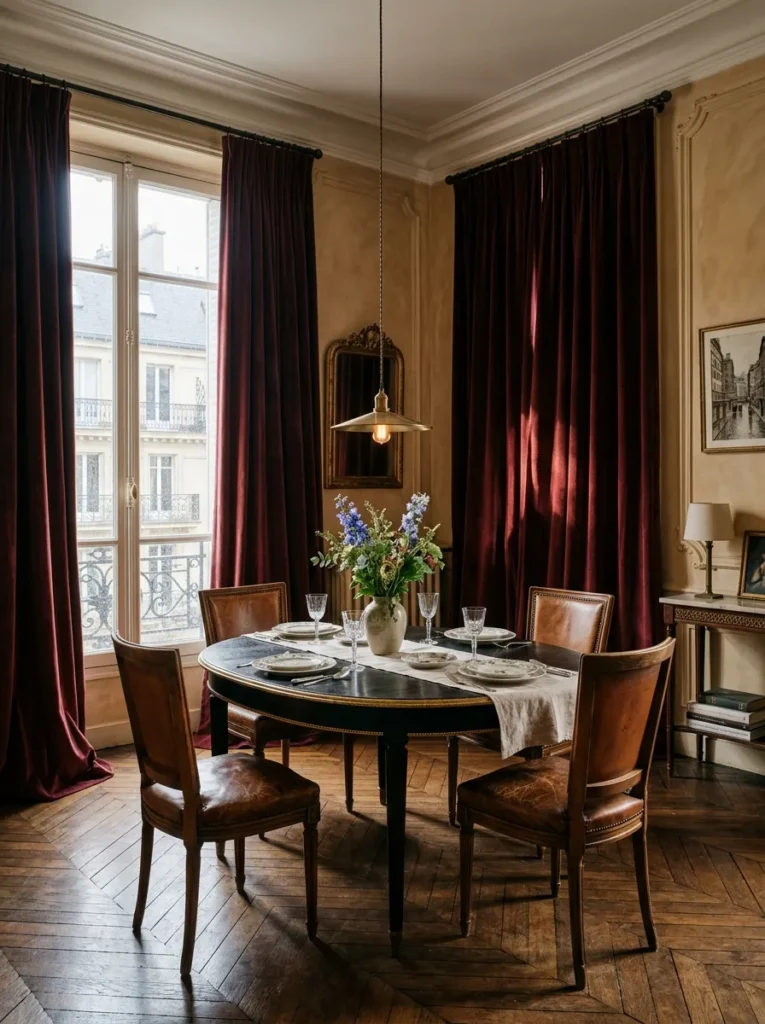
Curtains hung from a rod at the top of the window frame make the window look the right size. Curtains hung from a rod mounted at ceiling height make the ceiling look taller, the window look grander, and the room feel considerably more considered. The difference in cost is nearly zero — you need more fabric, but the rod hardware is identical.
In a dining room, floor-to-ceiling curtains in a heavy woven fabric — a textured velvet, a thick slubby linen, a heavyweight cotton canvas — add mass and softness to whatever wall they sit on. That combination of mass and softness is precisely what a room needs to feel enveloping rather than exposed.
15. Warm Dining Room Design Starts with the Ceiling
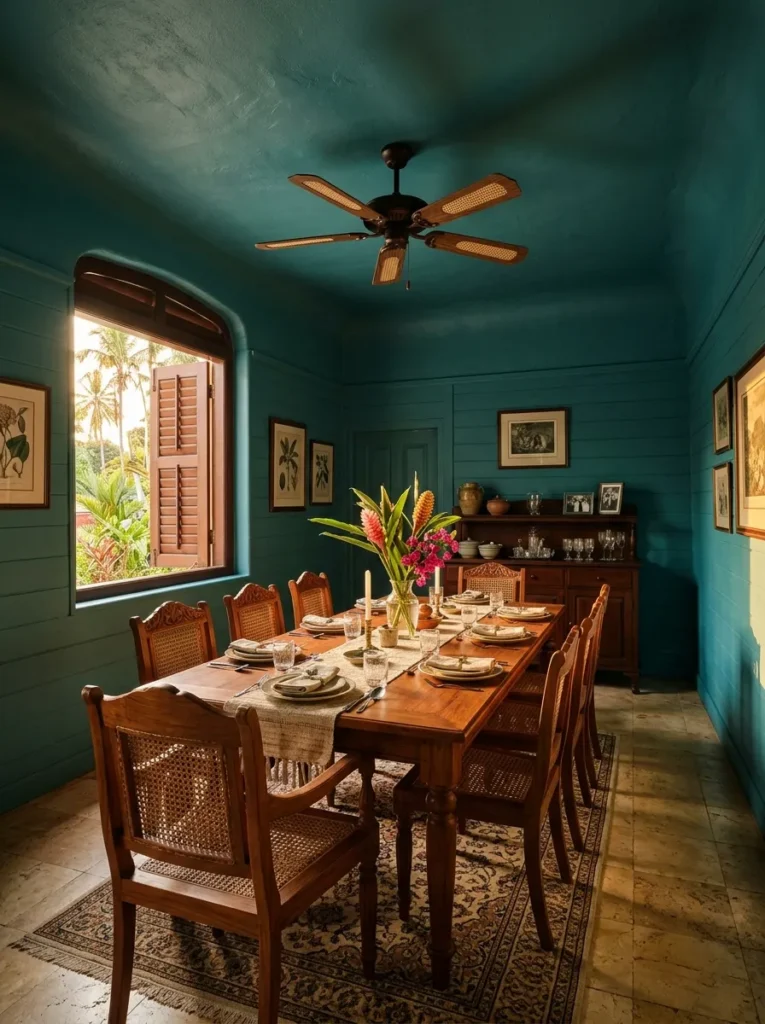
Almost no one thinks about the ceiling, and it shows. A white ceiling in a dining room with dark or warm walls creates a hard stop at the top of the room that makes it feel like a box. Paint the ceiling the same colour as the walls, or one shade lighter. This trick — sometimes called an enveloping or “fifth wall” treatment — removes the hard visual edge at the top of the room and makes it feel like you’re inside the colour rather than looking at it.
In a dining room specifically, where a pendant fixture naturally draws the eye upward, a ceiling that’s been considered rather than defaulted adds a quality of intentionality that visitors feel without being able to name.
16. Set the Table with Ceramics That Don’t Match
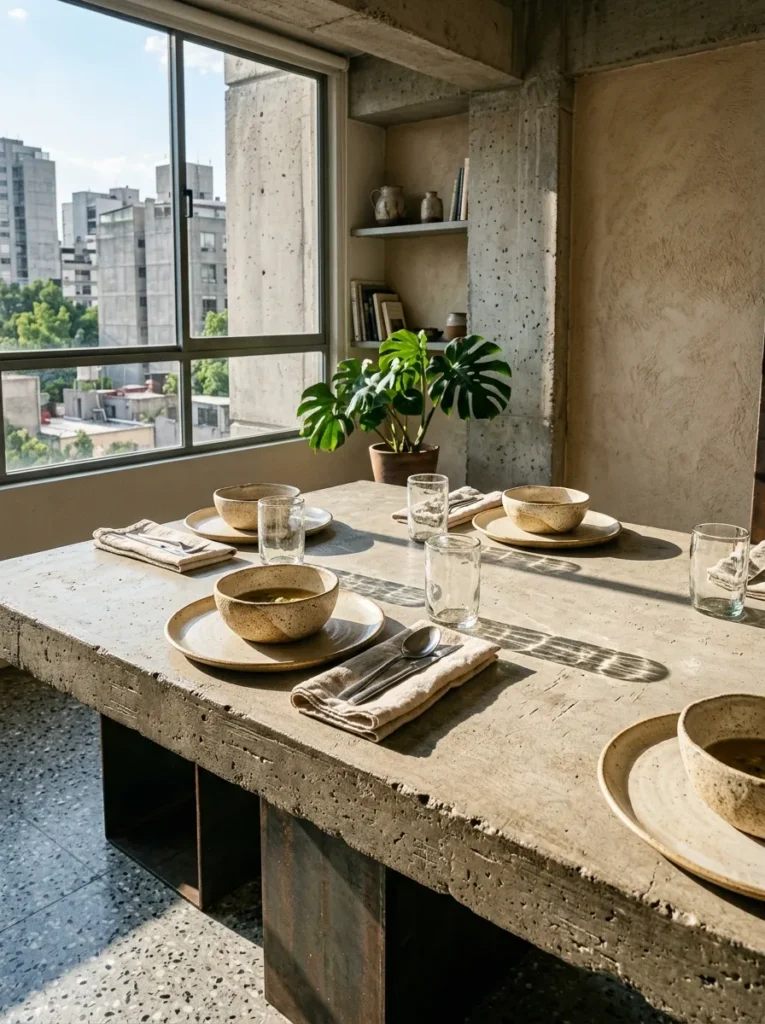
Matching dinnerware sets are for catering. What makes a dining table feel warm, personal, and visually alive is a collection of ceramics that share a palette but differ in shape, glaze texture, and provenance. Cream stoneware plates next to hand-thrown bowls in a slightly darker tone. Glasses that are all clear but in different shapes. Napkins that are all the same colour but folded differently.
The underlying principle is that warmth in design comes from variety that has been edited, not uniformity that has been imposed. The eye needs something to move across.
17. Add a Pendant That’s Actually Too Big
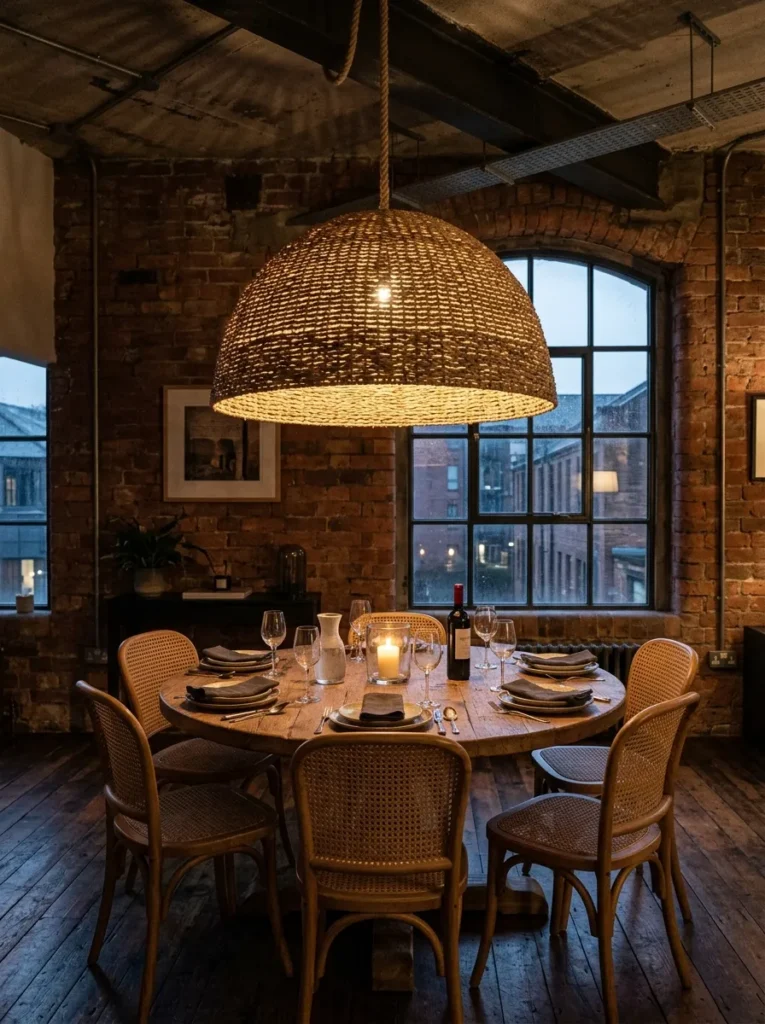
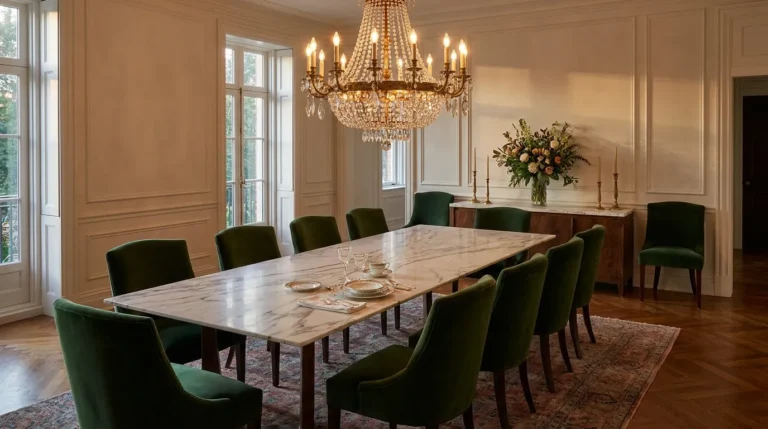
The standard advice is to choose a pendant with a diameter roughly one-third of the table width. This produces a pendant that looks correct and does absolutely nothing for the room. A pendant that is half the table width — or slightly more — creates a visual statement that makes the whole table feel like an event. It draws the eye down, makes the table the centrepiece it’s supposed to be, and eliminates the slightly apologetic quality of an undersized fixture.
The one caveat is ceiling height. In rooms under 2.4 metres, a large pendant can feel oppressive rather than dramatic. In anything higher, the rule holds: bigger is almost always better.
18. Use Scent as the Final Layer
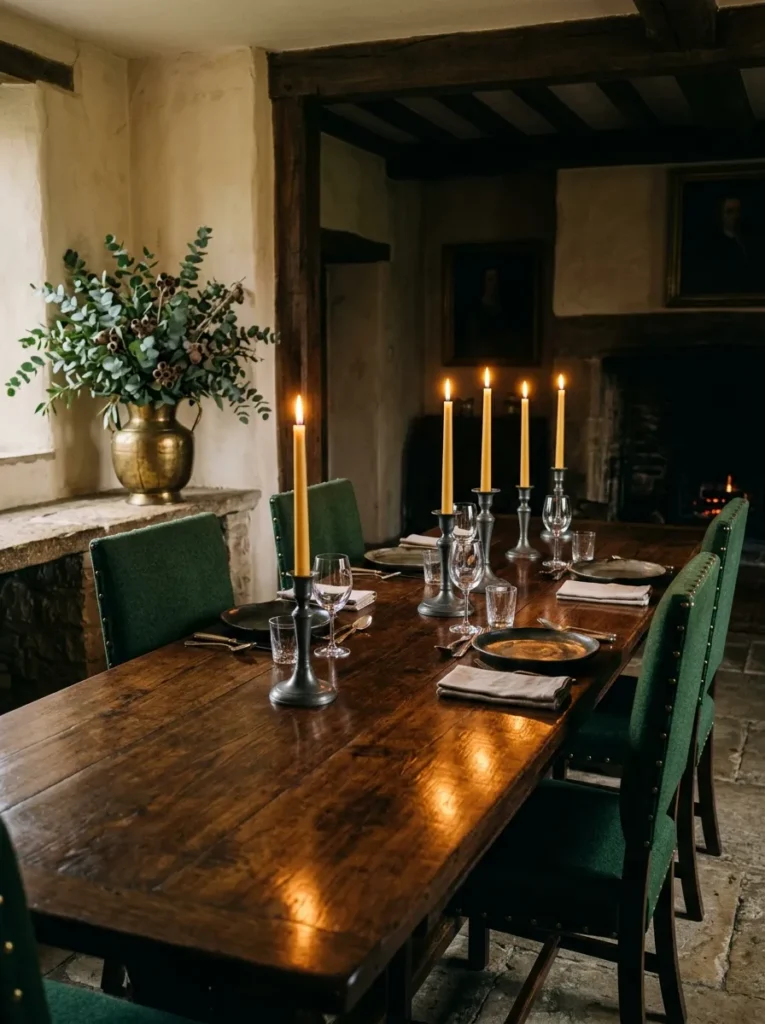
Warmth is not entirely visual. The dining rooms that feel most welcoming usually smell of something — beeswax candles, a bunch of eucalyptus on the sideboard, a diffuser running cedar or sandalwood. You don’t consciously notice it until it’s absent, and then something seems wrong.
The most effective option is real beeswax candles rather than paraffin. They produce a faint honey scent when burning and cost more than the supermarket alternative. They are also the only thing that simultaneously provides that quality of light and that quality of scent at the same time, which makes them worth every penny.
19. Don’t Finish the Room
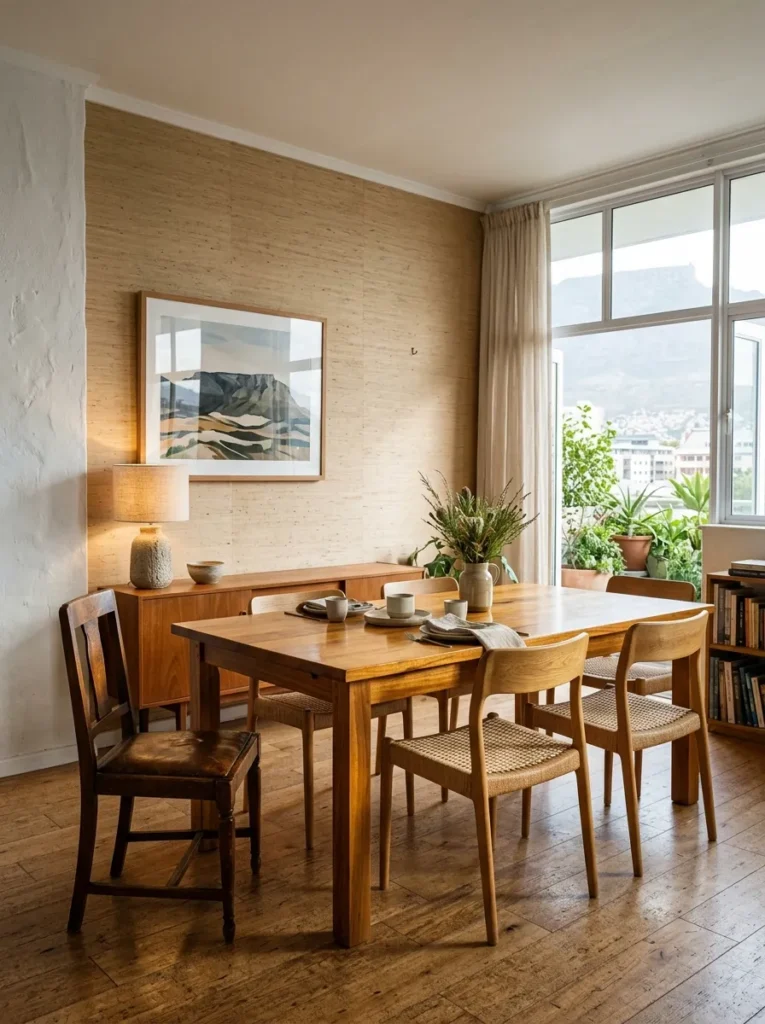
Every truly warm, welcoming dining room has something unresolved — a chair that’s slightly different from the others, a wall that still needs art, a textile bought before the right one appeared. The rooms that feel lived-in and genuine almost always do so because they haven’t been completed all at once. Rooms assembled in a single afternoon — where every element was chosen from the same source in the same month — have a coherence that reads as artificial precisely because real homes don’t work that way.
Buy one good thing at a time. Let the room accumulate. Resist the pull toward the matching set, the coordinated collection, the room that photographs well before anyone has eaten in it. A dining room reaches its warmest version slowly, and the gaps are part of what makes it feel real.
Final Thoughts
A cozy dining room is built the same way a good meal is — with patience, restraint, and a willingness to make choices that feel right rather than choices that photograph well. Start with the lighting, because that is the single variable that affects every other element in the room and costs almost nothing to adjust. Then the table, then the textiles, then the walls. Treat every tip here as part of a sequence rather than a checklist, each decision informing the next. Don’t renovate the whole room at once. The piece you find two years from now, the one you weren’t looking for, will almost certainly be the one that makes it.
Save these dining room ideas for your next home refresh or dining room redesign.