17 White Kitchen Ideas That Feel Bright and Elegant
White kitchens have a staying power that trend-driven colors never quite manage, and it’s not just because white photographs well. A well-designed white kitchen reflects more light, makes a small room feel larger, and gives you a backdrop flexible enough to evolve with your taste for decades without ever needing to repaint. These 17 white kitchen ideas go past “paint everything white” advice, focusing on the specific tones, textures, and contrast points that separate a kitchen that feels elegant and considered from one that reads as flat or sterile.
Each idea explains exactly what it is, why that particular material or detail keeps a white kitchen from feeling cold, and how to bring it into your own space without a full gut renovation. Some ideas are structural, like a paneled hood vent or a waterfall island edge. Others are as simple as swapping cabinet hardware or adding a single wood shelf against an all-white wall. Whether you’re starting from scratch or refining a kitchen you already love, you’ll find a version of white here that fits your actual budget and your actual home.
1. Warm White Shaker Cabinets: The Foundation Every White Kitchen Idea Builds On
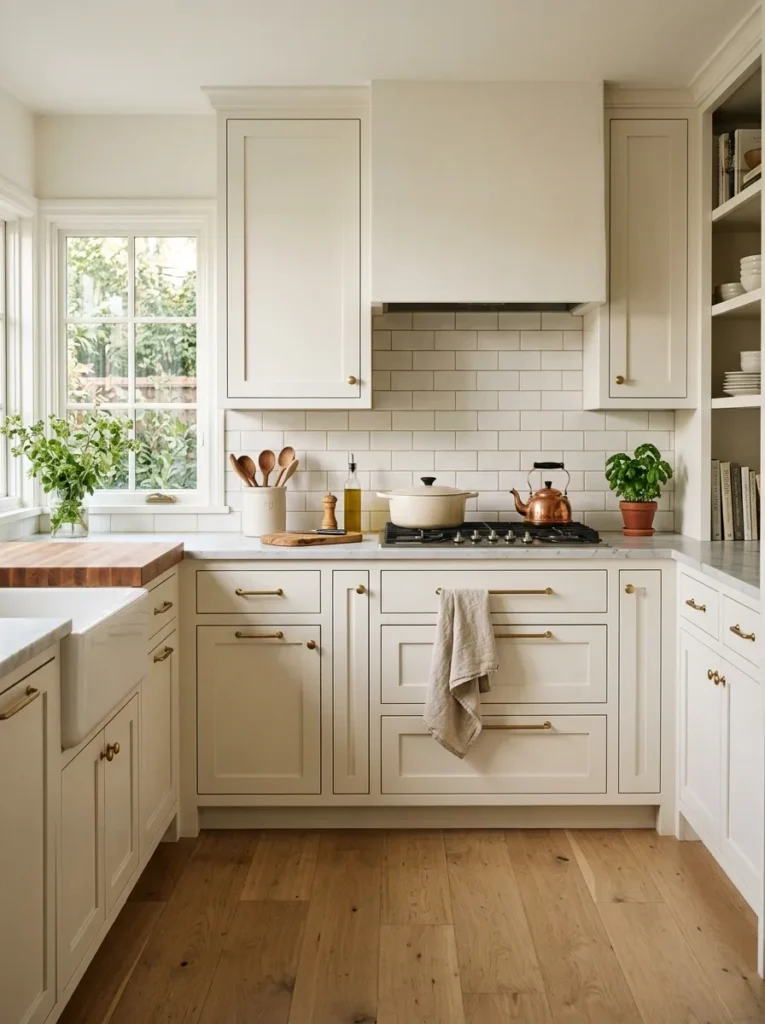
Stark, cool white reads clinical under most kitchen lighting, while a warm white with a hint of cream or ivory in its undertone stays inviting even under harsh overhead light or gray daylight. Shaker cabinets specifically give the white surface real dimension, since the recessed panel casts a soft shadow line that flat slab cabinets don’t have, keeping the kitchen from feeling like one uninterrupted block of color. Test any white paint or cabinet finish under your kitchen’s actual lighting at different times of day before committing, since warm whites can shift noticeably cooler under certain LED bulbs.
2. White Subway Tile with Contrasting Grout
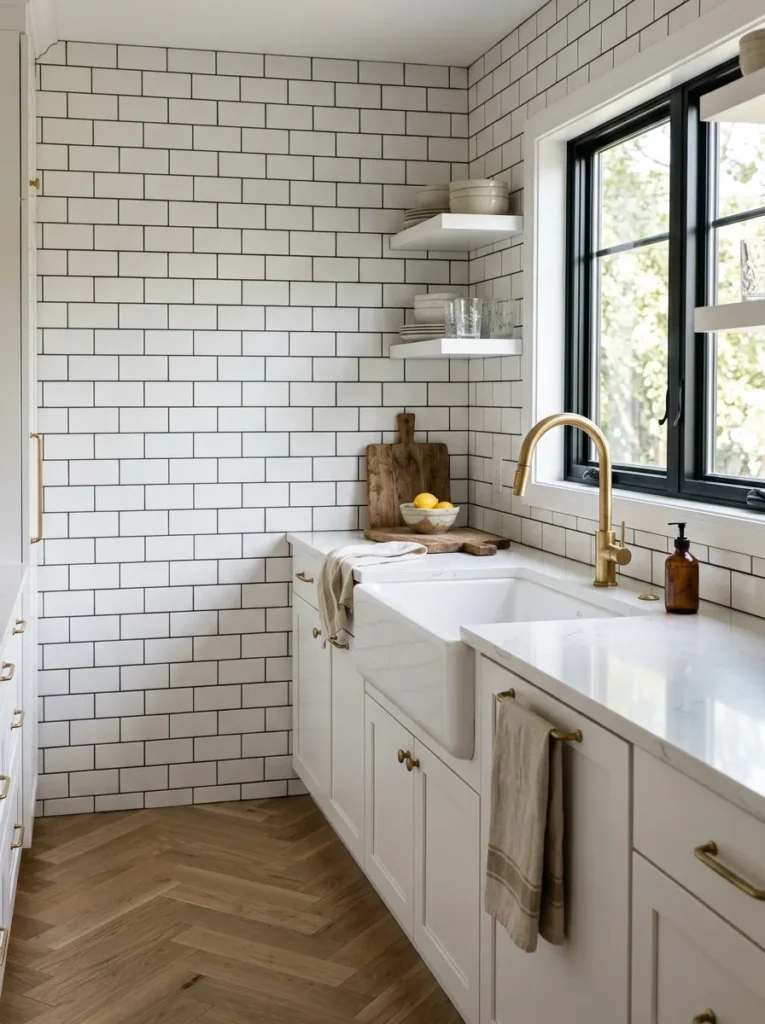
Subway tile in white is one of the most classic kitchen choices available, but the grout color is what actually determines whether the wall reads as a flat white plane or a textured, deliberate surface. Dark grout against white tile traces the grid pattern clearly, giving the backsplash graphic structure that white-on-white grout tends to wash out entirely. This idea works particularly well behind a stove or sink where the backsplash gets the most visual attention, since the contrast rewards close-up viewing in a way a plainer treatment wouldn’t.
3. A White Marble Waterfall Island
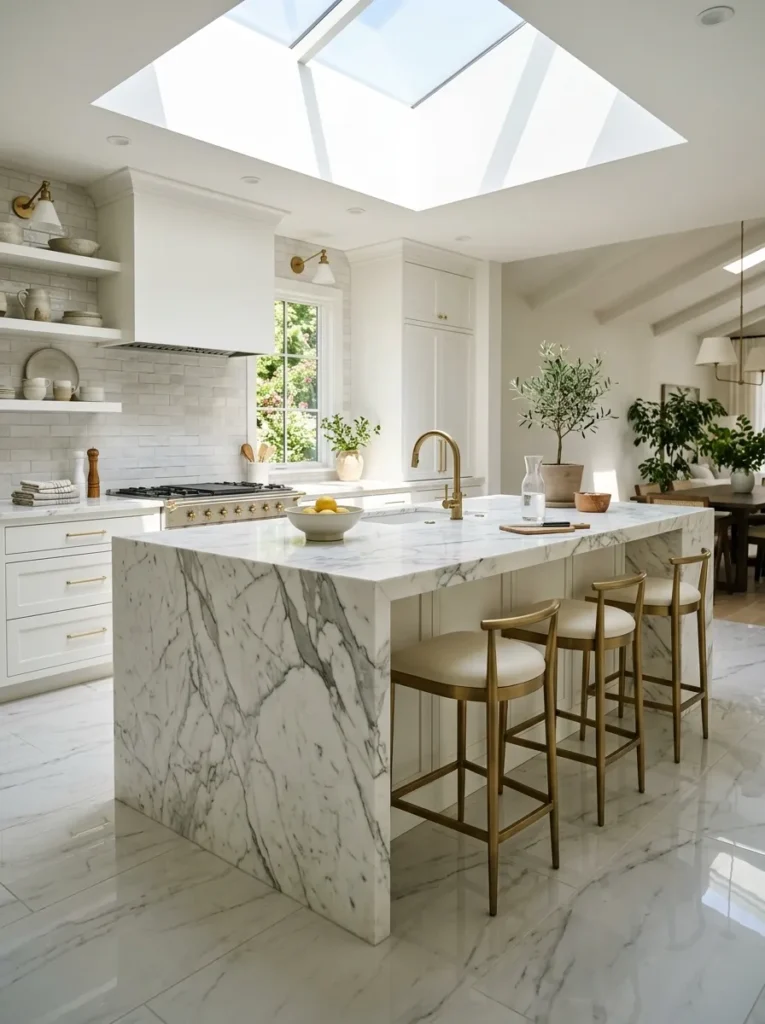
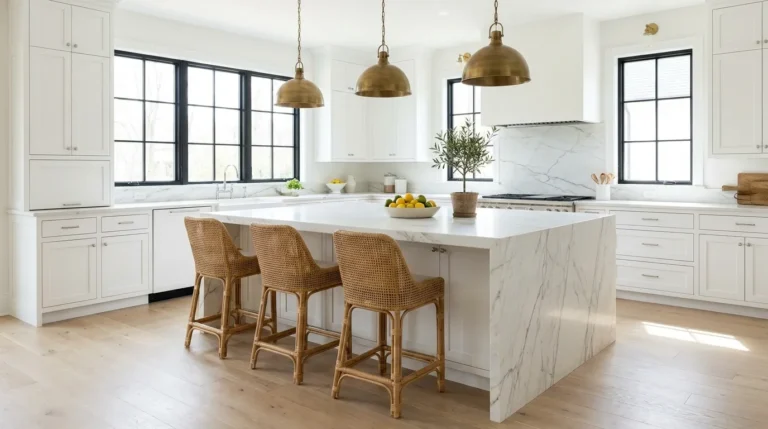
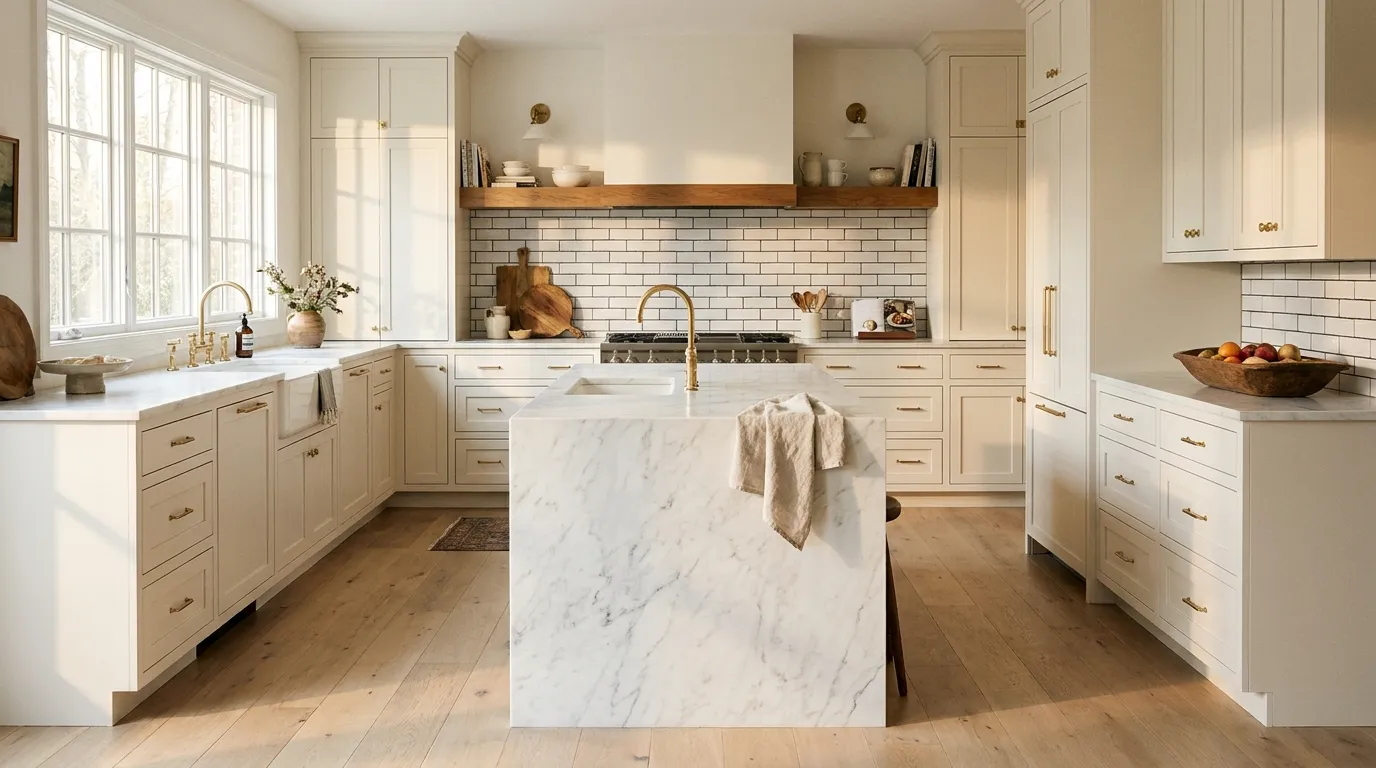
A waterfall edge, where the countertop material continues down the sides of the island all the way to the floor instead of stopping at a standard edge profile, turns the island into a sculptural object rather than just a work surface. White marble specifically suits this treatment because the veining reads as a continuous, flowing pattern down the vertical face, an effect a solid white quartz or laminate can’t replicate. This idea works best as the kitchen’s primary investment piece, so keep surrounding finishes simpler — the island should be the one thing in the room doing the most visual work.
4. Two-Tone White: A Colored or Wood Island Against White Perimeter Cabinets
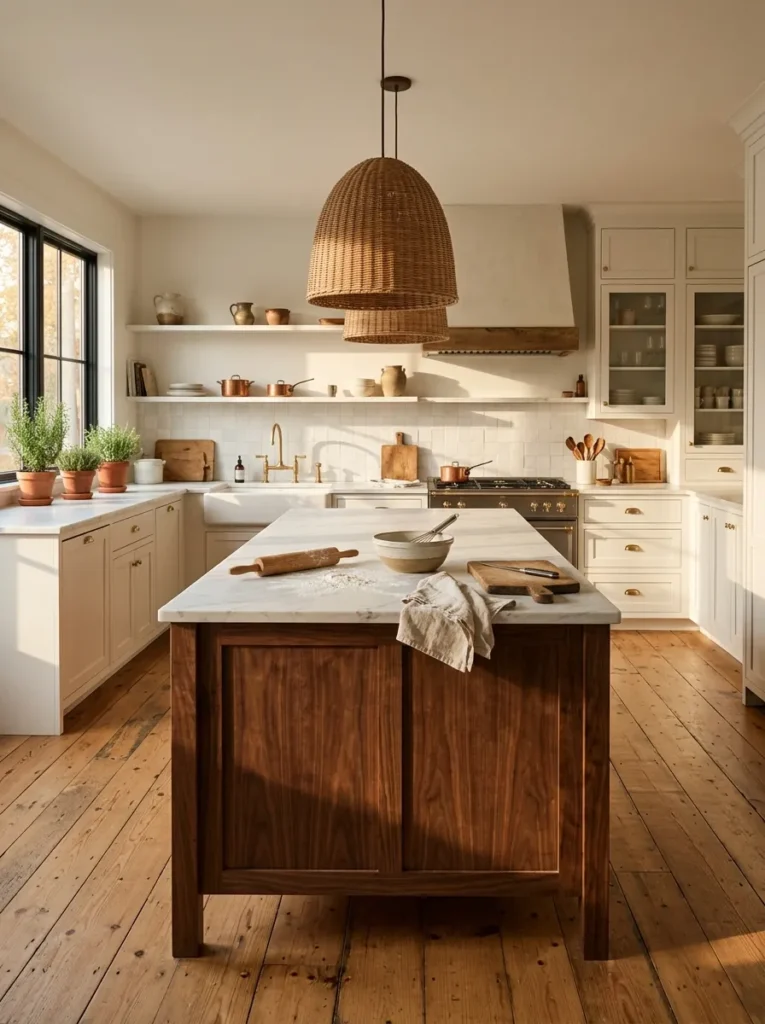
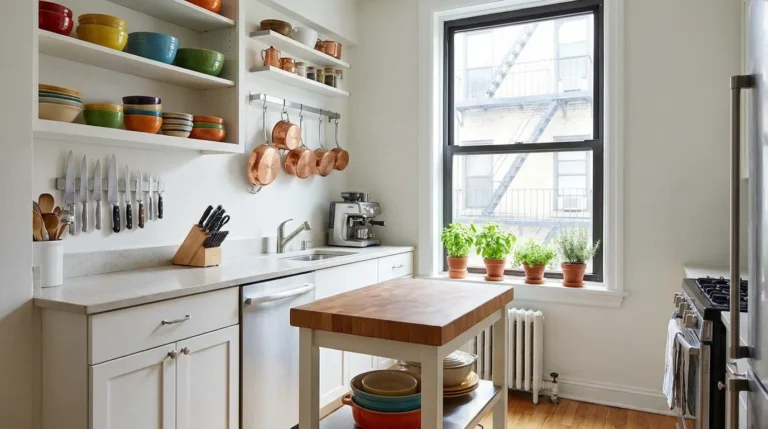
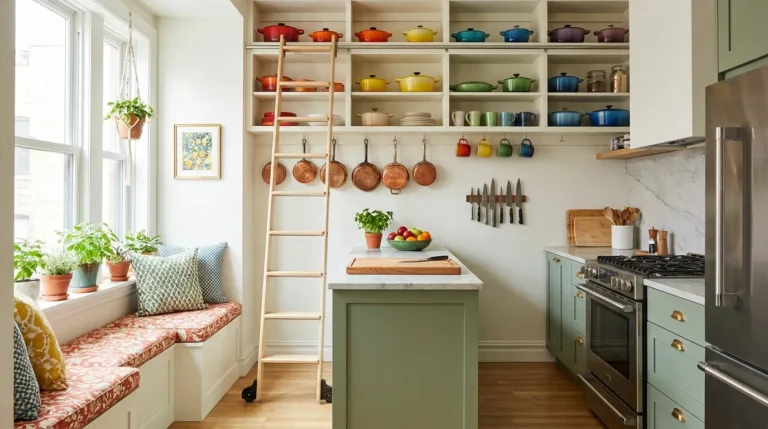
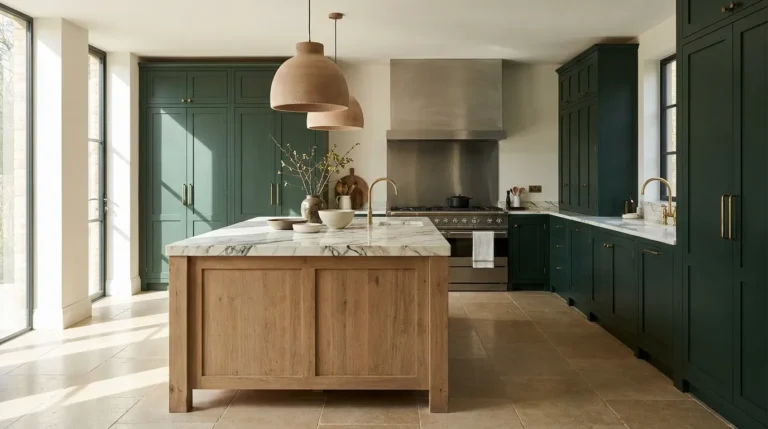
An all-white kitchen can start to feel monotone without a single strong contrast point, and a wood-toned or colored island gives the eye somewhere to land while the rest of the room stays bright and reflective. Keep the island’s countertop in white or a pale stone even when the cabinetry below is wood-toned, since a fully wood island can pull the room’s attention away from the white scheme entirely rather than complementing it. This idea also makes practical sense for households that worry about white cabinetry showing wear at the busiest workstation, since the island sees the most daily contact.
5. White Open Shelving Styled as a Curated Display
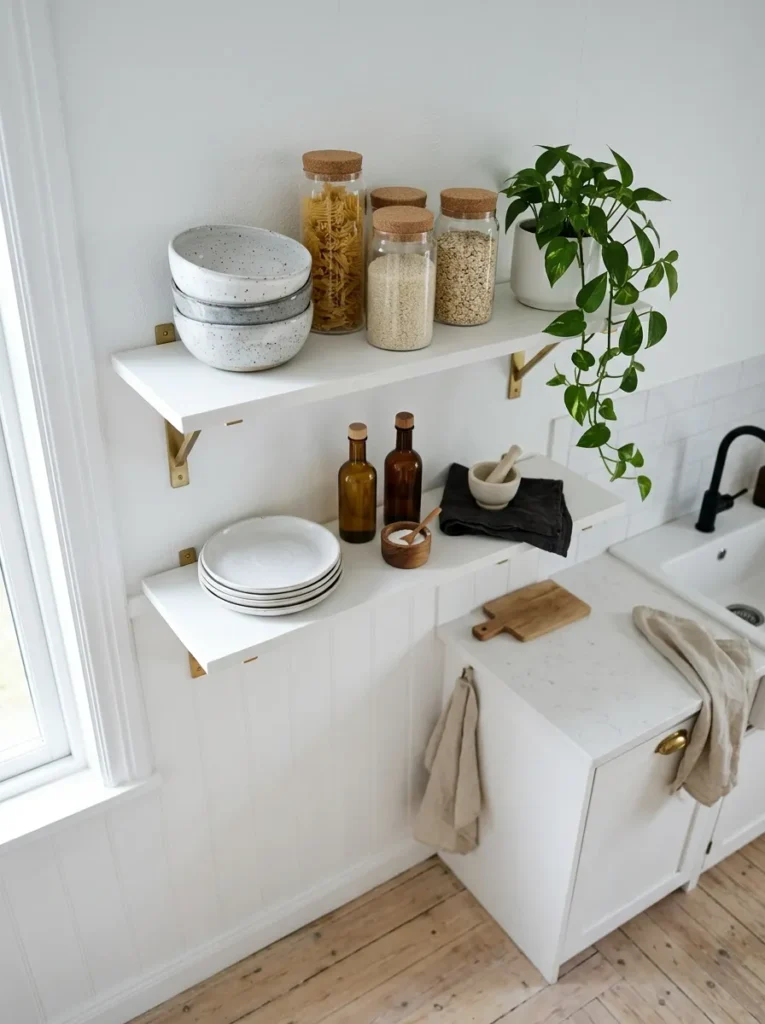
Open shelving in a white kitchen does double duty as both storage and styling, since the white backdrop lets whatever sits on the shelf become the room’s actual color and texture story. Group items by material rather than by use — ceramics together, glass together, woven baskets together — since visual cohesion matters more here than functional logic when everything is on display. Leave real negative space between groupings rather than filling the shelf edge to edge, since a white kitchen’s calm depends partly on restraint in what gets displayed against it.
6. Brass or Gold Hardware: An Easy White Kitchen Idea for Instant Warmth
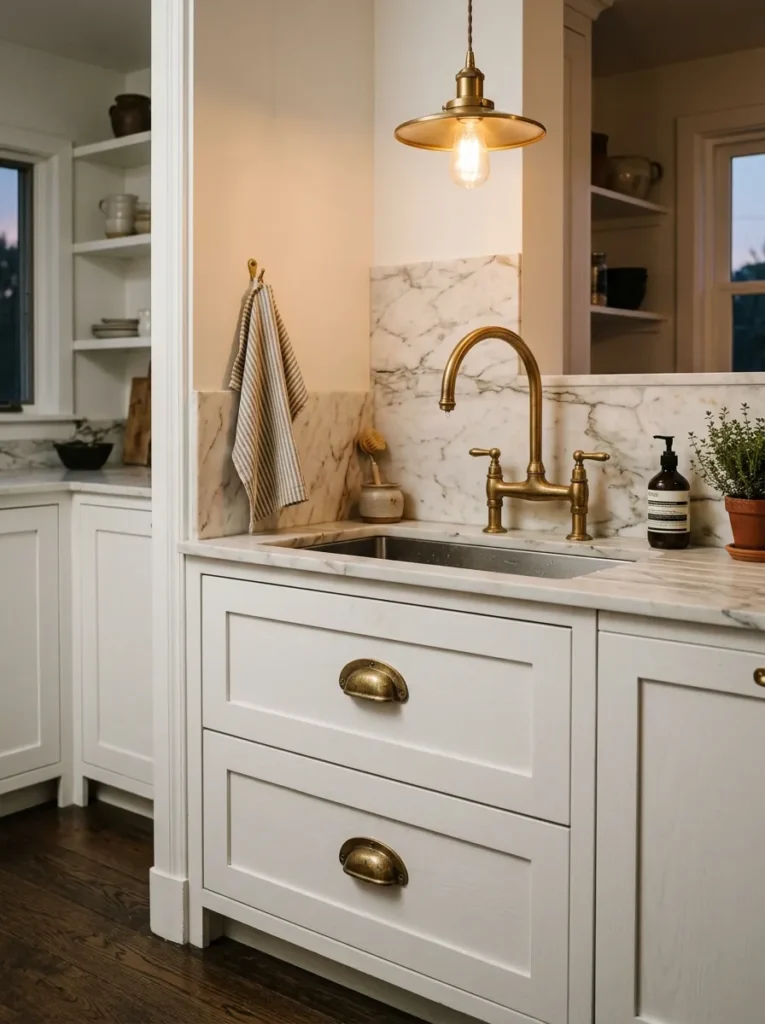
White cabinetry alone can feel cool or sterile without a metal finish to warm it up, and brass or gold hardware does that job more efficiently than almost any other single change in a kitchen. The warmth in the metal catches light in a way chrome or matte black never does, softening the white surface around it without requiring any paint or material change. This is one of the lowest-cost updates on this entire list, since swapping pulls and a faucet rarely requires more than a screwdriver and an afternoon.
7. White Beadboard or Paneled Island Front
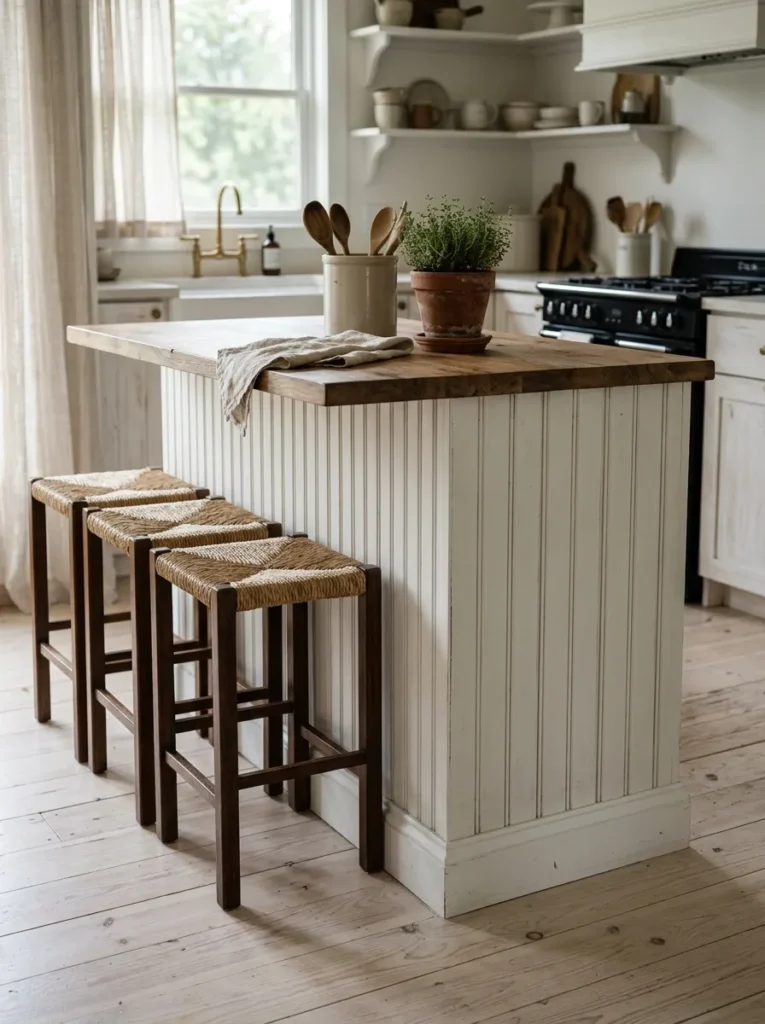
A flat-front island can disappear into the rest of an all-white kitchen, while beadboard or vertical paneling on the island face gives that one piece of furniture enough texture to stand on its own. The grooved detail catches shadow in a way a smooth painted surface can’t, adding visual interest without introducing a second color into the room. This idea suits a cottage, coastal, or farmhouse-leaning white kitchen specifically, since the paneling reads more traditional than a sleek slab-front island would in the same space.
8. Matte Black Fixtures Against an All-White Kitchen
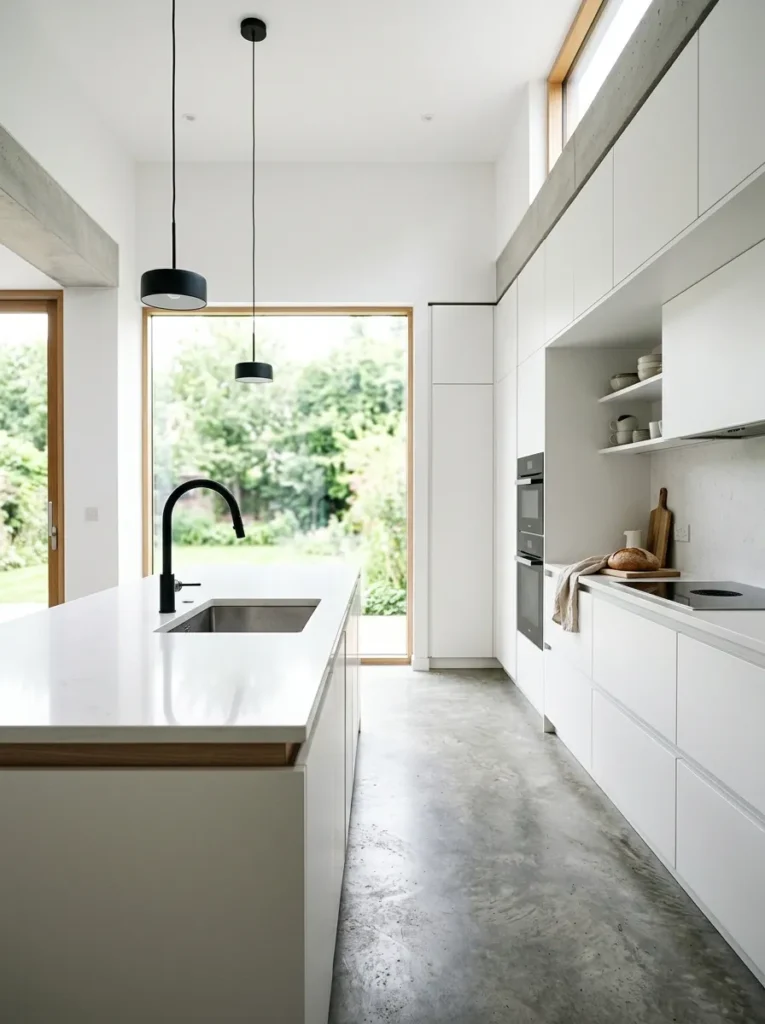
Matte black is the highest-contrast accent available against white, and a little of it goes much further than brass or chrome toward giving an all-white kitchen visual definition. Limit it to two or three fixtures total — a faucet, pendant lights, maybe cabinet hardware — rather than spreading it across every metal surface in the room, since too much black against white starts to feel like a different design statement entirely rather than an accent. This idea suits modern and minimalist white kitchens specifically, since the stark contrast reads as intentional in a way it might not against a softer, more traditional white scheme.
9. Handmade Zellige-Style Textured Tile Backsplash
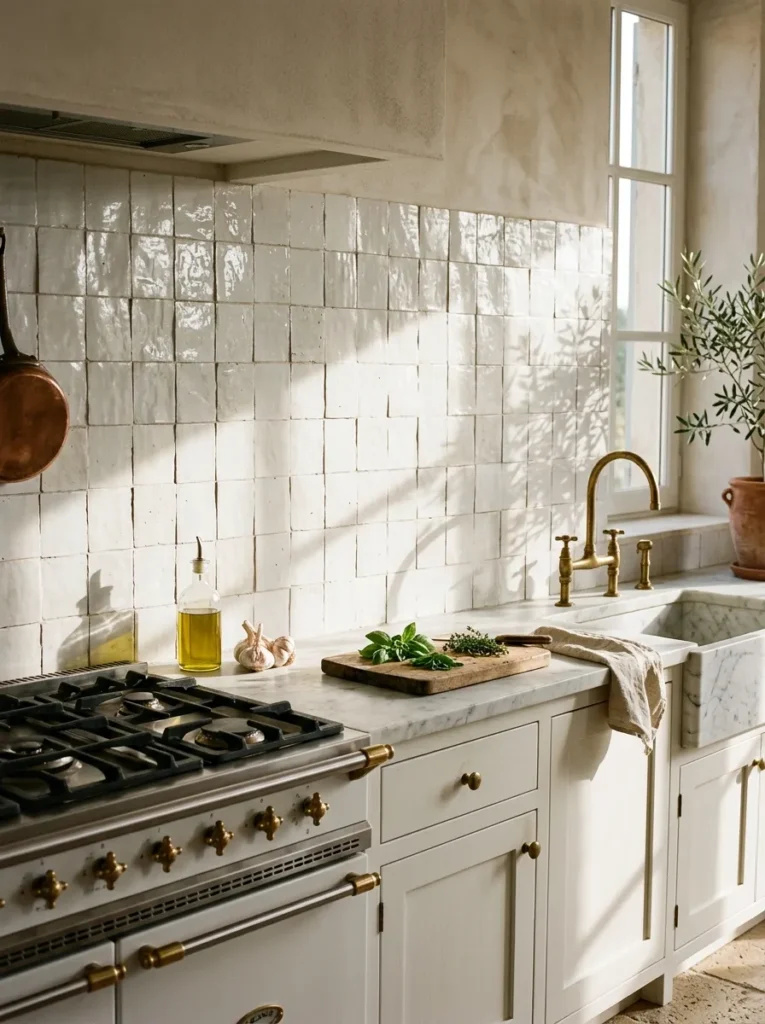
Handmade zellige or other artisan-glazed tile brings white into a kitchen with built-in variation that mass-produced tile can never achieve, since each piece has slightly different glaze pooling, surface texture, and even subtle color shift from one to the next. Light catches this irregularity throughout the day in a way a uniform tile simply reflects flatly, giving the backsplash a living, shifting quality. This idea costs noticeably more than standard subway tile, so it suits kitchens where the backsplash is meant to be a genuine design feature rather than a background element.
10. Glass-Front White Cabinets with Interior Lighting
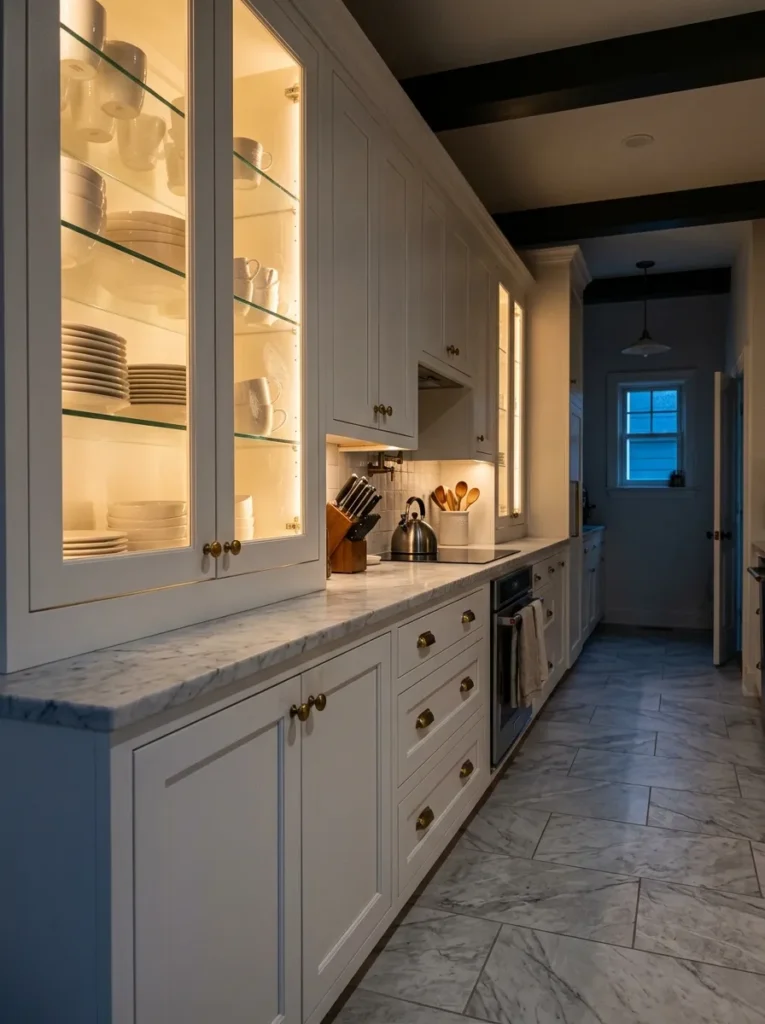
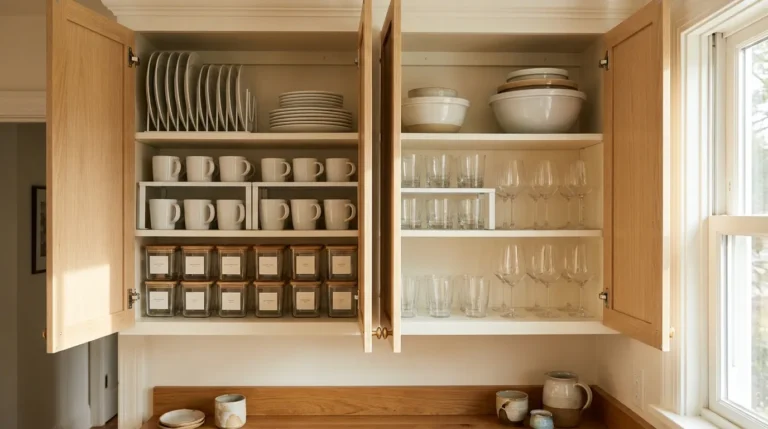
Interior lighting inside glass-front cabinets turns a white kitchen’s storage into a lit display rather than just visible inventory behind glass, especially once evening falls and the room’s other light sources dim. White dinnerware against a white cabinet interior might sound like it would disappear, but warm, low LED lighting actually highlights the subtle texture and shape variation between pieces in a way flat daylight doesn’t. This idea suits upper cabinets specifically, near eye level, since lighting placed too high or too low loses most of its visual impact.
11. White Venetian Plaster or Limewash Walls
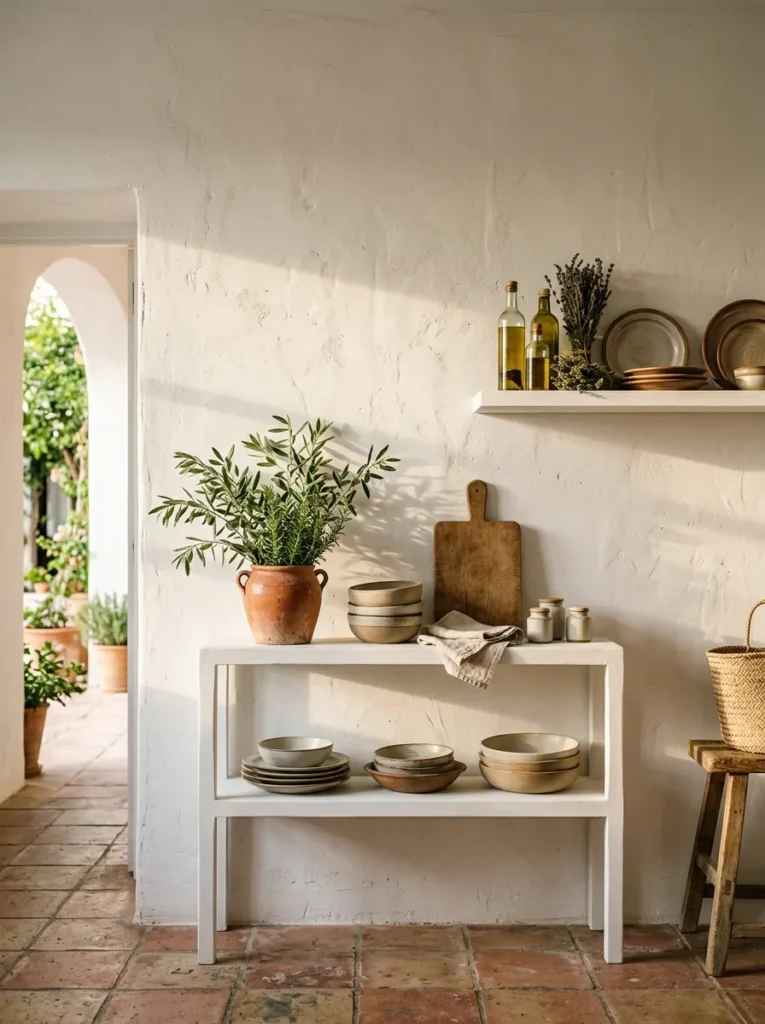
Limewash and Venetian plaster bring depth to a white wall that flat paint can’t replicate, since the hand-applied texture catches and scatters light unevenly rather than reflecting it in one uniform plane the way a rolled paint finish does. This subtle variation reads as warmer and more artisanal than a perfectly smooth white wall, which matters in a kitchen where large expanses of cabinetry are already smooth and reflective. This idea suits kitchens with at least one substantial open wall section, since the texture needs real square footage to be appreciated rather than getting lost behind cabinetry and appliances.
12. Warm Wood Floating Shelves Against White Cabinetry
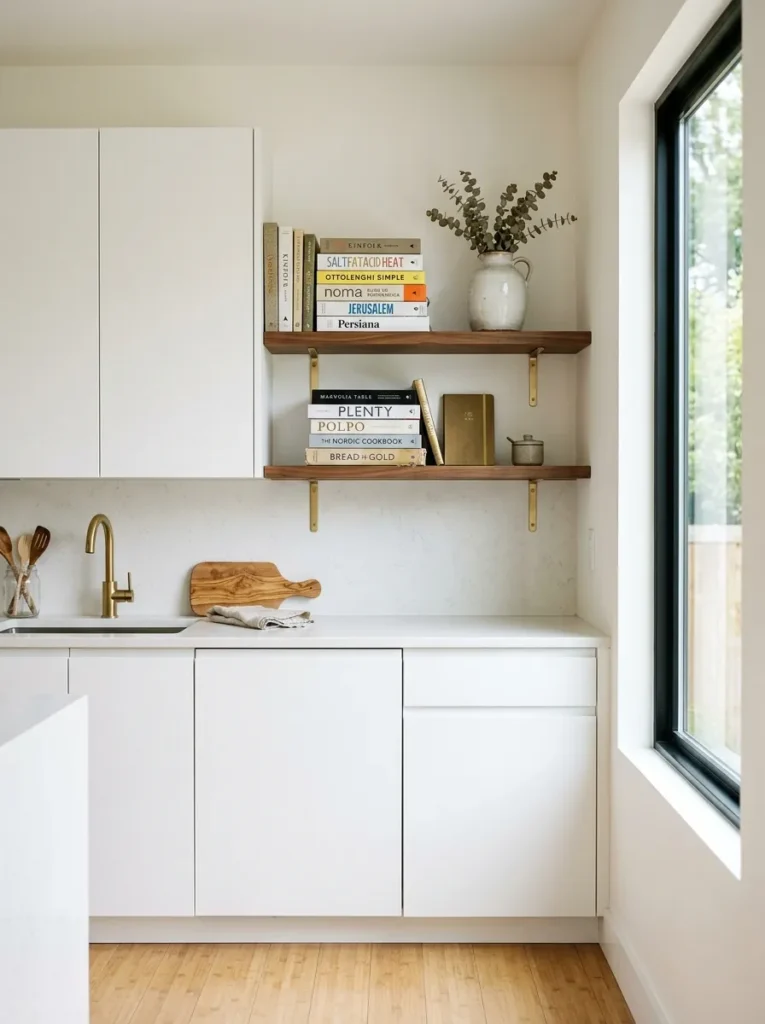
A single material change — swapping one section of white upper cabinetry for open wood shelving — gives an all-white kitchen warmth and material contrast without disrupting the overall color scheme. The wood grain provides texture that white cabinetry, however well-detailed, simply doesn’t have, and it gives you a place to display items that don’t need to stay hidden behind a cabinet door. This idea works particularly well flanking a window or range hood, where matching shelves on either side create symmetry while still introducing the wood accent.
13. A White Paneled Range Hood Built into the Cabinetry
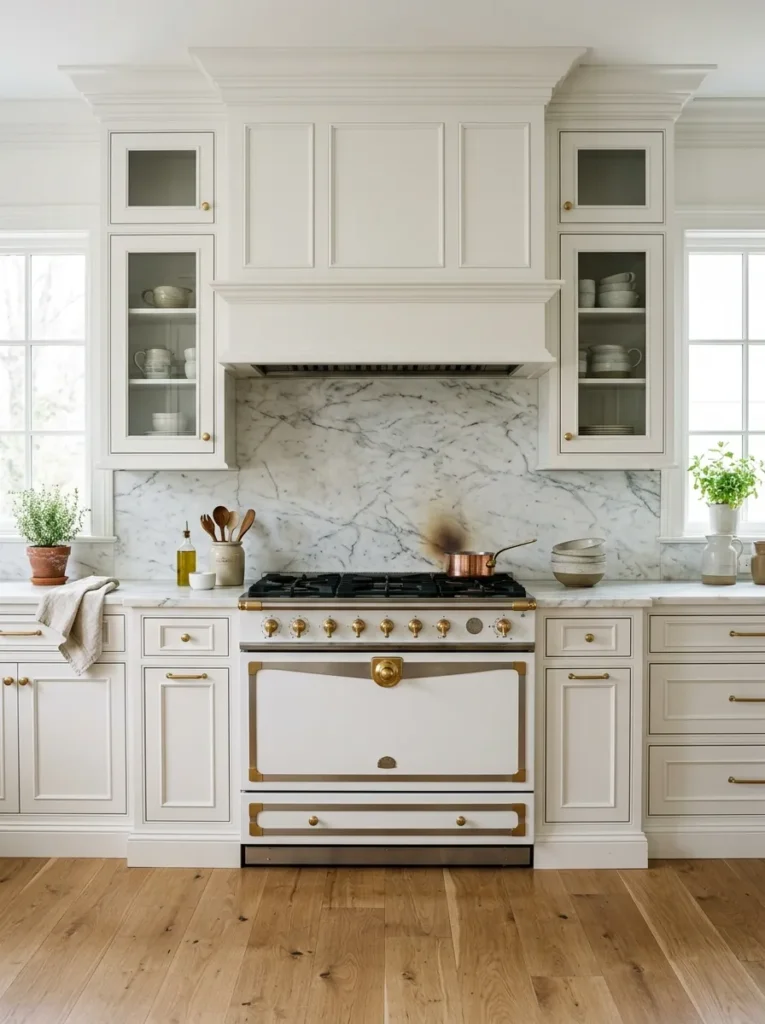
A range hood covered in matching paneling and trim disappears into the cabinetry around it, reading as architecture rather than as an obvious mechanical fixture standing out against the wall. This treatment suits a more formal or traditional white kitchen specifically, where the goal is a cohesive, built-in look rather than a stainless steel hood asserting itself as a separate object. Match the panel detailing — recessed shaker lines, applied molding — exactly to the surrounding cabinets, since even a slightly different panel style undercuts the seamless effect this idea depends on.
14. An Apron-Front White Farmhouse Sink
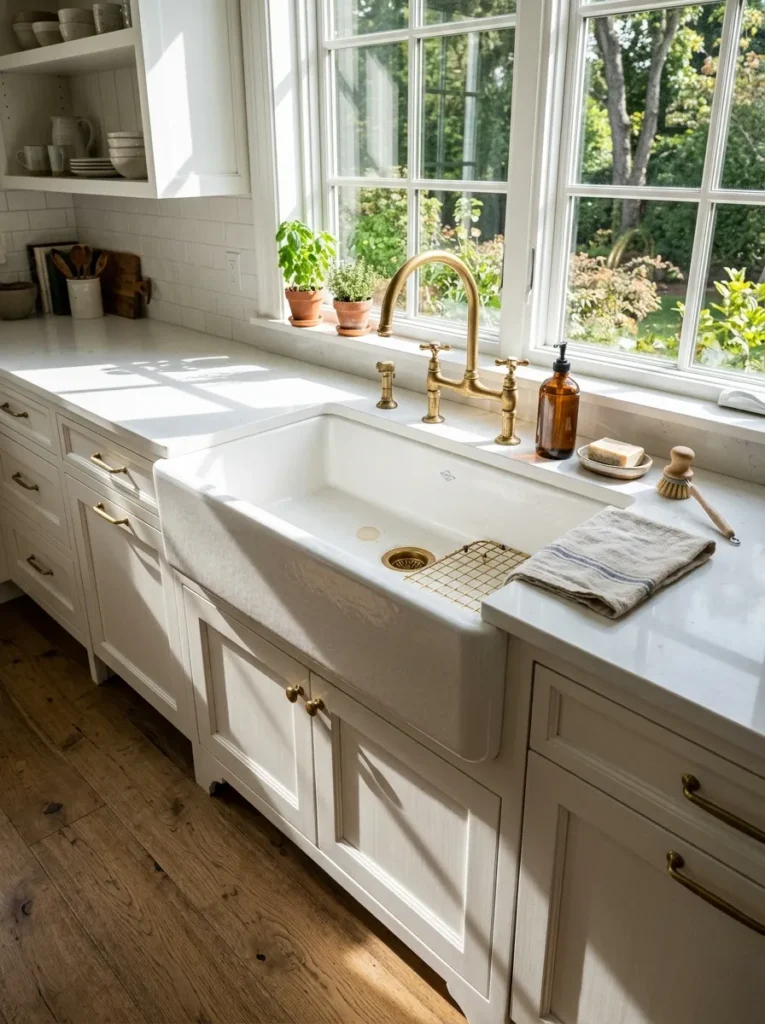
An apron-front, or farmhouse, sink extends slightly forward of the cabinet line, replacing what would otherwise be a flat cabinet panel with a deep basin that becomes a genuine focal point rather than just a fixture. The exposed front face gives the white kitchen another surface to play with materials and finish, whether fireclay, cast iron, or fluted detailing on the apron itself. This idea works best when the surrounding cabinet is built specifically to accommodate the sink’s exact depth and width, since a retrofit into a standard cabinet opening rarely sits flush the way a purpose-built base does.
15. White Geometric Floor Tile for Pattern Underfoot
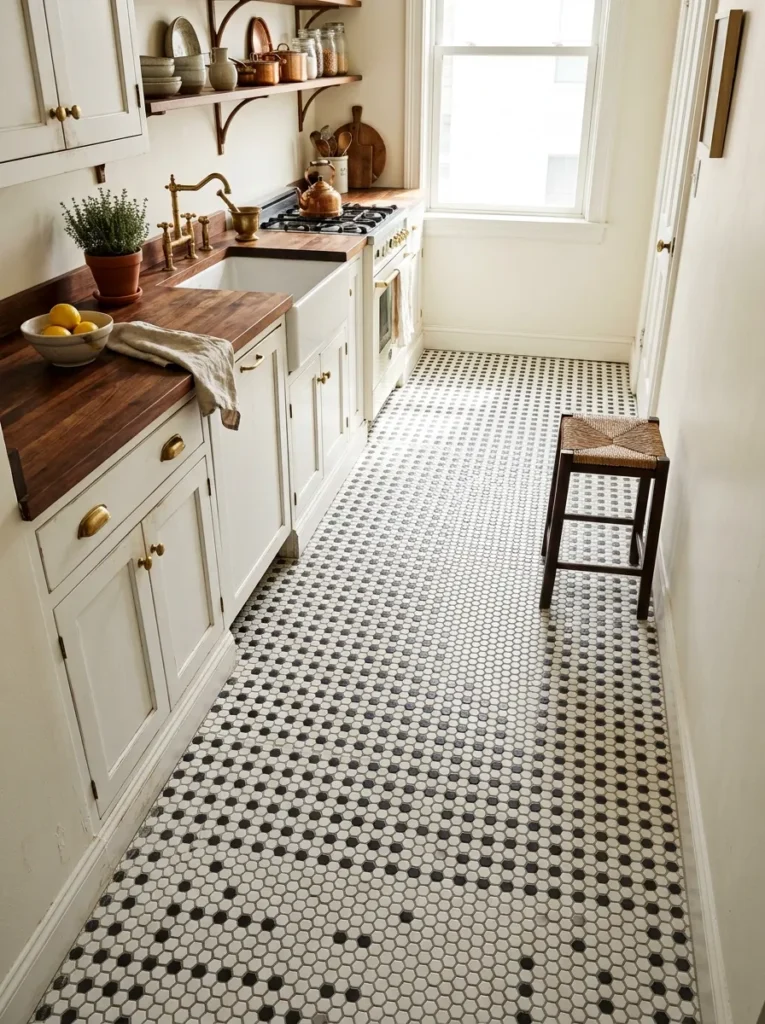
A patterned floor in white and a single contrasting color, whether hexagon, checkerboard, or a more intricate encaustic-style design, grounds an all-white kitchen with visual interest that lives entirely underfoot, where it never competes with cabinetry, backsplash, or countertop choices above it. This idea works especially well in kitchens where the walls and cabinets stay deliberately simple, since the floor is doing the room’s primary pattern work and additional pattern elsewhere would compete rather than complement. Choose a tile with some texture or matte finish rather than high-gloss, since a glossy patterned floor can read slippery and overly busy underfoot in a working kitchen.
16. Layered White Tones Across Cabinets, Walls, and Trim
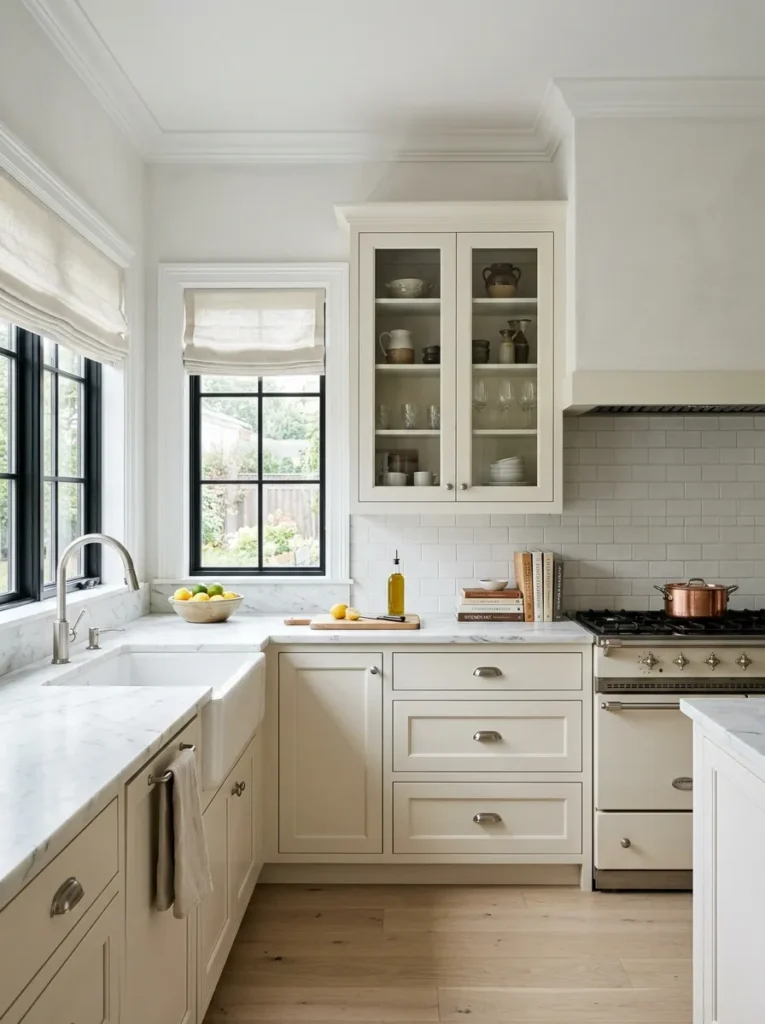
A kitchen built from several different whites rather than one single shade repeated everywhere reads as more considered and layered, since the subtle tonal shifts between cabinet, wall, and trim create depth that a single matched white can flatten out entirely. The key is choosing whites with the same underlying temperature — all warm or all cool — since mixing a warm ivory cabinet with a stark blue-white wall creates a visible clash rather than a deliberate gradient. This idea requires more careful planning than most others on this list, since it depends on testing multiple paint and finish swatches side by side before committing to any of them.
17. White Kitchen Cabinetry Paired with Black-Framed Windows
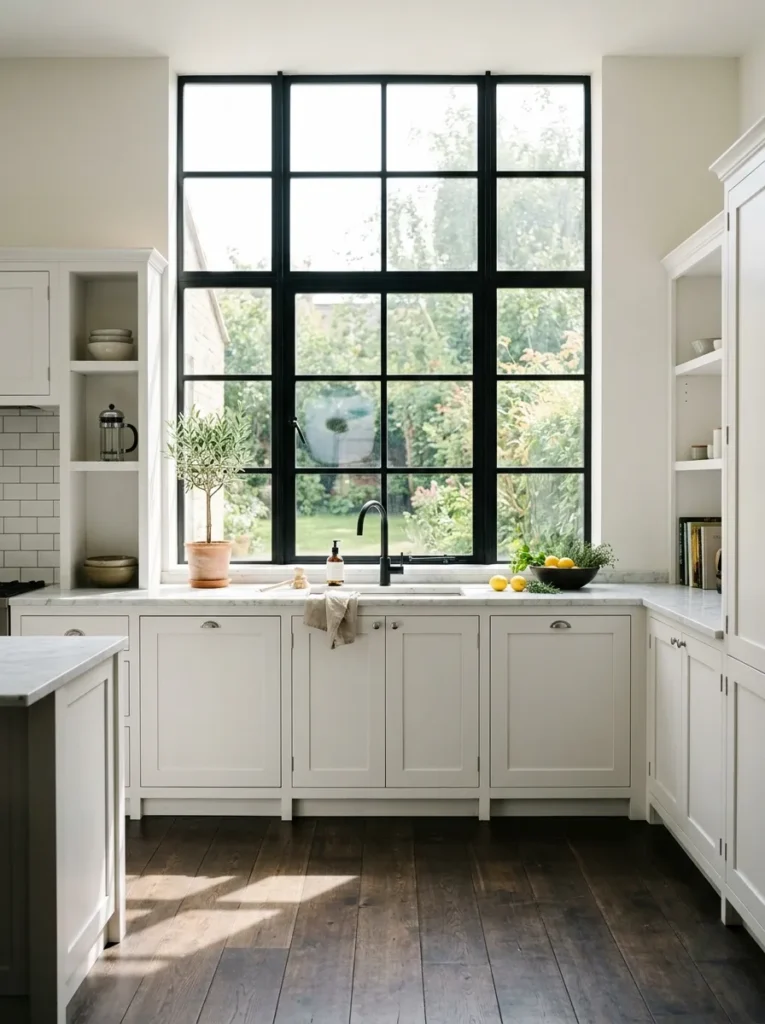
Black window frames against white cabinetry give a kitchen a graphic, architectural line that white-framed windows blend into and disappear, especially from a distance where the window itself becomes part of the wall rather than a distinct feature. This idea works particularly well in kitchens with large or multiple windows, since the black framing reads as a deliberate design choice rather than simply existing fixtures. Pair it with at least one other black accent in the room — hardware, a light fixture — so the window frames don’t feel like an isolated, disconnected detail against an otherwise all-white and brass or chrome palette.
Final Thoughts on Designing a White Kitchen
The most successful white kitchen ideas all share the same underlying principle: white works best as a foundation for contrast and texture, not as the entire design statement on its own. A warm wood shelf, a brass faucet, a textured tile, a black window frame — each gives the white room something to play against, which is what keeps it from reading as flat or sterile. Choose the contrast points that match your own style rather than trying to layer all seventeen ideas into a single kitchen at once.
If there’s one thing worth resisting, it’s the assumption that an all-white kitchen has to mean an entirely matched, single-shade kitchen. The most elegant ones almost always mix at least two or three different whites, finishes, or textures rather than committing to one flat tone across every surface — that variation is what separates a white kitchen that feels curated from one that just feels blank.
Save this guide to your Pinterest board so you can revisit these white kitchen ideas whenever you’re ready to brighten up your own space.