20 Coffee Station Ideas That Feel Cozy and Organized
A dedicated coffee station does something a coffee maker sitting on a cluttered counter never can: it makes the morning ritual feel intentional. The best coffee station ideas aren’t about buying more equipment — they’re about giving everything you already own a defined home so the routine flows instead of fumbles. When the mugs live where you reach for them, the beans are at arm’s length from the grinder, and the whole setup sits in a corner of the kitchen that actually belongs to it, the experience changes. It stops feeling like you’re fighting your kitchen for counter space and starts feeling like the kitchen was designed for you.
This roundup covers 20 distinct coffee station setups — from a floating shelf above the counter to a fully dedicated coffee bar built into a kitchen cabinet run, from apartment-scale two-shelf carts to freestanding antique buffets repurposed for the job. Each idea covers what makes the setup work, where it fits in your home, and how to organize it so it stays functional rather than becoming another cluttered surface. Save the one that matches your space and your morning.
1. A Dedicated Cabinet Run with Hidden Storage
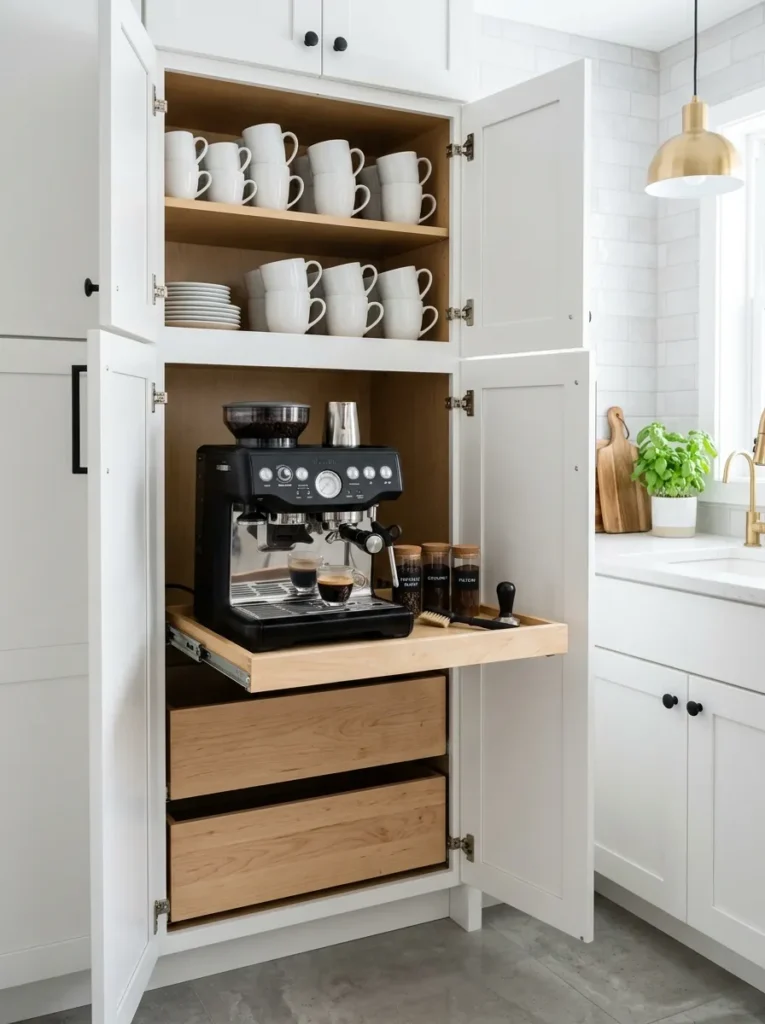
Converting one section of a kitchen cabinet run into a fully dedicated coffee station — with the upper cabinet holding mugs and beans and the lower cabinet concealing the espresso machine, which slides out on a pull-out shelf — keeps the kitchen looking clean from the doorway while concentrating every coffee-related item in one zone. The pull-out shelf for the espresso machine is the critical infrastructure detail: it means the machine lives behind a cabinet door when not in use but can be pulled forward to operate without moving it to the counter. This suits kitchens with enough cabinet footage to dedicate a 24- to 36-inch run to a single purpose.
2. A Floating Shelf Coffee Station Above the Counter
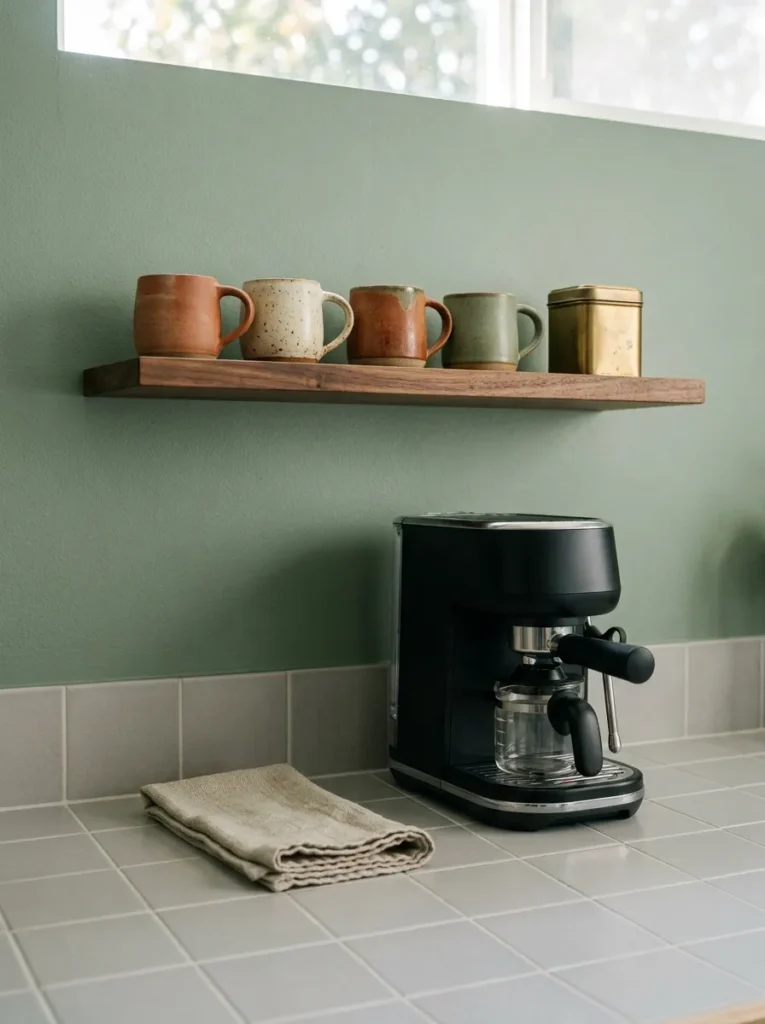
A single floating shelf installed directly above the coffee maker at the precise height needed to clear the machine’s lid creates a purposeful zone without claiming any additional counter space, since the shelf and machine share the same footprint. This is the right approach for small kitchens where a cart or dedicated cabinet isn’t possible, because the vertical wall space above an unused counter section is almost always available. Install the shelf at 18 to 20 inches above the counter surface — enough clearance for most machine lids to open fully — and use the shelf exclusively for mugs and one or two styled storage vessels.
3. A Bar Cart Repurposed as a Mobile Coffee Station
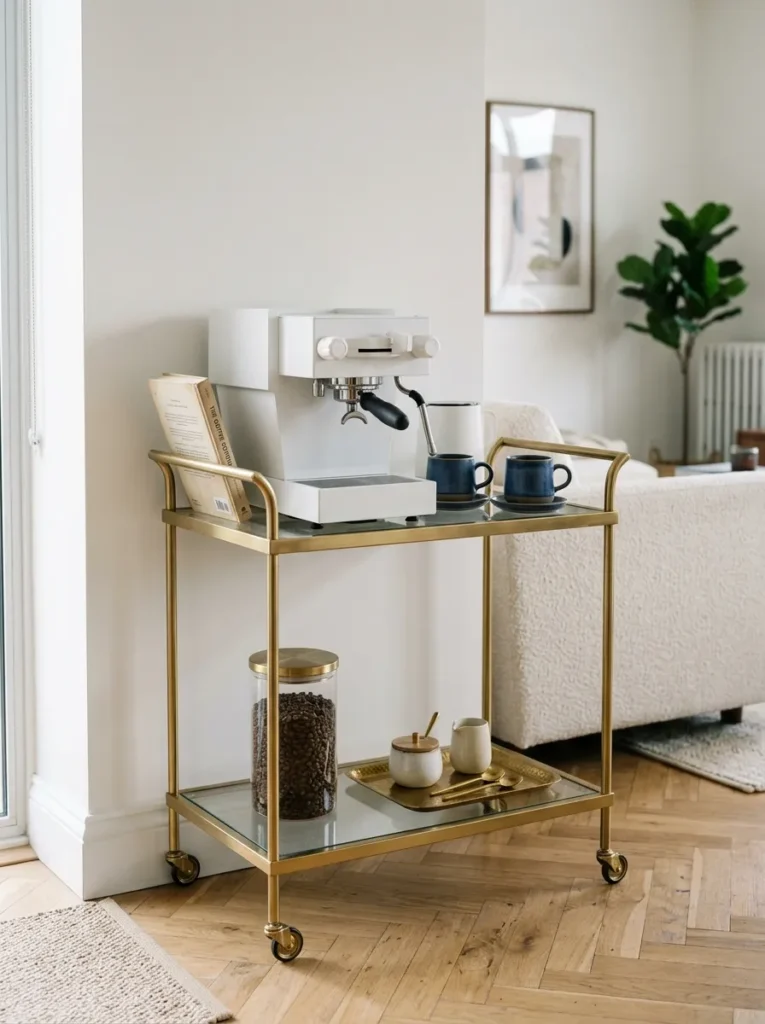
A two-tier bar cart — particularly a brass or matte black metal frame with a glass or marble-look top — makes an excellent mobile coffee station in open-concept spaces where there’s no designated kitchen corner to claim. The mobility is the functional point: the cart can be rolled into a reading nook in the morning, tucked back against a wall in the evening, or moved to a guest room during a visit. Organize the top tier for the machine, grinder, and daily mugs; use the bottom tier for a canister of beans, a box of pods, and extra mugs. A small handled tray on the top tier corrals loose items without adding bulk.
4. A Built-In Coffee Nook with a Countertop and Tile Backsplash
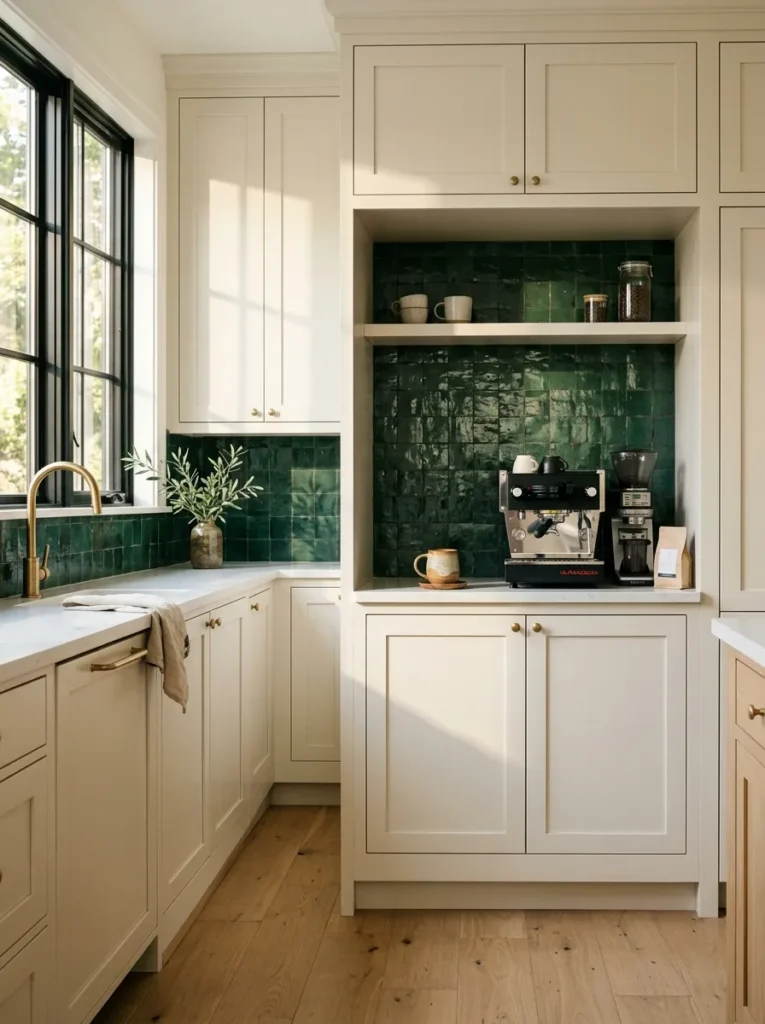
A purpose-built coffee nook — a small section of countertop with its own tile backsplash treatment, set slightly apart from the main kitchen counter by a change in tile pattern, counter material, or wall color — gives the coffee station a room-within-a-room quality that reinforces that this space has one job. The backsplash differentiation is the design move that makes the nook feel intentional rather than arbitrary; even a single row of a contrasting tile at the back of the counter signals that this zone was planned. This suits kitchens with a natural alcove or a dead-end counter section that isn’t used for food preparation.
5. An Open Shelf Coffee Station Styled with a Curated Mug Collection
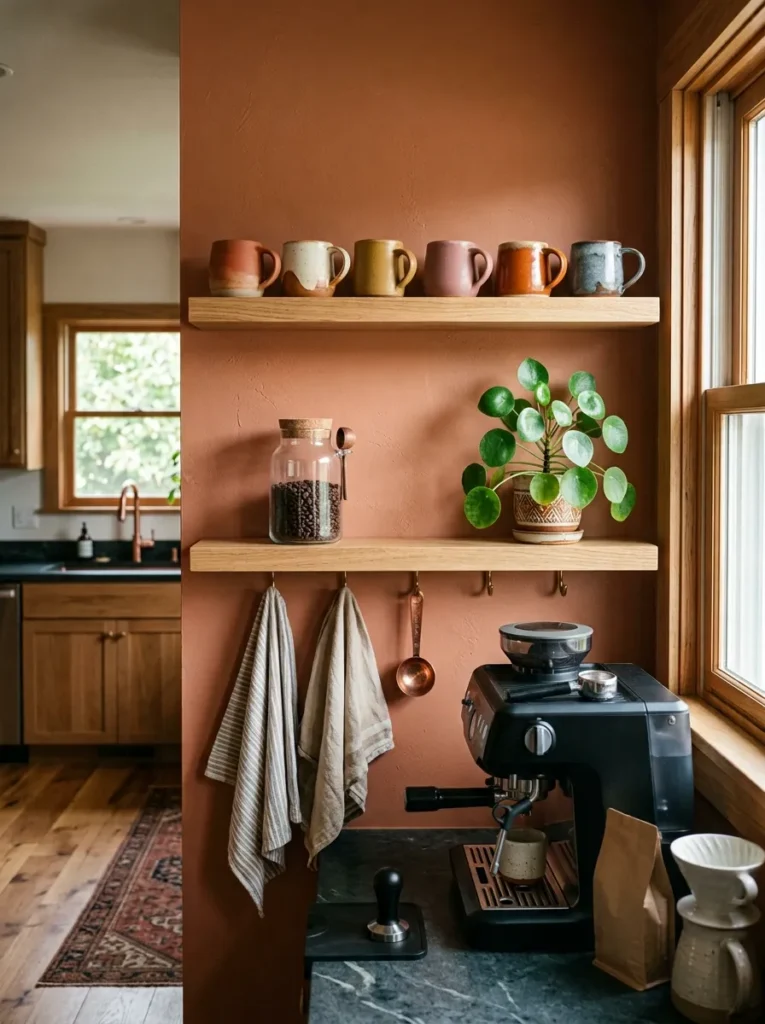
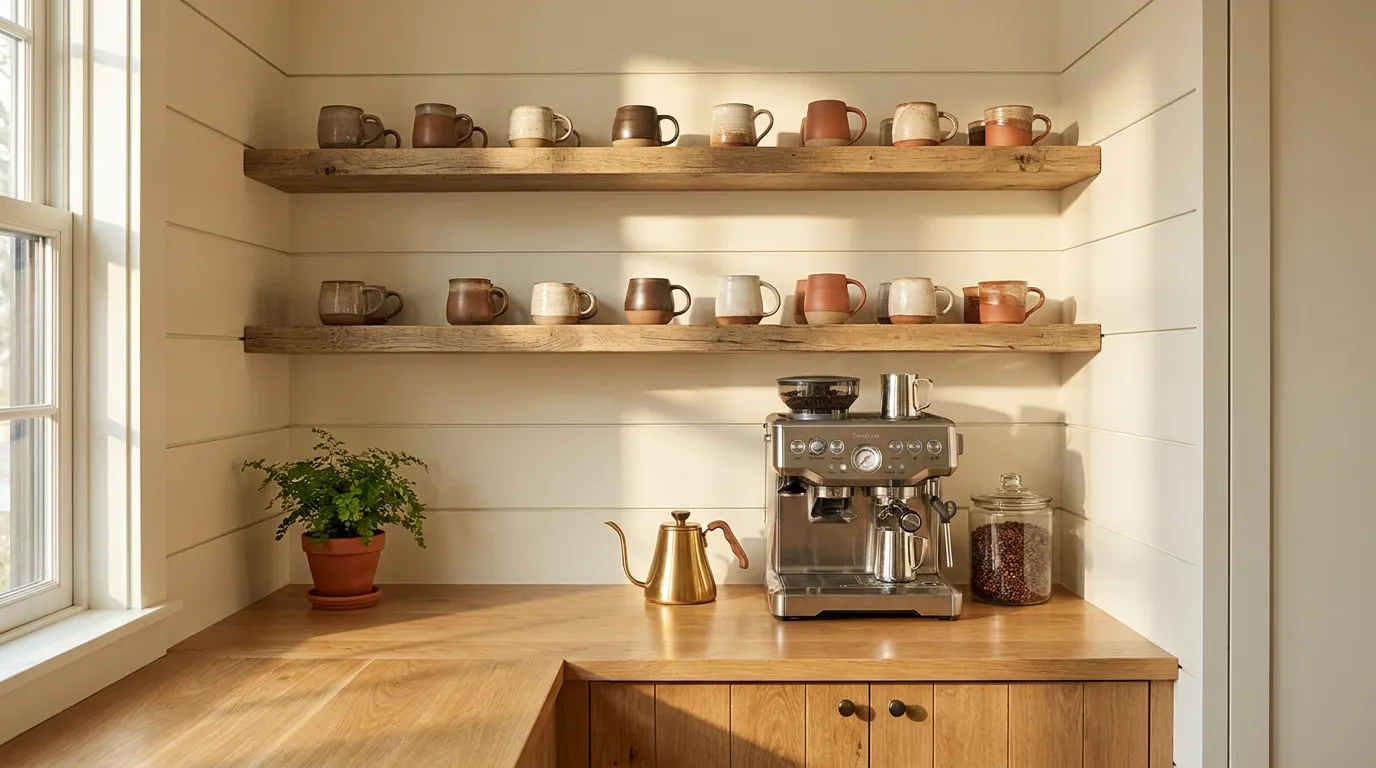
For people who have mugs they genuinely love — handmade ceramics, travel finds, vintage pieces — an open shelf coffee station that puts the mug collection on display treats them as the decor rather than hiding them in a cabinet. The organizing principle here is restraint: display only the mugs you actually use and genuinely love, since the shelf will only look intentional if the collection has a coherent visual character. A wall-mounted mug rack with hooks below the shelf, with canisters and the machine on the shelf itself, is the most space-efficient format for this approach.
6. An Antique Sideboard or Buffet as a Freestanding Coffee Bar
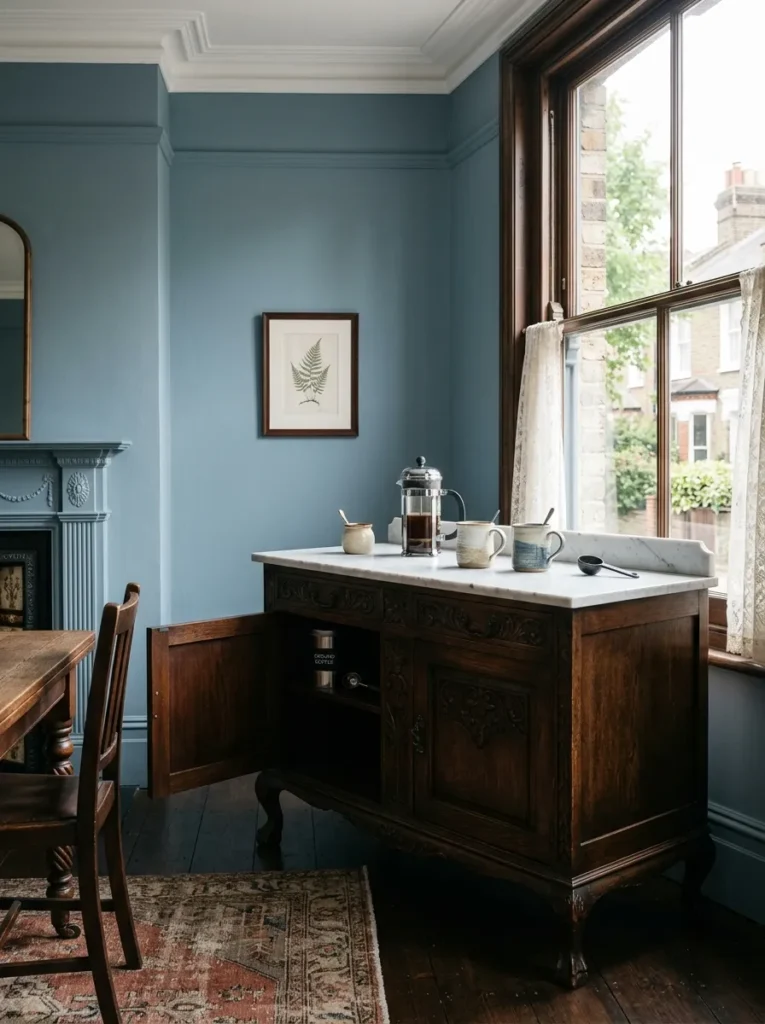
A chest-high antique sideboard or buffet repurposed as a freestanding coffee bar works beautifully in dining rooms, entryways, and open-plan spaces where there’s no counter space to claim but floor space is available. The storage it comes with — drawers for pods and accessories, cabinet space for a second machine or bulk supplies — is the functional advantage that a purpose-built shelf station can’t match. Choose a sideboard with solid, non-porous top material or add a piece of cut-to-size marble or butcher block to the existing surface if the original finish is too delicate for daily spills.
7. A Pegboard Coffee Station for Maximum Flexibility
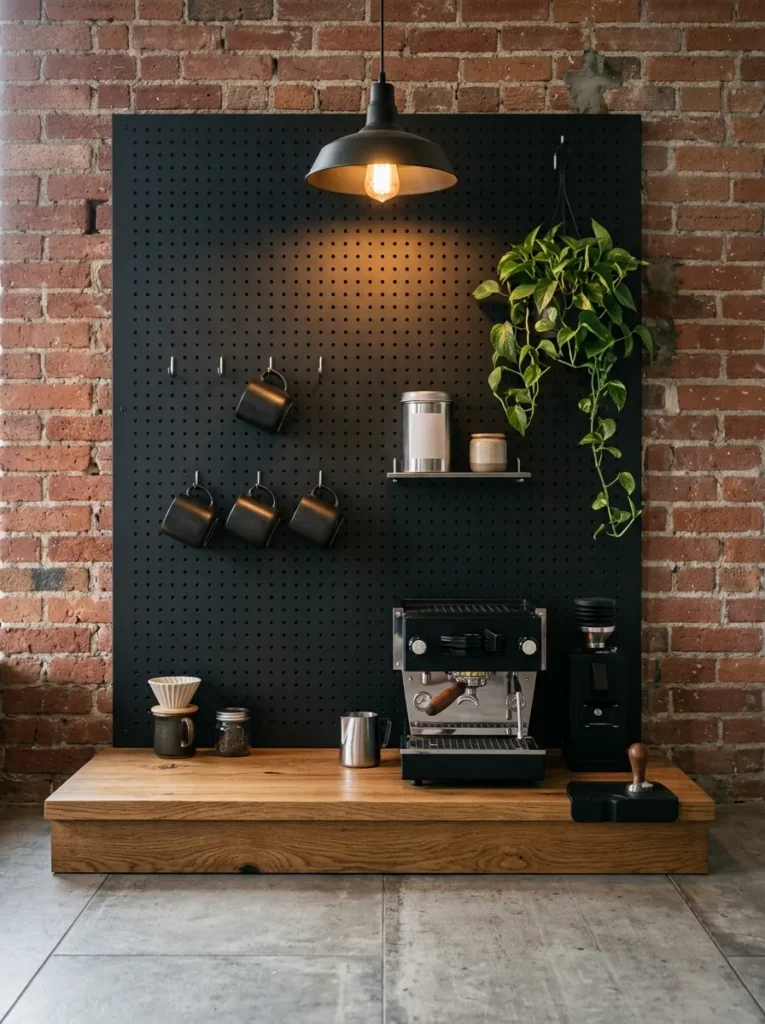
A painted pegboard panel mounted on the wall behind a counter section — with hooks for mugs, small shelves for beans and supplies, and a dedicated space for the machine below on the counter — gives a coffee station the organizational flexibility to evolve with a changing setup without new shelving or drilling. Pegboard hooks can be reconfigured in minutes, which matters when you add a new piece of equipment or change your routine. Paint the pegboard the same color as the wall for a tonal, built-in effect, or use a contrasting color to make it a deliberate design moment.
8. A Dedicated Coffee Station Drawer for Pod and Accessory Organization
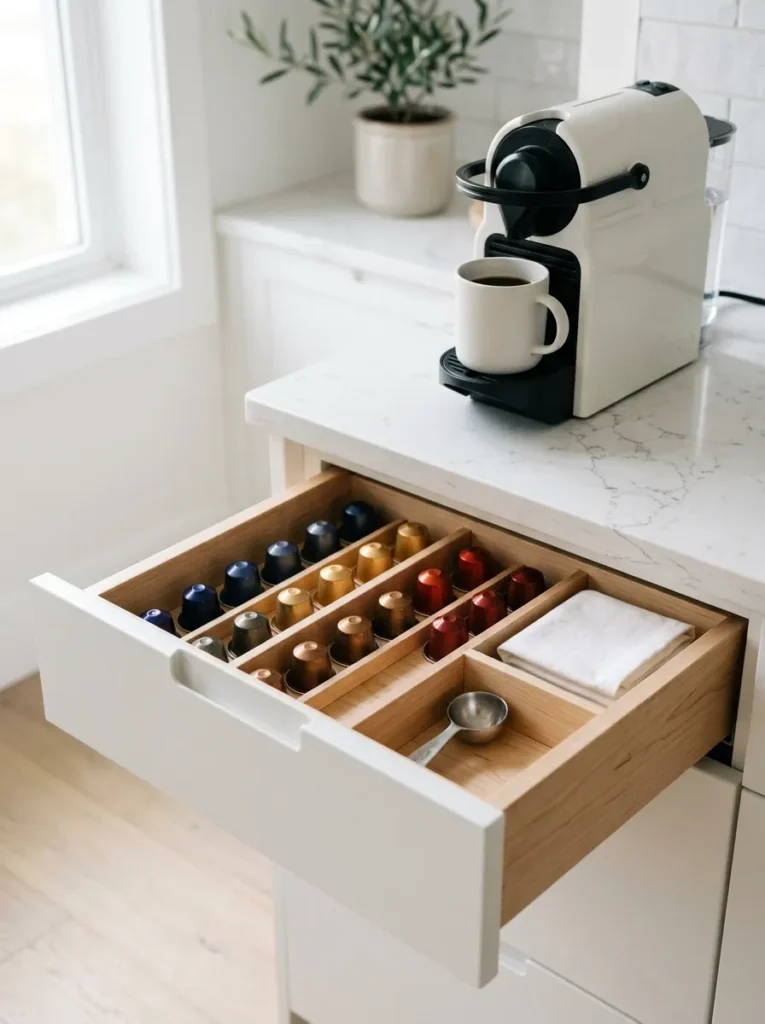
Rather than a visual display station, this idea focuses on the organizational infrastructure beneath the counter: a drawer directly below the coffee machine, divided with custom inserts, that holds pods, spare filters, a measuring spoon, and a small bag of beans in individual compartments. This eliminates the search for supplies that slows down the morning routine and keeps the counter above completely clear. Use a deep drawer divider system — the kind designed for kitchen utensils — with the compartments sized specifically for the pod format you use so they don’t rattle or slide.
9. A Cottage Kitchen Coffee Corner with a Chalkboard Wall
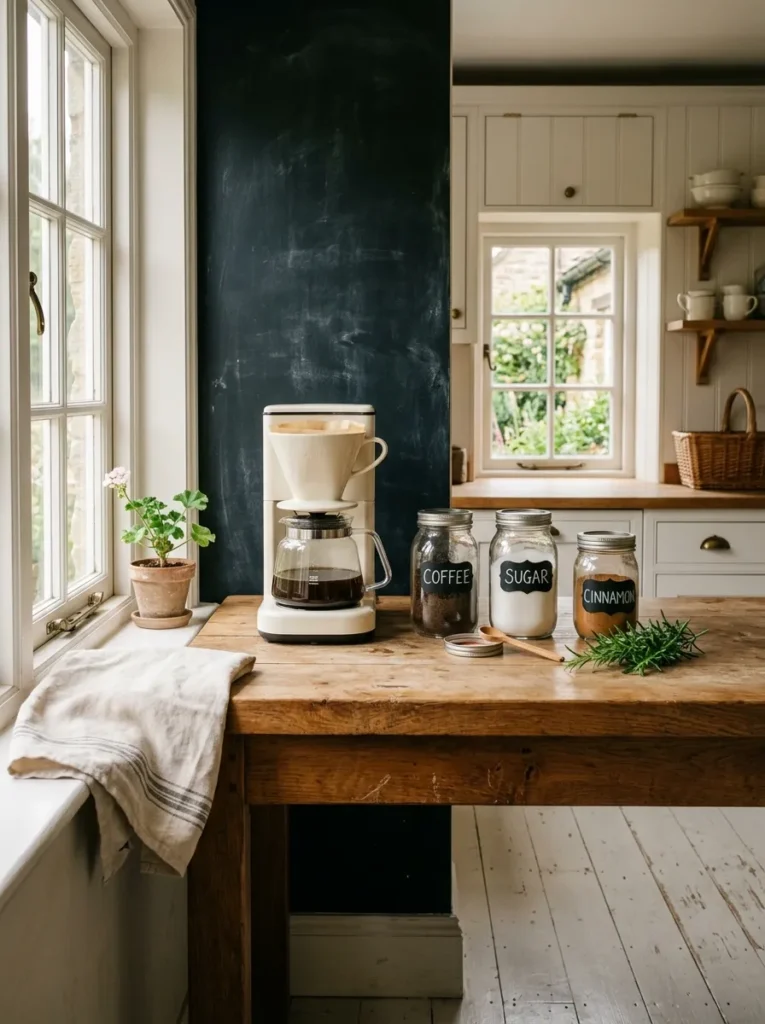
Painting the wall behind a small kitchen counter section with chalkboard paint creates a changeable background for a coffee station that can display the week’s coffee menu, a morning quote, or just a casual label for each jar and canister. This suits cottage, farmhouse, and eclectic kitchen styles where a chalkboard wall reads as charming rather than precious. Use chalk markers rather than traditional chalk to keep the labels crisp and prevent dust from drifting onto the counter below — they wipe clean with a damp cloth when you want to update the display.
10. A Minimalist Coffee Station with a Single Tamped Tray
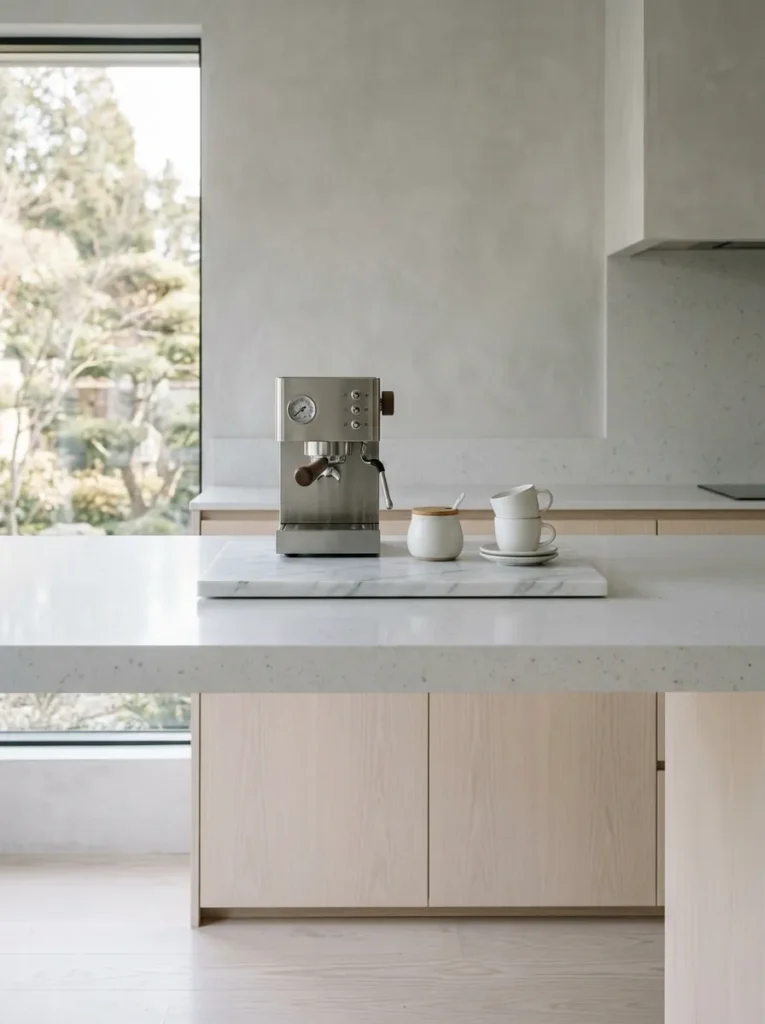
The opposite of the curated display approach: a single large wooden, marble, or leather tray on the counter, holding only the espresso machine, a small ceramic sugar bowl, a milk frother, and two mugs. Nothing else. The tray defines the boundary of the coffee station without a shelf, cabinet, or any additional furniture, which suits minimalist kitchens where any extra object disrupts the visual order. The tray’s material should match or complement the counter — a white marble tray on a white quartz counter reads as an extension of the surface; a dark wood tray on the same counter creates intentional contrast.
11. A Linen Closet or Cabinet Converted to a Coffee Bar
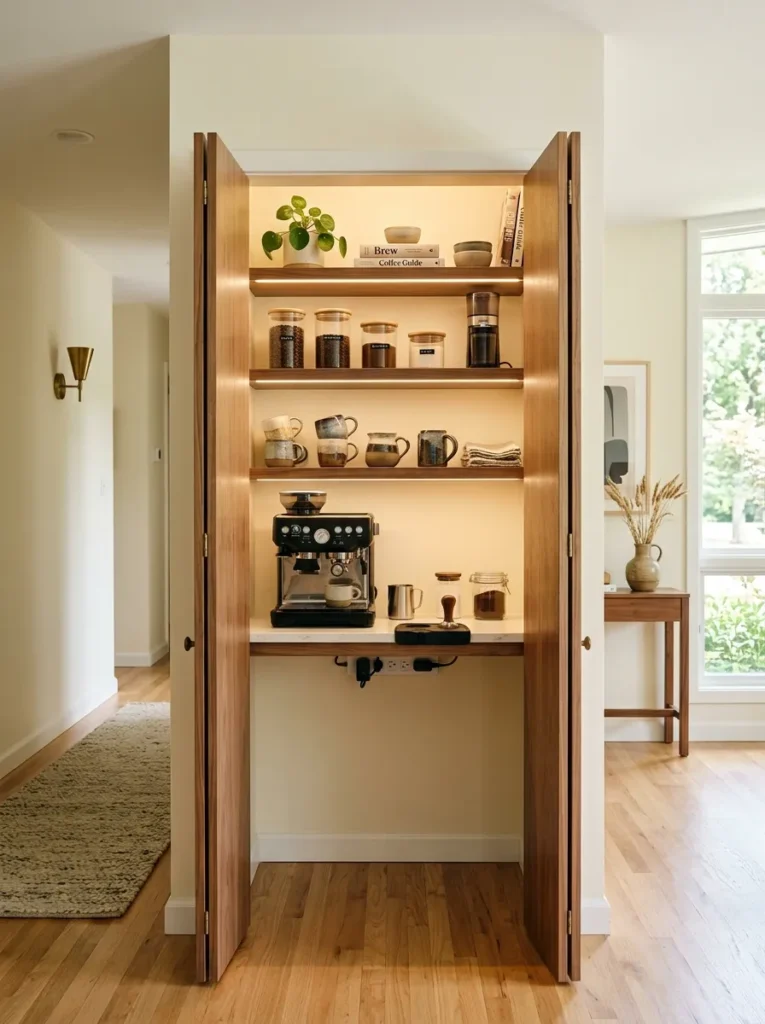
Converting an unused linen closet or deep pantry cabinet into a dedicated coffee bar — with a small strip of counter installed at the base, open shelves above for mugs and supplies, and an outlet added during the conversion — creates a fully self-contained coffee station that closes completely when not in use. This is the right approach for households that entertain frequently, since the station can be stocked like a mini café and opened as a serve-yourself bar for guests. The door conceals everything between uses, which suits open-plan homes where kitchen clutter is visible from the living area.
12. A Coffee Station with a Small Drawer Fridge for Milk
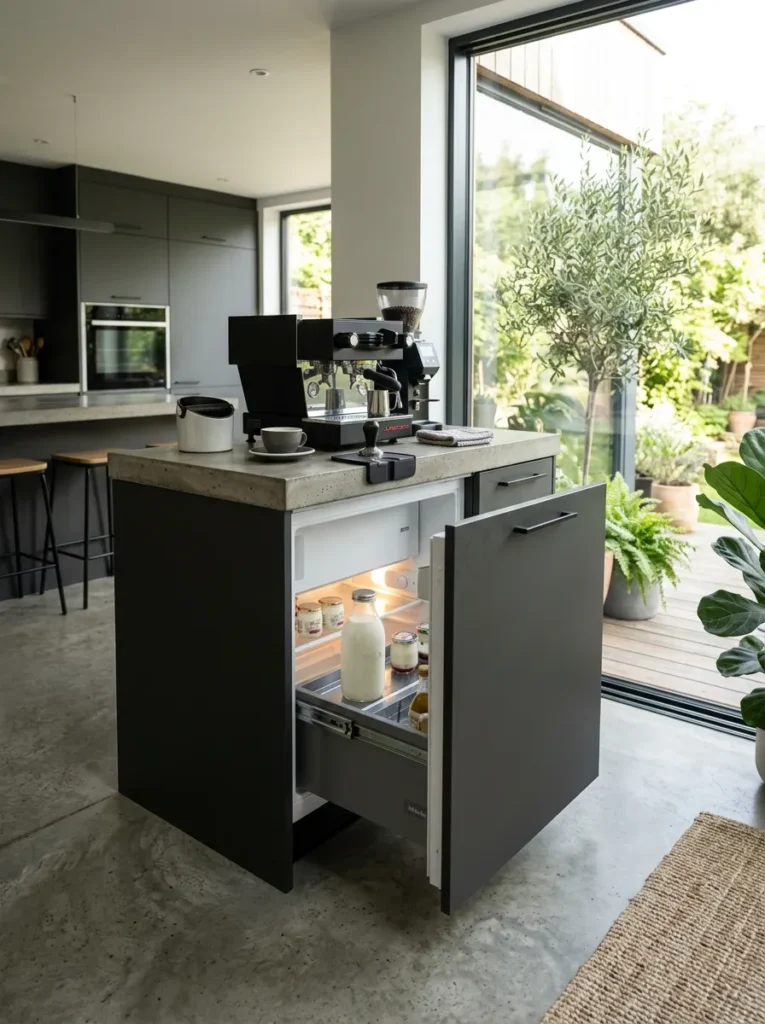
Installing a compact undercounter drawer refrigerator directly below a coffee counter — a single-drawer unit specifically designed for wine, drinks, or dairy — removes the trip across the kitchen to the main refrigerator from the morning routine and keeps the coffee station genuinely self-contained. This detail makes a dedicated coffee corner feel like it was architecturally intended rather than assembled, since it has its own cold storage the way a bar does. Best suited to kitchens with room for a 15-inch undercounter unit in the dedicated coffee zone, or to conversions where a small refrigerator can be slipped under a sideboard or island extension.
13. A Renter-Friendly Coffee Station on a Small Kitchen Cart
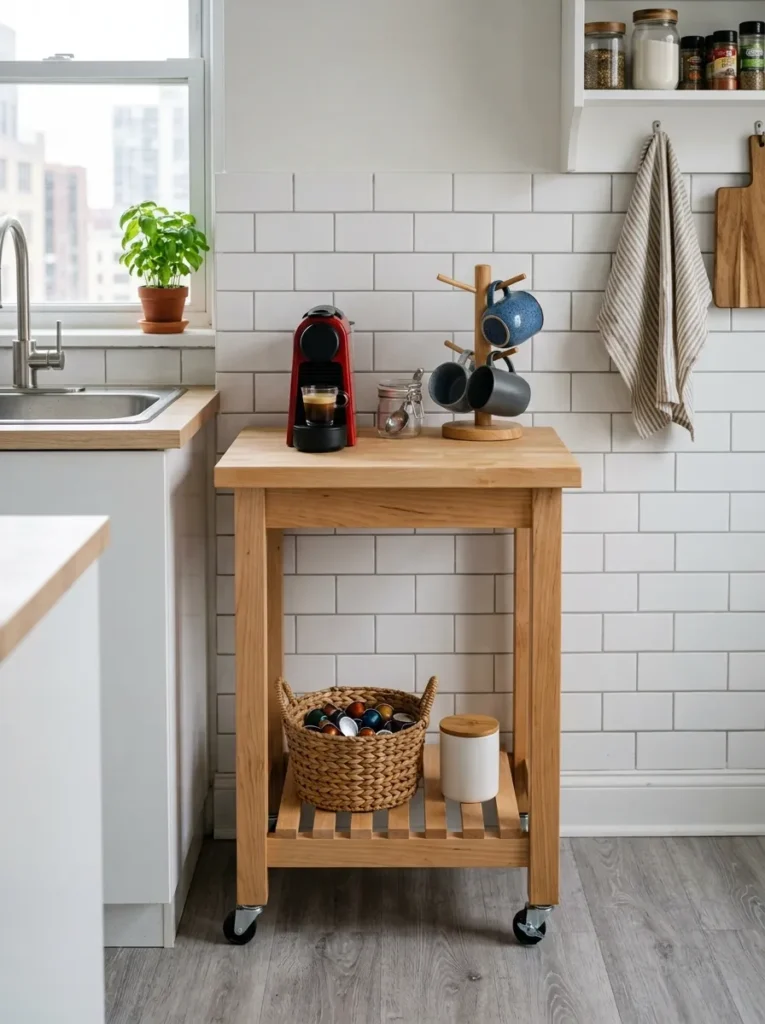
For renters who can’t install shelves or modify cabinets, a small kitchen cart with one or two shelves, a butcher block or stone top, and locking casters gives a coffee station a defined home without any permanent installation. Position it against a wall or beside the kitchen, plug the machine in, and organize the shelves with canisters, mugs, and supplies the same way you would a built-in station. The cart’s contained footprint — typically 24 to 30 inches wide — keeps the setup proportional in a small apartment kitchen rather than spreading across available counter space.
14. A Coffee Station Built Around a Pour-Over or Manual Brew Setup
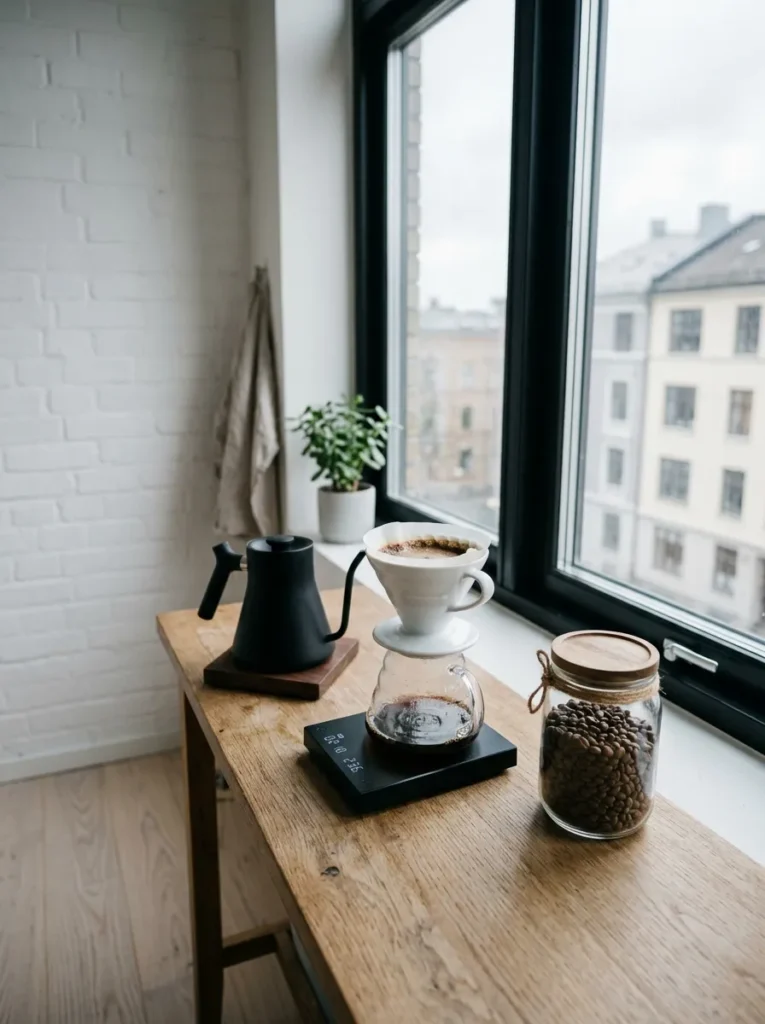
A manual coffee station — organized around a pour-over kettle, a hand grinder, a digital scale, and a gooseneck pour kettle stand rather than an automatic machine — has a completely different visual character than an espresso or pod setup and suits a different kind of organization. The equipment is smaller and more uniform in shape, which means it can be organized on a single narrow shelf or tray with visual precision. Display the filters in a ceramic holder, the beans in a sealed glass jar, and the pour-over vessel on a small wooden stand. The ritual nature of manual brewing suits a quiet kitchen corner near a window where the process is part of a slow morning.
15. A Dark and Moody Coffee Station with Black Canisters and Matte Finishes
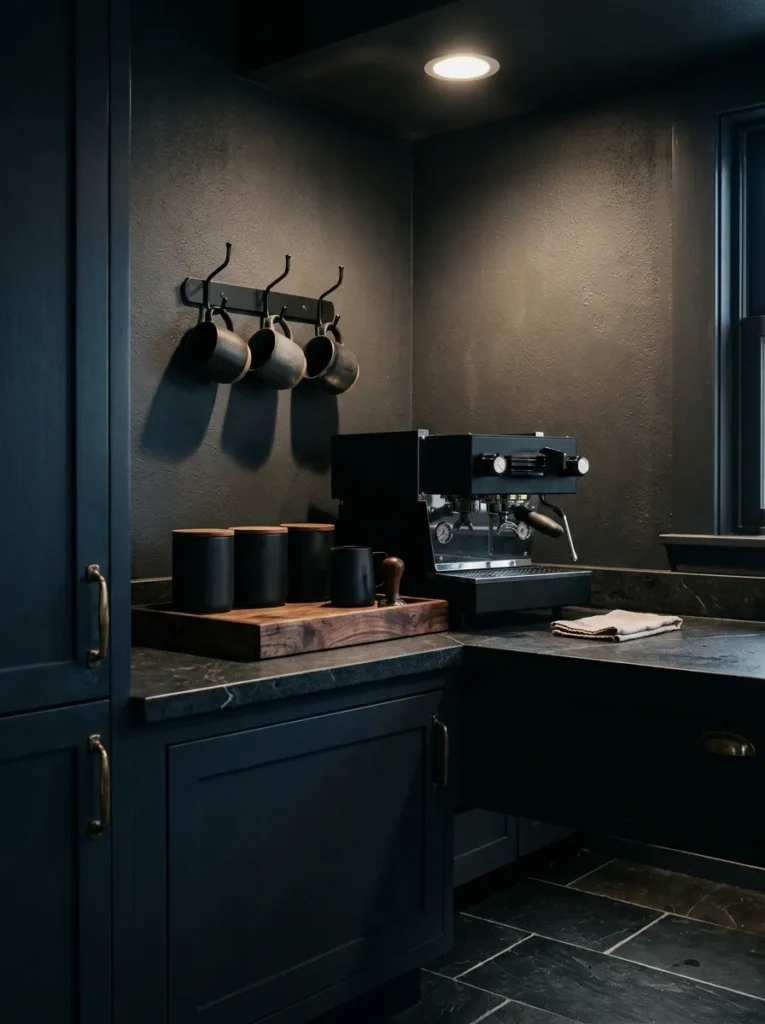
A coffee station built on a dark palette — matte black espresso machine, black ceramic canisters, dark walnut tray, black metal mug hooks — against a dark backsplash or painted wall section creates a moody, café-like atmosphere that photographs dramatically and holds its own in a kitchen with darker cabinetry. This suits kitchens with charcoal, black, or deep navy cabinetry where a light or natural-wood coffee station would feel disconnected from the surrounding palette. Keep the coffee station’s footprint tight so the dark elements read as a curated concentration rather than a spreading mass.
16. A Farmhouse Coffee Station with a Wooden Crate and Mason Jars
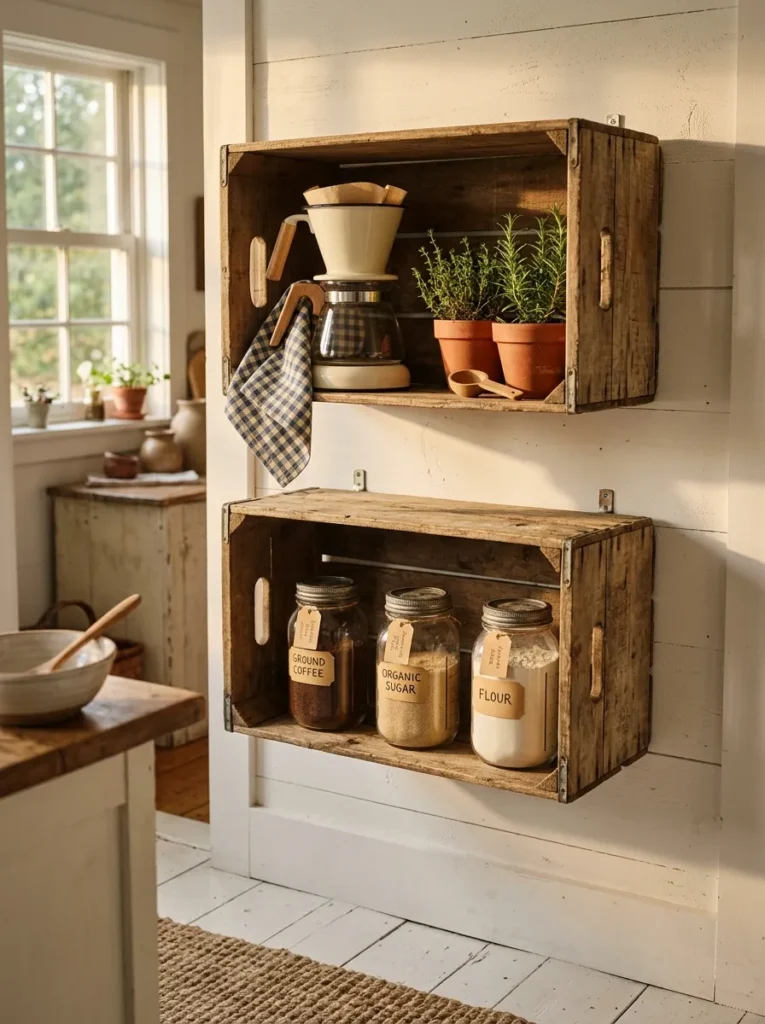
A stacked wooden crate or crates mounted on the wall, combined with mason jars for bean and sugar storage and an enamel or ceramic drip coffee maker, gives a farmhouse-style coffee station a genuinely low-cost but highly visual setup. The crates provide display shelving and storage texture simultaneously, since the wood’s slatted construction reads as a design material rather than a storage box. Use uniform-sized mason jars with matching lids — all metal or all rubber — and label them with a paint pen for the clean, labeled farmhouse aesthetic that performs strongly on Pinterest.
17. A Hotel-Inspired In-Room Coffee Setup on a Tray
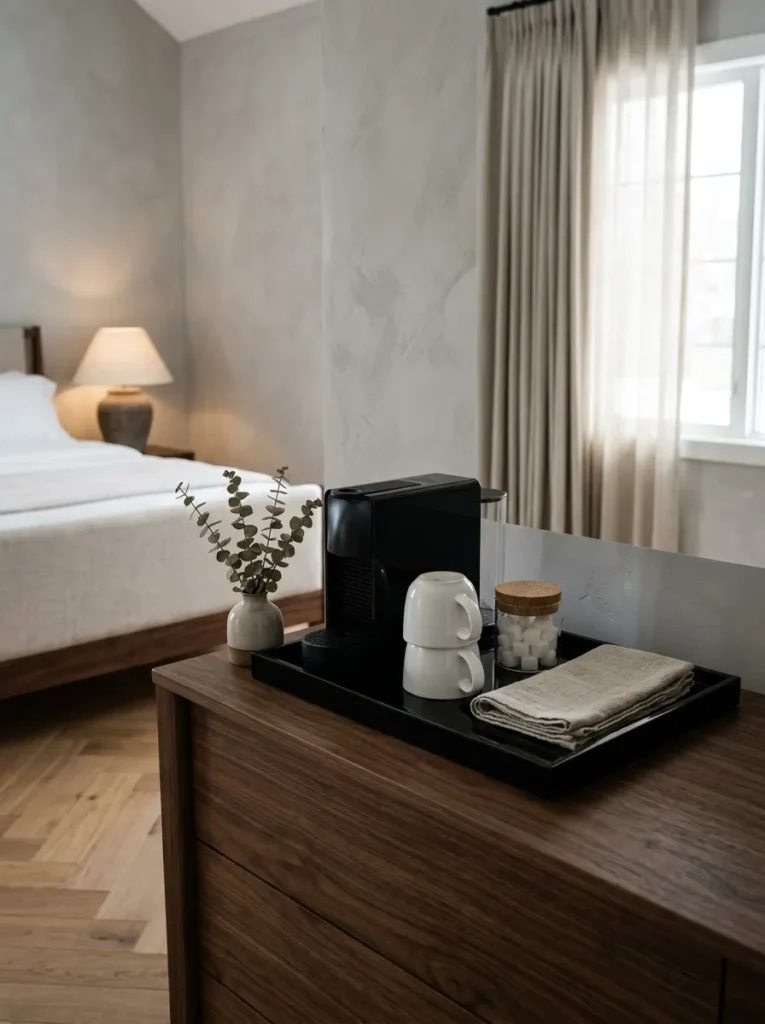
Borrowing from hotel-room coffee setups — where everything lives on one tray, nothing extra is present, and the visual impression is of total readiness — this approach places a handled wood or lacquer tray on a bedroom dresser, nightstand, or small console with a single-serve machine, two mugs turned upside down, a small canister, and a slim glass jar of sweetener. The “two mugs upside down” detail is specific and hotel-derived: it signals cleanliness and readiness without a mug tree or hook. This suits bedrooms, home offices, or studio apartments where the coffee station lives outside the kitchen entirely.
18. A Scandinavian-Style Coffee Station with Natural Wood and White Ceramics
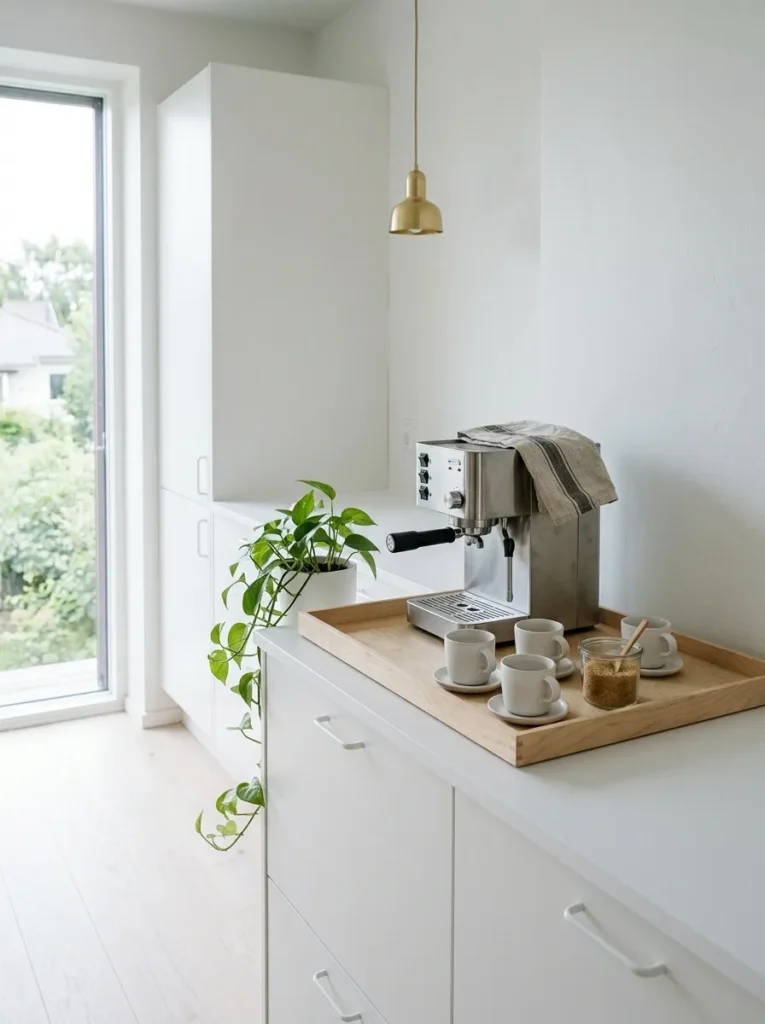
A coffee station built on a Scandinavian palette — light birch or ash wood tray, white ceramic mugs with simple forms, a brushed steel or white espresso machine, and a single potted green plant for color — reads as calm and considered without any visual clutter. The organizing principle is material harmony: every object within the coffee station’s footprint belongs to the same material family, so the whole setup reads as one cohesive arrangement rather than a collection of unrelated objects. A white pegboard or floating shelf with natural wood hooks suits the style if wall space is available.
19. A Coffee Station with a Vintage Typewriter Cart or Side Table
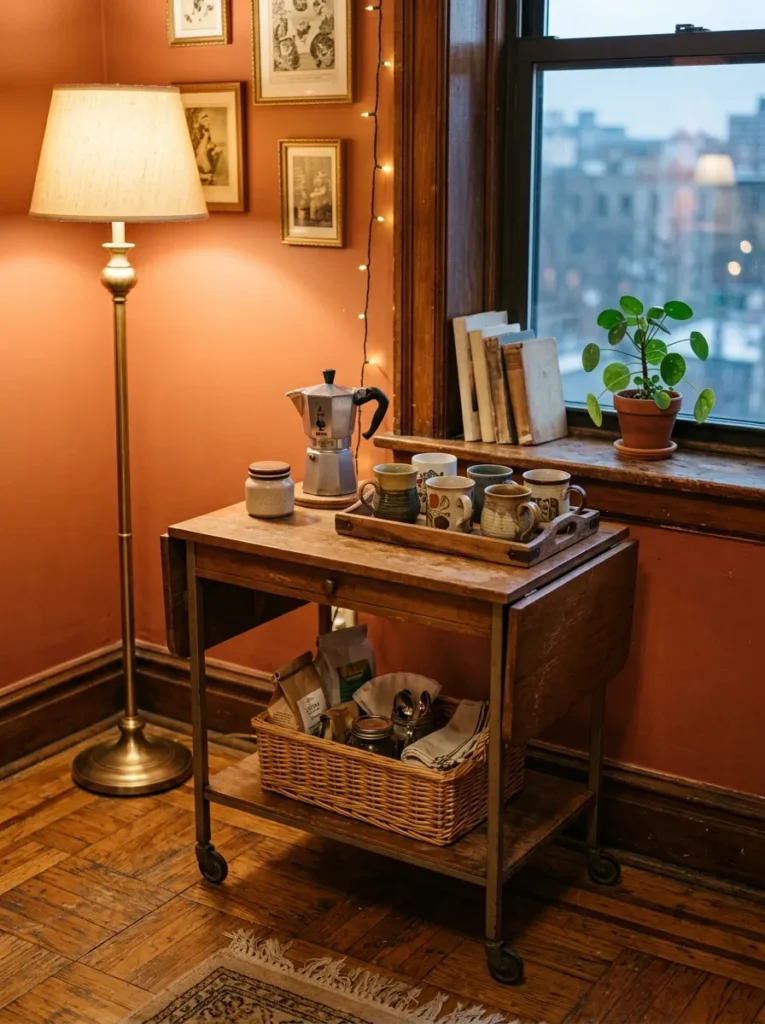
A vintage wooden typewriter cart — the kind with a drop-leaf side extension and a lower shelf — repurposed as a coffee station gives a studio apartment, living room, or home office a narrow, characterful station that takes up minimal floor space when the leaf is folded. The drop-leaf side is useful specifically for a coffee station: fold it up when using the grinder, fold it down when the counter is not in use. This type of piece tends to come from flea markets or estate sales at low cost and suits eclectic, vintage, or maximalist interior styles where a sleek modern cart would look out of place.
20. A Dedicated Coffee Station with a Built-In Water Tap
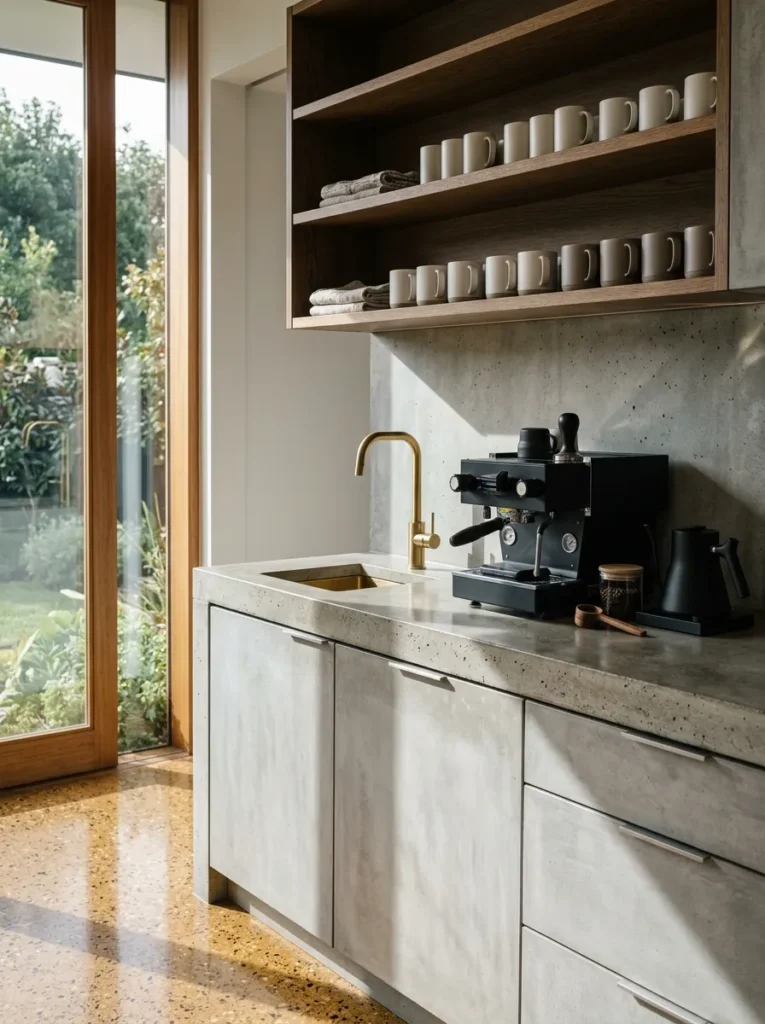
The most committed coffee station format: a section of kitchen counter with a dedicated cold-water tap installed specifically for the coffee station, eliminating the trip to the sink to fill a kettle or machine reservoir. This is the detail that separates a genuinely designed coffee corner from an organized one, since it makes the station operationally independent of the rest of the kitchen. It requires a plumber to run a water line during a renovation, but the tap itself is inexpensive — a simple quarter-turn valve tap in the same finish as the rest of the station’s fixtures. This detail suits households where a high-quality manual or pour-over brew method is used daily and the extra step of filling water elsewhere is a genuine friction point.
Final Thoughts on Coffee Station Ideas Worth Building
The best coffee station ideas share a single underlying logic: they give every item a specific home, remove everything that doesn’t belong there, and make the start of the morning feel like a small ceremony rather than a scramble. Whether you build a full dedicated nook with a backsplash and undercounter fridge or simply commit to a single wooden tray with three objects on it, the improvement over a coffee maker sitting in the middle of a cluttered counter is immediate and lasting. Start with the idea that matches your actual space and your actual morning, and the rest takes care of itself.
Save this coffee station ideas guide to Pinterest so you have it ready the next time you’re organizing your kitchen or setting up a new space.