20 Vintage Bedroom Ideas That Feel Charming and Timeless
A vintage bedroom earns its character the same way a good story earns its ending — through accumulated detail, nothing too obviously placed, and a sense that everything in the room arrived over time rather than in one shopping cart. The vintage bedroom ideas that feel genuinely timeless rather than costume-y share a specific discipline: they mix eras without clashing, they use real patina rather than faking it, and they resist the urge to theme the room to a single decade so completely that it loses its sense of being a place someone actually sleeps. Done well, a vintage bedroom feels like the most personal room in the house — a room that couldn’t belong to anyone else.
This roundup covers 20 distinct approaches to the vintage bedroom, from an iron bed with a gathered skirt and heirloom quilt to a Hollywood Regency vanity corner with a tufted stool, from painted Gustavian furniture to a raw plaster wall with antique sconces salvaged from a French farmhouse. Each idea explains the design reasoning behind why the specific combination of era, material, and finish creates the charm it does, where that approach works best, and how to execute it without tipping into the studied reproduction look that makes vintage bedrooms feel like museum rooms rather than living ones. Save the ideas that match your room and your history.
1. An Iron or Brass Bed Frame as the Room’s Defining Piece
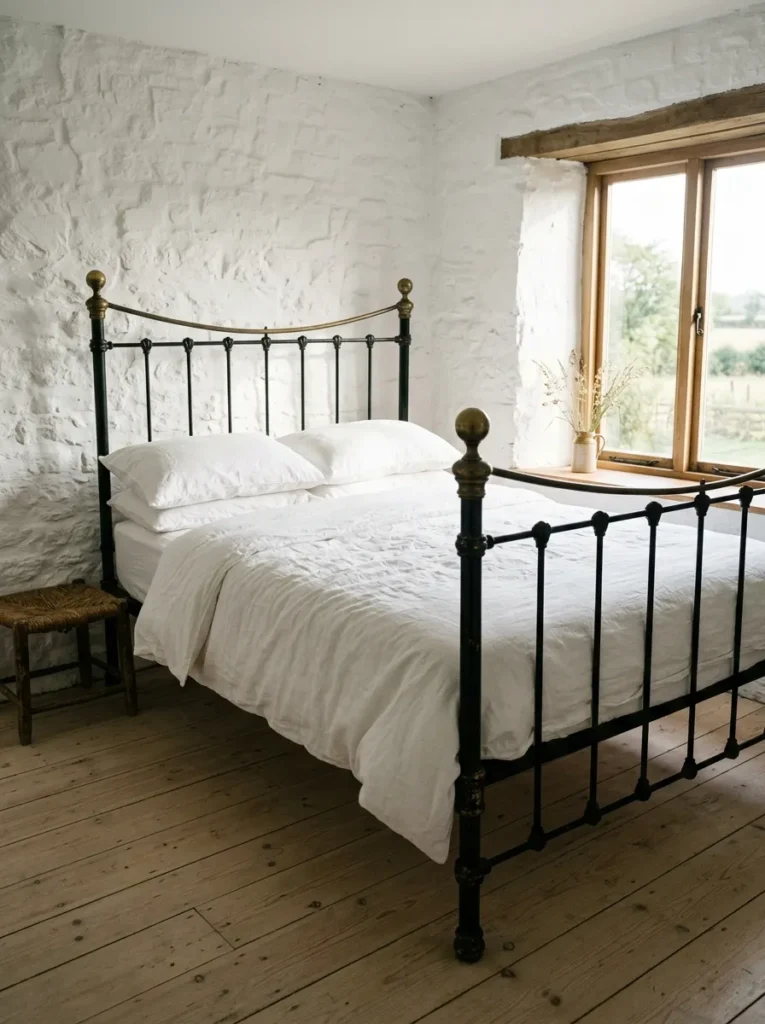
A vintage iron or brass bed frame — original rather than reproduction where possible — is the most single-handedly transformative piece of furniture available to a vintage bedroom, because the frame’s silhouette and material immediately signal a different era without requiring anything else in the room to change. Original frames from the late nineteenth and early twentieth centuries have a material weight and joint quality that reproduction pieces rarely replicate; the iron has a slight scale variation in its bars, the brass develops a patina that no lacquered modern copy matches. Source from antique dealers, estate sales, or online vintage markets, and have a welder add slats or a box-spring rail if the original sleeping surface needs updating.
2. An Heirloom or Vintage Quilt as the Primary Bedding Layer
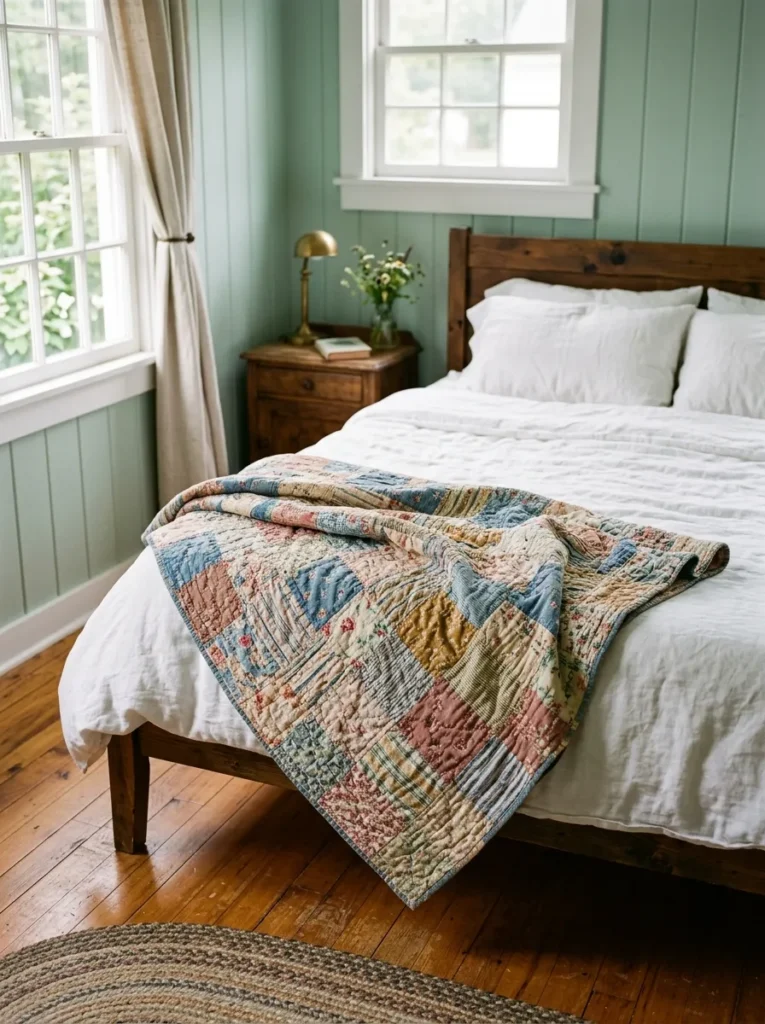
A genuine vintage quilt — whether a grandmother’s hand-pieced patchwork, a Welsh wool blanket, or a 1940s feedsack quilt sourced from an antique market — does more for a bedroom’s sense of character and time than any new bedding purchase can approximate, because the quilt’s fading, texture variation, and irregular stitching are records of actual use rather than simulations of it. Layer it over simple white cotton or linen sheets so the quilt reads as the room’s focal textile rather than one layer among many equally patterned surfaces. Fold it back at an angle across the lower third of the bed rather than pulling it neatly to the pillow; the casual fold reads as lived-in rather than staged.
3. A Painted Gustavian or Swedish Antique Dresser
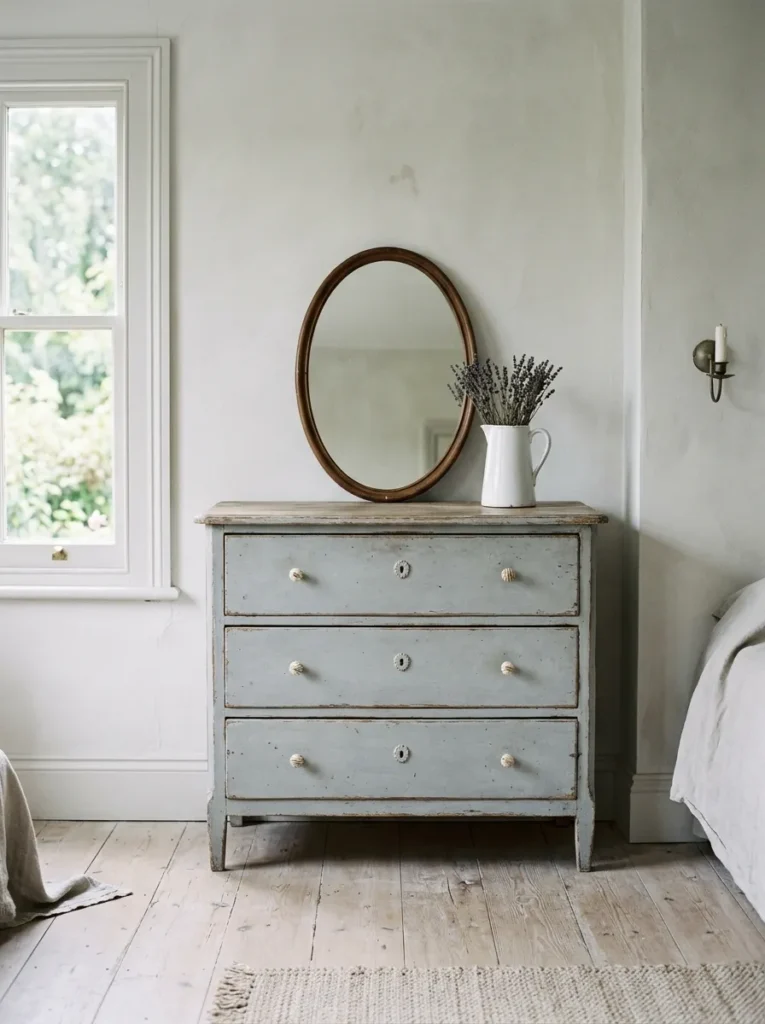
A Gustavian-style dresser — painted in a chalky, muted gray-blue or ivory with its original distressed surface showing through at the edges and on the drawer pulls — brings a specifically Northern European vintage aesthetic into a bedroom that reads as more refined and less rustic than French farmhouse pieces, with none of the heaviness of traditional English antiques. The characteristic combination of painted finish, neoclassical drawer silhouettes, and slightly bowed fronts suits bedrooms that lean toward a calm, restrained vintage palette rather than a warm, floral English country aesthetic. Use the existing surface rather than repainting; the original finish’s wear pattern is the material’s entire point.
4. Antique Sconces or Rewired Vintage Wall Lights
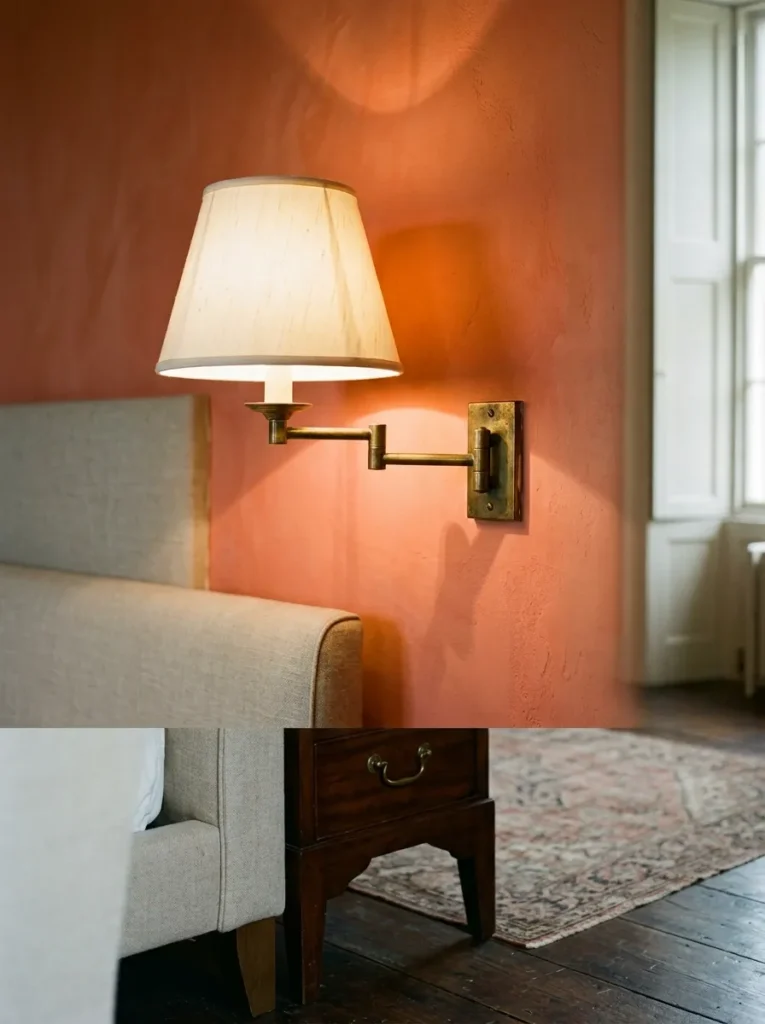
Replacing standard bedside table lamps with antique wall sconces — original pieces that have been professionally rewired — moves the light source up and onto the wall where it creates a dramatically different quality of bedside light than a lamp on a nightstand. The practical advantage is that it frees the nightstand surface entirely; the aesthetic advantage is that an antique sconce in aged brass, patinated bronze, or milk glass has a material character that no modern reproduction fully captures. Source from architectural salvage dealers or antique lighting specialists who can rewire safely, and install at 60 to 65 inches from the floor so the shade center sits approximately at reading height when sitting up in bed.
5. A Clawfoot Tub Placed in a Large Bedroom Alcove
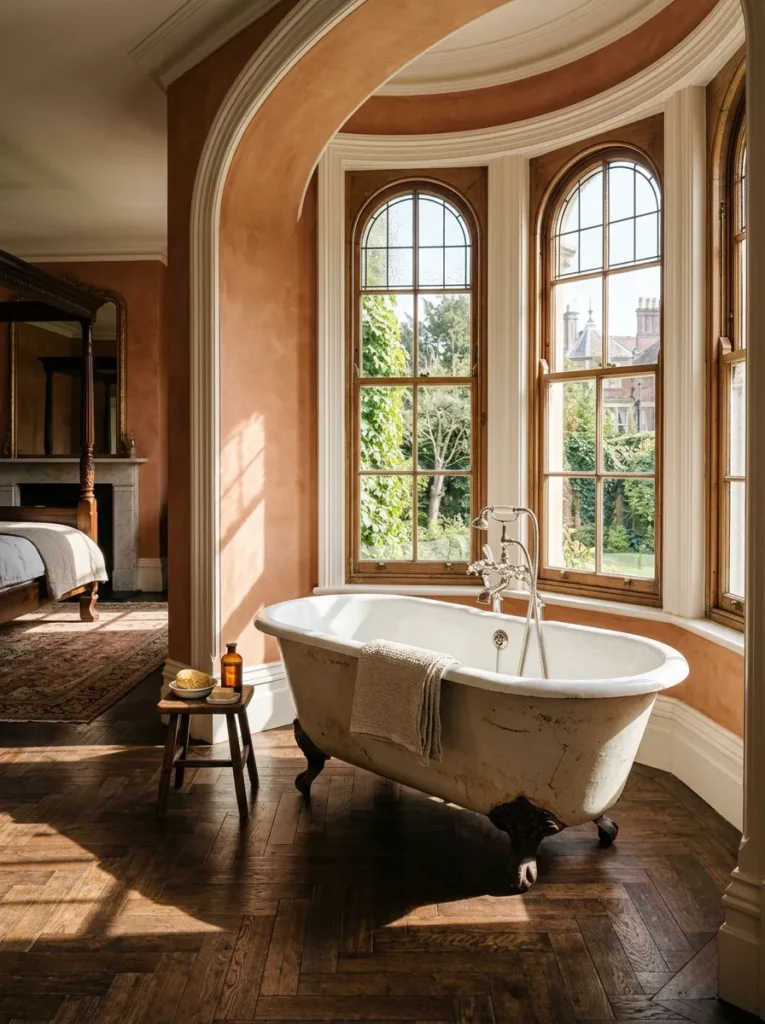
In a large primary bedroom with a generous alcove or bay that can’t be used for a wardrobe, positioning a reclaimed clawfoot tub transforms the space into a private bathing corner that belongs to neither the bedroom nor the bathroom — a genuinely rare experience that boutique hotels charge a premium for. This requires plumbing run through the floor or wall, which makes it a renovation-stage decision rather than a styling one, but the result is a room that doesn’t exist at any functional price point in the new construction market. Choose a tub that shows some authentic age — slight enamel crazing, original feet, a period faucet — rather than a freshly reporcelained version that erases the piece’s history.
6. Botanical or Toile Wallpaper on a Single Feature Wall
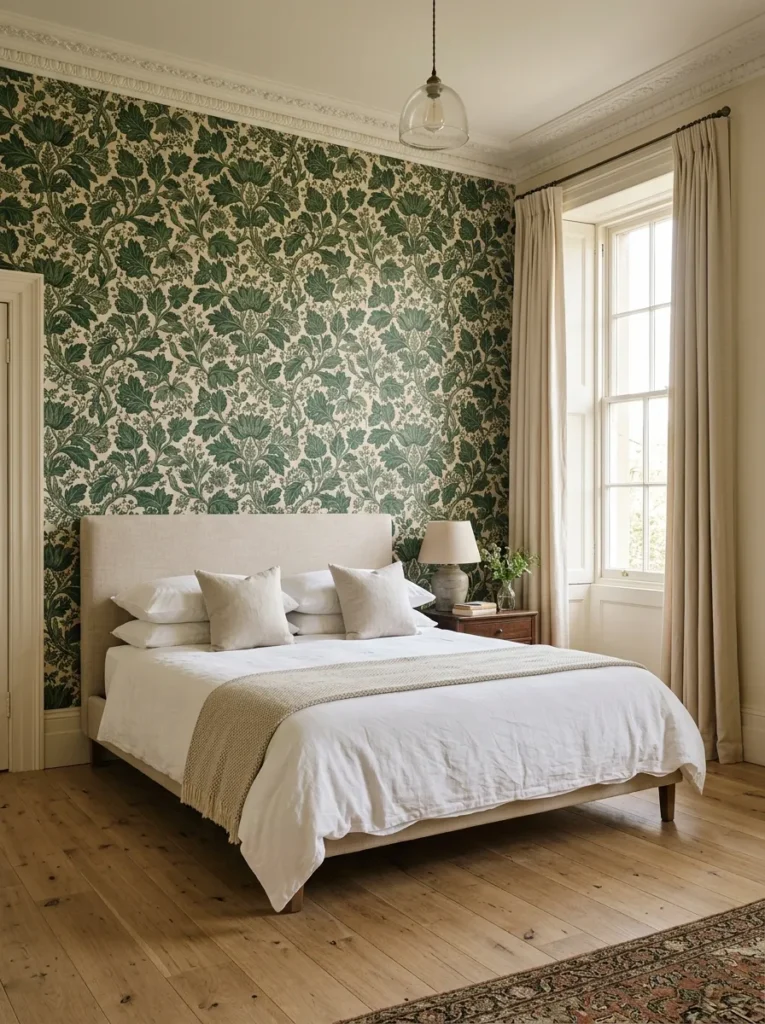
A feature wall of vintage-style botanical print or toile de Jouy wallpaper — applied behind the bed — introduces pattern and period character without requiring the full room commitment of four papered walls, which can feel overwhelming if the remaining furniture doesn’t also sit firmly in a single era. The wallpaper’s scale matters: a large-repeat botanical with generous white ground reads as Georgian and airy; a dense repeat toile in a single color reads as French eighteenth century and enveloping. Install to the ceiling rather than stopping at picture-rail height, so the paper becomes a full wall statement rather than a dado treatment.
7. A Vintage Vanity Corner with a Mirror and a Tufted Stool
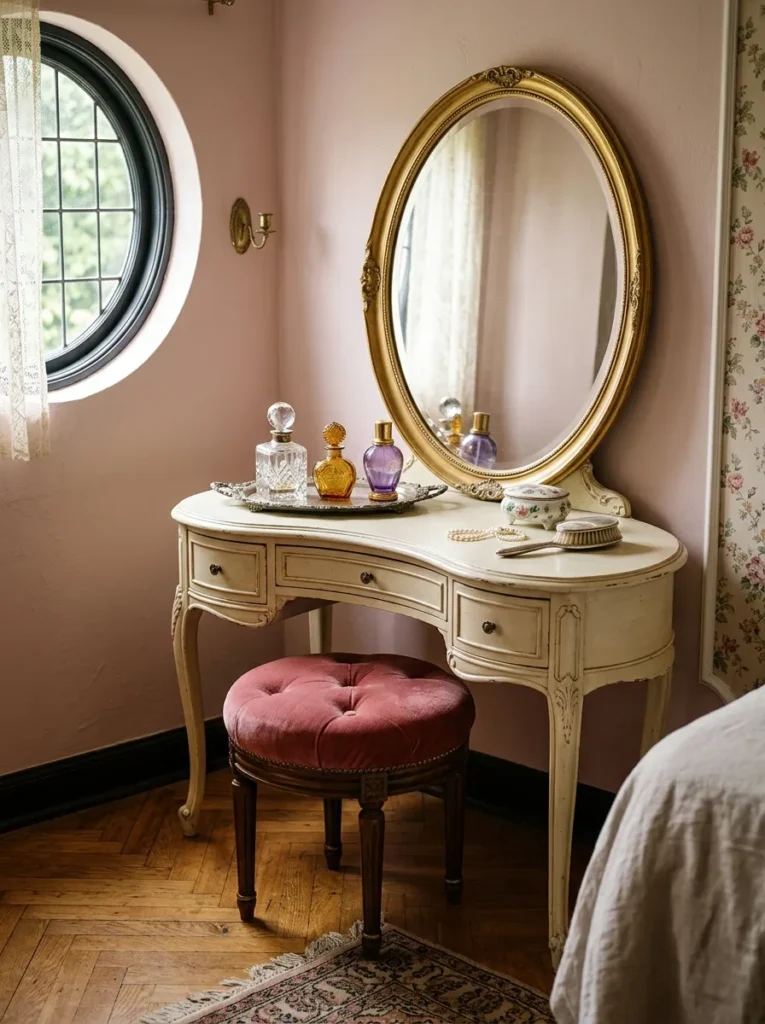
A dedicated vintage vanity corner — a French provincial or Hollywood Regency dressing table with a framed mirror propped or mounted above it and a tufted velvet stool tucked beneath — formalizes the morning grooming ritual the way hotels used to before the bathroom became the only room for it. The vanity corner works best in a primary bedroom with enough floor space for the table to sit away from the bed wall, giving the corner its own visual territory. Dress the table surface as you would style a still life: a few perfume bottles, a small tray, a hand mirror — not everything you own, just the things you actually use and genuinely love the look of.
8. Lace or Embroidered Linen Pillow Shams and Bed Curtains
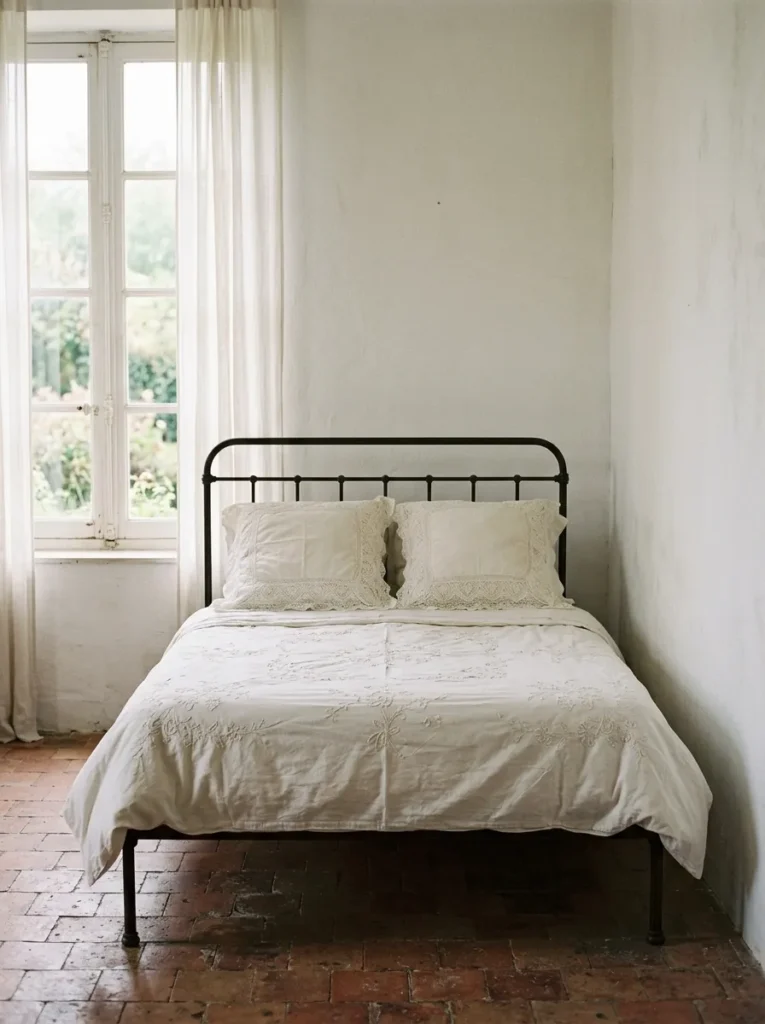
White or off-white lace pillow shams and an embroidered linen duvet cover introduce a delicate textile tradition into a vintage bedroom without the fussiness of a full canopy or a heavily draped four-poster. The key to making this feel charming rather than grandmotherly is the surrounding context: against a spare, almost-modern backdrop — plain plaster walls, bare floors, a simple iron bed — white lace reads as an heirloom detail that earns its presence. Against a room already full of pattern and ornament, it tips into clutter. Source vintage examples from estate sales or European antique textile dealers rather than buying new reproduction lace, which tends toward synthetic sheen rather than the soft matte of aged cotton.
9. A Painted Wooden Wardrobe with Original Glass Hardware
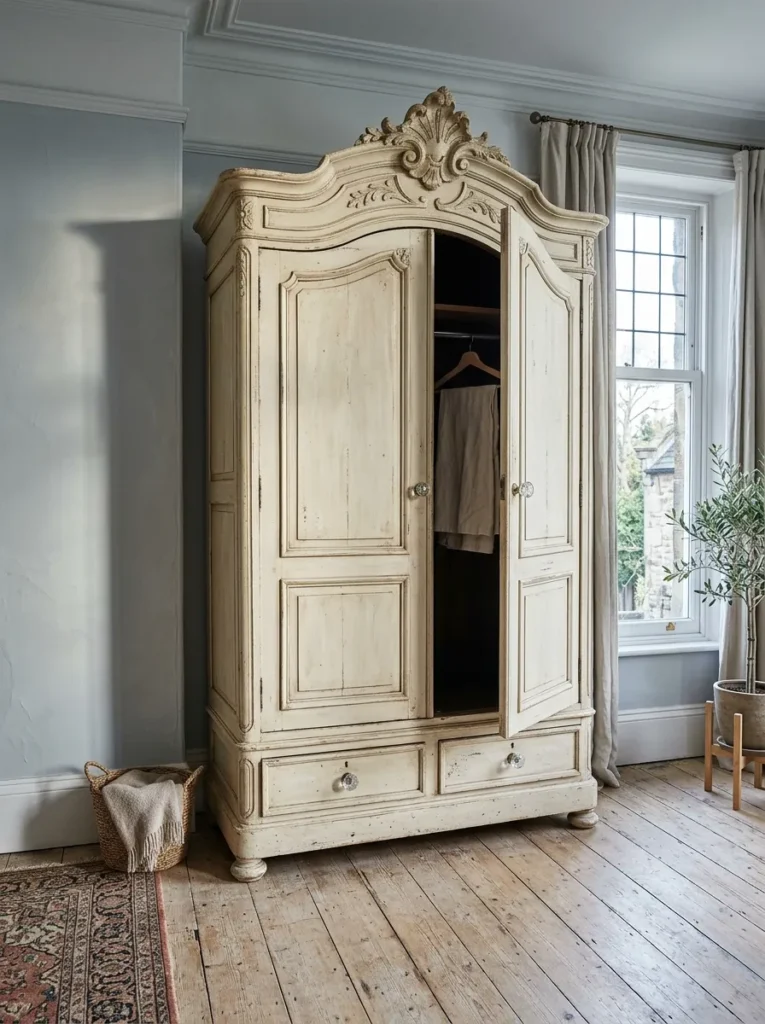
A large painted armoire or wardrobe with its original glass or crystal hardware intact — the kind of piece that predates built-in closets by a century — is the most spatially generous piece of furniture a vintage bedroom can contain, since it provides both storage volume and the visual weight of a full-height sculptural object. French armoires in creamy painted finish with carved pediments, English pine wardrobes in original dark finish, and painted Eastern European pieces with folk-art detail all work in different vintage bedroom styles. Keep the original hardware whenever possible; even slightly clouded crystal knobs have a material character that modern hardware replacements never fully restore.
10. A Gallery of Antique Botanical or Portrait Prints in Gilded Frames
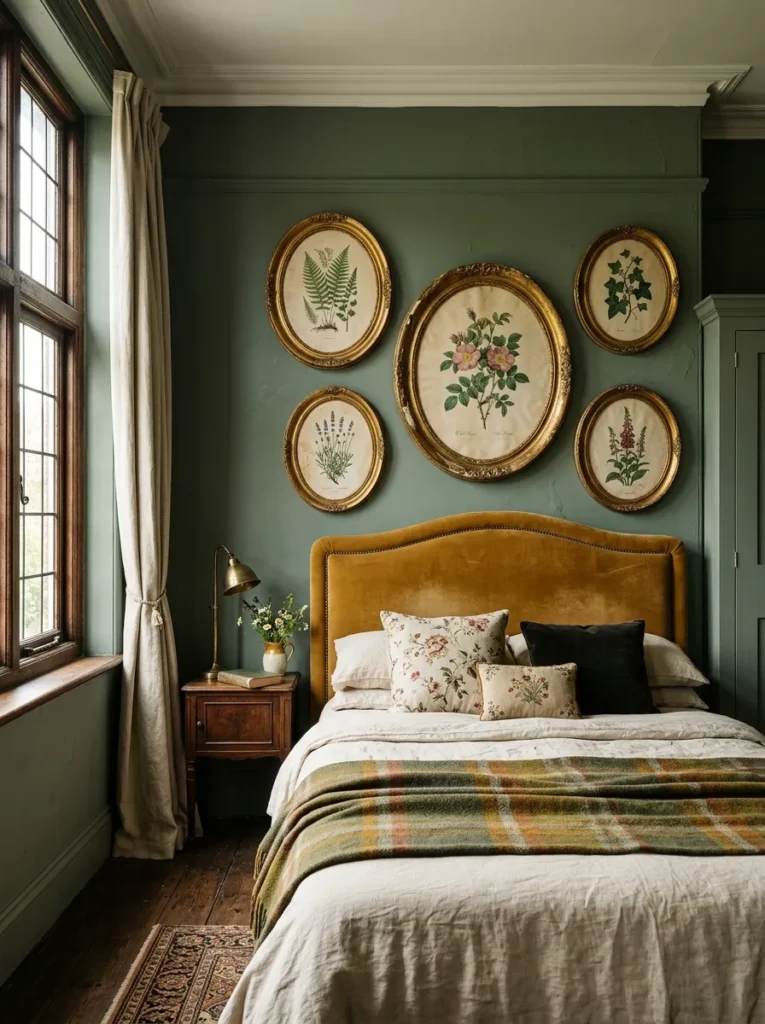
A grouping of three to five antique botanical prints — genuine or high-quality archival reproductions — in gilded oval or rectangular frames arranged asymmetrically above the bed or along a primary wall gives a vintage bedroom the quality of a room that’s been slowly curated over a lifetime rather than decorated in a season. The frames are as important as the prints: genuine antique gilded frames, even in imperfect condition, have a dimensional richness of detail that modern replica frames don’t replicate at the same scale. Source frames and prints separately — the print doesn’t need to be original if the frame is, and vice versa — so you can find the best of each without needing both from the same period.
11. Reclaimed Floorboards or Vintage Parquet Left in Original Condition
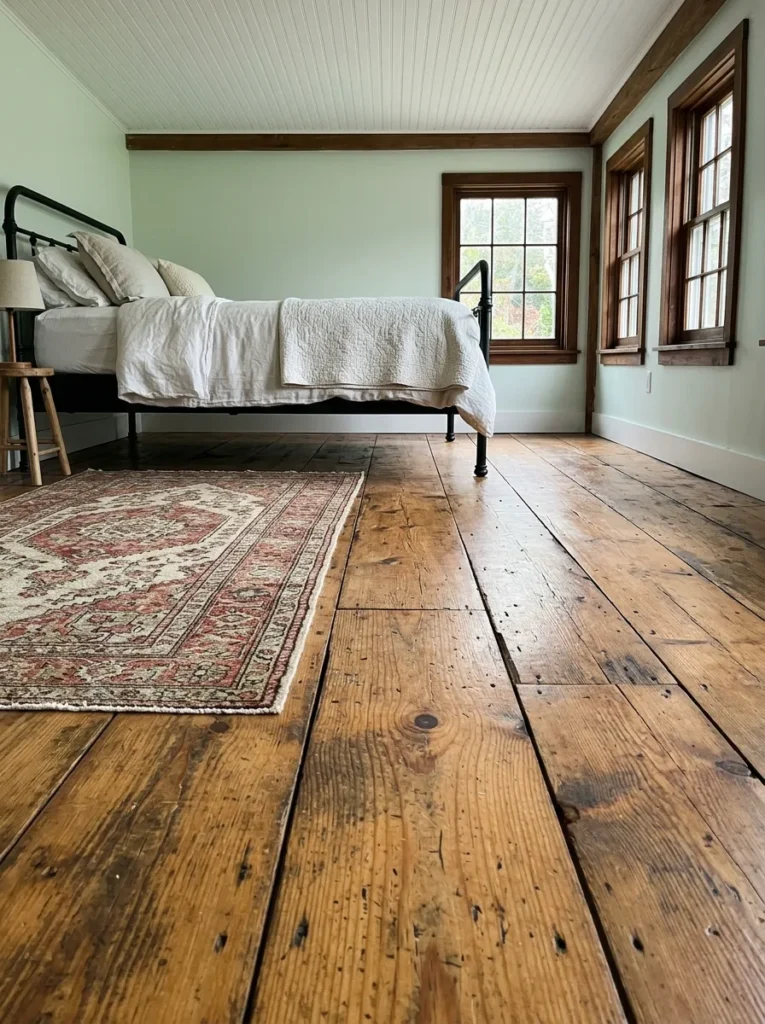
A bedroom floor in original reclaimed pine floorboards — left in their natural worn condition, cleaned and oiled but not sanded back to a pristine surface — has the most grounding vintage quality available at the floor level, because the dips, color variation, nail holes, and smooth worn patches across the boards are a physical record of the building’s history that no new floor can replicate. Where original floorboards are present, resist the urge to refinish them to a uniform new-looking surface; the patina that develops from generations of foot traffic is the finish’s entire character. Add a hand-knotted or woven rug in a warm tone at the bedside rather than wall-to-wall carpet that would hide the boards entirely.
12. A Canopy Bed with Unlined Muslin or Vintage Linen Panels
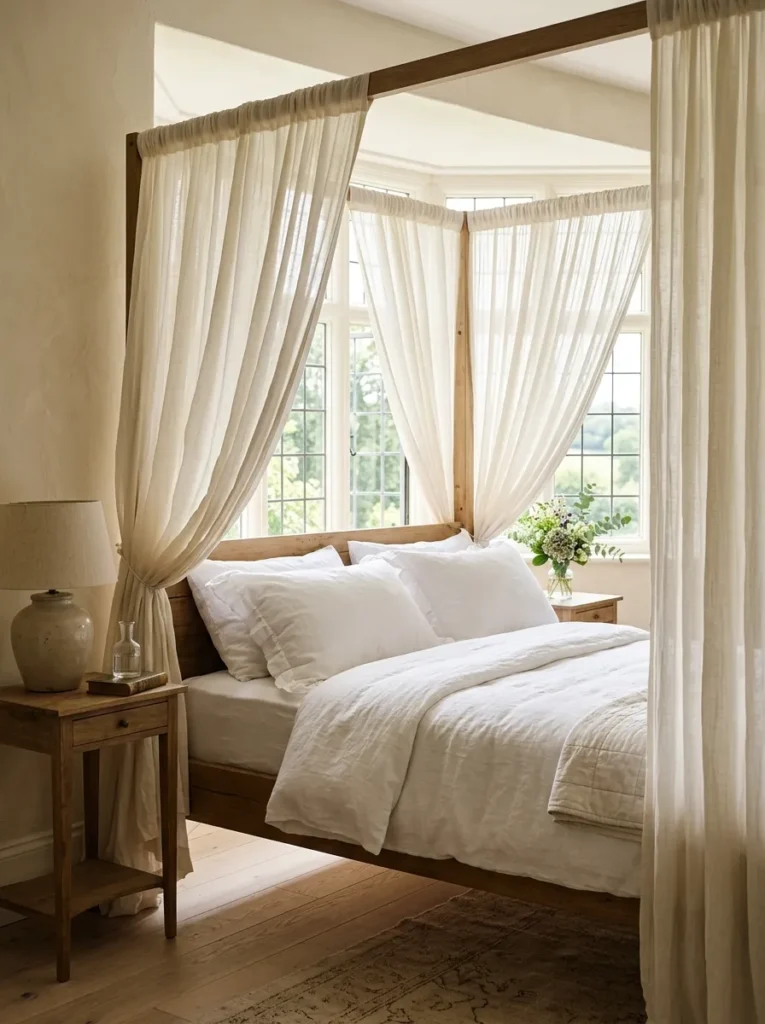
A four-poster or canopy bed frame hung with unlined muslin, aged linen, or vintage cotton panels — gathered loosely at the posts rather than tailored precisely — creates the most romantically vintage sleeping environment available without the weight and formal staging of fully interlined silk bed hangings. The unlined, slightly translucent quality of the muslin or linen is the specific detail that reads as romantic rather than theatrical: light filters through the panels rather than being blocked, and the slight sway of the fabric when a window is open makes the canopy feel like part of the living room rather than a stage set. The panels should not be ironed; soft, natural wrinkling is the correct finish.
13. A Chippendale or Sheraton Bedside Table Repurposed as a Nightstand
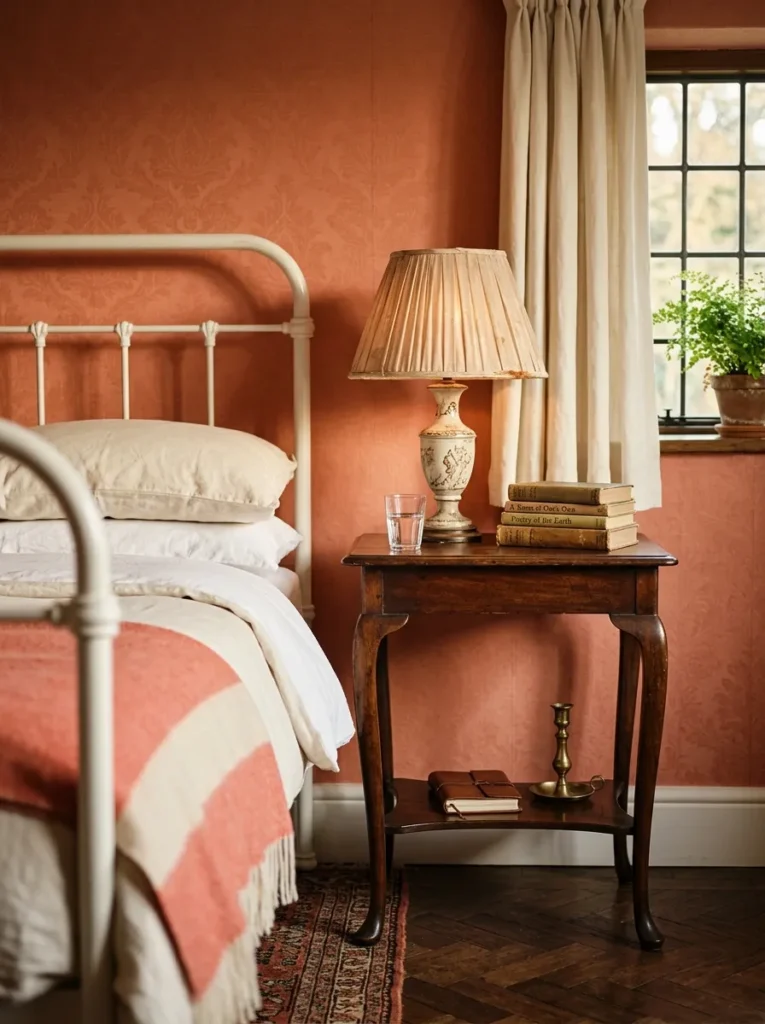
Antique period-style furniture — a Chippendale side table with cabriole legs, a Sheraton-style small chest with tapered legs and original ring pulls — repurposed as a nightstand gives the bedside zone the quality of a room that has been assembled from genuinely different periods rather than from a vintage-themed collection. The mismatch between the bed’s era and the bedside table’s era is an asset in a vintage bedroom, since most genuinely old rooms contain furniture from multiple periods accumulated over generations; uniform single-era styling reads as themed rather than collected.
14. Painted Brick or Exposed Plaster Walls with Visible History
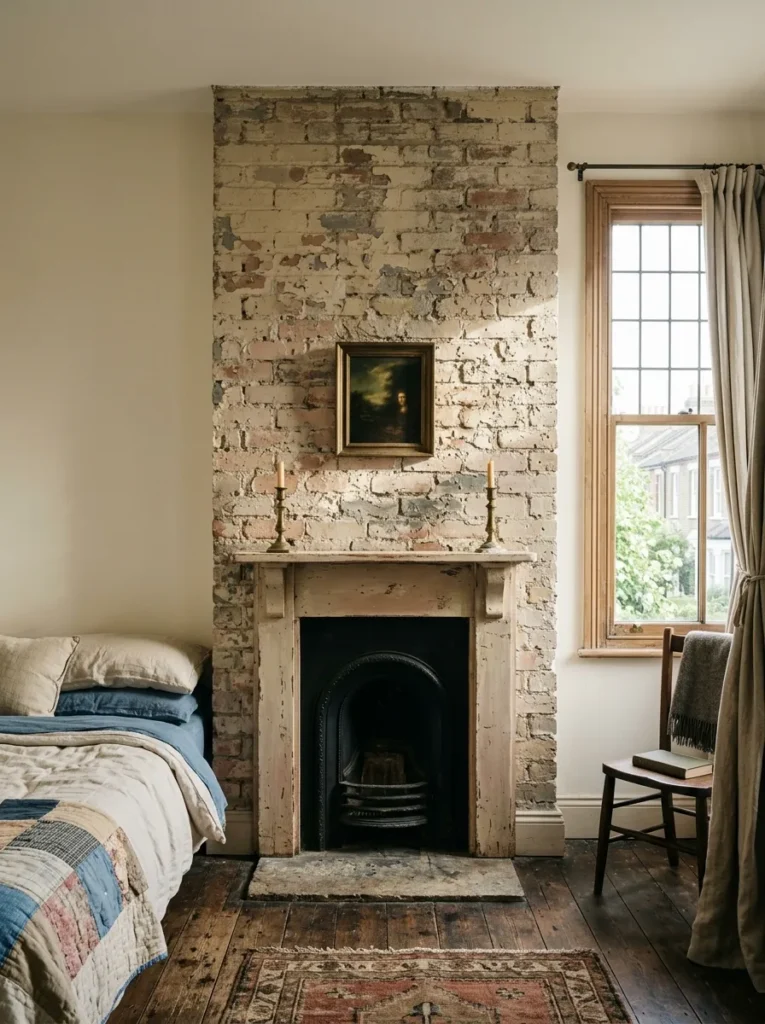
A bedroom wall where old layers of paint are visible through the current finish — or where lime plaster shows through crumbling brickwork that was never fully covered — has a material depth and historical texture that no applied finish can replicate. This works best as a feature wall or as a partial treatment on an architectural wall (a chimney breast, a built-in alcove) where the exposed surface reads as a discovered layer rather than an applied effect. If the existing walls don’t have this quality, a limewash or plaster technique in warm cream or pale terracotta can approximate the depth without attempting to fake damage that isn’t there.
15. A Vintage Trunk or Blanket Box at the Foot of the Bed
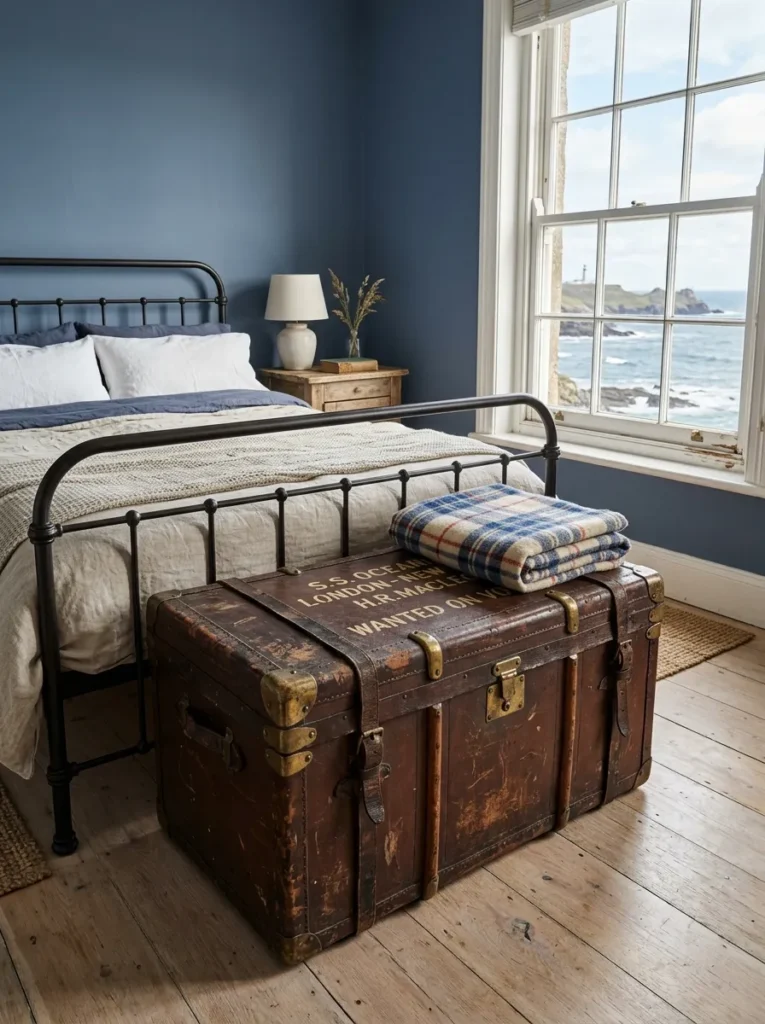
A genuine vintage trunk — a travel trunk with original leather straps and brass fittings, a painted blanket box with folk-art detail, or a military officer’s chest with original stenciled lettering — positioned at the foot of the bed functions as both storage and the room’s most immediately characterful object, since trunks have inherent narrative associations with travel, accumulation, and stored history. The trunk’s finish should not be restored to pristine condition; original paint flaking, worn leather, and dented metal contribute rather than detract. Dress the top with one or two objects — a folded vintage blanket, a leather-bound book — rather than leaving it bare or covering it with many small things.
16. Mismatched Vintage Nightstands for a Collected Feel
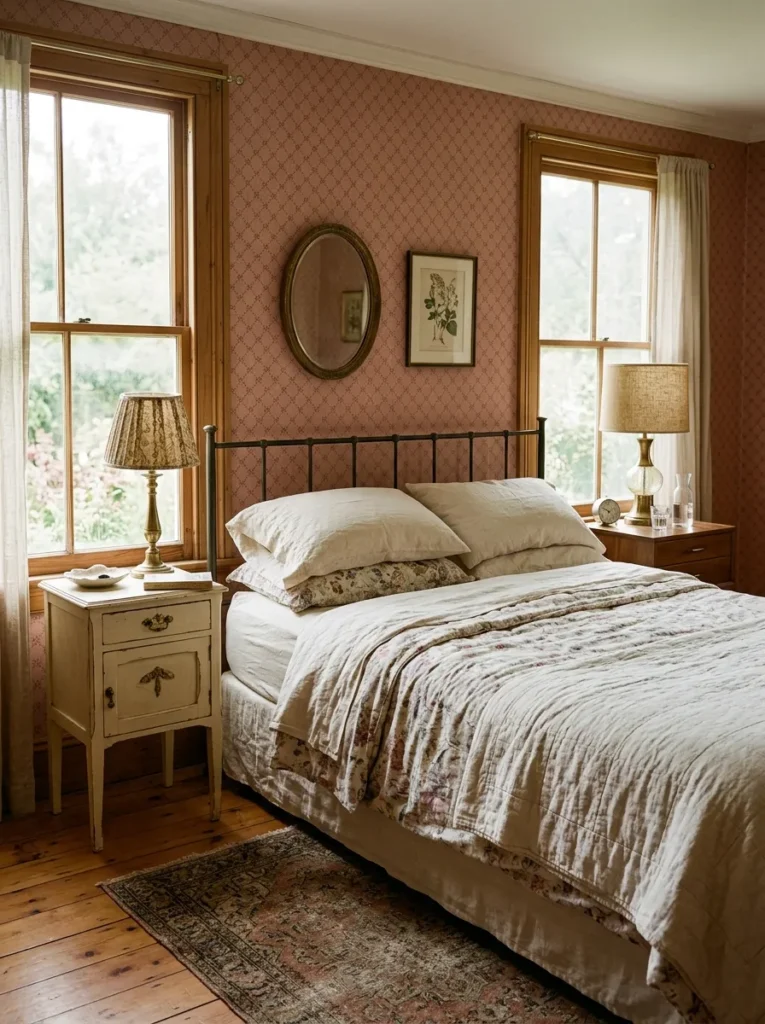
Intentionally choosing two different nightstands — a small Edwardian painted cabinet on one side and a 1950s walnut bedside table on the other, for example — gives a vintage bedroom the unmatched, accumulated quality of a room that was furnished over decades rather than decorated in one purchase. The constraint that makes the mismatch work rather than read as carelessness: both pieces should be genuinely old rather than one antique and one new, and both should share at least one formal quality, whether that’s scale, finish tone, or the presence of a drawer. The accumulated effect of two periods coexisting is precisely what makes a room feel lived-in and personal.
17. A Velvet or Silk Bed Runner in a Deep Jewel Tone
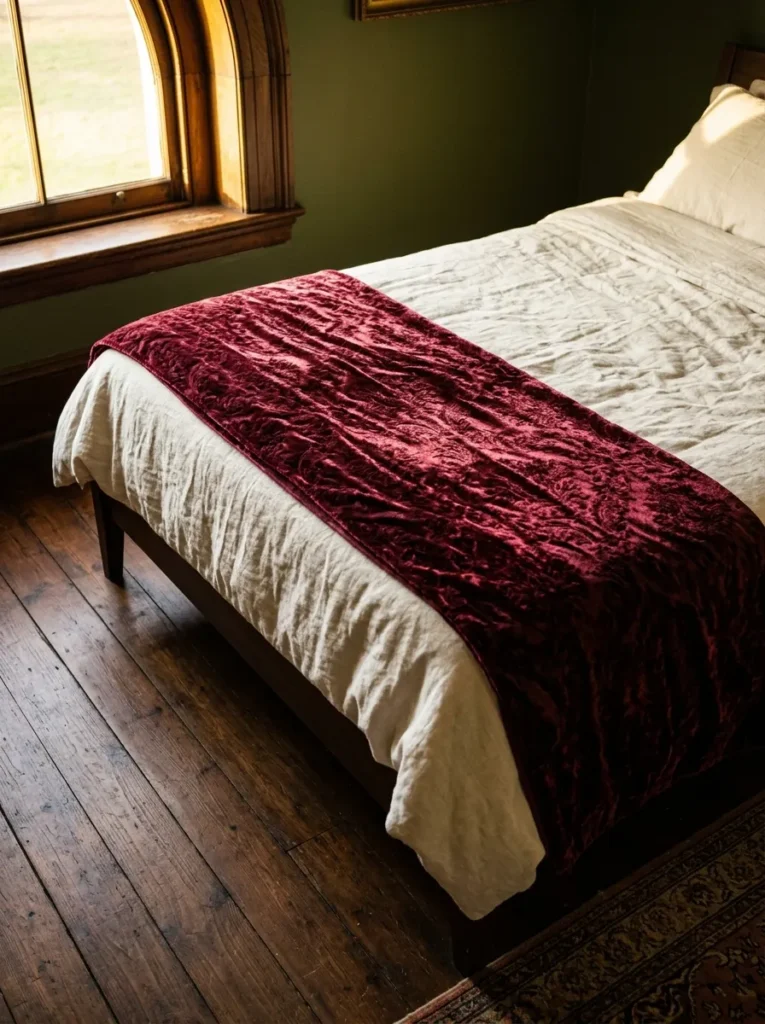
A vintage-style bed runner — a narrow length of velvet, cut velvet, or brocade silk in a deep jewel tone like garnet, sapphire, or deep emerald, laid across the lower third of the bed — adds the most concentrated period luxury available to a bed’s textile arrangement without requiring an entirely different bedding scheme. This styling technique has roots in Victorian and Edwardian bedrooms where the runner functioned as a decorative cover over plain wool blankets; in a modern vintage bedroom it reads as a knowing reference to that tradition. Choose a piece with genuine vintage textile character — an old sari border, a fragment of antique brocade, or a genuine velvet table runner repurposed — rather than a new reproduction piece.
18. Original Fireplace and Mantel Restored and Styled
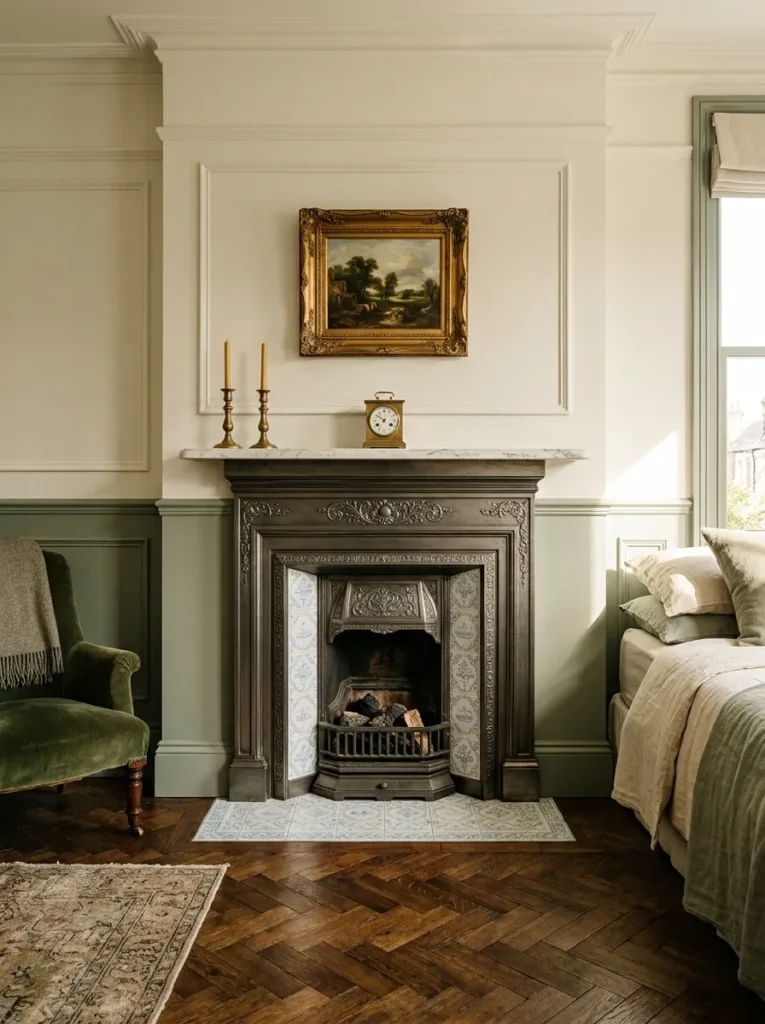
In older homes where a bedroom fireplace was filled in or plastered over during mid-century renovations, uncovering and restoring the original fireplace — even as a non-functional display piece — returns the most significant architectural feature to the room and gives it a focal point that no amount of furniture or art can manufacture. A restored bedroom fireplace surround in original tile, cast iron, or carved wood reads immediately as genuine history, and the mantel above it provides the room’s primary styling surface: a small clock, a pair of candlesticks, a small oil painting. This is a structural intervention but one of the most rewarding ones available to vintage bedroom lovers working in older homes.
19. A Chinoiserie or Needlework Panel as a Headboard Alternative
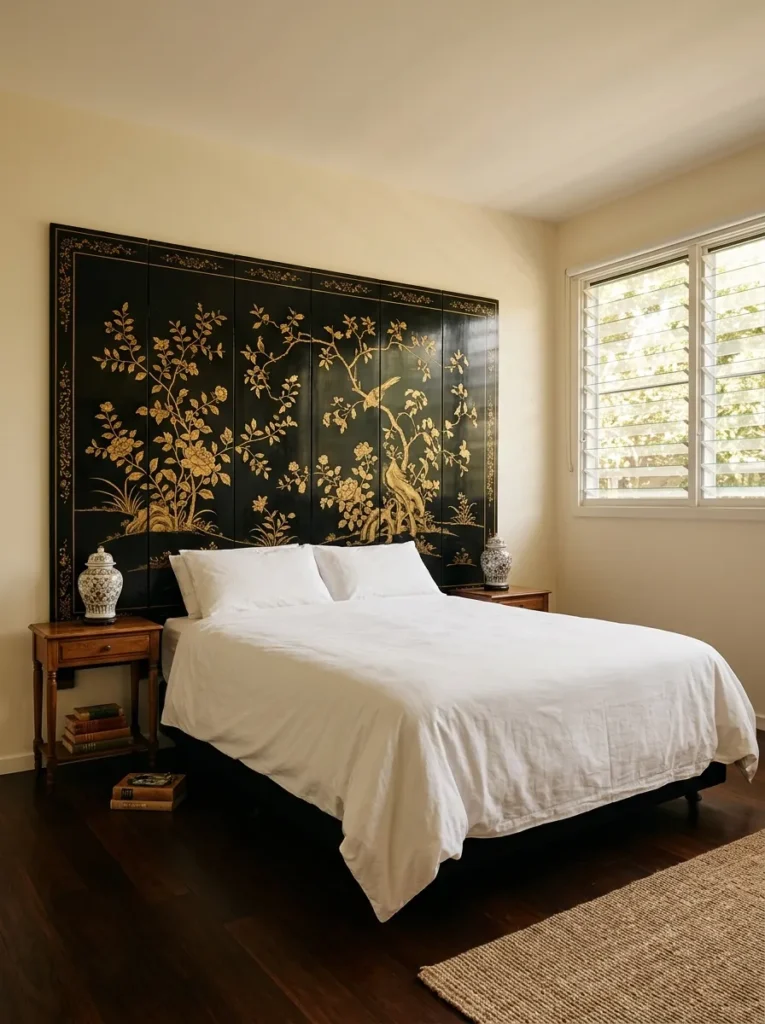
A large antique chinoiserie panel — hand-painted silk or paper on a folding frame — or a framed needlework textile of significant scale, positioned behind the bed in the place a headboard would occupy, gives a vintage bedroom a primary focal point that functions as art, textile, and structural backdrop simultaneously. This works particularly well in rooms with no existing headboard or where the bed frame is simple enough that the wall behind it is the dominant visual field. The piece should be genuinely large — at least two-thirds the width of the bed — and should be mounted or framed so it reads as an installed element rather than a leaning object.
20. A Deeply Personal Edit of Meaningful Vintage Objects on Display
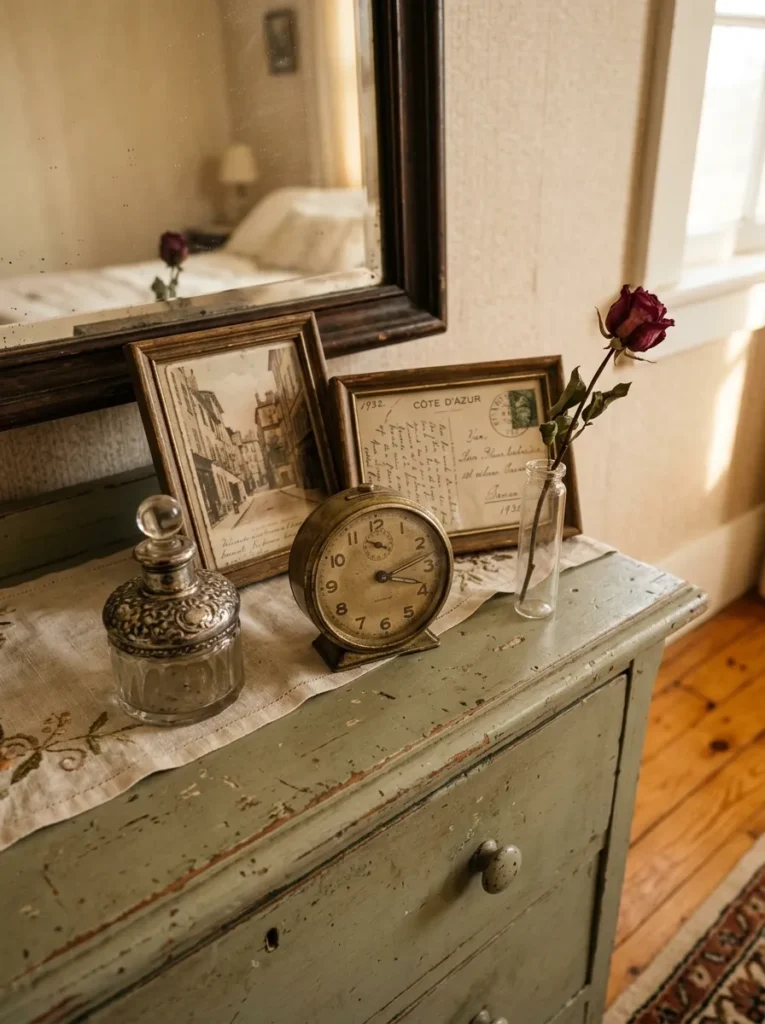
The vintage bedroom idea that no list can fully prescribe is the deliberate editing and display of vintage objects with personal meaning: a grandmother’s perfume bottle on the vanity, a grandfather’s travel clock on the nightstand, a collection of antique postcards framed in a grouping above the dresser. The distinction between this and a general “use antiques” approach is the meaning-over-aesthetic principle: you choose these objects because of what they represent, not because they’re visually correct for a Pinterest-perfect vintage room, and the room gains the kind of specificity and warmth that no amount of correct vintage styling can manufacture. A single shelf or tray curated entirely from objects with genuine personal history does more for a bedroom’s sense of character than a roomful of beautiful but impersonal antiques.
Final Thoughts on Vintage Bedroom Ideas Worth Keeping
The best vintage bedroom ideas share one quality that no sourcing guide or styling rule can substitute for: they feel as though the room was made by someone who cared about the specific objects in it, rather than the category of objects they belong to. Whether you start with an original iron bed and let the room grow around it over years, or you build a coherent vintage scheme from the wallpaper outward, the discipline is the same — choose fewer things, choose them for better reasons, and resist the pressure to complete the room all at once. Vintage bedrooms that feel genuinely charming and timeless are almost always rooms that were given time to become themselves.
Save this vintage bedroom ideas guide to Pinterest so you have it ready the next time you’re sourcing, refreshing, or completely reimagining a bedroom.