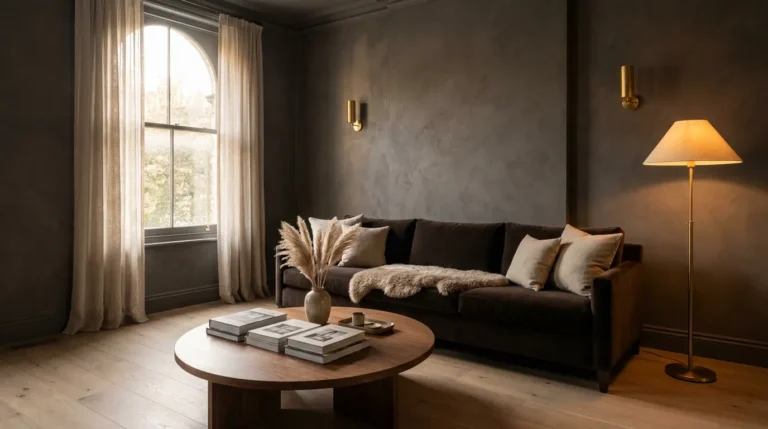
22 Luxury Living Room Ideas That Feel Sophisticated
Sophistication in a living room isn’t a budget threshold — it’s a set of decisions made with enough intention that the room feels complete rather than assembled. The luxury living room ideas that hold up over time share a common logic: every material is chosen for its physical quality rather than its visual trend, every piece of furniture earns its floor space, and the room has a clear sense of hierarchy — a primary focal point, a dominant palette, and a lighting plan that works as well at ten in the evening as it does at noon. None of that requires a designer’s budget. It requires a designer’s discipline.
This roundup covers 22 distinct approaches to the sophisticated living room — from a floor-to-ceiling built-in bookcase wall painted in a deep library tone to a single statement sofa in a room that contains almost nothing else, from coffered ceilings to layered silk and velvet cushion arrangements that look like magazine editorial without being impossibly precious. Each idea explains the design reasoning behind why the choice creates the effect it does, where it works best, and how to execute it at home without the most common mistakes that dilute the result. Save the ideas that match your room and your standard.
1. A Deep, Richly Upholstered Sofa as the Room’s Primary Investment
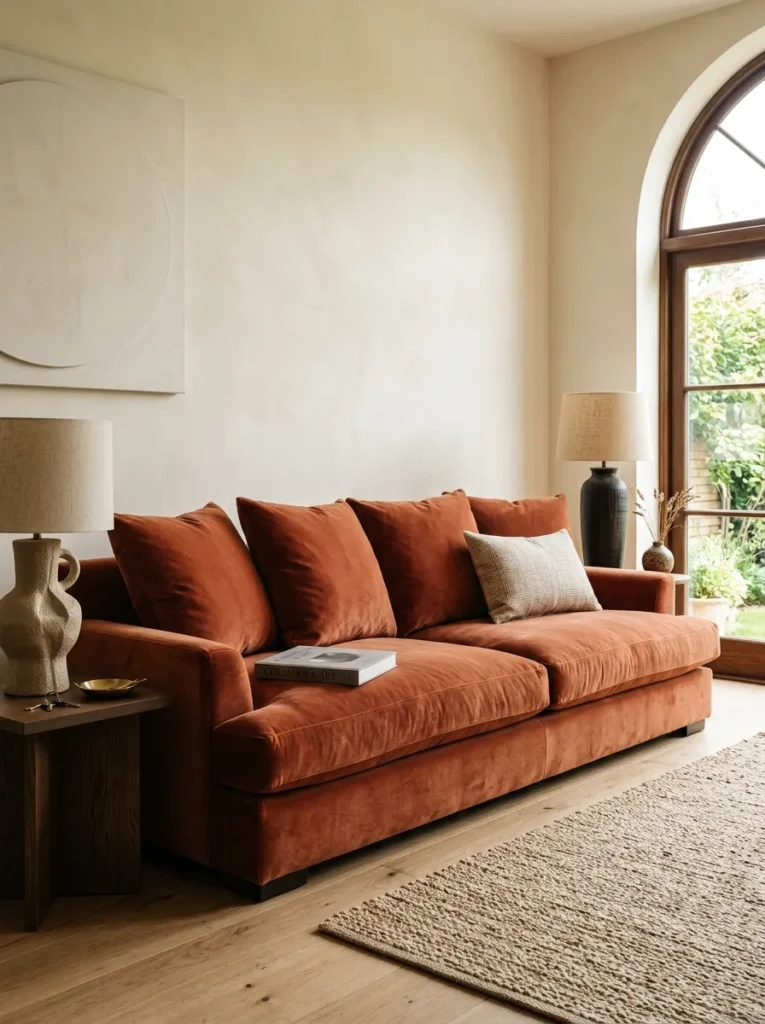
The sofa is the single piece of furniture in a living room that has the most influence over the room’s perceived quality level, because it occupies more visual space than any other object and is the surface guests interact with most. A deeply seated sofa — 38 to 40 inches of depth, with a low back at roughly 30 to 32 inches — reads as more luxurious than a standard-depth sofa at the same price point, because the proportions communicate generosity rather than economy. Upholster in a natural fabric with visible texture: linen weave, mohair, performance velvet, or a tightly woven boucle. Avoid tight-back sofas for a luxury look; a loose-cushion back with plump feather-or-down-wrapped inserts has a quality of ease that a tight back can’t replicate.
2. Floor-to-Ceiling Curtains Hung from the Highest Point on the Wall
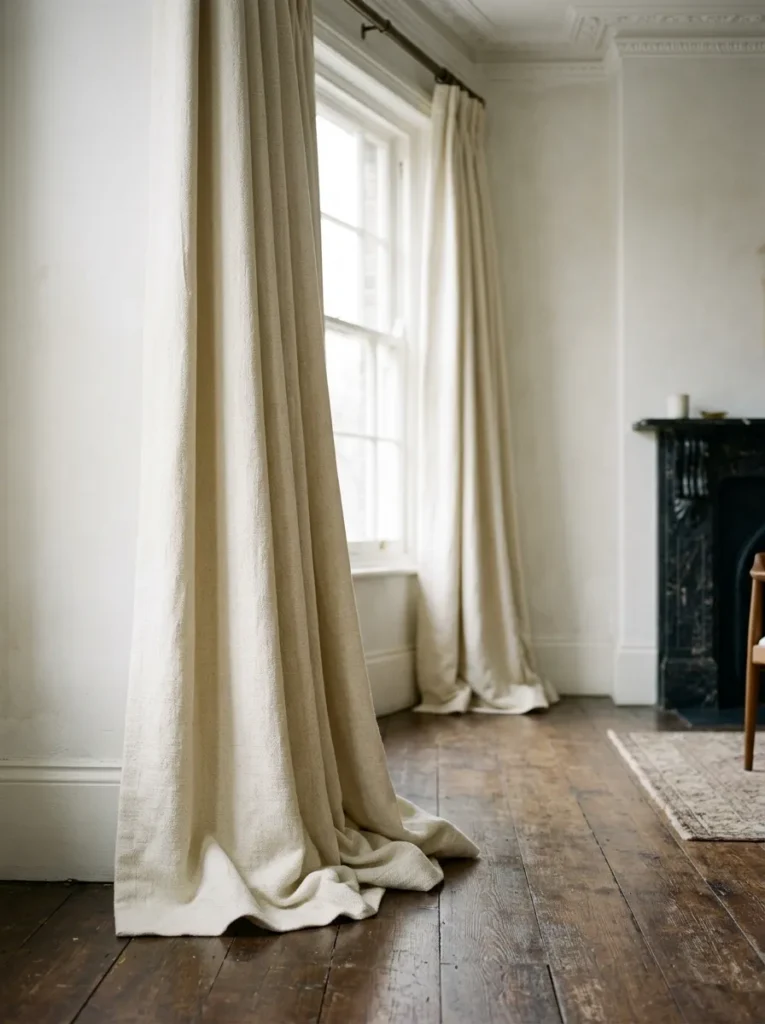
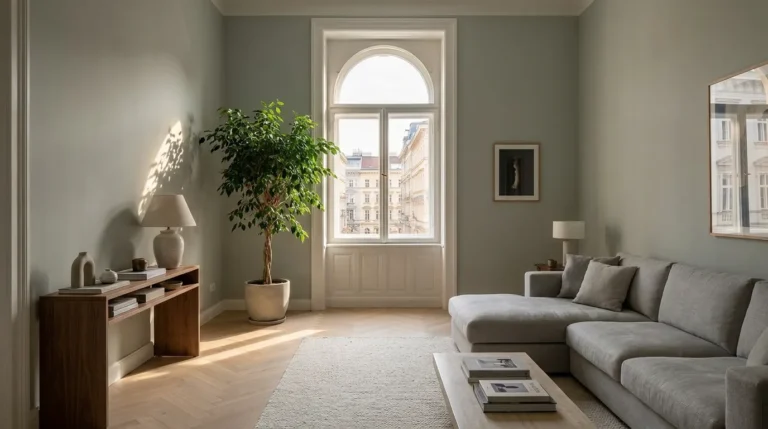
Curtains hung from a rod positioned two to four inches below the ceiling — rather than just above the window frame — and falling in a slight puddle on the floor are one of the highest-return investments in a living room’s perceived height and sophistication. The extra curtain length creates a wall of fabric that reads as architectural rather than decorative, and the floor puddle signals that the curtains were made for this specific room rather than purchased in a standard length. Use heavyweight linen, interlined silk, or wool-blend fabric in a tone close to the wall color so the curtains read as an extension of the wall rather than an object hanging in front of it.
3. A Coffered or Detailed Plaster Ceiling as the Room’s Statement Surface
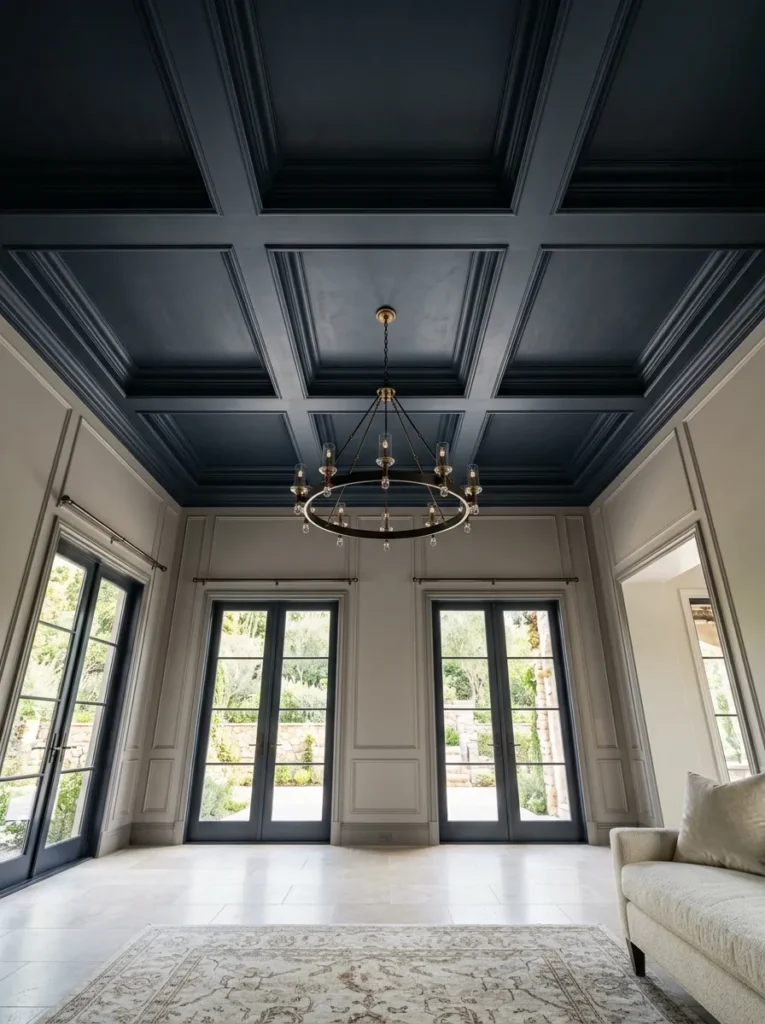
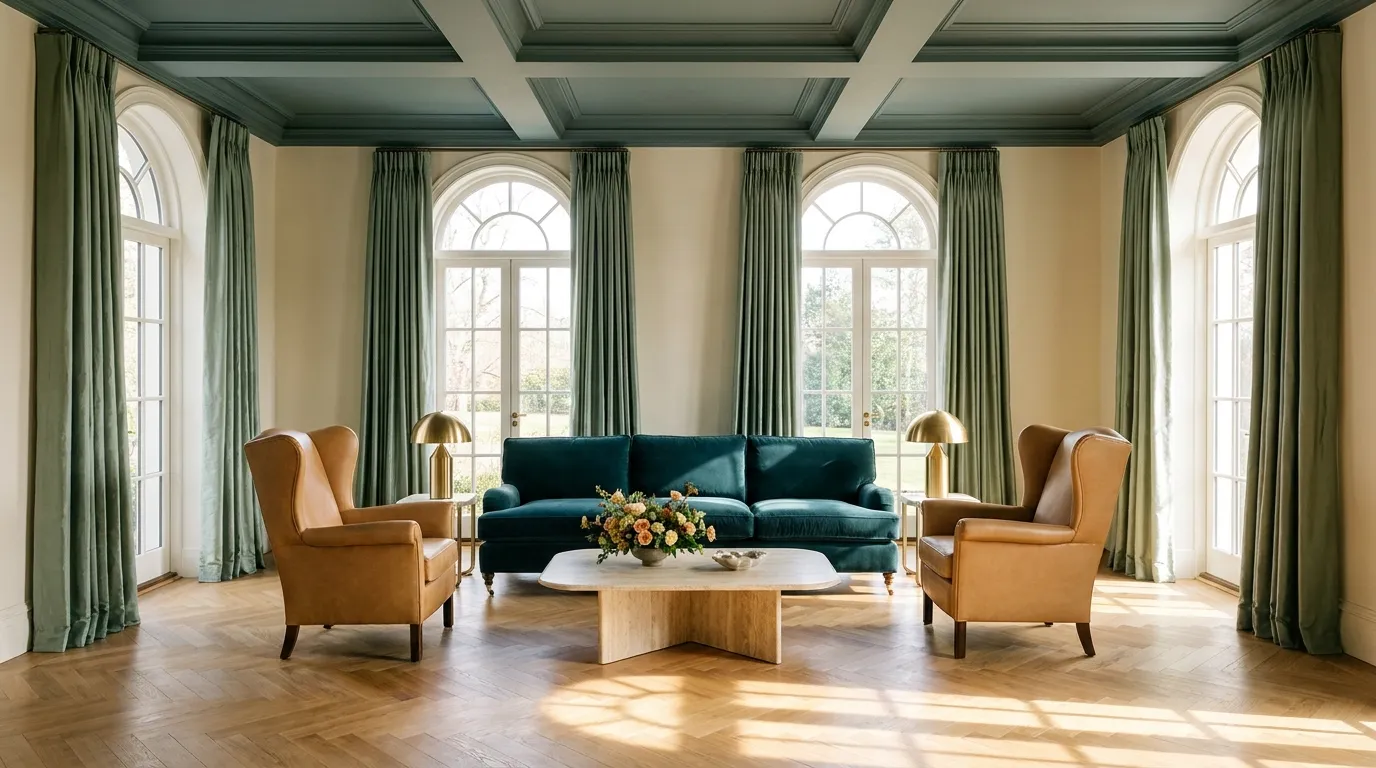
In rooms where the floor and wall finishes are already strong, turning the ceiling into a designed surface — through coffering, applied molding, plaster rosettes, or a deeply painted plane — adds a layer of architectural detail that most rooms at any price point lack and that immediately communicates that the room was planned to a high standard. Coffered ceilings suit formal and traditional living rooms; a smooth plaster ceiling painted two to three shades deeper than the walls suits contemporary and moody rooms. The ceiling is the one surface in a room no furniture or rug covers, which is precisely why it registers so strongly when it’s designed.
4. A Single Oversized Sofa in an Otherwise Restrained Room
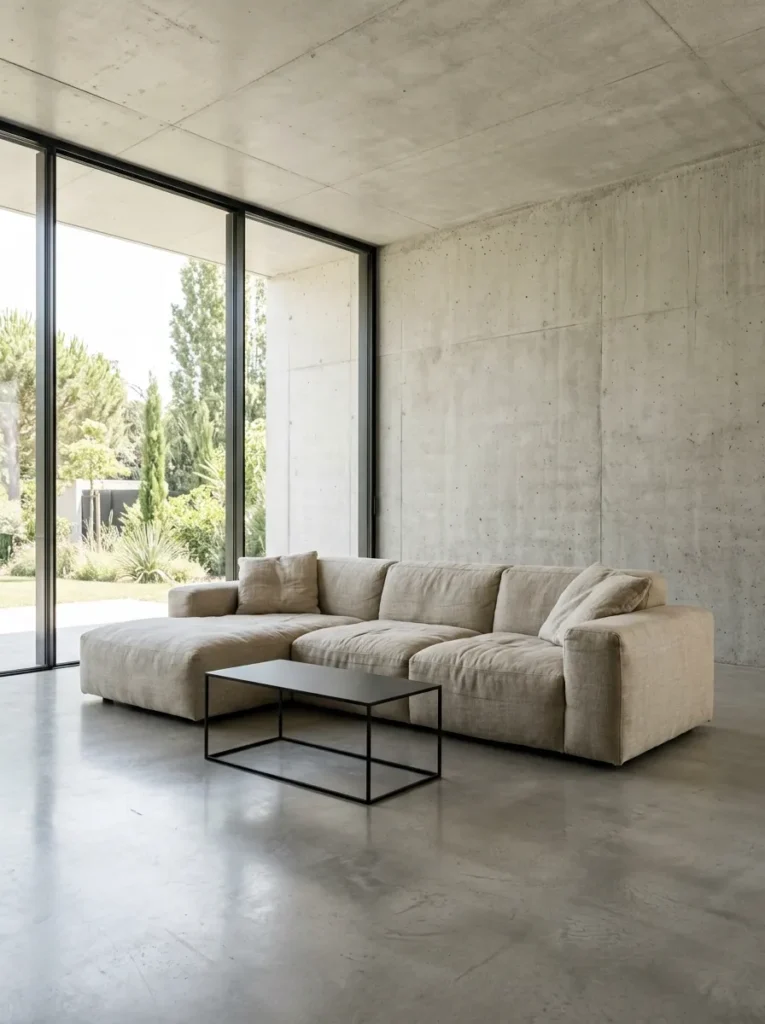
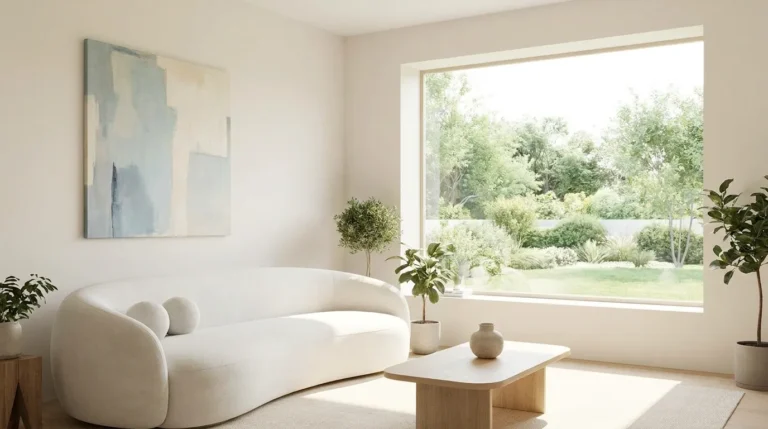
One of the quieter luxury living room ideas is a room organized around a single exceptional sofa — generous in scale, exceptional in material — with everything else deliberately understated: a simple coffee table, clean walls, minimal accessories, no competing upholstered pieces. This approach requires discipline because it resists the instinct to fill the room, but the payoff is a space that reads as confident and resolved rather than curated by committee. The sofa’s material and craftsmanship carry the entire room, which makes the choice of that single piece the most consequential decision in the whole design.
5. A Library-Style Built-In Bookcase Wall Painted in One Deep Tone
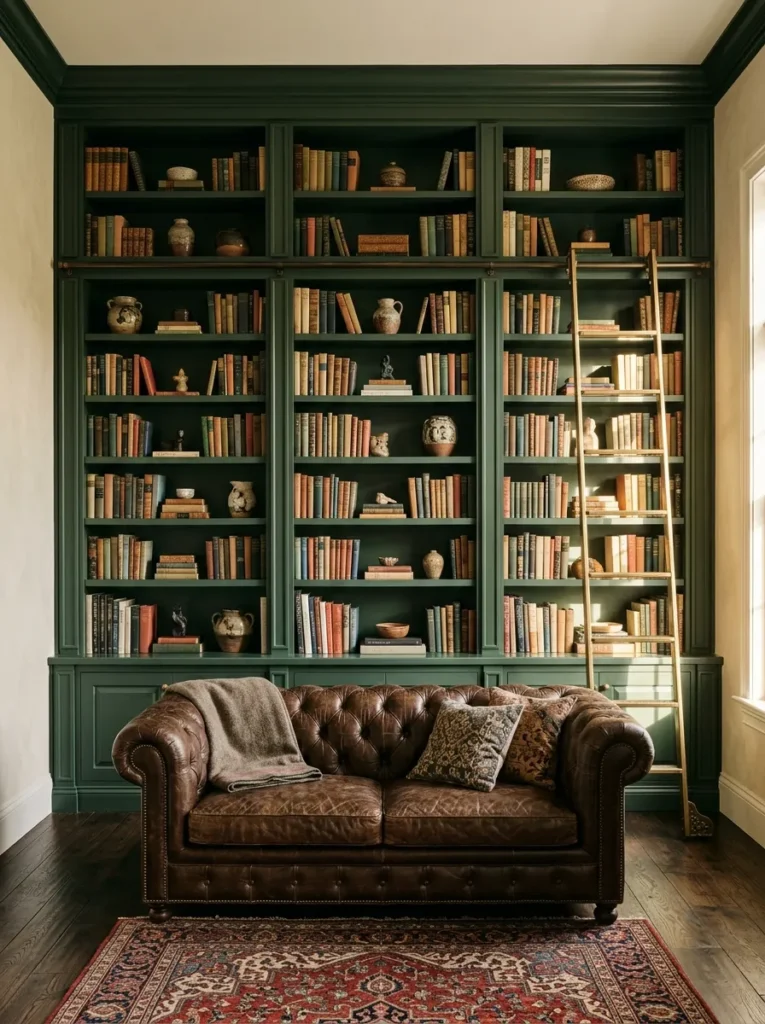
A full wall of built-in shelving — floor to ceiling, with shelves, cabinets below, and a ladder on a rail — painted in the same deep color as the wall behind it creates a library-quality effect that makes the living room feel like it belongs to someone with a history rather than someone who recently moved in. The paint-everything-the-same-tone approach is the key detail: when the shelving is painted to match the wall rather than in white or a contrasting color, the books and objects on the shelves float within a deep-toned field rather than sitting against a cabinet. Forest green, navy, black, and deep tobacco brown all work for this approach; the color’s undertone should match the room’s existing palette.
6. A Statement Fireplace Surround in Fluted Plaster or Carved Stone
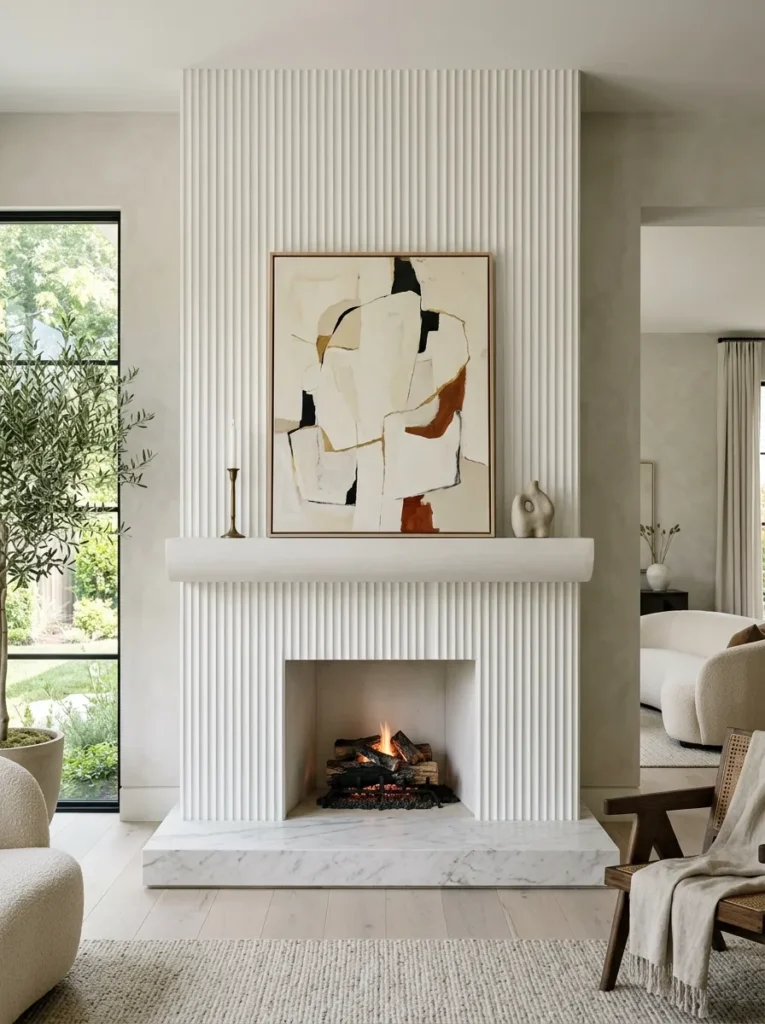
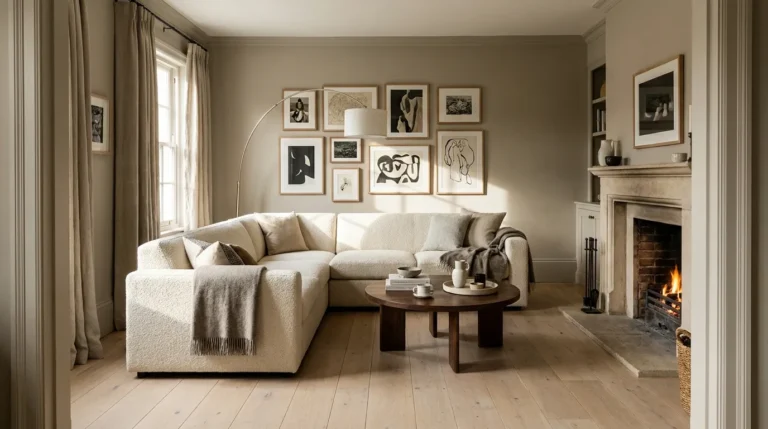
The fireplace surround is one of the few architectural elements in a living room that can be replaced or enhanced without a full renovation, and upgrading it — from a plain painted surround to a fluted plaster, limewashed brick, or carved limestone design — delivers disproportionate visual impact for the investment. Fluted plaster surrounds suit contemporary rooms; carved stone or marble suits traditional rooms; a raw concrete surround suits industrial or minimal rooms. The mantel shelf above is equally important: a thick, deep shelf in the same material as the surround, rather than a thin add-on, communicates mass and quality at the room’s most-viewed focal point.
7. Layered Wool, Silk, and Velvet Cushions in a Tonal Arrangement
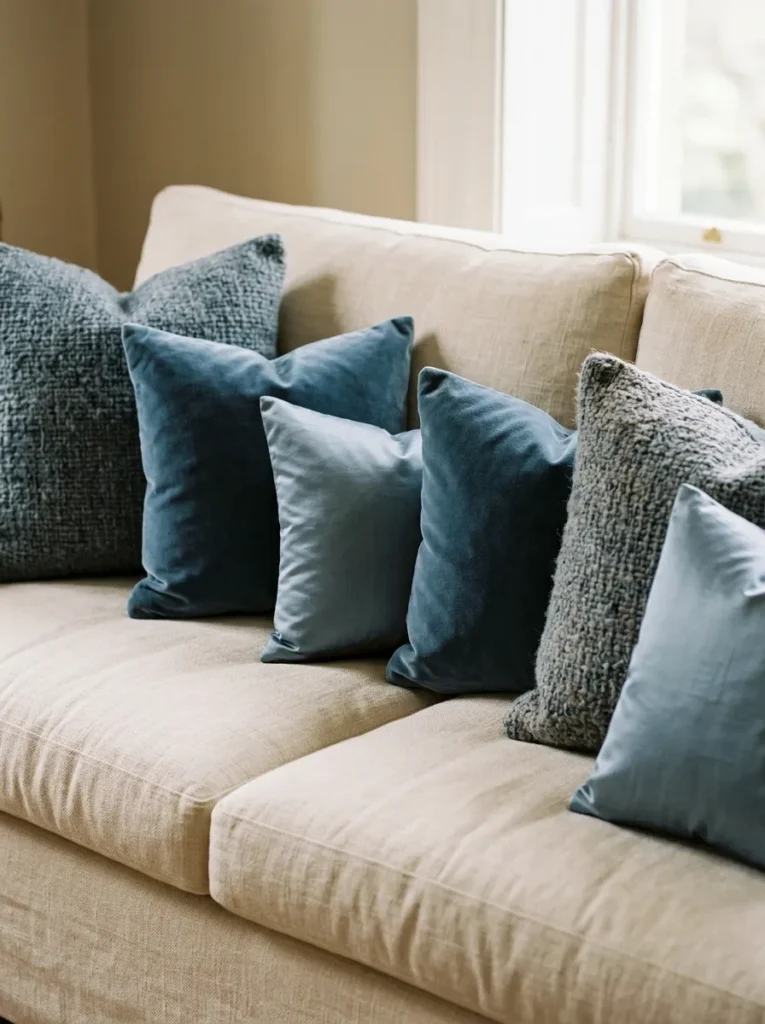
A cushion arrangement that reads as luxurious rather than decorative-store-display relies on three things: material variation (not all cushions in the same fabric), tonal cohesion (all cushions within the same color family rather than contrasting brights), and scale variation (mixing 24-inch, 20-inch, and 18-inch square sizes rather than uniform sizing). Wool, silk, and velvet in the same muted tone — all in a dusty blue, or all in a warm terracotta, or all in a champagne-to-cream range — creates depth through material rather than color contrast, which is the professional approach versus the retail-display approach of mixing prints and bright accent colors.
8. A Sculptural Coffee Table as the Room’s Focal Object
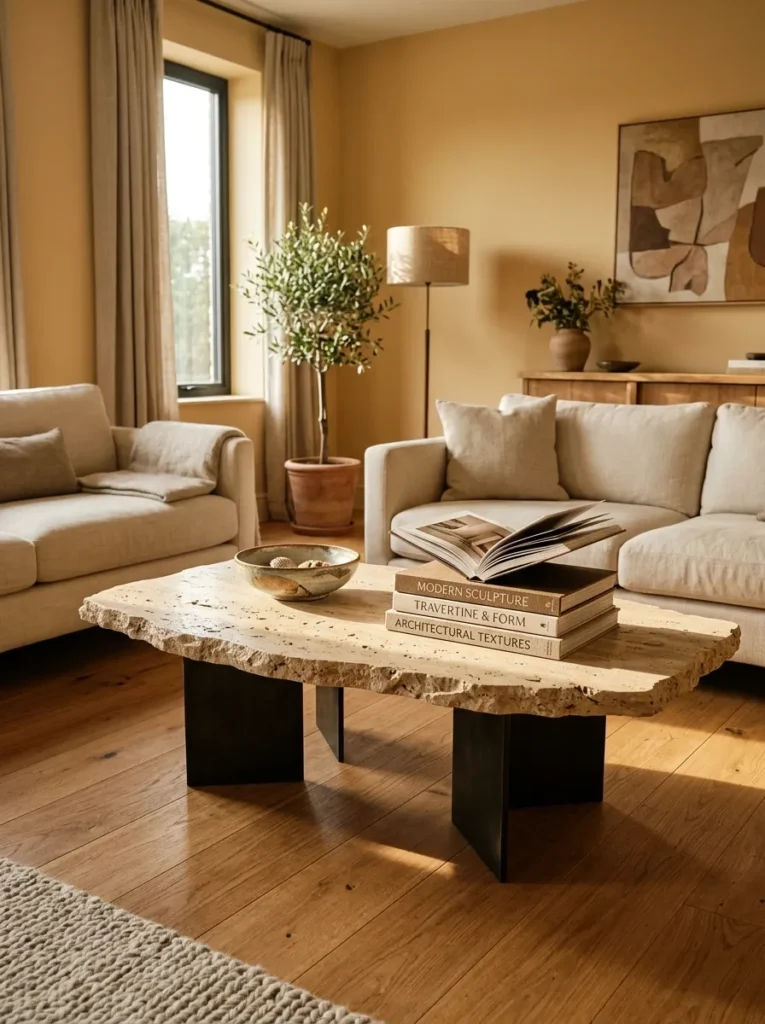
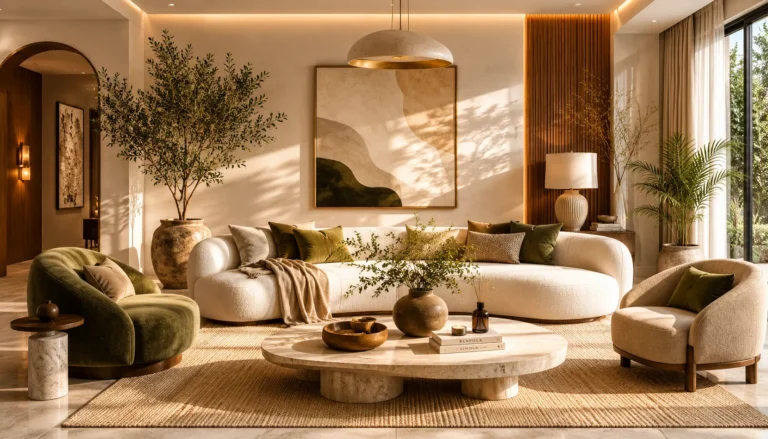
A coffee table that reads as sculpture — a travertine slab on geometric metal legs, a single piece of curved freeform wood, a plaster-finished round with an unexpected base — replaces the standard rectangular wood or glass table with an object that holds the room’s attention independent of what’s styled on it. This matters most in living rooms where the seating is deliberately neutral or low-key, since the coffee table becomes the room’s primary visual statement rather than the sofa. The relationship between the table’s material and the other materials in the room should be deliberate: a stone table works with wood and linen; a brass-and-glass table with velvet and painted walls.
9. A Silk or Wool Area Rug in a Muted, Complex Pattern
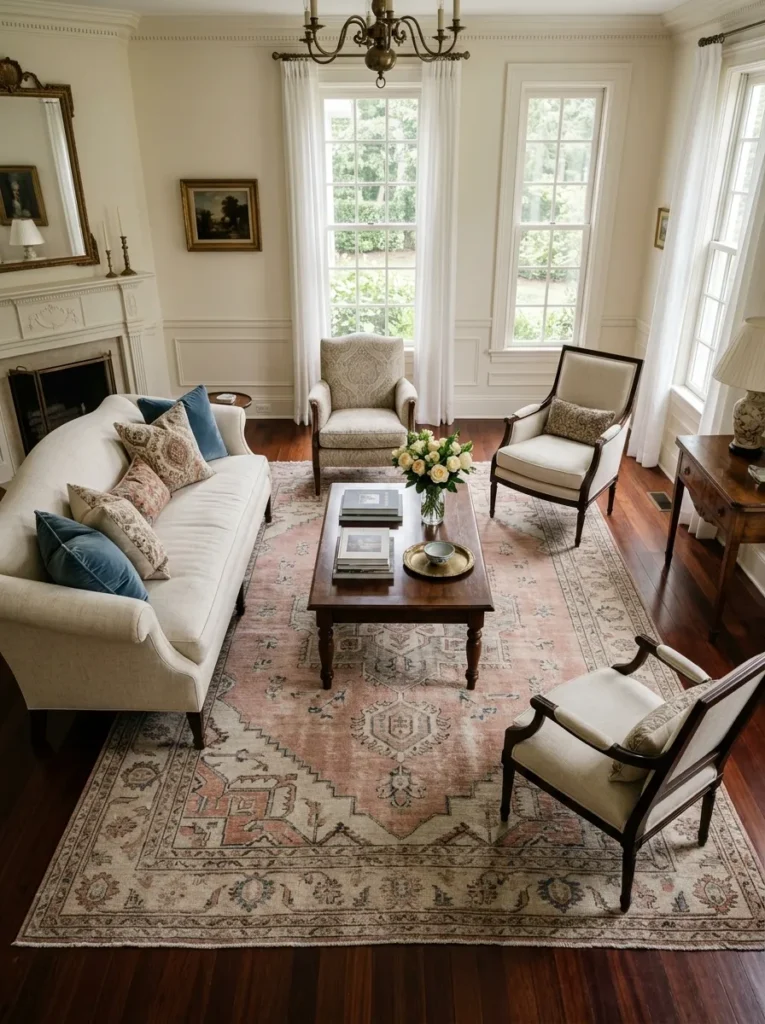
A rug’s quality in a luxury living room is perceptible even to people who don’t consciously register what they’re responding to: the way it compresses underfoot, the way its pile catches light from different angles, the complexity of color variation within a single “neutral” field. A handknotted wool or silk rug in a muted, low-contrast traditional pattern — a faded Persian, a Oushak in blush and ivory, a geometric in warm gray — provides the room’s foundation without competing for attention. The size matters as much as the quality: a rug that ends before the front legs of the sofa reach it undermines the entire arrangement; all front legs on the rug minimum, all legs for preference.
10. Decorative Molding Applied to Plain Walls as Architectural Upgrade
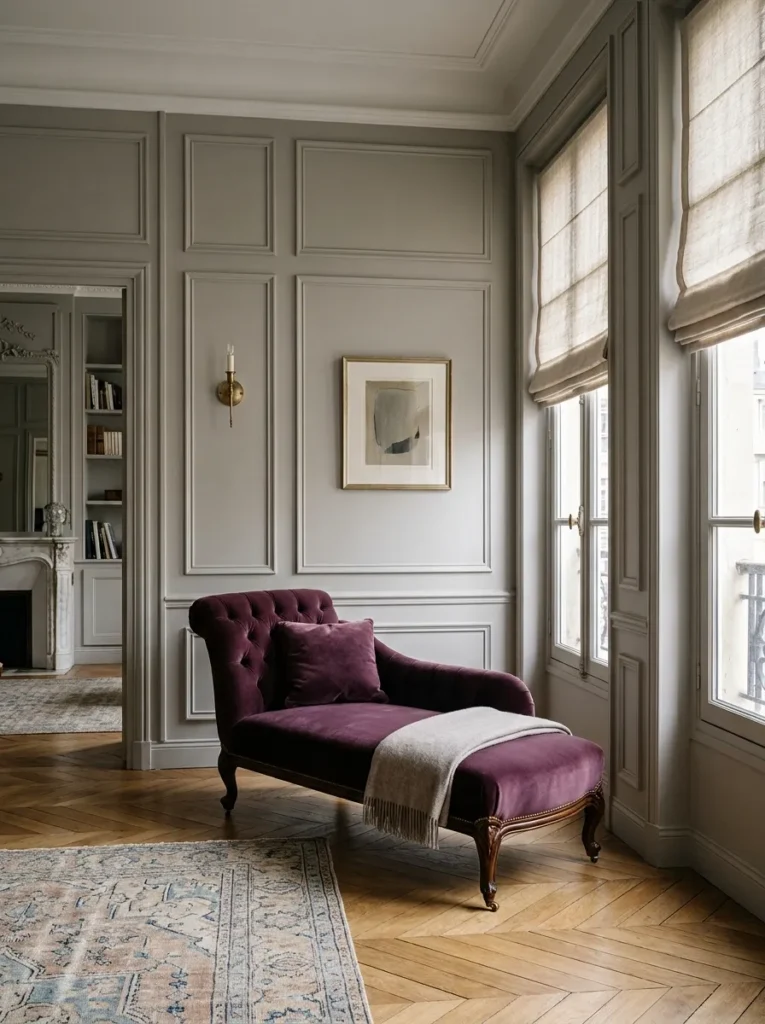
In a room with no architectural detail — flat walls, plain ceiling, no cornice — applied decorative molding creates the impression of a room that has always had bones worth keeping. Panel molding applied in rectangles at a consistent reveal from the floor and ceiling transforms a builder-grade plaster wall into something that reads as either classical or contemporary depending on the proportions chosen: wide, shallow-profile rectangles with thick molding read as traditional; narrow, deep-set panels with minimal molding read as Parisian contemporary. This is a purely additive change — no walls removed, no structural work — and the result justifies the effort of precise measuring and mitered corners at every joint.
11. A Pair of Matching Side Chairs That Frame the Seating Arrangement
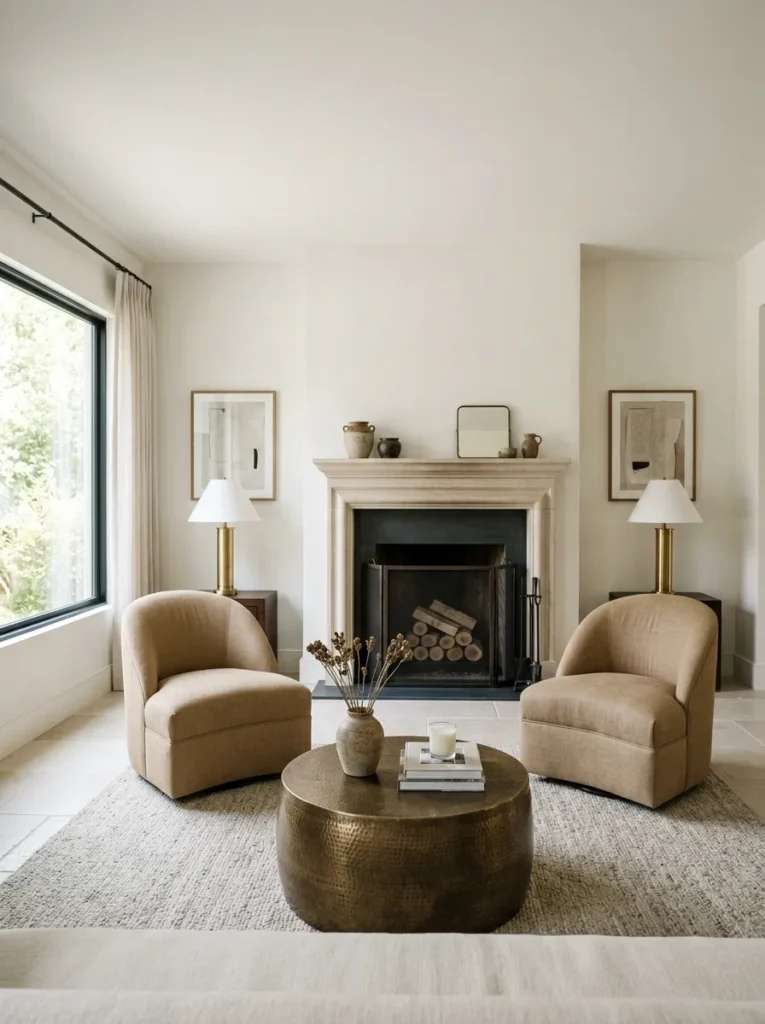
Two identical or closely related accent chairs positioned symmetrically across from the sofa or flanking the fireplace establish the kind of composed, formal-yet-welcoming seating arrangement found in high-end hotel lobbies and magazine living rooms. The symmetry itself is the sophistication signal: it communicates a room that was considered as a whole rather than furnished piece by piece over time. Chairs in a complementary fabric to the sofa — not matching, but occupying the same material family — and at a scale that balances the sofa without crowding the space are the two non-negotiable requirements. Wing chairs suit traditional rooms; curved slipper chairs suit contemporary ones.
12. Lacquered or Venetian Plaster Walls in a Jewel Tone
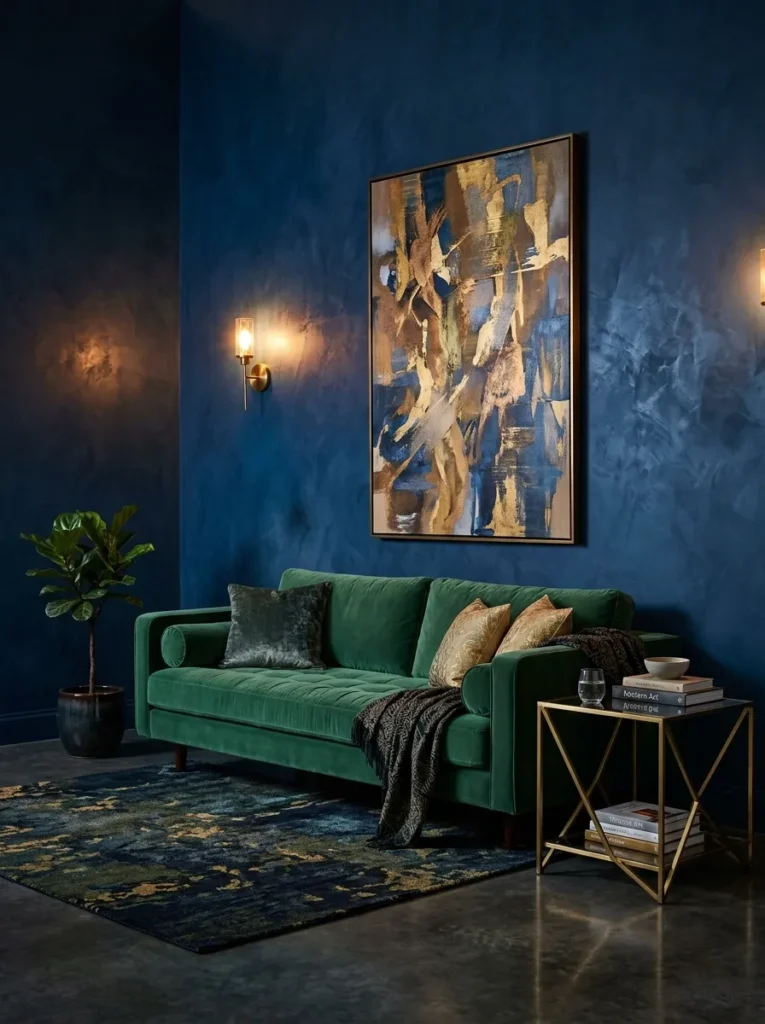
A living room with walls in a deep, reflective finish — lacquer, Venetian plaster, or a paint with a pronounced sheen in a jewel tone like sapphire, deep emerald, or midnight teal — has a distinctly sophisticated quality because the depth and slight reflectivity of those finishes makes the walls appear to have dimension rather than simply separating the floor from the ceiling. Venetian plaster in particular creates the sense that the color is inside the wall rather than on it. This approach works in both large and small living rooms; in small rooms, the reflective quality bounces light and makes the space feel more three-dimensional than matte paint in the same color would.
13. Brass, Bronze, and Warm Metal Throughout Every Fixture and Fitting
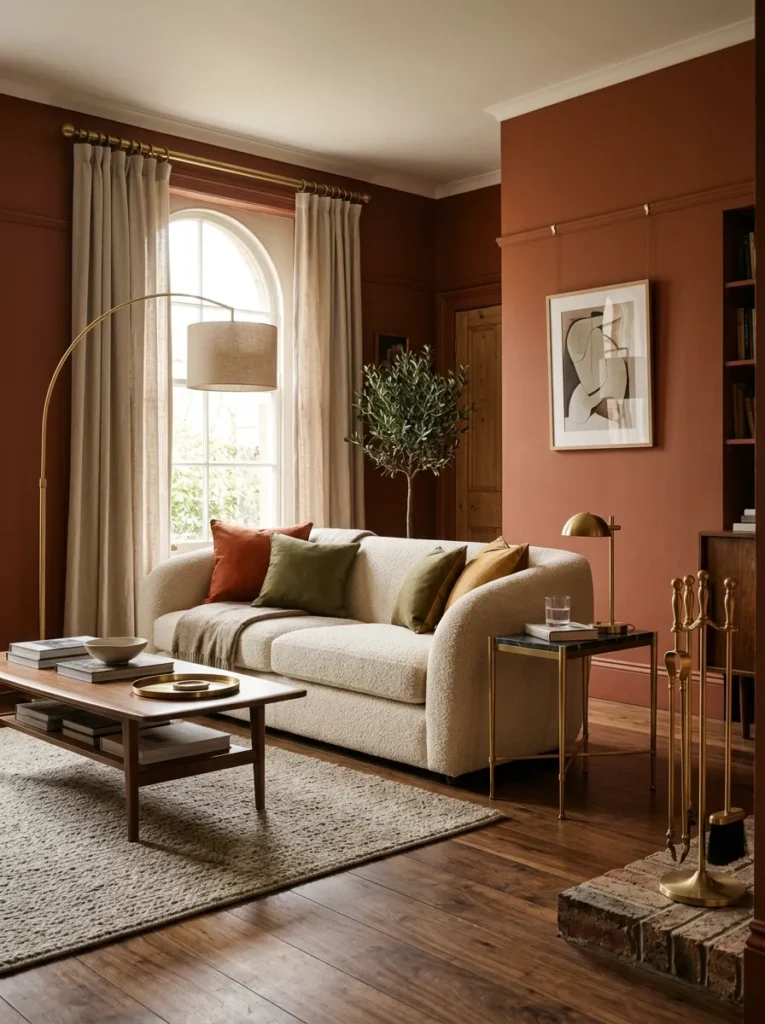
Choosing one warm metal finish — unlacquered brass, aged bronze, or warm gold — and applying it consistently to every metal object in the room (light fixtures, curtain rods, picture rail hooks, table legs, fireplace tools) creates a cohesive material thread that signals an edited, intentional approach. The metal finish functions as the room’s jewelry: individually each piece is small, but seen together they form a pattern of consistency that reads as sophisticated. Unlacquered brass is particularly effective because it develops a natural patina over time that no other finish replicates — it looks increasingly lived-in rather than increasingly dated.
14. A Gallery Wall Built Around a Single Large Anchor Piece
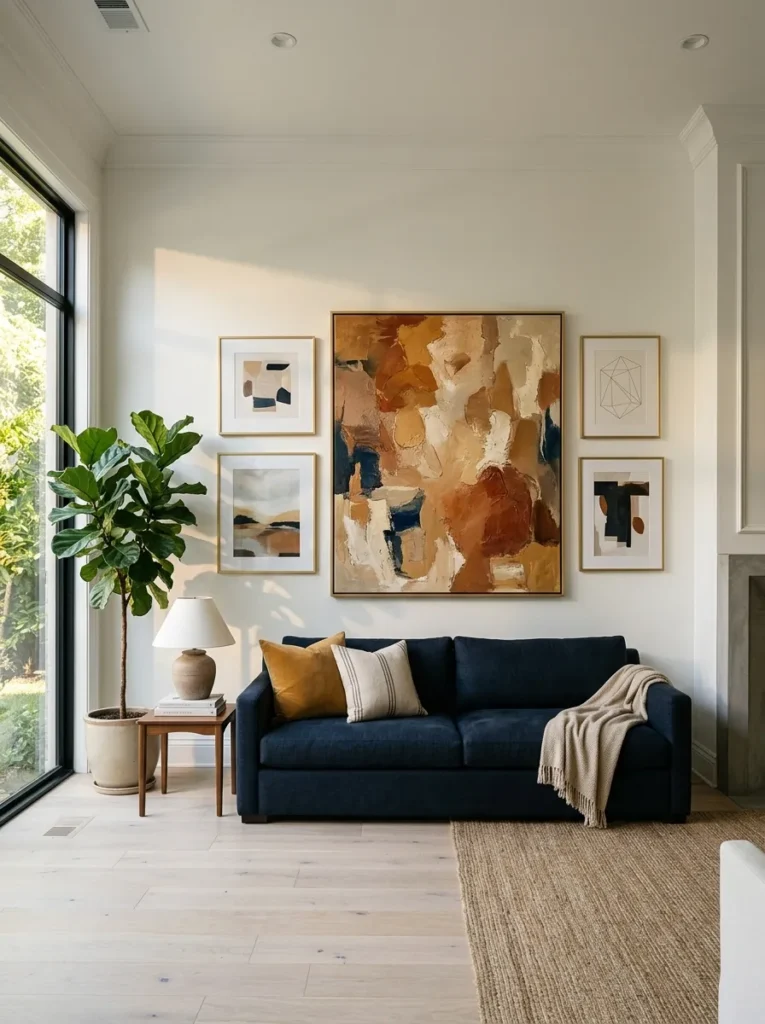
The gallery wall approach that reads as editorial rather than assembled starts with a single oversized piece — a canvas, a large framed photograph, a substantial mirror — and builds smaller works around it asymmetrically, rather than spacing everything equally at the same height. The anchor piece should be large enough that it would hold the wall confidently on its own; the surrounding pieces are satellites rather than co-equals. Frame all pieces in the same or closely related frame material, and use a consistent mat width so the frames read as a considered grouping. This format suits a living room wall with no architectural feature to compete with.
15. A Curved Sofa or Sectional for Organic Spatial Flow
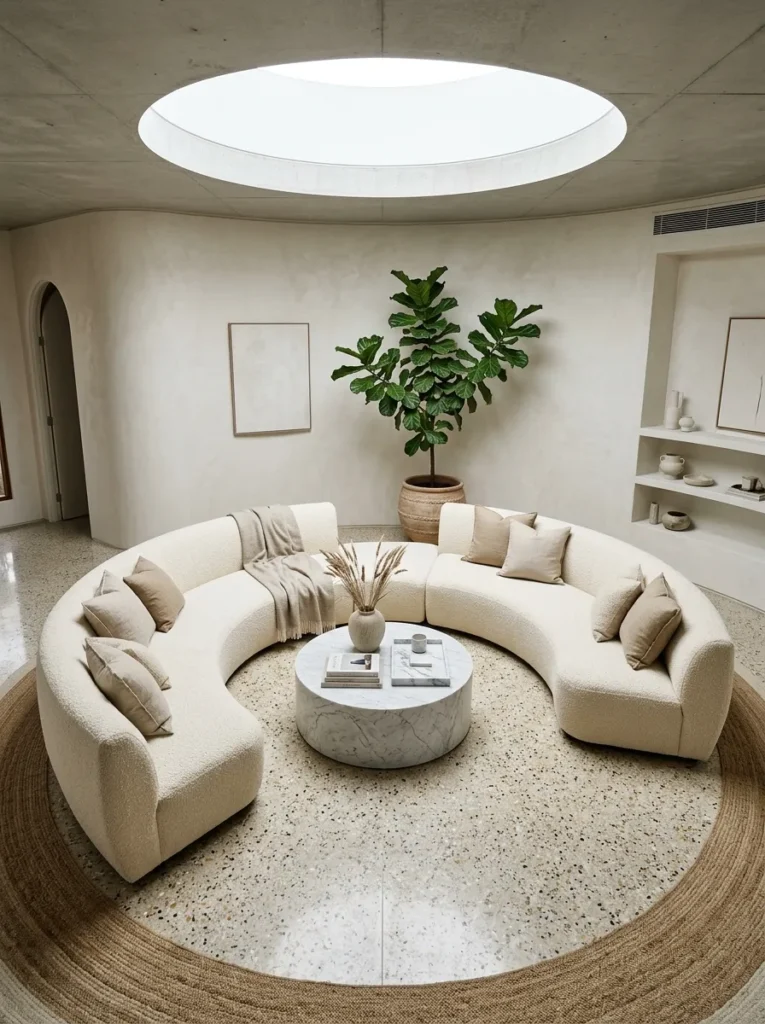
A curved or semicircular sofa — whether a single curved piece or a curved sectional with a matching chaise — brings the most humanly scaled furniture form into the room because its outline echoes the human body’s own curves rather than imposing right angles on a space that doesn’t have them. Curved sofas perform best in square or circular rooms and open-plan spaces where the furniture arrangement needs to define a zone without creating a rigid geometric boundary. The curve’s inner radius should be generous enough to seat three people comfortably; too tight a radius and the seats at the ends angle uncomfortably inward.
16. A Monochromatic Palette Executed in Multiple Materials and Finishes
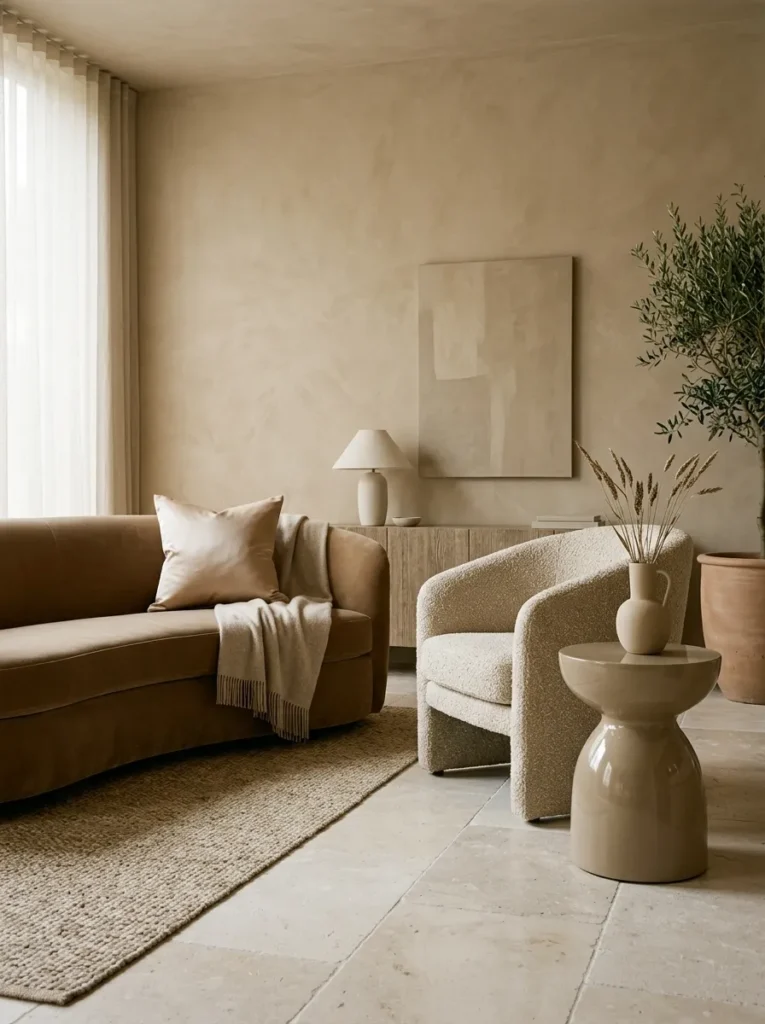
A living room in a single color carried through every surface — walls, sofa, rug, curtains, ceiling — but differentiated through finish and texture (matte wall, velvet sofa, wool rug, silk cushion, gloss lacquer side table) achieves a level of sophistication that a multi-color room rarely reaches because the complexity comes from material nuance rather than hue variation. This is among the more technically demanding luxury living room ideas to execute, since any tone that pulls slightly cooler or warmer than the rest of the palette becomes immediately visible in an all-one-color room. Warm beige-to-sand, warm putty, and soft blush all work well as the base tone; avoid pure white or pure gray, which tend to expose undertone inconsistencies most harshly.
17. Custom-Height Wainscoting Taken to Picture-Rail Height
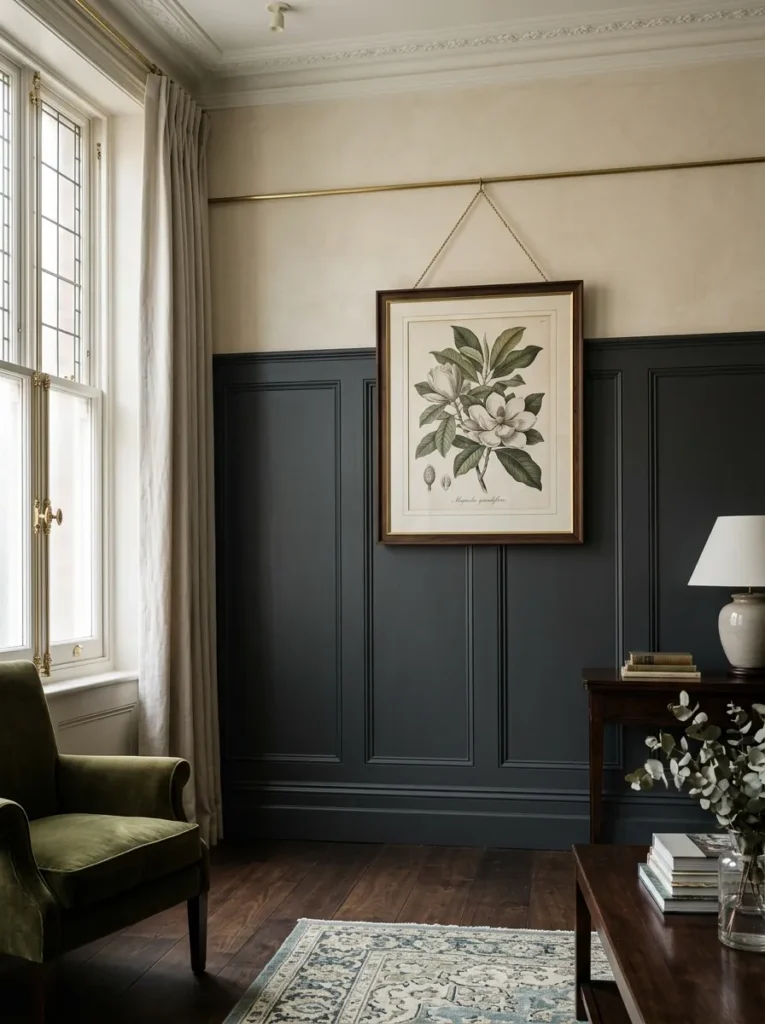
Standard wainscoting runs to approximately 36 inches — chair-rail height — which reads as traditional but not necessarily sophisticated. Taking wainscoting up to picture-rail height (roughly two-thirds of the wall height, or 60 to 72 inches in a standard room) changes its character entirely: the wall reads as almost fully paneled, with only a narrow band of paint or wallpaper above, and the effect is of an interior that was built to a considered specification rather than finished with whatever the builder provided. Use smooth MDF paneling in a satin-finish paint for a contemporary version, or raised-panel millwork for a more traditional result.
18. A Statement Floor Lamp as Architecture Rather Than Accessory
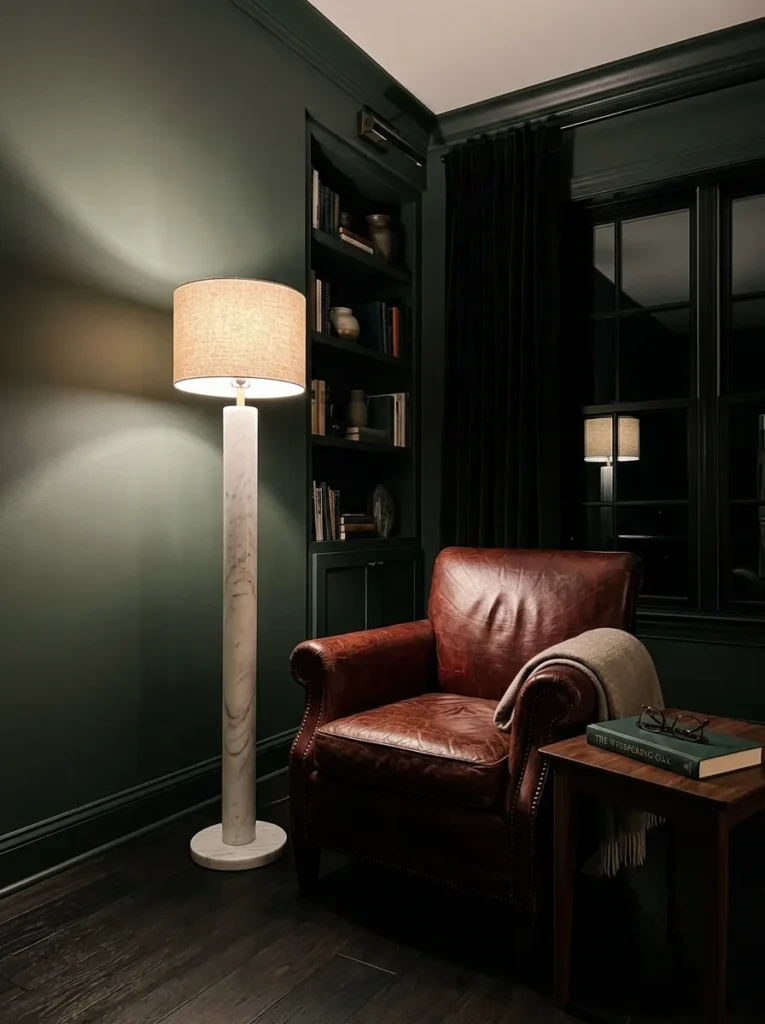
A floor lamp that reads as sculpture — an arching brass boom lamp with an oversized linen shade, a slim marble-based floor lamp taller than six feet, or a resin column lamp with internal illumination — contributes to a living room’s sophistication in two ways: it provides the layered lighting a single overhead fixture can’t, and it occupies the space as a designed vertical element rather than just a light source. Position it to create a reading or conversation pool of light away from the main sofa, since the most sophisticated rooms always have at least one lit zone that isn’t the primary seating area — a quality that gives the room depth and dimension at any hour.
19. A Thoughtful Book Collection Styled Into the Room
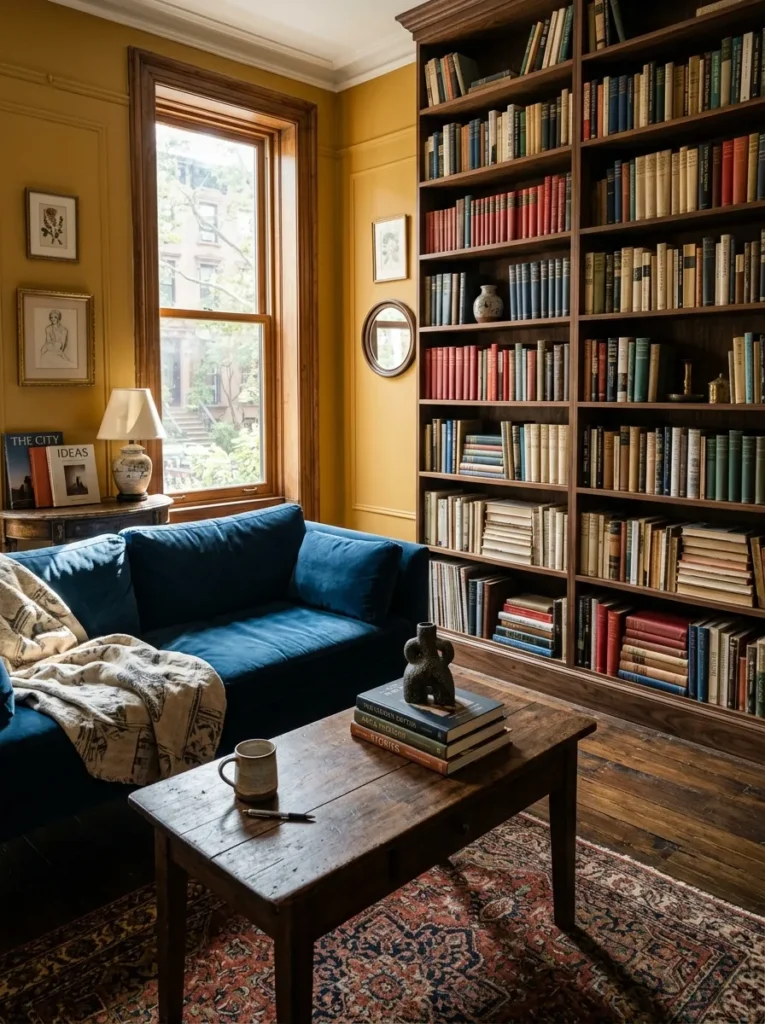
Books in a living room are one of the few categories of object that communicate something true and verifiable about the person who lives there, which is why they are more valuable as a styling element than any purchased decorative object. A living room where genuine books — actually read, accumulated over time — are arranged on shelves, stacked on the coffee table, or placed on side tables reads as inhabited in a way that no amount of decorative objects fully replicates. Style books in a mixture of vertical and horizontal arrangements, remove the dust jackets from hardcovers with cluttered or clashing covers, and group by spine color or height only where the arrangement benefits from it.
20. Concealed Storage Behind Architectural Panels
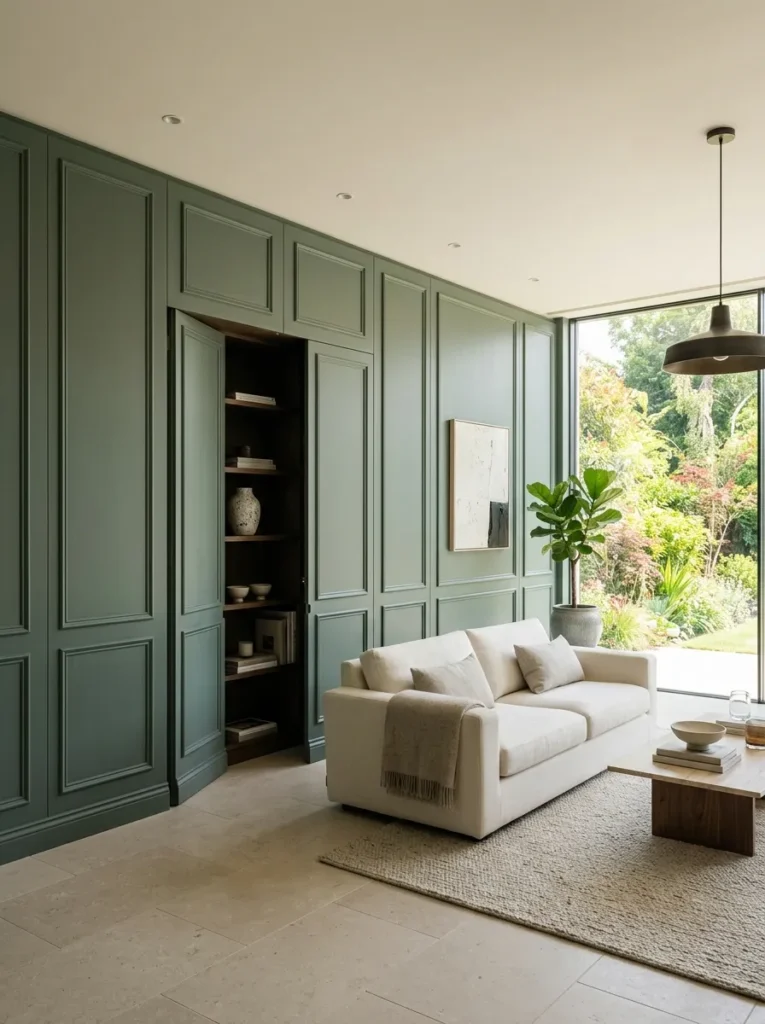
Storage that hides completely behind a wall panel — flush-mounted doors that blend into a paneled wall, a bookshelf that reveals a concealed cabinet, a media unit with doors that disappear into the wall surface when closed — belongs to the category of luxury living room ideas that work by absence rather than presence: the room looks more sophisticated because the clutter isn’t visible rather than because something beautiful was added. This requires planning during renovation or new construction for the most seamless result, but flush-mounted panel doors on a paneled wall can be retrofitted with careful carpentry. The key is continuous molding across both the door and the fixed wall around it so the joint line is imperceptible.
21. An Investment-Grade Lighting Plan with Dimmers on Every Circuit
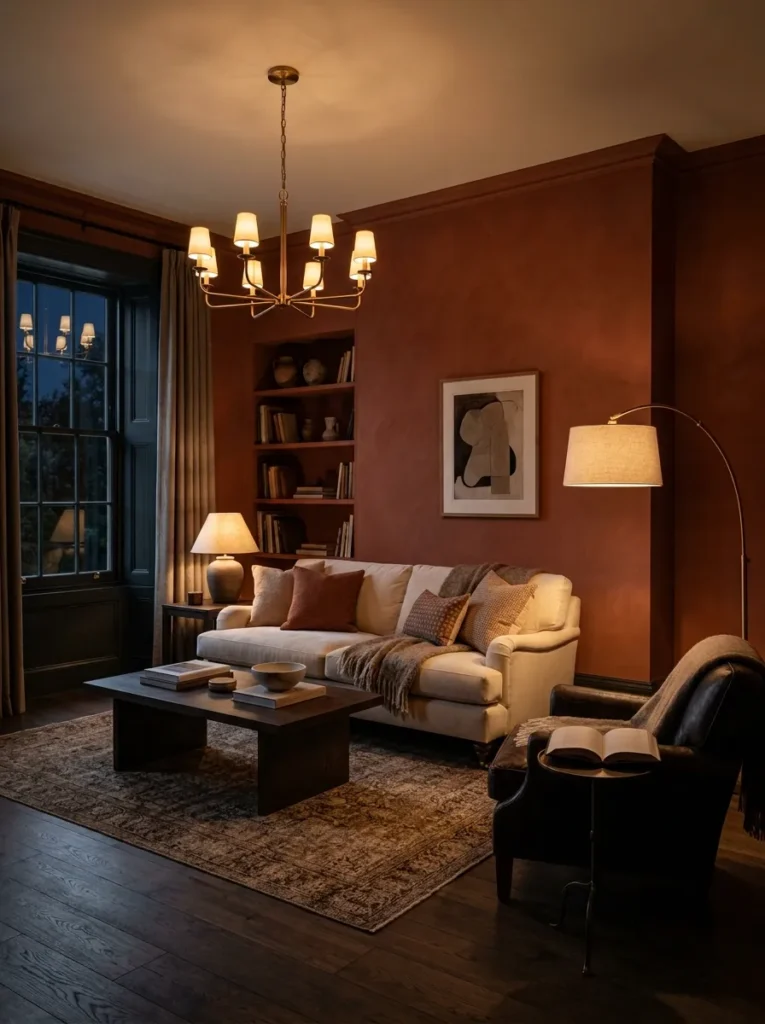
The single intervention that transforms a well-furnished living room into a sophisticated one at the lowest cost per impact is installing dimmer switches on every light circuit and using them. A room where every light source is independently dimmable and can be brought to a specific level for different times of day — bright at noon, warm and low at evening — is a different spatial experience from the same room with a single undimmed overhead light, regardless of how the furniture is arranged. Warm filament bulbs at 2700K on all lamps, a dimmer on the chandelier or overhead fixture, and a programmable setting for “evening mode” at roughly 40 percent of full brightness is the specification that makes this work.
22. A Living Room Styled to a Clear Hierarchy of Focal Points
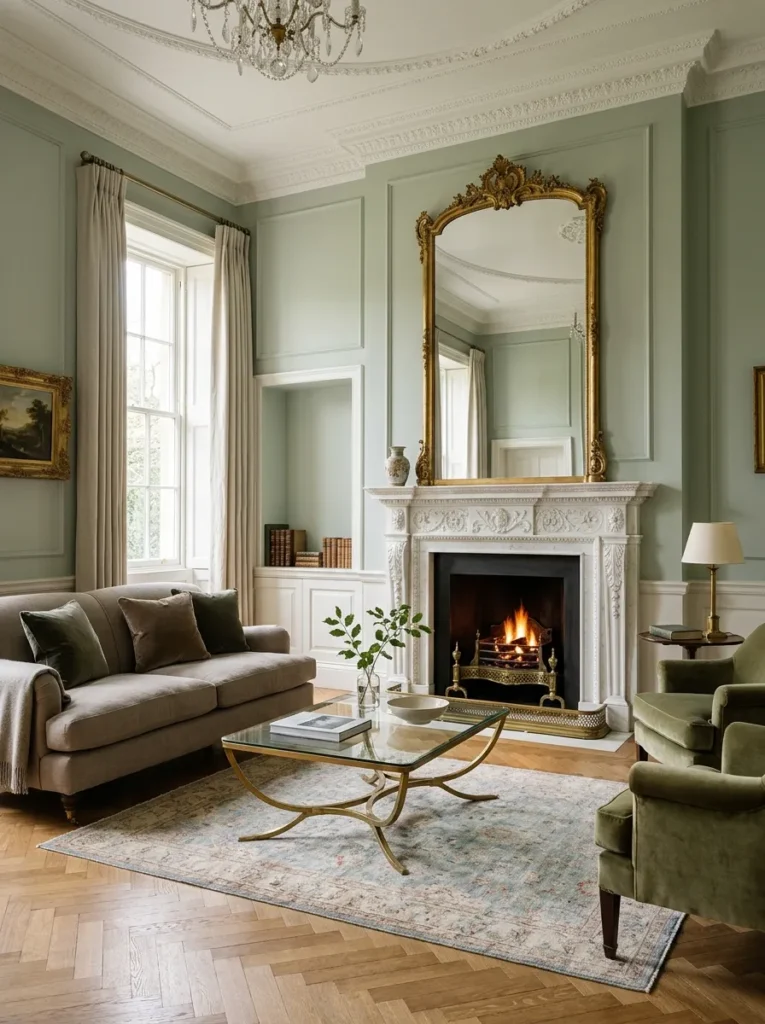
The quality that separates a sophisticated living room from a simply nice one is often a matter of visual hierarchy: there is one primary focal point (the fireplace, the view, the art wall, the statement sofa), one secondary focal point (the coffee table, the console and mirror, the bookcase), and the rest of the room recedes to support them. When every element in a room competes for the same level of attention — a bold rug, a gallery wall, a dramatic pendant, a statement sofa, an ornate coffee table all in the same room — the effect is busy rather than rich. Luxury living room ideas work best when the room’s hierarchy is clear enough that a guest entering the room knows immediately where to look.
Final Thoughts on Luxury Living Room Ideas Worth Keeping
The through-line in every luxury living room idea on this list is intention: nothing was placed without a reason, nothing was left in because it didn’t warrant removal, and the room’s visual hierarchy is clear enough that it registers without being explained. Whether you start with a single investment sofa and build the room around it, or work from the architecture outward with coffered ceilings and library walls, the result is the same: a room that feels sophisticated because it was genuinely thought through. Choose the ideas that match your room’s existing strengths, and resist the urge to implement all twenty-two at once. Sophisticated rooms are edited rooms first.
Save this luxury living room ideas guide to Pinterest so you have it ready when you’re planning your next living room renovation or refresh.