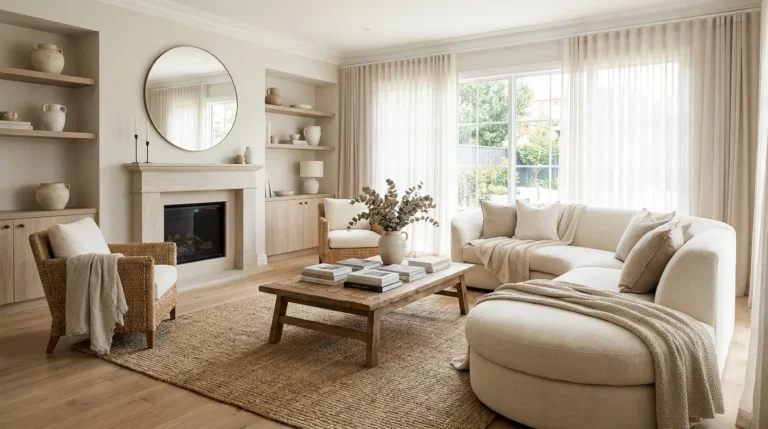
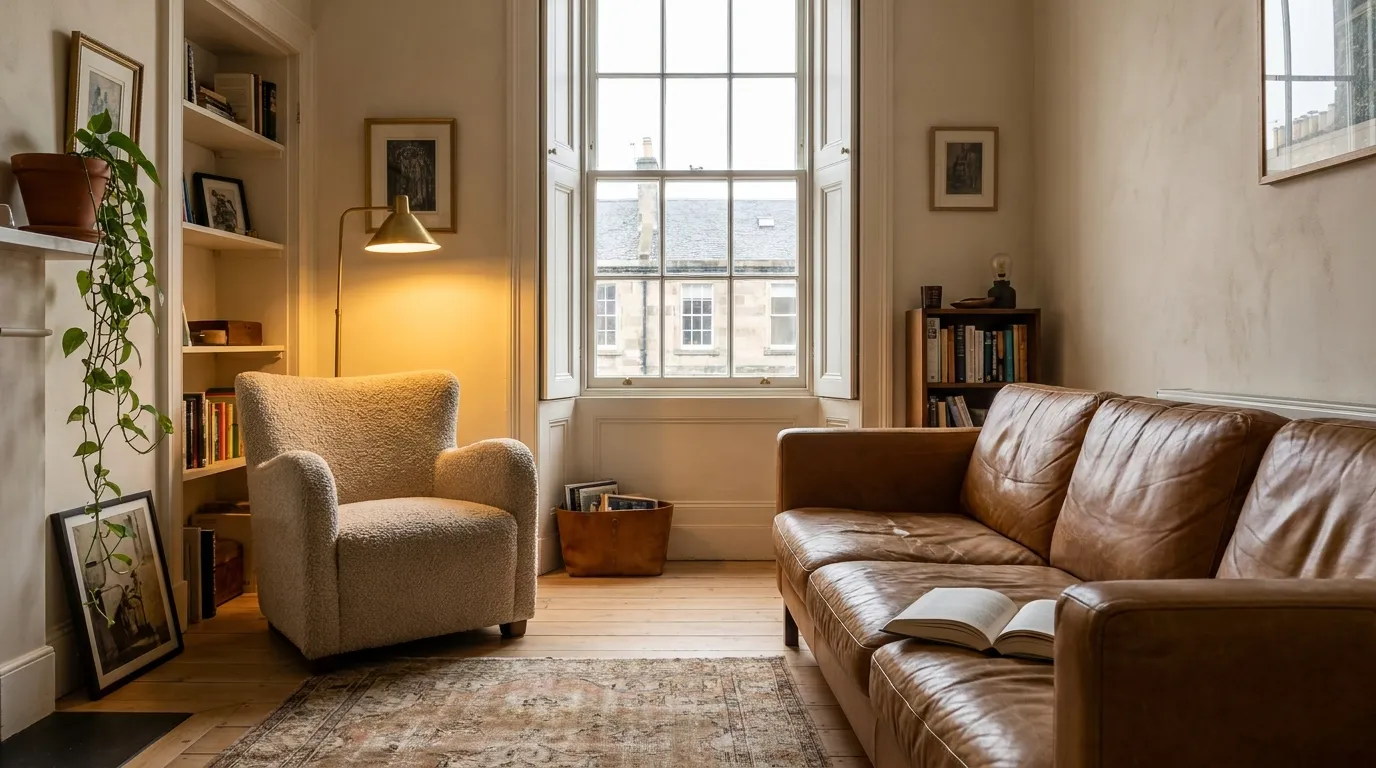
21 Beige Living Room Ideas That Feel Warm and Inviting
Beige has a reputation problem it does not deserve. The word lands in a room and people immediately picture a builder’s show home — flat walls, a safe sofa, and a complete absence of personality. The beige living room done badly earns that reputation. Done well, it is the most versatile, most flattering, and most durable interior palette available, precisely because beige is not one color — it is a family of warm neutrals spanning ivory, sand, camel, mushroom, and taupe, each behaving differently depending on the light, the material, and what sits beside it.
This is not a list of beige sofas to consider. It is a guide to the specific material, tonal, and spatial decisions that transform a room with a warm neutral palette into something genuinely beautiful and inviting — a space people notice for how comfortable it feels, even if they cannot immediately name what produced that feeling.
1. Anchor the Room with a Deep Camel Leather Sofa
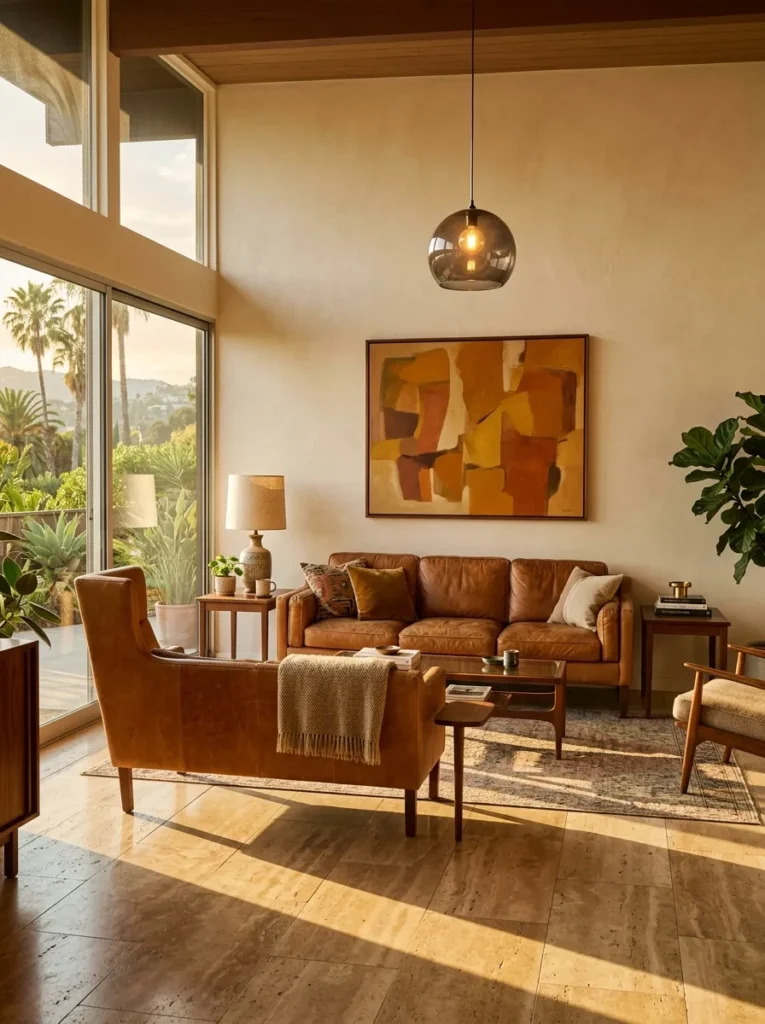
The most common failure in a beige living room is choosing a sofa in the same value as the walls. When everything reads at the same tonal depth, the room loses its hierarchy and flattens into a single undifferentiated field. A deep camel or cognac leather sofa — not tan, which reads cheap, but a rich aniline-dyed camel that deepens with age — anchors the seating zone against lighter walls with exactly the contrast the room needs without introducing color. Leather specifically communicates material quality in a way that fabric cannot in this context, and its natural variation from hide-to-hide gives it the lived-in depth that a flat woven surface never achieves. Choose full-grain or top-grain aniline leather and expect it to look better at five years than it does on delivery day. That’s not a side benefit — it’s the whole argument for the material.
2. Layer Beige in Three Distinctly Different Textures
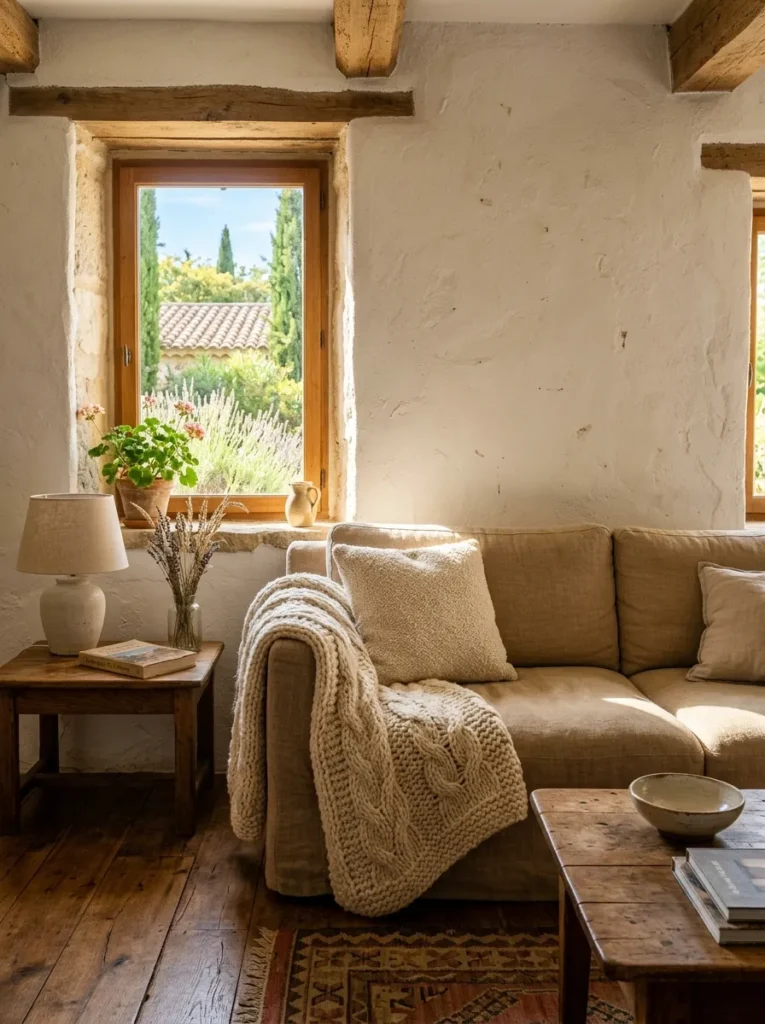
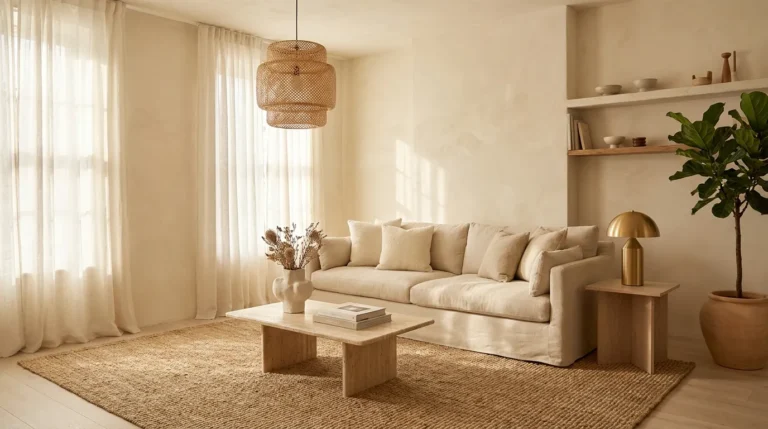
The inviting living room aesthetic most people associate with warm neutrals is almost never achieved through color. It is achieved through texture. A flat beige room — one in which every surface reads at roughly the same smooth, even finish — looks exactly as dull as its reputation suggests. The same palette in three genuinely different textures — a rough-weave linen sofa, a chunky wool knit throw, a smooth matte plaster wall — produces richness that the eye reads as warmth. The textures do not need to be dramatic. They need to be different. A waffle-weave cushion against a velvet cushion against a boucle chair-back is the type of variation that produces depth within a single tonal family.
3. Use a Warm White for the Ceiling, Not Pure White
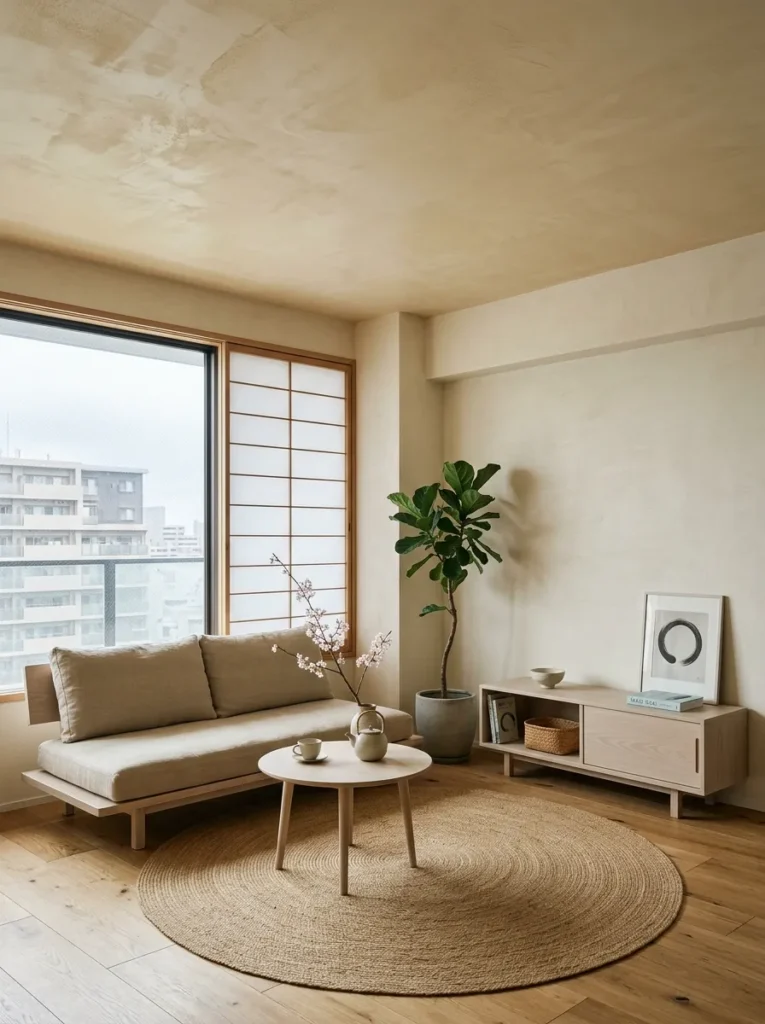
Most people get the ceiling wrong in a warm neutral living room, and the effect is quietly devastating. A pure white ceiling in a room with warm beige walls creates a tonal disconnect that the brain registers as unresolved — the ceiling reads as cold against the warm walls below it, and the room feels simultaneously both beige and not-quite-beige. A warm white ceiling, pulling slightly yellow or cream, closes that gap without effort. Test a sample on the ceiling itself — never on the wall — because ceiling paint reads differently from horizontal light than wall paint does from vertical light. The difference between the right warm white and the wrong pure white on the ceiling is often the single change that makes a beige interior feel finished.
4. Choose Unlacquered Brass Hardware and Fixtures Throughout
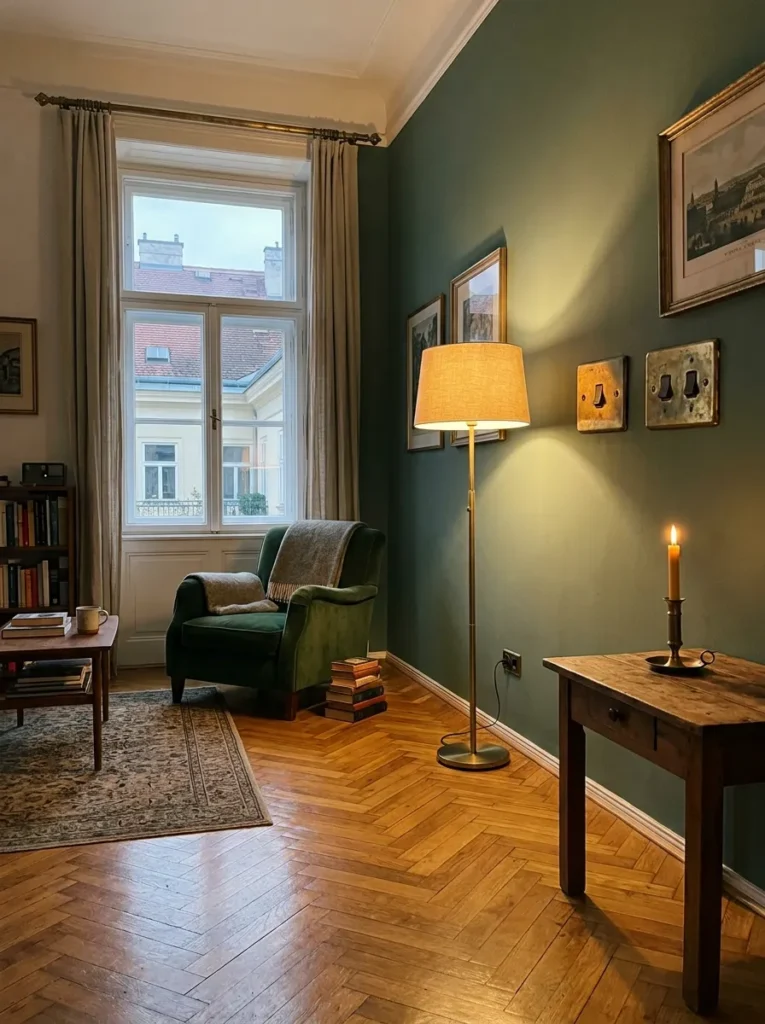
Warm neutral living room design lives or dies by its metal choices, and unlacquered brass is the metal family that beige was built for. It shares the same warm yellow-brown undertone as a sand or mushroom palette, which means it integrates rather than contrasts — picking up the wall’s warmth and reflecting it back. Satin or polished nickel, chrome, and brushed silver all pull cool, which creates the same tonal disconnect as a pure white ceiling: technically fine, not quite right. Use unlacquered brass across every fixture — curtain rods, light switch plates, cabinet hardware, picture rail hooks — for the cumulative effect. Each individual piece is a small decision. Together they create a material thread that runs through the room and communicates deliberate taste.
5. Ground a Beige Living Room with a Dark Walnut or Teak Coffee Table
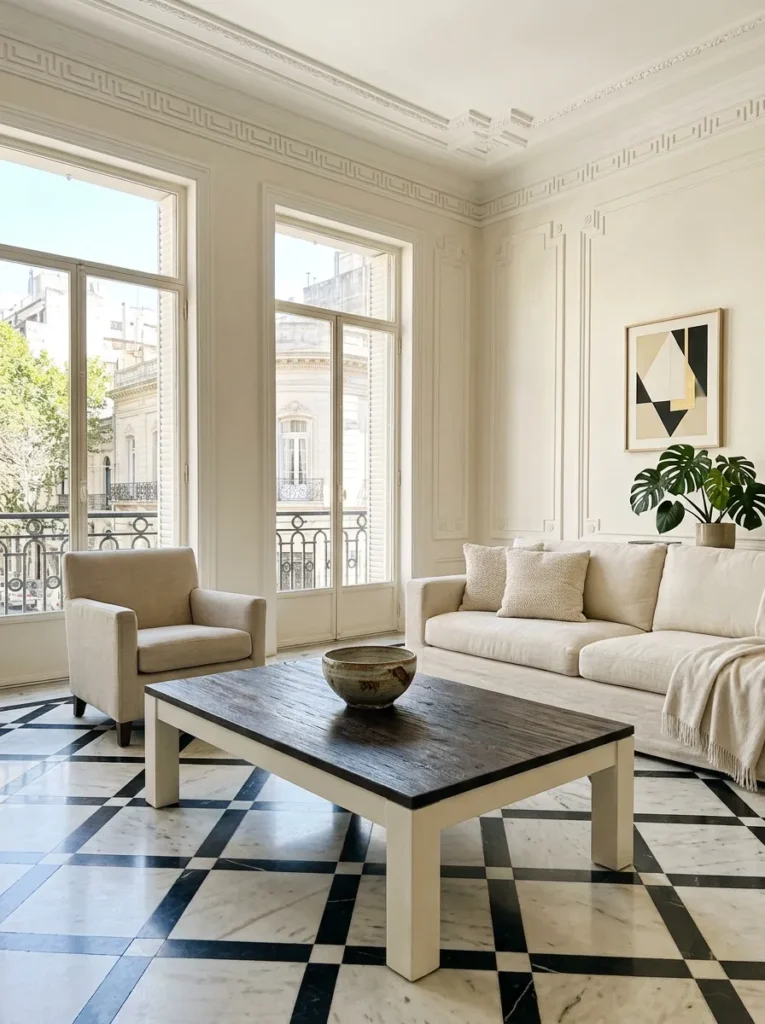
A warm neutral room that keeps everything in the same tonal range from floor to ceiling reads as flat, regardless of how well the individual choices are made. Introduce one piece of furniture in a genuinely dark material — a coffee table in deep walnut or aged teak, chosen for its depth rather than its style — and the room immediately acquires the visual weight and contrast that allows everything else to read as intentionally light. The dark piece does not need to be large. A 100-by-50 centimetre coffee table in a rich dark stain creates sufficient contrast for a standard living room. The principle is the same as a focal point in any composition: one dark element makes everything around it appear more luminous.
6. Hang Curtains in a Warm Ivory That Is Slightly Richer Than the Walls
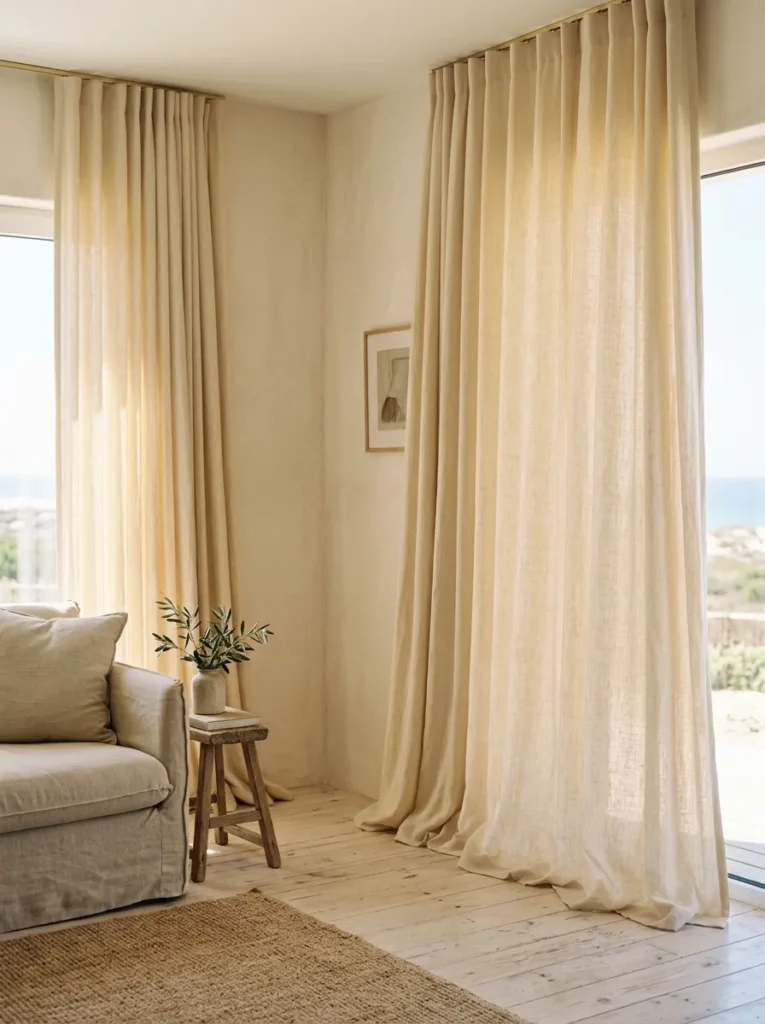
Curtains that match the wall color exactly disappear, which sounds neutral but reads as unresolved — the eye has nowhere to go at the window, and the room’s boundary feels undefined. Curtains in a warm ivory one or two tones richer than the wall — not contrasting, not matching, but fractionally deeper — give the window zone its own quiet identity while staying entirely within the beige palette. Hang them from ceiling height to floor and let them pool by 5 to 8 centimetres. The pooling communicates that the window was dressed with intention. Use an interlined linen or woven cotton for the weight that produces clean vertical falls rather than the short folds that lighter fabrics create.
7. Introduce a Single Piece of Rust or Terracotta as a Tonal Accent
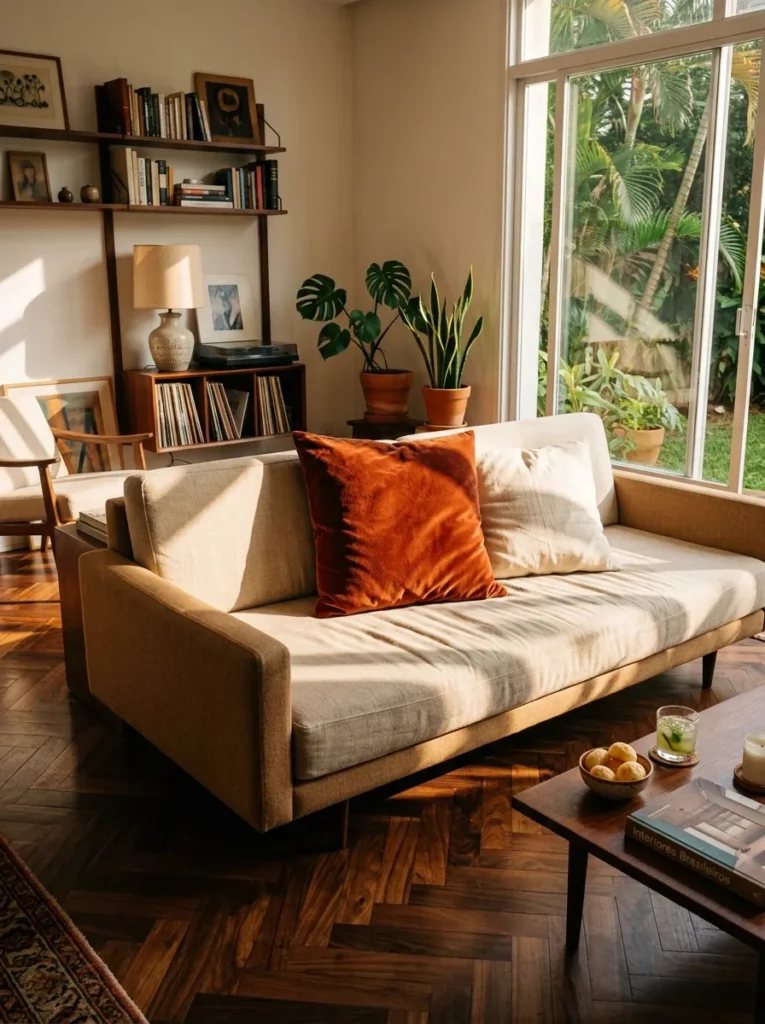
A beige living room that stays entirely within the neutral family for every object is disciplined. It is also, eventually, slightly monotonous. One piece — a single large cushion, a ceramic lamp base, a woven basket in rust or terracotta — introduces warmth that reads as an extension of the beige palette rather than a departure from it, because both rust and terracotta are already warm earth tones. The key word is single. One rust element against a warm beige ground reads as editorial. Three rust objects read as a scheme, and the moment a beige room becomes schemed it loses the quality that makes it feel considered. One object. Let it be slightly unexpected in placement.
8. Use a Stone or Travertine Fireplace Surround as the Room’s Focal Point
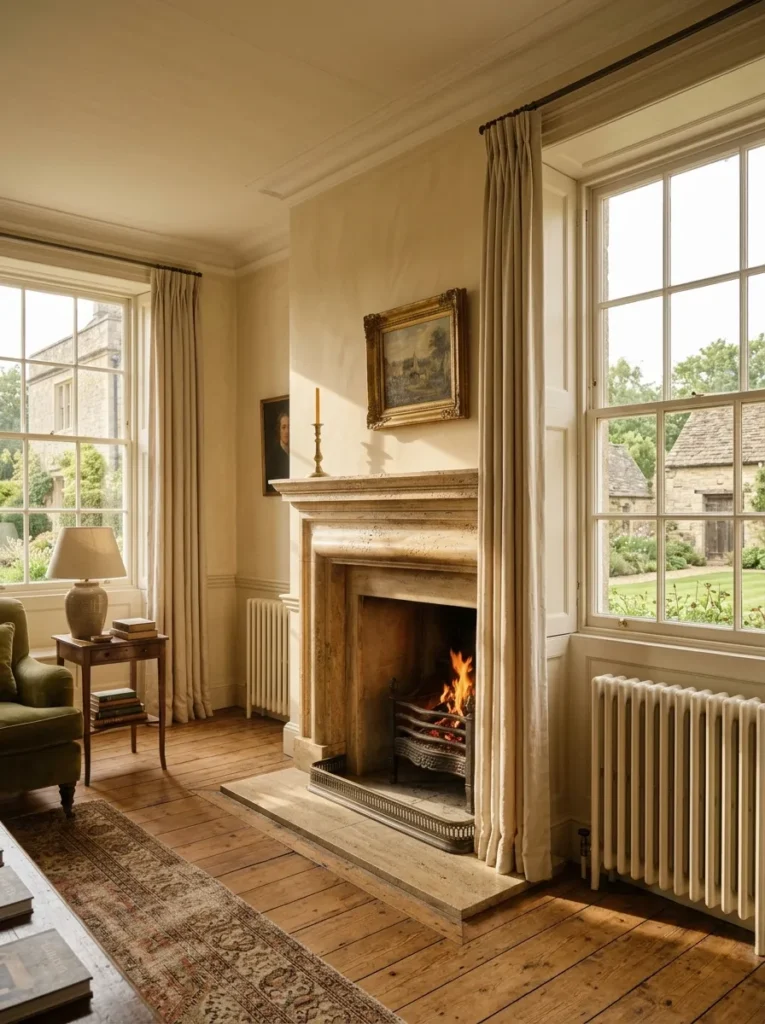
In a beige living room with a fireplace, the surround is the room’s most powerful design decision, and the most frequently squandered one. A painted white fireplace in a beige room reads as a cold interruption — white against warm beige always pulls cool, always slightly fights the palette. A travertine, limestone, or honed sandstone surround pulls from exactly the same warm mineral family as the room’s palette and elevates the fireplace from a standard feature to a focal point with genuine material richness. The stone’s variation in tone and texture across its surface does design work that no painted finish can replicate, and it reads as permanent rather than provisional.
9. Select a Rug with Enough Pattern to Define the Seating Zone
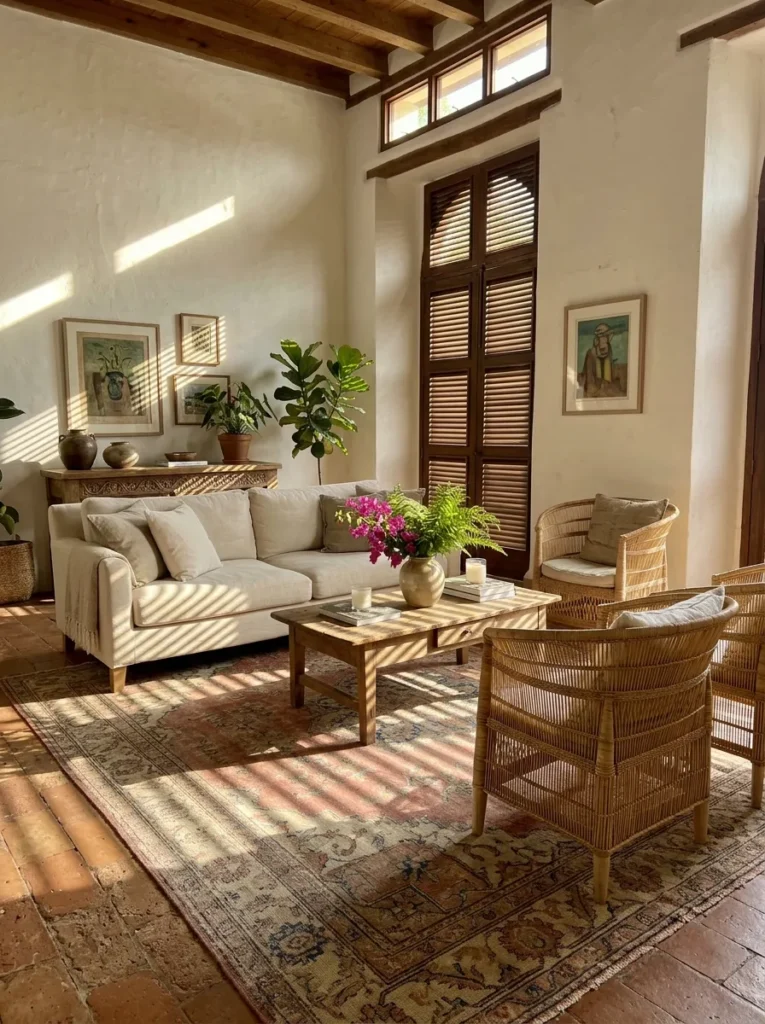
A room where the sofa, the rug, and the floor all exist in similar tonal ranges has no visible seating zone — the furniture floats without an anchor. A rug with enough visual distinction from the floor to define the seating area as its own territory — a flat-weave geometric in warm cream and sand, a faded Persian in muted rose and ivory, a textured berber with a dark outline — resolves this without introducing color. The rug does not need to be dramatic. It needs to be clearly different from the floor beneath it. Size matters as much as pattern: front legs of every sofa and chair on the rug, minimum. A rug that ends at the sofa’s feet rather than beneath them has not been sized to do its architectural job.
10. Layer Multiple Light Sources Rather Than Relying on Overhead Light
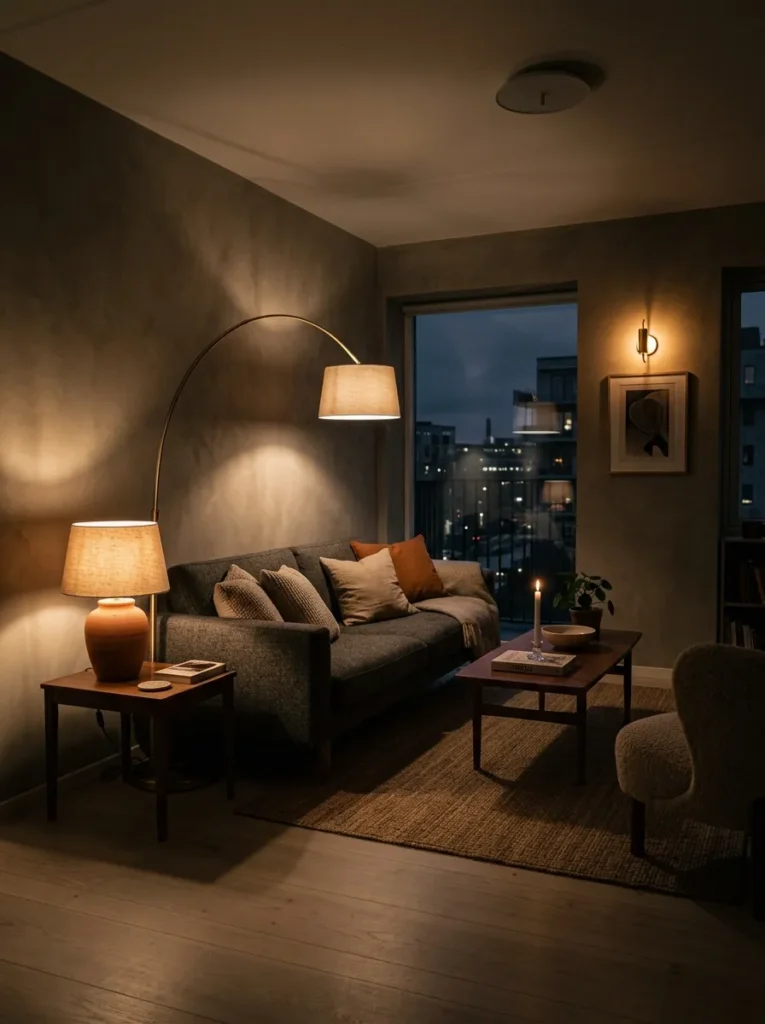
Overhead lighting in a beige living room is the enemy of warmth, and this is not a minor stylistic preference — it is a physical fact about how light behaves. Overhead light flattens surfaces by eliminating the shadows that create depth, and in a warm neutral room, those shadows are doing significant work. Table lamps at seated eye level, floor lamps in corners, and wall sconces at mid-wall height all produce the directional, ambient light that makes beige walls glow amber rather than read as magnolia. Choose bulbs at 2700K or warmer throughout — cooler temperatures strip the warmth from any neutral palette regardless of the paint color. The light temperature decision is as important as the fixture choice.
11. Add a Large-Scale Work of Art in a Complementary Earth Tone
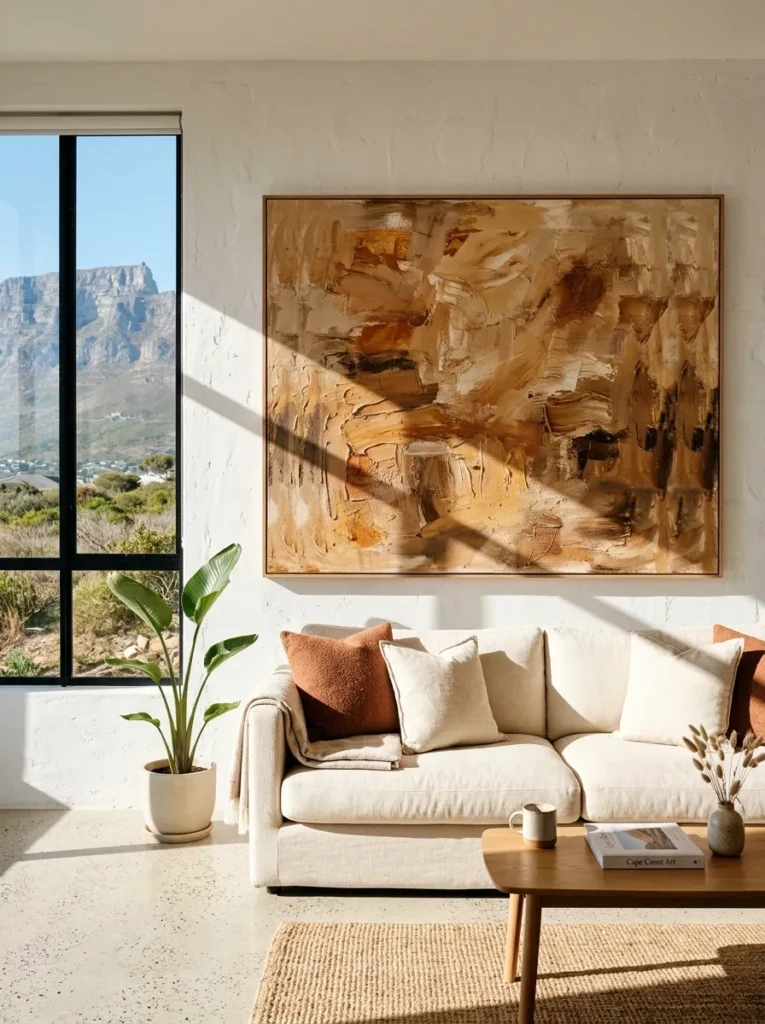
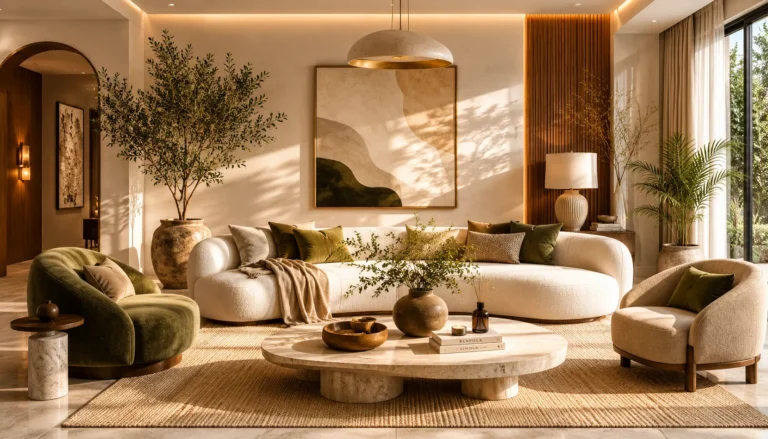
Art in a beige living room should not blend in and should not aggressively contrast. The most successful approach is a large-format piece — canvas or print, minimum 90 centimetres wide for a standard sofa wall — in earth tones that share the room’s warm undertone: ochre, raw sienna, umber, deep sage, warm charcoal. Abstract works in these tones suit the palette without requiring a thematic commitment. The scale is as important as the color. A small piece of art on a beige wall disappears. The same piece at three times the size becomes the room’s anchor. If the wall above the sofa is the only significant blank surface, the art should be at least two-thirds the sofa’s width to hold the visual weight of the position.
12. Use Woven or Rattan Furniture for Organic Texture at No Cost to the Palette
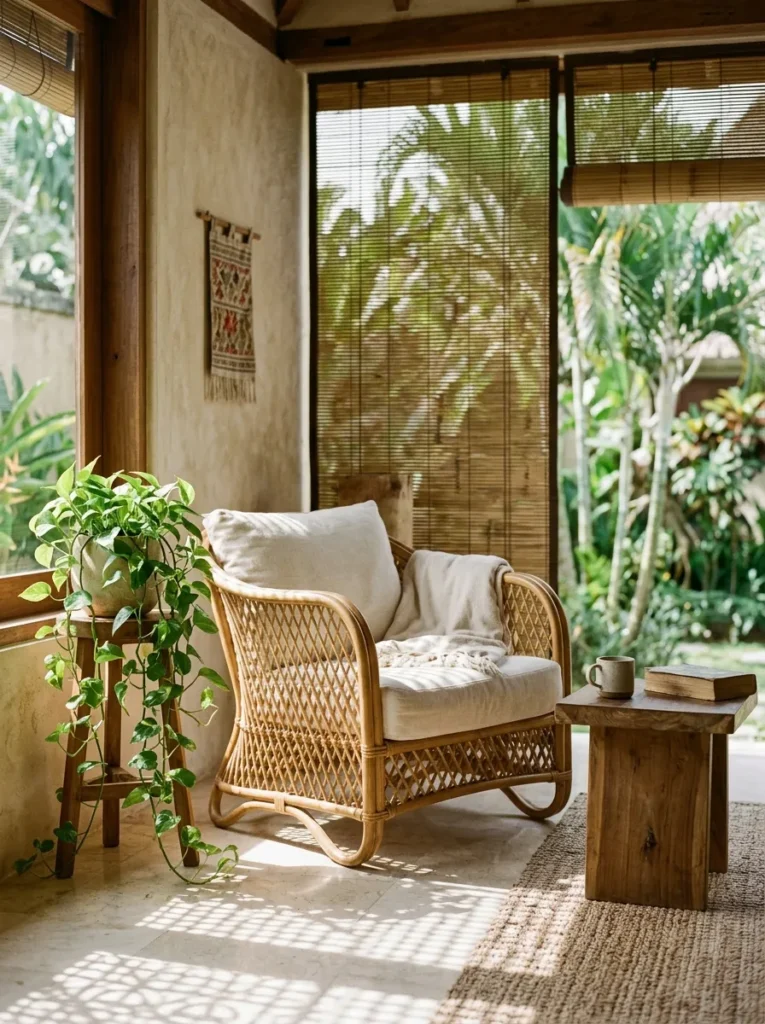
A rattan armchair or woven pendant shade introduces organic material texture into a warm neutral living room without introducing color — which is precisely the problem it solves. Rattan reads as warm because its natural honey-bamboo tone sits comfortably within the beige palette, and its open-weave construction allows light to pass through it rather than blocking it, keeping the room feeling airy rather than heavy. One rattan piece — a chair, a side table, a floor lamp shade — is enough to shift the room’s material register from “neutral” to “considered.” The texture conversation between linen upholstery, a rattan chair back, and a wool throw is the kind of layered material intelligence that no single expensive furniture purchase can substitute for.
13. Build a Beige Living Room Around One Statement Piece in a Deeper Neutral
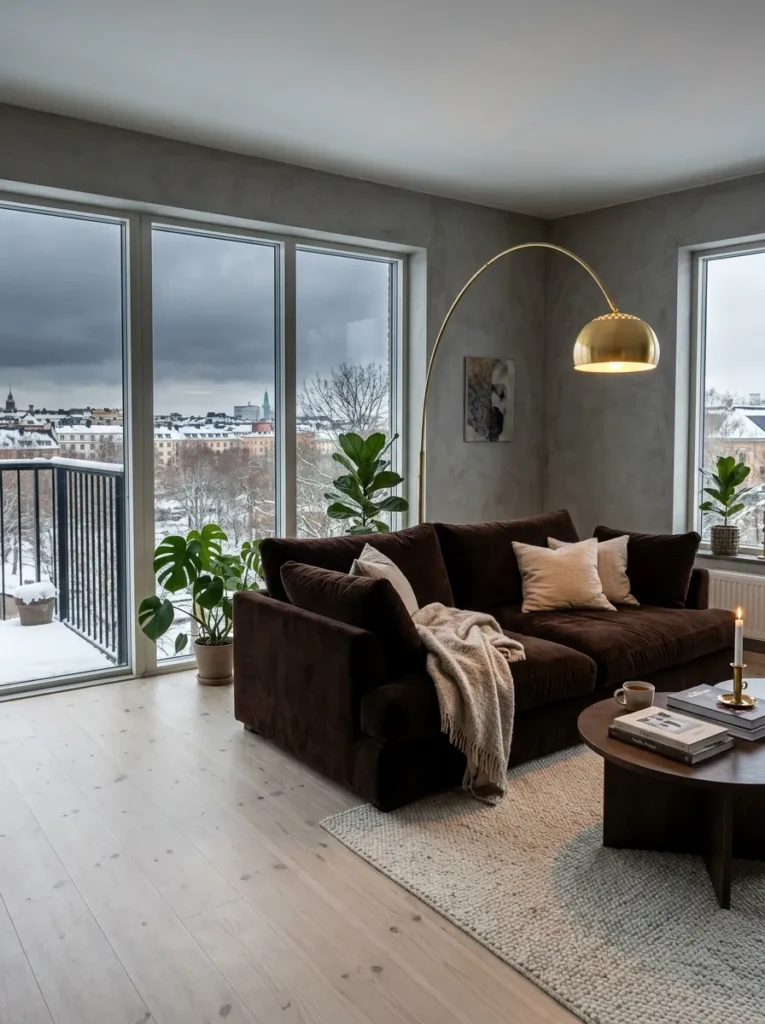
The fear most people have in a warm neutral living room is that nothing will stand out, and they are correct about the fear. The answer is not to introduce a contrasting color. The answer is to choose one piece — an oversized bouclé sofa in warm oat, a deeply upholstered armchair in chocolate mohair, a daybed in camel cashmere — that exists at a notably different depth within the neutral family from everything else around it. This is the decision that changes everything. One piece at the room’s richest end of the palette creates a focal point that the eye returns to naturally, without the room tipping into contrast. The rest of the room’s furniture can be lighter. The statement piece earns its position by being genuinely more saturated than everything around it.
14. Choose Plaster or Limewash Wall Finish Instead of Flat Paint
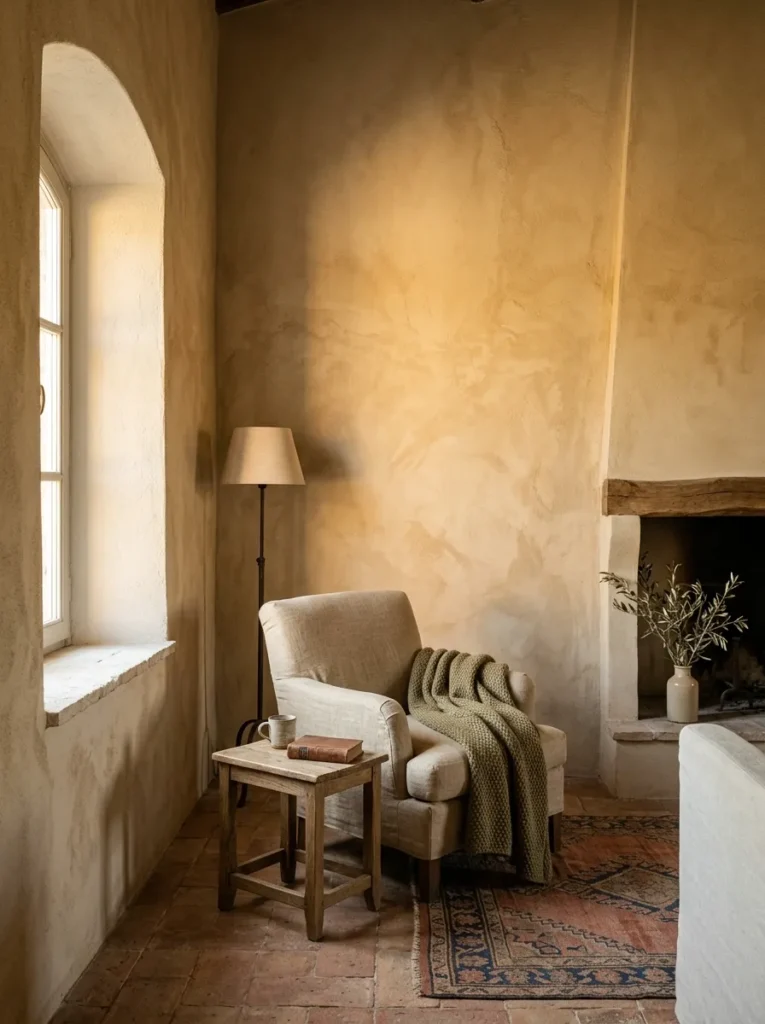
Flat paint on a beige wall is technically correct and produces a room that feels slightly institutional. Limewash or hand-applied microplaster in the same beige tone produces a wall that looks as if the color came from within the material rather than being applied to its surface — which, in the case of limewash, is essentially true. The subtle tonal variation across a limewashed wall as light moves across it throughout the day is the quality that distinguishes a beautiful warm neutral room from a merely pale one. The material is not significantly more expensive than good quality flat paint at the quantities a living room requires. What changes is the depth of the finished surface and the room’s relationship with natural light across twelve hours.
15. Position Mirrors to Multiply the Warmth, Not Just the Light
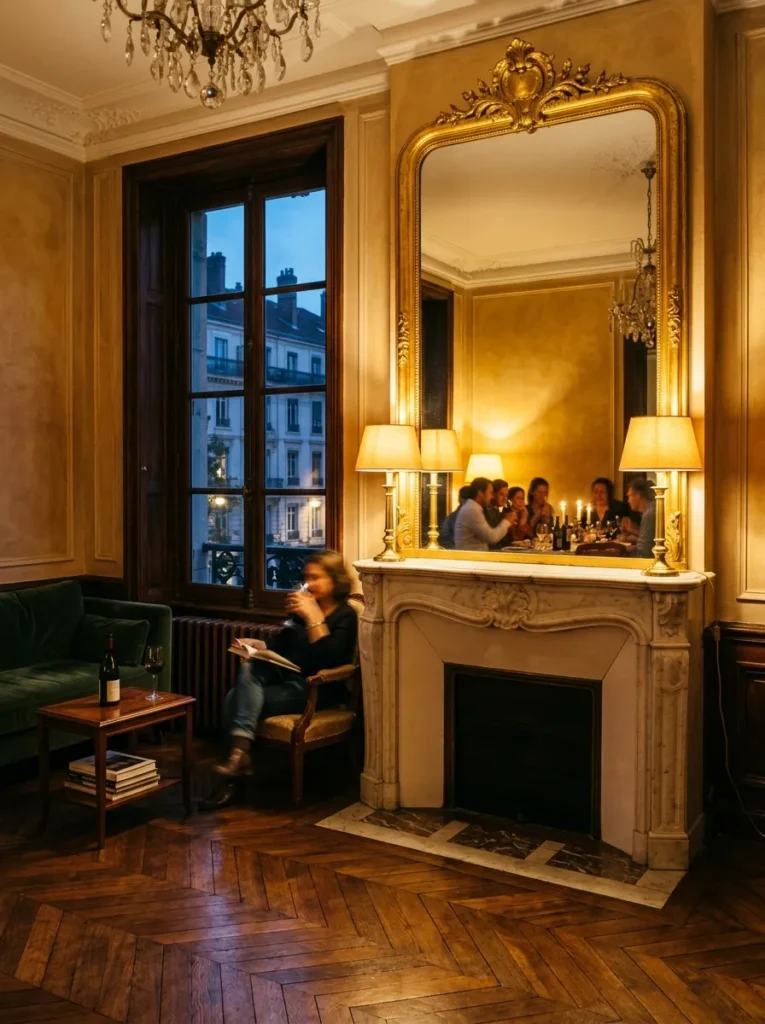
Mirrors in a warm neutral living room are most often positioned to maximise perceived space — pushed against the wall opposite the main window to bounce light as far as possible. This is not wrong. It is also not the most useful application of a mirror in a beige interior. A mirror positioned beside a lamp — between the light source and the wall behind it — reflects warm light back into the room rather than cool daylight, which produces a genuinely golden quality in the wall tone that overhead fixtures cannot create. A large overmantel mirror or a leaning mirror positioned beside a floor lamp, rather than opposite the window, does more for the room’s warmth than any placement designed purely for spatial expansion.
16. Use Natural Seagrass or Jute for the Primary Floor Covering
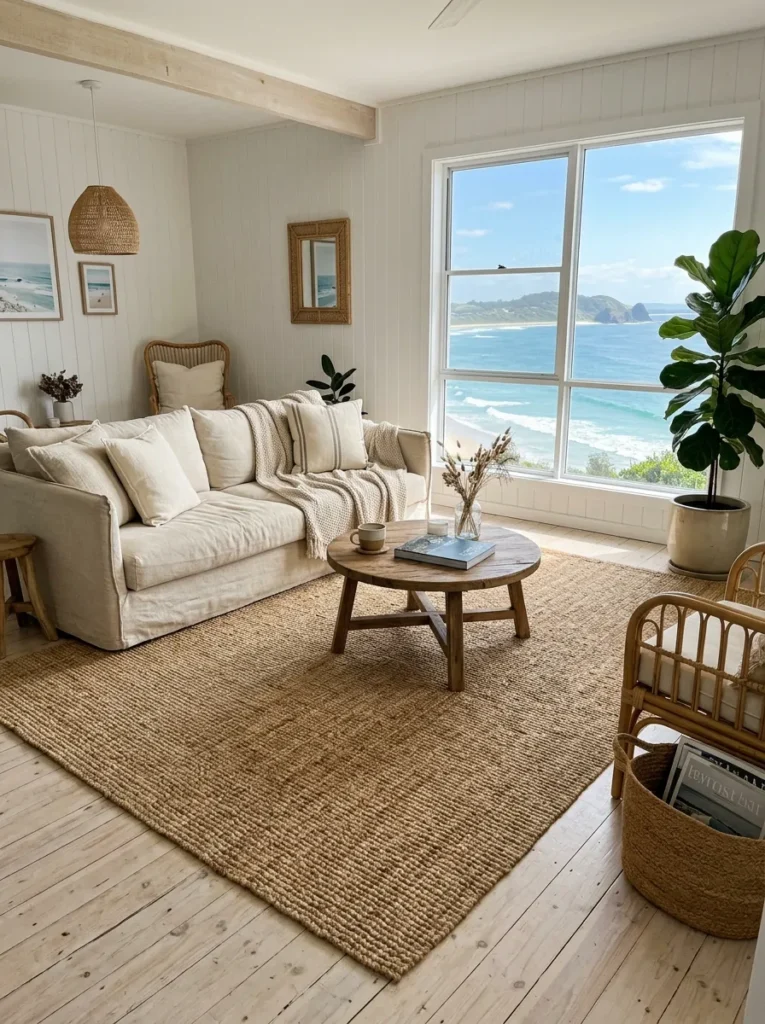
In a beige living room with pale walls and light floors, a seagrass or jute rug introduces the one material that exists at the exact meeting point of warm, natural, and textural: it is warm in tone, visibly organic in its surface, and available in large enough formats to cover the full seating zone without seams. A fine-weave jute in natural tan or a flat-braid seagrass in warm gold reads as a floor covering that belongs to the room’s material conversation rather than sitting beneath it as a separate decision. Unlike dyed wool rugs, a natural seagrass or jute rug cannot fade into an unwanted shade over time — its color is the material’s own, and that color, for obvious reasons, integrates permanently with a warm beige palette.
17. Add Volume to the Room with Deeply Cushioned, High-Arm Furniture
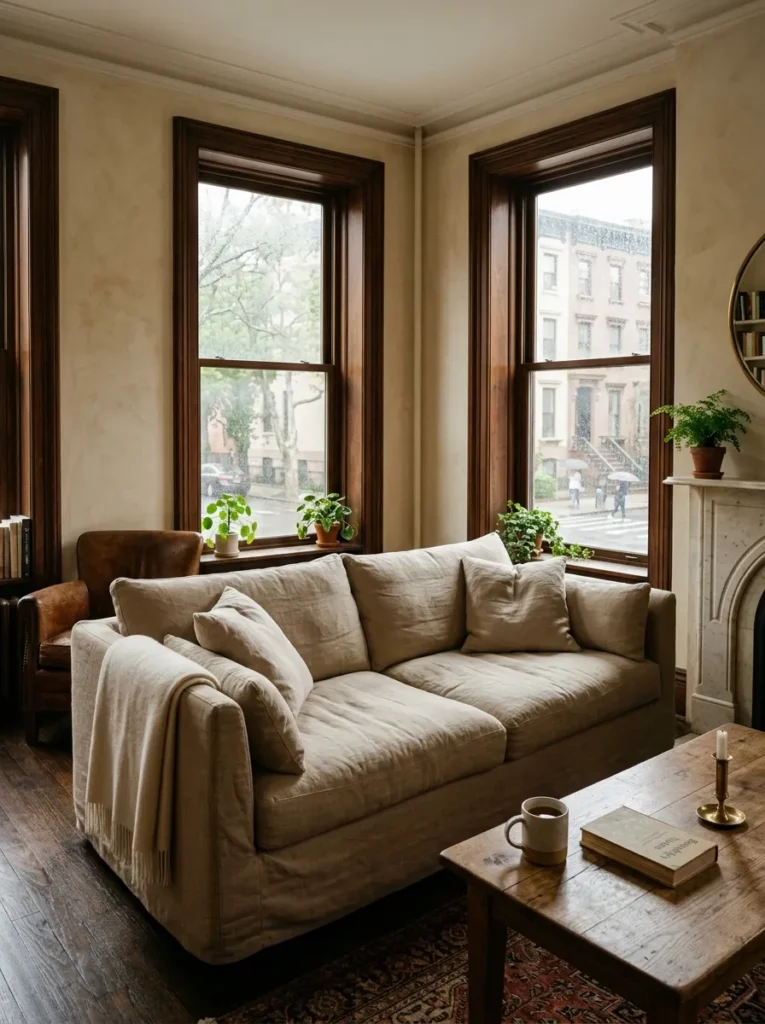
The architectural quality that warm living rooms often lack is volume — the sense that the furniture has physical generosity rather than functional efficiency. Deeply cushioned sofas with high arms and loose back cushions communicate a different spatial intention than low-slung, tightly upholstered contemporary furniture, and in a beige living room they produce exactly the welcoming, enveloping quality the palette promises but compact silhouettes undermine. The arms should be at least 60 centimetres from the floor. The seat depth should be 90 centimetres minimum. These are not luxury specifications — they are the dimensions that allow a person to sit in a sofa rather than on it, and that distinction is the physical expression of an inviting living room interior.
18. Bring in Dark Green as the One Cool Accent
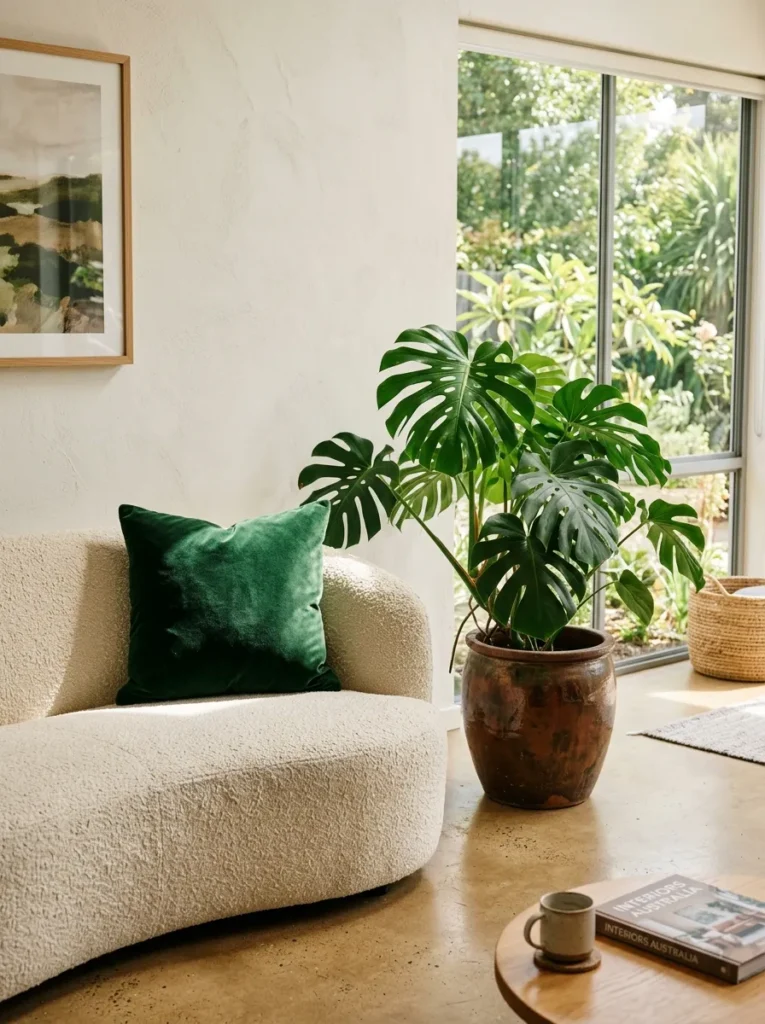
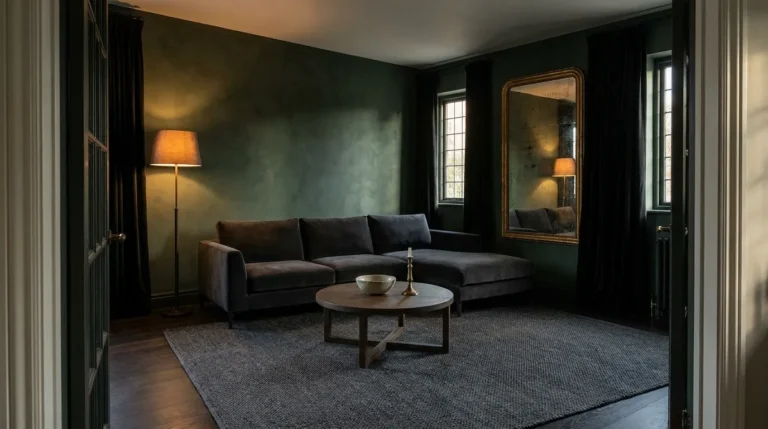
Every warm neutral living room benefits from a single cool tonal reference — something to clarify the warmth by gentle contrast. Dark sage or forest green occupies the rare middle ground between warm and cool; it reads as a green that leans toward the earth rather than toward the sea, which means it sits within the beige palette’s reference system rather than challenging it. One dark green object — a velvet cushion, a ceramic planter with a trailing plant, a single linen accent chair — introduces enough tonal contrast to clarify the room’s warmth without introducing a competing accent color. The plant is the simplest expression: a large monstera or fiddle-leaf fig in a dark terracotta or bronze-glazed pot delivers both the green and the organic life that makes a warm neutral room feel inhabited rather than dressed.
19. Choose Window Treatments That Do Not Cut the Window in Half
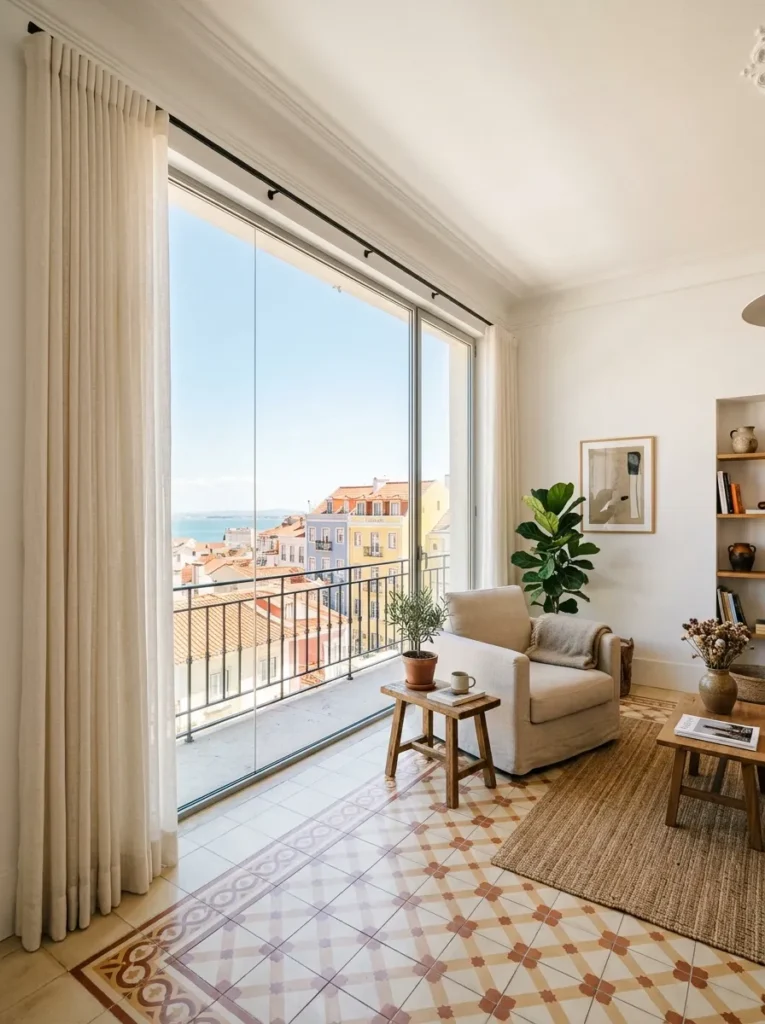
The most damaging window treatment decision in a warm living room is the mid-window blind — the roller or roman blind that covers the lower half of the glass while leaving the upper half uncovered, bisecting the window and reducing its apparent size by half. In a beige living room where natural light is the room’s primary material, any treatment that reduces incoming light by geometry rather than by design is working against the room. Floor-to-ceiling curtains that stack fully off the glass during the day, or sheer panels that allow full light transmission while providing privacy, are the only treatments that allow a beige interior to perform at its full atmospheric potential. The window should read as an architectural element. A partially covered window reads as a compromise.
20. Let One Surface Remain Genuinely, Deliberately Empty
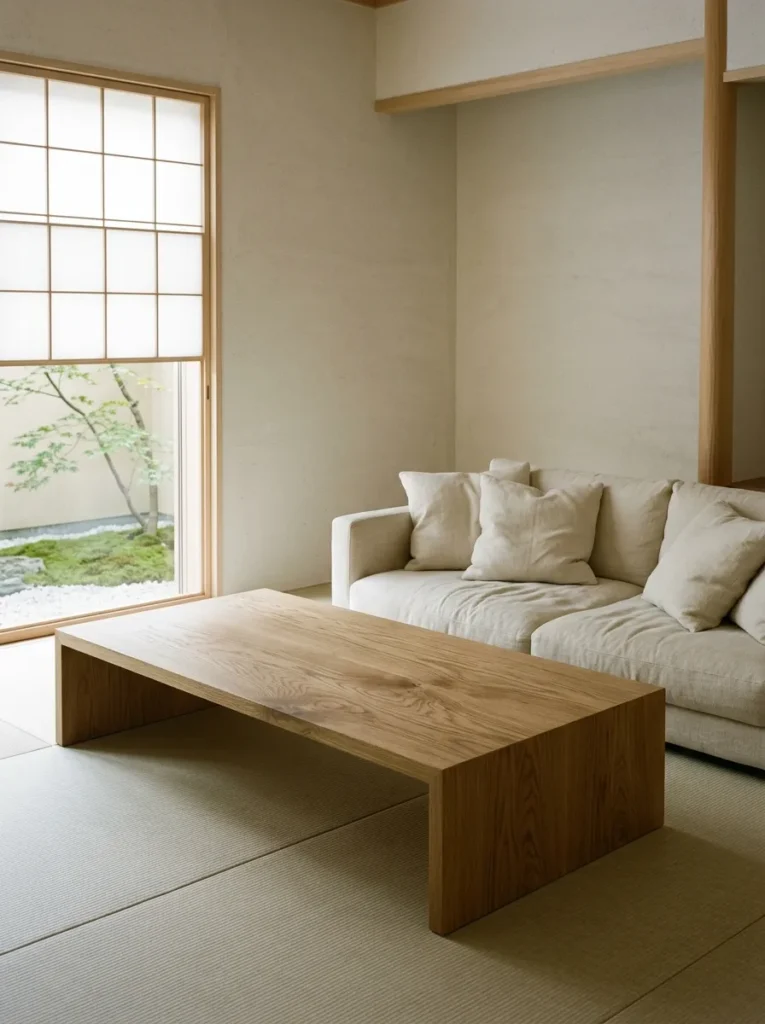
Most warm neutral living rooms are over-styled. The coffee table holds six objects. The mantel holds eight. The side table is covered. The cumulative effect of all that surface activity is visual noise, and visual noise is the direct opposite of the calm warmth that beige interior styling at its best actually produces. Choose one significant surface and leave it empty. Not empty-ish. Empty. The coffee table holds one ceramic bowl or nothing. The mantel holds two candlesticks and nothing else. The emptiness reads as confidence rather than neglect, and in a beige living room, confidence is expressed through restraint more reliably than through any amount of considered accessorising.
21. Never Match the Sofa to the Walls
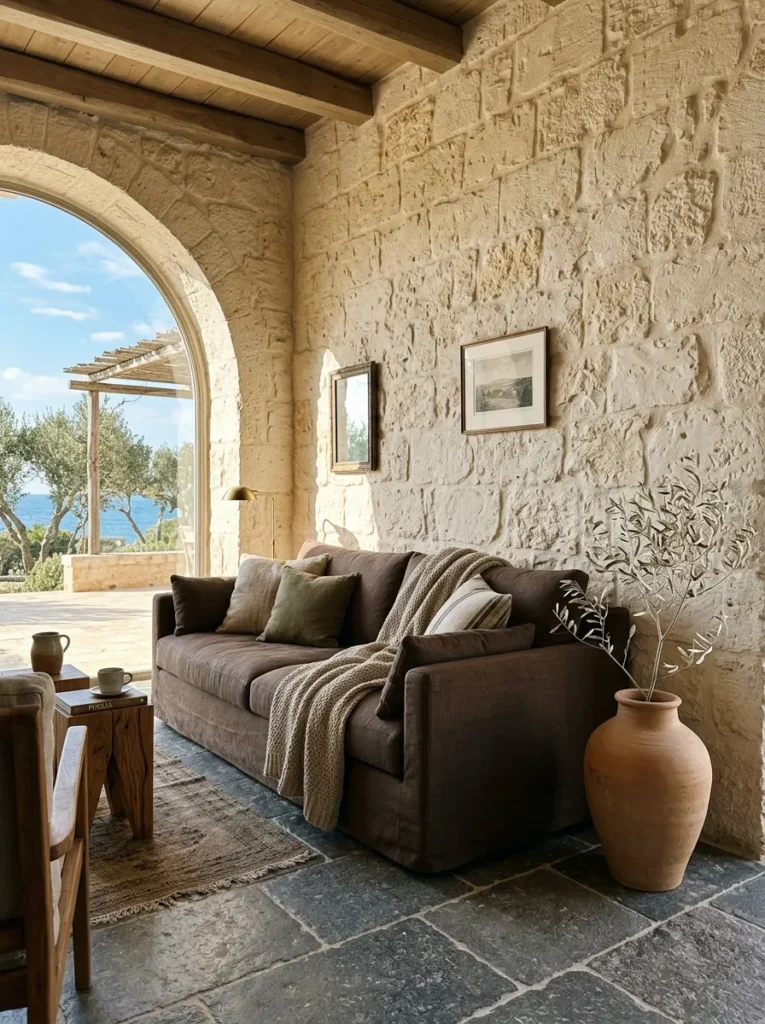
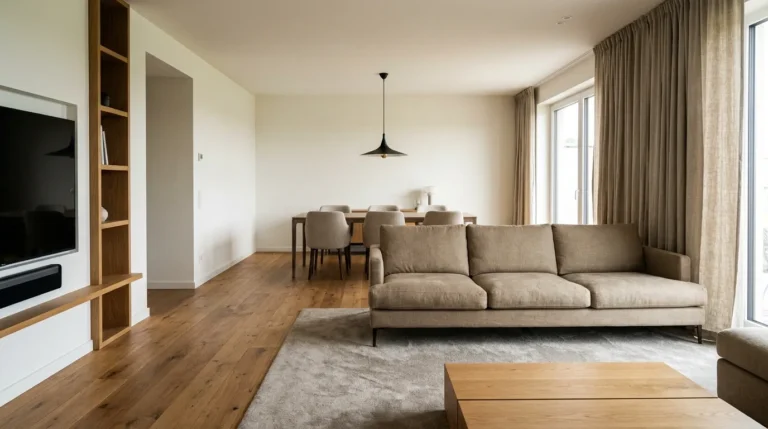
This is the most fundamental rule of the warm neutral living room and the one most consistently violated. A sofa in the same beige as the walls behind it dissolves into the room, and a room in which the largest piece of furniture is invisible is a room with no anchor, no hierarchy, and no point of interest. The sofa must be visibly different from the wall behind it — darker, richer, more textured, or in a sufficiently contrasting neutral that the eye registers it as a distinct element rather than a continuation of the background. Camel against ivory walls. Mushroom against warm cream. Chocolate against sand. The difference does not need to be dramatic. It needs to exist. The sofa that disappears into its background has not been chosen — it has simply been avoided.
Final Thoughts
A beige living room earns its quality through accumulation rather than through any single decision. The palette’s warmth is a material phenomenon — it depends on the undertones of the paint, the grain of the wood, the weave of the textile, and the temperature of the light source — not on any decorative scheme. Start with light: get the bulb temperature right at 2700K across every source, add a table lamp, retire the overhead as the room’s primary evening fixture. Then address the material layer. A beige living room with the right wall finish, the right floor covering, and the right sofa depth is already most of the way there before a single decorative object is placed. The objects come last. Most people treat them as the beginning, which is why so many warm neutral living rooms feel like they are trying harder than they should need to.
Save these beige living room ideas for your next living room refresh or home redesign project.