20 Living Room Fireplace Ideas That Feel Cozy and Elegant
A fireplace changes the entire logic of a living room. Suddenly there’s a clear focal point, a reason for the furniture to face a particular direction, and an anchor around which everything else is measured. That’s an enormous design advantage — but only if the space around it is handled thoughtfully. Poorly styled, a fireplace can make a room feel dated, dark, or strangely formal. Done well, it becomes the reason the room works at all.
These twenty ideas cover the full range: surround materials and mantel treatments, furniture placement and built-in storage, lighting strategies and seasonal styling, and approaches that work whether your fireplace is wood-burning, gas, or electric. A few are architectural commitments; most are styling decisions you can act on this weekend.
1. Let the Surround Material Set the Room’s Tone
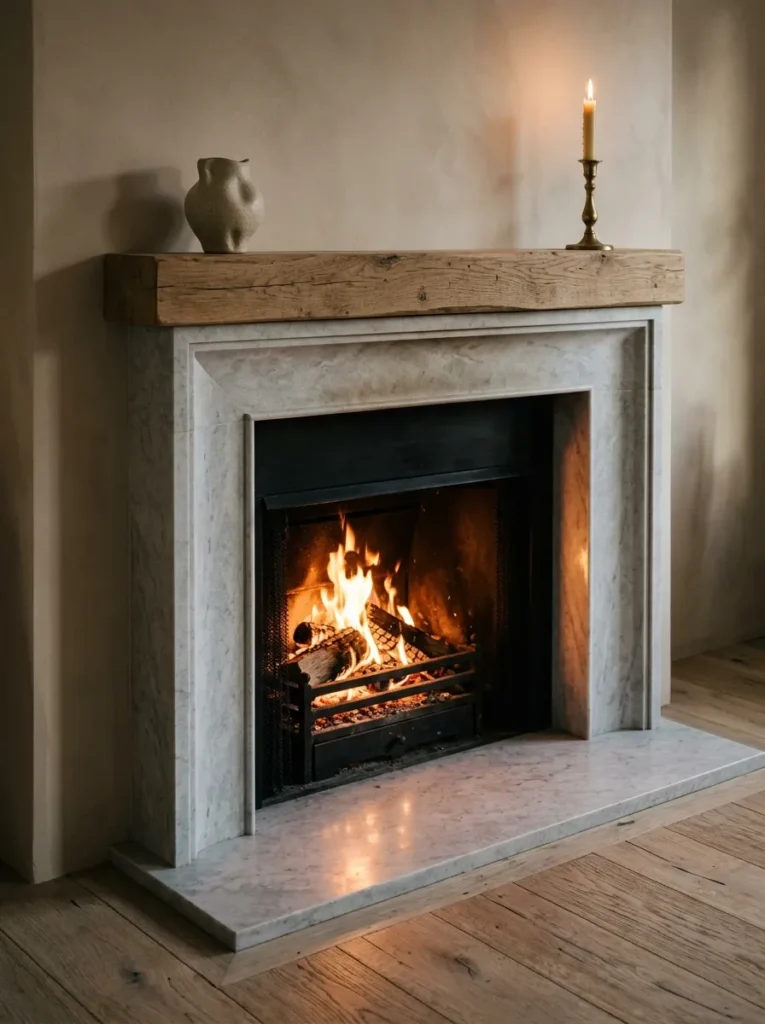
The fireplace surround — the material cladding the face of the firebox opening — is the single most powerful visual decision in the space, and it often gets chosen last, when it should be chosen first. Unpainted white brick reads as casual and textural, working well in relaxed, somewhat eclectic rooms. Smooth limewashed plaster gives a quieter, more European feeling — the fire becomes the moment, not the material. Honed marble or stone introduces formality and permanence. Stacked ledgestone is more rustic than it appears on screen, so consider whether that suits the rest of your room before committing.
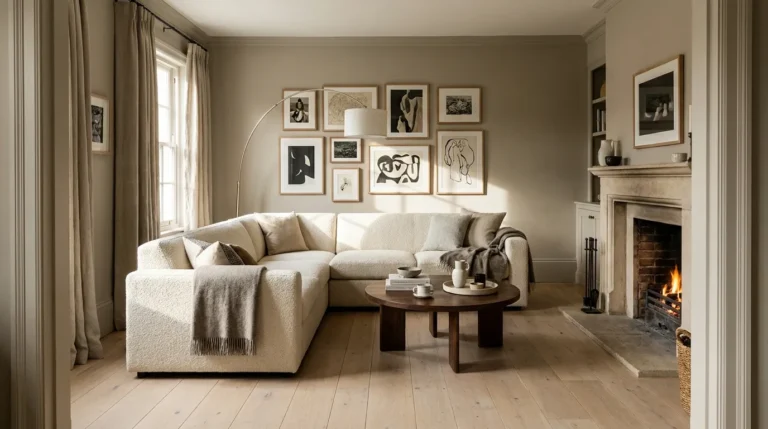
If you’re renovating, choose the surround material before selecting sofa fabric or paint colors — it will constrain both.
2. Build In Symmetrical Shelving on Either Side
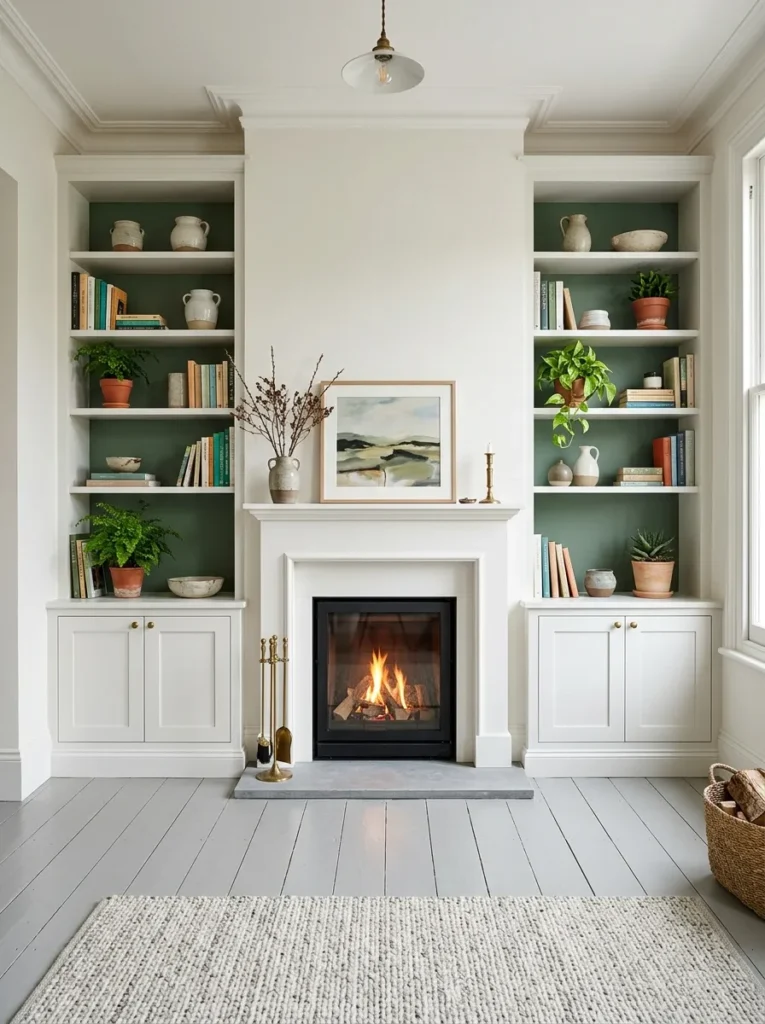
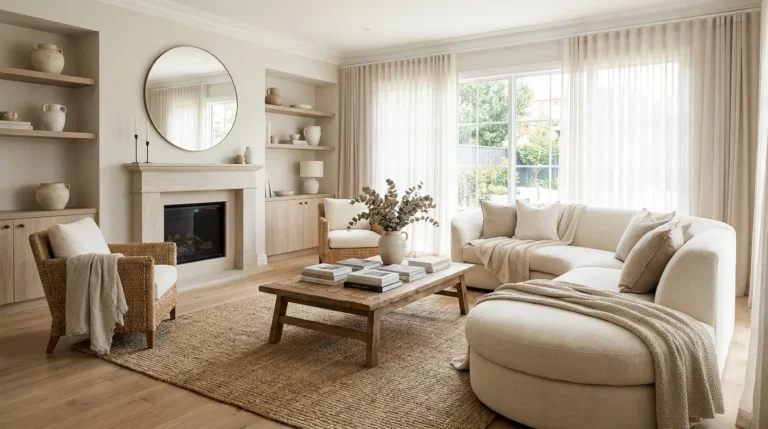
Flanking a fireplace with built-in shelving is a classic solution that justifies its permanence: it resolves the awkward blank wall problem, adds storage, creates a unified architectural moment, and gives you a framework for layered styling. The key is proportion. Shelves that stop below the mantel line feel stubby; extending them to ceiling height makes the fireplace wall feel intentional and complete.
For a less formal result, vary the shelf heights rather than creating a rigid grid. Asymmetrical shelf spacing within symmetrical overall cabinets reads as collected rather than showroom. Paint the shelves and cabinets the same color as the wall for built-in depth, or go a shade darker inside the shelf backs for visual layering without adding color elsewhere.
3. Use the Mantel as an Editing Exercise, Not a Display Surface
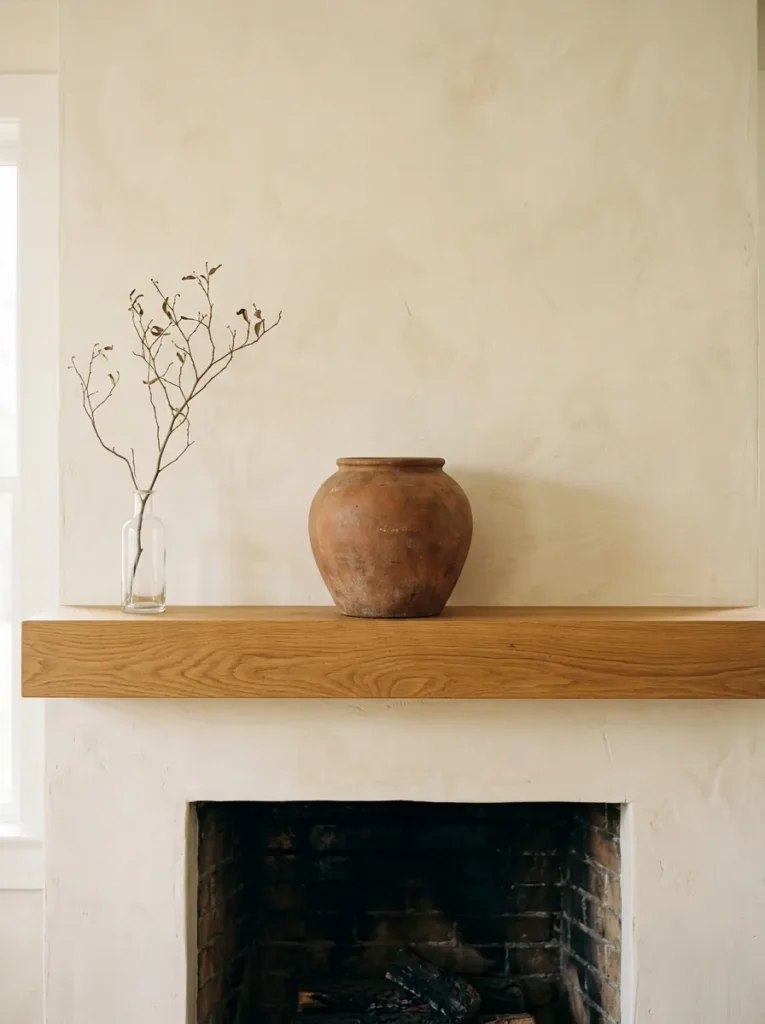
Most mantel problems come from too much, not too little. The mantel shelf invites accumulation — candles, frames, vases, books, plants, seasonal items — and the result tends toward visual noise rather than decoration.
A focused mantel arrangement typically works in odd groups of three items at varying heights, with significant breathing room on either side. One large anchor piece (a mirror, artwork, or architectural clock) reads more confidently than a dozen small objects. If you use multiple items, connect them visually through material or finish — all brass, or all ceramic, or all natural wood — rather than relying on size alone to unify them. Clear the mantel entirely once a year and be deliberate about what earns its way back.
4. Hang a Mirror Rather Than Artwork Above the Mantel
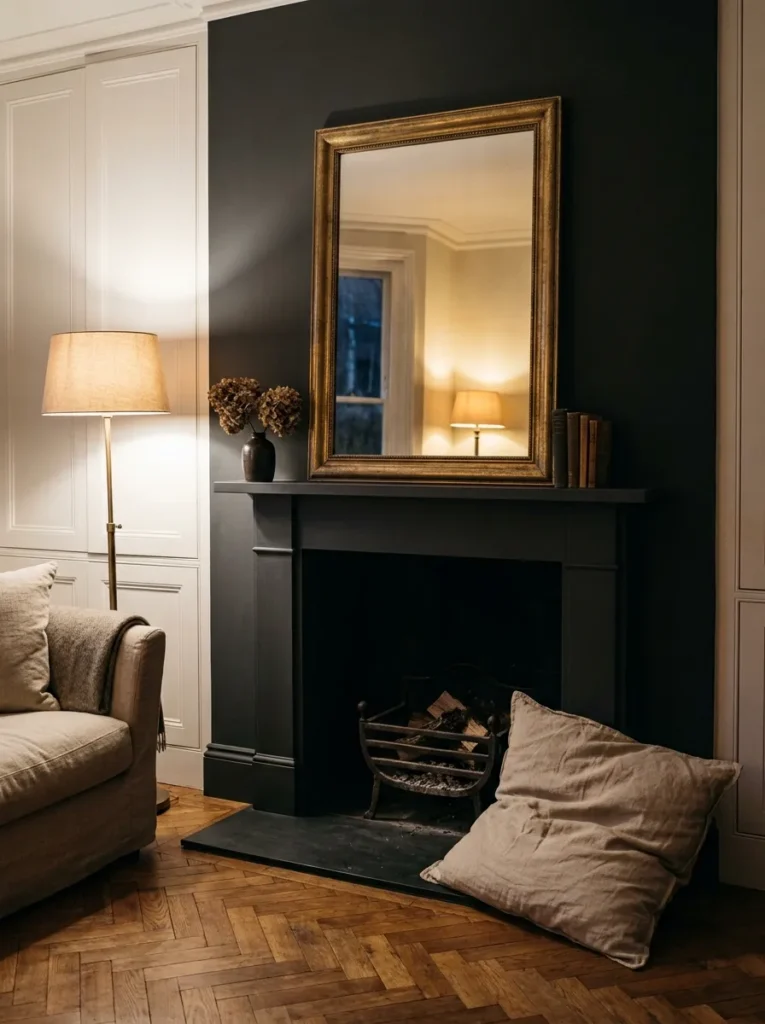
The case for artwork above a fireplace is real, but a well-chosen mirror does something artwork cannot: it reflects the room back, makes the space feel larger, bounces firelight across the sitting area, and removes the visual ceiling at the mantel without adding pattern or color.
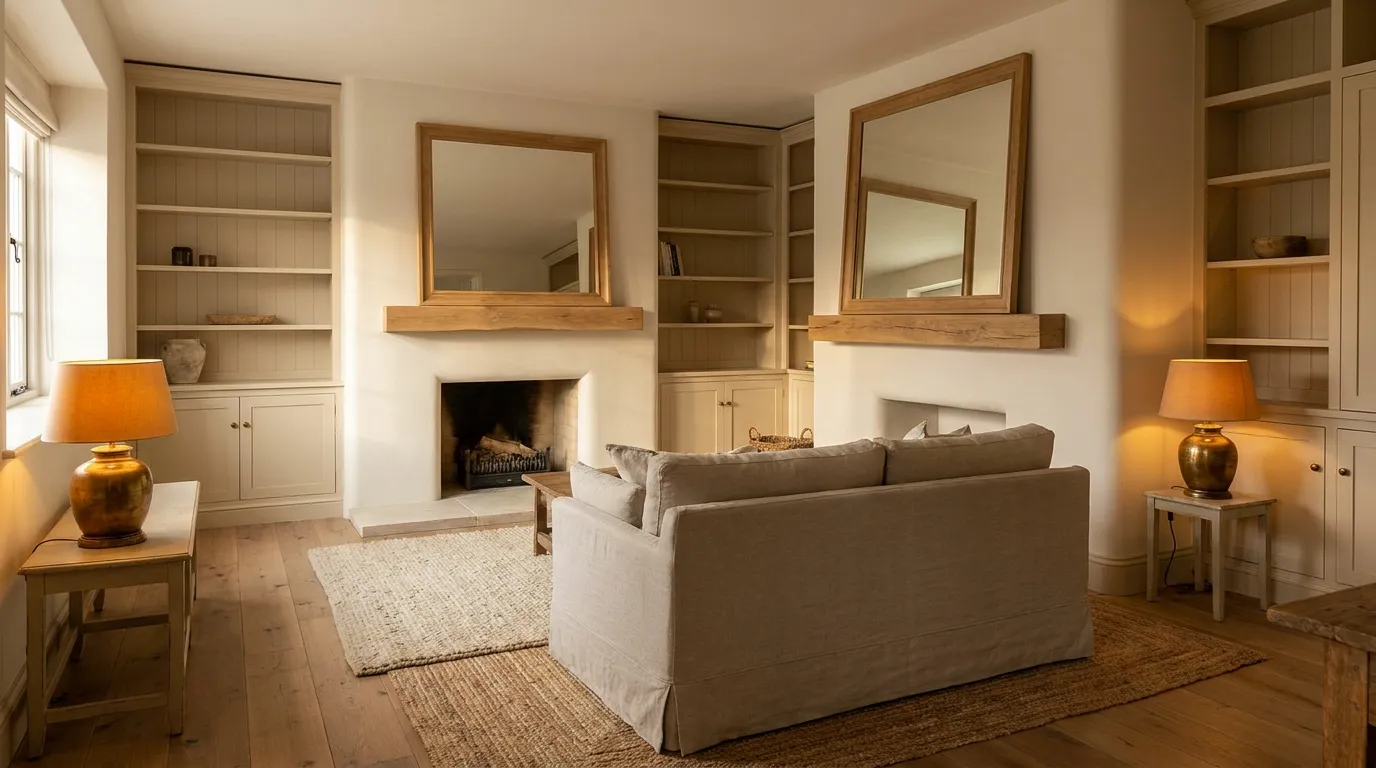
Proportionally, the mirror should be roughly two-thirds the width of the mantel shelf — wide enough to feel intentional without competing with the surround architecture. A leaning mirror (rather than a hung one) feels less prescribed and suits casual or layered interiors. Frame material matters more than frame style: an unlacquered brass or aged iron frame reads as natural, while a polished chrome finish tends to look incongruous beside the warmth of a fire.
5. Pull Furniture Closer Than Feels Natural
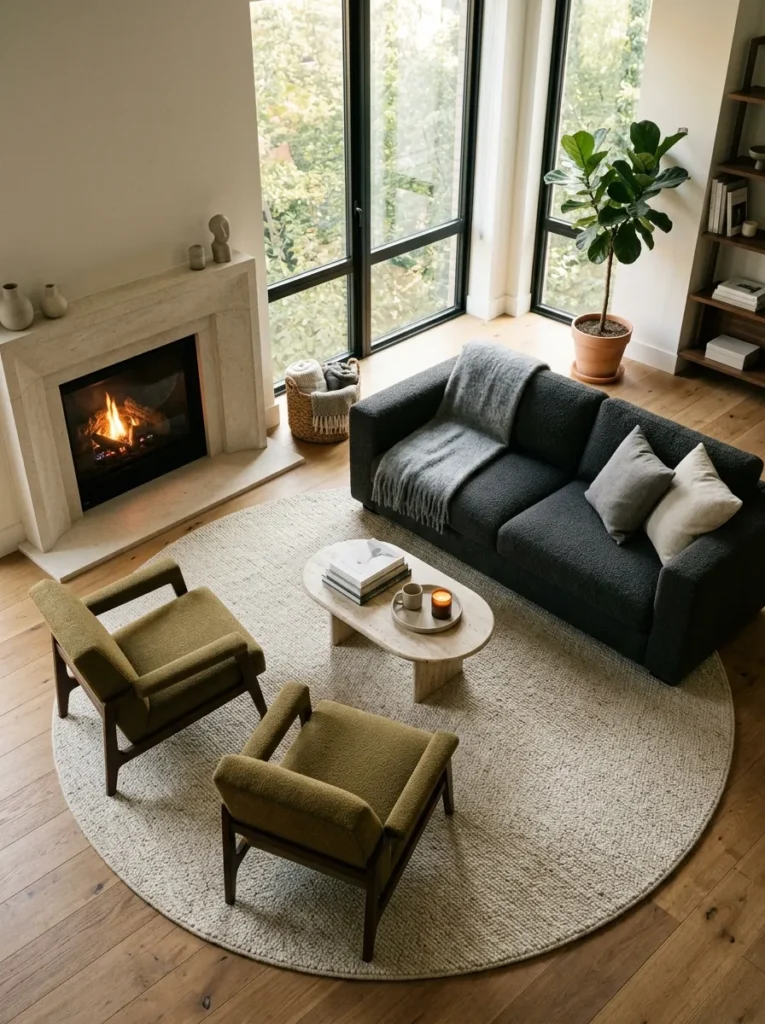
The most common furniture arrangement mistake around a fireplace is pushing everything to the walls. A sofa eight feet from the firebox doesn’t create a conversation zone; it creates an empty room with furniture at the edges. A seating group arranged closer — with the primary sofa between four and six feet from the hearth — makes the fireplace feel genuinely central rather than decorative.
If the room is large enough, consider a floating rug sized to anchor the seating group independent of the walls. This signals clearly that the seating area is its own zone. For very large rooms, a secondary chair or a small occasional table behind the sofa facing away from the fire can define the back edge of the zone without disrupting the arrangement.
6. Try an Asymmetric Seating Arrangement
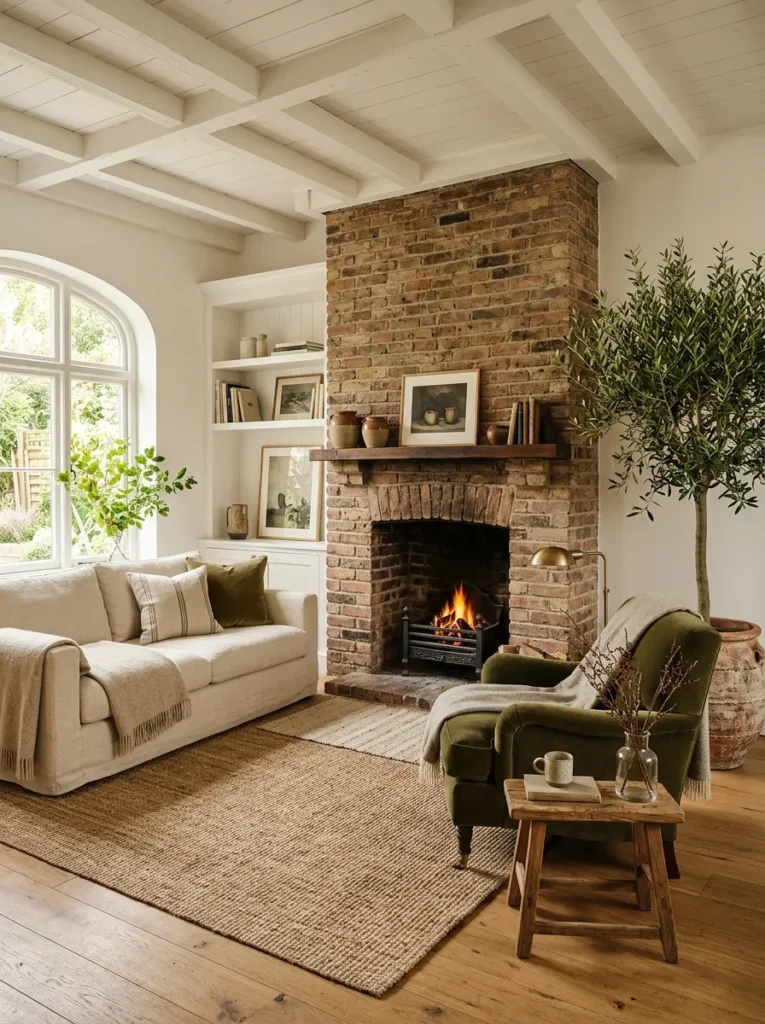
A fireplace doesn’t require a symmetrical living room, and forcing symmetry in a room that isn’t architecturally symmetrical tends to look rigid. An asymmetric arrangement — one sofa angled slightly toward the fire, two chairs at oblique angles, a side table off-center — often feels more relaxed and more livable.
The visual rule that makes asymmetry work is consistent visual weight: if the sofa is on the left side of the fireplace axis, balance it with something substantial on the right — a tall plant, a floor lamp and side chair together, or a low credenza. The goal is a sense of composed balance rather than perfect mirroring.
7. Line the Firebox Interior with a Contrasting Tile
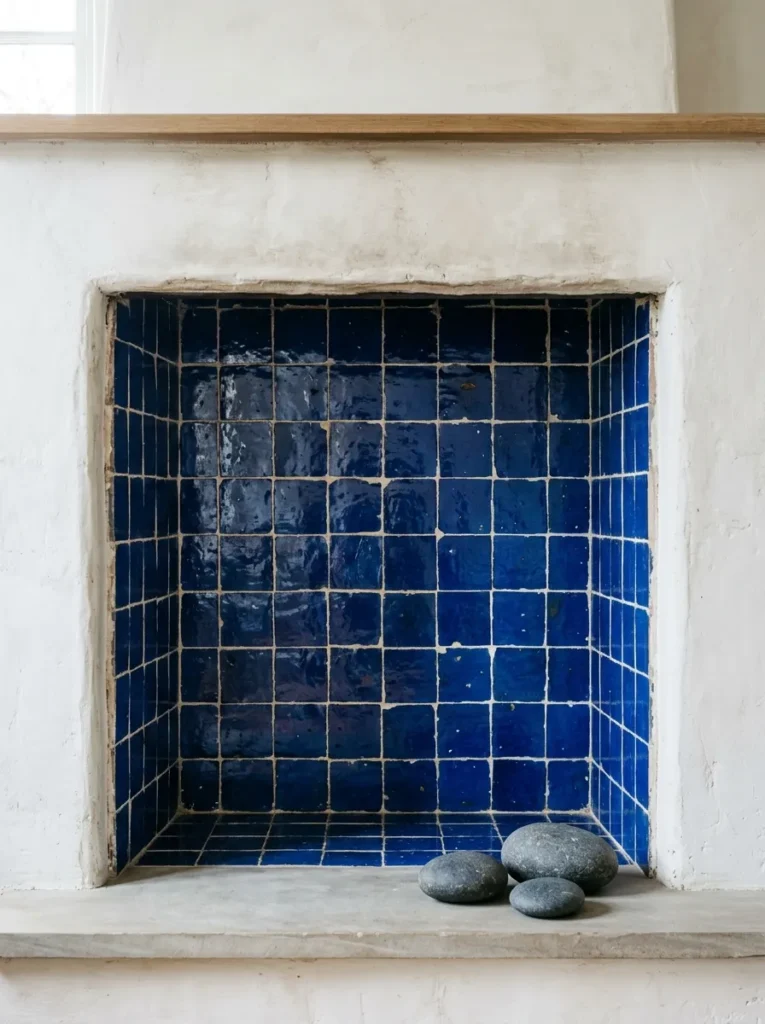
The inside of the firebox — the chamber itself — is often ignored after the surround gets all the attention. For gas or decorative fireplaces, lining the firebox with a handmade or zellige tile in a contrasting color or pattern creates a small, contained moment of visual interest that reads particularly well in photography and at close viewing distances.
Deep terracotta against a white plaster surround, coal-black tile against cream marble, or an iridescent cobalt glaze against raw brick all create fire-adjacent drama without changing the surround itself. This approach also works well for non-functional or sealed fireplaces where the interior is permanently visible.
8. Use a Stone or Concrete Hearth That Extends Wider Than the Opening
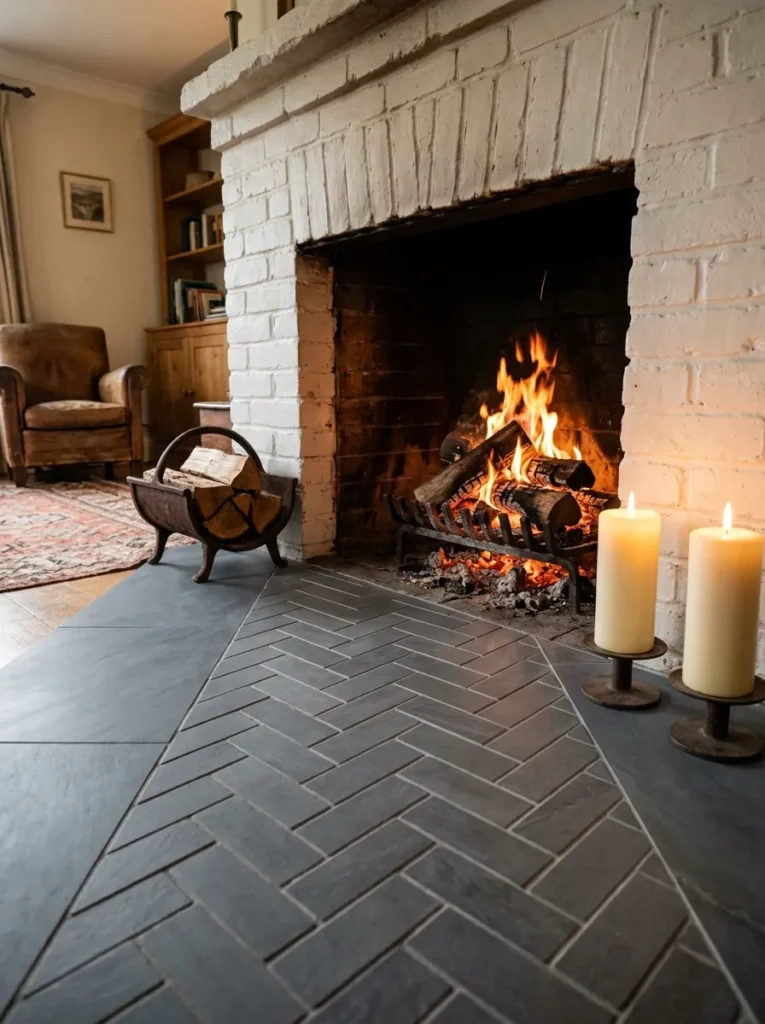
The hearth extension — the flooring material in front of the firebox — is frequently cut to minimal code-required dimensions. Widening it significantly, so it extends well past the sides of the firebox opening and deeper into the room, does two things: it creates a visual plinth that grounds the fireplace architecturally, and it provides a natural surface for staging candles, log holders, or a single plant without putting them on the mantel.
Honed slate, tumbled limestone, polished concrete, or large-format porcelain all work well here. Avoid high-gloss finishes near a working fire. The material doesn’t need to match the surround — contrast between a white plaster surround and a dark slate hearth extension is a particularly clean combination.
9. Treat the Chimney Breast as a Full Feature Wall
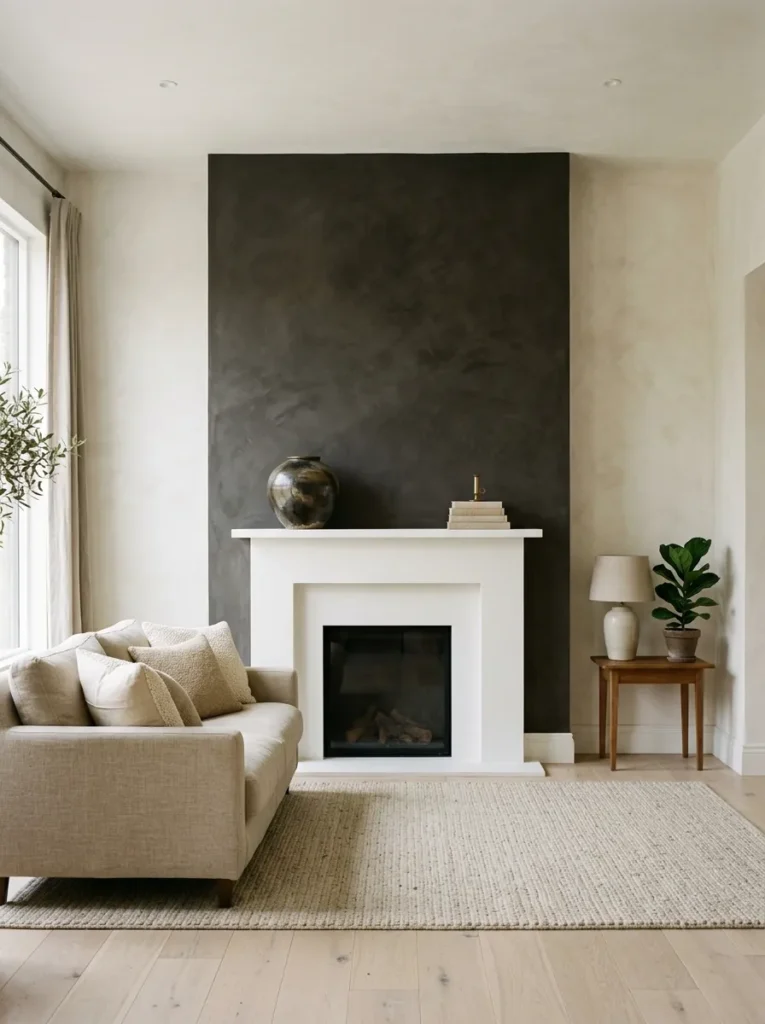
Rather than limiting the fireplace moment to the surround and mantel, extend the treatment to the entire chimney breast — the wall section that projects from the main wall surface. This might mean a contrasting paint color applied only to the breast, a limewash or textured plaster finish that ends at the breast edges, or vertical wood paneling that frames the whole architectural projection.
This approach particularly suits rooms where the fireplace is architecturally modest — a plain white surround gains considerable presence when the entire breast behind it is treated in warm charcoal or deep plaster clay. It also reduces the temptation to over-decorate the mantel, because the wall itself is doing visual work.
10. Add a Single Oversized Piece of Art Above the Surround
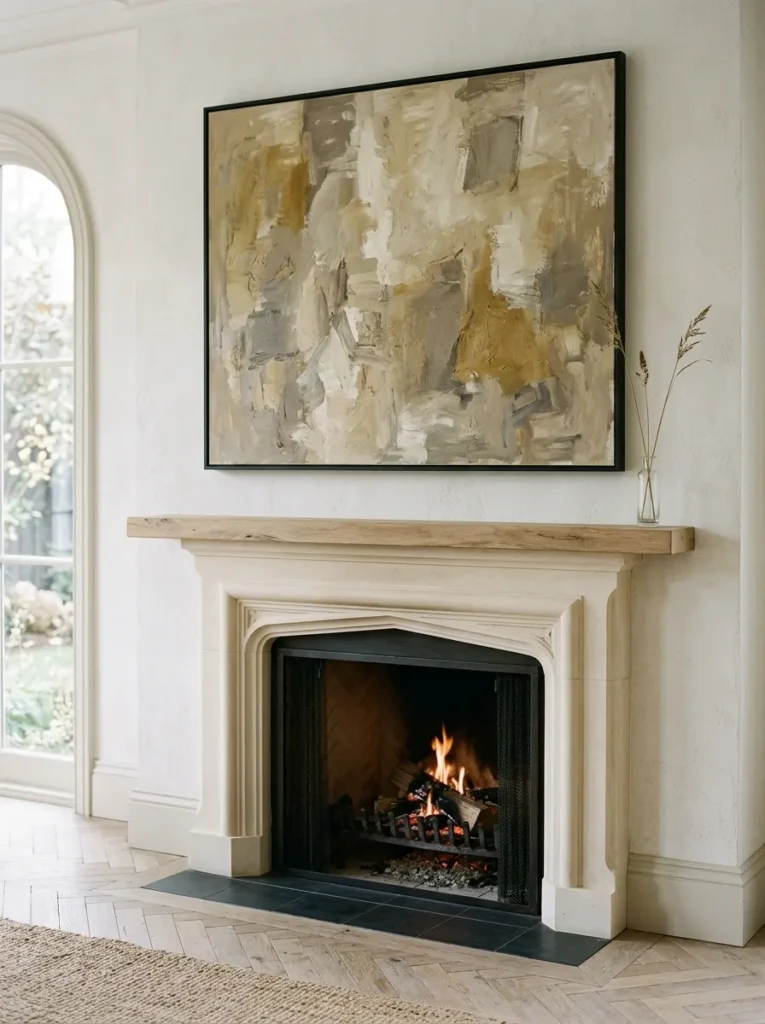
Where a mirror feels too expected, a single large painting or framed print — properly scaled — creates a more personal statement. The operative word is large. A small piece above a mantel tends to look timid and unintentional. Aim for a canvas or frame that comes within roughly six to eight inches of the surround sides, and hangs close enough to the mantel surface that there isn’t an awkward gap of empty wall between them.
Abstract work or landscapes with limited color palettes tend to sit most naturally above fireplaces. Portraits can feel unsettling when hung above a working fire — the eye contact reads as strange in a space designed for relaxed conversation.
11. Choose a Wood-Finished Mantel for Warmth in Modern Rooms
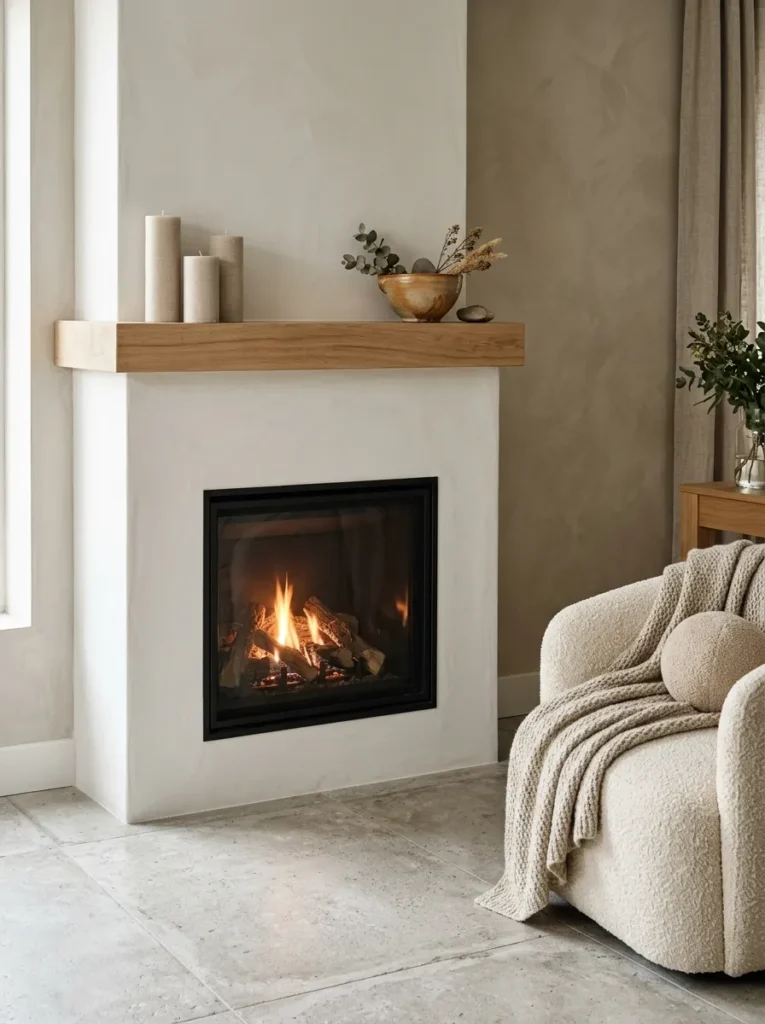
Painted white mantels are the default, and for good reason — they’re versatile and visually quiet. But in rooms that already use white walls, white trim, and neutral upholstery, a white mantel can make the fireplace recede rather than anchor. An oak, walnut, or reclaimed pine mantel introduces an organic note that prevents the room from reading as overly sanitized.
The finish matters here. A mantel with heavy dark stain tends to look traditional regardless of the silhouette. An oiled or lightly wax-finished natural wood reads as contemporary and honest. For rooms that walk the line between Scandinavian minimalism and warm modernism, this is often the more resolved choice.
12. Frame the Fireplace with Floor-to-Ceiling Curtains
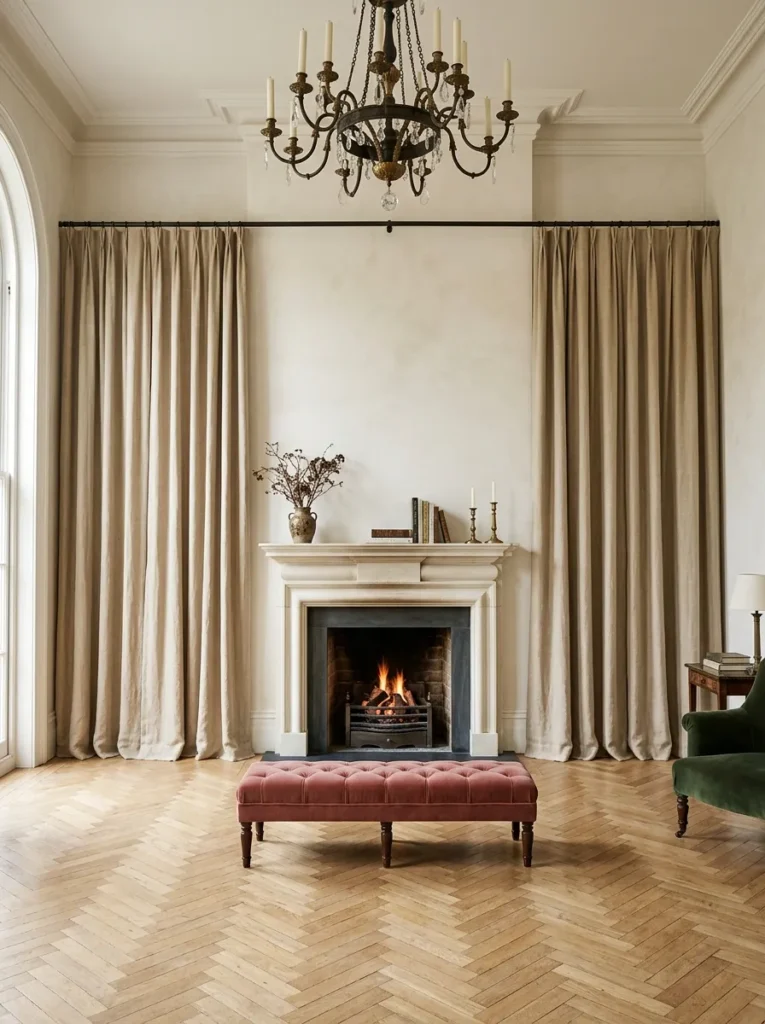
This is less common than it should be. Hanging floor-to-ceiling curtains on either side of the chimney breast — not covering the fireplace, but framing the wall section around it — adds softness, height, and acoustic warmth that hard wall surfaces and furniture can’t provide. Linen, velvet, and cotton canvas all work here depending on mood.
The curtains don’t need to be functional or cover windows. Their job is textural and architectural: they soften the framing, add vertical emphasis, and create a sense of the fireplace being set within a considered enclosure rather than simply placed on a wall. This approach works particularly well in high-ceilinged rooms where the area above the mantel can feel stranded.
13. Incorporate a Wood Store as Part of the Design
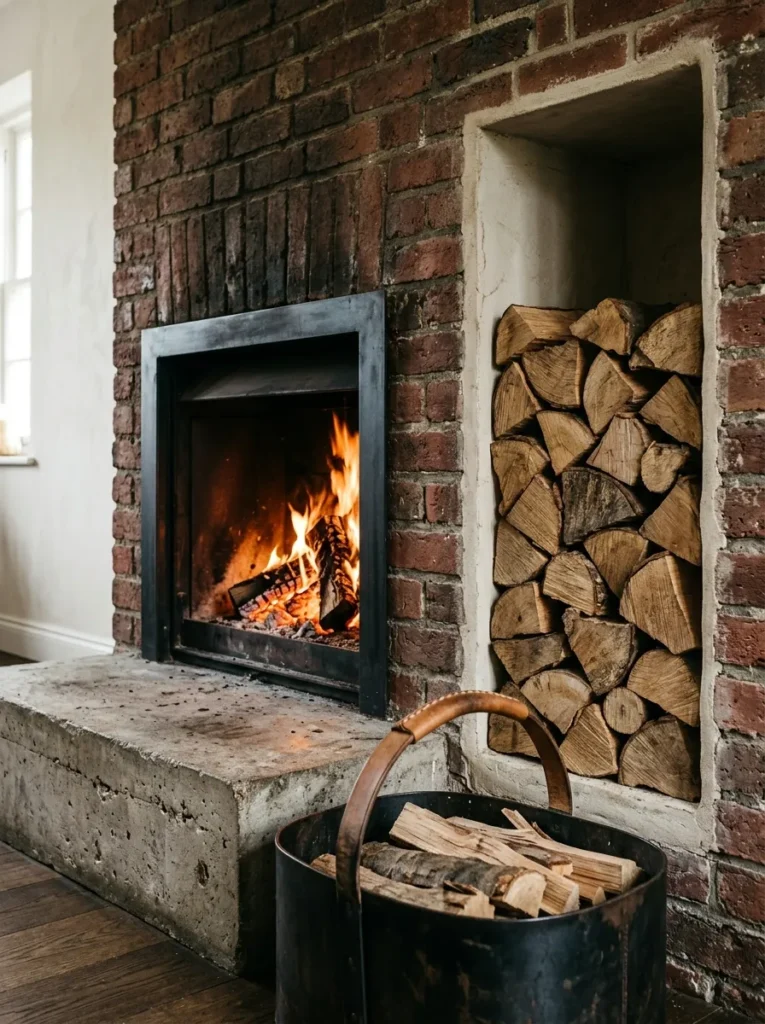
For rooms with wood-burning or decorative fireplaces, log storage is often an afterthought — a metal basket pushed to the side. Integrating it deliberately changes that. A built-in log alcove beside the firebox, an architectural niche in the chimney breast wall, or a floor-level recess in the base cabinet design gives firewood a designated home that contributes to rather than disrupts the room’s composure.
For smaller rooms where a built-in isn’t possible, a substantial blackened steel or hand-woven basket placed deliberately beside the hearth reads as a designed choice rather than a utility decision. Size matters — an undersized log basket looks provisional. Choose one that could hold more logs than you’d typically keep visible.
14. Use the Fireplace to Anchor a Dark or Moody Color Scheme
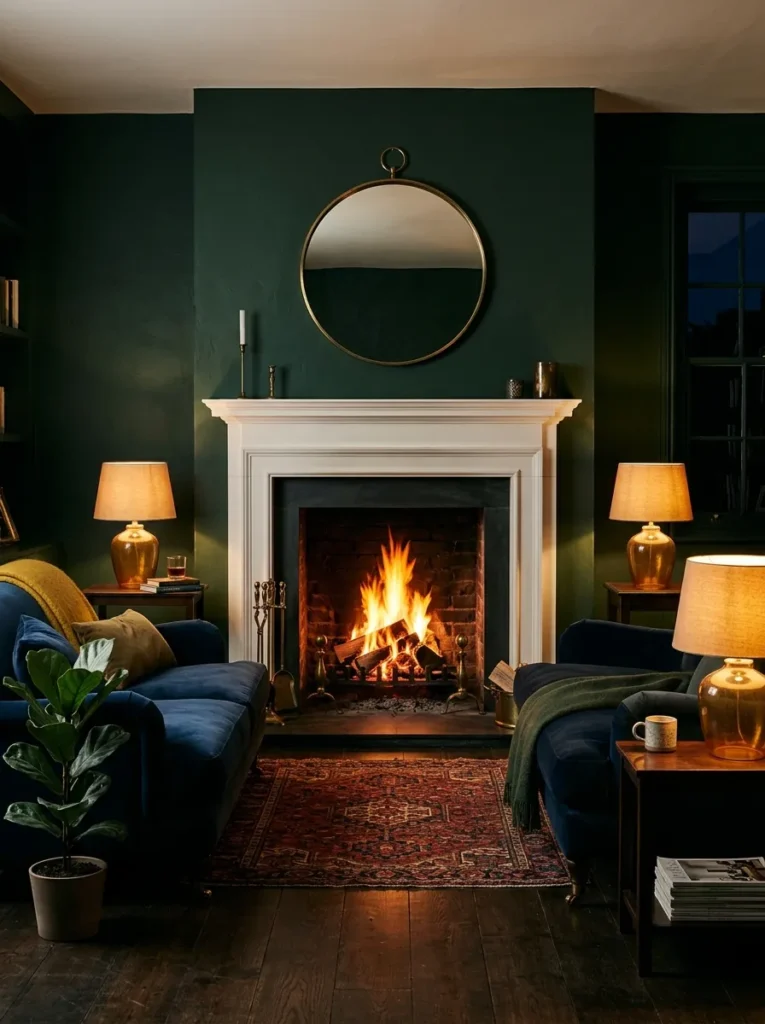
Fireplace walls are natural candidates for darker paint colors, particularly when the architecture is traditional or when the room has reasonable ceiling height. A deep forest green, warm charcoal, or dusty plum on the chimney breast creates a dramatic enclosure around the fire that makes the actual flame more vivid rather than competing with it.
This approach reads particularly well with brass or aged bronze metalwork — fire grate, log basket handles, candle holders — against a saturated dark ground. The contrast between the depth of the wall and the warm light of the fire is more atmospheric than any number of accent cushions. It also gives you permission to keep the mantel styling minimal, since the wall color is already doing substantial visual work.
15. Consider the Television Placement Seriously Before Decorating
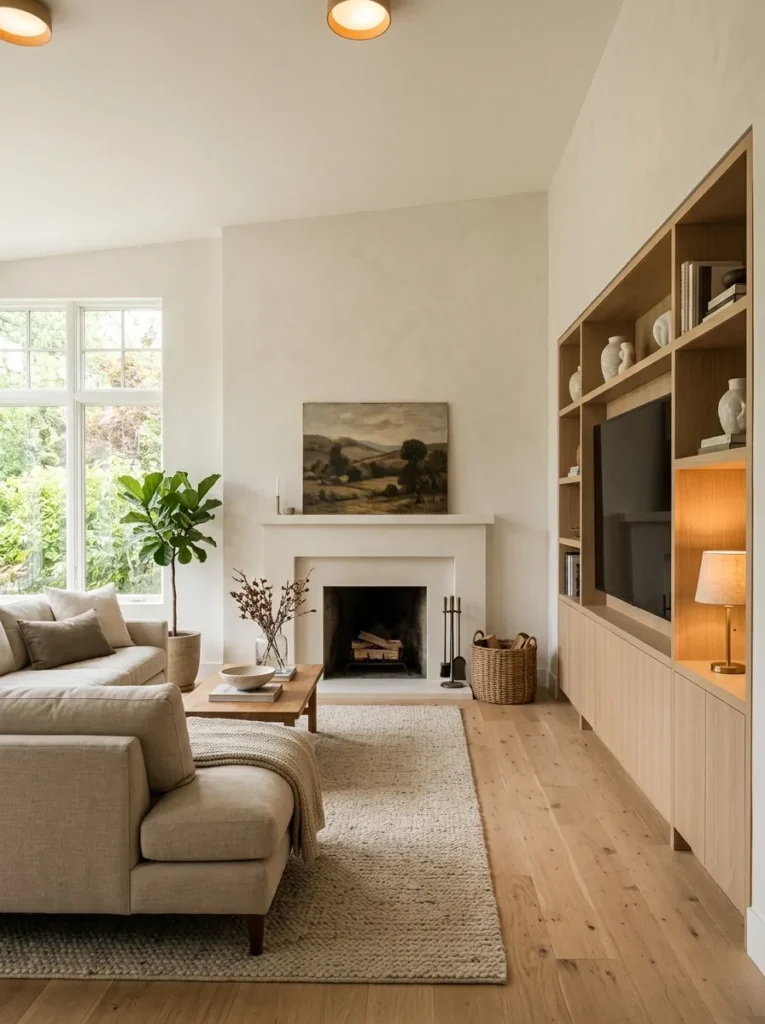
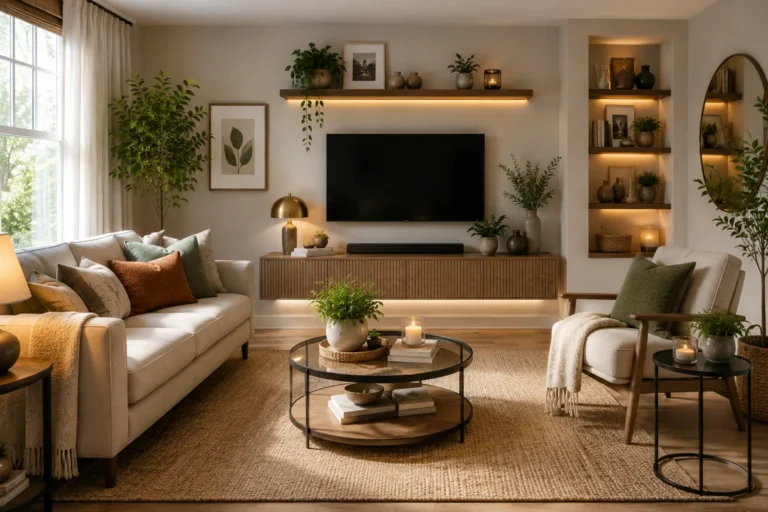
In most living rooms, the fireplace and the television are competing for the same wall. The most common solution — mounting the television above the mantel — has real drawbacks that get glossed over in the enthusiasm for a tidy layout. Looking up at a screen above mantel height is genuinely uncomfortable for extended viewing, and the heat from a working fireplace can affect screen longevity.
Better alternatives: placing the television on a perpendicular wall with the sofa angled to see both, recessing the television into a built-in beside the fireplace, or using a motorized pull-down mount inside a cabinet above the mantel that only activates when needed. If the television above the mantel is unavoidable, keep it as low as the mantel architecture allows and accept that the fireplace will be the primary focal point, with the television as a secondary element.
16. Layer Rugs to Define the Fireplace Seating Zone
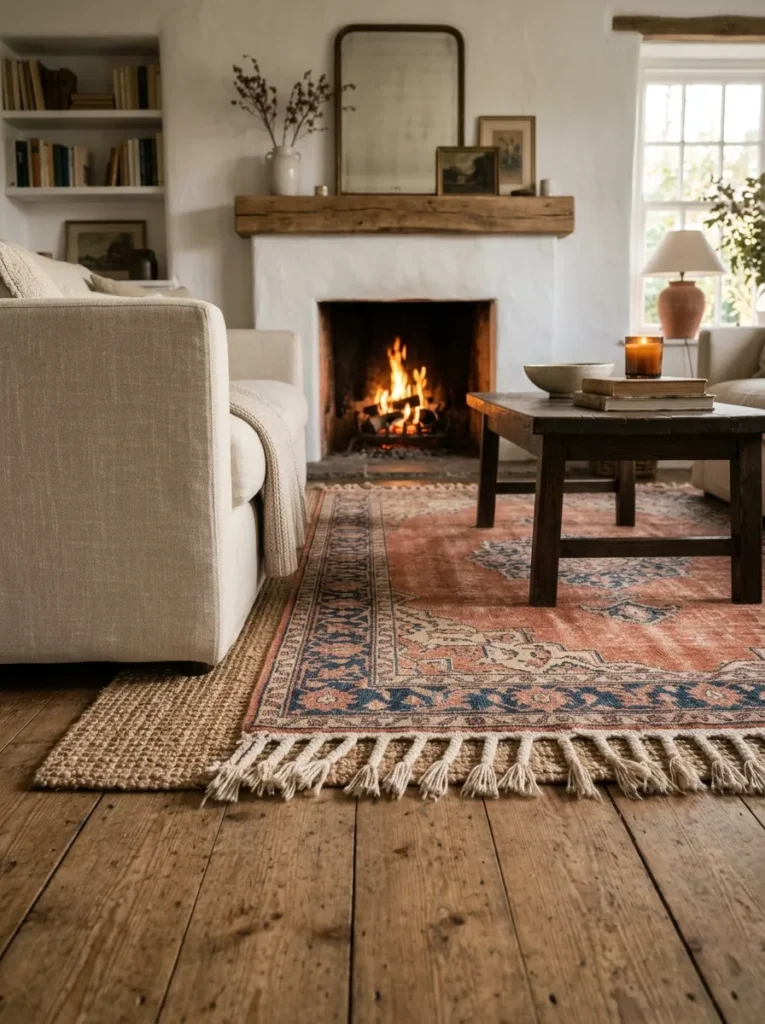
A single rug under a fireplace seating group is useful. Two layered rugs — a flat-woven or jute base layer with a softer wool or vintage rug floated on top — create a more grounded, lived-in feeling that single rugs rarely achieve on their own. The base layer sets the perimeter of the zone; the upper rug marks the center and adds texture.
For this to work, the upper rug should be noticeably different in texture, pattern, and scale from the base. A natural jute under a small vintage Persian works. A plain sisal under a solid wool works. Two similar-toned flat-weaves layered together tends to look accidental rather than intentional. The layering principle also makes it easier to introduce pattern without the pattern dominating the room.
17. Style the Hearth Floor, Not Just the Mantel
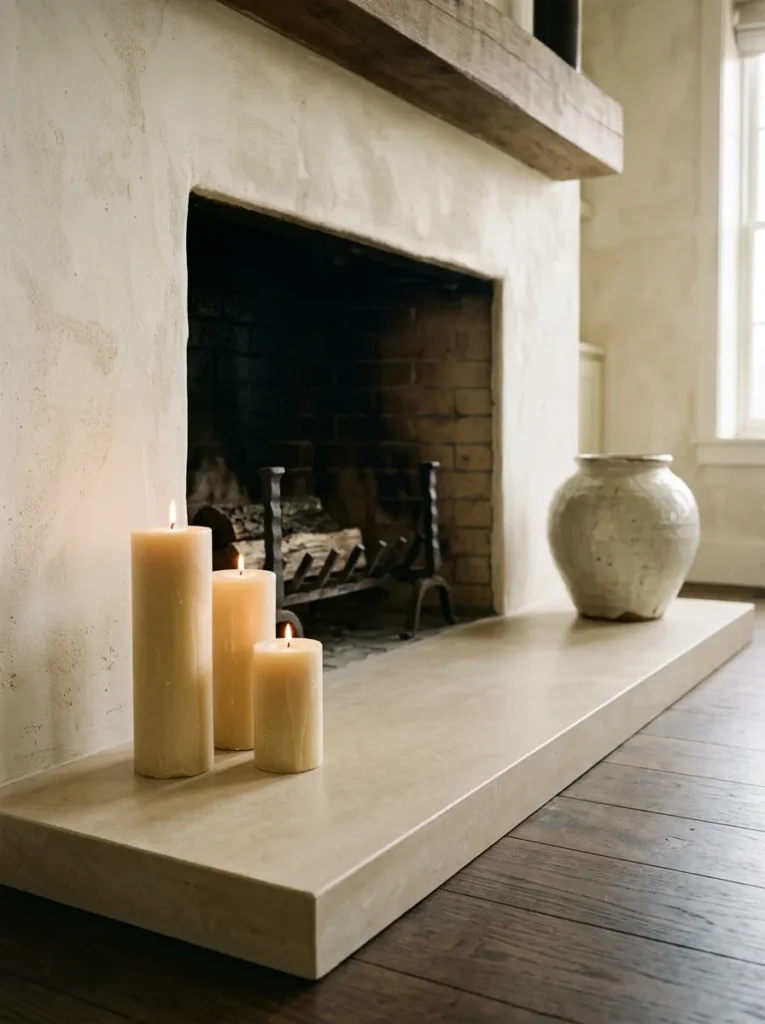
The hearth — the floor area directly in front of the firebox — is often left empty, which makes the lower half of the fireplace feel unresolved compared to a styled mantel above. A few considered objects at hearth level balance the composition vertically: a pair of substantial pillar candles, a cast iron fire dog with good silhouette, or a single large ceramic vessel placed to one side.
The placement should feel deliberate and sparse. Three or four small items at hearth level look fussy; one or two larger ones look composed. For gas or non-working fireplaces, a sculptural log arrangement or a clean arrangement of smooth river stones inside the firebox itself is a more resolved option than a decorative screen covering an empty opening.
18. Choose Fireplace Lighting That Competes with the Flame
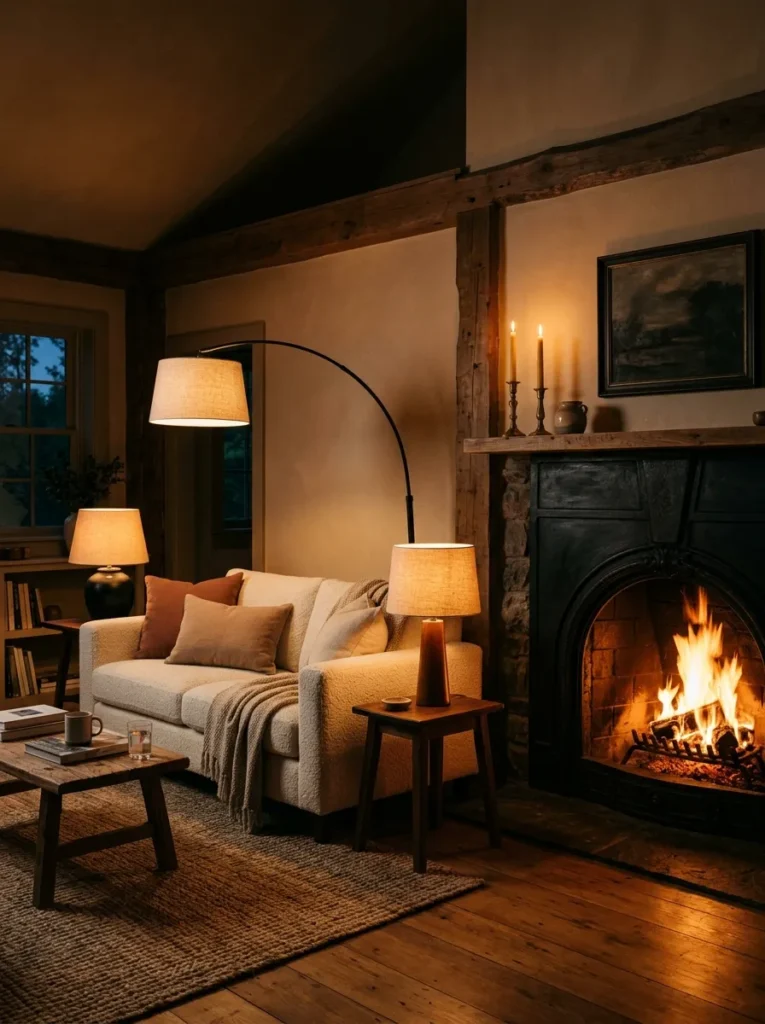
The fireplace provides warm, low, flickering light. If overhead recessed lighting is the only other light source in the room, it will fight the fireplace — the cool, even light overhead will flatten and neutralize the warmth below. Lighting the room with table lamps, wall sconces, and floor lamps at lower heights allows the fireplace light to lead rather than compete.
Warm-toned bulbs (2700K or lower) matter here more than in other rooms. Position a lamp on each side of the seating arrangement, not just behind the sofa. The goal is a light level in the rest of the room that complements rather than overpowers the fire, so the space genuinely changes feeling when the fire is lit versus unlit — which is the point.
19. Use a Plaster or Limewash Finish for a Softer, European Feeling
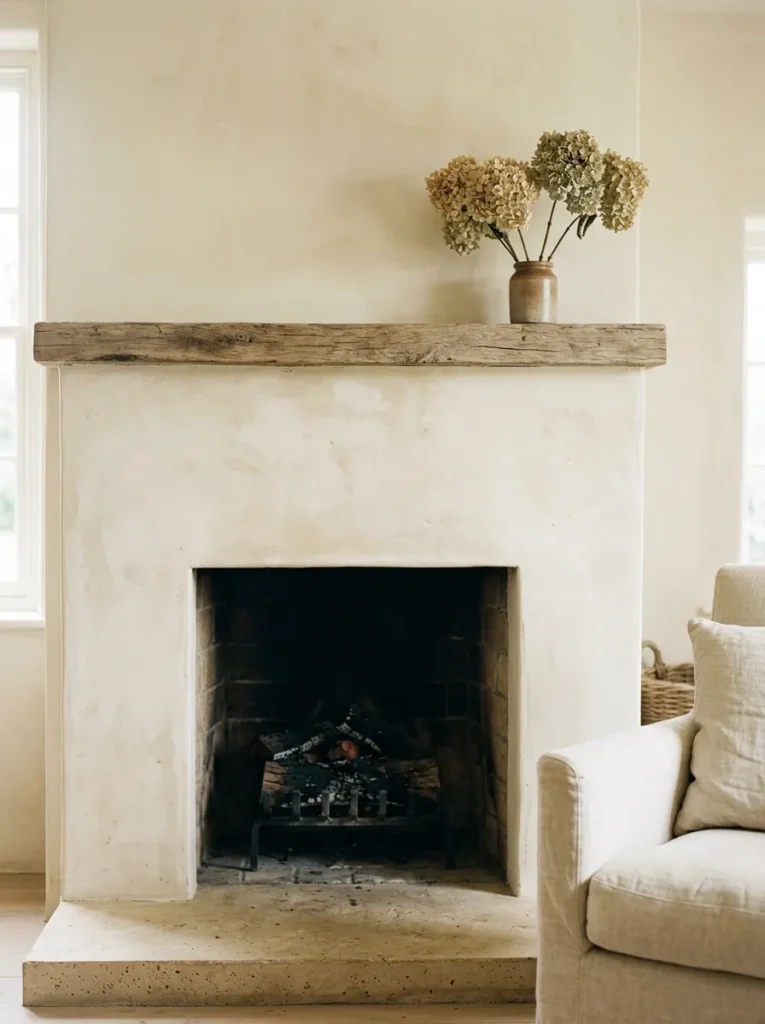
Of all the mantel and surround options, smooth plaster and limewash are probably the most underused in non-European markets. Where marble says formal and brick says rustic, plaster says nothing in particular — which is exactly its strength. It recedes, allows the fire to be the moment, and accepts paint colors readily if tastes change.
Limewash specifically has the advantage of depth — the variation in tone across the surface prevents it from reading as flat or clinical in the way that painted drywall can. Applied to the chimney breast alone, it creates a material note that reads as deliberate craft without requiring a full room commitment. A warm white or barely-there clay tone suits almost any existing room palette.
20. Make the Fire Visible in the Space Even When Unlit
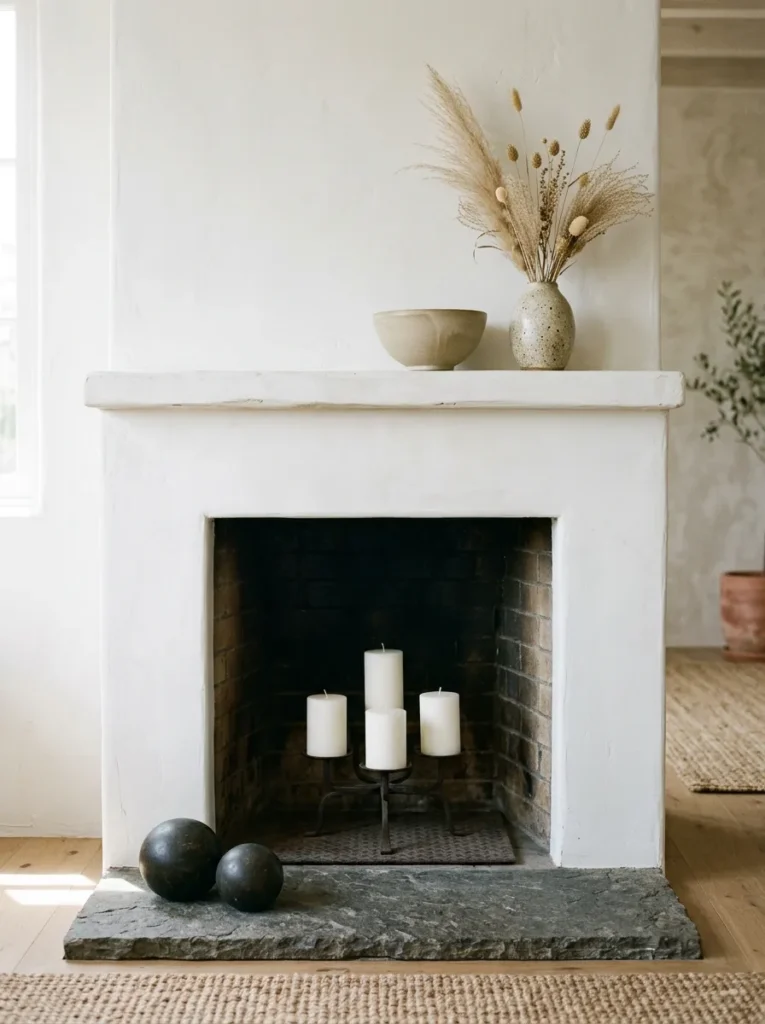
A fireplace that only works aesthetically when the fire is burning is a limited design asset — for the portion of the year when it’s not in use, it needs its own reason to be the focal point. This means the firebox interior, hearth styling, and surround need to hold up to close inspection with no flame present.
For working fireplaces: a beautifully crafted grate, a row of fat pillar candles arranged inside the firebox, or a bundle of dried botanicals placed in the opening. For electric or gas fireplaces with sealed glass: a surround and mantel substantial enough that the closed front looks intentional. The rule is that what you see when the fire is off should be as considered as what you see when it’s on. A fireplace that looks complete cold looks extraordinary when lit.
How to Prioritize These Ideas for Your Specific Space
Not every idea in this article belongs in the same room, and layering too many of them together produces a room that feels maximalist in an uneasy way rather than rich and deliberate.
Start with architectural decisions — surround material, chimney breast treatment, built-in shelving — before styling decisions. These establish the rules that everything else must work within. If the surround is a strong material like marble or stone, the mantel needs less styling, not more. If the chimney breast is a feature wall in a saturated color, the surrounding room palette needs to respond with restraint.
Furniture arrangement comes second. Get the sofa placement, rug size, and lighting plan resolved before adding any decorative layer. The common mistake is buying accessories before knowing where the sofa lands. The most expensive decorative accessories cannot fix a seating group that doesn’t face the fireplace properly.
For renters or those in furnished homes, the practical interventions — mantel styling, hearth objects, layered rugs, lamp placement, a leaning mirror — can do significant work without structural commitment. Prioritize the visual weight of what you can change before feeling limited by what you cannot.
Final Thoughts
A fireplace is one of the few architectural features that makes a room feel like a room rather than a floor plan. The ideas here range from substantial investments to weekend decisions, but the underlying principle behind all of them is the same: the fireplace should earn its role as the room’s anchor, not simply occupy the wall with the flue.
Start with the decisions you can’t easily reverse — the surround, the chimney breast treatment, built-in cabinetry — and let the styling follow from there. Resist the impulse to treat the mantel and hearth as a perpetual display surface and instead edit toward a composed arrangement that holds up in the off-season as well as it does with a fire burning.
For living room fireplace ideas worth revisiting when you’re ready to tackle the next layer, save this guide to your Pinterest boards and return to it as each decision comes up.