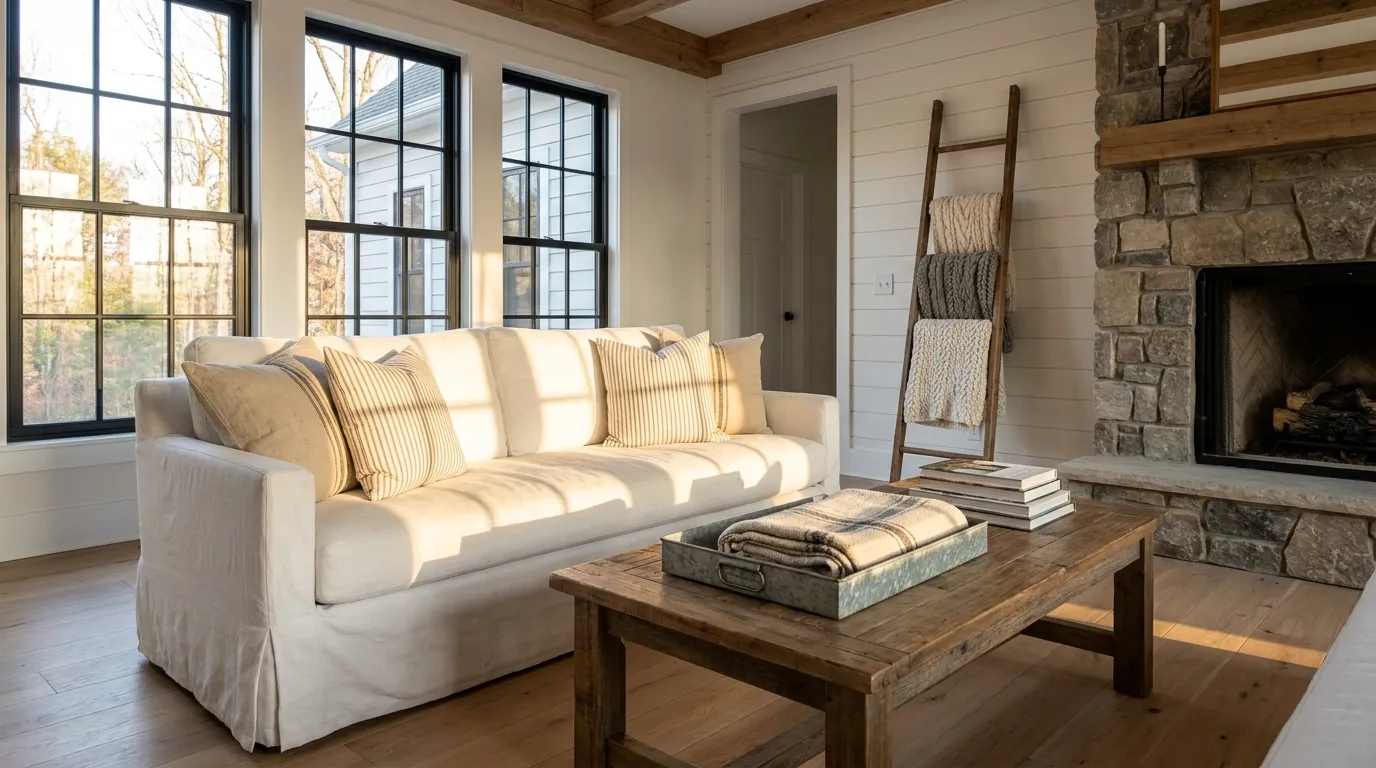
20 Farmhouse Living Room Ideas That Feel Cozy and Timeless
Farmhouse style earns its staying power because it’s never really about trends — it’s about a room that looks lived-in even on its first day and still feels right ten years later. These 20 farmhouse living room ideas focus on the details that separate an authentic farmhouse space from a generic neutral room: reclaimed materials with real history, textiles that soften rather than match, and a restraint that lets a handful of good pieces breathe instead of crowding every surface.
Each idea below explains exactly what it is, why it earns its place in a farmhouse living room, and how to bring it into your own space without it reading as a costume. Some require structural changes like exposed beams or a stone hearth. Others are as simple as swapping a throw pillow fabric or repositioning a single statement object. Whether you’re starting from scratch or updating a room one piece at a time, you’ll find ideas here that fit a real budget and a real home, not just a styled photo.
1. Shiplap Accent Wall: A Farmhouse Living Room Classic Done Right
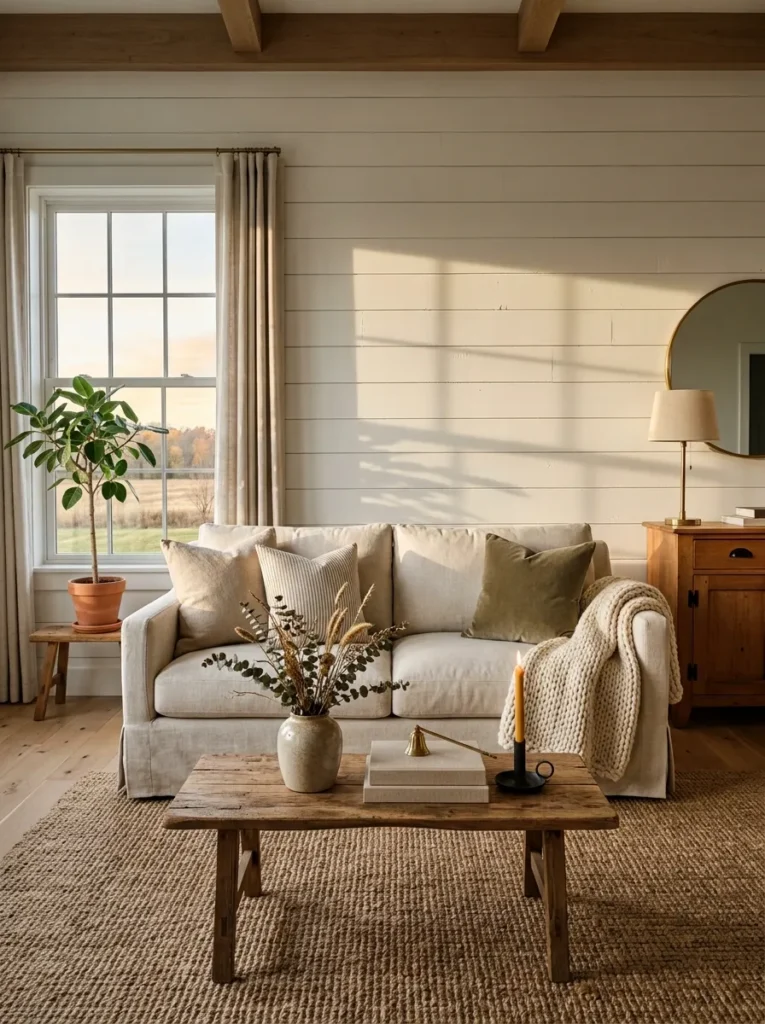
Shiplap remains the single most recognizable farmhouse signature, but the wall only works if it’s treated as a backdrop rather than the main event. Keep the boards painted a soft, slightly warm white rather than stark white, since true white reads more modern-coastal than farmhouse. Reserve it for one wall — almost always the one behind the sofa — so the texture has room to read clearly instead of competing with itself around the whole room. This idea works best in rooms with at least one other strong material moment, like a stone fireplace or exposed beam, so the shiplap isn’t carrying the entire farmhouse identity alone.
2. Exposed Wood Beam Ceiling Treatment
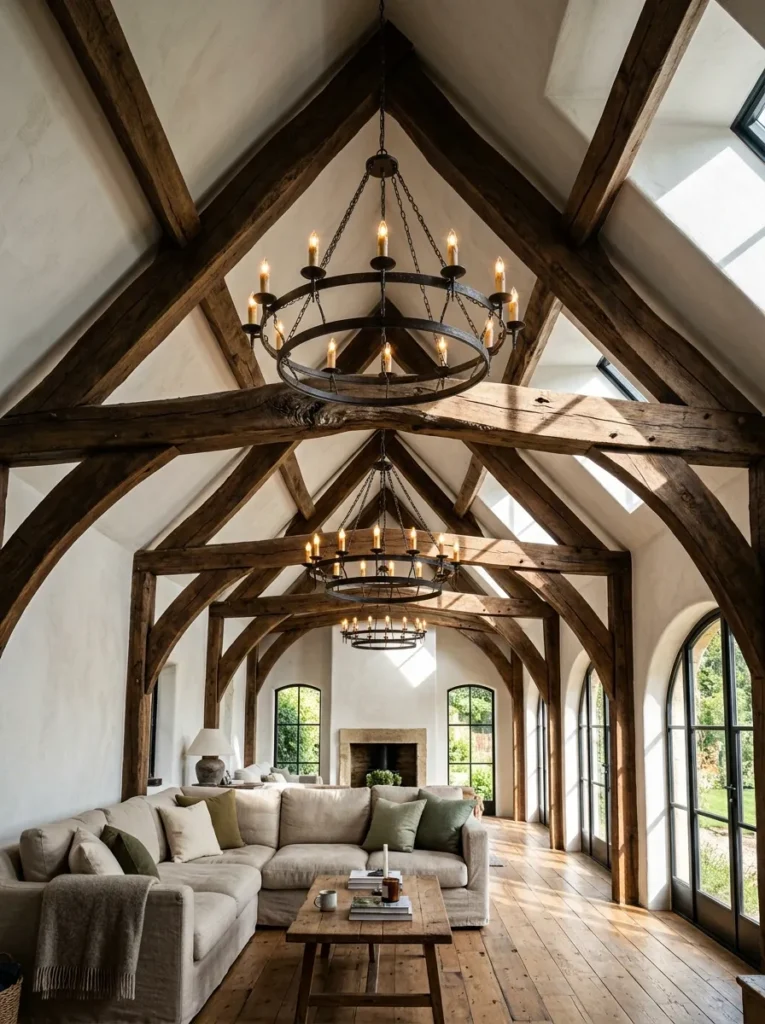
A vaulted ceiling with exposed beams gives a farmhouse living room one of its most architecturally honest features, since the beams typically reference real structural framing rather than purely decorative trim. If you’re not working with original beams, faux beam kits in a darker stain than your flooring create strong visual weight without raising the ceiling height artificially. This idea pairs particularly well with a statement light fixture hung between two beams, since the ceiling becomes a second focal point rather than empty space above the seating area.
3. Vintage-Inspired Stone Fireplace Surround
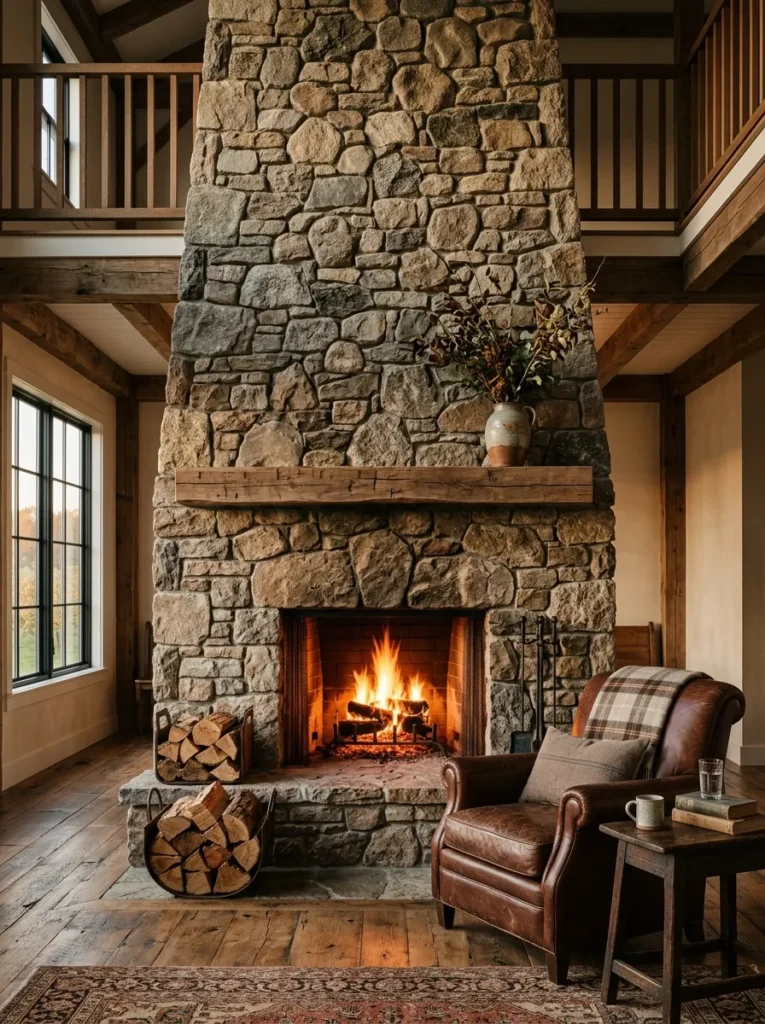
A fieldstone or rough-cut stone surround gives a fireplace genuine farmhouse weight that brick or painted drywall can’t replicate, since the irregular stone shapes carry the same handmade quality found throughout the style. Extend the stone at least to the ceiling if your room height allows it, since a short stone surround with painted wall above it tends to look unfinished rather than intentional. This idea anchors an entire room single-handedly, so keep mantel styling minimal — one or two objects with real scale, not a cluttered row of small frames.
4. Slipcovered Linen Sofa for Relaxed, Washable Comfort
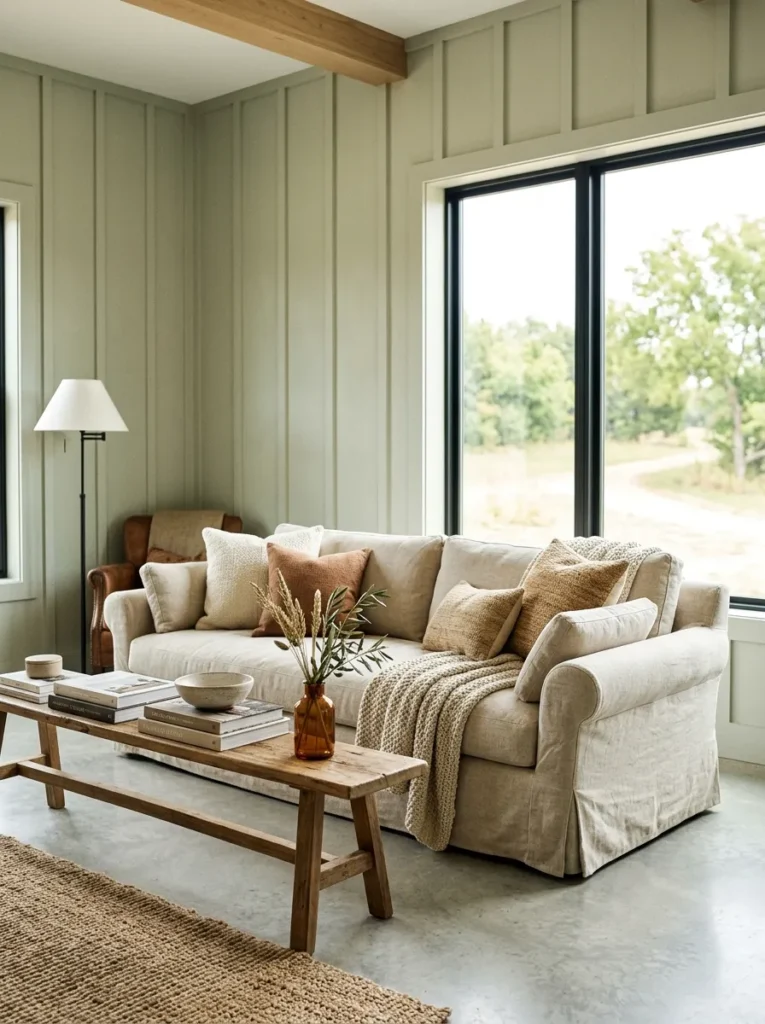
The slipcovered linen sofa is farmhouse style’s answer to the idea that furniture should look comfortable being used, not just photographed. Linen’s natural wrinkles and relaxed drape are part of the aesthetic, not a flaw to iron out, and a removable slipcover means the piece can actually survive a household with kids, pets, or regular use. Choose rolled or English arms over sharp modern lines, and resist the urge to size down — farmhouse sofas tend to run deep and slightly oversized, prioritizing sink-in comfort over a tailored silhouette.
5. Reclaimed Wood Coffee Table with Visible History
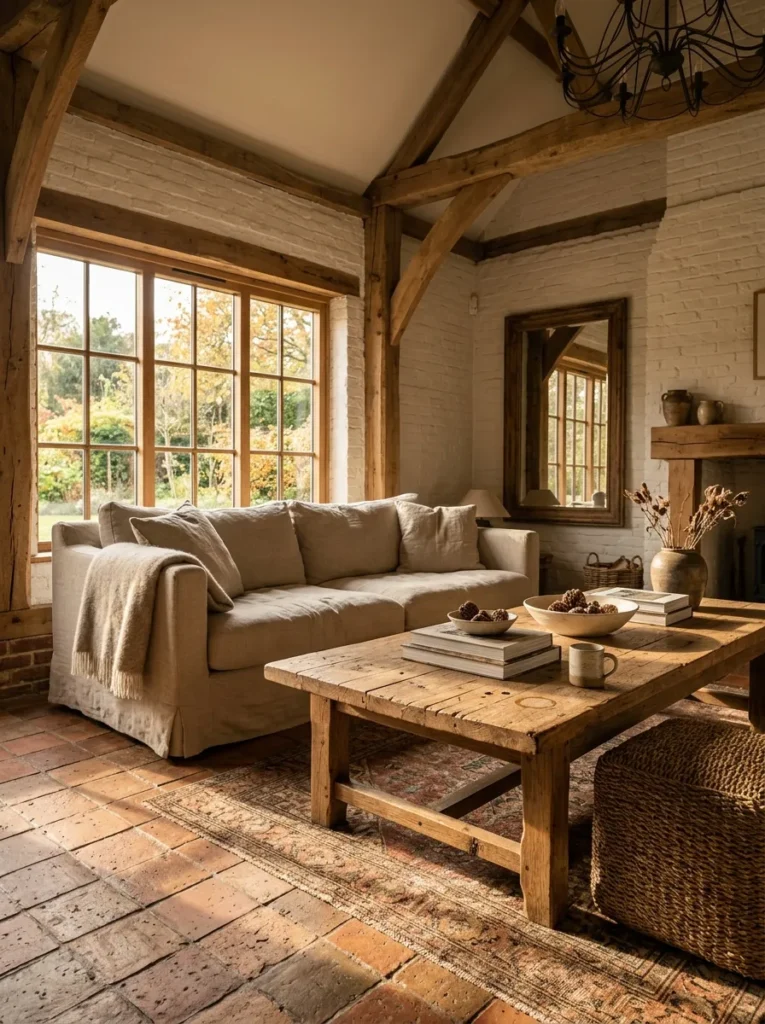
A coffee table built from genuinely reclaimed wood carries a kind of authenticity that distressed-finish furniture can only approximate, since the marks, color variation, and old nail holes are real evidence of a previous life rather than a manufactured texture. Look for tables that keep the wood’s natural edge or visible saw lines rather than sanding everything perfectly smooth, since that imperfection is the entire point. This piece works as the quiet centerpiece of a room, so keep the base simple — black iron hairpin legs or a basic trestle base let the wood stay the star.
6. Layered Vintage and Modern Rugs for Texture and Warmth
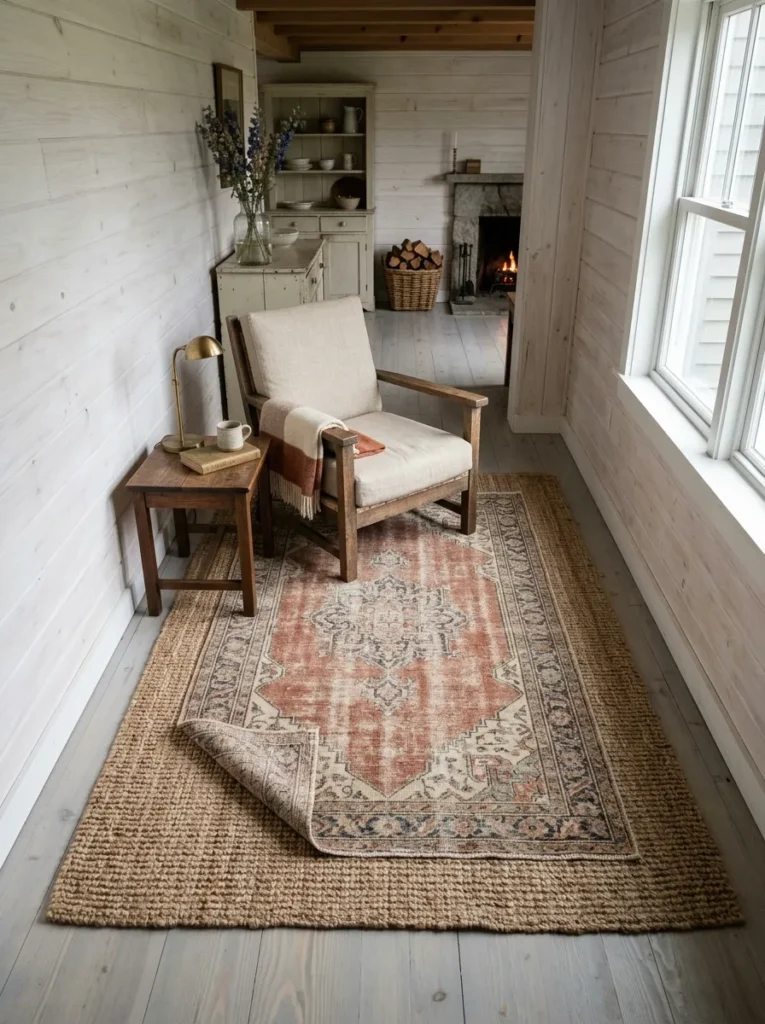
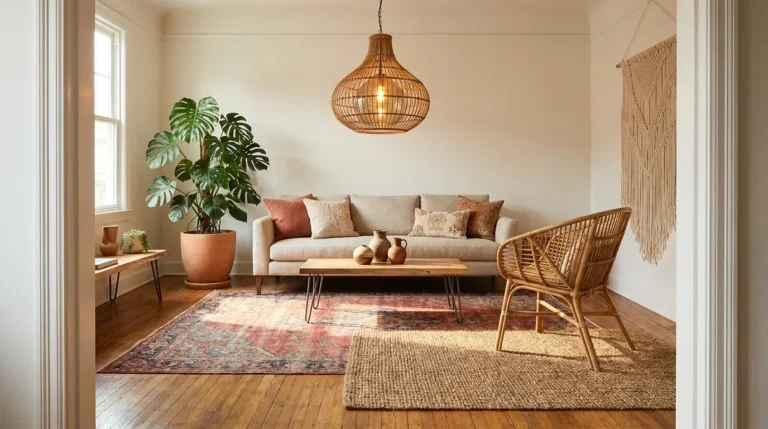
Layering a smaller patterned or vintage-style rug over a larger natural-fiber rug like jute or sisal adds depth and warmth that a single rug almost never achieves on its own, especially in a room with mostly solid, neutral furniture. The jute base grounds the room in texture, while the smaller rug introduces color or pattern in a contained, controllable dose rather than committing an entire floor to it. Center the smaller rug slightly off-center under one seating cluster rather than perfectly centered in the room, which reads more curated and less like a matching set.
7. Black Metal Window-Pane Room Divider
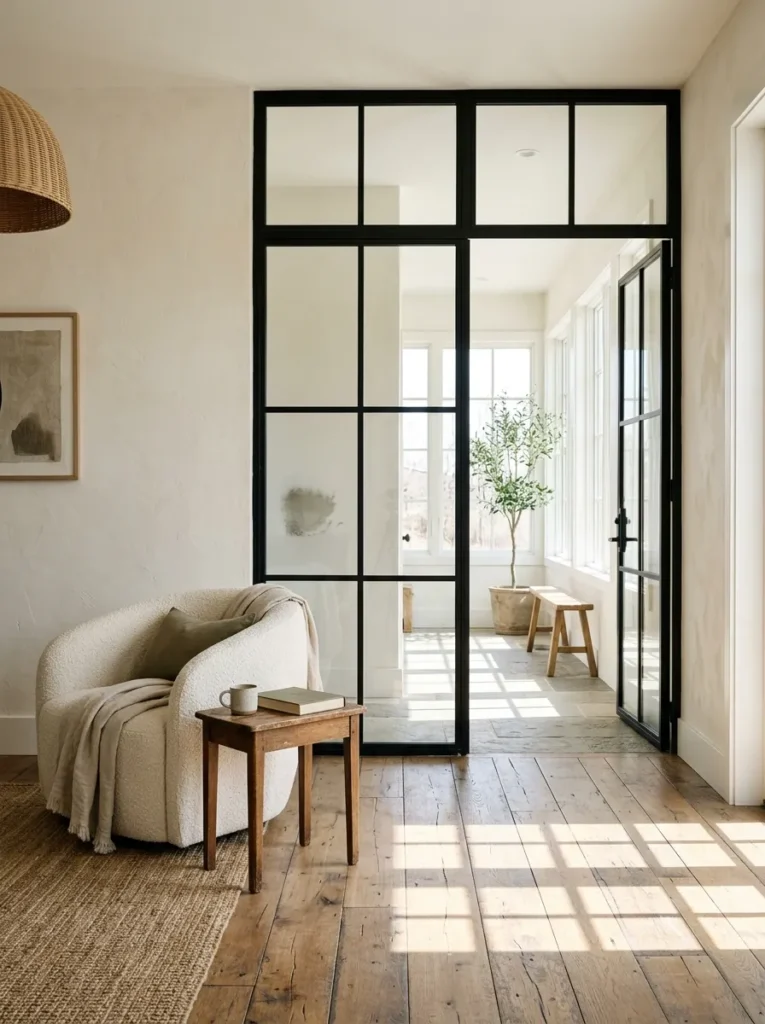
A black metal window-pane divider gives an open-concept farmhouse layout a defined boundary without fully closing the space off, borrowing the look of old factory or barn windows that defines so much of the style’s industrial-adjacent side. It lets light pass through from an adjacent room while still signaling a visual transition between zones, which matters in open floor plans where the living room can otherwise blend into a hallway or dining area with no clear edge. This works best in rooms with at least seven-foot ceilings, since a shorter divider can feel like it’s cutting the room in half rather than defining it.
8. Mixed Metal Statement Lighting
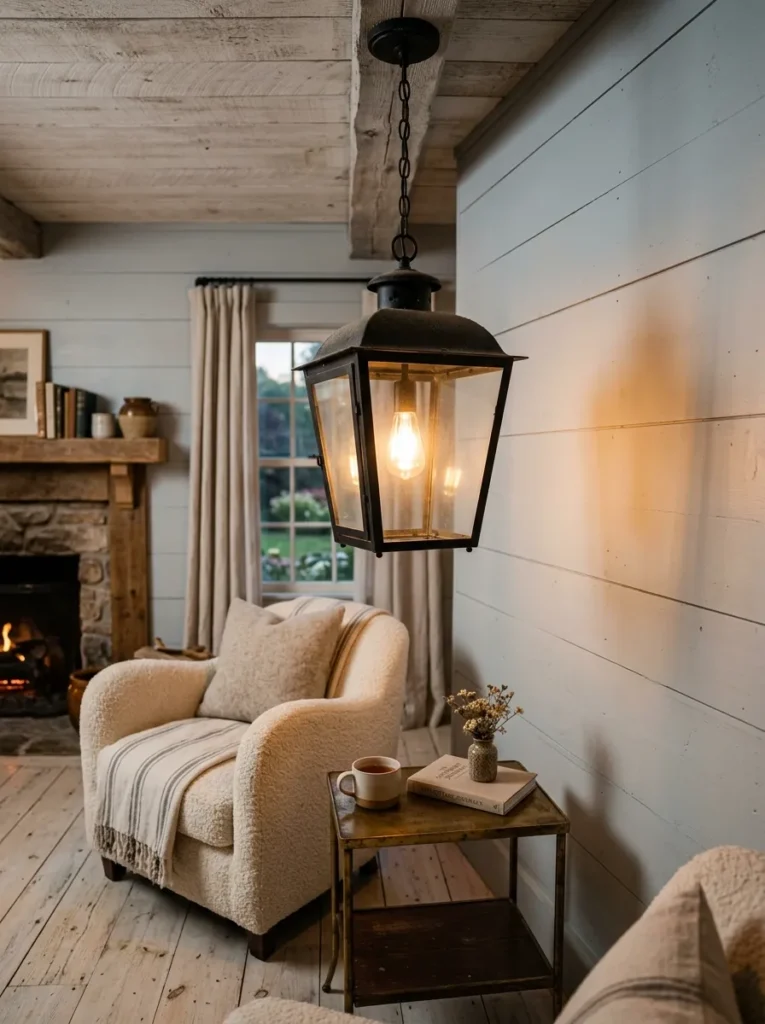
One confident statement light fixture, whether a wrought iron lantern, a vintage-style schoolhouse pendant, or a wagon-wheel chandelier, does more for a farmhouse living room’s character than almost any other single purchase. The key is committing to one finish as the dominant metal and letting any secondary metal — brass hardware, a black side table — play a clearly supporting role rather than competing for attention. Hang it slightly lower than a typical modern pendant would sit, since farmhouse lighting tends to feel more grounded and human-scaled rather than floating high above the furniture.
9. Open Wood Shelving: An Easy Farmhouse Living Room Storage Upgrade
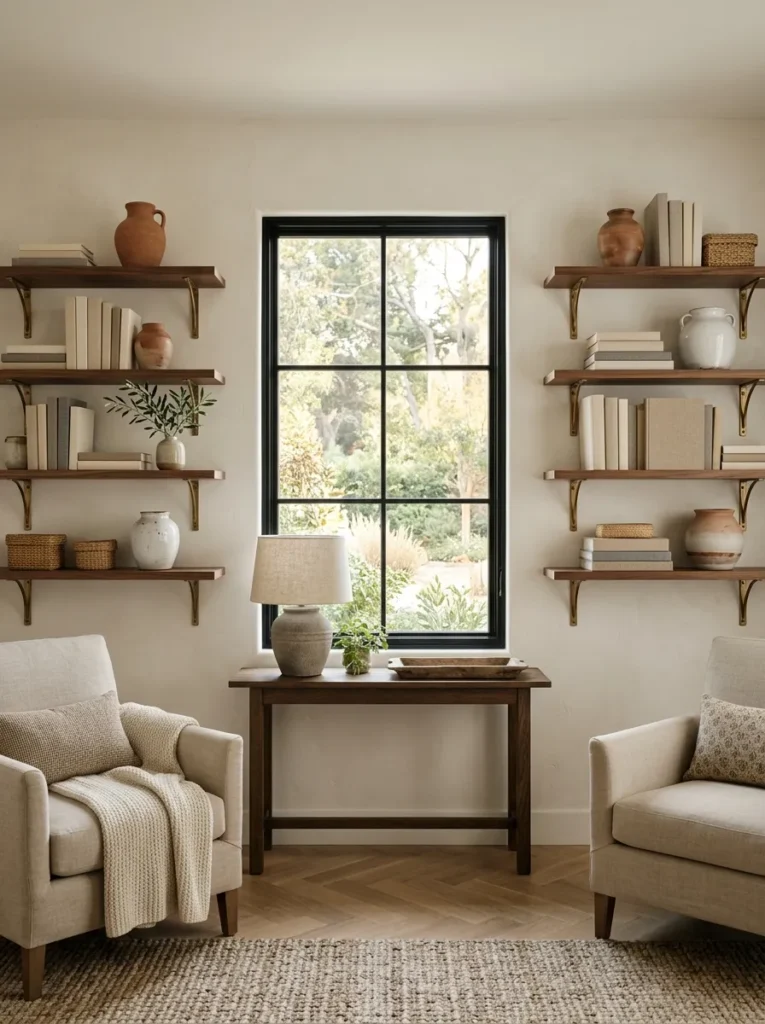
Open wood shelving gives a farmhouse living room storage that doubles as styling, which suits a design style built around displaying well-worn, well-loved objects rather than hiding everything behind closed cabinet doors. Flanking a window or fireplace with matching shelves creates symmetry that anchors the room, while the open format keeps the wall from feeling heavy the way a full built-in cabinet run sometimes does. Leave visible breathing room between objects rather than filling every shelf edge to edge — the negative space is doing as much visual work as the objects themselves.
10. Galvanized Metal Accents in Trays and Baskets
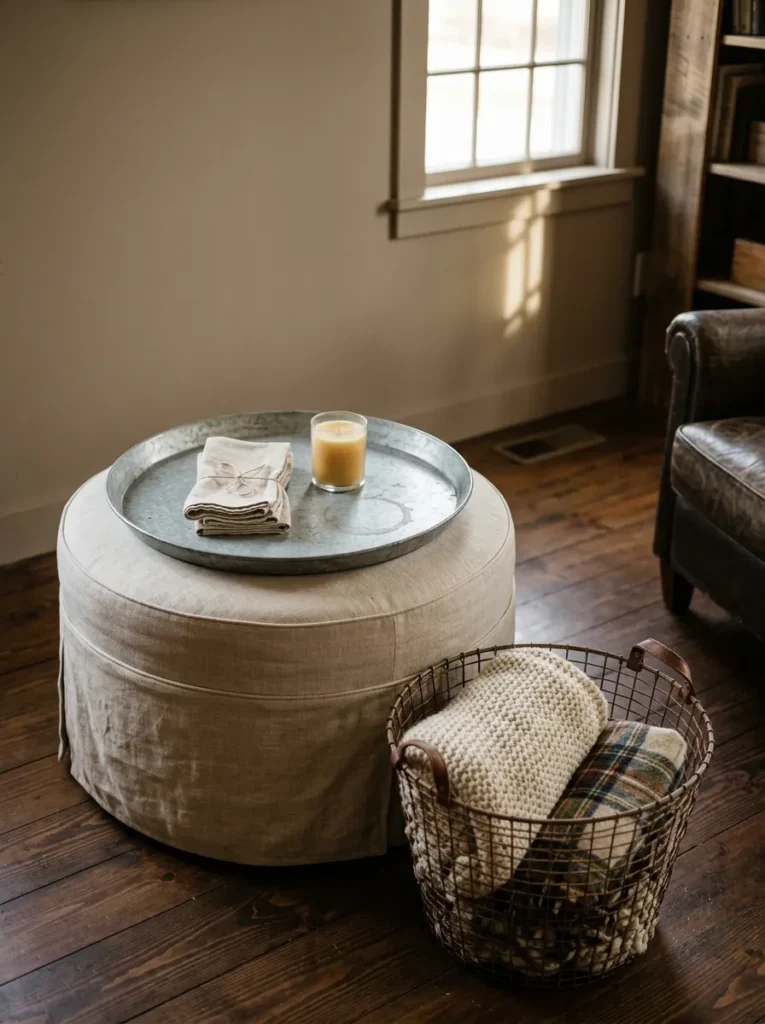
Galvanized metal carries an unmistakable agricultural-tool history that softens a room’s polish in exactly the way farmhouse style wants — slightly rough, slightly utilitarian, never precious. A single galvanized tray on an ottoman or coffee table corrals smaller items like coasters or candles while adding texture that plain wood or fabric can’t, and a wire basket does the same job for throws or magazines that would otherwise clutter a surface. Use it sparingly, though — a room with galvanized metal on every surface starts to feel like a prop room rather than a home.
11. Antique Ladder as Decorative Blanket Storage
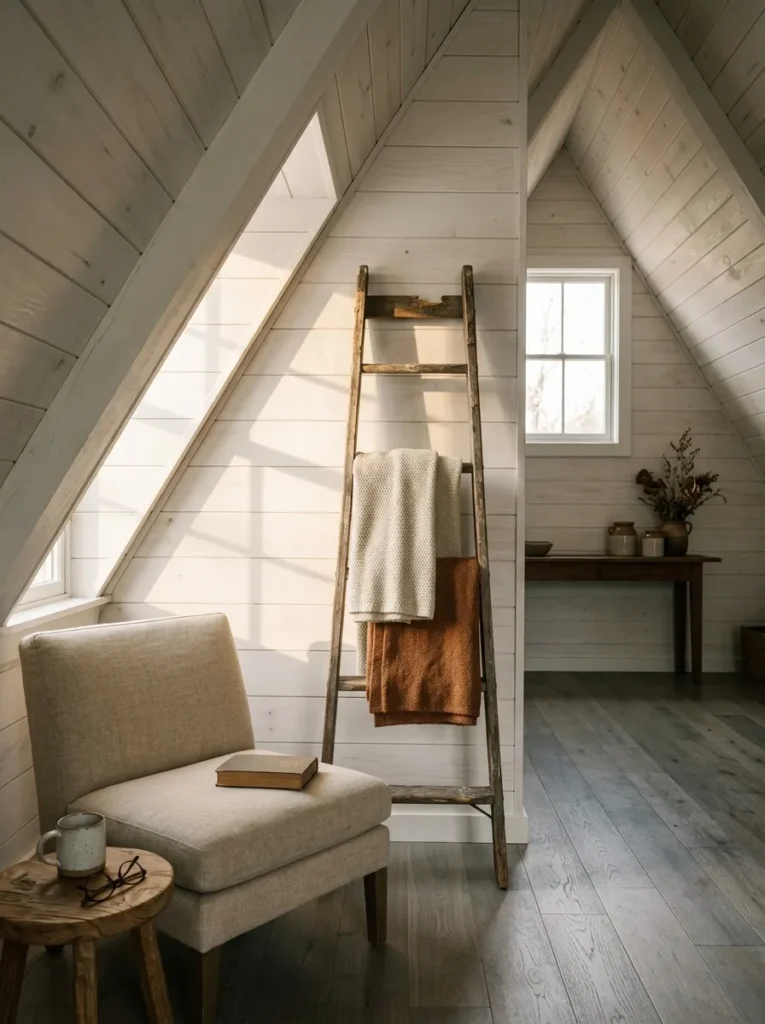
An old wood ladder leaned against a wall solves blanket storage in a way that feels intentional rather than makeshift, and it does it using an object with genuine farm-tool history instead of a purpose-built blanket rack. The slight irregularity in an authentic antique ladder — uneven rungs, a worn finish — is exactly what makes it work; a brand-new ladder painted to look distressed reads noticeably different in person. Lean it at a natural angle rather than perfectly vertical, and limit it to two or three throws maximum so each one stays visible instead of becoming a pile.
12. Vintage Grain Sack and Ticking Stripe Textiles
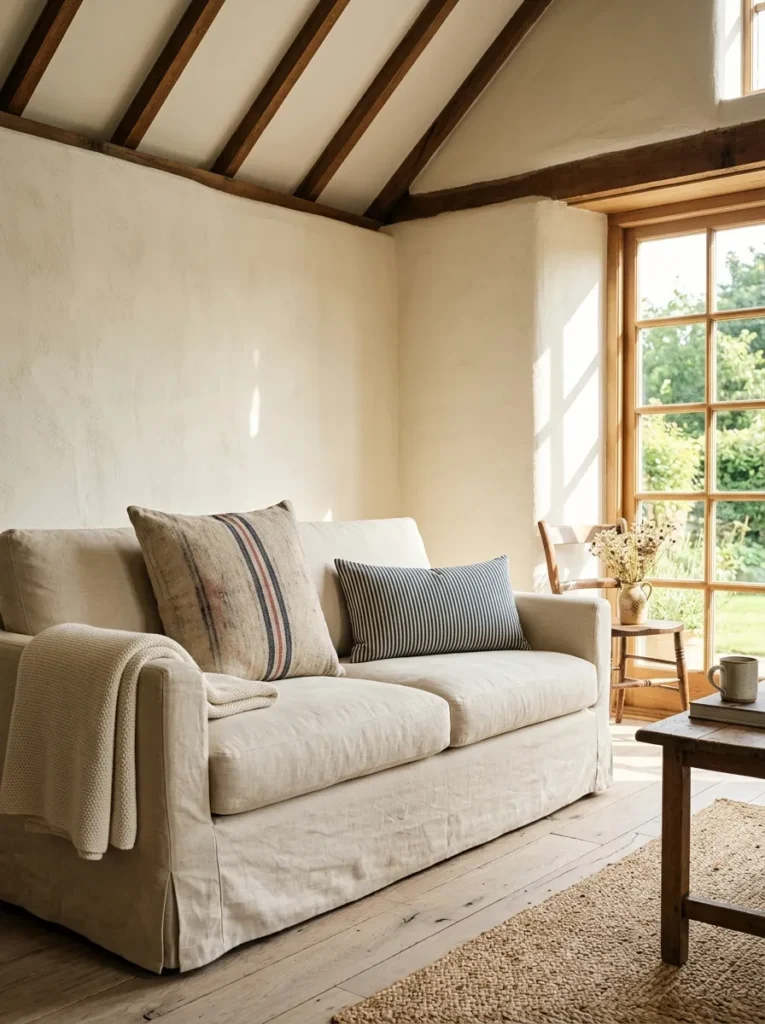
Grain sack stripes and ticking stripe fabrics bring pattern into a farmhouse living room without breaking from the style’s restrained, agrarian color story, since both originated as utility textiles rather than decorative ones. The slightly irregular, faded stripe of a true grain sack reproduction reads more authentic than a crisp, evenly printed stripe, so look for fabric with some tonal variation built in. Mix the two patterns rather than matching a full set of identical pillows — one grain sack pillow and one ticking stripe lumbar pillow creates more visual interest than four pillows in the same print.
13. Neutral Gallery Wall with Mixed Antique Frames
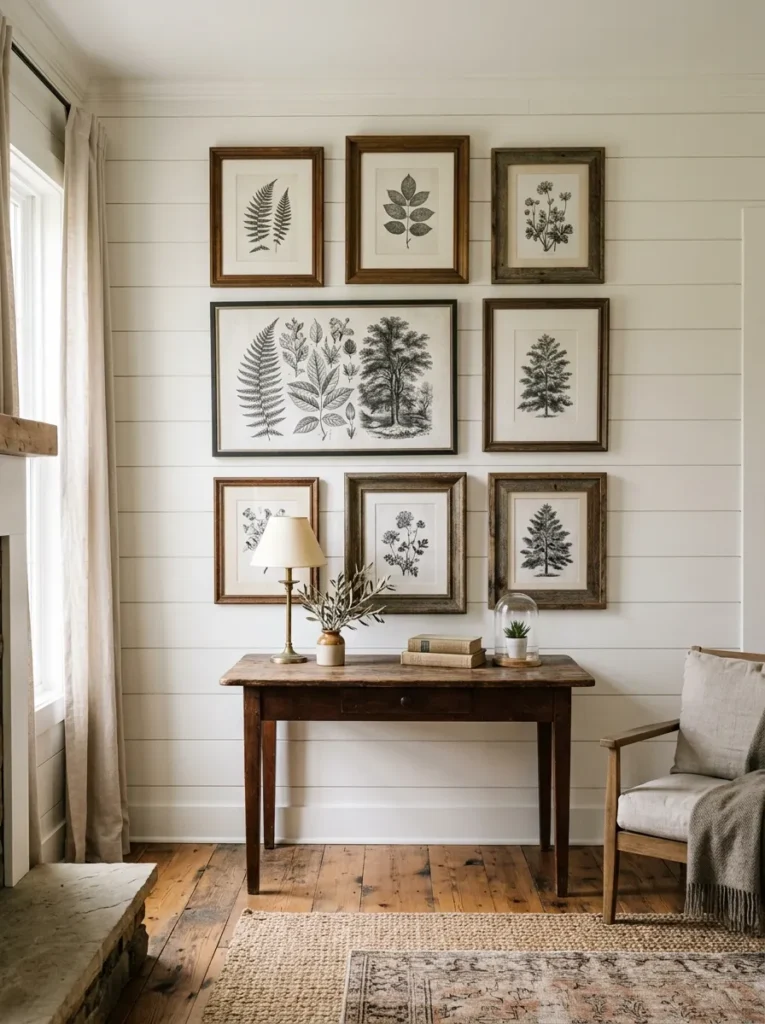
A gallery wall built from genuinely mismatched antique frames captures farmhouse style’s comfort with imperfection in a way that a matched set of identical frames never will, since the variation in wood tone, size, and finish reads as collected over time rather than purchased in one trip. Keep the artwork itself unified in tone — black-and-white botanical prints, vintage maps, or simple line drawings — so the frame variety has a consistent thread holding it together. Leave one frame intentionally slightly uneven rather than perfectly aligned; a flawless grid undercuts the entire premise.
14. Wood Mantel Styled with Layered Seasonal Objects
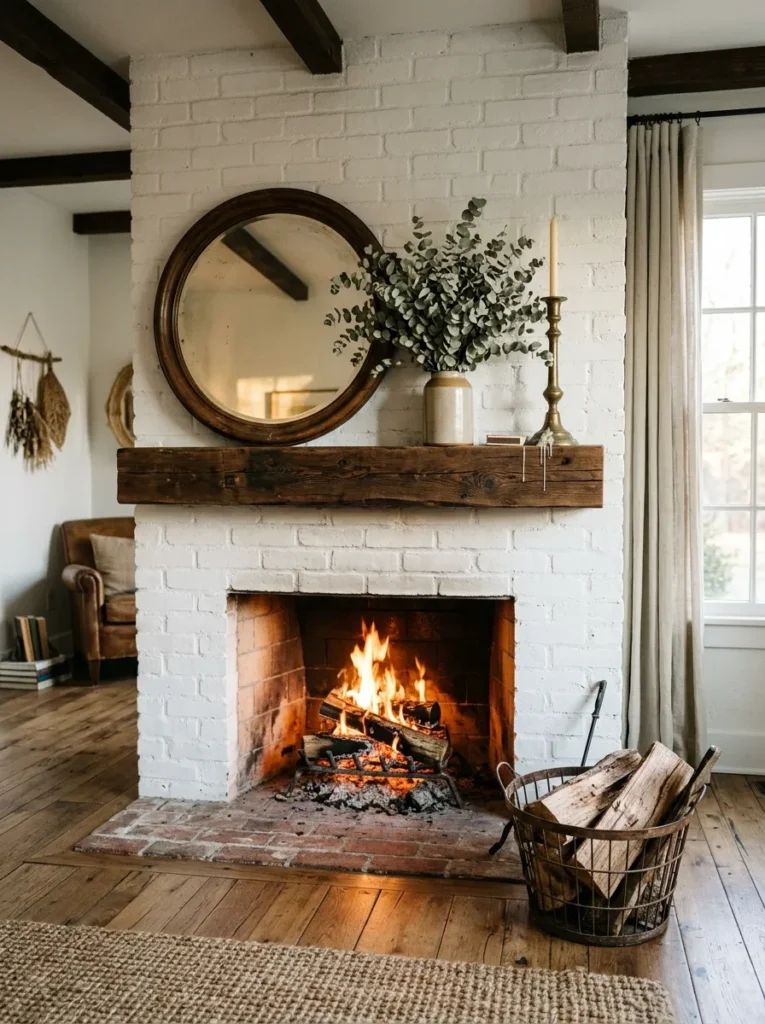
A mantel works hardest as a styling surface when it’s treated like a still life rather than a shelf — varying height, leaning rather than hanging the mirror or artwork above it, and layering just two or three objects instead of lining up a row of matching candlesticks. Vary the materials across the grouping, mixing something organic like dried branches or greenery with something with real weight, like a brass candlestick or ceramic vessel. Refresh it seasonally rather than leaving the same arrangement year-round; farmhouse style’s connection to natural cycles is part of what keeps a mantel feeling alive instead of static.
15. Apothecary Cabinet Repurposed as a Media Console
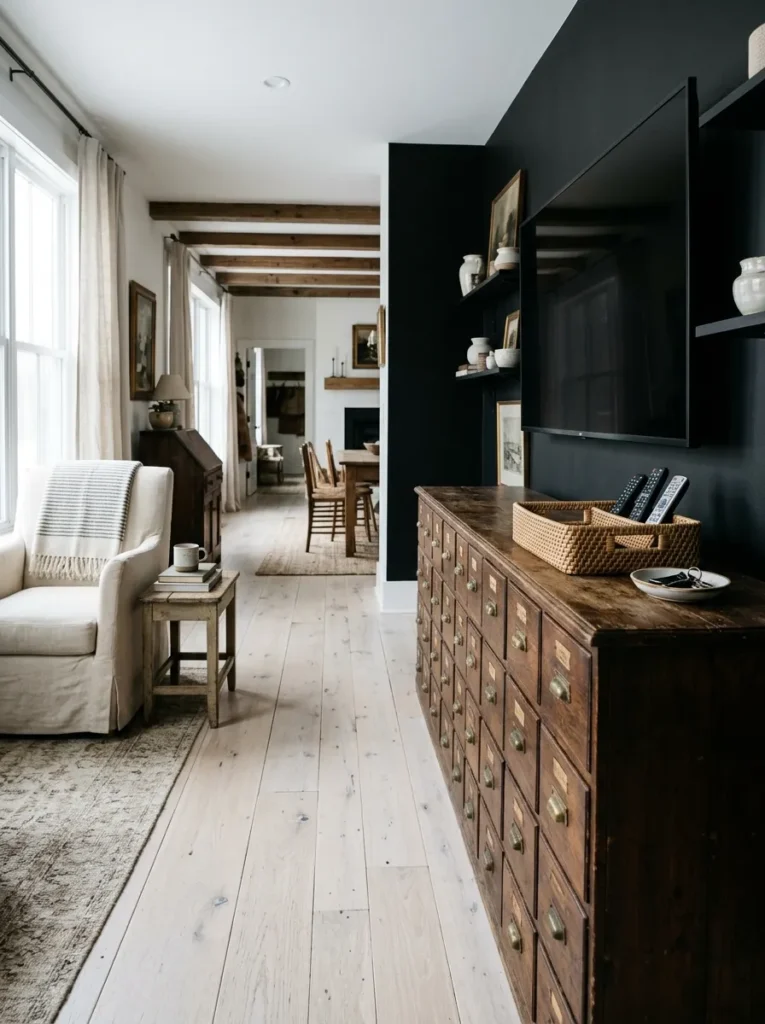
An apothecary or card catalog cabinet repurposed as a media console solves a problem most farmhouse living rooms struggle with: hiding a television and its components without resorting to a generic modern media unit that clashes with everything else in the room. The small drawers, originally meant for herbs or hardware, give you genuinely useful hidden storage for remotes, cables, and game controllers behind a piece with real character. Look specifically for cabinets with consistent drawer hardware throughout, since mismatched pulls on a piece this detailed tends to look chaotic rather than collected.
16. Woven Natural Fiber Drapery or Roman Shades
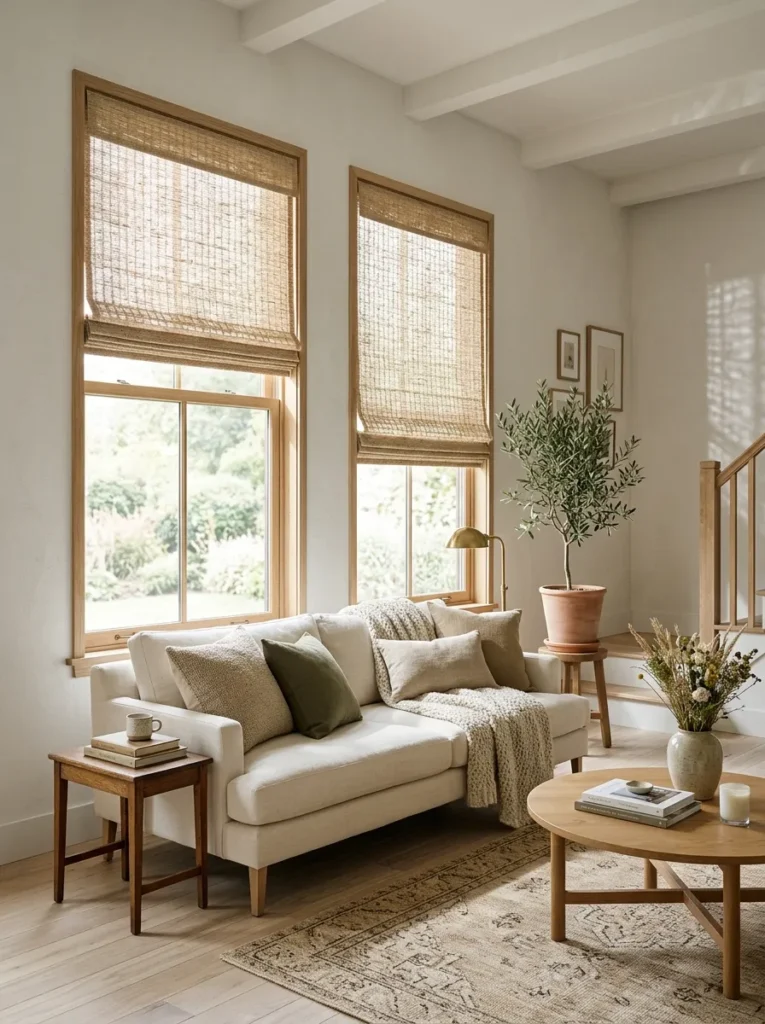
Woven natural fiber shades, whether jute, bamboo, or grass weave, filter light in a way that ordinary fabric curtains don’t, casting a soft basket-weave shadow pattern across the room that reinforces the same organic, handmade quality found in farmhouse furniture and textiles. They also read lighter and less formal than floor-length drapery, which suits a style built around relaxed, lived-in comfort rather than tailored elegance. Choose a flat-fold or relaxed roman shade style over a structured pleat, since the slight looseness in the fold matches the rest of the room’s intentional imperfection.
17. Vintage Scale or Clock as a Single Statement Object
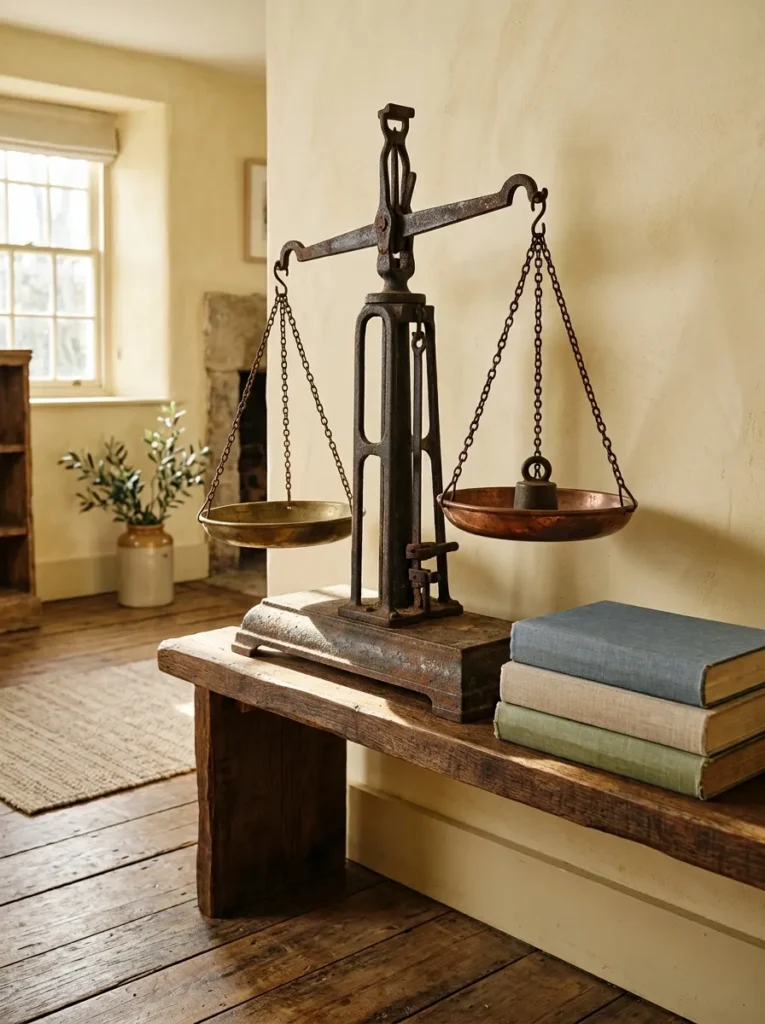
A single oversized vintage object, whether an old balance scale, a large schoolhouse clock, or a weathered milk can, does more for a farmhouse room’s authenticity than a dozen smaller decorative pieces combined, because real age and function are difficult to fake at that scale. Give it space to stand alone rather than surrounding it with other decor competing for the same visual attention. This idea works especially well for collectors who already own one meaningful object, since it turns something with personal history into the room’s quiet focal point instead of a forgotten attic find.
18. Stone Hearth Extended into a Wide Sitting Ledge
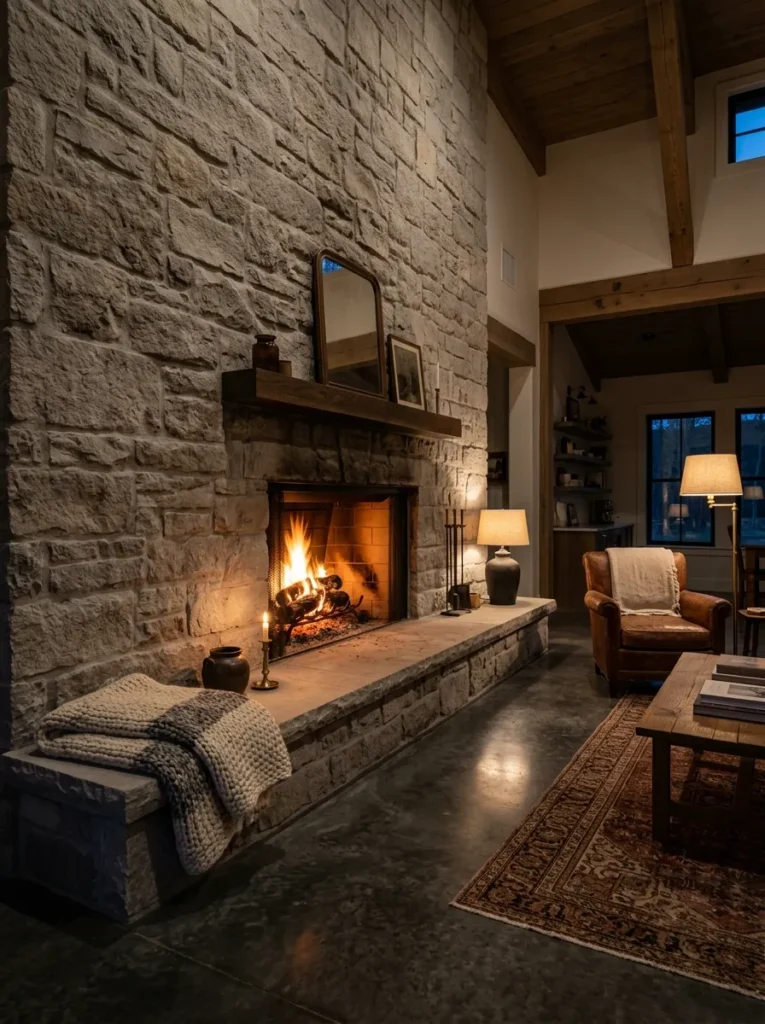
Extending a stone hearth outward into a wide sitting ledge turns a fireplace from a purely visual feature into genuinely usable seating, which matters in farmhouse living rooms built around gathering rather than formal display. The extra width also gives the stone material more presence in the room, reinforcing the same handmade weight found in a fieldstone surround without needing to build the stone any taller. This idea requires more structural planning than most others on this list, so it suits a renovation or new build more than a quick styling update, but the payoff is a feature that functions as well as it photographs.
19. Oversized Urns with Dried Botanicals
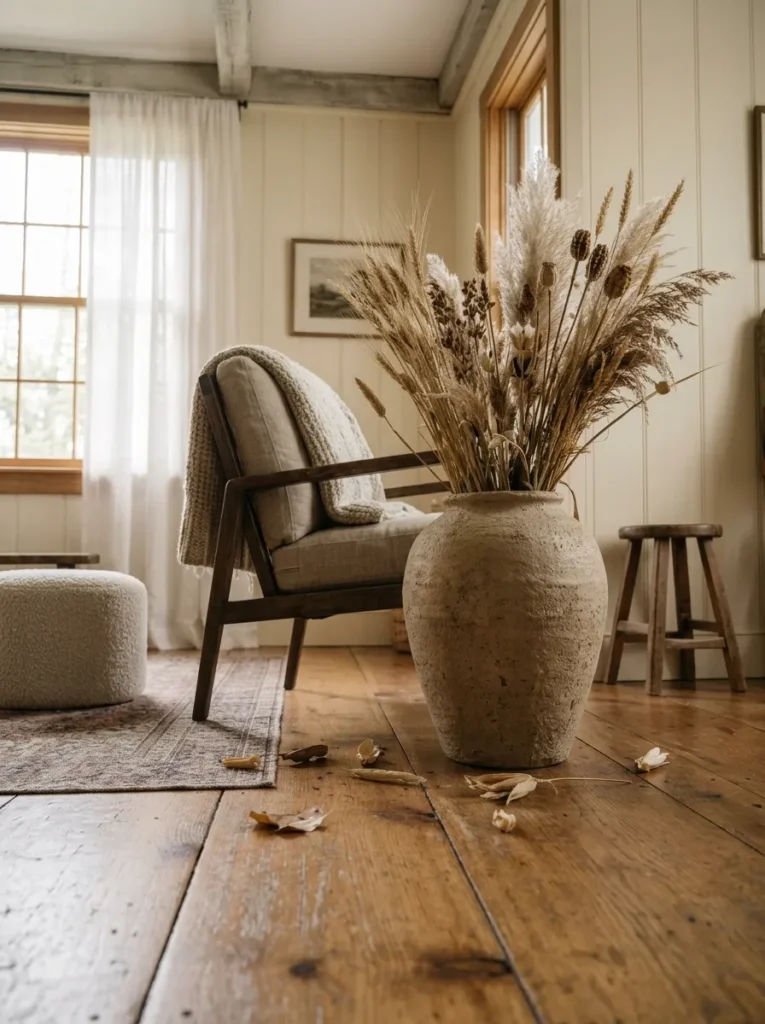
An oversized urn filled with dried wheat, pampas grass, or seeded eucalyptus brings height and organic texture into a corner that would otherwise need a piece of furniture to feel complete, and dried botanicals specifically tie back to farmhouse style’s agricultural roots in a way fresh-cut flowers don’t quite achieve. Choose an urn with real scale — at least two feet tall — since an undersized vessel with tall stems tends to look top-heavy and unstable rather than intentional. Position it in a genuinely empty corner rather than squeezed beside existing furniture, letting it function as its own quiet anchor point.
20. Board and Batten Wainscoting with Warm Paint Above
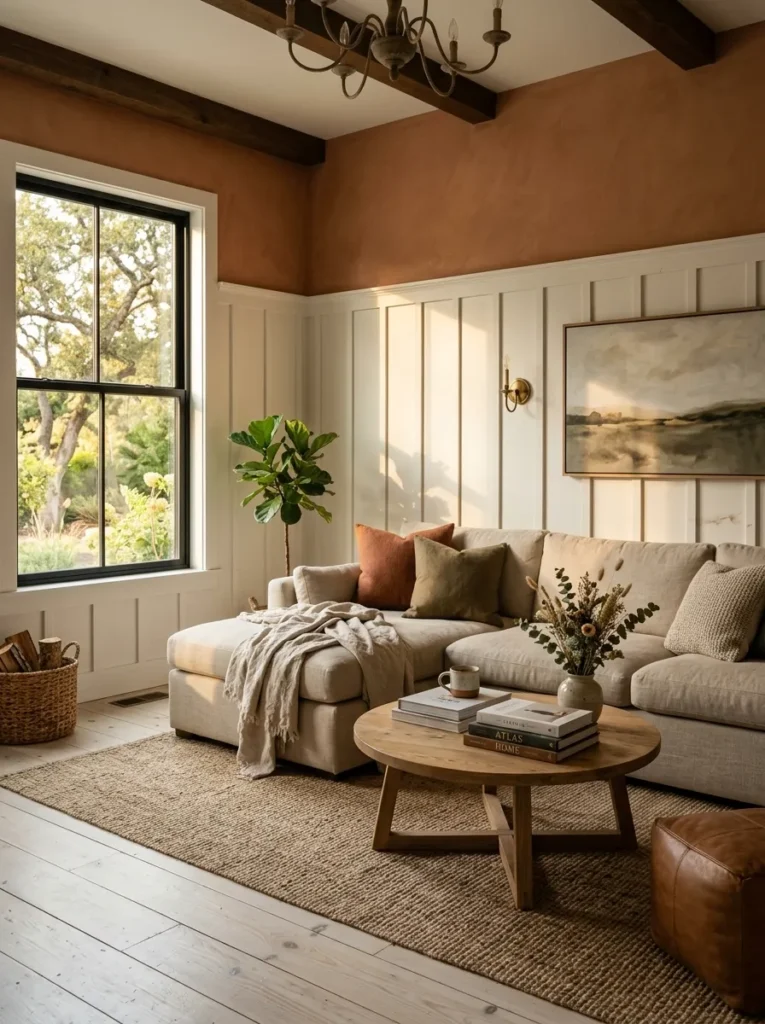
Board and batten wainscoting paired with a warmer paint color above it gives a farmhouse living room dimension that a single flat wall color can’t, breaking the wall into two distinct zones without resorting to wallpaper or a busy pattern. The white paneling below keeps the room grounded in farmhouse tradition, while a warmer tone above — clay, terracotta, or muted gold — adds richness that pure white-on-white can start to feel sterile without. Run the batten height to roughly a third of the total wall height for the most balanced proportion; taller paneling can start to feel like it’s closing the room in, especially with lower ceilings.
Final Thoughts on Designing a Farmhouse Living Room
The strongest farmhouse living room ideas all share one thing in common: they prioritize objects and materials with real history, real texture, or real use over anything purely decorative. A reclaimed coffee table, a genuinely worn ladder, a stone hearth built wide enough to sit on — none of it is about chasing a look, it’s about building a room that holds up to actual living. Choose the handful of ideas here that match your home’s existing bones rather than trying to force all twenty into one space, and let a few pieces carry real weight instead of filling every surface evenly.
If there’s one piece of advice worth resisting, it’s the instinct to buy everything new and distressed. A single genuinely old object — even a chipped one — will always do more for a farmhouse living room than a dozen pieces manufactured to look aged. Spend your budget on the real thing once rather than the imitation five times.
Save this guide to your Pinterest board so you can come back to these farmhouse living room ideas whenever you’re ready to start your next project.