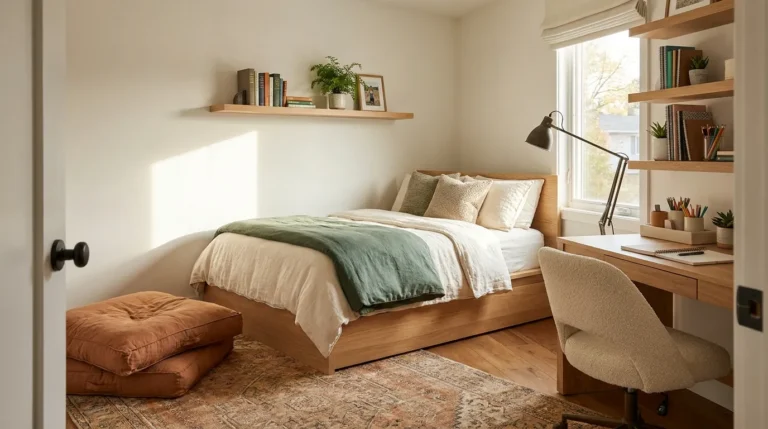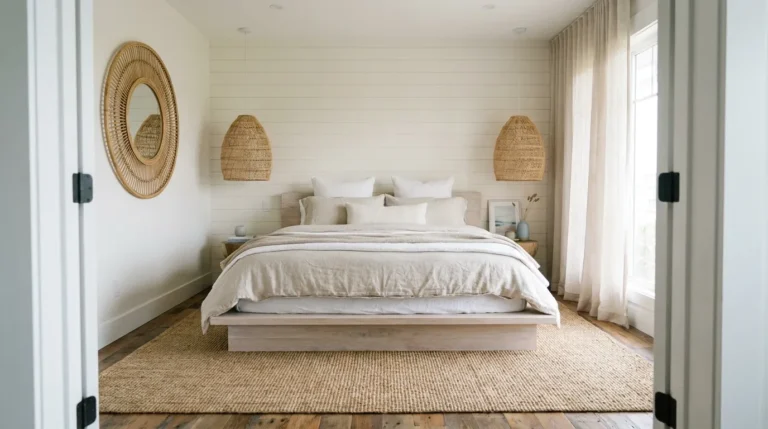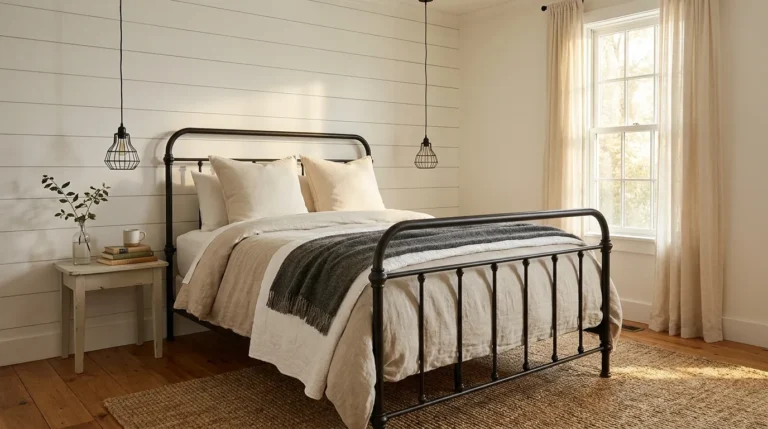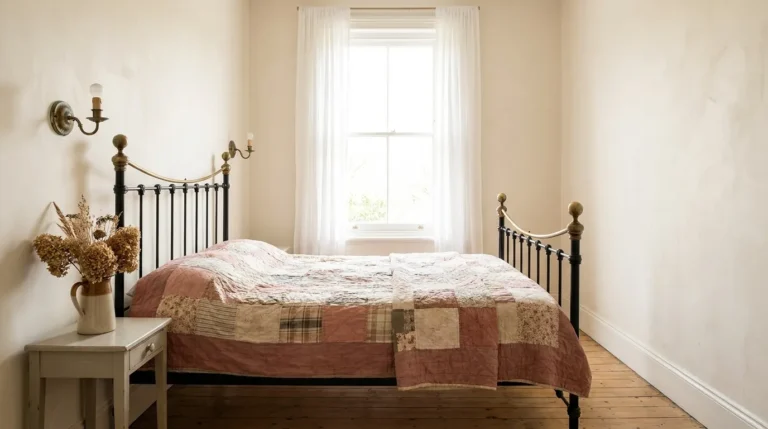
18 Neutral Bedroom Ideas That Feel Calm and Timeless
A neutral bedroom is not the same thing as a beige bedroom, even though most lists of neutral bedroom ideas treat the two as interchangeable. The flat, all-cream rooms that show up in so many mood boards aren’t calm — they’re just empty of colour, which is a different quality entirely. A genuinely calm neutral bedroom is built from layered texture, considered tone shifts, and a handful of specific decisions that most generic advice skips over completely. What follows are eighteen of those decisions, the kind that separate a neutral bedroom that feels timeless from one that just feels unfinished.
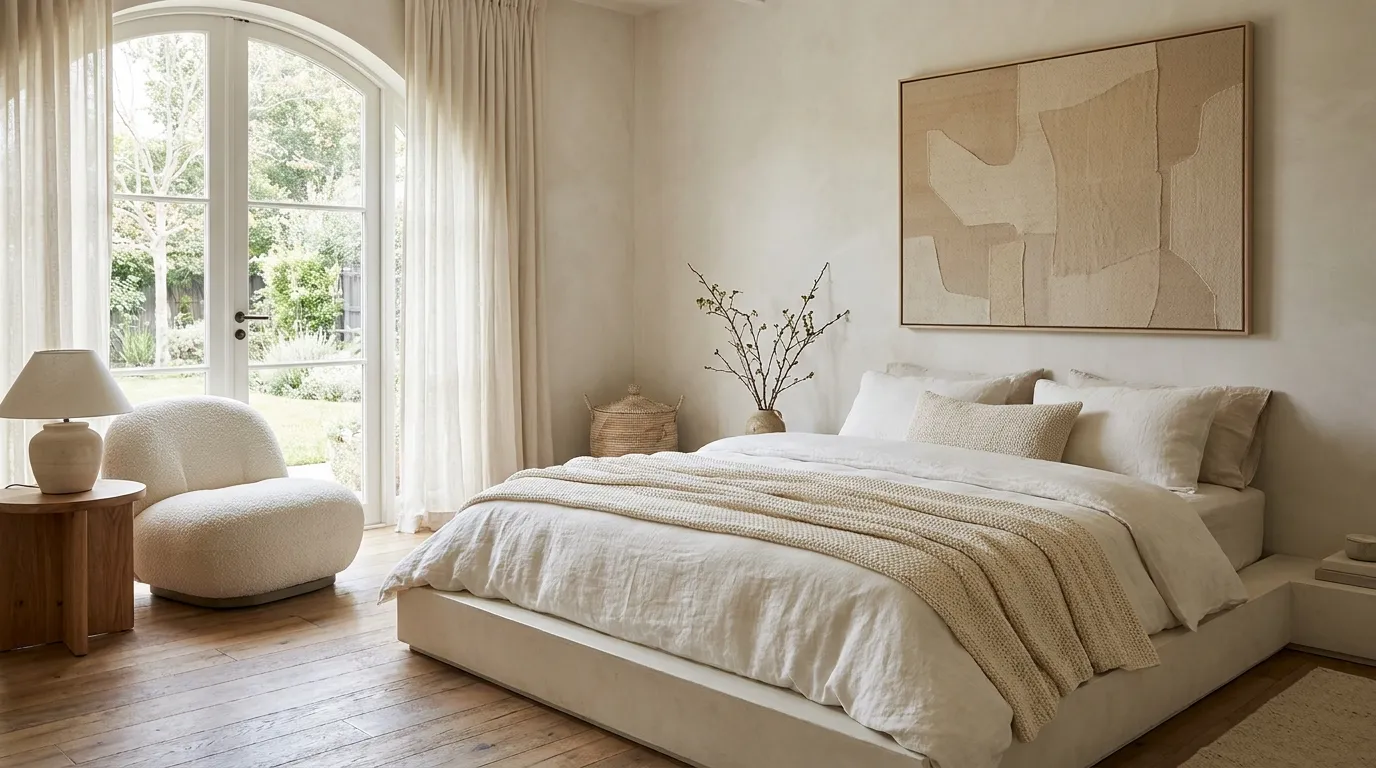
1. Layer at Least Four Distinct Textures Within the Same Tonal Range
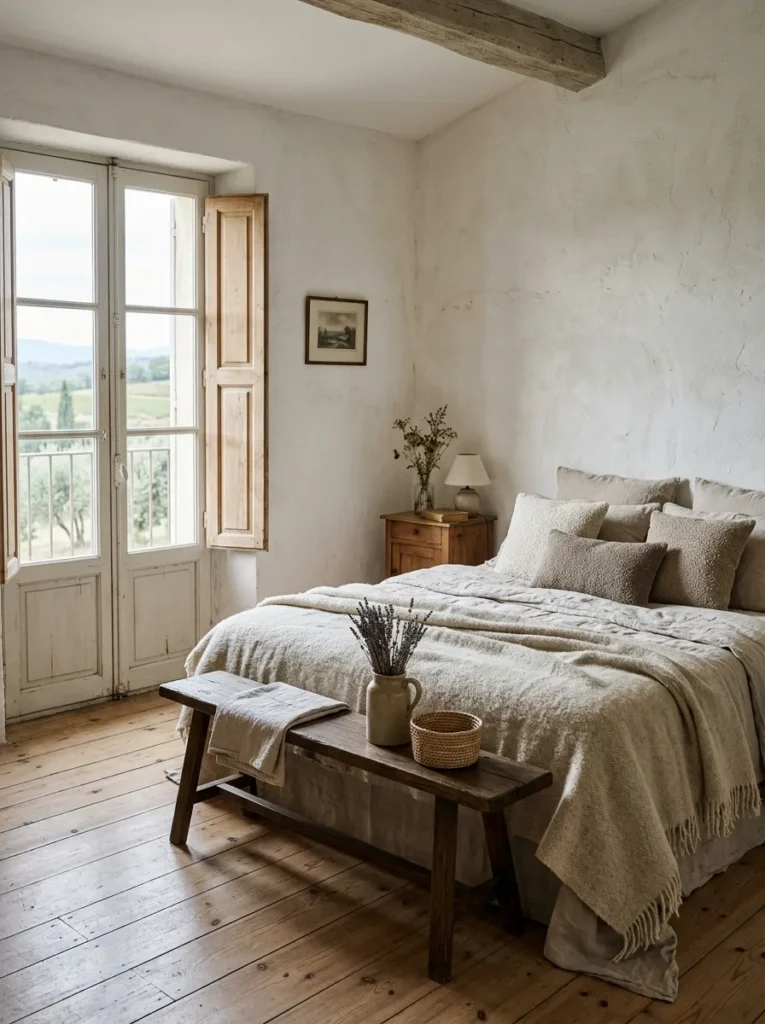
The single biggest mistake in neutral bedroom design is treating “neutral” as a colour decision rather than a texture decision. A room painted one shade of warm white with smooth cotton bedding and a flat-weave rug will read as flat no matter how perfectly the paint colour was chosen. Layer boucle, linen, raw wool, and a smoked or weathered wood within the same narrow tonal band — say, oatmeal through to soft taupe — and the room suddenly has depth that colour alone could never produce. This is the decision that changes everything about how a neutral room photographs, because texture is what catches light and shadow; flat colour just sits there.
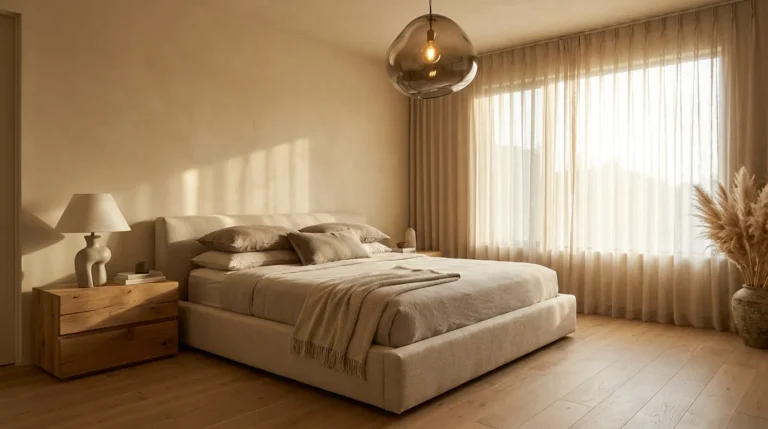
2. Choose a Headboard in Bouclé Rather Than Linen
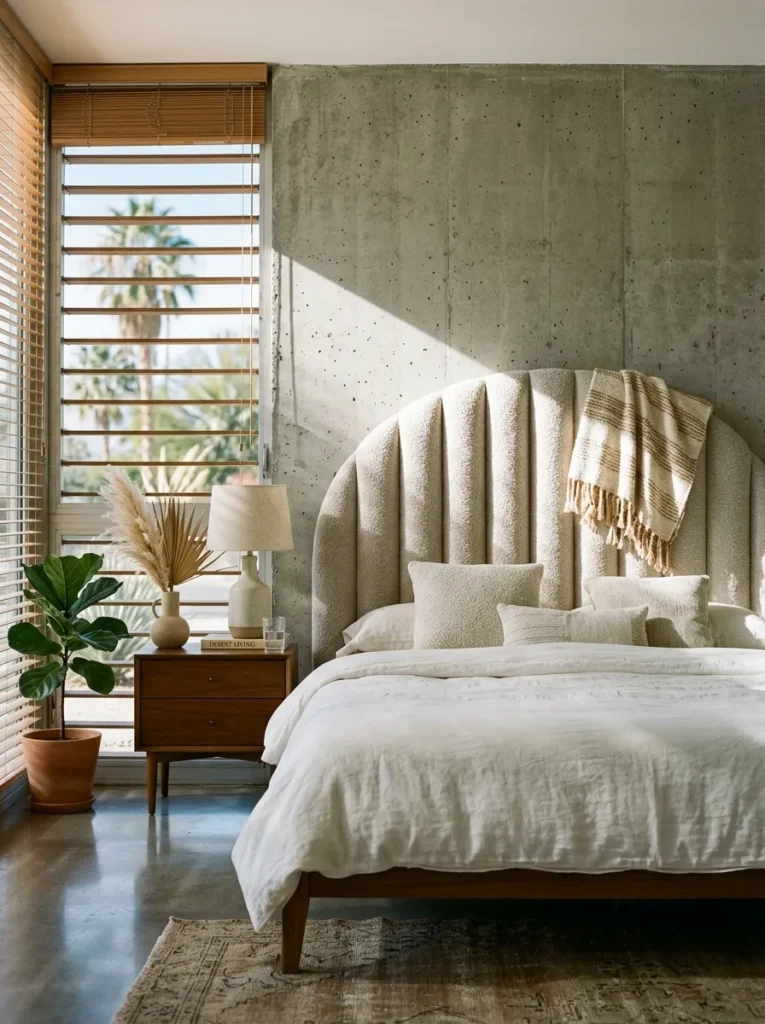
Linen headboards have become the default neutral bedroom choice, and they’re perfectly fine, which is precisely the problem. A bouclé headboard in the same tonal family — ivory, oatmeal, pale stone — adds a textural dimension that linen, for all its appeal, simply cannot match. The looped, nubby surface catches light unevenly across its curves, creating natural shadow and highlight that a flat linen panel won’t produce regardless of how it’s lit. Choose a curved or channel-tufted silhouette rather than a flat rectangular panel; the curves give the bouclé’s texture somewhere to actually perform.
3. Use a Warm White Rather Than a Cool or Stark White on the Walls
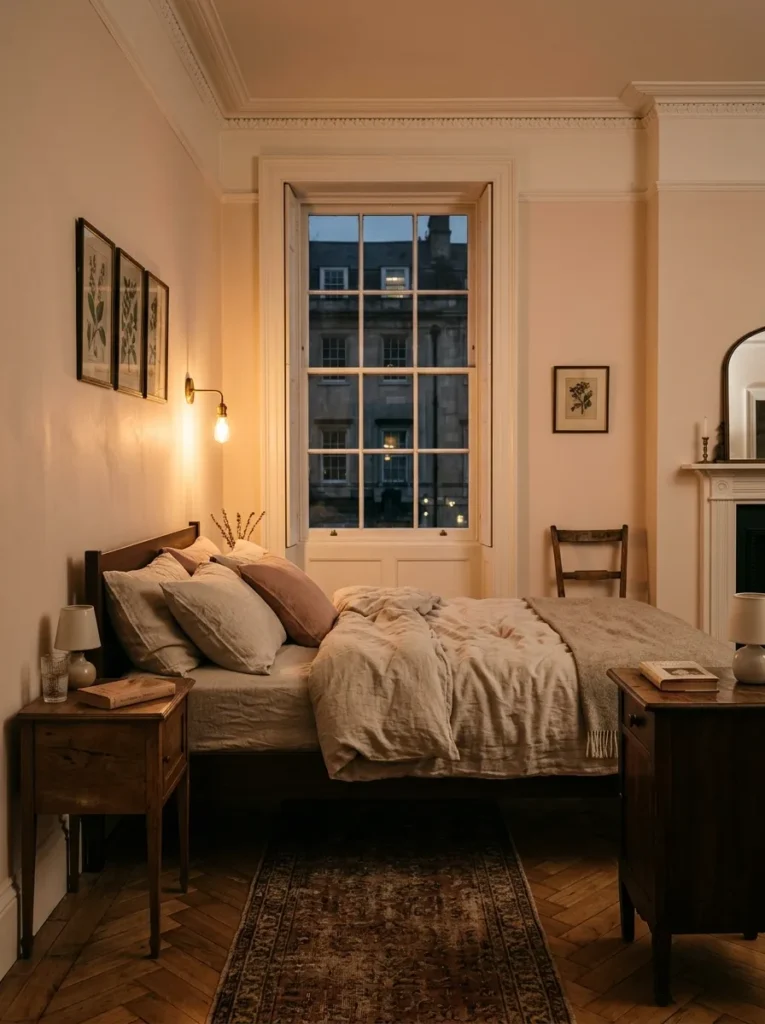
Stark white walls are the fastest way to make a neutral bedroom feel clinical rather than calm, and most people choosing “white” don’t realise how much the undertone matters. A warm white with a faint hint of cream, beige, or even a touch of pink undertone reads as soft and enveloping under both daylight and lamp light, while a cool, blue-toned white reads as sterile the moment the sun goes down and artificial light takes over. Test any white on the actual wall, not just on a paint chip, and look at it specifically at night under your bedside lamp. That’s the lighting condition the room will actually live in most of the time.
4. Add One Piece of Furniture in a Deep, Saturated Tone
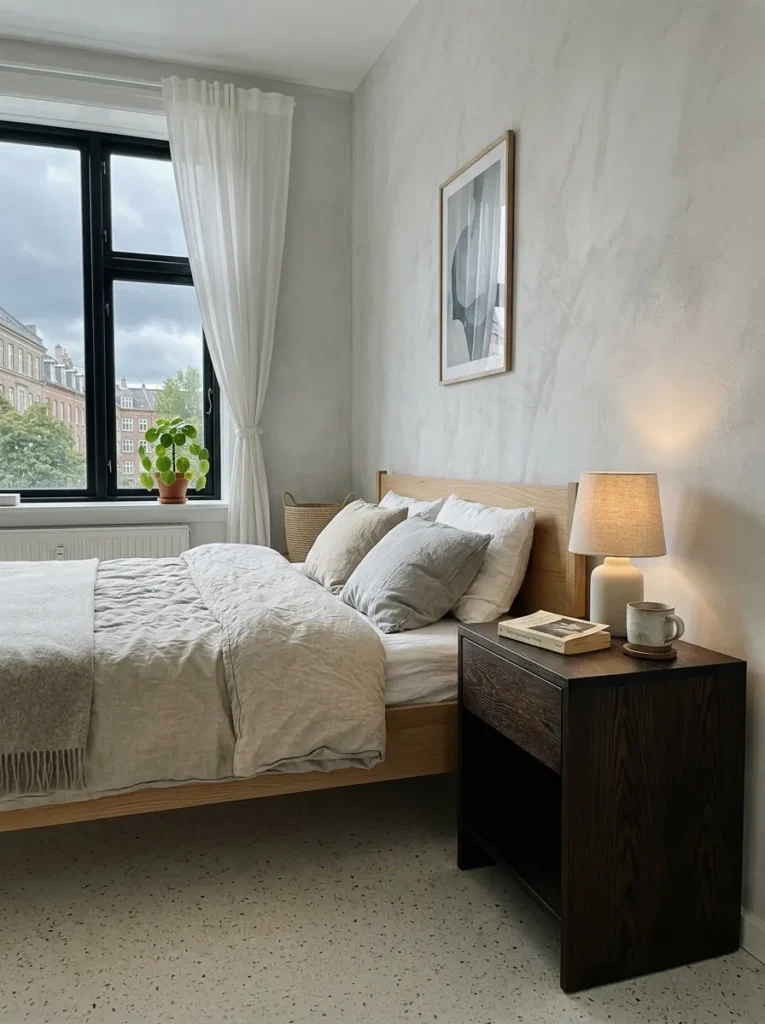
A neutral bedroom built entirely from pale tones, without a single deeper anchor, tends to float rather than settle, which is a strange thing to say about a room meant to feel calm, but it’s true. One piece — a nightstand in espresso-stained oak, a bench in deep charcoal boucle, a vintage chest in aged walnut — grounds the whole palette and gives the eye somewhere to rest amid all the pale surfaces. The matching set is always the safer choice and almost never the better one; a single deliberately darker piece does more for the room’s sense of weight than five more pale ones ever would.
5. Choose Bedding With a Visible Woven Texture Instead of Flat Sateen

Sateen sheets are smooth, cool, and slightly reflective, which works beautifully in some rooms and works against the entire point of a neutral bedroom built for calm. A woven cotton percale, a slightly textured linen blend, or a waffle-weave throw adds visible surface interest at the one place in the room that takes up the most square footage. The weave should be visible from across the room, not just under close inspection. A bed dressed entirely in flat sateen photographs as glossy and a little cold; the same bed in a woven percale photographs as soft and immediately more inviting.
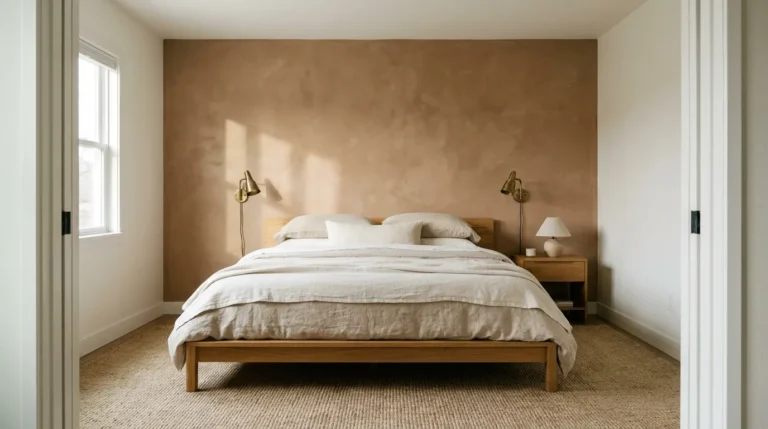
6. Use a Plaster or Limewash Finish Instead of Standard Flat Paint
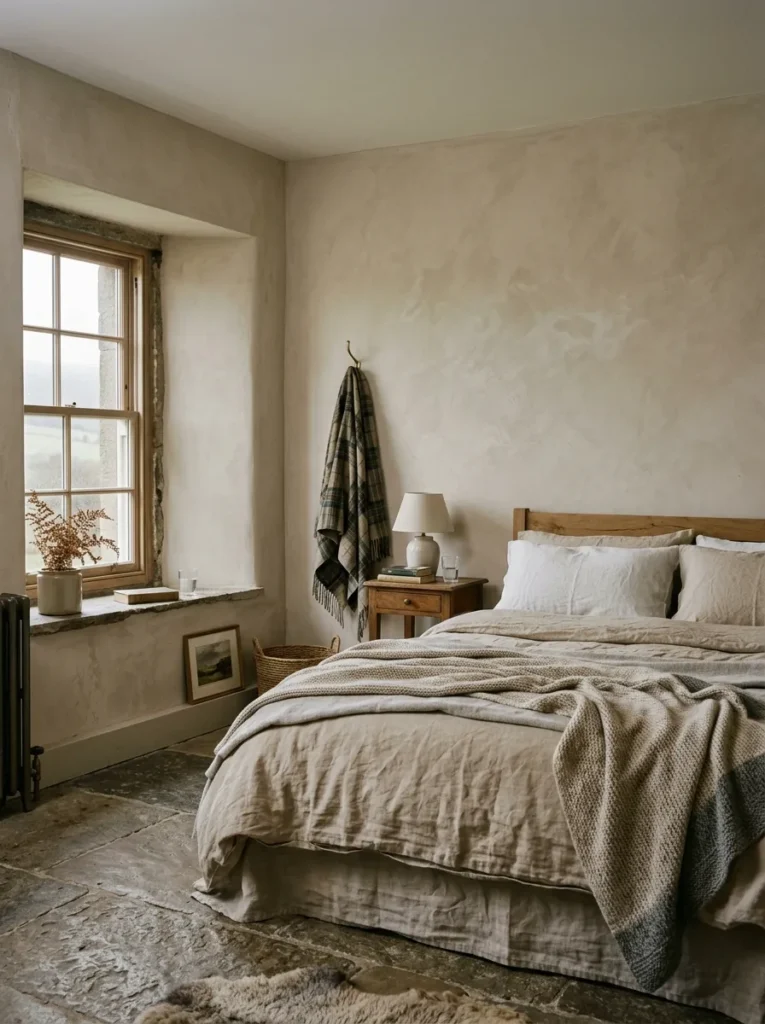
Standard flat paint, applied evenly across a wall, has no texture of its own — it relies entirely on the furniture and styling around it to add visual interest. A limewash or microcement plaster finish, even in the exact same neutral colour you’d otherwise have used in standard paint, introduces subtle variation across the wall itself: faint clouding, slight tonal shifts, a chalky matte surface that catches light differently depending on the angle and time of day. This is a more involved and more expensive choice than a simple paint job, and it is also the one wall treatment most likely to make a neutral bedroom look genuinely considered rather than just safely repainted.
7. Choose Window Treatments in an Undyed Natural Linen
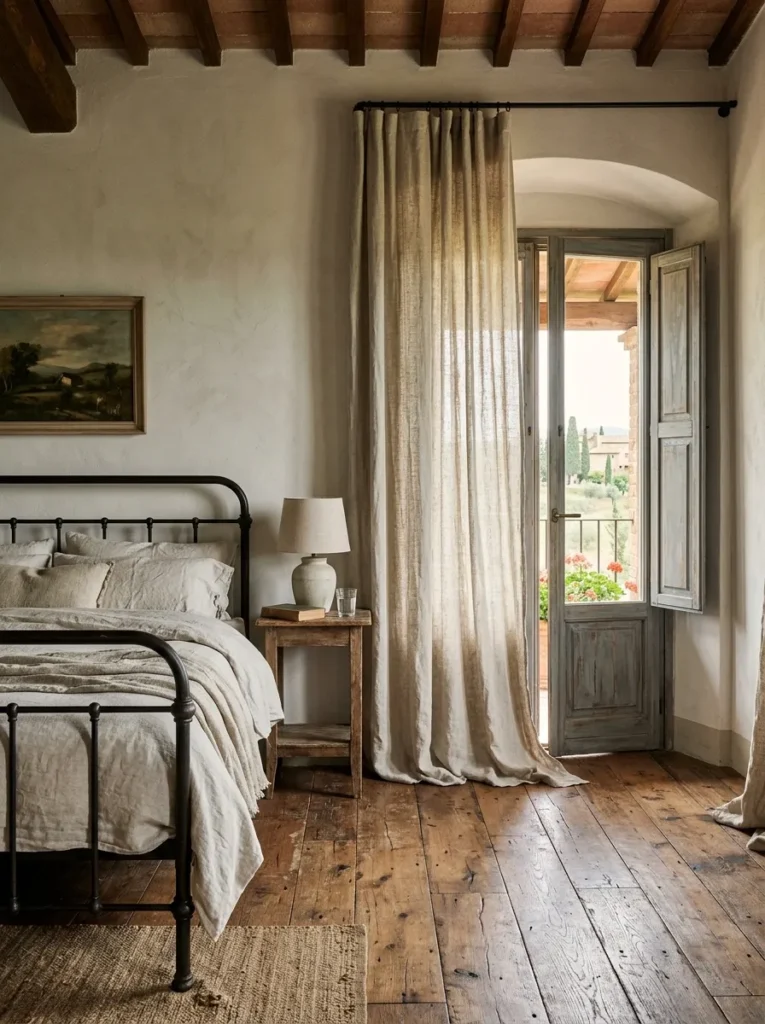
Bright white curtains are the default, and in a neutral bedroom they’re often the one element that reads as too crisp against everything else’s softness. Undyed natural linen — the slightly greige, unbleached tone the fabric takes before any dye is added — sits more comfortably within a neutral palette because it was never trying to be a pure white in the first place. It also softens with washing in a way that bleached white linen, which yellows unevenly over time, doesn’t manage nearly as gracefully. Hang the rod close to the ceiling regardless of actual window height; the extra fabric pooling slightly at the floor is part of the calm the room is going for.
8. Add a Floor-to-Ceiling Curtain Even Over a Wall That Has No Window
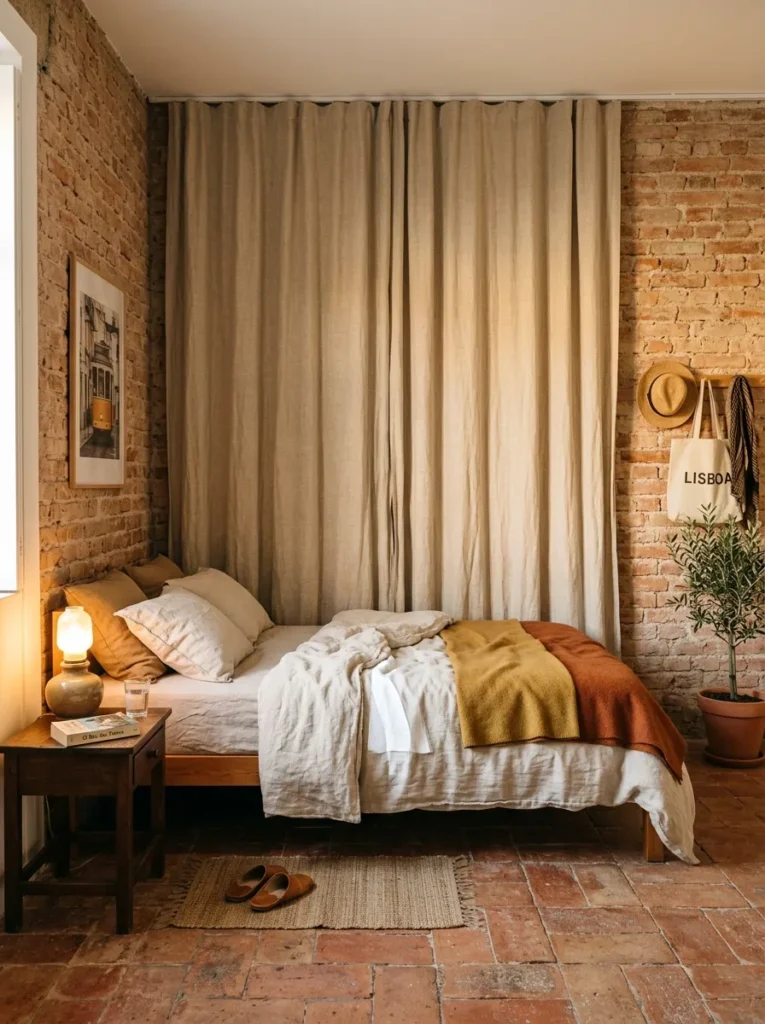
This idea sounds unnecessary until you’ve actually seen it done, and then it becomes one of the most-saved ideas on any neutral bedroom board. A floor-to-ceiling linen curtain mounted on a track along a blank wall — typically behind or beside the bed — softens an otherwise hard architectural edge and adds the same textural movement a real window curtain provides, without needing an actual window to justify it. It’s particularly effective in rental bedrooms where structural changes aren’t an option but visual softness still is. Most people get this wrong by assuming curtains only belong where there’s glass behind them. They don’t.
9. Choose Calm Neutral Bedroom Lighting With No Bright White Bulbs Anywhere
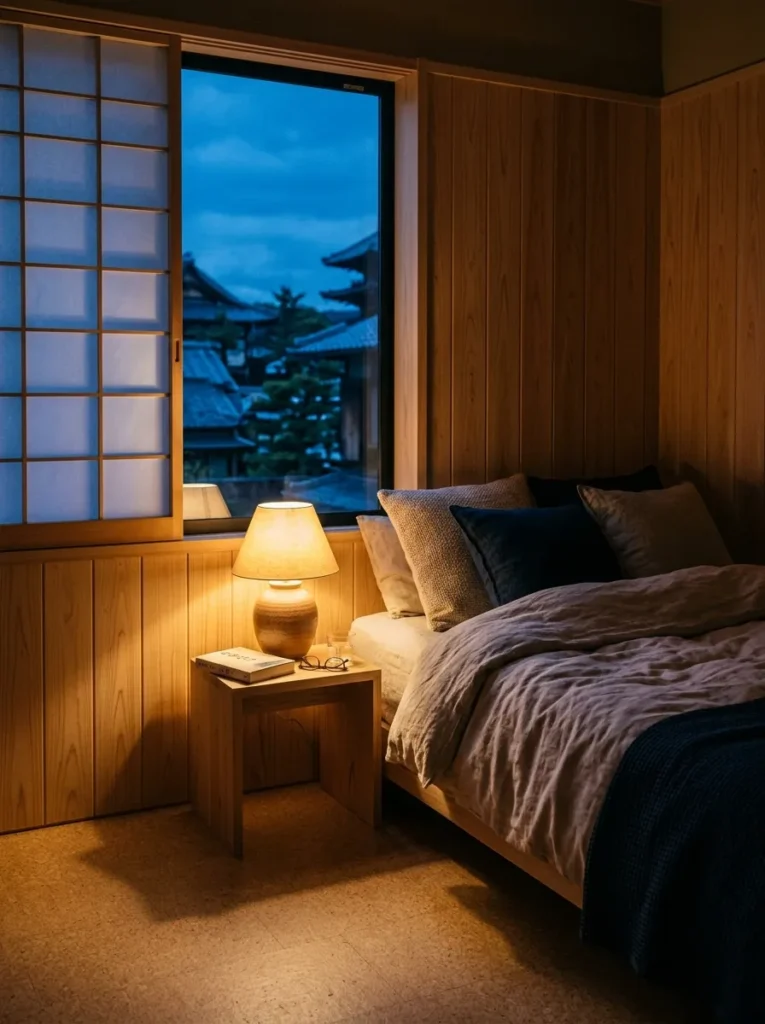
Lighting temperature undoes more neutral bedroom schemes than any single furniture or paint decision, and it’s the detail most generic advice leaves out entirely. Every bulb in the room — bedside lamps, an overhead fixture, any picture lights — should sit at 2200K to 2700K, the warm end of the spectrum that reads as candlelight or early evening rather than the cooler 3500K and above that reads as office lighting. A perfectly curated neutral bedroom under the wrong bulb temperature looks washed out and slightly grey, no matter how warm the paint and textiles actually are. This single fix, swapping bulbs, costs less than almost anything else on this list and changes more than most people expect.
10. Use a Woven Wood or Rattan Headboard Instead of Upholstery

Upholstered headboards dominate neutral bedroom imagery to the point of total saturation, and a woven cane, rattan, or split-reed headboard breaks that pattern while staying entirely within a calm neutral palette. The natural fibre adds warmth and a handmade quality that fabric, however textured, doesn’t quite replicate, and it photographs with a distinct shadow pattern through the weave that catches morning and evening light differently. It requires slightly more care than upholstery — keep it out of direct, prolonged sun exposure, which will dry and crack the fibres over several years — but the visual payoff in a neutral room is considerable.
11. Choose a Rug With a Subtle Pattern Rather Than a Solid Neutral
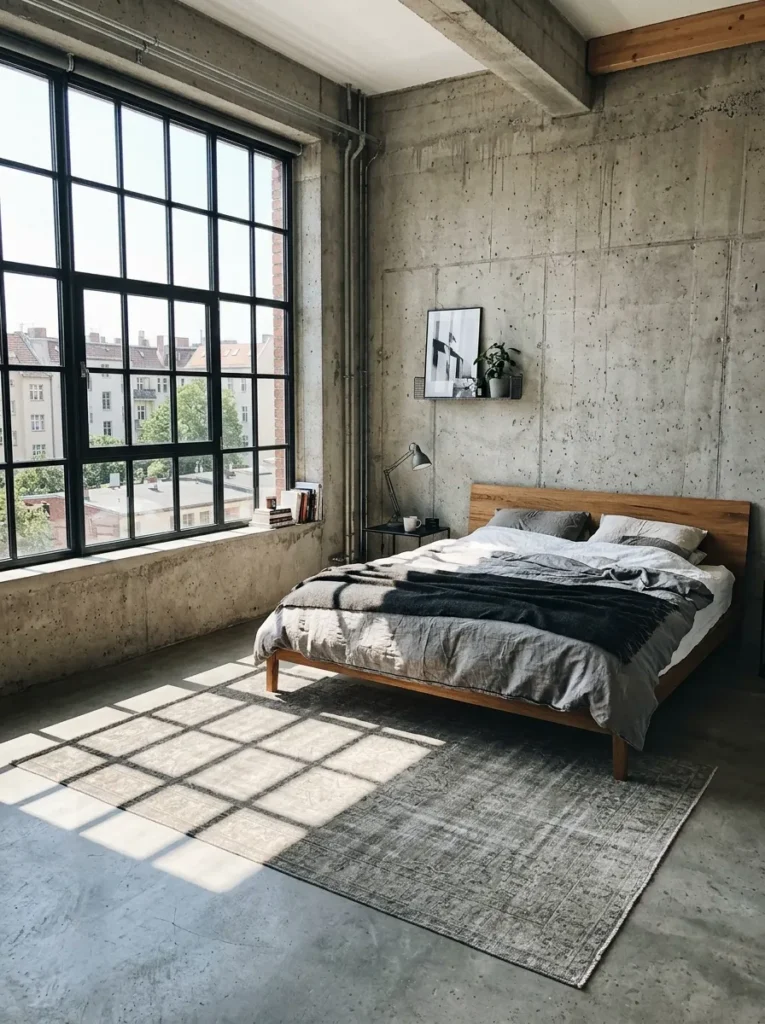
A solid neutral rug is the instinctive choice in a neutral bedroom, and it’s also the choice most likely to disappear visually into the floor and the walls around it, leaving the room with no defined centre. A rug with a faint, tonal pattern — a subtle trellis, a worn vintage-style medallion, a faded geometric in barely-there contrast — adds just enough visual interest to anchor the room without introducing actual colour. The pattern should be visible only on close inspection from across the room; if it reads as a bold statement piece from the doorway, it’s too strong for what this particular idea is trying to do.
12. Add a Single Sculptural Object in an Unexpected Material
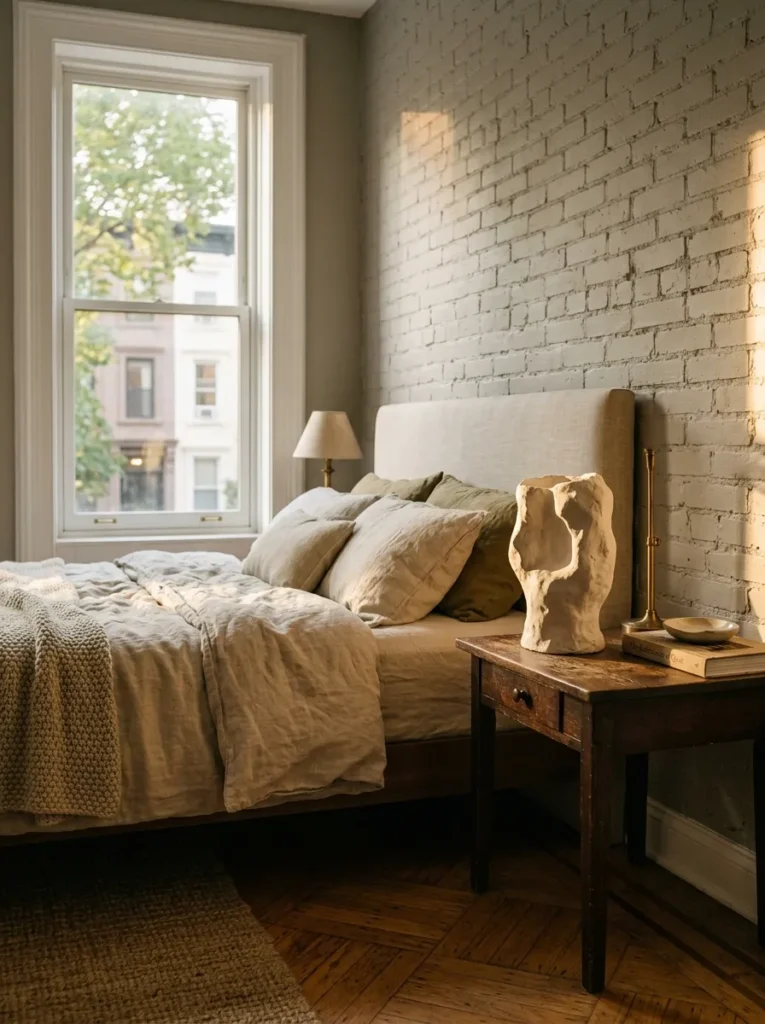
Every neutral bedroom needs one object that doesn’t quite belong to the soft-textile, warm-wood vocabulary the rest of the room is speaking — a single piece in raw plaster, hammered metal, or unglazed stoneware, placed on a nightstand or a shelf where it can actually be seen. The contrast in material, even while staying within the same neutral colour family, gives the eye a small jolt of interest that pure textile softness can’t provide on its own. This is a detail most neutral bedroom guides skip entirely, probably because it’s harder to source than another throw pillow, but it’s disproportionately responsible for making a room look curated rather than simply matched.
13. Choose Nightstands With Visible Grain Rather Than a Painted Finish
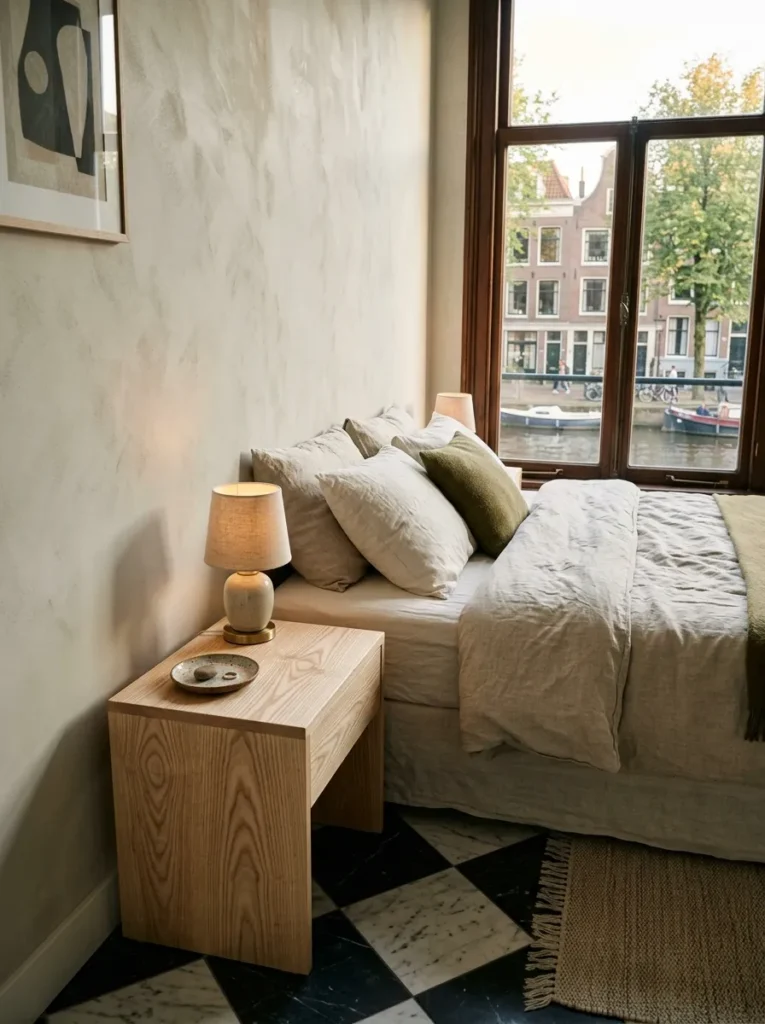
A painted nightstand in a neutral tone blends into the wall behind it almost too well, flattening the room’s sense of depth at exactly the height where the eye naturally rests. A nightstand with visible wood grain — pale oak, ash, or a lightly whitewashed timber — adds a layer of natural pattern and texture at that same height, distinct from the smooth wall behind it without breaking the room’s overall calm. Choose a finish that lets the grain show clearly rather than one sanded and sealed to a uniform sheen; the grain is doing the visual work here, and an overly polished surface mutes it.
14. Use a Canopy Frame Without Fabric for Architectural Shape
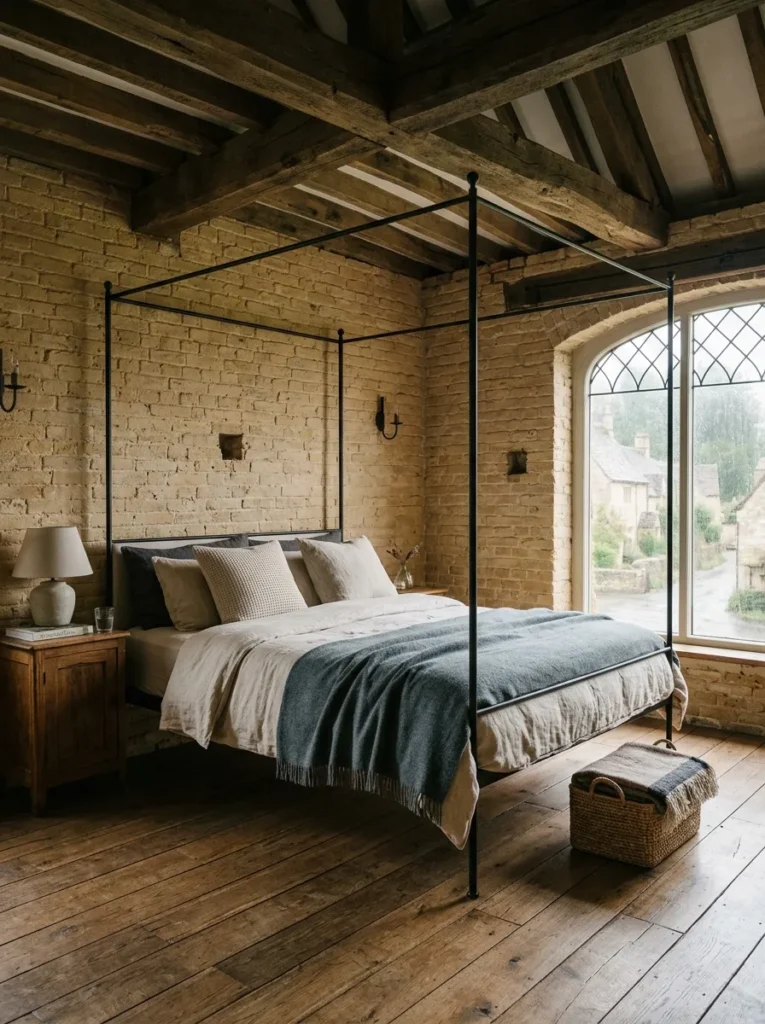
A four-poster or canopy bed frame left entirely without drapery — just the bare wooden or metal structure — adds height and architectural presence to a neutral bedroom without introducing the visual weight that full canopy curtains would bring. It works particularly well in rooms with low ceilings, where the vertical lines of the frame draw the eye upward and make the ceiling feel slightly higher than it is. This is a genuinely unexpected choice within neutral bedroom design specifically, since most canopy frames are immediately dressed in fabric. Leaving it bare is the version almost nobody tries, and it photographs with a quiet architectural confidence that a fully draped frame doesn’t.
15. Choose a Bench at the Foot of the Bed in a Contrasting Texture, Not a Contrasting Colour
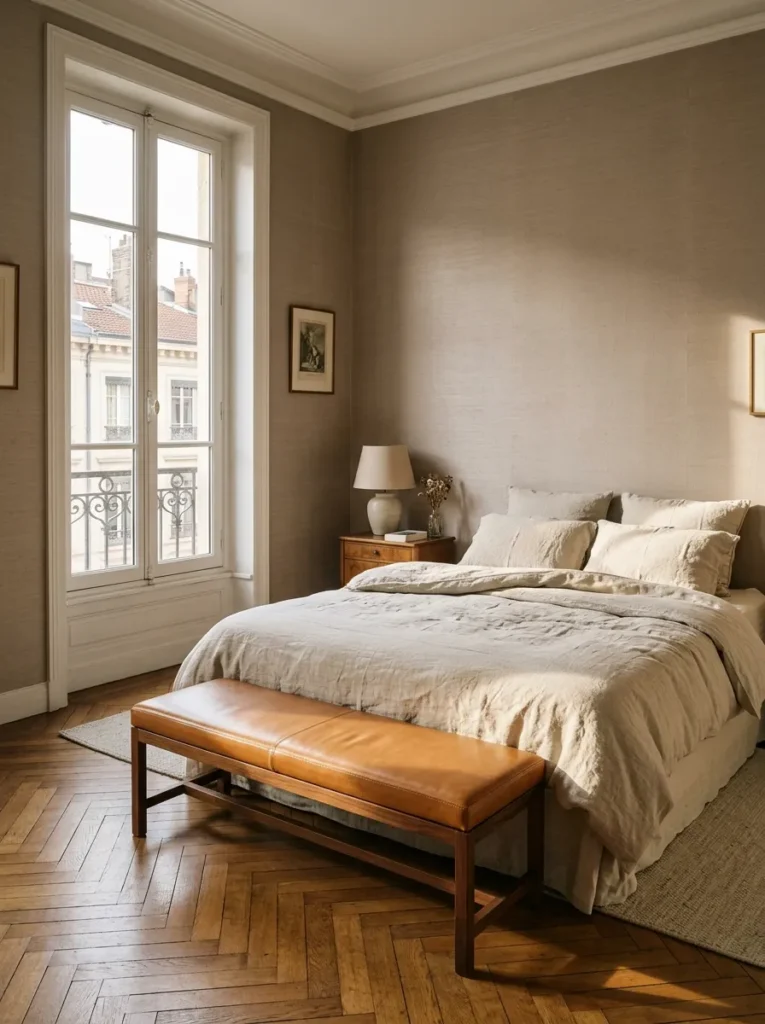
A bench at the foot of a neutral bed is an easy, expected addition, but most people reach immediately for a contrasting colour to make it stand out, which undercuts the calm the rest of the room worked to build. A contrasting texture instead — a smooth leather bench at the foot of a softly textured linen bed, or a raw boucle bench against smoother painted walls — creates visual distinction while staying entirely within the neutral palette. The bench should feel like a deliberate textural counterpoint, not an accent piece borrowed from a different colour story altogether.
16. Add Dried or Preserved Botanicals Instead of Fresh Flowers
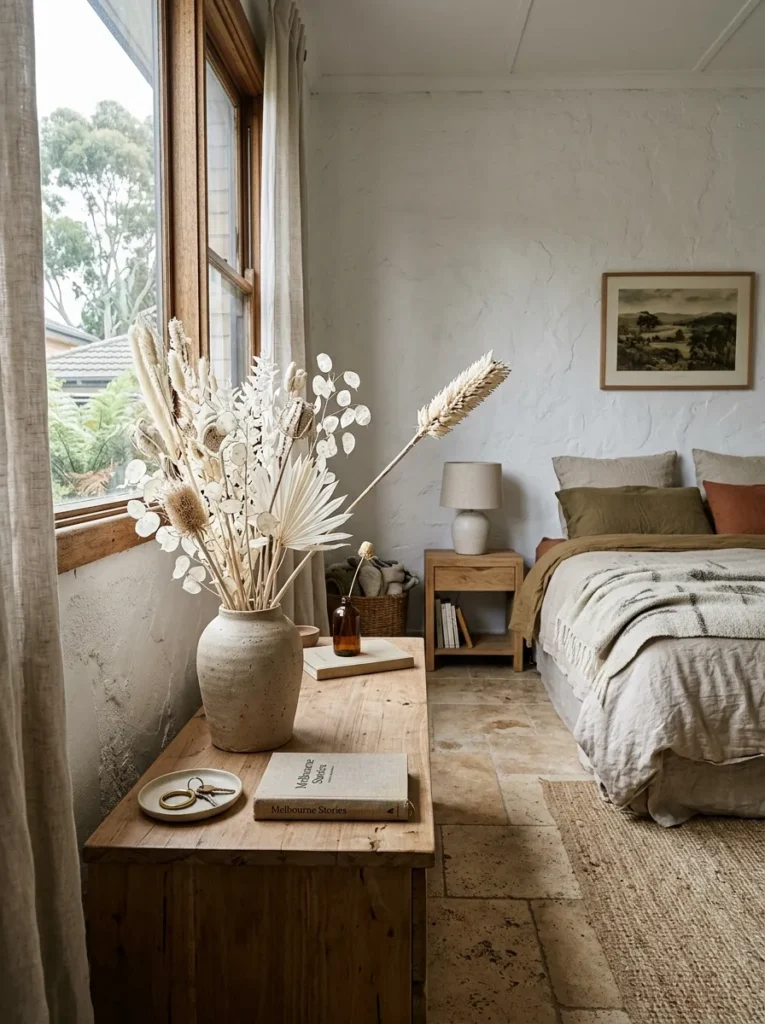
Fresh flowers are lovely and also temporary, wilting within a week and needing constant replacement to maintain whatever visual effect they were providing. Dried pampas grass, preserved eucalyptus, or bleached botanical stems in a single stoneware or unglazed ceramic vessel give a neutral bedroom the same softening, organic quality fresh flowers provide, without the maintenance or the eventual sad, drooping stage that fresh stems inevitably reach. Choose stems with visible texture and irregular shape over anything uniform and symmetrical; the slight wildness is what keeps the arrangement from looking like a styled prop rather than a real one.
17. Choose a Floor Lamp With a Linen or Paper Shade Over a Metal One
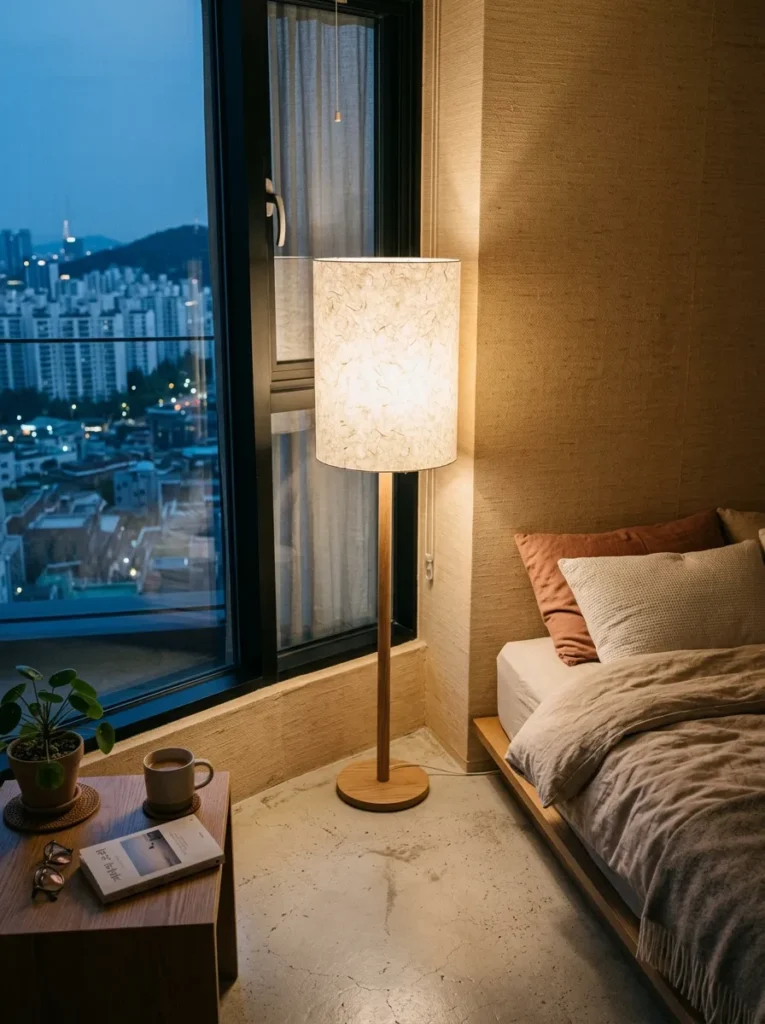
A metal lamp shade, even in a neutral or warm-toned finish, reflects rather than diffuses light, throwing a harder-edged pool onto the ceiling and walls than most neutral bedrooms are going for. A linen or rice-paper shade diffuses the same bulb into a softer, more even glow that reads considerably warmer regardless of the actual bulb temperature underneath it. This is a small swap, and it’s also one most people never think to make, because the lamp’s base gets all the attention while the shade quietly does most of the actual lighting work.
18. Leave One Surface in the Room Completely Empty on Purpose
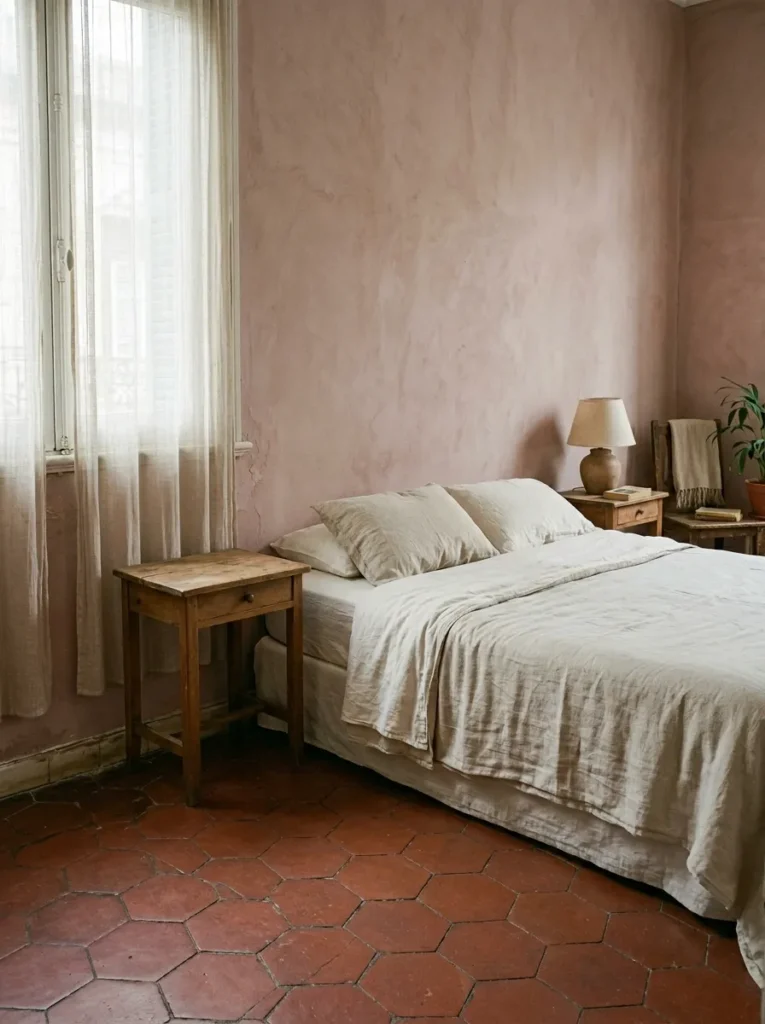
Every idea on this list adds something — a texture, an object, a layer. This last one takes something away, and it’s the one idea most neutral bedroom guides are too nervous to include, because an empty surface looks like an unfinished one to anyone who hasn’t thought carefully about it. A neutral bedroom that fills every nightstand, every shelf, every available surface with curated objects stops being calm no matter how tasteful any individual object is; calm requires actual visual rest, not just colour restraint. Choose one nightstand, one shelf, or one corner and leave it genuinely empty. It will be the thing your eye returns to, and that’s exactly the point.
Final Thoughts
If you take only one idea from this list, take the lighting temperature fix in tip nine — it costs almost nothing and corrects the single most common reason neutral bedrooms read as flat or washed out in photographs and in person. From there, work outward: texture before colour, one deeper anchor piece before a room full of pale matching furniture, and at least one surface left deliberately bare once everything else is in place. These neutral bedroom ideas work because they treat “neutral” as a starting point for texture and tone, not as an excuse to stop making decisions. A calm room is not an empty one. It’s a room where every choice was made carefully enough that it no longer needs to shout.
Save these neutral bedroom ideas for your next bedroom refresh or renovation project.