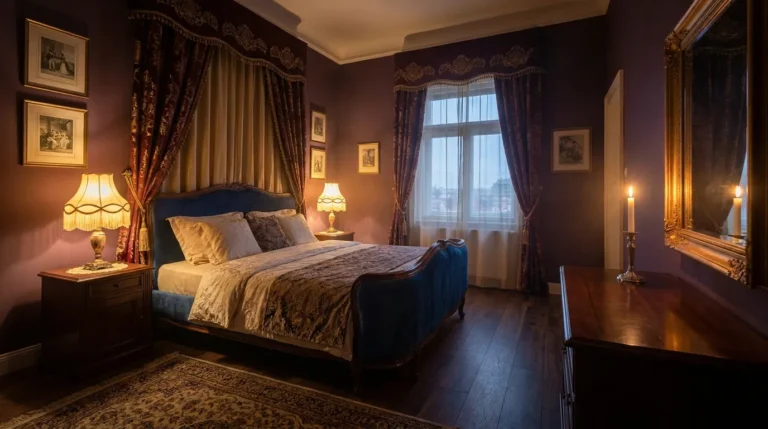
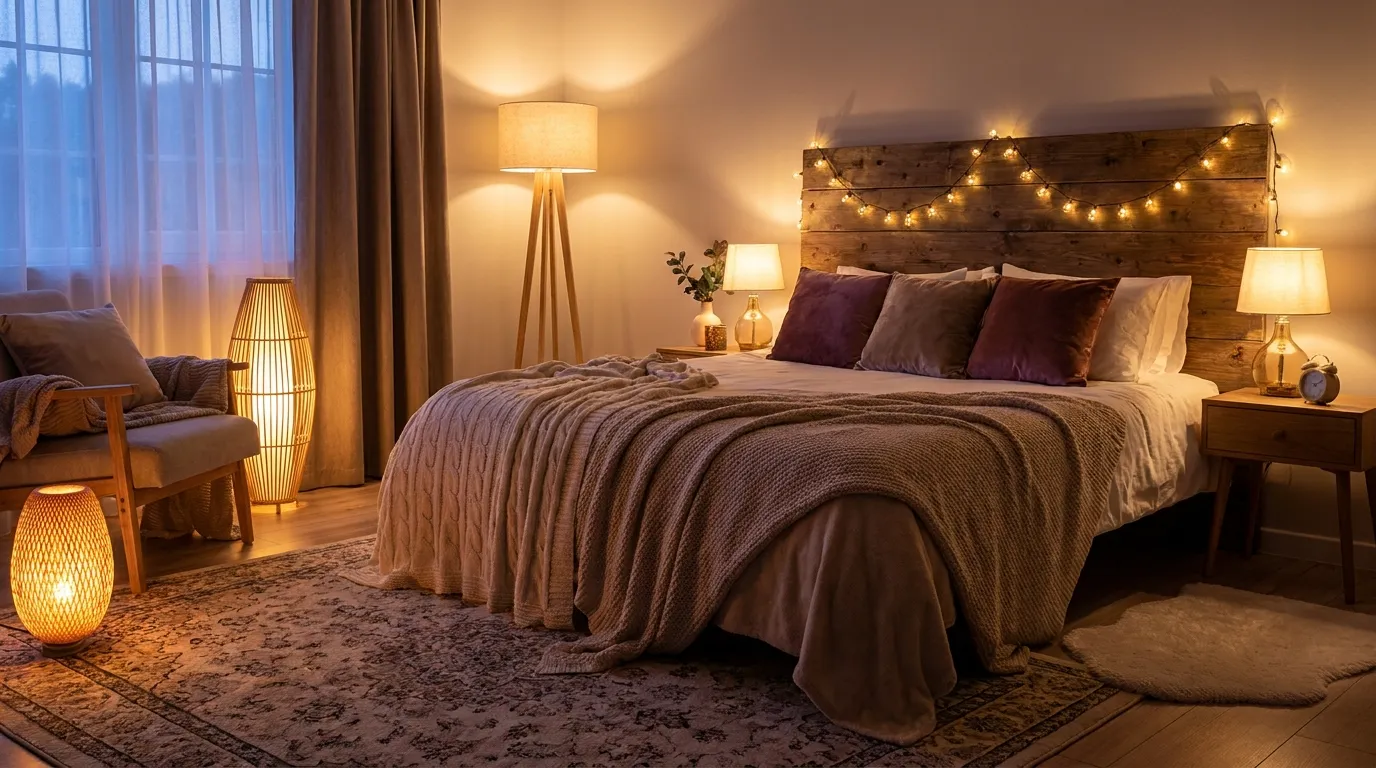
24 Bedroom Lighting Ideas That Make Rooms Feel Cozy
The ceiling light is the enemy. Not literally, and not always — but in a bedroom specifically, the overhead fixture is responsible for more failed atmospheres than any other single design decision, because overhead lighting is designed for visibility rather than comfort, and a bedroom does not need visibility. It needs warmth, depth, and a quality of light that makes you want to be in the room rather than leave it. Bedroom lighting ideas are rarely about adding more light. They are almost always about repositioning it, rethinking its temperature, and accepting that the most useful switch you can install is a dimmer. This article is a considered guide to making a bedroom feel cozy through light — which is entirely possible regardless of the room’s size, style, or budget.
1. Ditch the Overhead Light Entirely
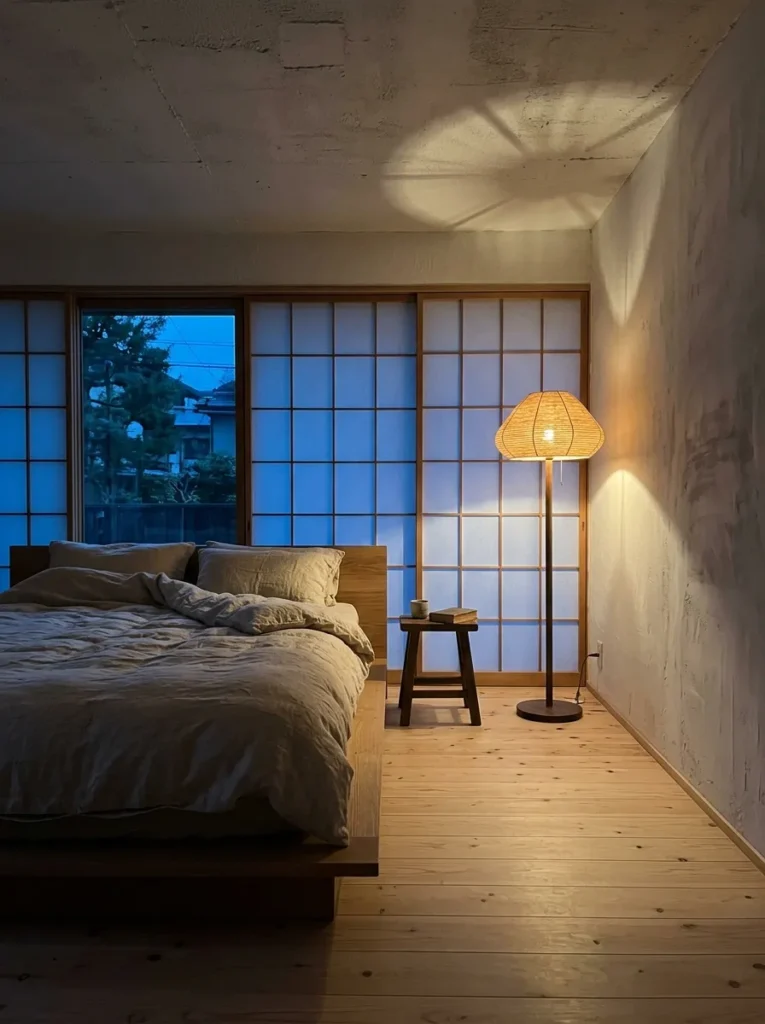
The most radical and most effective change you can make to a bedroom’s atmosphere costs nothing if you already have plug-in lamps. Simply stop using the overhead light. Swap the room’s primary light source from the ceiling fitting to a floor lamp or a pair of table lamps, and the room’s entire register shifts — from functional to inhabitable, from lit to felt. Most people hesitate here because the overhead light feels necessary. It is not. A bedroom is not a kitchen. It does not require even, distributed illumination across its ceiling plane.
The mechanics are simple. One quality floor lamp with a warm bulb placed in the room’s middle distance will give you more usable, comfortable light than any central pendant delivering the same lumen output from above. If you have a ceiling fitting you cannot remove, fit it with the dimmest warm bulb available and accept it as a secondary source — only switched on when you are hunting for something under the bed. That is the only task it should ever do.
2. Install a Dimmer Switch on Everything
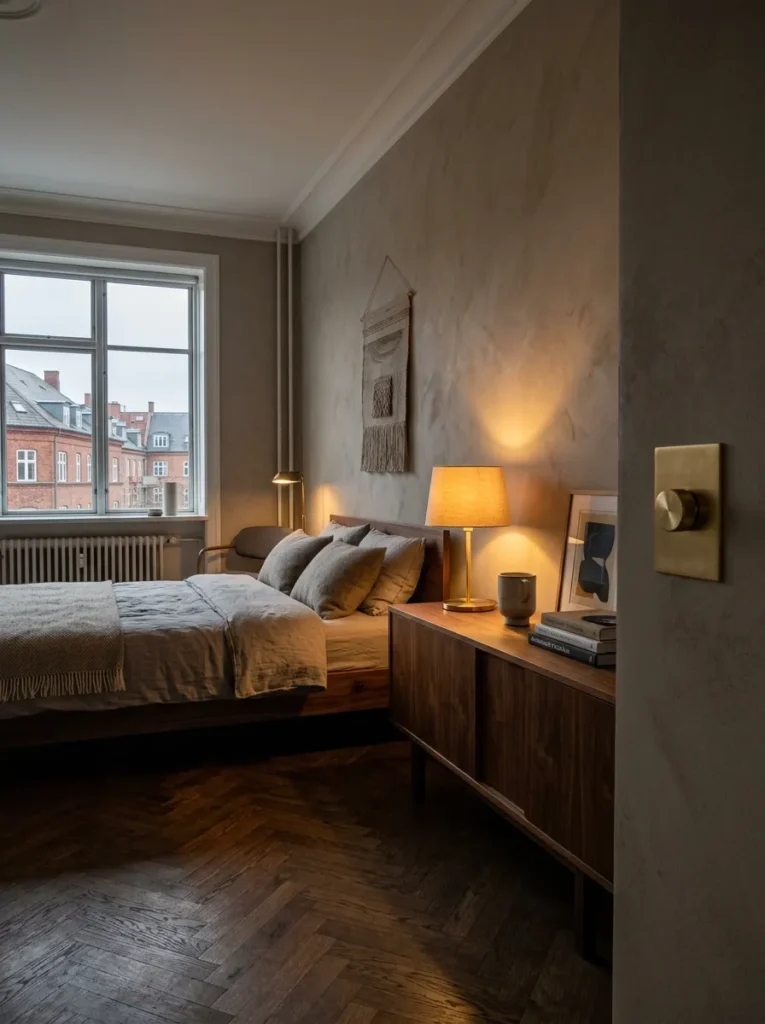
Every lighting decision in a bedroom becomes better with a dimmer. This is not optional advice — it is a structural fact about how warm interiors work. At full brightness, almost no bedroom lamp creates a cozy atmosphere. The same lamp at forty percent intensity, with the same bulb, in the same position, produces something entirely different. Dimmers give you a range of atmospheres rather than a single fixed state, and that flexibility is worth more than any individual lamp or fixture choice.
The cost is low and the installation is quick. Rotary dimmers in brushed brass or matte black cost between fifteen and thirty pounds and replace a standard switch in under ten minutes. Install one for every circuit in the room — the ceiling, the bedside lamps if they are hardwired, and any wall sconces. The difference between a room with full-brightness switches and the same room with dimmers on everything is genuinely transformative.
3. Choose Bedroom Lighting Ideas That Layer — Not Just Stack
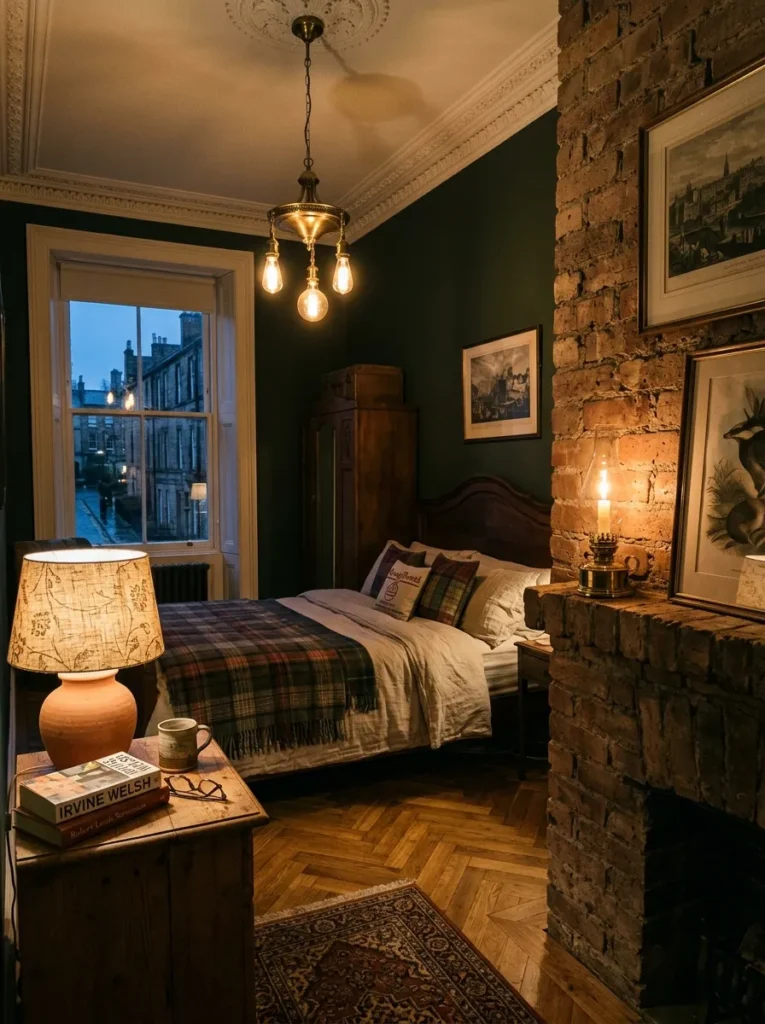
Layering light means having sources at different heights serving different purposes simultaneously. Stacking light means adding more lamps to the same zone at the same height for the same purpose. The distinction matters enormously. A room with three table lamps is not a layered room — it is a room with too many lamps doing identical jobs. A room with a ceiling pendant, a single table lamp at pillow height, and a low floor lamp in the corner has genuine depth.
The goal is to have at least one light source below eye level when seated or lying down. Below-eye-level light does something above-eye-level light cannot: it stays out of the peripheral field, which means the room’s walls and ceiling recede rather than being pushed into bright visibility. That recession — that sense of the room extending beyond its own boundaries — is what most people describe as cozy, and it comes almost entirely from source height, not colour temperature or lamp style.
4. Use a Pendant Light Instead of a Bedside Table Lamp
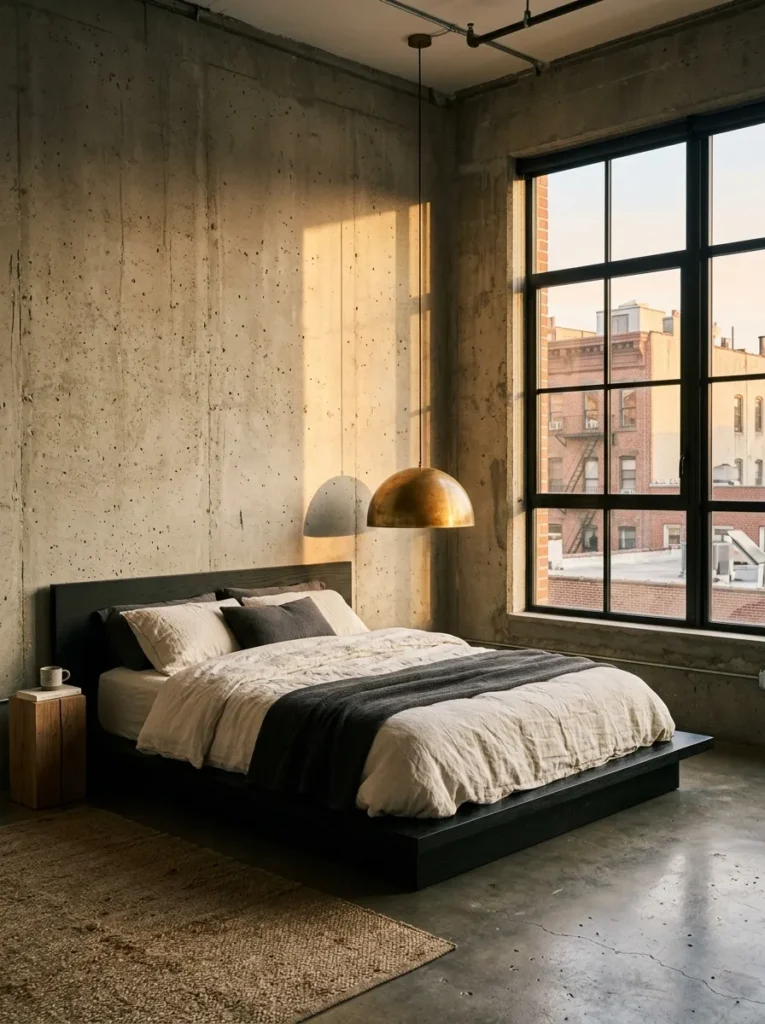
Hanging a pendant light above the bedside table is a specific, deliberate design choice that most people discover by accident after seeing it in a hotel and wondering why their bedroom never quite achieves the same quality. The reason is height. A table lamp’s shade sits roughly at head height when you are sitting up in bed, which puts it directly in the sightline and creates a slightly confrontational quality. A pendant hanging at the same effective illumination height but from above — at around sixty to seventy centimetres above the nightstand surface — removes the shade from the sightline and directs light downward and inward rather than outward.
The additional benefit is that it frees the nightstand entirely. A surface without a lamp base is approximately twice as useful as one with. One good book, a glass of water, and a candle on a clear nightstand is a complete bedside composition. Add a lamp base and a cord and the whole arrangement fights itself.
5. Get Your Bulb Temperature Right Before Anything Else
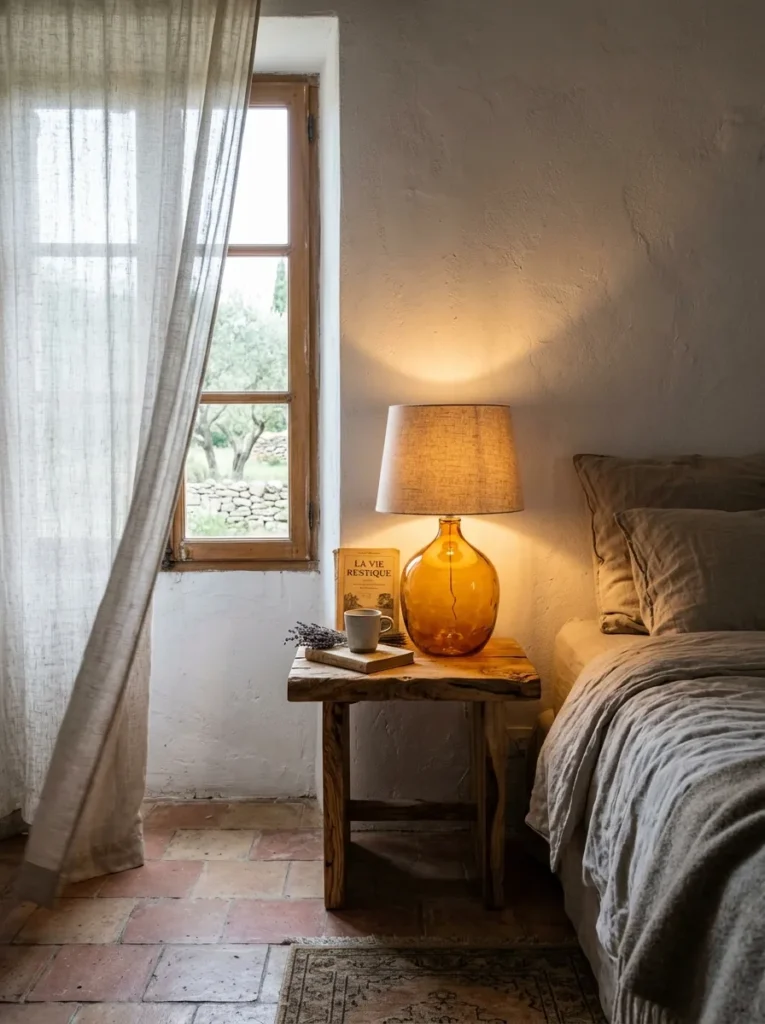
Before any fixture choice, any lamp position, any lampshade decision — the bulb colour temperature is the foundational variable that determines whether the room feels warm or clinical. The number to know is 2200K to 2700K. This is the amber-gold range, equivalent to the warm glow of traditional incandescent bulbs and the lower end of firelight. Bulbs rated at 3000K and above introduce a whiteness that is perceptible immediately and incompatible with the feeling of a cozy bedroom — even at low brightness, they read as cooler and more functional than a bedroom warrants.
This is the decision that changes everything, and it costs almost nothing to get right. A set of 2200K LED bulbs for every fixture in the bedroom is a few pounds and a single afternoon. Replace every bulb that reads as white or cool in the room at once. The immediate difference will make every other lighting decision in the room easier to make.
6. Place a Floor Lamp in a Corner, Not Against a Wall

Most floor lamps end up pushed into a corner with their base touching the wall, which means the shade sits close to two surfaces and the light bounces directly off them, creating a bright patch on the wall rather than a distributed glow. Pulling the floor lamp forward by thirty to forty centimetres — into the corner space rather than against its boundaries — allows the light to spread in three directions rather than one, and the shadow the lamp creates in the corner behind it adds depth to the room rather than flatness.
The corner position is specifically valuable in a bedroom because it introduces a warm light source at a distance from the bed, which creates the sense of the room having layers of illumination depth rather than a single source. The distinction between standing in front of a lamp and standing in its ambient glow is significant and is almost entirely determined by how far from the walls the lamp is positioned.
7. Try Wall Sconces Flanking the Bed
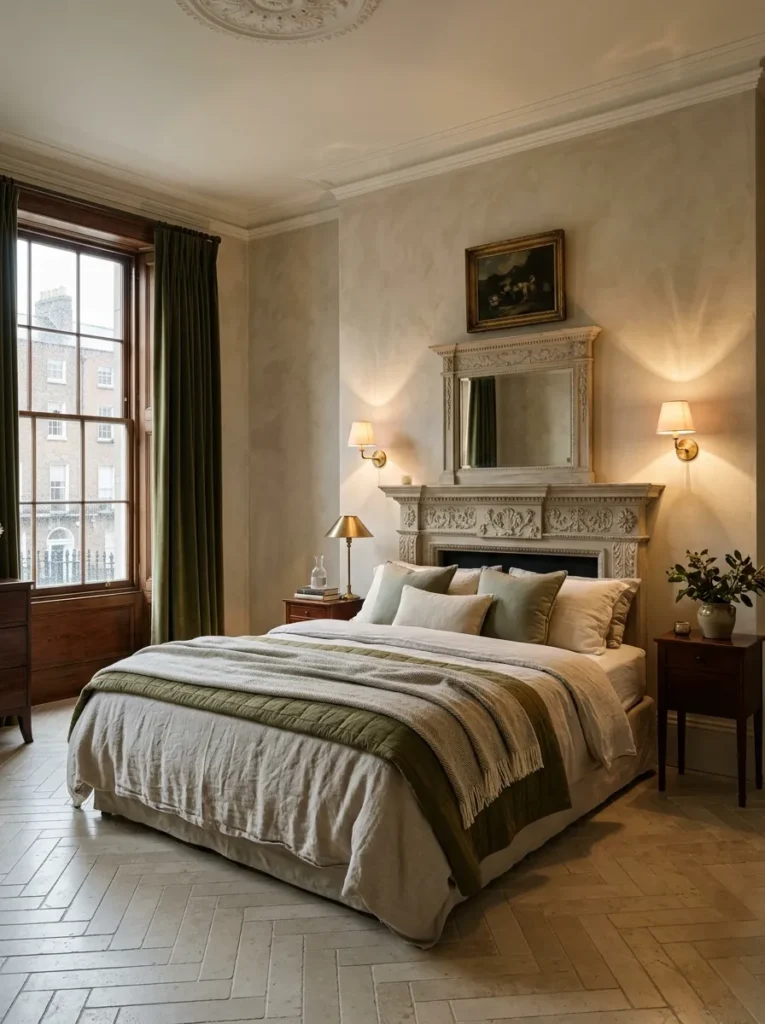
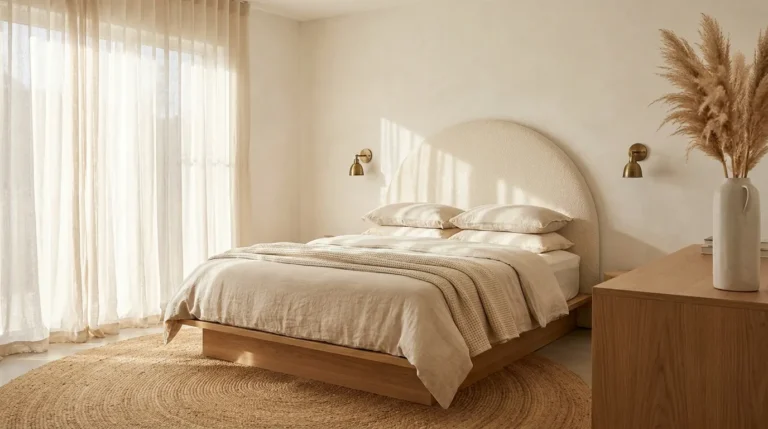
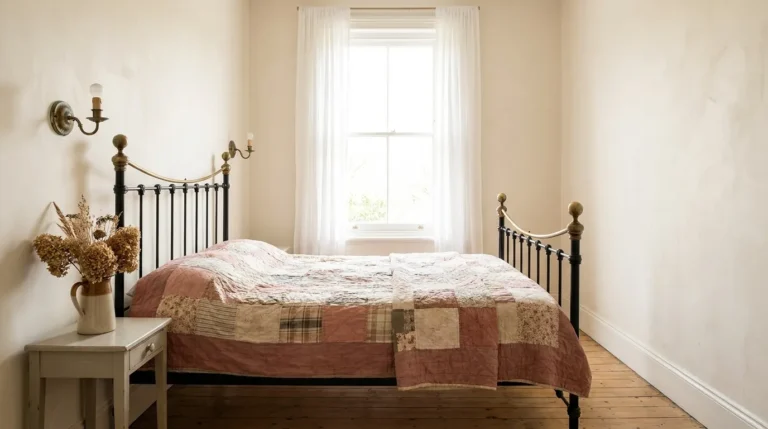
Wall sconces on either side of the bed are the most efficient bedroom lighting upgrade per unit of effort available. Two sconces, mounted at approximately 140 to 150 centimetres from the floor — so the light source sits roughly at pillow height when the shade is considered — replace two table lamps, two nightstand lamp bases, two cords, and two plug sockets. The wall surface does all the structural work, the bedside surfaces are completely freed, and the light quality is directed and warm without being harsh.
The common mistake is mounting them too high. Sconces installed at ceiling height or above eye level function like overhead lights and produce the same clinical, flattening effect. At pillow height, they are bedside lamps without the furniture, and that is what they should be.
8. Use Candlelight as a Real Light Source

Candles in a bedroom are not decorative — or rather, they are not only decorative, which is where most people misuse them. A grouping of three to five candles on a windowsill, a mantelpiece, or a low surface beside the bed functions as a genuine light source when the room’s electric lights are at their lowest setting. The quality of candlelight — its flicker, its warmth rating of around 1800K, its localised pools of moving light — is something no electric light source has yet successfully replicated, and in a bedroom it creates an atmosphere that is more effective than any designed fixture at any price point.
The only rule is height. Candles at eye level when lying down are a fire risk and a distraction. Candles on a low table, a bedside shelf, or a floor-level surface below the bed plane are safe, contained, and visually appropriate.
9. Install Under-Bed LED Strip Lighting
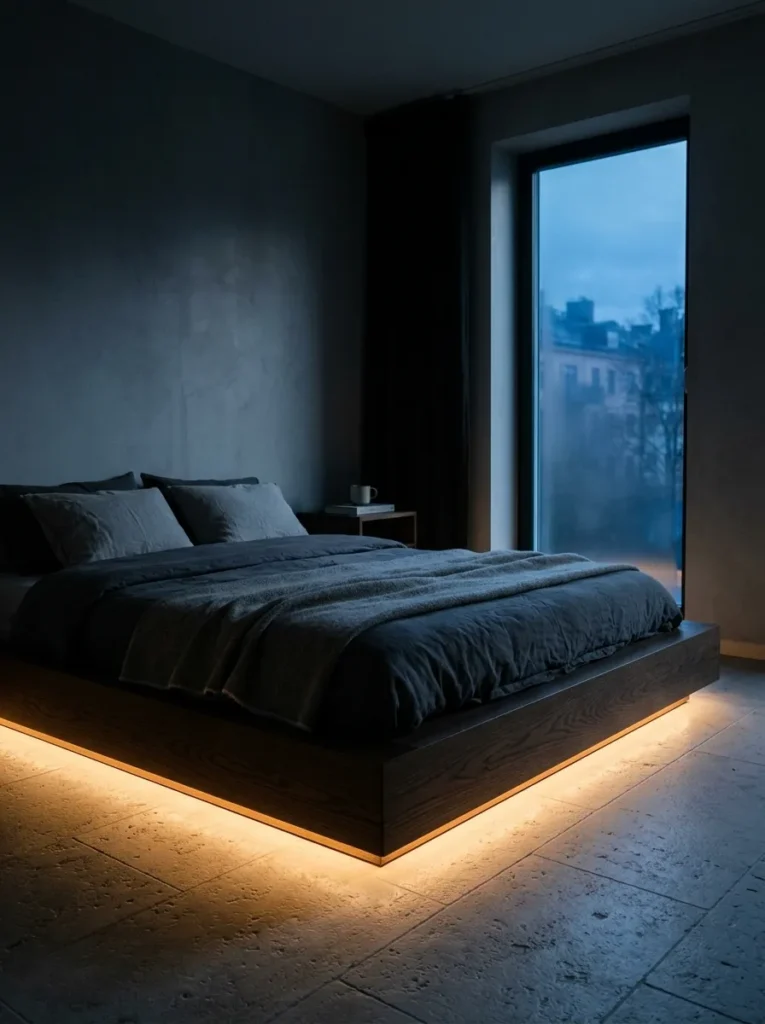
This is either very right or very wrong depending entirely on execution, and most people execute it wrongly. Cheap LED strips in bright white or colour-changing RGB, stuck hastily to the bed frame slat, produce a nightclub effect that has no place in any bedroom ever designed. Warm amber LED strips — rated at 2200K, installed in a recessed channel so the strip itself is invisible and only the glow is seen — produce something that makes the bed appear to float above the floor, which is one of the more quietly spectacular lighting effects available at low cost.
The strip must be hidden. If you can see the LED dots, the effect is ruined. The glow should appear to come from nowhere, as if the floor itself is slightly warm. A continuous channel routed into the underside of the bed frame, or a clip-on diffuser strip that shields the LED points, achieves this. Budget twenty to forty pounds for a quality warm-white strip and spend the same again on the diffuser — that second purchase is the one that determines whether this idea works.
10. Choose a Statement Ceiling Fixture With Real Visual Weight
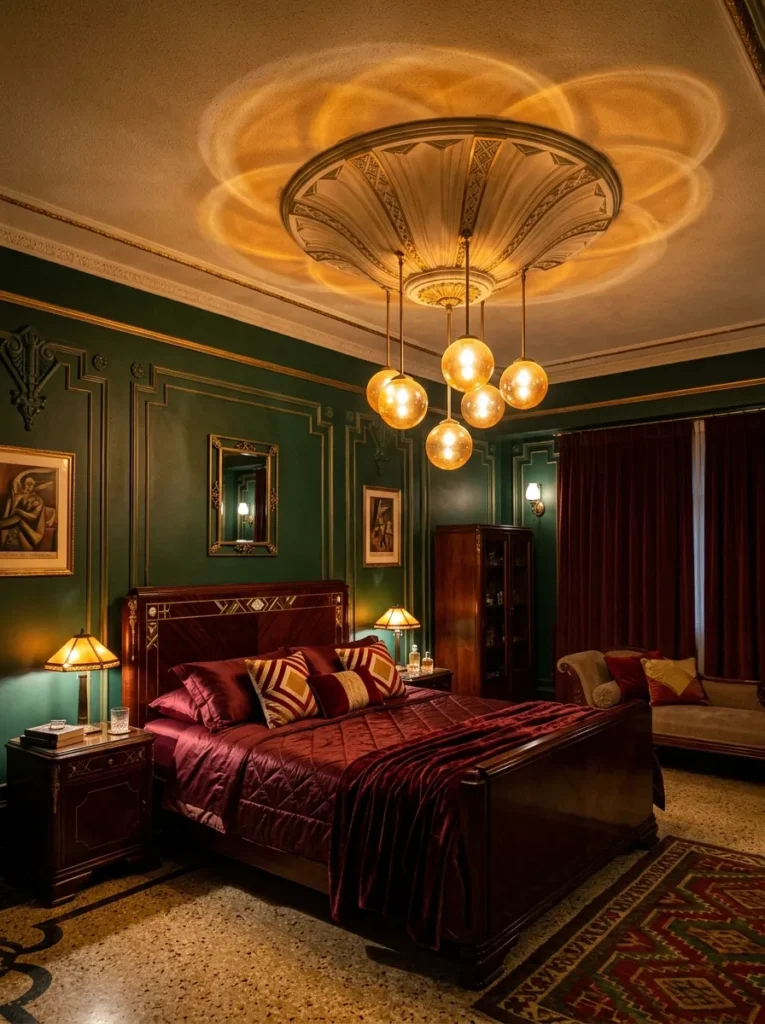
If you are going to have a ceiling light in the bedroom — and there are rooms where it makes architectural sense — it should be an object worth looking at. A plain flush-mount ceiling fixture in brushed chrome or matte white has no visual presence and no warmth. A sculptural plaster ceiling fixture, a ribbed glass globe pendant, a hand-woven rattan dome, or a clustered branching fixture with exposed bulbs earns its place in the room by being interesting enough to justify being there at all.
The most important dimension is drop length. A pendant that hangs too close to the ceiling disappears visually. One that hangs at 220 to 230 centimetres from the floor — leaving thirty to forty centimetres of clearance in a standard room — sits in the room’s visible space rather than above it and reads as furniture rather than infrastructure.
11. Use a Table Lamp With an Opaque Shade
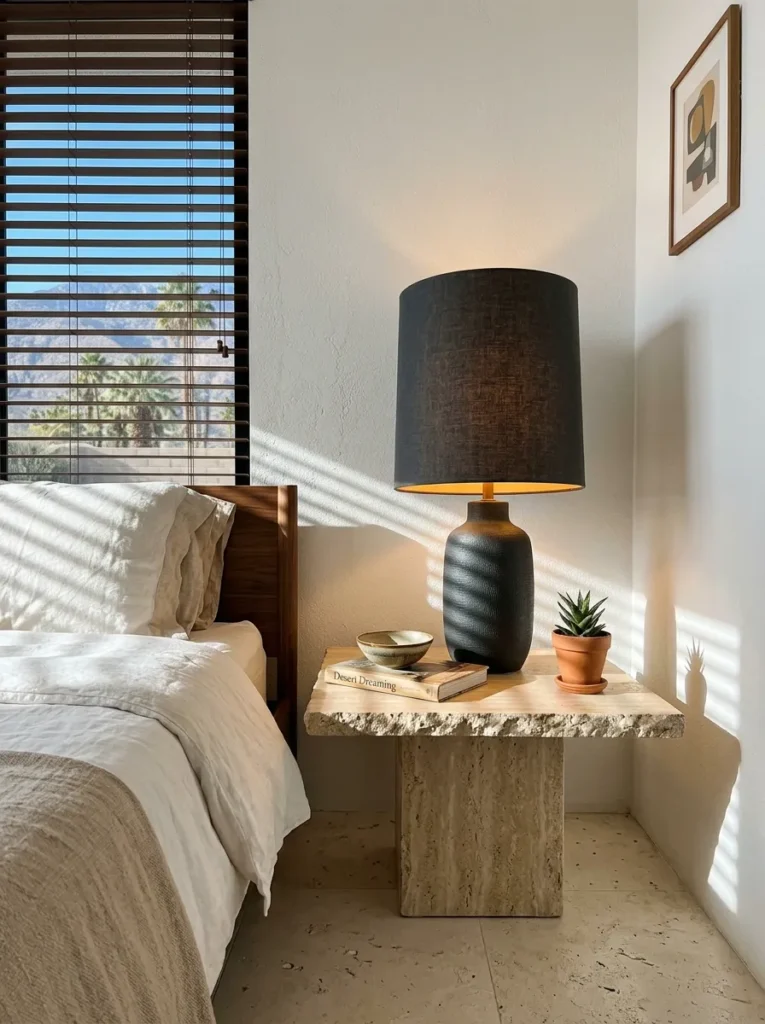
Translucent lampshades broadcast light outward in all directions including upward, which defeats the purpose of a bedside lamp almost entirely by illuminating the ceiling above the bed — exactly the zone that should remain in shadow for a bedroom to feel contained and warm. An opaque shade in linen, leather, cotton, or card sends all available light downward and inward, creating a focused pool at the reading level and leaving the ceiling in comfortable darkness.
The material of the shade changes the quality of that downward light. A thick linen shade produces a soft diffused glow at the edges. A dark card shade produces a crisp, defined pool with sharp edges. Both are valid depending on the room’s atmosphere. Neither is as useful as a white or pale translucent shade that spills light in every direction without achieving warmth anywhere in particular.
12. Light the Wardrobe Interior
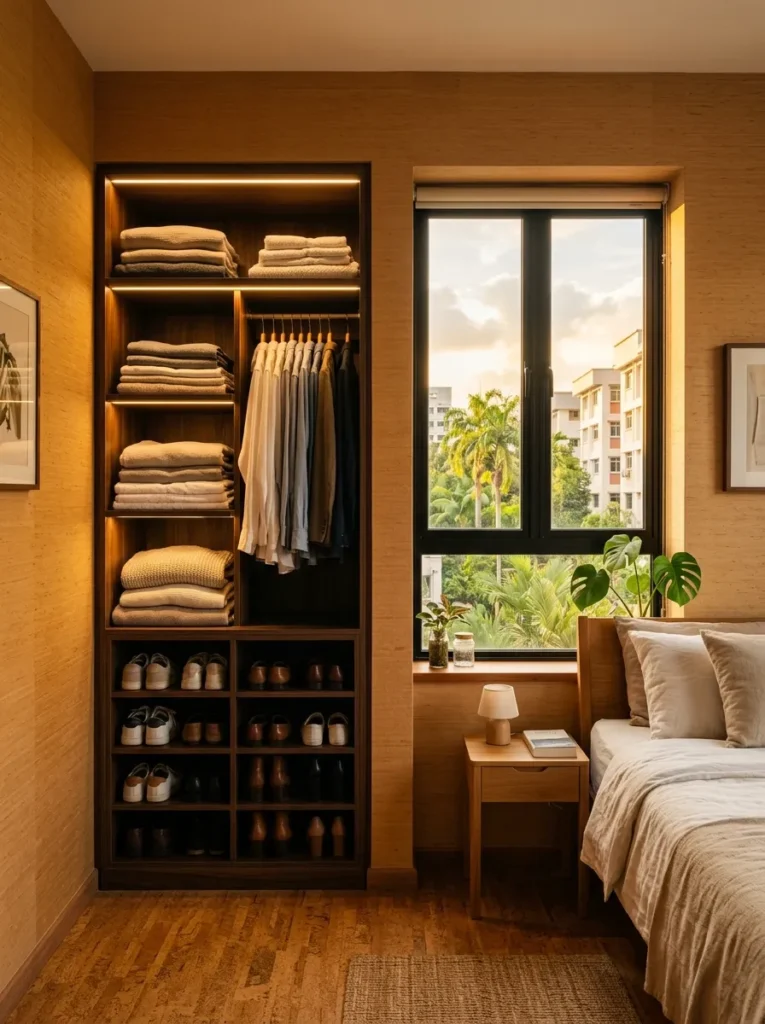
An unlit wardrobe interior in a bedroom is a practical problem and a missed aesthetic opportunity. The practical problem is obvious — dark wardrobes produce squinting and torch apps. The aesthetic opportunity is less often discussed: a wardrobe whose interior glows warmly when opened becomes a feature of the room rather than storage furniture, and at night, with the room lit at low intensity, the warm light from inside the wardrobe creates a secondary light source that adds depth to the room without any additional floor or table lamps.
Recessed LED dot lights or a continuous LED strip along the top shelf rail, wired to a door-activated switch, cost under sixty pounds and install in an afternoon. This is decidedly not a significant renovation. It is a small decision with a specific and repeatable visual payoff every time the wardrobe is opened.
13. Try Cozy Bedroom Lighting With a Salt Lamp or Amber Neon
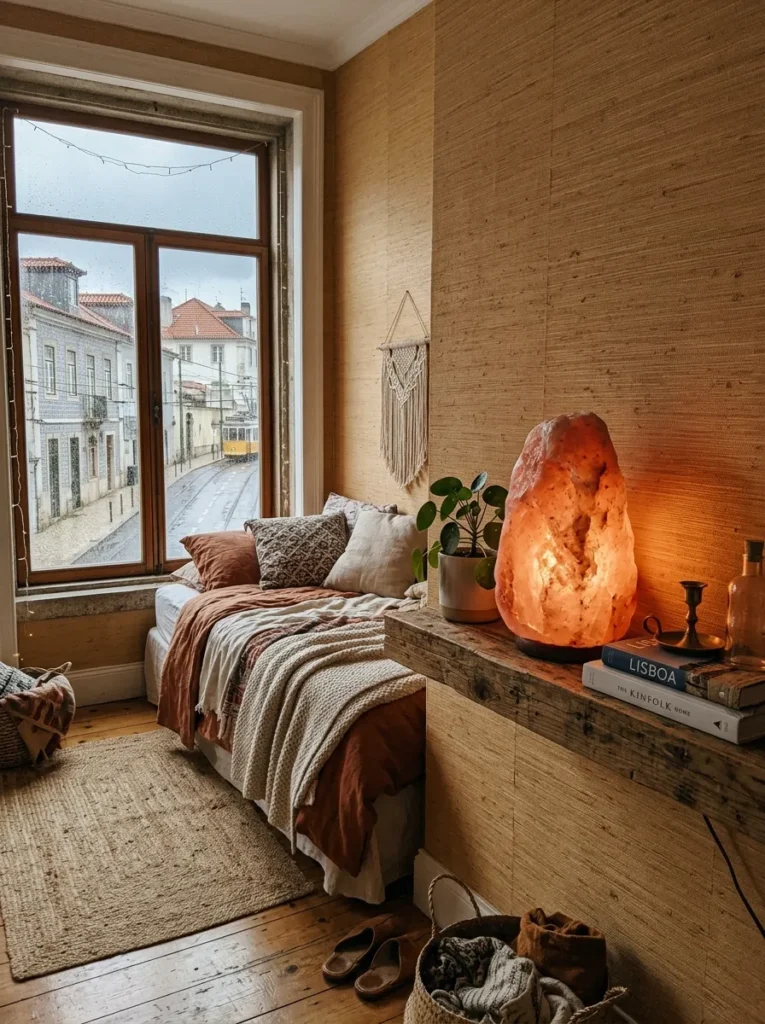
A salt lamp is not an air purifier, an ioniser, or a health device — the claims about its therapeutic properties are not supported by evidence. It is, however, one of the most effective sources of deep amber ambient light available for under thirty pounds, and in a bedroom where a warm glow is the goal, its function as a light source alone justifies its presence. The crystal texture catches light differently across its irregular surface, and the glow it produces at its warmest setting — around 1900K — is closer to candlelight than any LED bulb.
Amber neon signs, custom bent or bought in short standard phrases, are the more architectural version of this idea — less organic, more deliberate, equally warm in colour. A short word in amber neon on a dark wall produces a glow that is consistently more interesting than a lamp in the same position, and considerably more arresting as a room object.
14. Use Curtain Fairy Lights Only If You Mean It
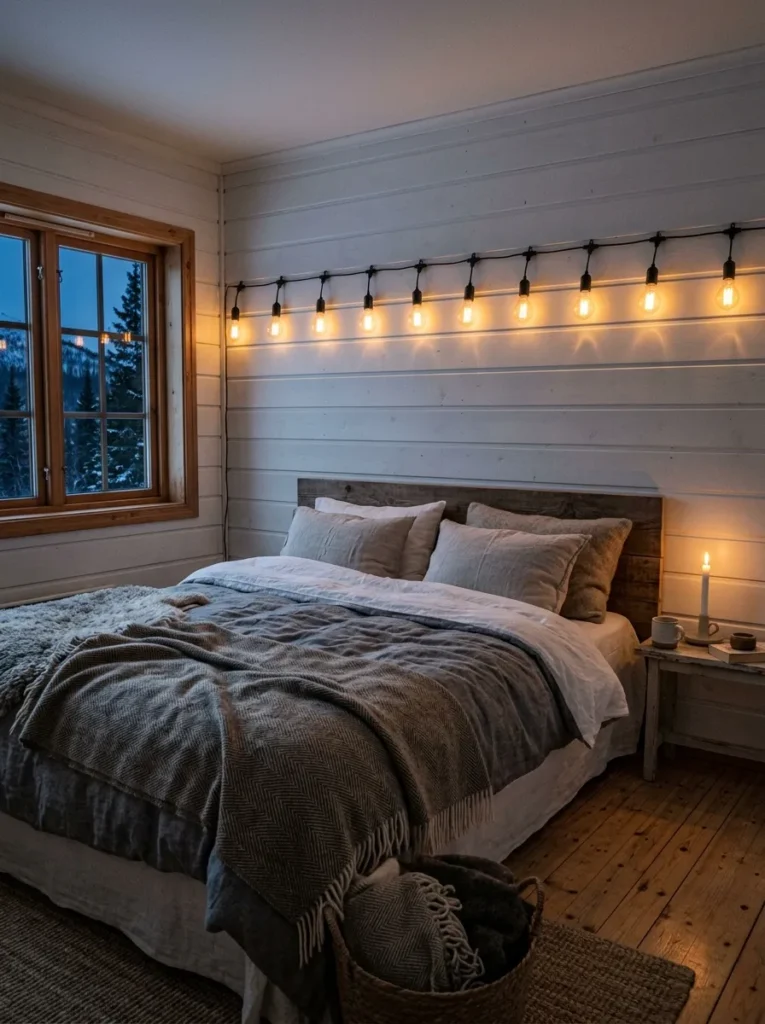
Fairy lights in a bedroom are an idea with a vast range of executions, from the genuinely effective to the irretrievably student-flat. The difference is almost entirely about intention. A random tangle of white LED string draped loosely over a headboard or tucked behind a curtain produces visual noise without warmth. A single clean horizontal run of warm Edison bulb string lights across a full wall, mounted in a straight line on cup hooks, produces something architectural — a ceiling of light at wall height that is quite different from what most people imagine when they hear “fairy lights.”
Warm Edison bulbs, not cool white LEDs. A single deliberate line, not a gathered mass. Mounted, not draped. These are the three decisions that separate the idea from its worst execution, and they cost exactly the same.
15. Add a Reading Light That’s Actually Designed for Reading
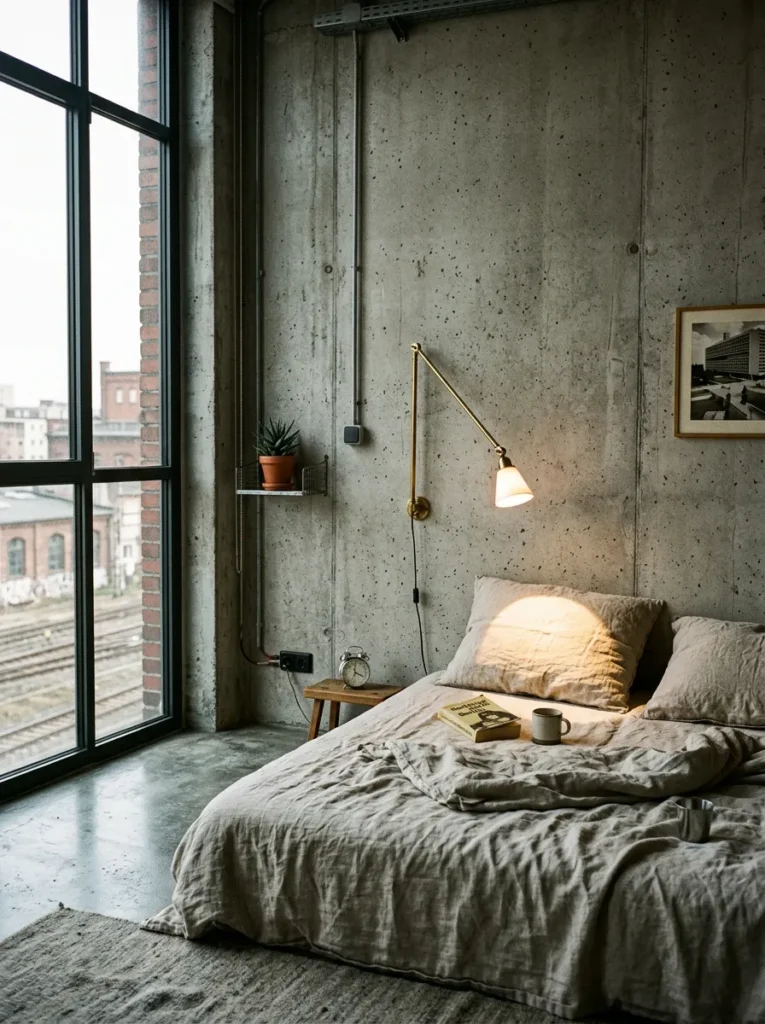
A table lamp beside the bed is not a reading light. It is an ambient light source that happens to be near a book. A reading light is a directional source designed to illuminate one specific area — a page — without spilling light across the room, disturbing a sleeping partner, or causing eye strain. The specific product to find is a pivoting brass arm lamp or a clip-on reading light with a focused beam and a minimum colour temperature of 2700K.
The mounting position matters. A reading light mounted at the wall above the pillow, at around 100 to 110 centimetres from the mattress surface, directed downward at approximately thirty degrees, illuminates the bed’s upper half precisely and leaves the rest of the room in peace. That precision is the difference between reading in comfort and lying in a lamp’s general proximity hoping for the best.
16. Consider a Low-Voltage Picture Light Above the Bed

Bedrooms rarely hang artwork above the bed, and the reasons are mostly practical — mounting, falling risk, headboard obstruction. But a single large botanical print, a framed photograph, or a piece of original art mounted high on the wall above the bed, lit by a low-voltage brass picture light, does something that a gallery wall of frames with no dedicated lighting cannot. The lit artwork becomes a warm zone — a focal point that adds a light source without being a lamp — and the glow it creates on the surrounding wall serves as ambient light for the whole bedhead zone.
Picture lights are directional and low-output by design, which means they do not overpower the room’s other sources. They add warmth and light simultaneously, and they give the bedhead wall a considered quality that no other single addition produces as efficiently.
17. Go Asymmetric on the Bedside Lighting
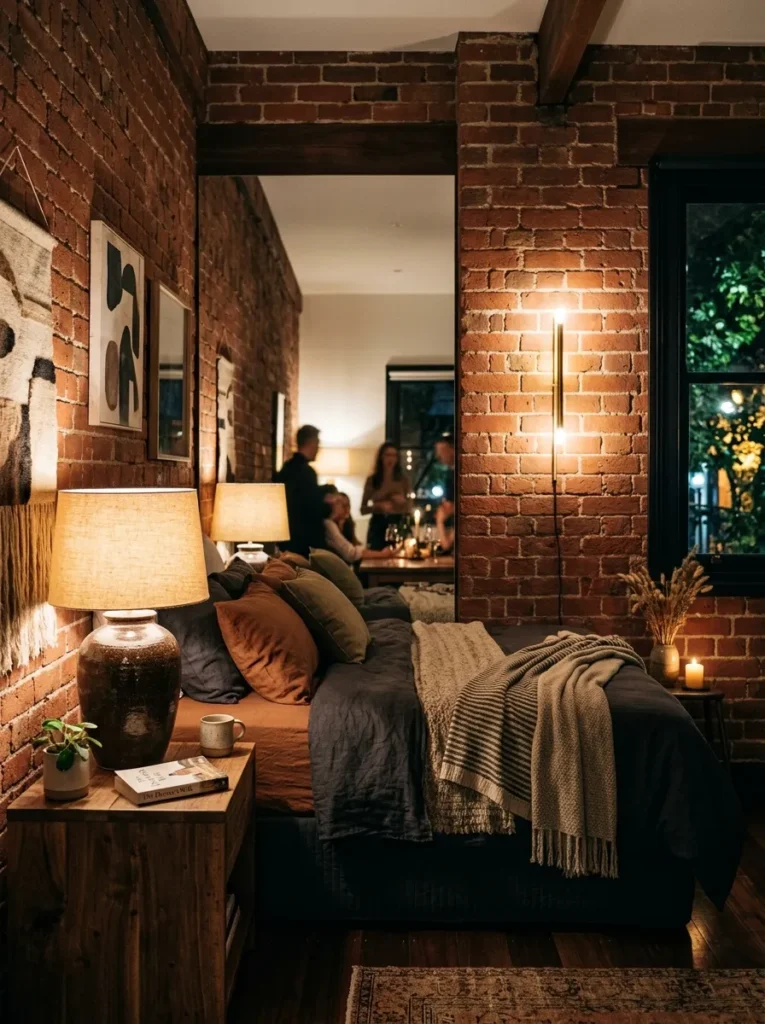
Matching bedside lamps on matching nightstands is the safe version of bedside lighting and almost never the interesting one. The matching set is always the safer choice and almost never the better one. An asymmetric approach — one nightstand with a tall ceramic table lamp, the other side with a slim wall sconce only — immediately reads as deliberate rather than defaulted, and gives the room a visual tension that symmetrical setups cannot achieve.
The asymmetry works best when the two sources produce similar colour temperatures and roughly similar light volumes, even though their forms are entirely different. The goal is that neither side feels like an afterthought — both sides are lit, both are warm, neither is a mirror of the other. That balance-without-symmetry is the specific quality that makes this approach look designed rather than accidental.
18. Use a Washi Paper Lantern for Diffused Softness
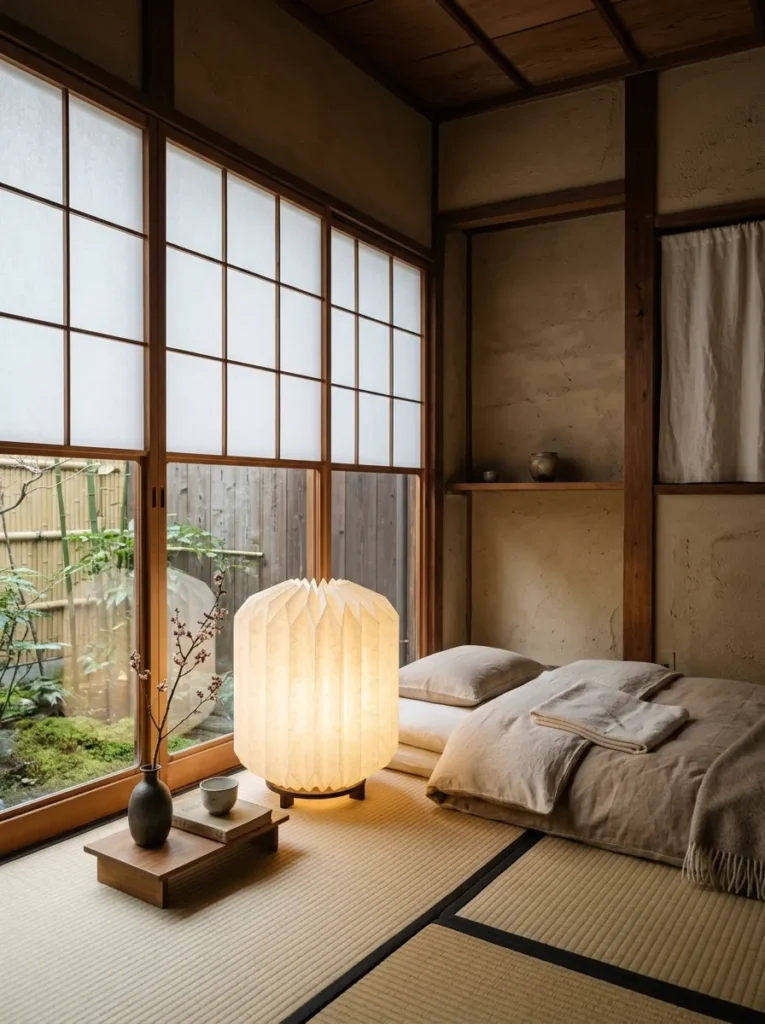
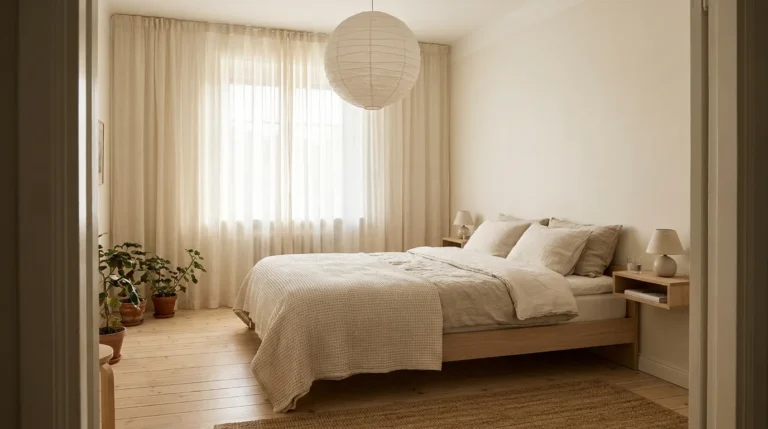
Hand-folded washi paper lanterns produce a quality of diffused light that no fabric or card shade can replicate. The paper is thin enough to glow across its entire surface without hot spots or shadow, producing an even, luminous warmth that fills its surrounding zone without directing light in any specific direction. In a bedroom where the goal is softness rather than utility, this is an advantage rather than a limitation.
The scale is important. A small washi lantern produces a gentle point source — atmospheric but barely functional. A large lantern — sixty centimetres or more in diameter — produces enough ambient light to fill a bedroom’s lower half with warmth. The installation is simple: a hook, a cord, a bulb. The material does the rest.
19. Let the Lampshade Do the Work

Most people treat the lampshade as a secondary consideration — the base is chosen for its visual quality and the shade is found to match or roughly coordinate. This is the wrong order of operations. The shade is the light source. The base is the stand. When the shade is amber silk, pleated and floor-length, the room below it glows in filtered gold. When the shade is dark linen, drum-shaped, and opaque, the light is focused and directed and the ceiling stays dark. When the shade is pale and translucent, the light goes everywhere and achieves nothing in particular.
Choose the shade first, for its light quality second, and find a base that supports it. That reversal of priority produces rooms that glow rather than rooms that are simply lit.
20. Install a Skylight or Light Tunnel If the Ceiling Allows
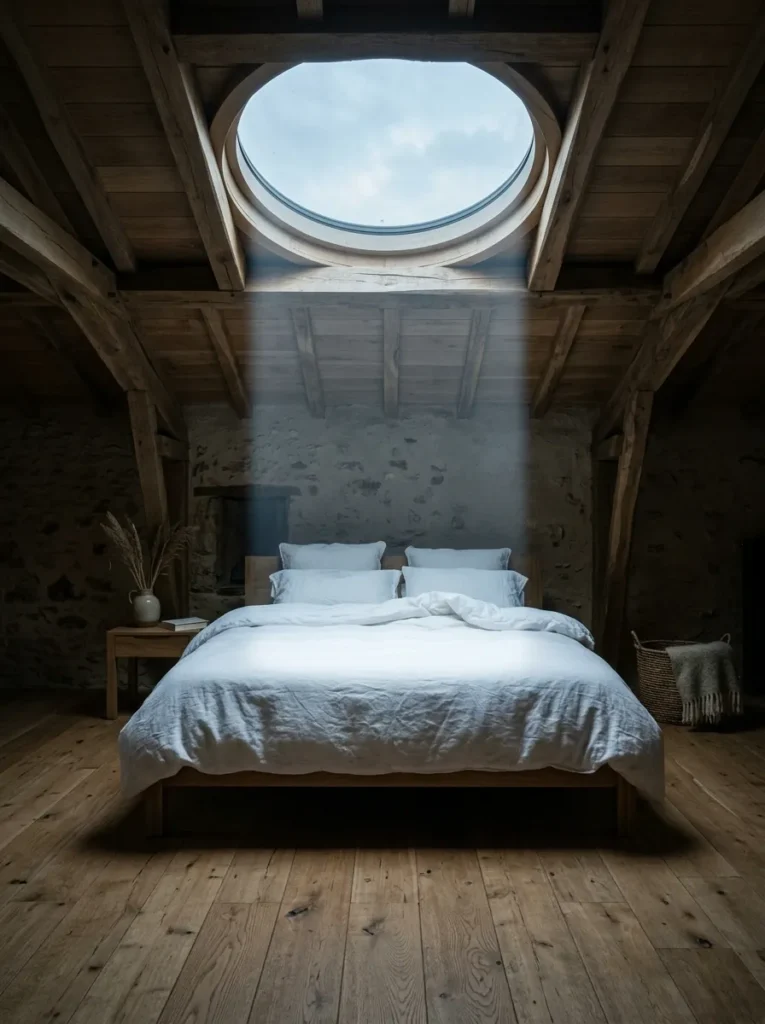
Natural light in a bedroom has a quality that no artificial source has yet matched, and a skylight or light tunnel directly above the bed introduces a vertical column of daylight into the room’s most-used zone that changes the quality of mornings in a way that is difficult to describe and easy to experience. The light that comes through a skylight is directional — it has an angle that changes across the day — and it illuminates the room’s surfaces differently in the morning, at noon, and at the flat overcast grey of an afternoon than any side-entering window light can.
This is the most significant and most expensive intervention in this article. It is also the one with the longest payoff — a skylight installed well lasts the life of the building and cannot be duplicated by any lamp at any price. If the ceiling structure allows, it is worth investigating.
21. Light the Headboard From Behind
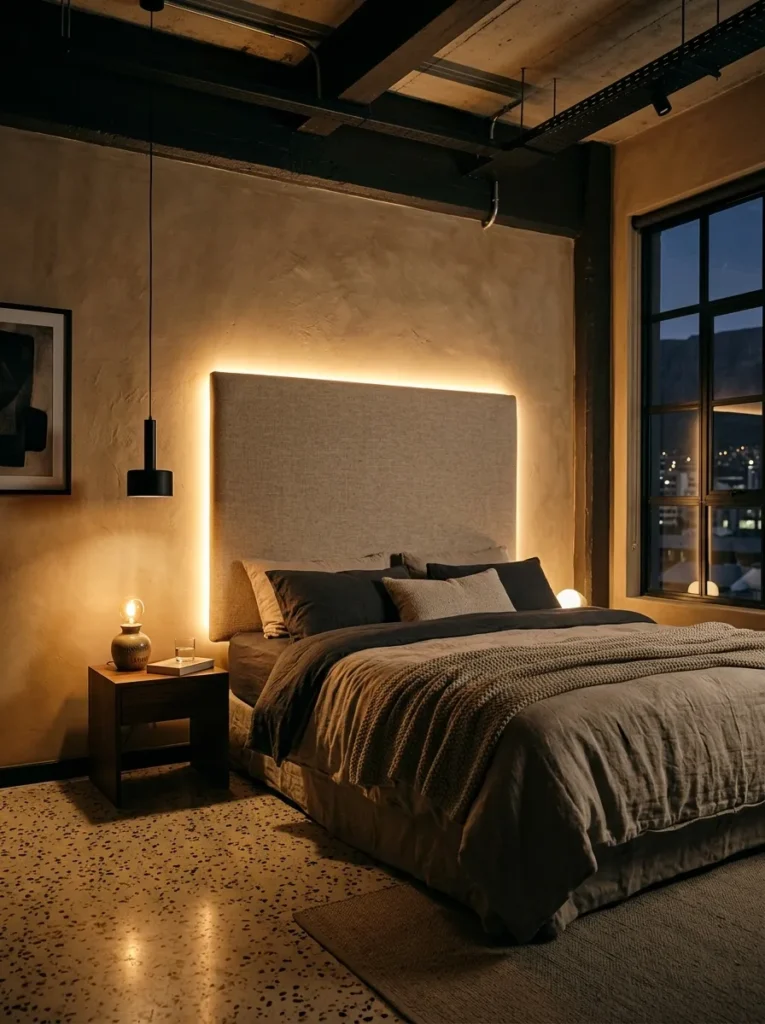
A warm LED strip installed in a recessed channel behind a bedhead panel or headboard is a hotel detail that has filtered into residential design slowly enough that it still reads as distinctive in a home bedroom. The effect — a warm halo of amber light appearing to emanate from behind the headboard — makes the bed feel like a destination rather than furniture, and gives the wall behind the bed a warm atmospheric quality without requiring a lamp on either side.
The execution is everything here. A visible LED strip with bright dots kills the effect entirely. The strip must be hidden in a routed channel at least two centimetres deep, with a diffuser cover, producing a continuous glow rather than a dotted line. When done correctly, the light source is invisible and the effect looks architectural rather than DIY.
22. Use a Clamp Lamp to Free Up Surface Space

A clamp lamp is not a compromise or a rental apartment solution — it is a deliberate choice that produces a specific outcome: a completely clear nightstand surface. When the lamp clips to the bed frame or headboard rather than standing on the nightstand, the surface beneath it is entirely available, and what you choose to place on a clear surface is a different kind of decision than what you squeeze around a lamp base. A ceramic dish. A small plant. A single book and nothing else.
The clamp lamp itself should be chosen with the same care as any other fixture — an articulated brass arm with a focused shade is a considered object in its own right. A white plastic clamp lamp from an office supplier is not. The mechanics of clamp mounting are the same; the visual quality is not.
23. Place a Lighted Mirror for Dual-Purpose Glow
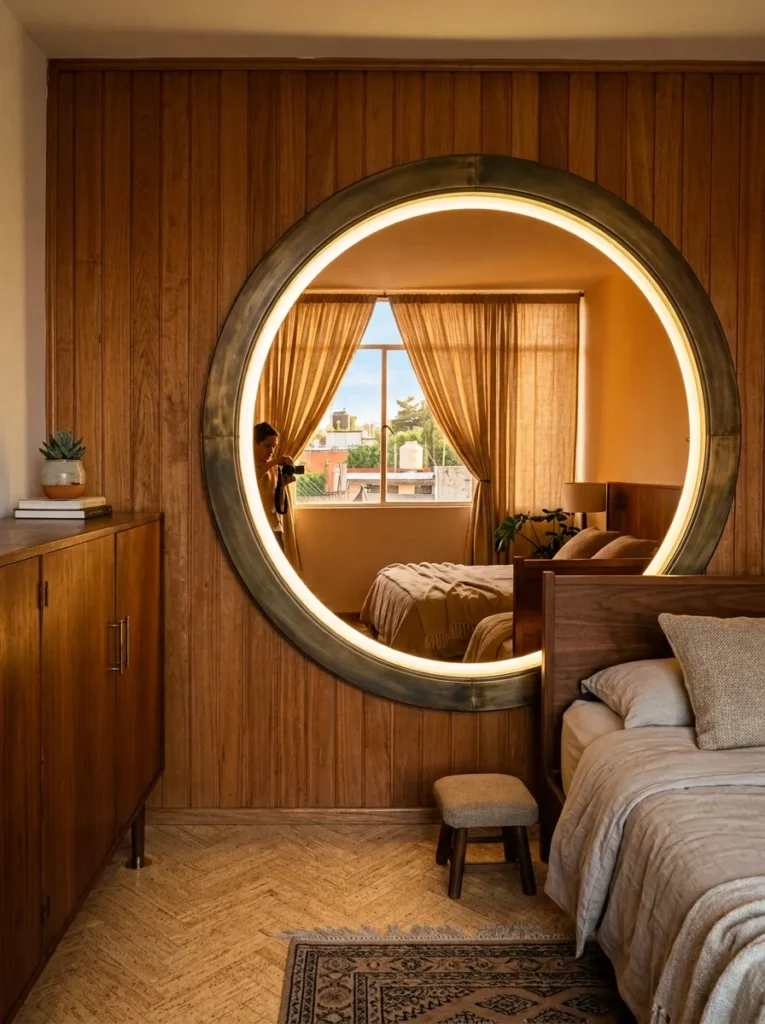
A mirror with integrated LED lighting — specifically a round or oversized rectangular mirror with a warm LED ring or halo built into its frame — does two things simultaneously that no other single object in a bedroom can. It bounces ambient light back into the room from its reflective surface, effectively doubling the apparent output of every other light source it reflects. And it provides a warm, face-flattering light source for the moments when a bedroom is also used as a dressing space.
The frame material determines how the glow reads. A smoked brass or antique bronze frame absorbs and warms the LED light before it reaches the room. A silver or chrome frame passes the light through cooler. For a warm atmosphere, the frame colour is not decoration — it is part of the lighting decision.
24. Turn Off One Light Source
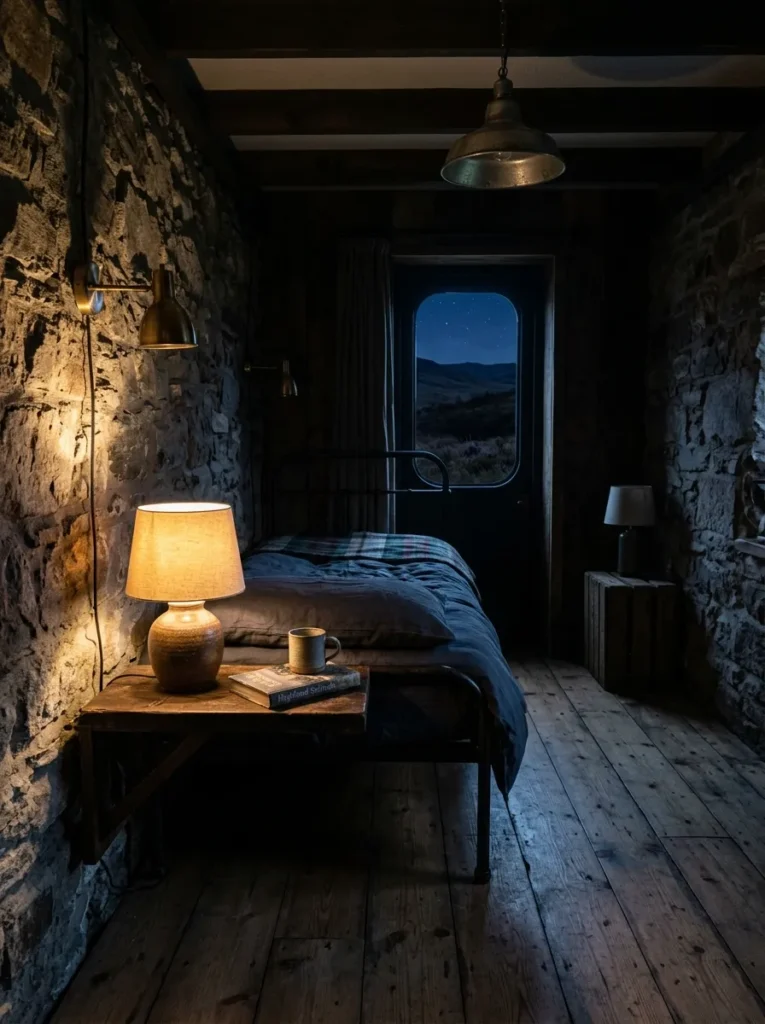
The last and most genuinely useful bedroom lighting idea is the one that requires the least equipment and the most confidence: turn something off. A bedroom with four light sources running simultaneously produces a room that is lit rather than atmospheric, and the difference between those two states is often a single switch. Most people run every lamp in a room because they turned them all on and never reconsidered whether all of them need to be on.
The correct number of simultaneous light sources in a cozy bedroom at evening is usually two. Sometimes one. Almost never four. The specific source to turn off is the one that illuminates the ceiling — the overhead, the uplighter, the translucent shade that spills light upward. Once the ceiling recedes into darkness and only the lower half of the room is lit, the room becomes what it should have been all along.
Final Thoughts
Bedroom lighting ideas fail most often not because the wrong fixtures were chosen but because the underlying approach — one bright central light, everything else as accent — was never questioned. The place to start is not with a new lamp. It is with the dimmer switch, the bulb colour temperature, and the decision to turn off the overhead. Those three things, done in an afternoon, will change the room more immediately than any fixture purchase. From there, the layering follows naturally: a floor lamp here, a bedside pendant there, a strip of warm amber under the bed if the room is ready for it. The rooms that feel most deeply cozy share a single quality — they look like someone thought about where the light should not go as carefully as where it should.
Save these bedroom lighting ideas for your next bedroom refresh.