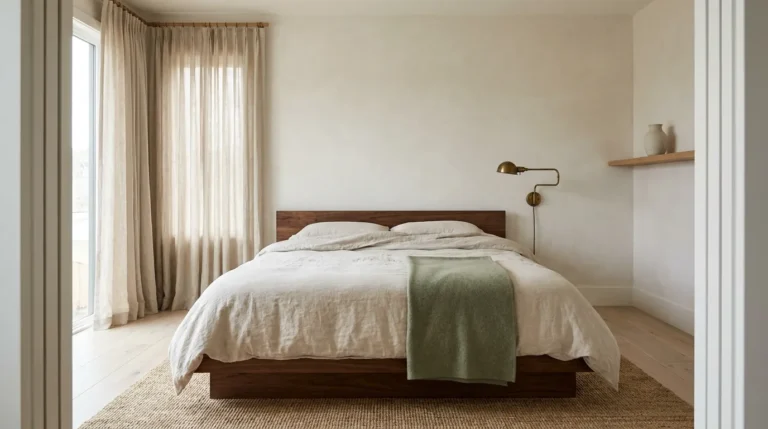
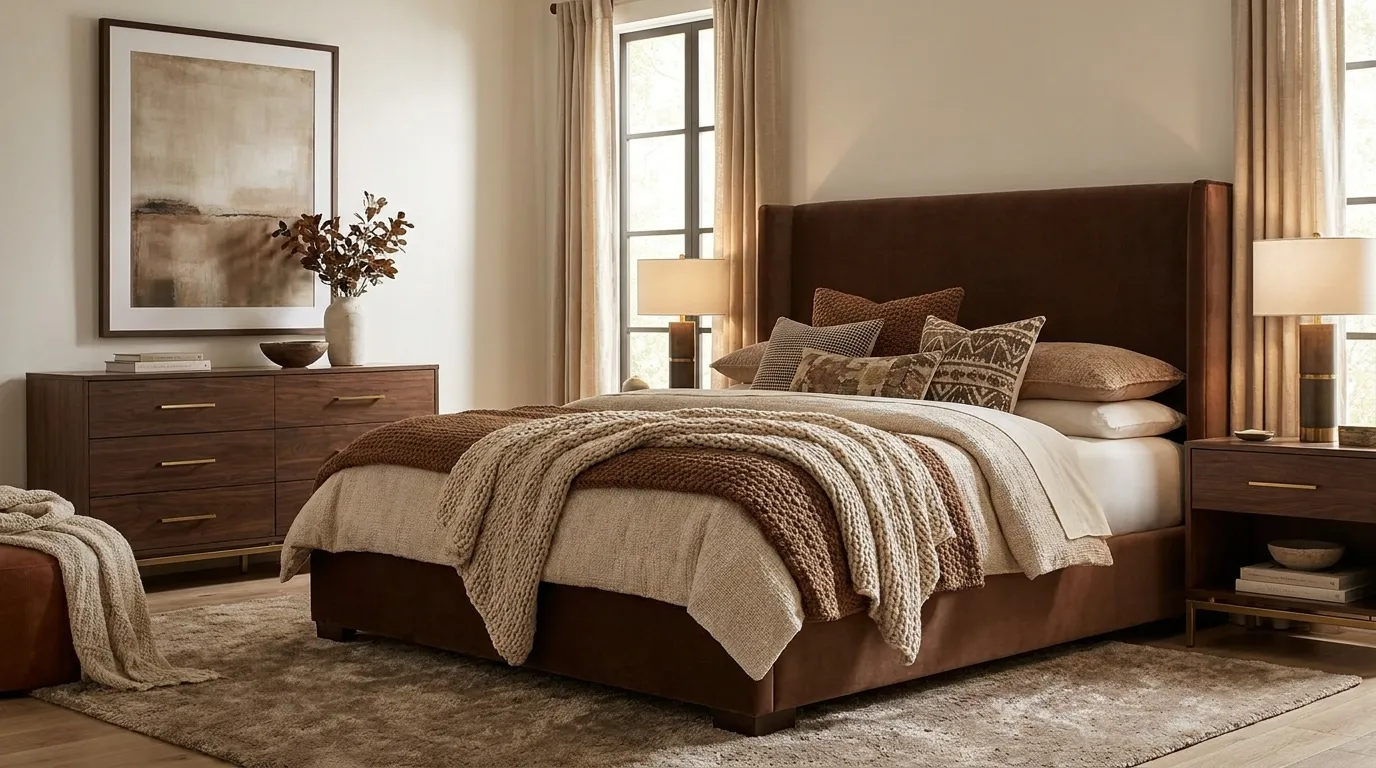
21 Brown Bedroom Ideas That Feel Warm and Sophisticated
Brown has a reputation problem it does not deserve. For years it was dismissed as dated — the colour of 1970s carpets and uninspired office furniture — and so an entire generation of home designers overcorrected into grey, which turned out to be its own kind of mistake. But brown bedroom ideas, done properly, produce something that greige, charcoal, and off-white cannot: genuine warmth. Not the performative warmth of a throw blanket in a staged photograph, but the deep, unshakeable warmth of a room that feels like it was assembled by someone who knows exactly what they like. This article is not a list of safe choices. It is an argument for a colour that has earned its place back in the bedroom, and a guide to using it in a way that feels current, layered, and alive.
1. Go Dark on the Walls and Let the Room Breathe
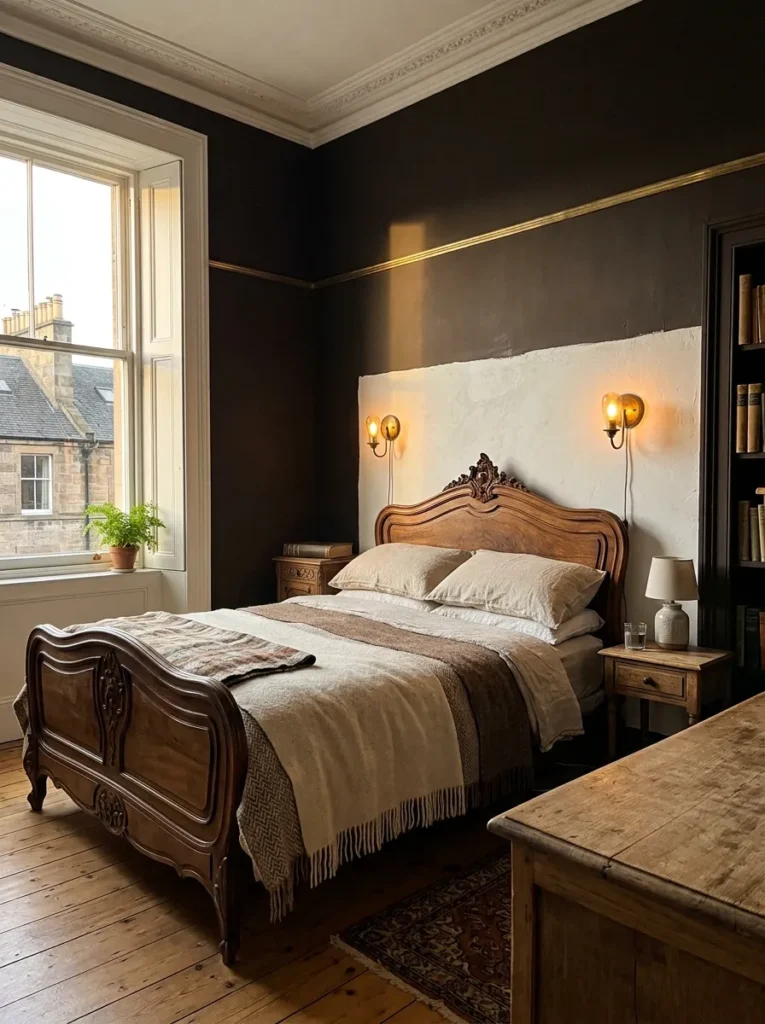
The instinct, always, is to use brown as an accent. A cushion here. A throw there. The impulse to keep the walls pale and introduce brown through accessories is understandable — it feels safer — but it consistently produces rooms that look curated rather than felt. Going dark on the walls, specifically an espresso or near-black brown in a flat or eggshell finish, does something nothing else can: it makes the room recede and the furniture advance. Everything inside the room suddenly looks more considered, more deliberate, more intentional, because the background is no longer competing.
The practical mechanics matter here. A dark wall reads entirely differently at 30 square metres and 12 square metres, so if you are working with a smaller bedroom, take the paint all the way to the ceiling — this dissolves the wall-ceiling boundary and removes the boxing-in effect that stops most people from committing. Brass hardware and warm-toned lighting become essential partners. Without them, a dark brown room tips toward oppressive. With them, it tips toward remarkable.
2. Layer Multiple Shades of Brown Instead of Picking Just One
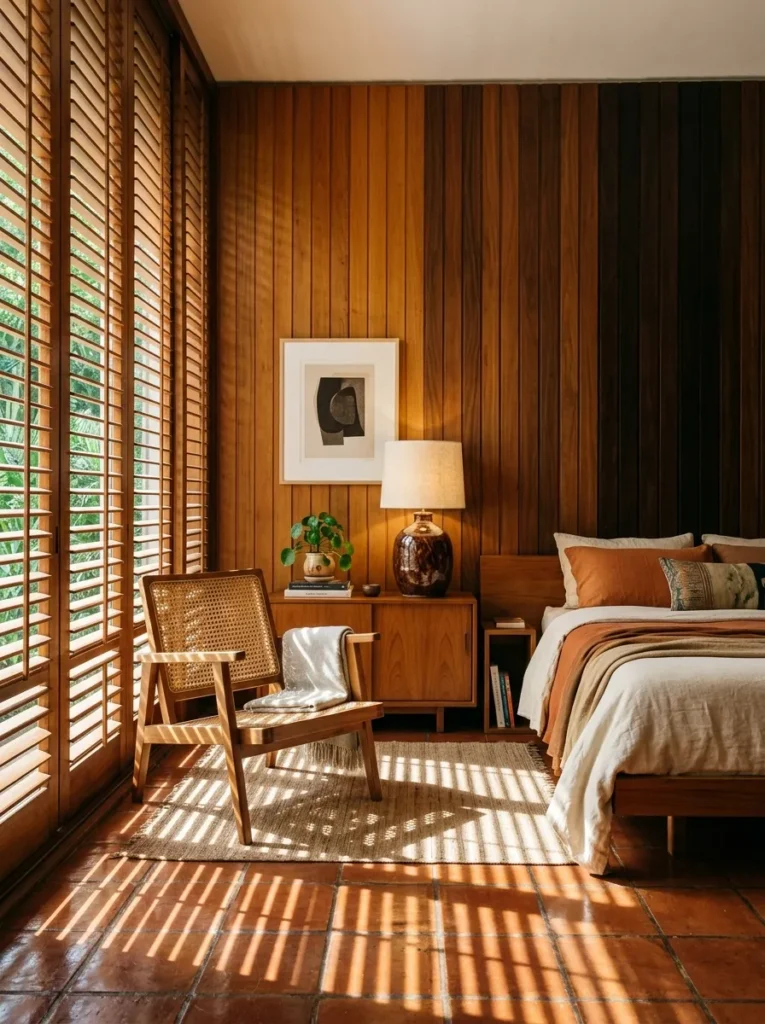
The single worst thing a person can do with a brown colour scheme is match everything to the same swatch. Matching is the lazy version of cohesion. Real cohesion in a layered bedroom comes from choosing four or five different shades of brown — honey, cognac, walnut, espresso, tobacco — and distributing them across different surfaces and materials so that every tone earns its place separately and together they create something visually complex.
The key is that each shade should live in a different material. Honey in the raw oak floor. Cognac in a leather-bound book stack. Walnut in a bed frame. Espresso in a throw. Tobacco in a wall treatment. When the shades are spread across textures and surfaces, the eye moves around the room rather than landing in one place and stopping. This is the difference between a bedroom that photographs beautifully from any angle and one that only works as a straight-on shot.
3. Bring in Aged Brass Hardware to Warm the Brown Bedroom
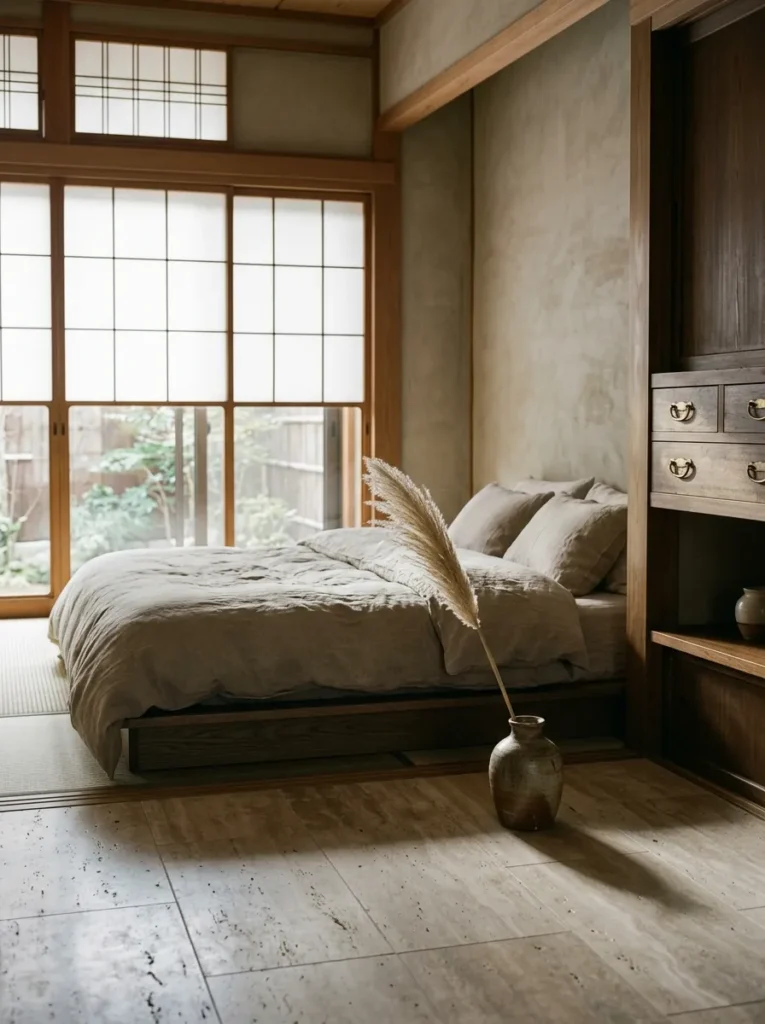
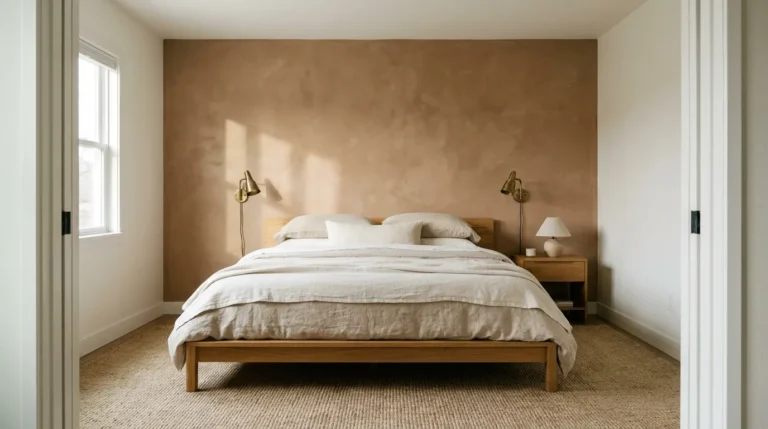
Unlacquered brass is the single most important material decision you can make in a warm brown bedroom. Not polished brass — too yellow, too formal. Not brushed brass — too safe, too contemporary. Unlacquered brass, which darkens and patinas with use, brings an aliveness to the room that no other metal finish can replicate. The handles, the light fittings, the curtain rod finials, the mirror frame: when these elements are all in aged or unlacquered brass, the room starts to feel like it has a history, even if the furniture was bought last year.
Most people get this wrong by mixing too freely — a silver-toned bed frame with brass lamps and a chrome bathroom handle visible through the doorway. The room ends up feeling unresolved. Commit. Let brass be the dominant metal in the room and relegate everything else to a supporting role. One exception is matte black, which plays well with brass because it provides contrast without competing warmth.
4. Choose a Linen Headboard in Caramel or Oat
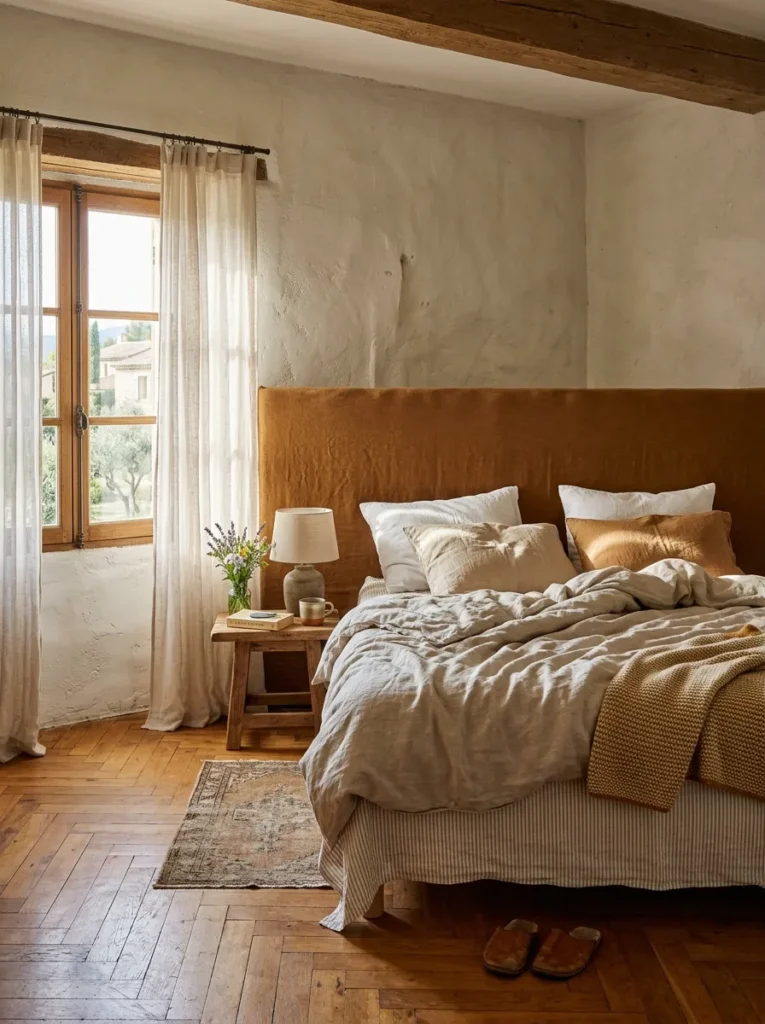
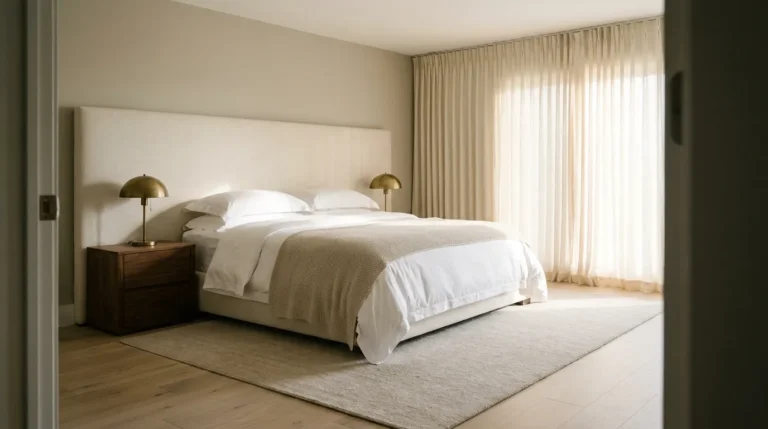
A headboard is the bedroom’s focal point. It is also, for reasons that are hard to explain, the piece most people choose last and think about least. The default upholstered headboard in a light-grey fabric has become so ubiquitous it has lost all visual meaning — the eye passes over it without registering it. A linen headboard in caramel or oat, tall enough to feel architectural rather than incidental, changes the entire register of the room.
The height matters as much as the colour. A headboard that stops at the pillow line does almost nothing. A headboard that reaches to within thirty centimetres of the ceiling creates a sense of proportion and weight that makes the bed feel like a destination rather than just a piece of furniture. Full-width headboards — those that run wider than the bed frame itself, covering the full wall behind it — are even more effective. They eliminate the awkward empty wall space on either side and turn the bed zone into an intentional feature.
5. Use Terracotta Accents to Give Brown Some Energy
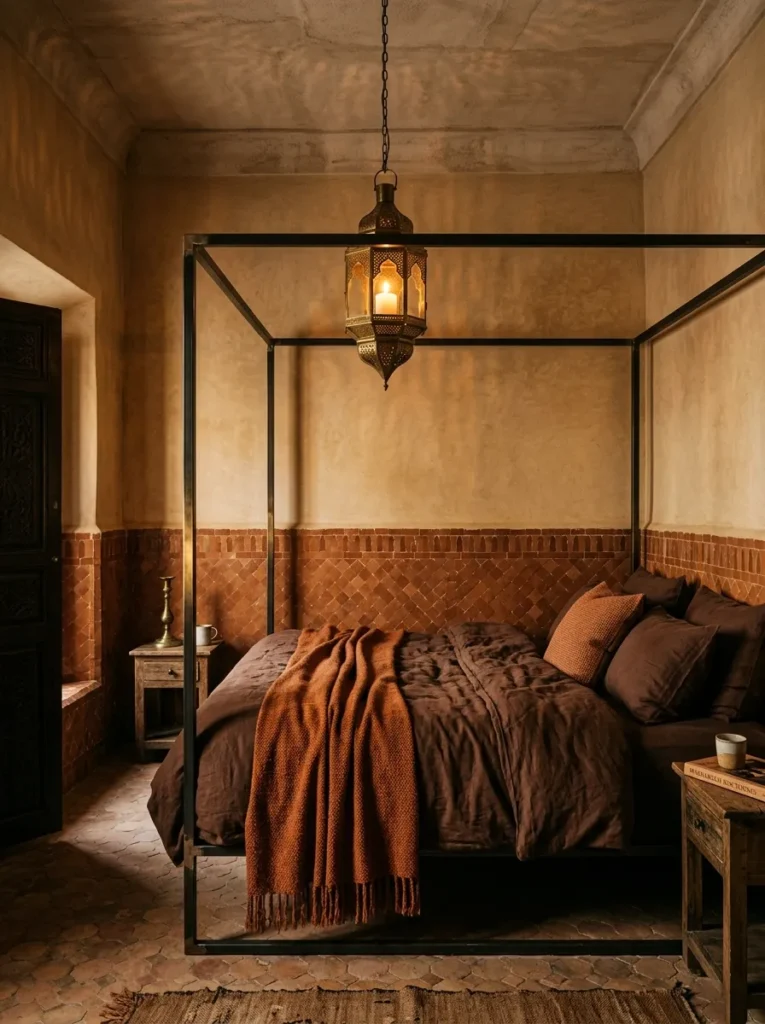
Brown, on its own, can feel heavy. The solution is not to add white or grey — those simply cancel the warmth — but to add something that is warm in a different register. Terracotta does this better than any other accent colour because it shares brown’s earthiness but introduces a different temperature: more orange, more alive, more Mediterranean. A single terracotta zellige tile border at the base of a limewashed wall, or a pair of terracotta pots holding trailing plants near the window, or a hand-thrown stoneware lamp in burnt clay — any of these will break the monotony without disturbing the warmth.
The common mistake is going too large. A terracotta feature wall in a brown bedroom tips into Halloween. One or two focused terracotta objects, positioned with intention, are all the room needs. Think of it as punctuation, not a paragraph.
6. Install Warm-Toned Wood Panelling as a Bedhead Feature Wall
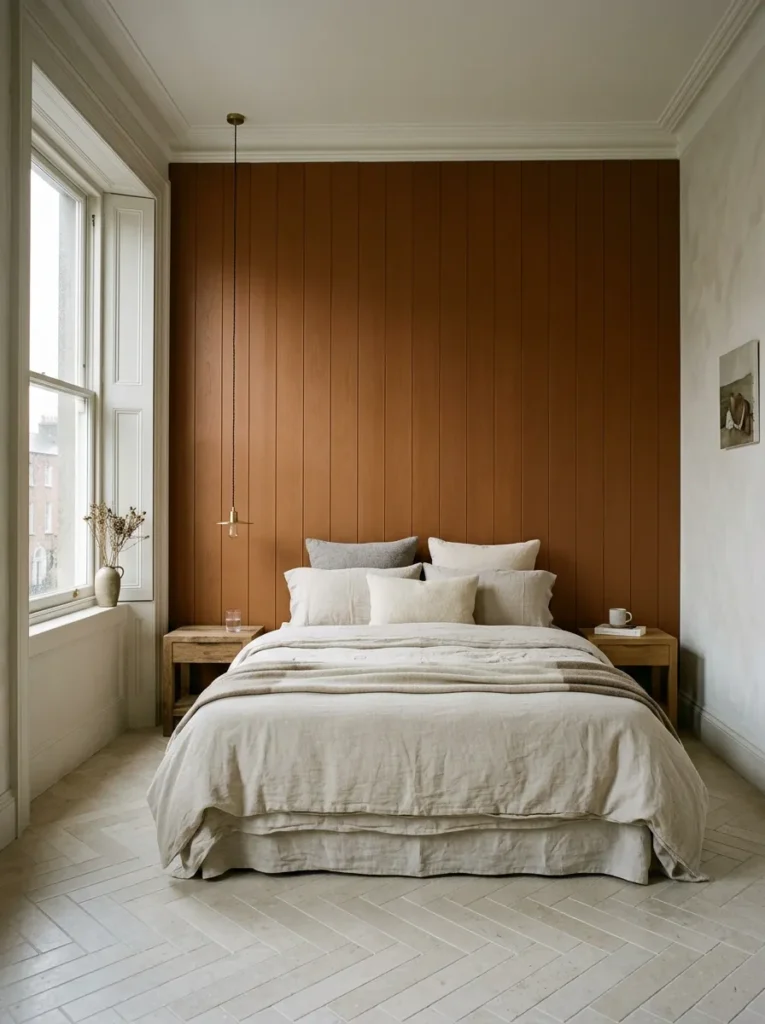
Wood panelling has returned — but the version worth using in a warm brown bedroom is not the tongue-and-groove white-painted Hamptons style, and it is not the dark mahogany library finish. It is something between: wide-format shiplap or flat-profile panels in a warm cognac stain, running vertically behind the bed from floor to ceiling. This treatment does several things simultaneously. It adds texture to the most-photographed wall in the room. It eliminates the need for art above the bed. And it creates an immediate sense that the room has been designed from the inside out rather than decorated on top.
Matte or satin finishes only. Gloss wood panelling in a bedroom reflects lamplight in unflattering directions and reads as slightly cold regardless of the underlying warmth of the timber. If the budget allows, match the panelling stain to the bed frame material exactly — this is the decision that changes everything, turning a styled feature wall into something that looks permanent and architectural.
7. Let Natural Light Do the Heavy Lifting

There is a tendency, when decorating a brown bedroom, to compensate for the colour’s perceived darkness by adding more artificial light sources. This is almost always the wrong instinct. Natural light, handled properly, does more for a warm interior than any number of table lamps or recessed spots. The goal is to maximise the quality and duration of natural light, not just its quantity. Sheer linen curtains rather than blackout panels. Windows kept free of internal obstructions. Mirrors positioned to reflect light across the room’s darker corners.
A south-facing bedroom in a warm brown scheme, with untreated linen at the window and a pale limestone or oak floor to bounce light upward, can feel extraordinary at mid-morning and again at golden hour. The brown surfaces absorb and reflect light differently across the day, and this is part of the point: the room looks different at 8am and at 5pm, and that variability is something a grey or white room can never offer.
8. Ground the Room With a Handwoven Wool Rug
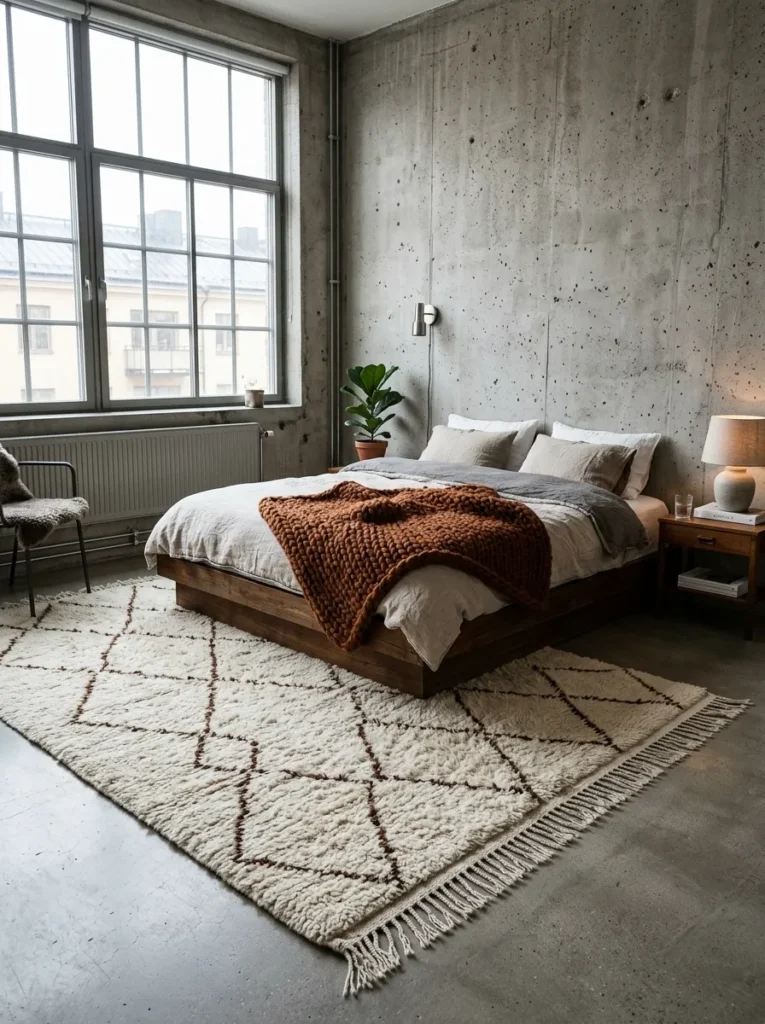
The floor is the room’s foundation and also, in most brown bedrooms, the element handled with the least thought. A plain area rug in a generic neutral adds nothing. A handwoven wool rug in a warm brown, ivory, and terracotta palette does something structural: it defines the bed zone, absorbs sound, adds texture at foot level, and introduces the kind of organic irregularity that machine-made textiles cannot replicate.
The size is non-negotiable. A rug that only fits under the foot of the bed, or that sits entirely in front of it, creates a visual gap between the bed and the floor that makes the room feel unfinished. The rug must extend at least fifty to sixty centimetres on each side of the bed frame, so that when you step out of bed, you step onto it. A rug that only works in photographs and not in daily use is not a rug worth having.
9. Choose Curtains That Disappear Into the Wall
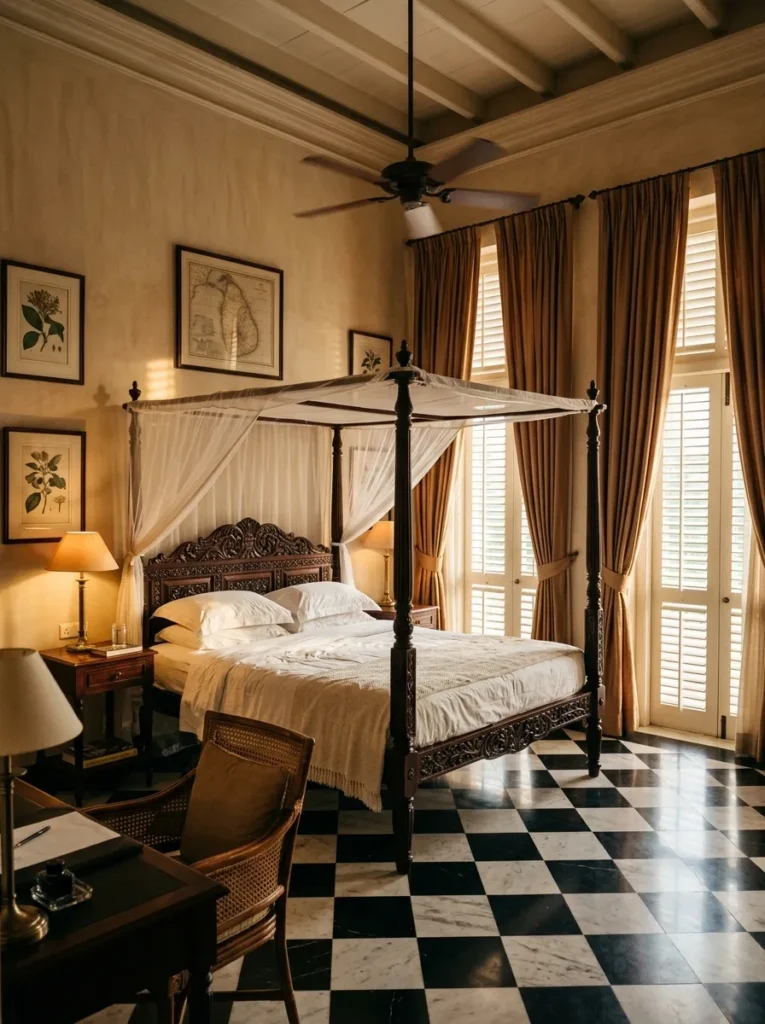
The impulse toward contrast curtains — crisp white drapes against a dark brown wall, or a bold pattern against a plain background — tends to produce a room that feels busy even when it is not. Curtains that match the wall colour so closely they almost vanish are a much more sophisticated choice. In a warm brown bedroom, this means full-length curtains in a mocha, sepia, or raw umber that pick up the wall tone. They do not need to be identical — they can be slightly lighter or slightly darker — but they should belong to the same family.
The effect is that the room feels taller, more composed, and less interrupted. When the curtains and the wall read as one surface, the room’s architecture becomes more legible. The furniture, the lighting, the bedding — these become the room’s actual subject matter. And that, for obvious reasons, is where attention should be.
10. Add One Sculptural Ceramic Lamp in a Deep Umber Glaze
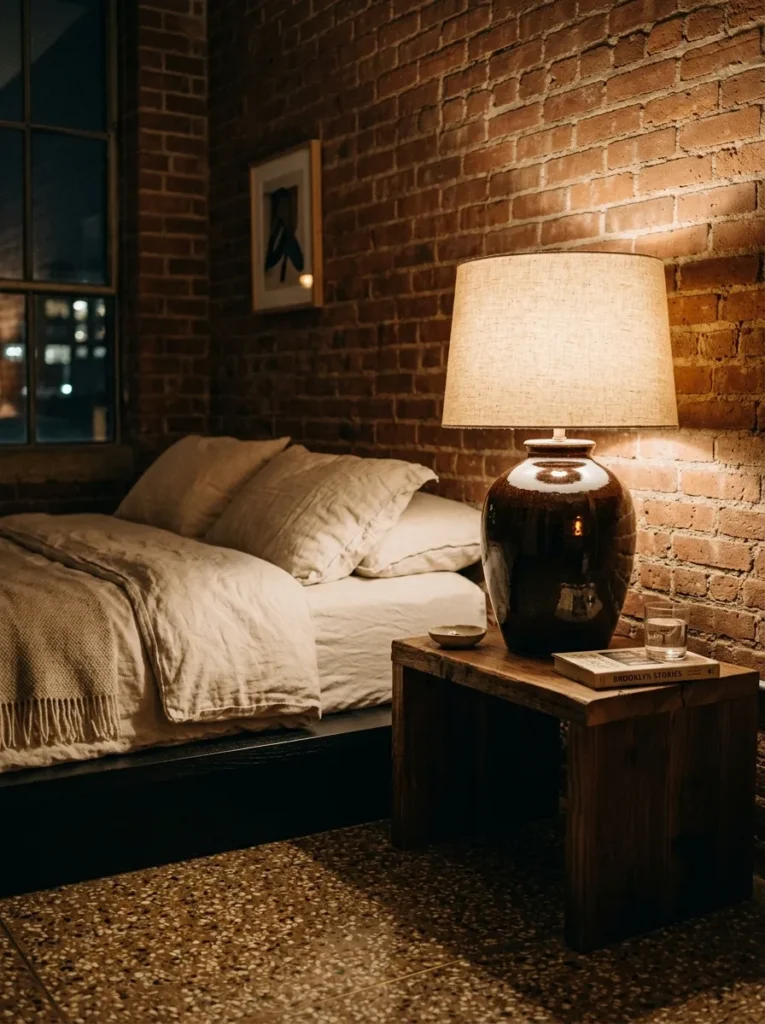
Table lamps in bedrooms are almost always afterthoughts — a matching pair bought as a set, placed symmetrically, never questioned again. The matching set is always the safer choice and almost never the better one. A single oversized ceramic lamp in a deep umber or treacle glaze, placed on one side of the bed only, introduces asymmetry that reads as intentional, confident, and far more interesting than bilateral symmetry ever manages.
The glaze detail matters. A high-fire reduction glaze in deep brown with flashes of black or dark amber — the kind of surface that looks different from every angle — is the specific material choice that elevates this from lamp to object. Put it on a raw-edge walnut nightstand at a height where the bulb is at eye level when you are sitting up in bed, and direct the light toward the wall rather than upward. The wall wash is warmer and more atmospheric than any lampshade allows.
11. Use Aged Leather — Sparingly
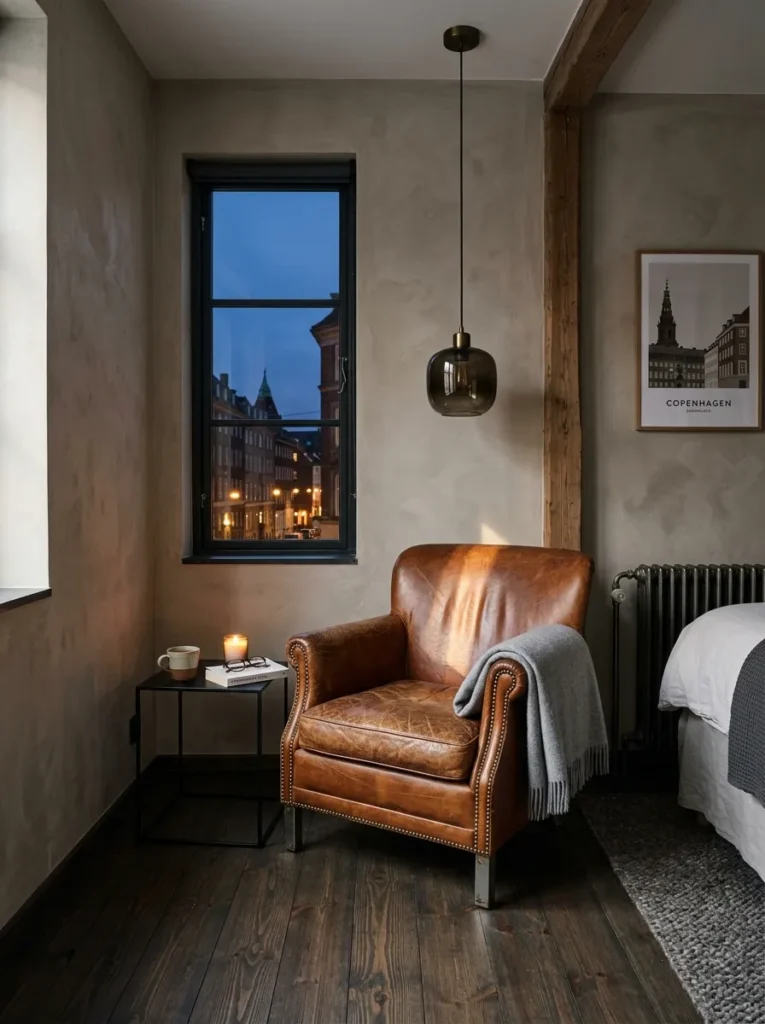
Leather in a warm brown bedroom is extremely easy to overdo. One leather-covered bench at the foot of the bed, or a single cognac leather armchair in the corner, is a contribution. Leather headboard plus leather bench plus leather side table accessories is a nightmare. The reason leather works when used with restraint is that it carries a specific kind of richness — a material that marks time visibly, that softens and lightens in the places touched most often — that synthetic and woven textiles simply cannot produce.
Vintage and vintage-adjacent are better than new. A brand-new full-grain leather armchair has a corporate stiffness that can make a bedroom feel like a hotel lobby. The same chair bought second-hand, the seat slightly faded, the back cracked along natural grain lines, fits the layered warmth of a brown room in a way no new piece quite manages. Condition it, don’t replace it.
12. Pick Bedding in Ivory, Not White
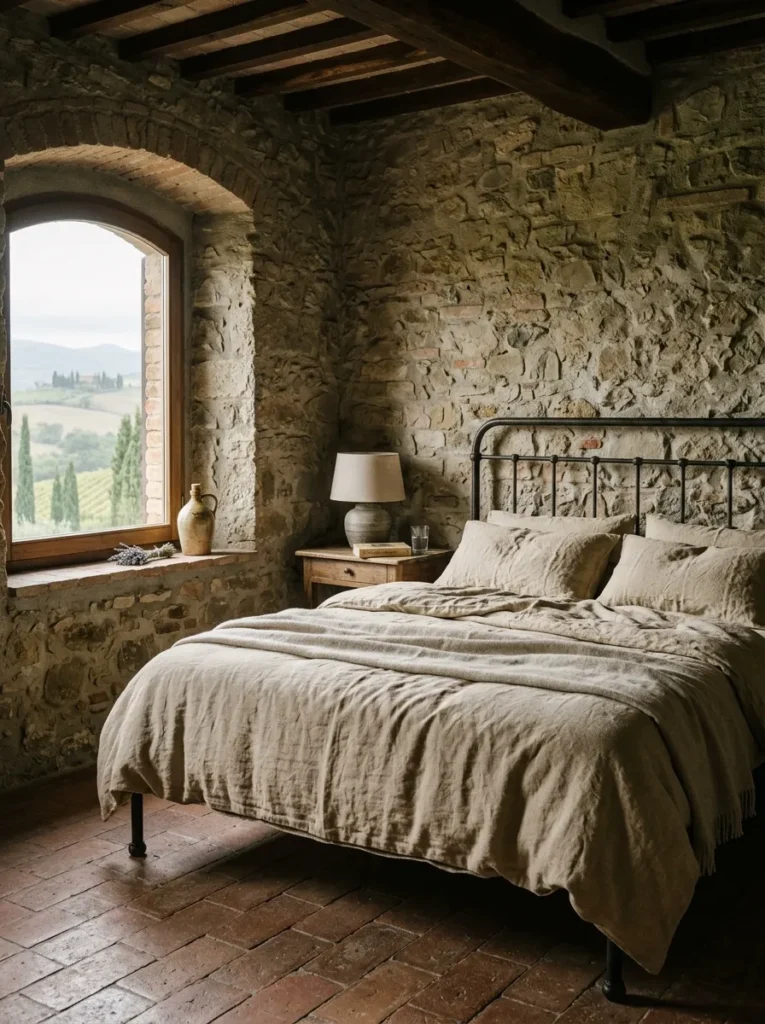
White bedding in a warm brown room is the most common mistake and the one that undoes the most work. White reads as cold against brown — it creates a sharp, almost jarring contrast that interrupts the warmth the rest of the room has built. Ivory is different. Ivory has yellow and cream undertones that sit in the same warm register as the surrounding tones, and the contrast it creates against a brown wall or headboard is softer, more resolved, more intentional.
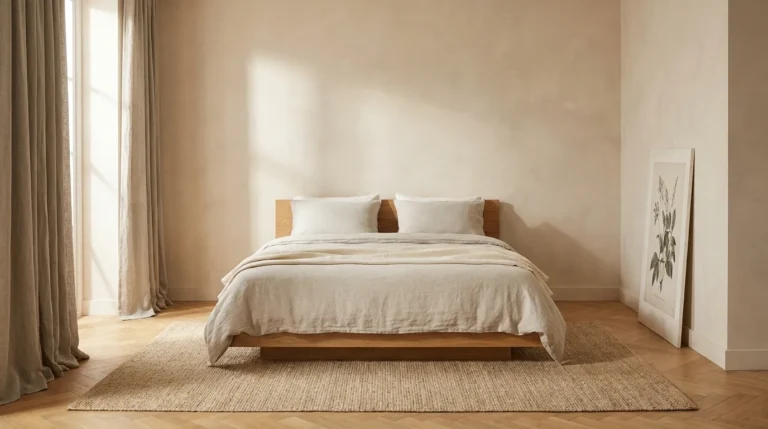
The material matters as much as the colour. Stone-washed linen or sand-washed cotton in ivory has a slight texture that catches light differently across its surface, adding visual depth that flat-woven hotel-white bedding cannot. The lived-in softness of linen — the way it rumples naturally — suits a warm brown bedroom far better than the rigid perfection of high-thread-count cotton sateen.
13. Try Brown Bedroom Ideas in Miniature First
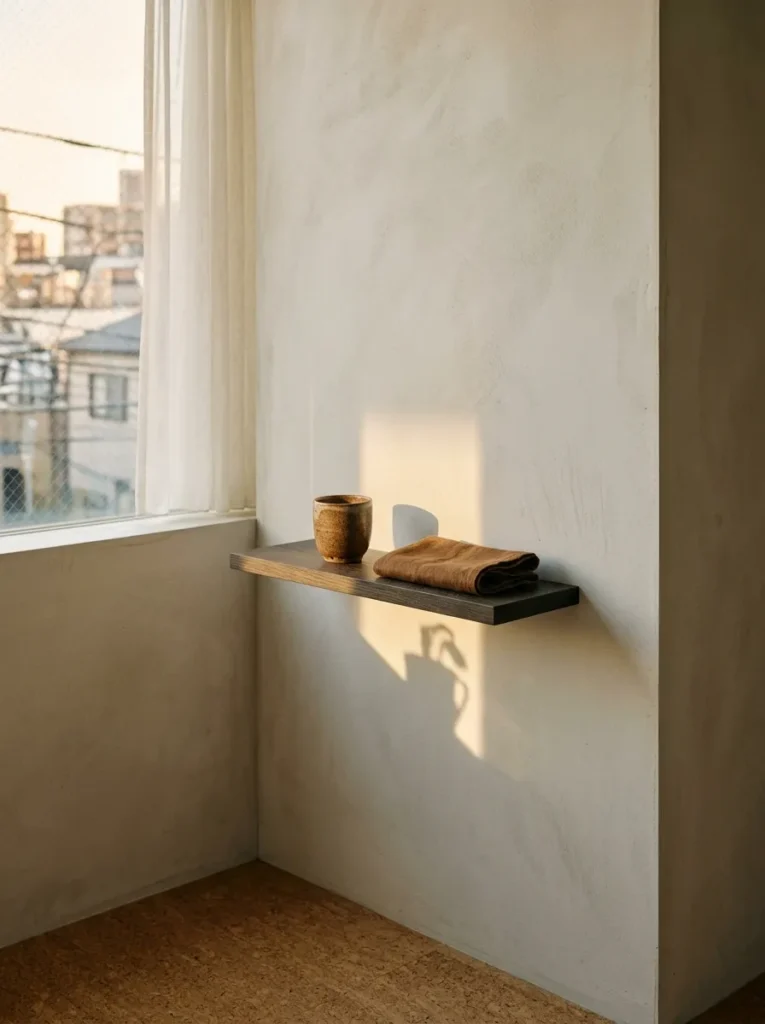
Before committing to a full brown bedroom redesign, there is an entirely reasonable way to test the direction without touching a wall or buying a headboard: a single shelf or bedside zone, composed of three or four objects in a range of brown tones and natural materials, will tell you almost everything you need to know about how the colour family works in your specific room with your specific light. A smoked oak shelf. A hand-thrown clay cup. A folded tobacco-brown linen cloth. A dried seedpod or botanical. The arrangement does not need to be large to be revealing.
If it looks right — if the tones sit together comfortably, if the textures create interest rather than noise, if the light in your room makes the materials glow rather than flatten — then commit. If it does not, the shelf cost almost nothing and no walls were painted.
14. Introduce a Smoked Oak Wardrobe as a Statement Piece
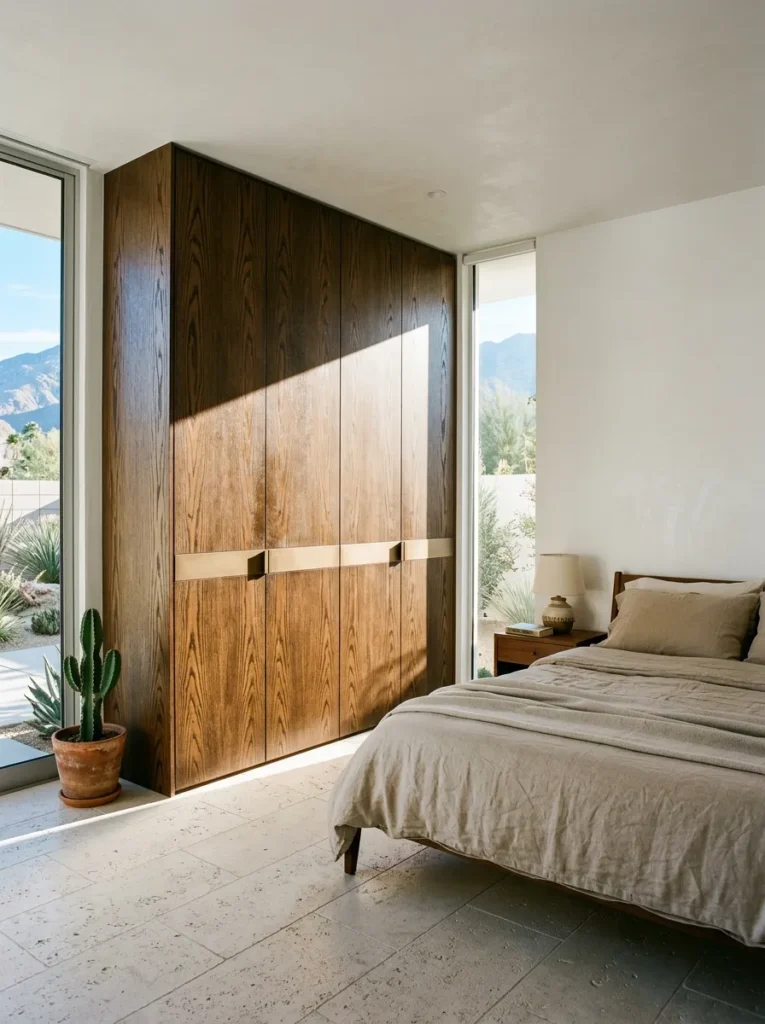
Most bedroom storage is designed to be invisible — built-in units painted to match the walls, sliding doors in neutral laminates, the assumption being that the wardrobe is a problem to be solved rather than a contribution to make. A smoked oak wardrobe, full height, in a material with visible grain and honest construction, disagrees with that assumption entirely. It earns its place in the room the way a well-chosen piece of furniture always earns its place: by being interesting enough to look at that you would choose to have it even if you did not need the storage.
Smoked oak specifically — not stained oak, not veneered MDF in an oak-look finish — has a depth of colour that sits exactly at the intersection of warm and sophisticated. It reads brown in some lights and grey-green in others. Against limewashed or warm plaster walls, it grounds the room. The handles should be matte bronze or unlacquered brass, flush-pull rather than protruding, so the wardrobe face reads as a single uninterrupted surface.
15. Work With Wabi-Sabi Textures Instead of Perfect Finishes
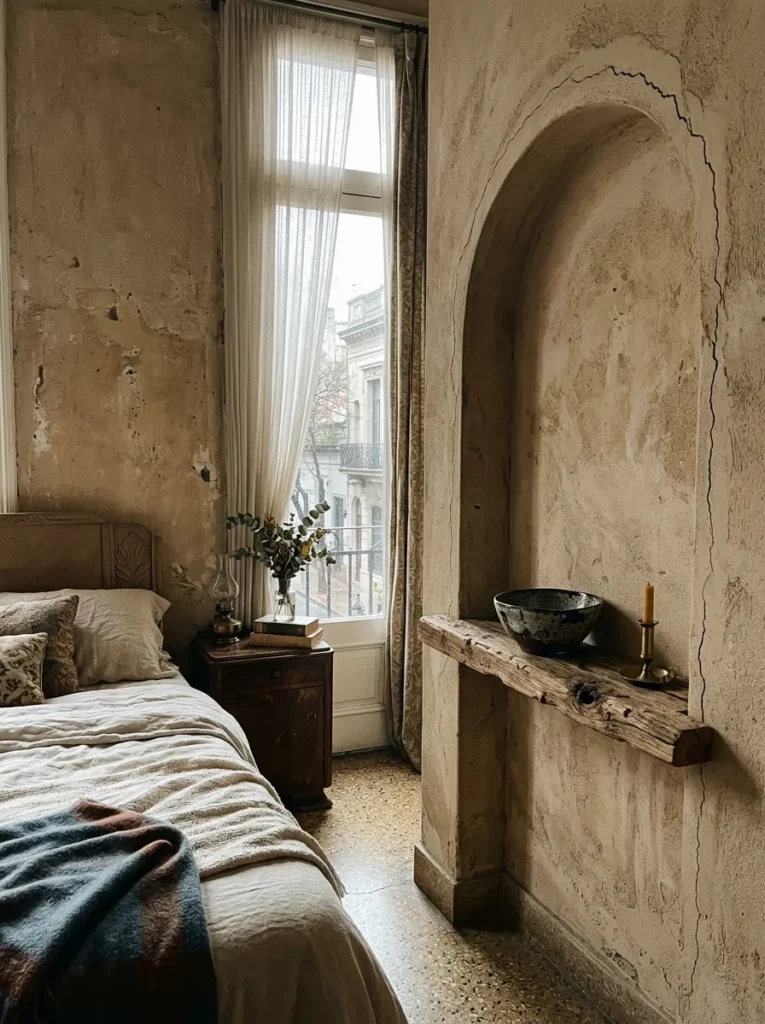
Perfection is a trap in warm interior design. A room where every surface is smooth, every edge is sharp, and every material is immaculate ends up reading as cold regardless of the colour palette — because warmth, genuinely, comes from imperfection. Wabi-sabi textures in a brown bedroom mean rough plaster walls with slight undulations. Handmade tiles with inconsistent edges. A ceramic bowl with a drip in the glaze. A timber shelf with a visible knot. These are not flaws. They are the point.
The specific materials to look for are hand-applied limewash, which leaves brush marks visible at certain angles; hand-thrown stoneware in any form; raw-edge or live-edge timber surfaces; and linen that has not been ironed. Any of these, introduced into an otherwise edited brown bedroom, will add the kind of organic life that no amount of expensive smooth-finish furniture can replicate. Warmth is a texture before it is a colour.
16. Get the Lighting Layered and Warm

A single overhead light source is the fastest way to destroy the atmosphere of any bedroom, and in a warm brown scheme it is particularly catastrophic because overhead lighting flattens the very tonal depth that makes brown rooms interesting. The solution is not simply to add more lights — it is to add lights at different heights that serve different purposes simultaneously. A ceiling pendant or a wall-mounted bedside sconce for ambient light. A table lamp for localised reading light. A floor lamp or low-level lamp for mood. Three or four sources, none of them above eye level when you are seated or lying down.
Bulb selection is not decorative — it is structural. Bulbs rated between 2200K and 2700K are the only acceptable choice in a warm brown bedroom. These colour temperatures sit in the amber-gold range and make every brown surface in the room look richer. Bulbs above 3000K introduce a clinical whiteness that is the bedroom equivalent of fluorescent office lighting, and that is not a metaphor worth exploring.
17. Consider a Chocolate Brown Ceiling for Intimacy
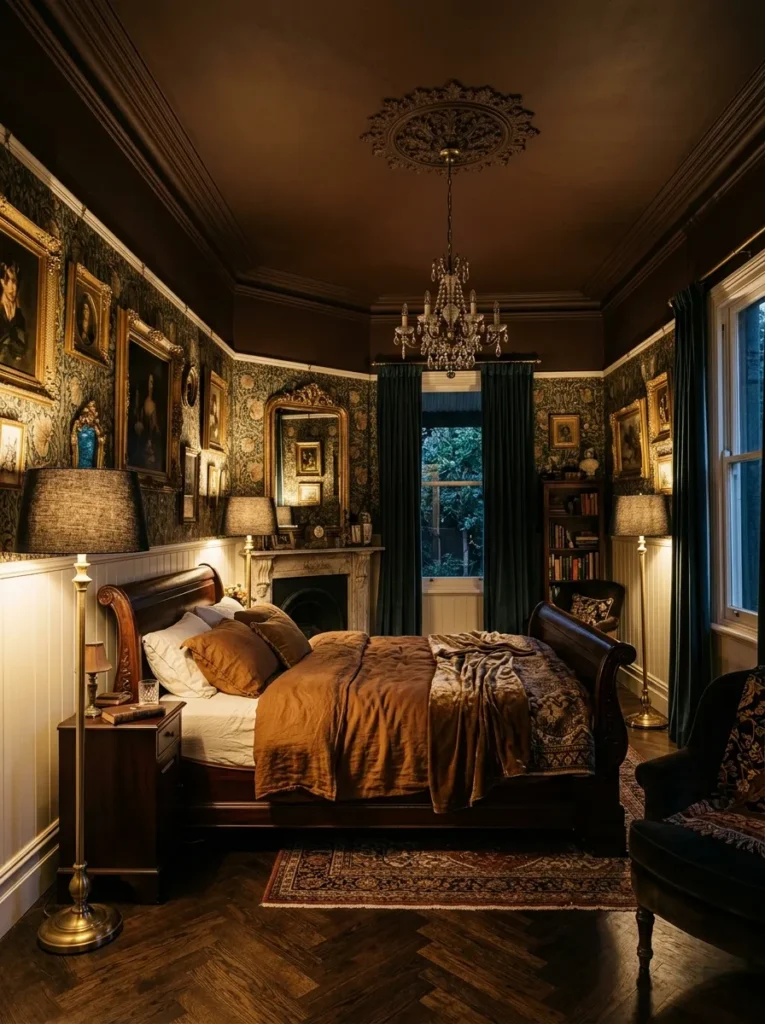
The ceiling is the room’s fifth wall and it is almost never treated as one. Most bedrooms have white ceilings regardless of the wall colour, because white ceilings feel safe and neutral and spatially generous. They also feel unresolved, and in a warm brown room specifically, a white ceiling creates an awkward tonal gap between the painted walls and the world above. A chocolate brown ceiling — matte finish, one shade darker than the walls — closes that gap and does something genuinely unexpected: it makes the room feel enclosed in the best possible sense. Intimate. Cave-like. Held.
The dining room has understood this for years. Hotel bars have understood this for decades. The bedroom is simply late to a very good idea.
18. Mix Metals — But Keep One Dominant
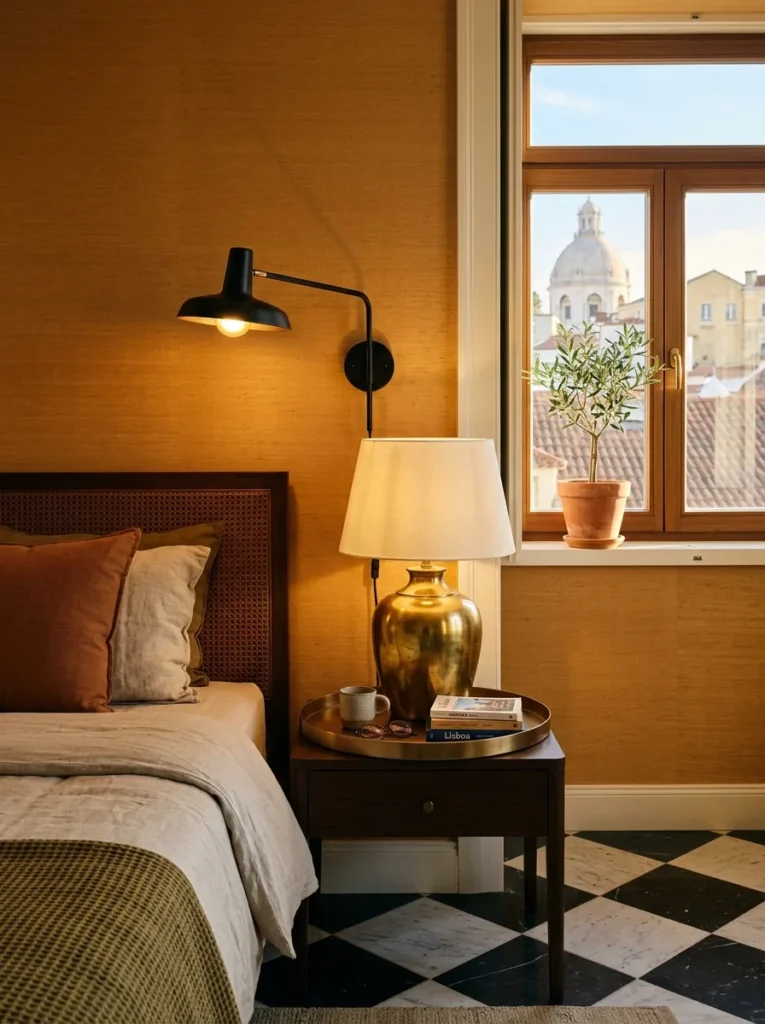
Metal mixing in interior design has been sanctioned as a trend for long enough that it no longer needs defending. What still needs defending is the specific way to do it so the room looks deliberate rather than indecisive. The rule is simple and almost universally ignored: one metal is the lead, present in the largest and most visible fixtures. One or two others appear as supporting details — smaller, lower down, further from the sightline.
In a warm brown bedroom, brass as the lead metal with matte black as the secondary is the most coherent pairing. The brass is warm and assertive; the matte black provides contrast without competing temperature. A brushed nickel or chrome detail introduced into this combination will immediately destabilise it — not fatally, but noticeably. The eye knows when a room has a logic. It also knows when one does not.
19. Use Plants With Dark, Glossy Leaves
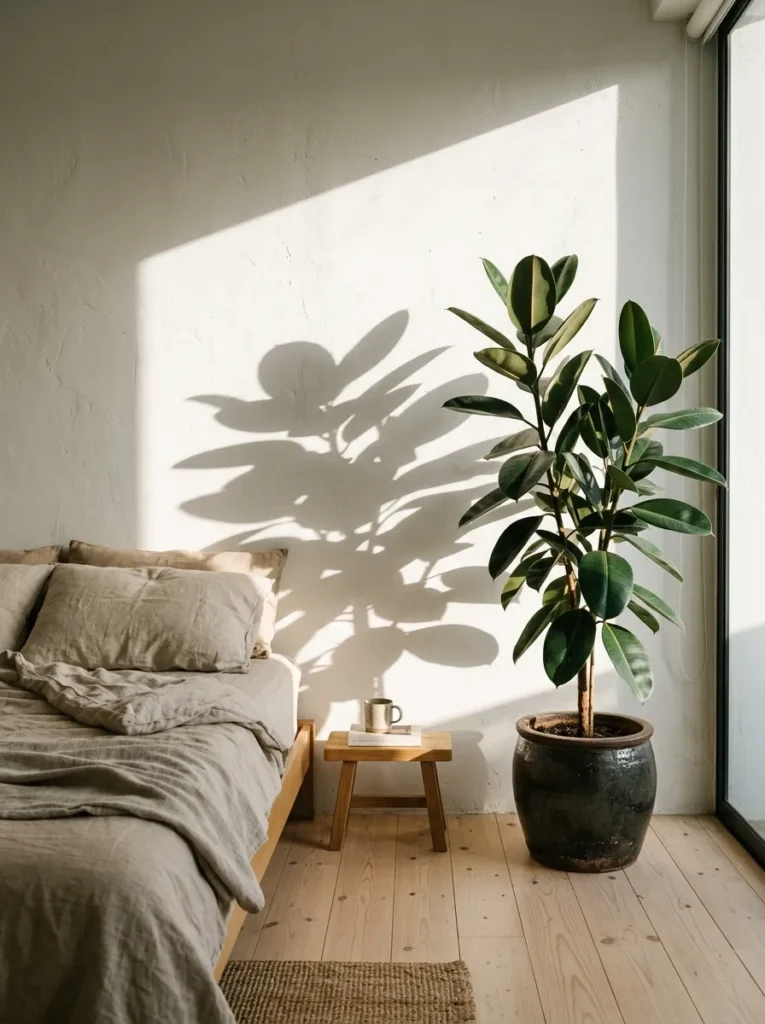
The reflexive plant choice in any bedroom is a trailing pothos or a peace lily in a white ceramic pot, and there is nothing wrong with either, but in a brown bedroom the plant’s own visual qualities matter far more than usual because the plant is doing colour work as well as organic work. Dark, glossy-leaved plants — rubber plants, fiddle-leaf figs, monstera in a dark-glazed stoneware pot — introduce a near-black green that sits perfectly against warm brown walls and adds depth the room would not otherwise have.
The pot is half the decision. A hand-thrown stoneware pot in a dark treacle glaze, or an aged terracotta pot with mineral deposits on its surface, is worth three times the plastic nursery container. The plant and pot together should feel like a single composed object, not a plant placed in whatever container came with it.
20. Keep the Floor Light If the Walls Are Dark
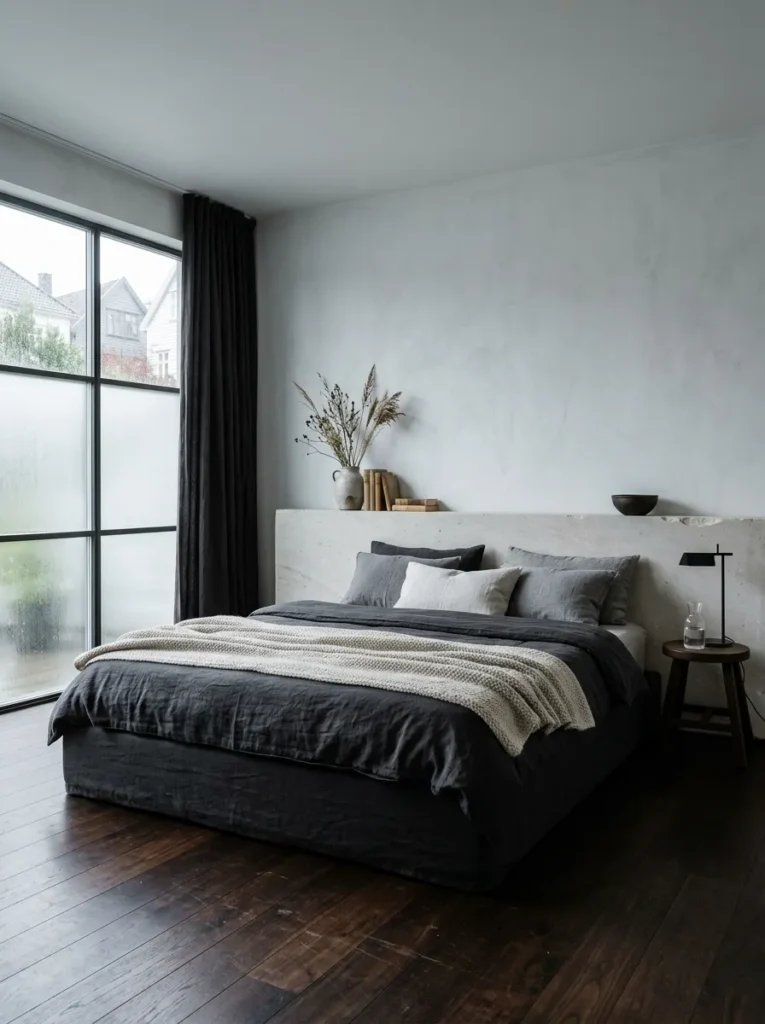
There is a temptation, when the walls are dark and the furniture is deep-toned, to choose a dark floor and lean fully into the envelope. Resist this. A dark floor in a dark-walled room eliminates the tonal contrast that the room needs to feel dimensioned rather than flattened. A pale limestone, wide-plank pine, or light herringbone oak floor against dark espresso walls creates a grounding line at the base of the room that the eye can locate, which makes the whole composition feel more spatially legible.
This is not about introducing lightness as relief from the darkness. It is about ensuring the room has a tonal range that registers as intentional. The floor anchors. The walls enclose. When they are the same tone, neither function works properly.
21. Stop Adding Things
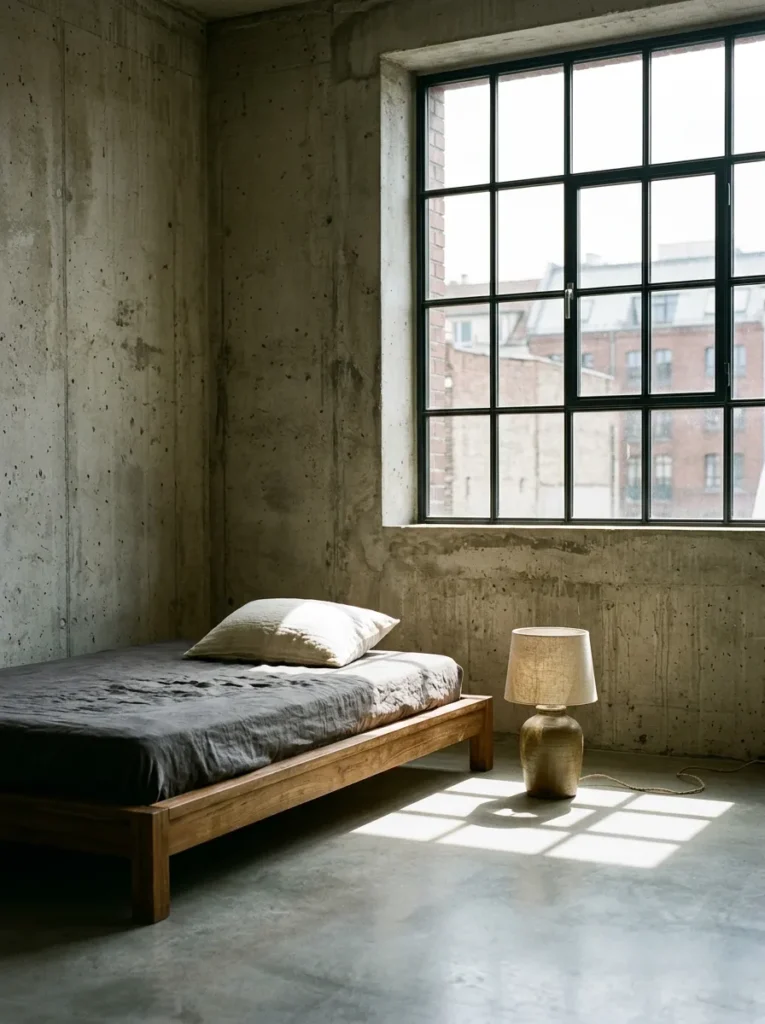
The final and most important decision in any warm brown bedroom is the one most people never make: stopping. Every surface covered. Every shelf populated. Every corner occupied. The instinct to fill space is strong, and in a brown room — where the warmth of the palette invites layering and texture — it is particularly seductive. But the rooms that actually feel sophisticated are not the rooms with the most objects. They are the rooms with the fewest objects that are each exactly right.
A single handmade ceramic lamp. One good rug. A bed dressed in two textiles only. One plant. The wall, visible and considered. These five elements, chosen well, will outperform fifteen elements chosen with less certainty every single time. Restraint is not minimalism. It is the confidence to stop before the room is finished, because a room that has room to breathe is a room that feels lived in rather than performed.
Final Thoughts
Brown bedroom ideas work best when the approach is material before colour — meaning the decision to use brown should follow from what you want the room to feel like, not from what you want it to look like in a photograph. Start with the wall treatment, because that decision governs everything else. If you commit to the wall, the furniture choices become easier, the lighting logic becomes clearer, and the textiles almost suggest themselves. Do not start with the bedding and work outward — that is a decorating approach, not a design one. The rooms in this article that feel most resolved share one quality: they look like someone made a single strong decision first and then edited everything else into alignment with it. Find your one decision and make it with confidence.
Save these brown bedroom ideas for your next bedroom redesign.