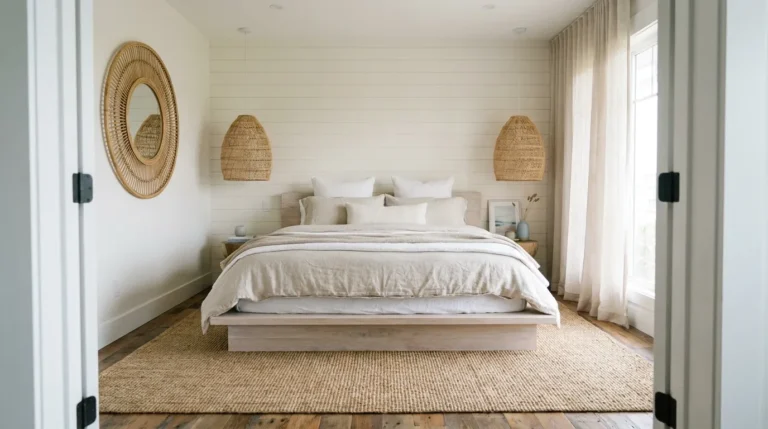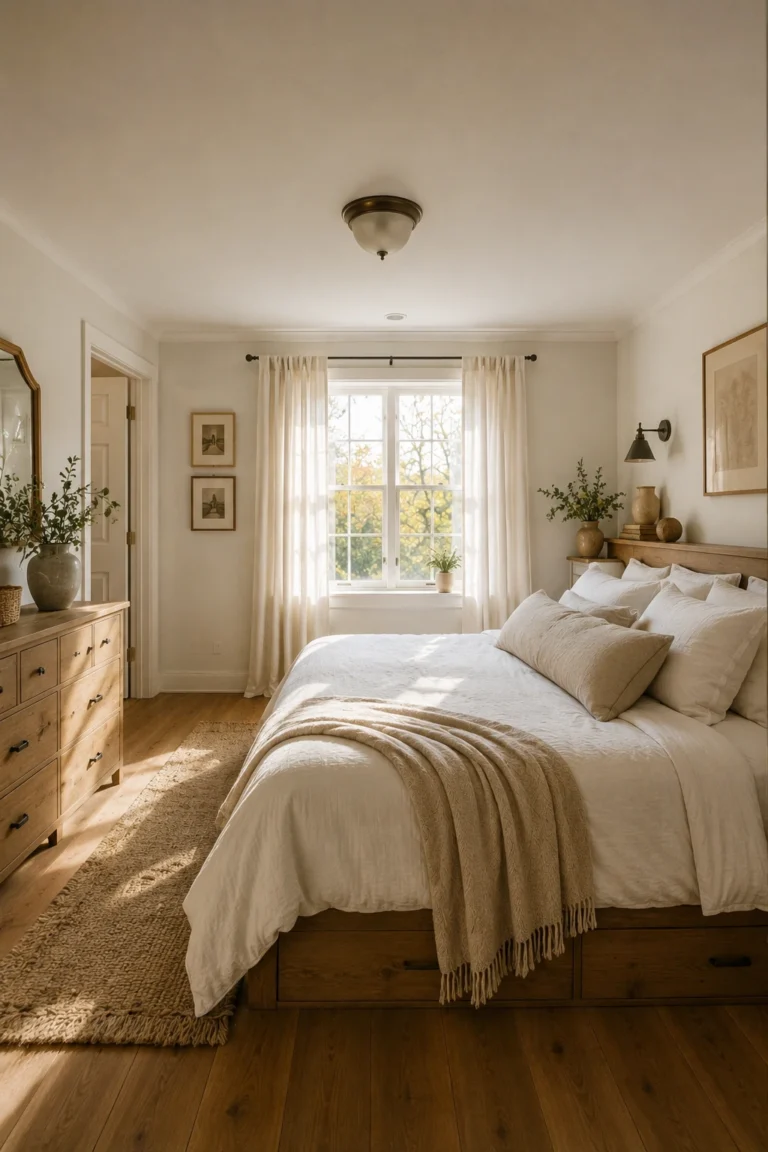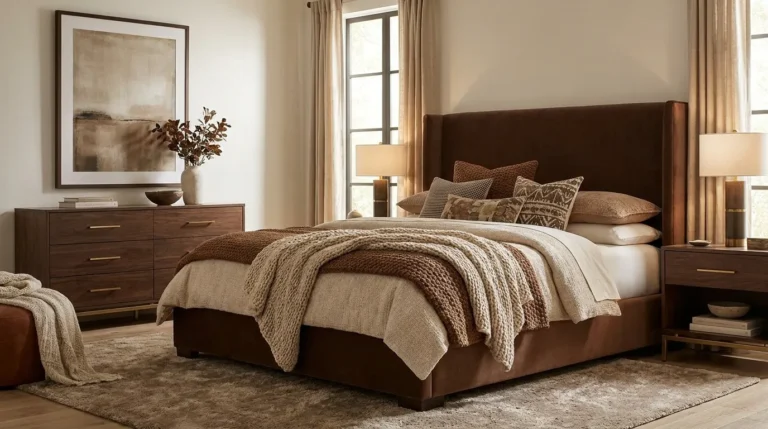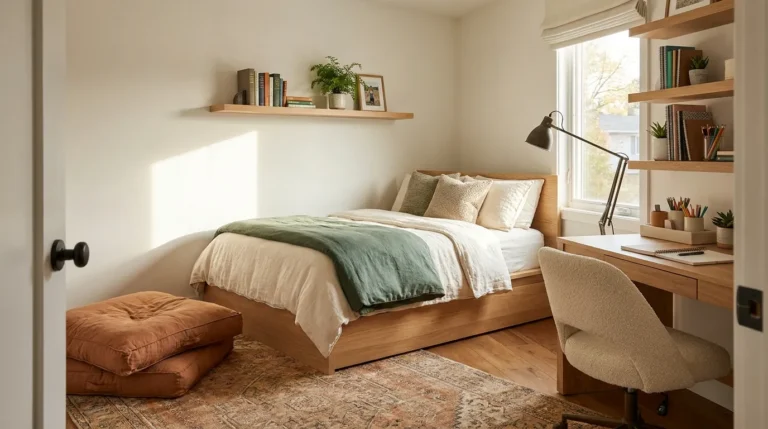
21 Earthy Bedroom Ideas That Feel Warm and Organic
An earthy bedroom is the antidote to every trend that makes a room feel like it was staged rather than lived in. The palette draws from soil, stone, bark, and clay — and those tones do something specific in a bedroom that cooler, sharper colors can’t: they absorb light rather than reflect it, which makes a room feel quieter and more contained at the exact time of day you most need it to. Earthy bedroom ideas work because they align with the way human eyes and nervous systems actually respond to warm, muted, natural tones — as a signal that it’s safe to slow down.
This roundup gathers 21 distinct approaches to the earthy bedroom, from raw clay plaster walls to a linen platform bed, from a stone-look feature wall to a bedroom that layers ochre, rust, and deep olive in textiles alone without touching the walls. Each idea explains why the specific material or tone creates the organic warmth it does, where it performs best given room size and light exposure, and how to implement it without the common mistake of tipping warm and earthy into flat and muddy. Whether you’re starting with blank walls and a bare floor or refreshing a bedroom that already has bones worth keeping, save the ideas that fit your space and start building from there.
1. Raw Clay or Limewash Plaster Walls in Warm Sand Tones
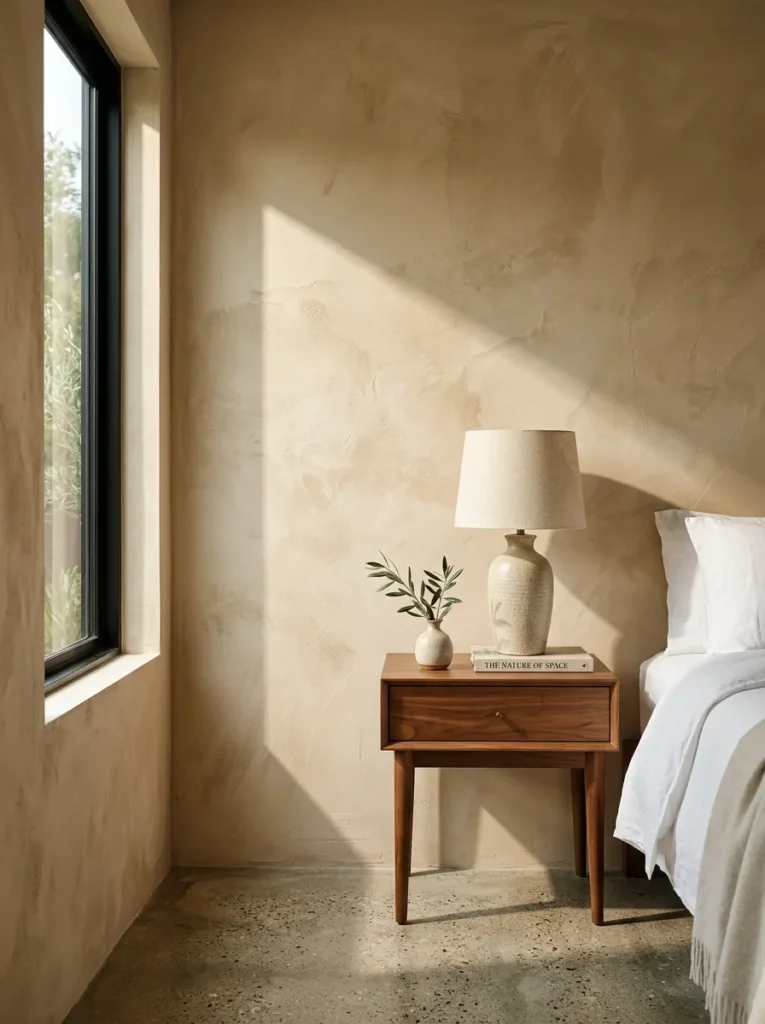
Clay plaster or limewash paint applied to bedroom walls creates a depth of color that flat paint simply cannot match because the slightly uneven, hand-applied surface catches light at different angles throughout the day, reading as bone white in morning sun and as warm amber by lamplight. This is the defining finish in earthy bedrooms because it mimics how natural materials actually behave — never entirely uniform, never flat, always alive with subtle variation. Sand, warm cream, and pale terracotta are the most wearable tones for a full bedroom application. Limewash is available as a paint product that approximates the effect without a plasterer; true clay plaster is deeper and more textured but requires professional application for best results.
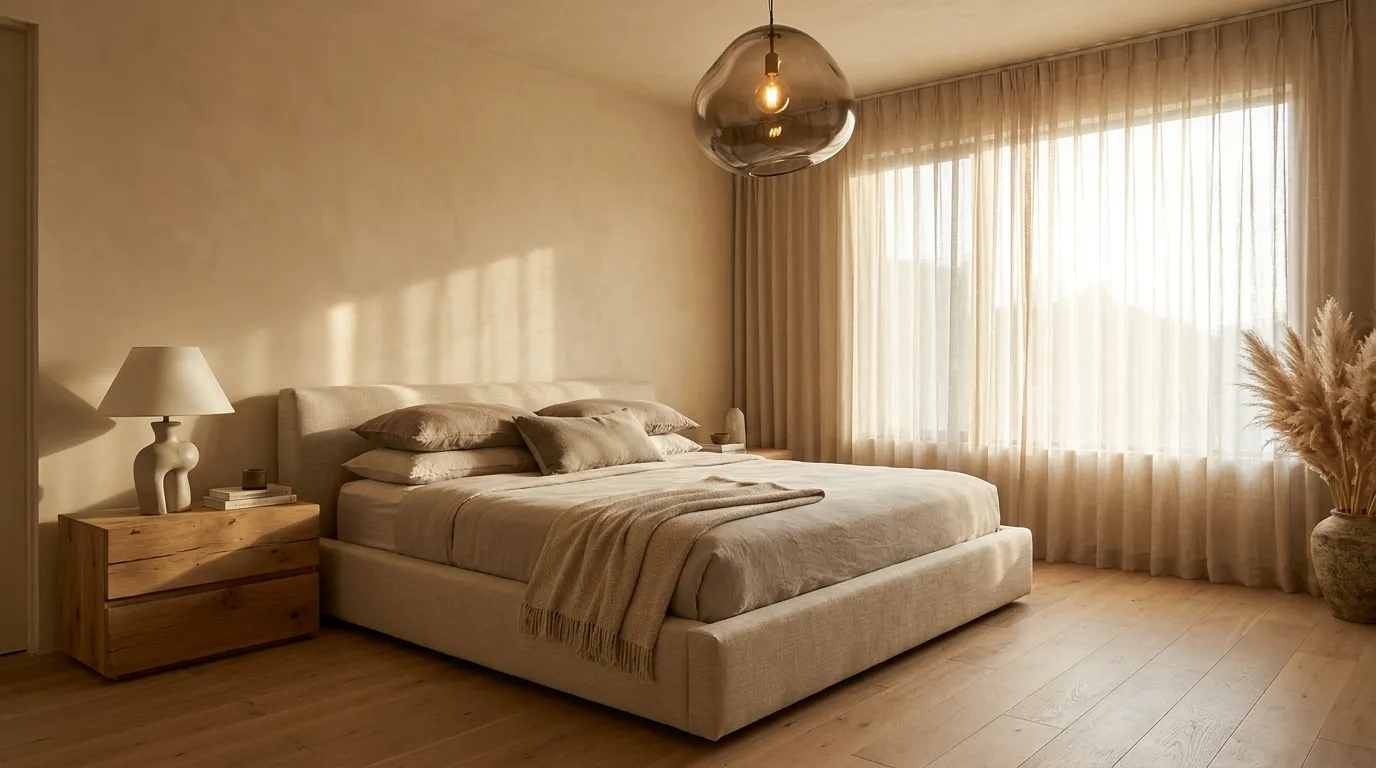
2. A Linen Platform Bed as the Room’s Anchor
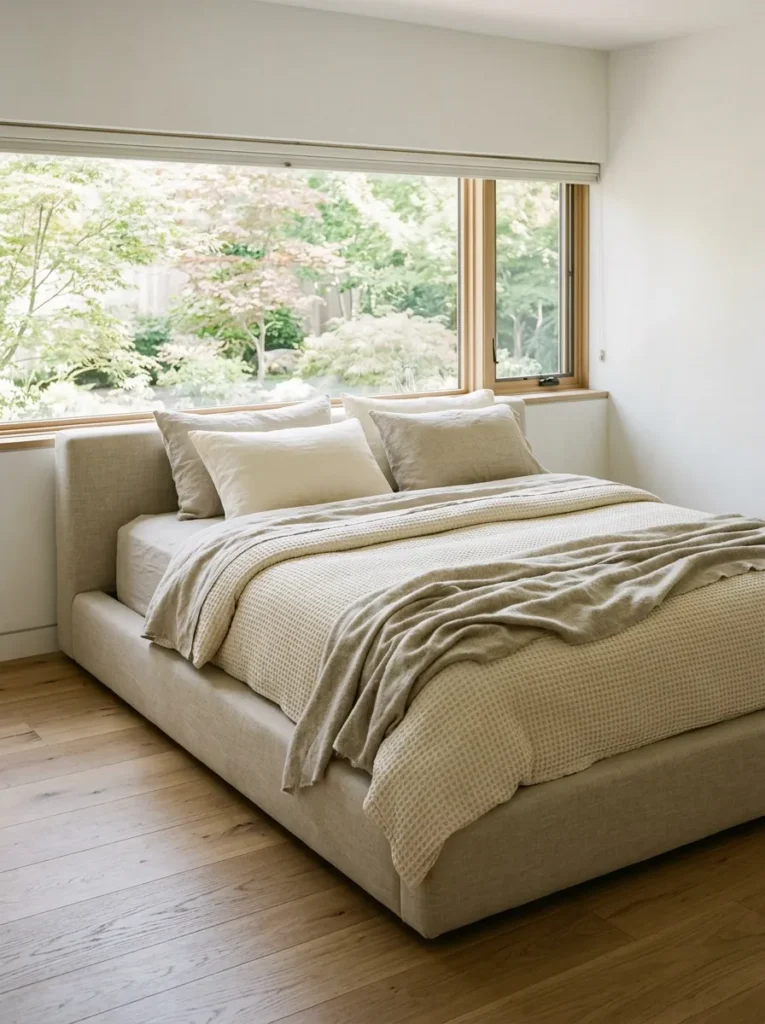
A low platform bed frame upholstered in natural linen — unbleached, oatmeal, or warm flax — sets the tonal foundation for an earthy bedroom before a single accessory is added. The linen’s texture catches light in the same organic, imperfect way a limewash wall does, and the low profile of a platform frame brings the bed’s visual weight toward the floor, making the room feel more grounded and restful. This pairing of horizontal low furniture with a textile that has natural grain variation is the structural reason earthy bedrooms feel calm rather than just neutral. Avoid linen that’s been treated to a uniform, too-crisp finish; the slight wrinkle is the material’s point.
3. Terracotta Tile or Concrete Flooring Instead of Wood
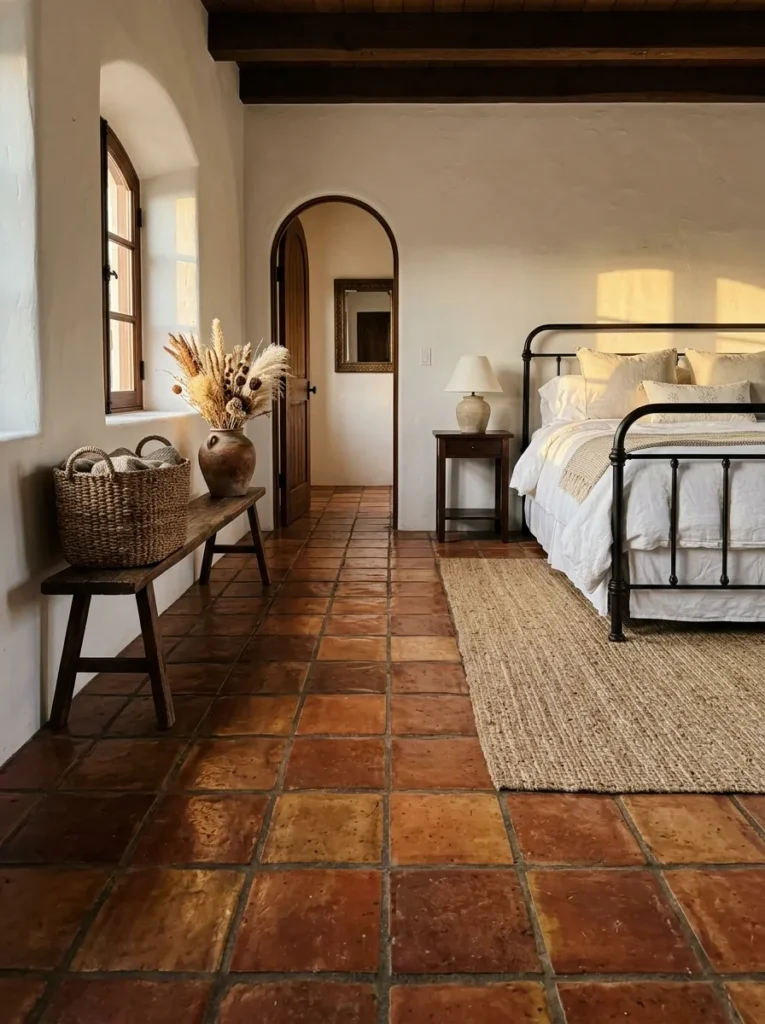
Where most bedrooms default to hardwood or carpet, a bedroom with raw terracotta tile or honed concrete flooring has an inherently organic material quality that carries through even in rooms with otherwise simple furniture. The floor is the largest single material surface in a room, so choosing it in a natural, matte, earthy material rather than a processed or high-sheen finish changes the room’s entire tone without any additional styling. Terracotta tiles in particular work beautifully in bedrooms because they’re warm underfoot in a way concrete alone is not, and their color deepens with use and light exposure. Pair with a large undyed wool or jute rug at the bedside for the warmth needed first thing in the morning.
4. Wabi-Sabi Bedroom with Imperfect, Handmade Surfaces
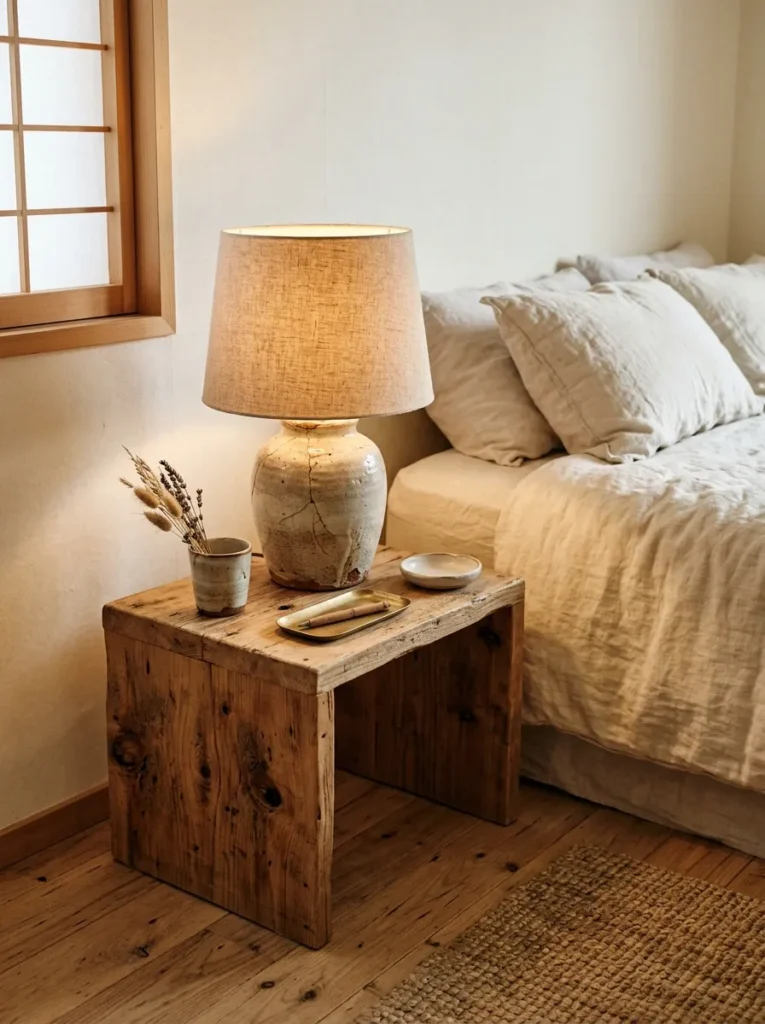
The Japanese wabi-sabi principle — finding beauty in imperfection and incompleteness — translates directly into an earthy bedroom aesthetic when it guides material selection. A cracked and repaired ceramic lamp base, a linen duvet that’s slightly faded from washing, a nightstand in raw wood that shows its knots and grain without staining or lacquer — each of these individually unremarkable, together creating a room that feels genuinely inhabited and deeply human rather than showroom-assembled. The design logic is the absence of perfection as an intentional choice: no matching set, no identical finishes, nothing that looks brand new and interchangeable.
5. A Boucle or Chunky Knit Headboard for Tactile Warmth
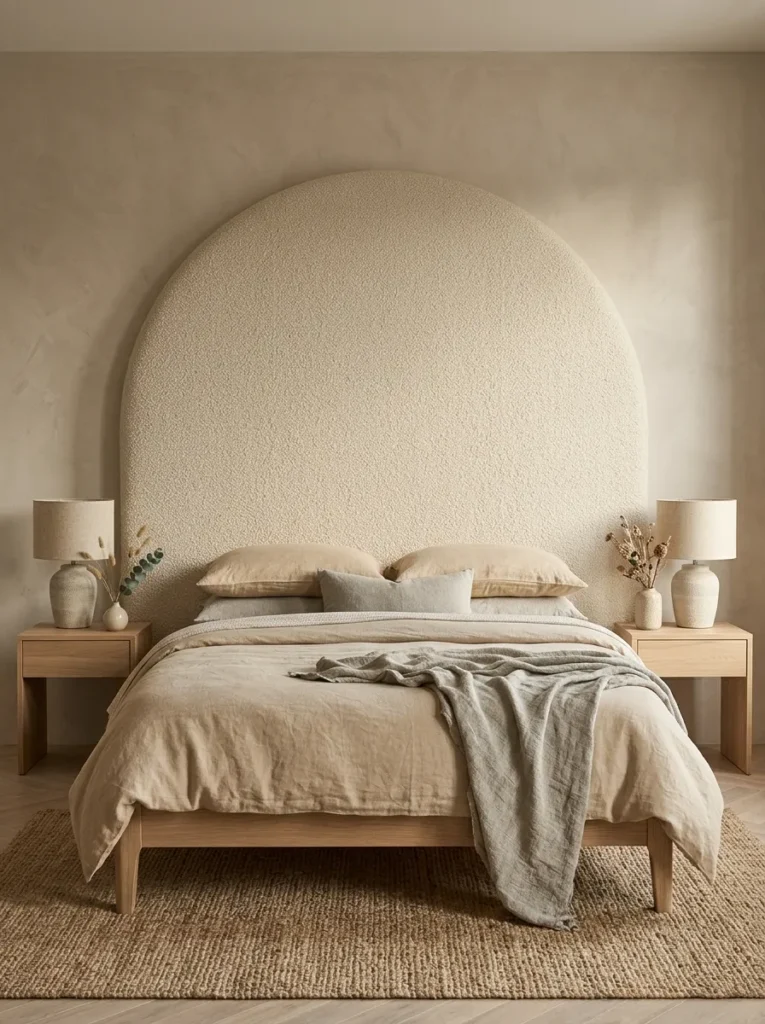
An upholstered headboard in boucle fabric — the looped, nubby wool weave that has a deeply tactile and warm visual quality — adds textural richness to a bedroom without adding any additional color. In earthy bedrooms, where the palette tends to be restrained and tonal, the texture becomes the design interest rather than a pattern or color contrast. Boucle headboards work at any scale, from a tight twin-sized panel to an oversized king statement, and suit both minimalist and more layered earthy interiors equally well. A chunky hand-knit or woven macramé headboard achieves a similar tactile effect with a more bohemian edge.
6. Rust, Ochre, and Burnt Orange in Layered Textiles
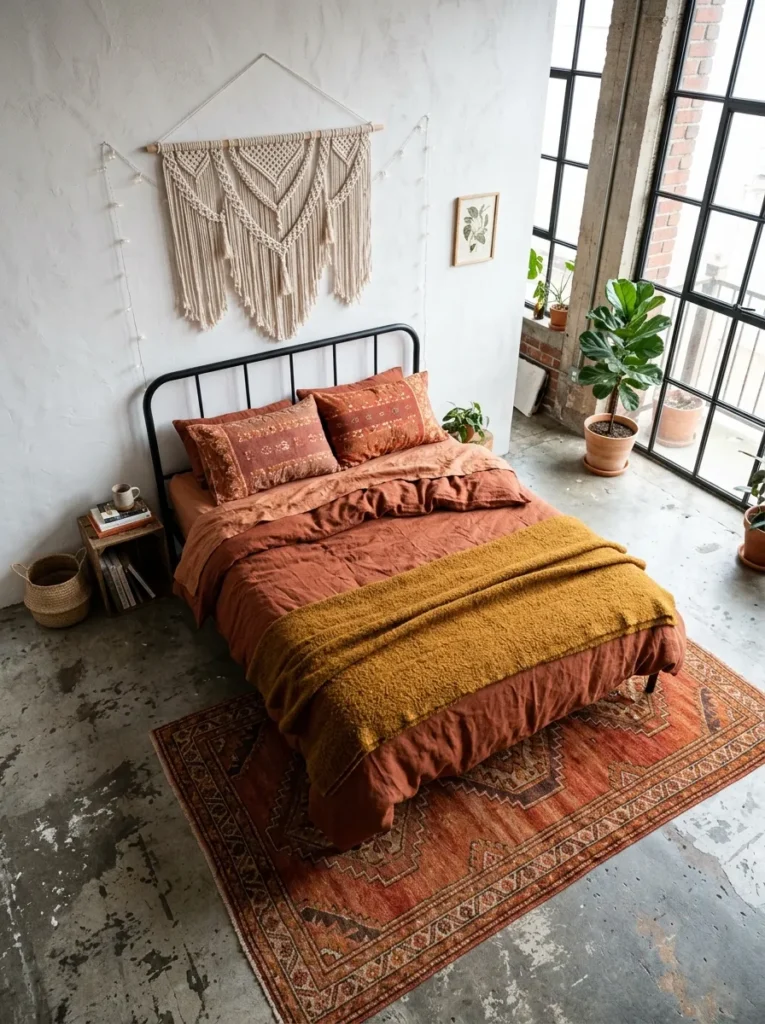
In a bedroom with neutral walls — greige, white, or soft plaster — the earthy palette can live entirely in the textile layer: a rust-toned linen duvet, a deep ochre throw folded across the foot of the bed, a cushion in burnt orange or faded terracotta, a small rug in a muted persimmon tone. This approach uses the bed as the palette’s carrier rather than the walls, which suits renters, people who repaint frequently, or anyone whose room has existing wall color they can’t change. The layering logic is tone-over-tone rather than contrast: rust, ochre, and orange sit closely enough in value that they read as a cohesive earthy composition rather than competing warm colors.
7. A Rattan or Cane Bed Frame for Lightweight Organic Texture
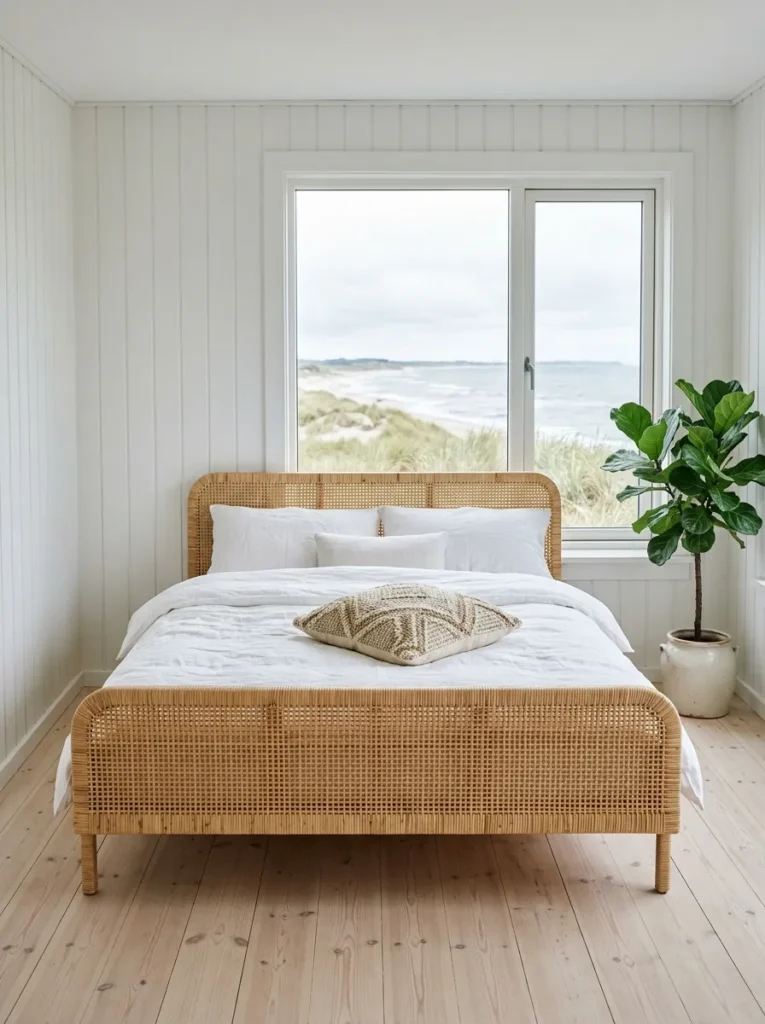
A rattan or cane bed frame has the structural transparency that makes a bedroom feel lighter and airier than a solid upholstered or wood frame, because the eye passes through the cane weave rather than stopping at a solid surface. This transparency works in smaller earthy bedrooms specifically, where a heavy frame would consume the room’s modest square footage visually even if it fits physically. Natural, undyed rattan suits earthy palettes best; avoid stained or lacquered finishes that give the cane a manufactured appearance and lose the material’s inherent warmth.
8. Mushroom, Putty, and Warm Taupe Across All Surfaces
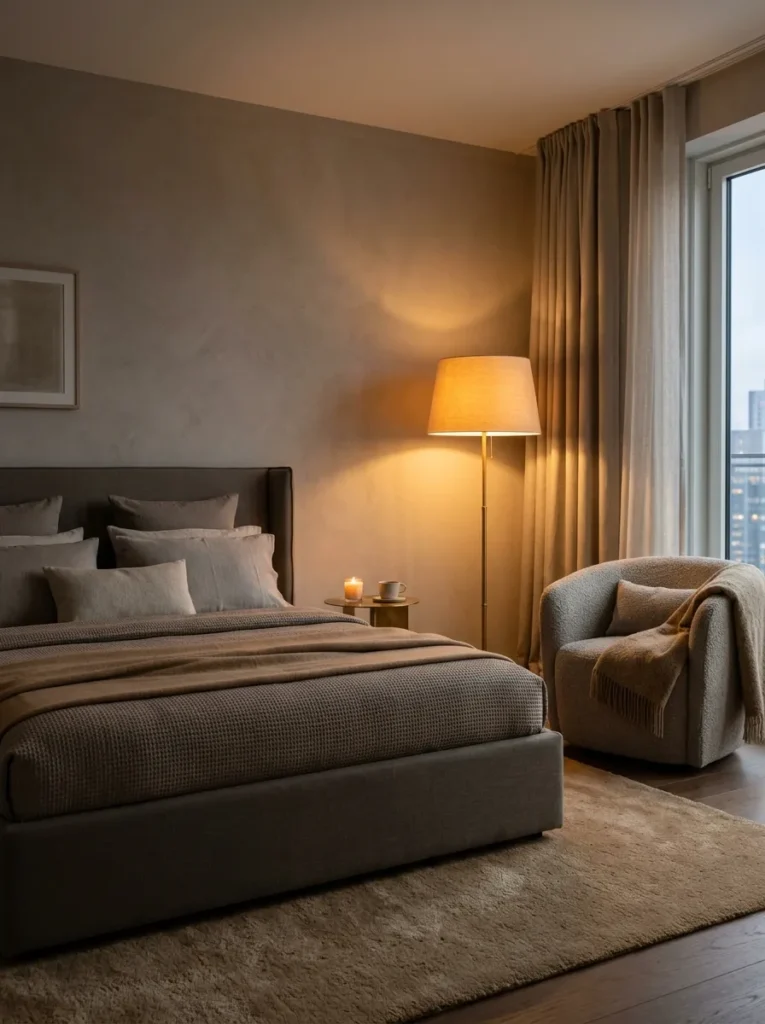
One of the most sophisticated and difficult-to-execute earthy bedroom ideas is an all-tonal room where walls, bedding, furniture, and floor covering are all in the same mushroom-to-putty-to-warm-taupe family, differentiated only by finish and texture rather than hue. This works because the palette’s warmth is constant — every tone pulls from the same brown-gray-beige base rather than mixing warm and cool neutrals — which makes the room feel seamlessly resolved rather than mismatched. The challenge is that all-tonal rooms expose any tone that pulls too warm or too cool relative to the rest; pull every selection in natural light from the same swatch family before committing.
9. A Wooden Canopy or Four-Poster Frame in Unfinished Oak
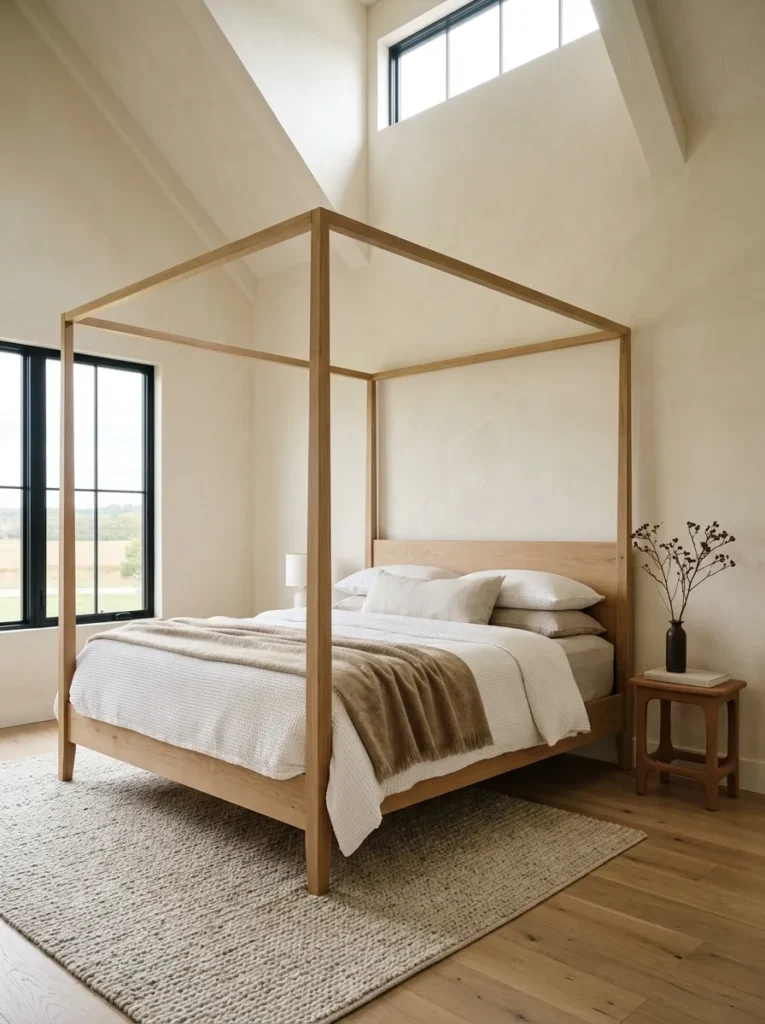
An unfinished or lightly oiled oak four-poster or canopy bed frame brings the most unmistakably organic of all the earthy bedroom furniture forms into the room because raw oak’s grain, color variation, and scent are all immediately identifiable as natural. The frame’s height adds vertical presence without visual heaviness the way a solid headboard does, since the canopy posts create four vertical lines that draw the eye up without filling the space between them. This suits rooms with ceilings of at least 8.5 feet, since a canopy frame in a low-ceilinged room can feel proportionally compressed.
10. Verdant Indoor Plants as a Living Material Layer
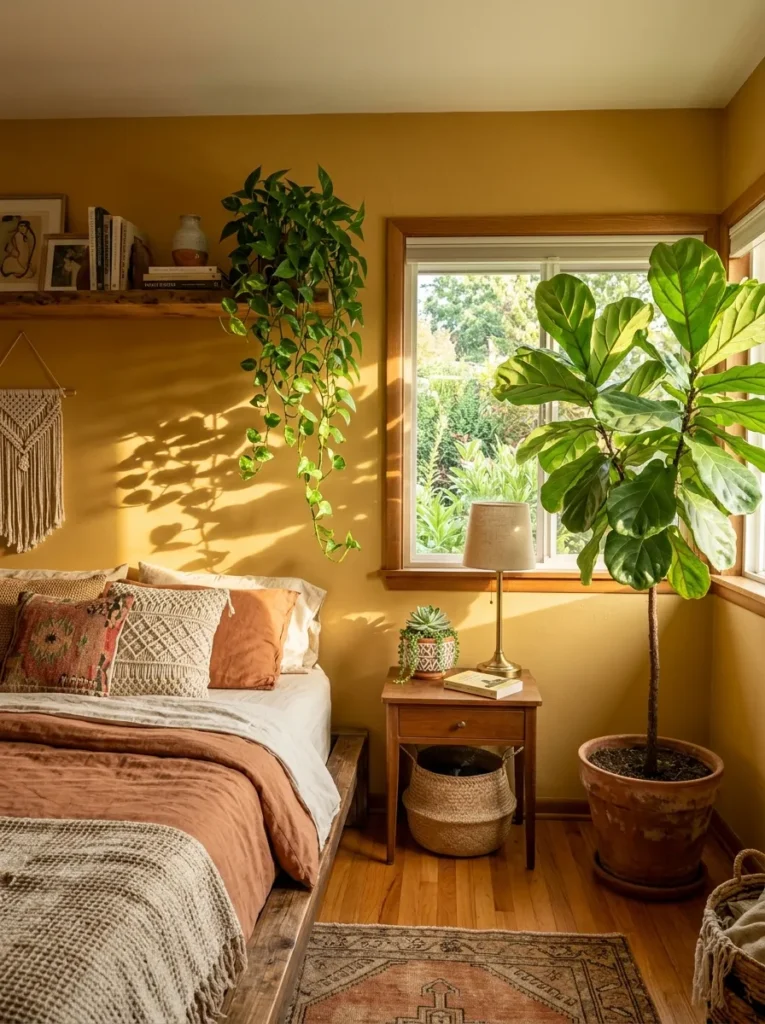
In earthy bedrooms specifically, plants are not a decorative afterthought — they are a material layer, the same way textiles and wood are material layers. A large fiddle-leaf fig in the corner, a trailing pothos on a high shelf, and a small succulent on the nightstand introduce three distinct plant forms and scales simultaneously, which is the minimum needed for the greenery to read as a cohesive living element rather than a single isolated plant sitting on a surface. Bedroom plant selection should favor low-light tolerant species, since bedrooms frequently have less natural light than living rooms, and avoid species known to be irritating to sleep for sensitive people.
11. A Stone or Travertine Bedside Table or Accent Surface
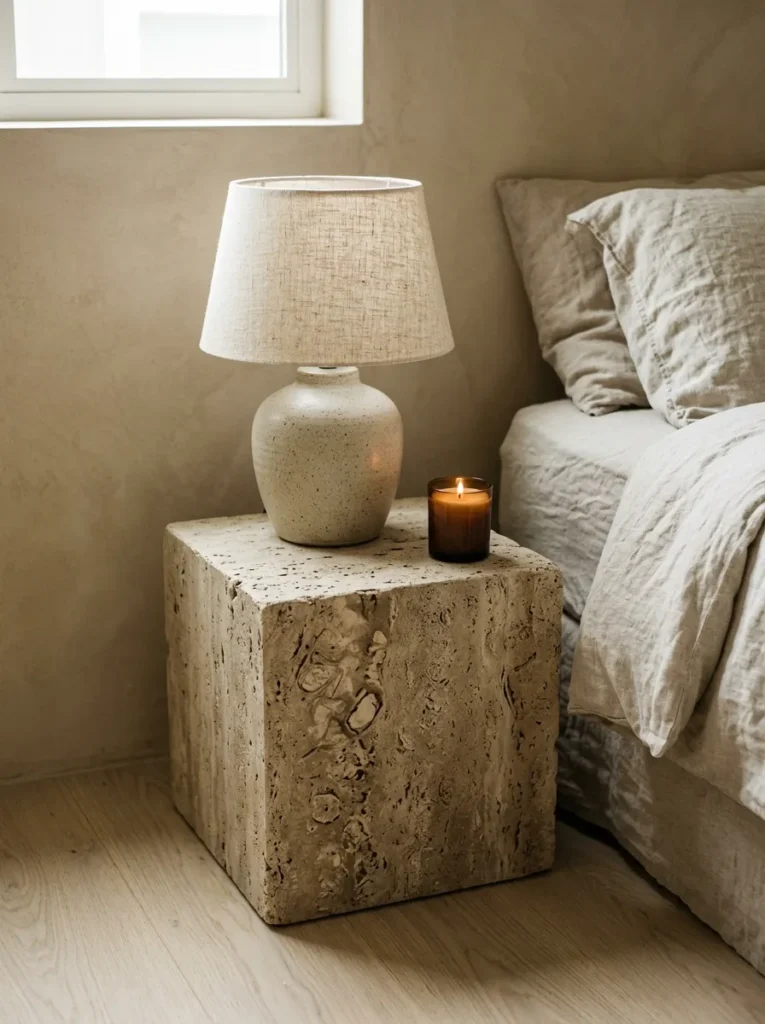
Replacing standard wood or lacquer nightstands with a piece of raw or honed travertine, sandstone, or slate — either a purpose-built stone bedside table or a thick stone slab on simple steel or wood legs — introduces a material with an inherent geological weight that makes the room feel grounded in a way that wood and fabric alone don’t quite achieve. Stone has the quality of seeming like it predates the room it’s sitting in, which is exactly the quality earthy bedrooms try to evoke. Even a single stone element — one nightstand, one lamp base, one small tray — shifts the room’s material language noticeably toward the organic.
12. Warm Sage Green as a Secondary Earthy Tone
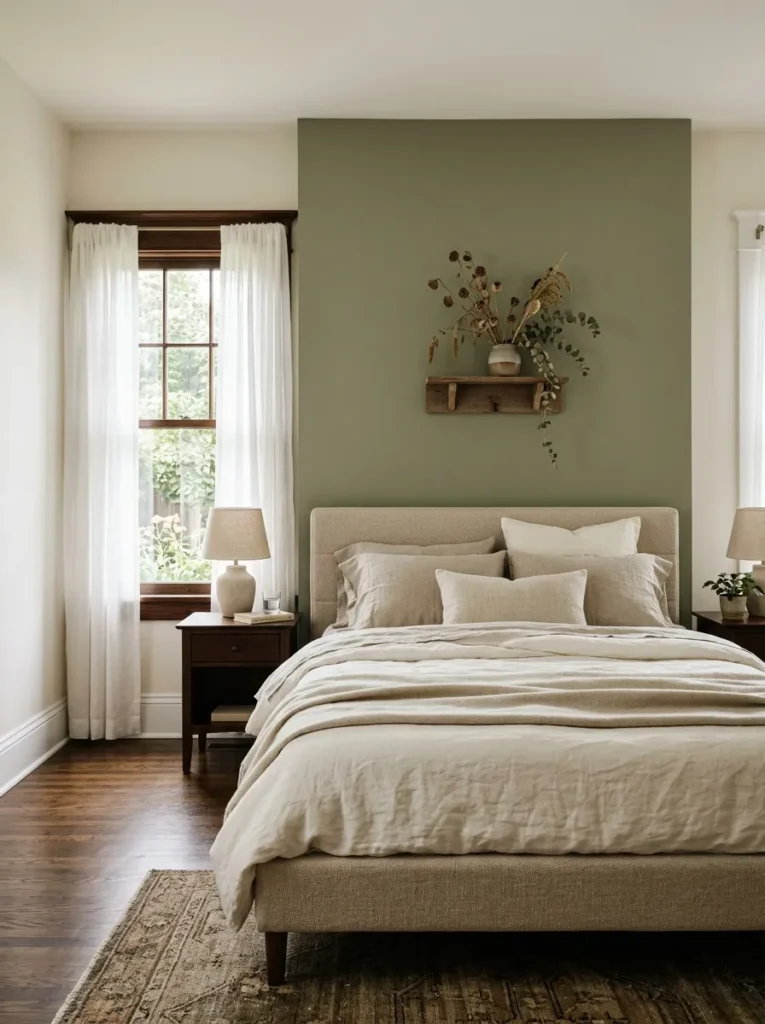
Sage green, in its muted, olive-leaning form rather than the cooler mint or seafoam greens, reads as an earthy color precisely because it resembles the natural gray-green of dried herbs, eucalyptus, or lichen rather than a manufactured pigment. As a secondary tone in a bedroom already using warm neutrals, warm sage works on an accent wall, on bedding, or on a painted piece of furniture without disrupting the palette’s organic cohesion — it adds color depth while remaining in the same natural reference system as terracotta, sand, and clay. Avoid the versions with too much blue in the undertone; the green needs to pull brown or gray to stay within the earthy family.
13. Macramé or Woven Wall Art as a Textured Focal Point
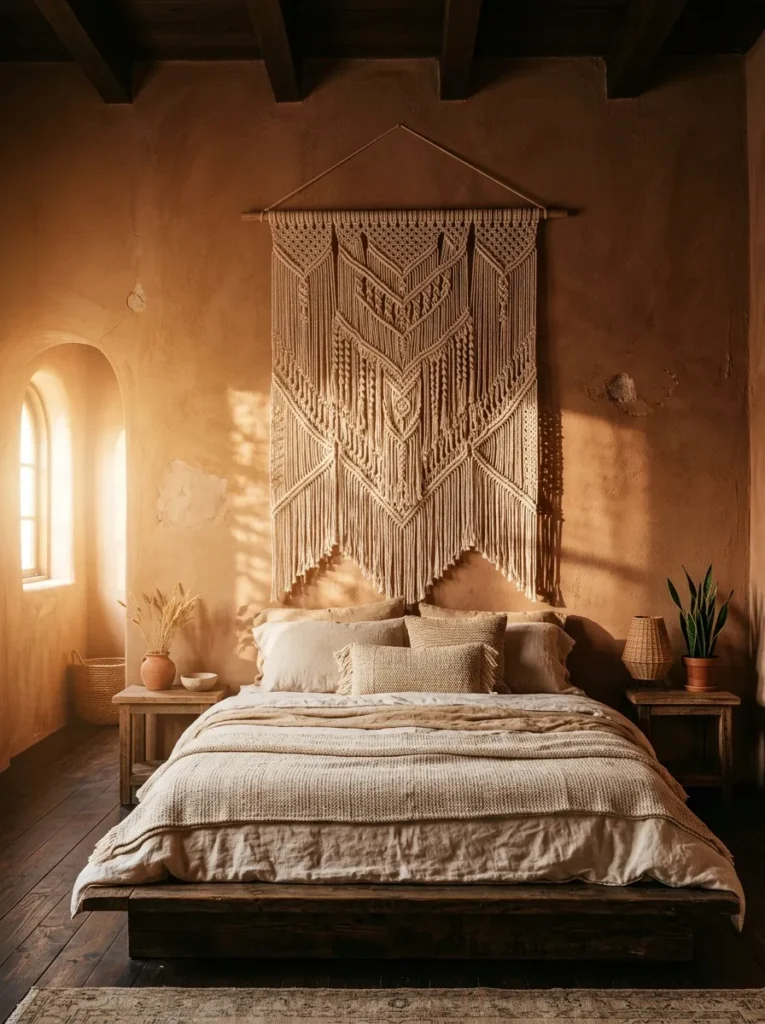
A large-scale macramé or woven textile wall hanging above the bed takes the place of a framed artwork and delivers something framed artwork can’t: three-dimensional texture that casts its own shadow as the room’s light changes, making it a living element that looks different at different times of day. This suits earthy bedrooms specifically because the undyed cotton, jute, or wool fibers of most macramé share the same natural material language as linen bedding and rattan furniture — the wall piece doesn’t introduce a new material category, it reinforces the existing one. Scale matters: for above-the-bed placement, the piece should be at least two-thirds the width of the bed to anchor the wall without appearing dwarfed.
14. Undyed Wool or Jute Area Rugs for Floor Warmth
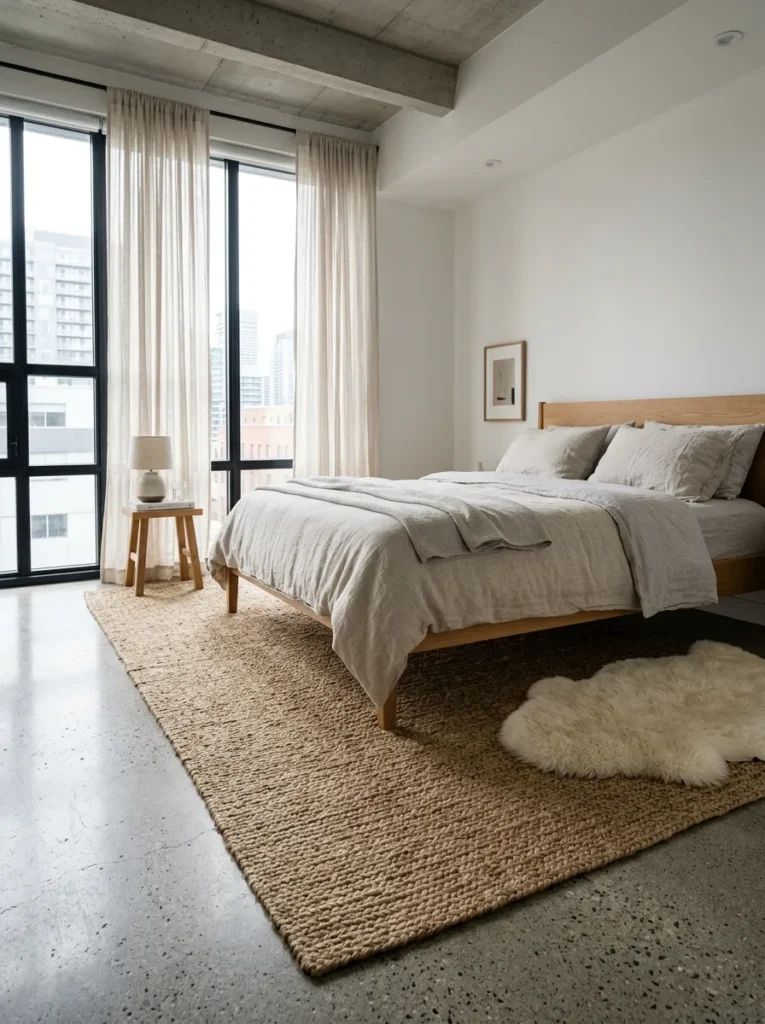
An undyed or naturally toned jute, sisal, or wool area rug — one that shows the natural fiber’s own color rather than a dyed tone — grounds an earthy bedroom with a floor material that has visible organic character without competing against the wall color or bedding palette for attention. The rug’s material is the point, not its pattern: natural fiber rugs in their base colors have a subtle surface variation that photographs beautifully and improves with age rather than wearing out visually the way a dyed rug can. Layer a smaller sheepskin or shaggy wool rug at the bedside on top of the larger jute for warmth where bare feet actually land.
15. A Mud Cloth or Block-Printed Linen Duvet Cover
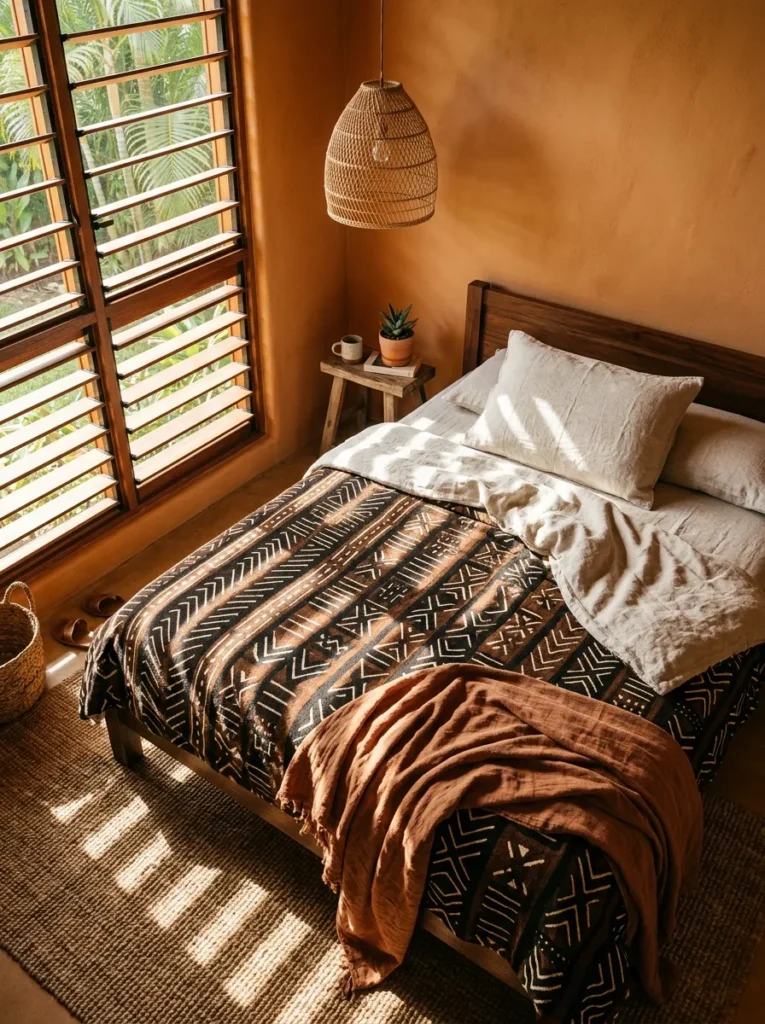
A duvet cover in African mud cloth or hand block-printed linen introduces the earthy aesthetic through pattern as much as through material. Mud cloth’s naturally dyed geometric patterns sit in deep browns, blacks, and creams — a palette that’s inherently earthy because the dyes themselves come from natural, mineral, and plant-based sources. Block-printed linen brings a slightly looser, more painterly version of the same idea, with visible hand-registration variations in the print that communicate handmade origin. Both avoid the machine-printed uniformity that makes even well-chosen patterns feel manufactured rather than organic.
16. Deep Chocolate Brown and Walnut in the Furniture Layer
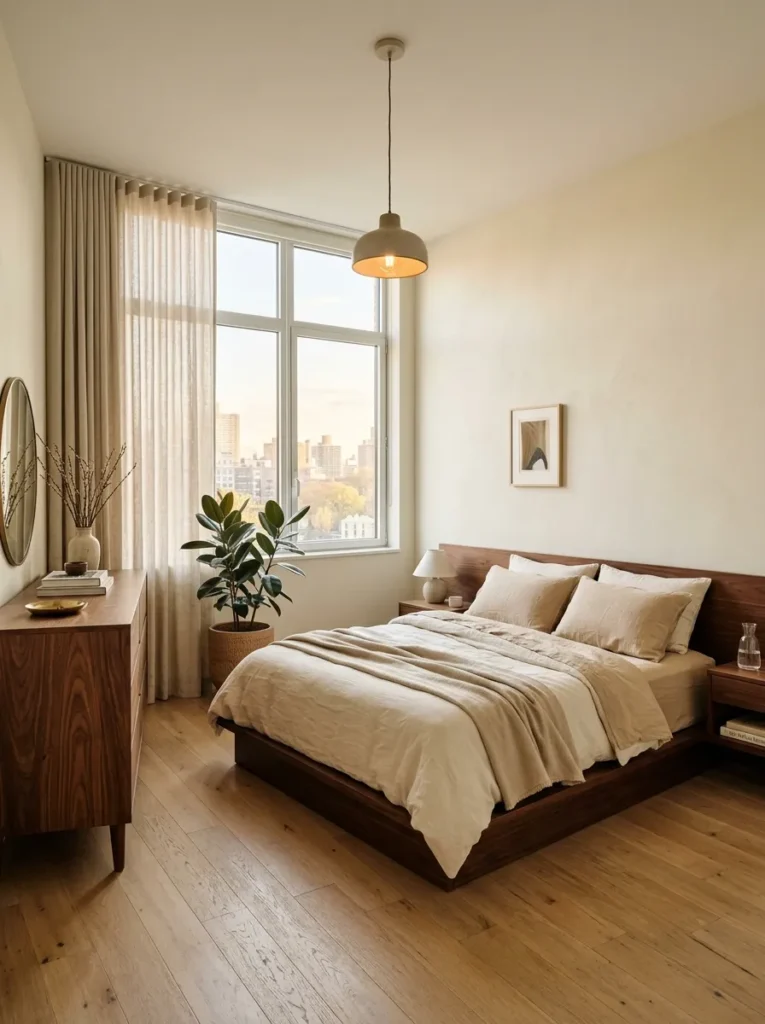
A bedroom built around one or two furniture pieces in deep chocolate brown or walnut — a bed frame, a dresser, a low bench at the foot of the bed — uses the richest end of the brown spectrum to ground the room with visual weight that terracotta and sand tones alone can’t provide. Deep brown has the quality of anchoring a room’s palette the way a dark ground color anchors a painting: everything lighter reads as lifted and floating against it, giving the room a sense of depth and layering that an all-mid-tone earthy palette sometimes lacks. Pair with undyed linen and warm cream for the strongest tonal contrast within the earthy family.
17. Curved Furniture Forms for a Softer Organic Feel
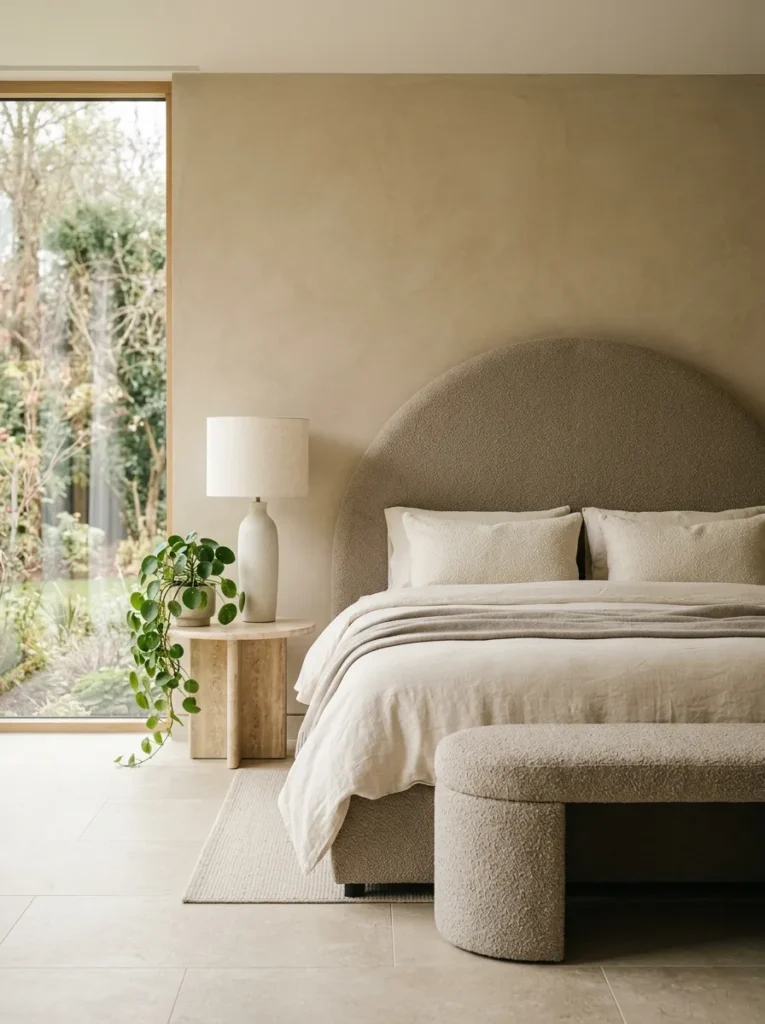
Earthy bedrooms built around straight-lined, rectangular furniture can feel more architectural than organic, since nature rarely produces perfect right angles. Introducing curved furniture — a round bedside table, an arched bedhead, a half-moon bench or ottoman — softens the room’s geometry and reinforces the organic aesthetic at the furniture scale rather than only in materials and color. The most impactful single curved element is the headboard, since it occupies the room’s primary visual position; a gently arched or fully rounded headboard silhouette reads as softer and more human-scaled than a square panel of the same dimensions.
18. A Limewash Brick or Stone Accent Wall
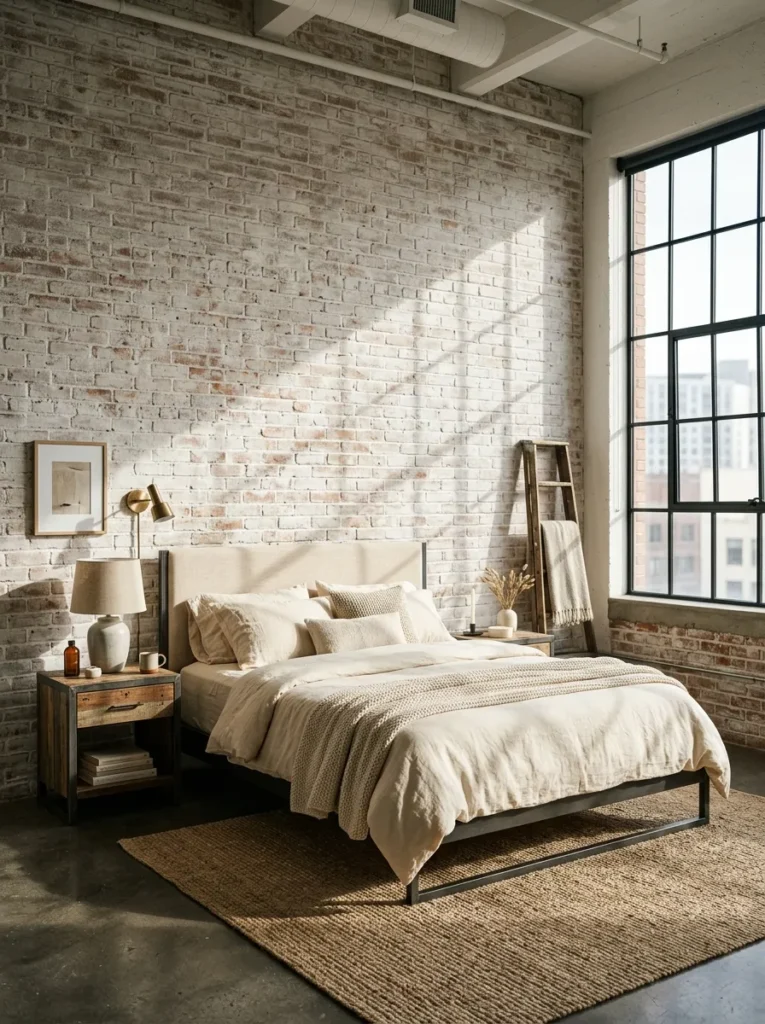
An exposed brick or stone wall — whether original to the building or a thin brick-veneer treatment applied to a stud wall — covered in a translucent limewash in white or warm cream creates a textured, organically patterned surface behind the bed that no paint technique fully replicates. The limewash allows some of the brick’s original color and texture to show through the wash, so the wall reads as a geological layer rather than a painted surface. This works in older homes where original brick is present and in newer builds using a thin brick veneer, and suits both industrial-earthy and Tuscan-influenced bedroom aesthetics depending on the surrounding palette.
19. Candlelight and Warm Filament Bulbs as the Only Evening Light Source
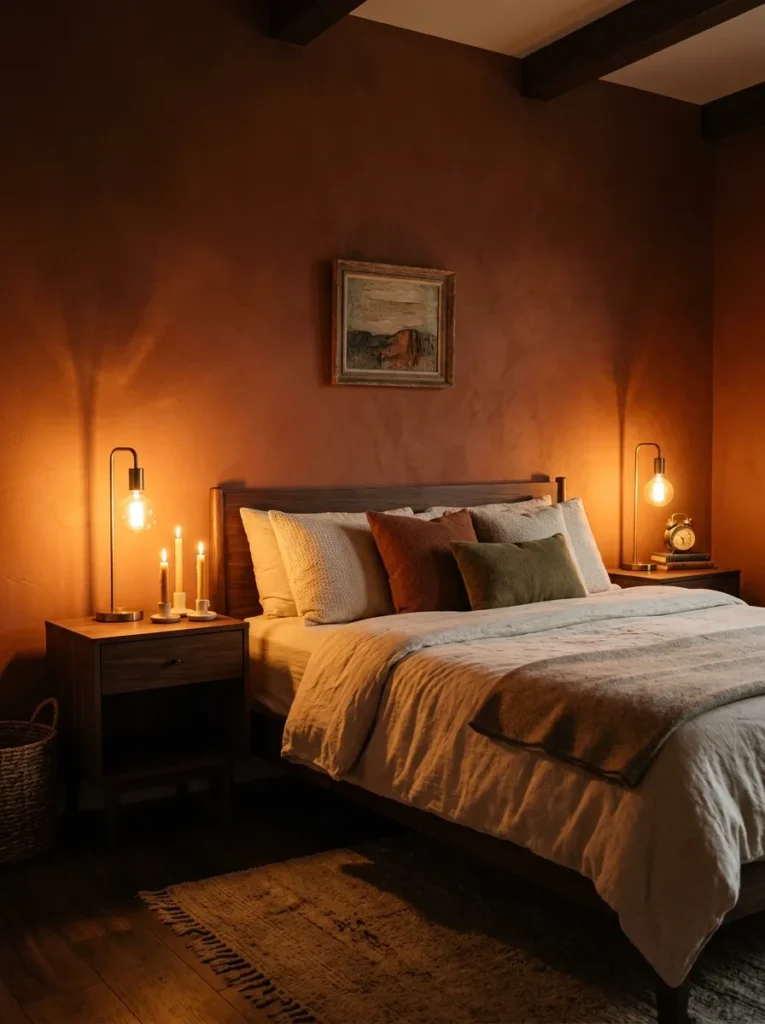
The lighting approach in an earthy bedroom matters as much as the material choices, because warm earthy tones look entirely different under cool white light than they do under warm light. A commitment to warm sources only — Edison-style filament bulbs at 2200 to 2700K, beeswax or soy candles on the nightstand, a Himalayan salt lamp in the corner — keeps the room in a perpetually golden-hour quality of light after dark, which activates the depth and richness of terracotta, clay, and warm wood in a way that daylight-temperature bulbs flatten completely. This is the difference between an earthy bedroom that looks as good at night as it does in the morning and one that feels right in photos but clinical in person.
20. A Papier-Mâché, Clay, or Ceramic Pendant Light
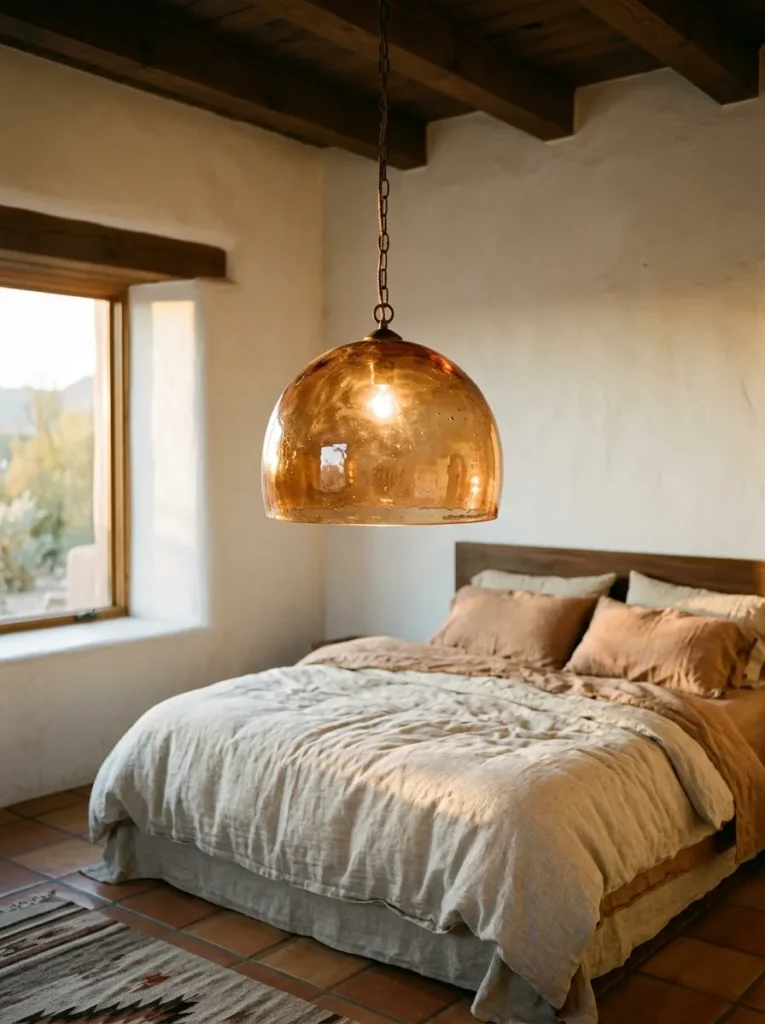
A sculptural pendant light in papier-mâché, raw clay, or hand-thrown ceramic — particularly one with a matte, unglazed, or naturally pigmented finish — introduces a handmade overhead element that reinforces the organic material story running through the rest of the room. Mass-produced pendant shades in glass or metal, however well-designed, have a manufactured quality that slightly undermines the handmade-natural aesthetic that earthy bedrooms aim for. A single artisan pendant in a warm clay or oatmeal tone, hung at the right height over the bed or in a reading corner, signals more about the room’s design intent than almost any other single fixture decision.
21. A Gallery Wall of Botanical Prints and Natural Fiber Frames
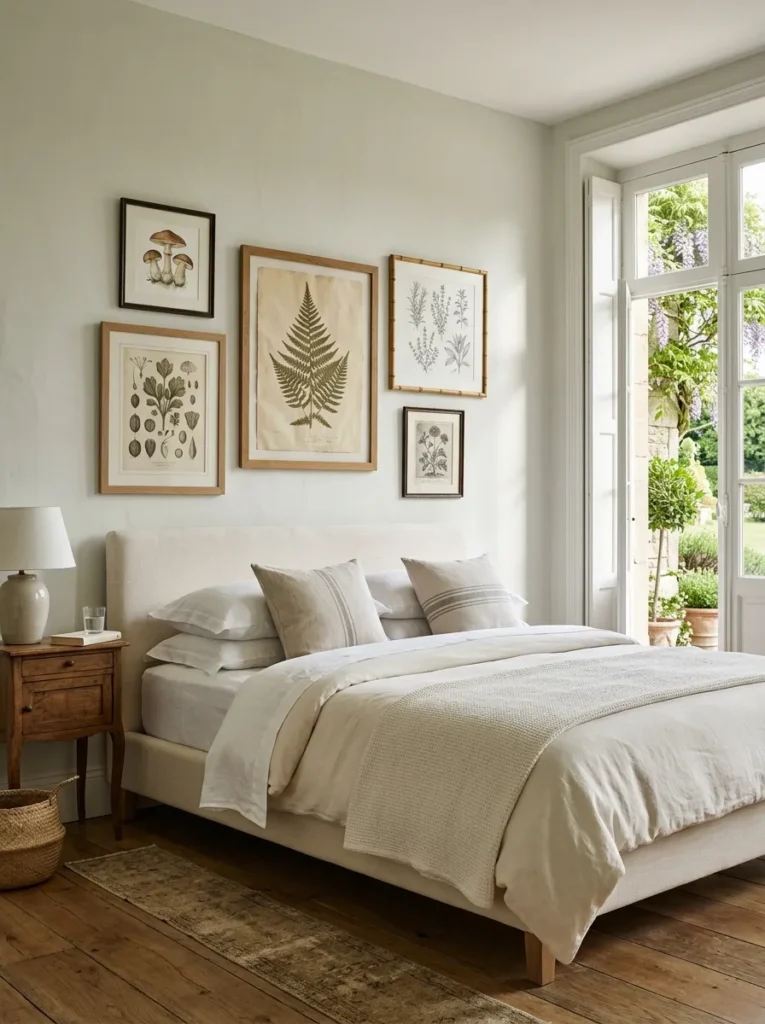
Replacing a single framed artwork with a small gallery wall of three to five botanical prints — pressed ferns, watercolor mushrooms, pencil sketches of seed pods, antique herbarium illustrations — in natural material frames (light oak, bamboo, or unfinished wood) builds on the organic reference system of an earthy bedroom at the wall level. The prints’ subject matter echoes the room’s material language — nature-sourced, imperfect, time-worn — in a way that abstract prints or contemporary photography would interrupt. Keep the frame styles closely related but not identical: matching material with slight size variation reads as intentional and curated, where mismatched styles in the same space can pull in competing directions.
Final Thoughts on Earthy Bedroom Ideas Worth Saving
The best earthy bedroom ideas have a coherent logic underneath them: every material, tone, and texture choice points toward the same reference system — natural, imperfect, slow, and warm — rather than mixing that direction with anything sharp, cool, or manufactured. Whether you start with limewash walls and build outward from there, or work entirely in the textile layer with rust, ochre, and undyed linen on an otherwise plain room, the earthy bedroom rewards a light-touch, fewer-but-better approach. Start with the one element your room is missing most, let it lead the remaining selections, and resist the urge to fill every surface. The warmth in these earthy bedroom ideas comes as much from what isn’t there as from what is.
Save this earthy bedroom ideas guide to Pinterest so you have it ready for your next bedroom refresh or full room transformation.