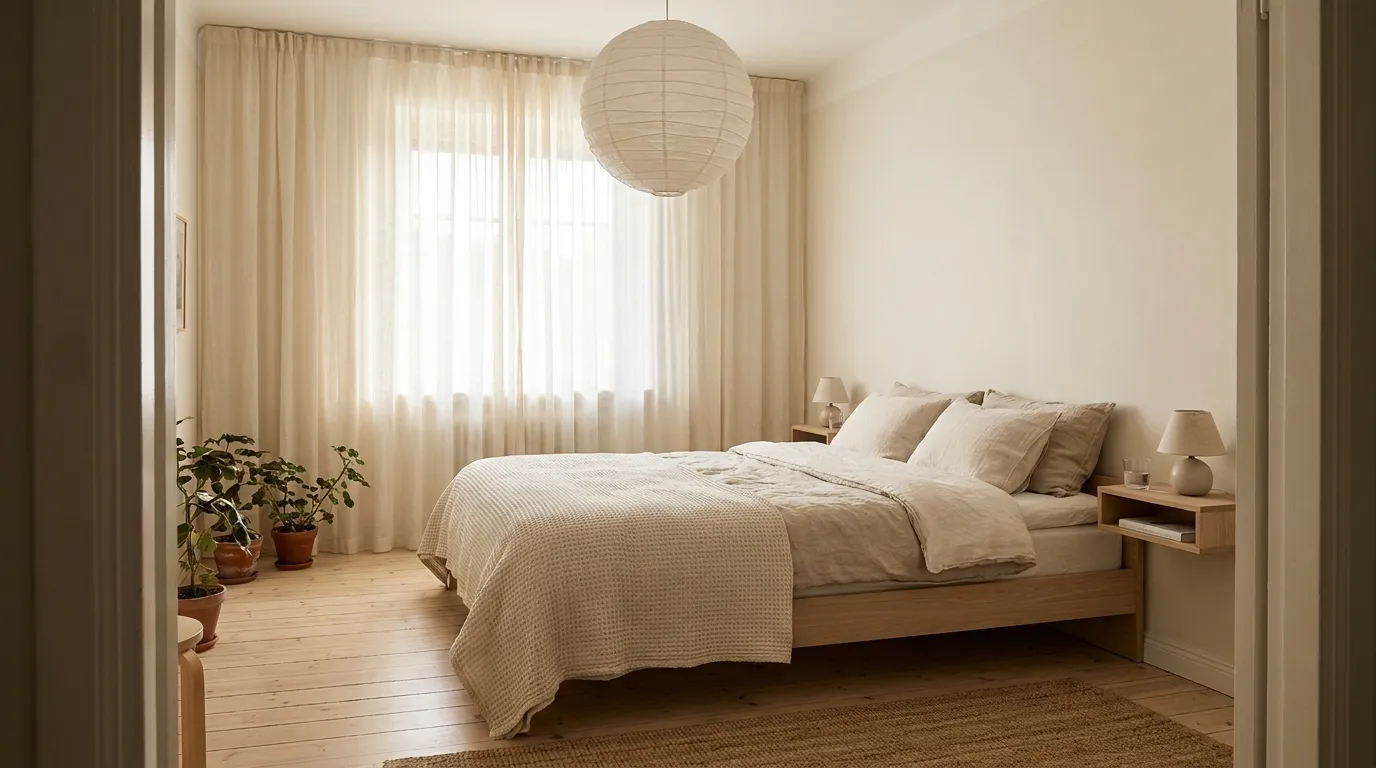
21 Scandinavian Bedroom Ideas That Feel Warm and Airy
The most common mistake in a Scandinavian bedroom isn’t going too minimal — it’s going too cold. A room full of white walls, white bedding, pale wood furniture, and nothing else doesn’t achieve the Nordic aesthetic that’s actually worth aiming for. It achieves a version that photographs like a blank canvas and lives like one too. The Scandinavian bedroom ideas that actually work — the ones that feel genuinely restful and worth spending time in — combine visual lightness with material warmth: linen and wool, pale wood and aged brass, natural light and layered candlelight.
These ideas are sequenced from foundational decisions to finishing details, because the Scandinavian aesthetic is particularly unforgiving of poor sequencing. In a room with very few elements, each one has to carry its weight. Getting the palette and materials right first means everything added later reads as deliberate.
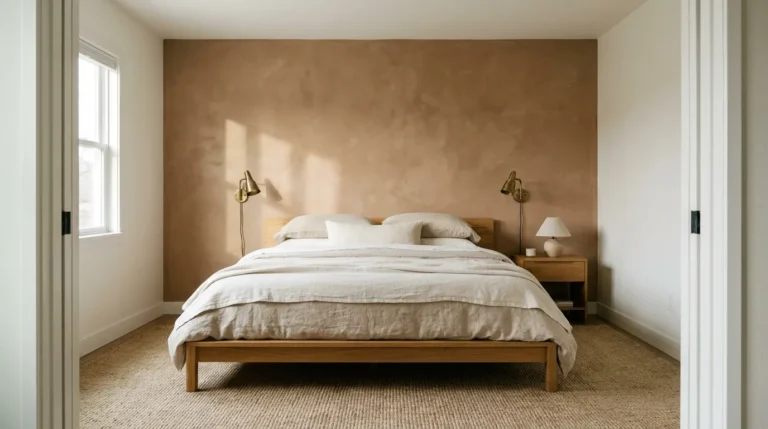
1. Choose Pale Oak or Ash Furniture Rather Than Bleached or Painted White
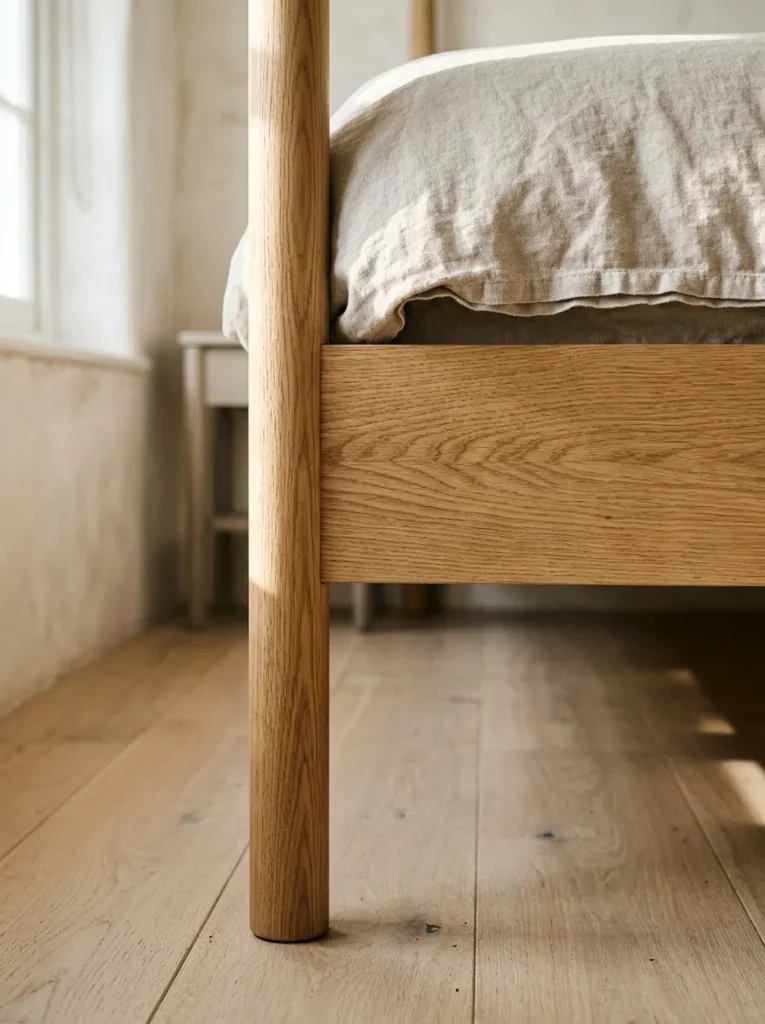
Pale wood furniture is the single most characteristic material decision in Scandinavian bedroom design, but the specific wood tone matters considerably. Bleached or whitewashed timber can look flat and slightly washed-out in domestic light — particularly in rooms without Nordic-level natural illumination. Pale natural oak or ash, in a matte or lightly oiled finish, carries visible grain and warmth that bleached versions often lack.
The grain texture is what distinguishes Nordic wood from generic light-coloured furniture. A bed frame and bedside tables in natural pale oak with visible grain read as a deliberate material choice; the same pieces in a flat-painted white finish read as modern furniture in any style. The finish should be matte or satin — gloss finishes on pale wood read as contemporary rather than Nordic.
2. Build the Palette Around a Warm White Rather Than Cool White
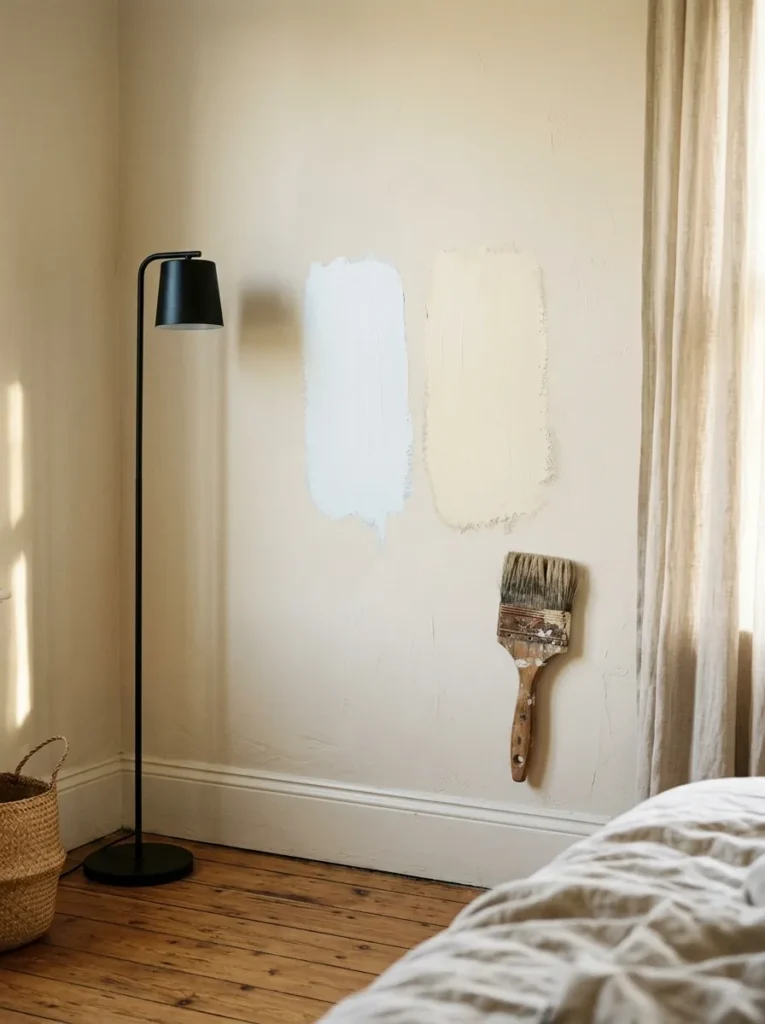
Cool whites — those with blue or grey undertones — produce a bedroom that reads as clinical rather than calm under most domestic artificial lighting conditions. Warm whites and very pale warm neutrals — a barely-there oat, a soft chalk, a warm off-white with a slight yellow or pink undertone — read more gently and shift subtly with the light across the day, which is part of what gives a Nordic-influenced room its quality of constant, quiet change.
The wall tone and ceiling should be in the same warm family. Pairing a warm off-white wall with a cool white ceiling (or vice versa) creates a colour discord that reads as slightly unresolved even if neither tone is wrong on its own. Test samples in your specific room under both daylight and evening artificial light before committing.
3. Use a Low Platform Bed to Ground the Room Visually
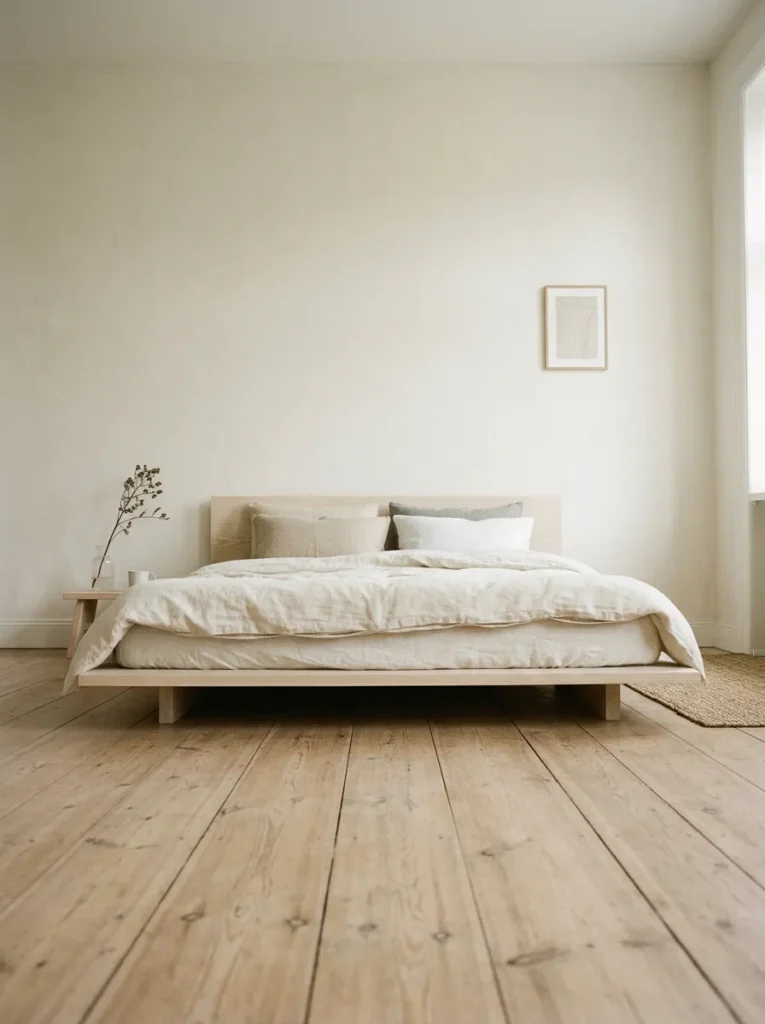
Scandinavian bedroom furniture tends to sit low to the floor — a characteristic inherited partly from practical origins and partly because the horizontal line of a low bed against a pale wall produces a specific spatial quality. The room reads as wider and quieter than the same space with a higher-profile bed frame, and the low horizontal line leaves more visible wall above the bed, which amplifies the airy quality the palette is working to create.
A platform bed in pale oak or ash, ideally without visible legs (or with very slim, minimal legs), suits this aesthetic best. A high bedframe with elaborate joinery reads at odds with the visual simplicity the Scandinavian approach relies on. Bed height should allow comfortable sitting and getting in and out — very low beds can feel impractical in rooms used by older occupants.
4. Layer Two or Three Linen Textures on the Bed Rather Than One Heavy Duvet
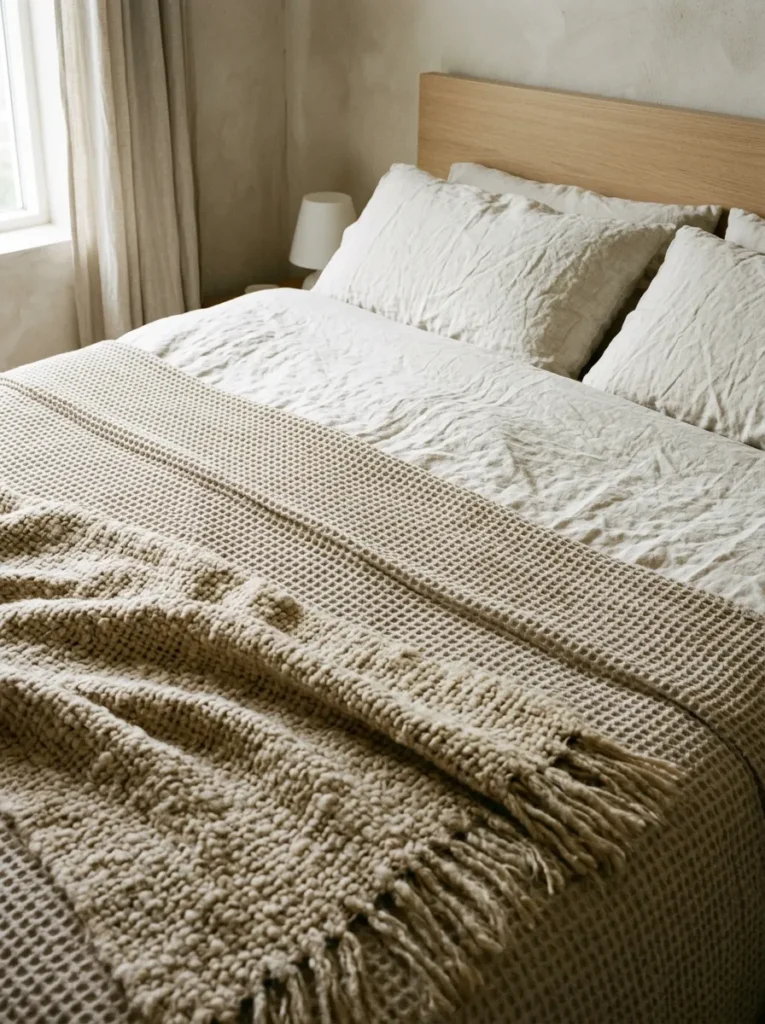
Heavy duvet covers — particularly in a smooth cotton or polycotton blend — produce a bed that reads as neatly made but visually flat. The layered textile approach of Nordic interiors uses lighter, more textured pieces in combination: a linen duvet cover that crinkles and drapes with some looseness, a waffle-weave cotton blanket across the lower third, and a loosely woven throw in a natural undyed wool or cotton at the foot. Each layer has a different texture and a slightly different tone within the same colour family.
This layering produces the organic, lived-in quality that characterises the best Nordic bedrooms. The key distinction is that the layers should genuinely be used rather than purely decorative — the throw gets used on cool evenings, the blanket layer moves with occupants. A bed that’s been staged with multiple textile layers for photography but never used reads differently to one that’s genuinely lived with.
5. Keep the Ceiling White and the Walls One Shade Warmer
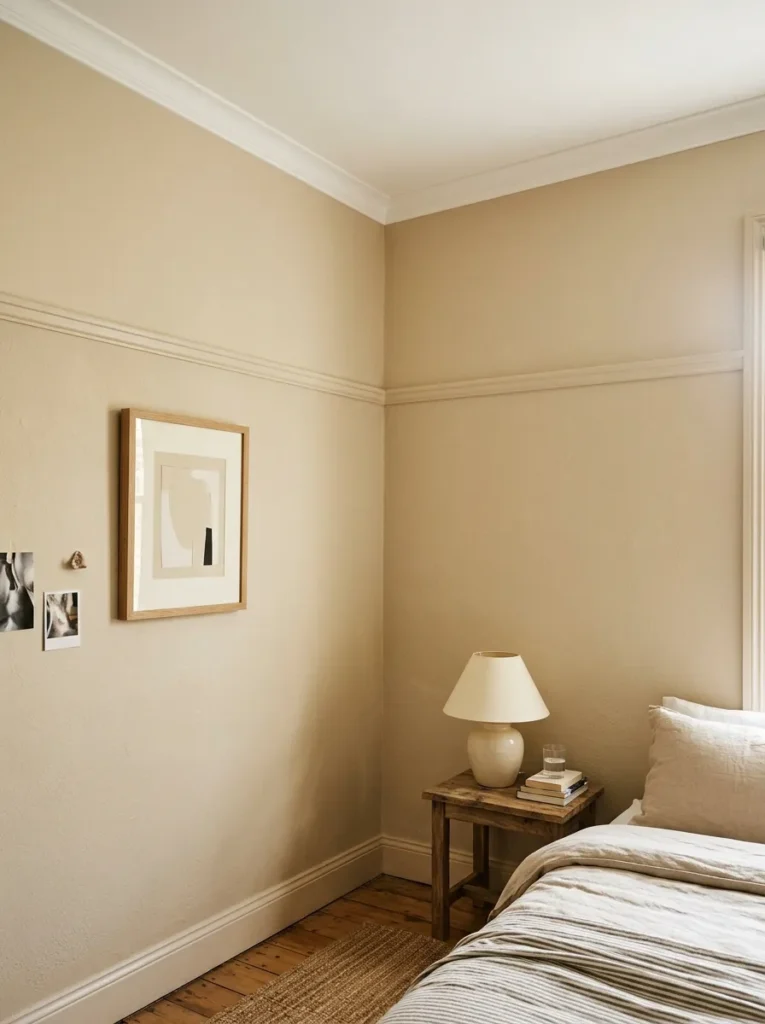
A ceiling that matches the wall tone exactly can make a low-ceilinged room feel slightly box-like. Keeping the ceiling in a clean warm white, one to two shades lighter than the wall tone, lifts the visual height of the room while maintaining the warmth of the overall palette. This is particularly useful in rooms with standard or low ceiling heights where a fully colour-drenched approach would feel compressing.
The colour relationship between wall and ceiling is one of the decisions with the widest visual effect for the least cost — it’s a paint decision, not a furniture decision. The border between wall and ceiling should be a crisp line rather than a gradient: a steady hand or painter’s tape keeps the transition defined.
6. Hang Full-Width Linen Curtains From Ceiling Height
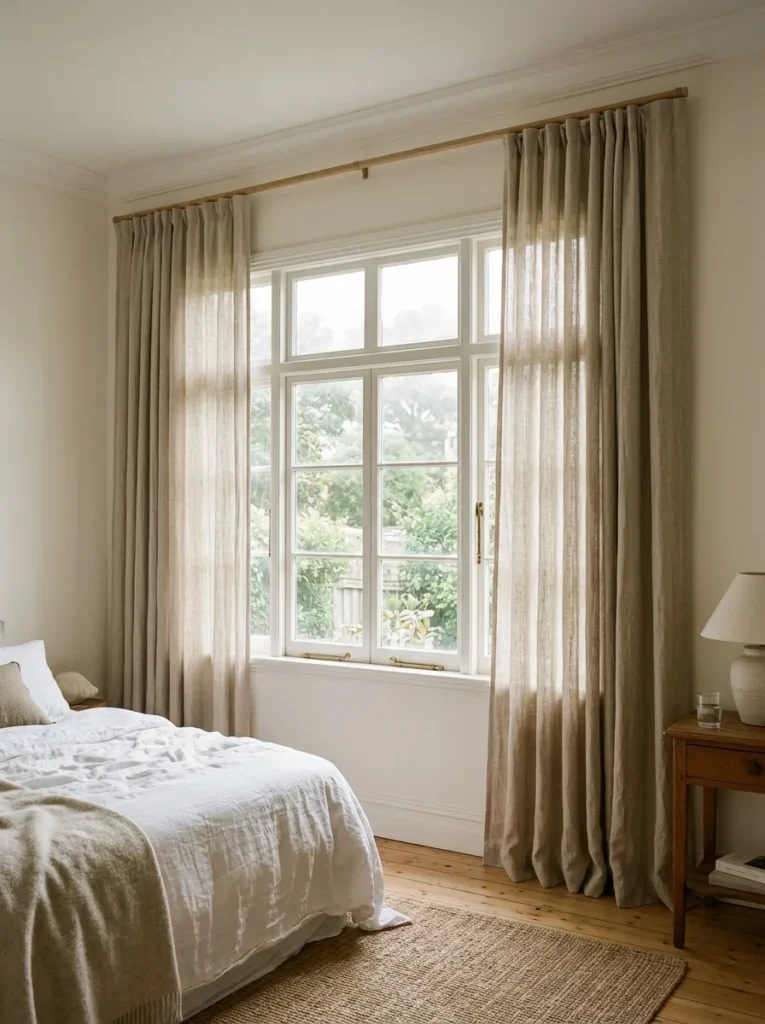
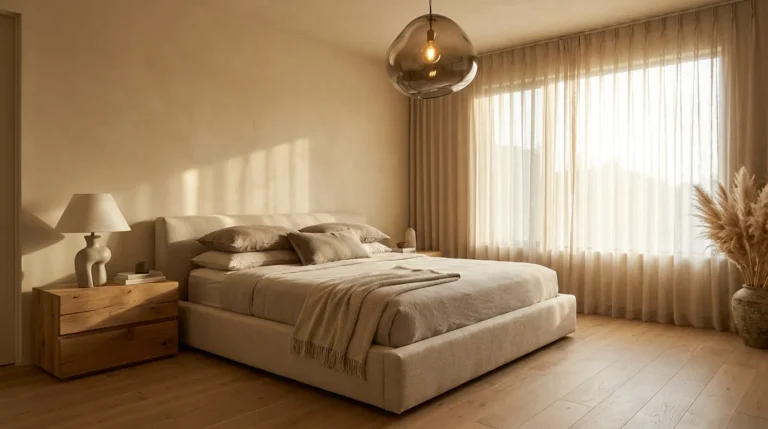
Linen curtains hung from a rod as close to the ceiling as possible — spanning the full width of the window wall rather than just the window itself — are one of the most characteristic details of a Nordic-influenced bedroom. They make the window read as larger, the ceiling as higher, and the room as significantly more considered than the same space with standard-width curtains at window-frame height.
The linen should be unlined or lightly lined so natural light diffuses through the fabric rather than being blocked. This creates the soft, diffused light quality that Nordic interiors are associated with — a gentle, even illumination rather than direct sun. Sheer linen in a warm off-white or undyed natural tone suits the palette better than heavy blackout curtains, though a secondary blackout blind behind the sheer linen provides the sleep blackout functionality without sacrificing the aesthetic.
7. Place a Single Wool or Flatweave Rug Under the Bed
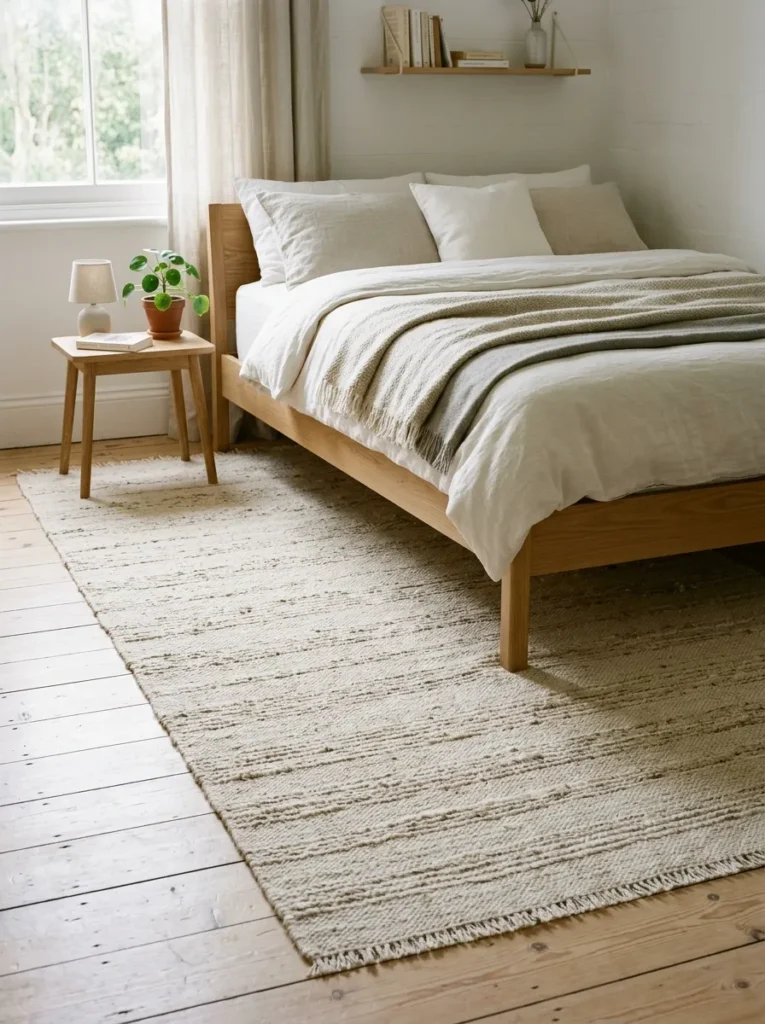
A rug in a Scandinavian bedroom serves a specific role: it defines the sleeping zone, adds material texture at floor level, and prevents the expanse of bare floor from reading as empty. The rug should be large enough for the front two-thirds of the bed and both bedside tables to sit on it — a rug too small makes the bed appear to float disconnected from the floor.
Natural fibre rugs in undyed wool, jute, or a cotton flatweave suit the Nordic aesthetic better than synthetic pile rugs, which can read as too plush against the restrained material palette. A subtle woven pattern — a simple grid, a loose diamond, a barely-visible stripe — adds visual texture without competing with the bedding.
8. Introduce Warm Artificial Lighting at Two Levels
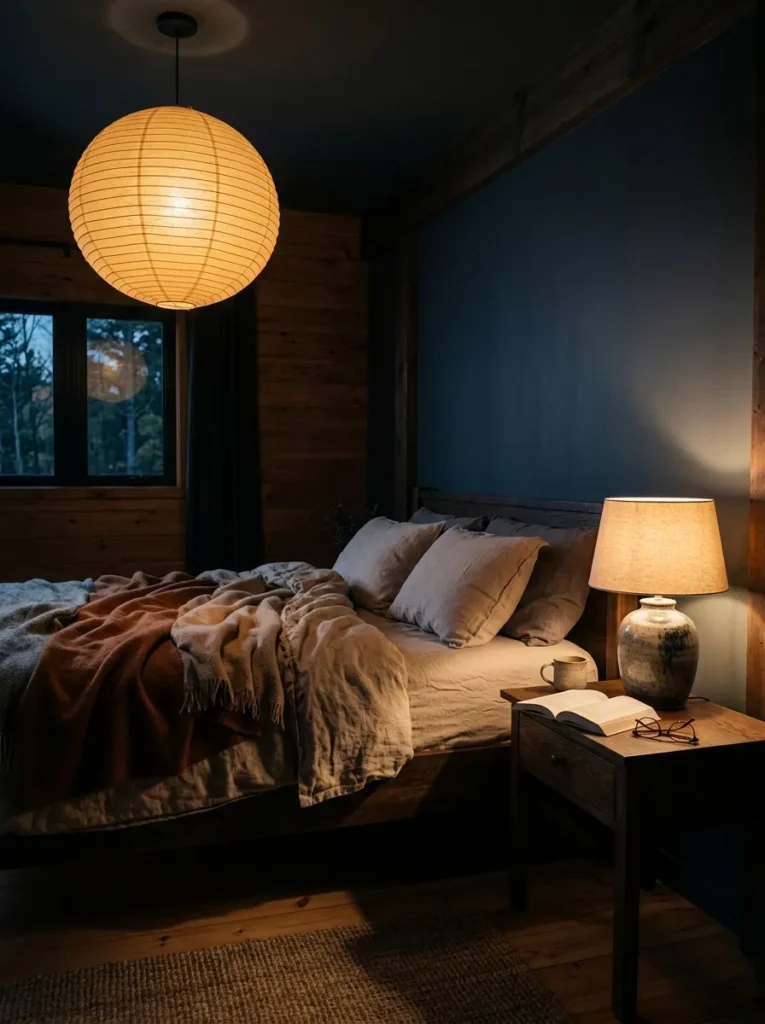
Scandinavian design’s relationship with artificial light is one of its most practical dimensions — Nordic winters require artificial light to do most of what natural light handles elsewhere, so the quality of artificial lighting is treated as a primary design consideration rather than an afterthought. In a bedroom, this means at least two light levels: a main overhead source (usually a pendant or ceiling fitting in a warm material like paper, rattan, or matte ceramic) and a bedside source at a lower level.
The bulb colour temperature should be consistently warm throughout — 2700K for all sources. A warm ceiling light at 2700K with a cool-white bedside lamp (3000K+) produces a discordant quality that undermines the restful atmosphere the palette is building toward. Dimmers on both circuits give the room its maximum range of evening uses.
9. Use Functional Furniture That Doesn’t Require Extra Storage Pieces
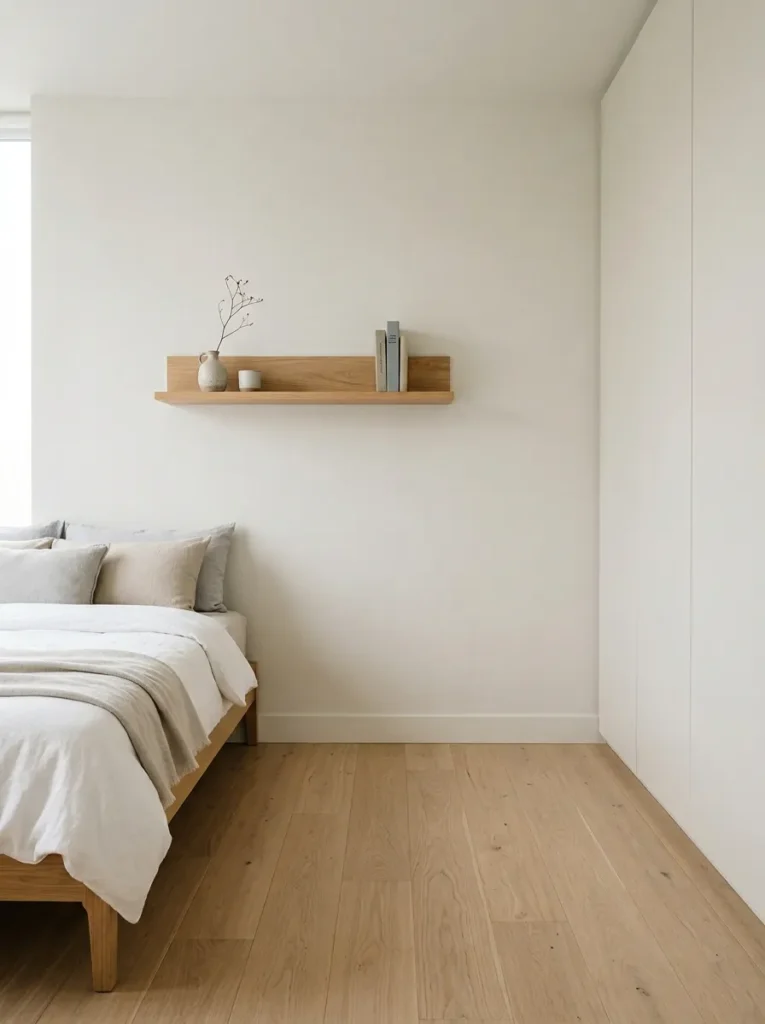
One of the reasons Scandinavian bedrooms photograph as uncluttered is that the aesthetic depends on storage being integrated rather than added. Additional furniture — bedside-table bookshelves overflowing with objects, standalone storage towers, multiple small decorative units — breaks the visual simplicity that the palette and materials are building. A bed with under-bed storage drawers, a wardrobe with thoughtfully organised internal storage, and a bedside table with a small drawer are sufficient for most bedrooms.
The discipline is avoiding the impulse to add storage furniture because the room looks sparse. If the existing furniture and wall space handle the actual storage requirements, additional pieces tend to read as clutter in a minimal scheme rather than useful additions.
10. Bring in Natural Materials Beyond Wood — Wool, Stone, Ceramic
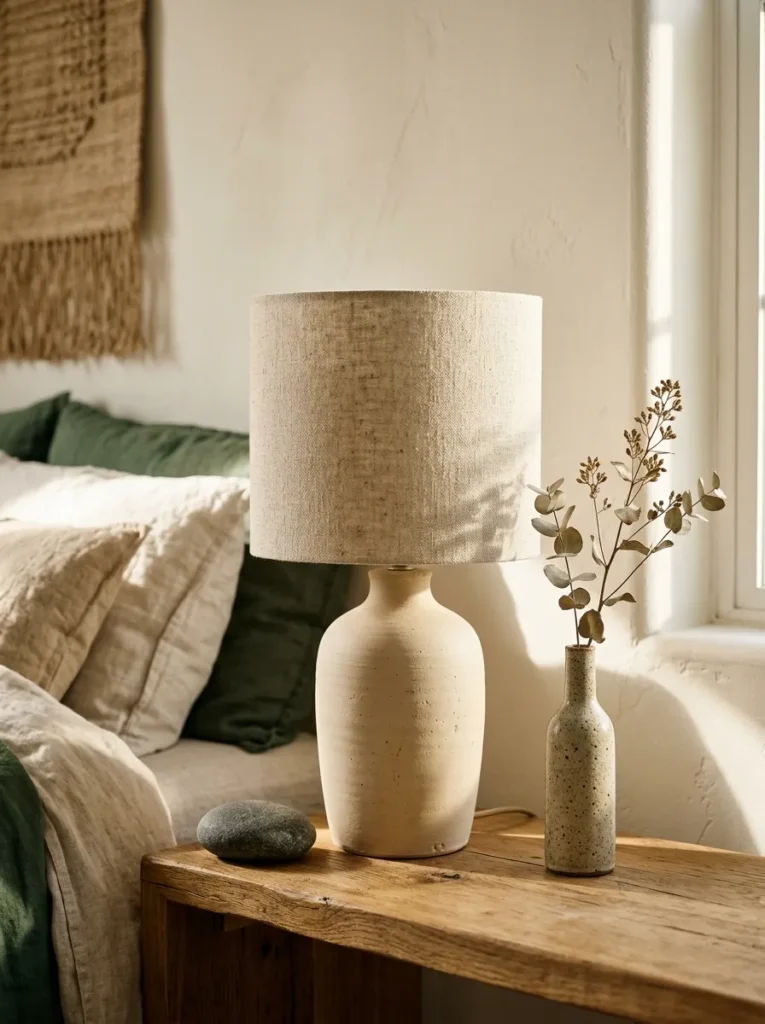
A Scandinavian bedroom built entirely from painted surfaces and pale wood can read as incomplete because the material range is too narrow. The characteristic richness of Nordic interiors comes from the combination of materials rather than from any single choice: wood alongside wool alongside unglazed ceramic alongside a stone surface or two. These materials share warmth and organic origin without competing with each other.
Practically: a stone dish on the bedside table, a hand-thrown ceramic lamp, a wool throw at the foot of the bed, and a linen pillowcase with visible weave — each is a small contribution but the combination produces the material depth the aesthetic requires. Objects made by hand read differently from mass-produced equivalents, and the difference is usually visible even at a glance.
11. Select a Wardrobe That Reads as Wall Panel, Not Storage Unit
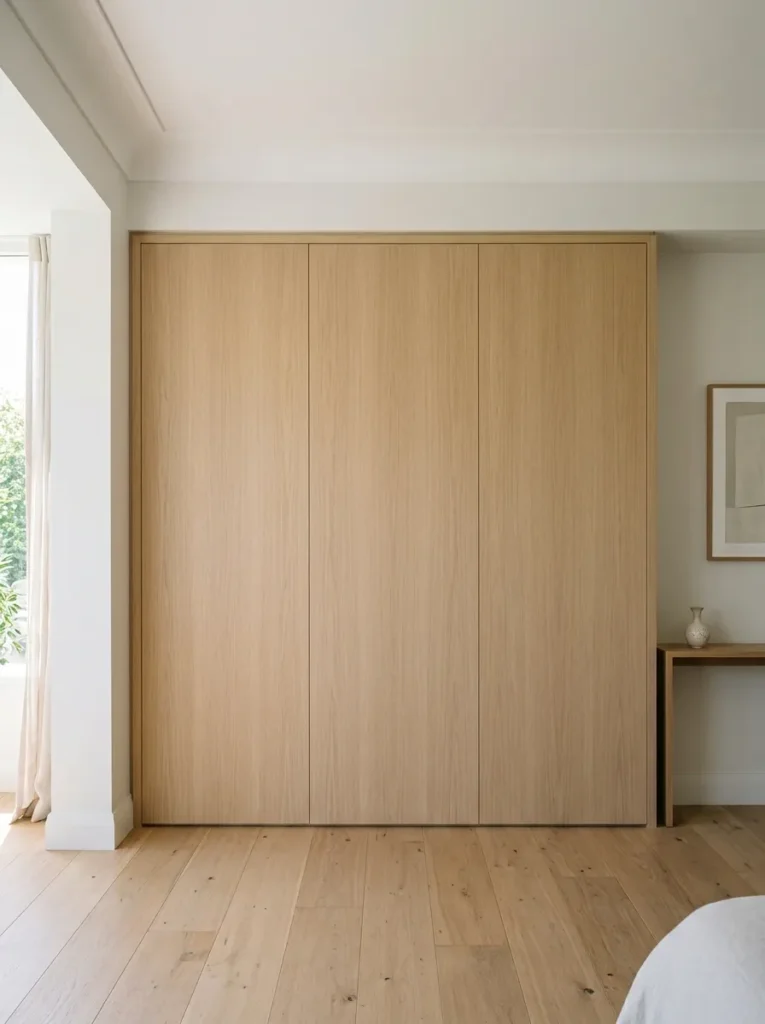
The wardrobe is often the largest piece of furniture in a bedroom and the one most likely to dominate the room’s visual register if it reads as a storage unit rather than an architectural surface. A wardrobe with flat-front doors in the same tone as the wall (or in a pale natural wood that relates to the bed frame) essentially disappears into the room, leaving the space feeling larger and the material palette more coherent.
Sliding wardrobe doors in a pale oak veneer or matte painted finish create a continuous horizontal surface that doesn’t interrupt the wall the way hinged doors do when open. Push-to-open mechanisms keep the front surface completely uninterrupted. This is the wardrobe approach most characteristic of Nordic interior design, and it also happens to suit smaller bedrooms where door swing clearance is a practical constraint.
12. Add a Single Hanging Pendant Rather Than a Standard Ceiling Fixture
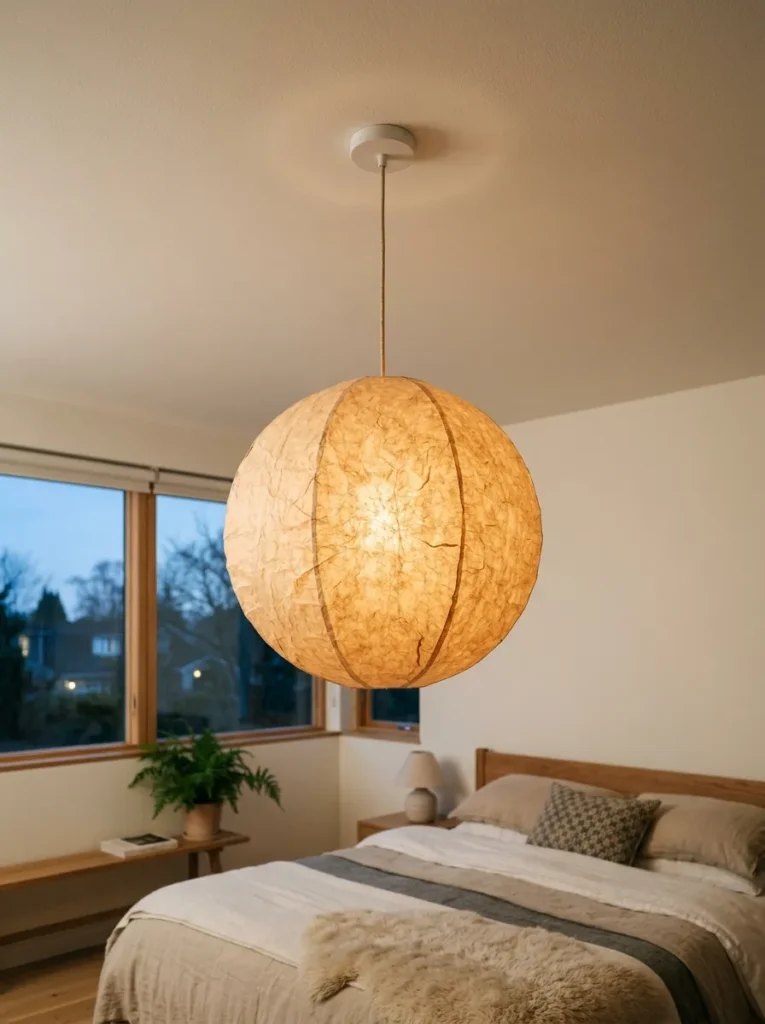
The overhead light fitting in a Scandinavian bedroom is a design object as much as a functional source. A pendant in paper, woven rattan, or matte ceramic — hung centrally or offset over the bed — reads as a considered detail that a standard flush ceiling fitting doesn’t. The shade material affects the quality of light: paper diffuses warm light evenly in all directions; rattan scatters it in an organic pattern; ceramic directs it downward.
Scale matters in a room with a restrained palette: a pendant that’s too small looks timid against the room’s simplicity; one that’s generous — 40–50cm in diameter for most bedrooms — reads as a deliberate focal point. The pendant should be the room’s most distinctive object when the rest of the furniture is deliberately understated.
13. Use Wall-Mounted Bedside Shelves Instead of Nightstand Tables
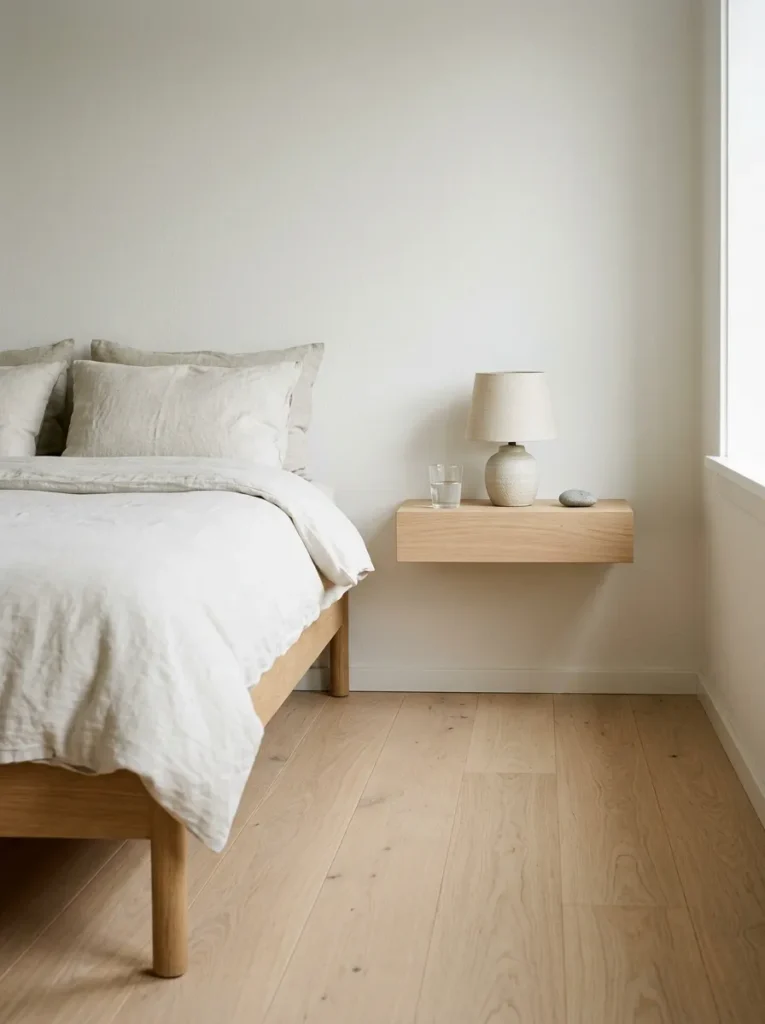
Floating bedside shelves — a single piece of pale oak or pine at bedside height, mounted to the wall — keep the floor space around the bed clear, which amplifies the sense of room and lightness characteristic of the Nordic approach. Unlike nightstand tables with legs, a wall-mounted shelf doesn’t create the visual clutter of four legs at floor level beside the bed.
The shelf depth should be sufficient to hold a lamp, a glass, and one or two small objects without things projecting over the edge. Surface area of 30–40cm deep and 40–50cm wide is usually adequate. The shelf mounting should be clean — hidden fixings or a slim bracket that doesn’t draw attention to the wall fixing rather than the shelf itself.
14. Leave One Wall Completely Bare
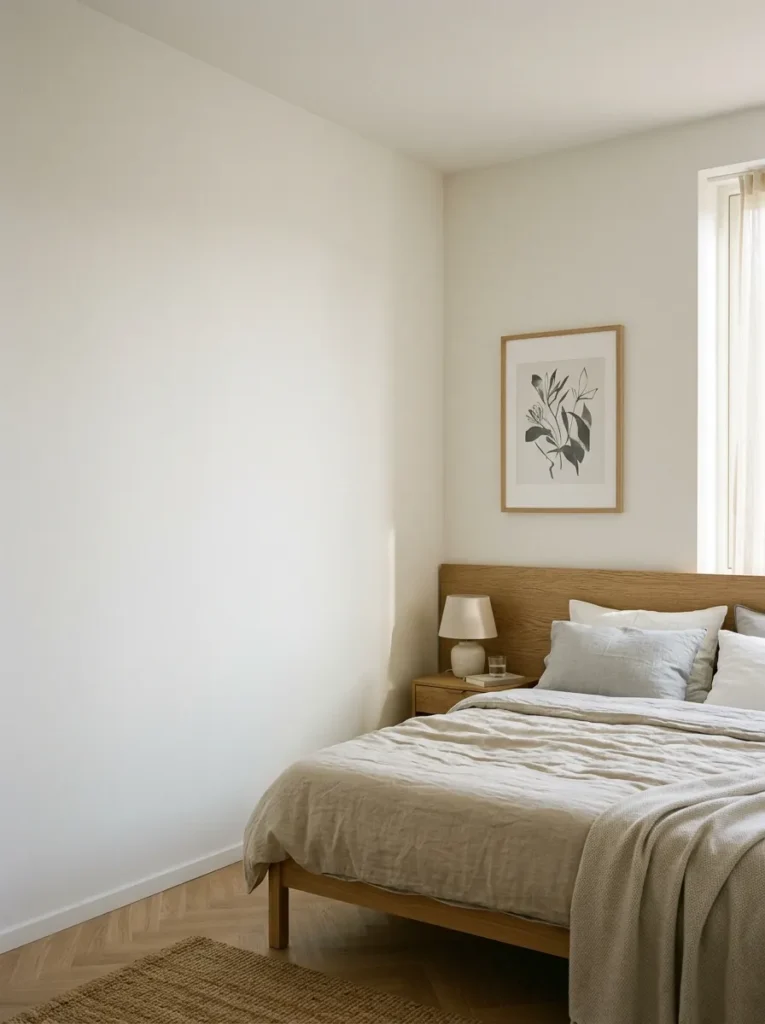
In a room where the palette is light and the material palette is deliberately restrained, a gallery wall or a wall covered in multiple framed pieces works against the visual logic the room is operating on. One wall with nothing on it — typically the wall behind or beside the bed rather than the headboard wall — provides the visual breathing room that makes the decorated surfaces in the room feel intentional.
The bare wall should be in the same paint tone as the others, not a contrasting colour. A blank white wall in a warm-white room reads as a deliberate rest; a contrasting accent wall introduces a complexity the Scandinavian palette generally avoids. The absence of objects on one wall is a design decision, not a sign that the room isn’t finished.
15. Choose Bedside Lighting That Reads Warm Rather Than Functional
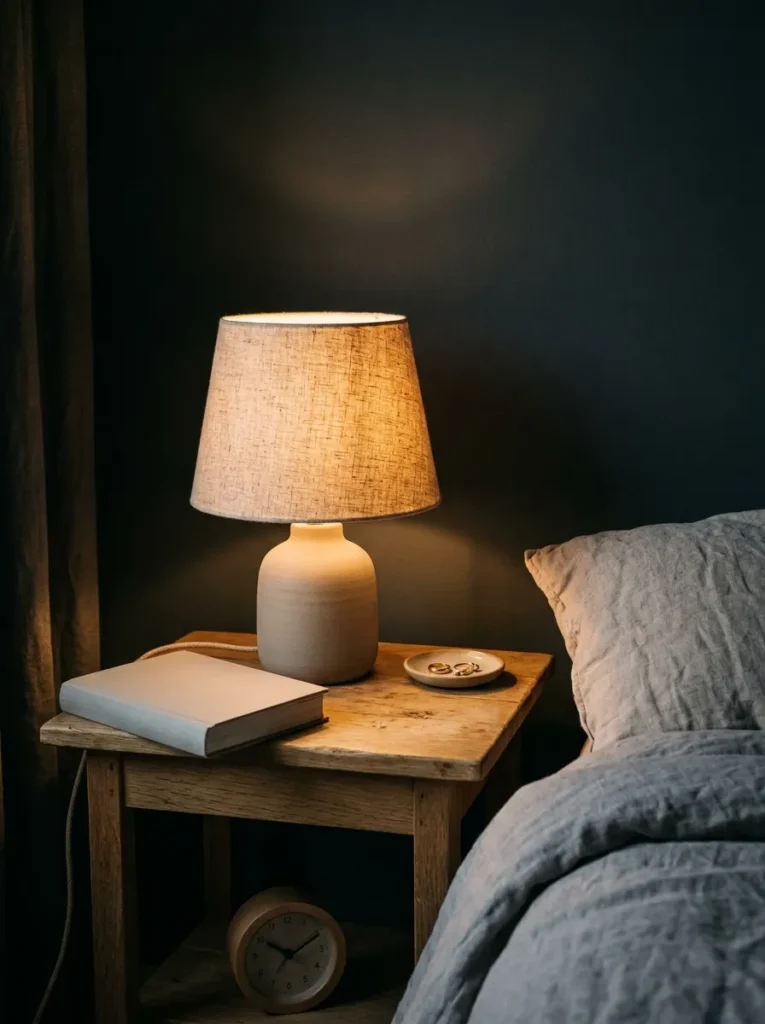
A desk lamp used as a bedside light, a standard floor lamp at bed height, or a clinical hospital-style adjustable fixture all produce a quality of bedside illumination that works against the specific atmosphere a Scandinavian bedroom is trying to achieve. The bedside light should cast a warm, contained pool of light rather than a broad, even functional beam.
A ceramic table lamp with a linen shade at bedside height, or a small adjustable sconce in aged brass mounted to the wall, produces the right quality of warmth. The shade material changes the light character considerably: a white paper shade gives even diffuse light; a linen shade gives slightly warmer, more textured light; a darker shade concentrates the pool downward. Warm-white bulbs at 2700K are non-negotiable for this quality of light.
16. Incorporate One Piece of Handmade or Inherited Craft
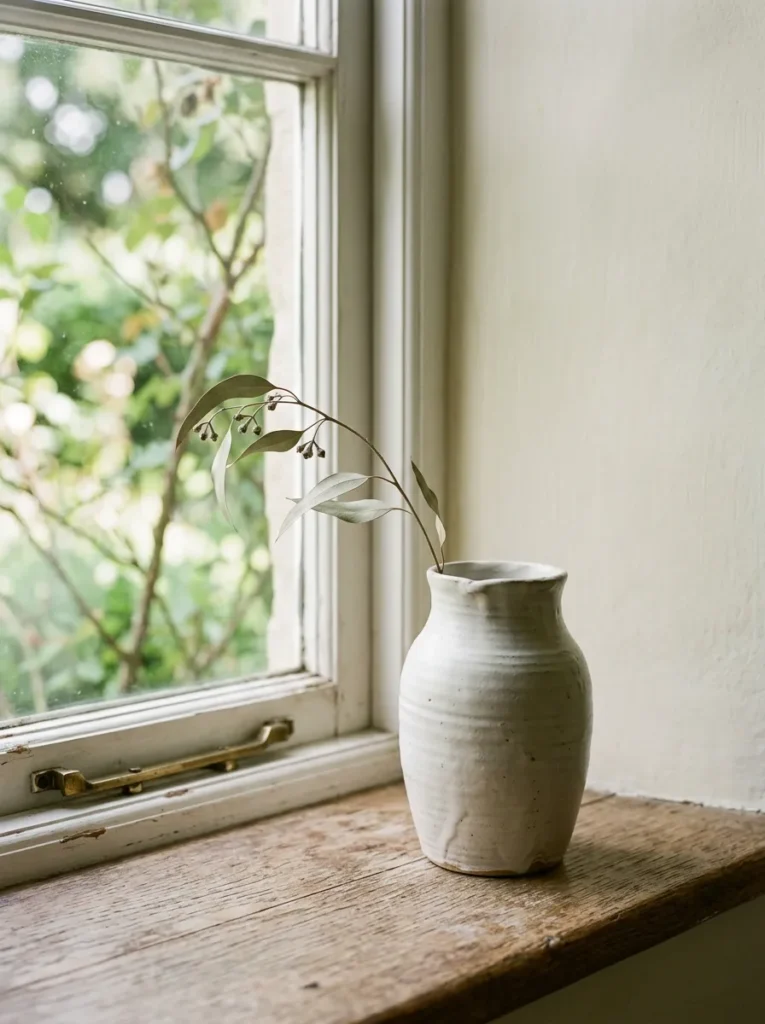
The Scandinavian aesthetic is less about minimalism as an absence and more about purposeful selection — each object earns its place. One handmade object in a bedroom achieves something that a room full of well-chosen mass-produced items cannot: it reads as irreplaceable, which gives the room a grounded, inhabited quality rather than a showroom quality. A hand-thrown ceramic vase, a piece of woven textile displayed on the wall, or a single print by a specific maker contributes to this.
The object doesn’t need to be expensive or sourced from Scandinavia. What matters is that its making is visible in its form — the slight irregularity of a hand-thrown pot, the visible weave of a textile, the quality of a hand-printed image. One piece with these qualities contributes more to the room’s character than a shelf of similar objects without them.
17. Keep the Colour of All Metals Consistent
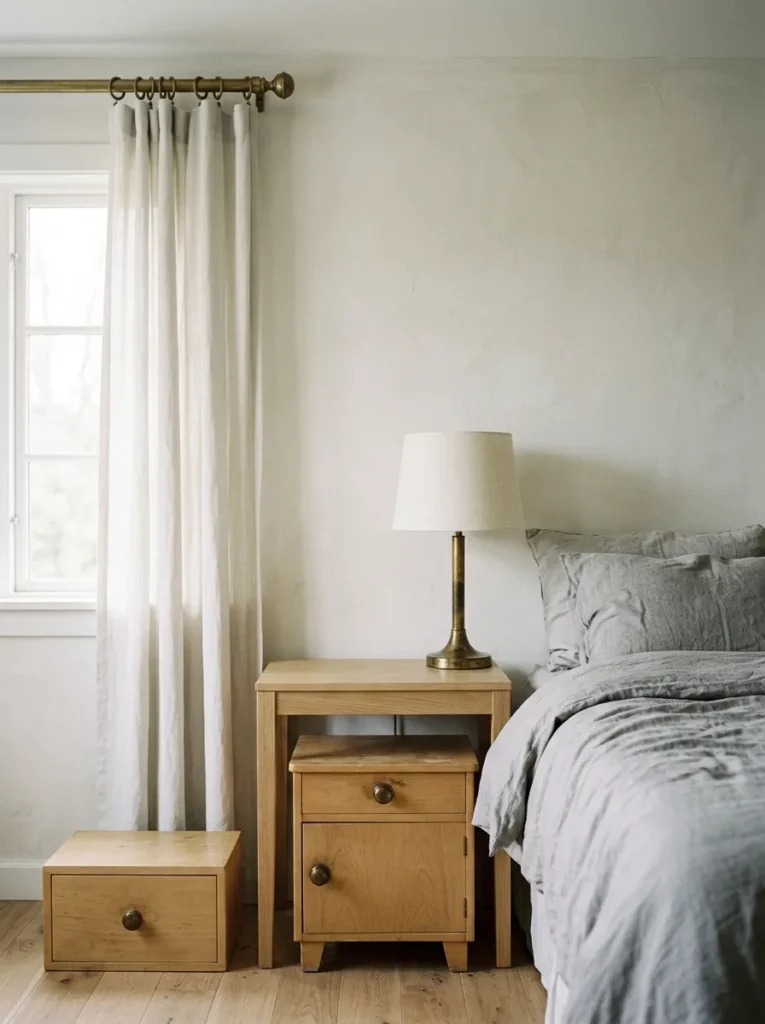
Aged brass and warm bronze, when used consistently across a bedroom — lamp base, curtain rod, small hardware details, the handle on the wardrobe — produce a coherent material note that runs through the room without dominating it. Chrome and brushed nickel produce the same consistency but in a cooler register, which suits a more contemporary Nordic interpretation.
The problem is mixing: aged brass lamp with chrome curtain rod and black drawer pull in the same sightline introduces a metal inconsistency that reads as unresolved even if no individual piece is wrong. The metal range should be decided early — before lamp or curtain hardware is purchased — because retrofitting consistency is more expensive than specifying it at the start.
18. Use a Sheepskin or Natural Wool Throw on the Reading Chair
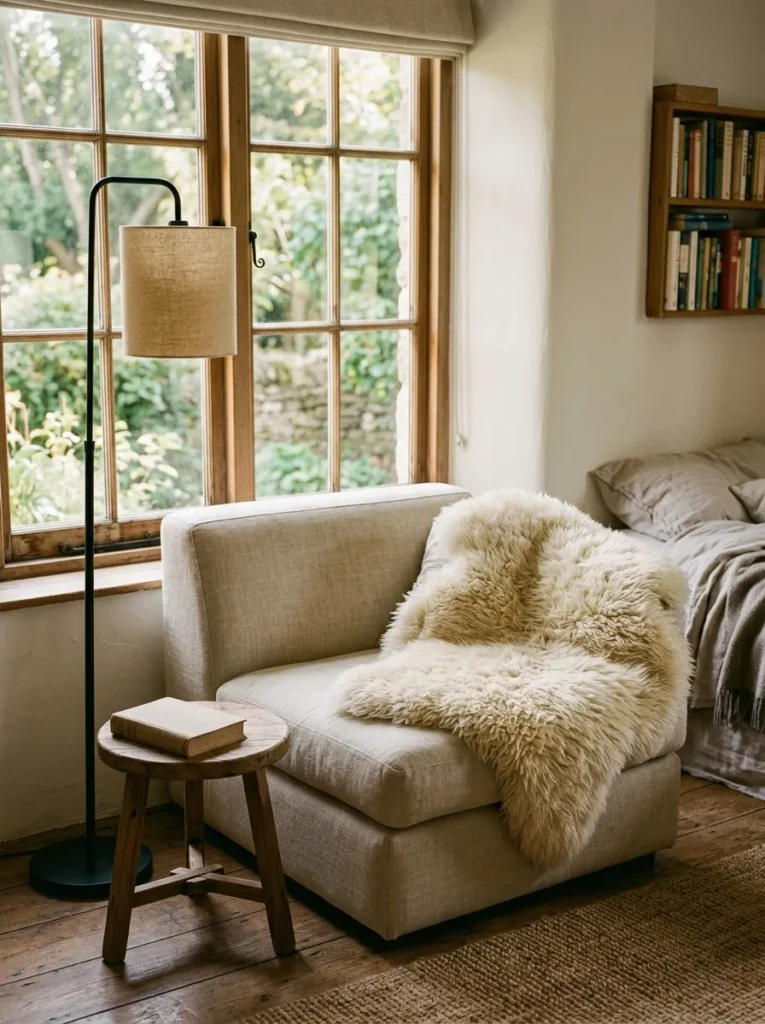
A reading chair in a Scandinavian bedroom — compact, upholstered, positioned near a window or in a corner with a floor lamp — is the detail that moves the room from a sleeping space into a genuine retreat. The specific textile on the chair matters: a sheepskin draped over one arm, or a naturally undyed wool throw folded across the seat, provides tactile warmth that a neatly cushioned chair without texture doesn’t.
This is one of the details with the most immediate visual impact for the least investment. A chair that’s been styled with the right textile reads completely differently from the same chair without it — the textile signals that the chair is genuinely used rather than decoratively placed.
19. Address Under-Bed Storage to Avoid a Cluttered Floor
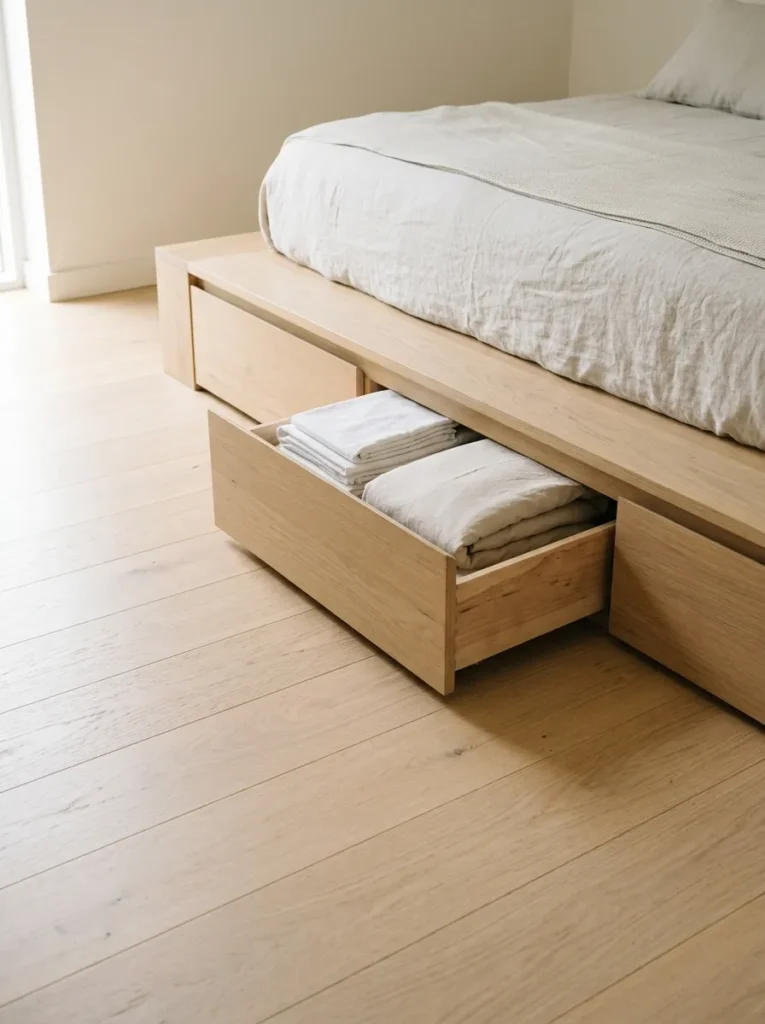
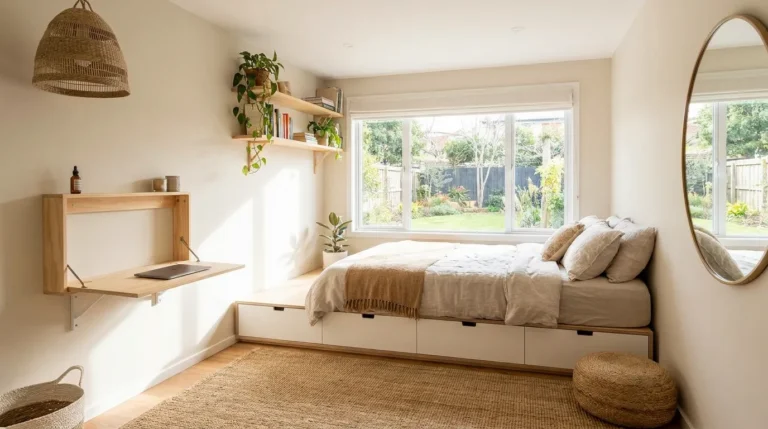
The floor space in a Scandinavian bedroom needs to be clear or very nearly so — visible storage bins, suitcases under the bed, and accumulated floor-level objects undermine the visual lightness the palette is building from the walls down. A bed with built-in drawers, or a low platform that sits close enough to the floor that the space beneath isn’t visible, solves this without requiring additional furniture.
For beds with visible under-bed space, shallow platform storage boxes in a neutral fabric or natural material keep the storage invisible while making it accessible. The floor itself — wide plank pale timber or pale concrete — should read as a surface in the room’s composition rather than a platform for storage overflow.
20. Choose Art and Objects That Relate to Nature Rather Than Abstract Pattern
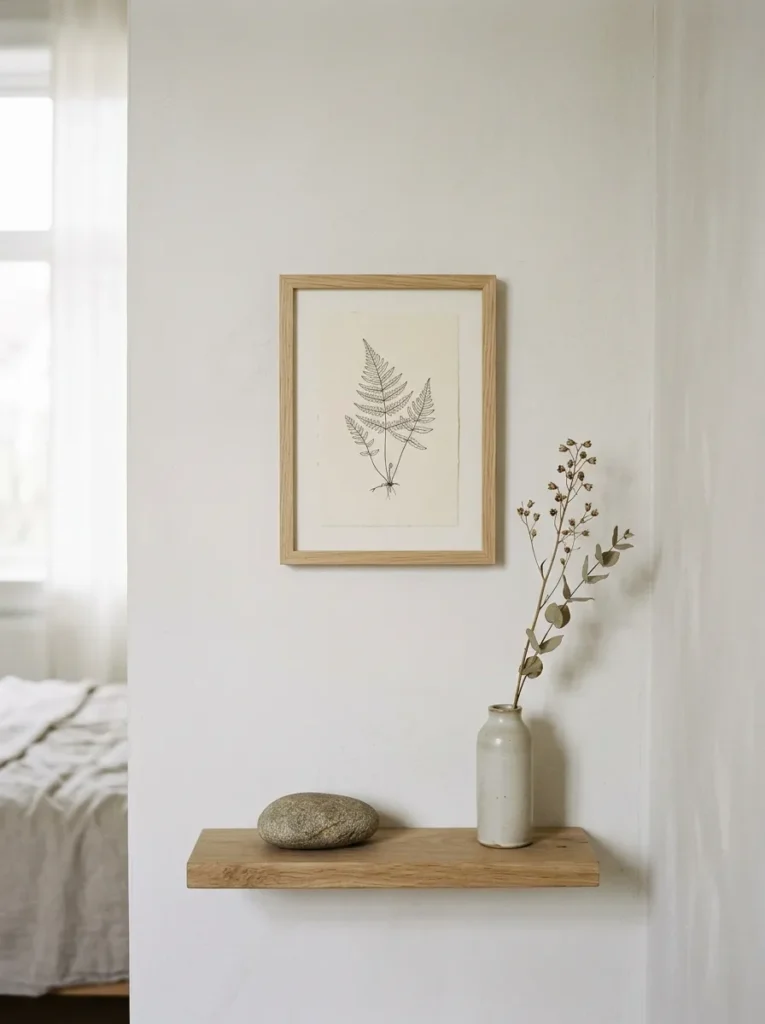
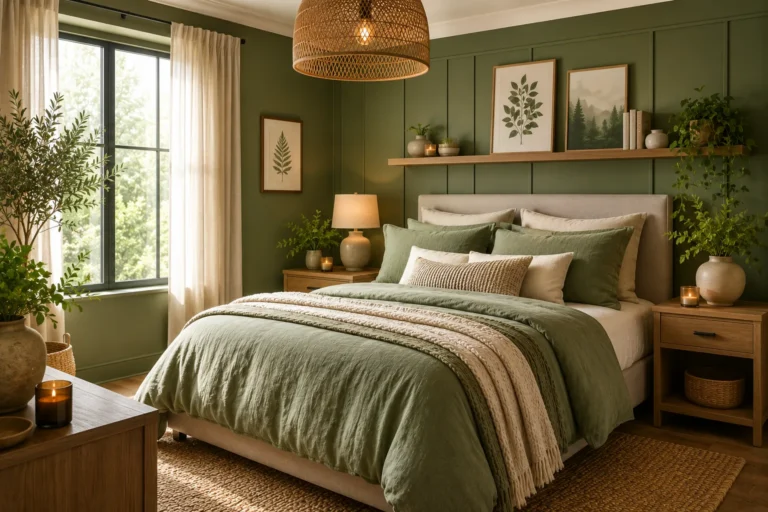
The decorative objects in a Scandinavian bedroom tend to reference the natural world — a branch in a slim vase, a stone or pebble on the bedside surface, a botanical print in a simple frame, a piece of driftwood on a shelf. This isn’t a rule so much as an observation about what suits the material palette: organic forms in natural tones respond to the room’s wood and linen and wool in a way that abstract geometric pattern or brightly coloured decorative objects tend not to.
This doesn’t mean the room needs to be filled with nature references. One or two objects that bring an element of natural form — a small vessel with a dried stem, a stone beside the lamp, a print of a landscape or plant — are sufficient. The principle is restrained reference rather than botanical overload.
21. Resist the Impulse to Fill Every Surface
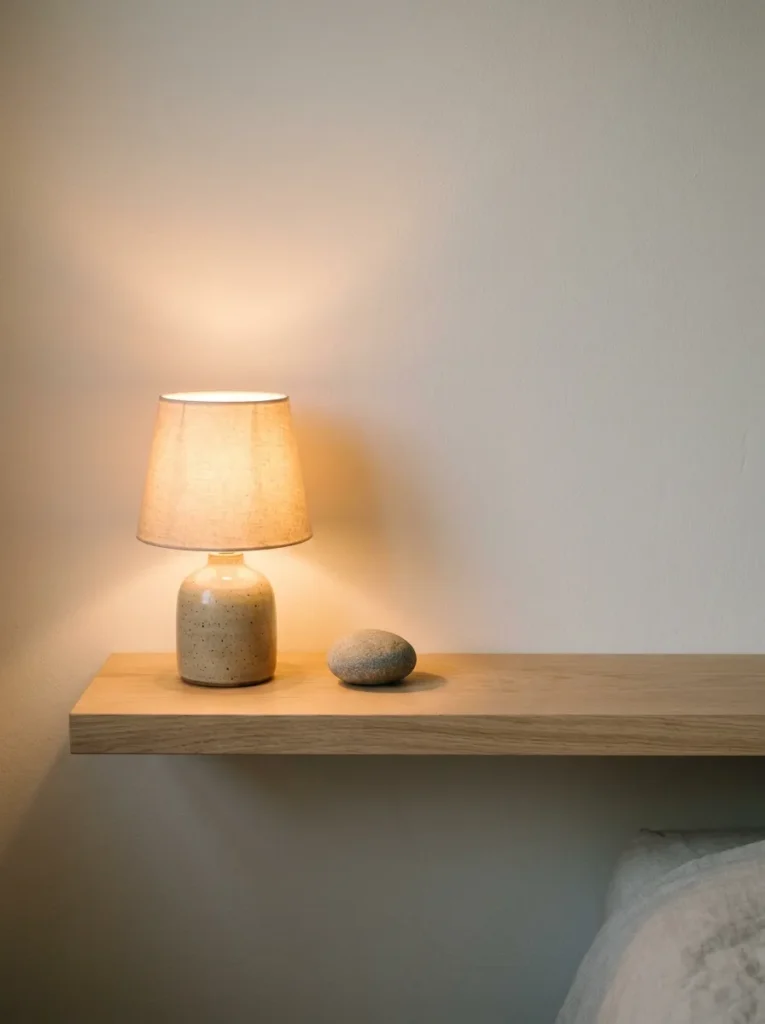
The final idea is the one that determines whether all the others work. Every object on every surface in a Scandinavian bedroom should be visible because it’s worth looking at — not because it needs to live somewhere. A bedside table with a lamp, a glass, and two other objects reads as a considered arrangement. The same surface with six objects, three stacked books, and a collection of miscellaneous items reads as clutter, regardless of the individual quality of those objects.
The discipline of subtraction is harder than the discipline of addition. In a room where the palette is deliberately restrained, the objects on display become considerably more legible — which makes any surface excess more visible than it would be in a busier, more colourful room. Leave each surface slightly less populated than instinct suggests, and see how the room reads.
Final Thoughts
Scandinavian bedroom ideas succeed when they understand the distinction between minimal and restrained. Minimal as an empty aesthetic produces rooms that look photographed but don’t feel lived in. Restrained as a design principle — every object earns its place, every material choice is deliberate, every surface has breathing room — produces rooms that feel genuinely calm without feeling unoccupied.
Start with the palette and the main furniture piece. A warm white wall and a pale oak bed frame at the right scale establish the room’s logic before any other decision is made. From there, the textiles, lighting, and finishing objects can be chosen in response to what’s already in place.
Save the ideas that address your room’s specific gaps — warmth, storage, texture, lighting — and come back to this guide when you’re ready to make the decisions that matter most.