20 Moody Bedroom Ideas That Feel Cozy and Dramatic
A moody bedroom doesn’t mean a dark one — or at least, it doesn’t have to. The difference between a room that feels dramatically atmospheric and one that feels oppressive usually comes down to two things: where the light lands and how the textiles behave. Get those right and you can paint the walls in forest green, midnight navy, or charcoal plum and still wake up in a room that feels warm rather than heavy. Get them wrong and even a mid-tone grey feels like a mistake you’ll repaint in six months.
These moody bedroom ideas cover the full spectrum — deep architectural color, layered fabric, candlelit warmth, rich material choices, and the kind of low ambient lighting that makes a bedroom feel like somewhere you actually want to be. Each idea also addresses the practical side: what it takes to implement it, what size room it suits, and what to watch out for.
1. Start With the Right Dark Paint Color — Not Just the Darkest One
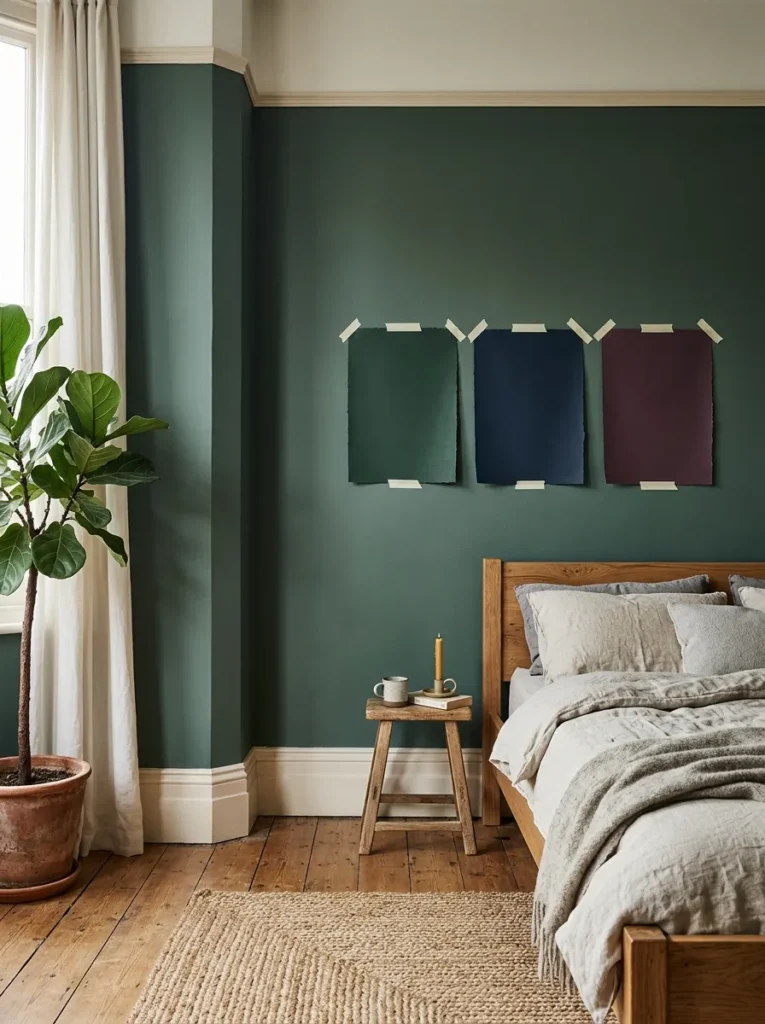
The biggest mistake in a moody bedroom is reaching for the most dramatic shade on the swatch card and hoping for the best. Dark colors are genuinely context-dependent. Forest green reads lush and enveloping in a room with warm-toned wood floors; in a north-facing room with cool white trim, it can turn clinical. Deep navy reads sophisticated against brass hardware; against chrome and grey linen, it looks like a hotel corridor.
Before committing, sample at least A4-sized swatches and look at them at three times of day — morning light, afternoon, and in the evening under your actual artificial lighting. The finish matters too: flat or eggshell finishes absorb light and create that wrapped, cocoon-like quality most moody bedrooms are aiming for. Satin reflects more and can make the same color look harder and brighter than intended.
2. Layer Three Distinct Sources of Light Instead of One
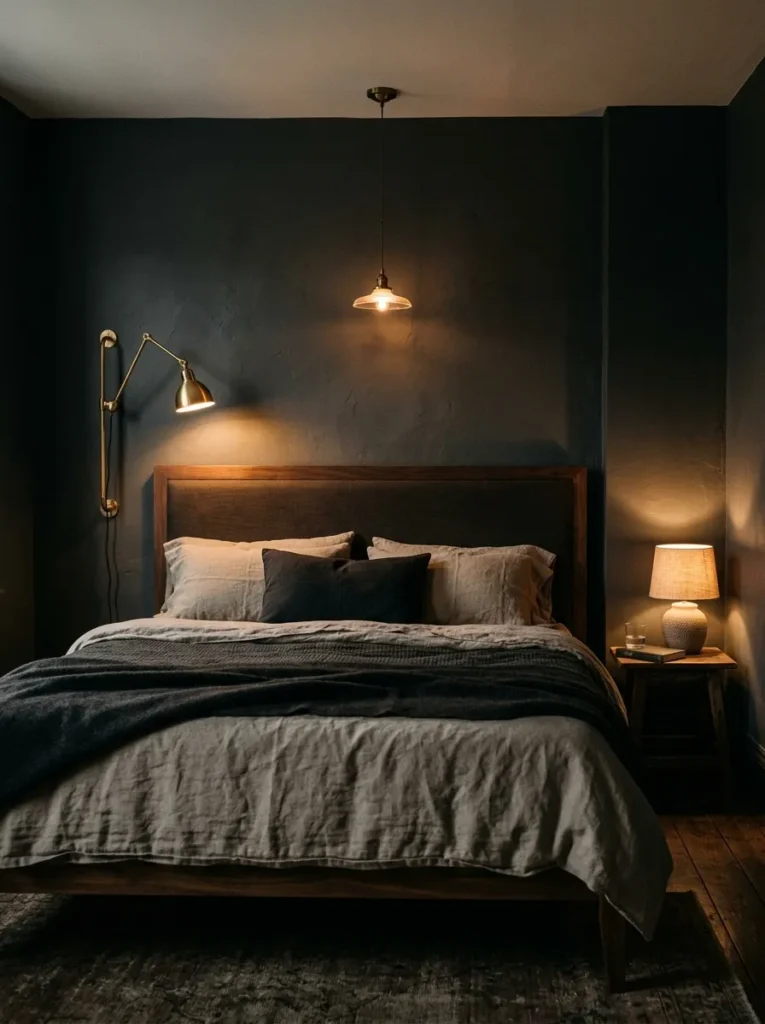
Dark walls absorb light rather than reflecting it, which means a moody bedroom with a single ceiling light will feel gloomier than atmospheric. The solution is layered lighting: a ceiling source at low wattage for general orientation, bedside reading light at eye height, and at least one accent source — a table lamp on a low surface, a floor lamp in a corner, or a wall sconce set lower on the wall.
The colour temperature of each source matters more in a dark room than a light one. Warm bulbs (2700K–3000K) deepen the warmth of terracotta, plum, or green tones and feel genuinely cosy. Cool white bulbs make the same colours look muddy and slightly sad. Dimmers on every circuit give you the ability to shift from working light to evening light without changing a thing about the decor.
3. Use Limewash Paint for Texture That Changes With the Light
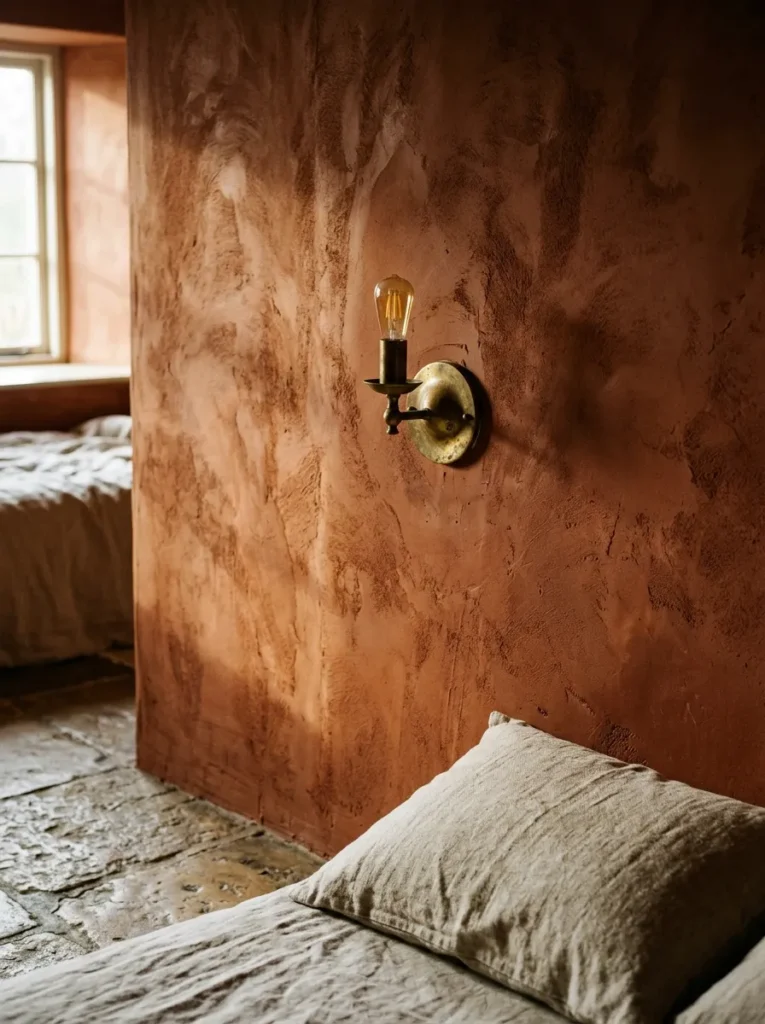
Flat dark paint is one approach to a moody bedroom; limewash is a better one for rooms where you want depth without solidity. Limewash has a soft, chalky, slightly uneven finish that catches directional light differently depending on the angle and hour of day — the same wall reads darker in morning shadow and warmer by lamplight in the evening.
This textural quality means limewash tends to make rooms feel more layered and genuinely atmospheric rather than simply painted. It suits older properties with slightly uneven plaster particularly well. In rentals it’s generally off the table unless you’re planning to repaint when you leave, but temporary limewash-effect wallpapers exist for similar results — though the depth and variation aren’t quite the same.
4. Choose Bed Linen in Texture Over Colour
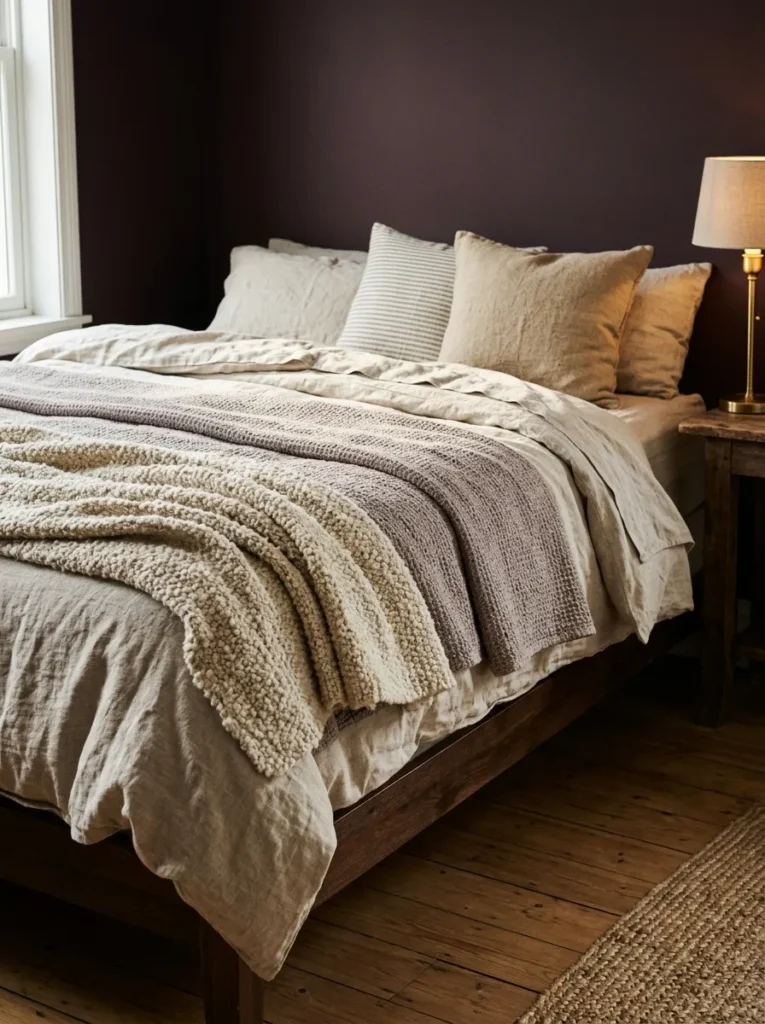
In a moody bedroom, the bed is almost always the largest light surface in the room, and what goes on it either reinforces the atmosphere or works against it. The mistake is bedding that’s too crisp, too bright, or too flat in texture — white hotel cotton against charcoal walls reads as a contrast that belongs more in a contemporary hotel than a genuinely cosy, enveloping bedroom.
Layering works better: a base sheet in oatmeal or warm grey linen, a heavier quilt or coverlet in a deeper tone, and at least one knitted or boucle throw. The combination of matte textures — rough linen alongside something loosely knitted — creates the visual weight that makes a dark bedroom feel warm rather than stark. Limit the pillow colours to two or three tones from the same family to keep the bed feeling considered rather than chaotic.
5. Paint the Ceiling the Same Dark Colour as the Walls
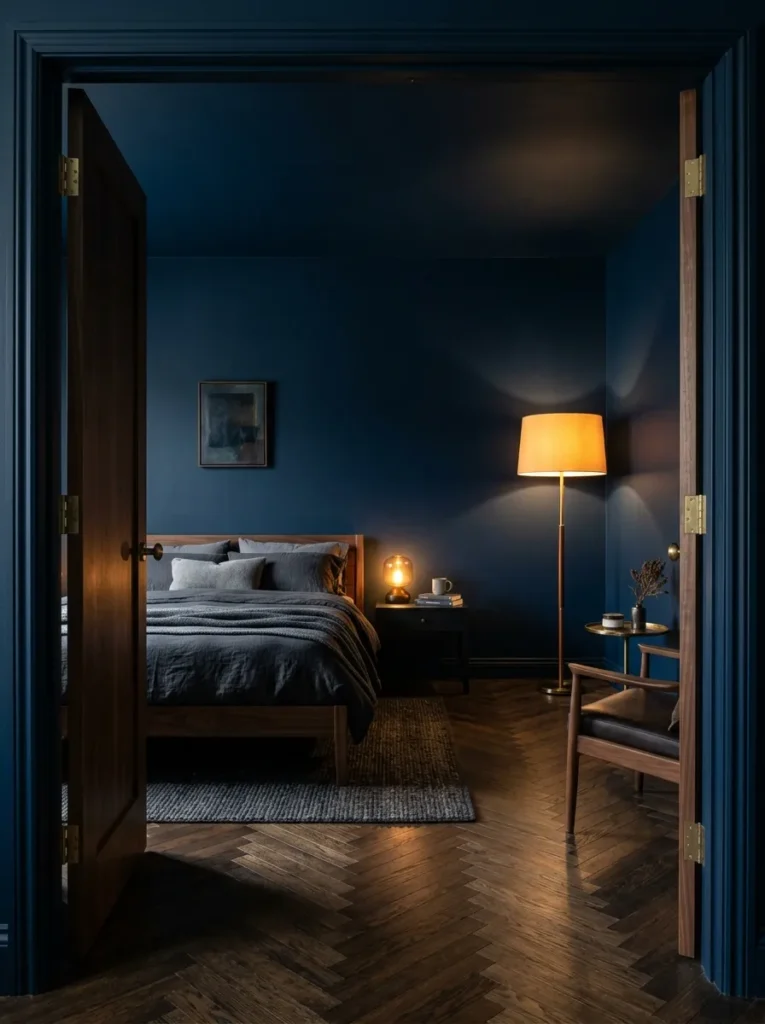
The white ceiling is one of the most reliable ways to accidentally undermine a dark bedroom. It floats above the room like a lid rather than enclosing it, and the contrast between deep walls and a bright ceiling draws the eye upward in a way that emphasises the room’s height without actually making it feel larger.
Painting the ceiling the same colour as the walls — or one shade deeper — is the change that takes a moody bedroom from feeling like a room with dark walls to feeling like a genuine cocoon. It works best in rooms with enough ceiling height that it doesn’t feel oppressive; in rooms shorter than 2.4 metres, consider going just slightly lighter on the ceiling (two tones up rather than white) to retain the wrapped quality without the claustrophobia.
6. Anchor the Room With a Velvet or Bouclé Upholstered Headboard
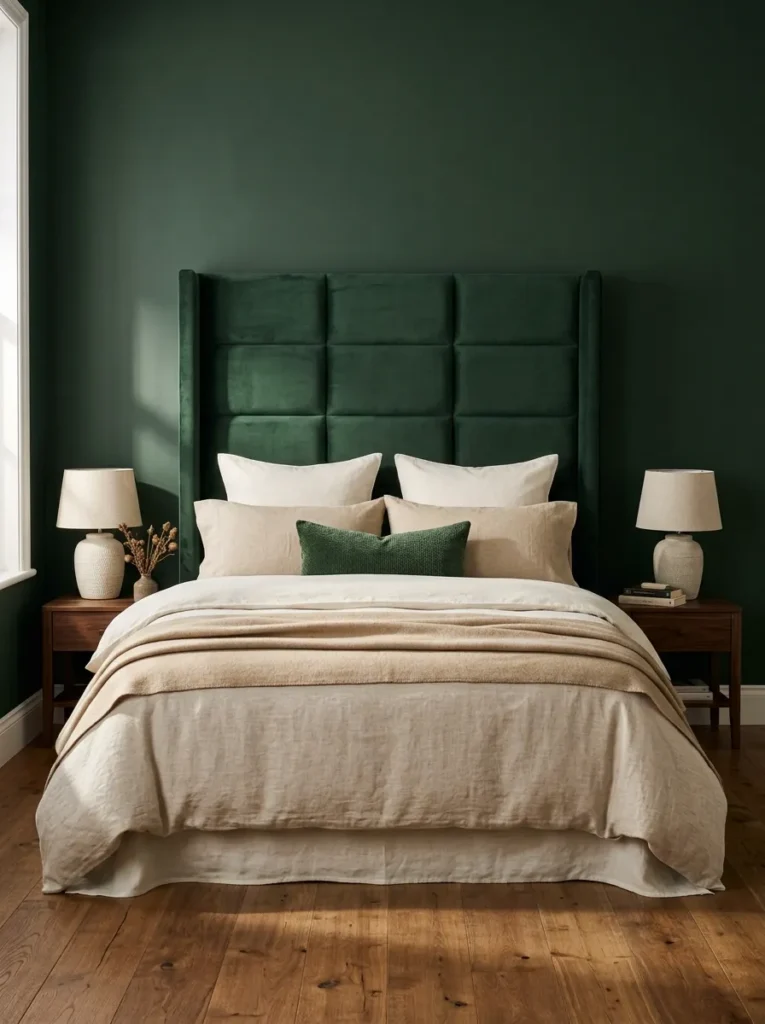
A large upholstered headboard in a rich fabric does two things in a moody bedroom: it adds a substantial amount of light-absorbing texture to the main focal wall, and it gives the bed enough visual presence to balance deep wall colour rather than being swallowed by it. A flat wooden headboard or no headboard at all can make the bed look small against dark walls.
Deep jewel tones — forest green velvet, plum, dusty rose, ink blue — all work in this context. Alternatively, a neutral bouclé in oatmeal or charcoal reads softer and suits bedrooms where the walls are doing the dramatic work. Sizing matters: the headboard should be roughly the same width as the mattress to slightly wider, and tall enough to be visible above the pillows — anything under 80cm high tends to disappear.
7. Introduce Aged Brass or Antique Bronze Hardware Throughout
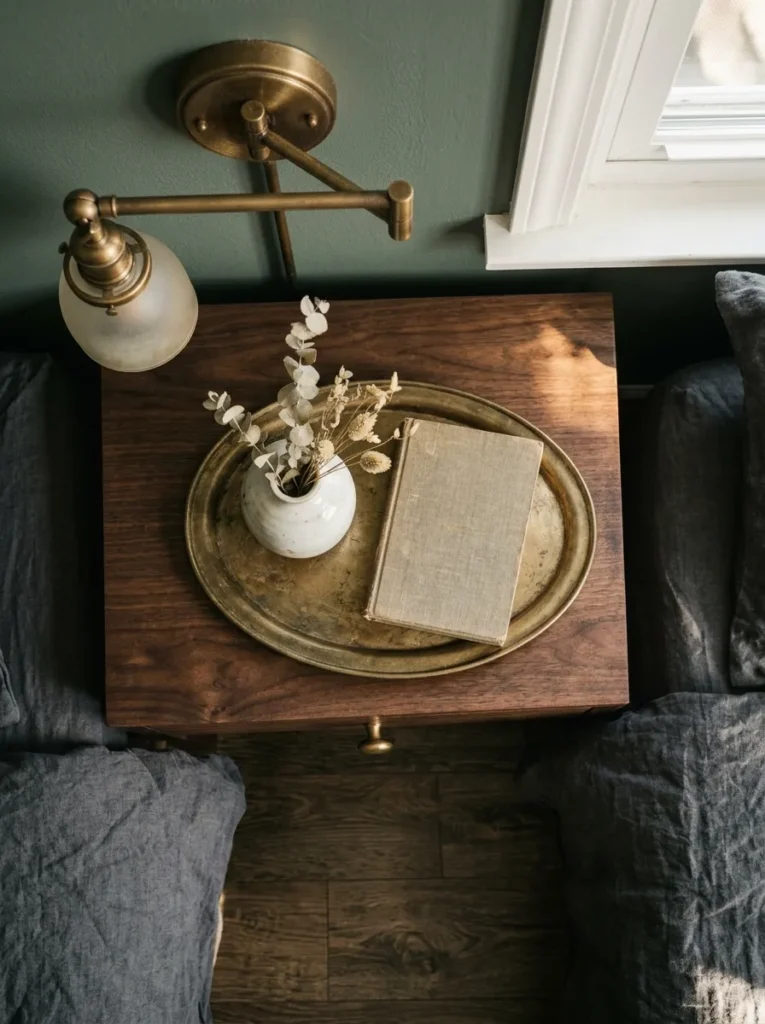
Chrome and polished nickel both feel sharp, cool, and reflective — exactly the opposite of what a moody bedroom is trying to achieve. Aged brass, antique bronze, and unlacquered brass all have a warmth and surface irregularity that reads as deliberately collected rather than showroom-purchased, which suits the layered, atmospheric quality that makes dark rooms work.
Apply the same finish consistently across bedside lamps, drawer pulls, mirror frames, curtain rods, and any door or window hardware. The consistency doesn’t have to be exact — aged brass and antique brass can coexist if they’re genuinely similar in undertone — but mixing warm and cool finishes breaks the room’s material coherence in a way that’s immediately visible even if the reason isn’t obvious.
8. Use a Dark Statement Rug to Ground the Space
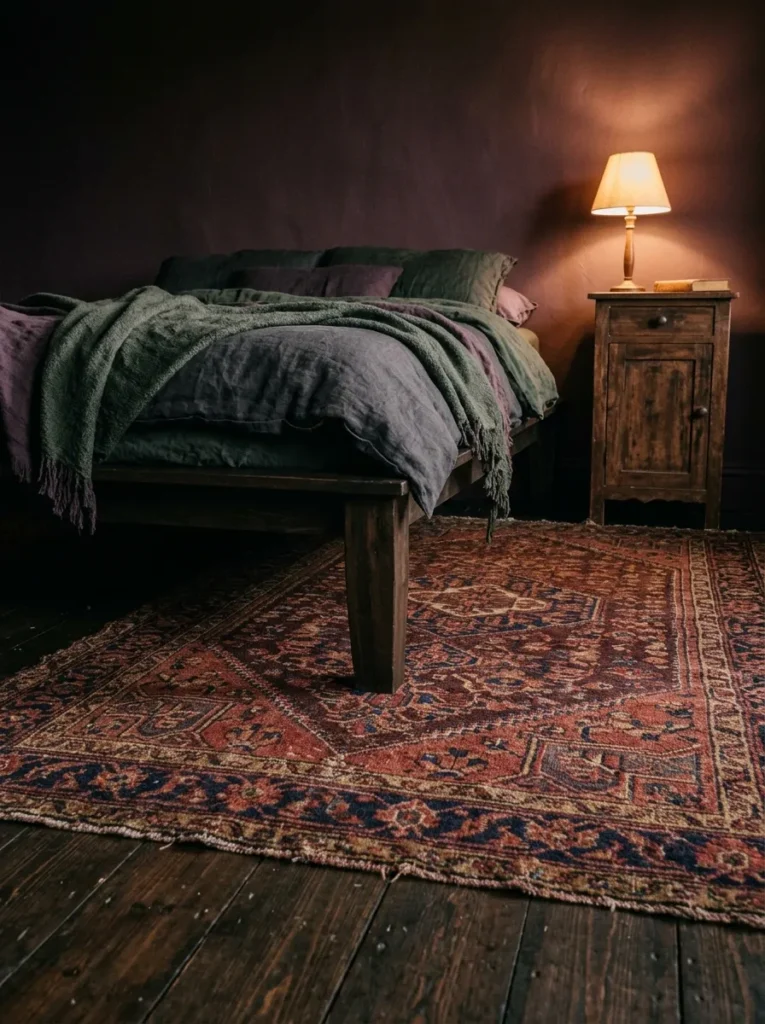
In a moody bedroom, the floor is one of the few surfaces that can either extend the atmospheric quality or interrupt it. Light-coloured rugs — cream, pale beige, white — tend to pop against dark walls and floor in a way that looks high-contrast rather than intentional. A rug in a deeper, richer tone — plum, deep teal, burnt rust, charcoal — absorbs into the room’s palette and makes the floor feel like part of the same composition.
Pattern works particularly well here: a vintage-style Persian or Moroccan rug in a dark colourway brings the kind of layered, collected quality that modern moody bedrooms often lack. Sizing should be generous enough for at least the front legs of the bed and both bedside tables to sit on the rug — a rug that’s too small in a large, dark room looks like an afterthought.
9. Add a Reading Nook or Corner Chair for Depth and Function
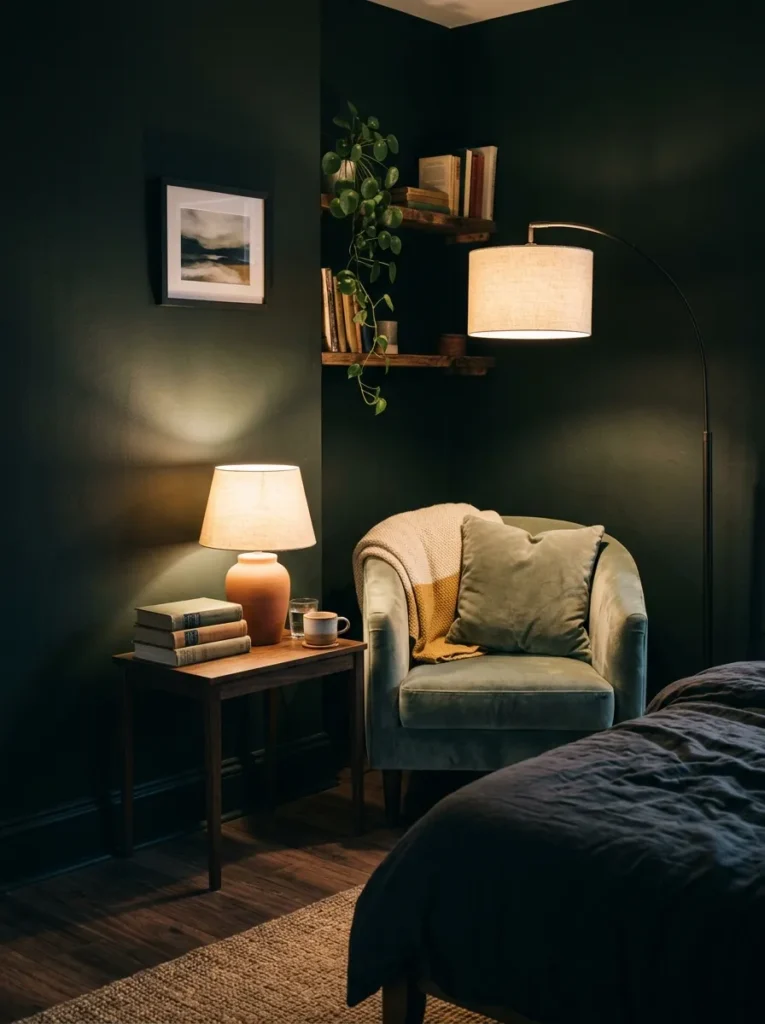
An empty corner in a dark bedroom will collect shadow and read as dead space. A single armchair or small reading chair with its own light source — a floor lamp, a low table lamp — breaks the room into zones and creates a separate atmosphere within the larger one. In the evening, with only the corner lamp on, a reading chair can make a medium-sized bedroom feel considerably more intentional.
The chair style matters: something with some visual substance — a tub chair in a rich fabric, a curved occasional chair in velvet — sits better in a moody bedroom than a contemporary Scandinavian-minimalist form with thin metal legs, which can look out of place against heavier, richer textures. A small side table and a single stack of books completes the composition without over-styling it.
10. Hang Curtains Floor-to-Ceiling, Wall-to-Wall
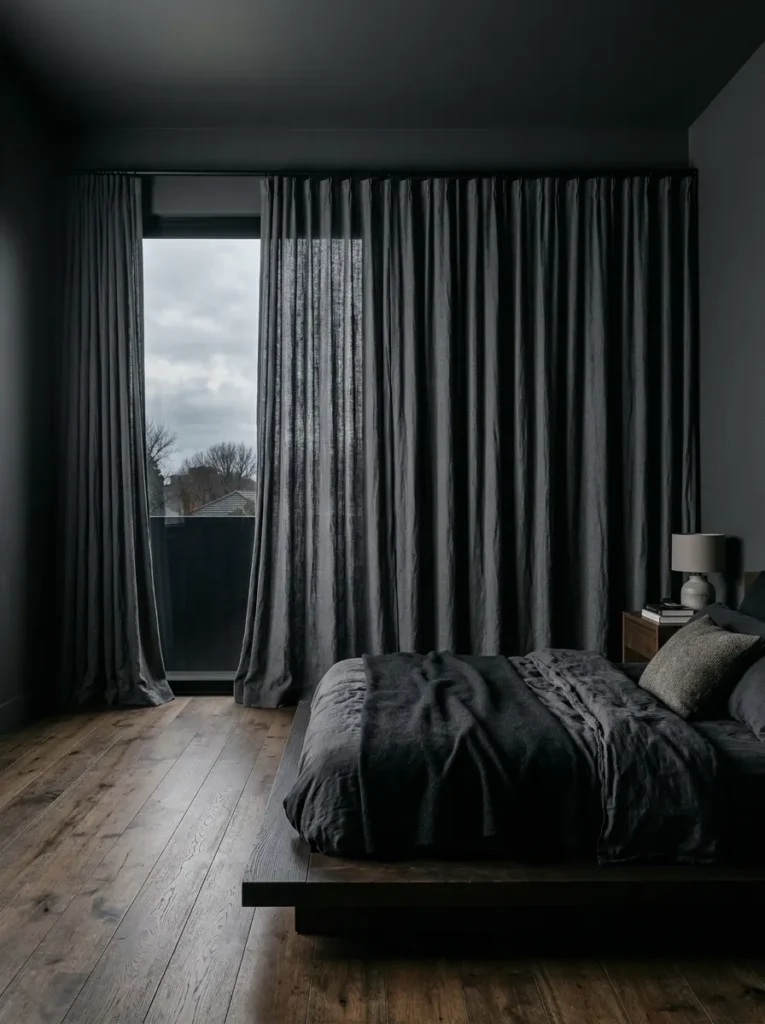
In a moody bedroom, curtains serve a different purpose than simply covering the window. Floor-to-ceiling, wall-to-wall drapery — hung from as close to the ceiling as possible — makes the entire window wall feel considered and intentional, adds an enormous amount of soft, sound-absorbing textile to the room, and (when closed) produces an enclosure that most moody bedroom aesthetics depend on.
Fabric weight is significant: sheer or lightweight curtains in a dark room tend to flutter and look insubstantial. Lined velvet, heavy linen, or a thick wool blend hang better, block more light for sleeping, and carry the visual weight that the palette requires. Deep jewel tones or a colour close to the wall keep the room continuous; a contrasting curtain colour is a deliberate choice that should be made carefully — it will become one of the most prominent features in the room.
11. Place a Large Dark-Framed Mirror Opposite Natural Light
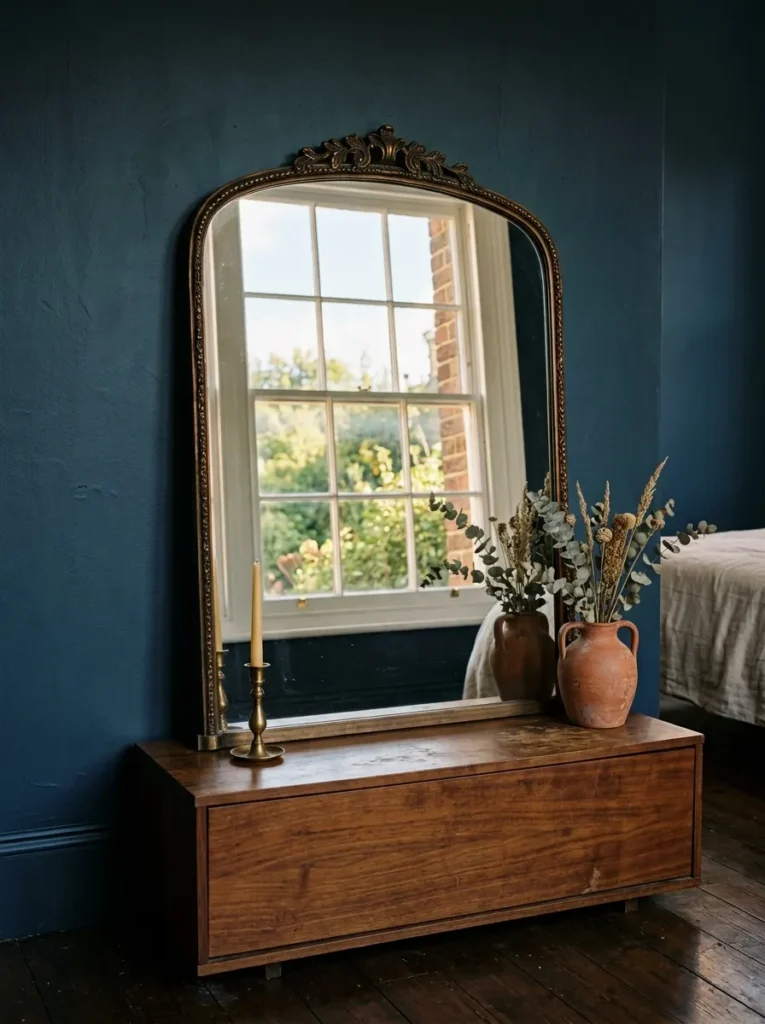
Mirrors in a moody bedroom need positioning that makes them useful rather than reflective of the wrong things. A large dark-framed mirror — antique, blackened steel, or tortoiseshell — placed on the wall opposite the window reflects natural light back into the room during the day without the clinical brightness of a white-framed piece. In the evening it reflects lamplight and creates depth.
The frame matters as much as the position. A thin modern frame in a dark bedroom tends to disappear; a substantial ornate, arch-shaped, or heavily bevelled frame becomes a decorative object in its own right. Lean it against the wall rather than hanging it for a more relaxed, layered aesthetic — and position it so it reflects the most interesting part of the room, not a blank wall or a door.
12. Choose Nightstands With Closed Storage to Control Visual Clutter
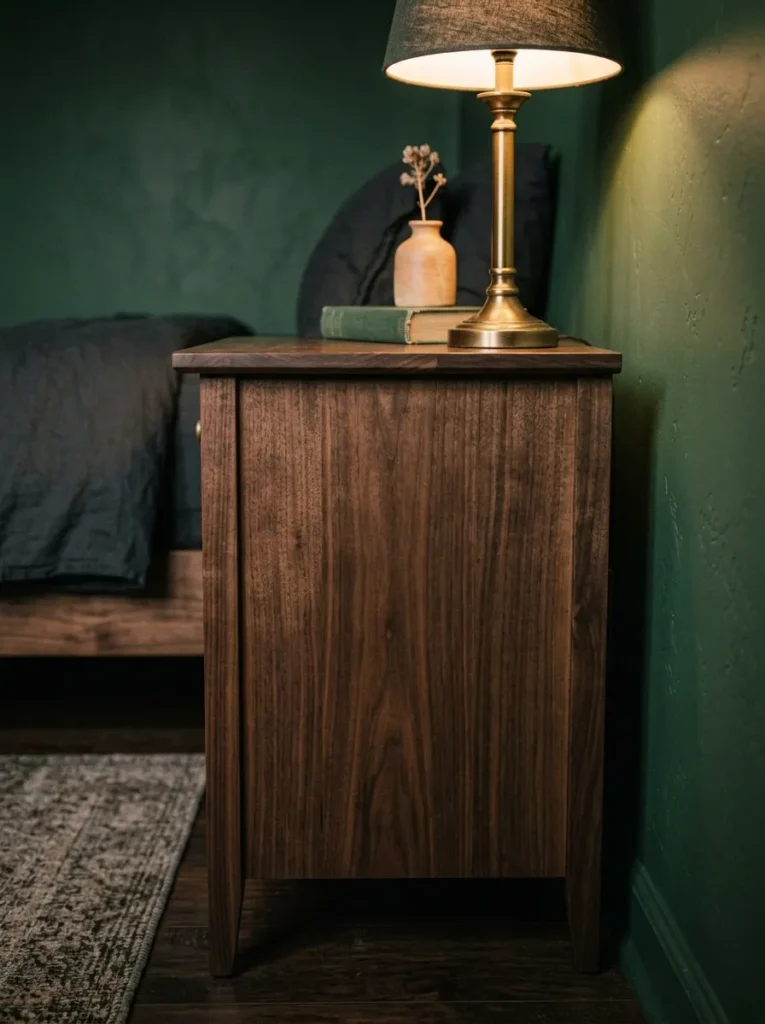
A moody bedroom relies on a sense of considered control — visual clutter works against the atmosphere more than it would in a bright, breezy room where the overall lightness keeps disorder from feeling oppressive. Open nightstand shelves that hold charging cables, water glasses, and miscellaneous items don’t read well against deep wall colour.
Nightstands with a door or drawer keep the surface curated. One lamp, one small object, one book maximum on the visible surface. This restraint is part of what makes the room feel atmospheric rather than dark-and-messy — two things that are very easy to conflate but produce entirely different visual results. Closed-front nightstands in dark wood, lacquered black, or warm walnut suit the aesthetic and don’t compete with richer wall colours.
13. Paint or Wallpaper Just the Alcoves and Recesses
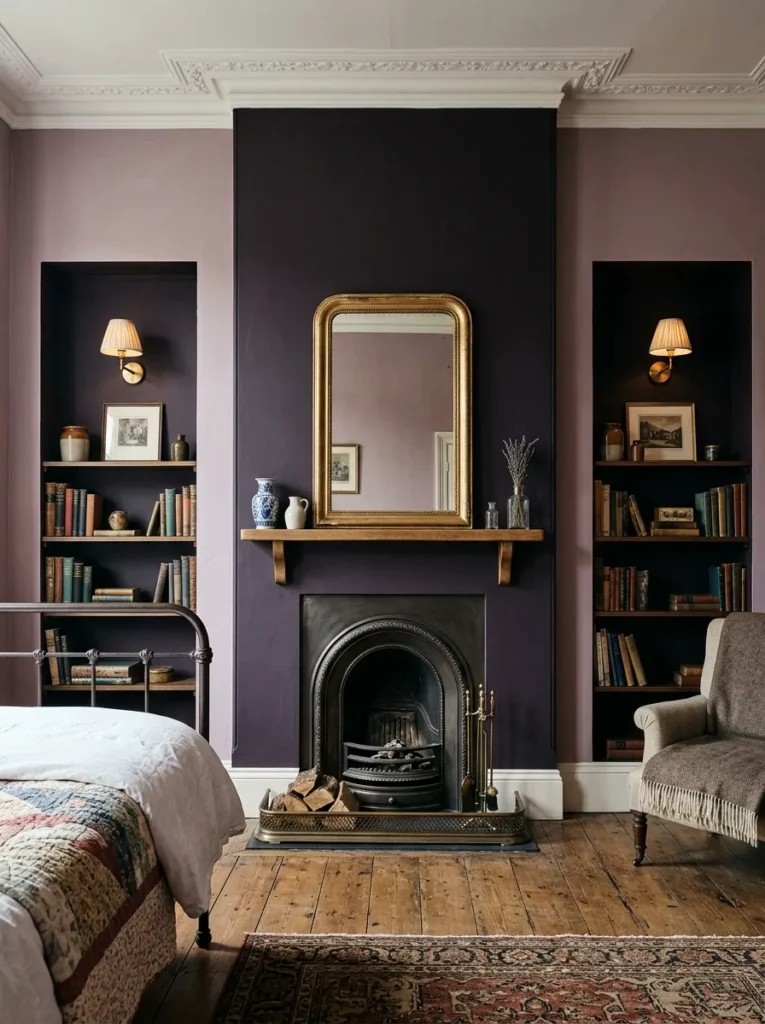
Not every bedroom — particularly in older or smaller properties — lends itself to full dark walls without feeling genuinely oppressive. An alternative that captures a similar atmosphere is painting or wallpapering only the recessed alcoves, chimney breast, or head-of-bed wall. Against a slightly lighter wall elsewhere, a deep tone in an alcove reads as deliberate architectural framing rather than a saturated palette throughout.
This approach works particularly well in rooms with Victorian or Edwardian alcoves flanking a chimney breast, where the recesses are naturally framing features anyway. A dark paint in the alcoves with shelving in a contrasting warm wood gives a room that moody, layered quality without committing the entire space to a deep tone.
14. Introduce Scented Candles and Candlelight as a Design Element
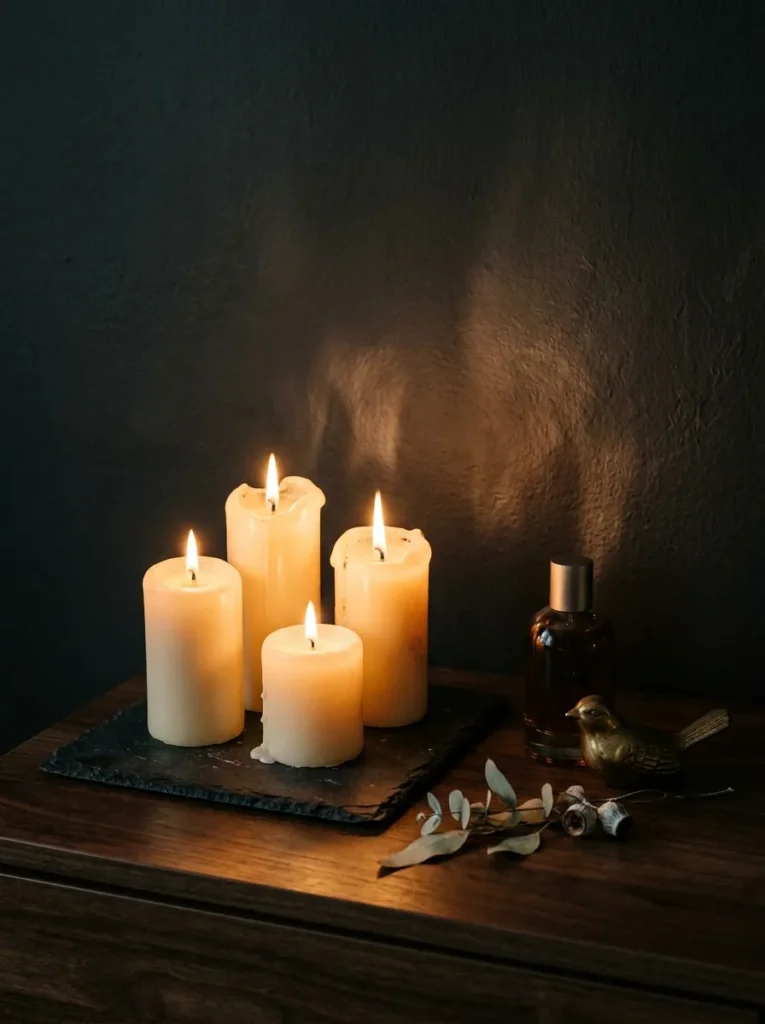
This is not a styling add-on — it’s a lighting layer that changes the entire quality of a dark room. Candles produce light in the 1800–2000K range, which is warmer than any artificial light source, and the movement of flame against dark walls creates a flickering depth that fixed sources can’t replicate. In a moody bedroom, a cluster of pillar candles on a tray on the dresser, or a few votives on a windowsill, shifts the room from an evening space to a genuinely atmospheric one.
Practically: keep candles on heat-safe surfaces away from textiles, and consider wax melts or diffusers near curtains and bed linen. The goal is the warmth of candle quality light without unnecessary risk — battery-operated flicker candles have improved considerably and work for permanent installation in inconvenient positions.
15. Use Wall Sconces to Free Up Surface Space and Lower the Light Source
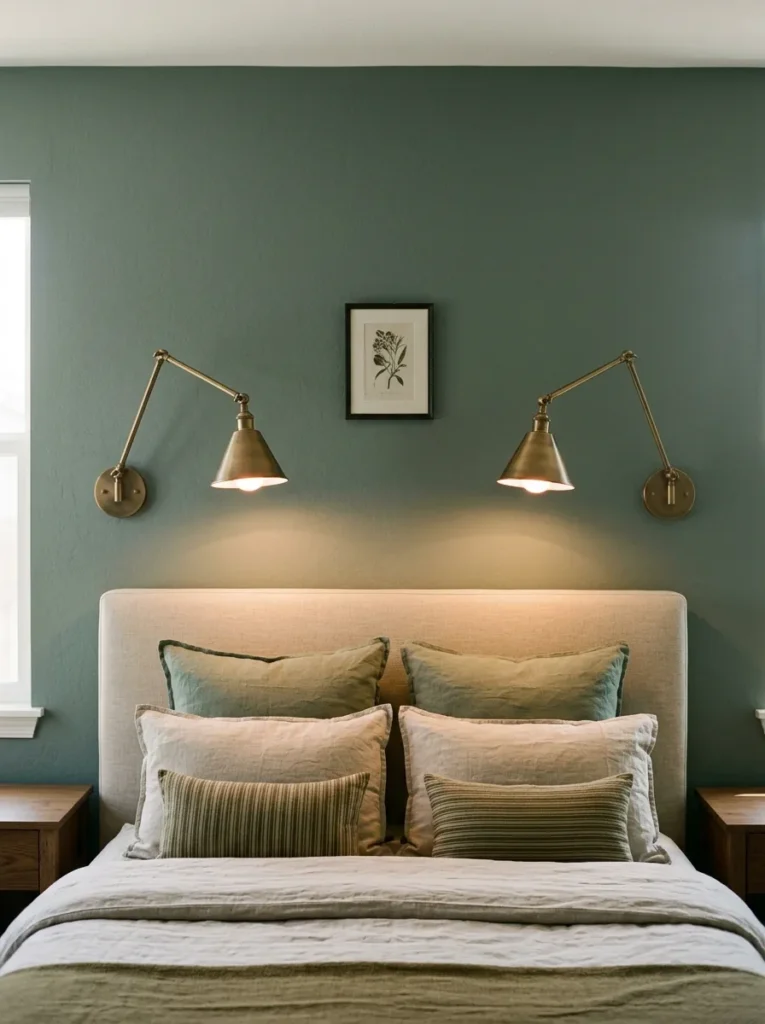
Wall-mounted bedside sconces rather than table lamps solve two problems in a moody bedroom: they eliminate the table lamp footprint from a nightstand that might be small, and they lower the primary light source to eye level when sitting up in bed, which is both more practical for reading and more flattering as ambient lighting for the overall room.
Swing-arm sconces that can be directed are the most functional version. Mounted at approximately 140–150cm from the floor, they sit just above bed pillow height and cast a cone of light that reads warm and directional rather than general. Finish in aged brass, matte black, or antique bronze to remain consistent with the rest of the hardware.
16. Bring in Natural Materials to Prevent the Room Feeling Flat
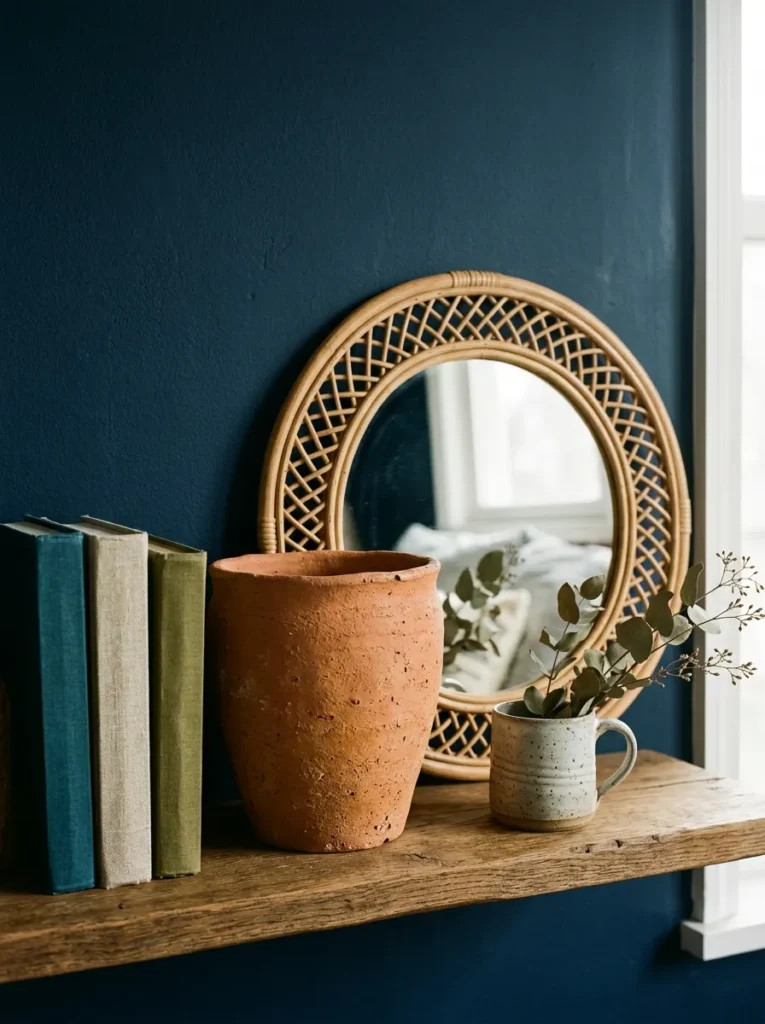
A moody bedroom built entirely from painted and upholstered surfaces can feel one-dimensional — all the texture is the same softness, all the colour is the same depth. Introducing natural materials — raw linen, terracotta, stone, aged timber, rattan, hand-thrown ceramic — provides contrast in surface quality that makes the room read as layered and considered rather than monochromatic.
This doesn’t require a full rustic turn. A single terracotta vessel on a dark shelf, a rattan mirror frame against a deep green wall, or a marble tray on a dark wood dresser introduces enough material variation to add visual interest without competing with the atmosphere. The principle is contrast of texture and surface rather than contrast of colour.
17. Choose a Low Platform Bed for Proportion and Warmth
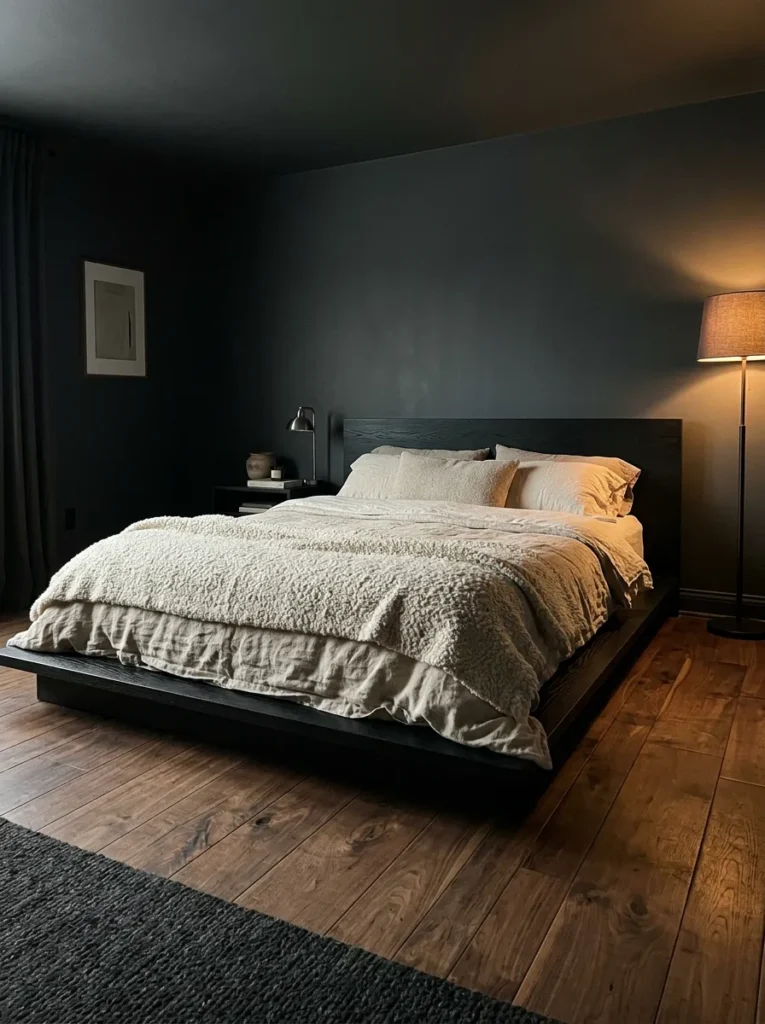
Bed height is one of the more overlooked decisions in a bedroom with dark walls. High-legged beds with a visible gap beneath them can look oddly exposed in a dark room — the shadow under the frame becomes a significant visual feature, and high profiles tend to look competing rather than settled. A low platform bed — with little or no visible leg gap — sits more grounded and proportionally suited to rooms with ceiling-to-floor dark treatment.
Platform beds in dark walnut, ebonised oak, or matte black metal suit the palette without requiring an upholstered headboard for visual weight. Sizing recommendation: allow a minimum of 60–70cm of clearance on each side for comfortable movement, which matters more in dark rooms where the spatial boundaries are less immediately visible.
18. Add Botanical Elements That Thrive in Lower Light
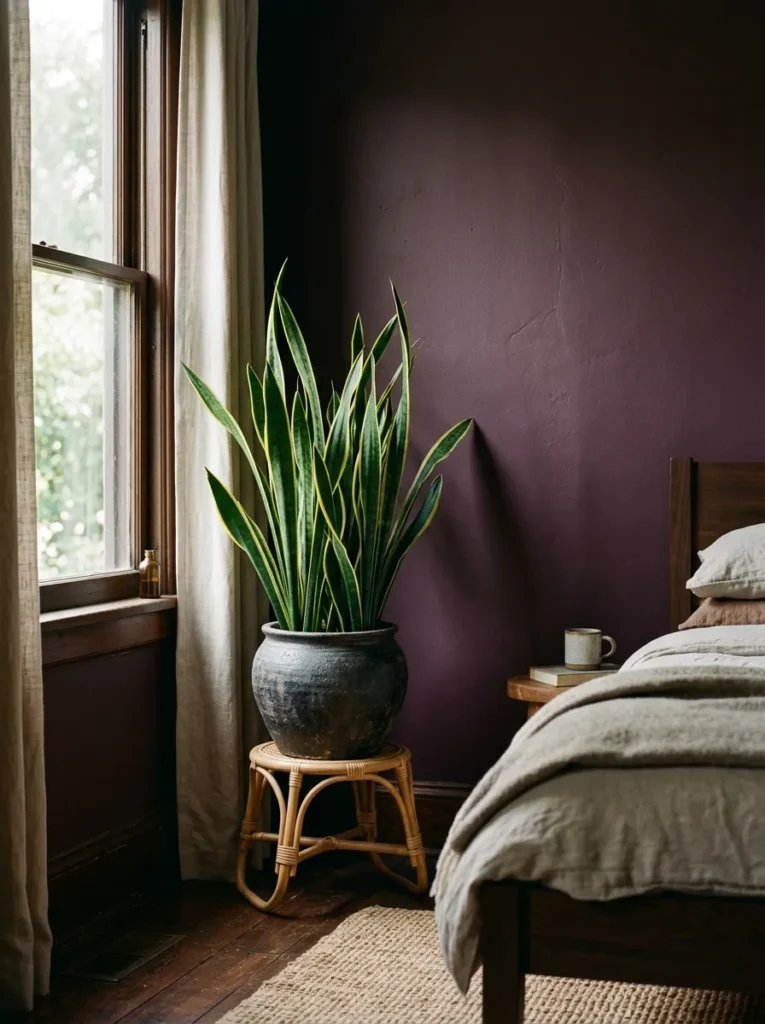
Plants are often recommended in home decor without any consideration of whether they’ll survive the actual conditions. A moody bedroom with north-facing or heavily curtained windows genuinely is a lower-light environment, and filling it with plants that need direct sun will result in dead plants — which does not improve the atmosphere. Plants that genuinely suit low-light conditions include pothos, ZZ plant, cast iron plant, peace lily, and snake plant.
In a dark bedroom, a single large plant in a deep-toned or terracotta pot makes more of an impression than several small ones scattered across surfaces. Position it where it gets the most indirect light — usually nearest the window — and treat it as a design object, not a filler. The contrast between living texture and rich dark walls is one of the more atmospheric combinations available without renovation.
19. Use Dark Panelling Instead of Paint for Architectural Depth
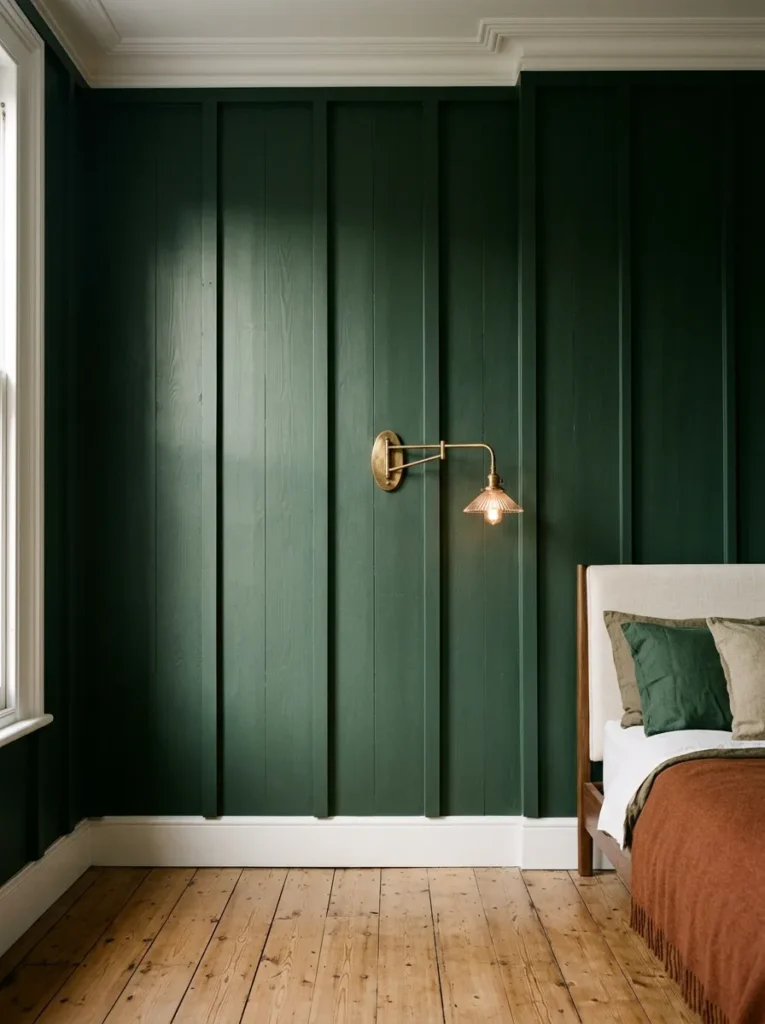
Paint is the most direct route to a dark bedroom, but it’s not the only one. Dark wall panelling — whether beadboard, shiplap, full-height board-and-batten, or a Victorian dado rail with panelled sections below — introduces architectural texture that paint alone can’t produce. Against deep painted colour above, painted panelling below in the same or slightly darker shade creates a room with genuine material depth.
In period properties, reinstating original panelling to dado height and painting it the same deep tone as the walls above produces an effect that reads both historically appropriate and genuinely atmospheric. In newer builds, a DIY-fitted MDF panelling solution painted in a deep colour is considerably more affordable than architectural joinery and produces a similar visual result from the right viewing distance.
20. Resist the Urge to Add Too Much — Restraint Is the Final Ingredient
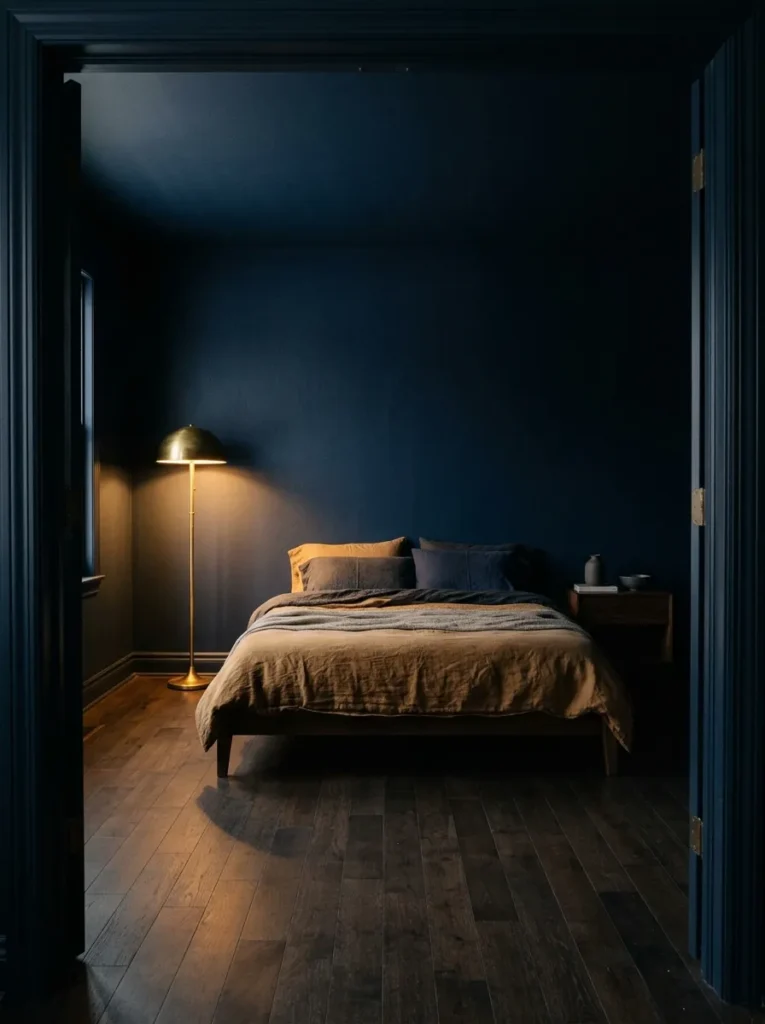
This is the idea that makes the others work properly. Moody bedroom aesthetics often fail not because the individual choices are wrong but because too many right choices are layered on top of each other. Three competing textures of deep velvet, a heavily patterned rug, macramé, plants, sconces, floor lamp, six cushions, and a gallery wall don’t create more atmosphere — they create visual noise that reads as cluttered rather than considered.
One dramatic decision per surface is usually enough: a deep wall colour, a rich headboard, a layered bed, and one or two quality accessories. The empty space in a dark room is not wasted — it’s doing active work, allowing the eye to rest and giving the considered elements room to register. The rooms that genuinely feel atmospheric rather than simply dark almost always have more restraint than they first appear to.
How to Combine These Ideas Without Overdoing It
The temptation in a moody bedroom is to implement everything at once. That rarely produces the result the reference images promised. A more reliable approach is to work in layers, starting with the decisions that are hardest to reverse.
Start with wall colour. It’s the most foundational choice and everything else responds to it. Get this right before buying furniture.
Then commit to the lighting plan. Decide where every light source will be before placing furniture, because sconce positions, floor lamp corners, and bedside lamp heights all affect furniture layout. Rewiring after the fact is expensive; planning before is free.
Furniture next. Bed, headboard, nightstands — in that order. Proportion and finish should be decided with the wall colour on and ideally a large swatch of your intended bedding to hand.
Textiles last. The bed linen, throw, rug, and curtains are the most adjustable elements and should be chosen once the room’s larger structure is in place. Starting with textiles and building backwards tends to produce rooms where the palette works on the bed but not on the walls.
Final Thoughts
A moody bedroom works when the atmosphere it creates feels intentional rather than merely dim. The most common failure is stopping after paint — a dark wall with bright ceiling, cool-white overhead light, and pale crisp bedding will look like a room mid-renovation rather than a finished design.
The ideas in this guide build on each other, but you don’t need all twenty. For most bedrooms, five or six well-chosen decisions — a good dark colour, warm layered lighting, rich textiles, a considered material accent or two, and genuine restraint everywhere else — will produce a room that feels dramatically different from its before-state. Start with the wall colour and the lighting plan. Everything else follows from those two.
If you’re unsure where to begin, the limewash paint option and the layered lighting approach are the two investments that have the widest impact on atmosphere regardless of room size. A moody bedroom should feel like a place you retreat to — not a design statement you have to explain.
Save the ideas that match your room and your light conditions, and come back to this guide when you’re ready to layer in the details.