23 TV Wall Ideas That Elevate Modern Living Rooms
Most TV wall advice starts and ends with “hide the cables and hang it above the fireplace,” as if the television is a problem to apologize for instead of a fixture you’ll look at every single day. It isn’t. These TV wall ideas treat the screen as one part of a larger composition — material, proportion, light — rather than the whole point. Some of these will ask you to spend a weekend with a router and a stack of wood slats. Others ask for nothing more than restraint. Either way, the goal is a wall that still looks intentional with the television off, which is the real test most rooms fail.
1. Swap the Media Console for a Floating Shelf
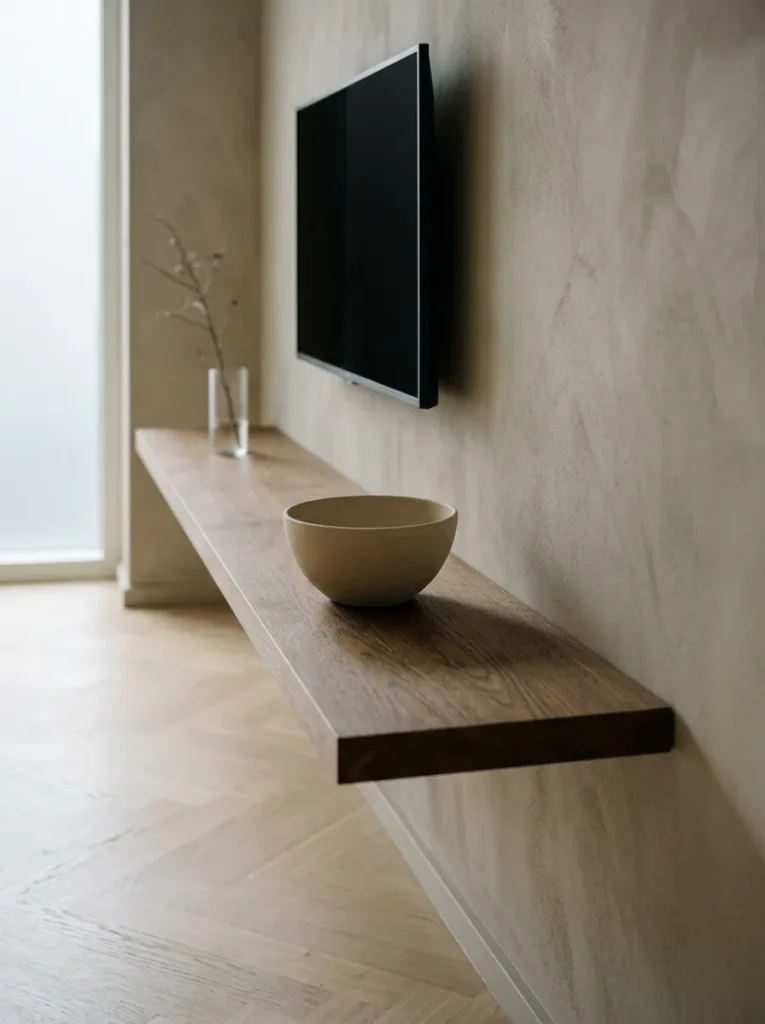
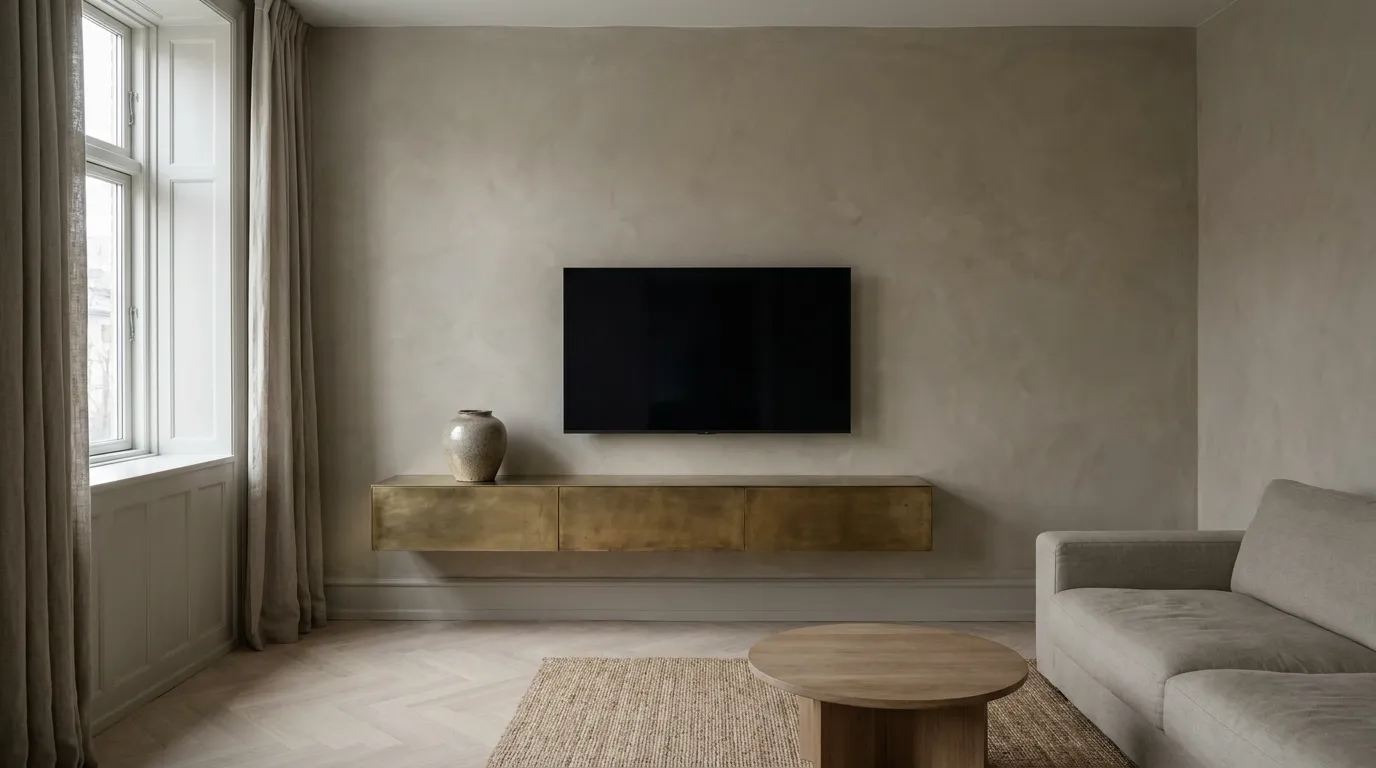
A floating shelf under the television reads lighter than a console every time, because it removes the visual weight of legs and a boxy base from the lower third of the wall. Fifteen to eighteen centimetres of depth is usually enough for a router, a stack of books, and one object with some presence — a ceramic vase, a stone bowl, nothing fussy. Mount it thirty to forty centimetres below the screen so the two elements read as a pair, not two separate decisions. This is the fastest upgrade on this list and also the one most people skip because a console feels safer.
2. Try a Board-Formed Concrete Media Wall
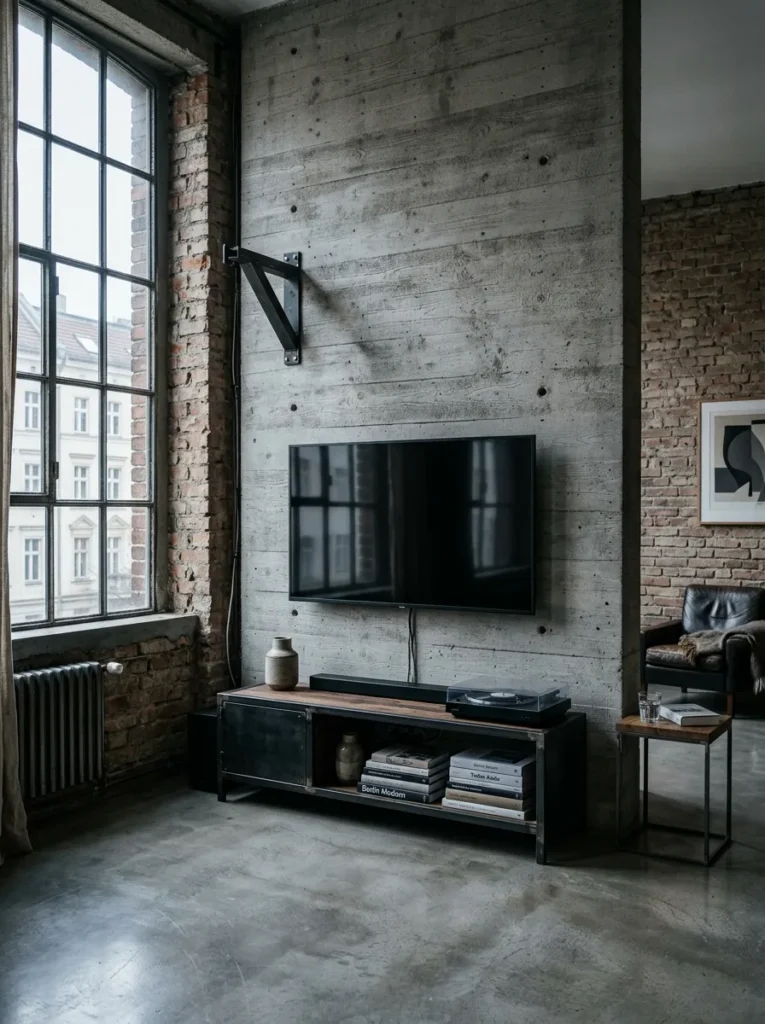
Concrete panels with visible wood-grain formwork give a TV wall an industrial weight that drywall simply can’t fake, and the texture catches light differently depending on the hour. This is not a subtle choice, and it shouldn’t be — commit to it across the full wall rather than a small accent strip, or the effect reads unfinished. Pair it with warm brass or blackened steel brackets so the hardware doesn’t disappear into the grey. It’s a heavier investment than most of these ideas, but the payoff is a wall that photographs like it belongs in a design magazine rather than a rental listing.
3. Flank the Screen With Floor-to-Ceiling Bookshelves
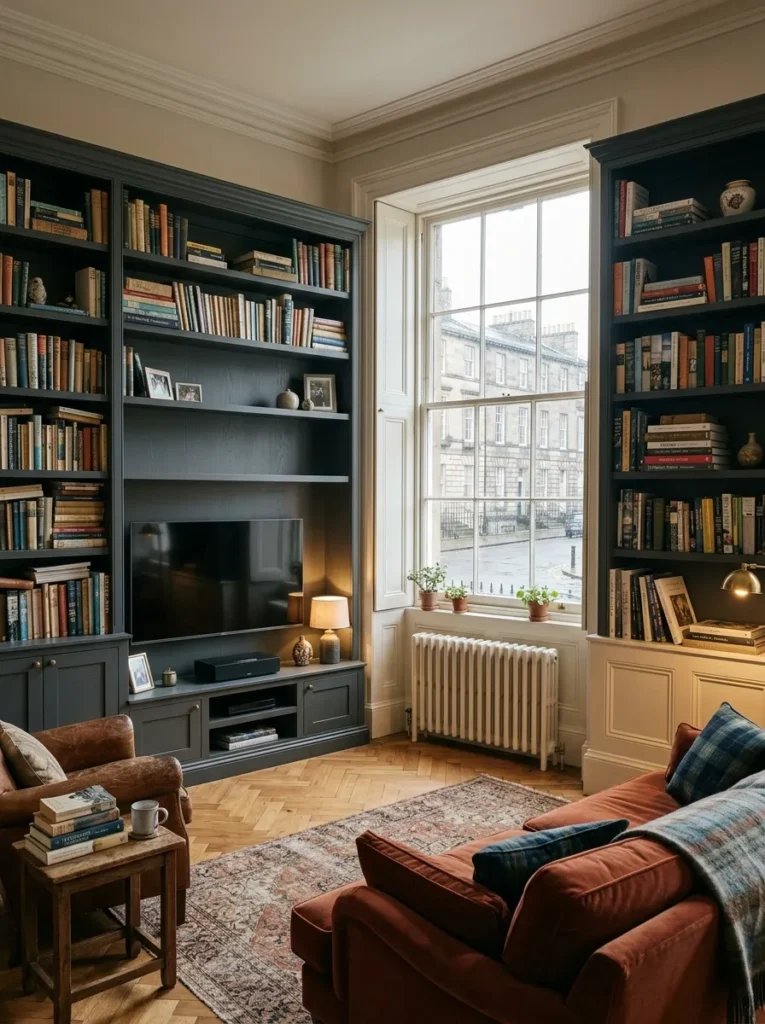
Built-in shelving on either side of the television does something a lot of homeowners overlook: it makes the screen the smallest element in the composition instead of the largest. Fill the shelves unevenly — some books stacked flat, some upright, the occasional gap left empty on purpose. The asymmetry is what keeps it from looking like a showroom display. This works best in rooms with at least 2.4 metres of ceiling height, otherwise the shelving competes with the screen instead of framing it.
4. Cover the Wall in Vertical Fluted Wood Panels
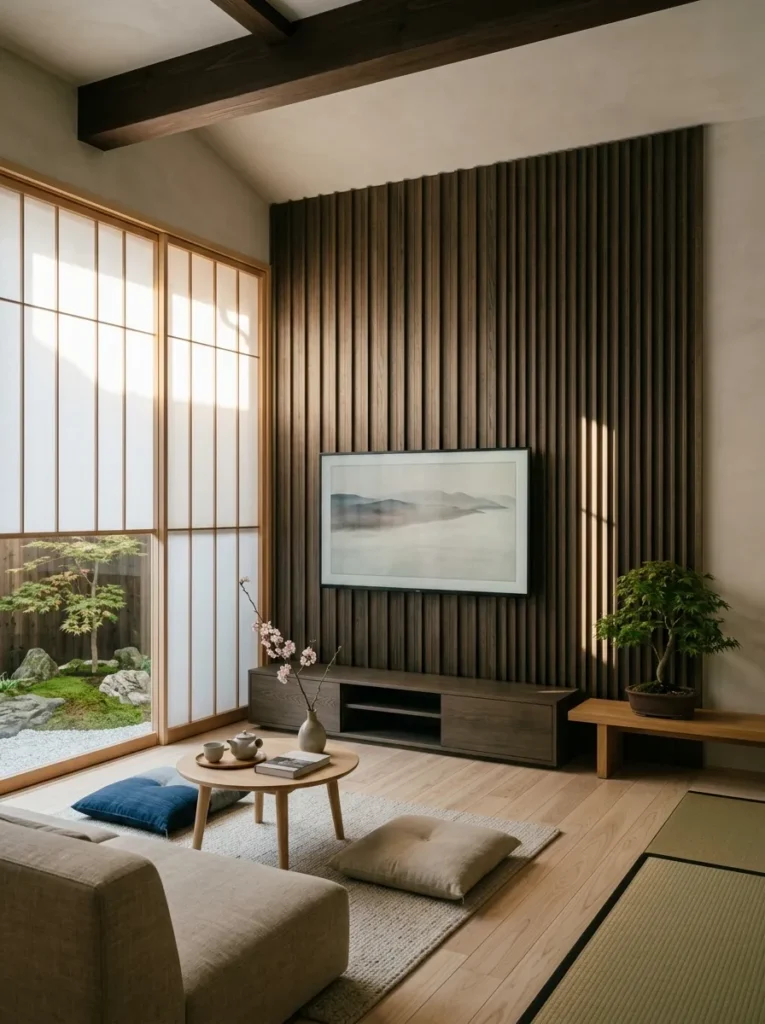
Reeded or fluted wood paneling behind a television adds texture without adding visual noise, and the vertical lines make a standard eight-foot ceiling feel taller than it is. Smoked oak or walnut veneer both hide the inevitable scuffs better than a painted finish. Run the panels edge to edge rather than stopping short around the screen — a partial application looks like an afterthought. This is the tip most likely to get copied by every neighbour who sees it, for what it’s worth.
5. Build a Gallery Wall Around the Television
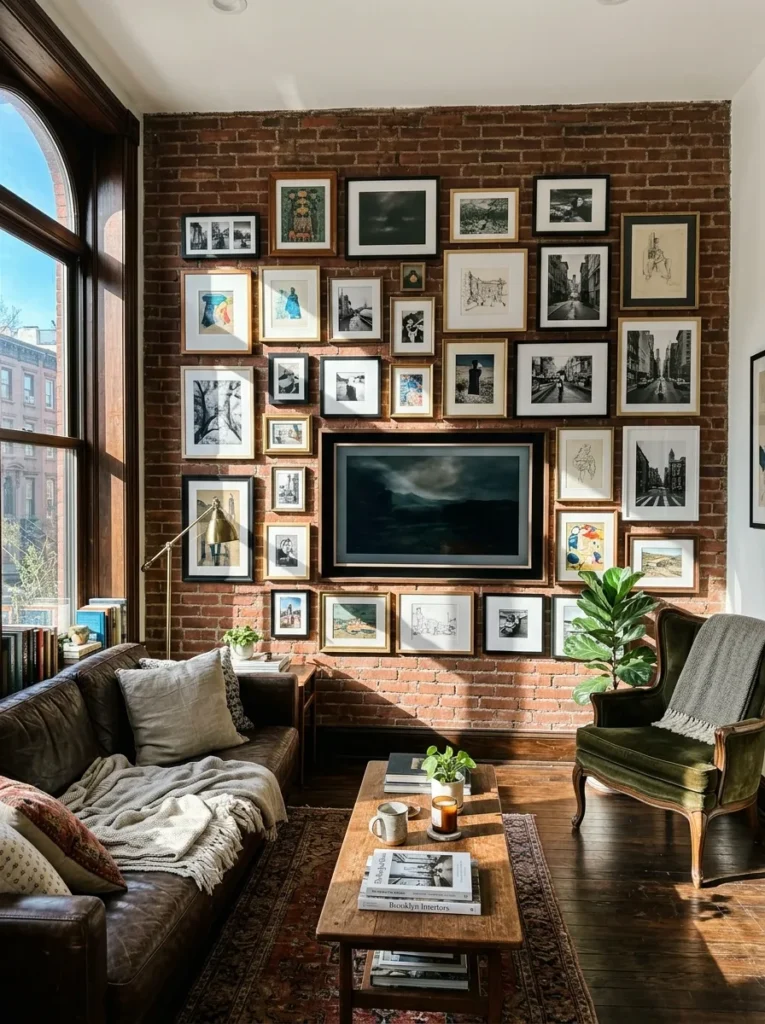
Surrounding the screen with a mix of framed art and photography — not symmetrical rows, but an intentional cluster — turns the TV into one frame among many instead of the obvious focal point. Leave roughly five centimetres of breathing room around the screen itself so it doesn’t feel crowded. Mix frame finishes; all-matching frames make the arrangement look purchased as a set, and the matching set is always the safer choice and almost never the better one. When the television is off, most guests won’t clock which frame is actually a screen.
6. Skip the Fireplace-and-TV Combo
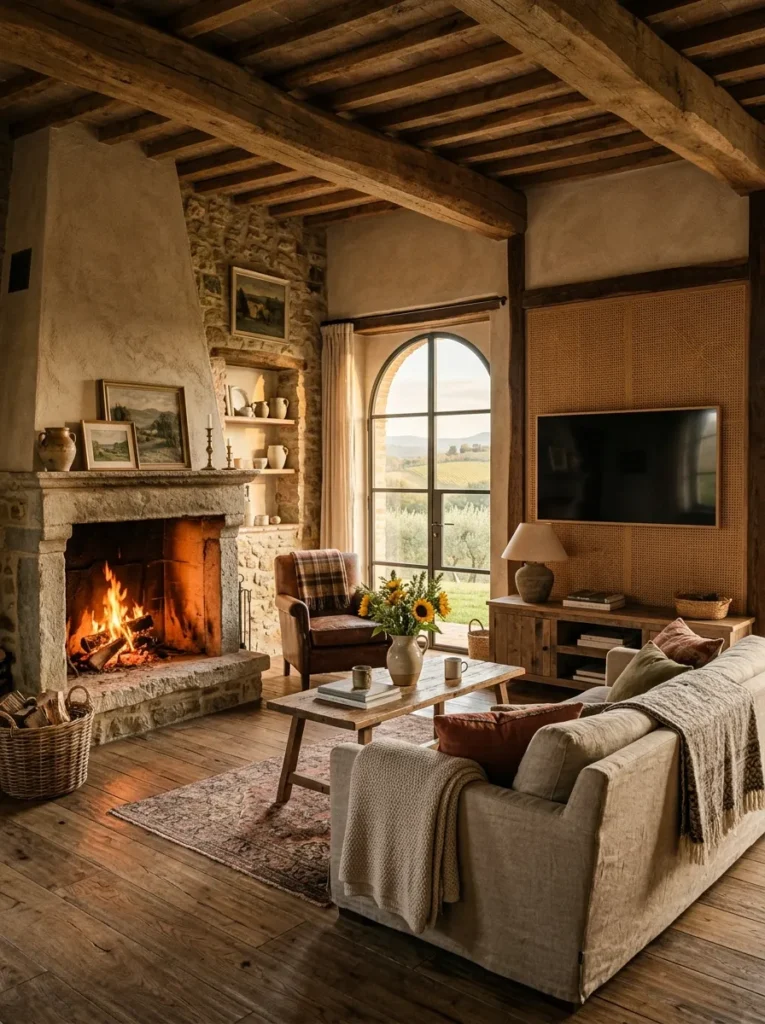
Everyone puts the television above the fireplace because the fireplace is already the visual anchor of the room, but stacking two focal points on top of each other cancels both of them out. Neck strain is the practical complaint; the design complaint is bigger. If you have a fireplace worth looking at, give the television its own wall entirely and let the fire do what fires are for. This is the least popular tip in this article and also the one interior designers bring up unprompted more than any other.
7. Disguise the Screen as a Framed Painting
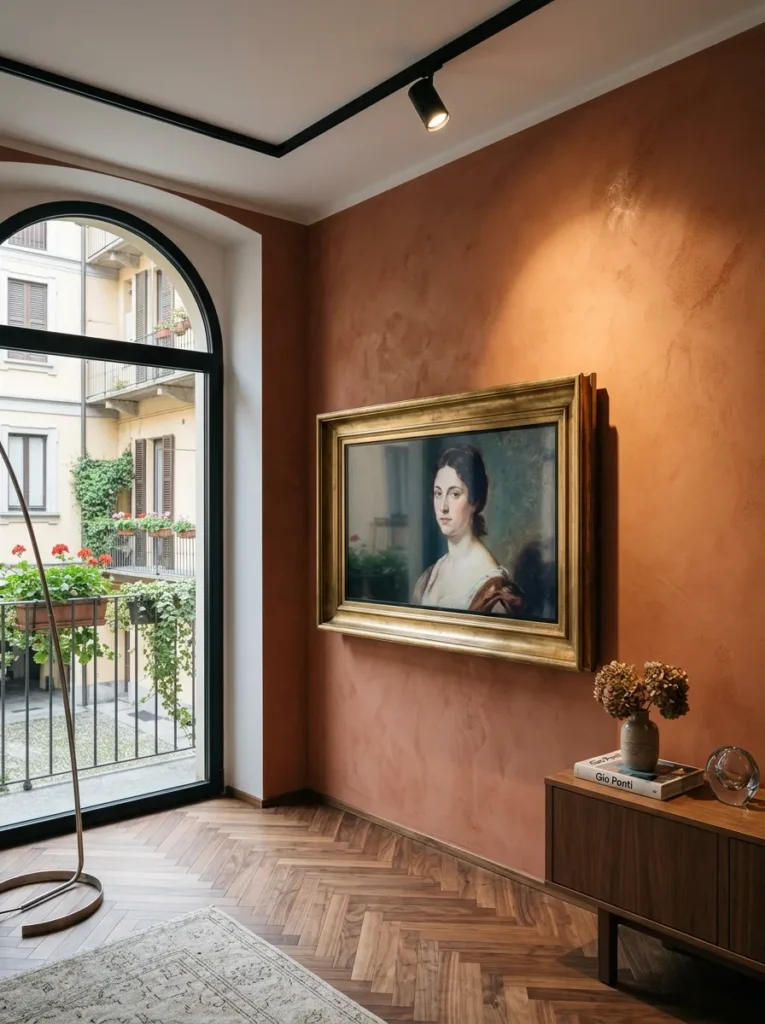
Art-mode televisions with a textured, museum-style frame are no longer a novelty item — they’re a legitimate design decision for anyone who wants a living room wall that doesn’t announce itself as a media setup. The frame should match the room’s existing hardware finish, not the television brand’s default option. Position it at the same height you’d hang a large painting, not TV-viewing height, and the illusion holds up. This costs more upfront than a standard mount and is worth it precisely once, not twice.
8. Break the Symmetry on Purpose
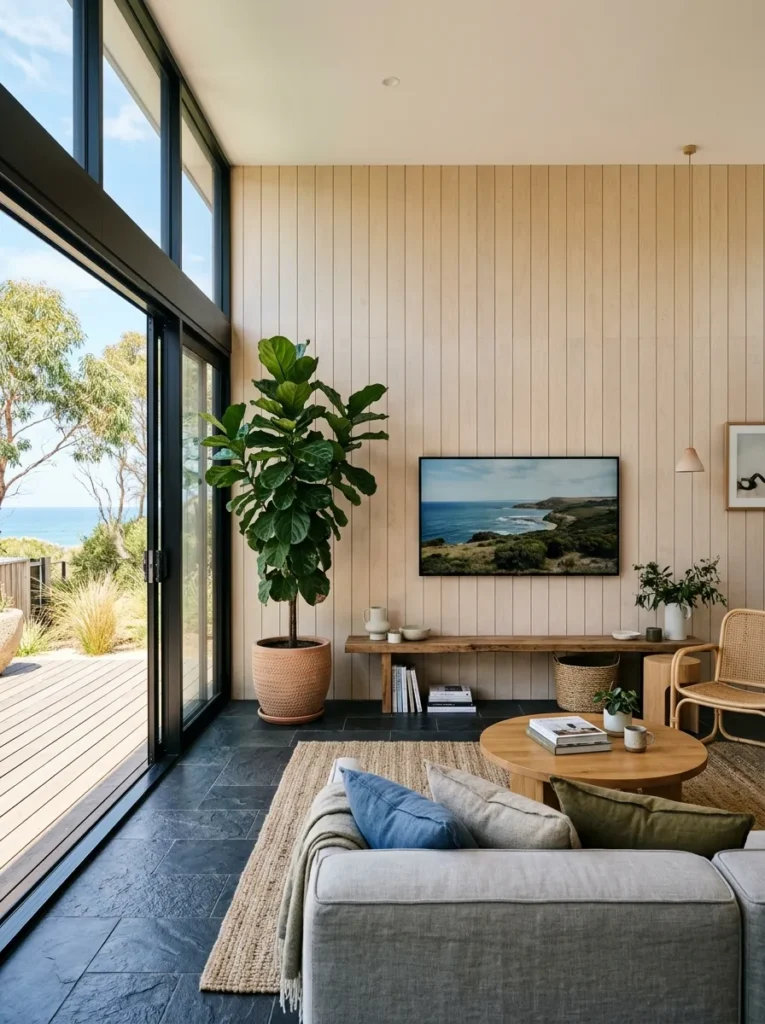
Centring the television dead-middle of a wall is the default, and defaults are rarely the most interesting choice available. Push the screen slightly off-centre and balance the opposite side with a tall plant, a slim bookcase, or a piece of art with real scale. The asymmetry forces the eye to travel across the whole wall instead of locking onto one point. Most people get this wrong because centring feels like the safe, correct answer — it’s actually just the least considered one.
9. Finish the Wall in Textured Plaster
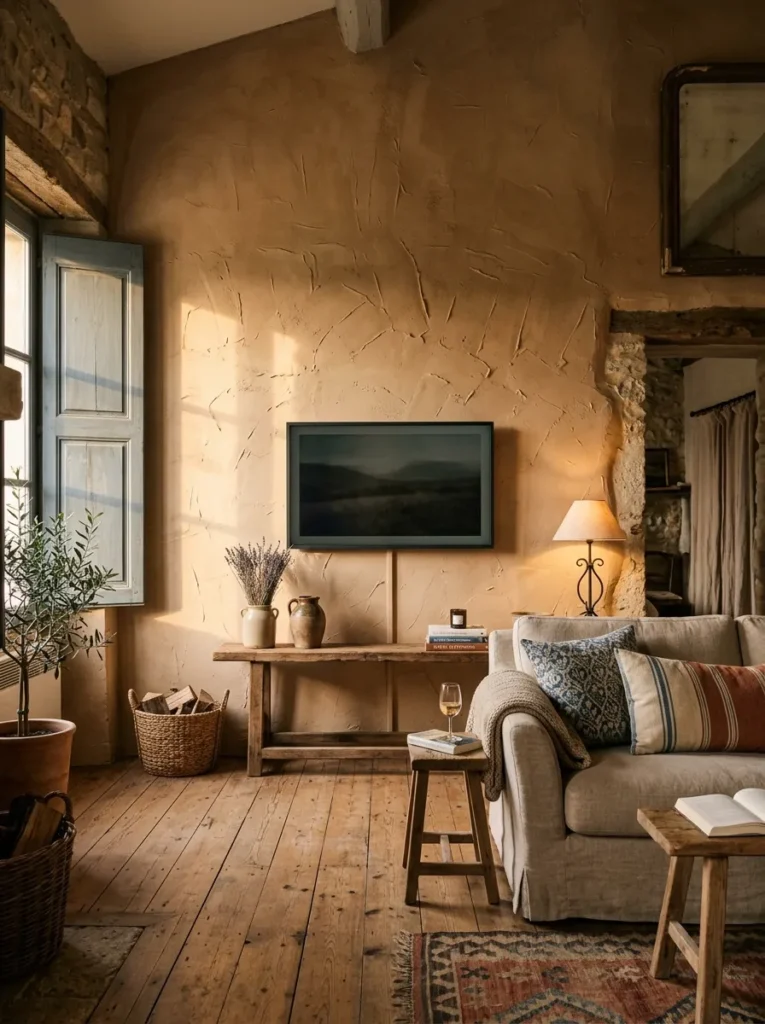
A hand-applied lime plaster finish gives a TV wall a soft, matte depth that flat paint can’t replicate, and it reads completely differently depending on the light — warm and close in the evening, cool and quiet in the morning. Earthy tones like clay, sand, or warm greige suit this treatment better than stark white, which can look chalky under artificial light. Plan for a professional applicator unless you’ve done this before; the technique is unforgiving of hesitation. The texture alone does more design work than most accent walls twice its cost.
10. Hide Every Cable Before You Hang Anything Else
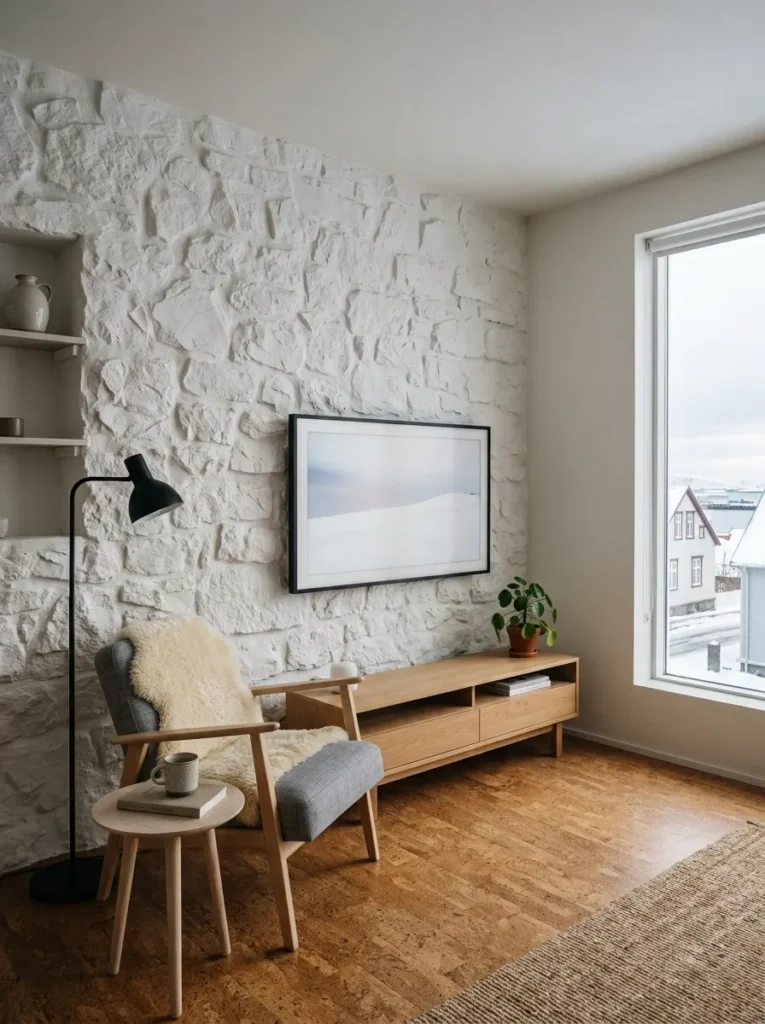
An in-wall power kit and a cable channel behind drywall are non-negotiable if you want any of the other ideas on this list to actually work. A television with three visible cords undoes a stone feature wall, a plaster finish, or fluted paneling instantly — the eye goes straight to the mess, every time. This is the tip nobody wants to hear because it’s not glamorous, but it’s the one that determines whether the whole wall reads as designed or improvised.
11. Add LED Bias Lighting Behind the Screen
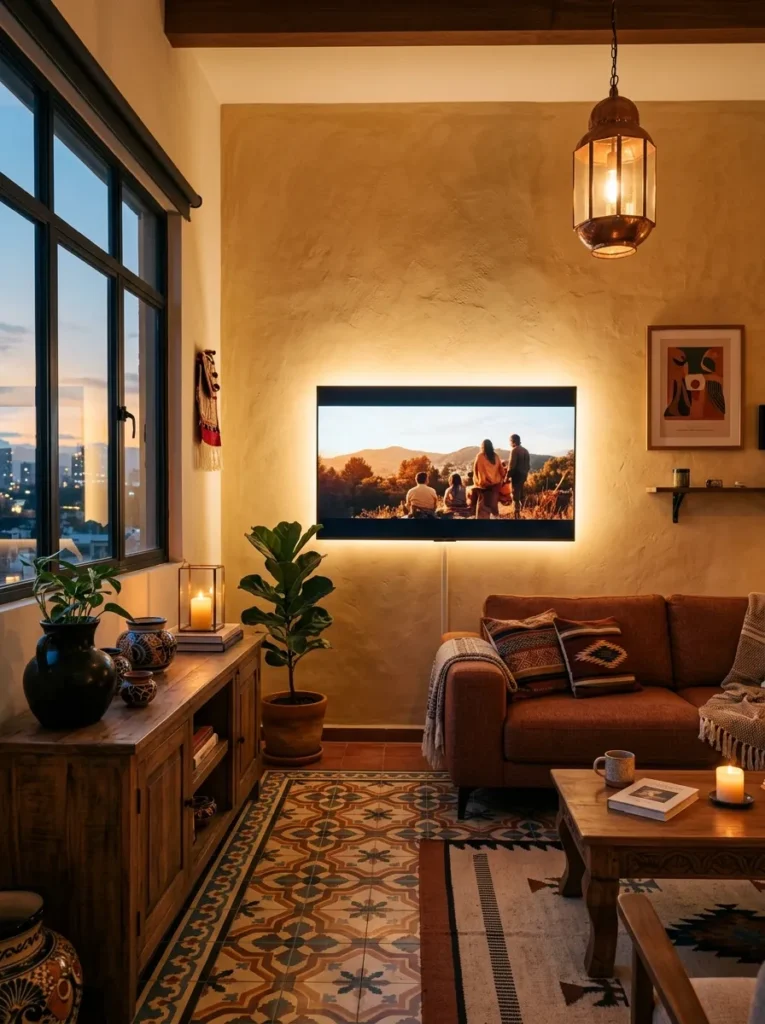
A slim LED strip mounted directly behind the television, set to a warm 2700K, reduces eye strain in a dark room and gives the whole wall a soft glow that reads as considered rather than accidental. Keep the light behind the panel, never visible as a strip — the goal is ambient wash, not a visible light source. This is a twenty-minute installation that changes how the entire wall feels after sunset, and not just practically.
12. Use a Full Slab of Natural Stone
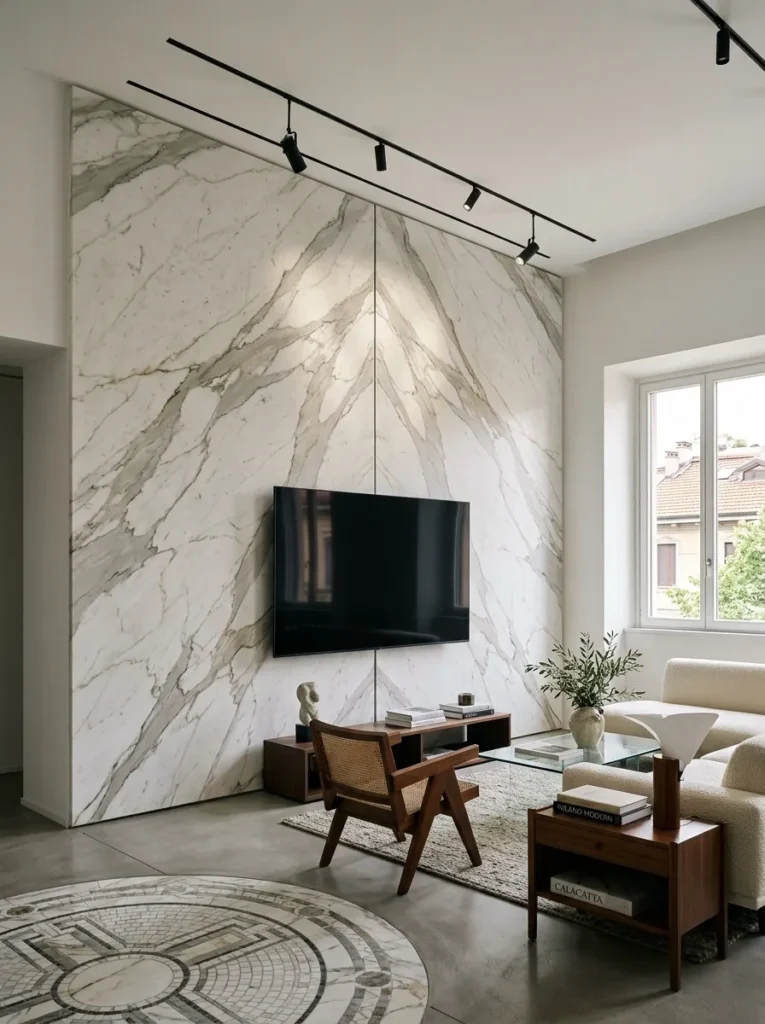
Honed Calacatta marble or a large-format porcelain slab behind the television turns the wall into the room’s obvious centrepiece, veining and all. This is the most expensive idea in this list by a wide margin, and it should be treated as the room’s one big move — everything else around it needs to stay quiet. Book-matched slabs, where the veining mirrors across the seam, cost more but are the only version of this idea worth doing. Anything less than book-matched just looks like an expensive tile job.
13. Install a Mural Wallpaper Behind the Television
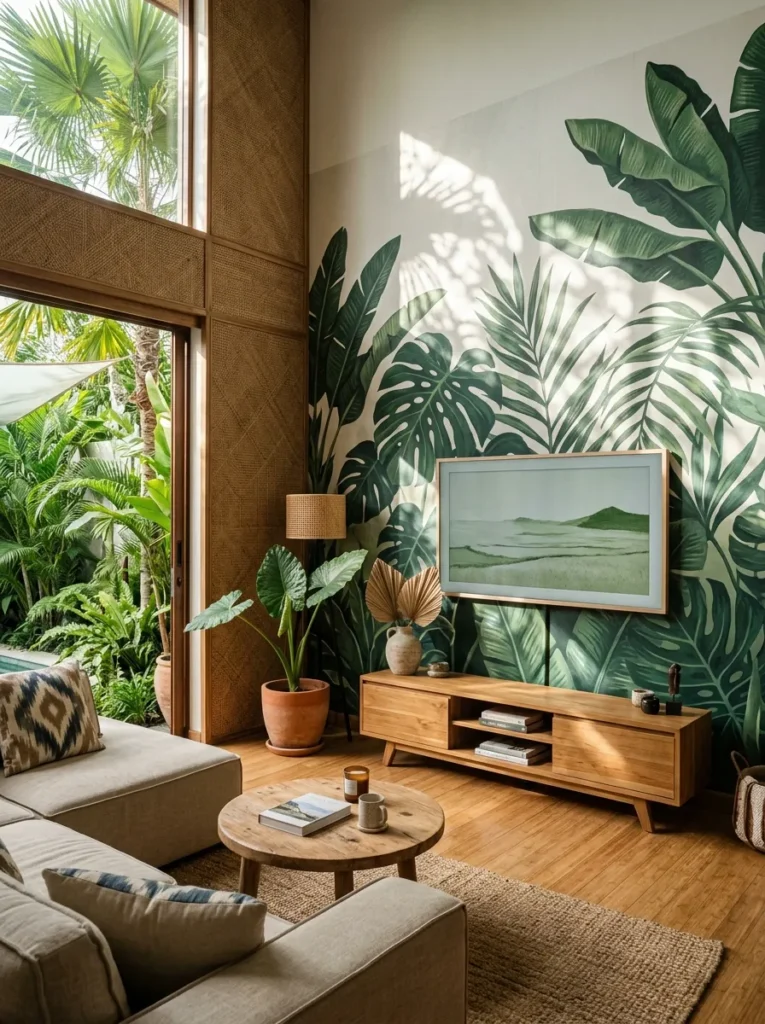
A large-scale mural — botanical, abstract, or a soft landscape — gives a TV wall depth that a single paint colour can’t manage, and it hides the screen’s black rectangle better than almost anything else on this list. Choose a pattern with enough scale that the television doesn’t interrupt it awkwardly; small repeating prints tend to fight with the screen’s edges. This is a rental-friendly option if you use a peel-and-stick version, which makes it one of the few ideas here that works even if you don’t own the wall.
14. Layer Horizontal Wood Slats Instead of Vertical
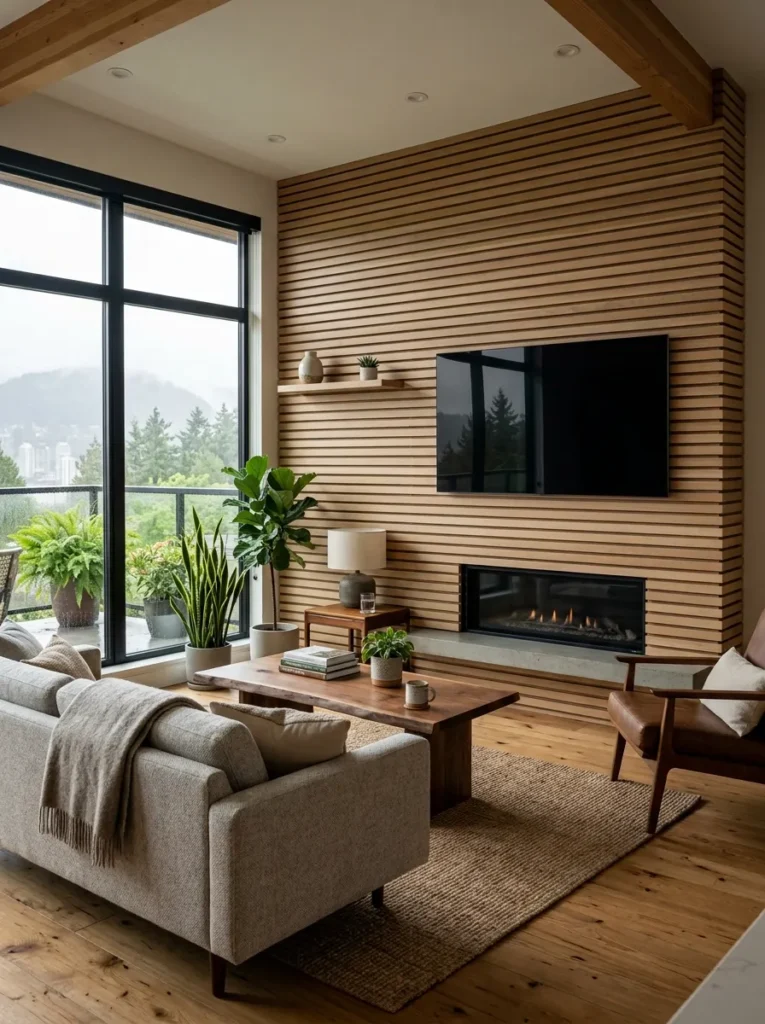
Where fluted panels add height, horizontal slat walls add width and calm — a good choice for narrow living rooms that already feel tall and tight. Space the slats with consistent gaps, around two centimetres, and run them the full width of the wall rather than centring a shorter section behind the screen. Ash or white oak keeps the look Scandinavian; walnut pulls it warmer and more traditional. The horizontal line is the whole trick here — it’s a small decision with an outsized effect on how the proportions of the room read.
15. Build a Sliding Panel to Conceal the Screen Entirely
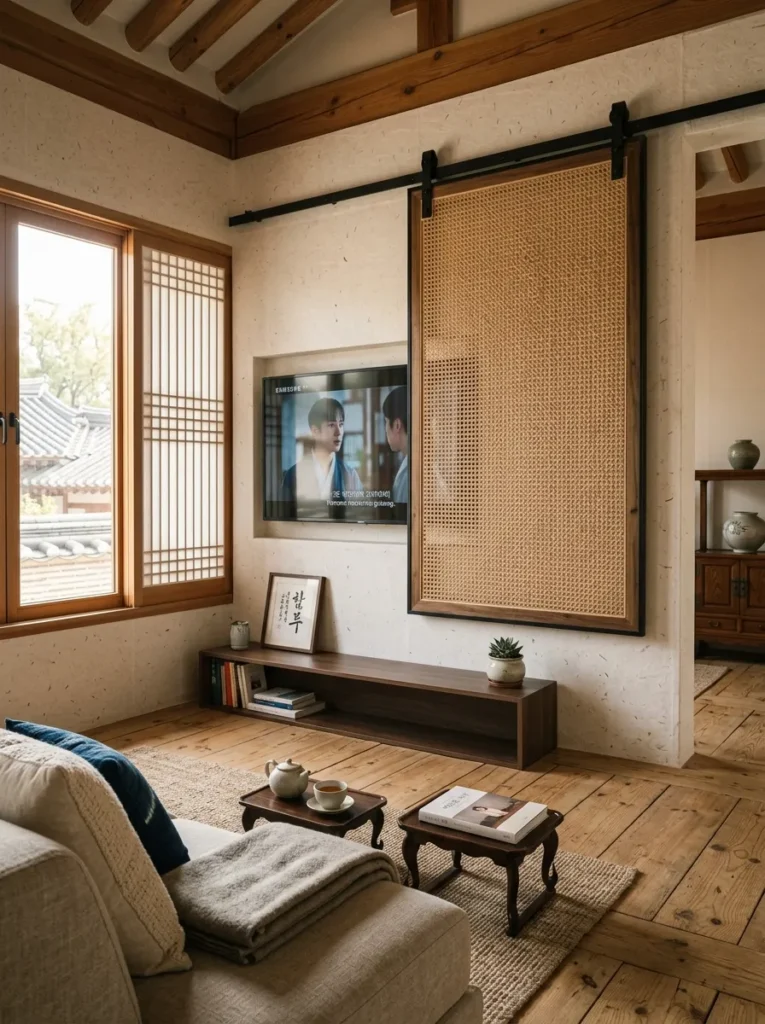
A pocket panel on a barn-door track — wood, woven cane, or upholstered fabric — lets you close the television away completely when it’s not in use, which changes the entire character of the room in about three seconds. This is more carpentry than most people want to take on, but it solves the “black rectangle on the wall” problem more completely than any disguise technique. Worth it in formal living rooms where the television is genuinely secondary to how the space is used the rest of the time.
16. Choose Closed Cabinetry Over Open Shelving
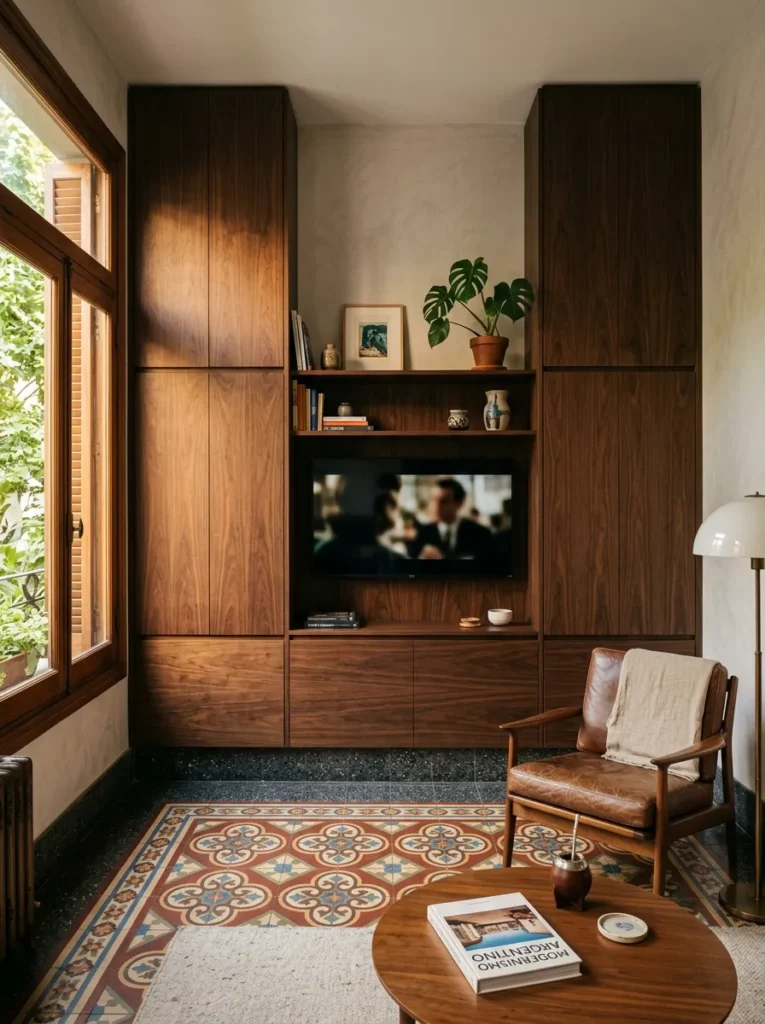
A run of full-height cabinets flanking the screen, doors closed, keeps remotes, consoles, and cable boxes entirely out of sight — which matters more than most people admit until they’ve lived with the alternative. Push-to-open hardware keeps the fronts clean, with no visible pulls breaking up the panel lines. This is the least photogenic idea on this list and also the one that makes daily life noticeably easier, which is a trade worth making in a family room.
17. Paint the Entire Nook One Saturated Colour
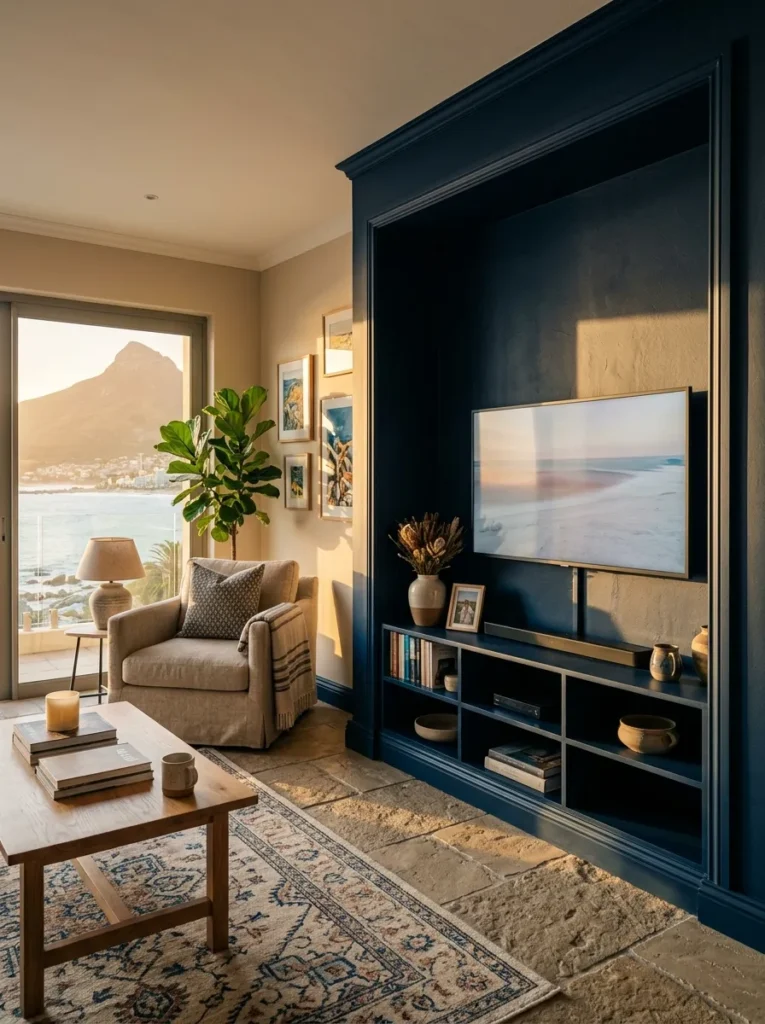
Colour-drenching the wall, ceiling trim, and any recessed nook around the television in a single deep tone — ink navy, forest green, aubergine — makes the screen recede instead of standing out as the obvious dark rectangle in a light room. This only works with genuinely dark, saturated colours; a mid-tone shade just looks unfinished. Keep the trim and skirting the same colour as the wall for the effect to hold; a contrasting white trim breaks the whole idea.
18. Recess the Television Into a Built Niche
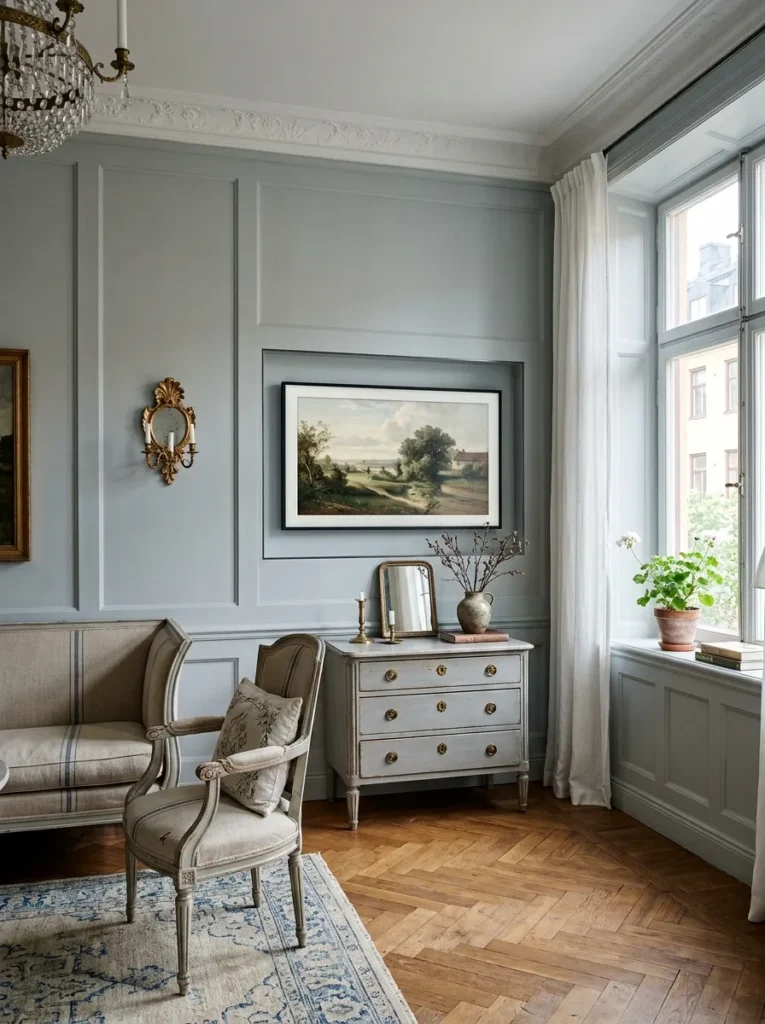
A shallow recessed niche, ten to fifteen centimetres deep, lets the television sit flush with the surrounding wall instead of protruding on a bracket. This takes real construction — it’s not a weekend project — but the result looks built-in from day one rather than mounted after the fact. Frame the niche edge with a contrasting material, a shadow gap, or a slim metal trim, so the recess reads as designed rather than like a gap that happened to fit a TV.
19. Mix Two Materials for a Layered TV Wall Design
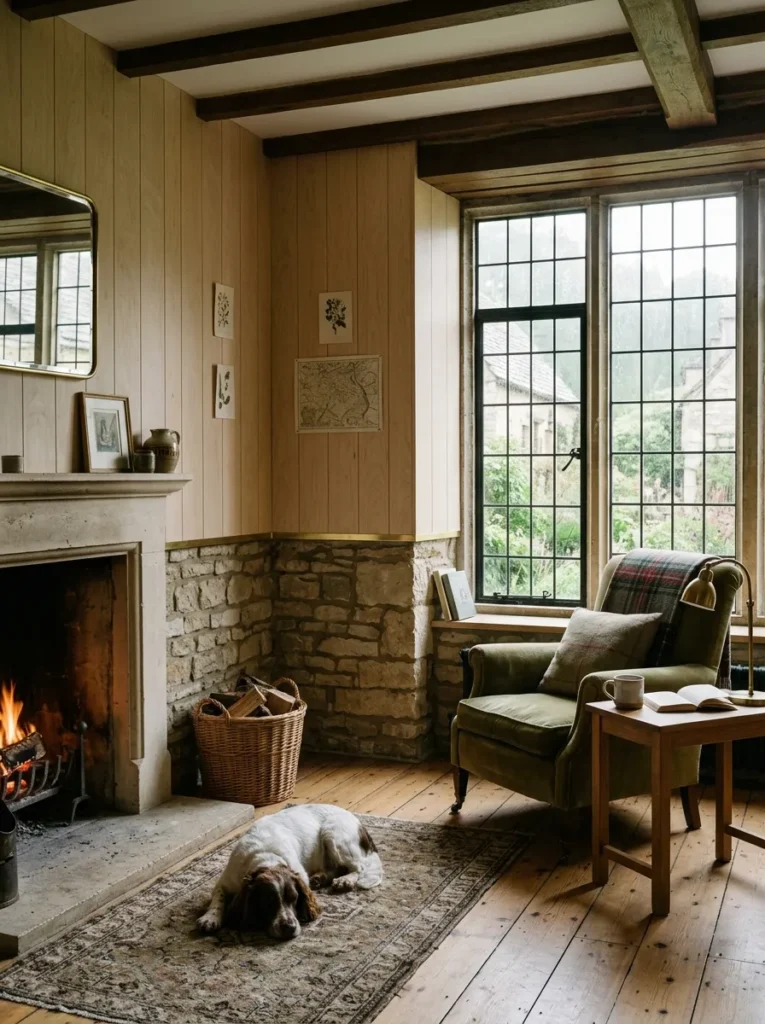
Stone on the lower half, wood paneling above, split by a clean horizontal line at socket height — this combination gives a TV wall more depth than any single material can manage alone. The split line should sit somewhere between ninety centimetres and 1.1 metres from the floor, roughly hip height, so the proportions feel deliberate rather than arbitrary. This is a more advanced version of tip fourteen and worth attempting once you’re confident with materials, not before.
20. Style the Console Low and Layered, Not Matched
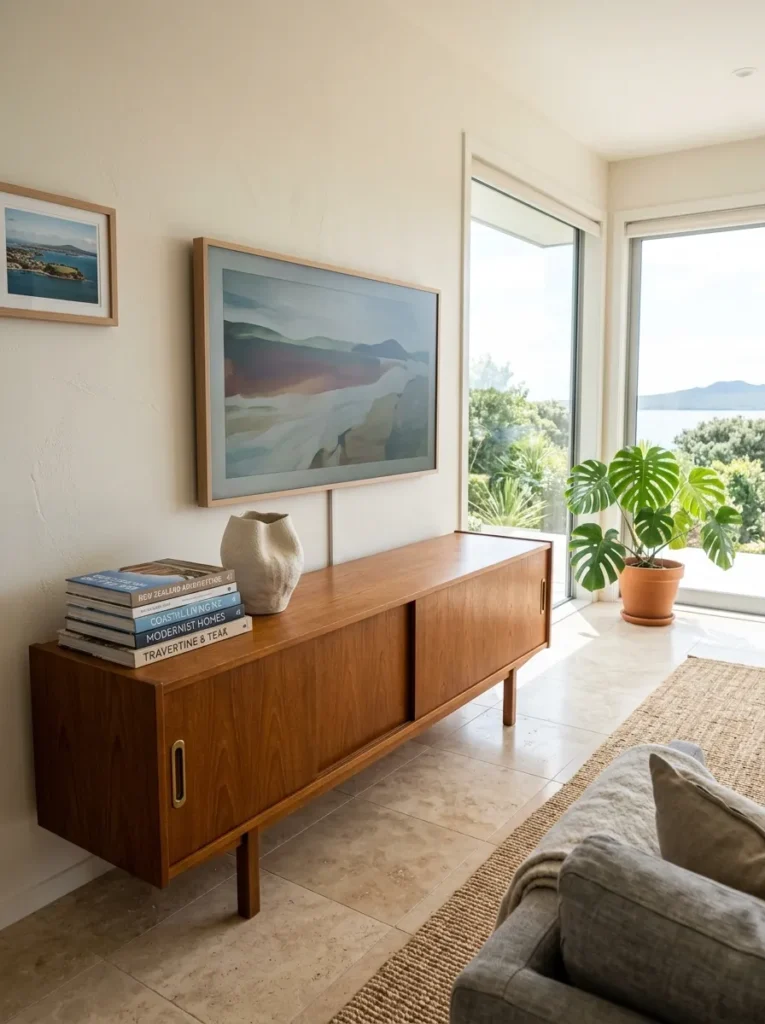
Skip the matching furniture set entirely and layer a low vintage sideboard, a stack of art books, and one sculptural object instead — the console should look collected over time, not purchased in one trip. Leave one end of the surface completely empty; symmetry across the whole console flattens the effect this tip is going for. This is the cheapest idea in the entire list and, done well, often reads as the most expensive.
21. Frame the Screen With Full-Length Drapery
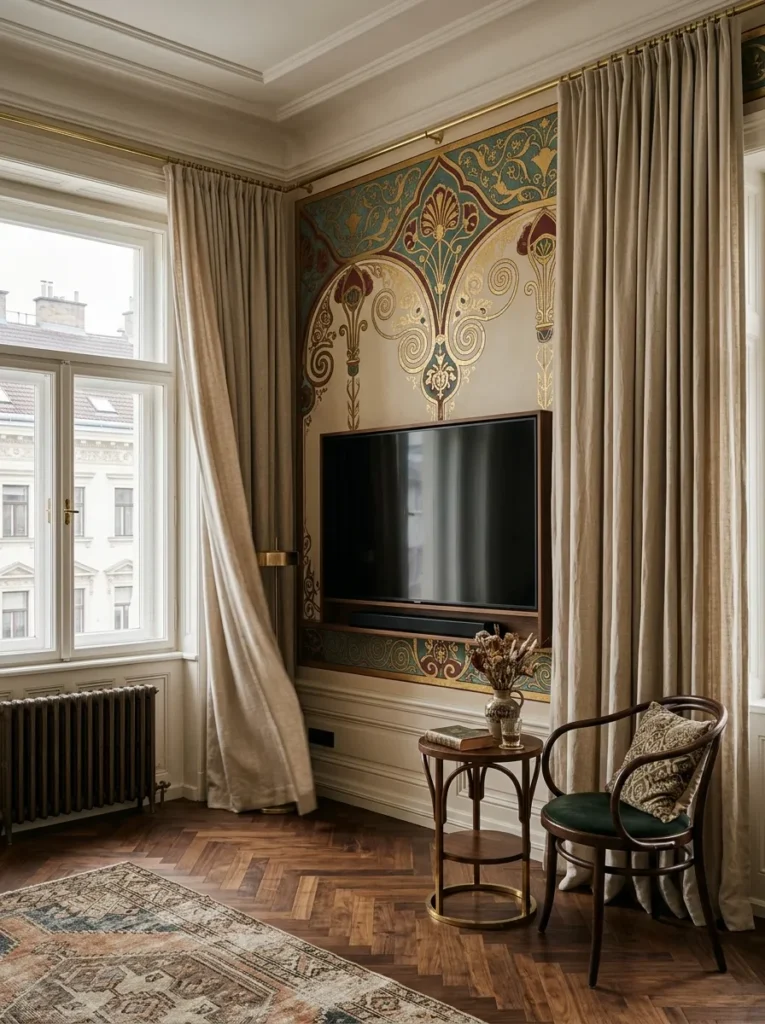
Floor-to-ceiling curtains on either side of the television — even against a wall with no window — add height, softness, and a sense of occasion that hard materials can’t replicate. Linen or a heavy cotton blend in a tone close to the wall colour keeps the effect subtle rather than theatrical. This is an unconventional move for a TV wall specifically, and that’s exactly why it works — nobody expects drapery where there’s no window to dress.
22. Add a Slim Ledge Beneath the Screen for Rotating Art
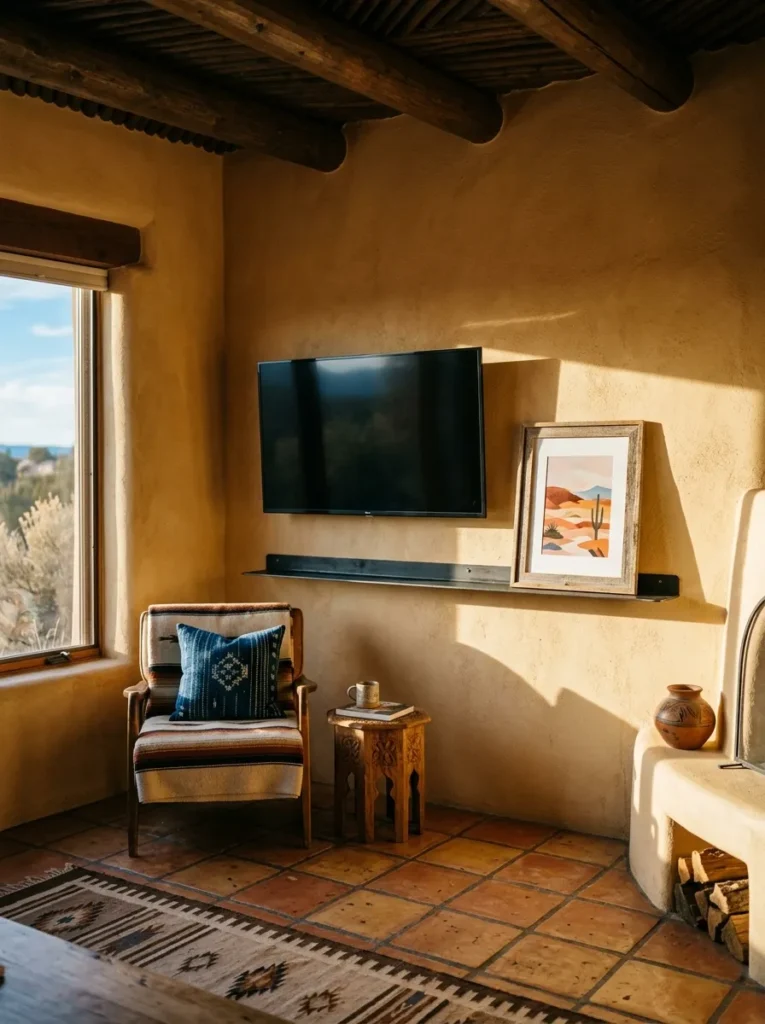
A single narrow shelf mounted just below the television, deep enough to lean framed art or a small print against the wall, gives the space something to change with the seasons without any real commitment. Swap the piece out every few months and the wall never goes stale, which is more than can be said for most permanent accent treatments. It’s a small detail, but it’s the kind of small detail people notice without being able to say exactly why.
23. Leave the Wall Completely Blank
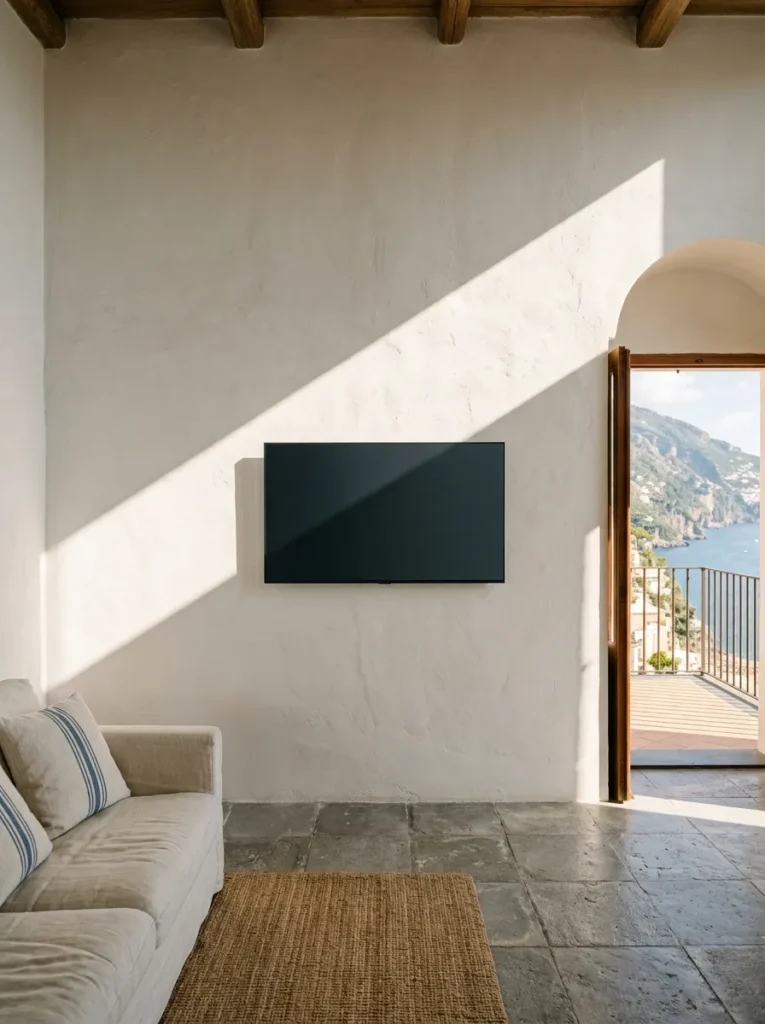
The most contrarian idea in this whole list is also the simplest: some rooms are better served by a plain painted wall and nothing else, television included. No accent material, no gallery, no drapery — just a quiet backdrop that lets everything else in the room do the talking. This isn’t a lack of design; it’s a design decision, and one that most TV wall articles never mention because restraint doesn’t photograph as easily as marble does. If your room already has a strong material palette elsewhere, this might genuinely be the better call.
Final Thoughts
Not every one of these TV wall ideas belongs in the same room, and trying to force three or four of them onto one wall is how a good TV wall idea turns into a cluttered one. Pick the material or move that matches how the rest of your living room already behaves — a stone slab in a house full of soft textiles will always look out of place, no matter how well it’s installed. Start with cable concealment regardless of which direction you go; it’s the unglamorous step that makes every other choice on this list actually work. If you’re unsure, the floating shelf and the layered console are the lowest-risk starting points, and the concrete or stone slab ideas are the ones to save for later, once you’re sure of the room. A good TV wall doesn’t need to be complicated — it just needs to be considered.
Save these TV wall ideas for your next living room refresh.