21 Earthy Bathroom Ideas That Feel Organic and Relaxing
A bathroom built around earthy materials does something a purely white, tiled space rarely manages: it feels like part of the house rather than a sterile utility room bolted onto it. These 21 earthy bathroom ideas lean into texture, warmth, and natural imperfection — limewashed plaster, raw wood, handmade ceramics, real stone — to create a space that reads as calm and grounded rather than clinical. None of it depends on trend-driven color; it depends on material honesty, which is part of why this style holds up so well over time.
Each idea explains exactly what it is, why the specific material or detail creates that relaxed, organic feeling, and how to bring it into your own bathroom without a full renovation. Some ideas require real construction, like a stone tub or a plaster niche. Others are as simple as swapping plastic accessories for hand-thrown ceramic ones or adding a single woven basket. Whether you’re renovating from scratch or updating a rental-friendly detail at a time, you’ll find a version of earthy here that fits your space and your budget.
1. Limewash or Microcement Walls: An Earthy Bathroom Idea That Starts at the Wall
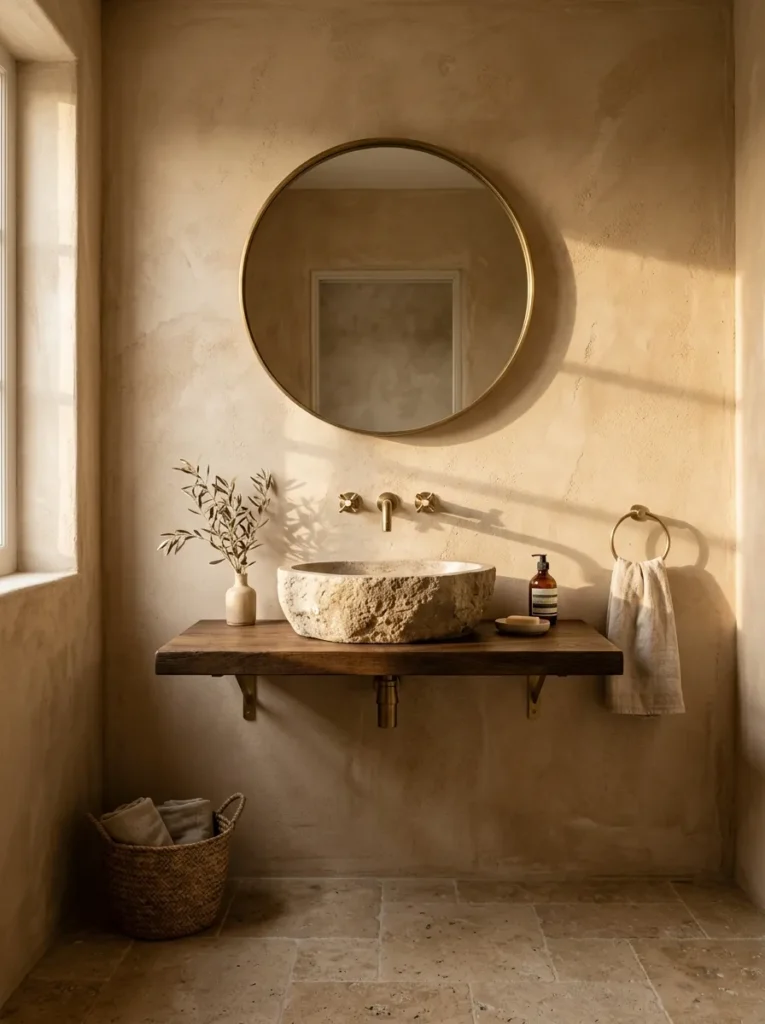
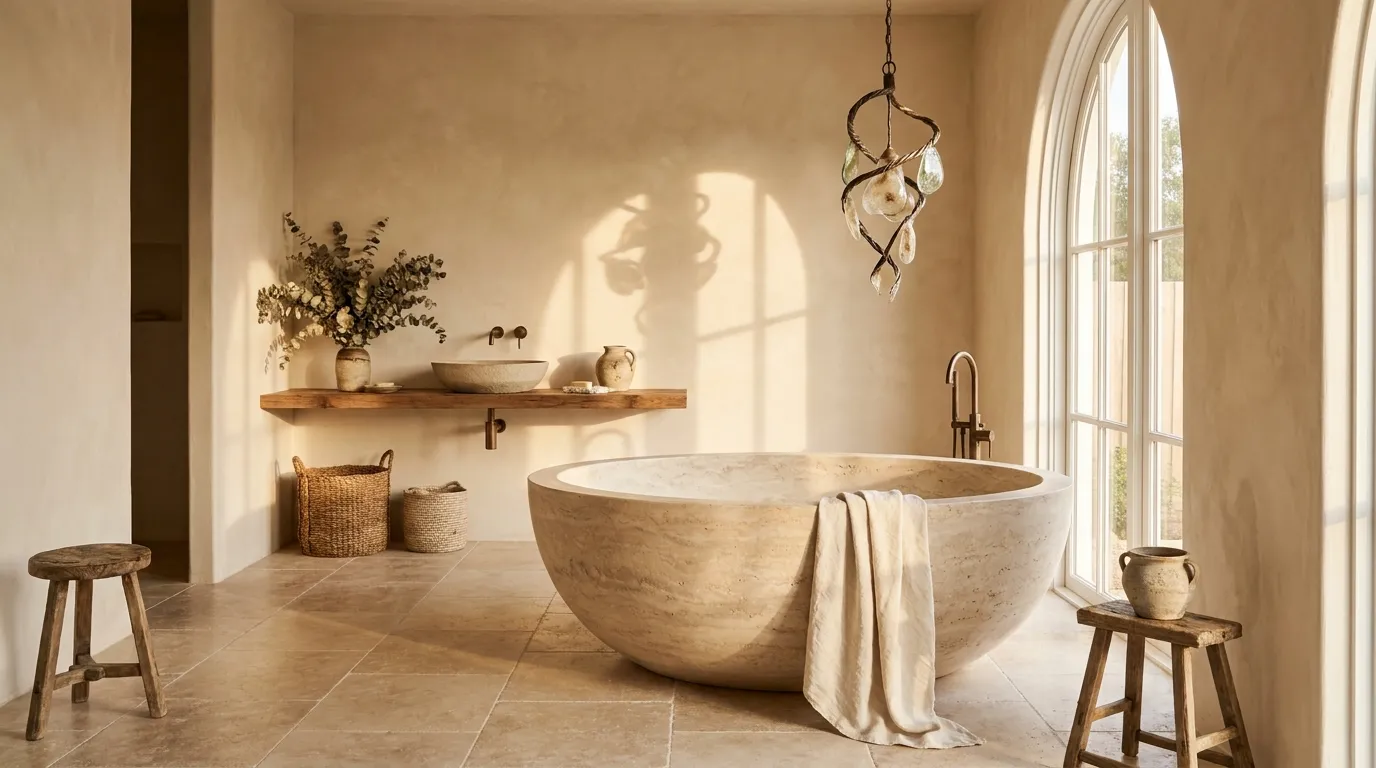
Limewash and microcement bring genuine, hand-applied texture into a bathroom that flat paint or standard tile can’t replicate, since the material catches and scatters light unevenly across its surface rather than reflecting it in one uniform plane. This subtle variation is the entire point — a perfectly smooth wall reads as manufactured, while the slight ripples and tonal shifts in limewash read as made by hand. This idea works in wet areas too, since microcement specifically is fully waterproof when properly sealed, making it one of the few wall treatments on this list suited to a shower surround as well as the rest of the room.
2. A Natural Stone Freestanding Tub
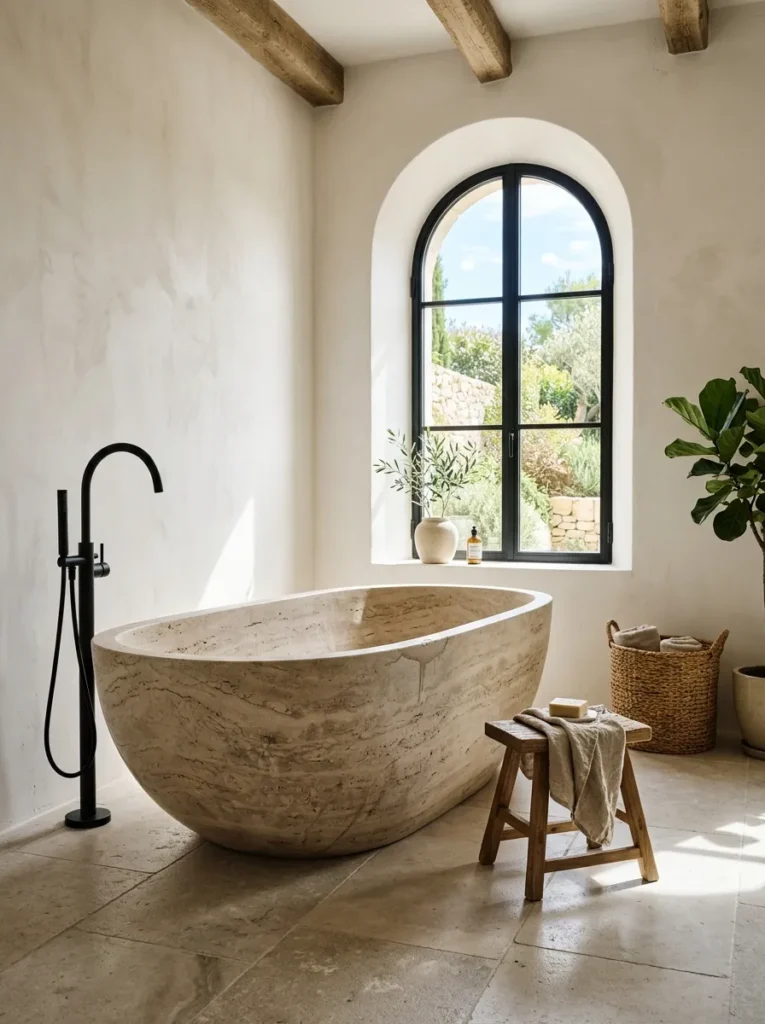
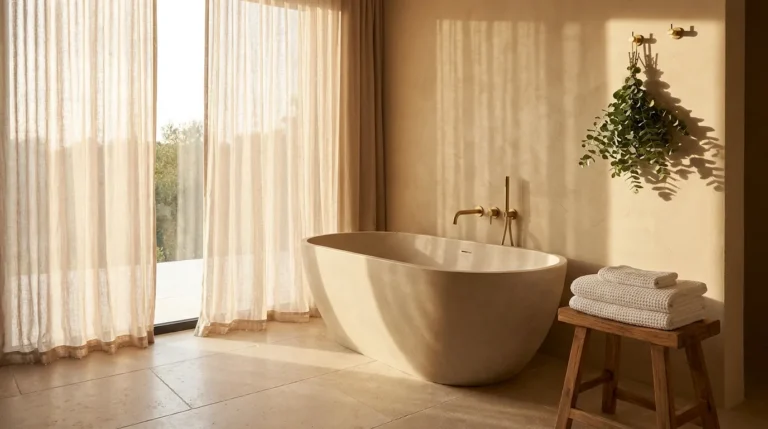
A tub carved from solid stone rather than molded from acrylic or cast iron brings real geological history into the room, since the mineral veining and subtle color variation are the product of actual sedimentary or volcanic formation rather than a manufactured pattern. The weight and presence of stone also changes how the room reads entirely — it becomes the bathroom’s sculptural centerpiece rather than just another fixture. This idea requires structural confirmation before installation, since stone tubs are significantly heavier than standard models and most floors need reinforcement to support one safely.
3. Terracotta Floor Tile for Warm, Grounded Color
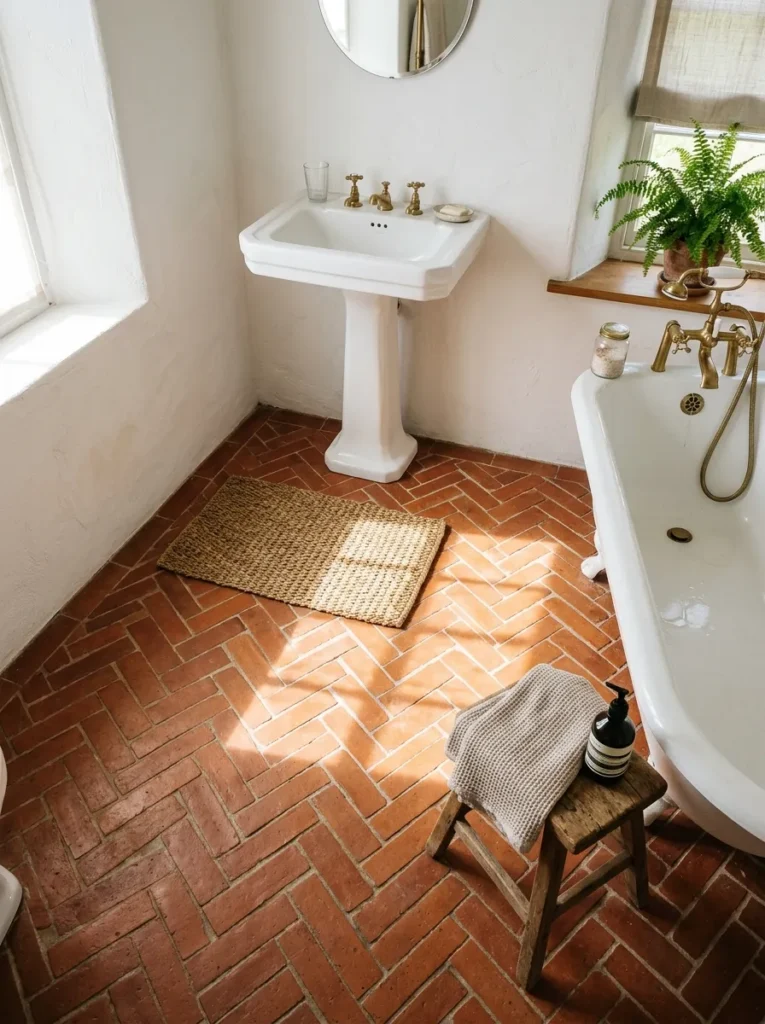
Terracotta tile brings warmth into a bathroom from the one surface most people leave a flat, cool white or gray, and the clay’s natural color variation from tile to tile gives the floor a handmade quality that uniform porcelain can’t match. Laying it in a herringbone or basketweave pattern rather than a simple grid adds visual interest without requiring a second material or color to do it. This idea works especially well in bathrooms with white or pale walls, since the terracotta becomes the room’s anchor color rather than competing with anything else for attention.
4. A Pebble or River Stone Shower Floor
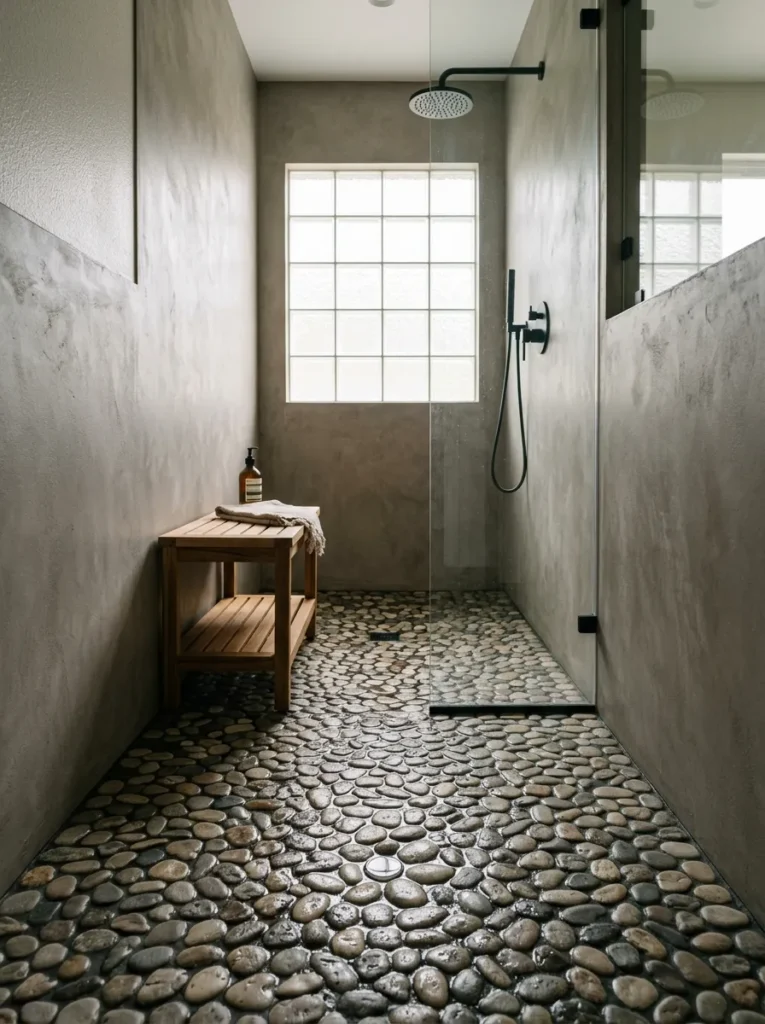
A river stone or pebble tile shower floor brings an outdoor, riverbed-like texture directly underfoot, and the irregular surface does double duty as a gentle massage for bare feet while you shower. This idea suits a spa-style bathroom specifically, since the material signals relaxation and natural ritual more than a typical porcelain or ceramic shower floor would. Confirm the grout lines are sealed thoroughly during installation, since the uneven pebble surface creates more grout-to-stone contact points than a flat tile does, and any gaps left unsealed become a maintenance problem faster than they would on a smoother floor.
5. Woven Wood Vanity Cabinetry
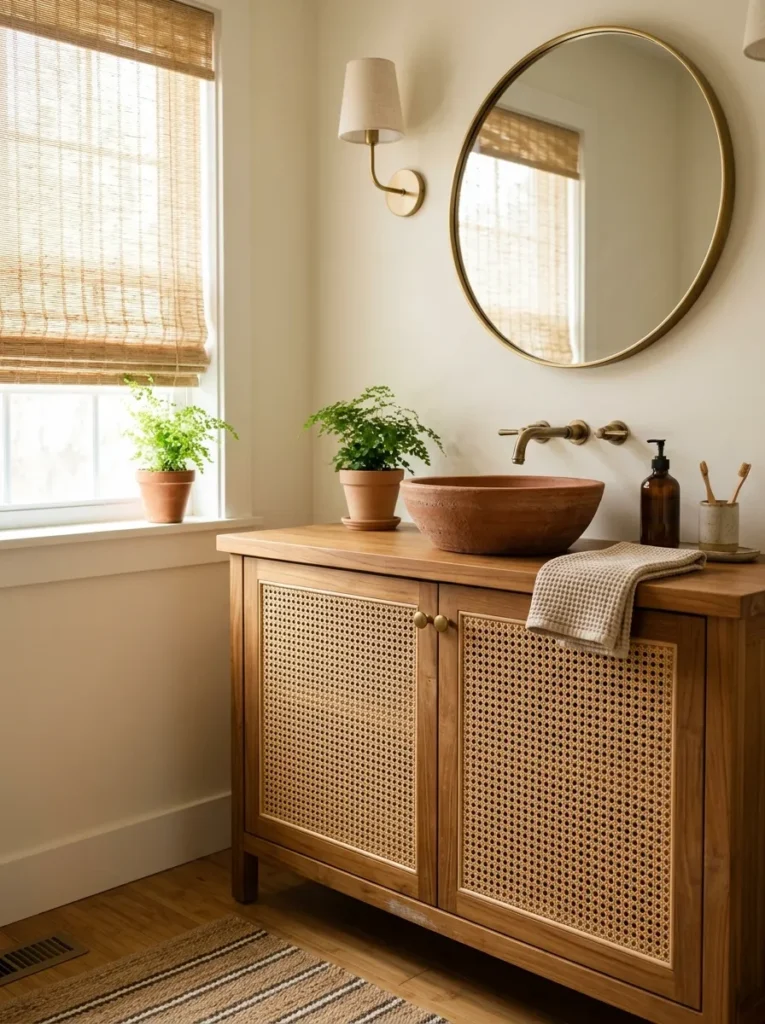
Cane or woven rattan cabinet fronts on a vanity introduce texture at exactly the height where the eye naturally lands, since most people interact with the vanity at standing or seated height more than any other part of the bathroom. The open weave also breaks up what would otherwise be a solid block of cabinetry, giving the piece a lighter, more breathable presence than a flat wood or laminate front. Choose a sealed or treated cane specifically for bathroom use, since unfinished natural fiber doesn’t hold up well against the consistent humidity a bathroom produces.
6. A Clay or Stoneware Vessel Sink
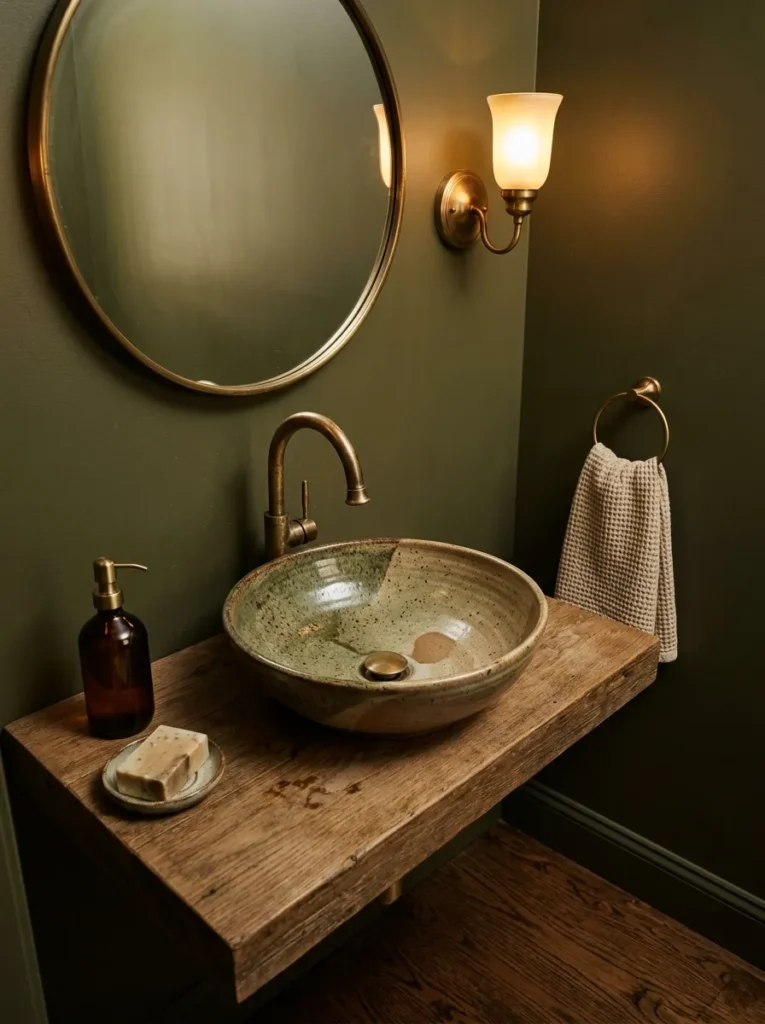
A hand-thrown ceramic vessel sink carries visible evidence of the making process — slight asymmetry, glaze that pools differently across the surface, a rim that’s never perfectly even — in a way mass-produced porcelain sinks are specifically engineered to avoid. That imperfection is what makes it read as earthy rather than simply rustic-styled; the sink genuinely was shaped by a person rather than cast from a uniform mold. This idea works best as a powder room or guest bathroom statement specifically, where a single striking fixture gets more attention than it would competing with a full double-vanity setup.
7. A Linen or Jute Shower Curtain
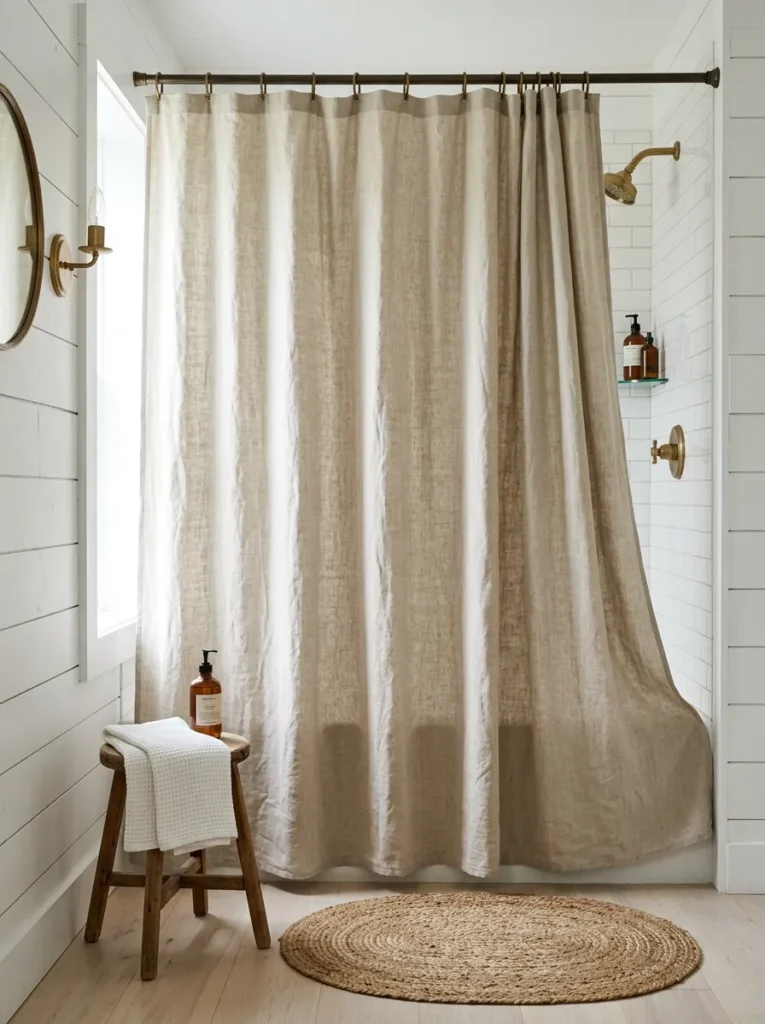
A heavy, natural linen shower curtain replaces the slightly clinical look of a standard plastic or polyester liner-and-curtain combination with fabric that has genuine weight and drape, catching light and shadow the way a real textile does rather than a synthetic one. The slight texture and irregular drape of linen specifically reads as intentional rather than simply functional. This is one of the lowest-cost updates on this entire list, and one of the few ideas here that’s fully renter-friendly, since it requires no permanent installation beyond a standard curtain rod most bathrooms already have.
8. Dried Botanicals: A Low-Maintenance Earthy Bathroom Idea That Skips Water
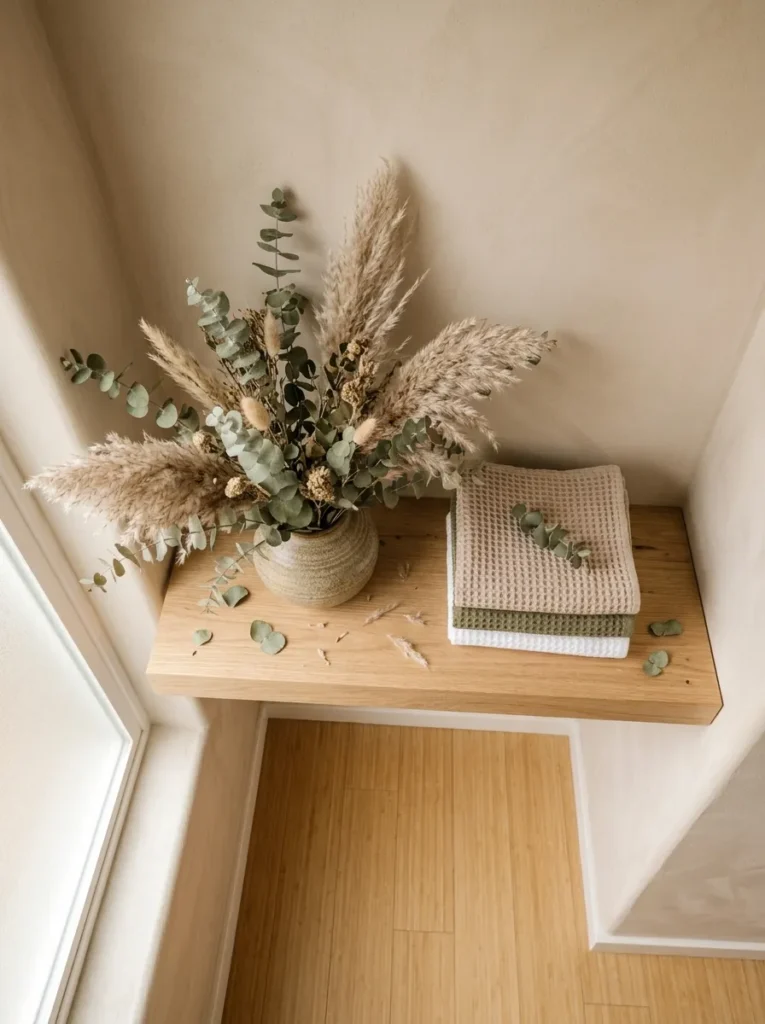
Dried botanicals bring the same organic, natural-world reference as fresh greenery without the maintenance problem most bathrooms create for living plants — namely, fluctuating humidity and inconsistent light that kills delicate fresh stems within a week. Eucalyptus, pampas grass, and dried wheat all hold their shape and color for months without water, making them one of the lowest-maintenance styling choices on this entire list. Choose stems with real movement and varied height rather than a single uniform bunch, since the visual interest comes from the silhouette as much as the material itself.
9. A Raw Wood Floating Vanity Shelf
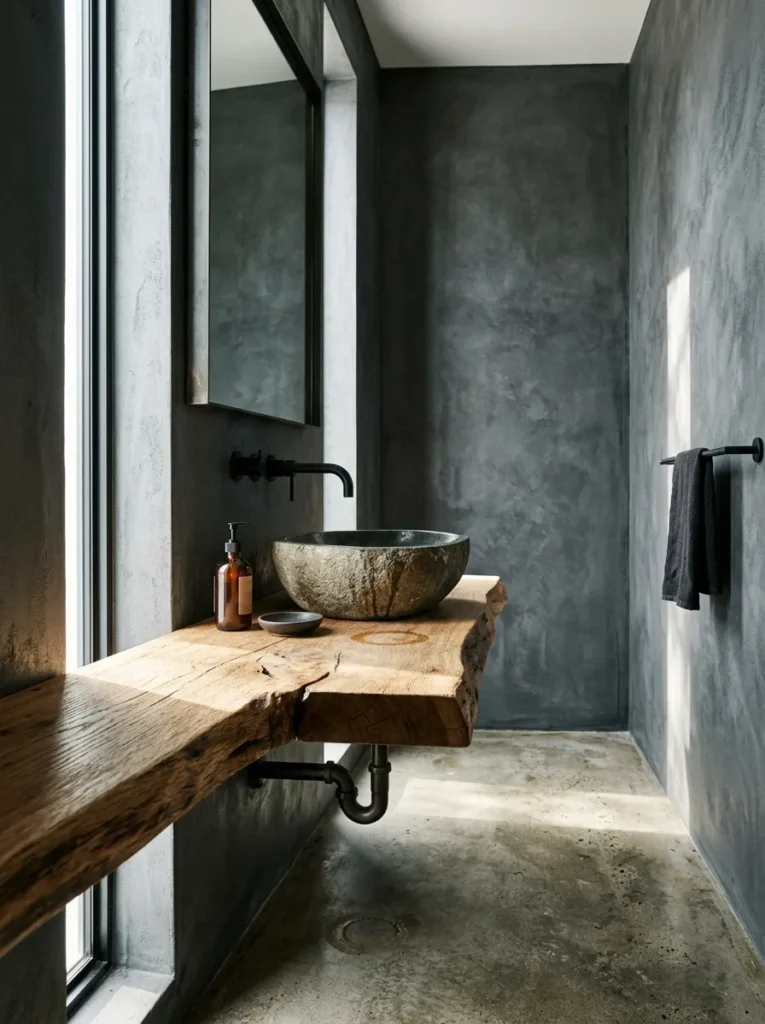
A floating vanity built from a single slab of raw or live-edge wood keeps the wood’s natural form — bark edge, knots, visible grain variation — intact rather than cutting it down into a uniform rectangle, which is exactly what gives this idea its organic character. Mounting it without visible legs or a cabinet base beneath also makes the slab feel like it’s floating against the wall, drawing more attention to the material itself rather than the storage function. Seal the wood thoroughly with a marine-grade or bathroom-rated finish, since unsealed wood warps and stains quickly in a room with this much ambient moisture.
10. Earthy Zellige Tile in Warm Clay Tones
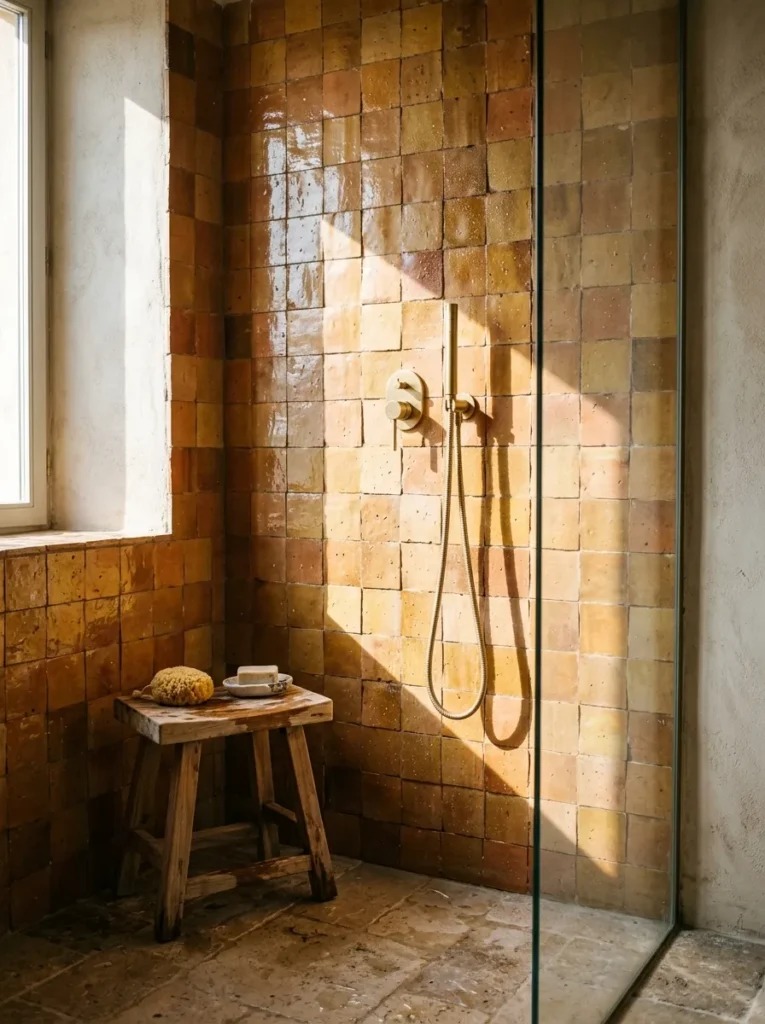
Handmade zellige tile in warm clay, ochre, or terracotta tones brings the same earthy color story as terracotta flooring but applies it vertically, where light hits the tile’s irregular glaze at a different angle throughout the day. Each tile carries slightly different surface texture and color saturation from the next, since the glazing process is done by hand rather than machine-controlled, giving the wall a living, shifting quality rather than a flat painted one. This idea costs significantly more than standard ceramic subway tile, so it suits a bathroom where the shower wall is meant to be a genuine design feature rather than a background element.
11. Woven Seagrass or Rattan Storage Baskets
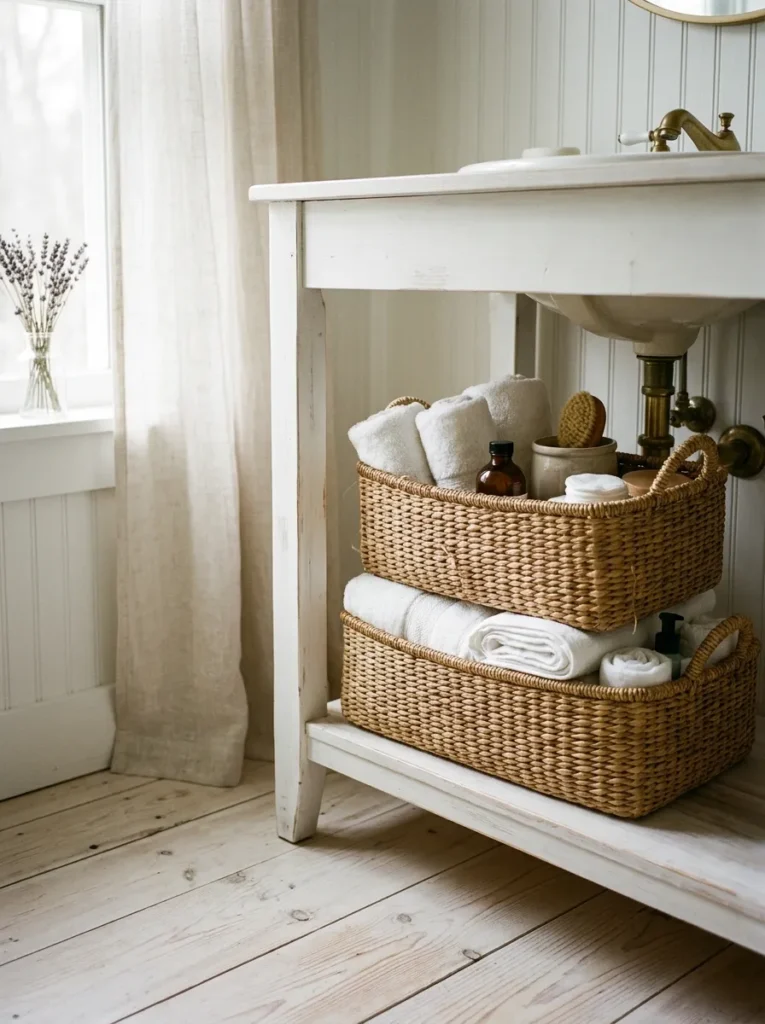
Woven seagrass or rattan baskets solve a genuinely practical bathroom problem — where to put towels, extra toilet paper, or toiletries that don’t fit in a cabinet — while adding texture that plastic bins or fabric organizers simply don’t have. They work especially well under an open-shelf or pedestal-style vanity that doesn’t have built-in storage, turning what would otherwise be empty floor space into both function and styling at once. This idea costs very little relative to almost everything else on this list, since baskets are widely available and require no installation at all.
12. A Natural Stone Pebble Accent Wall
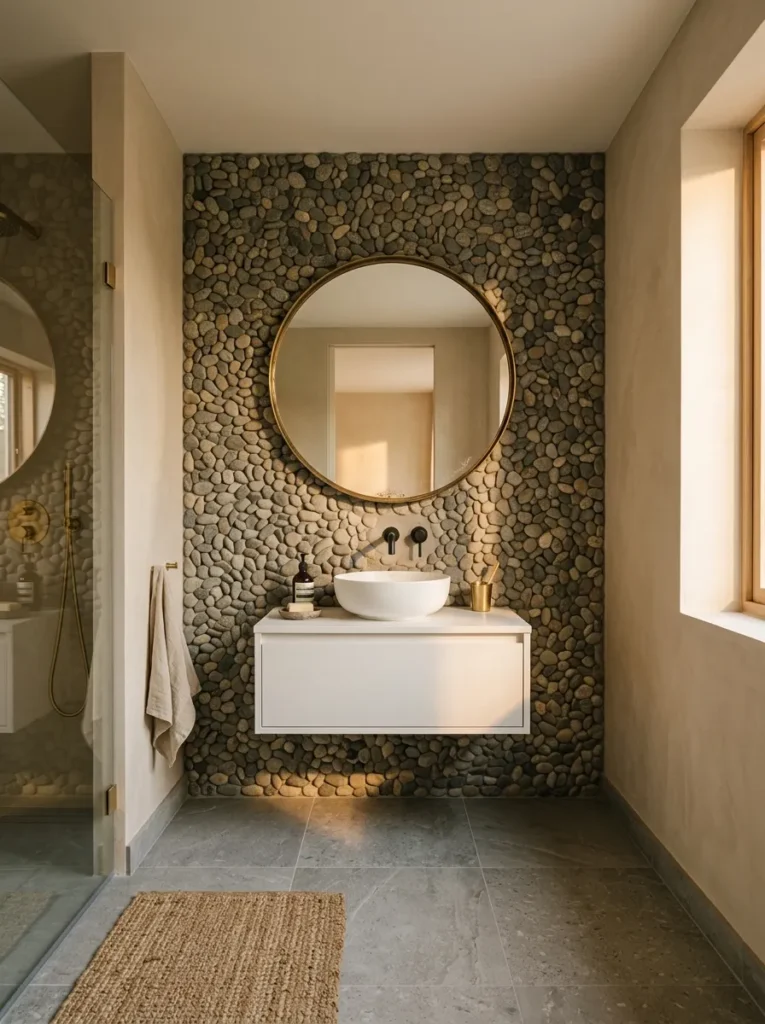
A pebble accent wall applies the same tactile, riverbed-like material used on shower floors to a vertical surface instead, giving a bathroom genuine three-dimensional texture in a spot that usually stays flat — typically the wall behind a mirror or vanity. The varied stone sizes and natural color variation catch light unevenly across the wall’s surface, creating a sense of depth that flat tile or paint can’t achieve in the same footprint. This idea works particularly well as a single statement wall rather than throughout the whole room, since the texture is dense and visually busy enough that surrounding surfaces benefit from staying simple.
13. A Wabi-Sabi Imperfect Plaster Niche
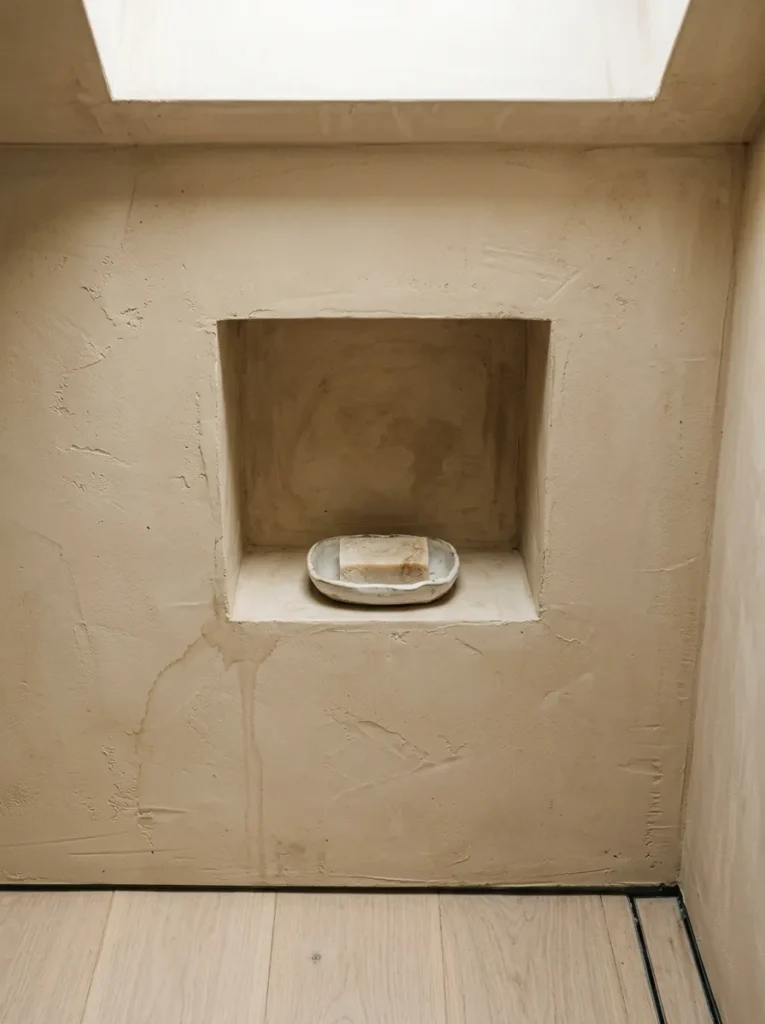
A recessed niche finished in the same plaster as the surrounding wall, with visible trowel marks left intentionally rather than sanded perfectly smooth, embraces the wabi-sabi principle that imperfection itself can be the design feature rather than something to correct. This idea works specifically because it resists the instinct to make every built-in surface flawless — the slight unevenness is what signals handmade rather than manufactured. Keep what’s displayed inside the niche minimal, one or two objects at most, since a niche this textural already carries enough visual weight without competing styling crowding it.
14. A Wooden Stool or Bench as Bath-Side Seating
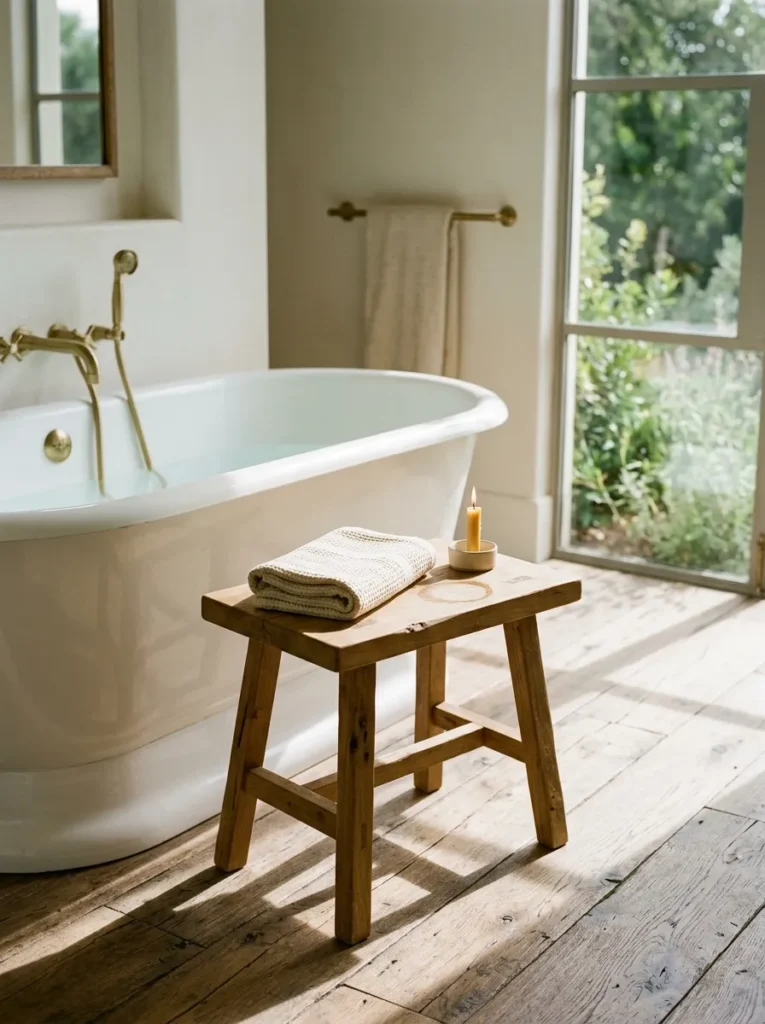
A plain wood stool or low bench beside a tub gives the bathroom a landing spot for a towel, a book, or a candle, doing real functional work while also introducing another warm material into a room that’s often dominated by tile, porcelain, and glass. Choose a stool with visible wood grain and a simple, slightly irregular shape over a perfectly uniform painted one, since the texture is what ties it into the rest of the room’s earthy material story. This idea works in nearly any bathroom layout, since a stool takes up minimal floor space compared to a full bench or chair.
15. Matte Black Fixtures Against Warm Stone or Wood
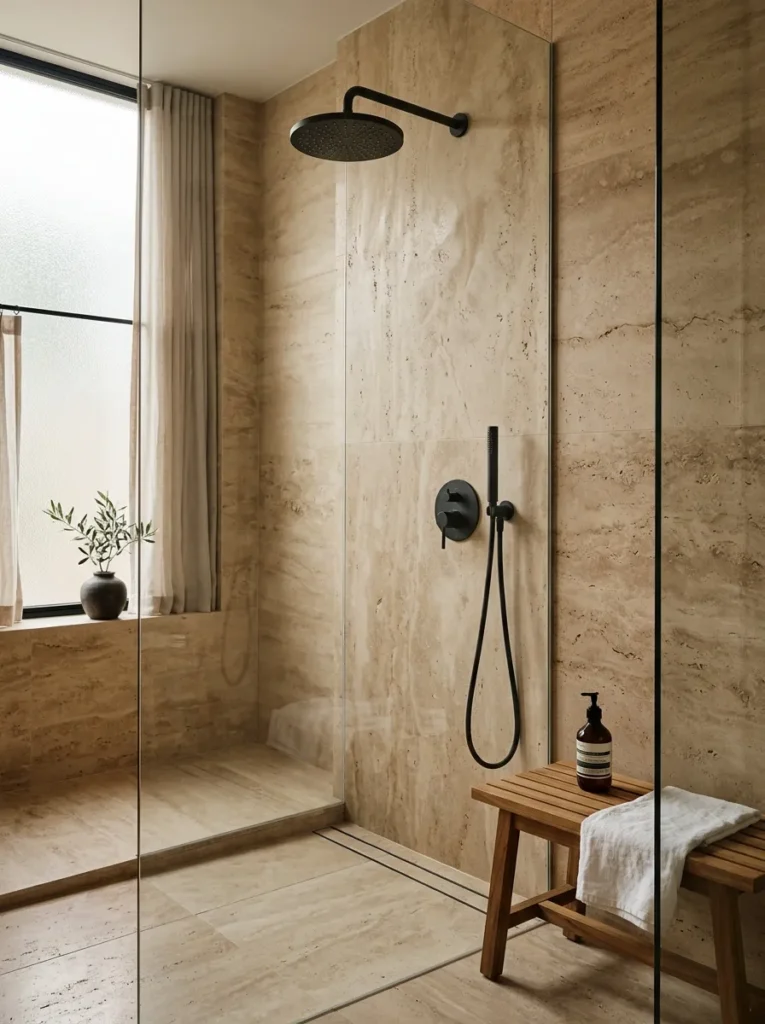
Matte black is the one fixture finish that reads as grounding rather than warming, which matters in an earthy bathroom built mostly from warm stone, clay, and wood tones that could otherwise start to feel uniformly soft without a single sharper contrast point. The dark, non-reflective finish gives the eye somewhere definitive to land against all that warm, textured material, the way a single dark accent does in an otherwise monochromatic painting. This idea works best when limited to one fixture type throughout — all faucets, all shower hardware — rather than mixing black with brass or chrome elsewhere in the same room.
16. Cork Flooring or Wall Paneling
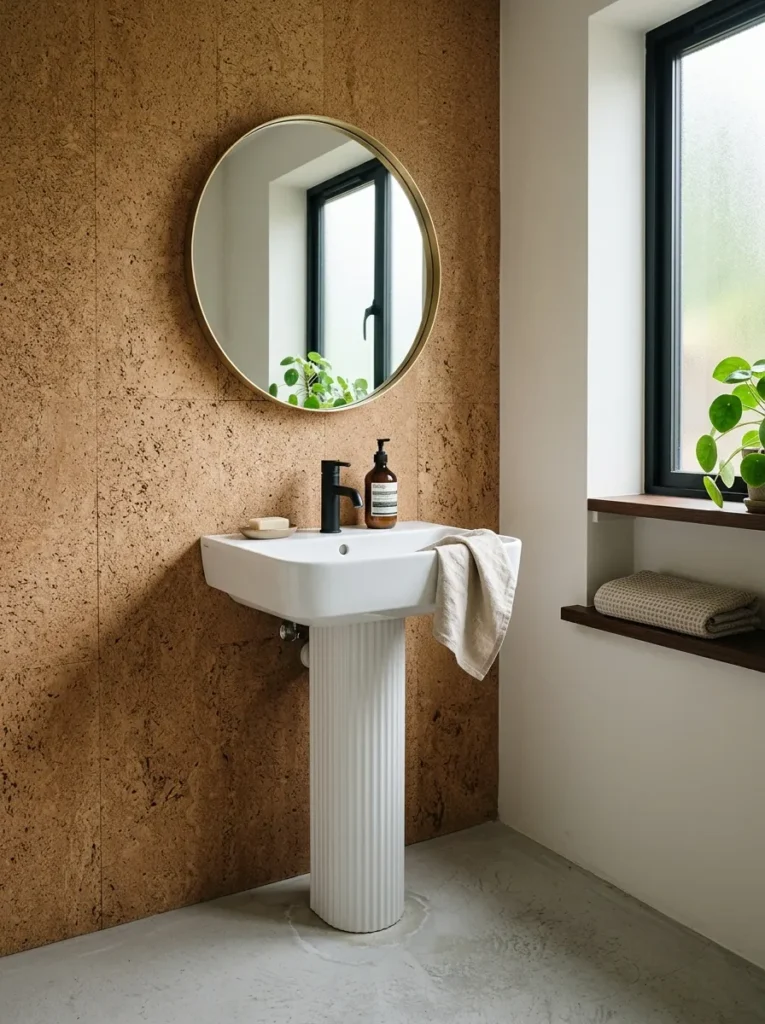
Cork is naturally water-resistant, antimicrobial, and soft underfoot, making it a genuinely practical material choice for a bathroom rather than just a decorative one, and its warm, finely textured surface brings an organic quality that tile or vinyl can’t replicate. Used as wall paneling instead of flooring, it adds warmth and sound-dampening texture to a single wall without the slipperiness concern that comes with cork as a floor material in a wet room. This idea suits a Scandinavian or minimalist-leaning earthy bathroom particularly well, since cork’s understated texture pairs better with restraint than with heavy ornamentation elsewhere in the room.
17. Hand-Thrown Ceramic Soap Dishes and Accessories
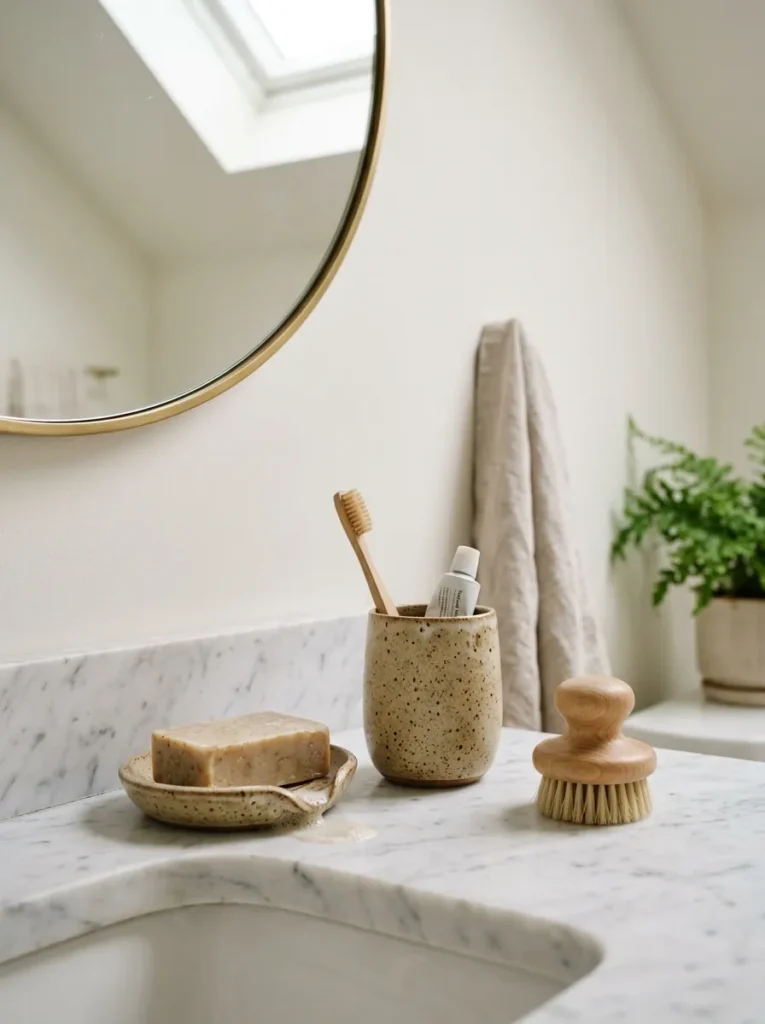
Swapping plastic or mass-produced soap dishes and tumblers for hand-thrown ceramic versions changes the texture and visual weight of the smallest, most-touched objects in the bathroom, and those small details accumulate into a noticeably different feeling room even when nothing structural has changed. A speckled or reactive glaze finish specifically reads as more handmade than a flat, uniform color, since the glaze pools and varies unpredictably during firing. This idea is one of the most affordable on this entire list, and one of the easiest to implement gradually, replacing one object at a time as budget allows.
18. A Skylight or Solar Tube for Natural Daylight
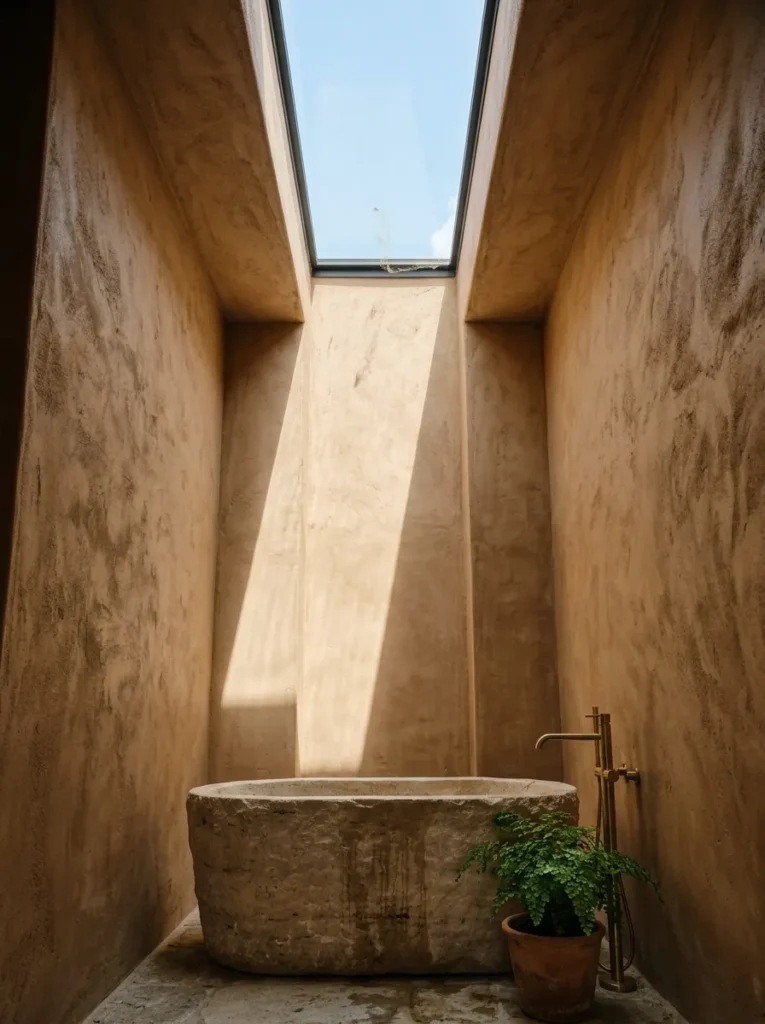
Many of these earthy bathroom design choices depend on natural light to read correctly, since materials like limewash, terracotta, and stone all rely on daylight hitting their surface at different angles throughout the day to reveal their texture and depth. A skylight or solar tube solves this directly in windowless or interior bathrooms, bringing genuine daylight into a space that would otherwise depend entirely on artificial bulbs. This idea requires real construction and a qualified installer, so it suits a renovation specifically, but it’s one of the few changes on this list that improves how every other material in the room actually looks.
19. Olive or Sage Green Cabinetry
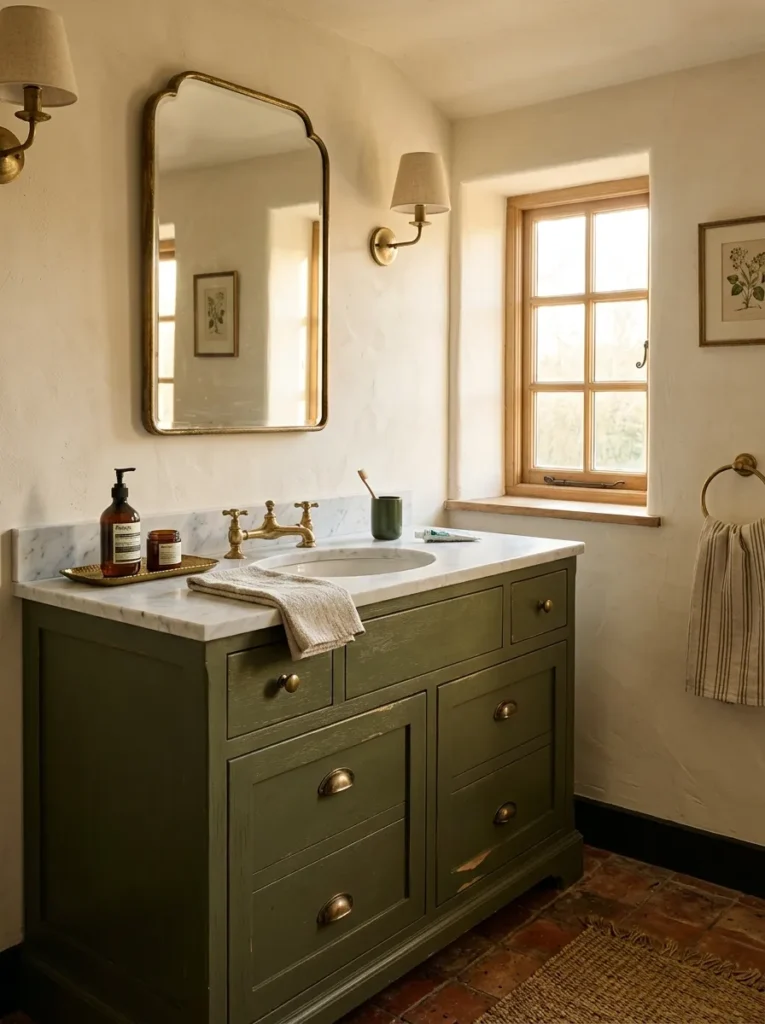
Olive and sage green read as genuinely earthy in a way most other colors don’t, since both shades reference actual plant and landscape tones rather than a purely decorative palette. Painting just the vanity rather than the full room lets this color carry real visual weight without asking every surface to coordinate with it, which matters in a smaller room where a fully green bathroom can start to feel heavy. Pair it with brass hardware specifically, since the warm metal echoes the same earthy register as the green rather than introducing a cooler, more clinical contrast like chrome would.
20. A Bamboo or Rattan Pendant Light
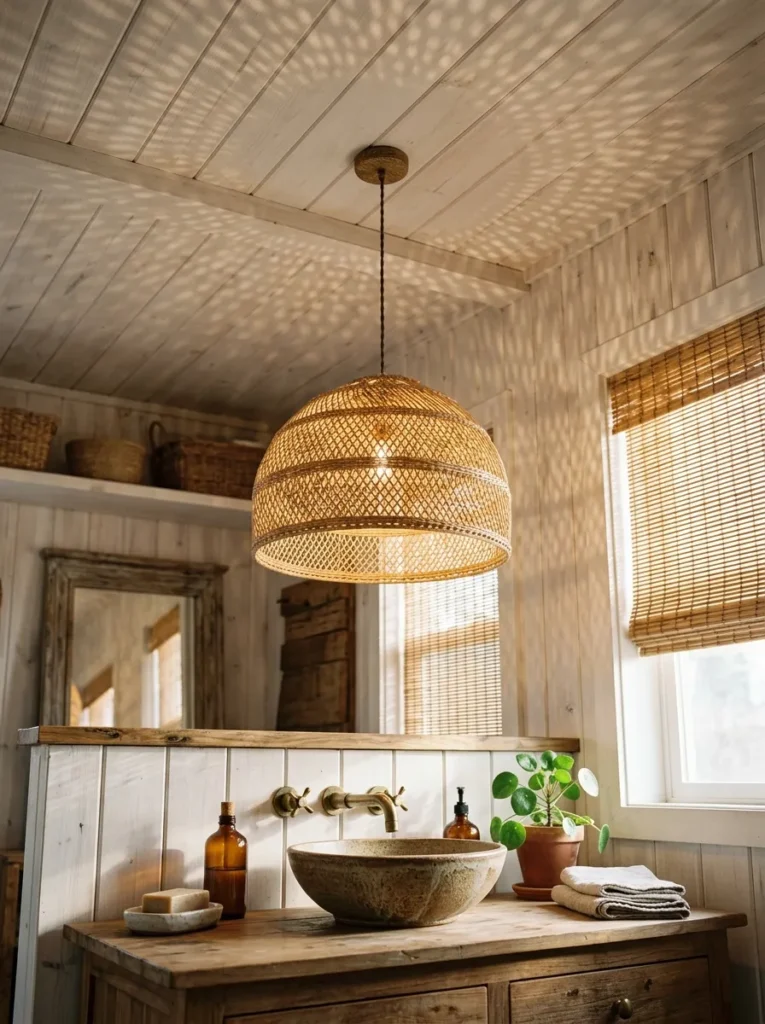
A woven rattan or bamboo pendant casts dappled, textured shadow across the ceiling and walls in a way a plain glass or metal fixture never does, adding an ambient layer of pattern that shifts depending on the time of day and the angle of the bulb inside it. The natural fiber also continues the room’s material story upward, since most earthy bathroom design choices focus on the floor, walls, and vanity while leaving the ceiling and lighting untouched. Confirm the fixture is rated for damp or wet locations specifically before installing it in a bathroom, since not all woven pendants are built to handle the humidity a shower produces.
21. A Living Plant Wall or Built-In Planter Ledge
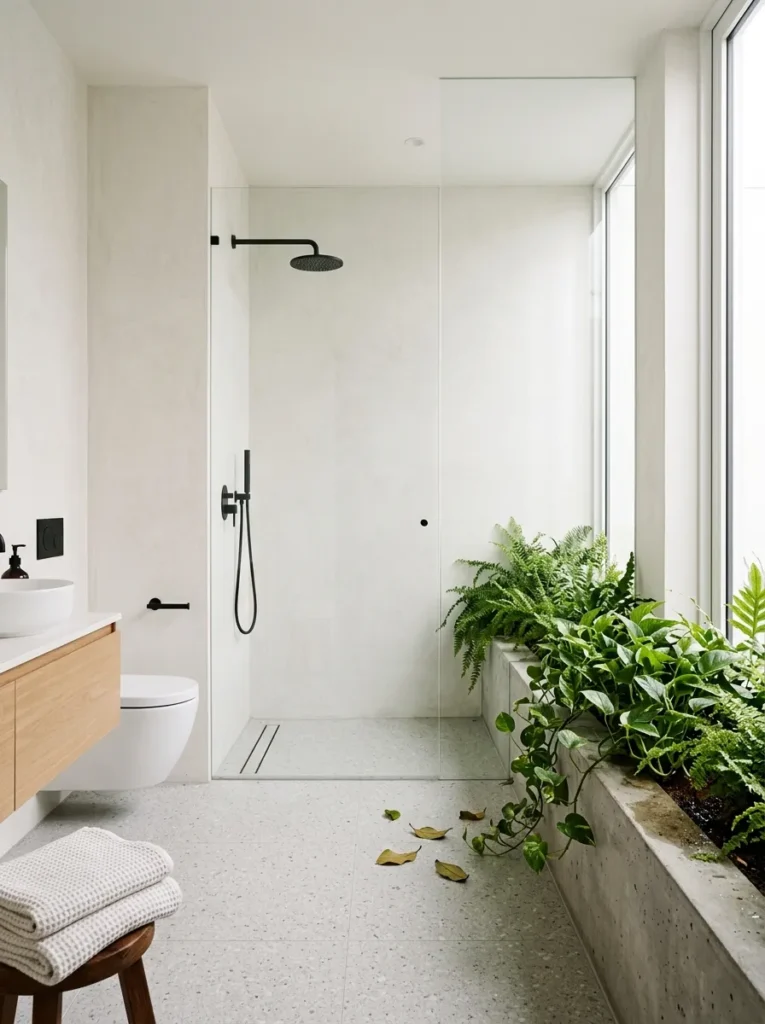
A built-in planter ledge with real, living plants brings genuine biophilic benefit into a bathroom rather than just a styled approximation of nature, since actual greenery improves air quality and humidity regulation in a way dried botanicals or printed wallpaper simply can’t. This idea works specifically in bathrooms with strong natural light, since most plants suited to humid environments — pothos, ferns, philodendron — still need real daylight to thrive long-term, not just ambient humidity. Build the ledge with proper drainage in mind, since a planter without it will eventually damage the surrounding wall or floor material from trapped moisture.
Final Thoughts on Designing an Earthy Bathroom
The most convincing earthy bathroom ideas all share the same foundation: real materials that show genuine variation, texture, and even imperfection, rather than surfaces engineered to look uniform and flawless. A hand-thrown sink, a slab of raw wood, a wall of handmade tile — each one ages and weathers visibly over time, which is exactly what keeps this style from ever looking dated the way a trend-driven color scheme eventually does. Choose the materials and details that genuinely suit your space and your budget rather than trying to layer all twenty-one ideas into a single room at once.
If there’s one principle worth carrying forward above the rest, it’s that imperfection here isn’t a flaw to disguise — it’s the actual design feature. A slightly uneven plaster wall, an asymmetrical ceramic basin, a live-edge wood slab: that visible evidence of the human hand is what separates an earthy bathroom from one that’s simply decorated to look natural without actually committing to the materials that make it so.
Save this guide to your Pinterest board so you can revisit these earthy bathroom ideas whenever you’re ready to bring more warmth into your own space.