18 Guest Bathroom Ideas That Feel Stylish and Welcoming
The guest bathroom is the room most homeowners treat like a storage problem rather than a design opportunity. It gets the leftover towels, the spare soap, the mirror that didn’t fit anywhere else — and then guests politely say nothing about it. The truth is that a well-designed guest bathroom tells people something specific about how much thought went into their visit, and that impression lands before they’ve even sat down to dinner. These eighteen ideas aren’t about making your guest bathroom look expensive. They’re about making it feel considered, and there’s a meaningful difference between those two things.
1. Stop Matching the Towels
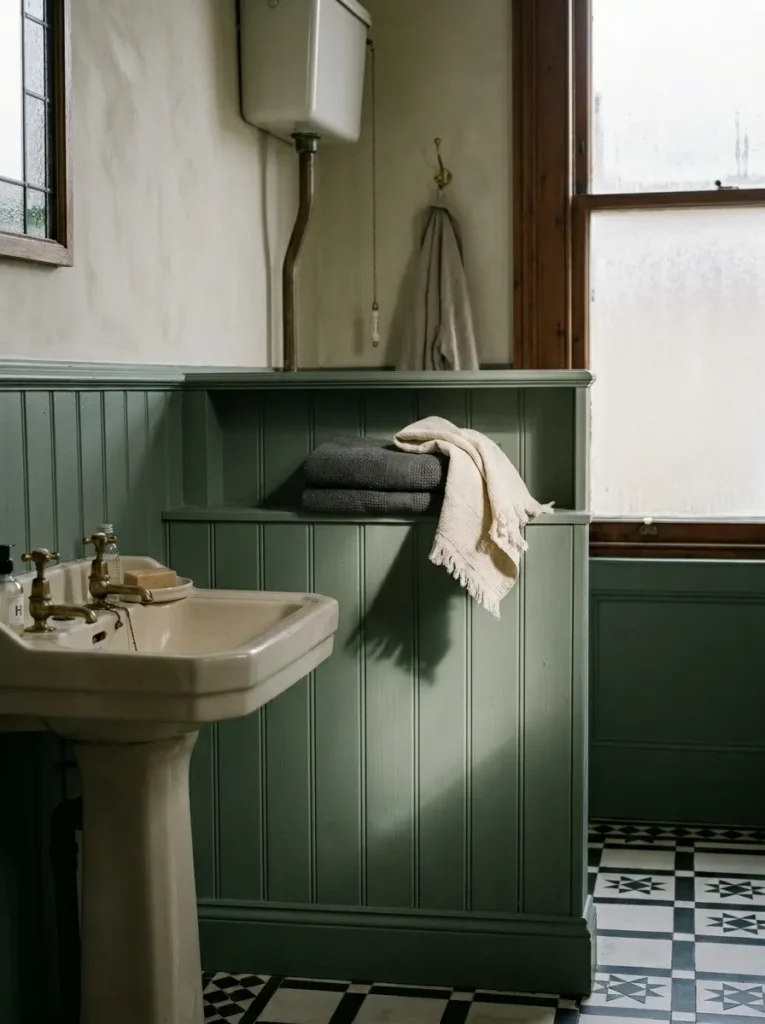
Most people buy towels in a set. Same colour, same weight, stacked neatly on a shelf or hanging in a row. It looks tidy. It also looks like a hotel that is trying very hard not to look like a hotel, which is the wrong reference point for a private home. The more interesting choice is to mix one deep solid — a charcoal, a dusty terracotta, a forest green — with a natural linen guest towel in an unbleached off-white. The contrast reads as deliberate rather than accidental, which is the entire point. Stack the larger bath towel flat, then fold the hand towel at a slight angle across it. That small asymmetry signals that a person arranged this, not a housekeeping system.
2. Put a Single Stem in a Bud Vase
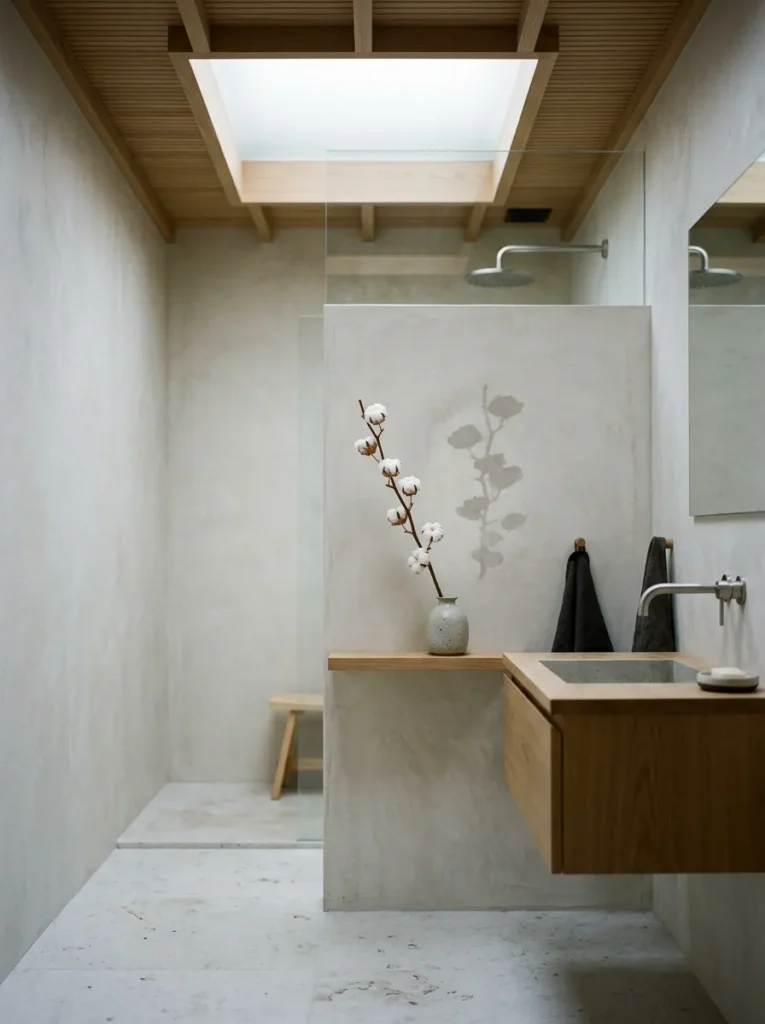
Flowers in a guest bathroom are not a cliché. A large floral arrangement in a guest bathroom is a cliché. One dried cotton stem in a slender terracotta bud vase, or a single eucalyptus branch in a narrow glass cylinder, takes thirty seconds to arrange and costs almost nothing. The impact is entirely disproportionate to the effort, which is the exact category of decision worth making everywhere in interior design. Change it with the seasons if you think about it. Leave it for three months if you don’t. Dried arrangements have the advantage of requiring no maintenance whatsoever, which makes them an honest choice for a room you don’t use daily.
3. Replace the Standard Mirror With Something That Has a Frame
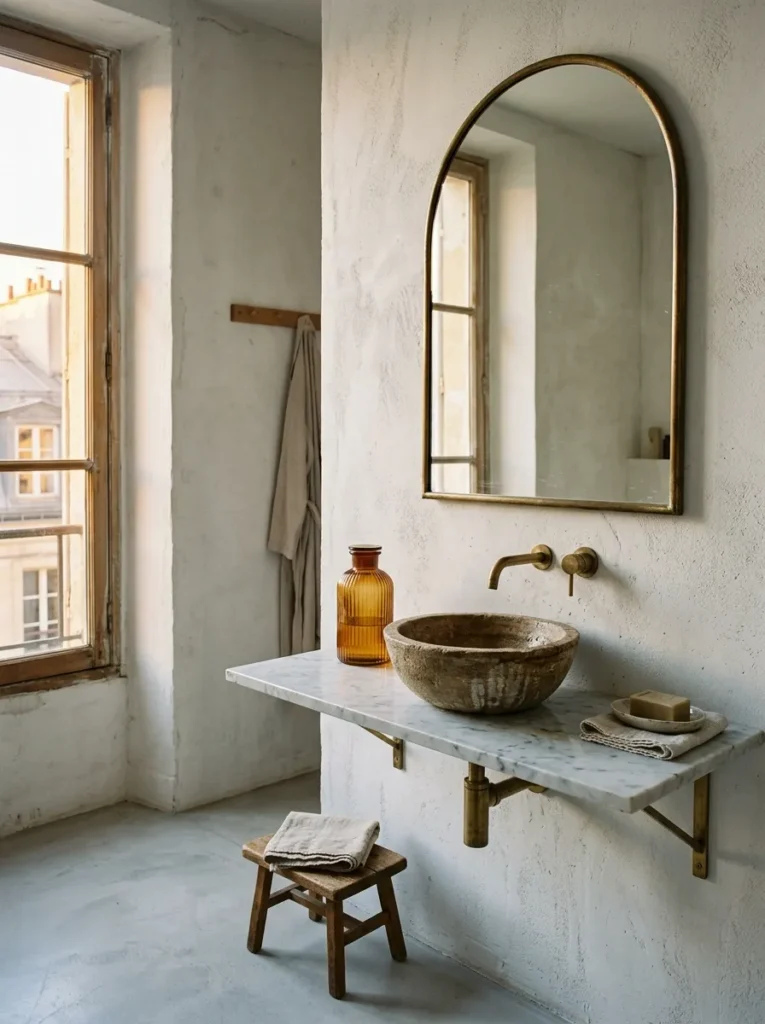
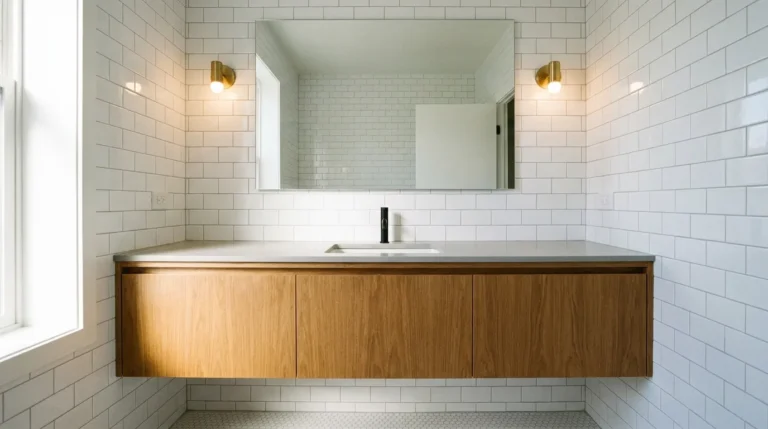
A frameless mirror glued to a wall is a bathroom fixture. A framed mirror is a decorative decision, and guests notice the difference even if they couldn’t articulate why. The frame doesn’t need to be ornate — a simple arched mirror with a thin matte black metal frame, or a round mirror in unlacquered brass, transforms the entire wall it sits on. The arch shape in particular does something useful in a small bathroom: it creates a vertical line that draws the eye upward and makes the ceiling feel higher. This is the kind of change that costs under a hundred dollars on the right day and changes the room’s personality entirely.
4. Use a Tray to Anchor the Vanity
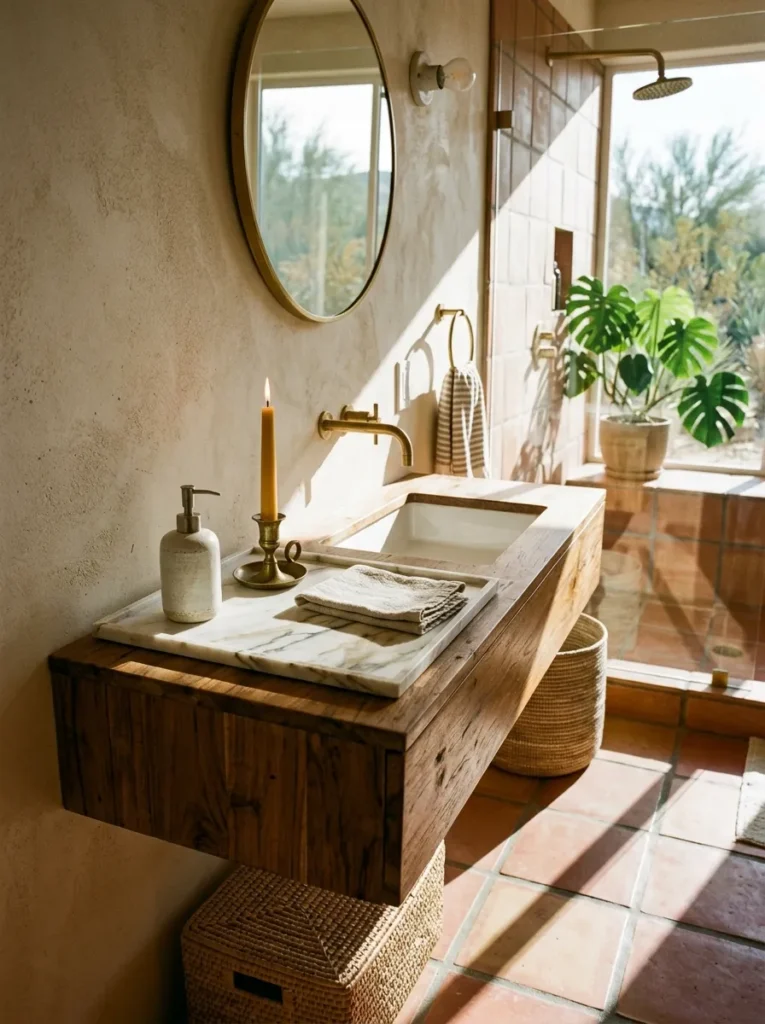
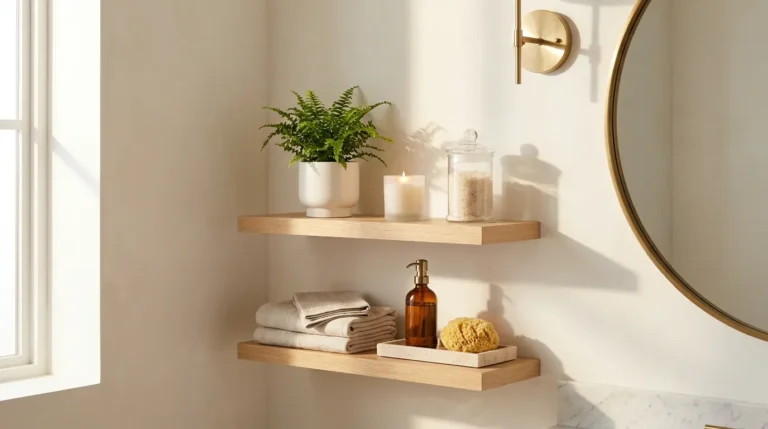
A vanity counter without a tray looks like a surface where things have been set down. A vanity counter with a tray looks like a surface that was designed. The difference is purely psychological, but psychology is what interior design is actually trading in. A small marble or resin tray, roughly 20 to 25 centimetres long, groups the soap dispenser, a small candle, and a folded facecloth into something that reads as a deliberate vignette. Keep everything on the tray to three items maximum — the restraint is what makes it work. Four items tips back toward clutter, and clutter in a small guest bathroom design erases everything else you’ve done.
5. Choose a Scent and Commit to It
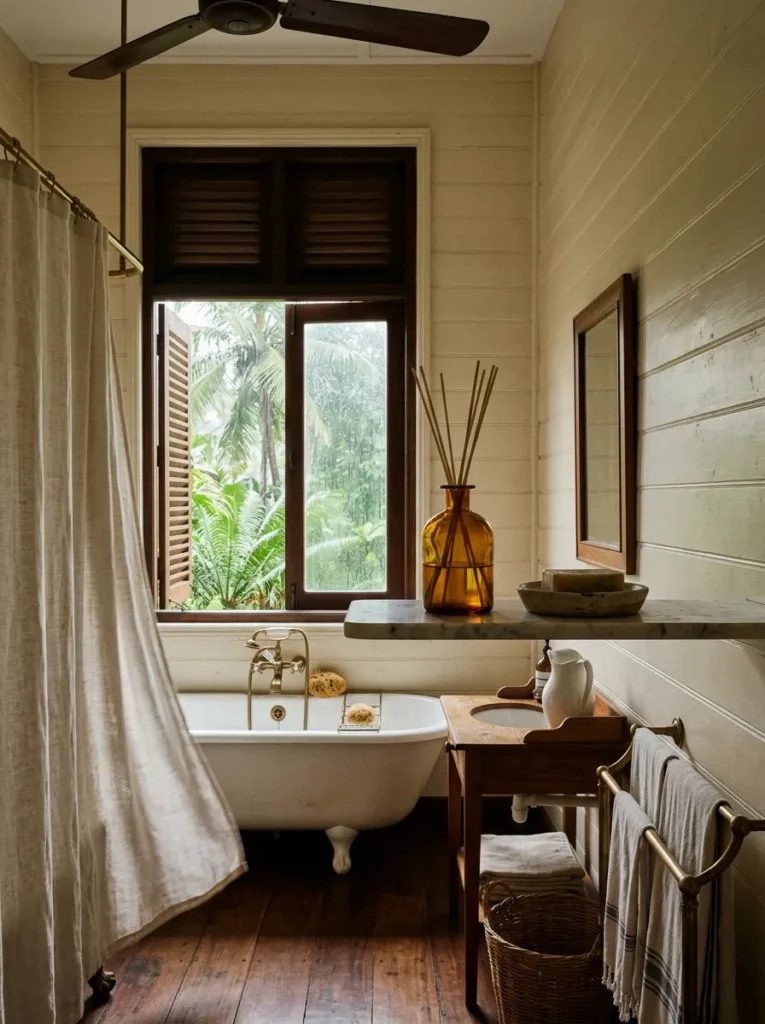
The most underestimated element in any welcoming bathroom space is smell, and most guest bathrooms smell like nothing in particular or like the cleaning product that was last used in them. Neither of those is the goal. A reed diffuser with a consistent, calm scent — something in the cedar or fig or white tea family, never anything aggressively floral — gives the room a signature that guests register the moment they walk in. Match the hand soap scent to it loosely if you can. The coherence is what elevates the experience from “bathroom” to “somewhere someone thought about.” It’s a small thing that lands with more weight than most people expect.
6. Add a Hook at Shoulder Height
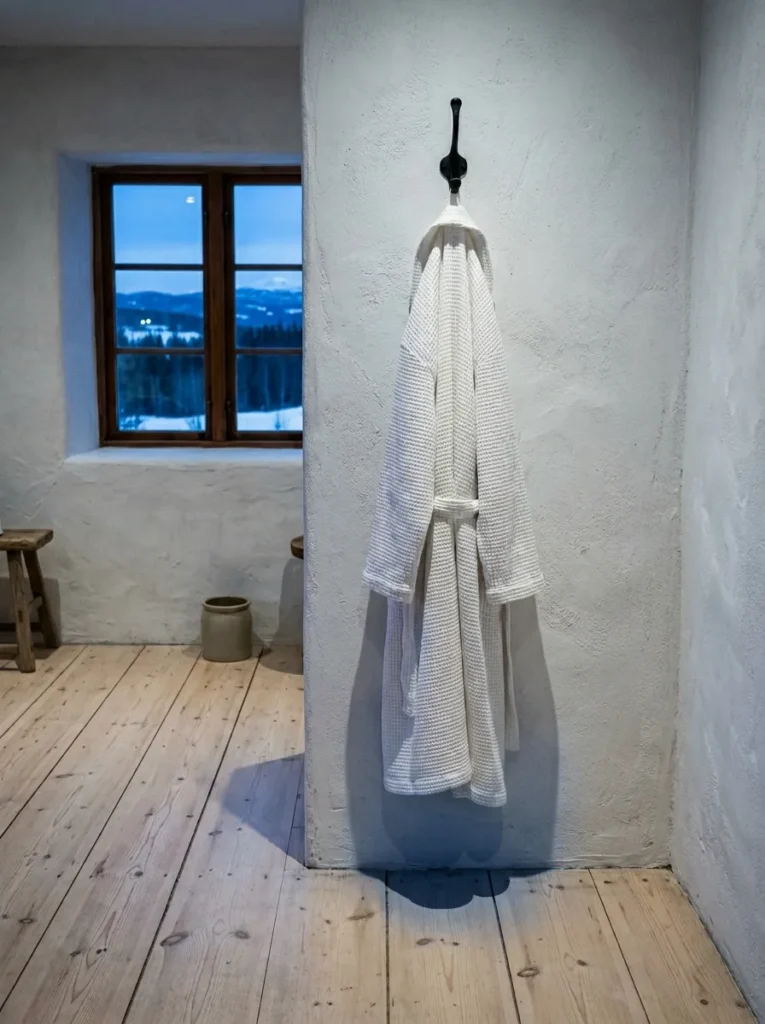
Every guest bathroom should have at least one hook that isn’t over the door. The over-door hook is a practical afterthought. A single brass or matte black hook mounted at approximately 150 to 160 centimetres from the floor — shoulder height for most adults — positioned beside the shower or near the vanity, gives guests somewhere logical to hang a dressing gown or their clothes without having to pile things on the toilet cistern. It also looks like something was thought through for their specific use of the room rather than your general use of it. Mount it on a piece of wall that has nothing else near it and the hook itself becomes a design element, not a utility fix.
7. Swap Plastic Dispensers for Decanted Soap and Lotion
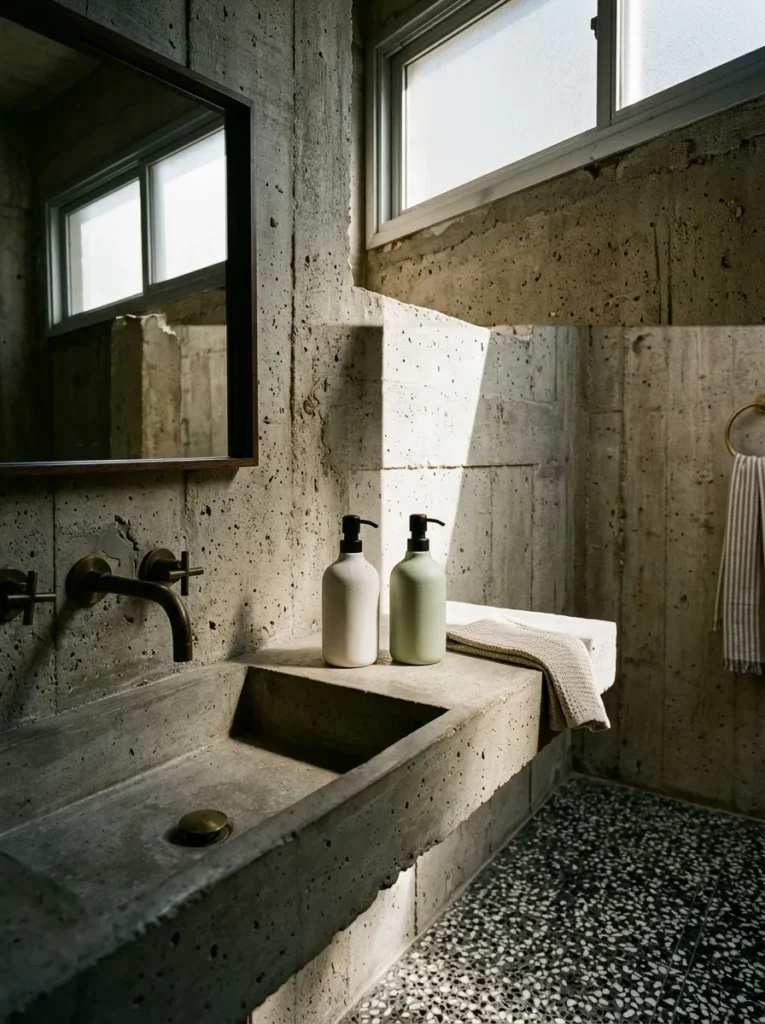
The branded plastic bottle is the single fastest way to make a bathroom look like a bathroom rather than a designed space. Decanting your hand soap and hand lotion into ceramic or frosted glass pump dispensers takes about five minutes and is irreversible in the best possible way — you will never go back once you’ve seen the difference. Choose dispensers that match in material but not necessarily in colour. A white ceramic soap pump and a pale sage ceramic lotion pump look more interesting than two identical ones. Keep labels off entirely. The product inside is incidental; the object on the counter is the point.
8. Lean Into the Lighting
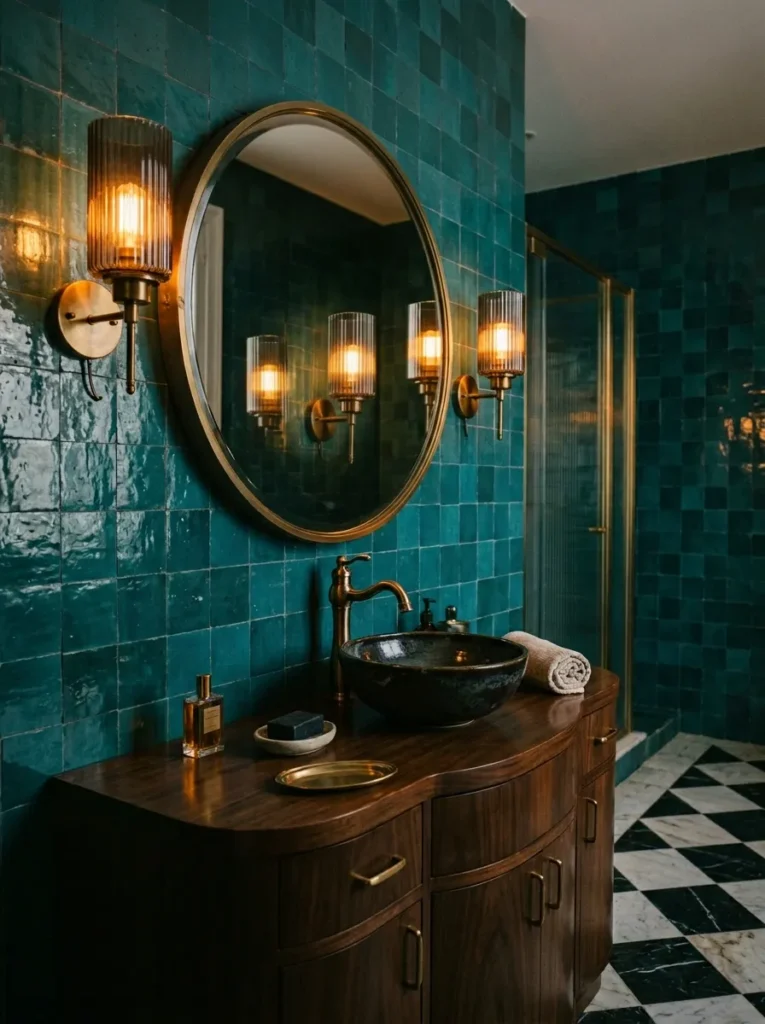
Most builders install a single overhead light in a bathroom and consider the job done. Most people leave it that way. The overhead light in a guest bathroom is usually unflattering, too bright, and creates the kind of harsh shadowless illumination that makes everyone look worse than they do in every other room of the house. A simple fix is adding a plug-in wall sconce on either side of the mirror — not above it, beside it — positioned at face height, around 150 centimetres from the floor. The light now falls on the face from the sides rather than from above, which is categorically more flattering and gives the room an atmosphere the ceiling fixture simply cannot create on its own. Your guests will look better and feel better, which, practically speaking, is exactly what a welcoming bathroom does.
9. Use Dark Paint in a Small Space
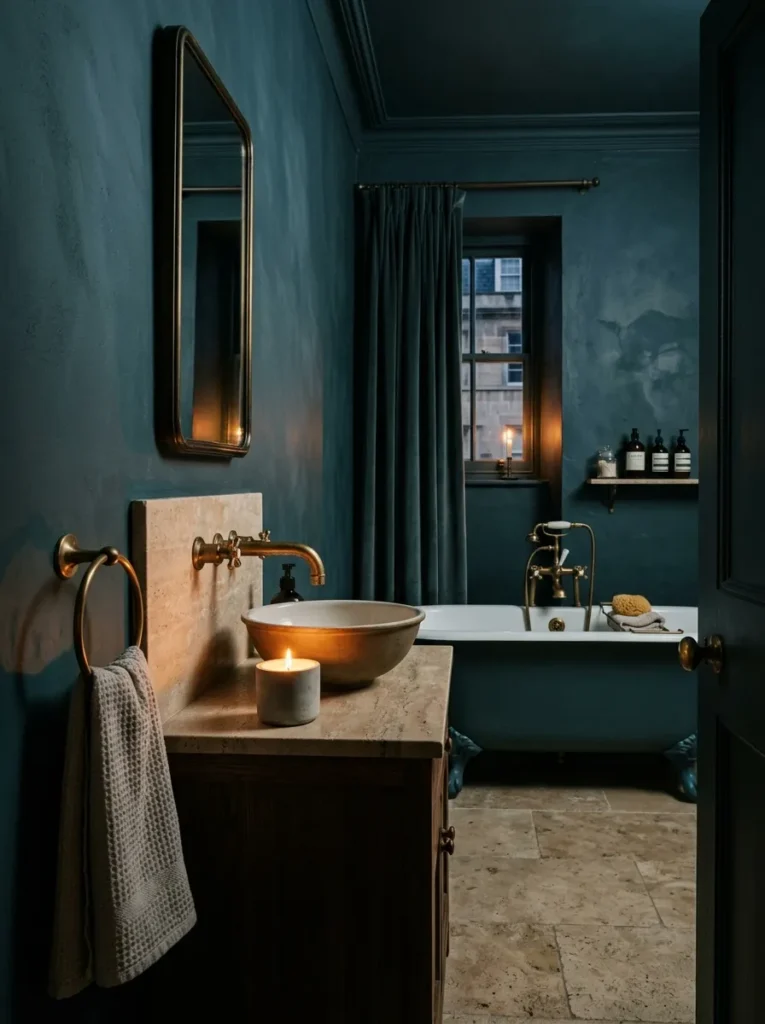
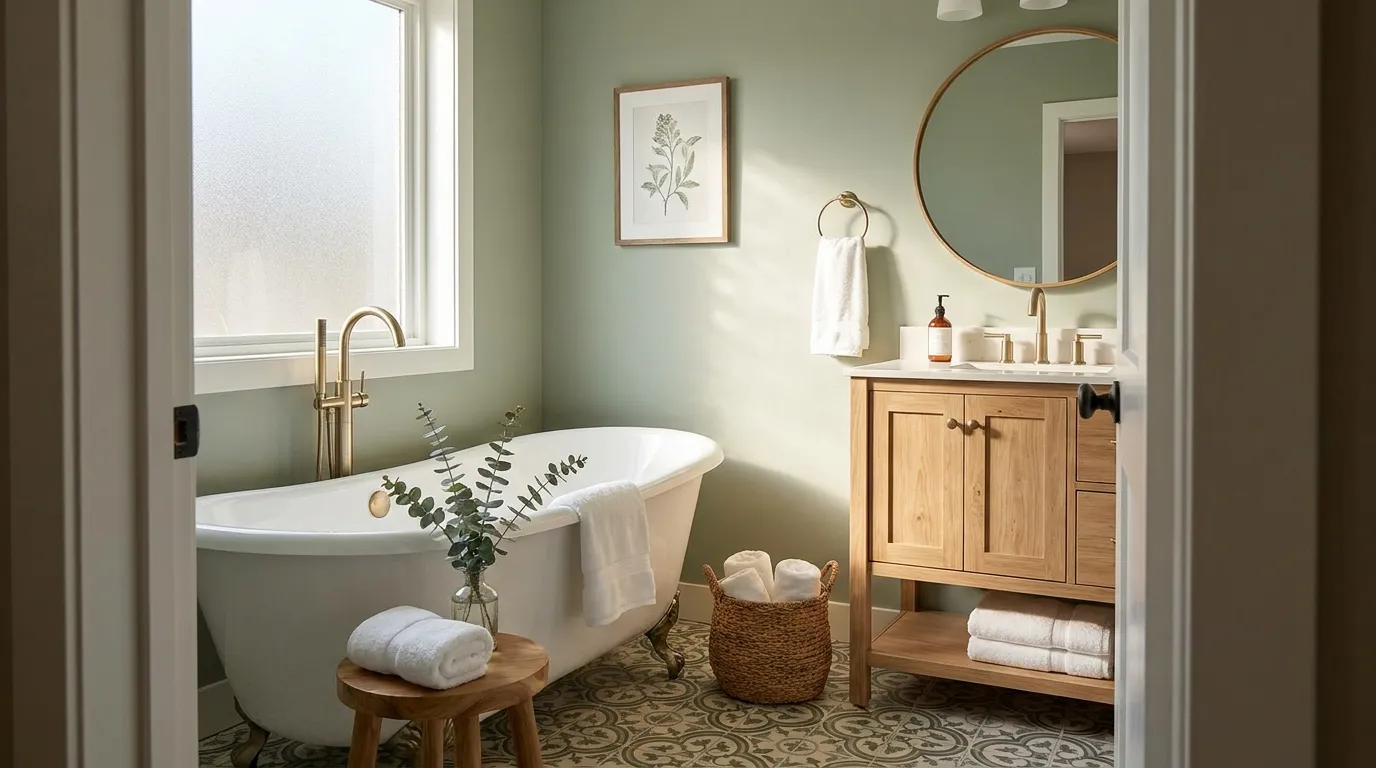
The reflex is to paint a small guest bathroom white to make it feel bigger. The result is usually a small white bathroom, which feels smaller than a small dark bathroom for reasons that are counterintuitive but absolutely real. A deep charcoal, a moody blue-green, or a warm clay tone on all four walls and the ceiling makes the room feel like a deliberate enclosure rather than a space that ran out of options. The darker the walls, the better the candles look, the warmer the brass fittings read, and the more the white towels pop against them. This is the decision that changes everything in a small bathroom and one that most homeowners are too cautious to make.
10. Provide Real Storage for Guests
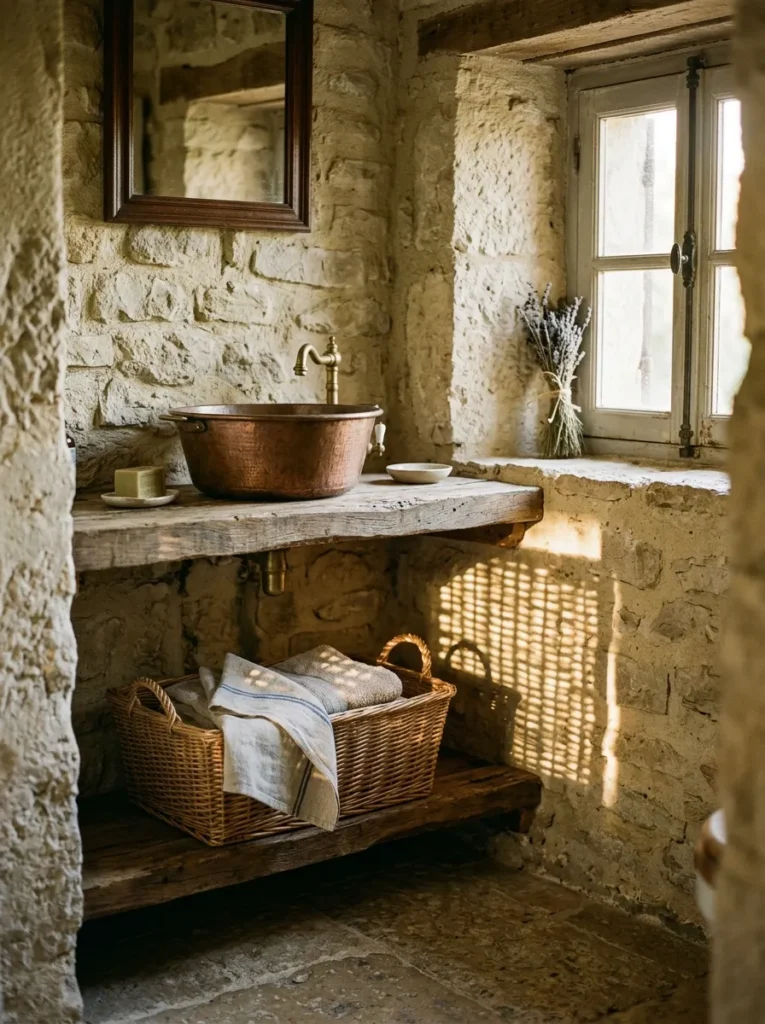
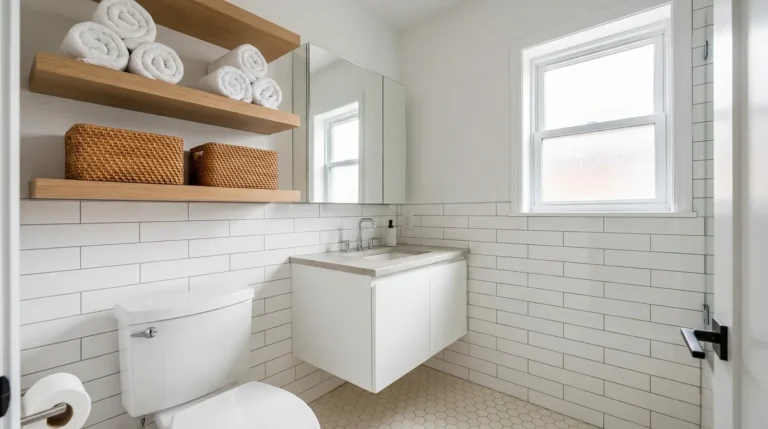
A guest bathroom with no clear storage for a visitor’s toiletries is a bathroom that forces them to line things along the edge of the sink or leave their bag on the floor. Neither is a comfortable experience. Even a small wicker basket, roughly 25 to 30 centimetres wide, placed on a low shelf or on the floor beside the vanity, gives guests a place to put their things without feeling like they’re encroaching on your space. The basket reads as an invitation rather than a concession. It costs almost nothing and removes a low-level awkwardness that guests feel but would never mention.
11. Frame the Shower With a Contrast Grout
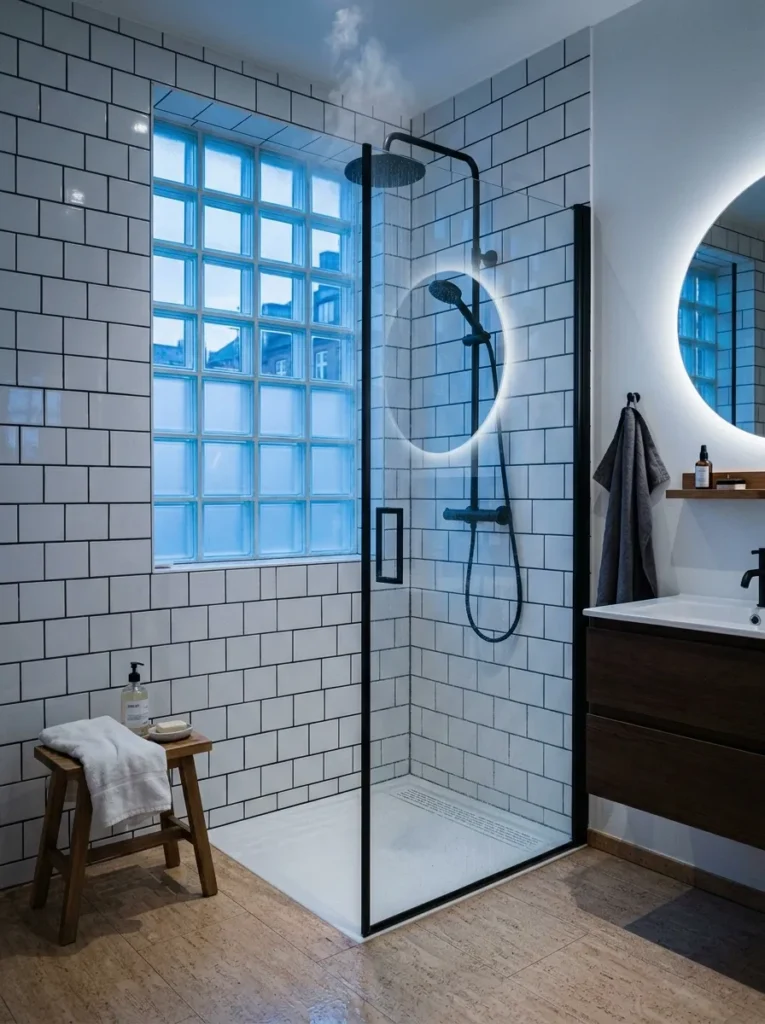
If your guest bathroom has a tiled shower and you’re regrouting or tiling from scratch, choose a grout colour that contrasts with the tile rather than blending into it. White tiles with white grout disappear. White tiles with pale grey grout suddenly have a grid. White tiles with dark charcoal grout become a graphic pattern. The tile itself doesn’t have to change — the grout does all the work. This is the kind of detail that photographers of bathrooms specifically seek out because it gives an image structure and visual interest, which is also what it gives to the room itself. It costs the same as the matching version and looks considerably more intentional.
12. Install a Heated Towel Rail
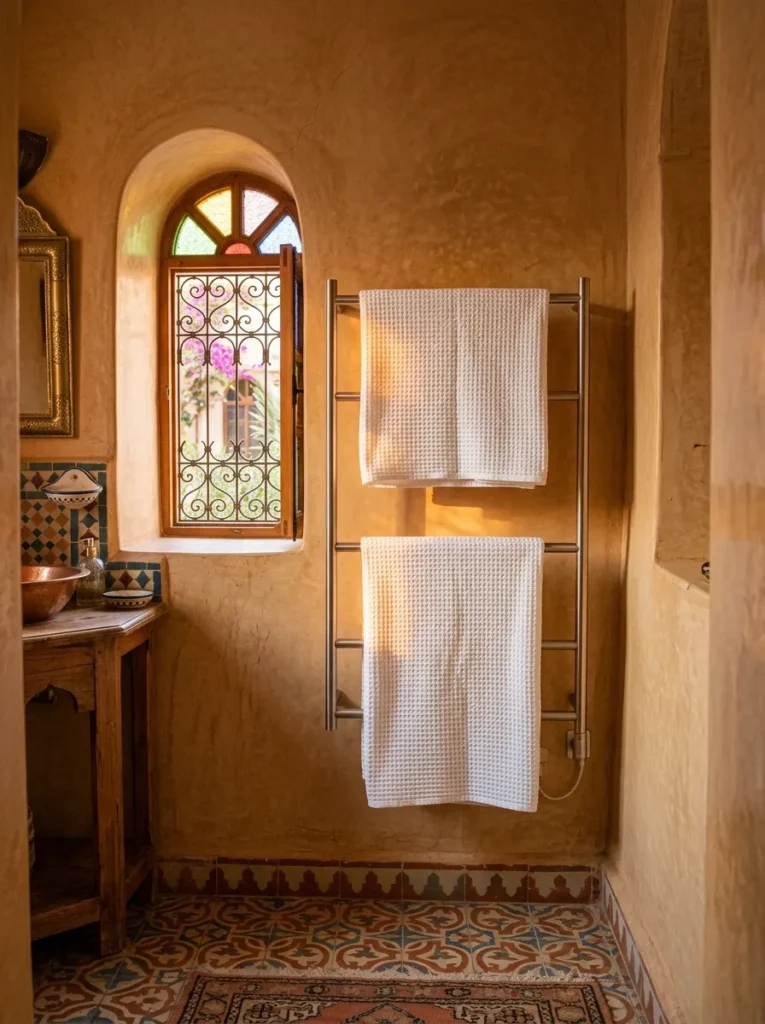
A heated towel rail is the one upgrade in a guest bathroom that guests actually notice and comment on, because it’s the one that changes a physical experience rather than just a visual one. Warm towels feel luxurious in a way that is genuinely difficult to replicate with any decorative decision. A simple plug-in electric towel rail, the brushed nickel or matte black versions available from most bathroom suppliers, works in any room without requiring plumbing changes. Mount it at a height where the lower bar sits around 40 centimetres from the floor and the upper bar at around 100 centimetres — this gives room to hang both full bath towels and smaller hand towels without them touching the floor.
13. Hang Art at Eye Level
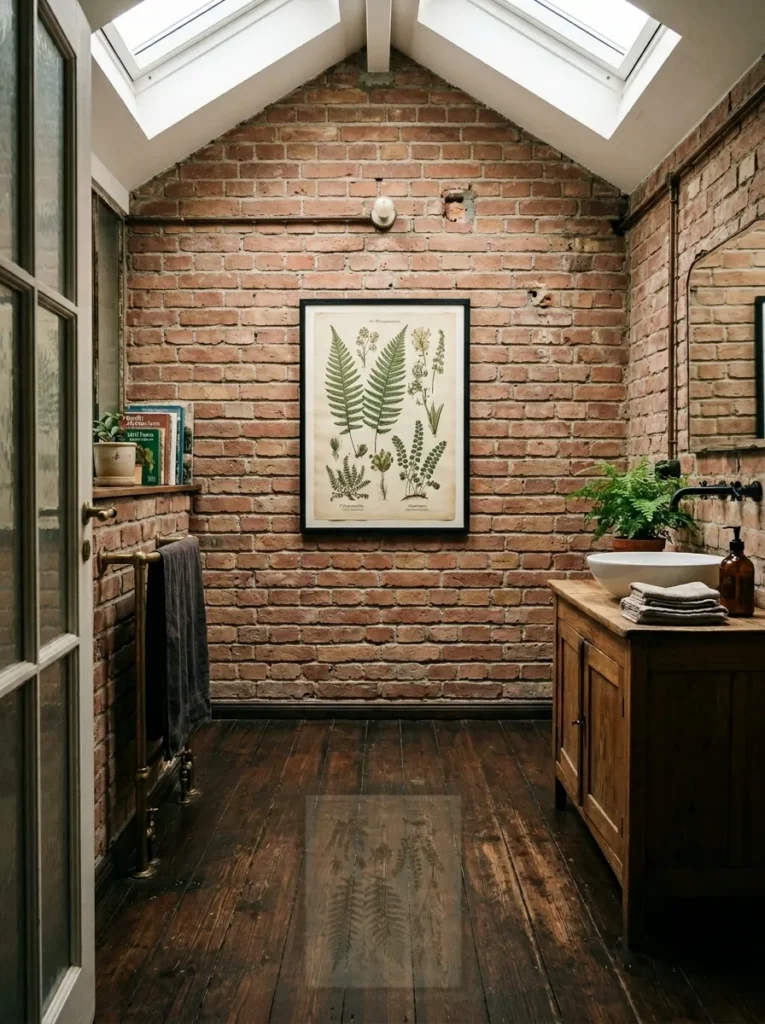
Bathrooms are the last room most people hang art in, which is exactly why it makes such a disproportionate impression when it appears there. The print doesn’t need to be expensive. A single image in a thin frame — a botanical illustration, a simple abstract, a black and white photograph — hung at eye level on the wall opposite the door creates a focal point that the room would otherwise lack. Eye level means the centre of the image sits at roughly 145 to 150 centimetres from the floor, which is the standard gallery hanging height for good reason. A bathroom with art in it tells guests that the room was designed rather than assembled, and that distinction is felt immediately.
14. Think About What Guests See First
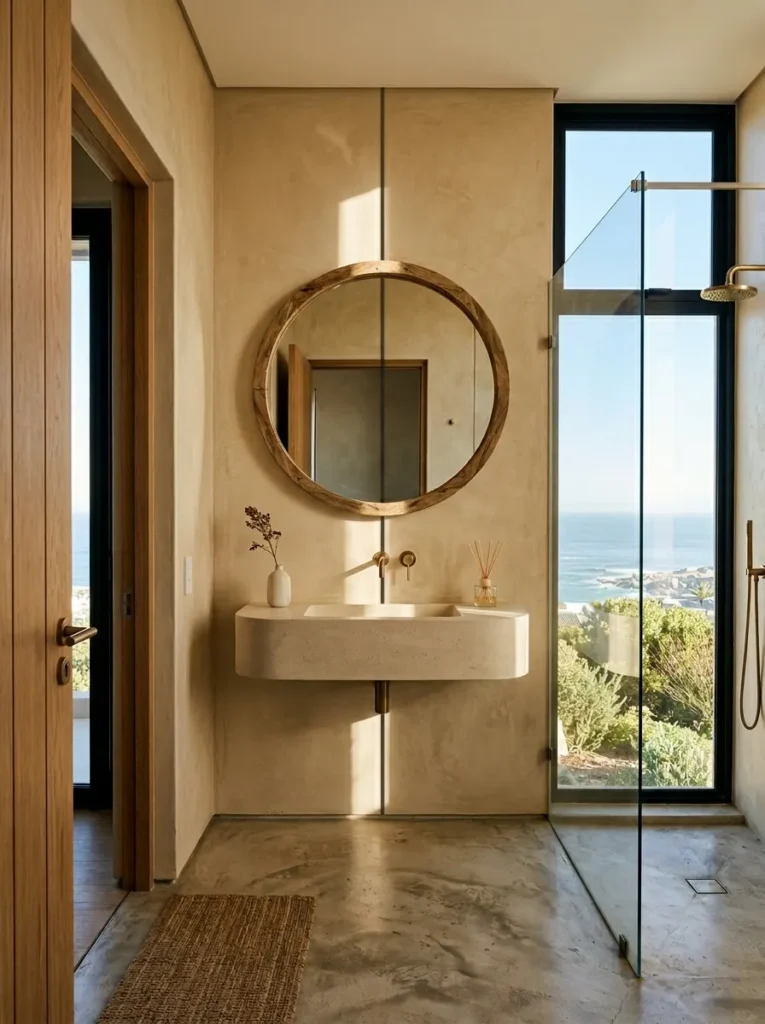
Most guest bathrooms are designed from the inside out — you think about the sink, the mirror, the shower. The more useful approach is to stand in the doorway and ask what the eye hits first when the door opens. Whatever that is, make it good. If it’s the back wall, paint it differently or hang something on it. If it’s the vanity, make sure the tray vignette is in order. If it’s the toilet, put a small plant or a piece of art nearby to redirect the eye. Guest bathroom styling is largely about controlling the first three seconds of the visual experience, and most people never think about it from that angle.
15. Choose One Material and Repeat It
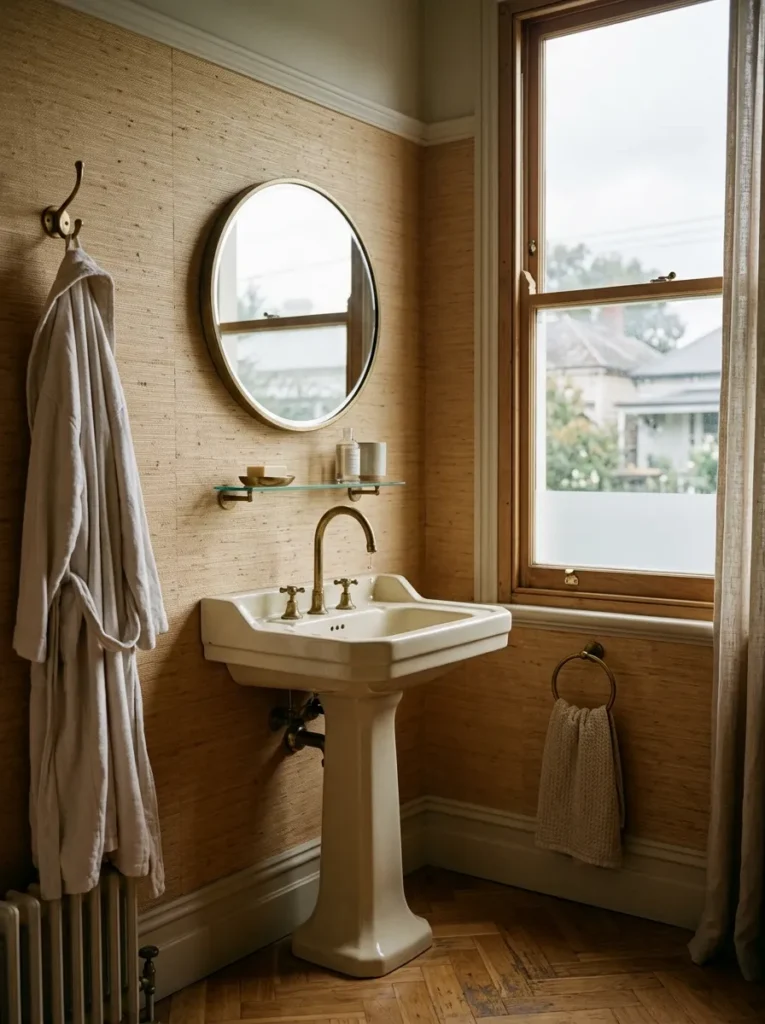
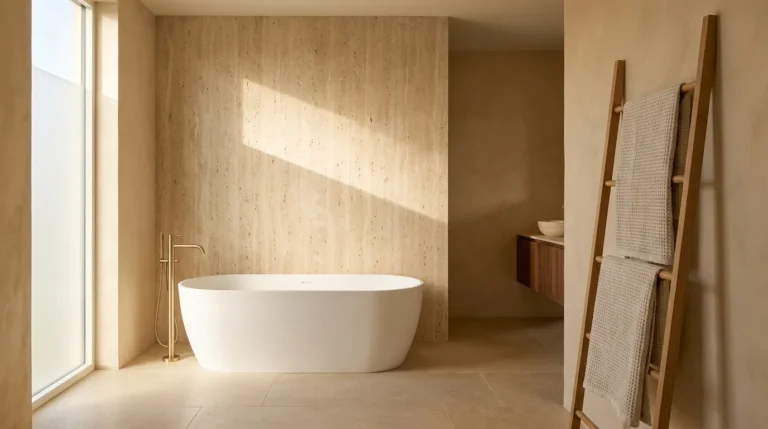
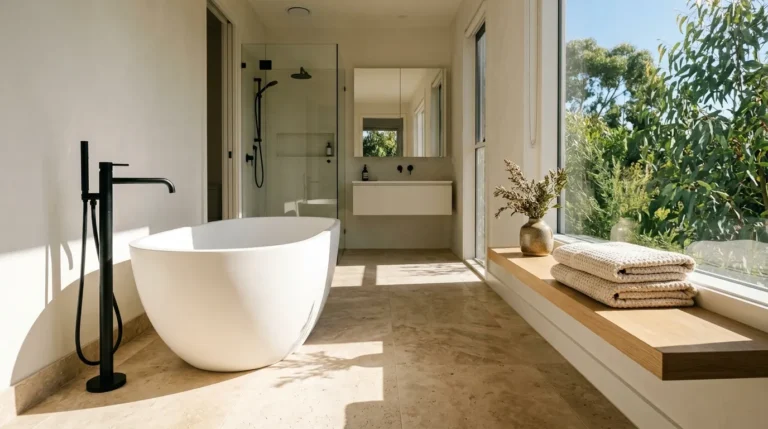
The bathrooms that look most considered usually have one material running through them as a thread — unlacquered brass on the taps, the towel ring, the mirror frame, and the hook. Or matte black on all hardware with no mixed finishes anywhere. Or a particular stone — honed travertine on the floor, a small travertine tray on the vanity, a travertine soap dish. The repetition creates cohesion and makes the room feel designed rather than accumulated. Most people get this wrong by mixing three or four finishes because each individual piece seemed fine in isolation. It’s the combination that either works or doesn’t, and the simplest way to make it work is to commit to one material and let it hold the room together.
16. Add a Candle That Is Actually Meant to Be Lit
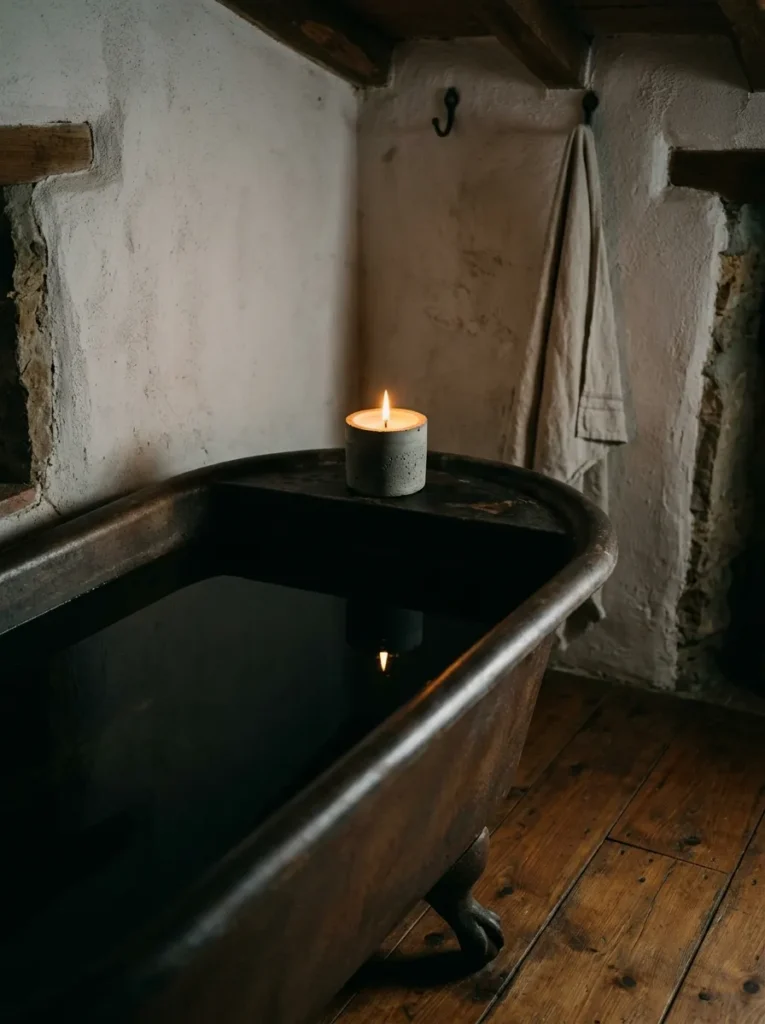
A decorative candle that is never lit is a prop. A lit candle in a guest bathroom changes the atmosphere of the room in a way that nothing else can replicate — the quality of light, the movement of the flame, the scent all working together. Keep a box of matches or a small lighter beside it so the invitation is obvious. A concrete or ceramic vessel candle in a reasonable size, somewhere between 8 and 12 centimetres in diameter, sits on the vanity tray or on the back of the bath without looking oversized. The unspoken message is that someone thought about what the experience of being in this room would feel like. That message lands.
17. Get the Toilet Paper Right
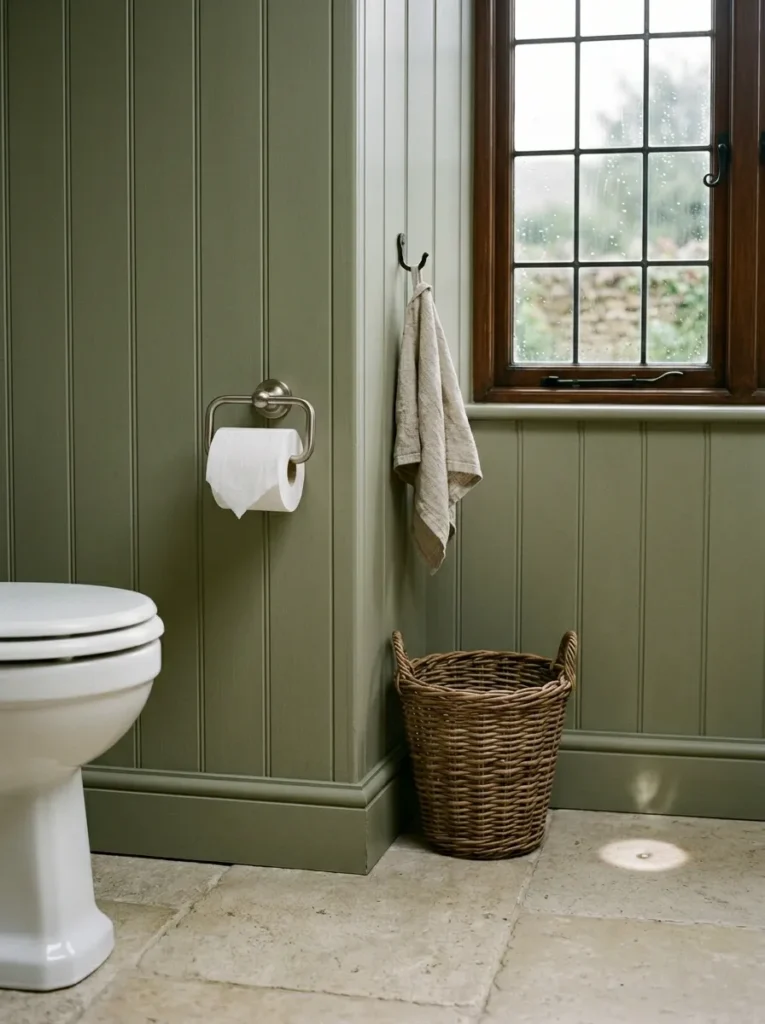
Nobody talks about toilet paper presentation and yet everyone notices it. A half-finished roll balanced on the cistern tank signals that this bathroom wasn’t prepared for a guest. A fresh full roll in a holder that is actually mounted to the wall, with the paper coming from over the top rather than from underneath, is a detail that takes zero effort and communicates care. If the holder is one of those spring-loaded chrome bars that has been in the bathroom since the nineties, replacing it with a simple wall-mounted holder in a finish that matches the rest of the room’s hardware costs almost nothing and removes something that has quietly been undermining the room for years.
18. Resist the Last-Minute Additions
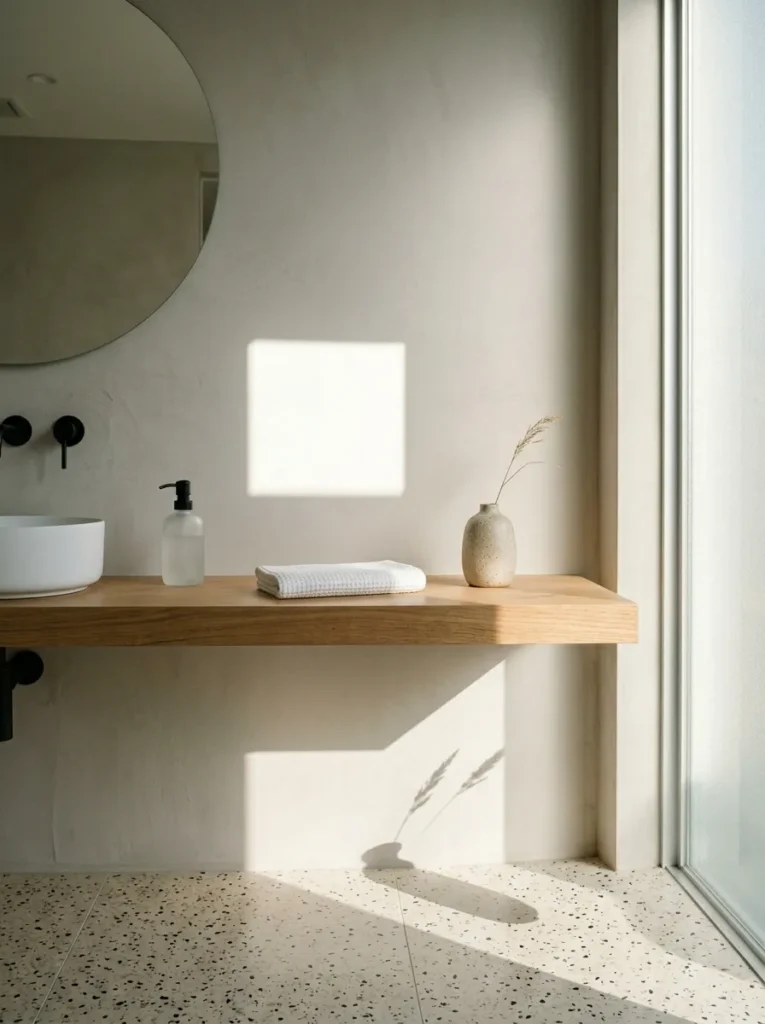
The worst thing you can do to a thoughtfully styled guest bathroom is panic-add things to it before guests arrive. The extra diffuser. The basket of products nobody asked for. The motivational quote print ordered at midnight. Every unnecessary addition takes you further from the version of the room that actually worked. The guest bathrooms that consistently impress are the ones that contain exactly what is needed and nothing more — one good scent, one beautiful towel set, one piece of art, one considered surface. Restraint is the actual design decision here, and it’s harder to execute than filling a space. The room that feels welcoming is almost always the room that wasn’t pushed too far.
Final Thoughts
Guest bathroom ideas are everywhere, but most of them are lists of things to buy rather than ways to think about the room differently. The real work is in editing — deciding what comes out rather than what goes in. Start with the one thing that guests see first when the door opens, make that element excellent, and build outward from there. Swap the plastic dispensers, hang one piece of art, commit to a scent. These are morning decisions, not renovation commitments. The most welcoming bathrooms rarely have the most objects in them. They have the fewest wrong ones.
Save these guest bathroom ideas for your next hosting refresh.