20 Boho Living Room Ideas That Feel Layered Without Looking Cluttered
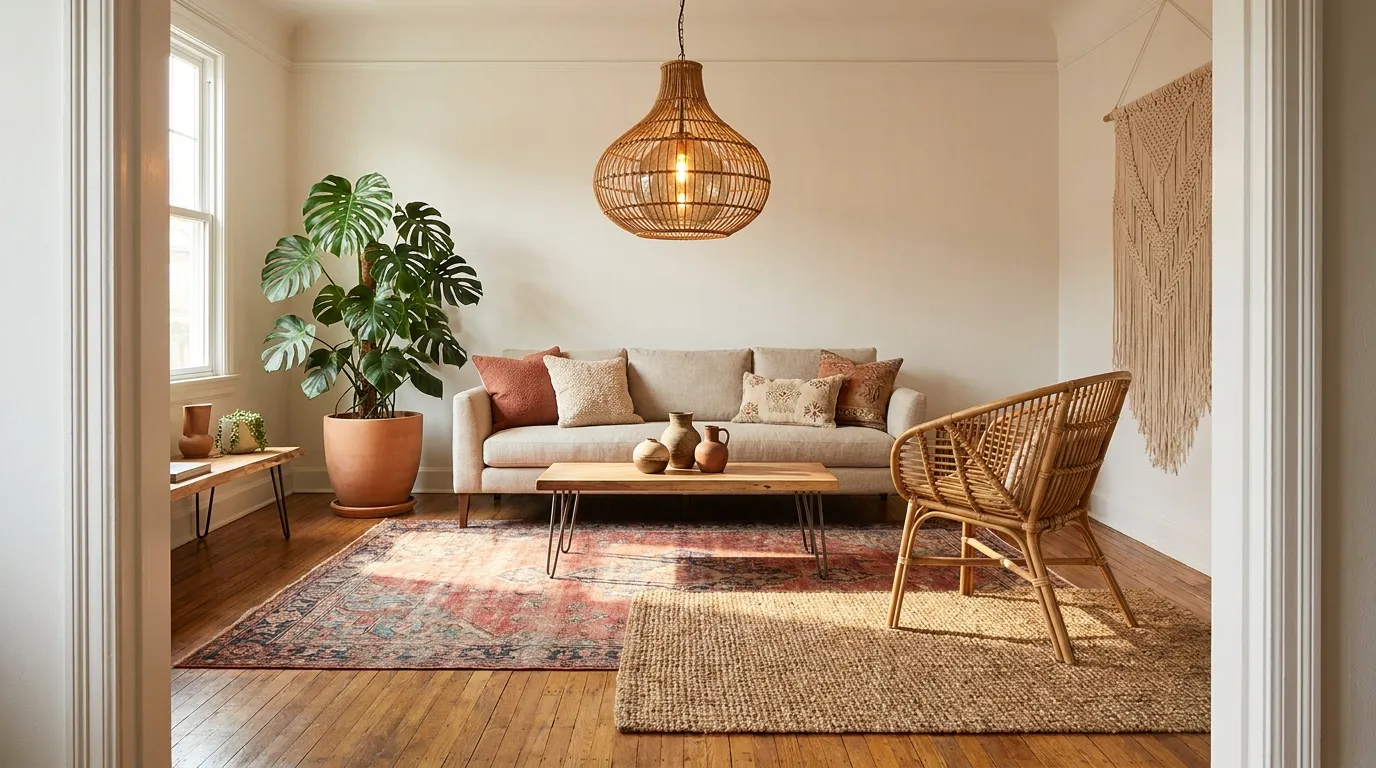
The bohemian living room is one of those aesthetics that photographs beautifully and can be genuinely difficult to pull off in practice. Done well, it reads as collected, warm, and full of personality. Done without a framework, it becomes a room where nothing quite relates to anything else — interesting objects everywhere, no visual rest, no sense of intention.
The difference between those two outcomes usually comes down to a few structural decisions made early: which materials anchor the room, how color is distributed rather than scattered, and which pieces carry visual weight versus which ones disappear into the background. These boho living room ideas are organized to help you understand those decisions, not just accumulate objects. Most can be applied to a rental or apartment without construction. A few require more commitment. All of them have enough specifics to help you figure out whether they suit your particular room.
1. Start with One Large, Imperfect Rug as the Anchor
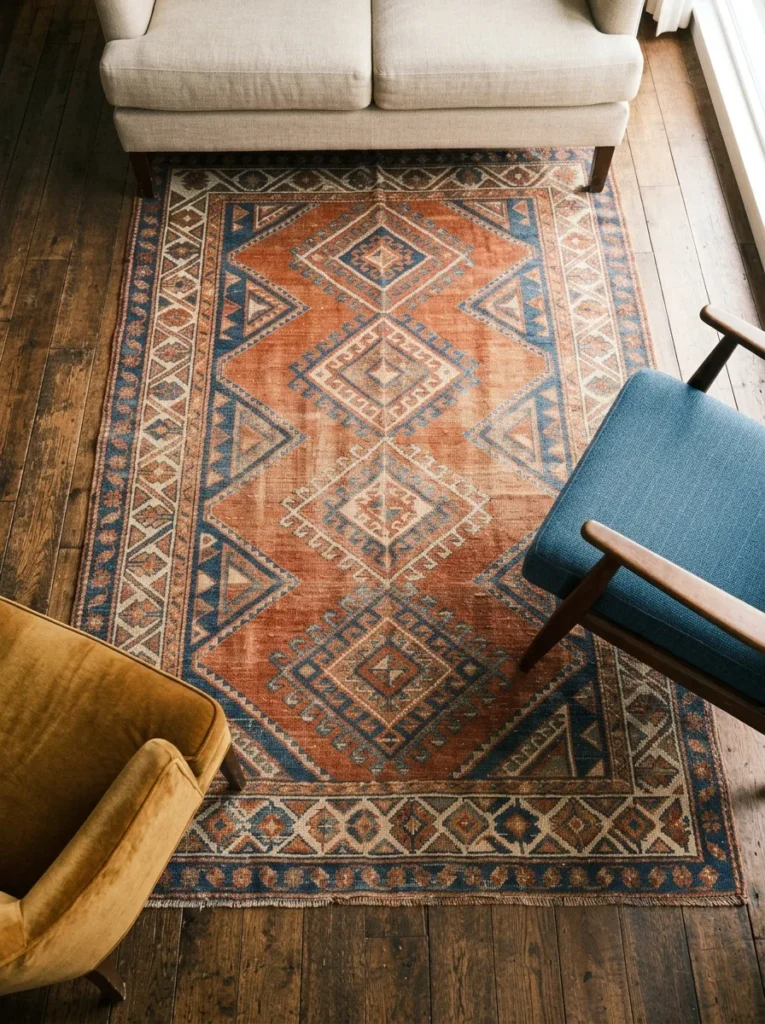
Most boho living rooms fail from the floor up — not because the rug is the wrong style, but because it’s too small. A rug that doesn’t fully anchor the seating area leaves furniture floating on the floor, which undermines the layered, grounded quality the style depends on. In a standard living room, the rug should be large enough that at least the front legs of every sofa and chair sit on it. In a larger room, all legs on the rug is better.
For the boho aesthetic specifically, a vintage or distressed flat-weave in faded terracotta, rust, or soft indigo reads more genuine than a brand-new shaggy pile. The worn look is part of the point — it suggests the rug has been somewhere, which is exactly the character boho style tries to build. Kilim, Moroccan flat-weave, and vintage Persian-style reproductions all work. A machine-washable option is worth prioritizing in a living room that sees regular use.
2. Layer a Smaller Woven Rug on Top for Texture and Depth
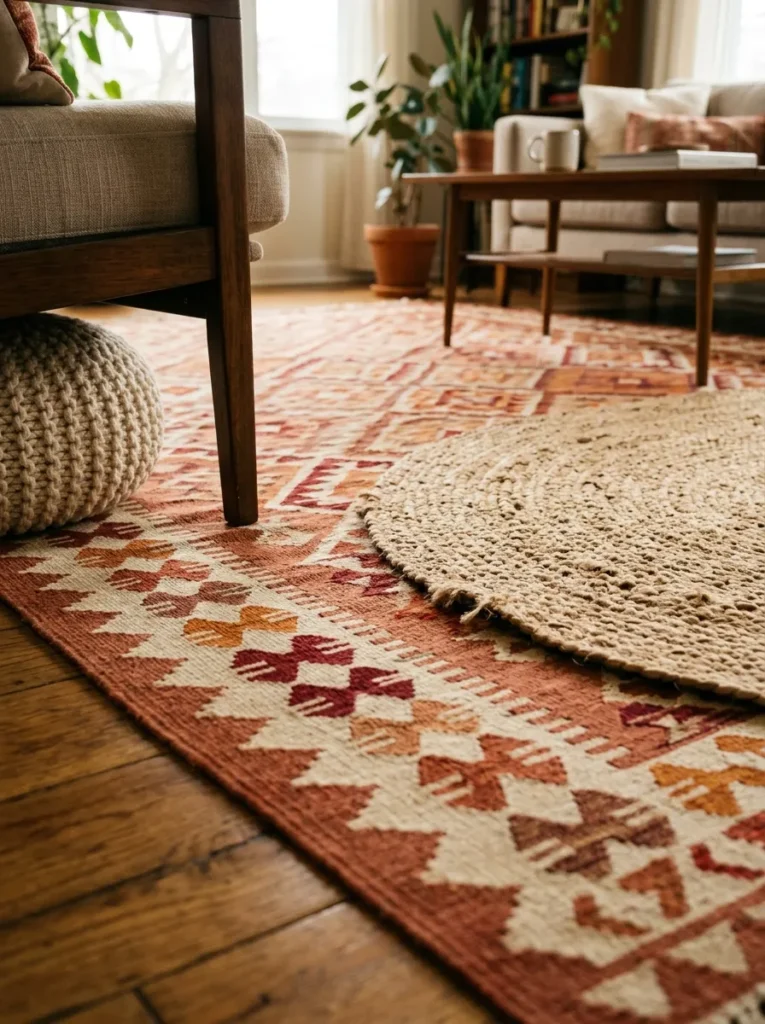
Layered rugs are one of the most visually characteristic elements of a boho room. The logic is that the larger base rug provides grounding and color, while a smaller textured layer on top adds dimension without requiring a more expensive single rug to do all the work.
The combination that reads most naturally: a flat-weave in a medium pattern as the base, with a smaller natural-fiber rug — jute, seagrass, or wool boucle — offset to one corner on top. The smaller rug doesn’t need to be centered. In fact, centering it precisely on the base rug looks more calculated than the off-set version. Keep the top layer to roughly half the size of the bottom, and make sure the colors share at least one tone — rust, warm brown, cream — or the combination looks accidental rather than intentional.
3. Choose a Low-Profile Sofa in a Natural or Earthy Fabric
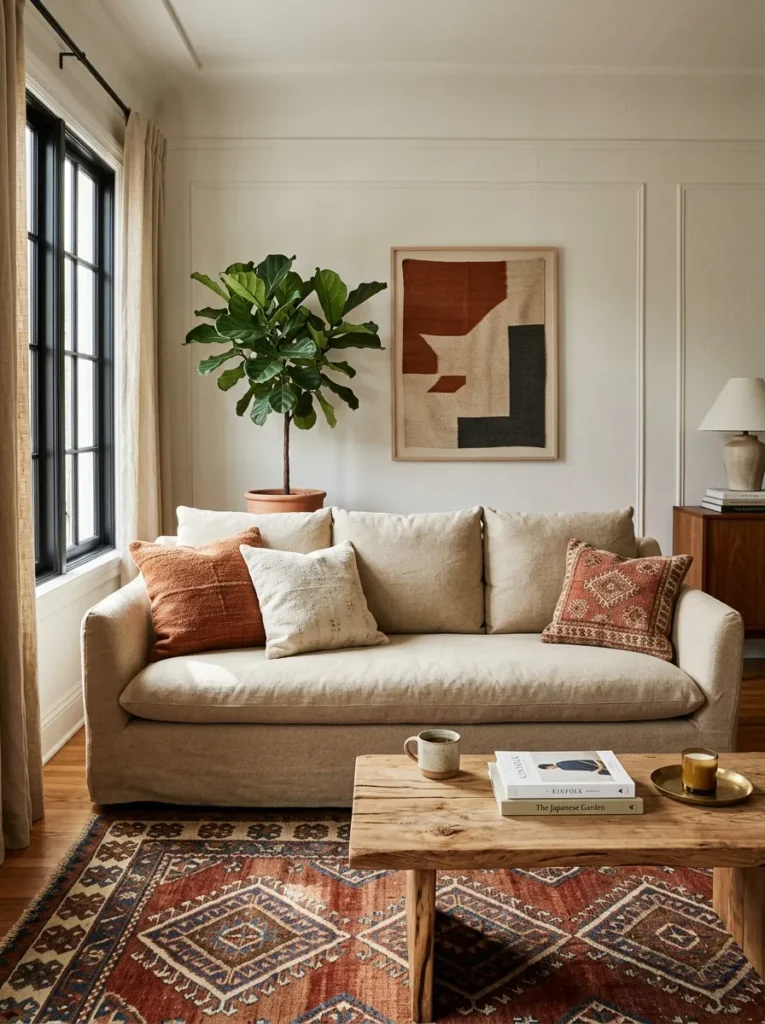
The sofa is the largest piece of furniture in the room and has an outsized effect on whether the boho styling around it looks cohesive or jarring. A sofa with low arms, a loose cushion back, and a fabric in linen, cotton canvas, or a natural woven blend suits the aesthetic well. A highly upholstered, tufted, or formal silhouette tends to conflict with the relaxed layering around it.
Color matters here. A sofa in oatmeal, warm grey, terracotta, or natural linen becomes the neutral backdrop that lets the rugs, pillows, and objects take the visual lead. A sofa in a dominant pattern competes with the layering and usually wins in the wrong way — it becomes the room’s one statement rather than part of a conversation. The exception is a genuine vintage piece with enough character to carry the role of the room’s most important object, which is a different strategy.
4. Build a Wall Gallery with Woven and Mixed-Media Elements
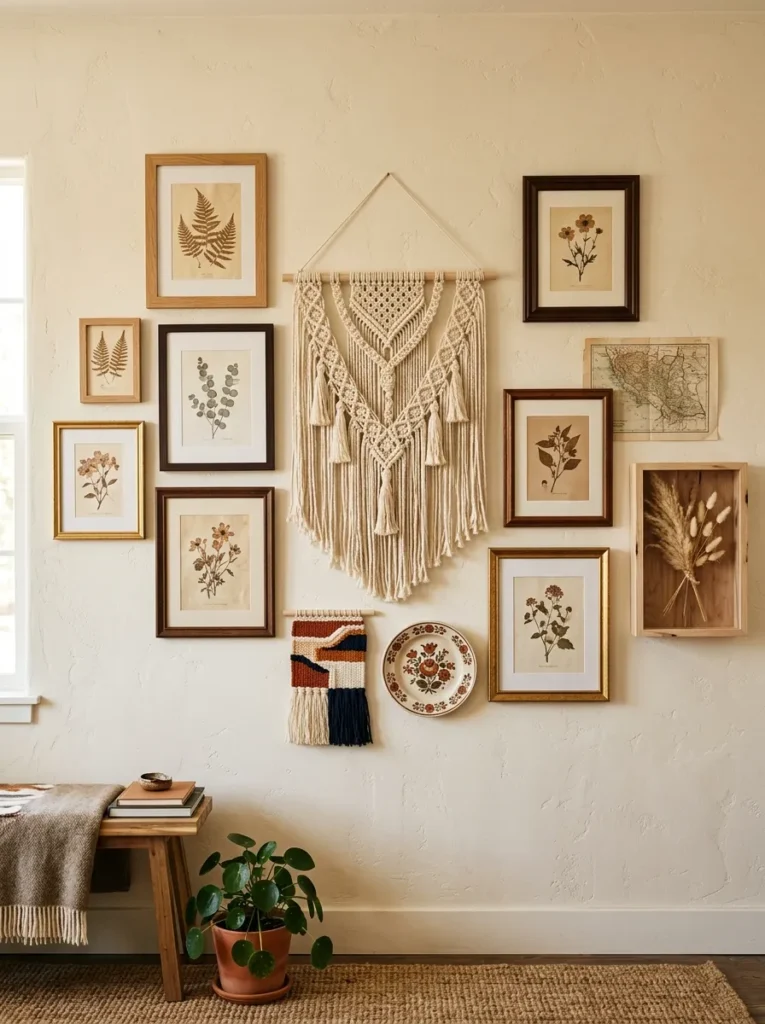
The bohemian gallery wall differs from a standard photo gallery in that it mixes media — a framed print or two, a macramé piece, a woven wall hanging, a small ceramic plate, and possibly a dried botanical. The variety of materials is what gives it a collected-over-time quality rather than a single-purchase set.
Scale is the most common mistake. A collection of small items on a large wall reads as timid rather than abundant. At least one piece should be genuinely large — a woven hanging or a substantial framed print — with smaller items clustered around it rather than evenly distributed. Keeping the arrangement to one wall and leaving the adjacent walls quieter prevents the gallery from fighting with everything else in the room.
5. Use Warm Terracotta as the Room’s Dominant Color Note
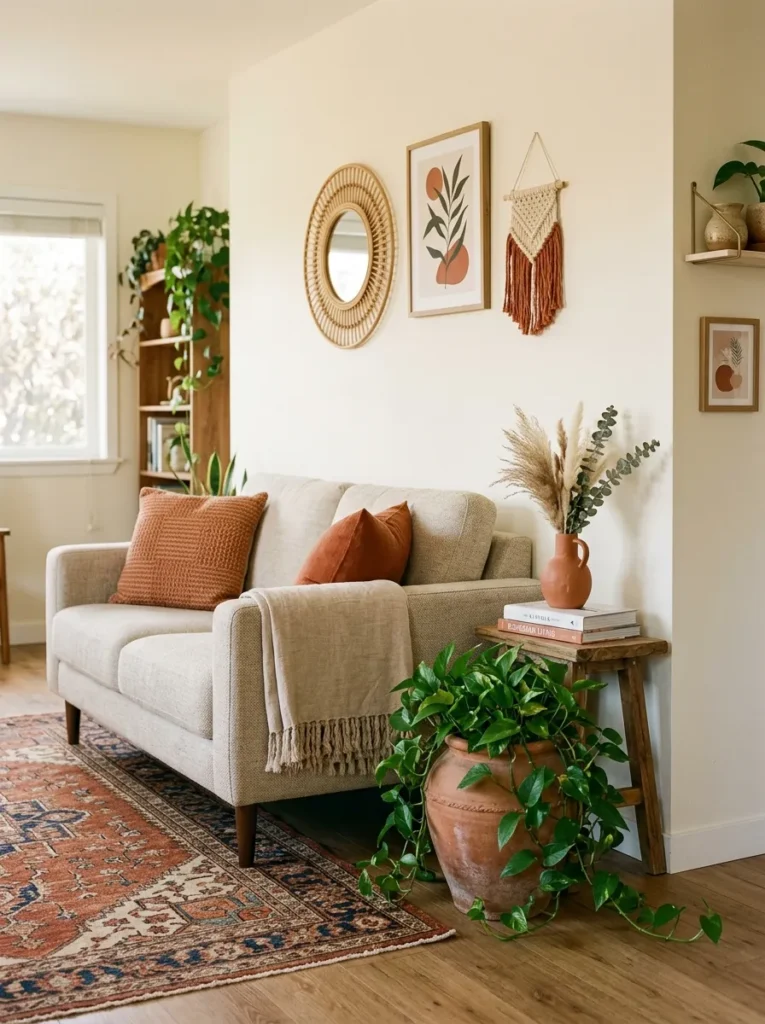
Terracotta isn’t the only color in a boho palette, but it is one of the most reliable anchors for the warm, sun-touched quality the aesthetic tends toward. It works on a throw pillow, a ceramic pot, a painted wall section, or as the main tone of the rug.
The practical consideration for most renters: rather than painting walls, introduce terracotta through textiles, ceramics, and one or two substantial pieces — a large vase, a cushion cover on the sofa, the rug color. A terracotta-toned throw pillow in a textured fabric (raw cotton, slubbed linen, or a woven stripe) next to a cream sofa carries the color note across the room without needing it everywhere. When terracotta appears in three or more places at different scales, the room reads as unified even if those pieces look nothing alike.
6. Introduce Rattan Furniture as the Second Seating Piece
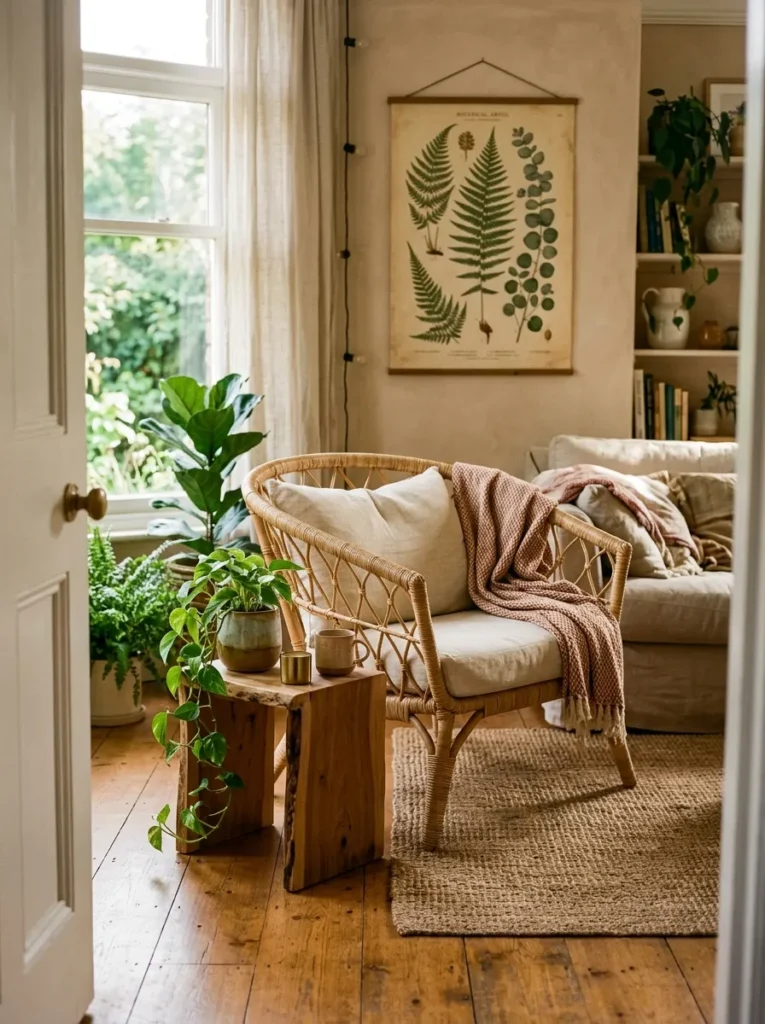
A rattan or wicker chair — a bucket shape, a papasan, or a simpler side chair with a woven seat — is one of the most visually effective additions to a boho living room because it introduces material contrast without color conflict. Rattan is warm-toned and natural, which means it sits comfortably against almost any earthy background.
The piece shouldn’t try to match the sofa in scale or proportion. A low rattan chair alongside a larger sofa creates visual variation in height that makes the seating area more interesting to look at. Position it at an angle rather than parallel to the sofa — slightly angled furniture in a seating arrangement looks more casual and less showroom. If floor space is limited, a rattan side table or a small rattan plant stand accomplishes much of the same material introduction at a fraction of the footprint.
7. Hang Floor-to-Ceiling Curtains in a Natural Linen Weave
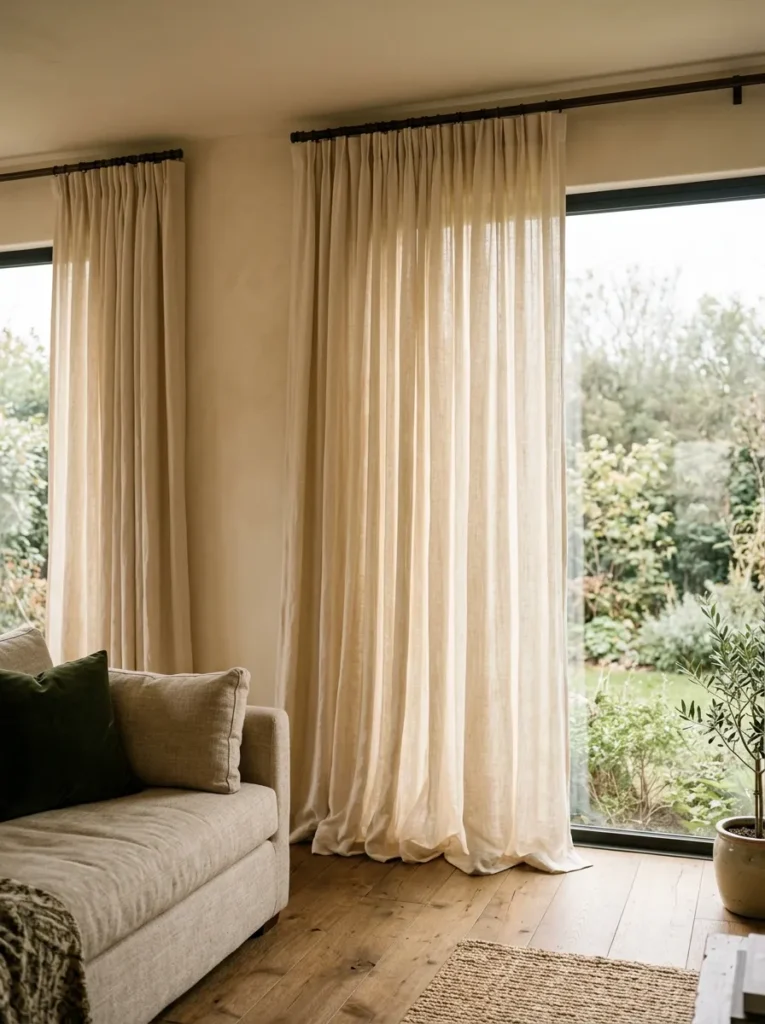
Curtains hung close to the ceiling — with the rod mounted 4–6 inches below the ceiling rather than just above the window frame — make the wall taller and the room feel more proportional regardless of the actual ceiling height. In a boho room, they also add a significant amount of soft material, which is essential to the layered quality the style depends on.
Natural linen, cotton gauze, or an unbleached muslin weave in cream, warm white, or off-white reads as appropriately relaxed and lets light through softly rather than blocking it. Avoid synthetic sheers that hang too stiffly or ripple unnaturally. For renters, tension rods inside window frames or removable adhesive curtain rod brackets are workable but typically limit the ceiling-height placement that makes the difference.
8. Create a Low Floor Seating Area with Oversized Cushions
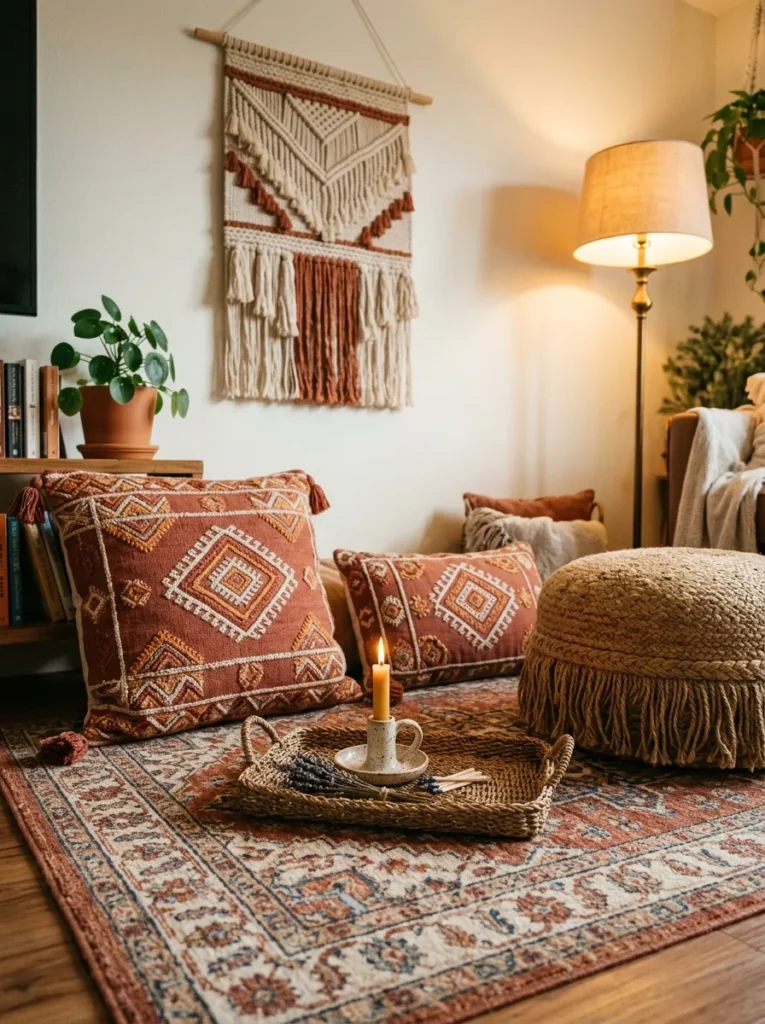
Floor cushions or a low pouf arrangement creates a secondary seating cluster that reinforces the boho room’s informal quality. Unlike adding more chairs, floor cushions can be stacked or moved completely out of the room when not in use, which makes them genuinely practical rather than purely aesthetic.
Bolster cushions, oversized square floor pillows in woven or embroidered fabric, and low leather or woven poufs all work. The combination that photographs best — and functions well — is two or three pieces at slightly different heights: one pouf, one flat cushion on top of a low tray or flat basket. Keep the floor area around them clear; overcrowding this corner defeats the relaxed purpose.
9. Choose Wood Furniture with Visible Grain and Imperfection
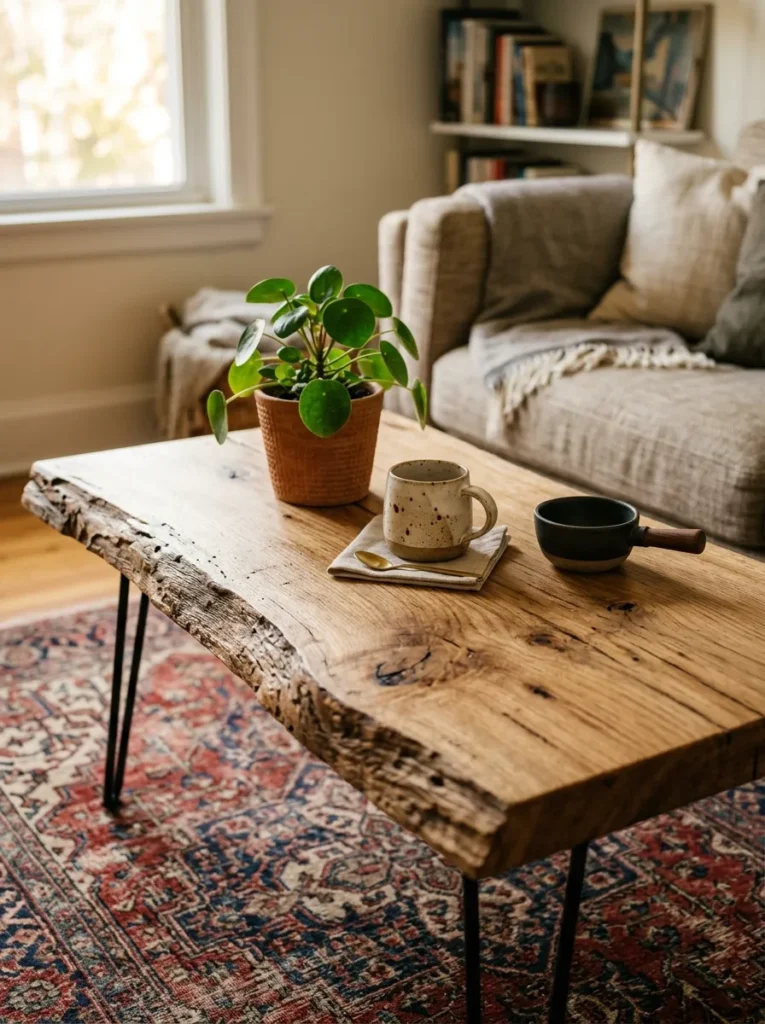
Highly polished or lacquered furniture conflicts with the boho aesthetic in a specific way: the perfection reads as deliberate and retail, which undermines the collected quality the style depends on. Coffee tables, side tables, and shelving in raw-edge wood, reclaimed timber, or any finish where the grain and natural variation remain visible reinforce the material language of rattan, woven textiles, and natural ceramics.
The wood tone should lean warm rather than grey or cool. Dark walnut, warm oak, mango wood, and acacia all work. A coffee table with a live edge and hairpin legs — an accessible option in most furniture markets — combines a natural material with a clean contemporary base, which is why it appears so consistently in boho rooms that avoid tipping into folkloric territory.
10. Use Pendant Lighting in Rattan or Woven Bamboo
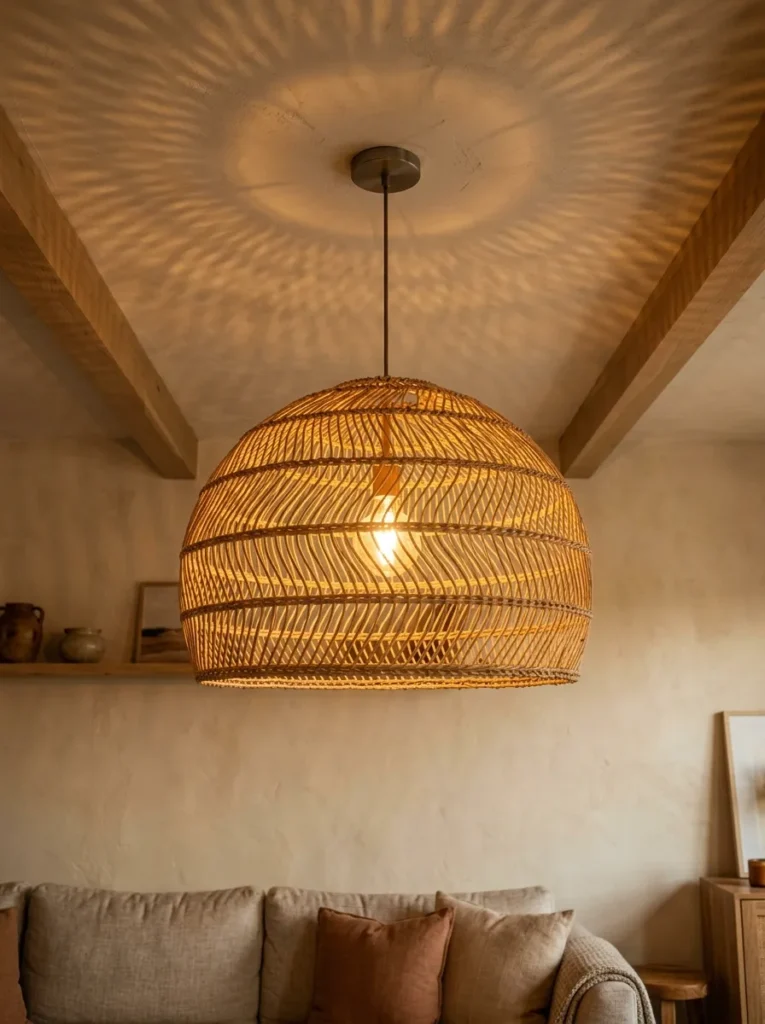
Overhead lighting in a boho living room does two things: it provides functional illumination and it acts as one of the room’s most visible structural objects. A rattan dome pendant or a woven bamboo shade introduces material warmth at ceiling height where textiles can’t reach.
The shade style affects how the light distributes. An open-weave rattan globe casts a dappled, warm pattern on the ceiling around it, which is atmospheric and pleasant in the evening. A closed-weave pendant directs more light downward. For a primary living room light source, the closed-weave version is more useful; the open-weave works better layered with floor lamps.
One note on scale: pendant shades are frequently sold in sizes that look right on screen but read as too small in an actual room. A living room pendant needs to be large enough to be a genuine statement — typically at least 16–20 inches in diameter, often more.
11. Layer Three Different Throw Pillow Textures on the Sofa
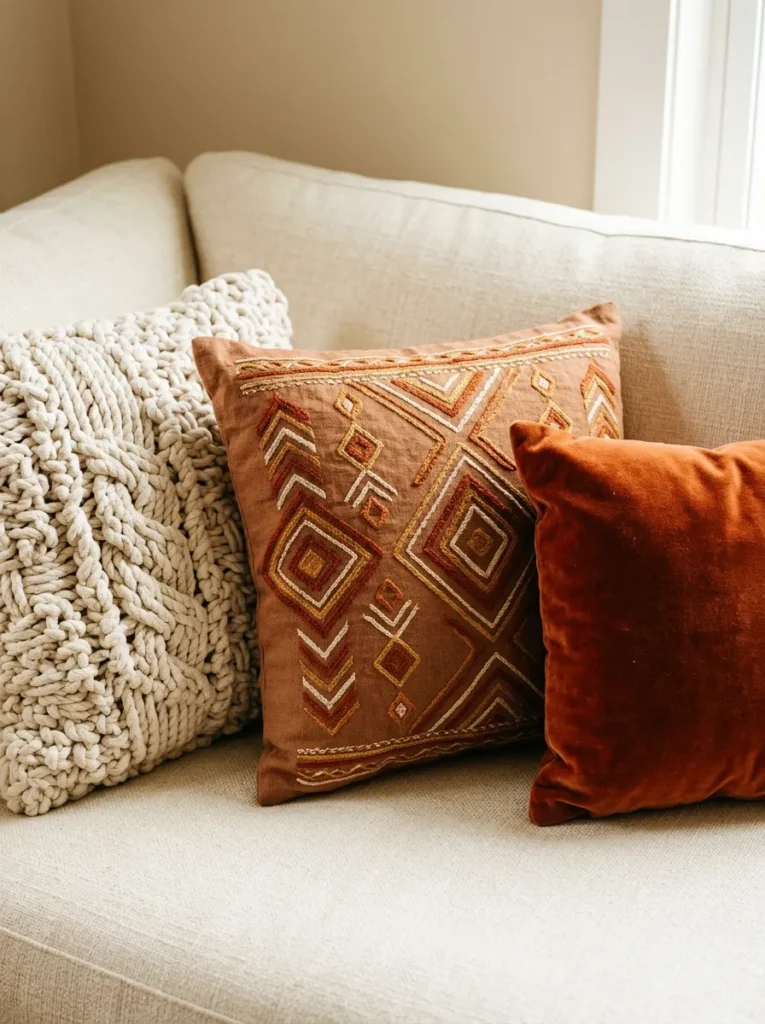
Pillow arrangements on a boho sofa fail when all the pillows are the same texture, even if the patterns and colors vary. The layering that reads as intentional involves genuine material differences: a chunky knotted cotton cushion next to a flat embroidered linen, next to a velvet in a warm jewel tone. Three textures is usually the right number for a standard two-seat or three-seat sofa. Four starts to compete.
Color coordination matters differently here than in more formal styles. The pillows don’t need to match, but they should share an undertone. A group of pillows in warm tones — rust, gold, burnt orange, cream, warm brown — will look cohesive even when the patterns are completely different. A group of pillows in which half are warm and half are cool-grey reads as visually unresolved.
12. Display a Collected Group of Ceramics in Earthy Tones
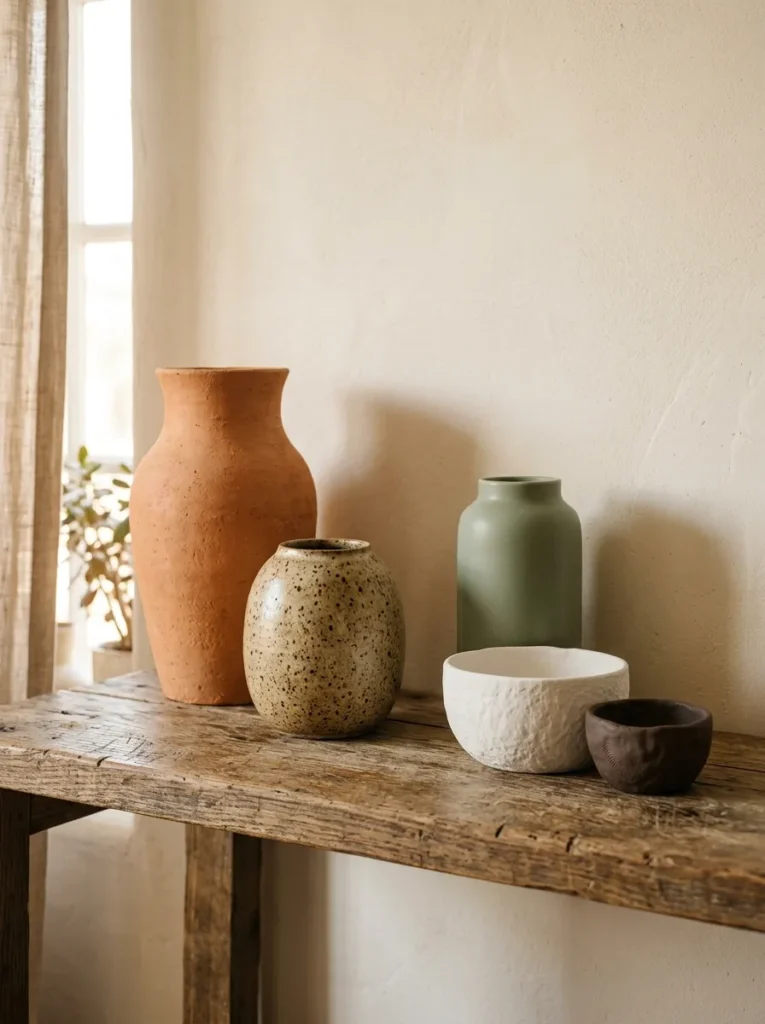
A cluster of ceramic vessels — varying in height, form, and surface finish — on a shelf, console, or coffee table is one of the easiest and most effective ways to introduce the gathered, worldly quality that boho rooms depend on. The key variable is grouping: a single beautiful ceramic vase looks like a purchase; six ceramics in related earthy tones, at varying heights, with visible differences in glazing and form, looks like a collection.
Heights should vary meaningfully — not three pieces all roughly 8 inches tall. Include at least one substantial piece (12 inches or taller), one mid-height, and one low wide form. Avoid lining them up in a row at equal spacing; cluster them with deliberate gaps. Raw unglazed terracotta, speckled stoneware, and matte white ceramics with textured surface finishes combine well without requiring them to be the same color.
13. Install Open Shelving for Displayed Storage
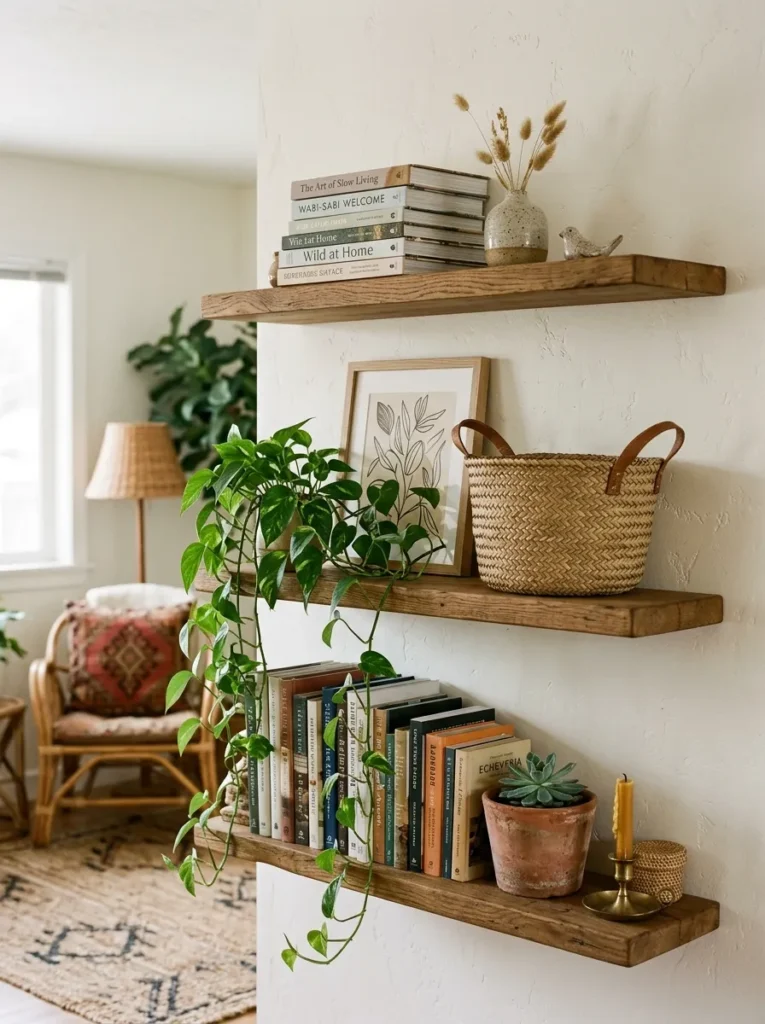
Open shelves in a boho living room earn their place by being genuinely functional and visually rich simultaneously. Unlike a closed cabinet, open shelving in this aesthetic invites display — books stacked horizontally mixed with vertical stacking, plants at shelf edge, small ceramics, woven baskets for concealed storage, and a few objects that mean something.
The styling challenge is avoiding the visual flatness that comes from too-uniform arrangement. Every shelf at the same density, same height items, same type of objects — this is the corporate office bookshelf problem. Vary density: one shelf with many items clustered together, one with only three or four pieces in more space. Natural variation in the rhythm of objects is what makes shelves look styled rather than stored.
14. Choose a Warm White or Limewash Finish on One Feature Wall
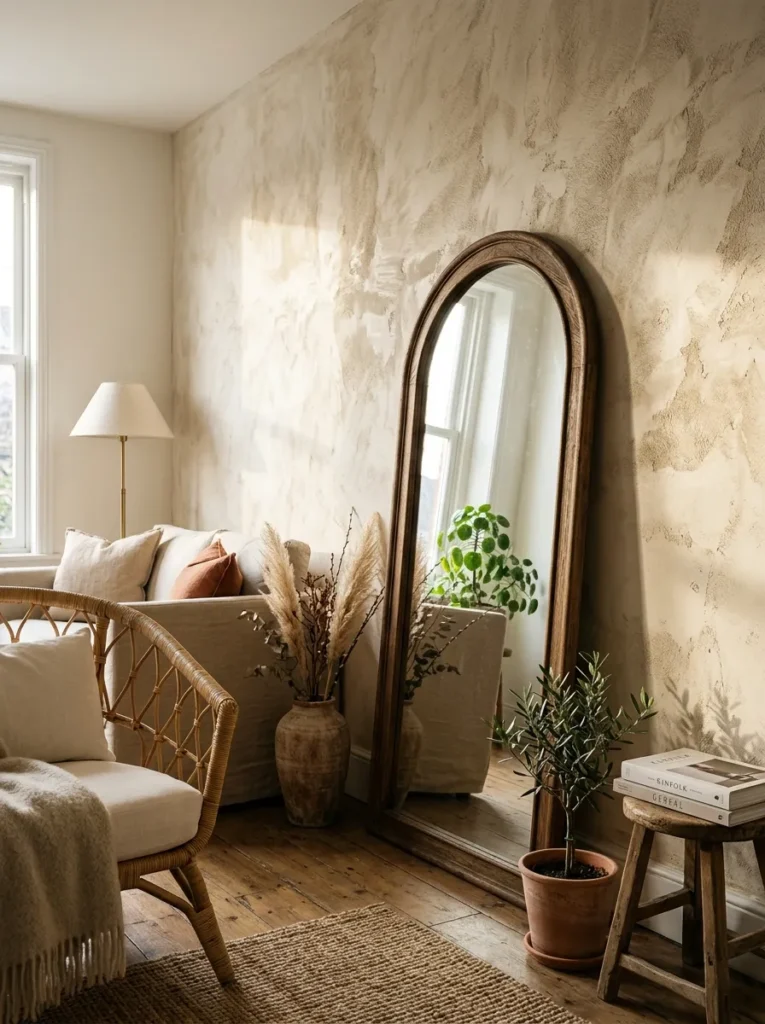
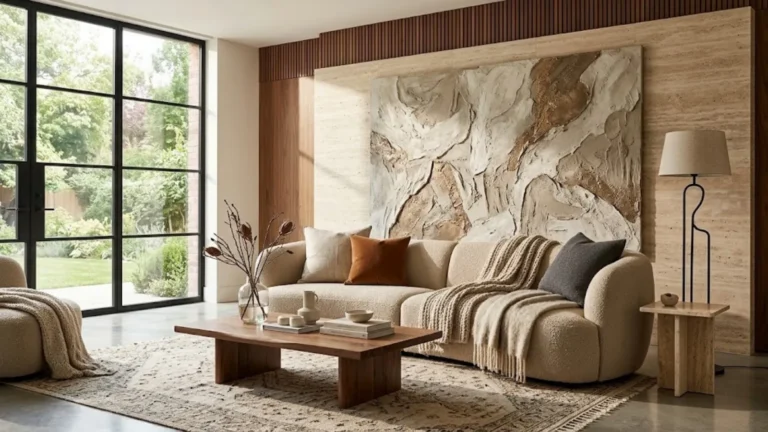
For renters or owners who want to change wall color without a full paint commitment, a limewash or Roman clay textured finish on one feature wall introduces warmth and surface interest that flat paint can’t achieve. The textured surface catches light differently at different times of day, which is part of why it photographs so well and why it suits the boho palette of warm, natural, imperfect surfaces.
Limewash is available in DIY kits in most home improvement markets. The technique involves layering and blending, so the first coat rarely looks finished — most people stop too early. The key is continuing to layer and distress while the paint is still workable. Rental-friendly note: limewash over a dark or existing bold color requires priming first; over white or off-white walls it goes on more directly.
15. Use an Arched Mirror to Add Form and Reflection
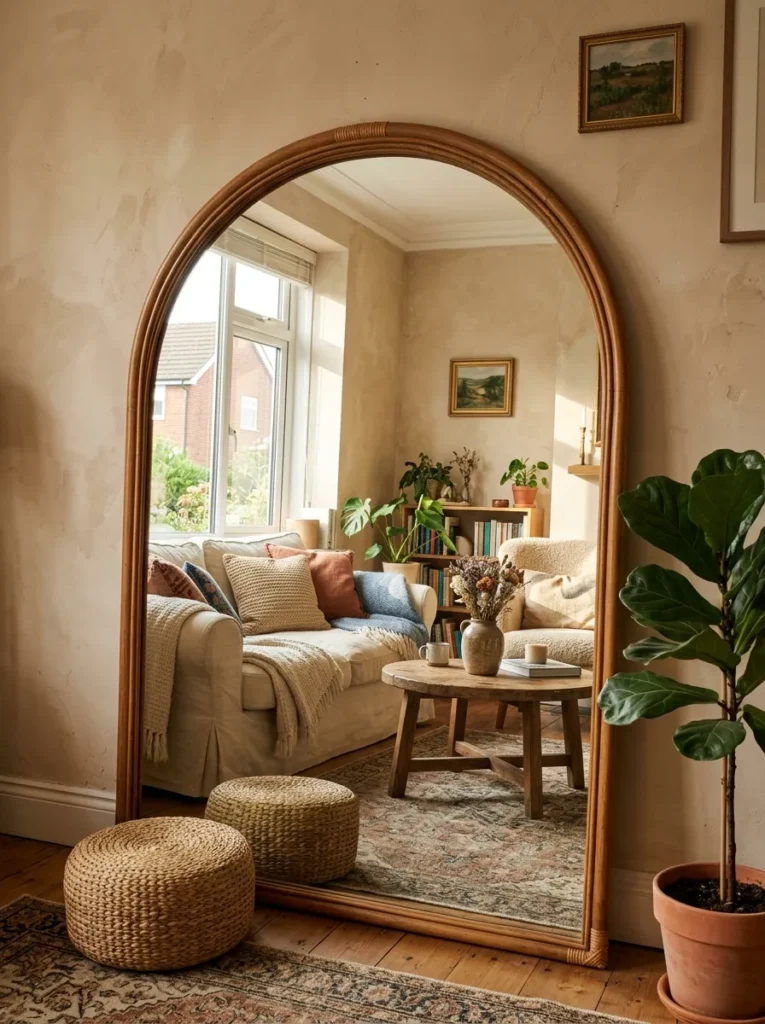
A large arched mirror — whether leaned against a wall or hung — introduces an architectural shape that contrasts with the organic materials everywhere else in a boho room. The arch echoes doorway and window forms, which is why it reads as structural rather than decorative.
Placement matters more than most people expect. A mirror positioned to reflect the room’s main light source — typically a window — multiplies the natural light in the room rather than reflecting a blank wall or cluttered corner. In a boho room, reflecting the textile layers, plants, and warm-toned materials around the seating area is also effective; it makes the room appear more abundant from certain angles. Frame material: rattan, carved wood, or unlacquered brass all suit the aesthetic and look better than chrome or glossy painted frames.
16. Drape a Woven Throw Across Furniture Rather Than Folding It
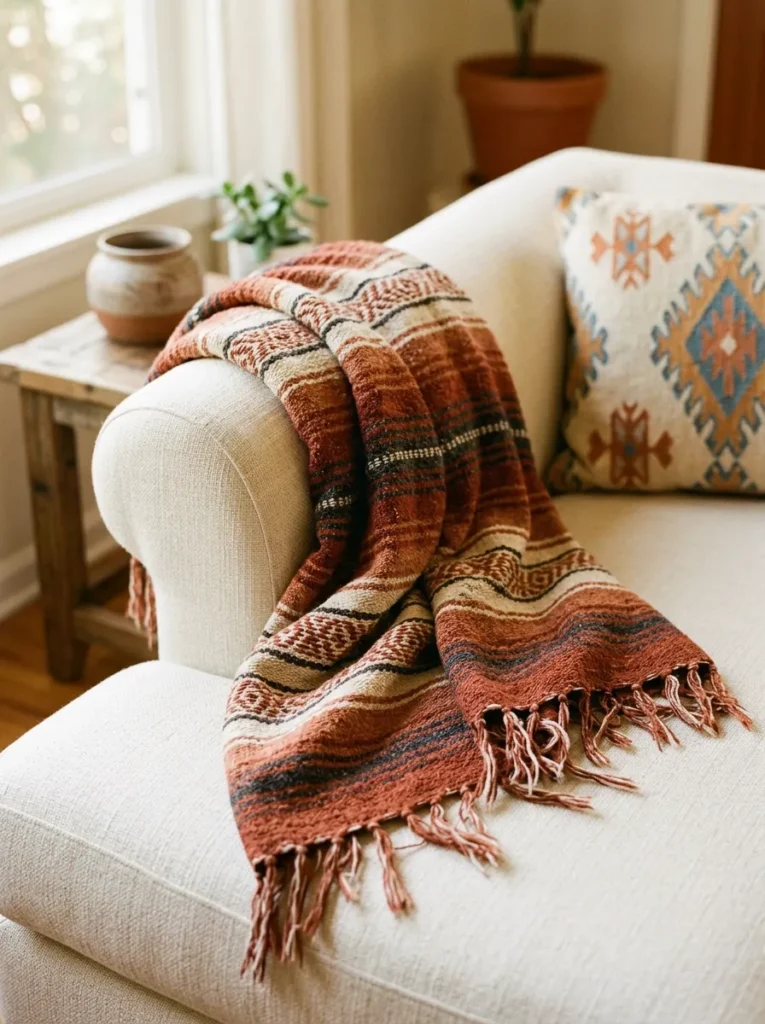
A throw folded neatly on the arm of a sofa is a styling choice. A throw draped loosely — off one sofa arm, or pulled half-onto a cushion as if it was used and set aside — is a lifestyle. The boho aesthetic relies heavily on the latter. The difference isn’t messiness; it’s the deliberate suggestion that the room is used and inhabited rather than preserved.
Woven cotton throws in a medium-weight stripe — typically called a Turkish towel style or a Mexican blanket pattern — are the functional backbone of this look. They’re washable, lay naturally rather than stiffly, and photograph well because the woven texture catches light. Knitted throws and cable-knit blankets work for a colder-weather atmosphere; in a room that’s predominantly warm-toned, the yarn texture can compete with too many other woven surfaces.
17. Bring in a Tall, Statement Indoor Plant
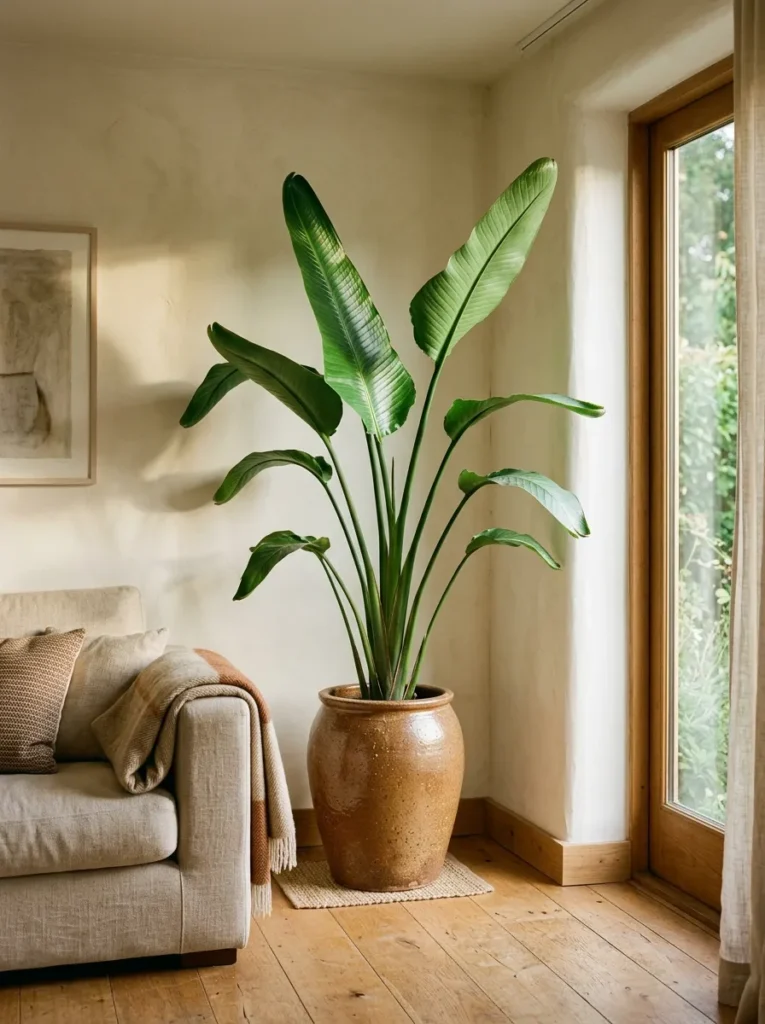
A large plant — not a small plant on a shelf, but a genuinely large one in a generous pot — changes a room’s proportion and adds the sense of being inside a living, growing environment that boho rooms cultivate. A fiddle leaf fig, a monstera, a large palm, or a bird of paradise at 4–6 feet of height occupies a vertical zone of the room that furniture can’t fill.
The pot matters as much as the plant. A terracotta pot in a large size (12 inches or wider), a woven seagrass planter, or a handmade ceramic vessel all suit the aesthetic. A white plastic nursery pot left visible does not. If direct care is a concern — many large tropicals require significant watering attention and specific light — a large-leaf plant that tolerates lower light and irregular care, like a Kentia palm or a large snake plant, is a more honest choice than an aspirational fiddle leaf fig.
18. Create a Reading or Meditation Corner with a Canopy
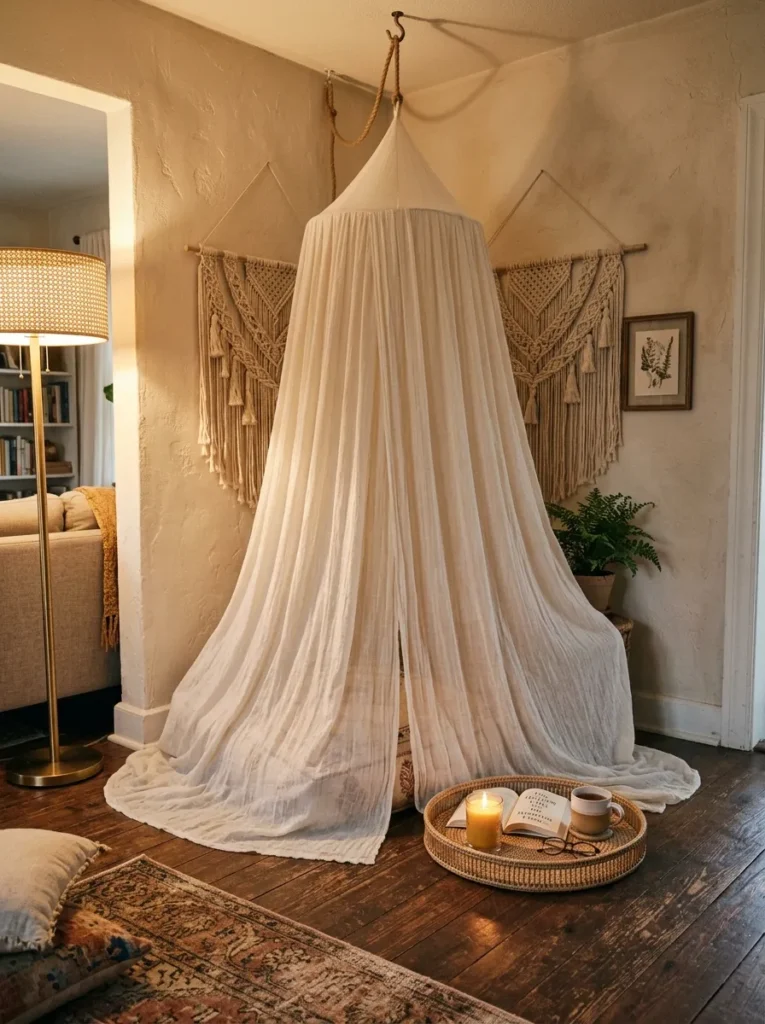
A sheer or linen canopy hung over a corner — from a ceiling hook, a curtain rod extension, or a four-post canopy frame — creates the most immersive and distinctly boho vignette available in a living room without furniture or construction. It converts a corner of the room into a contained space that reads as retreat rather than overflow.
The canopy should be loose, lightweight, and long enough to pool slightly on the floor or reach close to it. Gauze, cotton muslin, or a loosely woven linen all drape naturally. Position a low pouf or a single large floor cushion beneath, and the corner becomes a fully functional and visually strong secondary zone within the living room. In apartments with very low ceilings, a tension rod between adjacent walls at a height of 6–7 feet can serve as the mounting point.
19. Choose Warm Amber Lighting from Multiple Sources
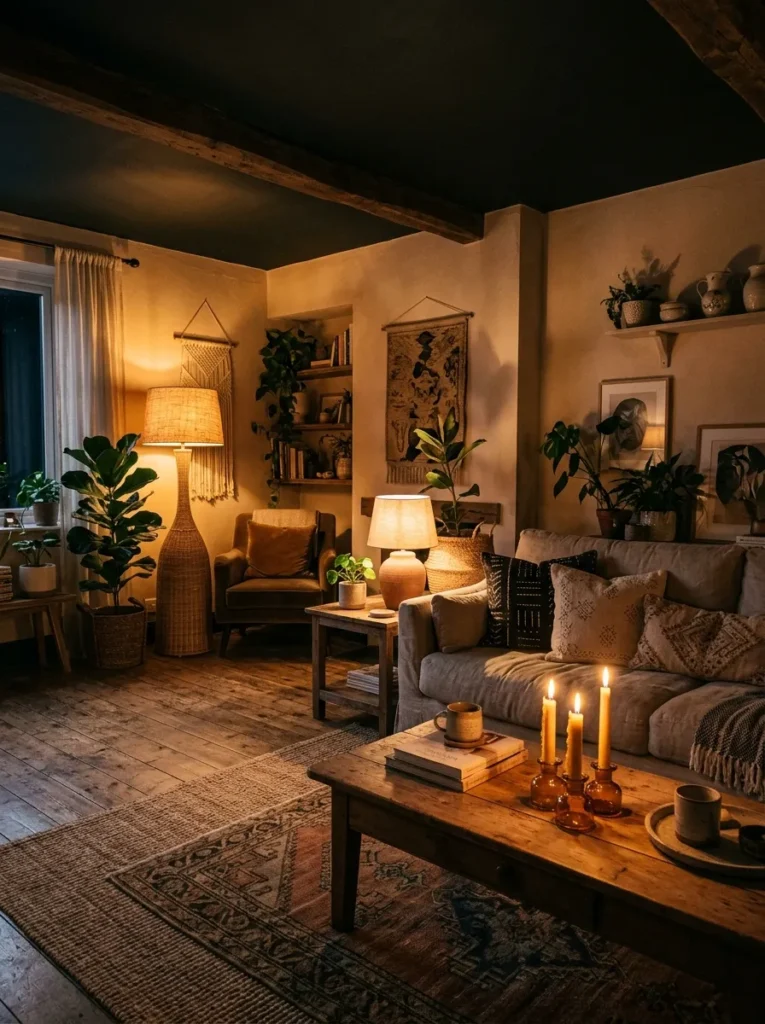
Overhead lighting alone in a boho living room creates the same flat, institutional quality it creates in any room. The layered lamp arrangement — a floor lamp, one or two table lamps, possibly candles — is what creates the characteristic warm amber glow that photographs well and feels genuinely comfortable to sit in.
The light source color temperature should be consistent and warm: 2700K or lower across all bulbs, not mixed warm and cool. Inconsistent color temperatures create a visually unsettled background that styling can’t fix. Lampshades in natural linen, rice paper, or woven jute tint the light as well as directing it, which adds another material to the room without adding an object that needs space.
20. Edit the Room by Removing Before Adding
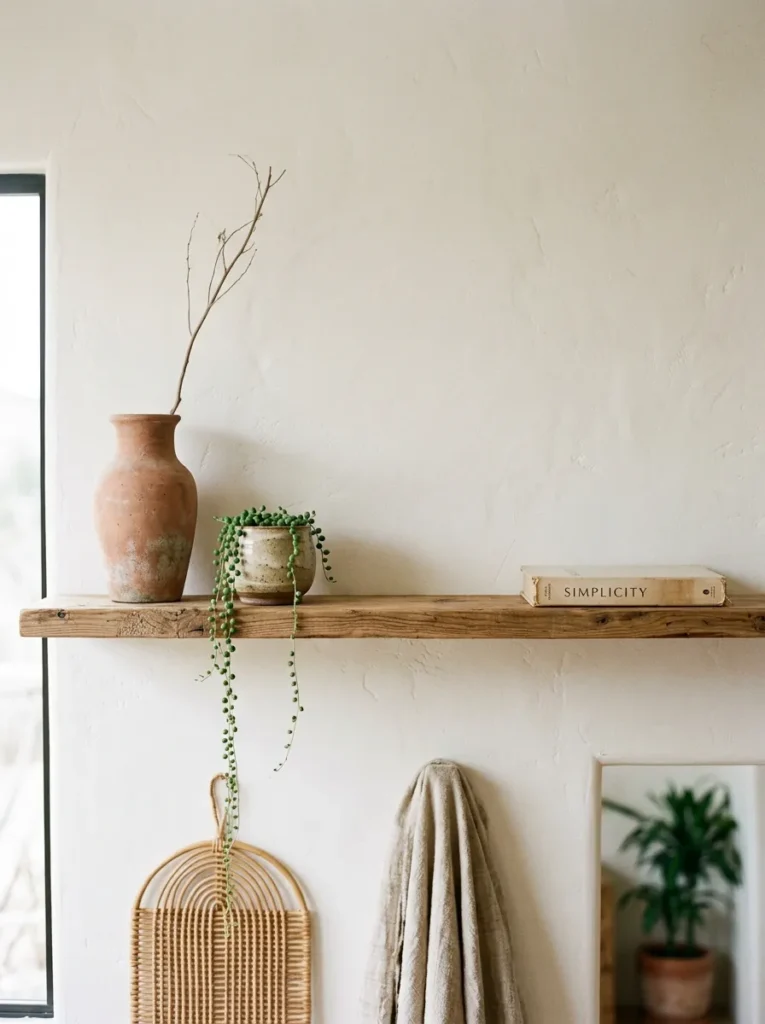
The most useful thing a boho living room guide can tell you is when to stop. The style invites accumulation, and the line between layered and overwhelmed can move without being noticed until a room that seemed incomplete three purchases ago is suddenly impossible to relax in.
A useful practice before buying anything else: remove everything from a surface or shelf and put back only what you would genuinely miss if it wasn’t there. The items you hesitated over are almost always items that can go. In a boho room, what remains after editing — a few ceramics, a plant, a meaningful object, a textile — usually looks more cohesive than what was there before the removal. Less material competing for attention means each piece reads more clearly.
How to Layer Boho Without Losing Cohesion
Boho living rooms that look chaotic usually have one thing in common: too many things from too many different directions. A kilim rug, a Scandinavian throw, a Japanese lantern, a coastal driftwood bowl, and a folk-art textile wall hanging can all be beautiful individually and incoherent together.
The way to layer without losing a visual thread is to choose two dominant material families and build around them. In most boho rooms, those families are woven natural fibers (rattan, jute, cotton, linen, macramé) and warm-toned organic objects (terracotta, raw ceramic, unfinished wood, dried botanicals). Almost any object in either category will sit comfortably next to any other. Objects that don’t belong to either family — glossy finishes, chrome hardware, cool greys, synthetic textiles — tend to interrupt the rhythm rather than add to it.
Color works the same way. Settling on a warm neutral base (cream, oatmeal, warm white) and one or two accent tones (terracotta, indigo, sage) means that adding a new object requires only that it fits within this palette. You don’t need to plan it with a mood board each time — the palette does the editing work for you.
Final Thoughts
Building a boho living room works better as a slow accumulation than a single purchase event. The style genuinely rewards objects with real provenance — a rug from a market, a ceramic from an independent maker, a textile brought back from somewhere — and those things tend to arrive over time rather than from a single shopping session.
If you’re starting from nothing, the most useful sequence is: anchor rug first, sofa second, then lighting, then textiles in layers. Decorative objects should come last, when the room’s structure is clear enough to show where they’ll actually be seen. The boho living room ideas in this article cover that entire range, from structural choices to finishing details.
Save the ideas that fit your room’s actual light, proportions, and daily use. Return to this guide when you’re adding the next layer — it’s more useful in stages than all at once.