19 Farmhouse Kitchen Ideas That Feel Cozy and Functional
Farmhouse kitchen ideas get flattened into a formula faster than almost any other style — shiplap, a single apron sink, a sign with a cursive word, repeat. That formula isn’t wrong exactly, but it’s incomplete, and it leaves out the specific, practical decisions that make a farmhouse kitchen feel genuinely lived-in rather than assembled from a catalog. This article covers nineteen of those decisions, the kind that consider how a kitchen actually gets used alongside how it looks in a photograph. Some require planning before a renovation starts. Others are weekend projects you can finish before dinner. All of them are built to hold up against years of actual cooking, not just a single styled shoot. If you want a farmhouse kitchen that still feels right a decade from now, these are the specifics to start with.
1. Choose a Fireclay Farmhouse Sink Over Cast Iron
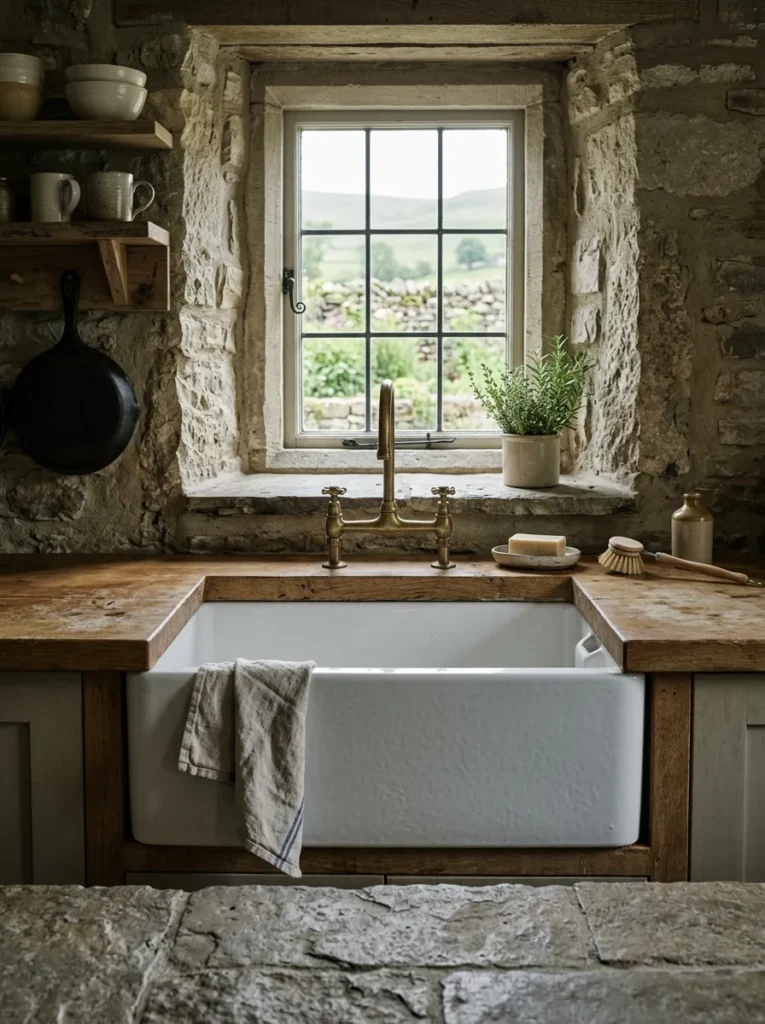
Cast iron sinks chip easily at the edges and that chipped enamel reveals a stark black underlayer, which looks far worse with age than most people expect when they buy one. Fireclay is fired at extremely high temperatures into a single dense material all the way through, so even minor wear shows as a soft matte patina rather than an ugly chip. This matters most in genuinely heavy-use farmhouse kitchens, where the sink takes daily impact from pots and cast iron pans.
2. Install Reclaimed Beams Across an Otherwise Flat Ceiling
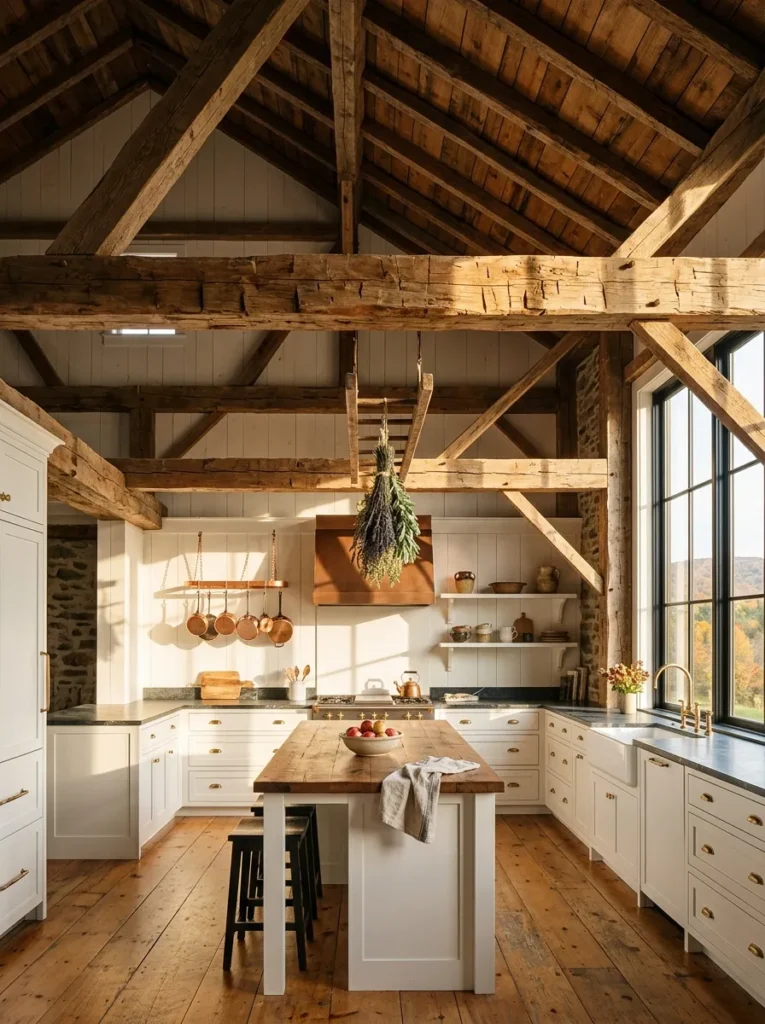
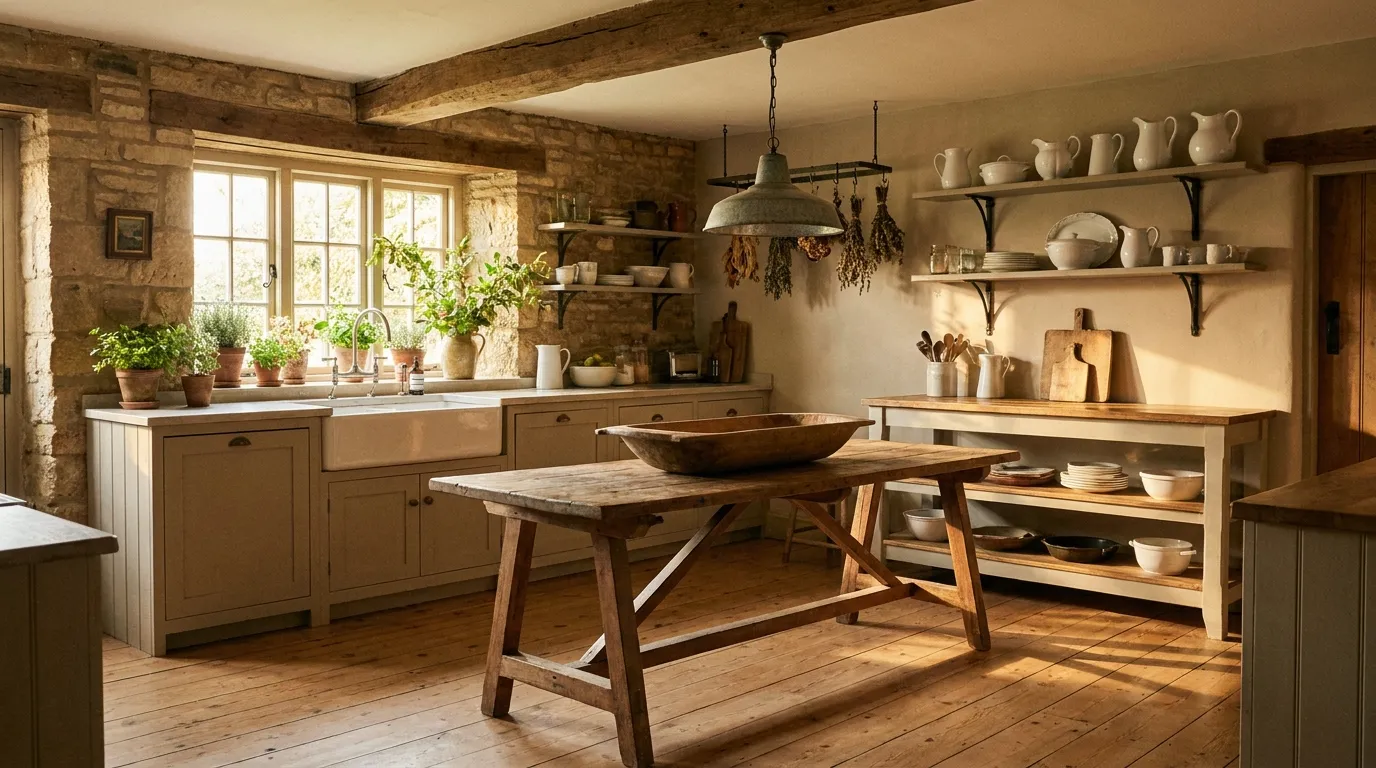
A flat ceiling in a farmhouse kitchen is the single most common missed opportunity in the entire room, since the ceiling plane is often the largest unbroken surface available and gets the least design attention. Reclaimed beams with genuine saw marks and uneven coloring add architectural texture overhead that no amount of cabinetry or styling below can replicate. This works best in kitchens with ceilings at least 270 centimeters high, where the beams have enough vertical room to read as a feature rather than a hazard.
3. Use Open Shelving Made From a Single Reclaimed Plank
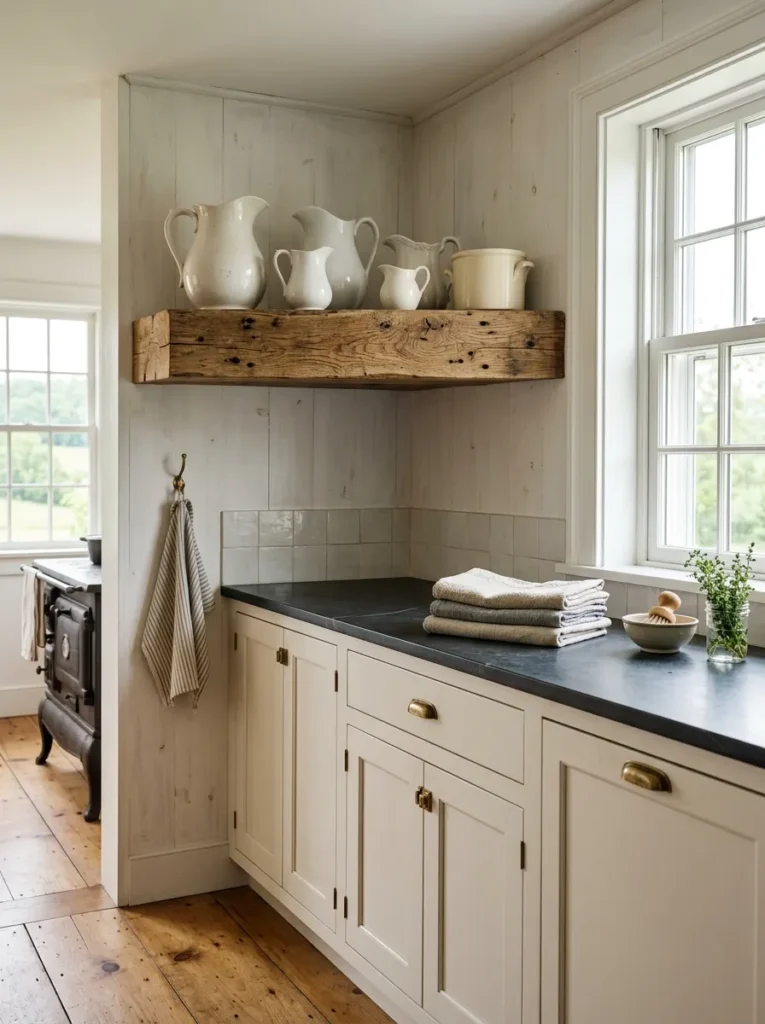
A milled, uniform shelf board looks fine but says nothing about the room it’s in, while a single reclaimed plank with visible old nail holes and natural grain variation carries history the moment it’s installed. The imperfections aren’t a compromise, they’re the entire reason the shelf works in a farmhouse setting. This works best with a thicker plank, at least 4 centimeters, since a thin board undercuts the substantial, weathered quality the material is meant to provide.
4. Add a Plate Rack Above the Sink Instead of a Cabinet Door
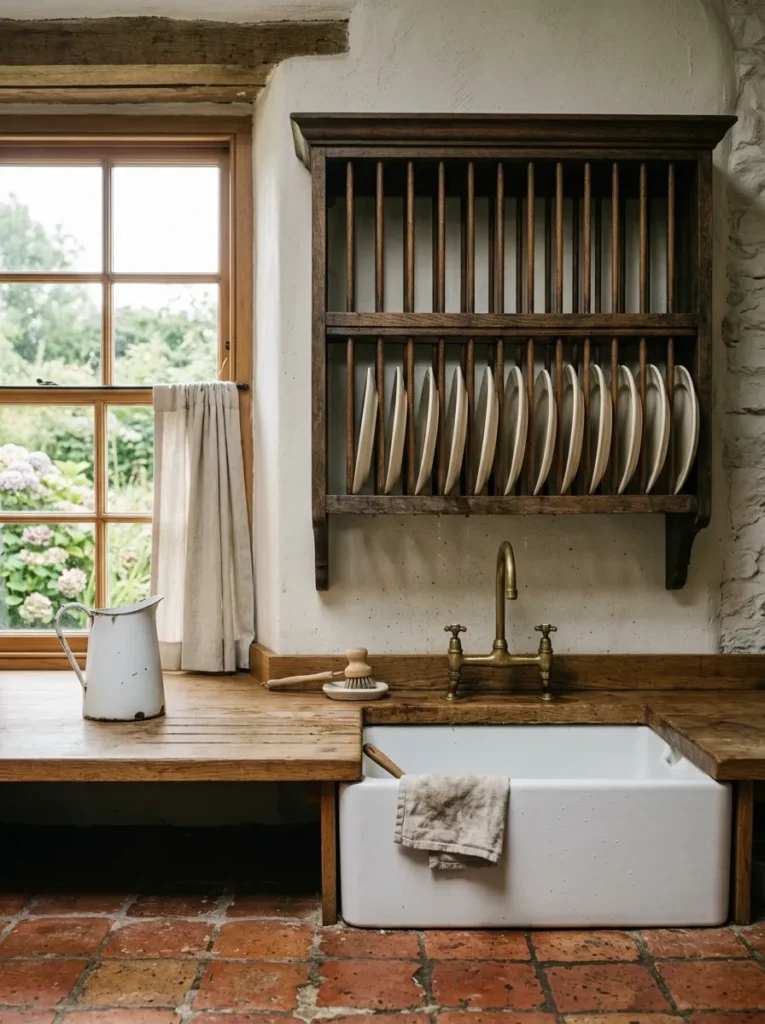
A plate rack mounted above the sink does something a closed cabinet never can: it lets dishes air-dry in place without a separate drying rack cluttering the counter, while doubling as genuinely attractive open storage. This is one of the few farmhouse details that’s both more practical and more visually interesting than the modern alternative it replaces. This works best directly above the sink rather than elsewhere in the kitchen, since the draining function is what makes it worth the wall space.
5. Choose a Cooking Range in Cream Enamel Instead of Stainless Steel
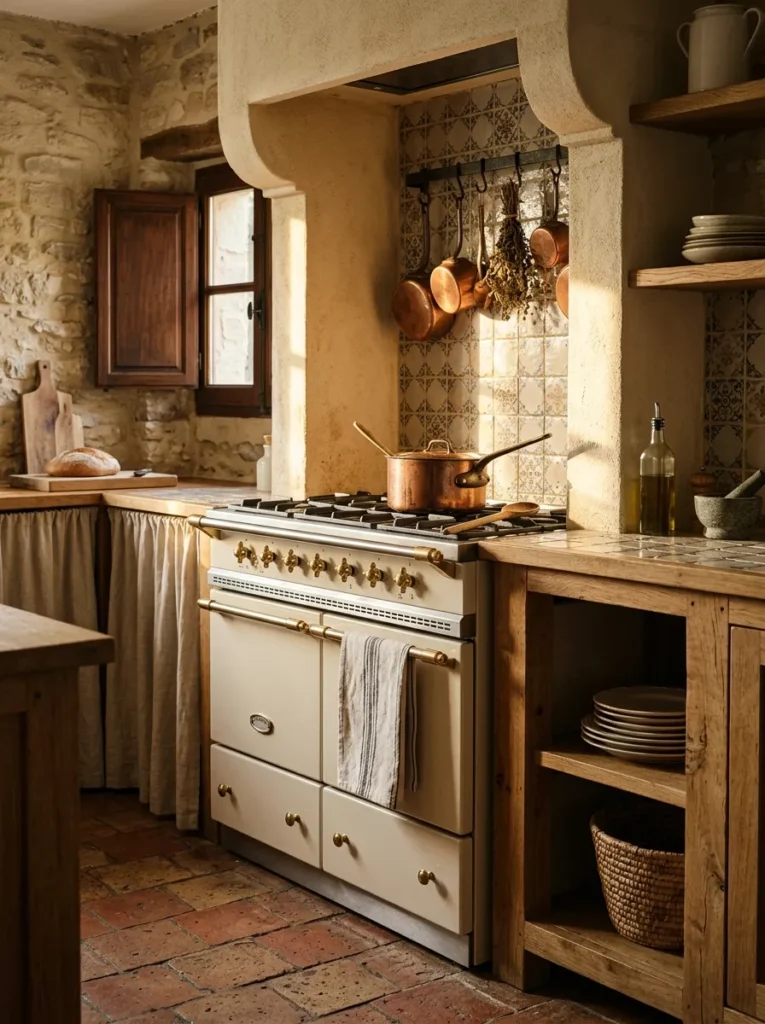
Stainless steel reads as commercial and slightly cold regardless of the kitchen style surrounding it, which works against the entire point of a farmhouse kitchen’s warmth. A cream or ivory enamel range with brass fittings reads as a piece of furniture rather than an appliance, and its rounded edges echo the soft, handmade quality farmhouse style is built around. This works best as the kitchen’s clear focal point, ideally set within a tiled alcove or surrounded by open shelving rather than flush cabinetry on both sides.
6. Use a Galvanized Metal Pendant Instead of a Glass or Ceramic One
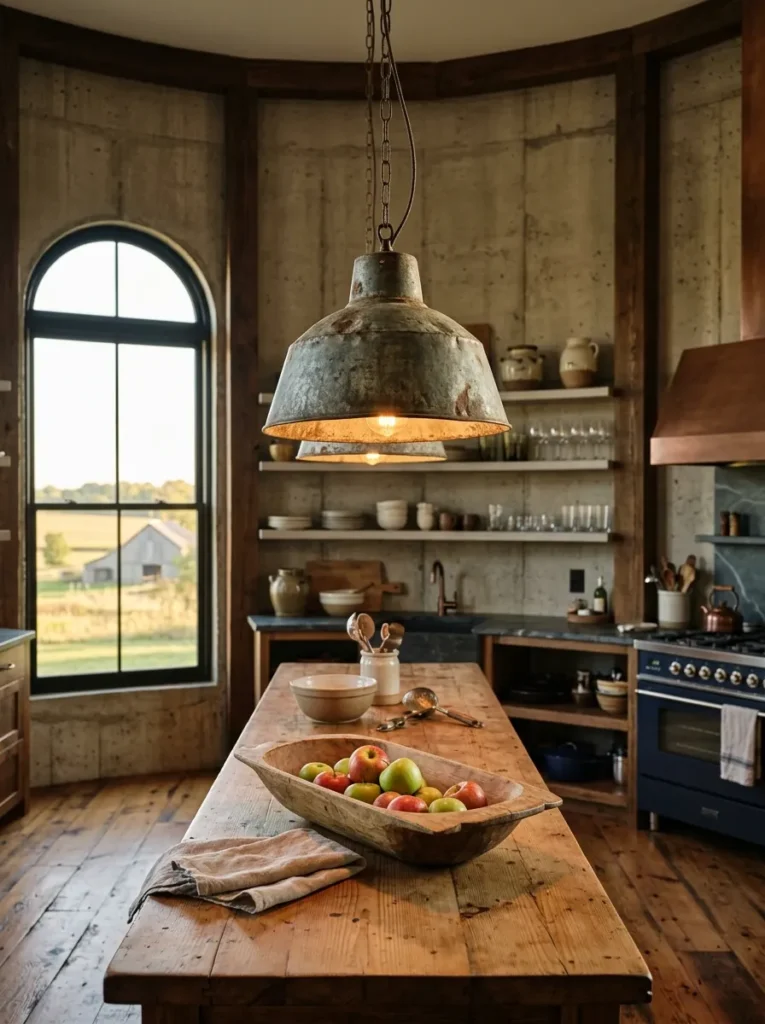
Glass and ceramic pendants are common across nearly every kitchen style, which means they do almost nothing to signal farmhouse specifically. Galvanized metal, with its slightly uneven, oxidized surface, reads immediately as utilitarian and agricultural in a way that glass simply can’t, and it photographs with far more textural interest under warm light. This works best paired with warm bulb temperatures around 2400K, since cool white light makes galvanized metal look industrial rather than rustic.
7. Add a Vintage Scale or Weighing Tool as a Counter Object
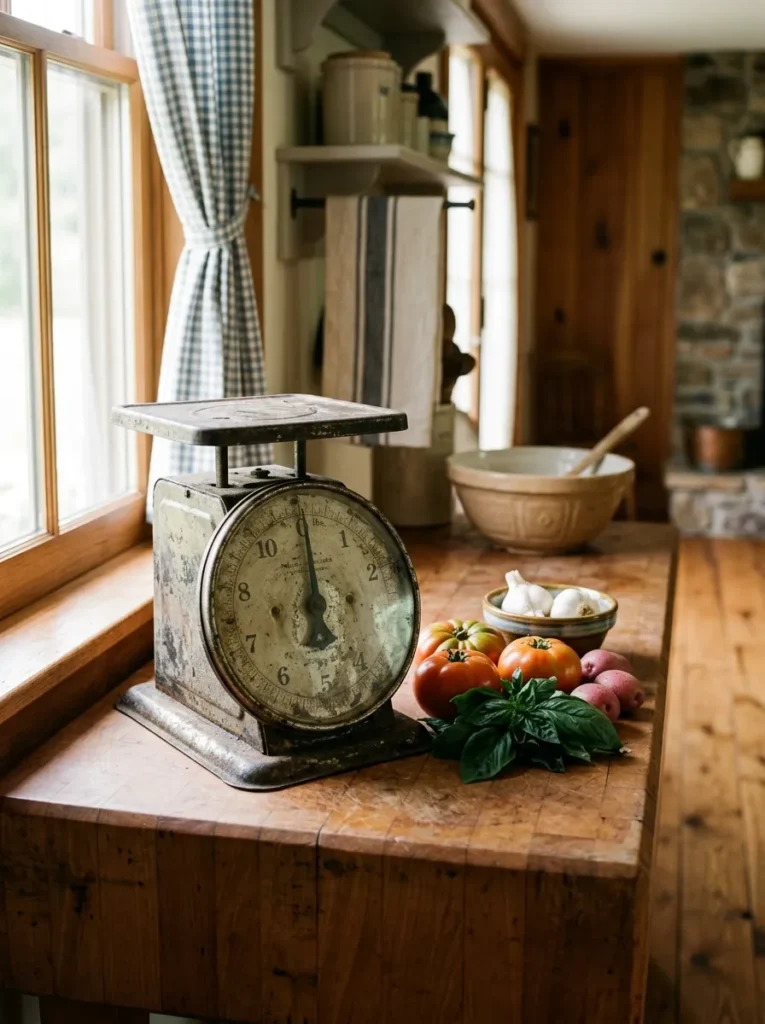
A vintage scale left out as a functional object rather than packed away as decoration does real visual work precisely because it looks used rather than purchased to look used. The genuine tarnish and wear can’t be faked convincingly, which is exactly why it carries more weight than a reproduction version bought new. This works best displayed alone rather than grouped with other vintage objects, since a single weathered piece reads as more deliberate than a cluttered collection.
8. Choose a Trestle Table Instead of a Standard Pedestal Kitchen Table
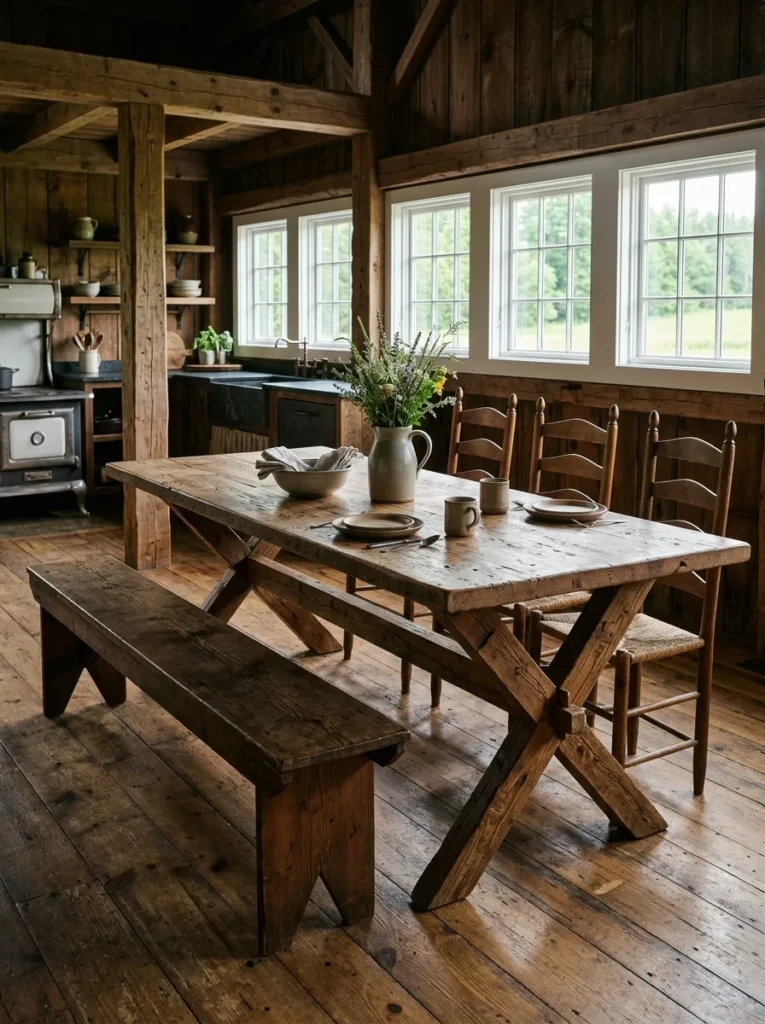
A pedestal table base disappears visually the moment chairs are pulled in around it, while a trestle table’s exposed cross-bracing remains visible and architecturally interesting even with a full table of chairs in place. The joinery itself becomes part of the room’s character rather than just a structural necessity hidden beneath a tablecloth. This works best in genuinely farmhouse-style kitchens with enough floor length to accommodate the trestle’s typically longer overall footprint compared to a pedestal base.
9. Use a Deep Farmhouse Window Above the Sink With a Plant Ledge
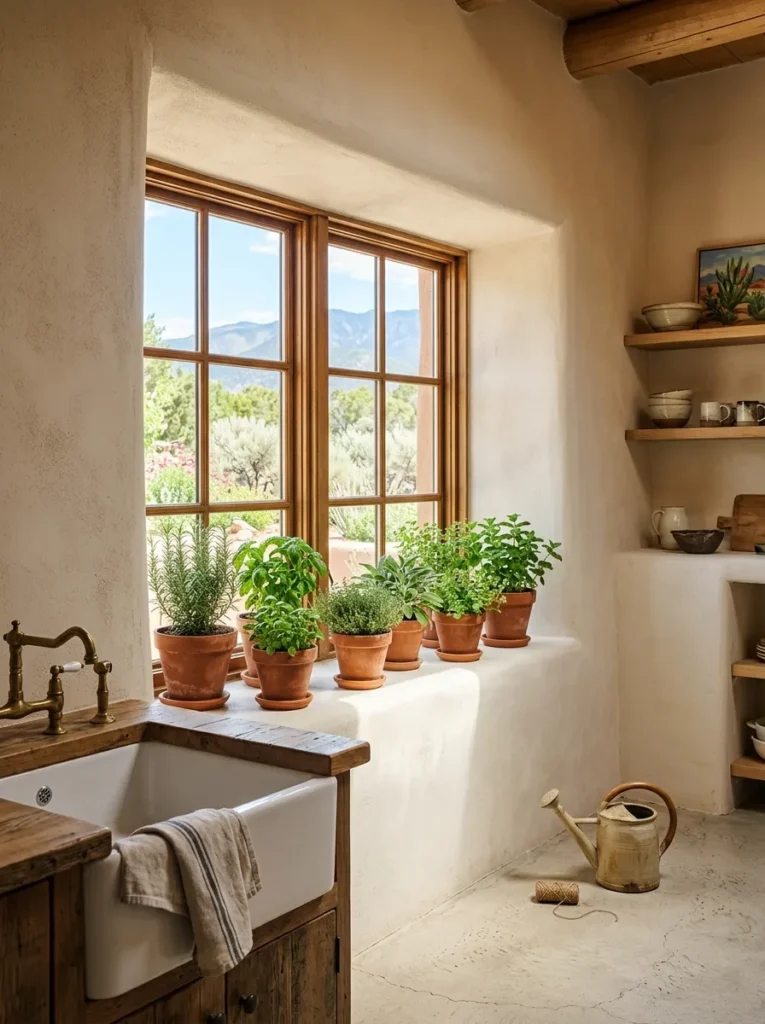
A standard window above the sink offers no real surface for anything beyond a single small object balanced precariously on the sill. A genuinely deep-set window, the kind found in older or thick-walled farmhouse construction, creates an actual ledge wide enough for a proper herb garden within arm’s reach of where cooking happens. This works best in homes with masonry or adobe construction, where wall thickness naturally creates the deep sill; in standard frame construction, a custom-built deep box surround can achieve a similar effect.
10. Add a Hanging Pot Rail Mounted to the Wall Rather Than the Ceiling
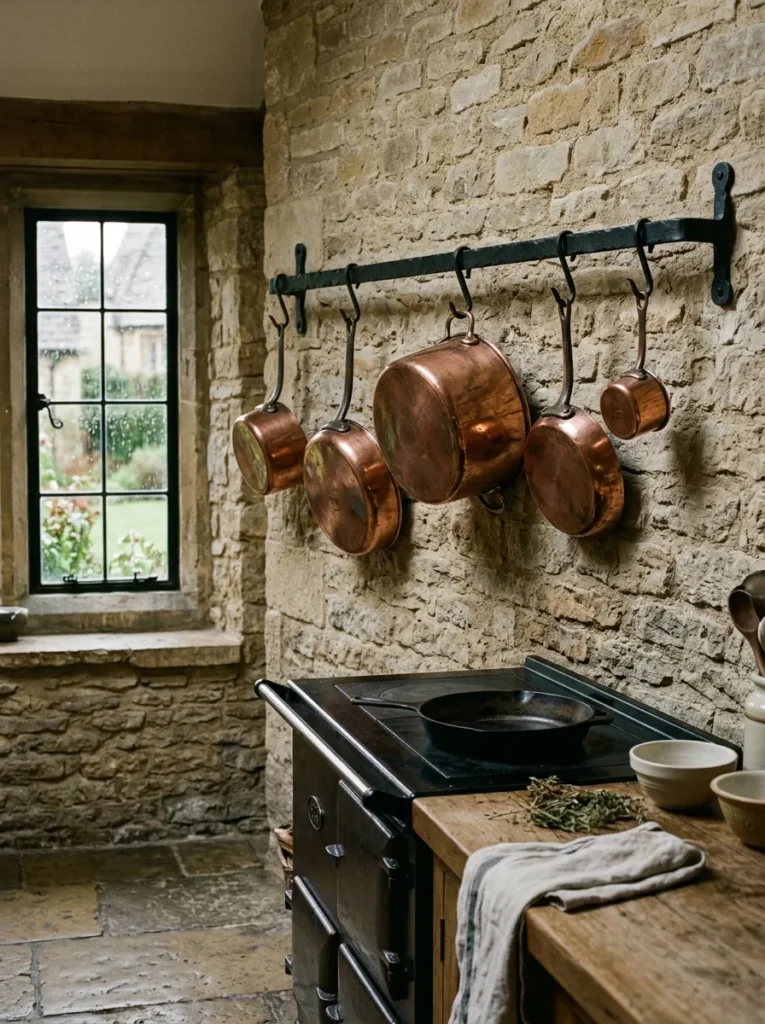
A ceiling-mounted pot rack requires sufficient ceiling height and reads as a more dramatic, space-consuming commitment, while a wall-mounted rail beside the range achieves the same easy-access storage in a fraction of the visual footprint. Positioning it directly beside the cooking surface also means the most-used pans are genuinely within arm’s reach rather than purely decorative. This works best in kitchens with at least 90 centimeters of wall space beside the range, since a crowded rail with too little spacing between pans looks cluttered rather than curated.
11. Choose a Salvaged Door as a Pantry Entrance
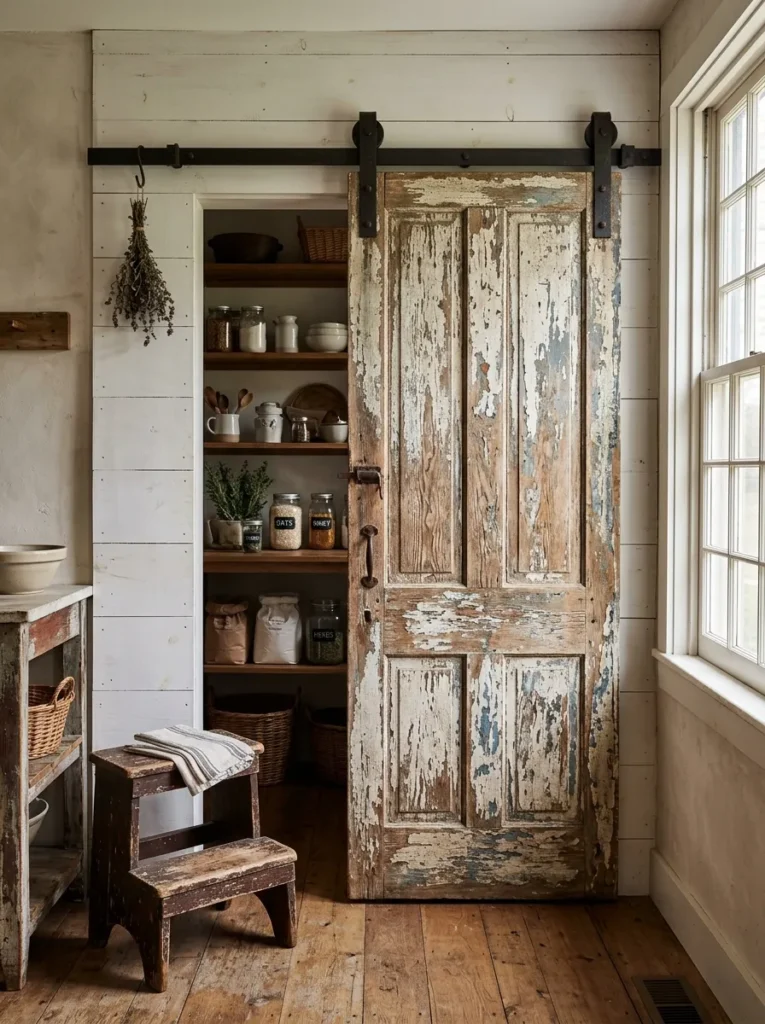
A new pantry door, however well chosen, will always look like it was bought for the room rather than belonging to it, while a genuinely salvaged door with real chipped paint and wear carries a sense of history no amount of distressing technique can fully replicate. The imperfection is the entire point; a salvaged door sanded smooth and repainted loses most of what made it worth sourcing in the first place. This works best on an exposed sliding track rather than a hinged frame, since the visible hardware adds to the utilitarian, working-building character.
12. Use a Soapstone Countertop for a Softer, Matte Alternative to Granite
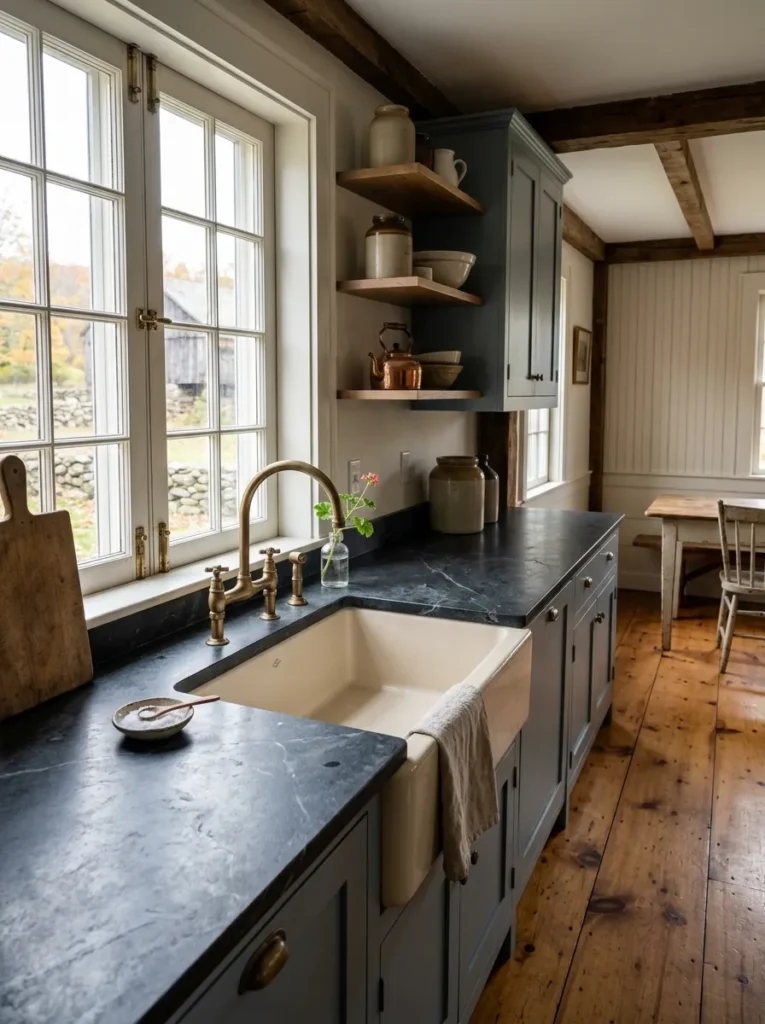
Granite’s high polish and busy speckled pattern often clash with the simpler, handmade aesthetic farmhouse kitchens are built around. Soapstone’s naturally matte, almost velvety surface and subtle, quiet veining fit that aesthetic far more comfortably, and the stone actually develops a deeper patina with age and oiling rather than just showing wear. This works best for cooks who don’t mind the material’s softness, since soapstone scratches more easily than granite, though many find the scratches blend into the stone’s natural variation rather than standing out.
13. Add a Built-In Bread Box Drawer Beneath the Counter
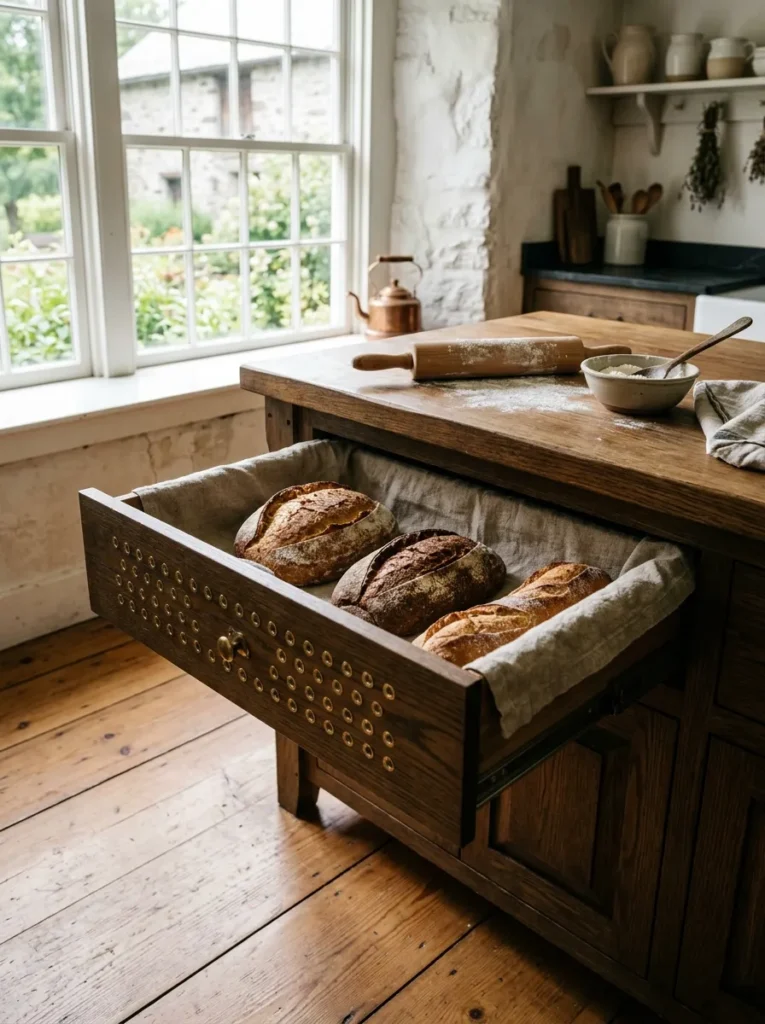
A countertop bread box takes up valuable surface space and rarely matches the rest of the kitchen’s hardware or finish. A built-in drawer with proper ventilation holes solves both problems, keeping bread fresh longer than a sealed container while disappearing into the cabinetry when not in use. This is best planned during a renovation, since retrofitting ventilation into an existing drawer front requires removing and re-routing the panel rather than simply installing new hardware.
14. Choose a Checkerboard Tile Floor in Muted Tones Instead of Stark Black and White
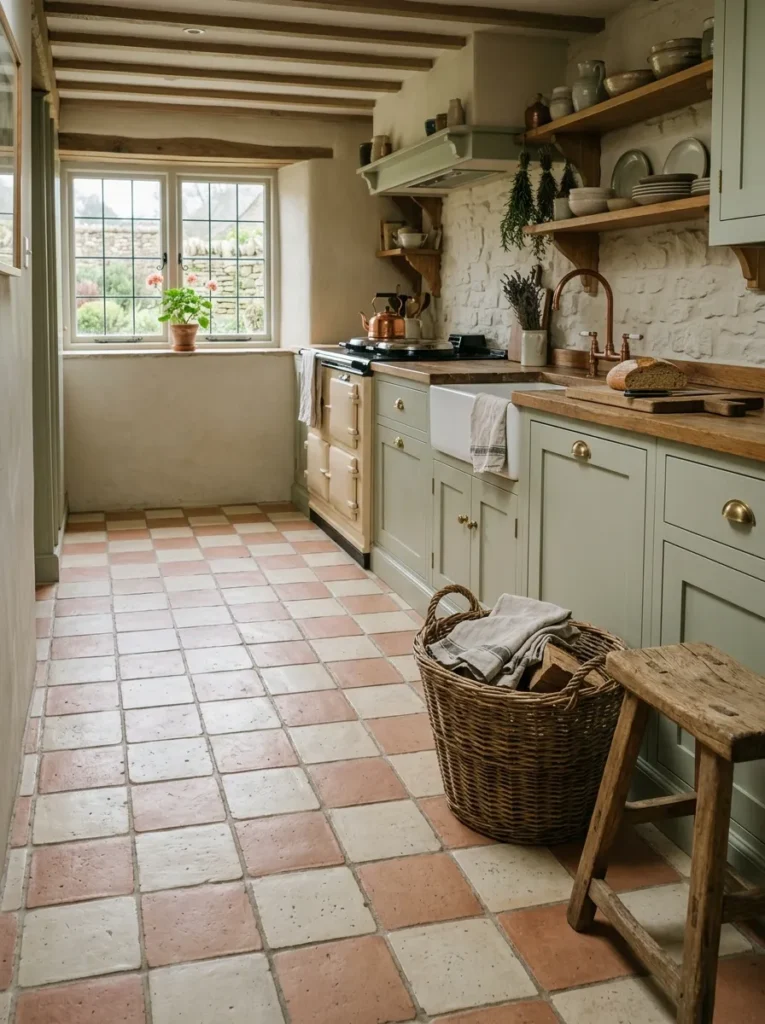
Stark black-and-white checkerboard reads as graphic and slightly retro-diner rather than farmhouse, even though the pattern itself has genuine farmhouse roots. Softening the contrast to cream and clay, or cream and soft grey, keeps the pattern’s visual energy while shifting the mood toward warm and aged rather than bold and modern. This works best in kitchens with otherwise simple, unpatterned cabinetry, since a busy floor pattern paired with busy cabinetry competes rather than complements.
15. Use a Copper Farmhouse Sink Instead of Fireclay or Cast Iron
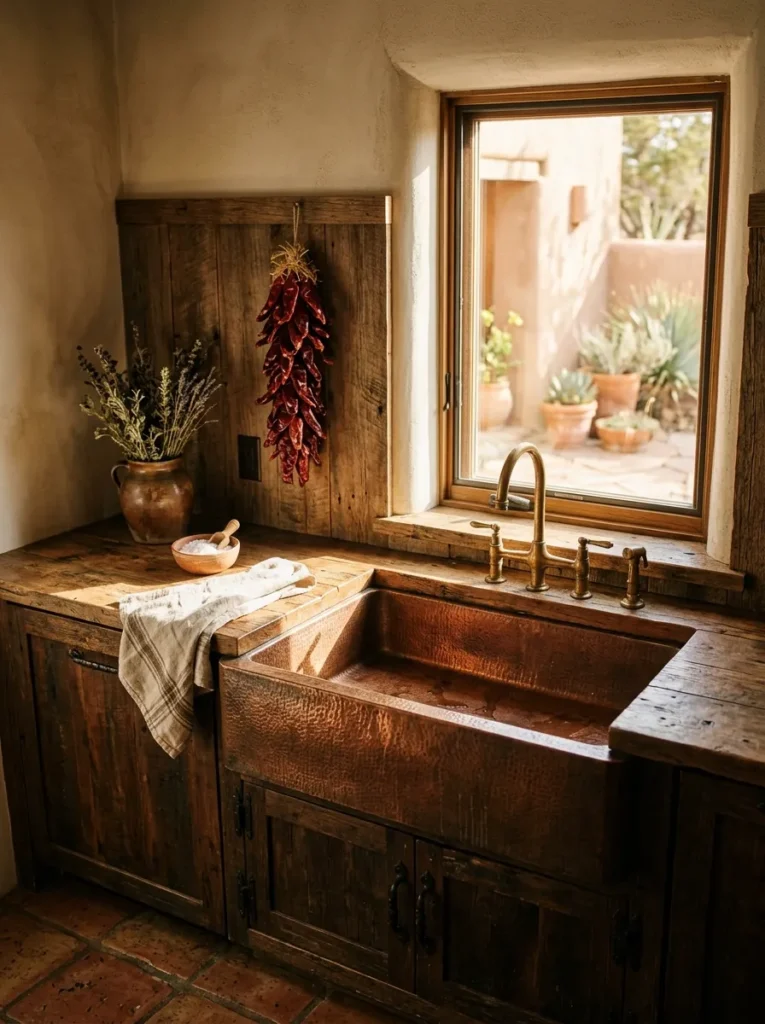
Copper sinks develop a living patina that shifts and deepens over years of use, which means the sink genuinely looks different five years in than it did on installation day, in a way fireclay and cast iron simply don’t. The hammered texture also hides water spots and minor scratches far better than a smooth glossy surface would. This works best with a wax sealant applied periodically rather than left entirely natural, since an unsealed copper sink patinas unevenly depending on what touches it, which some people love and others find inconsistent.
16. Add a Wood-Fired Pizza Niche Beside the Main Range
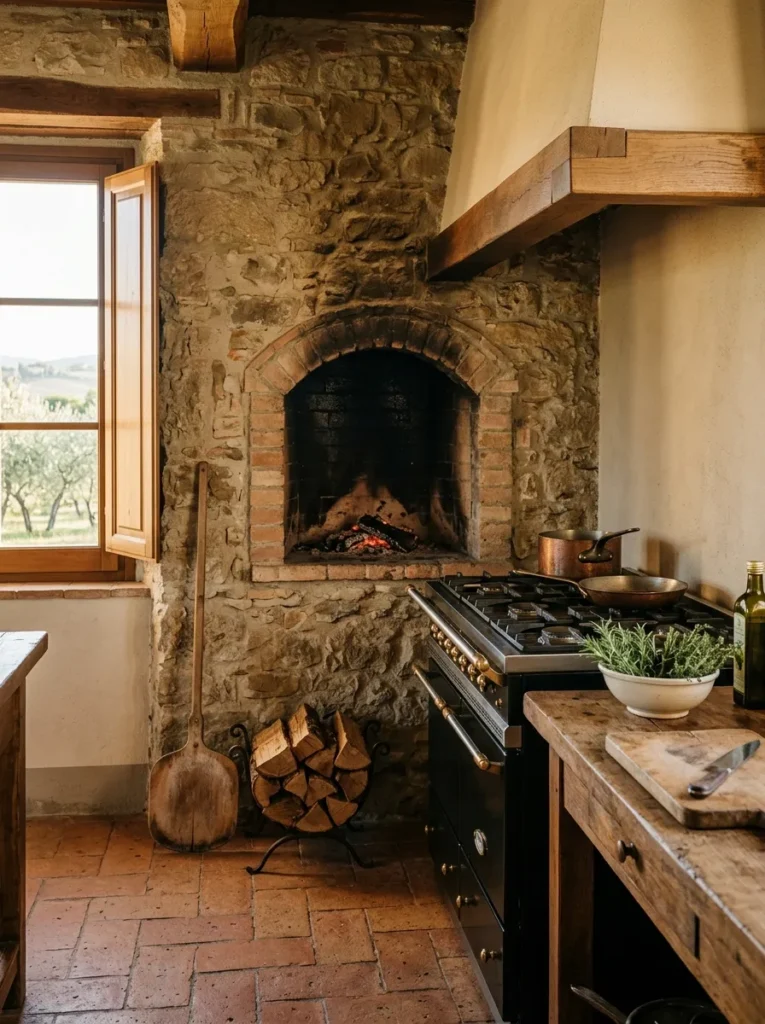
A built-in wood-fired niche is a genuinely ambitious addition, not a weekend project, but for a kitchen built around real cooking rather than just the appearance of it, nothing else on this list offers the same functional payoff or visual drama. The darkened brick interior develops its character through actual use, which means the niche looks more convincing the longer it’s lived with. This is best planned at the renovation stage with proper venting, and works best in kitchens with at least one exterior-facing wall to accommodate the flue.
17. Choose Mismatched Open Shelving Brackets in Aged Iron
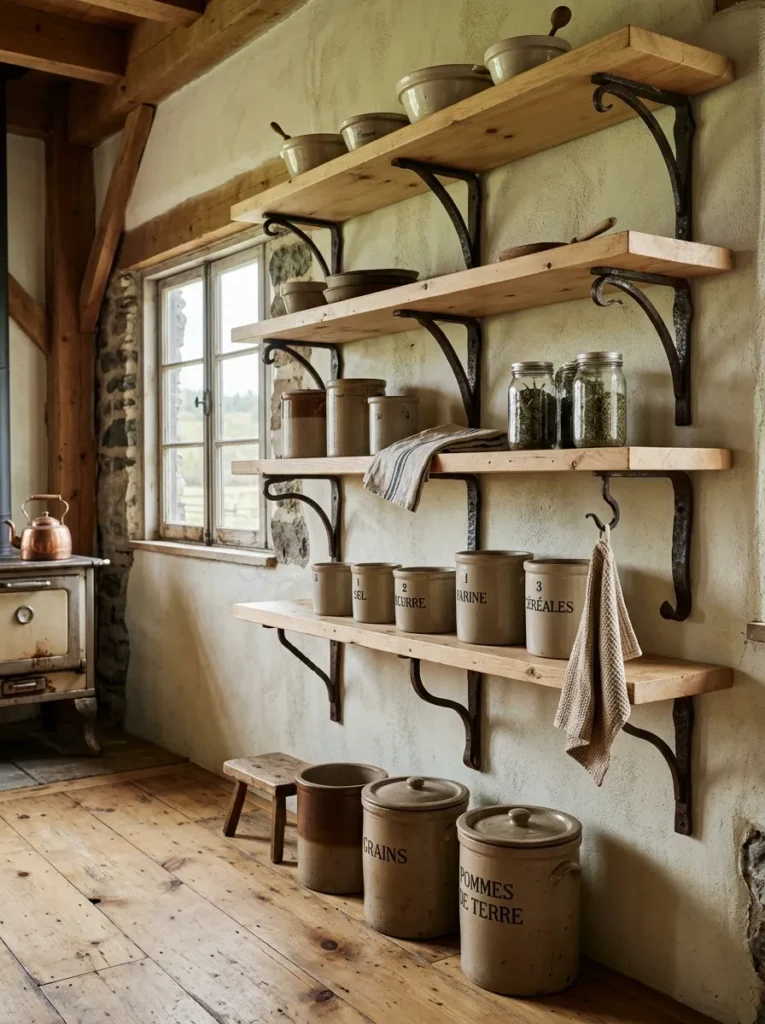
Matching brackets purchased as a set look exactly like what they are: a kit. Sourcing several aged iron brackets of slightly different shapes and pairing them under the same shelf plank creates the impression of pieces collected over years rather than ordered together in one box. This works best when the variation stays subtle, similar weight and finish, different silhouette, rather than wildly mismatched styles that would read as accidental instead of curated.
18. Use a Stenciled or Hand-Painted Pattern on a Single Tile Border
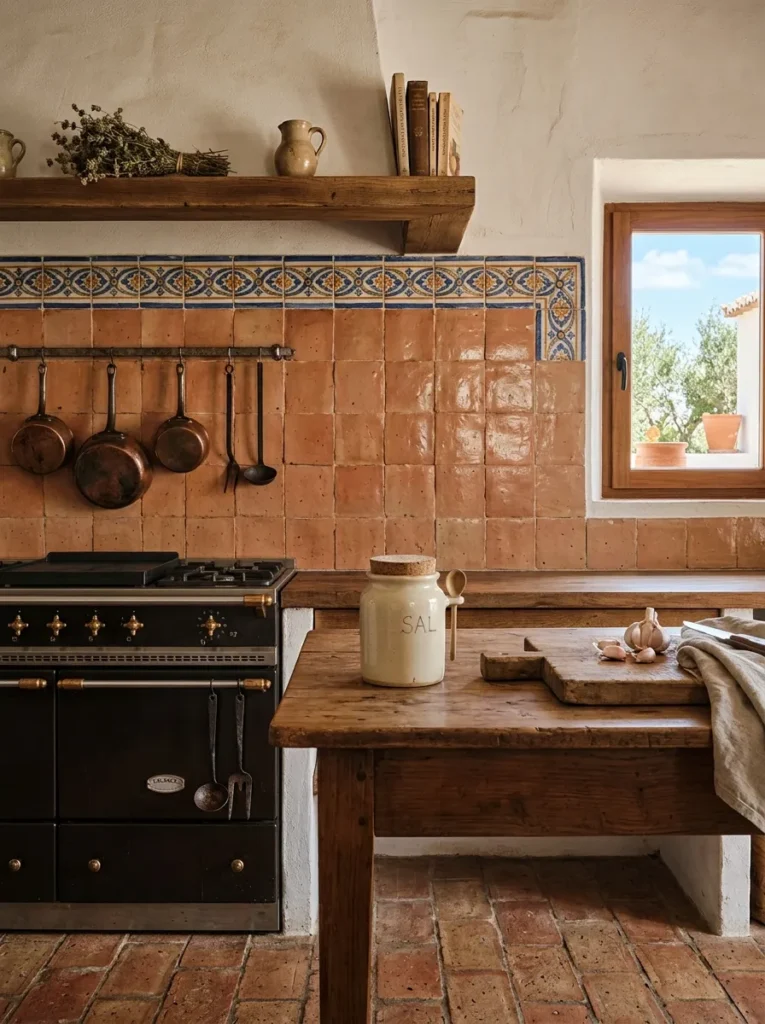
A backsplash entirely covered in patterned tile can overwhelm a farmhouse kitchen’s otherwise simple material palette, while a single decorative border framing plain field tile gives the eye one specific detail to focus on without saturating the whole wall. The slight handmade irregularity in painted tile, visible up close, adds far more character than a uniform printed pattern. This works best as a single horizontal or vertical accent line rather than a full repeated field, keeping the decorative moment intentional and contained.
19. Leave the Hardware Slightly Mismatched on Purpose
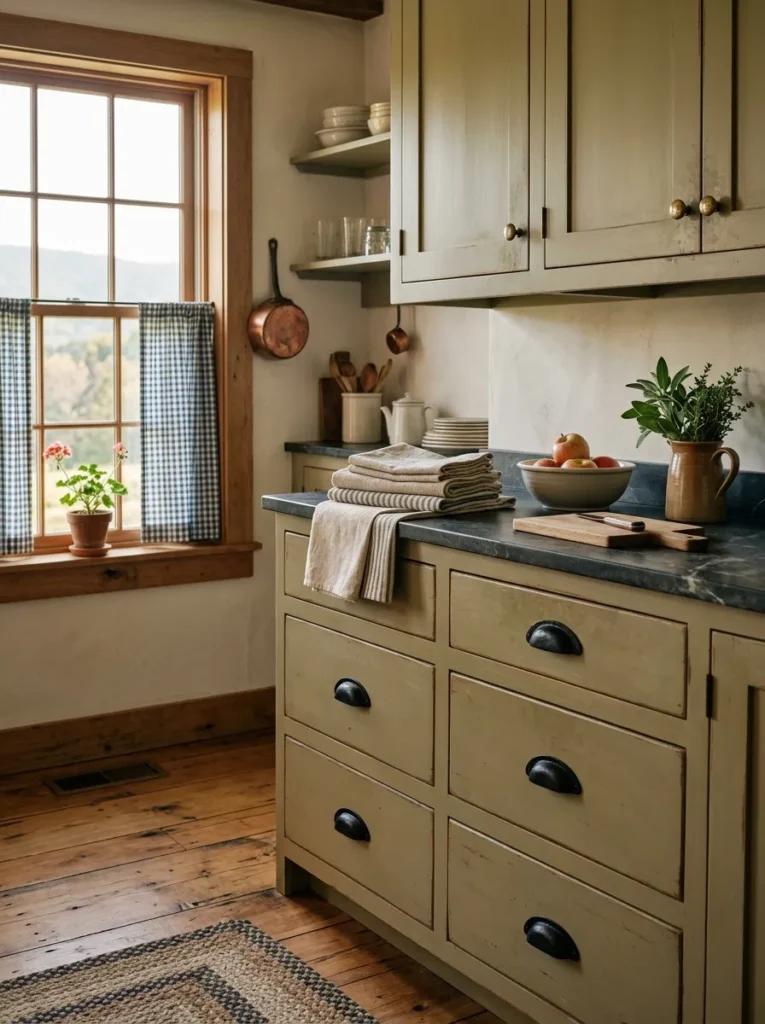
Every other idea on this list adds a specific material or feature. This one is about resisting the instinct toward uniformity, which is the instinct most farmhouse kitchen guides reinforce rather than question. Matching hardware throughout looks correct and also looks assembled all at once, while two deliberately different finishes — consistent within their own zones, varied between them — reads as a kitchen built up over time rather than installed in a single weekend. This is the cheapest idea on the entire list and also the one requiring the most confidence to actually commit to, since it looks like a mistake until it’s finished.
Final Thoughts
Farmhouse kitchen ideas tend to collapse into the same handful of repeated signals — shiplap, an apron sink, a single rustic light fixture — but the kitchens that actually earn the word “cozy” are built from more specific decisions than that, the nineteen above among them. Start with whatever the room is missing most clearly, whether that’s genuine material warmth, smarter storage, or simply the willingness to leave one detail slightly imperfect on purpose. A truly functional, cozy farmhouse kitchen isn’t one that checks every box on a style guide. It’s one where every choice, from the fireclay sink to the deliberately mismatched hardware, was made with an actual cook and an actual home in mind.
Loved these ideas? Save this post to your Pinterest board so you can come back to it next time you’re planning your dream farmhouse kitchen!