19 Cozy Kitchen Ideas That Feel Warm and Welcoming
Most kitchens are designed to be functional first and everything else second — and it shows. The result is a room that works perfectly well and feels like almost nothing at all. Cozy kitchen ideas are everywhere online, but the advice tends to stop at “add a plant” or “swap your hardware.” That is not what this article is. What follows are nineteen specific, visually grounded decisions that change the temperature of a kitchen — not just the décor — and every single one of them photographs beautifully for a reason.
1. Lower Your Pendant Lights Further Than You Think Is Correct
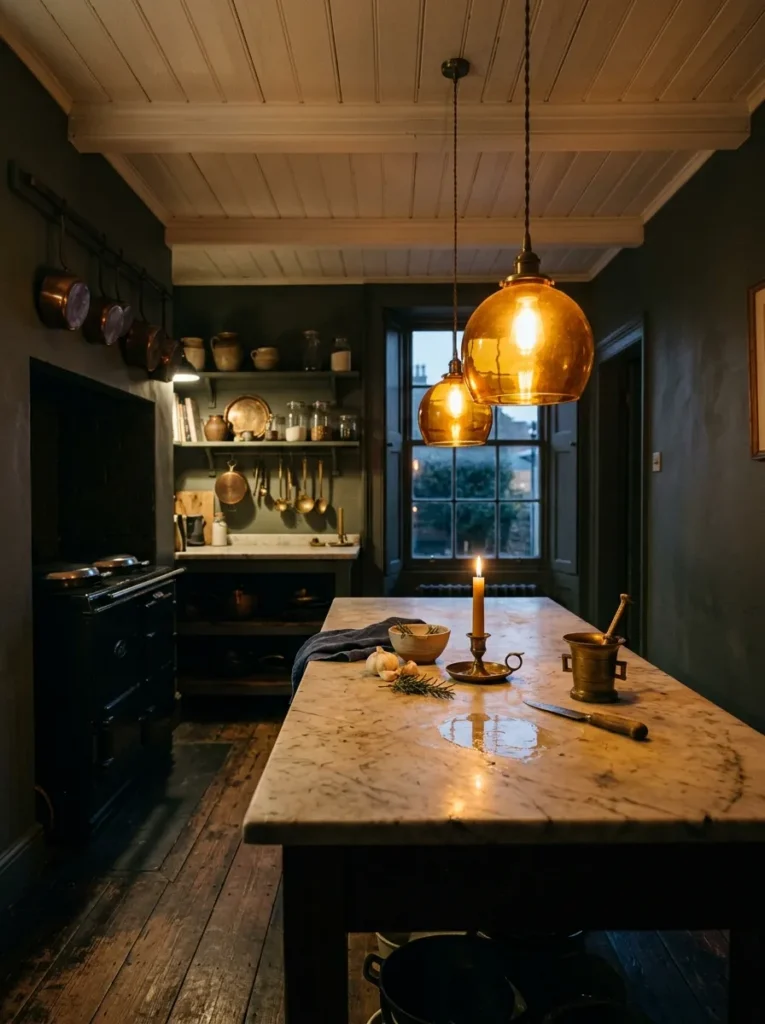
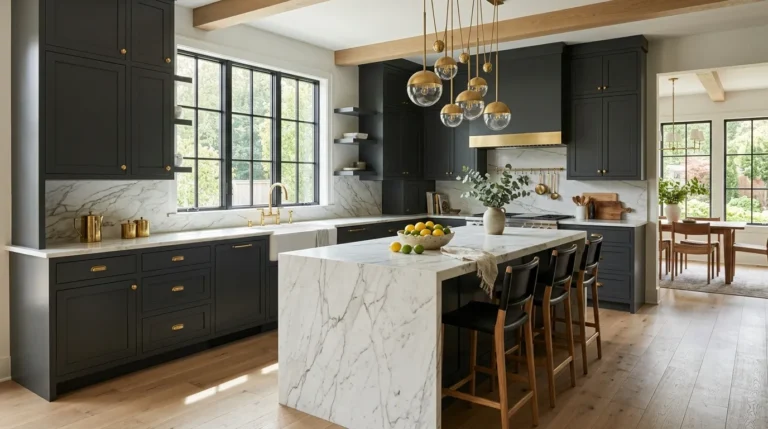
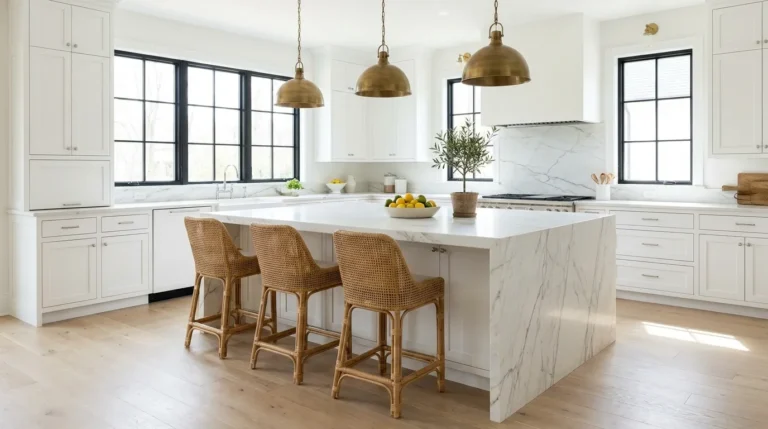
The single most common mistake in kitchen lighting is hanging pendants too high. The instinct is to keep them out of sightlines, which is reasonable, but it produces a kitchen that feels institutional rather than intimate. Pendants over an island or dining table should hang 70 to 80 centimetres above the surface — low enough to create a pool of warm light that makes the table feel like its own destination. At that height, the light falls on the food, the hands, the faces of people sitting there. It stops lighting a room and starts lighting a moment. If you have 2.7-metre ceilings, drop them to 75 centimetres. If your ceilings are higher, go lower still. The discomfort you feel looking at them before guests arrive disappears the moment someone sits down.
2. Replace Overhead Fluorescents With Layered Warm-Toned Sources
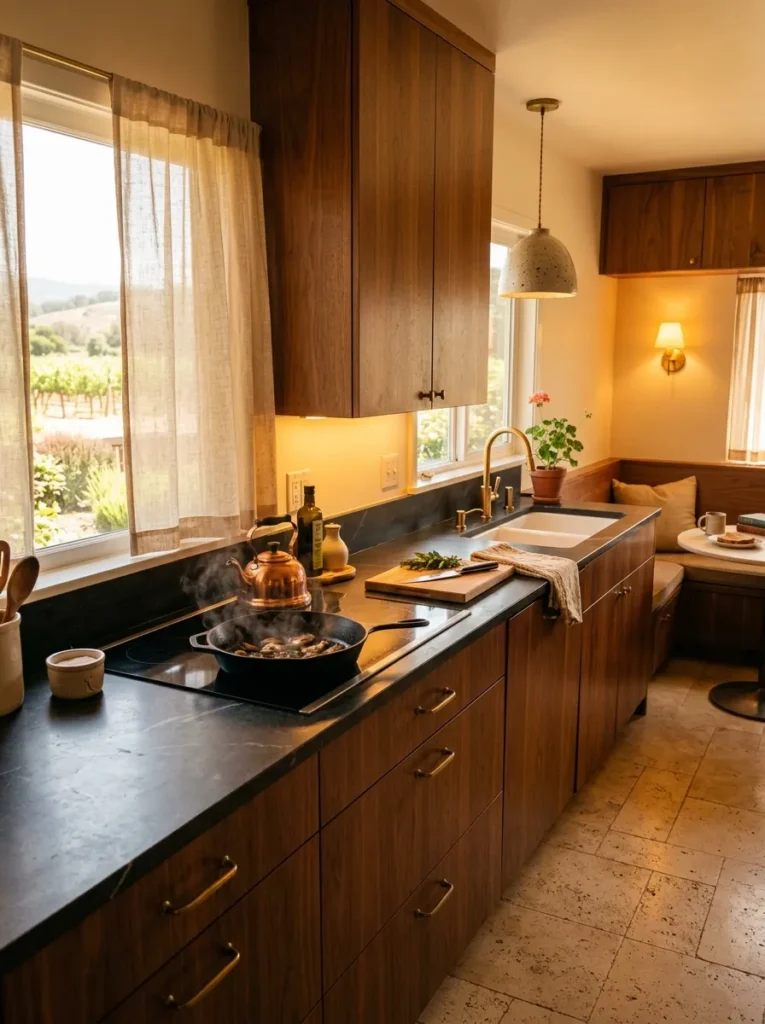
A kitchen lit entirely from above — one central fixture, one row of recessed downlights — will never feel warm regardless of what else you do to it. Warmth in a kitchen comes from layered light at multiple heights: pendants above the island, under-cabinet strips along the countertop edge, a small wall sconce near the eating area if there is one, and ideally a dimmer on everything. The colour temperature matters enormously. 2700K is the number to ask for — it reads as the colour of a lamp in a sitting room rather than the slightly greenish white of a hospital corridor. Most kitchens are specified at 3000K or higher, which is why they feel the way they do. This is the one invisible change that makes people say the room feels completely different without being able to name why.
3. Use Open Shelving Selectively, Not Aggressively
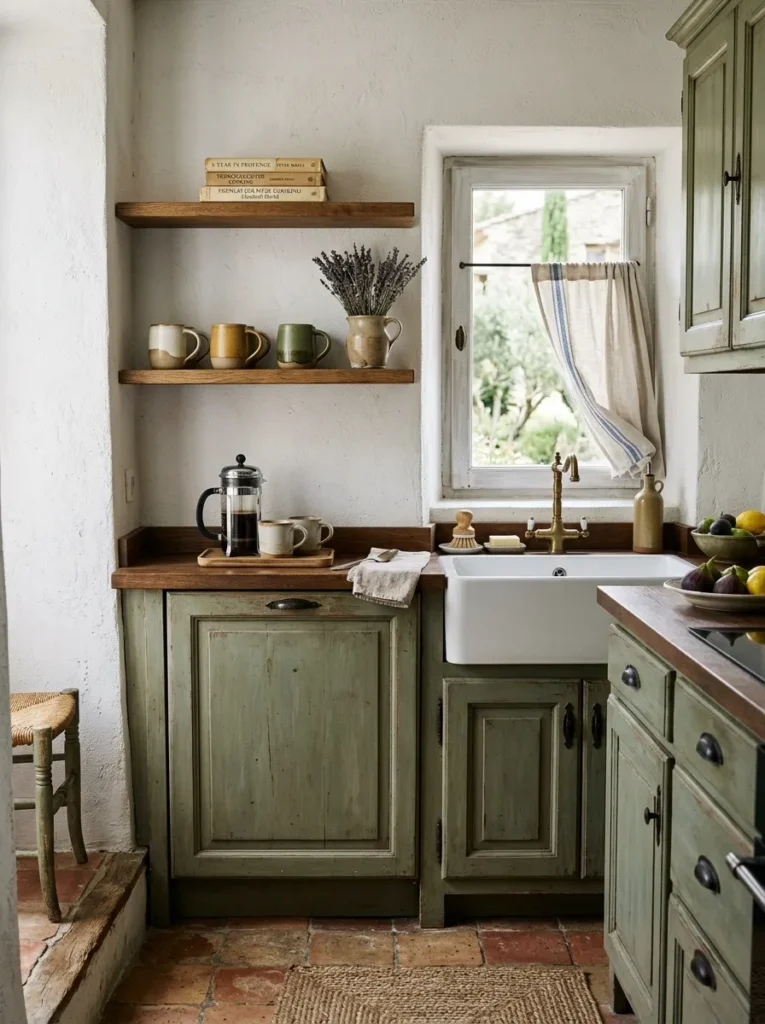
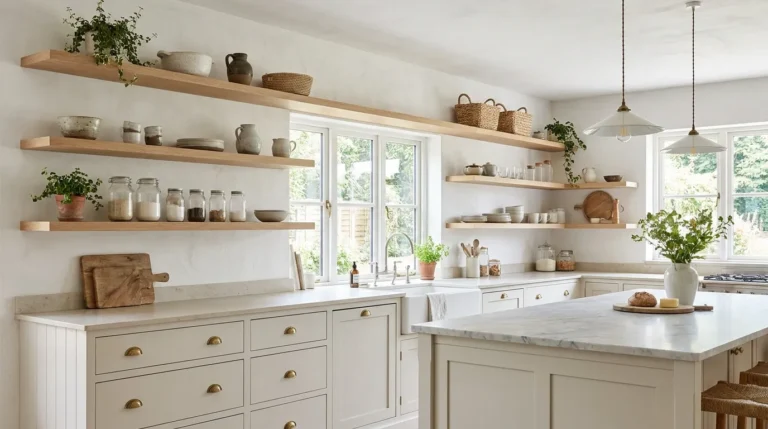
Open shelving became a cliché because everyone did it everywhere. A kitchen with nothing but open shelves reads as either a showroom or a constant source of low-grade anxiety, because every single item is always on display. The cozy version of this idea is one or two shelves placed thoughtfully — above a coffee station, beside the stove, above a window — where the objects on them are genuinely worth looking at. Hand-thrown ceramic mugs, a small collection of cookbooks stacked horizontally, a single piece of pottery. The rest stays behind doors. What changes is that the kitchen now has edited visual pauses rather than a wall of organised clutter trying to look effortless.
4. Paint the Inside of Your Cabinets a Contrasting Colour
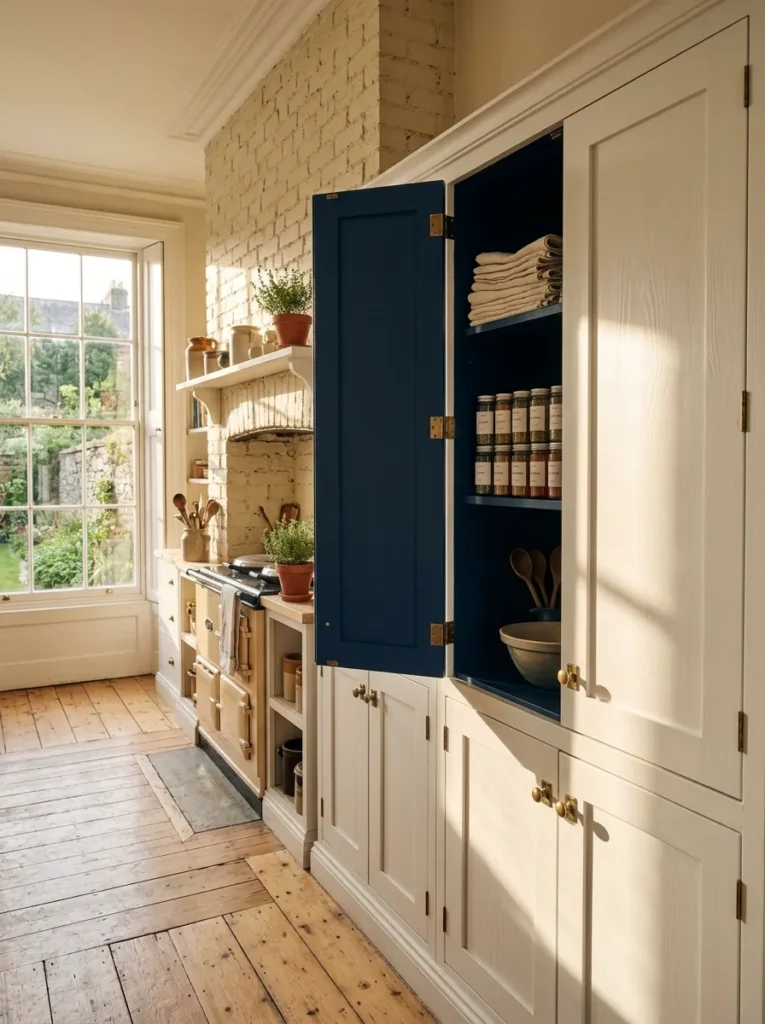
Nobody talks about this, which is exactly why it works. If your cabinet fronts are white, painting the interior a deep sage, a warm terracotta, or a dusty navy creates a moment of surprise every time a door is opened — and in photography, it adds depth that flat-fronted cabinets simply cannot produce. The practical cost is half a litre of paint and an afternoon. The visual return is a kitchen that looks considered in a way that expensive hardware cannot replicate. Go one shade darker than whatever your walls are, or go the opposite direction entirely. The matching-everything approach is always the safer choice and almost never the more interesting one.
5. Lay a Runner Rug in Front of the Sink
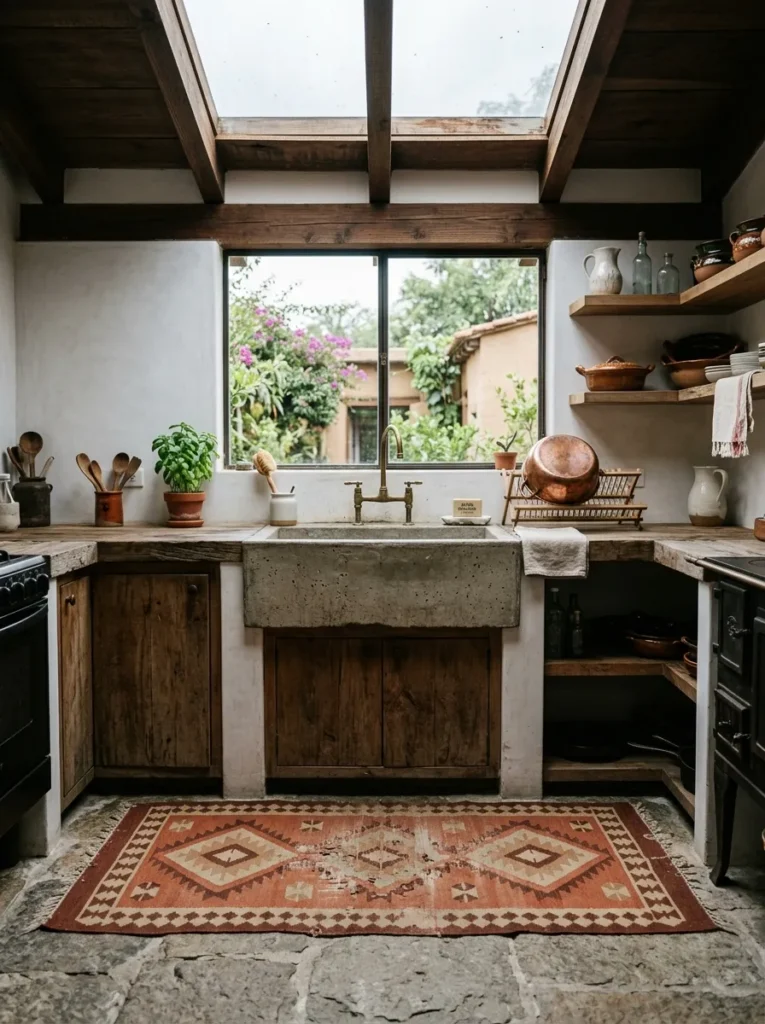
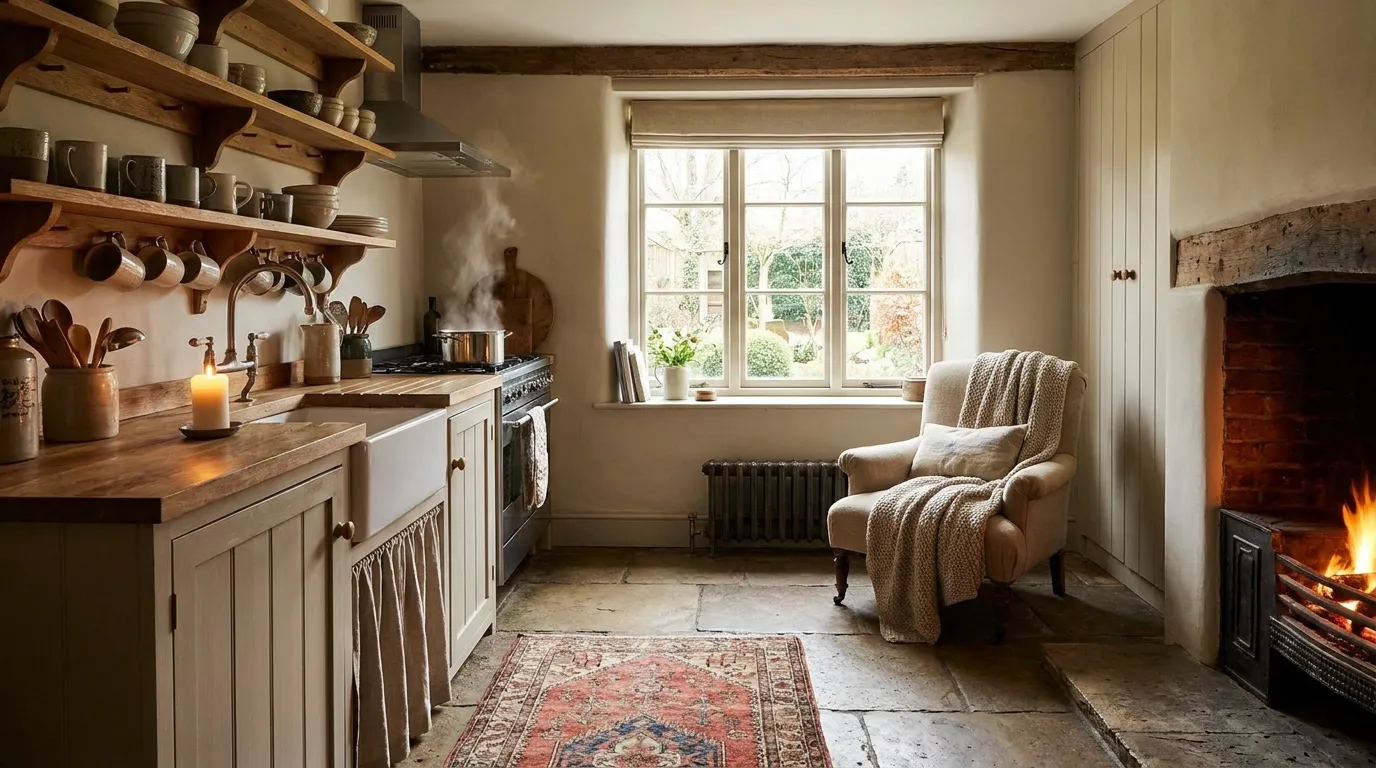
Most people don’t think of the kitchen as a place for rugs, which is the entire reason doing it works. A flat-weave cotton or wool runner in front of the sink — approximately 60 by 180 centimetres for a standard single-sink run — does three things simultaneously: it softens the sound of a hard floor, it marks the cooking zone as a distinct area within the room, and in photographs it immediately reads as a home rather than a spec house. Choose a pattern over a solid. The pattern hides whatever happens to it, which it will, and it adds visual weight to an area of the kitchen that is otherwise all vertical surfaces. Machine-washable is not optional; it is the entire point.
6. Choose Hardware in One Unlacquered Finish and Let It Age
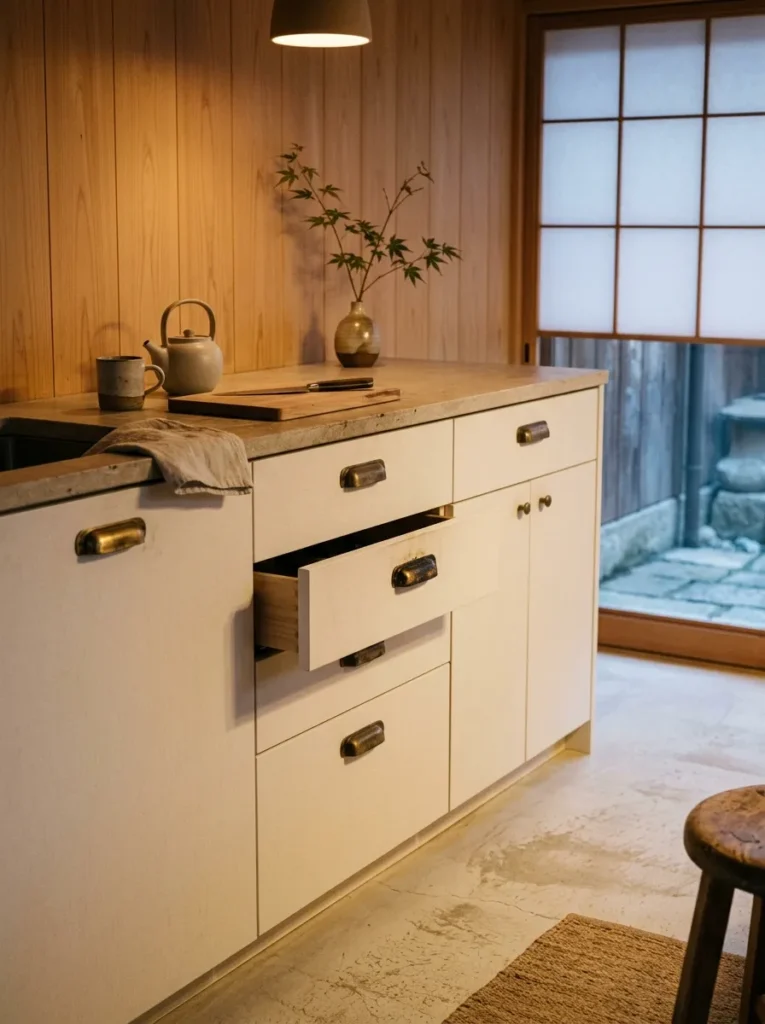
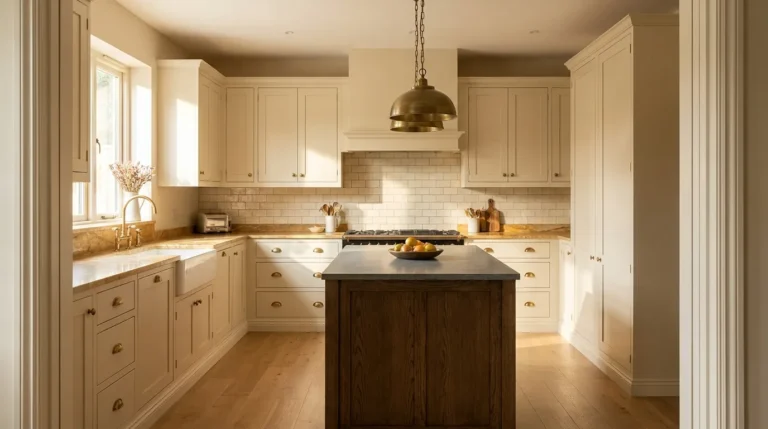
Unlacquered brass is the best example of this, but it applies equally to raw copper or bronze. Lacquered finishes — the polished, sealed versions that keep their colour permanently — look new forever, which sounds like a benefit but is actually a liability in a kitchen that is supposed to feel lived in. Unlacquered metals develop a patina over months and years that no design decision can replicate: fingerprints, oxidation, the places that get touched most often wearing slightly darker. It is the visual equivalent of a worn leather chair. You cannot fake it, you cannot buy it, and you cannot rush it. Choose your hardware in an unlacquered finish, leave it entirely alone, and in eighteen months you will understand why.
7. Add a Butcher Block Section Alongside Stone Countertops
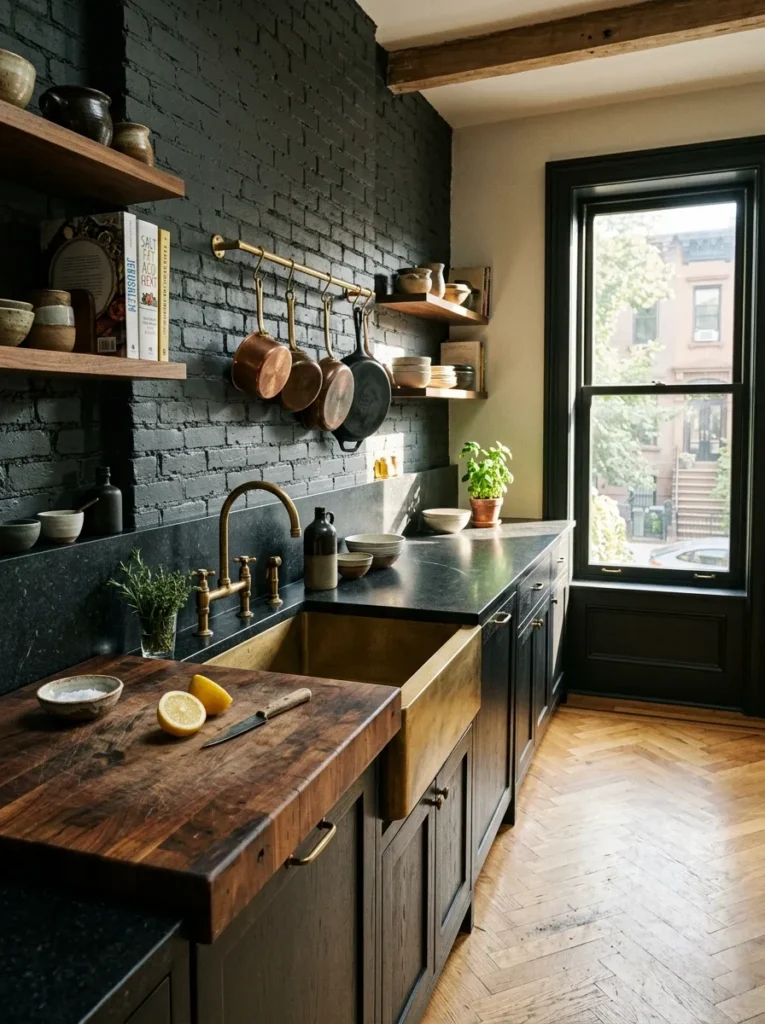
Full stone countertops — quartz, granite, marble — photograph beautifully and clean easily, but they read as cold in the literal and figurative sense. Introducing one section of end-grain walnut or maple butcher block, typically beside the sink or on a kitchen island, breaks the visual uniformity in a way that immediately reads as warmer. The wood requires more maintenance, which people cite as a reason to avoid it. But the maintenance is oiling it every few months, which takes ten minutes, and the result is a surface that smells faintly of the oil you used and darkens around the edges where it gets used most. That is not a flaw. That is a kitchen telling its own story.
8. Bring in One Piece of Furniture That Isn’t Built-In
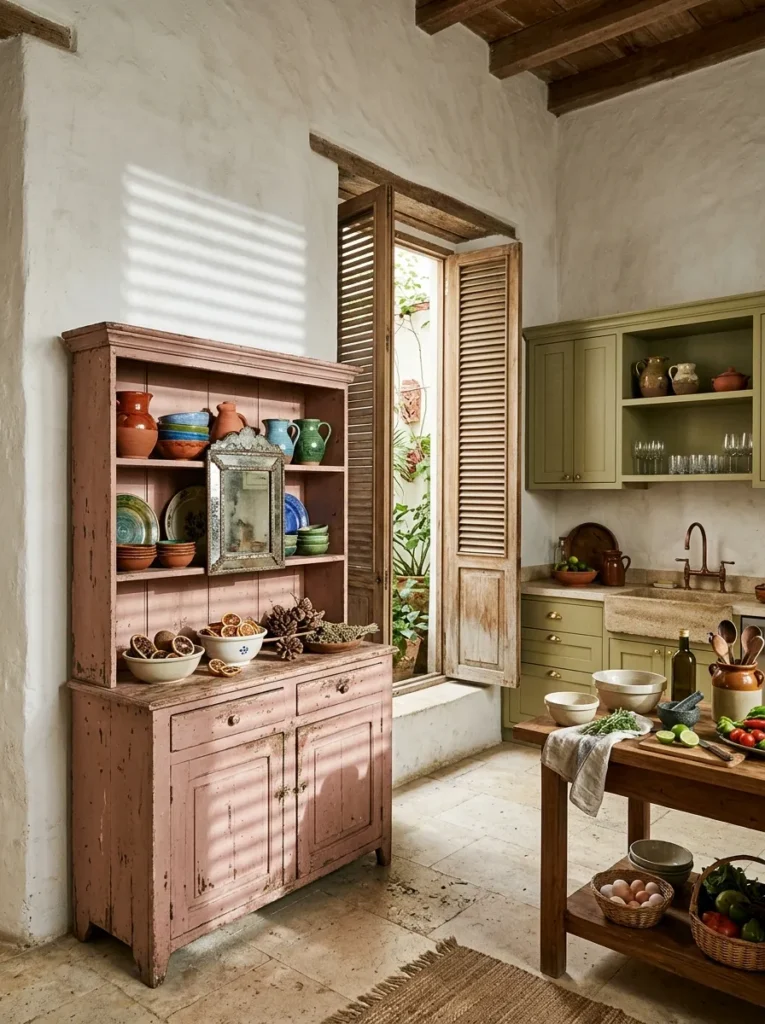
Every kitchen filled entirely with fitted cabinets and matching units looks like a kitchen. A kitchen with one freestanding piece — a small vintage dresser used as a pantry, a rattan chair tucked into a corner eating nook, a painted wooden stool beside the island — suddenly looks like a room. The distinction sounds minor but registers immediately. Built-ins say “installed.” Freestanding pieces say “chosen.” You do not need to spend much. A market find with fresh paint works as well as anything, sometimes better, because the imperfection is the point. This is one of the most visually compelling cozy kitchen ideas for Pinterest precisely because it creates images that look like homes rather than catalogues.
9. Use Textured Tiles Rather Than Glossy Subway on the Splashback
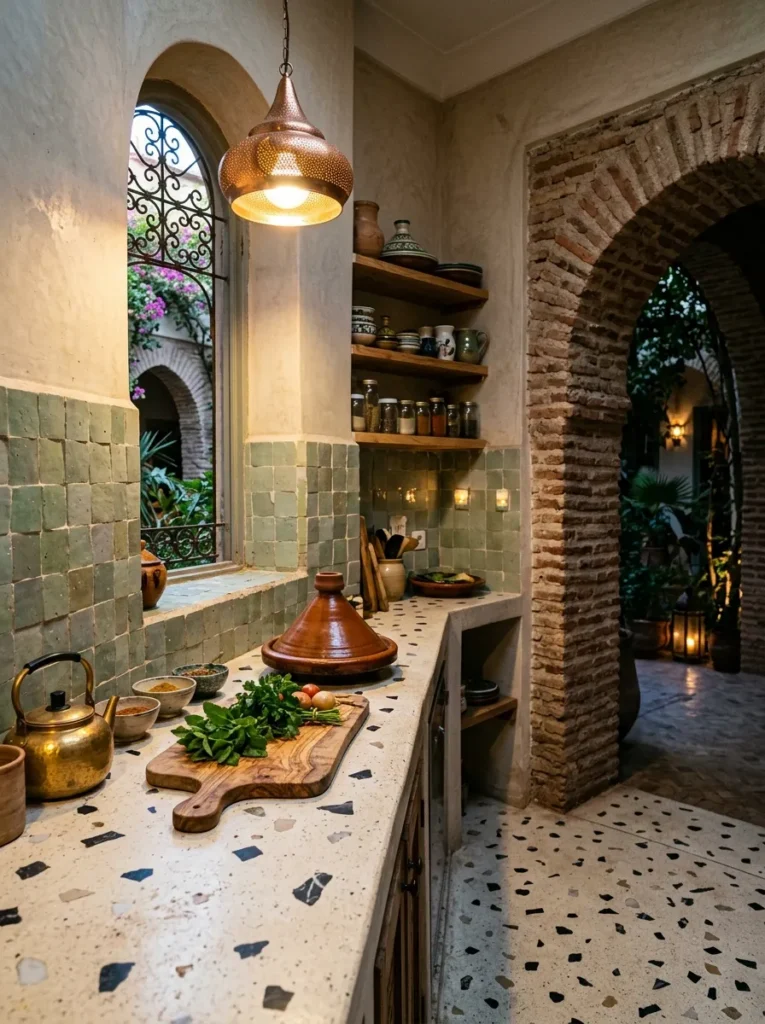
Glossy white subway tile became the default splashback choice because it is inoffensive, easy to clean, and consistently available. It is also the design decision most likely to make your kitchen look like every other kitchen photographed in the last fifteen years. Handmade zellige tiles, terracotta brick tiles, or unlevel stack-bond tiles with a matte or satin glaze catch light differently across the day — shadows gather in the grout joints, the surface reads with depth rather than flatness. For a warm kitchen, the texture does as much as the colour. A soft sage matte tile and a glossy white tile are entirely different rooms even at the same colour value.
10. Place a Vintage or Worn Wooden Cutting Board Permanently on the Counter
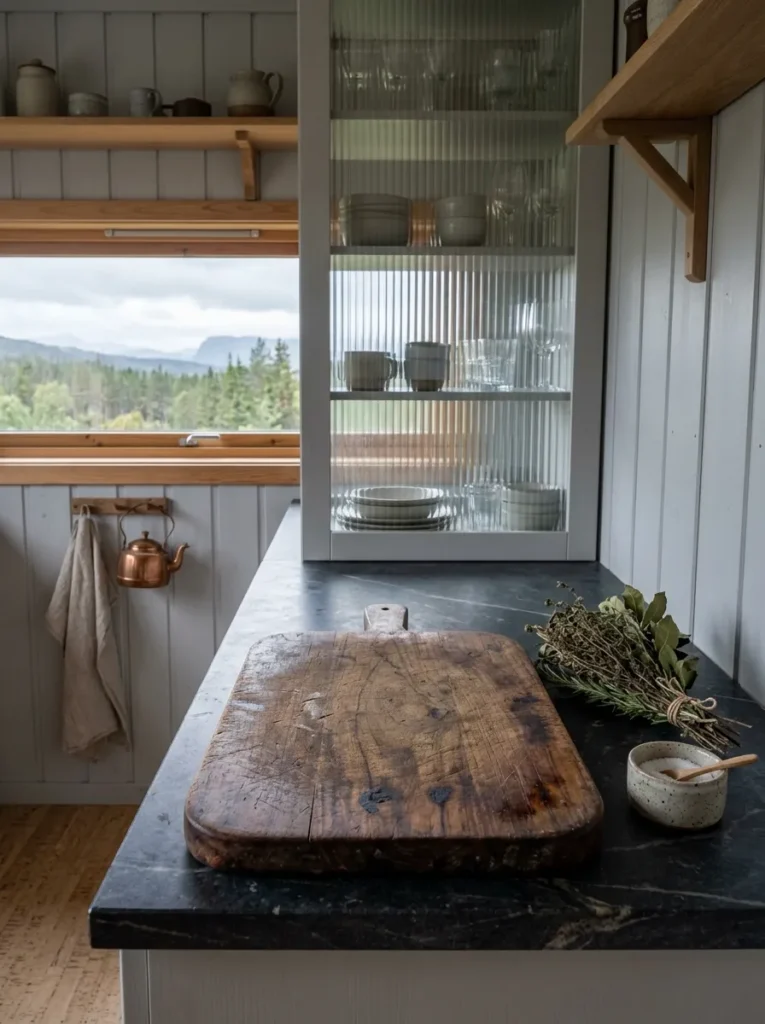
This is one of those details that sounds too small to mention until you notice what it does. A large end-grain or edge-grain cutting board — aged teak, seasoned maple, reclaimed olive wood — left permanently on the counter as a functional object rather than stored away, grounds the entire kitchen visually. It adds warmth at eye level, breaks the expanse of countertop material, and signals that this kitchen is actually used. The worn ones work better than the new ones, for obvious reasons. If yours is too pristine, use it daily for six months and stop conditioning it more than once a year. It will find its character eventually.
11. Install Lower Cabinets in a Different Tone Than Upper Cabinets
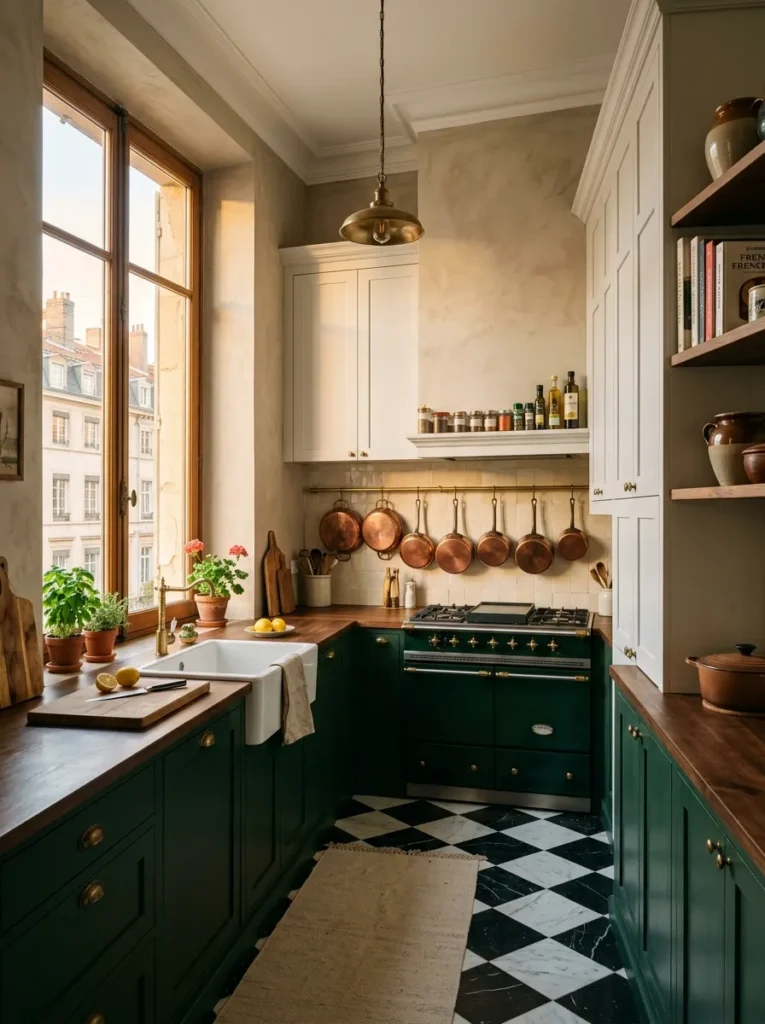
Two-tone cabinetry has become increasingly common, but the specific version that creates warmth is less discussed. Upper cabinets in white or cream, lower cabinets in a deep warm tone — forest green, warm charcoal, cognac brown — grounds the room visually, drawing weight downward in the way that a good rug does. The effect is that the kitchen feels anchored rather than floating. The precise shade matters: go warmer than you think is right, because paint chips always look more intense than they read on a full cabinet face. Sample on an actual cabinet door and live with it for a week in different light conditions before committing. Morning light and evening lamp light will show you two entirely different colours.
12. Hang Copper or Terracotta Pots From a Ceiling Rack
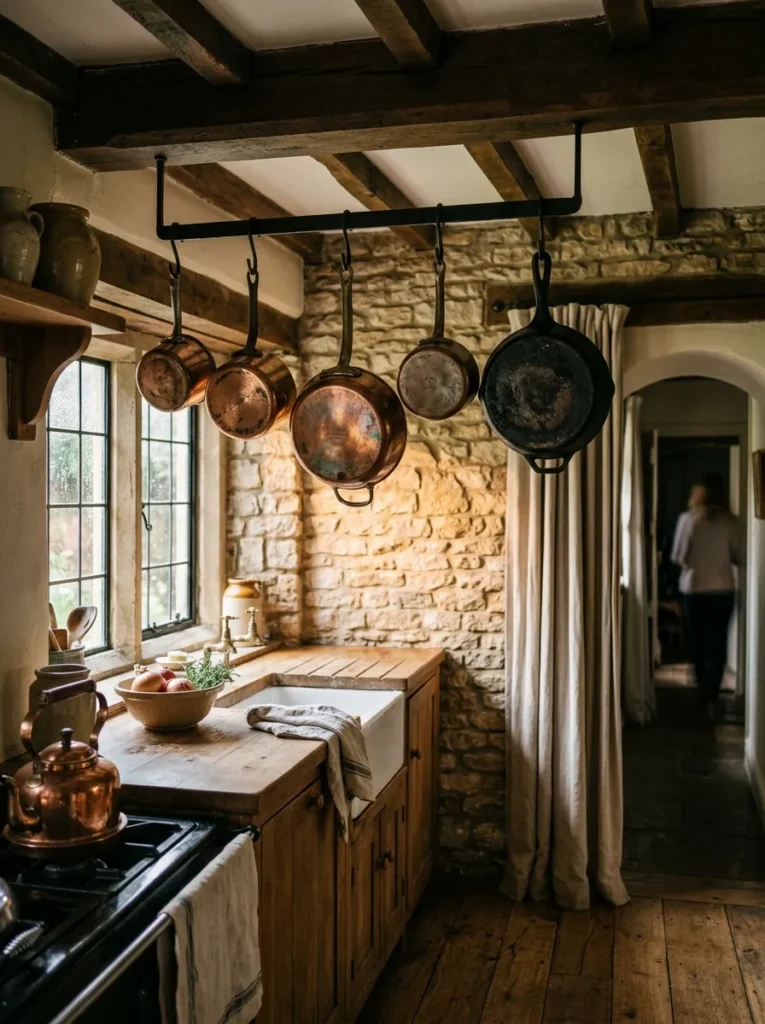
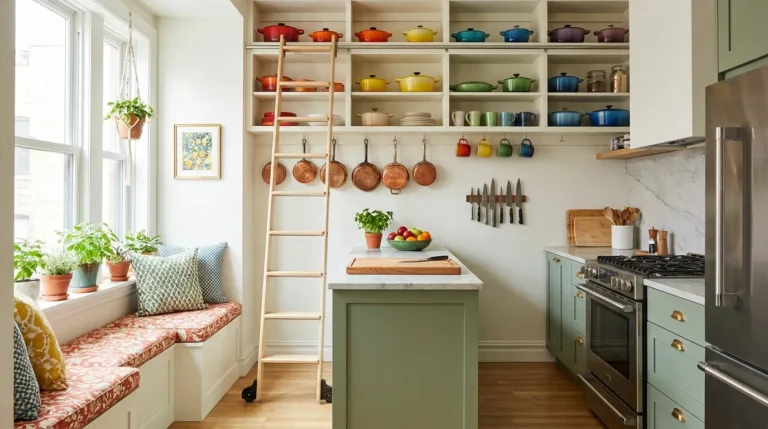
A pot rack divides opinion, which usually means the people who love it are right and the people who fear the clutter haven’t seen it done well. The version that works — and that creates genuinely beautiful kitchen photography — is a simple iron or unlacquered brass ceiling rack hung at 190 to 200 centimetres above floor level, carrying copper, cast iron, or terracotta-glazed pots with visible wear. Not twelve pots. Five or six. The metal catches light, the colours warm the ceiling zone, and the practical function is never having to open a lower cabinet for the pan you use every day. The decision that changes everything here is the finish: chrome and stainless read as commercial; copper and cast iron read as home.
13. Add Curtains to the Kitchen Window Instead of Blinds
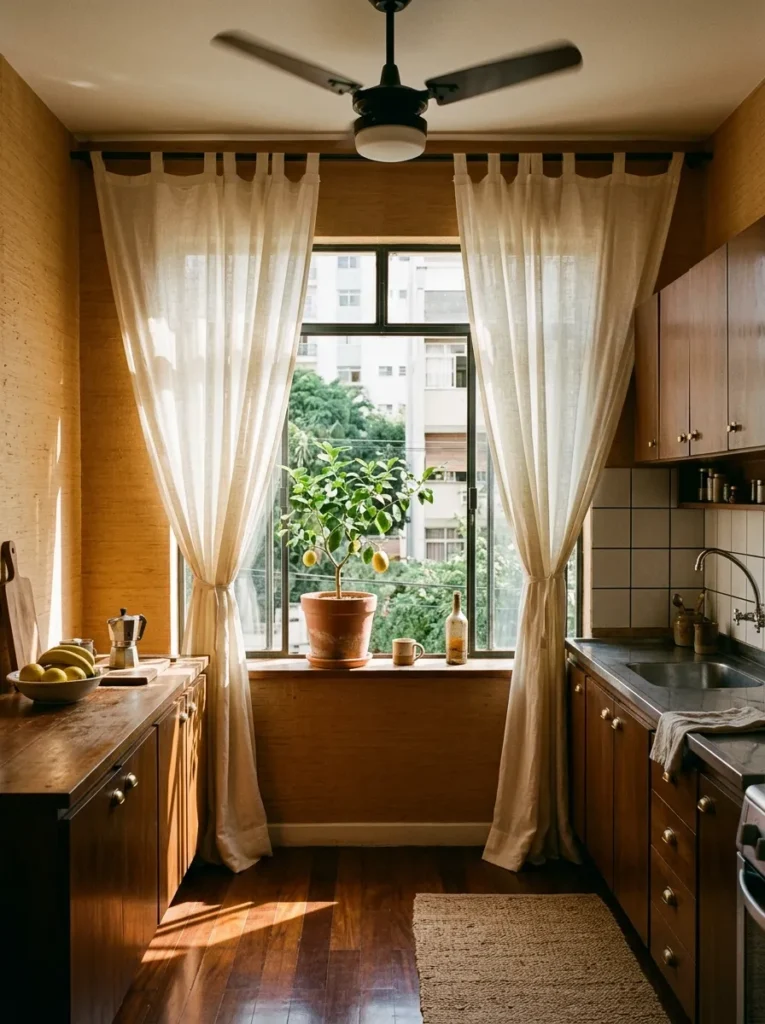
Blinds are efficient and clean. They are also the fastest way to make a kitchen window look like an afterthought. Curtains — even simple, unlined linen curtains that just frame the window and don’t fully cover it — change the quality of the room dramatically. They soften the transition between inside and outside, move slightly when the window is open, and in photographs they add the kind of life that no hard furnishing can. Choose a natural linen or cotton in a tone close to your walls — a shade warmer, a shade lighter — and hang the rod as close to the ceiling as possible. The height makes the window look taller, the fabric makes the kitchen look like it was designed rather than fitted.
14. Cluster Small Potted Herbs in a Single Deep Tray
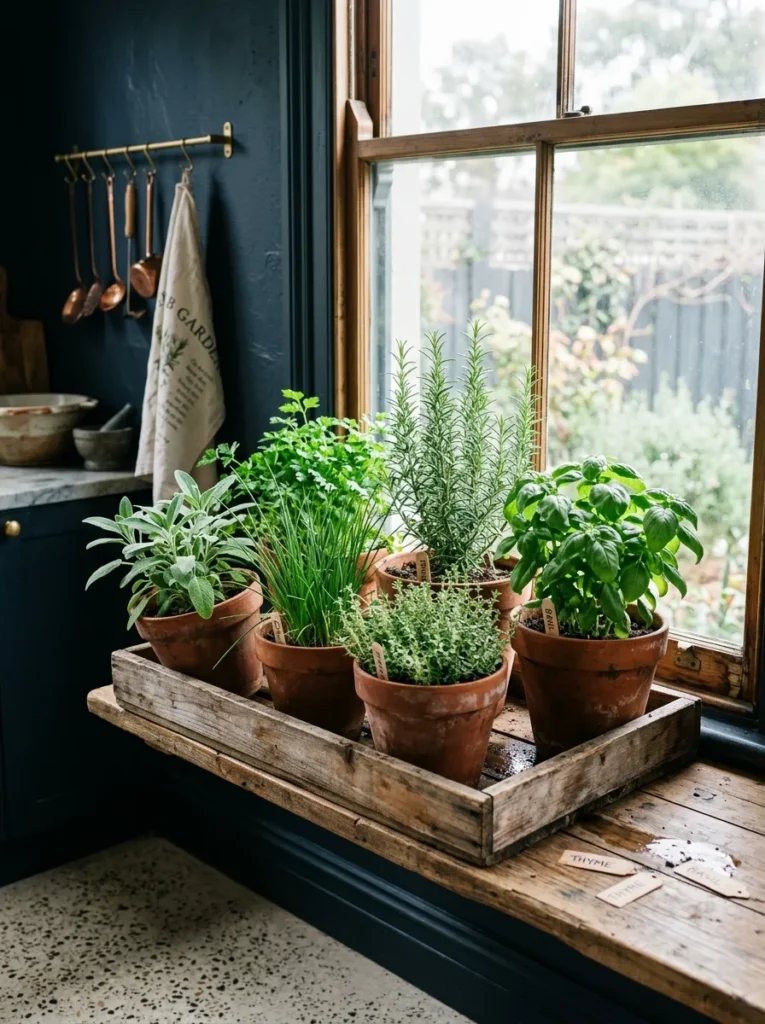
The scattered approach to kitchen plants — one small basil pot here, one spindly rosemary there — produces a kitchen that looks like it is failing at something. The grouped version is completely different. Five or six herb pots in a single deep wooden tray or stone planter, placed near a window or on a windowsill, reads as intentional and abundant rather than optimistic and struggling. Terracotta pots, not plastic. A tray with visible drainage holes and a saucer underneath. The grouping creates a focal point where a collection of individual plants could not, and the practical function — fresh herbs within arm’s reach of the stove — is too obvious to need explaining.
15. Use Beeswax or Tallow-Finish Wood Treatment on Any Wooden Elements
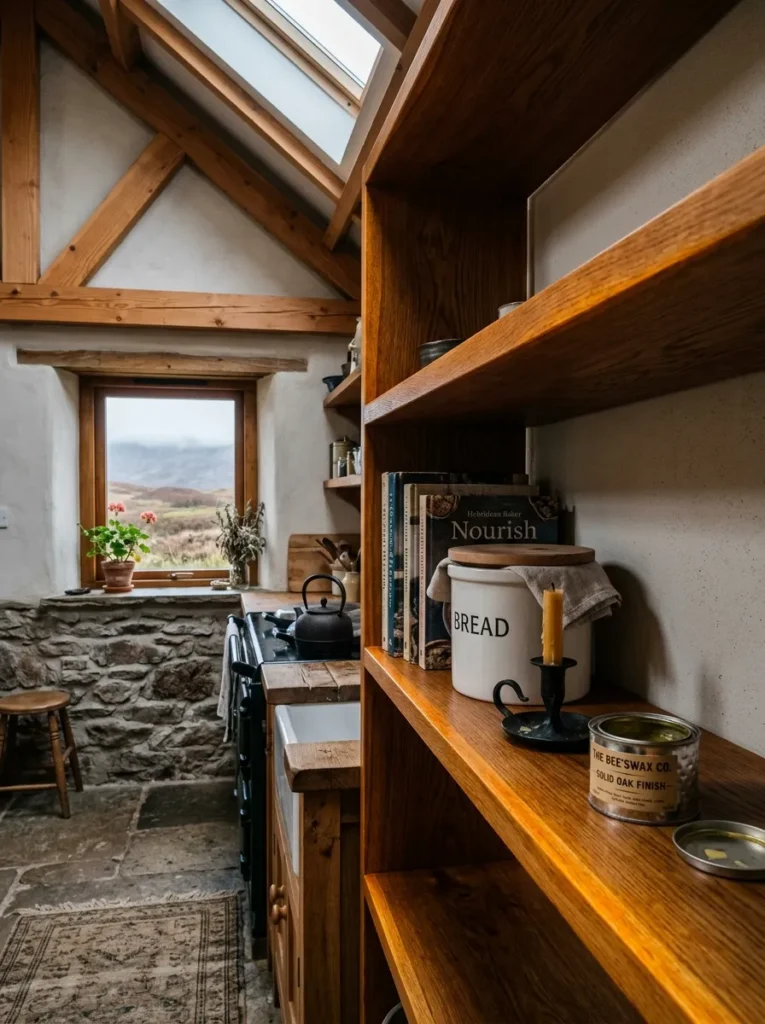
This is a maintenance decision with a design consequence. Raw or standard-varnished wood in a kitchen looks fine. Wood treated regularly with beeswax or tallow finish looks alive — it deepens in colour, develops a soft sheen that catches warm light rather than bouncing it, and smells faintly of something ancient and domestic. It applies to cutting boards, butcher block sections, wooden shelving, and open cabinet interiors. The products are inexpensive and available from any hardware or specialist woodcare supplier. The process takes less time than cleaning the hob. What it produces over years is wood that looks like it has always been there.
16. Pull One Bar Stool Slightly Away From the Island
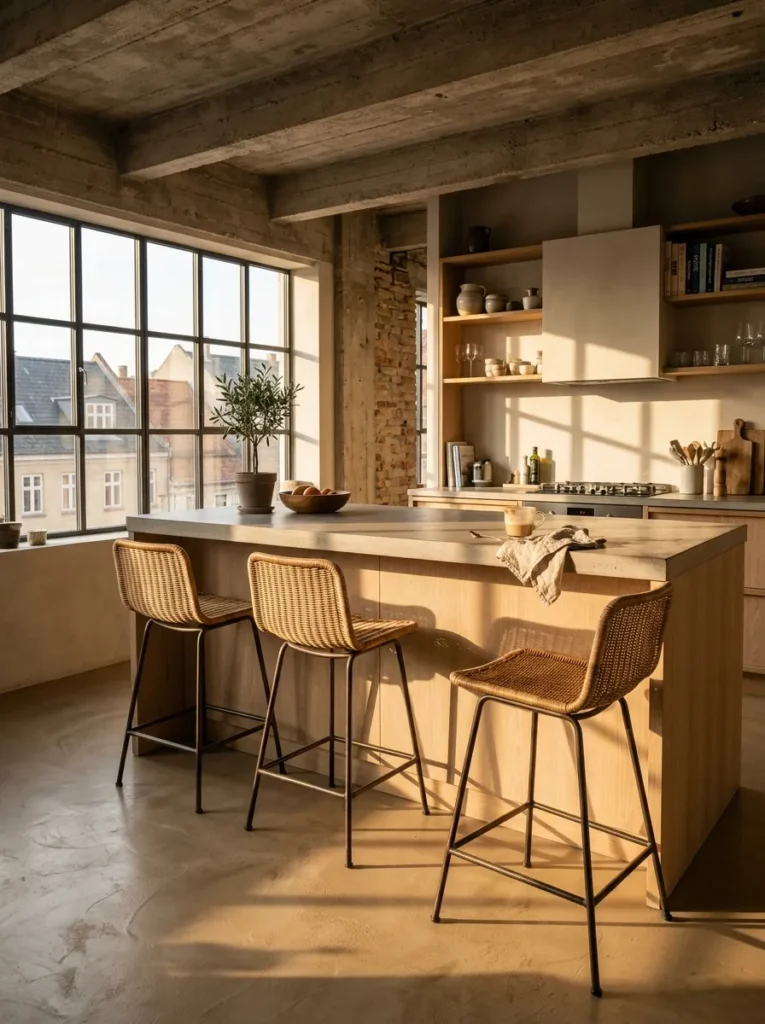
This is a styling observation as much as a design tip, but in a kitchen that is otherwise beautifully dressed, the pulled-back stool is the detail that makes photographs look inhabited. An island with all stools pushed in perfectly flush reads as staged. One stool pulled out at a slight angle reads as a kitchen someone just got up from. In real life, it signals the same thing: this is a kitchen that is used and comfortable, not maintained for show. This applies equally to a single chair pulled from a kitchen table, a tea towel hanging unevenly on the oven rail, or a cookbook left open on the counter. The imperfection is the warmth.
17. Choose a Kitchen Table With Turned or Tapered Legs Over a Pedestal
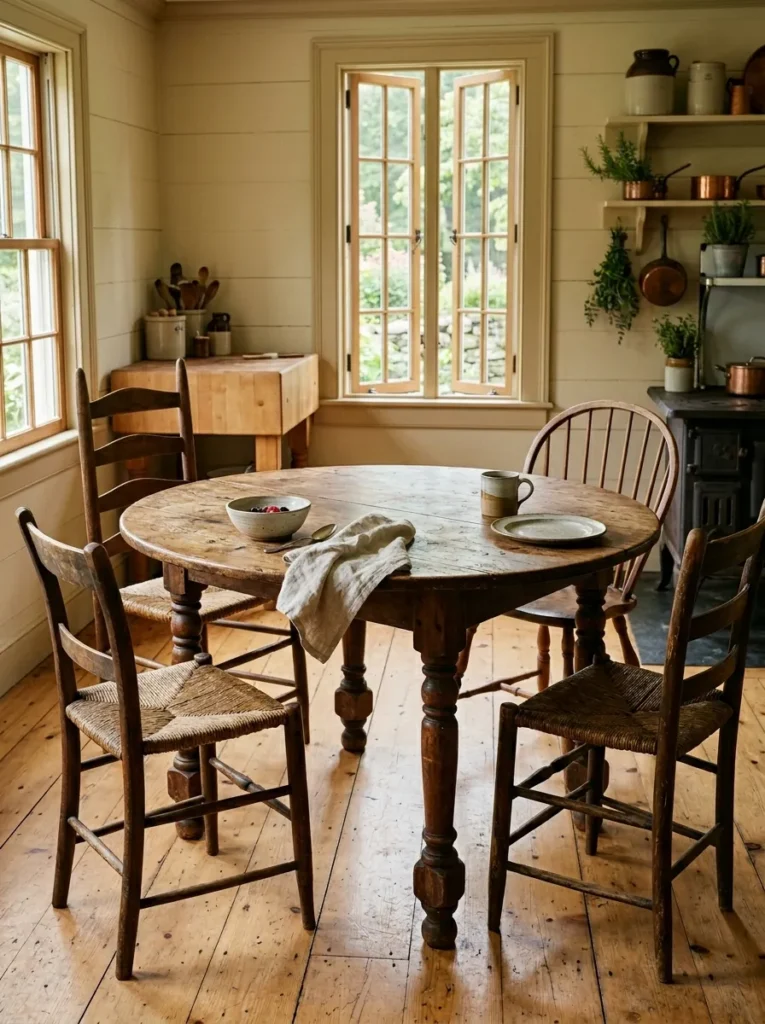
Pedestal tables are popular in small kitchens because they free up floor space around the base. They are also visually very heavy at the centre, which makes the eating area feel like an island unto itself rather than a natural extension of the kitchen. A round or oval table with turned wooden legs or slender tapered ones carries visual weight more gracefully, allows chairs to tuck fully underneath, and photographs significantly better against a warm kitchen backdrop. The turned leg specifically has a handmade quality that no pedestal base can replicate — it reads as furniture rather than equipment.
18. Warm the Kitchen With a Single Dedicated Scent
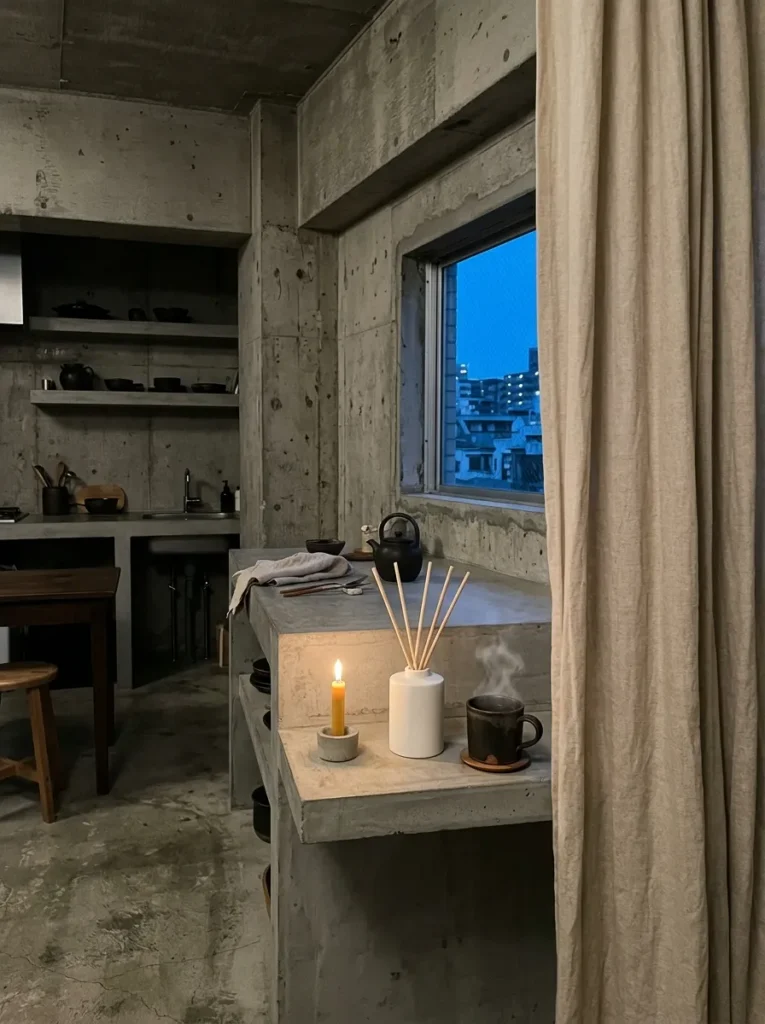
This is the tip that has no Pinterest image, and that is precisely why it matters. Warm and welcoming kitchen design is often discussed entirely in visual terms — colour, texture, light — and the olfactory dimension is left out entirely. A diffuser near the eating area using a warm, non-foodie scent (sandalwood, cedar, vetiver, beeswax) sets the atmosphere of the kitchen before a guest has processed a single visual detail. The brain registers scent before sight in many circumstances. It is the one investment in kitchen atmosphere that costs almost nothing, requires no renovation, and works immediately. The kitchen that smells like itself — not cleaning products, not generic air freshener — is the kitchen people remember.
19. Stop Before the Kitchen Feels Finished
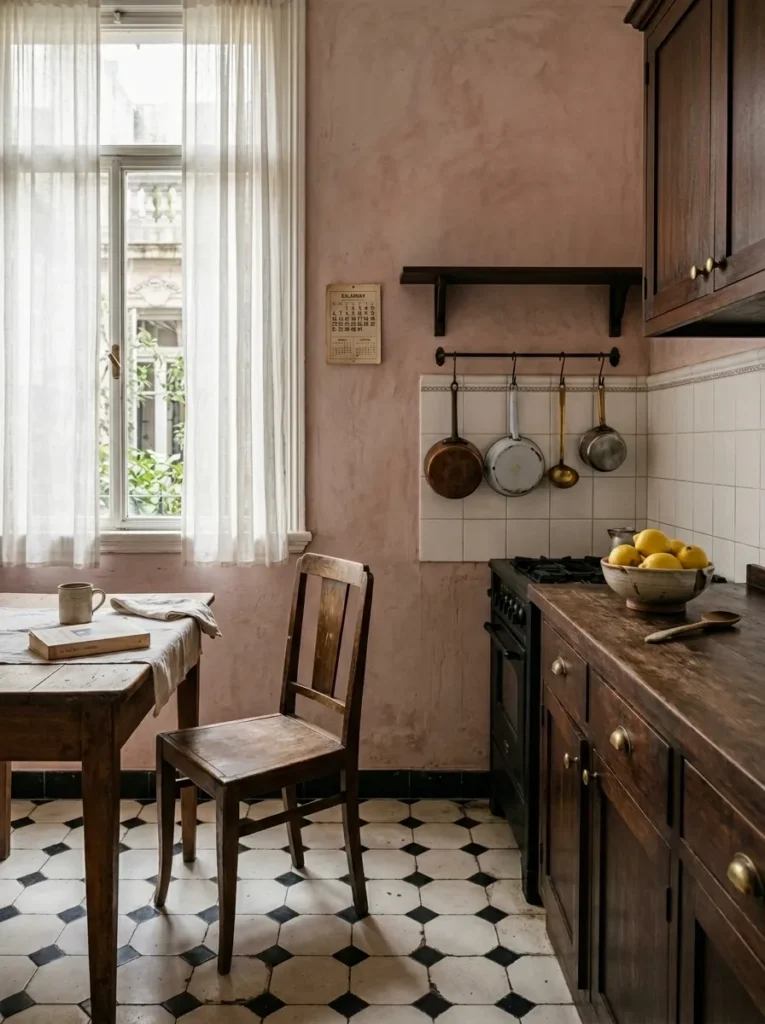
The warmest kitchens are never quite complete. There is always one more object that could be added, one surface that hasn’t been styled, one shelf that sits intentionally empty. The mistake most people make when following cozy kitchen design advice — this list included — is applying every idea simultaneously until the room feels saturated. Restraint is not minimalism. It is the decision to leave some space unfilled so that the room feels like it has somewhere to grow. The edit is the last step, and it is the one that most design articles skip entirely. After everything is in place, take one thing out. Then decide if you were right.
Final Thoughts
A cozy kitchen is built from accumulated small decisions rather than a single large renovation, which is both the encouraging and inconvenient truth about it. Start with light — it is the change with the largest return and the lowest barrier, and once you have layered lighting with warm colour temperature, every other decision becomes easier to evaluate. The cozy kitchen ideas in this article range from afternoon projects to long-term commitments, and they do not all need to happen at once. Choose two or three that address what your kitchen currently lacks — warmth at the countertop level, texture on the walls, life in the eating area — and let the rest follow naturally. The kitchen that feels genuinely welcoming is never the one that was designed in a single weekend.