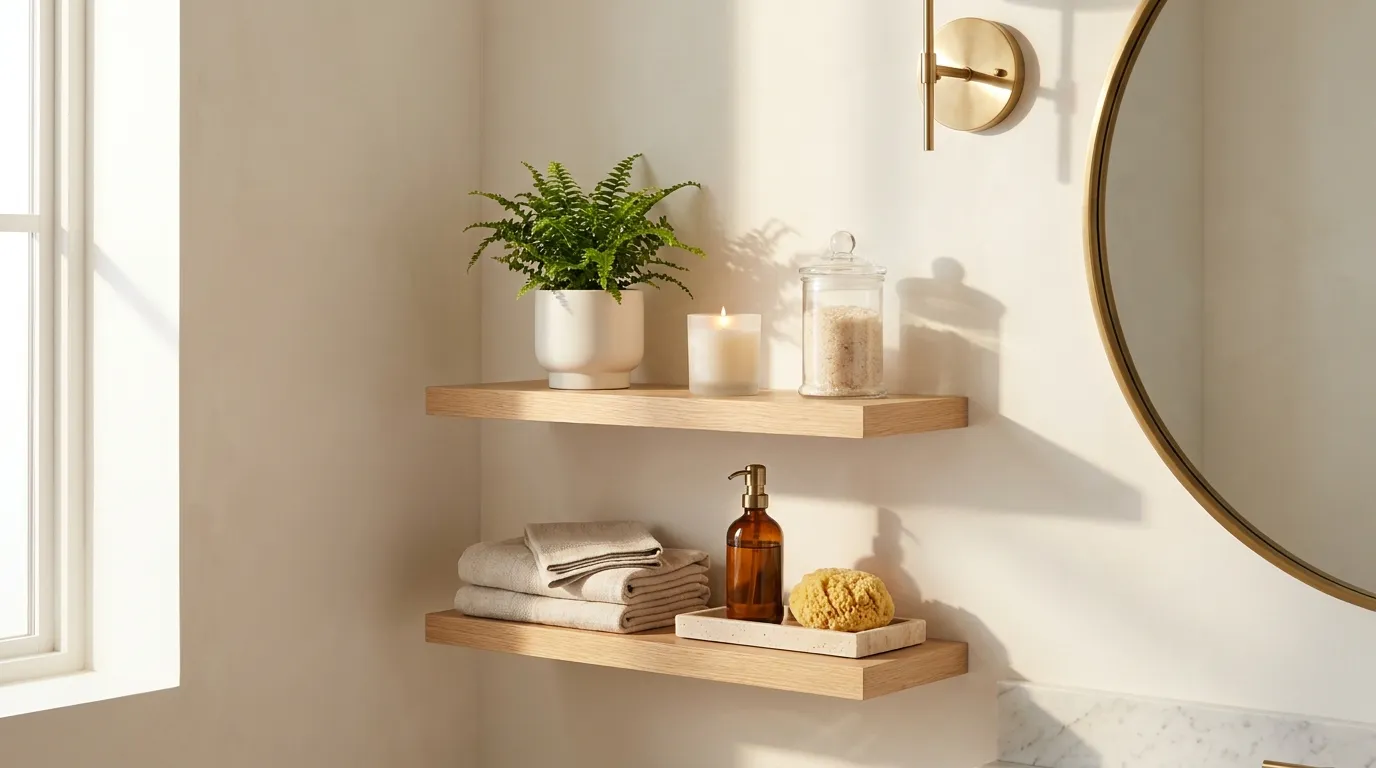
Bathroom Shelf Decor Ideas That Feel Spa-Inspired
Well-styled bathroom shelves do something most people underestimate — they make the entire room feel intentional. The difference between a shelf that holds things and one that looks genuinely curated usually comes down to a handful of small, deliberate choices: the right materials, thoughtful groupings, and a willingness to leave breathing room rather than filling every inch.
These 18 bathroom shelf decor ideas focus on creating that calm, spa-like quality you see in design magazines — but adapted for real bathrooms, real budgets, and real morning routines. Whether you’re working with a single floating shelf above the toilet or a full wall of open storage, you’ll find practical styling approaches that balance function with quiet beauty.
Every idea here explains not just what to place on your shelves, but why the arrangement works and where it fits best.
1. Decant Your Everyday Products into Matching Vessels
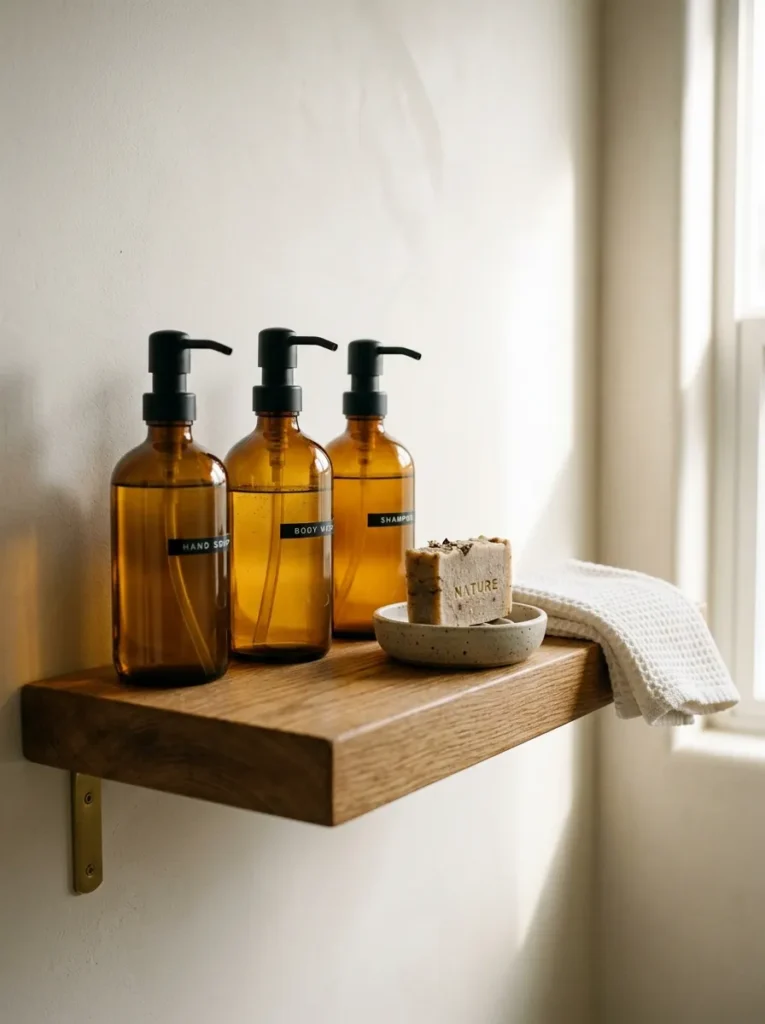
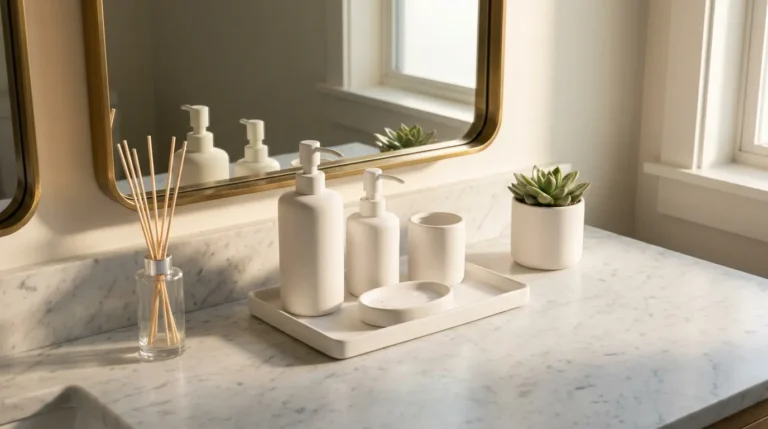
One of the fastest ways to make bathroom shelves feel polished is removing the visual noise of mismatched plastic bottles. Transfer hand soap, lotion, and bath salts into a coordinated set of amber glass, matte ceramic, or frosted glass dispensers. The uniformity creates an instant sense of order, and the materials themselves — glass catching light, ceramic adding weight — contribute texture that plastic never does. Choose vessels with a similar silhouette but slightly different heights to avoid a rigid, commercial look. This works on any shelf depth, including narrow floating shelves where space is tight. Clean labels off completely before refilling to maintain the effect.
2. Stack Towels with Visible Folds Facing Outward
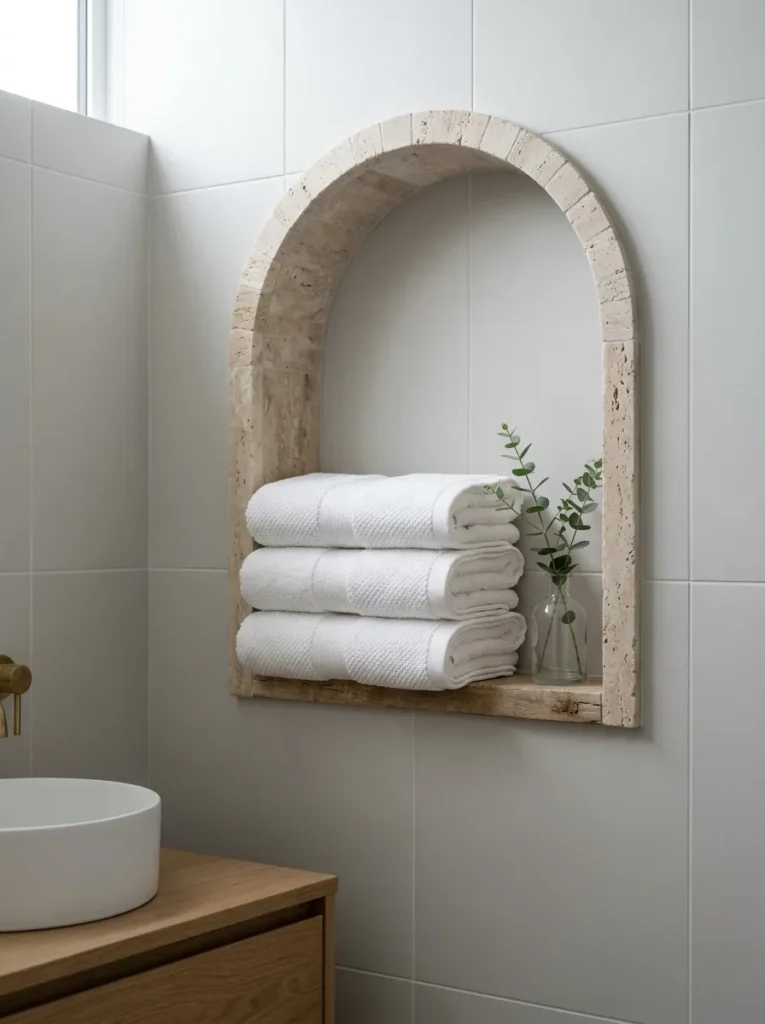
Rolled towels are a spa cliché for good reason, but neatly folded towels with the fold facing outward actually feel more editorial in a home setting. Stack two or three white or oatmeal-toned hand towels on a lower shelf, aligning the folded edges forward so the surface looks smooth and intentional. The horizontal lines of stacked linen create a visual anchor that grounds looser, more organic items placed nearby. This approach also makes towels easier to grab than tightly rolled alternatives. Use thicker, higher-GSM cotton — thin towels flatten quickly and lose their structure within hours.
3. Anchor a Shelf with a Natural Stone or Wood Tray
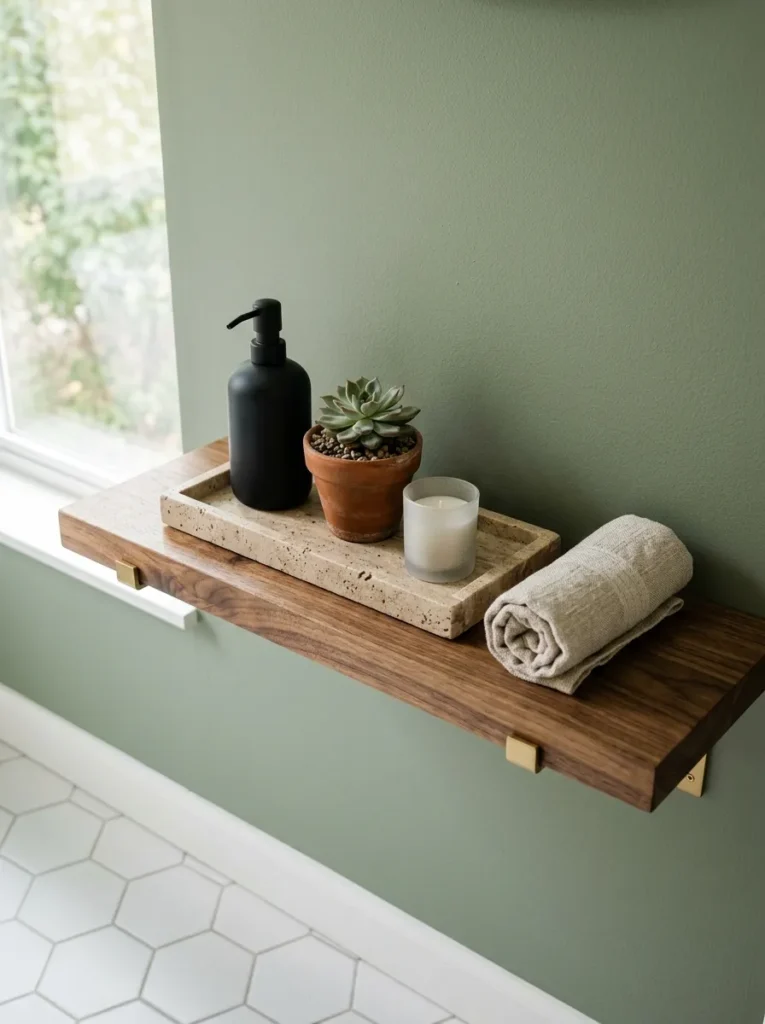
Placing smaller items directly on a shelf often creates a scattered, unfinished look. A tray — travertine, marble, teak, or even a simple matte-black metal dish — draws a visual boundary that turns loose objects into a composed vignette. Group your candle, a small potted succulent, and a decorative vessel on the tray so they read as a single arrangement rather than three random items. Rectangular trays work best on deeper shelves, while round trays suit narrower ones. The tray also protects the shelf surface from water rings and candle wax, which matters more than most people realize in humid bathrooms.
4. Introduce One Living Plant at Eye Level
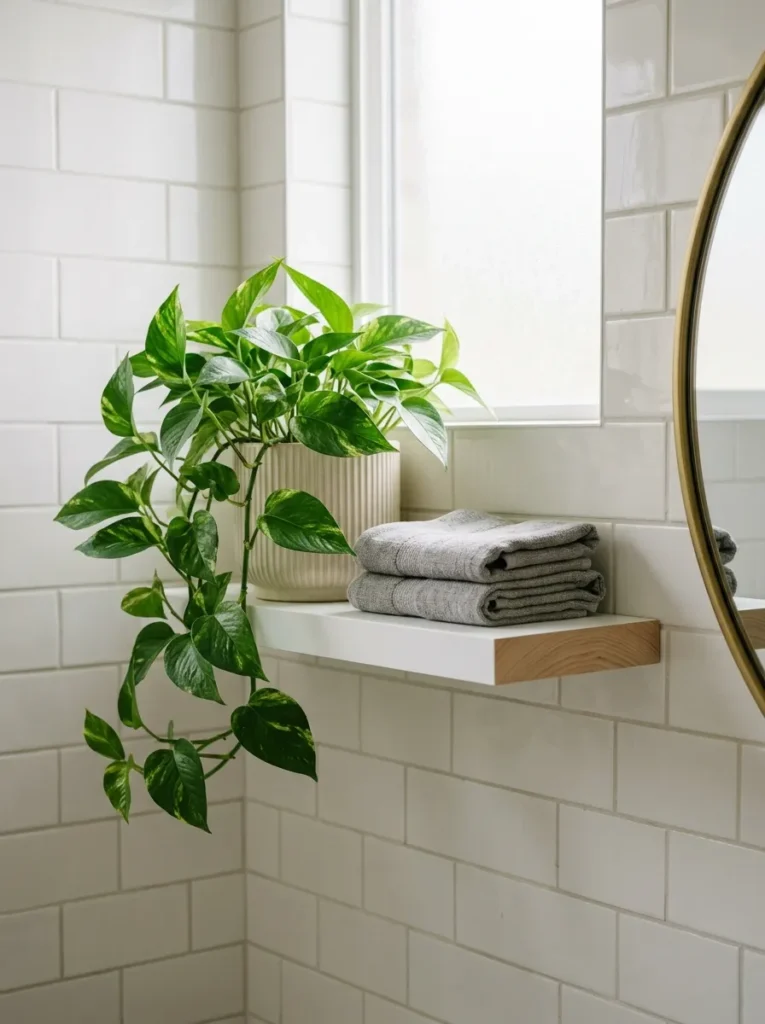
A single green plant on a bathroom shelf creates a disproportionate amount of warmth compared to its size. The key is placement — position it at or just below eye level so it registers immediately when you enter the room, rather than tucking it on the highest shelf where it disappears. Pothos, small ferns, and ZZ plants tolerate bathroom humidity and lower light well. Use a simple ceramic pot in white, sage, or terracotta rather than a plastic nursery pot, which undermines the entire effect. If your bathroom has no natural light, a high-quality faux stem in a textured pot achieves the same visual result.
5. Use a Woven Basket to Conceal the Shelf’s Least Attractive Necessities
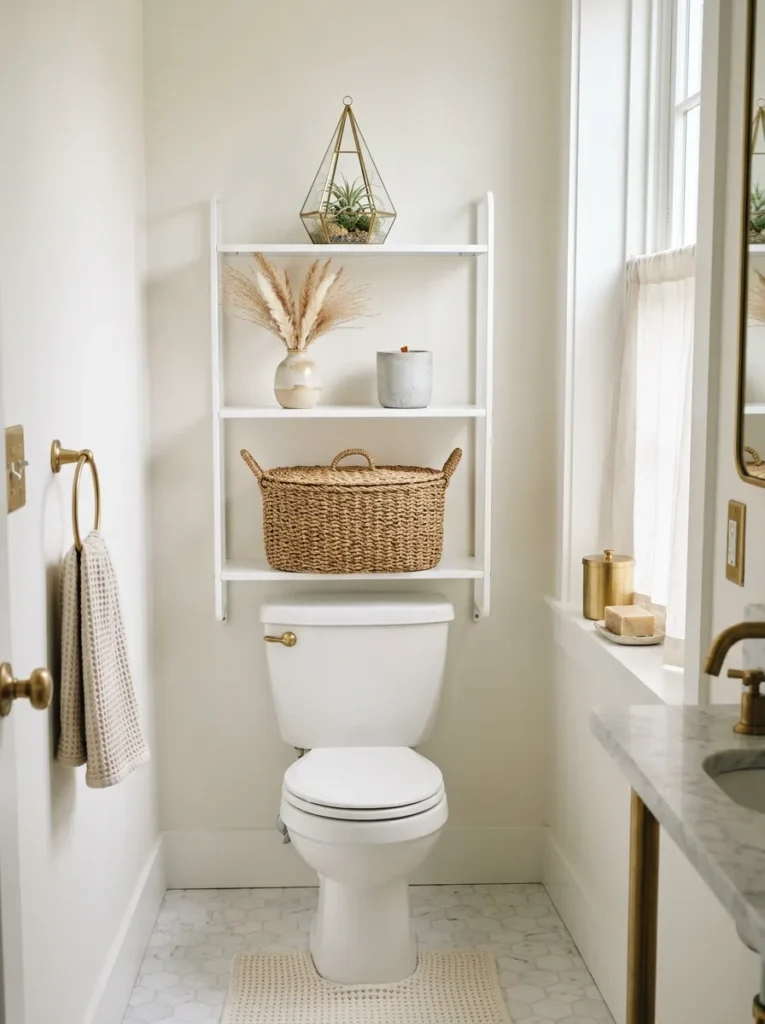
Every bathroom has items you need daily but don’t want to display — extra toilet paper, cotton pads, cleaning wipes, hair ties. A seagrass, rattan, or jute basket in a natural tone absorbs that visual clutter without hiding the items completely. Place it on a lower or less visible shelf, and choose a size that fills roughly two-thirds of the shelf depth so it looks intentional rather than crammed. Baskets with a subtle handle or textural weave add a layer of organic warmth that pairs especially well with white or light-toned bathrooms. Avoid overfilling — the basket should close or at least look tidy from the front.
6. Create Depth with Layered Heights Across a Single Shelf
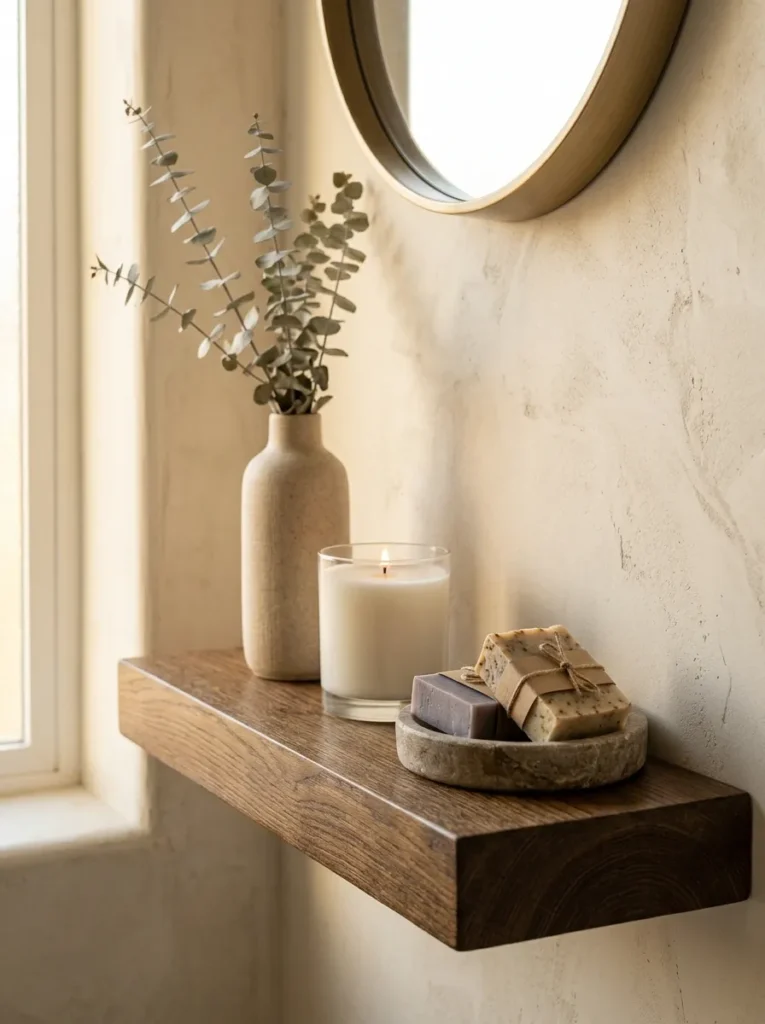
Flat arrangements — where every item sits at the same height — are the most common reason bathroom shelves look uninspired. Fix this by deliberately varying heights: a taller item at the back (a slim vase with dried eucalyptus, for example), a mid-height piece in the middle (a candle or dispenser), and a low item in front (a small dish or stacked soap bars). This front-to-back layering creates depth that draws the eye in, much like a well-composed photograph. The effect is strongest on shelves that are at least 15 cm deep. On very shallow shelves, a side-by-side height variation works better than front-to-back.
7. Lean a Small Piece of Art or a Round Mirror Against the Wall
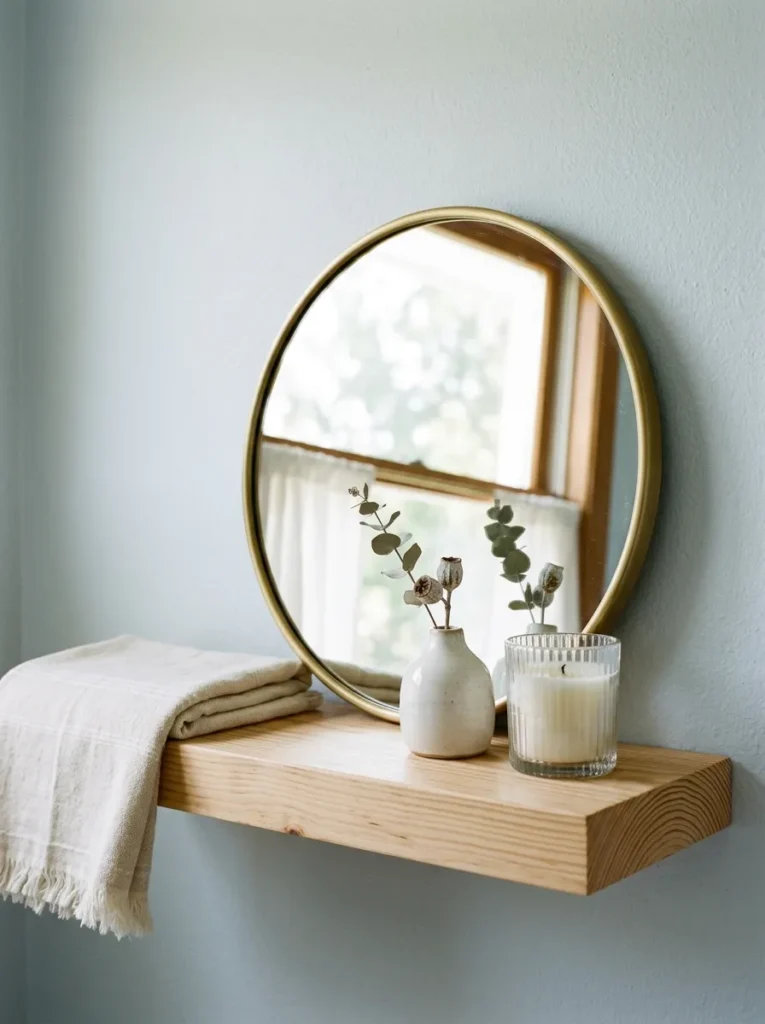
Propping a small framed print or a compact round mirror against the back wall of a shelf instantly elevates it beyond storage. The mirror option reflects light and creates a sense of more space, which is particularly useful in windowless bathrooms. A framed botanical print or simple line drawing adds personality without clutter. Keep the artwork small enough that it doesn’t dominate the shelf — it should be one element in a grouping, not the entire display. Lean rather than hang it for a relaxed, editorial look that’s also renter-friendly since no extra holes are required.
8. Display Bath Salts or Dried Botanicals in Clear Glass Jars
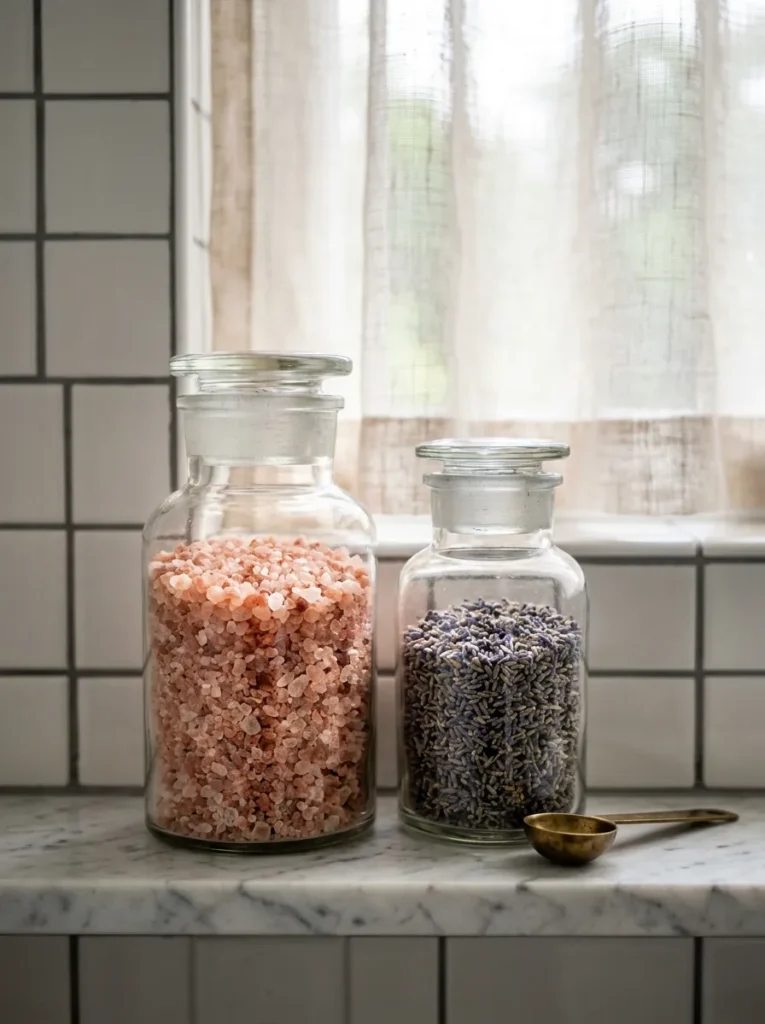
Clear glass containers turn everyday bath products into visual texture. Fill an apothecary jar or a simple cylinder with Epsom salts, bath crystals, or dried lavender buds. The transparency adds a layer of visual interest because you see both the container and its contents, creating more complexity than a solid ceramic piece. Group two jars of different heights together, or pair one with a smaller votive candle. This idea works best on shelves at or above eye level, where the light passes through the glass. Choose jars with clean, simple shapes — overly ornate or novelty-shaped containers tend to look dated.
9. Dedicate One Shelf to a Single, Intentional Grouping
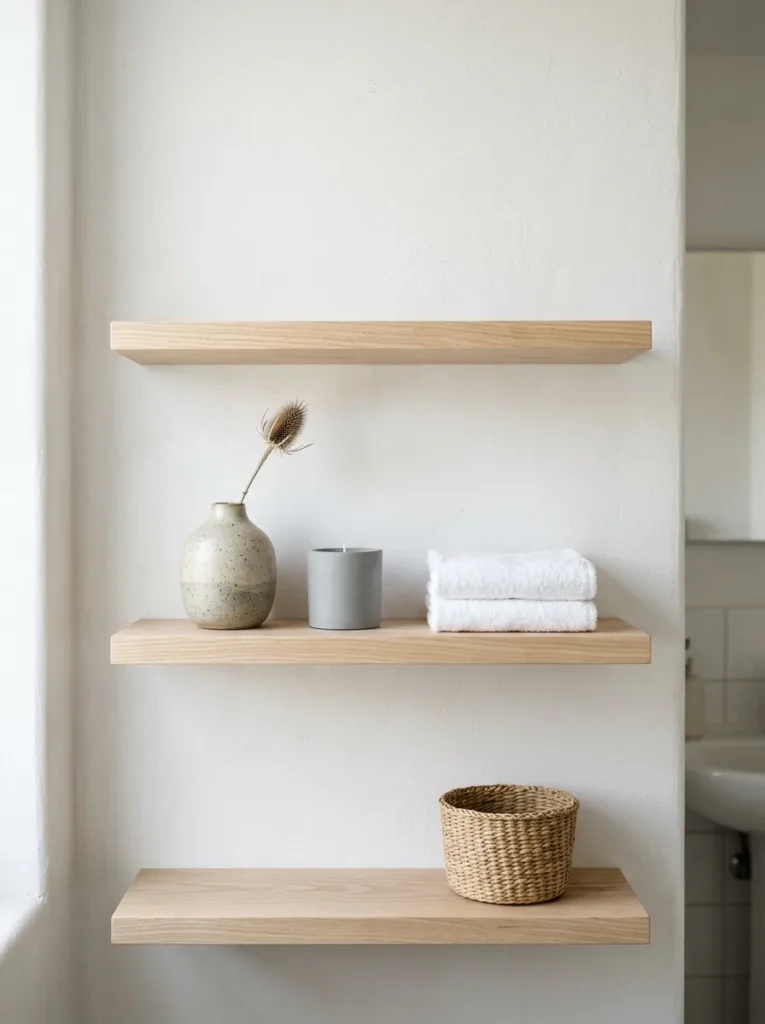
The most polished shelf displays in magazines share a common trait: restraint. Instead of filling every shelf equally, choose one shelf and create a single curated moment — perhaps a ceramic vase, a candle, and a small stack of linen washcloths. Leave the surrounding shelves more functional or even partially empty. This concentrated approach gives the eye a focal point and prevents the wall from feeling like a storage unit. The technique is especially effective on three-shelf arrangements where the middle shelf carries the decorative weight and the top and bottom remain simpler.
10. Add a Scented Candle in a Material That Matches Your Palette
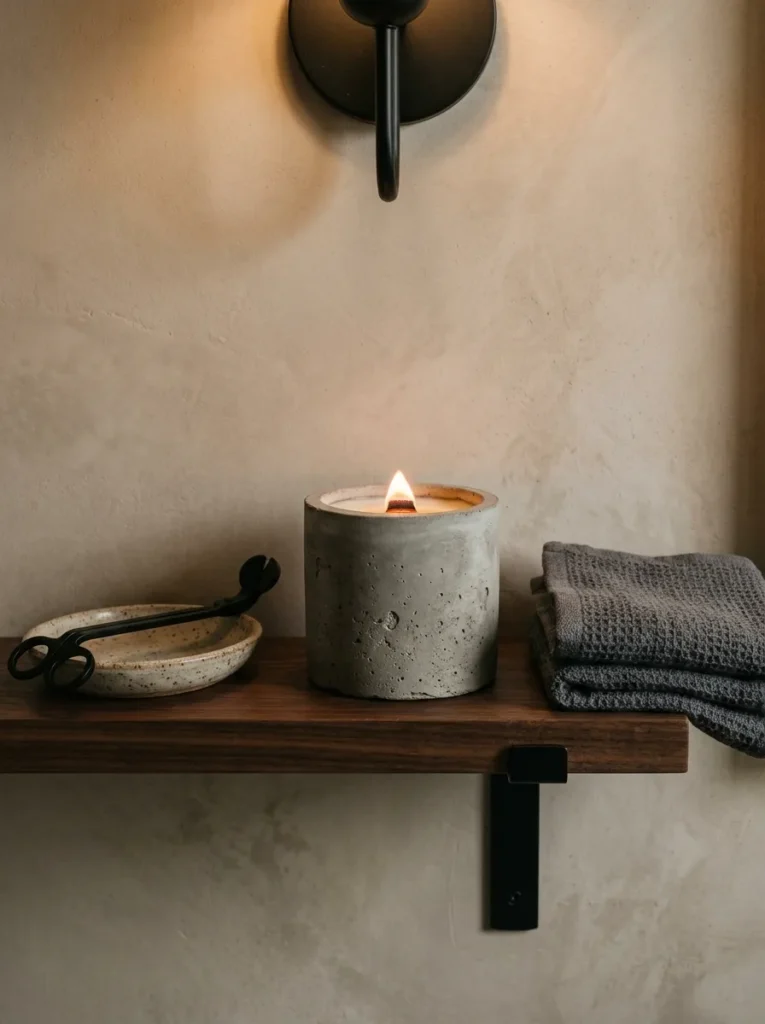
Candles serve double duty on bathroom shelves — they contribute atmosphere when lit and visual weight when they’re not. Choose a candle housed in a vessel that contributes to your shelf’s material story: a frosted glass tumbler in a muted tone, a concrete vessel for a modern bathroom, or a ceramic cup for something warmer. Position the candle where it won’t be knocked over when reaching for towels or products. Avoid placing it directly next to a plant or paper product. A single well-chosen candle outperforms three mismatched ones, and the vessel becomes a small container for cotton rounds or pins once the wax is gone.
11. Install Floating Shelves in a Staggered Arrangement
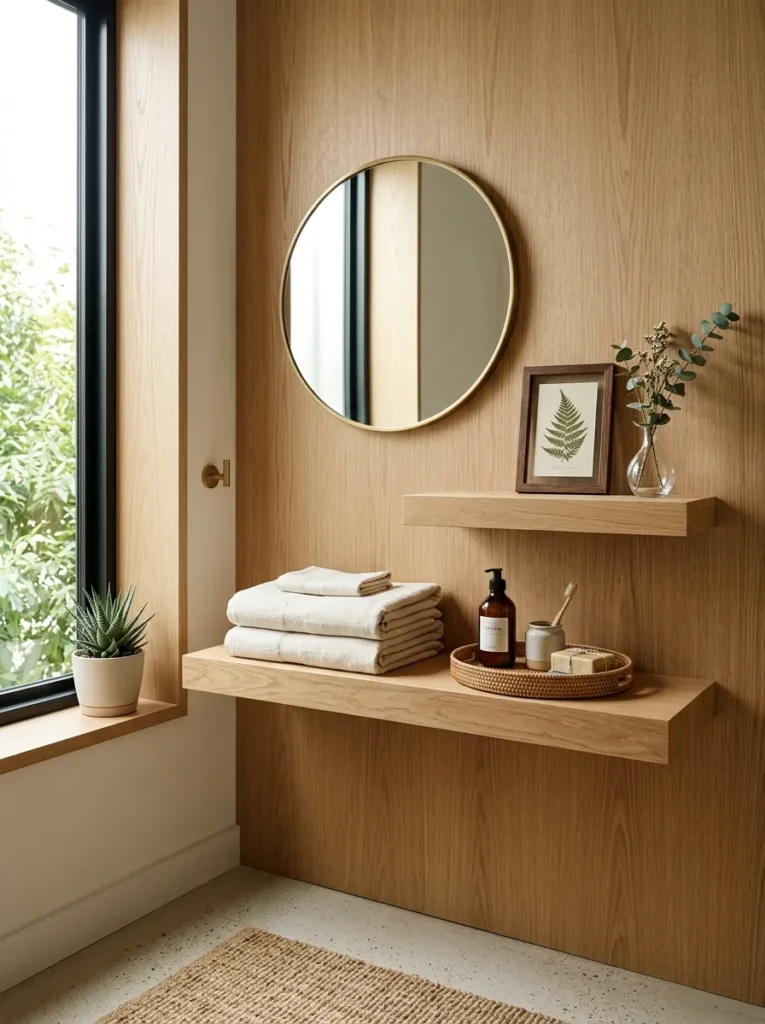
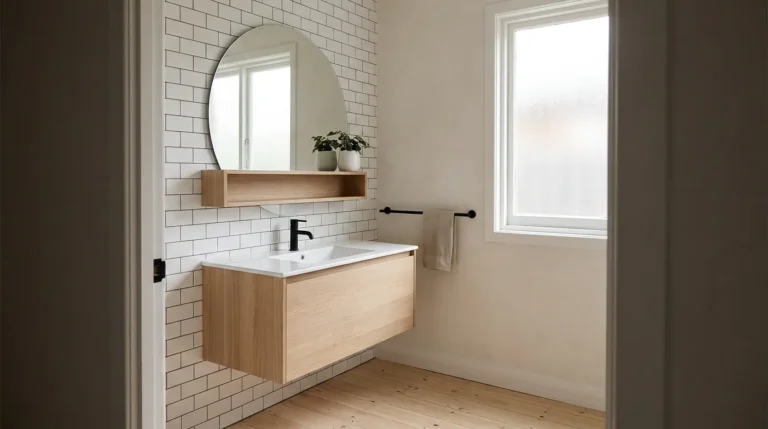
Two floating shelves at different heights and slightly offset from each other create a more dynamic, architectural look than a straight vertical stack. Stagger them so the lower shelf extends slightly past the upper one, or offset them to either side of a mirror. This arrangement gives each shelf its own identity and prevents the rigid, bookcase-like feeling that identical parallel shelves sometimes create. Staggered floating shelves also let you mix shelf depths — a shallower upper shelf for small items, a deeper lower one for towels or a basket. Mount them into studs or use appropriate wall anchors, especially in humid rooms where adhesive solutions tend to fail.
12. Pair Brass or Matte-Black Hardware Accents with Neutral Tones
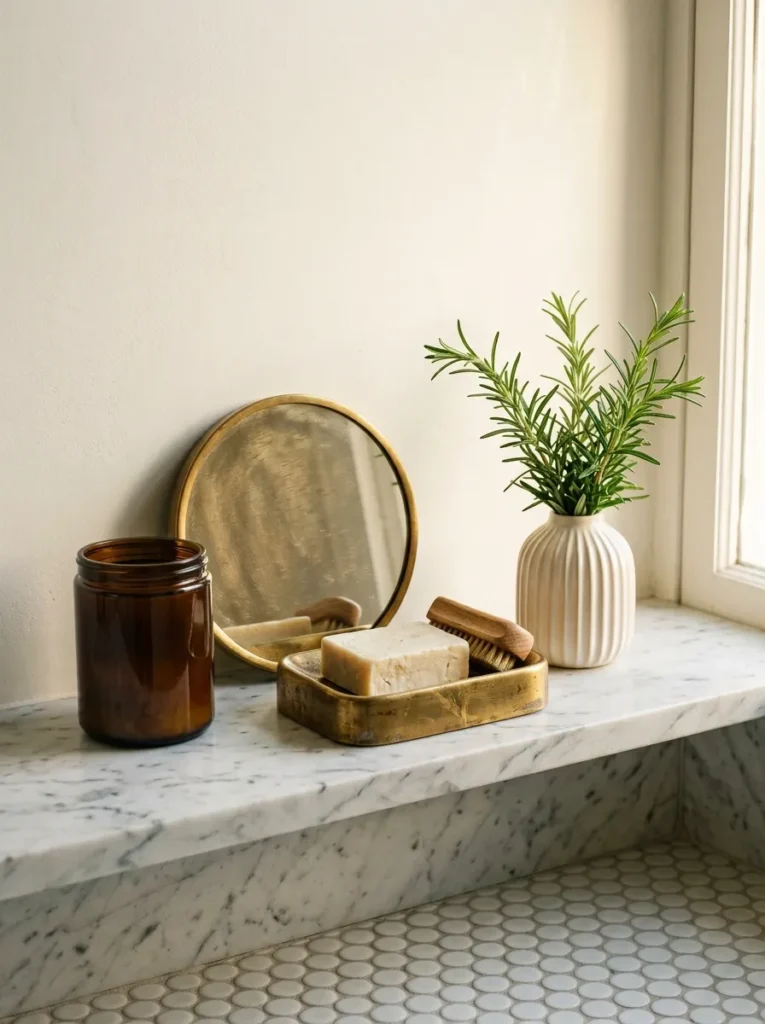
Metal accents on a bathroom shelf — a brass soap dish, a matte-black towel ring, a brushed-nickel tray — create the kind of subtle contrast that makes a neutral palette feel considered rather than bland. Match the metal finish to your existing bathroom hardware (faucets, towel bars, light fixtures) for a cohesive effect. One or two metallic pieces per shelf grouping is enough — too many compete for attention. Brass warms up cool white and grey bathrooms, while matte black anchors softer palettes with visual weight. These small metal touches are also some of the most affordable ways to make open shelves look intentionally designed.
13. Use a Narrow Shelf Above the Sink for Daily Essentials Only
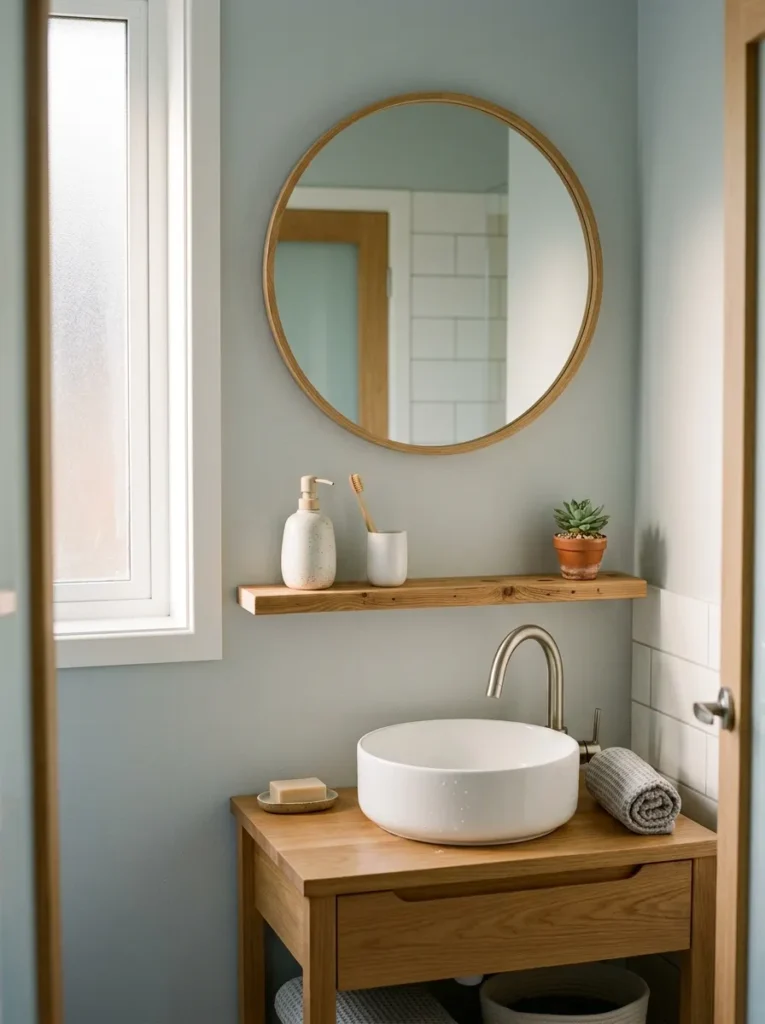
If you have wall space directly above or beside the vanity, a single narrow shelf (roughly 10–12 cm deep) dedicated to your three or four most-used items keeps the countertop clear without burying essentials inside cabinets. Place your daily moisturizer, a hand soap dispenser, and a small ceramic cup for your toothbrush on this shelf. The narrowness forces editing — you physically cannot overcrowd it, which is what keeps it looking clean. This approach is especially useful in rental bathrooms where you can’t install cabinetry but need accessible storage close to the mirror.
14. Bring Texture with a Natural Loofah, Sea Sponge, or Wooden Brush
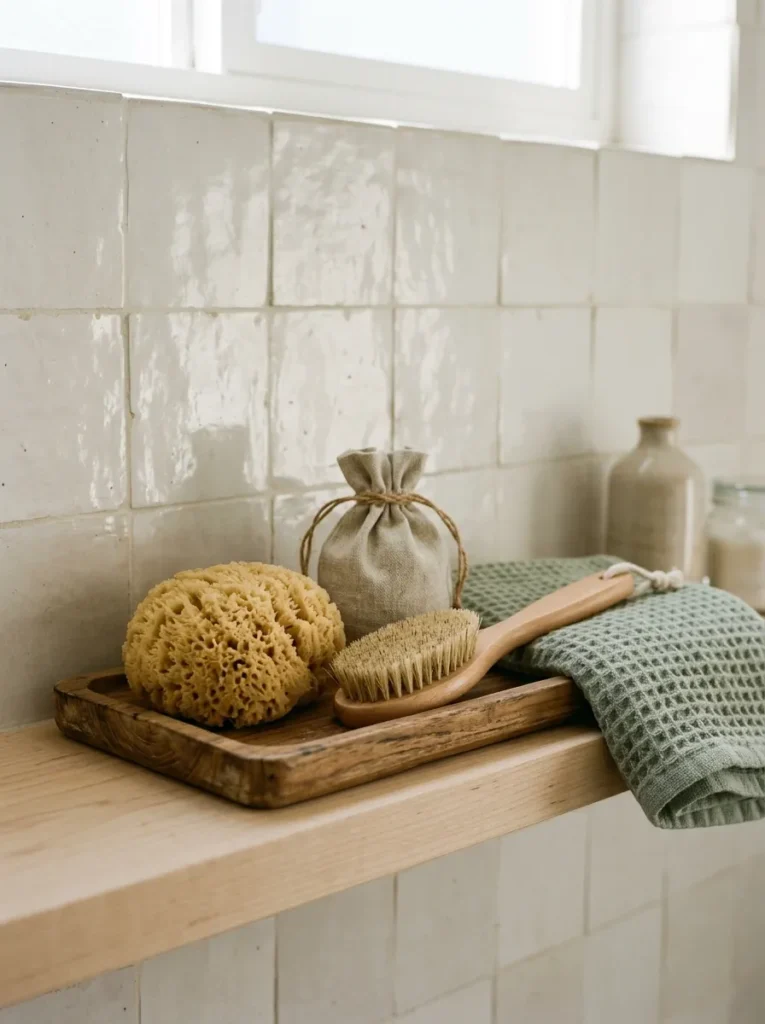
Spa bathrooms lean heavily on natural textures, and these small accessories deliver outsized visual impact on a shelf. A natural sea sponge, a wooden-handled body brush, or a sisal loofah adds organic shape and warmth that manufactured items can’t replicate. Place them in a shallow dish or tray rather than directly on the shelf surface — it contains them and signals that they’re part of the display, not forgotten. These items also photograph exceptionally well, making them strong Pinterest performers. Replace them periodically since natural bath accessories can degrade in humid environments.
15. Separate Functional Zones on Multi-Shelf Units
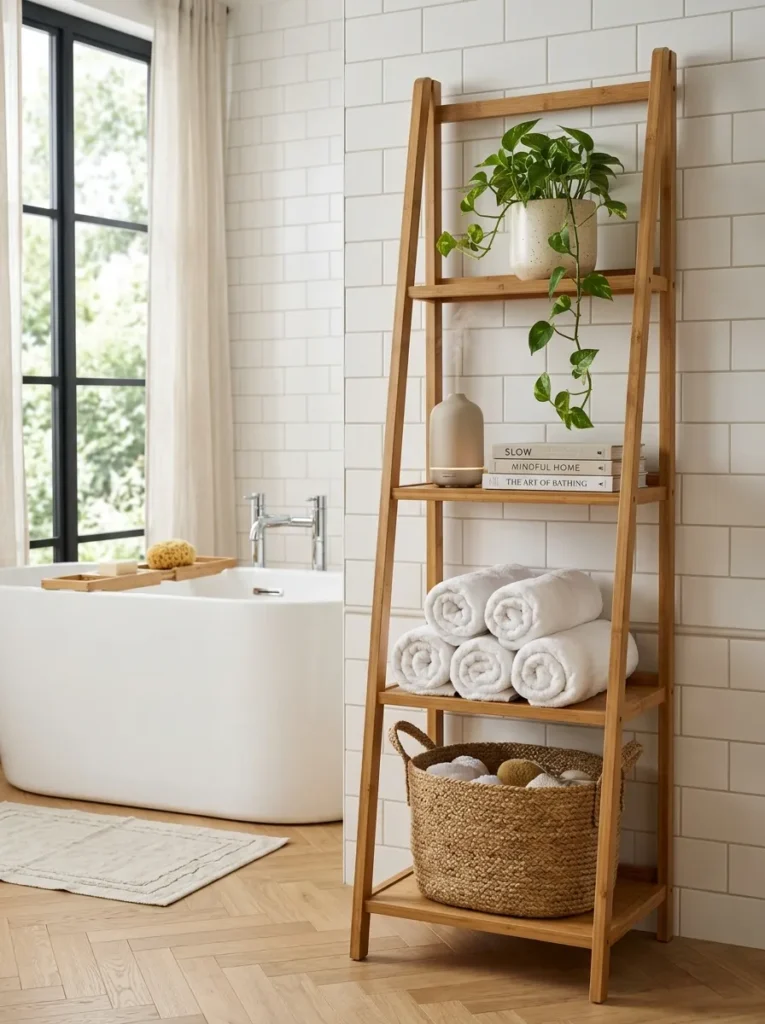
When you have three or more shelves in a single unit — like a ladder shelf or an over-toilet étagère — assign each shelf a clear purpose. Reserve one for towels and linens, one for decorative items and a plant, and one for concealed storage using a basket. This zoned approach prevents the chaotic, everything-everywhere look that multi-shelf units often develop over time. The most natural arrangement places heavier, bulkier items (baskets, towel stacks) on lower shelves and lighter, smaller items higher up, which also makes the unit feel more visually stable.
16. Choose a Cohesive Color Story and Commit to It
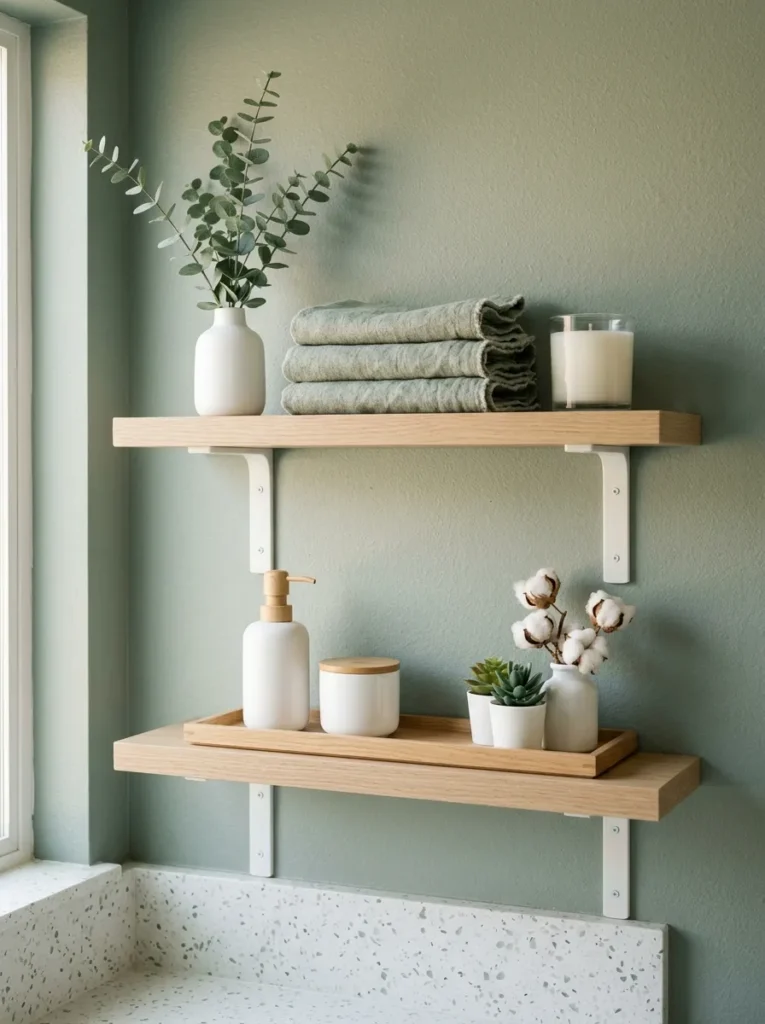
The difference between a bathroom shelf that looks curated and one that looks cluttered often comes down to color discipline. Pick two or three tones — warm white, natural wood, and sage green, for example — and ensure that every item you place on the shelf fits within that range. This doesn’t mean everything must match exactly, but the tonal consistency is what creates calm. If a product bottle, container, or accessory clashes with your palette, either decant the product, conceal it in a basket, or relocate it to a closed cabinet. Color cohesion is the simplest styling principle that most people skip.
17. Leave Intentional Negative Space Between Groupings
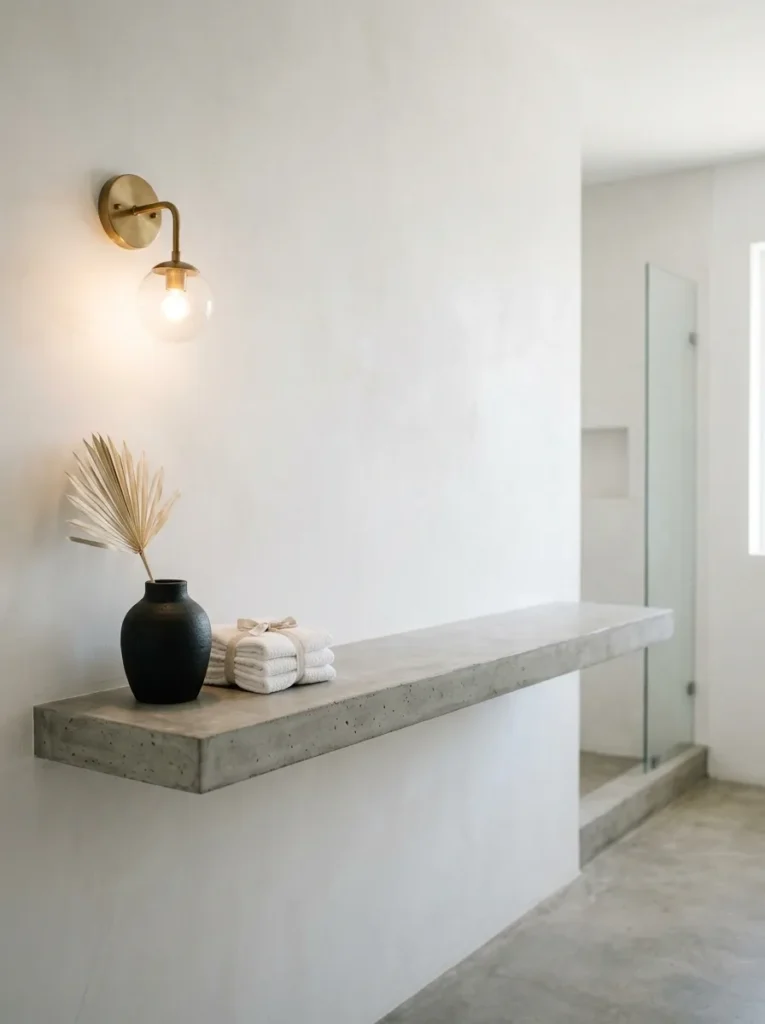
The instinct to fill every open spot on a shelf is strong — and it’s the most reliable way to make any display look cluttered. Deliberately leaving space between groupings, and leaving at least one shelf partially empty, is what creates the breathing room that spa environments rely on. A shelf that’s 60–70% occupied generally looks more intentional than one filled to capacity. The empty space also makes the objects you do display more visible and more impactful. If a shelf looks too empty, resist the urge to add more items — instead, reconsider whether the items you’ve chosen are substantial enough on their own.
18. Rotate Seasonal Accents Without Overhauling the Entire Display
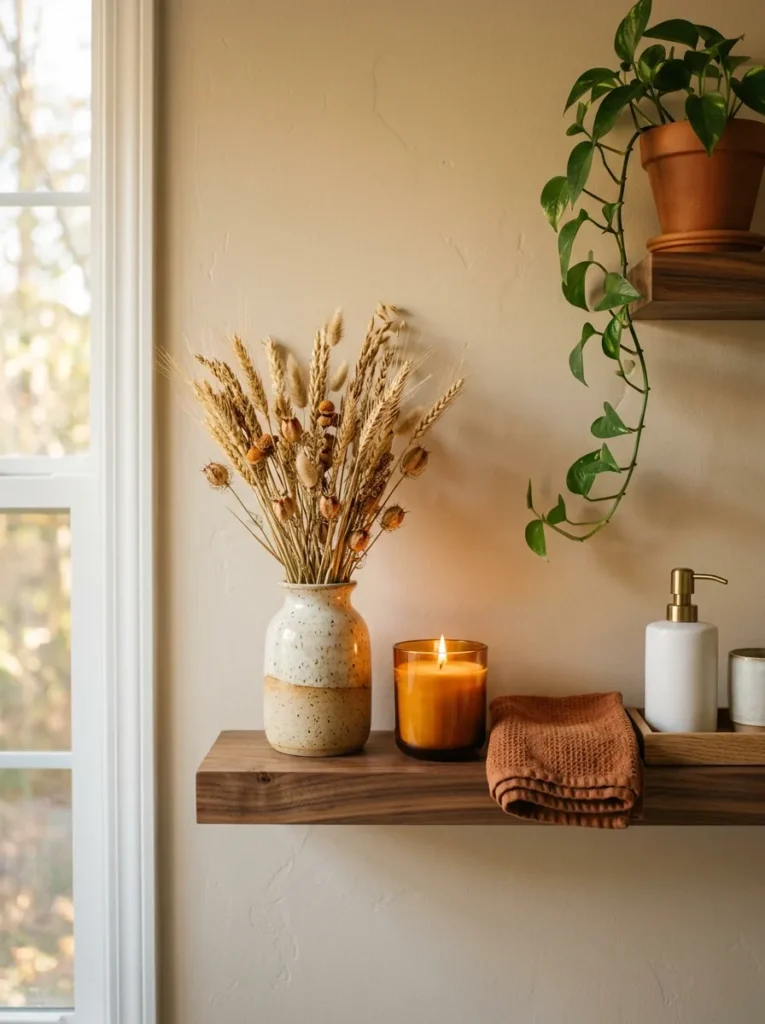
A shelf arrangement that never changes eventually blends into the background. Swap one or two small elements seasonally — dried lavender for fresh eucalyptus in spring, a lighter linen for a warmer woven textile in autumn, a clear glass vase for a ceramic one. The key is adjusting accents while keeping your foundational items (towels, baskets, trays) in place. This light rotation keeps the shelves feeling fresh without requiring a full restyle, and it gives you a reason to reassess whether every item is still earning its spot. Most well-maintained shelf displays only need this kind of minor refresh every few months.
Final Thoughts
The thread running through every idea here is the same one that defines real spa design: restraint paired with intention. You don’t need expensive accessories or a complete bathroom renovation — you need a clear color palette, a few natural materials, and the discipline to leave space for the eye to rest.
If you’re planning a complete bathroom refresh, keep the inspiration going with our other bathroom decorating guides, where you’ll find stylish storage solutions, vanity ideas, and relaxing design inspiration to help you create a bathroom you’ll love spending time in.