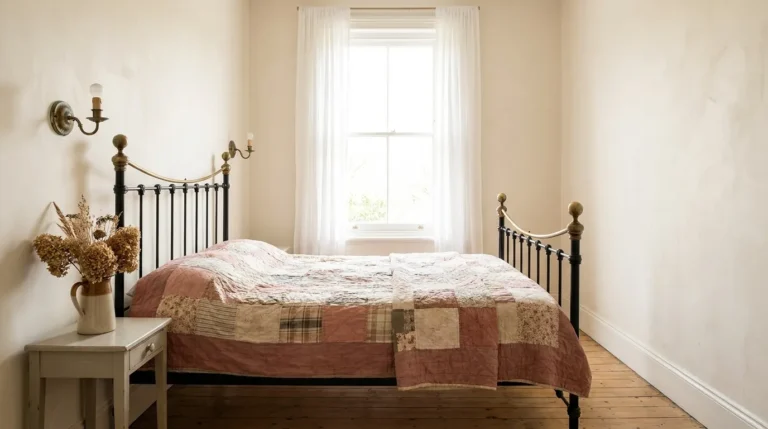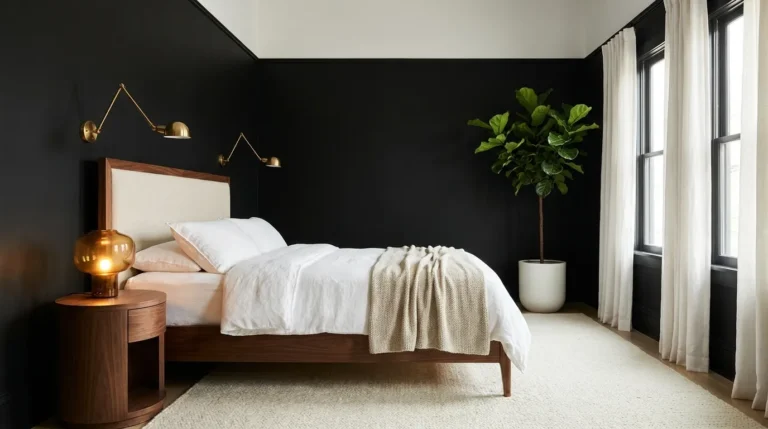
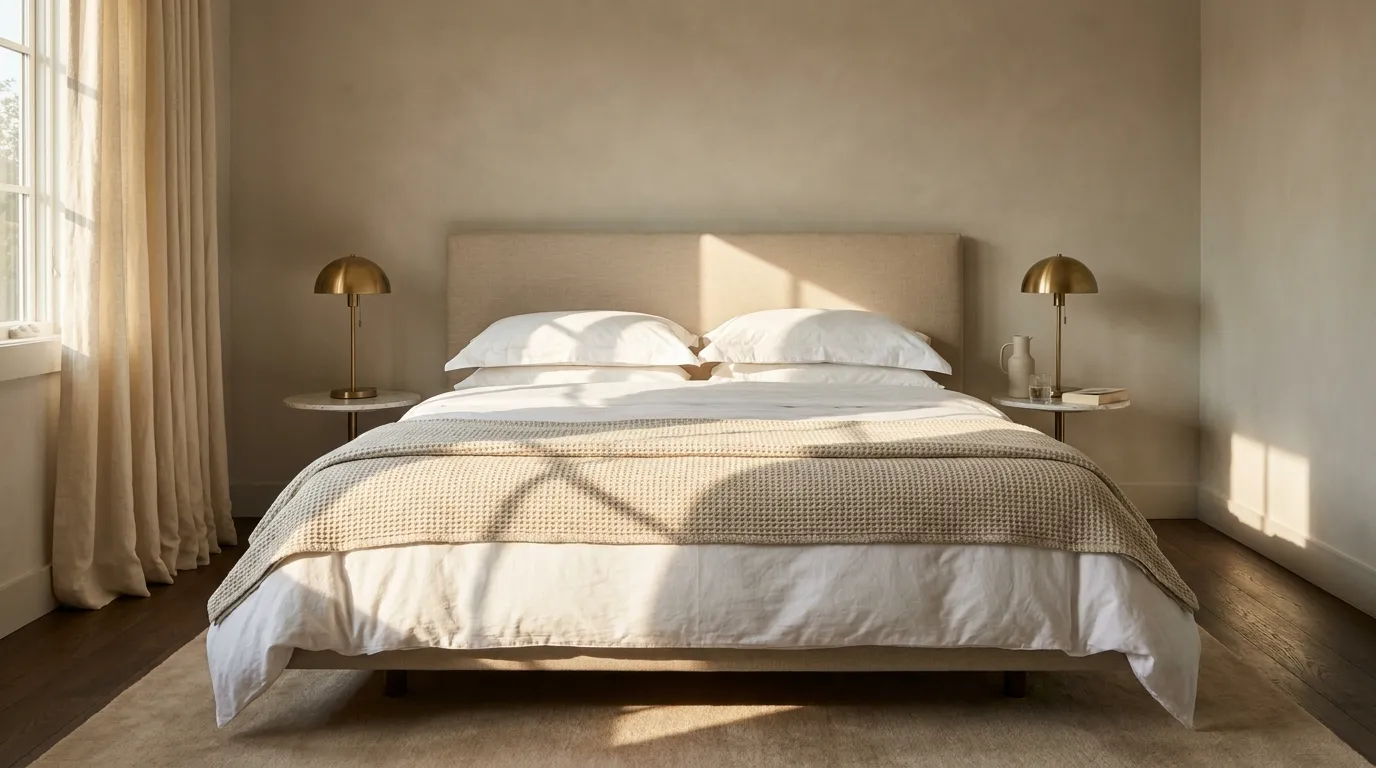
22 Guest Bedroom Ideas That Feel Warm and Welcoming
There’s a telling moment that happens when a guest walks into a spare room and immediately feels like an afterthought. The bed is made, the lamp works, but nothing about the space says you were expected. Most guest bedrooms don’t fail for lack of furniture — they fail for lack of intention.
A guest bedroom sits in an odd position in the home. It gets used occasionally, it often doubles as a storage room or home office, and it rarely receives the same design attention as the spaces you inhabit every day. The result is a room that’s technically functional but emotionally flat.
These guest bedroom ideas work across a range of room sizes, budgets, and styles — and the goal isn’t visual perfection. It’s the specific feeling that someone considered what a guest actually needs: light they can control, a bed they’ll sleep well in, a place to put their things, and enough warmth in the room to make them forget they’re not at home.
1. Start With a Bed Worth Sleeping In
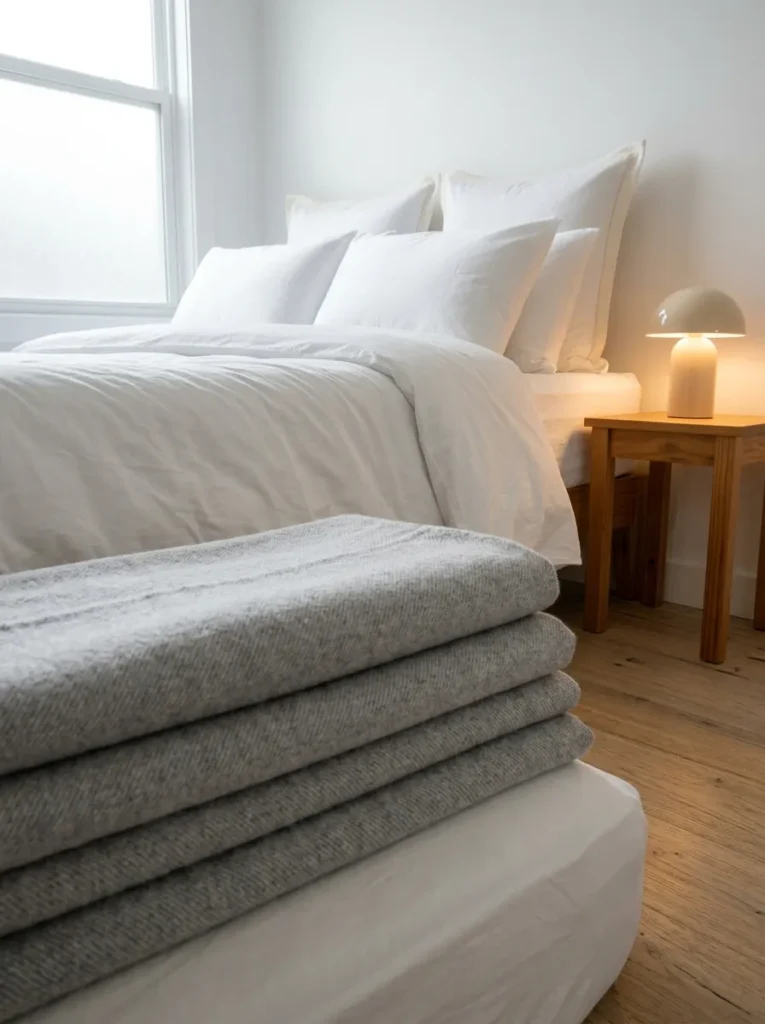
Everything else in the room is secondary to the mattress and bedding. A guest who sleeps badly will remember it regardless of how well the room looks, and a guest who sleeps well will forgive a lot of imperfection.
A medium-firm mattress works for most sleepers. If you’re limited to a budget option, prioritize a quality mattress topper — a two-inch memory foam or wool topper over a basic mattress will significantly outperform a cheap mattress alone. For bedding, white or warm ivory cotton percale or sateen reads as clean and hotel-quality without requiring professional styling. Layer with at least one lightweight blanket folded at the foot for guests who run warm, and a spare duvet in the closet for those who don’t.
The one mistake worth avoiding: novelty bedding in bold prints. It photographs well but often clashes with what guests bring in their suitcase, and it can make the room feel like it was decorated for someone specific — which, for a guest, means someone else.
2. Choose a Calming Neutral Over a Safe Beige
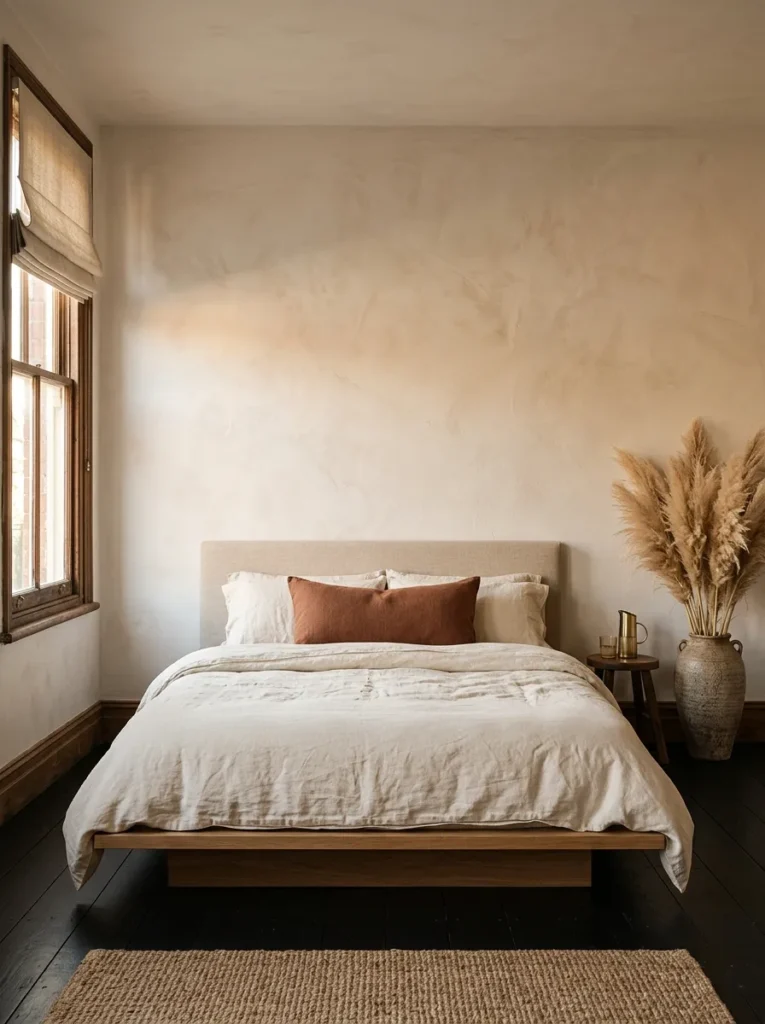
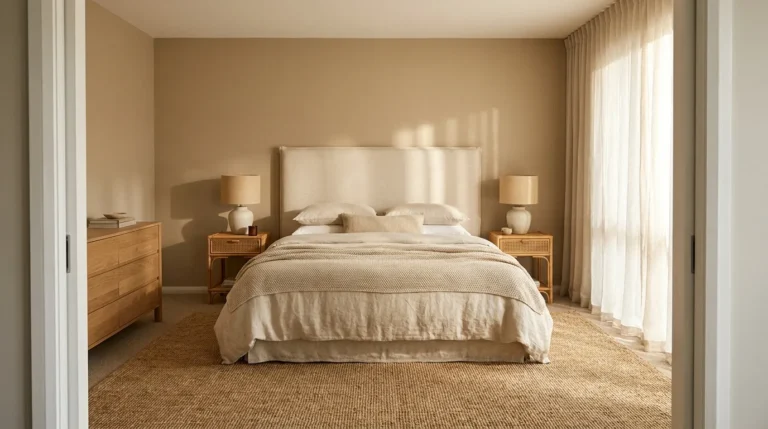
The go-to advice is to paint the guest room a neutral — which is correct, but “neutral” doesn’t have to mean the flat, lifeless beige that many spare rooms end up with. The most welcoming guest rooms tend to use neutrals with some warmth or depth behind them: a soft terracotta-inflected white, a warm greige, a faded sage, a barely-there blush, a driftwood gray with warm undertones.
The principle here is that undertones are felt even when they’re not consciously noticed. A cool blue-gray wall reads as slightly clinical in natural light. The same wall in a warm greige reads as settled and relaxed. If painting feels like a commitment, the same effect comes from wall-to-wall warm-white curtains or warm-toned bedding against a white wall — the textile carries the undertone and the wall stays neutral.
3. Build the Lighting in Layers
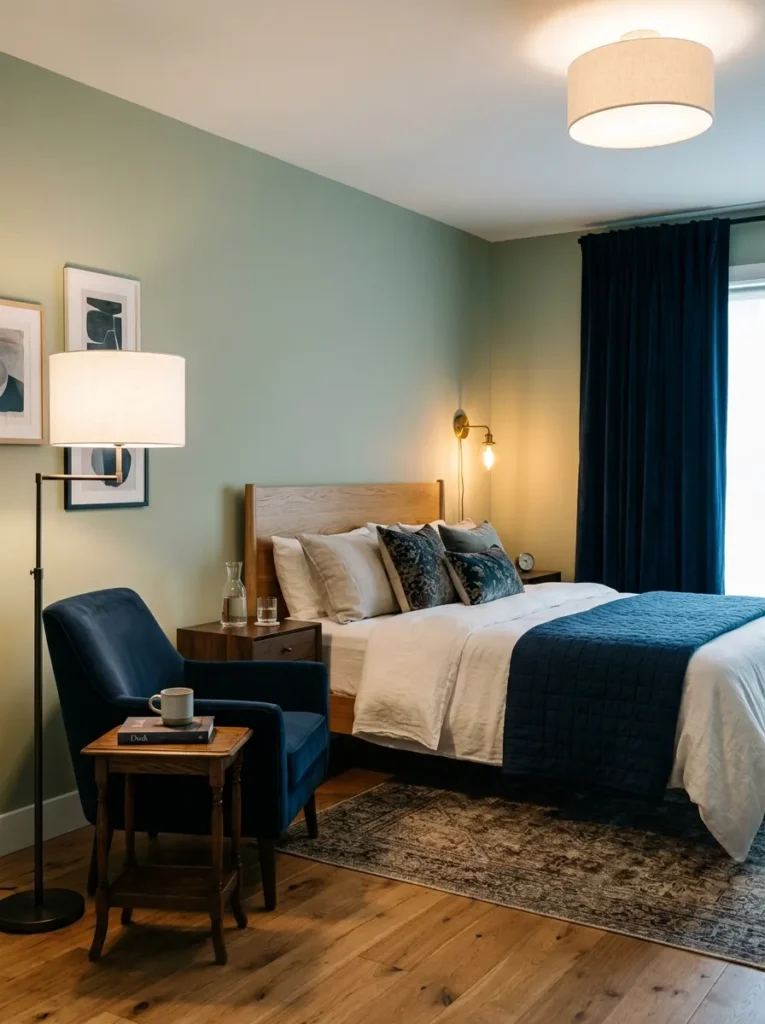
Overhead lighting alone is a common and significant problem in guest rooms. A ceiling fixture that’s either harsh or insufficient — or both — limits the guest’s ability to create any atmosphere in the room. They can’t turn it off and rely on something softer, because nothing softer exists.
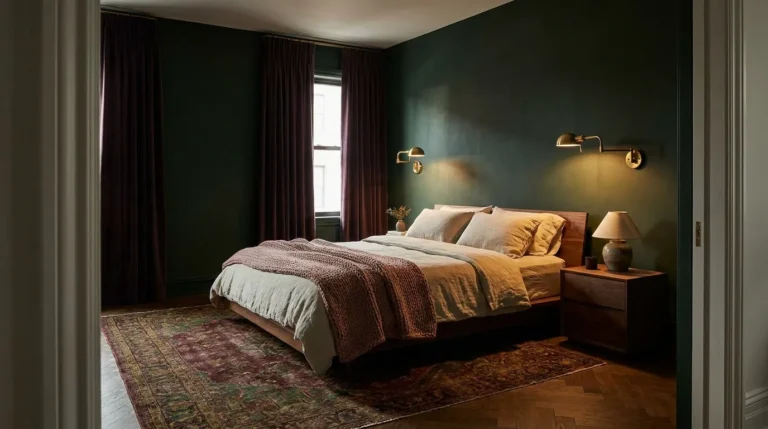
The fix is simple enough: add at least one bedside lamp on each side of the bed and ensure there’s a floor lamp or wall sconce that can serve as ambient lighting when the overhead is off. Each of these light sources should have independent control — separate plugs at minimum, smart bulbs for convenience. If rewiring isn’t possible, plug-in wall sconces avoid the need for an electrician and look intentional when chosen in a consistent finish, such as brushed brass or matte black.
Aim for bulbs around 2700K (warm white) rather than 3000K or higher, which trends toward cool and clinical in bedroom spaces.
4. Give the Bed Its Own Focal Wall
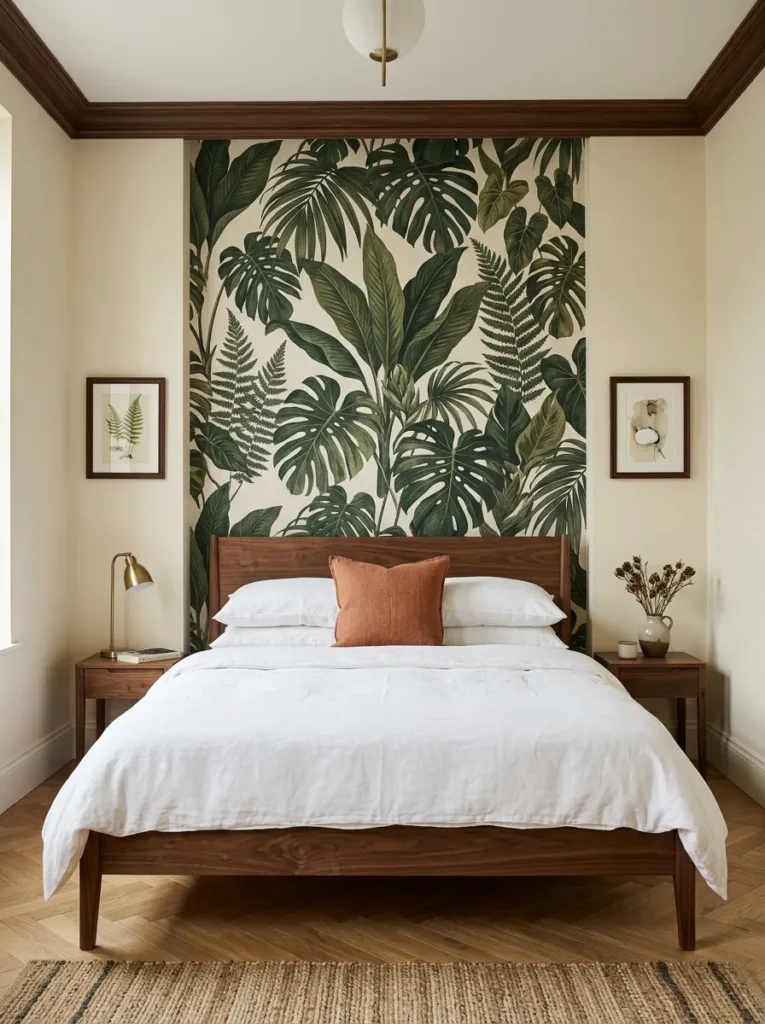
In a guest room, the bed is often pushed against any convenient wall without much consideration of what’s behind it. The difference between a room that feels designed and one that feels improvised often comes down to whether the bed has a proper backdrop.
This doesn’t require a headboard, though a linen or upholstered headboard significantly anchors the look. A gallery wall, a large-scale piece of art, or a painted or wallpapered accent wall behind the bed performs the same function — it signals that the bed is the intended focal point, which in turn makes the whole room feel more purposeful. The art or wall treatment should span roughly the width of the bed at minimum, or the visual proportions will feel incomplete.
5. Add a Second Nightstand, Even If It’s Small
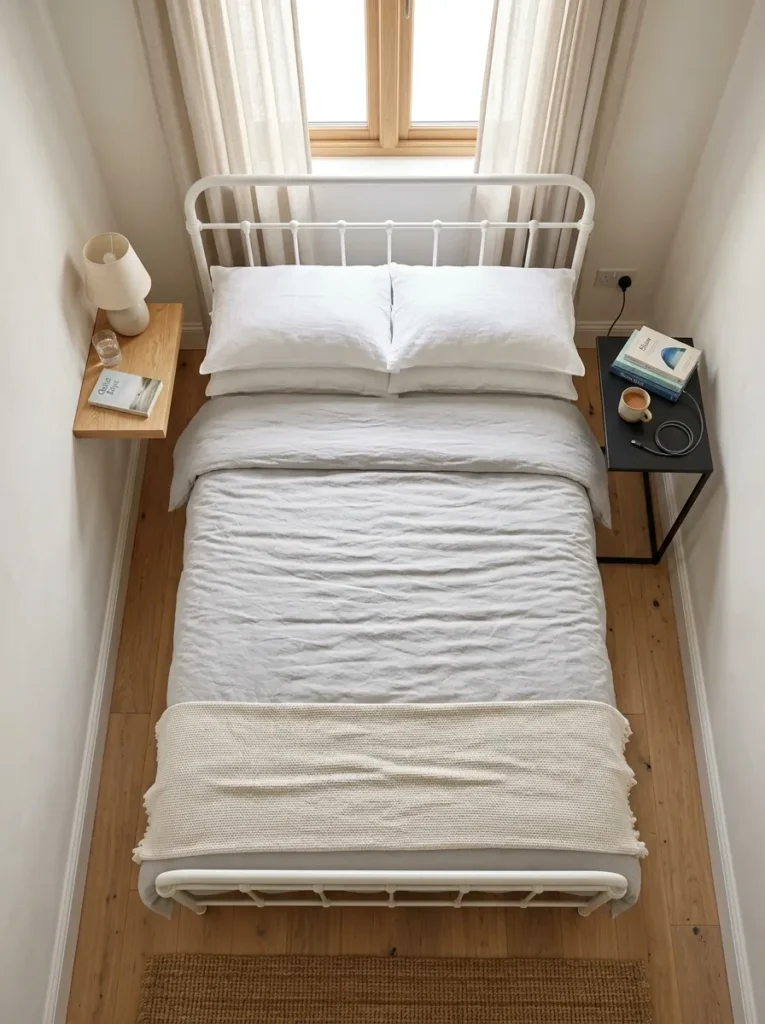
Single-nightstand guest rooms are common for practical reasons — the room may be narrow, or there’s only one lamp. But a guest who shares the bed with a partner, or who reads late, needs surface space on both sides. A drink, a phone, a book — these feel like luxuries that most guests won’t ask for but will immediately notice.
When the room is tight, slim bedside options require almost no floor space: a narrow floating shelf, a small wall-mounted ledge, a compact C-shaped side table that slides under the bed frame. The match doesn’t need to be exact. A mismatched pair of nightstands can work if they share a finish — both in natural wood, or both in black — and roughly similar height.
6. Commit to One Proper Storage Piece
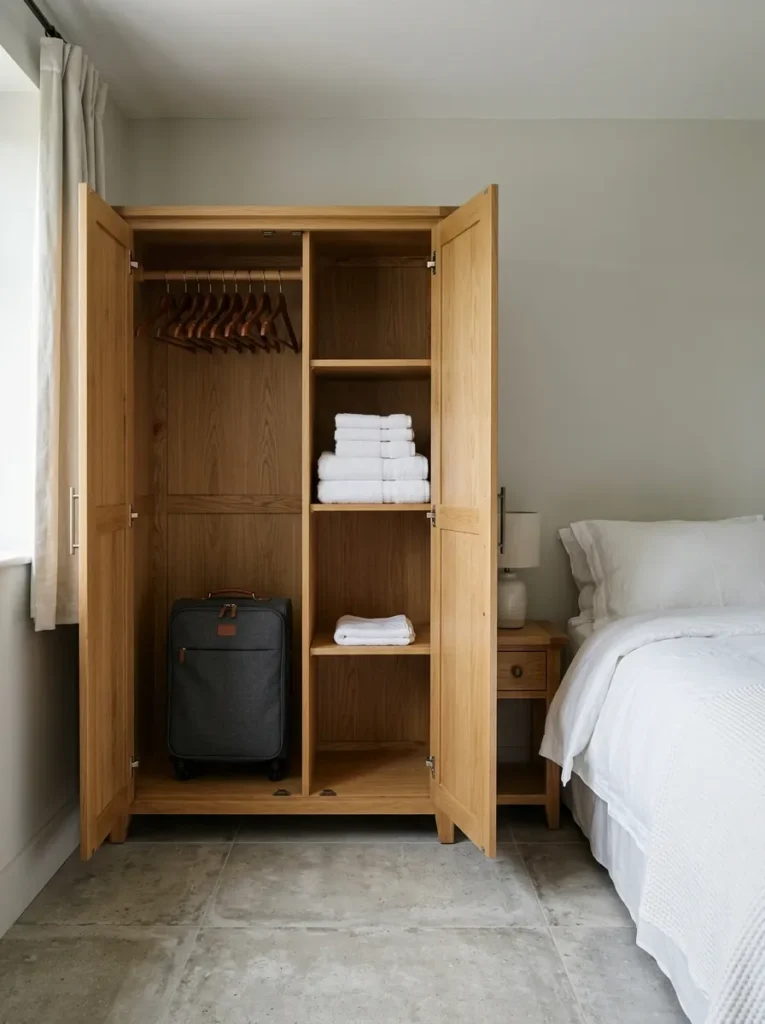
Guests who stay overnight can manage without dedicated storage. Guests who stay more than a day or two genuinely need somewhere to put their things, and a suitcase on the floor is both inconvenient and makes the room feel like a transit point rather than a place to settle.
A wardrobe, a chest of drawers, or even a luggage rack plus a row of hooks or a small open shelf solves this. Clear some actual space in whichever piece you provide — half a drawer or a hanging rail reserved for guests makes more psychological difference than it sounds. A room where all the storage is visibly full sends the message that the guest is an interruption; one where space has been held for them sends the opposite.
7. Use Curtains to Set the Room’s Mood
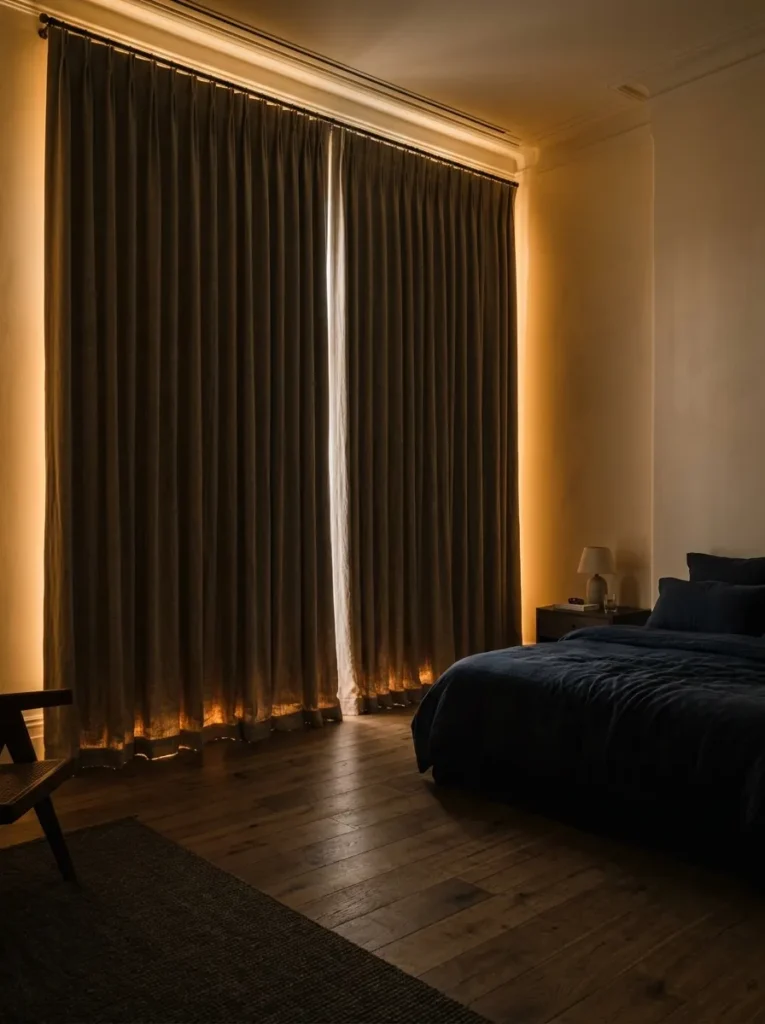
Curtains do more functional and visual work in a bedroom than almost any other textile element. They control light, add warmth, soften the architecture, and occupy a significant portion of the visual field.
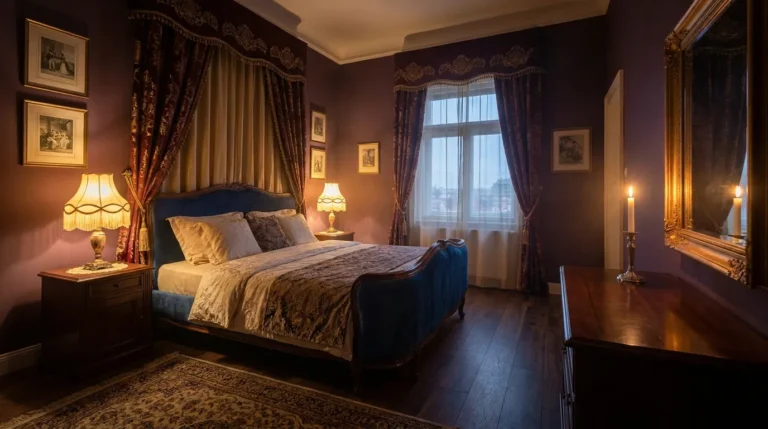
In a guest bedroom, blackout or blackout-lined curtains are worth the investment because guests may be on different schedules than the household and have limited ability to manage early light. Floor-length curtains installed near the ceiling (rather than just above the window frame) make a moderate-sized room feel more generous. The weight matters: a lightweight voile alone won’t block morning sun or street light; a heavier linen or velvet gives the room better acoustics and a more settled feel. For a room that needs both light blocking and daytime texture, a sheer layer underneath heavier curtains gives the guest options.
8. Replace the Bare Bulb Overhead With a Proper Fixture
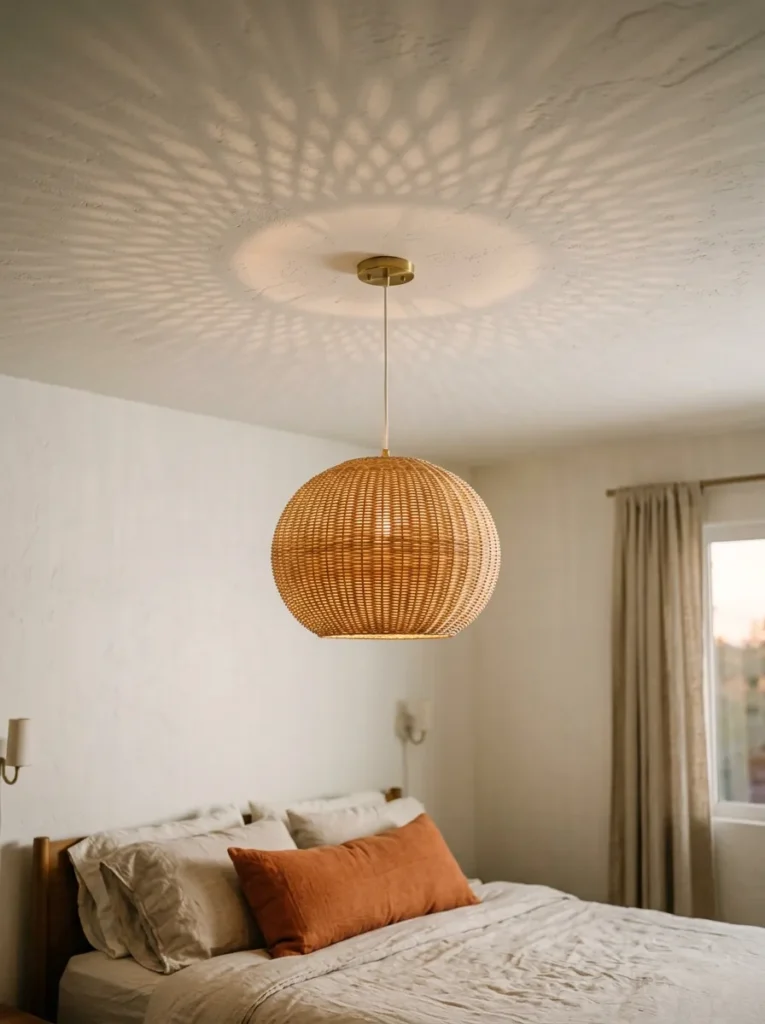
If the guest room has an exposed bulb or a builder-grade ceiling fixture, replacing it is one of the highest-return improvements for the visual impression of the room. A simple rattan pendant, a small drum shade, or a flush-mount with warm glass creates a ceiling detail that makes the room feel finished rather than temporary.
The fixture doesn’t need to be statement-making. In a guest bedroom, a subtle, well-chosen ceiling light often reads better than an elaborate chandelier that can make the room feel overdressed. Match the scale to the ceiling height — a pendant should hang well above head height, and a flush-mount should have enough surface area to read from across the room.
9. Layer the Bed With Texture, Not Pattern
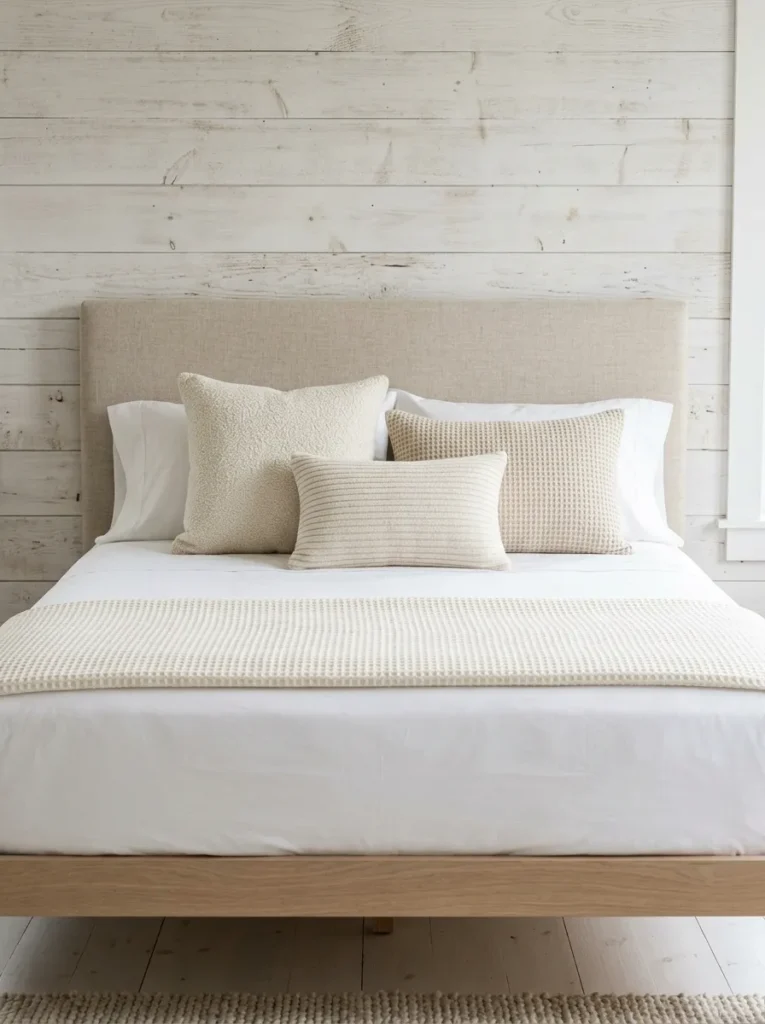
Heavily patterned bedding tends to polarize guests — some love it, some find it stimulating rather than restful — and it restricts the decorative flexibility of the rest of the room. Texture-led bedding, by contrast, reads as comfortable and considered without requiring guests to have any particular aesthetic.
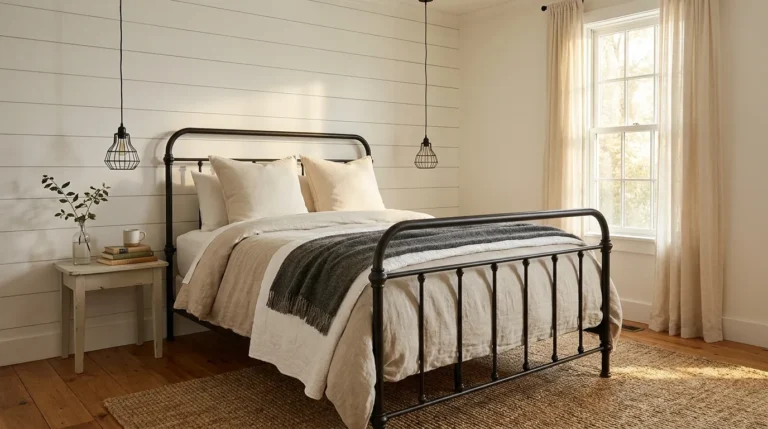
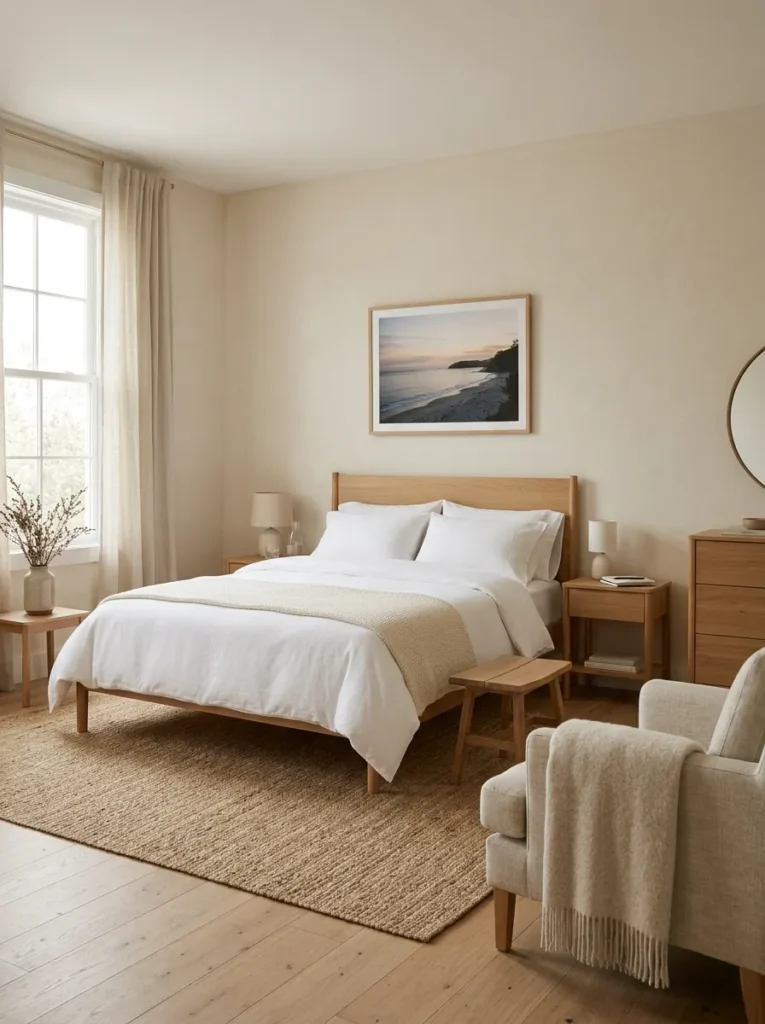
Layering works well: a fitted sheet and duvet in plain white or warm ivory, a textured coverlet or matelassé blanket in a slightly deeper neutral folded across the lower third of the bed, and two or three scatter cushions in complementary textures — linen, waffle cotton, bouclé. This combination photographs beautifully for Pinterest and, more importantly, actually invites a guest to get into the bed rather than feeling reluctant to disturb it.
10. Think Carefully About the Mirror
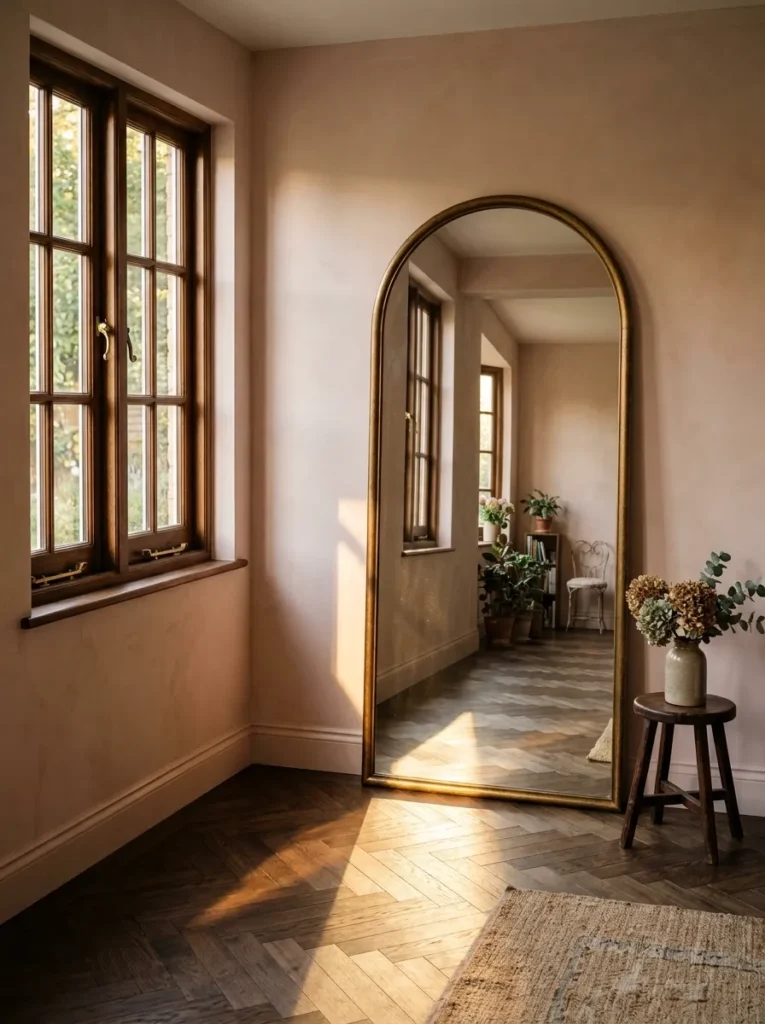
A full-length mirror is close to a non-negotiable for a guest bedroom. Guests preparing for the day need one, and most spare rooms don’t have one. A floor-length leaner works in rooms with a visible stretch of wall; a narrow door-mounted mirror works in rooms where floor space is genuinely limited.
Position matters: a mirror placed opposite a window reflects natural light into the room, which improves both the ambiance and the functionality. A mirror placed to reflect the bed or a particularly messy corner does the opposite. In small rooms, a well-placed mirror does meaningfully expand the sense of space, but only when it’s reflecting something worth reflecting — good light, a window, a styled section of the room.
11. Provide Actual Bedside Essentials
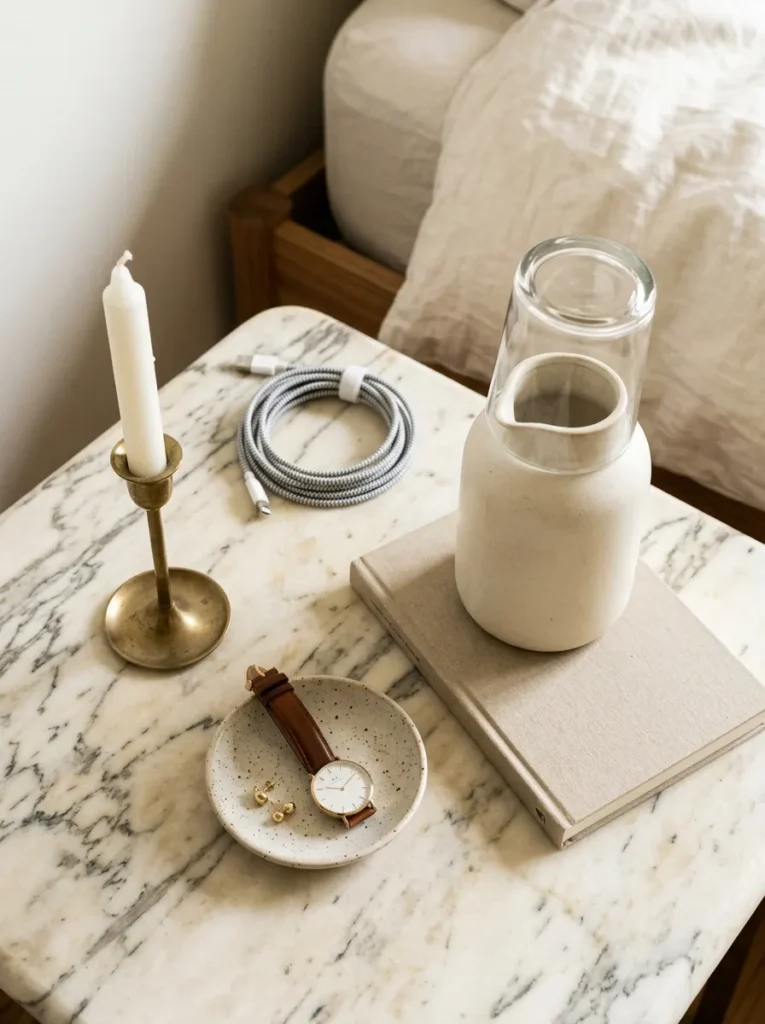
The experience of staying in a well-considered guest room is often defined by small things that required no particular expense — just forethought. A few specific things make a visible difference: a glass or ceramic water carafe and glass on the nightstand; a small tray or dish where a guest can put their phone, rings, and watch; a few books or a magazine; a phone charger that’s actually accessible; a small scented candle or reed diffuser.
None of this requires a dedicated styling budget. A modest tray from a homeware shop, a carafe from a kitchen store, and two or three interesting paperbacks costs very little and communicates that the room was prepared for this person specifically.
12. Choose a Rug That Grounds the Bed
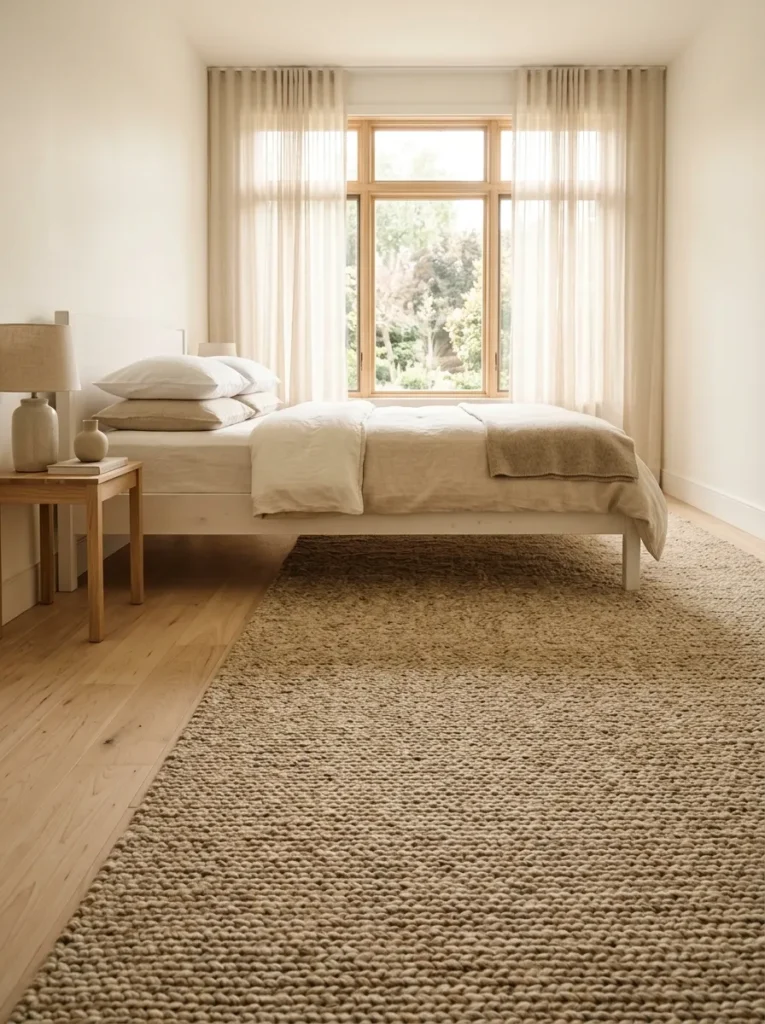
A bedroom without a rug feels noticeably harder — not just to the foot, but visually. A rug placed under the lower two-thirds of the bed anchors the furniture grouping and softens the room acoustically as well as aesthetically.
For sizing: the rug should extend at least 18 inches beyond each side of the bed so that a guest’s feet land on it when they get up. An 8×10 works for a queen bed in a standard-sized room; a 6×9 is often the minimum that will read correctly. Rugs that are too small — sitting only under the foot of the bed — look like an afterthought and make the room feel disjointed. For rooms with hard flooring, a low-pile rug in a natural fiber like jute, sisal, or wool in a warm neutral works well for both texture and easy maintenance.
13. Consider a Dedicated Reading Corner
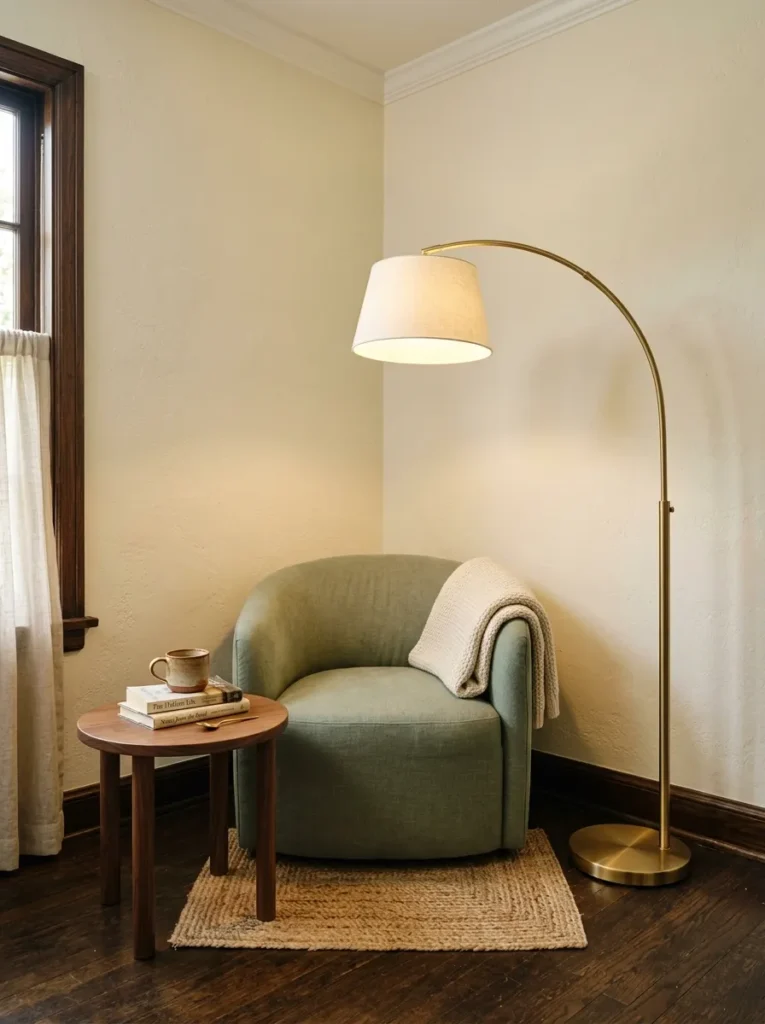
If the room has the space — even a modest corner with 30 to 36 inches of clearance — a single armchair, a floor lamp, and a small side table creates a reading nook that elevates the guest experience considerably. Most guests don’t spend all their time in bed; having a chair that’s genuinely comfortable rather than a desk chair or an exercise bike waiting to be returned to the other room makes the guest feel like the room was designed for a person’s comfort rather than primarily for sleeping.
A chair doesn’t need to be large. A slim slipper chair or a small wingback in a warm textile — a natural linen, a soft boucle, a woven cotton — occupies modest floor space. The lamp beside it should be tall enough to read by and positioned on the side closer to the chair, not behind it.
14. Keep the Color Story Simple
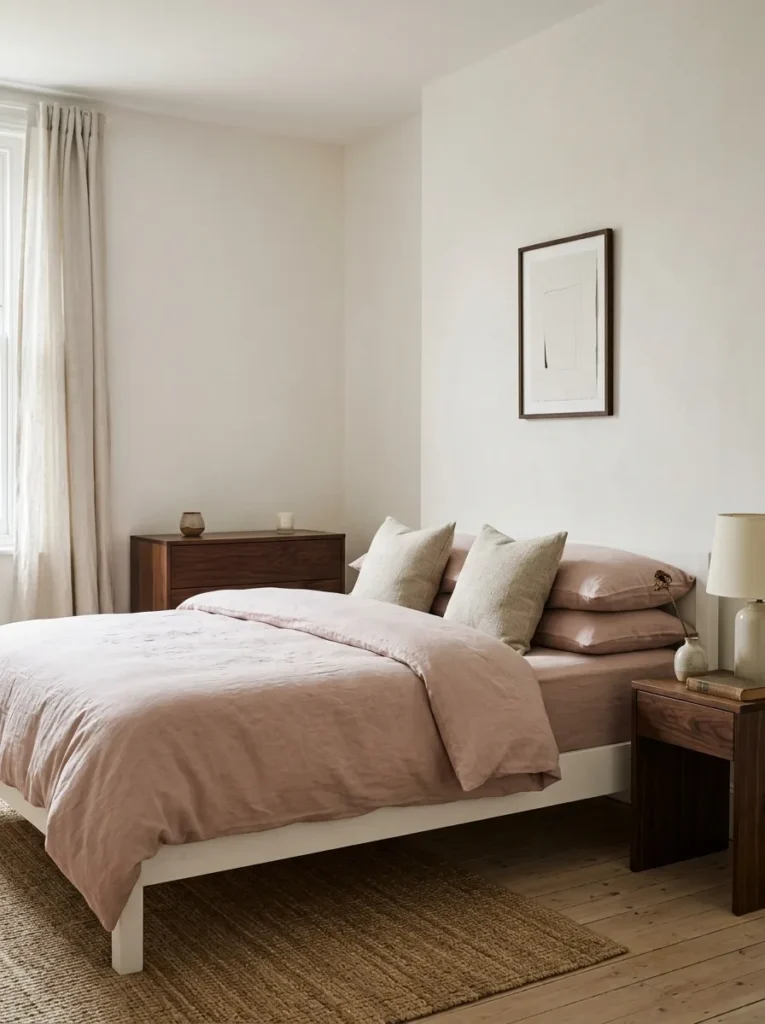
Guest rooms that feel chaotic often have too many competing visual elements — three accent colors, five different patterns, furniture from four distinct periods — and the result is a room that is visually busy rather than visually welcoming. A simple color story with a maximum of three tones — a wall or textile neutral, one warm accent, and one grounding dark or mid-tone for contrast — reads as more deliberate and more restful.
This doesn’t require repainting or replacing furniture. Textiles do most of the color work in a bedroom: swapping to bedding and cushions in a consistent palette is enough to consolidate a room that currently feels like it can’t make up its mind.
15. Use Scent Intentionally
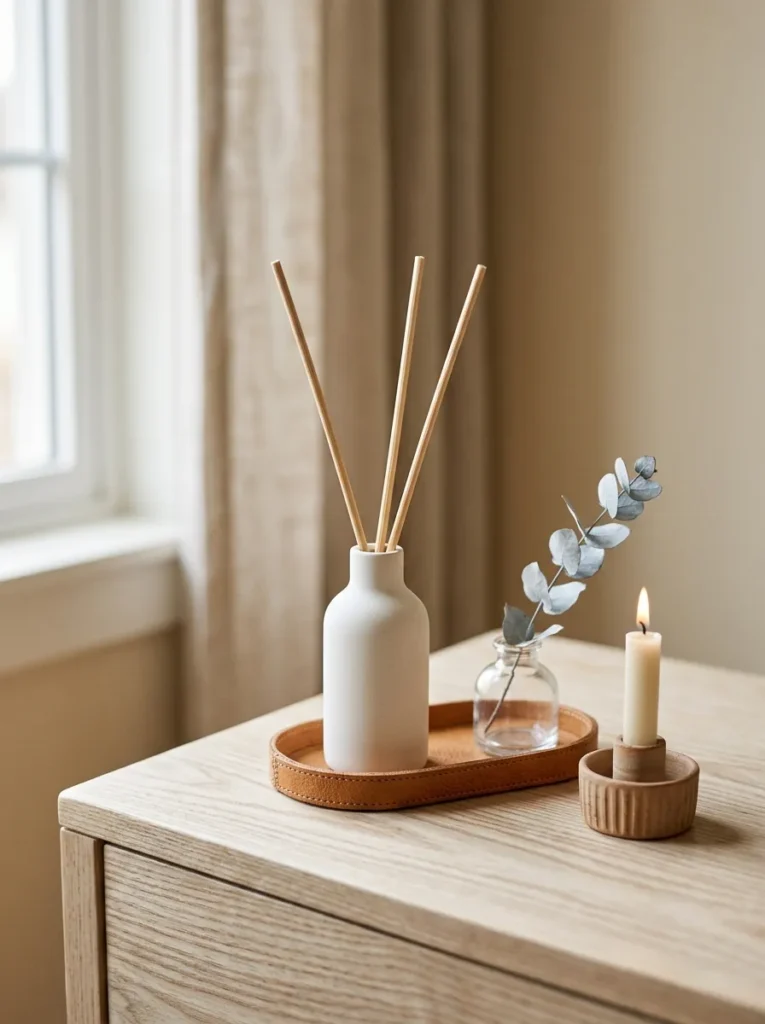
Most design guides skip this entirely, but scent is one of the strongest environmental cues for making a space feel welcoming or unwelcoming. A guest room that smells stale, slightly damp, or like cleaning products does not feel like a retreat regardless of how it looks. A room with a light, consistent, pleasant scent registers immediately and positively.
Avoid anything synthetic or heavily fragranced — candles or diffusers in light botanicals (linen, eucalyptus, cedar, fig, white tea) are appropriate for a range of guest preferences. The scent should be present without being the first thing the guest thinks about when they walk in. A reed diffuser on a nightstand or dresser provides continuous, low-effort scenting. If guests are expected who may be sensitive to fragrance, a lightly scented linen spray on the pillows is the lowest-commitment option.
16. Address the Window Treatment Height Deliberately
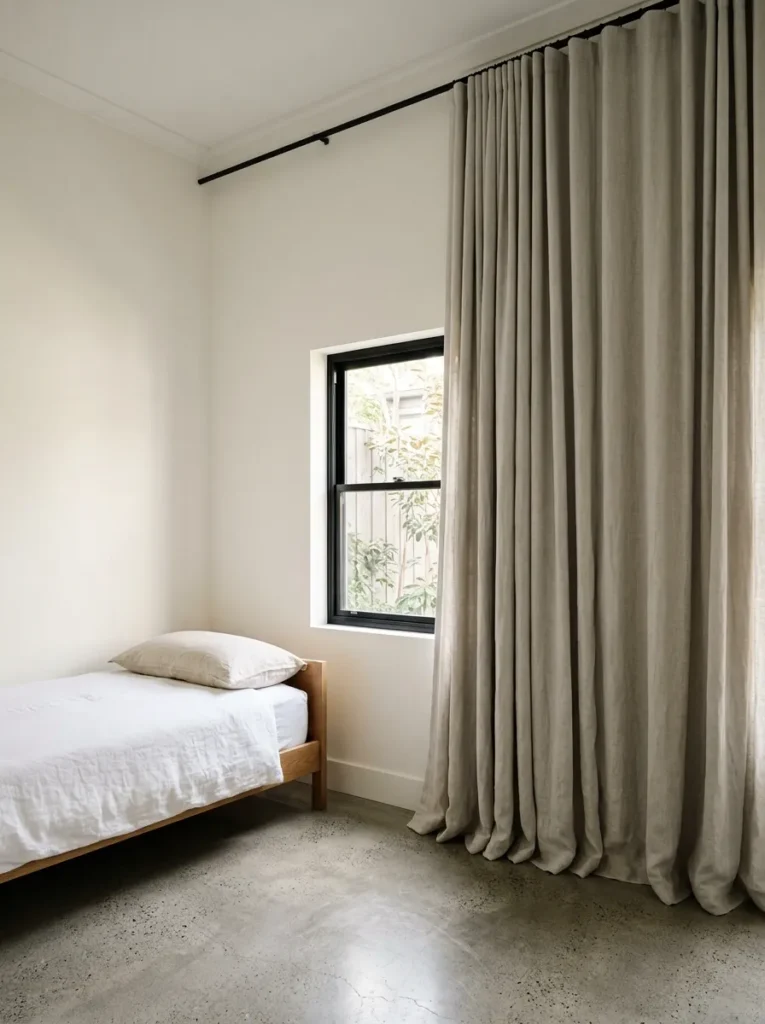
This is a detail that makes a measurable visual difference and is often skipped: curtain rods installed just above the window frame versus curtain rods installed at or near the ceiling line produce different-looking rooms, even with identical curtains and wall colors.
Installing the rod at ceiling height or as close to it as possible makes the window appear taller, makes the ceiling appear higher, and makes the room feel more generously proportioned. The curtains should puddle slightly or break cleanly at the floor — curtains that hover above the floor look like they’re the wrong size. In rooms where the ceiling is standard height and the windows are small, this trick is probably the most reliable way to make the room feel less cramped without spending money on furniture or architecture.
17. Give Guests a Dedicated Hook or Hanging Rail
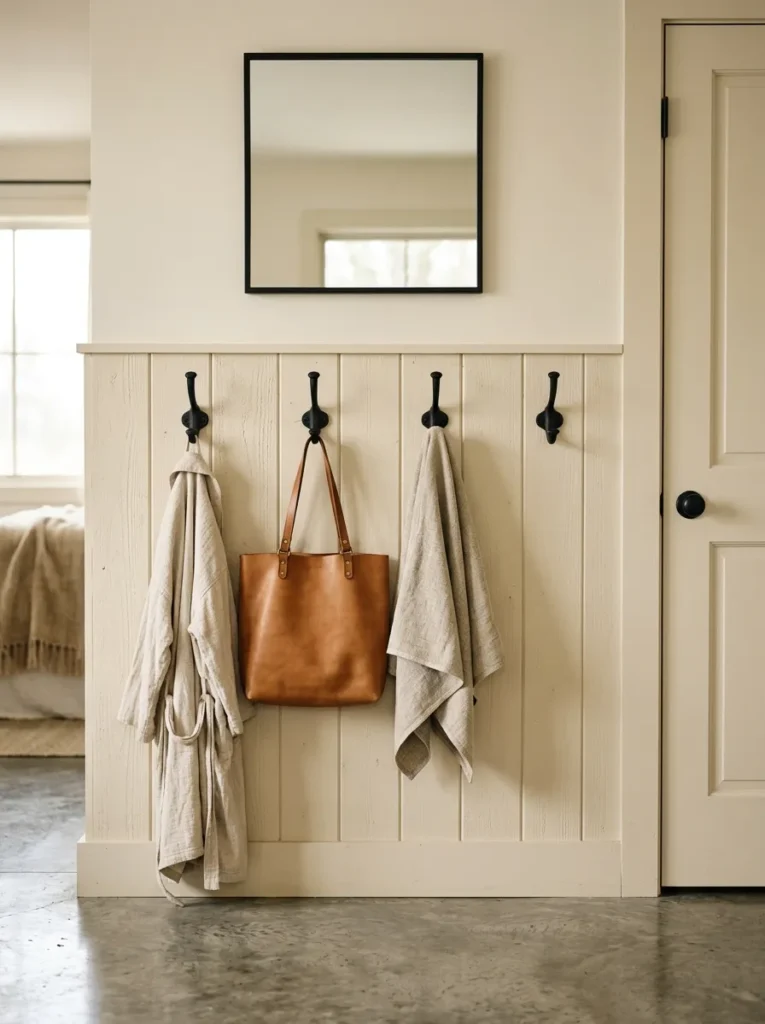
Beyond actual closet storage, guests need somewhere to hang tomorrow’s outfit, drape a towel, or put a bag that isn’t the floor. A row of wall hooks, a standing coat rack, or a short hanging rail provides this without requiring any wardrobe space.
A set of hooks installed in a dedicated spot — inside the door, beside the wardrobe, or in an entry-adjacent corner — takes perhaps thirty minutes to install and costs almost nothing. The visual result is also useful: hooks give the room a practical, hotel-adjacent feel that signals the designer was thinking about the experience of staying in the room rather than only about how the room looks when no one is in it.
18. Work With What the Room Already Has
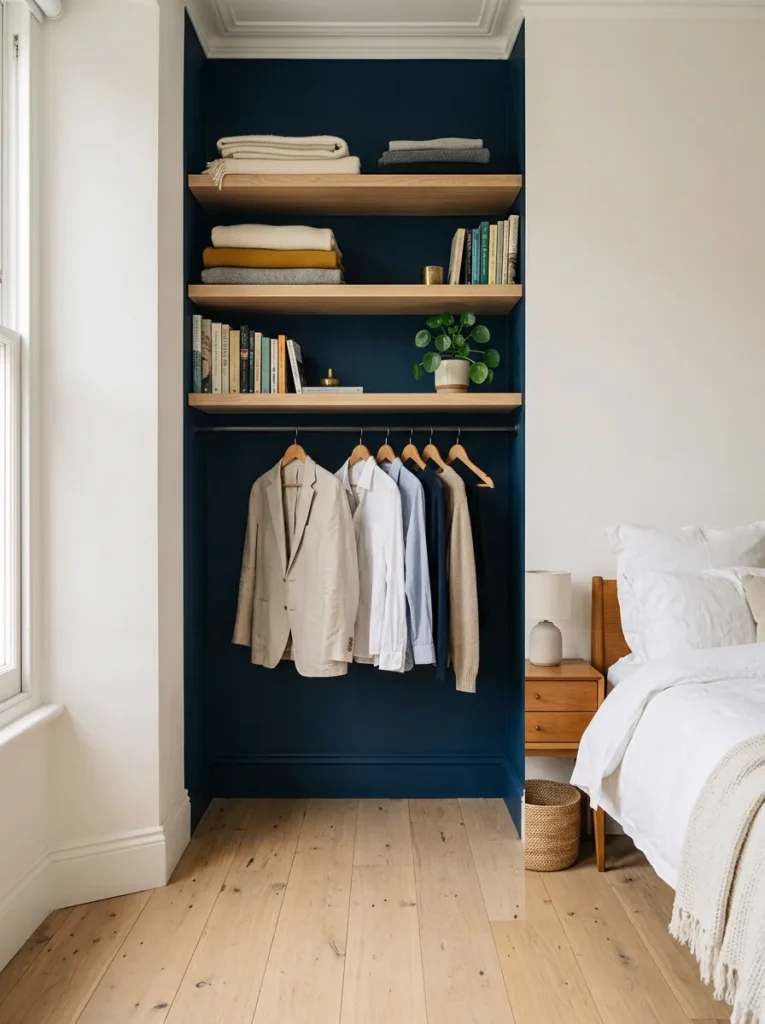
Guest rooms in older homes or rental apartments often come with fixed features — a particular window placement, limited natural light, low ceilings, or awkward alcoves — that owners work against rather than with. The more productive approach is to identify what the room already does and amplify it.
A deep alcove can become a recessed shelving unit or a built-in wardrobe. A low ceiling benefits from keeping furniture proportionally lower rather than adding tall pieces that emphasize the lack of headroom. A north-facing room with limited light responds well to very warm-toned paint (cream, warm white, dusty gold) rather than fighting the flatness with a cool shade that makes the room look grey on overcast days. Every room has at least one structural characteristic that can be used rather than hidden.
19. Use Wallpaper on One Wall Only
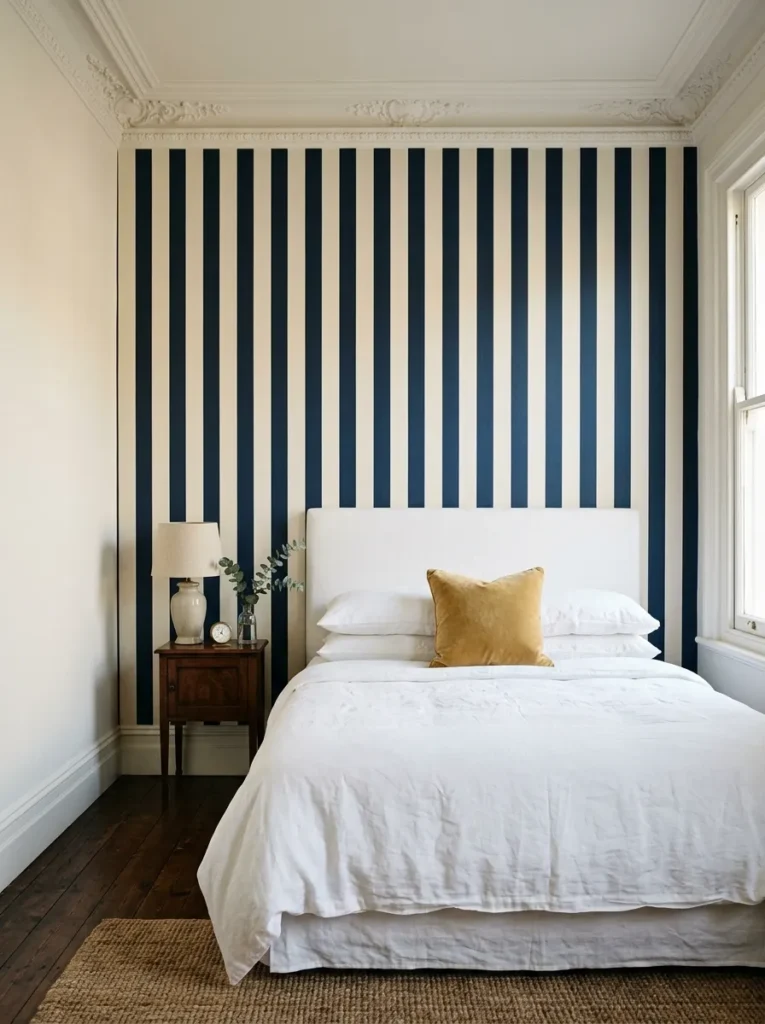
A fully wallpapered room can be a strong choice, but it’s a significant commitment for a space used infrequently and it may deter future buyers or tenants. A wallpapered accent wall behind the bed achieves most of the visual impact at a fraction of the cost and effort — and it’s reversible if the paper is peel-and-stick.
For guest bedrooms, botanical prints, textural geometric patterns, and wide-stripe papers all read well in photography and create a clear visual focal point without requiring the rest of the room to adapt too dramatically. The ceiling detail (if there’s a cornice or coving) is often the place to stop — aligning the paper to the architectural break rather than trimming it arbitrarily looks significantly more deliberate.
20. Leave the Room Empty Enough to Actually Use
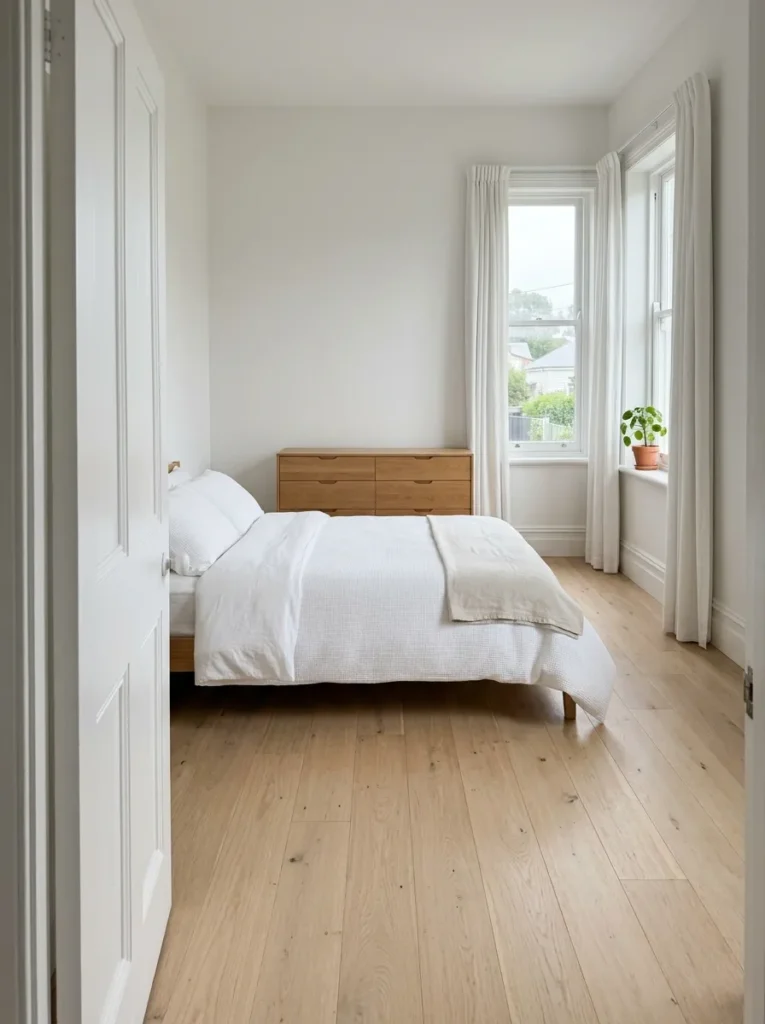
The room that works as a guest bedroom often fails because its other role — home office, craft room, storage annex — is still partially visible. A clothes rack from a previous season, a monitor on a desk, boxes of archived documents beside the wardrobe: these remnants communicate that the room belongs to other purposes and the guest is a temporary interruption.
The most meaningful investment isn’t necessarily a new piece of furniture or a fresh coat of paint. It’s deciding, before a guest arrives, that the room will function as a bedroom and clearing everything that belongs to its other identity. A clean, purposefully spare room with a well-made bed and reasonable light is more welcoming than a beautifully decorated room that also contains someone else’s filing.
21. Add One Non-Functional Element That Shows Care
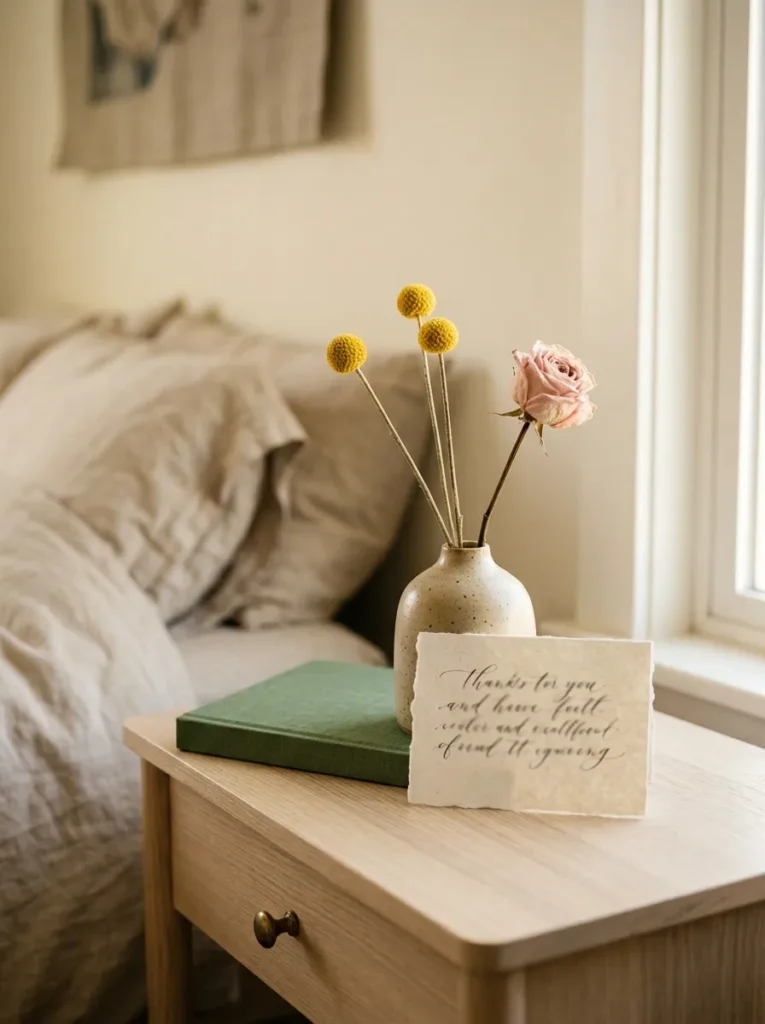
Every room that feels genuinely welcoming — as opposed to merely functional — has at least one element whose only purpose is to be pleasant. In a guest bedroom, this might be a small vase of fresh or dried flowers, a few books chosen because they’re actually interesting rather than decorative, a framed print of somewhere the guest has mentioned wanting to visit, or a houseplant that the guest gets to watch a little. None of these is necessary. Together, they’re the difference between a room that was set up and a room that was prepared.
This applies differently if the guest is a child versus an adult, a close friend versus a relative you see rarely. The specific gesture matters less than the fact that something in the room reflects an awareness of who the guest actually is.
22. Resist Decorating It the Same Way You’d Decorate a Room for Yourself
This is the idea that most guest bedroom guides skip, and it’s probably the most useful one. Guest rooms that feel impersonal are often those where the owner applied their own taste — a very specific color palette, a maximalist print collection, a minimalist aesthetic that works for the owner but leaves guests feeling they can’t relax because they might disturb the styling — without considering whether those choices serve someone else’s comfort.
The design constraint in a guest room isn’t “what do I like?” but “what makes most people comfortable?” Warmth, light control, genuine sleeping comfort, accessible storage, and a sense that the space was cleared for them: these are the things guests consistently notice. Aesthetic choices should serve those functional and emotional goals, not precede them.
PRACTICAL SECTION: What to Prioritize First
Guest rooms benefit from a clear sequence because the decisions are connected. Start with the mattress or topper — once that’s right, the rest is genuinely secondary. Then address lighting (because no amount of styling salvages a harshly lit room). Then curtains, because they determine how the room feels when a guest wakes up. Furniture storage comes next, followed by textiles, and then styling details last. The common mistake is investing in decorative elements (throw pillows, wall art, candles) before solving the functional problems, which produces a room that looks good in photographs but disappoints guests in person.
If the room doubles as a home office or storage room, the first honest question isn’t design-related at all — it’s whether the room can realistically be cleared for guests. If it can, the guest bedroom exists even if it looks simple. If it can’t, the most beautifully decorated corner of a cluttered room won’t feel welcoming.
Final Thoughts
A guest bedroom doesn’t need to be your most considered room. It needs to be your most generous one. The ideas here aren’t a checklist — you don’t need all twenty-two, and some will conflict with your specific space or how your guests actually behave. The best starting point is usually a single question: what would I want to find in this room if I were the one arriving with a bag?
The answers tend to be practical rather than aesthetic. A bed you can actually sleep in. Light you can control. A surface for your things. A bit of space to settle. The visual choices — color, texture, wallpaper, art — are how you make those functional things feel personal rather than transactional.
If any of these guest bedroom ideas feel like the right direction for your space, save the ones that match your room size, your budget, and your sense of who your guests are. Revisit the guide when you’re ready to start.