23 Black Bedroom Ideas That Feel Modern and Sophisticated
Black gets a reputation it doesn’t deserve in bedroom design. The assumption is that it shrinks rooms, absorbs all the light, and feels oppressive — but that’s only true when it’s used without thought. When you treat black as a deliberate design choice rather than a default dark color, it becomes one of the most grounding, sophisticated, and surprisingly restful palettes a bedroom can have.
The key is understanding that black bedrooms aren’t really about the color itself. They’re about what happens around it — the textures that give it depth, the warm tones that keep it from feeling cold, the lighting that shapes the mood after sunset. These 23 ideas show you how to use black confidently, whether you’re painting an entire room, anchoring the space with dark furniture, or adding black as a layered accent.
Each idea explains what works, why it works, and which rooms it suits best.
1. Paint a Single Accent Wall in Matte Black Behind the Bed
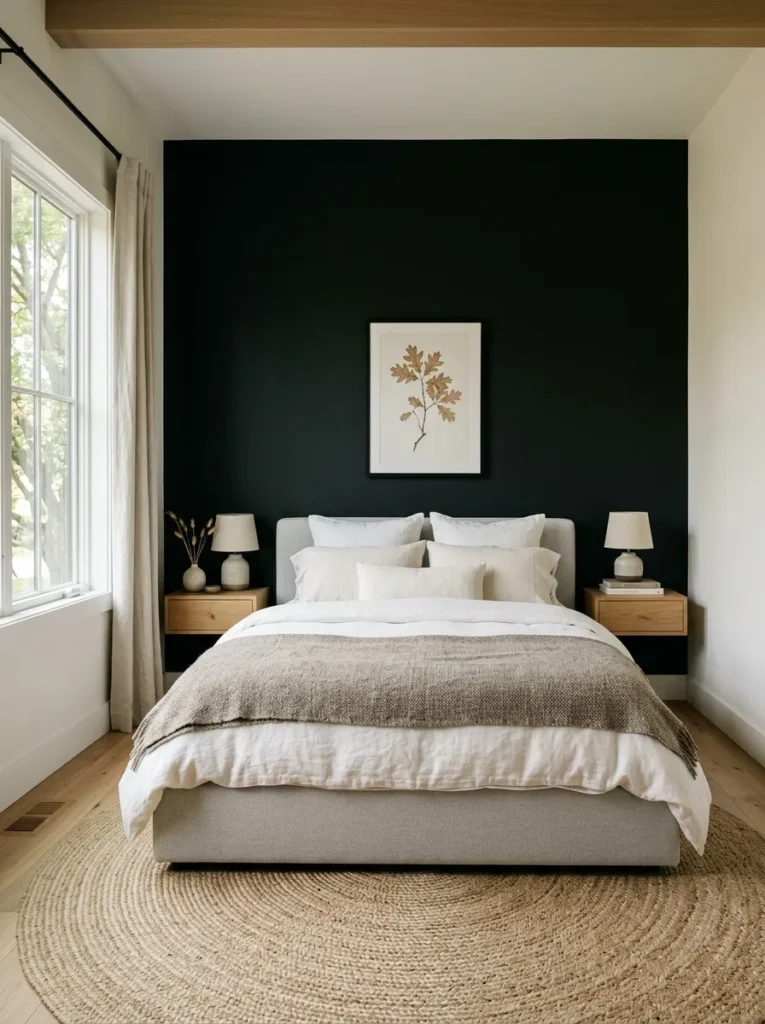
A full black room is a commitment. A matte black accent wall behind the headboard gives you the drama without the risk. The bed anchors the composition naturally, and the surrounding lighter walls provide enough contrast to keep the room feeling open. Matte finishes absorb light softly rather than reflecting it, which creates a velvety depth that satin or gloss can’t match. This approach works in bedrooms of almost any size, including smaller rooms where a single dark wall actually recedes visually rather than closing in. Keep the bedding lighter — white or cream — so the headboard doesn’t disappear into the wall behind it.
2. Choose Soft Black Paint with Warm Undertones
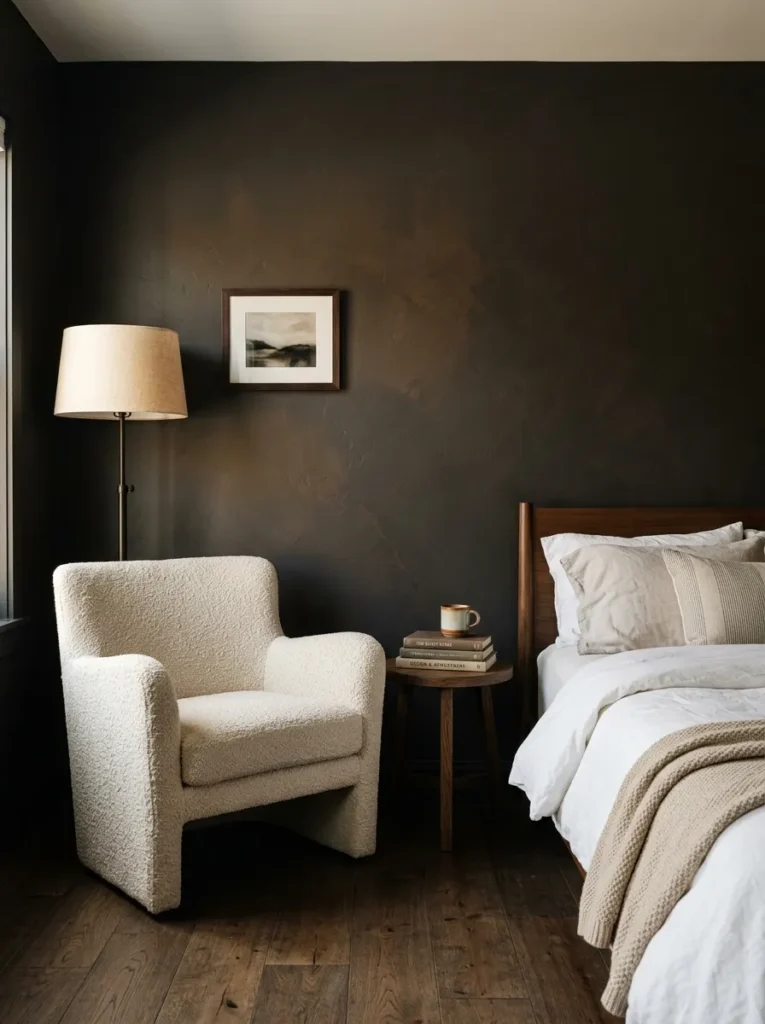
Not all black paint behaves the same way. A true jet black can feel stark and industrial under certain lighting, while a soft black with brown, green, or warm grey undertones reads as rich and organic. These nuanced blacks shift slightly depending on the time of day and the light source, which gives the room more dimension than a flat, uniform dark. If your bedroom faces north or gets limited natural light, a warm-undertone black will feel far more livable than a cool, blue-based one. Test samples on the actual wall — black paint changes more dramatically between a swatch and a full surface than almost any other color.
3. Pair Black Walls with Warm Natural Wood Furniture
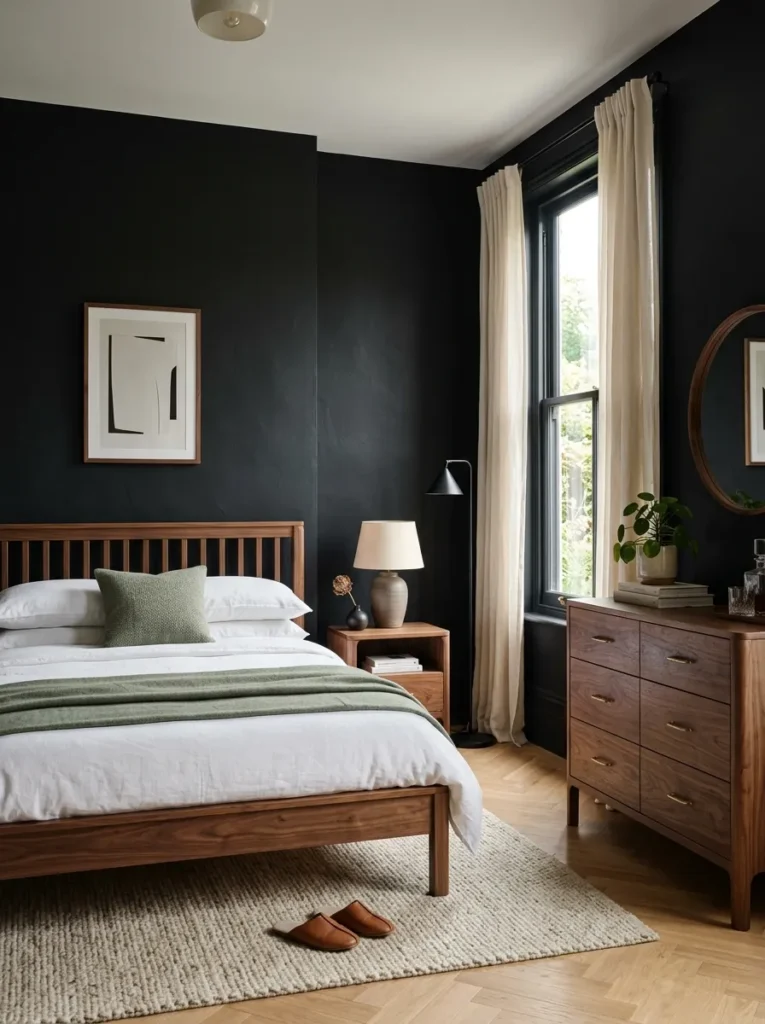
One of the most reliable ways to prevent a black bedroom from feeling cold is introducing substantial natural wood. A walnut bed frame, oak nightstands, or a reclaimed wood bench at the foot of the bed creates immediate warmth through both color contrast and organic texture. The grain pattern of wood adds the kind of visual complexity that prevents dark surfaces from looking flat. Medium-toned woods work best — very light pine can look disconnected, and very dark stained wood blends into the walls. Position wood pieces where light hits them during the day so the grain catches naturally.
4. Layer White and Cream Bedding for Clean Contrast
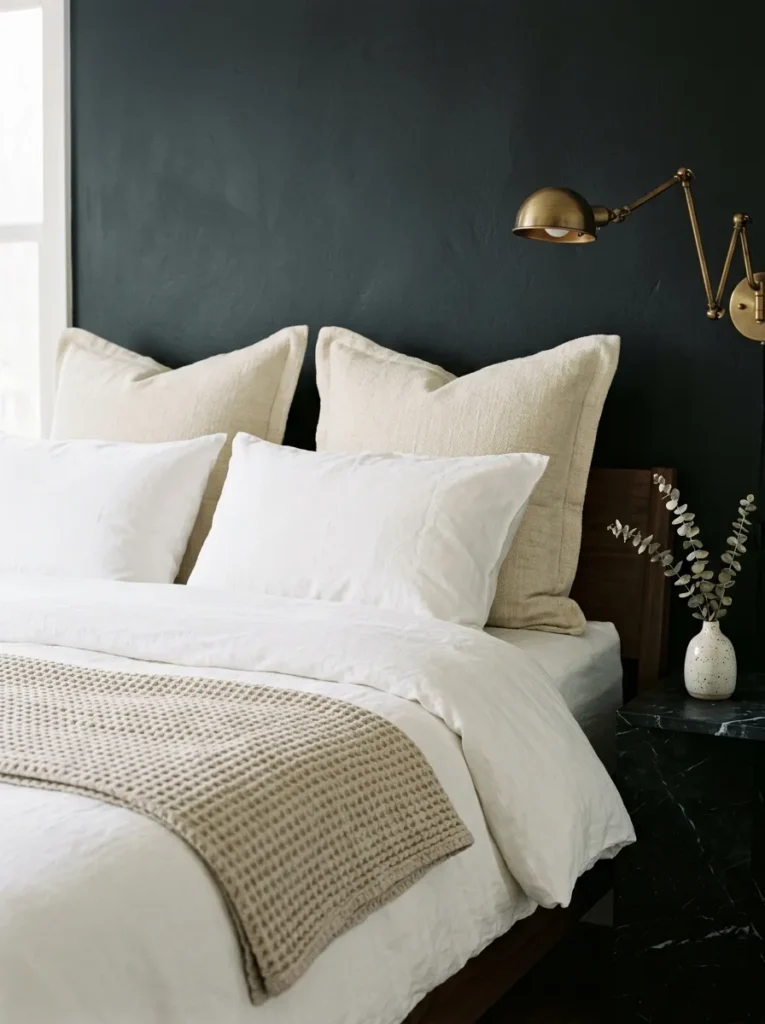
The simplest way to make a black bedroom feel balanced is a bed dressed almost entirely in white or cream. The high contrast between dark walls or a dark headboard and pale linen creates visual breathing room right where you need it most — at the center of the room. Layer a white duvet with cream-toned pillows and a textured throw in oatmeal or sand for depth without competing colors. This pairing is timeless precisely because neither element tries to dominate. Linen and washed cotton textures work better than crisp, hotel-style percale here because the slight rumple adds warmth that formal fabrics don’t.
5. Introduce Brass or Aged Gold Accents for Warmth
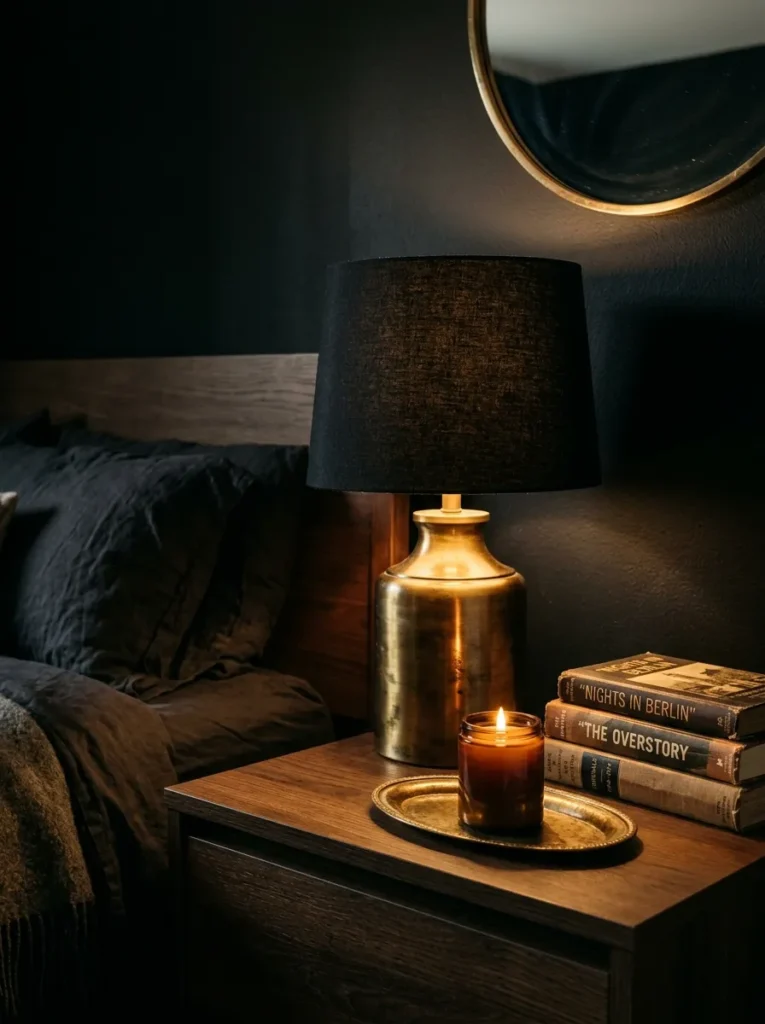
Metallic accents in a black bedroom aren’t decorative filler — they serve an architectural purpose by catching and redirecting whatever light enters the room. Brass table lamps, an aged gold mirror frame, or brushed brass drawer pulls create scattered points of warmth that prevent the eye from reading the room as one dark mass. The warmth of brass specifically complements black better than chrome or silver, which can feel clinical against dark surfaces. Limit metallic accents to two or three key pieces rather than scattering them everywhere — restraint keeps the effect intentional rather than busy.
6. Add Depth with a Black Textured Wall Treatment
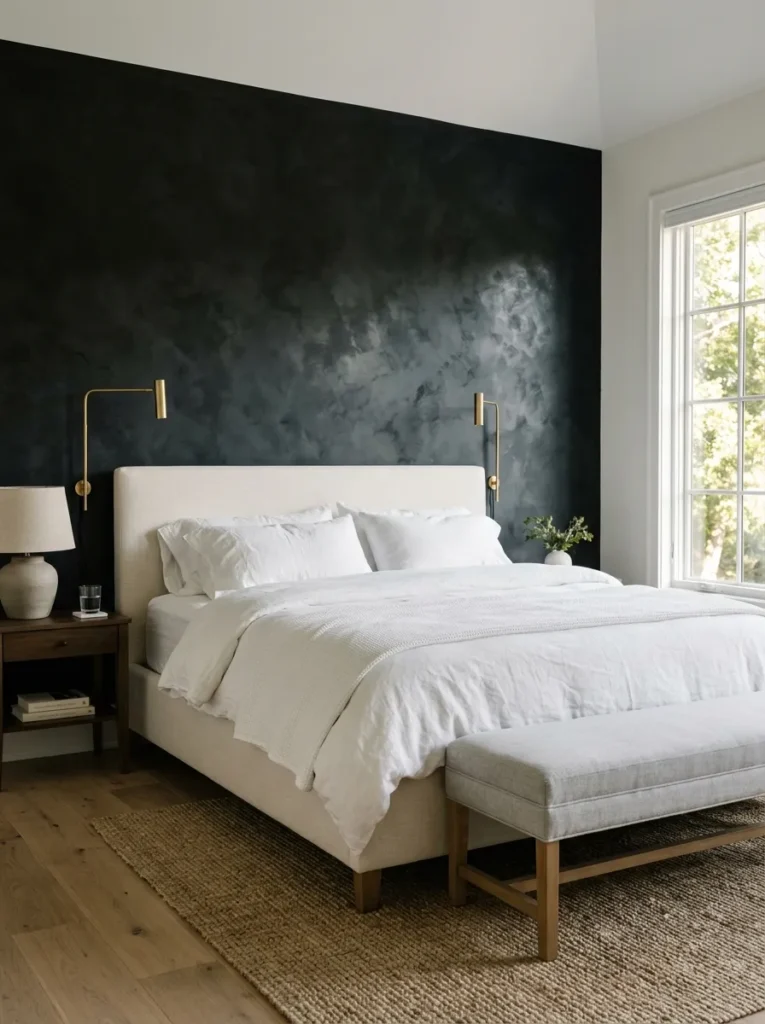
Flat painted walls are one approach, but textured wall treatments turn a black surface into something you want to look at twice. Board and batten, vertical shiplap, limewash, or fluted paneling all create shadow and dimension that flat paint can’t. The texture catches light differently throughout the day, so the wall shifts in character from morning to evening. Limewash in particular creates a chalky, cloud-like variation across the surface that keeps black looking organic rather than monolithic. This idea suits larger bedrooms where you can view the texture from enough distance to appreciate its effect, though a single limewashed wall works in compact rooms as well.
7. Ground the Room with an Oversized Neutral Rug
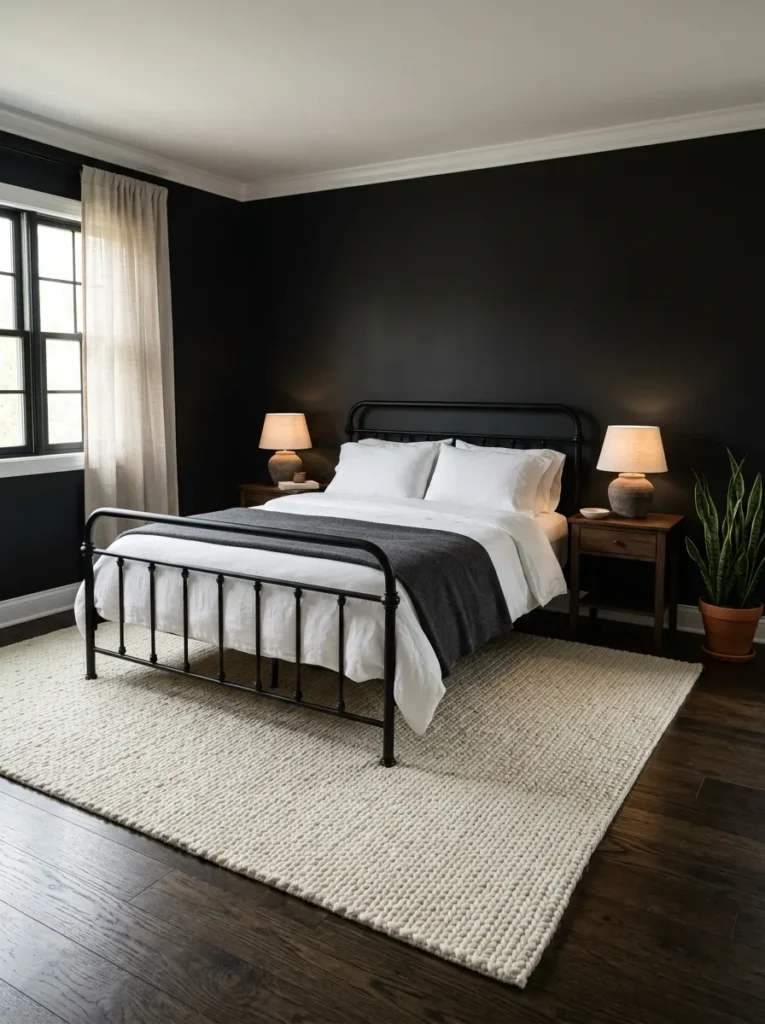
Dark flooring combined with dark walls can make a bedroom feel bottom-heavy and closed in. An oversized area rug in a warm neutral — oatmeal, soft grey, or natural jute — creates a visible, lighter plane that lifts the room’s visual weight. The rug should extend well beyond the bed on three sides so it reads as a room-defining element rather than a small accent. Wool and wool-blend rugs add softness underfoot that matters more in a black bedroom, where hard surfaces can amplify the room’s cooler qualities. Avoid very dark rugs unless you’re deliberately pursuing an enveloping, cocoon-like effect.
8. Use Black Bedding as the Anchor in a Lighter Room
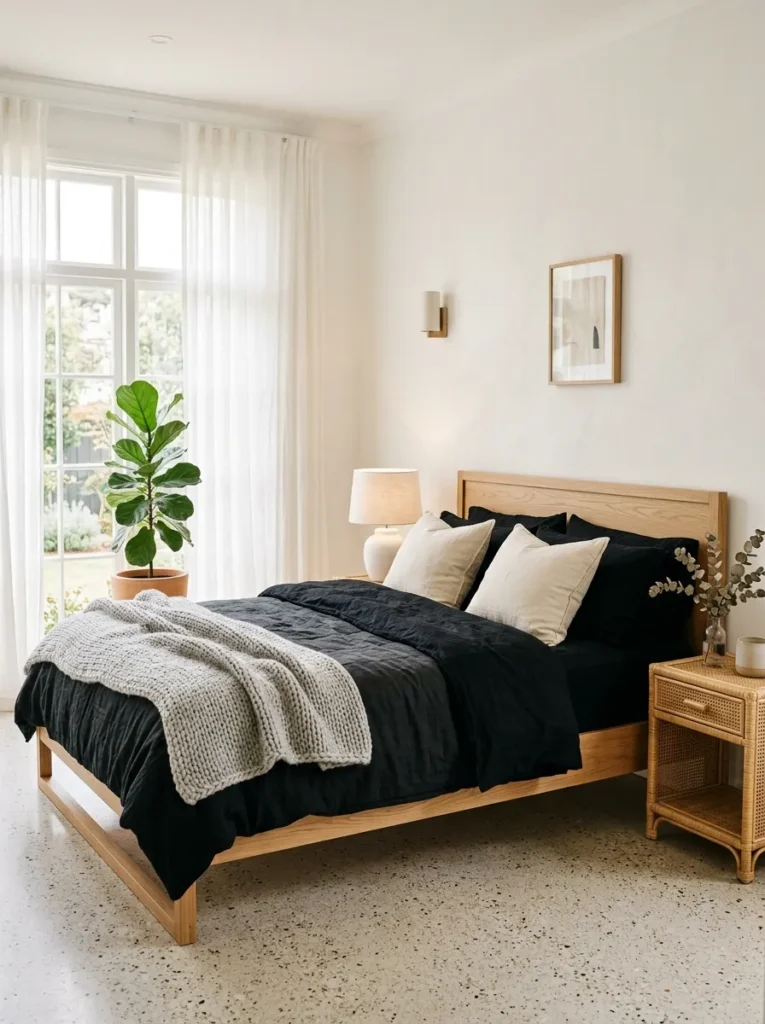
If painting walls black feels like too much, reverse the approach: keep walls light and make the bed itself the darkest element. A black linen duvet, charcoal quilt, or black-and-white printed bedding creates a grounded focal point without changing the room’s overall brightness. This approach works especially well in rental apartments where wall color isn’t an option. Layer different tones of dark — charcoal, slate, ink — rather than a single uniform black to avoid the bed looking like a solid block. A lighter throw draped across the foot breaks up the dark mass and ties the bed back to the lighter room.
9. Install Black Window Frames or Black Curtain Hardware
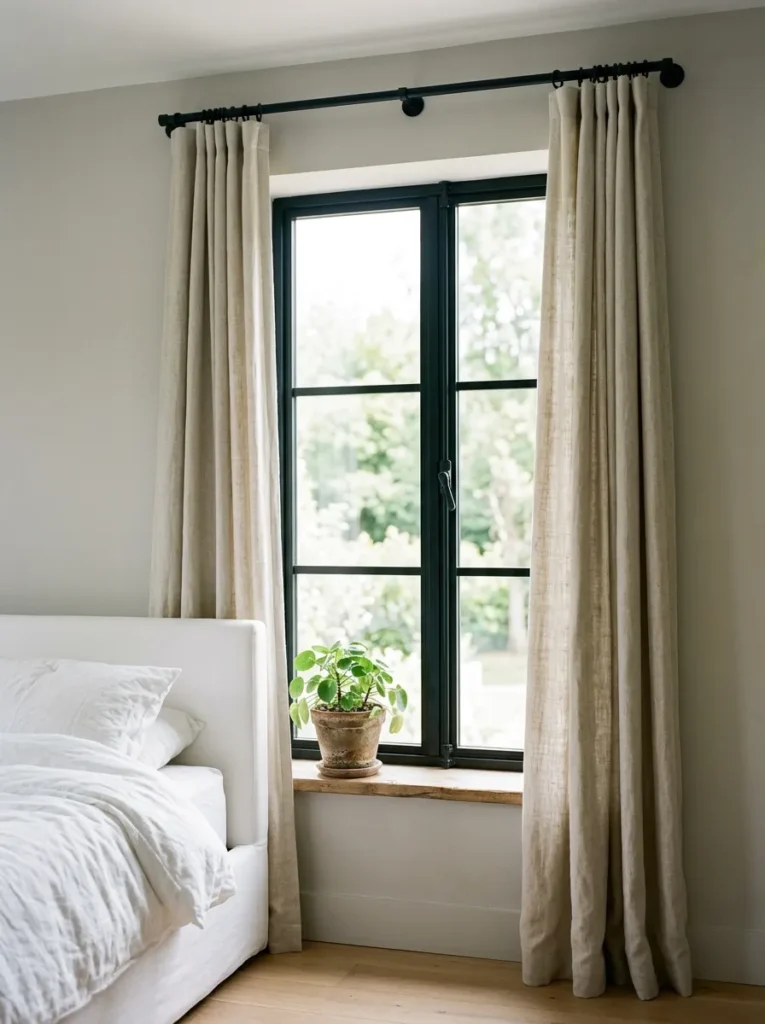
This idea requires minimal effort but changes the room’s character significantly. Replacing standard silver or white curtain rods with matte black hardware, or painting existing window frames in black, introduces the color as an architectural detail that frames the view and defines the room’s edges. Black hardware reads as intentional and considered rather than decorative — it’s the kind of detail that makes a room look designed rather than decorated. Pair matte black rods with linen curtains in white, oatmeal, or soft grey. The contrast between the dark hardware and the soft fabric creates a refined tension that works in both modern and transitional bedrooms.
10. Create a Cocooning Effect by Painting the Ceiling to Match the Walls
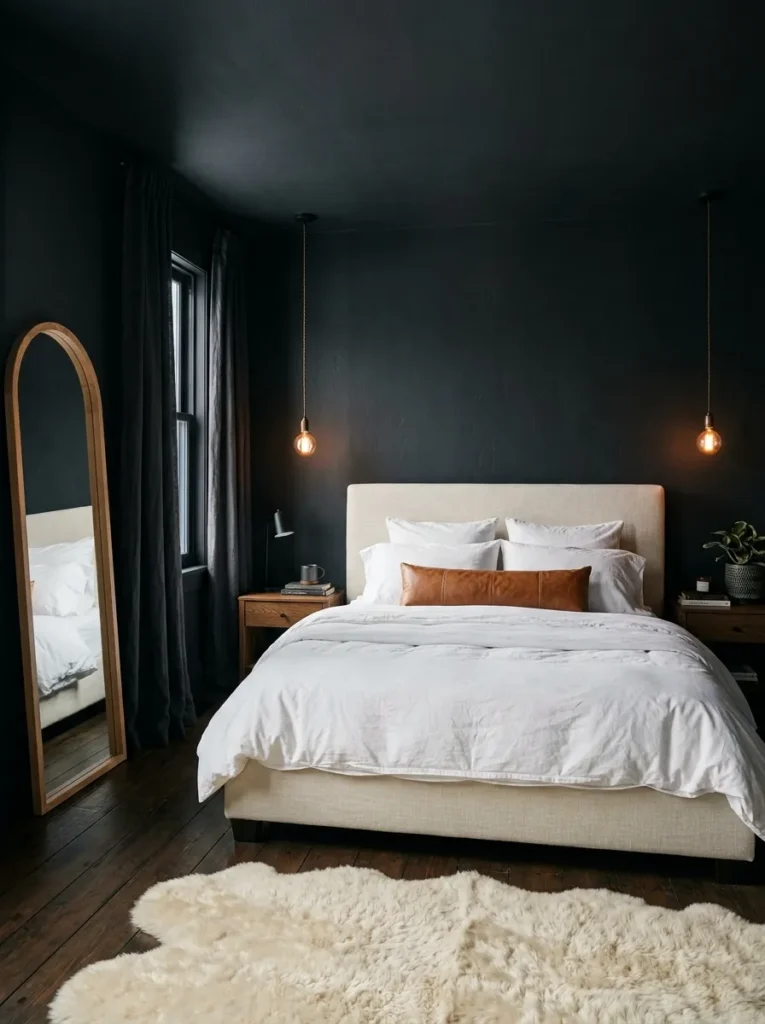
Painting walls and ceiling the same shade of black creates an immersive, enveloping atmosphere that feels less like a room with dark walls and more like a complete environment. The boundaries between wall and ceiling soften, which makes the room feel more intimate rather than boxy. This works best in rooms with reasonable ceiling height — anything above 2.5 meters handles it well. In rooms with lower ceilings, painting just the ceiling a slightly lighter shade (dark charcoal rather than full black) preserves the effect without making the room feel compressed. The cocooning approach particularly suits primary bedrooms where rest and retreat are the priority over brightness.
11. Introduce a Black Upholstered Headboard as the Focal Point
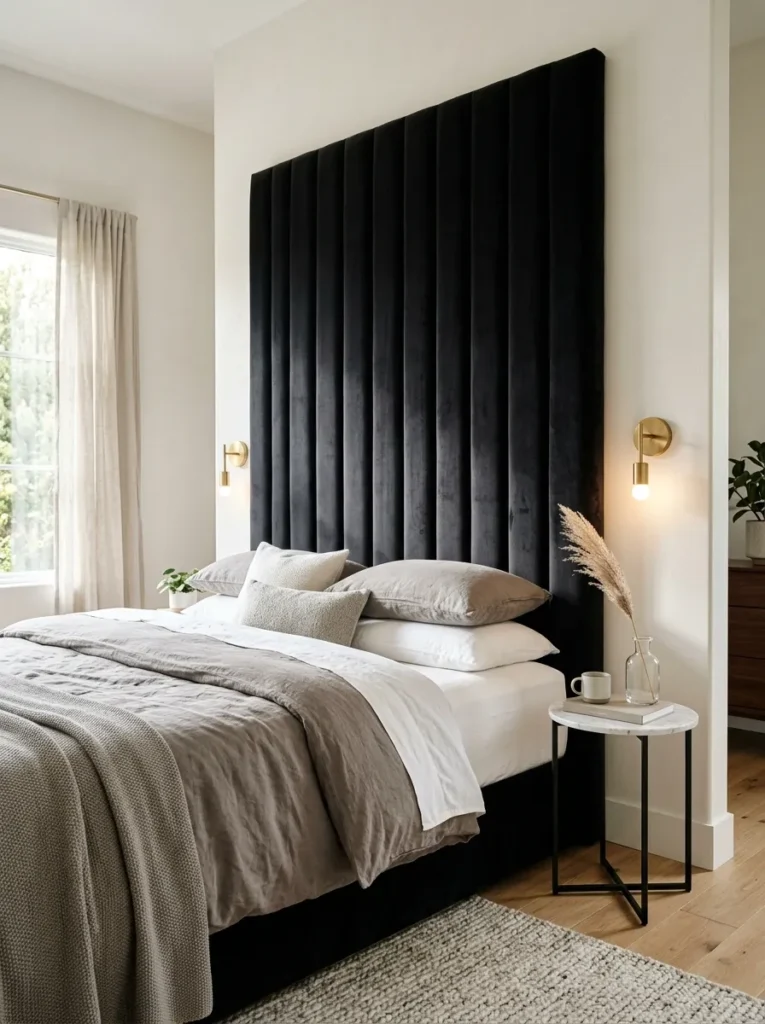
A large upholstered headboard in black velvet, bouclé, or linen creates drama without requiring any wall paint at all. The headboard becomes the room’s central anchor — softer than a painted wall, more textural, and easier to change if your taste shifts later. Velvet catches light along its nap, creating subtle tonal variation that keeps the surface interesting. Bouclé adds a nubby, tactile quality that feels more contemporary. Size matters here: a headboard that extends wider than the mattress and reaches toward the ceiling creates more visual impact than one that merely sits behind the pillows. Pair it with lighter bedding and wall-mounted sconces on either side.
12. Mix Matte and Glossy Black Finishes for Visual Tension
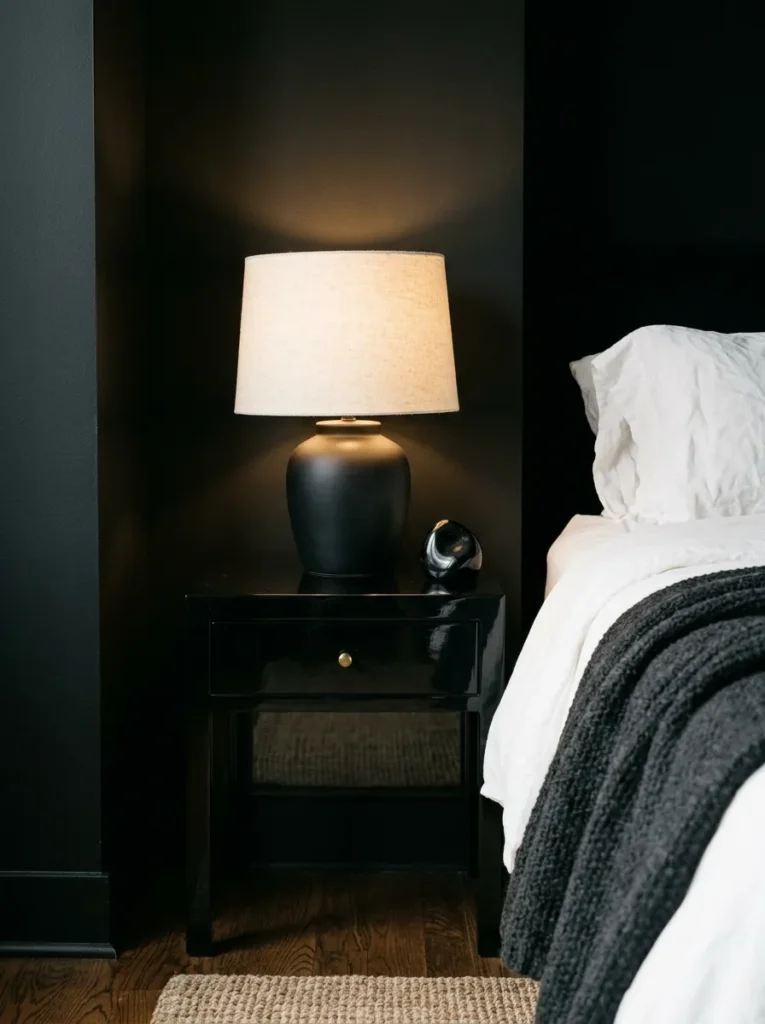
A bedroom where every black element has the same finish — all matte, or all satin — tends to flatten. Mixing finishes creates a subtle interplay that keeps the eye moving. A matte black wall behind a lacquered black nightstand, or a matte bed frame paired with a glossy ceramic lamp base, introduces enough variation to give the room dimension. The glossy elements reflect light in a way that matte surfaces don’t, which adds brightness without introducing a new color. This principle works with accessories too — a matte black picture frame beside a polished stone sculpture reads as considered rather than random.
13. Use Black-Framed Gallery Art to Define a Feature Wall
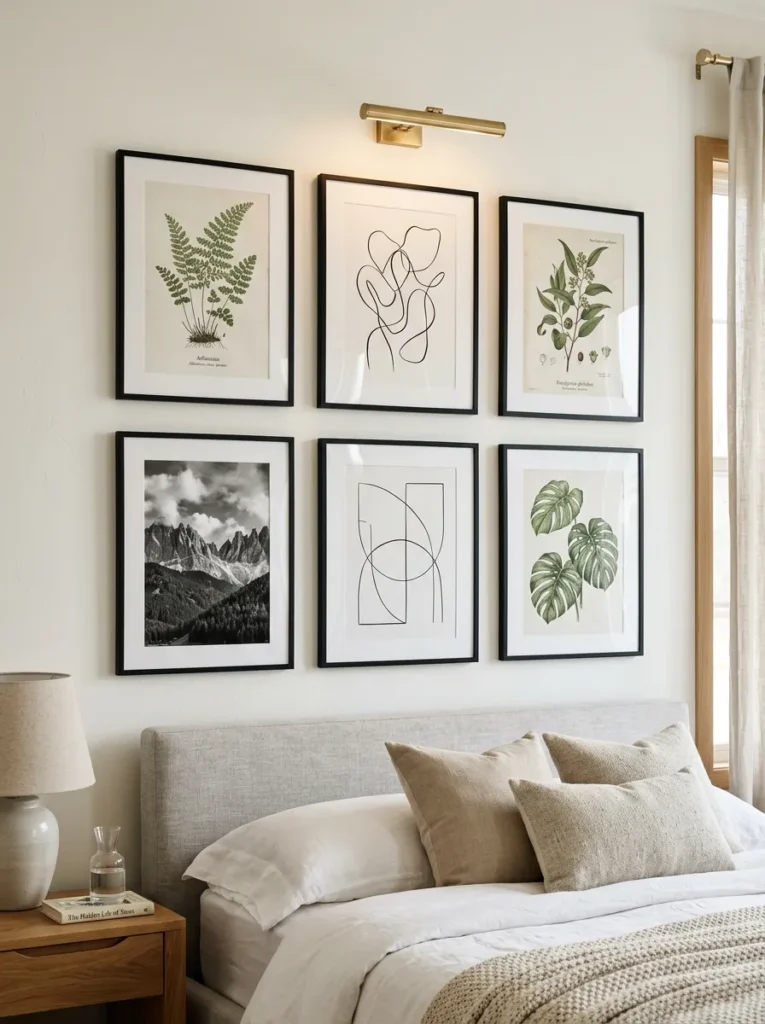
A grouping of prints or photographs in matching thin black frames gives structure to a wall without the commitment of paint. Arrange four to six frames in a grid or salon-style cluster on a white or light grey wall, and the collective effect reads as a deliberate design moment. Black frames unify different types of art — line drawings, photography, botanical prints — into a cohesive display. Choose frames of the same profile and thickness for a clean look, and maintain consistent spacing between them. This idea is fully renter-friendly and one of the simplest ways to introduce black into a bedroom that’s otherwise light.
14. Warm the Space with Black and Cognac Leather Together
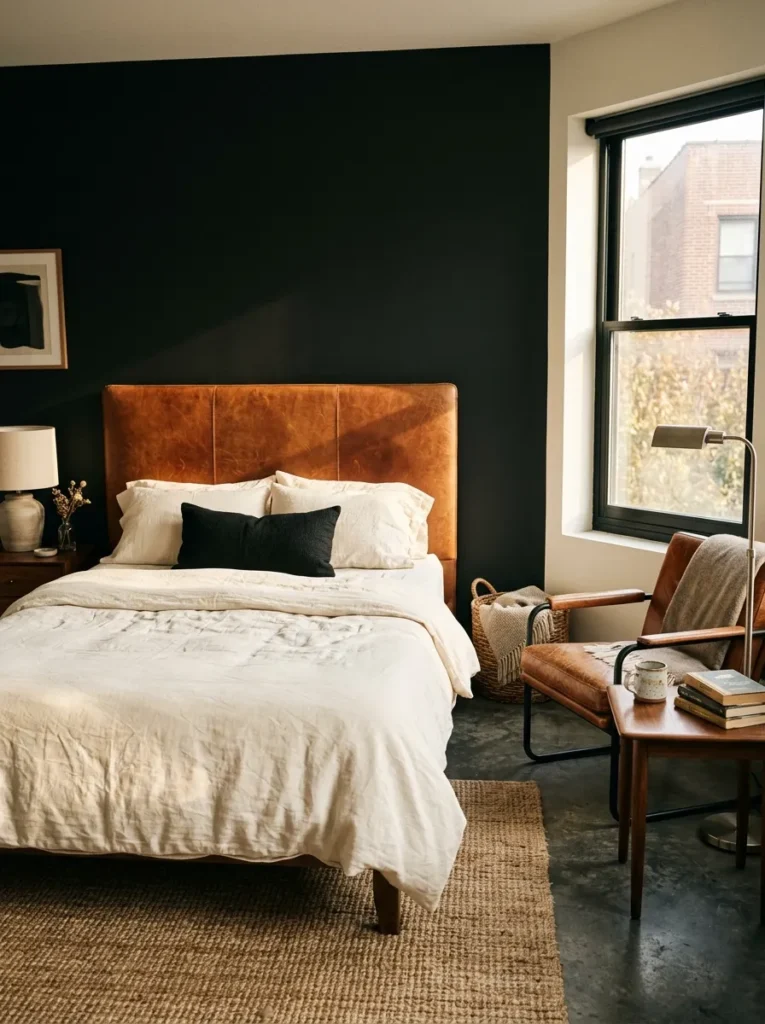
Black and cognac leather is a combination borrowed from high-end hospitality design, and it translates beautifully to bedrooms. A black accent wall with a cognac leather headboard, or black bedding with a leather accent chair, creates warmth through material contrast rather than color brightness. The leather develops a natural patina over time that adds character the room grows into. Cognac specifically — not tan, not dark brown — sits in the warm amber range that complements black without competing. This pairing works best in rooms that lean modern or mid-century, and it suits adults’ bedrooms better than children’s or teen rooms.
15. Soften Dark Walls with Layered, Textured Bedding
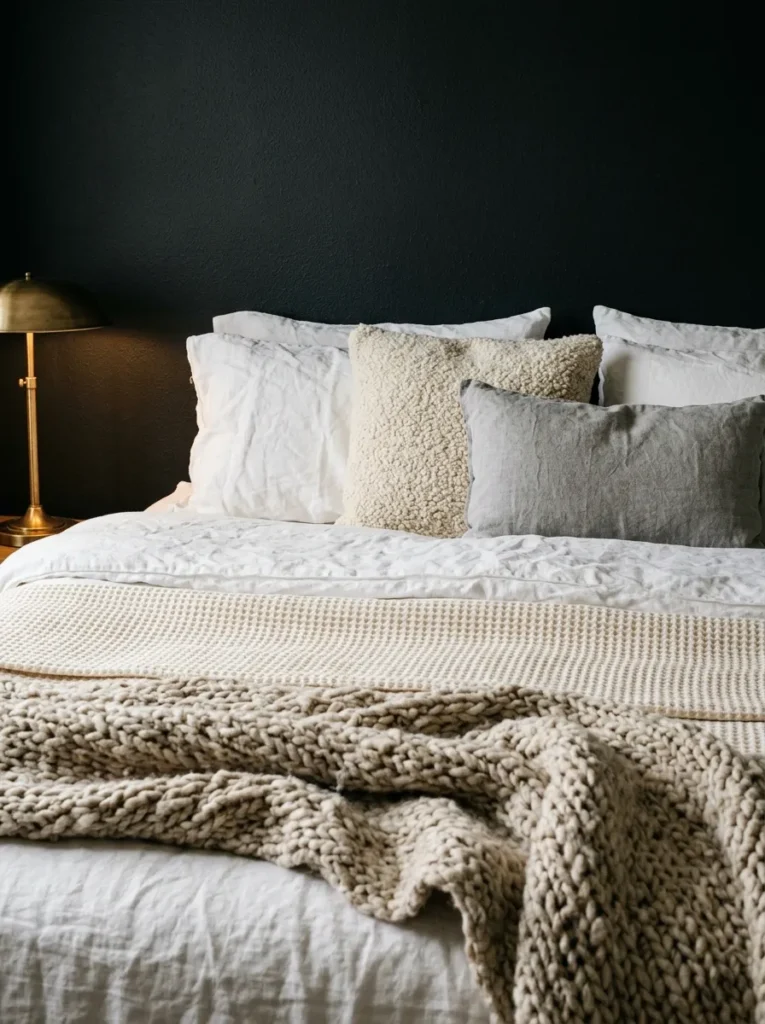
In a dark bedroom, bedding texture matters more than it does in a light room because there’s less visual competition from the surroundings. Layer a waffle-weave blanket over a linen duvet, add a chunky knit throw at the foot, and mix pillow textures — a smooth cotton, a nubby wool, a linen-blend. Each layer creates its own shadow and highlight, building the kind of depth that makes the bed look rich rather than simply covered. Stick to a narrow tonal range — whites, creams, warm greys — so the layers read as one cohesive composition rather than a collection of competing patterns. This principle is the single fastest way to make a dark bedroom feel inviting rather than heavy.
16. Place a Large Mirror Opposite the Window to Multiply Light
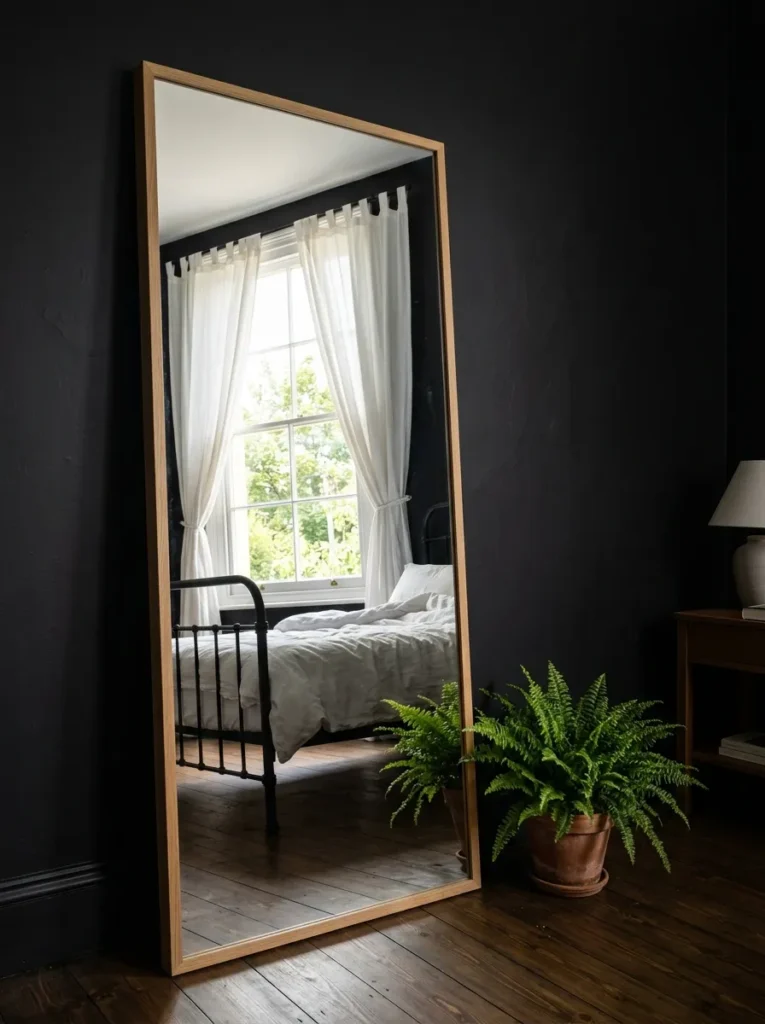
In any bedroom using a significant amount of black, managing light is a design decision rather than an afterthought. A large mirror positioned on the wall opposite the primary window effectively doubles the natural light that enters the room by bouncing it back across the space. The mirror also adds visual depth, making the room feel wider than it is. Choose a frame that aligns with the room’s style — a thin black metal frame for contemporary rooms, a warm oak or brass frame for transitional spaces. Floor-length mirrors leaned against the wall create a more relaxed effect than wall-mounted options and are easier to reposition.
17. Build a Layered Lighting Plan Instead of Relying on Overheads
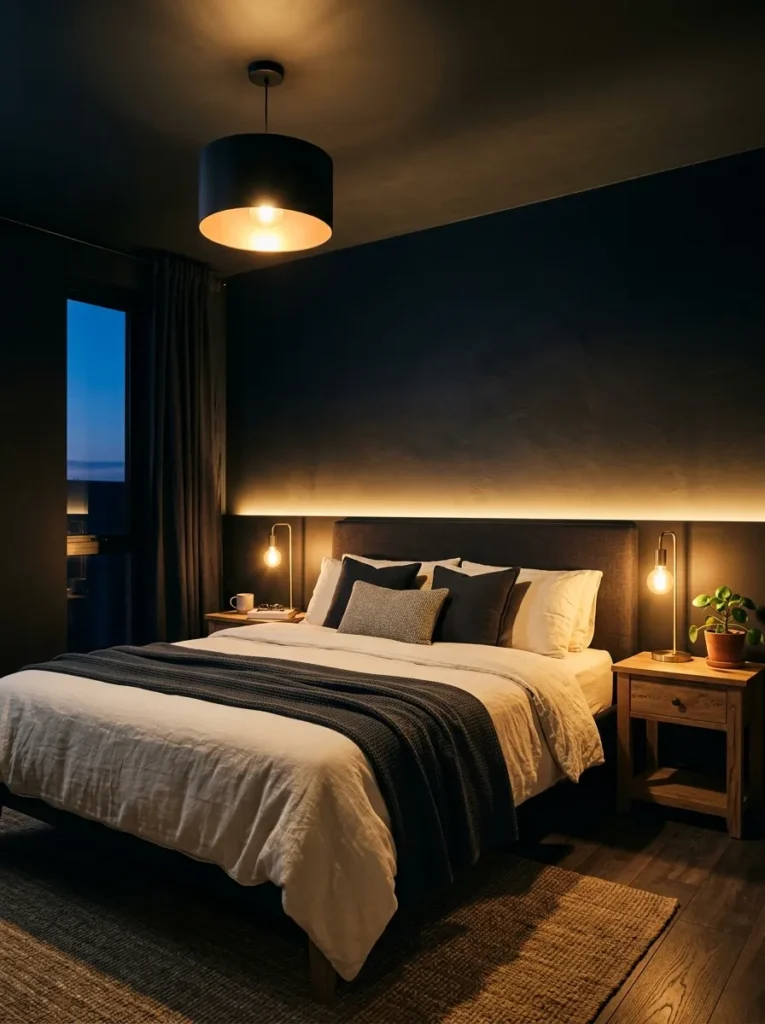
Black absorbs more light than any other color, so a single ceiling fixture leaves dark corners and an uneven atmosphere. Layered lighting — a pendant or flush mount for general illumination, sconces or table lamps for task lighting beside the bed, and possibly an accent light like an LED strip behind a headboard — gives you control over the room’s mood throughout the day. Warm-toned bulbs (2700K) are essential in a black bedroom; cool-white bulbs can make the room feel sterile. Dimmable fixtures let you shift from functional morning light to the low, ambient glow that makes a dark bedroom feel genuinely restful at night.
18. Use Black as a Trim Color Rather Than a Wall Color
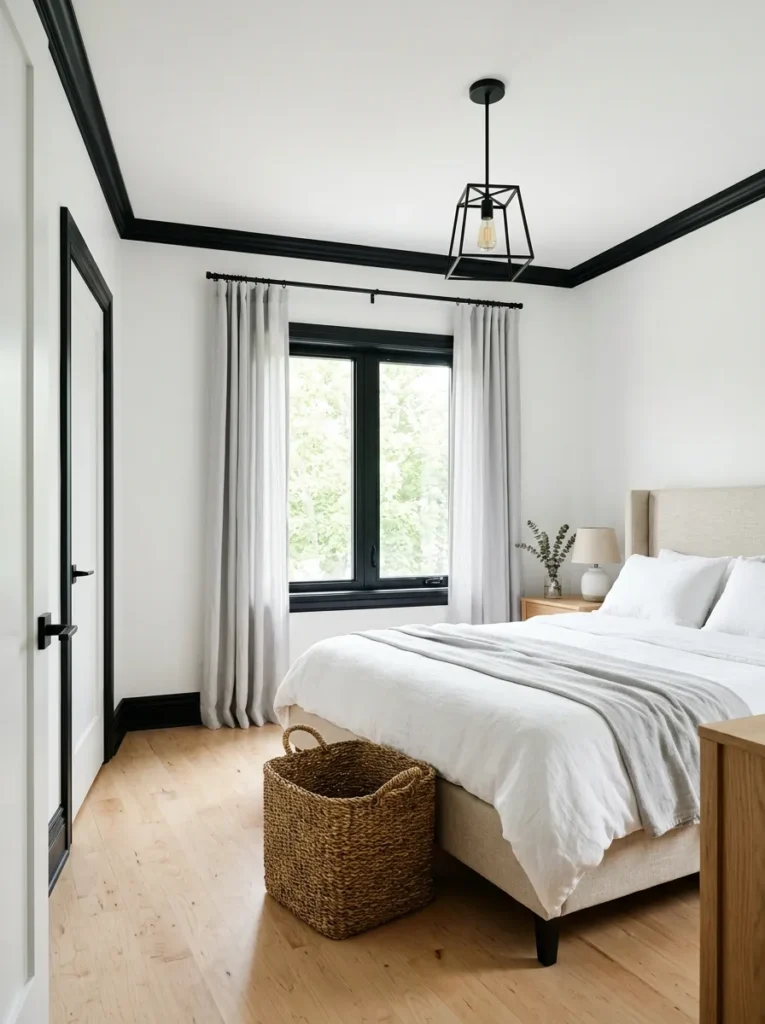
If full walls or large furniture in black feels too bold, using black exclusively as trim — window casings, door frames, baseboards, crown molding — introduces the color in a way that sharpens every edge of the room without darkening the overall space. Black trim against white or light-colored walls creates a graphic, architectural quality that reads as polished and intentional. This approach is particularly effective in rooms with detailed millwork, where the trim deserves visual emphasis. It also pairs well with any furniture style, making it one of the most flexible ways to incorporate black into a bedroom.
19. Anchor the Room with a Black Four-Poster or Canopy Bed Frame
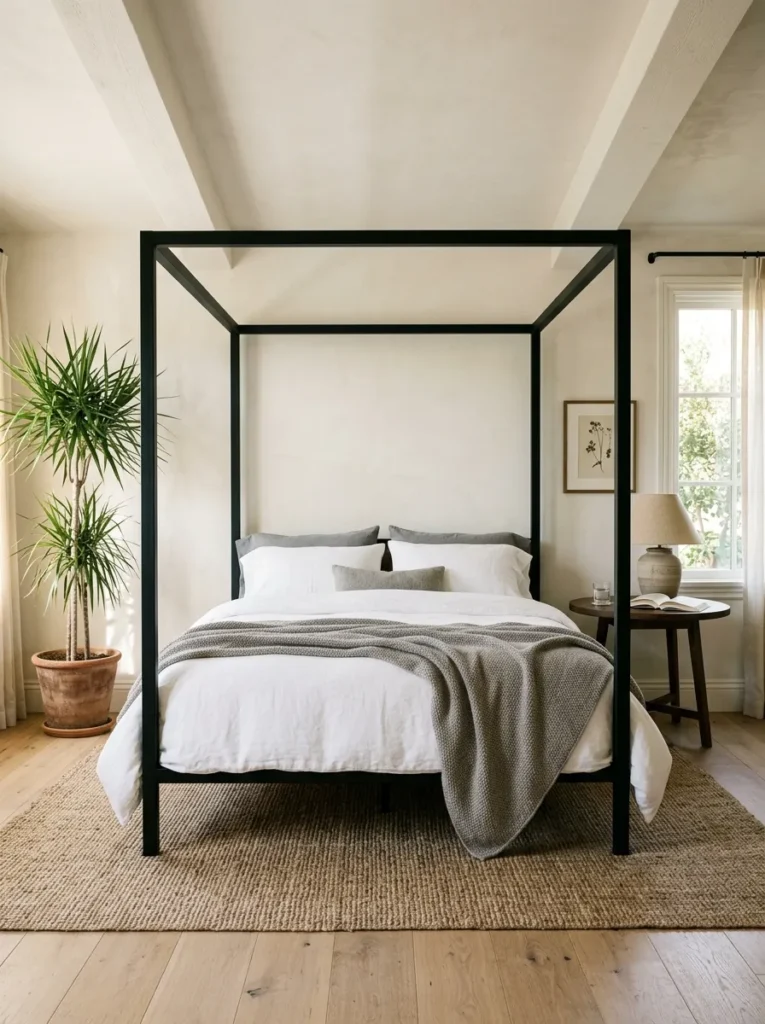
A black metal or wood four-poster bed creates architectural presence that no other piece of furniture can match. The vertical lines draw the eye upward, which actually makes the room feel taller — the opposite of what most people expect from a dark, substantial bed frame. A four-poster in matte black iron works in contemporary and industrial bedrooms, while a black-stained wood version suits transitional or traditional spaces. Keep the bedding inside the frame lighter to maintain contrast. In bedrooms with standard ceiling heights, choose a frame where the posts stop below the ceiling rather than nearly touching it, which avoids a cramped look.
20. Bring Life with Green Plants Against Dark Backgrounds
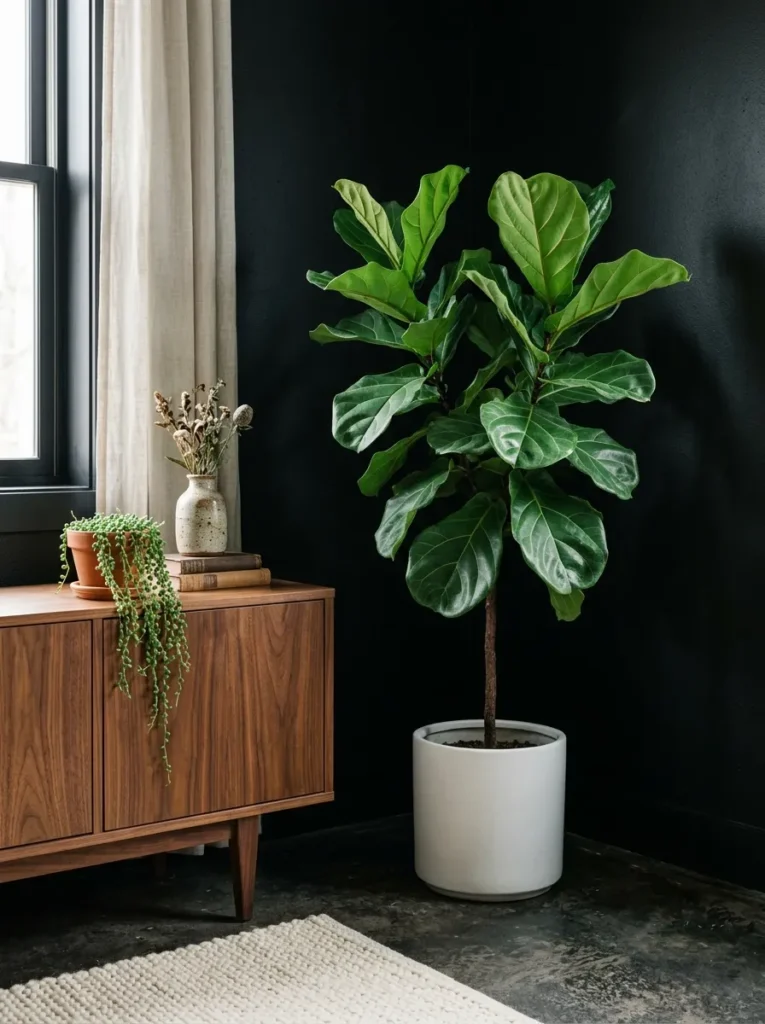
Green foliage looks more vibrant against black than against almost any other color. The contrast is so strong that even a single plant creates a focal point. Place a potted fiddle leaf fig in a corner, a trailing pothos on a nightstand, or a cluster of small succulents on a shelf. The organic shapes and varying green tones add life and movement that break up the stillness of a monochromatic dark room. If your black bedroom gets limited natural light, choose low-light tolerant plants like snake plants or ZZ plants. A matte white or terracotta pot amplifies the contrast further and keeps the plant from visually merging with the dark surroundings.
21. Design a Black and White Bedroom for Timeless High Contrast
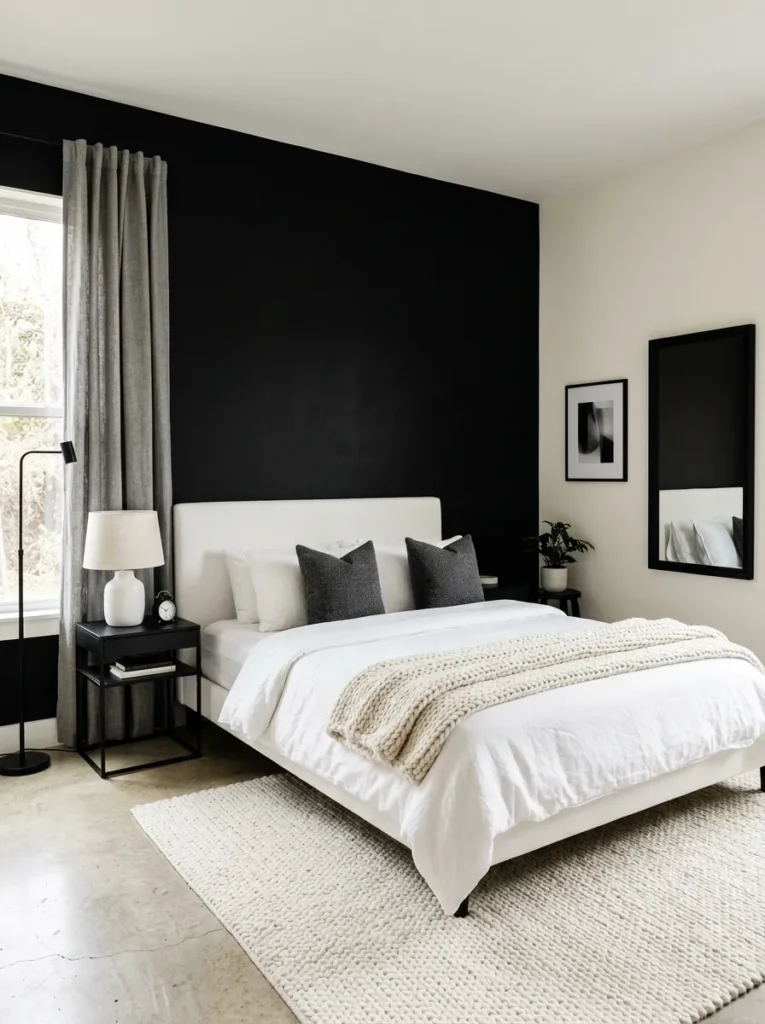
The black-and-white bedroom is one of the most enduring palettes in interior design because the contrast does most of the visual work. The key to making it feel considered rather than stark is introducing tonal variation — soft whites, warm ivories, and charcoal greys that fill the space between the extremes. A black wall with white bedding, a white ceiling, and medium grey curtains creates a gradation that feels sophisticated rather than abrupt. Add warmth through materials rather than additional colors: a natural linen texture, a woven throw, or wood-toned accessories. Avoid an even 50/50 split between black and white — let one dominate and the other provide contrast.
22. Add a Black Statement Light Fixture as a Sculptural Element
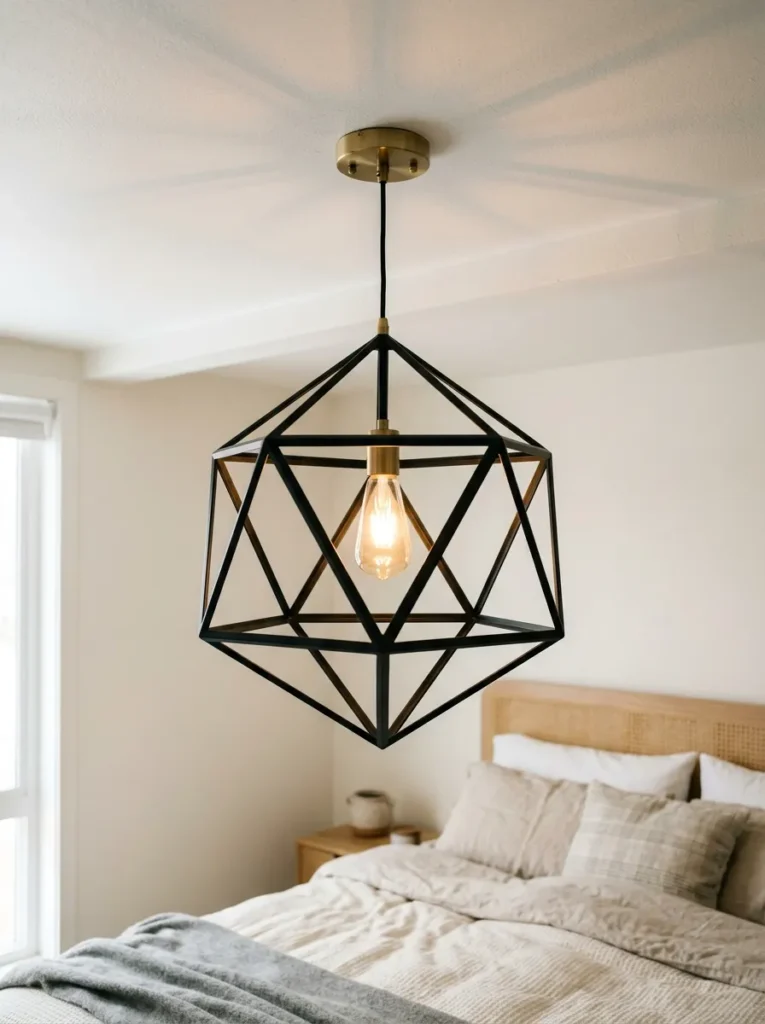
A black pendant light, chandelier, or oversized drum shade serves as both functional lighting and a piece of visual architecture. In a bedroom with lighter walls, a black fixture draws the eye upward and anchors the room from above. In a bedroom with dark walls, a sculptural black fixture blends into the environment while its shape creates interest through silhouette rather than color contrast. Choose a fixture with enough visual weight to command attention — delicate, spindly designs can look lost in a bedroom. Matte black fixtures with exposed bulbs, linen drum shades, or geometric metal frames are all reliable choices that suit a range of bedroom styles.
23. Commit to a Moody, All-Black Bedroom with Tonal Layering
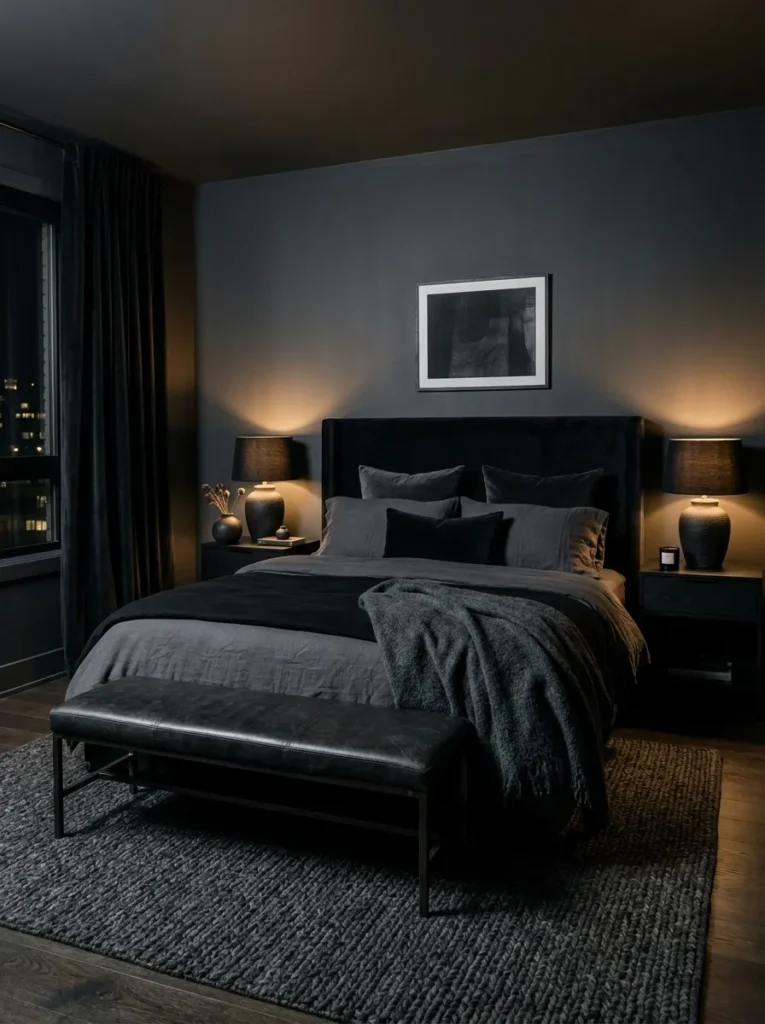
The most dramatic approach is embracing black entirely — walls, ceiling, bedding, furniture — and relying on tonal variation, texture, and material contrast to keep the room from feeling monotonous. Layer matte walls with velvet bedding, pair a leather bench with a wool rug, and mix iron hardware with glazed ceramic. The room should contain five or more surface textures to maintain visual interest when color contrast is minimal. This immersive approach works best in primary bedrooms or guest suites where the atmosphere matters more than brightness, and it requires the most intentional lighting plan of any idea in this article. When done well, it feels like stepping into a high-end boutique hotel.
Final Thoughts
The thread connecting every idea here is that black, used thoughtfully, isn’t a limitation — it’s a backdrop that forces better decisions about texture, lighting, and proportion. You don’t need to commit to an all-dark room to benefit from what black brings. A single accent wall, dark hardware, or a well-chosen headboard can shift a bedroom’s entire character.
Start with the level of black that matches your comfort and your room’s natural light. If your bedroom gets strong daylight, you can push further toward dark walls and tonal layering. If light is limited, let black play a supporting role through furniture, bedding, or trim while keeping the walls lighter.
The best black bedrooms aren’t the darkest ones — they’re the ones where every surface, texture, and light source has been chosen with intention. Save the ideas that resonate with your space, and let them sit for a while before you start. The right approach tends to become obvious once you stop thinking of black as bold and start seeing it as grounding.
Looking for more bedroom inspiration? Explore our collection of bedroom decorating ideas for every style—from cozy small bedrooms and modern minimalist spaces to warm neutral retreats—and discover even more ways to create a bedroom that feels beautiful, comfortable, and uniquely yours.