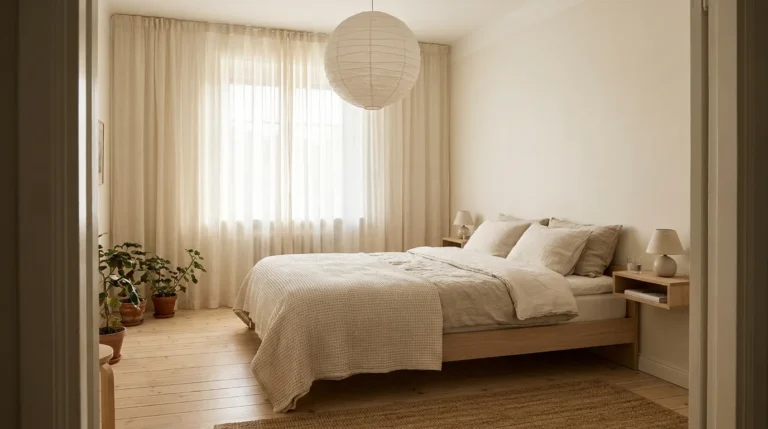
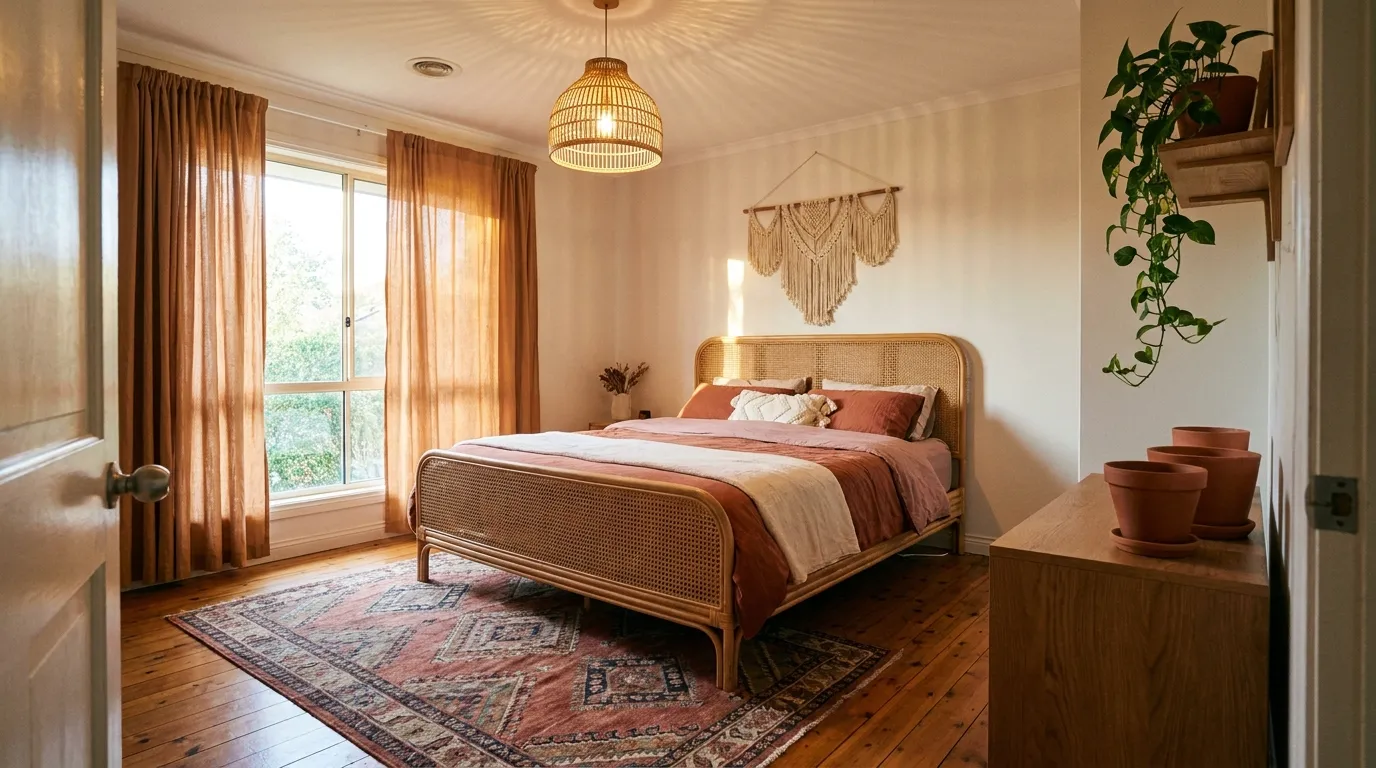
23 Boho Bedroom Ideas That Feel Relaxed and Layered
Bohemian bedrooms have a reputation for being easy to start and difficult to finish well. The initial appeal is obvious — layered textiles, warm organic materials, collected objects, and a general sense that the room developed over time rather than being ordered in one Saturday afternoon. But without some structural thinking beneath the surface, the look tips quickly from relaxed to chaotic, or flattens into a generic neutral bedroom with a few rattan pieces and a macramé wall hanging.
The boho bedroom ideas here are organized to help you understand what’s doing the real work — which decisions set up everything else, which textile combinations actually hold together, and where the layering instinct should be trusted versus reined in. The goal is a bedroom that reads as gathered and personal, not as styled from a single product catalog.
1. Start With an Earthy, Warm-Toned Color Palette — Then Layer Within It
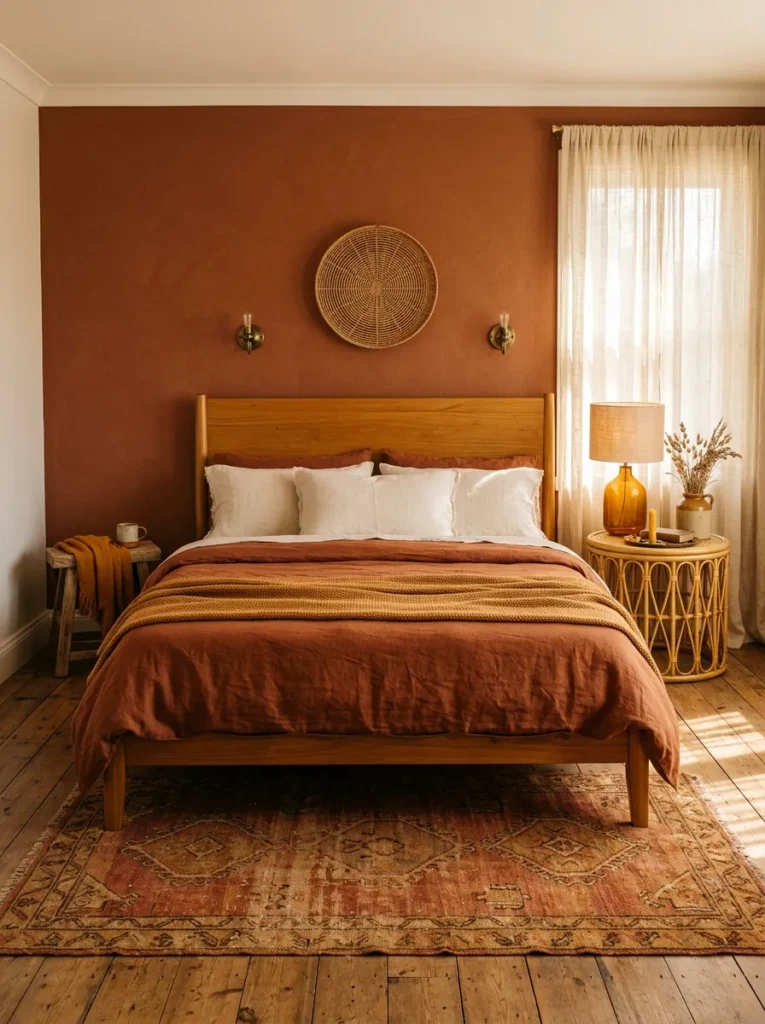
The foundational decision in any boho bedroom is color temperature. Bohemian rooms that read as genuinely rich rather than busy almost always share a warm undertone running through every element: terracotta, amber, warm ivory, dusty rose, rust, ochre, sage — each sitting in a family that leans warm rather than cool. This doesn’t mean the room should be orange. It means that when you hold any two pieces of textile, furniture, or decor next to each other, they share a warmth that allows them to sit together without fighting.
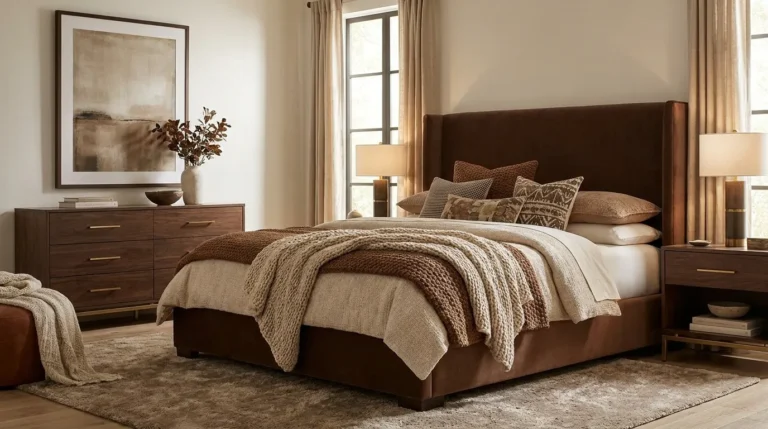
The practical application: choose your deepest anchor color first — often a terracotta or a warm amber-rust — and build lighter and more neutral tones around it. A burnt sienna duvet with ivory linen pillowcases and a faded rust kilim rug reads as a deliberate composition. The same duvet with a cool sage throw and a grey-toned rug will feel disconnected no matter how individually nice each piece is. Cooler or jewel tones can appear in the room — deep teal, indigo, forest green all work in a boho palette — but they should be warmed by proximity to something amber or golden rather than sitting alone.
2. Choose a Rattan or Cane Bed Frame as the Furniture Anchor
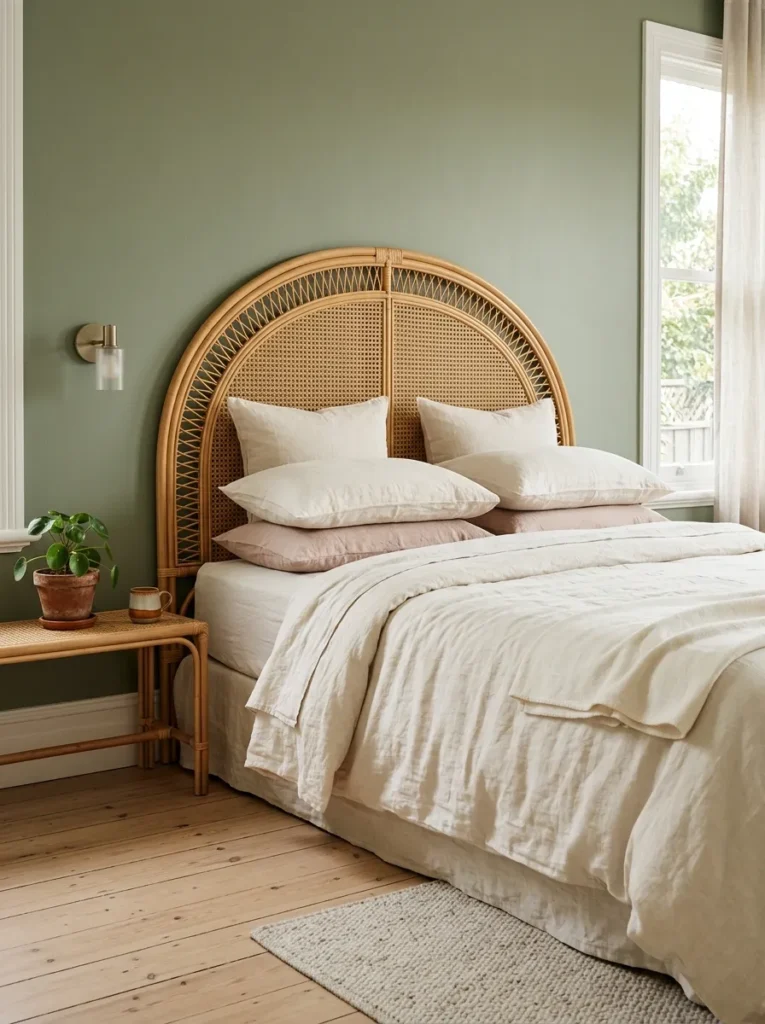
In a room built around organic texture, the bed frame functions differently than it does in minimalist or contemporary bedrooms — it’s a material statement rather than just a furniture choice. Rattan and cane frames bring exactly the right visual weight: substantial enough to anchor the room, open enough in their weave to let the layered textiles breathe around them. They also sidestep the need for a headboard treatment, since the frame itself provides a clearly defined backdrop.
The practical note is scale: rattan and cane headboards range from modest arched forms to dramatic full-height panels. In rooms under about 12 square metres, a lower arched headboard (typically 120–140 cm) reads as appropriate rather than overwhelming. In larger or higher-ceilinged rooms, a taller cane or rattan frame — up to 170 cm — creates the kind of presence the room can absorb. Pair with soft wood flooring or a woven rug to complete the natural material relationship. Against white or cream walls, rattan appears warm and honeyed; against deeper terracotta or sage walls, the same frame reads more graphic.
3. Layer a Kilim or Vintage-Style Rug as the Floor Anchor
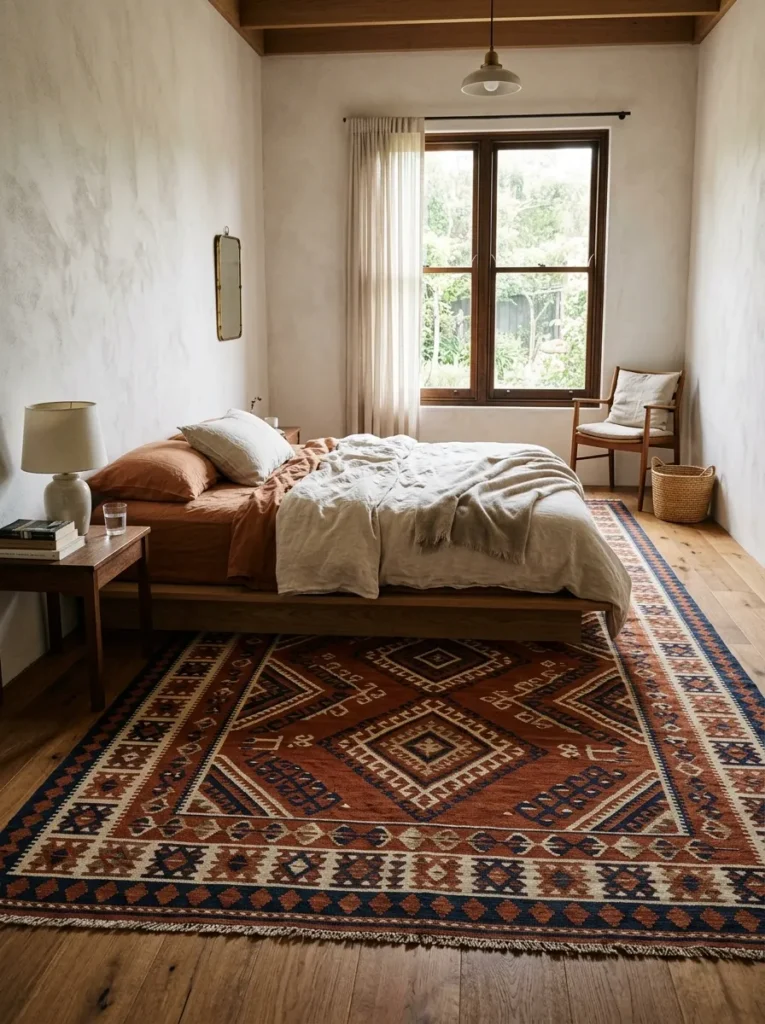
A room built on layered textiles needs one textile to function as the floor-level anchor — and in boho bedrooms, a flat-weave kilim or a worn Persian-style rug does this better than a plain wool or shag option. The geometric or floral pattern of a kilim provides the visual complexity the floor needs to hold the room together, and because the pattern is horizontal and underfoot, it doesn’t compete with wall or textile arrangements the way a busy printed cushion or wall piece would.
Sizing matters significantly here. A rug that runs at least 60 cm beyond the sides of the bed on each side — and extends fully beneath the lower two-thirds of the bed frame — grounds the furniture arrangement convincingly. A rug that only peeks out from beneath the foot of the bed reads as an afterthought. In rooms where a full-size kilim is beyond budget, two matching or coordinated flat-weave runners placed on either side of the bed achieve a similar grounding effect with less visual weight.
4. Use a Macramé or Woven Wall Hanging as a Headboard Alternative
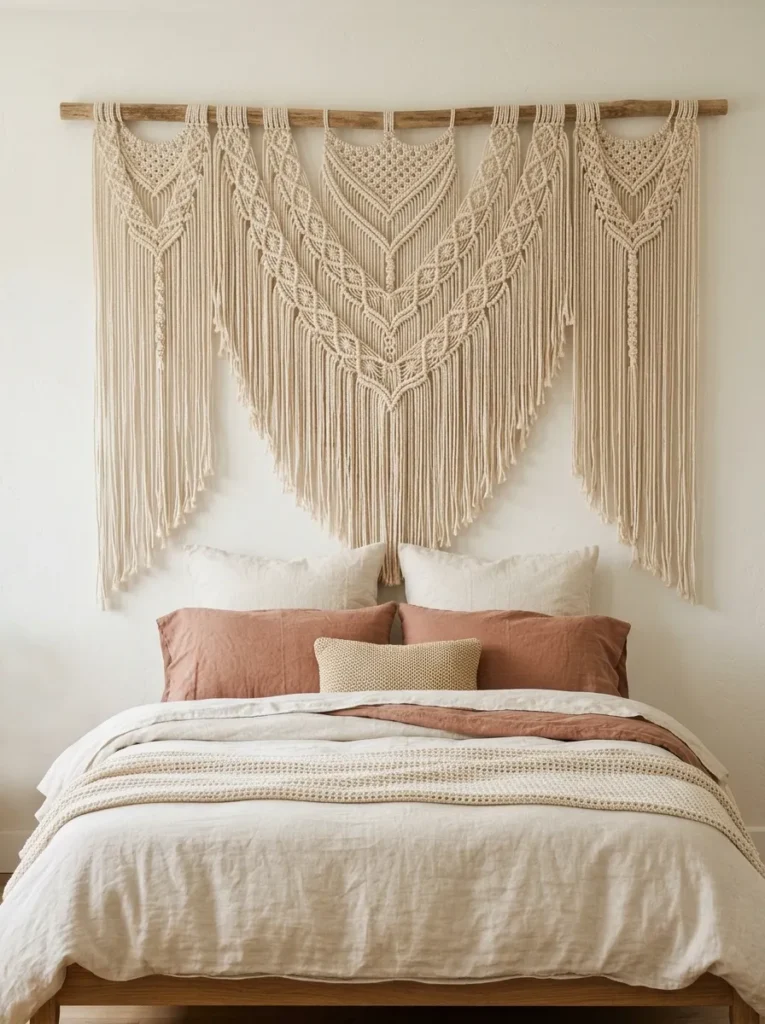
For renters or anyone who wants a flexible headboard arrangement without committing to a fixed upholstered piece or furniture frame, a large macramé or woven textile piece mounted on the wall behind the bed performs the same visual function — creating a defined backdrop for the sleeping space. The textile adds both warmth and handmade texture that no painted accent wall replicates.
Scale is the variable most people get wrong. A macramé hanging that’s narrower than the width of the bed reads as a decorative accessory rather than an architectural element. The piece should span at least 80–90 percent of the bed’s width, ideally with enough drop to extend from near the ceiling to roughly pillow height. Natural cotton macramé in undyed cream or warm ivory reads warmly; black macramé introduces a graphic element that works in rooms with a darker, moodier palette. Avoid synthetic rope — the knots lose definition and the sheen reads cheap.
5. Build the Bed With at Least Four Distinct Textile Layers
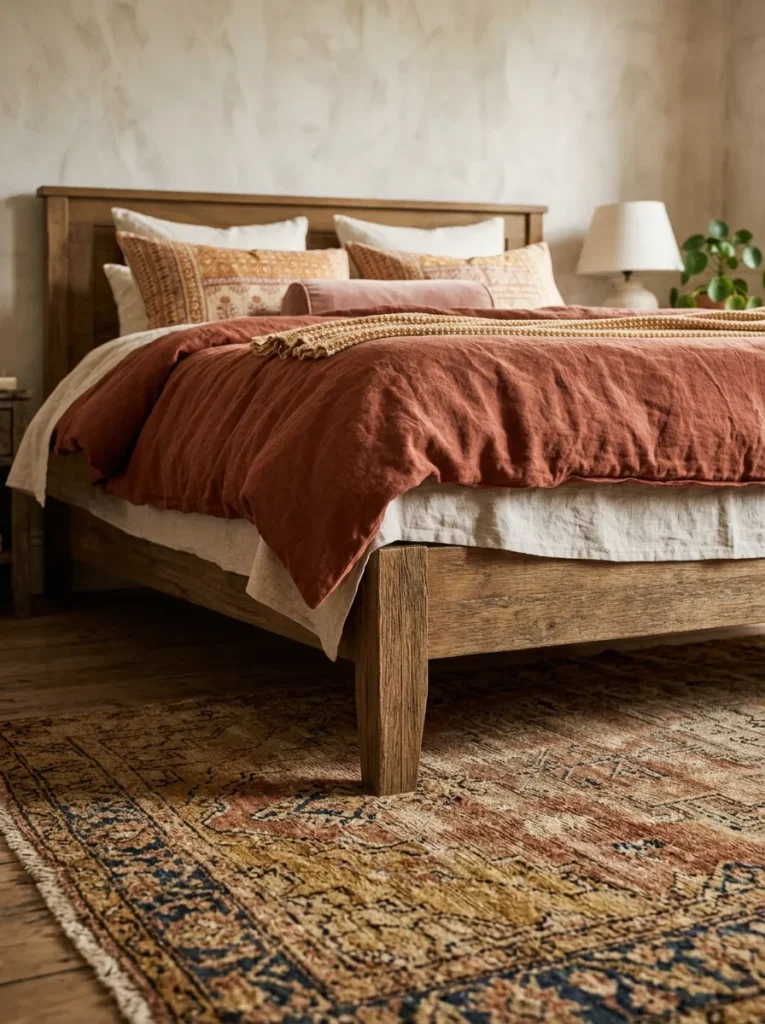
The bed is the central styling element in a boho bedroom, and a convincingly layered look requires more than a duvet and two pillows. The formula that reads as genuinely rich rather than either sparse or chaotic is roughly: a fitted base layer, a linen or cotton flat sheet, a textured duvet or quilt, at least one throw, two to four sleeping pillows in two different covers, and one or two euro or square cushions in a coordinating but distinct fabric.
The material variation across these layers matters as much as the number. A velvet cushion beside a linen pillowcase beside a cotton-woven throw creates depth through contrast in texture rather than contrast in color. Keep the color family consistent — variations in the same warm neutral range — and let the texture do the distinguishing. The imperfect styling is intentional: a throw folded and placed at a slight diagonal, a cushion leaned rather than propped, the flat sheet visibly folded over the duvet edge. Studied casualness takes effort, but the goal is that the bed looks as though someone just got out of it rather than that no one has ever been in it.
6. Hang Curtains From Ceiling to Floor in Warm Linen or Cotton Gauze
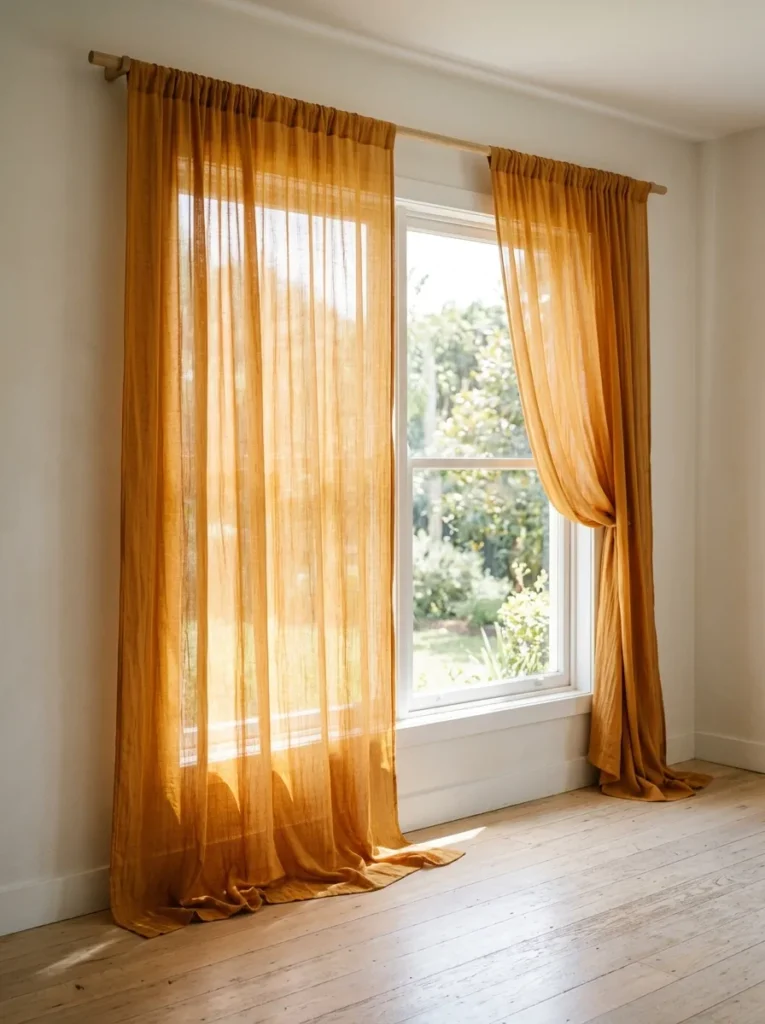
Curtains in a boho bedroom should be long enough to make the ceiling feel higher and the window feel larger than it is — which means mounting the curtain rod within 10–15 cm of the ceiling cornice rather than immediately above the window frame. The extra visual height this creates is significant in standard-height rooms and works especially well with the warm, loose materials the boho aesthetic calls for.
Fabric choice: unlined linen, cotton gauze, and cotton-linen blends all allow natural light through during the day while softening the room’s edges. Avoid sheers that are too translucent and diaphanous — they lose visual presence and don’t add much warmth. For rooms that need blackout capability, layer a sheer linen panel over a simple roller blind in a closely matched tone rather than adding a heavy lined curtain that would sit too formally. Curtain color should either disappear into the wall (off-white on off-white) or become an intentional warm accent — dusty rose, terracotta, saffron, or muted sage all work in boho rooms.
7. Introduce Warm Ambient Lighting Through Multiple Sources
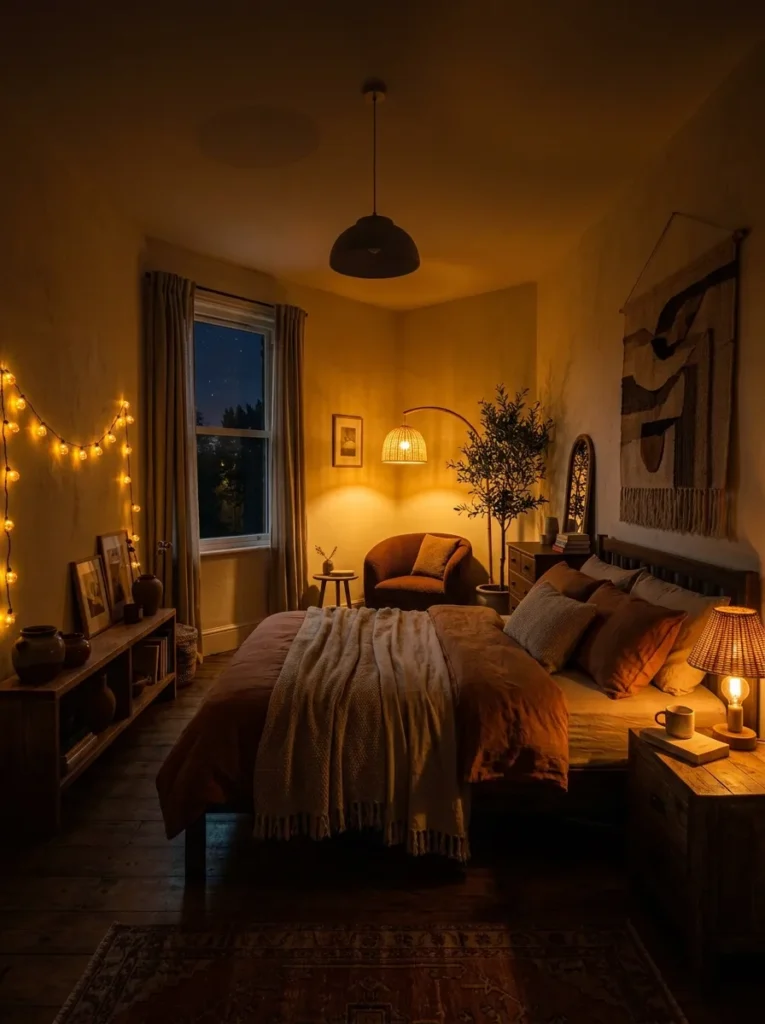
The overhead light in most bedrooms is the enemy of bohemian atmosphere. A single ceiling fixture floods the room evenly and removes the warm pools of light that give boho rooms their evening depth. The approach that works — and that distinguishes rooms that photograph well from rooms that actually feel good — is a combination of at least three light sources at different heights: a bedside table lamp or wall sconce for task reading, a floor lamp in a corner for ambient fill, and one or two decorative sources like candles, a small table lamp, or a string of warm Edison bulbs.
Edison-style warm filament bulbs (2700K or lower) are specifically worth seeking out over standard warm white. The visible filament and slightly amber cast creates a warmth that even a lamp with a beautiful shade can’t achieve with a cool or neutral bulb inside it. Wicker, rattan, woven seagrass, and fabric pendant shades all diffuse light softly and add a further layer of texture overhead. Avoid paper lanterns — they photograph nicely but tear easily and are difficult to clean.
8. Add a Canopy or Draped Frame Above the Bed
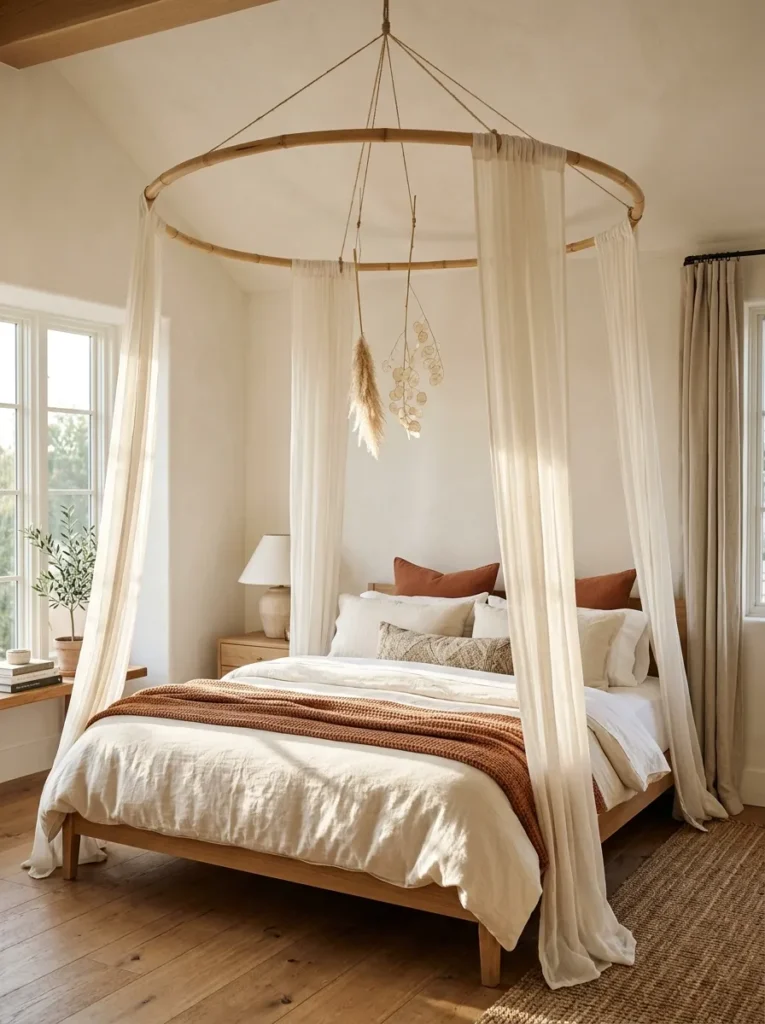
A bed canopy — whether a four-poster frame hung with fabric panels, a simple ceiling hook with draped fabric, or a curved bamboo canopy hoop — is the boho bedroom’s most theatrical feature and also its most practical in certain situations. In rooms without an architectural headboard wall, a canopy provides the spatial definition that tells the room where the sleeping zone is and gives the bed compositional enclosure it would otherwise lack.
For renters, a single ceiling hook with a large piece of sheer cotton or lightweight linen fabric draped and pinned creates a flowing effect without any permanent installation. The fabric should be generous — at minimum 3–4 metres of material for a simple gathered drape. For a more structured look, bamboo or rattan hoop canopies (typically 100–120 cm diameter) mount with a single ceiling hook and provide a defined circular frame from which fabric or plants can hang. Avoid heavy blackout fabric for canopies — the draping effect requires lightness to read as intentional.
9. Layer Patterned Textiles Using the One-Third Rule
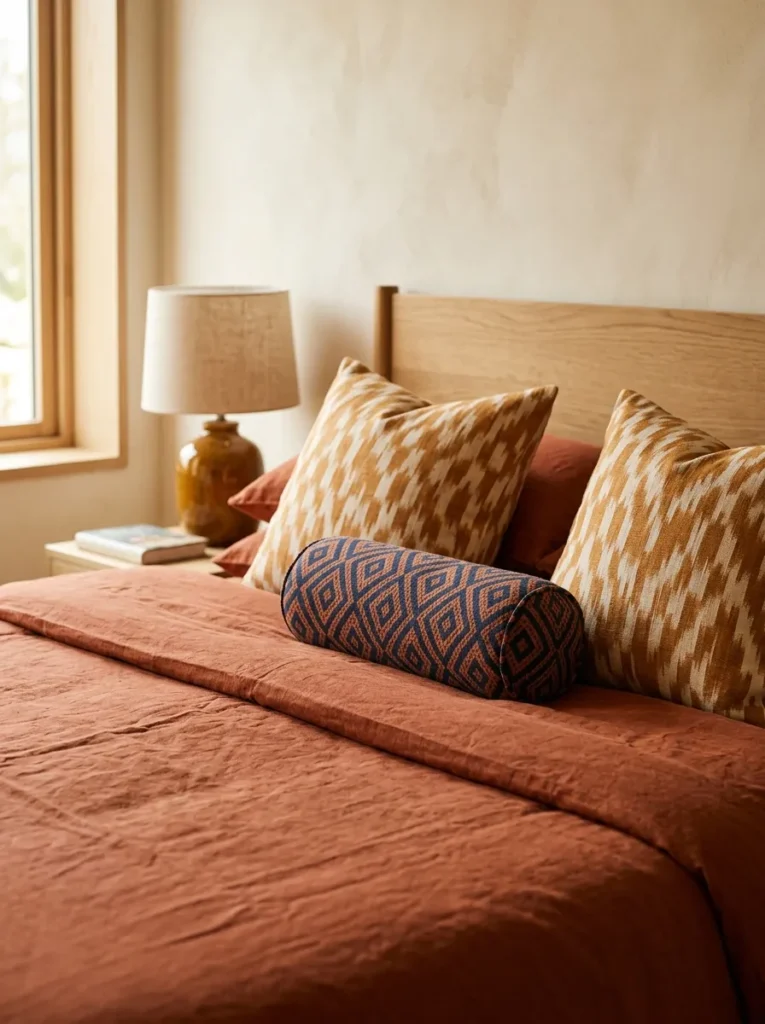
One of the most common mistakes in boho bedrooms is mixing patterns without a structural logic — which produces a result that reads as chaotic rather than collected. The approach that works across most combinations is to keep the largest textile (usually the duvet or bedspread) either plain or very subtly textured, use a medium-scale pattern on one or two cushions or a throw, and introduce a smaller or bolder pattern only in a secondary piece — a small bolster, a pillow sham, a decorative corner cushion.
This roughly one-third approach means the bed reads as layered without any single pattern dominating or competing. The classic pairings in boho rooms are geometric kilim motifs with organic floral block prints; stripes with ikat weaves; and abstract tie-dye or batik with a solid or semi-solid base. Two competing large patterns at the same scale will always fight for attention. One large pattern and two subordinate ones creates hierarchy that reads as curated rather than random.
10. Place Rattan or Wicker Storage Baskets as Floor-Level Texture
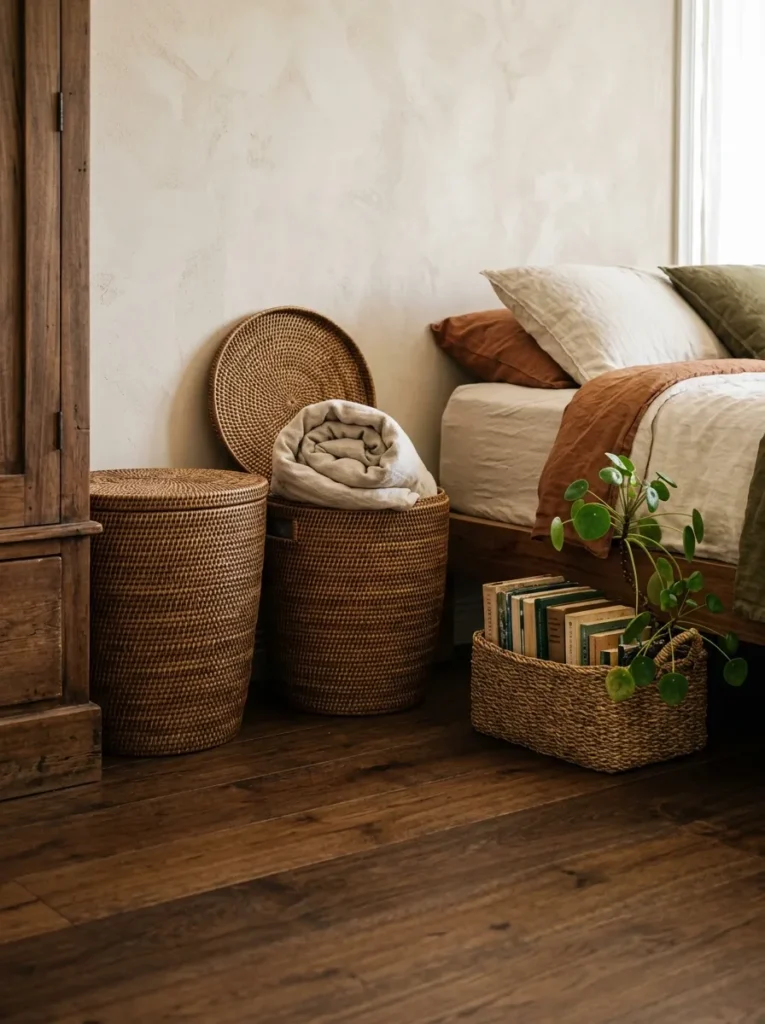
Visible storage is a design feature in boho bedrooms rather than a compromise, as long as the containers themselves carry material integrity. Rattan, wicker, seagrass, and woven water hyacinth baskets — placed at floor level near the bed, beneath a floating shelf, or beside a wardrobe — contribute to the room’s material palette while performing a genuine storage function.
The distinction worth making is between baskets that contain and conceal (closed-lid or deep-sided baskets for blankets, seasonal items, or things that need to be genuinely put away) and baskets used as open display (shallower or open-top forms where the contents — rolled blankets, a stack of books, a plant — are part of the visual). Both work, but mixing the two indiscriminately makes the floor area read as cluttered. Two or three substantial baskets are more convincing than six small ones scattered around the room.
11. Hang Gallery Wall Art in Organic Shapes and Warm Frames
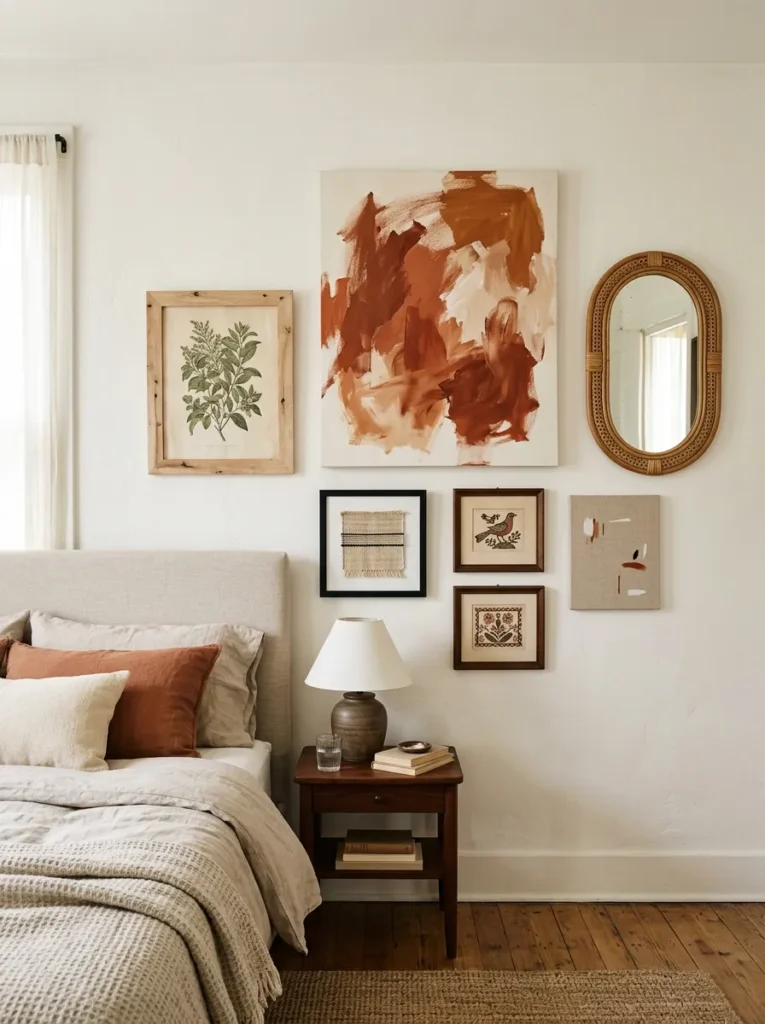
A gallery wall in a boho bedroom reads differently from a gallery wall in a contemporary or minimal room — the goal is not perfect symmetry or identical frames but a composition that feels like it accumulated over time. This means mixing frame finishes (raw wood, dark walnut, unframed canvas, simple black), mixing scales (one larger anchor piece with smaller surrounding works), and choosing art that shares color warmth rather than style.
Botanical illustrations, vintage textile prints, abstract ink paintings, macramé or woven wall art pieces, and folk art or travel-inspired prints all work within the same gallery composition as long as they share that warm underlying palette. The most stable arrangement is to identify your largest piece first, position it off-centre toward the top of the group, and build the remaining pieces around it. Avoid pre-packaged “gallery wall sets” — the matched aesthetic undercuts the boho reading.
12. Bring In a Vintage Dresser or Reclaimed Wood Chest
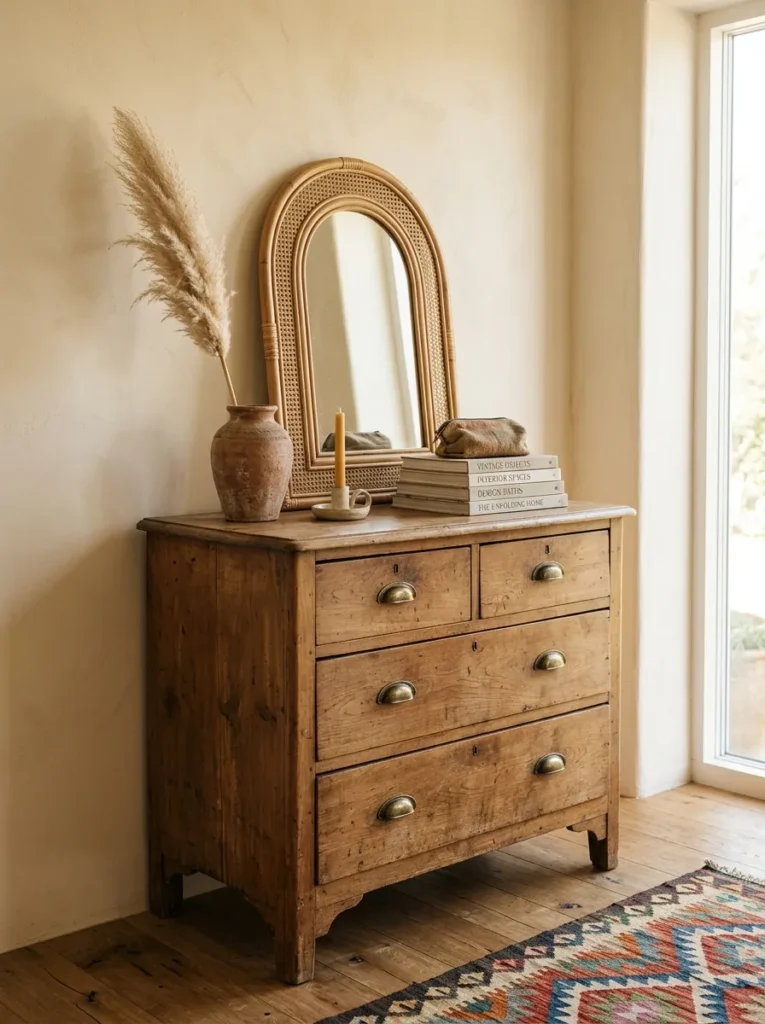
Boho rooms benefit enormously from one piece of furniture that clearly predates the current decade — a vintage dresser with slightly mismatched hardware, a reclaimed wood chest with visible joinery, or a painted chest of drawers with worn edges. This single piece prevents the room from reading as catalog-assembled, which is the most common way that otherwise well-considered boho bedrooms fail aesthetically.
Thrift stores, vintage resellers, and online second-hand marketplaces are the most reliable sources, and imperfection is an asset rather than a problem. A dresser with a scratched top surface and brass drawer pulls reads as genuinely old; the same dresser fully refinished and re-hardwared reads as a contemporary reproduction. Style the top surface with a mixture of objects at different heights — a mirror, a plant, one candle, a stack of books — and the piece becomes a styling surface that contributes to the room’s gathering quality.
13. Use Terracotta, Raw Clay, and Unglazed Ceramics as Decorative Objects
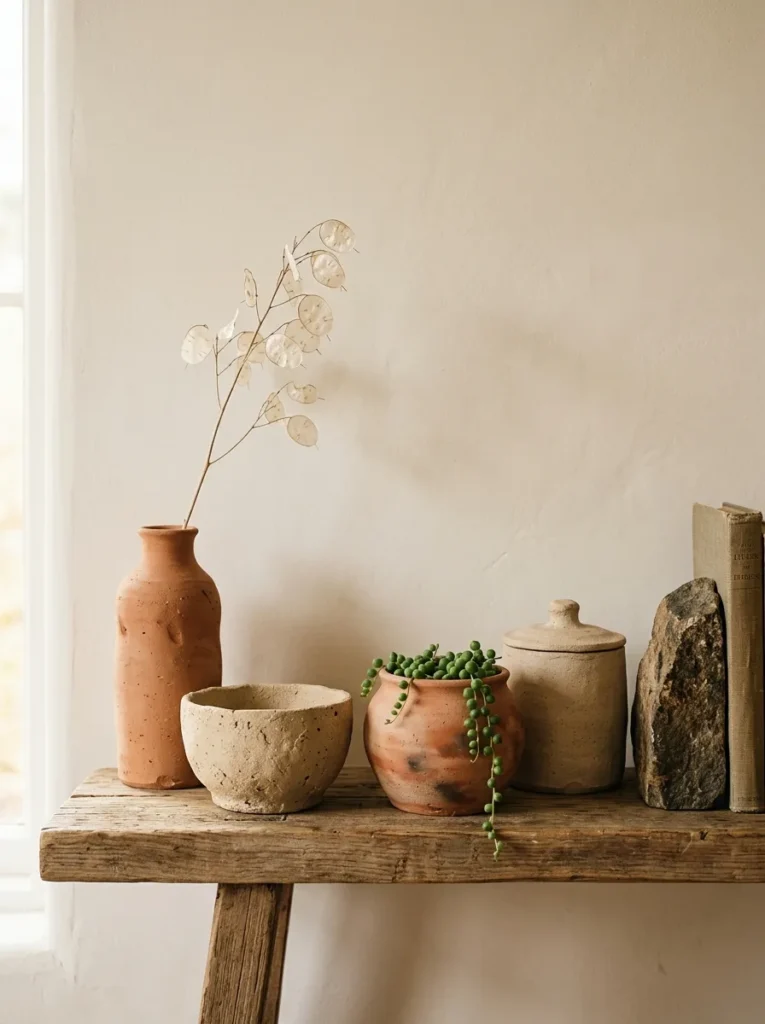
Objects in boho bedrooms should look touched and imperfect rather than manufactured. Terracotta pots, raw clay vessels, roughly textured ceramic bowls, and hand-thrown vases in earthy finishes all contribute to the visual texture of the room in ways that glass, porcelain, or high-gloss ceramic cannot. They also sit naturally with rattan, woven textiles, and reclaimed wood in a way that visually polished objects often don’t.
Grouping matters. A cluster of three terracotta pieces at different heights on a dresser or shelf reads as a deliberate still life; a single piece isolated on a large surface reads as forgotten. Odd numbers and varying heights are the reliable principles here. Unglazed or satin-matte glazed ceramics won’t compete with the textile layering that’s doing most of the room’s visual work. Avoid highly decorated or patterned ceramics in rooms that are already pattern-rich — the surface noise accumulates.
14. Add Indoor Plants With Trailing or Dramatic Forms
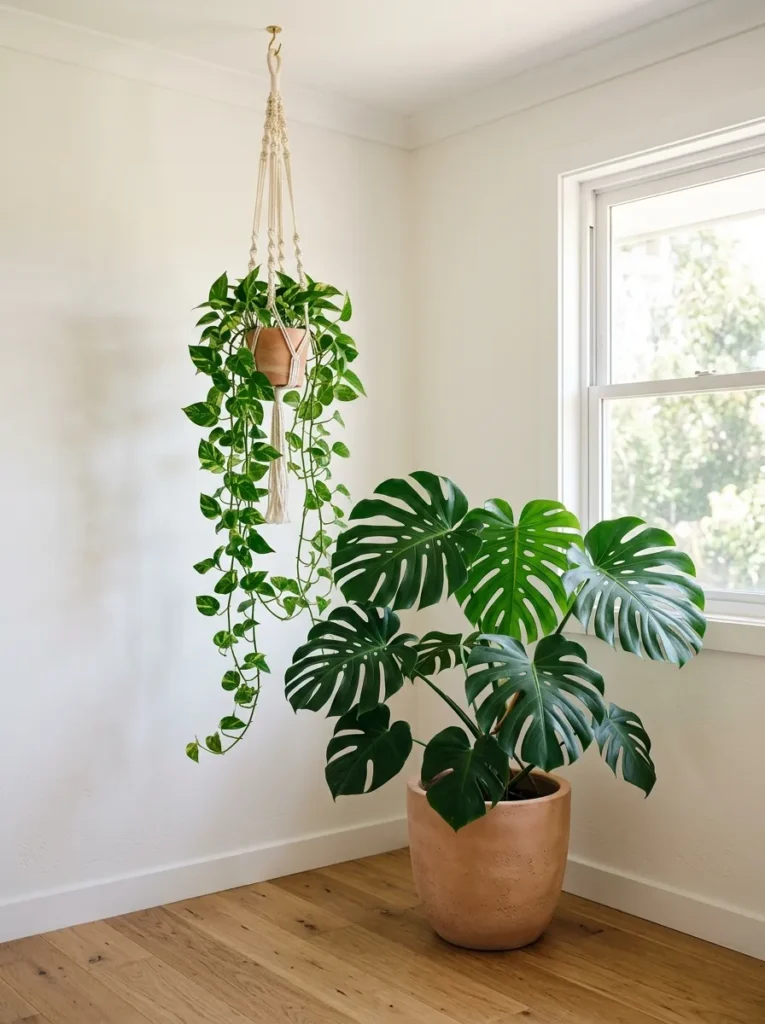
Plants in a boho bedroom serve a specific material role beyond general freshness — they bring organic irregularity into a room that is already working with irregular patterns and handmade objects. The plant forms that suit boho rooms most naturally are those with either a trailing quality (pothos, string of pearls, tradescantia, hanging spider plants) or a genuinely dramatic silhouette (fiddle-leaf fig, monstera, large snake plant).
A trailing plant on a high shelf or hanging basket, with vines that extend well downward, creates vertical movement and softness that no other room element provides. Hanging plants from the ceiling — in macramé or rattan hangers positioned near the window — work particularly well because they extend the room’s textile layering upward and create a living canopy element above the bed or reading corner. The practical note: high-humidity environments or overwatering will damage many boho textile materials; ensure hanging plants are positioned away from textiles and that water drainage is contained.
15. Create a Low Floor Seating Area or Reading Nook
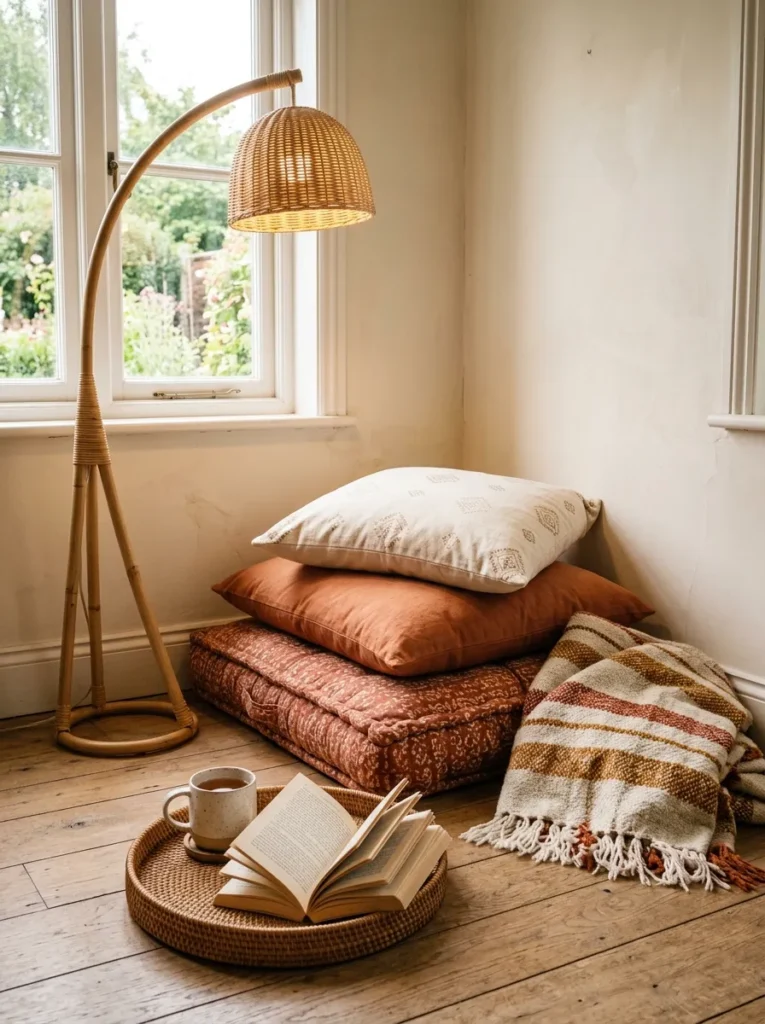
One of the more distinctive features in a genuinely boho bedroom — and one that separates the style from simply being an eclectic bedroom — is the presence of floor-level seating: a stack of floor cushions beside the bed, a low pouffe and a floor lamp, or a corner arrangement of cushions and a woven blanket on a low platform. The connection to the floor is both a physical and aesthetic choice, referencing the style’s global textile traditions.
In rooms too small for additional floor seating without compromising circulation, a single pouffe or a low rattan floor chair beside the window accomplishes the same effect at smaller scale. The cushions used for floor seating should be oversized (60 cm square or larger), firmly filled, and in a cover material that can be surface-cleaned — floor seating takes more physical wear than bed cushions and needs to function practically rather than just look good. Position the floor area near the window to make it feel like an intentional day-zone rather than overflow sleeping space.
16. Mix Metals — But Keep Them in the Same Temperature Family
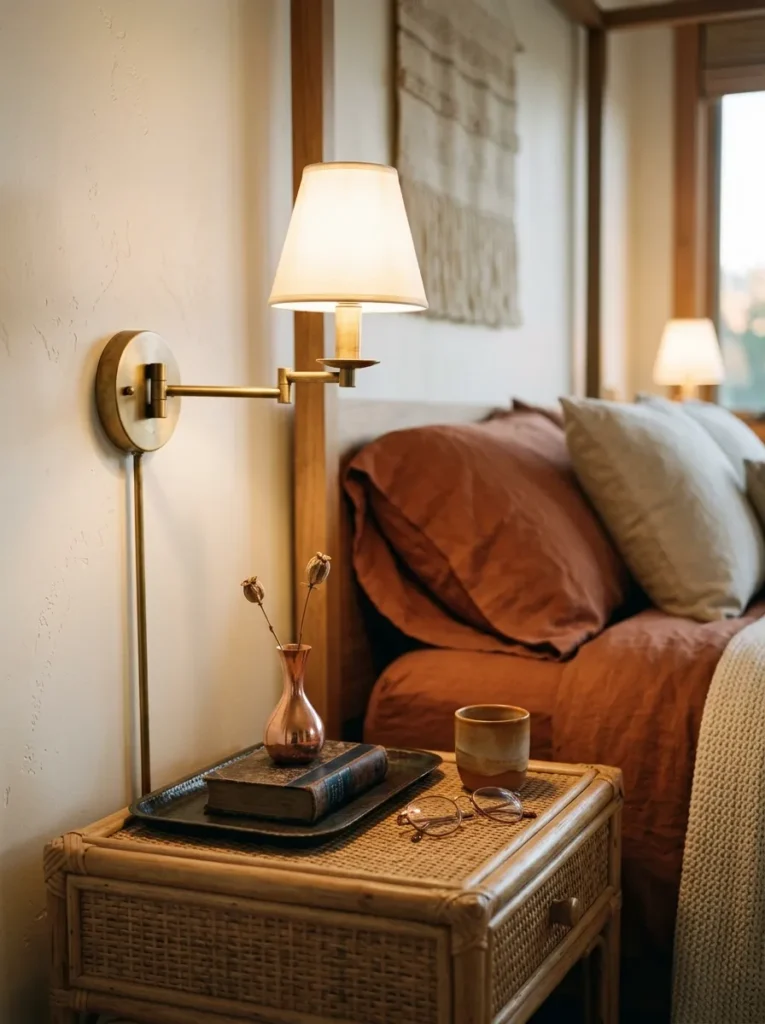
Boho bedrooms tolerate mixed metals in a way that contemporary or minimalist rooms don’t, because the style already embraces visual eclecticism. But “mixed metals” in practice works best when the metals share a warmth rather than spanning from cool chrome to warm brass. Aged brass, burnished gold, antique bronze, copper, and warm iron all sit together well. Brushed nickel, chrome, and steel read cold against warm wood and textile and tend to break the palette.
Hardware, curtain rods, mirror frames, candle holders, and light fixtures are the typical metal-bearing elements in a bedroom. If you’re introducing two or three different metals, let one — usually aged brass or warm bronze — appear in the larger or more prominent pieces (curtain rod, bedside lamp base, mirror frame) and let the others appear as accents in smaller objects. The consistency of warm undertone is what allows the mixing to read as collected rather than mismatched.
17. Hang Sheer or Embroidered Curtain Panels as Room Dividers
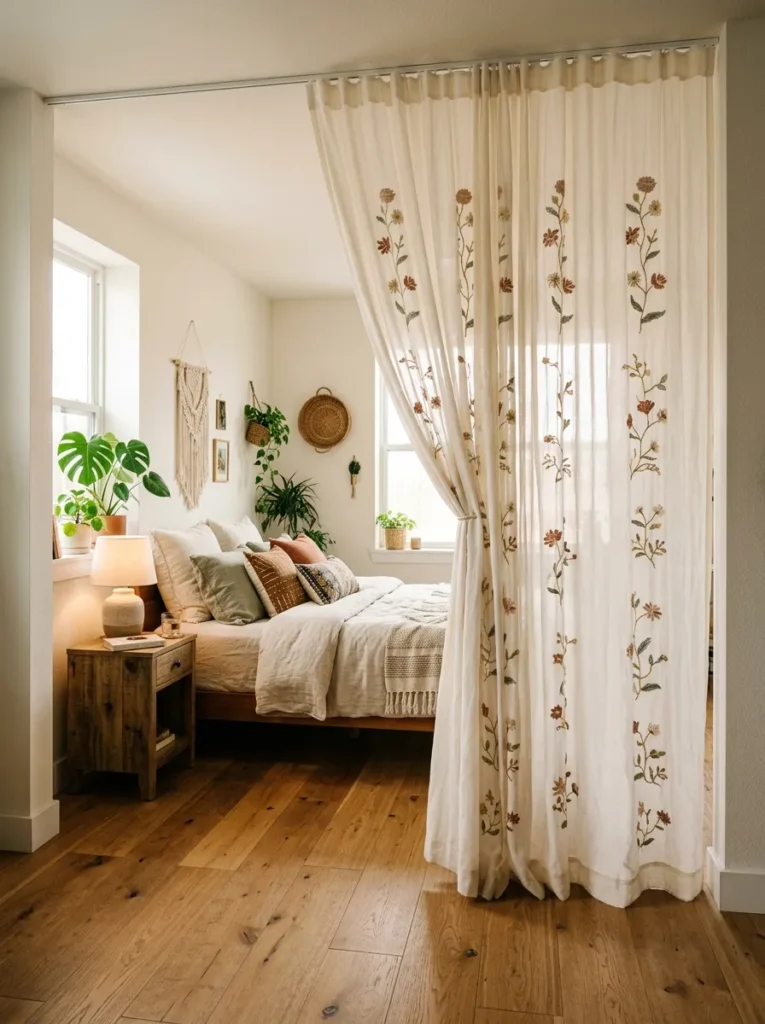
In studio apartments or open-plan bedrooms where the sleeping area connects directly to another space, a curtain panel hung from the ceiling — rather than from a wall-mounted rod — can define the bedroom zone without building a wall or using furniture as a visual barrier. In boho rooms, ceiling-hung panels work particularly well because the material (sheer linen, embroidered cotton, printed cotton voile) becomes part of the room’s textile story rather than a purely functional partition.
The rod or track for ceiling-mounted panels should be as close to the ceiling line as possible, and the fabric should extend to the floor. Using the same fabric as the window curtains creates visual continuity; using a contrasting fabric with embroidery or block print distinguishes the divider as a deliberate feature. This approach is fully renter-friendly when using tension-mount ceiling track systems, which require no drilling and can be removed without damage.
18. Use Warm White or Cream Walls to Let Other Elements Read Clearly
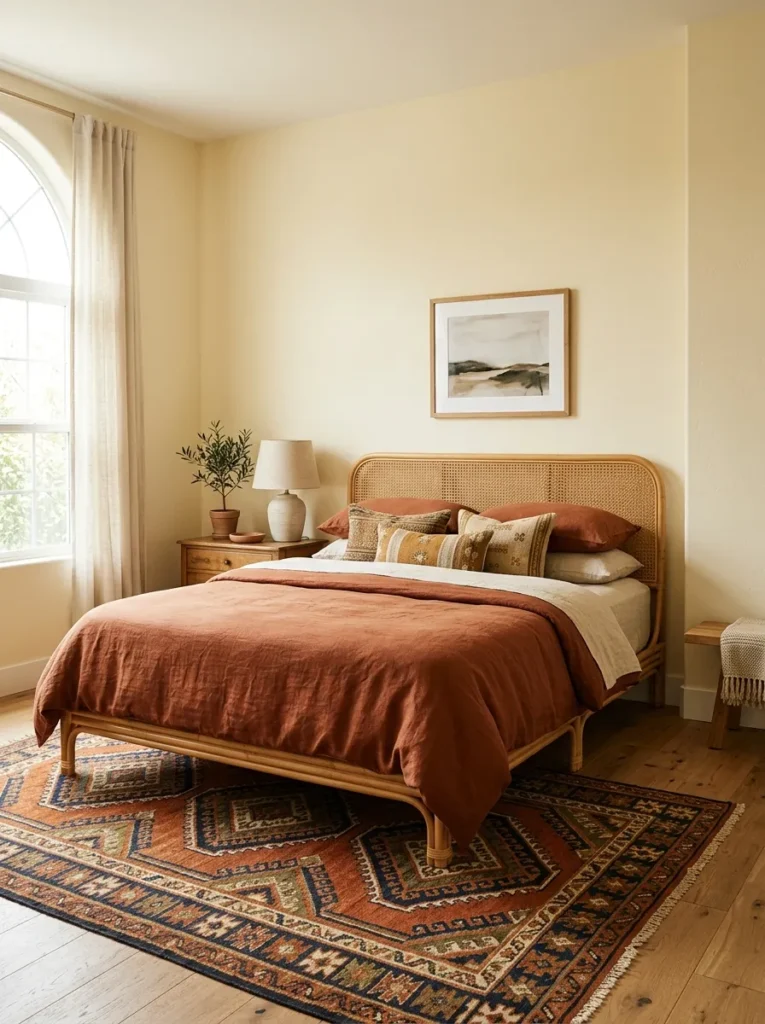
White walls are often thought of as a neutral placeholder — a background until something better is decided. In boho rooms, a warm white or cream wall is the right long-term choice, not a default. It provides the visual quiet that lets the room’s many competing textures, patterns, and materials read clearly rather than fighting a busy or dark wall behind them.
The critical distinction is undertone. A blue-white or grey-white wall will cool every warm amber, terracotta, and natural wood tone in the room and make the palette feel disconnected. An off-white with a yellow-cream or warm pink undertone allows rattan to read golden, terracotta to read rich, and timber to read warm. Test any white paint candidate against your most saturated warm material — usually the rug or the duvet — before committing. What reads right in the paint chip drawer will often look different beside warm textiles under evening light.
19. Display Books and Objects on Open, Slightly Crowded Shelves
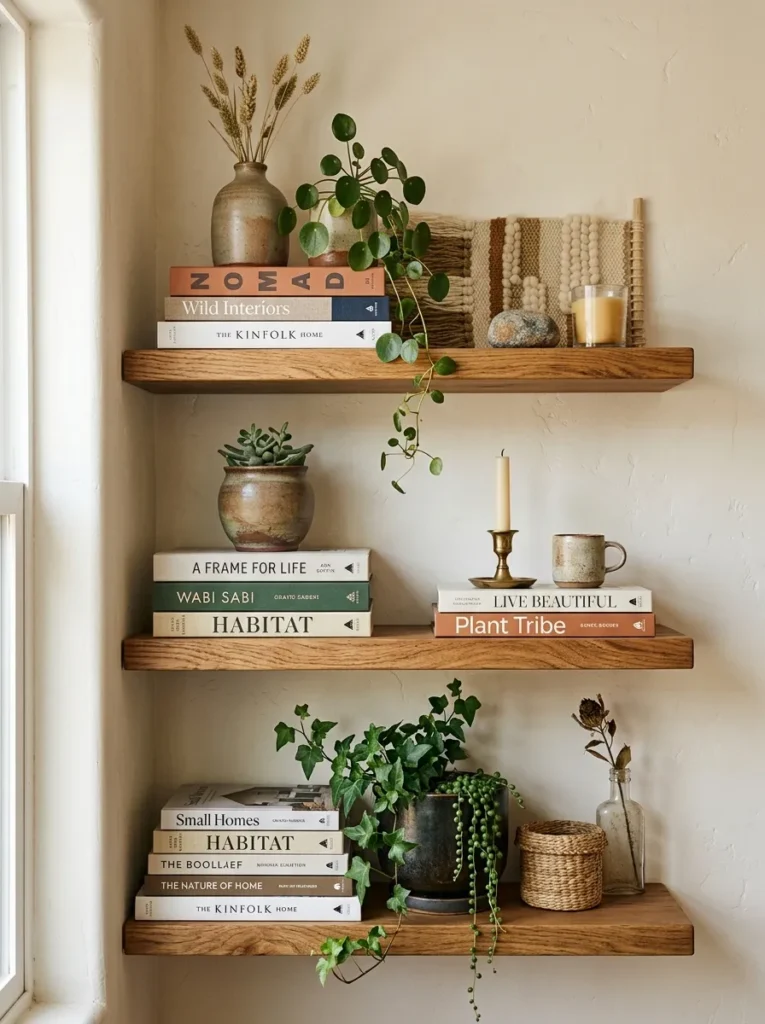
Shelving in a boho bedroom is styled differently from shelving in a minimalist room — the goal is not negative space but a controlled abundance that reads as accumulated rather than arranged. Open timber shelves or rattan-fronted cubbies work well as display structures; wire or glass shelves read too contemporary for the palette.
The approach: group objects in clusters of three to five items at varying heights, mix categories within clusters (a plant beside a book stack beside a ceramic piece beside a small framed artwork), and leave narrow breathing gaps between clusters rather than filling the entire shelf continuously. The distinction between “curated abundance” and “clutter” is usually those small gaps — they signal that the arrangement was deliberate. A shelf styled wall-to-wall with no visual punctuation reads as genuinely messy even when every individual object is attractive.
20. Choose a Statement Mirror With a Raw or Carved Frame
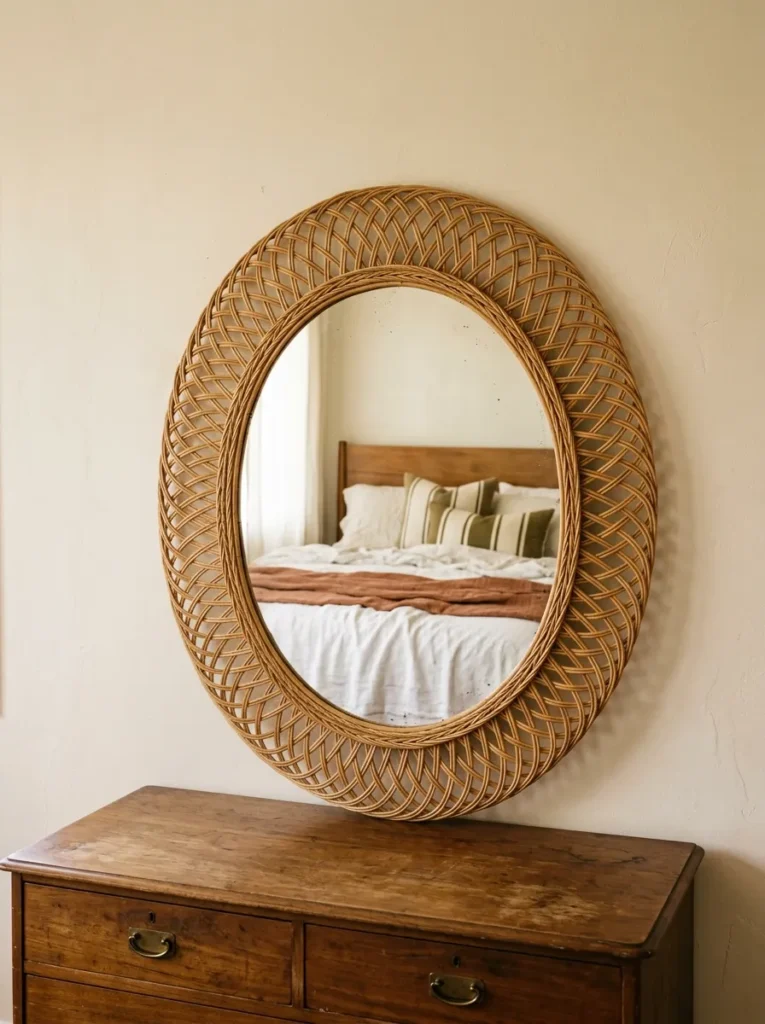
A mirror in a boho bedroom is both a functional necessity and a significant visual object, and the frame is where the choice matters. Carved wood frames, bamboo or rattan oval or arched forms, sunburst rattan or natural fibre frames, and raw wood slice or driftwood frames all contribute to the room’s material vocabulary in a way that a plain or ornate gilded frame won’t.
Position the mirror where it reflects the room’s most interesting visual content — ideally the textile-rich bed arrangement or the gallery wall rather than a bare corner or the wardrobe. A mirror reflecting good natural light also improves evening lamplight — the bounced warm glow adds depth to the room without additional fixtures. A leaning floor mirror in a raw timber frame works particularly well in boho rooms because the casual positioning — slightly angled, leaned rather than hung — is consistent with the overall aesthetic logic.
21. Layer Rugs on Top of Each Other in Coordinating Patterns
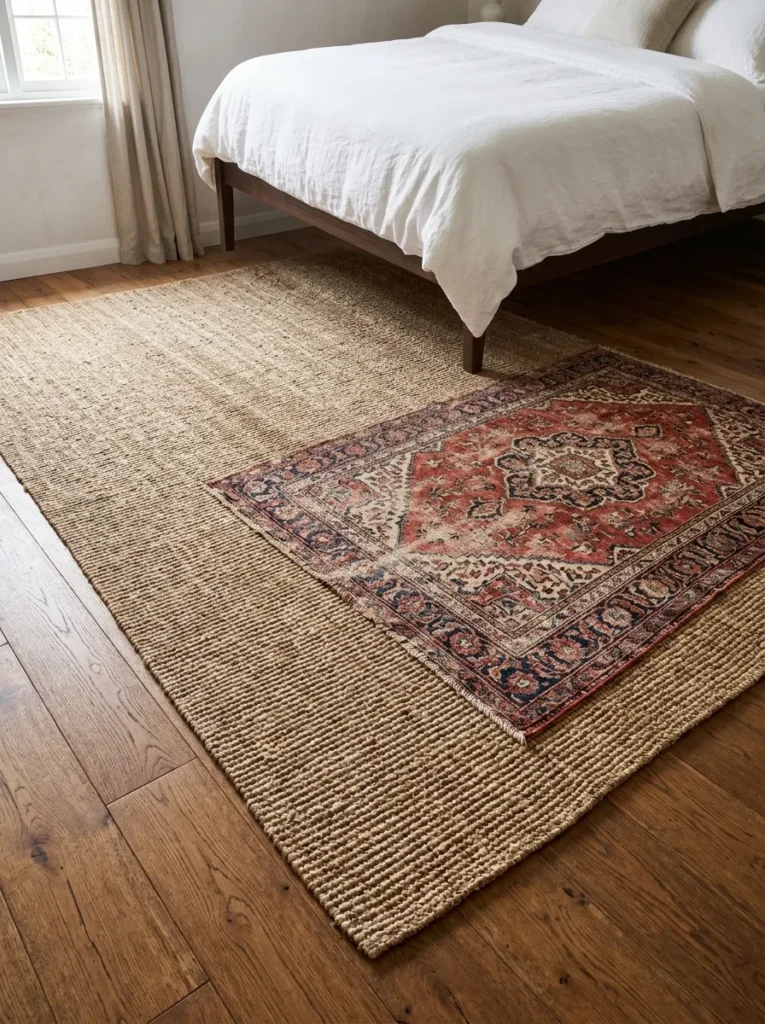
Rug layering is one of the most specifically boho moves in a bedroom — and it works most reliably when the base rug is plain or very low in visual texture (a simple sisal, jute, or cream wool) and the top rug is the pattern-carrier (a small kilim, a vintage Persian fragment, a printed cotton dhurrie). The size relationship matters: the top rug should be substantially smaller than the base, with the base rug visible around all or most of its edges.
The common mistake is layering two similarly sized rugs with similar pattern weights, which produces a fight for attention rather than a deliberate composition. The base rug grounds the floor; the top rug acts as the textile jewel in the centre. In rooms with timber flooring, a single medium-sized kilim or flat-weave rug placed off-centre is sometimes more effective than rug layering — the exposed timber around an off-centre rug creates asymmetric warmth that a centred arrangement doesn’t.
22. Incorporate Natural Fibre Pendant Lights or Wicker Lamp Shades
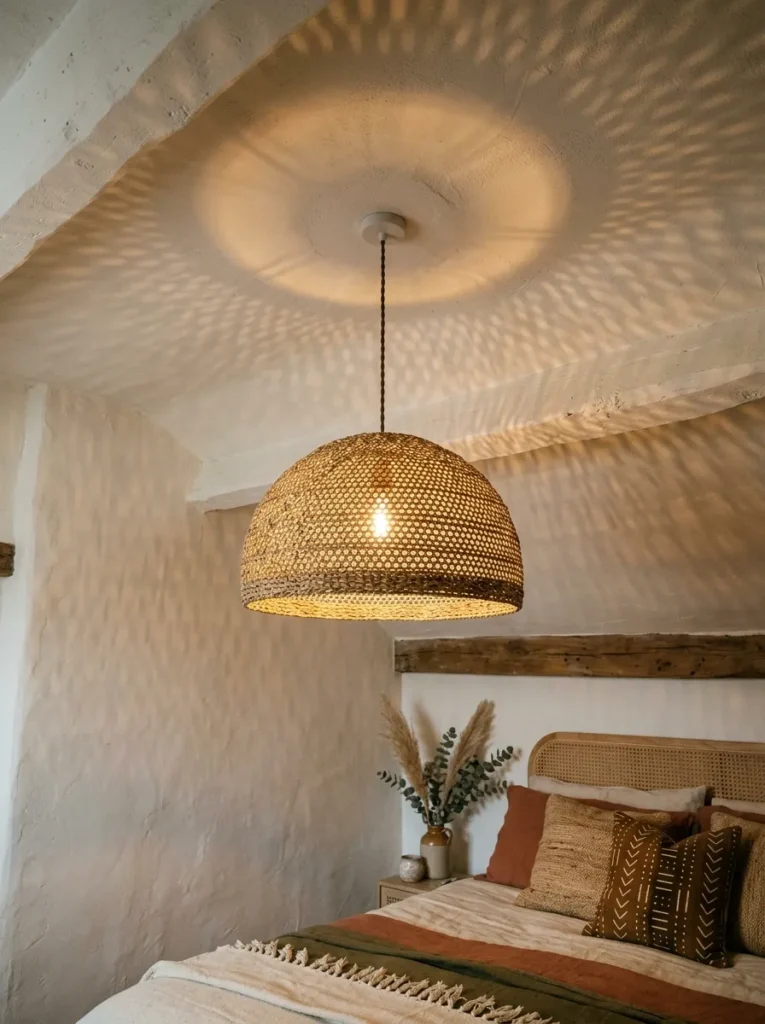
The ceiling in a boho bedroom is a design zone, not just a light source. A pendant light in woven seagrass, rattan, or open-weave jute brings material texture overhead and transforms an otherwise blank ceiling plane into an active part of the room’s composition. In rooms where a full pendant isn’t feasible due to ceiling height or rental restrictions, a wicker table lamp shade on a bedside lamp achieves the same visual quality at a smaller scale.
The light quality through natural fibre shades is warm, dappled, and distinctly different from solid shades — the weave allows light to pattern the ceiling and walls softly. The practical consideration is cleaning: woven fibre shades collect dust in their structure and are difficult to wipe clean. A soft brush vacuum attachment used every few weeks prevents buildup. For pendant lights in bedrooms, position the bottom of the shade at 200–210 cm from the floor to avoid creating a visual obstruction, though this depends on ceiling height.
23. Leave Intentional Gaps — Boho Isn’t Actually Maximalism
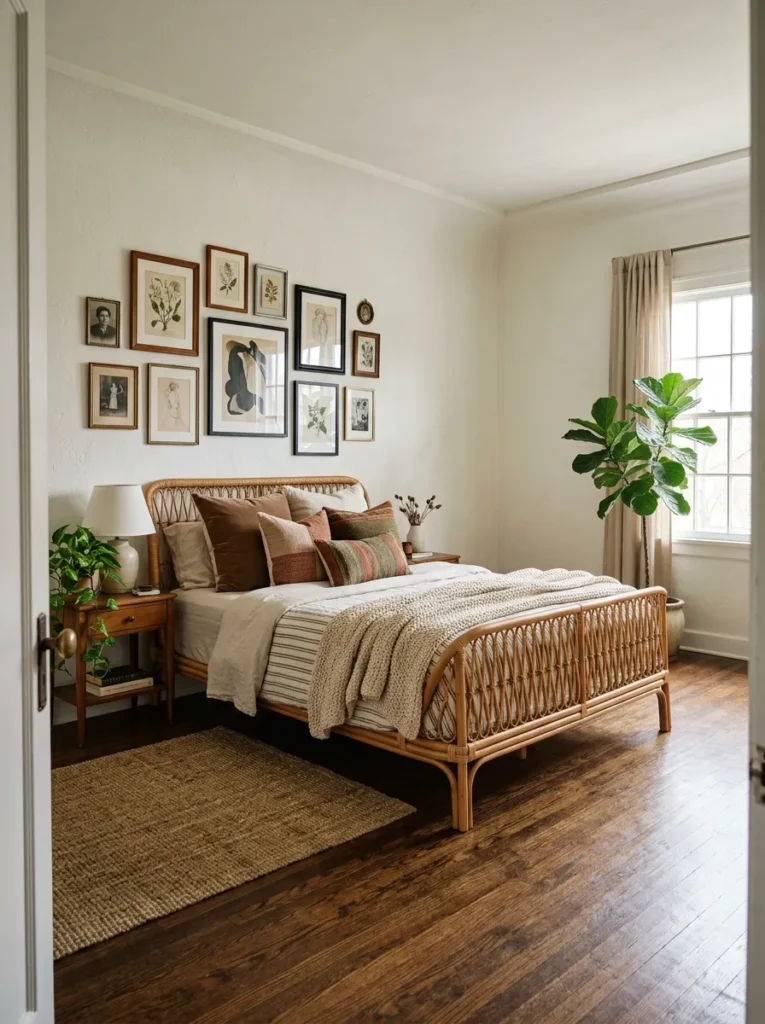
The most useful discipline for a boho bedroom is understanding where the layering stops. The rooms that read as genuinely curated rather than accumulated are the ones that have deliberate empty zones within an otherwise full visual composition: a section of bare wall beside the gallery arrangement, one clear surface on the dresser among the clustered objects, visible floor space that hasn’t been filled with baskets or furniture.
These gaps give the eye places to rest and, more practically, give the room the breathing room that makes each rich element readable rather than competing. The problem with adding more — and the boho style makes it very easy to keep adding — is that every new element reduces the visual impact of everything already there. A single beautiful terracotta vessel on a shelf reads as intentional. The same vessel surrounded by seven other objects reads as part of a collection that needs editing. Add from a position of restraint, and the room will hold up over time rather than requiring a full reconsideration every six months.
How to Layer Without Losing the Room
The most common failure point in boho bedrooms isn’t having too many ideas — it’s applying them without a hierarchy. A room that has an attempt at rug layering, a gallery wall, a canopy, floor cushions, rattan furniture, hanging plants, a macramé hanging, and ceiling pendant lights simultaneously is not a boho room; it’s an audition for every boho idea at once.
The more reliable method is to identify your anchor elements — the bed frame, the rug, and the wall treatment — and build outward from those. Add one layer at a time, stepping back after each addition to assess whether the room still has breathing room. Textile elements (curtains, bedding, cushions, throws) can be layered more densely than decorative objects because textiles blend into each other visually. Objects, plants, and architectural features need more negative space around them to read clearly.
A genuinely layered boho bedroom looks different in every corner when you move through it — not because each corner was styled independently, but because the room has enough depth and material variation that each viewpoint reveals something slightly different. That quality takes time and a willingness to remove things as often as you add them.
Final Thoughts
Boho bedroom ideas work best when the room feels like it was assembled by someone with genuine taste and a tolerance for accumulation — not like a collection of trend references. That distinction comes down to the choices you make before you shop: a coherent warm color temperature, anchor furniture in natural materials, and a floor plan with enough empty space to absorb the layering that follows.
Start with the rug and the bed frame. Those two elements define the room’s material character and set the range of everything that can work around them. Add the wall treatment next, then build out textiles and objects gradually, assessing after each addition whether the room still has visual order. Save the decorative layers — the ceramics, the hanging plants, the gallery wall pieces — for when the structure is in place.
If you’re collecting ideas as you go, save the ones that solve a specific problem in your room rather than the ones that simply look appealing in isolation. Come back to this guide as the room develops.