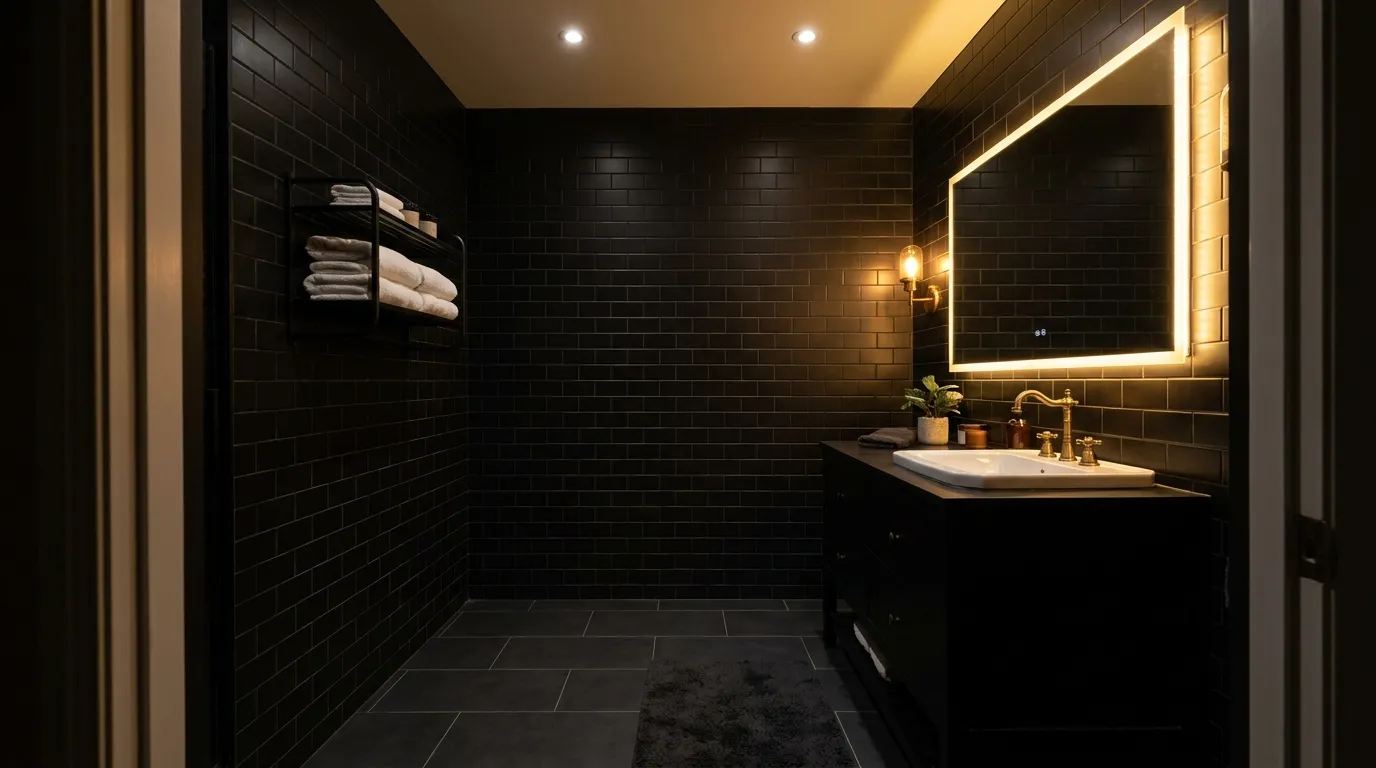
21 Black Bathroom Ideas That Feel Bold and Sophisticated
Black bathrooms have a reputation for being difficult — too dark for small spaces, too high-maintenance to keep clean, too dramatic for everyday use. Most of that reputation is earned by rooms that committed to the palette without thinking through the material choices, the lighting, or the contrast. Done well, a dark bathroom is one of the most visually resolved spaces in a home: every surface reads as deliberate, the light feels considered, and the room has a quality that a beige tile bathroom simply cannot replicate.
These black bathroom ideas range from full architectural commitments — floor-to-ceiling tile, lacquered walls — to lower-stakes decisions that shift a room’s character without a full renovation. Each one addresses not just what the idea looks like but what it takes to pull it off, where it tends to go wrong, and what the room actually feels like to use day-to-day.
1. Commit to Matte Black Fixtures Across the Whole Bathroom
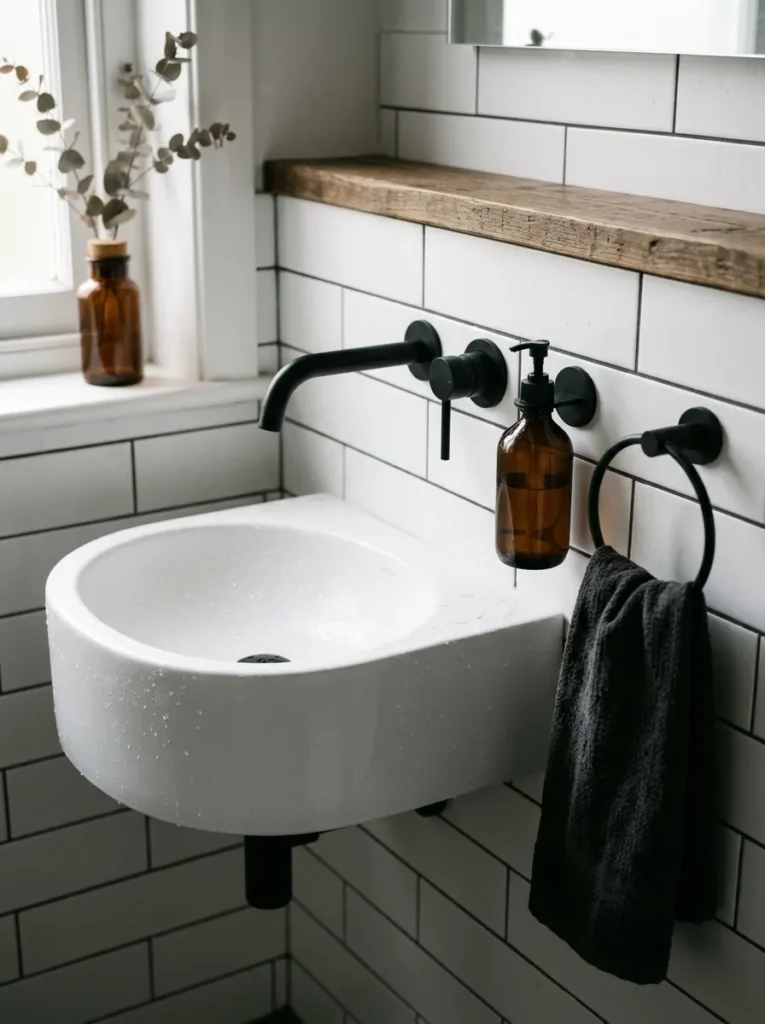
Matte black tapware, showerheads, towel bars, and toilet hardware create a cohesive material language that reads as a genuine design decision rather than an accent. The critical word is all: mixing matte black fixtures with chrome or brushed nickel in the same bathroom interrupts the visual continuity in a way that’s immediately visible. It looks like an incomplete renovation rather than a considered palette.
The practical trade-off worth knowing: matte black fixtures show water spots and toothpaste marks more than chrome does, because the non-reflective surface doesn’t diffuse surface marks the way polished finishes do. Regular wiping with a soft cloth keeps them looking sharp. In a small bathroom, a full set of matte black fixtures against white or light tile is one of the most high-impact changes available without touching the tile itself.
2. Lay Black Hexagonal Floor Tiles With White Grout
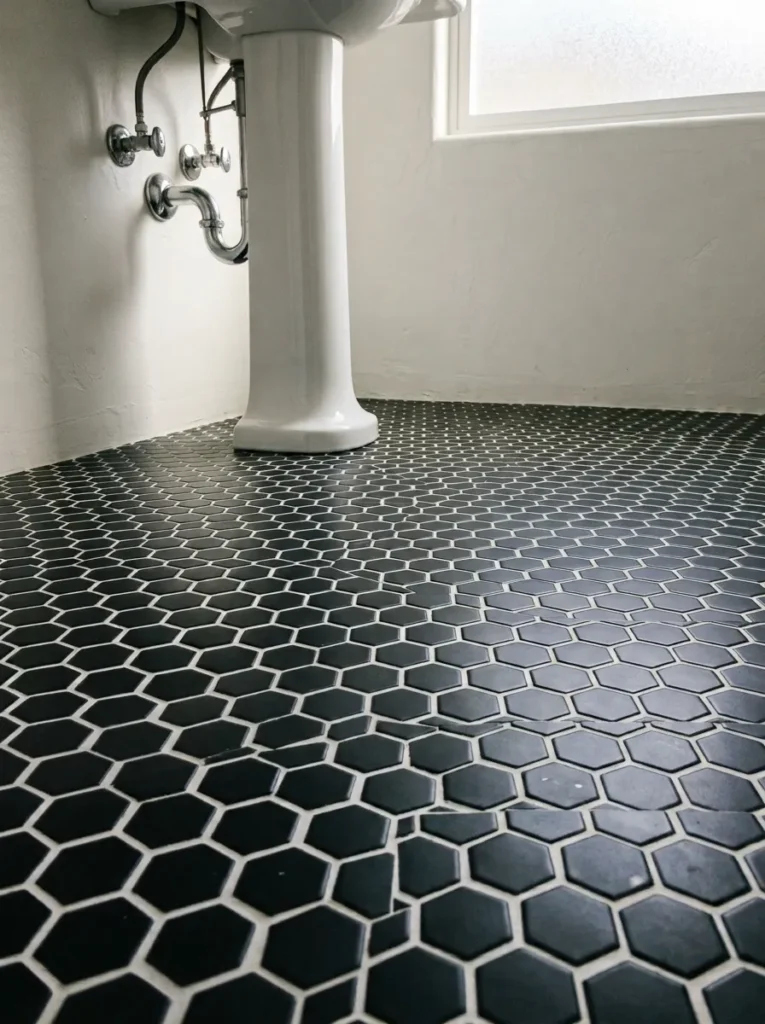
A black hex floor is a specific visual decision: the hexagonal format breaks the tile pattern into small repeated geometry that reads more like a textile than a flat surface, and white grout makes each individual tile legible while adding contrast. This combination has period associations (it suits Victorian, Art Deco, and early-twentieth-century bathroom references) but reads cleanly in contemporary rooms too.
Hexagonal tiles in a small bathroom work better than large-format black tiles, which can feel heavy underfoot when the room’s footprint is compact. The white grout does require maintenance — it will discolour over time in a wet environment, and resealing it periodically keeps it from going grey. A mid-grey grout is a lower-maintenance alternative that reads less crisp but holds up considerably better.
3. Use Full-Height Black Subway Tile on a Single Feature Wall
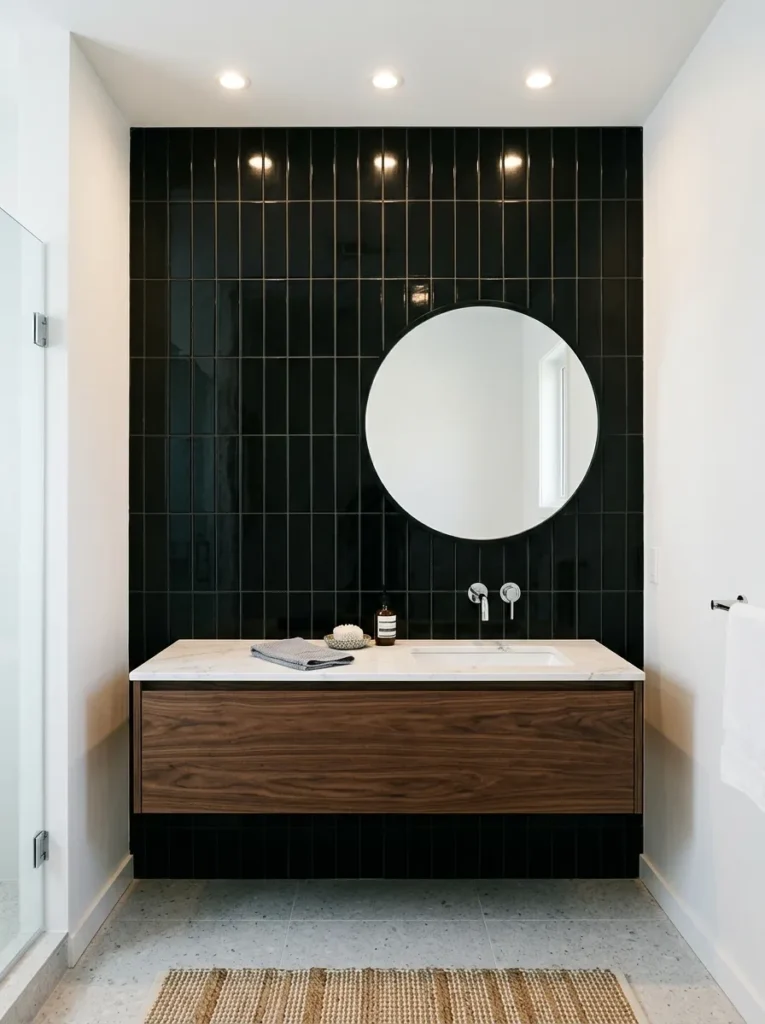
Running black subway tile floor-to-ceiling on the shower wall or the wall behind the vanity produces a graphic mass of material that anchors the bathroom without darkening the entire room. One tiled wall against pale or white plaster on the remaining surfaces keeps contrast high and the room legible, particularly important in narrower bathrooms where full dark enclosure can feel compressing.
Tile format affects the outcome: standard horizontal subway reads more traditional; vertical stacked subway pulls the eye upward and suits bathrooms with low ceilings that need apparent height. A satin or gloss finish on black tile makes the surface easier to clean and reflects light back into the room. Matte black tile absorbs light and looks richer but requires more regular cleaning to stay presentable in a shower environment.
4. Install a Black Freestanding Bathtub as the Room’s Focal Point
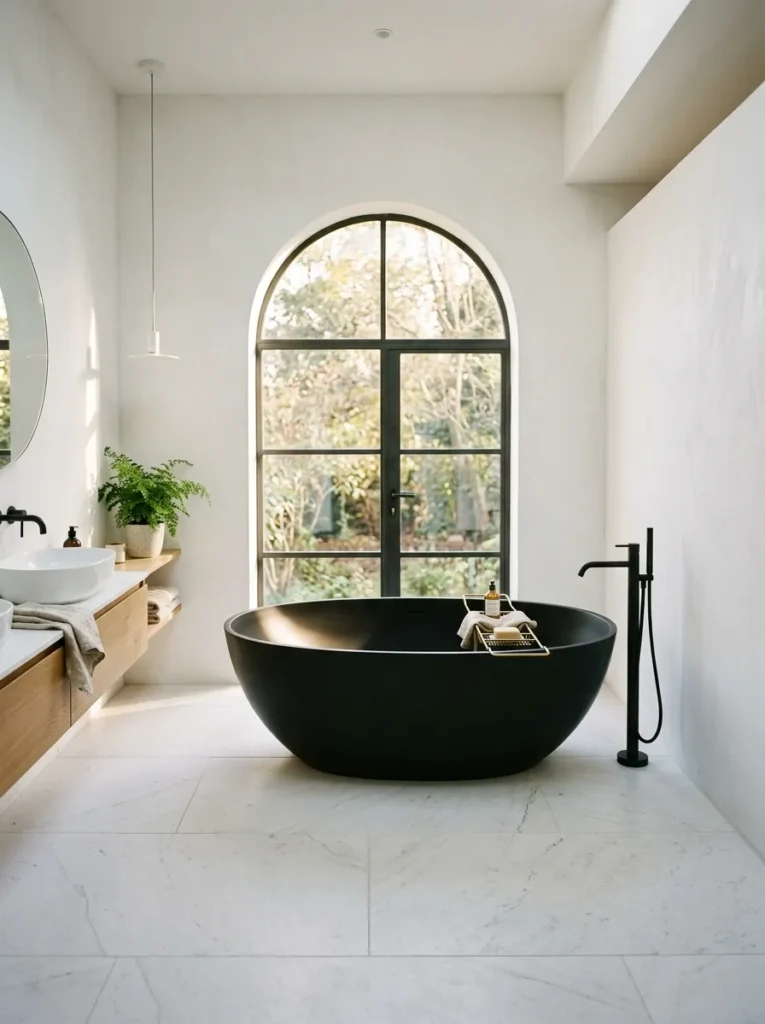
A black freestanding tub — matte acrylic or powder-coated cast iron — is one of the most visually arresting decisions available in a bathroom, and it works particularly well when the surrounding surfaces are restrained. Against pale walls or light large-format tile, the tub reads as a sculptural object in the room rather than part of a heavy dark scheme.
Scale is important. Freestanding tubs require at least 20–30cm of clearance on the sides for comfortable access, and they need to read in proportion to the room — a small powder room isn’t the right context. In larger bathrooms, positioning the tub facing the window rather than toward a wall turns the bath into a genuine destination rather than a fixture that happens to be freestanding.
5. Pair Black Walls With Warm Brass Hardware
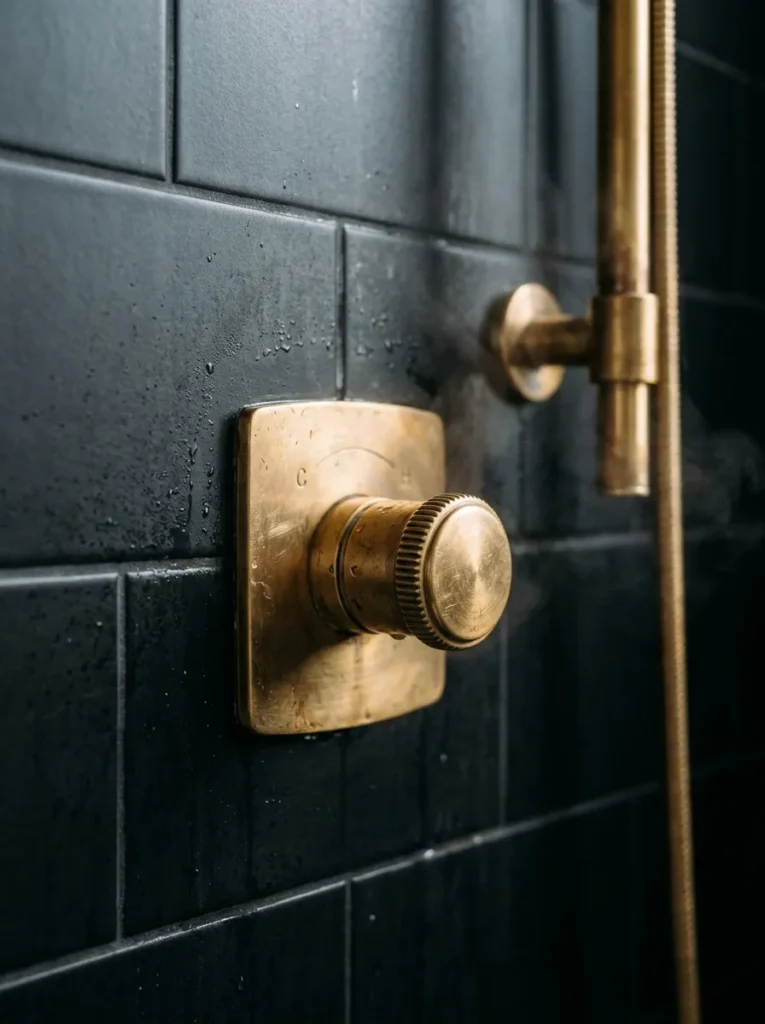
All-black with cold or chrome hardware produces a room that feels clinical and slightly industrial. All-black with warm brass shifts the same dark room into territory that reads genuinely luxurious — the warmth of the metal temperature pulls the dark surface toward richness rather than severity.
This works because black and gold-adjacent tones have a strong historical precedent in high-end interior contexts, and the human eye reads warm undertones as less harsh against saturated dark colour. Unlacquered brass ages over time and develops a patina that deepens the effect; lacquered brass stays consistent but can look newer. Either works — unlacquered brass ages into something richer; lacquered brass stays consistent. The choice depends on how much you want the room’s character to shift over time.
6. Choose a Black Vanity With Natural Stone Counter
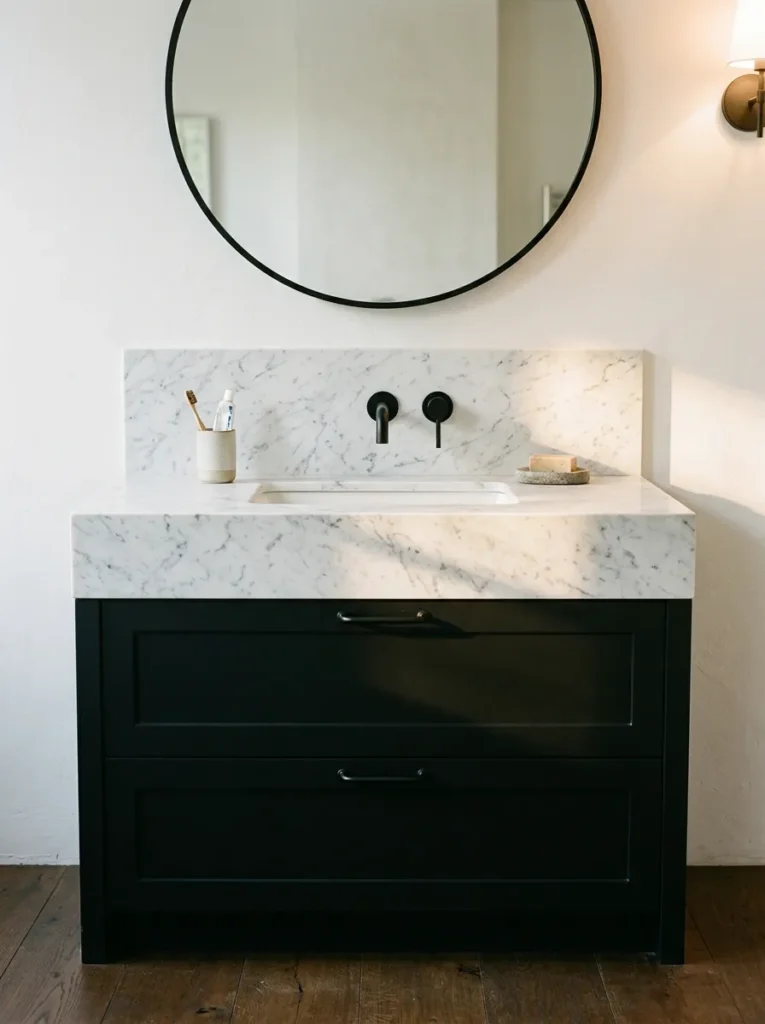
A black vanity unit — lacquered, painted, or in a dark wood finish — reads heavier at the base of the room and creates a visual anchor that grounds the space. A natural stone counter in a contrasting tone lightens the top and introduces material variation that prevents the vanity from feeling monotonous.
White Carrara marble is the obvious pairing and remains genuinely effective. Warm travertine or cream limestone work equally well and suit bathrooms where a warmer overall tone is preferred. The stone counter should overhang the vanity front slightly — even a small projection creates a shadow line that adds dimension and prevents the combination from looking built-in-kitchen rather than bathroom furniture.
7. Tile the Shower Niche in a Contrasting Light Stone
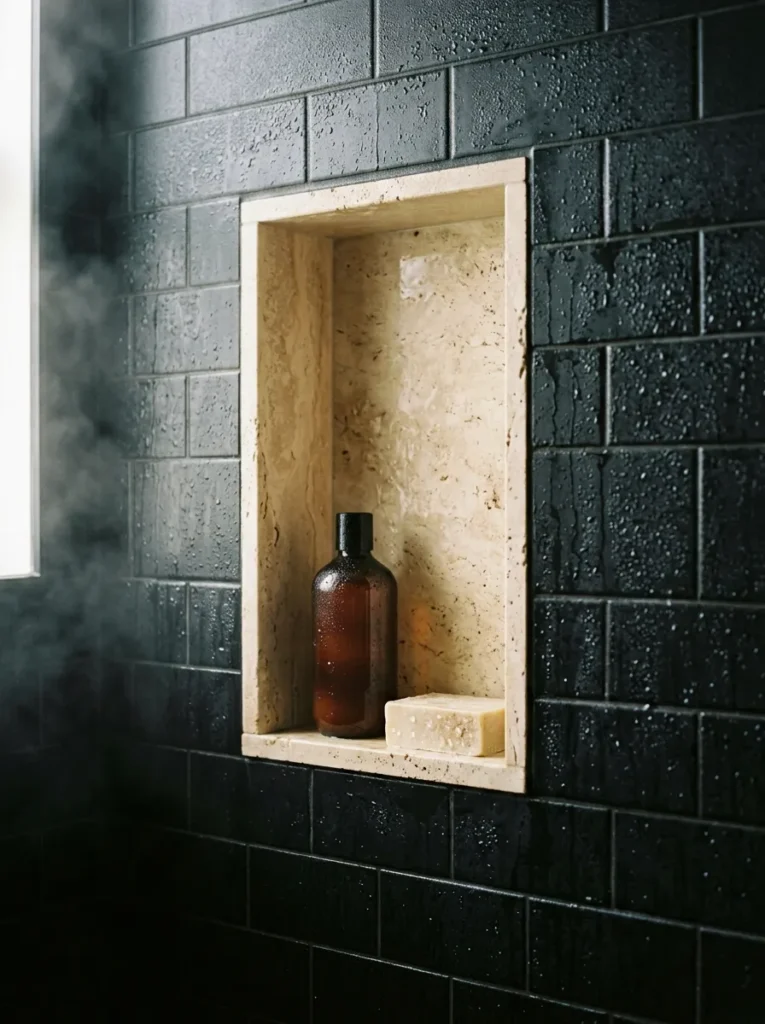
A shower niche — a recessed shelf for shampoo and soap — is a small surface with outsized decorative potential in a dark bathroom. In an all-black or heavily dark-tiled shower, a niche tiled in a contrasting pale stone (marble, travertine, cream porcelain) creates a deliberate break in the dark surface that draws the eye and adds material interest without disrupting the overall palette.
The niche should be planned before tiling begins — retrofitting one into an existing tiled shower is possible but labour-intensive. Standard niche height suits most shampoo bottles without risk of overflow: 30–40cm in height and the width of one or two tile widths is a practical proportion for most shower sizes.
8. Introduce Black-Framed Glass Shower Screens
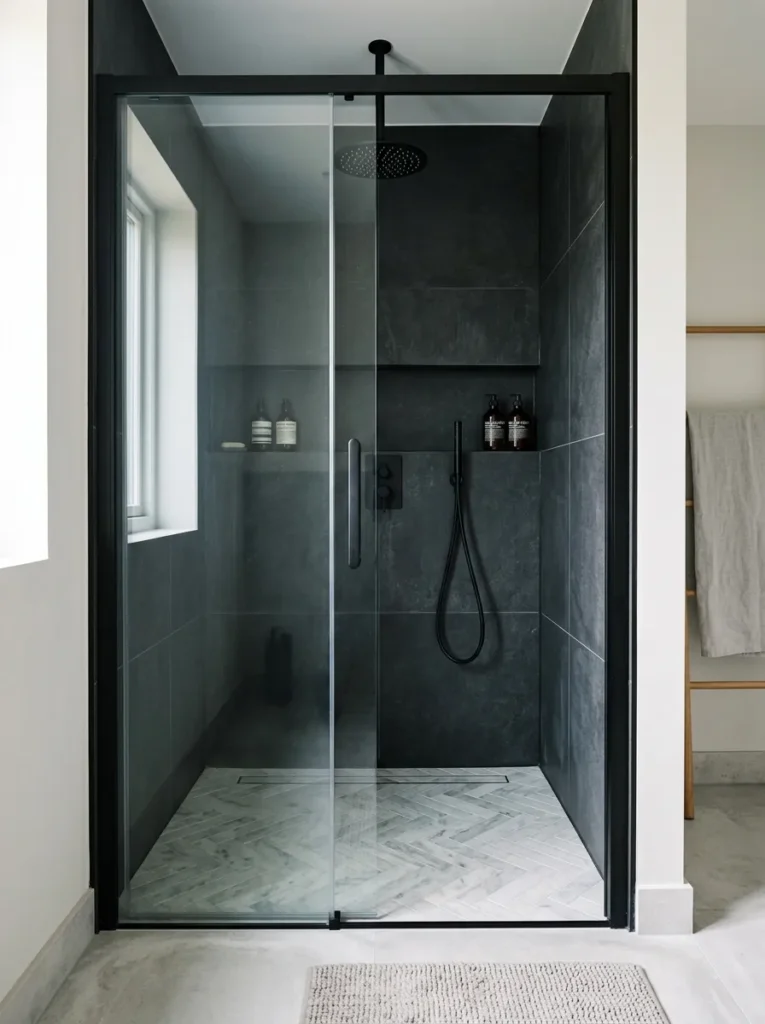
A frameless or slimly framed shower screen with black metal detailing does something most chrome-framed screens can’t: it stays visually present in a dark bathroom without disappearing into the tile. Chrome screens in a black room become invisible, which can read as an unfinished detail. A black-framed screen reads as part of the room’s material language.
Fully frameless screens with black hardware at the hinge and handle only are the most contemporary version. Semi-frameless options with a slim black perimeter frame suit more traditional or transitional bathrooms. In both cases, the glass should be tempered safety glass, and the quality of the hardware is visible in a dark room where the detail sits against a contrasting surface — this is not a place to cut corners on fitting.
9. Apply Black Limewash or Venetian Plaster to Bathroom Walls
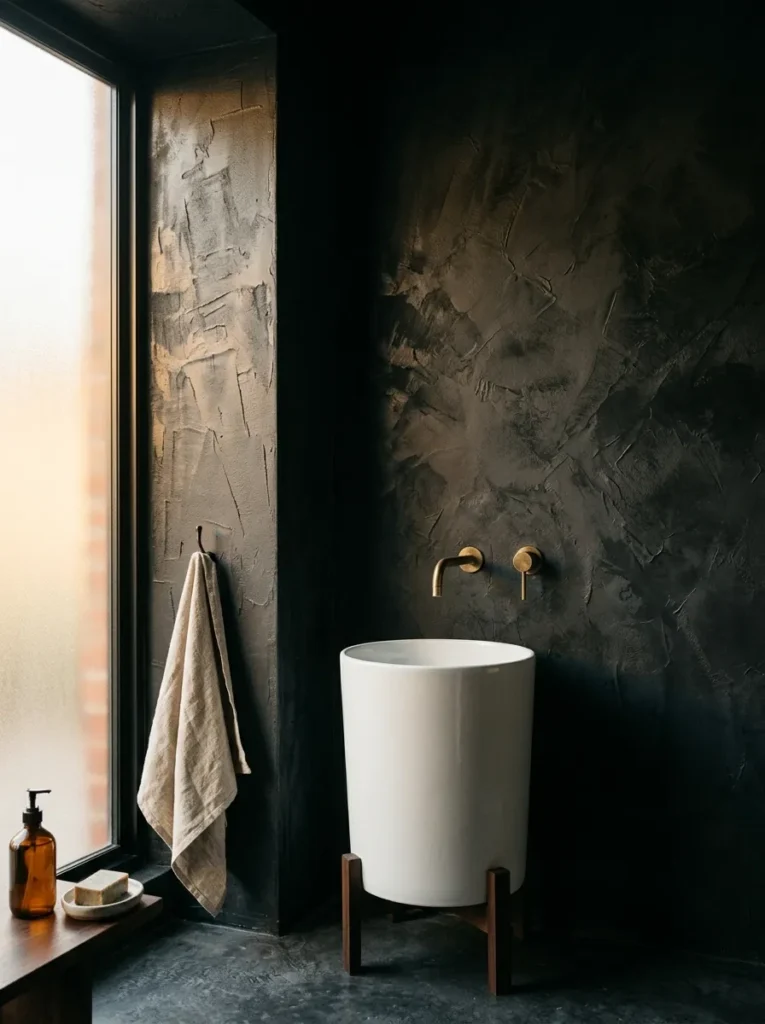
Where tile commits the wall to a hard, reflective surface, limewash or Venetian plaster introduces texture that absorbs and shifts light across the day. Applied in a deep charcoal or near-black tone, either finish gives a black bathroom a quality closer to a luxury spa than a domestic wet room — the surface reads as material and considered rather than painted.
The practical caveat is moisture. Standard limewash is not suitable in a direct wet area — it needs to be applied well away from the shower and protected with a suitable sealer to handle bathroom humidity. Venetian plaster, properly sealed, performs better in damp environments. Both finishes require a skilled applicator, and both repaint rather than peel-away if you change your mind, which makes them a higher-commitment decision than tile.
10. Use Vertical Black Fluted Tiles for Texture and Height
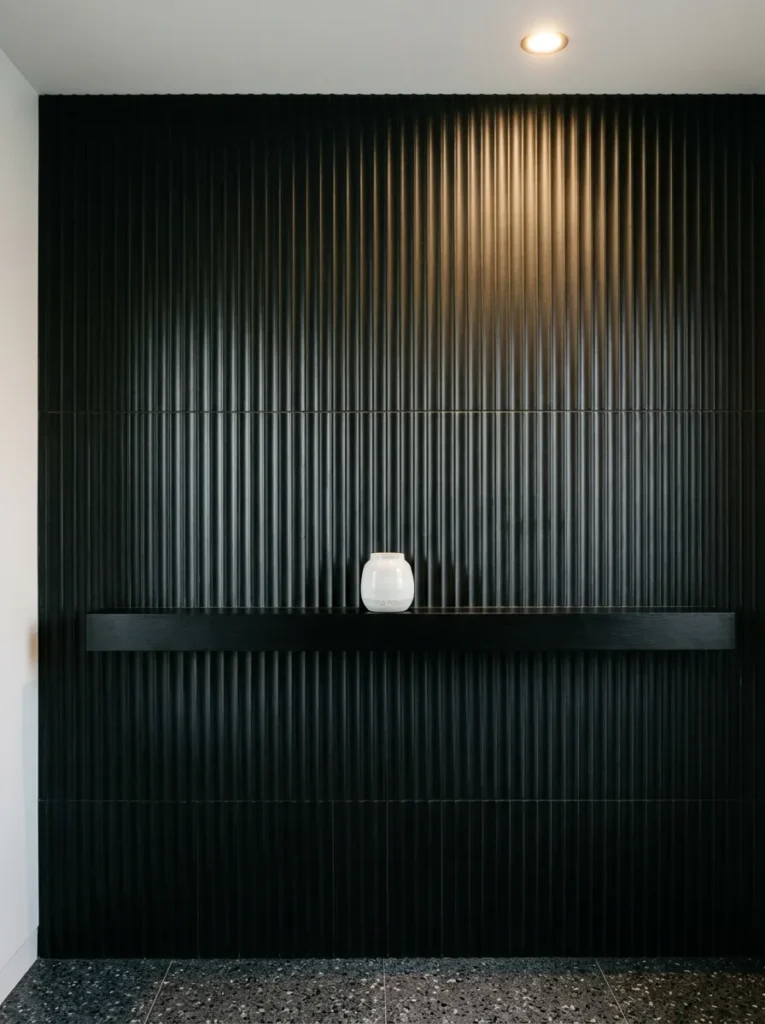
Fluted or ribbed tiles — where the surface has a series of vertical channels rather than a flat face — are particularly effective in dark colours because the channels create shadow lines that shift across the day as the light angle changes. In a deep charcoal or matte black, fluted tiles read as architectural rather than simply dark, and the vertical format pulls the eye upward.
These work well at the scale of a vanity backsplash, a half-wall behind the toilet, or full-height in a shower enclosure. They suit contemporary and transitional bathrooms better than period styles. The recesses between the flutes trap soap residue more easily than flat tiles, which is worth factoring into a decision about where to use them — a decorative wall outside the shower is lower maintenance than a shower surround.
11. Add a Black-Framed Mirror as a Statement Above the Vanity
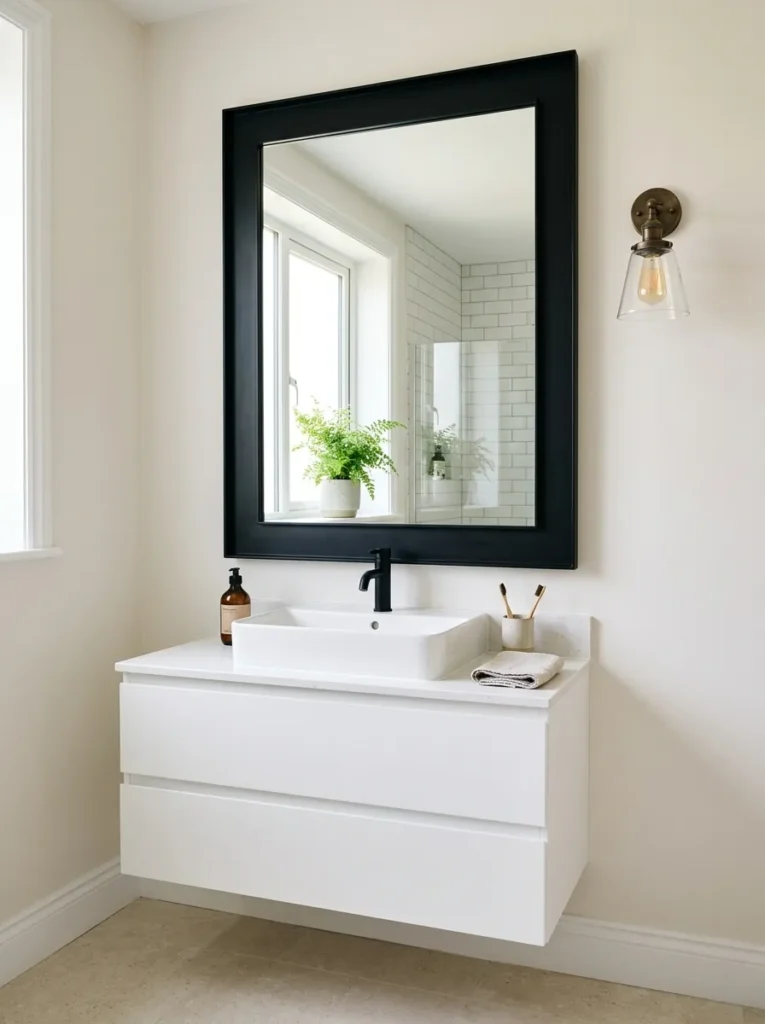
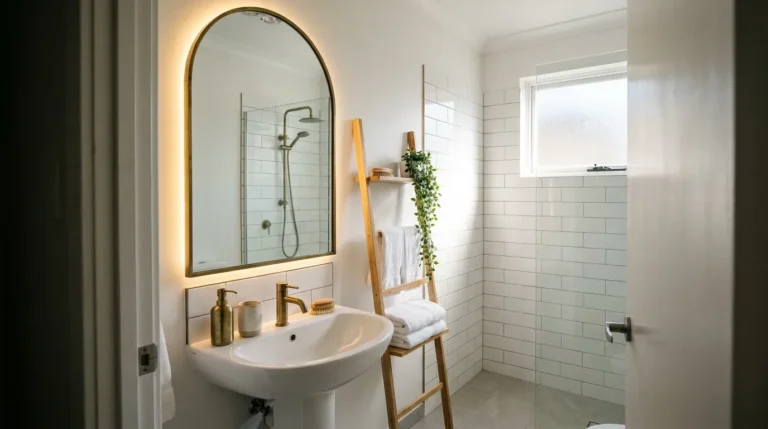
The mirror is the focal point of any bathroom vanity wall, and the frame material and shape determine how much weight it carries in the overall room. A large arch-shaped or rectangular mirror in a chunky matte black frame reads boldly against both pale and dark walls — against pale walls it anchors the vanity visually; against dark walls it creates definition between the mirror and the surface behind it.
Mirror size should broadly match the width of the vanity beneath it — a mirror significantly narrower than the vanity looks proportionally disconnected. For double vanities, one large mirror spanning both basins reads more contemporary than two separate mirrors. Round mirrors in black frames work well for smaller bathrooms where a rectangular mirror would feel overscaled.
12. Install Black Penny Tiles in the Shower Floor
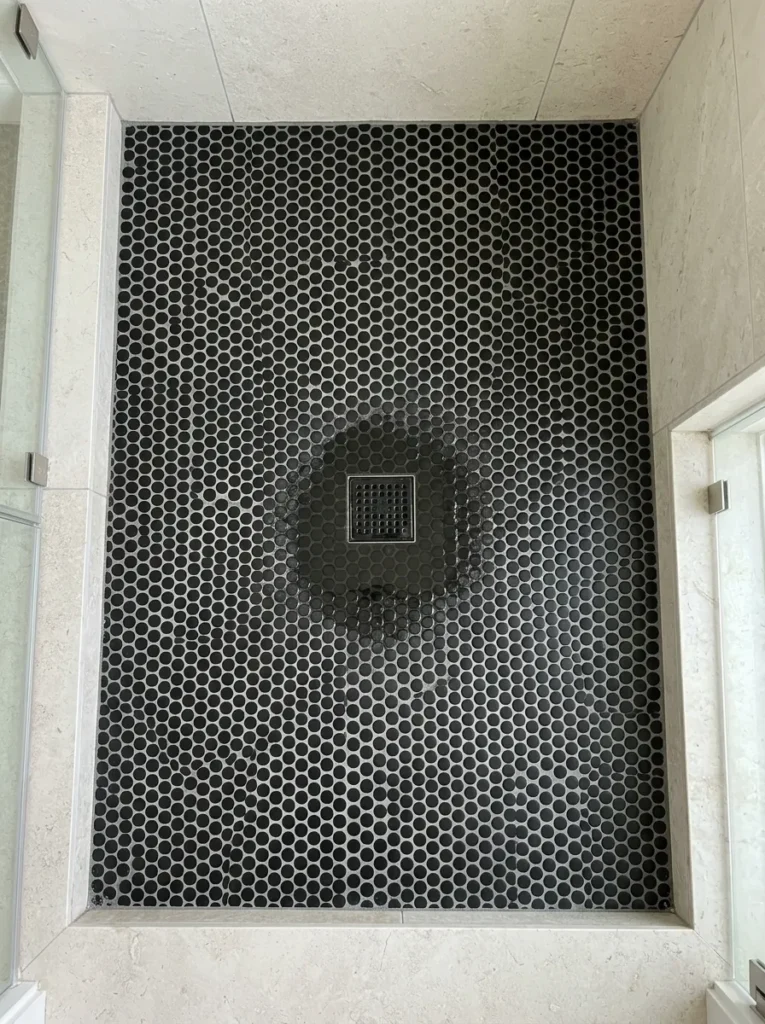
Penny tiles — small circular mosaic tiles, typically 2–3cm in diameter — have excellent grip due to the high ratio of grout lines to tile surface, making them a practical shower floor option. In matte black, a penny tile shower floor reads as deliberately decorative rather than merely functional, and the circular format softens what could otherwise be a uniformly hard surface.
The grout colour choice is significant: black grout on black penny tiles produces an almost continuous dark floor surface; white or light grey grout makes each individual tile pop and suits bathrooms with more tile variation elsewhere. The grout lines in penny tile floors require periodic cleaning — the increased surface area of grout compared to large-format tile means more maintenance, which is worth the visual payoff in a room that’s used with care.
13. Bring in Aged Timber to Break Up an All-Black Scheme
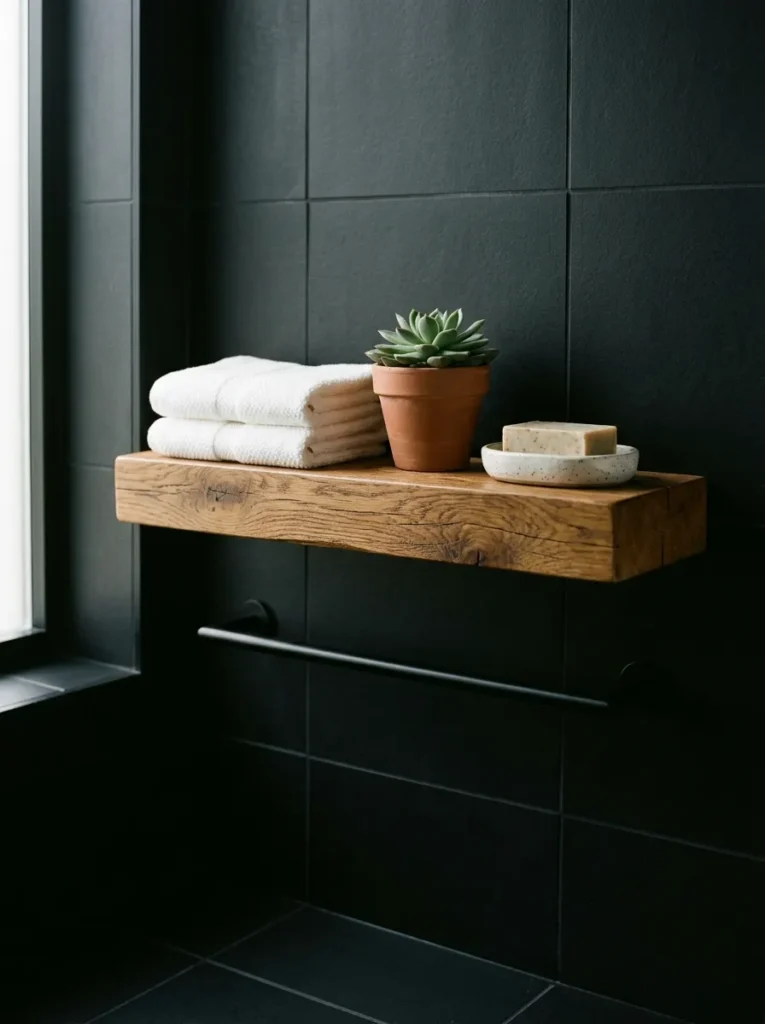
An all-black bathroom with no natural material in it can veer toward the theatrical. A timber element — a teak bath mat, a wooden stool, a floating shelf in aged oak, or a vanity with an open shelf in a warm wood tone — introduces an organic warmth that makes the dark palette feel intentional rather than monochromatic.
The timber doesn’t need to be extensive: even a single shelf or a mat brings the contrast needed to lift the room. Teak suits wet areas better than most timbers because of its natural oil content and resistance to moisture. Other species can be used for decorative elements away from direct water contact. The colour of the timber matters: pale ash reads Scandinavian and clean; dark walnut deepens the overall palette; warm oak sits in between and suits the widest range of black bathroom contexts.
14. Opt for a Matte Black Toilet for Full Palette Consistency
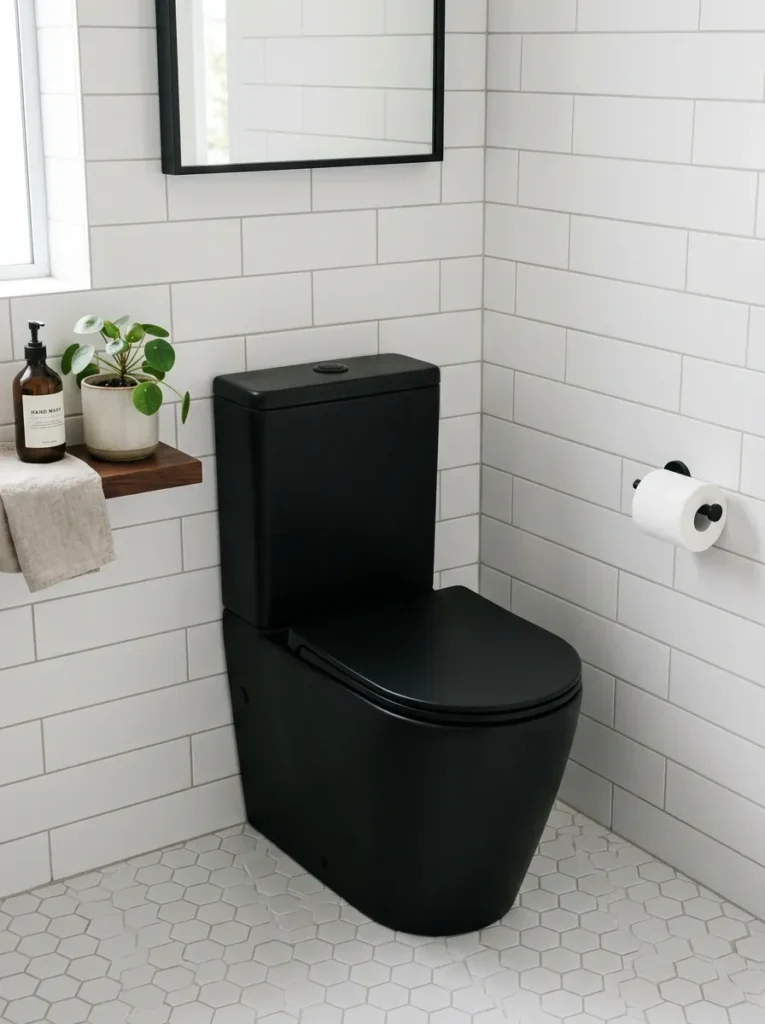
The toilet is the bathroom fixture most often left in white when everything else has been converted to a darker palette, and it tends to stand out in a way that disrupts an otherwise consistent scheme. Matte black toilet suites are available from a number of manufacturers and completing the fixture set brings a considered finish to the room that white simply interrupts.
This is a commitment in terms of cost and permanence — replacing a toilet is a plumbing job, not a styling decision. In rented properties it’s not a realistic option. For owned bathrooms being renovated, specifying a matte black toilet at the outset alongside the tapware and hardware is the most cost-effective way to achieve a fully consistent palette.
15. Use Black Grout on White or Light Tile for a Graphic Effect
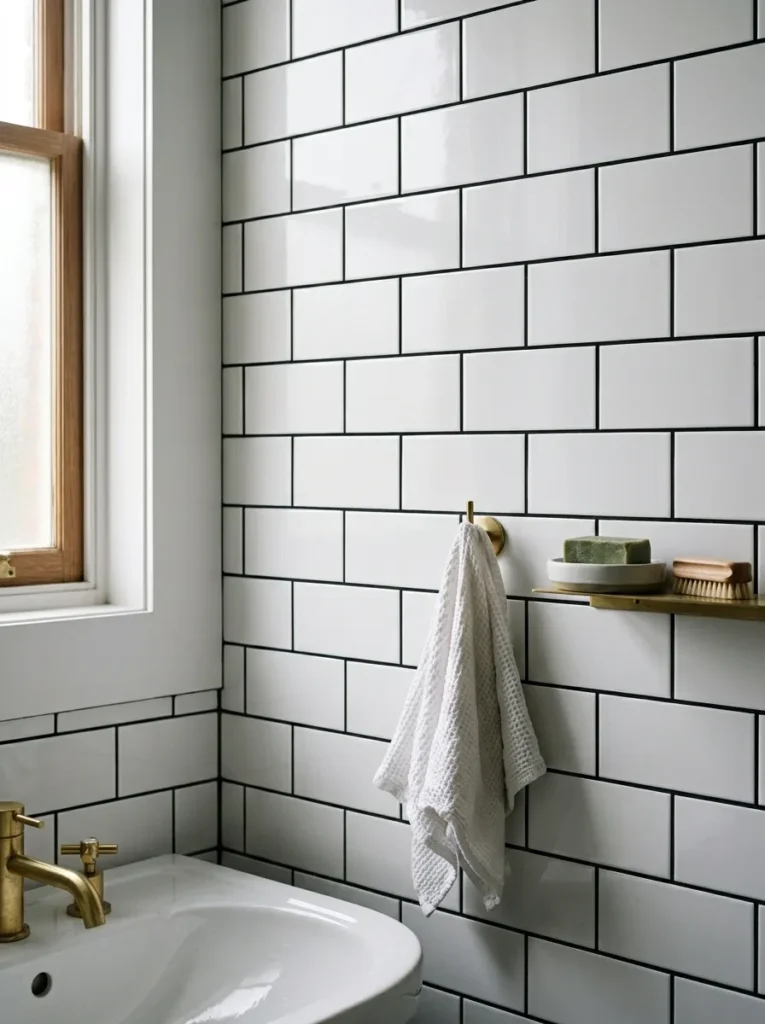
Black grout on white tile is a different visual proposition to black tile itself: the tile reads as the field colour and the grout reads as the linear pattern. On a standard white subway tile, black grout transforms a classic bathroom into something considerably more graphic and contemporary. The tile format stays traditional while the grout colour shifts the entire character of the room.
Epoxy grout holds its colour better than cement-based grout and resists staining more effectively — particularly relevant for dark grout, which will fade to a muddy grey if the grout quality is poor or the sealing is inadequate. Specify epoxy grout in a true black rather than charcoal for maximum contrast. This is also one of the more accessible black bathroom ideas for a renovation budget — it’s a material decision made at specification stage rather than a fixture purchase.
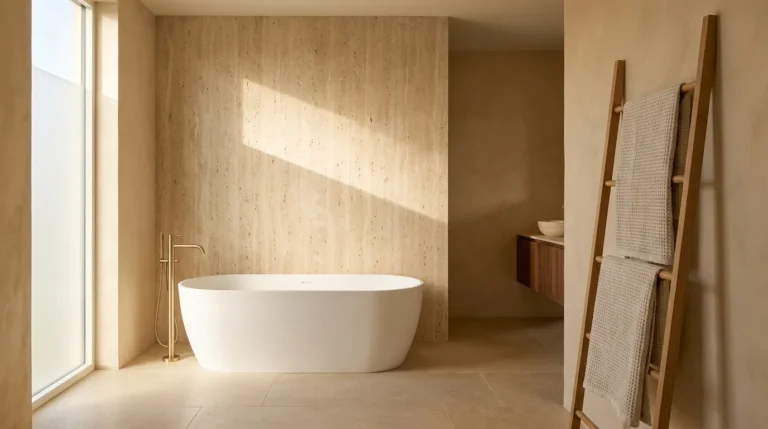
16. Create a Dark Accent Wall Behind a Freestanding Tub
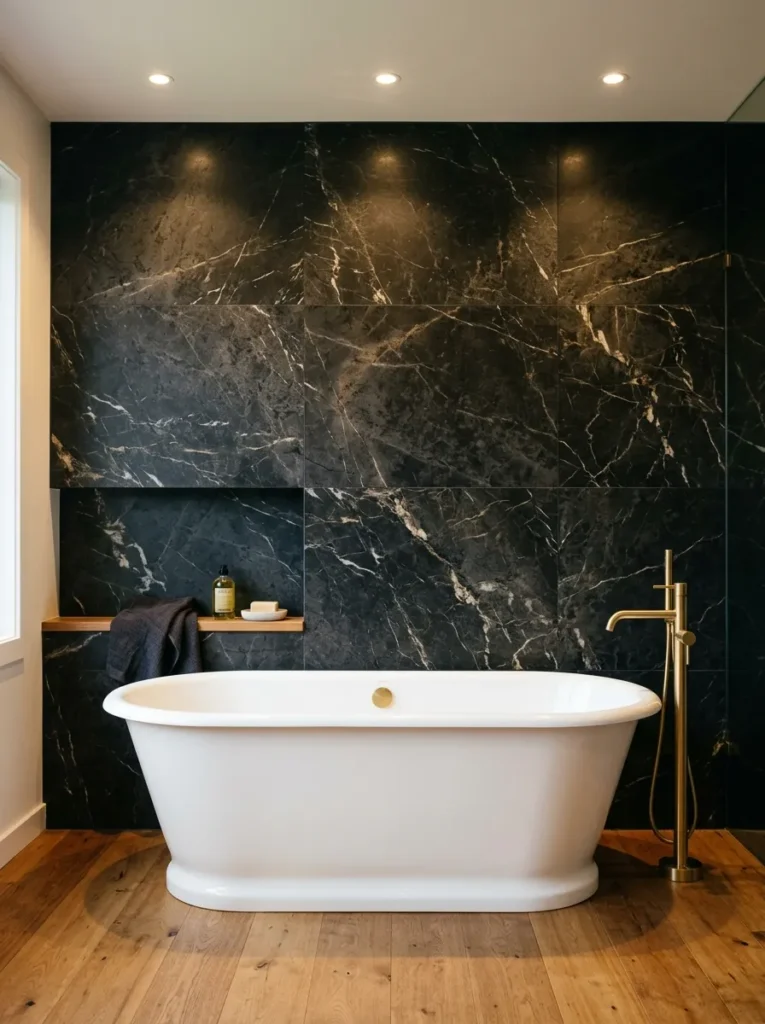
Where a feature wall appears across bedroom and living room content without much nuance, in a bathroom it serves a specific structural purpose: it gives a freestanding bath something to relate to visually in what is often an otherwise floating object in an open floor plan. A wall painted in a deep near-black or finished in large-format dark stone behind a freestanding tub creates a backdrop that frames the bath and anchors it in the room.
The wall finish should contrast with the bath itself — a matte black paint wall behind a white or cream bath creates strong contrast and makes the tub the clear focal point. A dark tub against a dark wall requires a material difference to maintain definition: rough stone behind a smooth matte tub, for instance, or deep-toned tile with visible grout lines behind a continuous curved surface.
17. Install Backlit Mirror Panels for Functional Drama
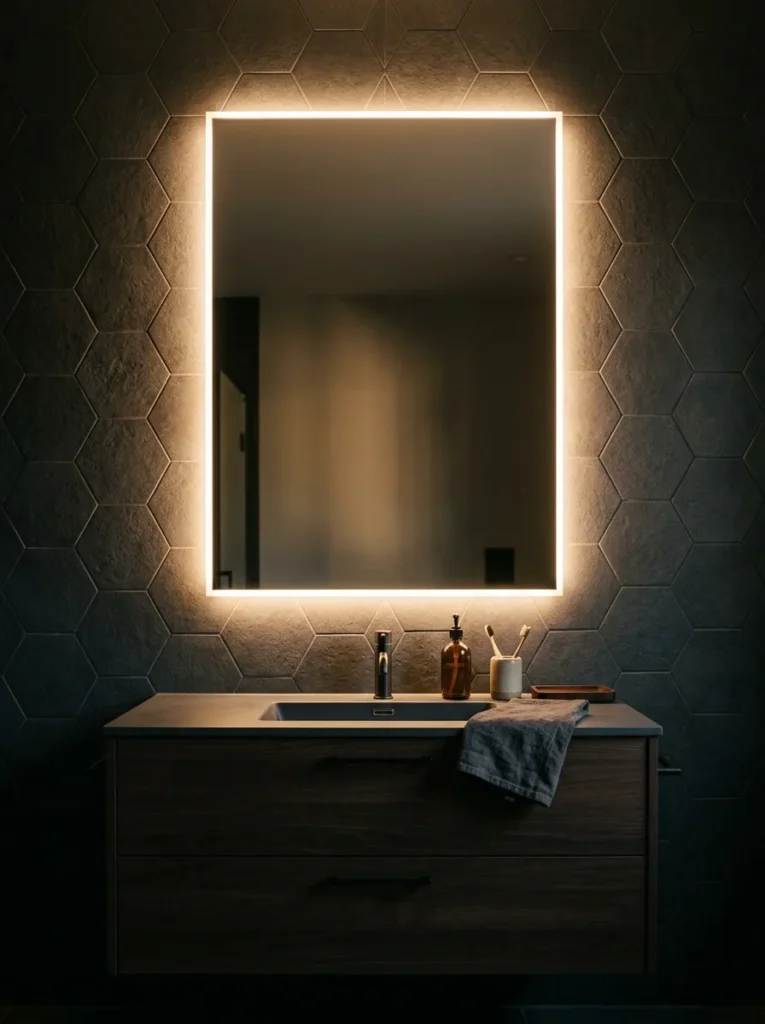
In a black bathroom, overhead lighting can create unflattering shadows and fails to adequately illuminate the vanity area for practical tasks. A backlit mirror — with LED illumination built into the perimeter or behind a frosted panel — casts even, diffused light at face level, which is far more useful for daily grooming and considerably more flattering than a ceiling fixture alone.
The quality of the light colour temperature matters. Warm-white LEDs (2700–3000K) suit bathrooms with warm material palettes — timber, brass, cream stone. Cool-white LEDs (4000K+) are clinically accurate for tasks like skincare or makeup but can make a dark bathroom feel cold rather than atmospheric. A dimmable backlit mirror gives both options in the same fixture.
18. Line the Ceiling in Matte Black for Full Enclosure
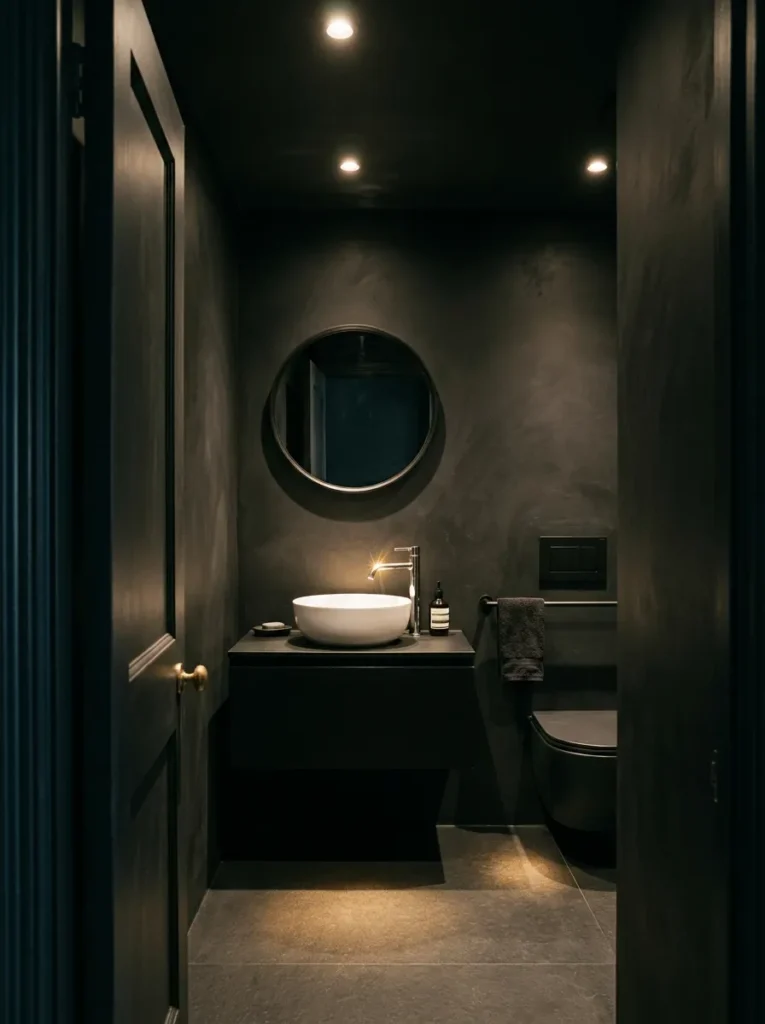
Painting or finishing the ceiling the same matte black as the walls is the move that takes a dark bathroom from having dark walls to being genuinely enclosed. The white ceiling floats above a dark room and emphasises the boundary between wall and ceiling in a way that undermines the atmospheric quality the palette is aiming for. A continuous dark ceiling removes that break and makes the room read as a considered whole.
This is more effective in bathrooms with some ceiling height — in very low-ceilinged bathrooms (below about 2.3 metres) a black ceiling can feel oppressive rather than dramatic. In standard or taller bathrooms, the effect is one of the most dramatic transformations available without a single material change to the floor, walls, or fixtures.
19. Fit Open Black Metal Shelving for Storage With Character
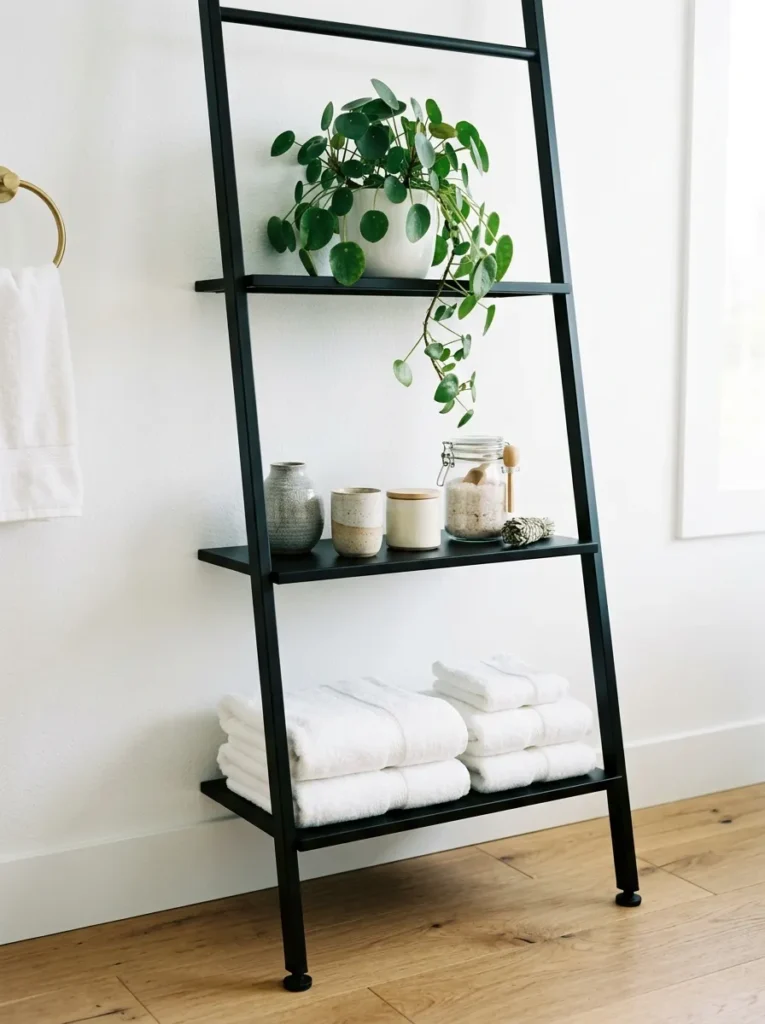
Closed bathroom cabinets in a dark room disappear into the overall palette and contribute nothing to the visual interest of the space. Open shelving in black powder-coated metal — particularly ladder-style or wall-mounted floating shelves in a slim profile — serves as both storage and an architectural detail that reads deliberately industrial or contemporary.
What sits on the shelves matters as much as the shelves themselves. Dark shelves read best when styled with objects that have material contrast: white towels folded neatly, light-coloured ceramic vessels, a terracotta pot, a stack of white hand towels. Overcrowding the shelves makes the storage read as clutter against the dark palette. Restraint is more effective — three or four considered objects read intentionally styled; twelve items read as overflow storage.
20. Choose Large-Format Dark Stone-Effect Porcelain for Floors
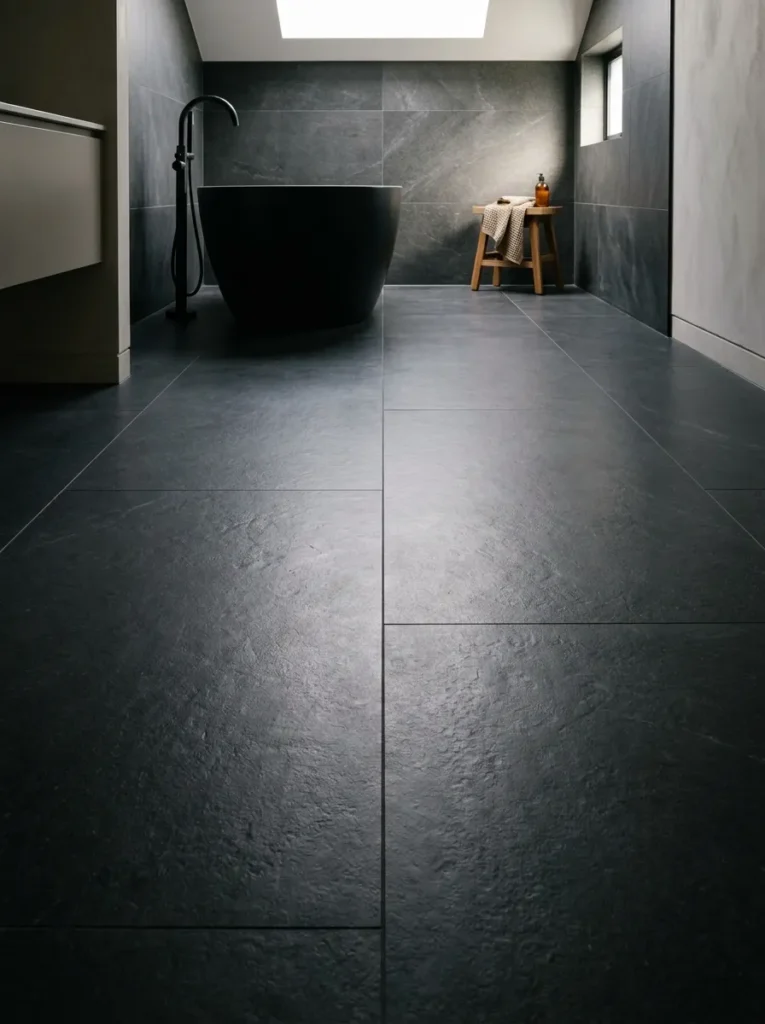
Natural stone in deep charcoal or near-black — or high-quality porcelain that convincingly replicates it — produces a floor surface that suits a black bathroom while offering practical advantages over smaller tile formats. Fewer grout lines mean less grout maintenance, easier cleaning, and a more continuous surface that reads as expansive rather than busy.
Large-format tile (60x60cm or larger) does require a very flat subfloor to avoid lippage between tiles — a levelling compound or professional assessment of the existing floor is necessary before installation. Polished dark porcelain reflects overhead light but shows dust and marks between cleanings; a honed or matte finish is more forgiving in daily use. In small bathrooms, large-format dark tile can work against the space — a 30x60cm format reads more proportionately in compact rooms.
21. Keep White or Cream Towels and Accessories for Balance
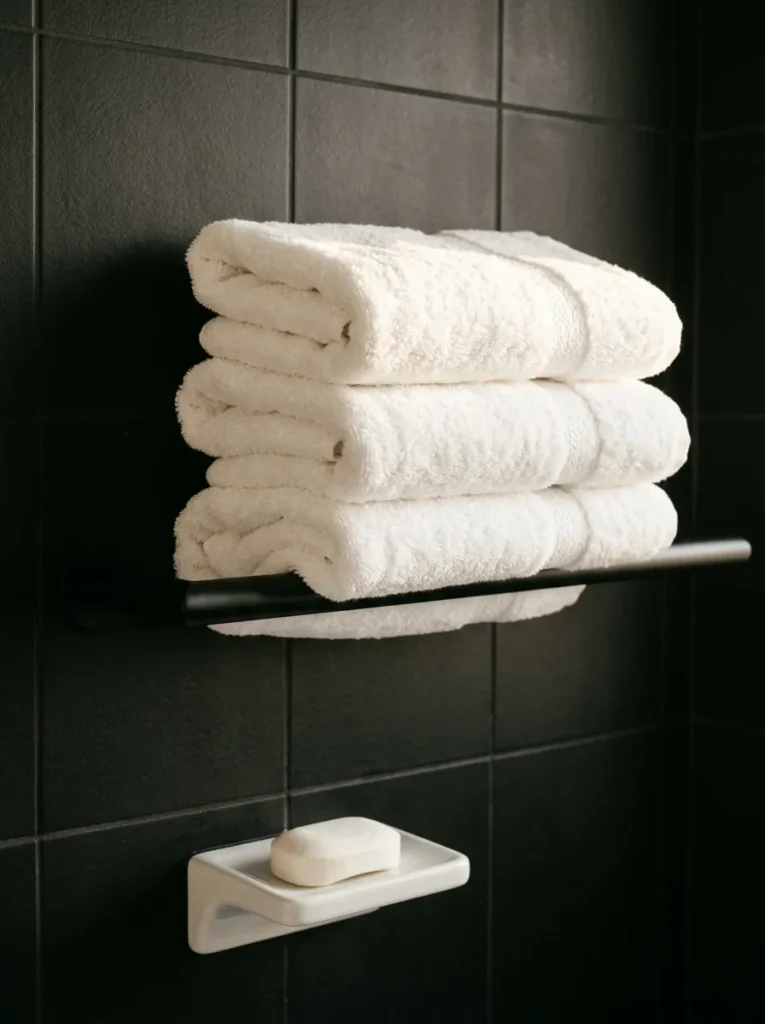
The strongest decision in a complete black bathroom is often the one people underestimate most. The linens, the soap dispenser, the toothbrush holder — the small white or cream accessories that sit against all that dark surface — are what prevent the bathroom from reading as a set rather than a room. White fluffy towels against matte black or charcoal tile produce the most visually resolved contrast available without changing a single fixed element.
This is the easiest starting point in a bathroom that already has some dark elements and isn’t ready for a full renovation. Replace chrome accessories with matte black, replace coloured or patterned towels with white, and the room moves considerably closer to the black bathroom aesthetic with no material cost. The contrast works because the eye needs somewhere to rest in a dark room, and white provides it without competing.
Common Mistakes That Undermine a Black Bathroom
Using a cold white ceiling. A brilliant white ceiling above dark walls creates a contrast so sharp it reads as unfinished. A warmer off-white, or ideally the same dark tone carried to the ceiling, resolves the room far more effectively.
Under-lighting the room. Dark surfaces absorb light, which means a single ceiling fixture is rarely enough. A backlit mirror, recessed spotlights, and at least one lower light source create the layering needed to make a dark bathroom feel atmospheric rather than dim.
Mixing metal finishes carelessly. Matte black fixtures with chrome towel bars or brushed nickel accessories breaks the palette’s coherence immediately. Commit to one finish across all hardware.
Avoiding any contrast at all. A room in which everything is the same depth of black has no focal point and no visual interest. The contrast — whether from pale stone, warm timber, white towels, or a differently textured surface — is what makes the dark palette work.
Choosing gloss black tile in a small bathroom. Gloss reflects light well but amplifies the scale of the room in both directions — it makes splashes and marks very visible, and in a small space the reflections can read as visual noise rather than added light.
Final Thoughts
A black bathroom succeeds when the decisions reinforce each other and fail when they’re made independently. The fixture finish, the tile format, the grout colour, the mirror frame, the ceiling treatment — each choice is in conversation with the others, and a mismatch anywhere in that sequence is more visible in a dark room than it would be in a neutral one.
For a full renovation, start with the tile and fixture decisions before anything else is specified. For a lower-commitment approach, the matte black fixture swap, black-framed mirror, and white towel edit are the three changes that shift a bathroom’s character most significantly for the least investment. The black bathroom ideas in this guide work across a range of budgets and room sizes — not all of them belong in the same room, and choosing four or five that address your specific space will produce a more considered result than applying as many as possible at once.
Save the ideas that match your room and come back to this guide when it’s time to make material decisions.