20 Sectional Sofa Living Room Ideas That Maximize Comfort
A sectional sofa is one of the most significant furniture decisions in a living room — not just because it’s typically the largest piece, but because where it goes and how it’s configured determines everything else in the room. The coffee table size, the rug dimensions, the traffic flow, the relationship to the television and the windows: all of these respond to the sectional rather than the other way around.
The mistake most people make is treating a sectional like a very large sofa and placing it the way they’d place a two-seater — along one wall and facing the television. These sectional sofa living room ideas work from the assumption that a sectional is better understood as a room-planning decision first and a furniture purchase second. The layout, the configuration, the chaise direction, and the scale relative to the room all need to be sorted before the colour and fabric become relevant.
1. Decide the Chaise Direction Before Buying
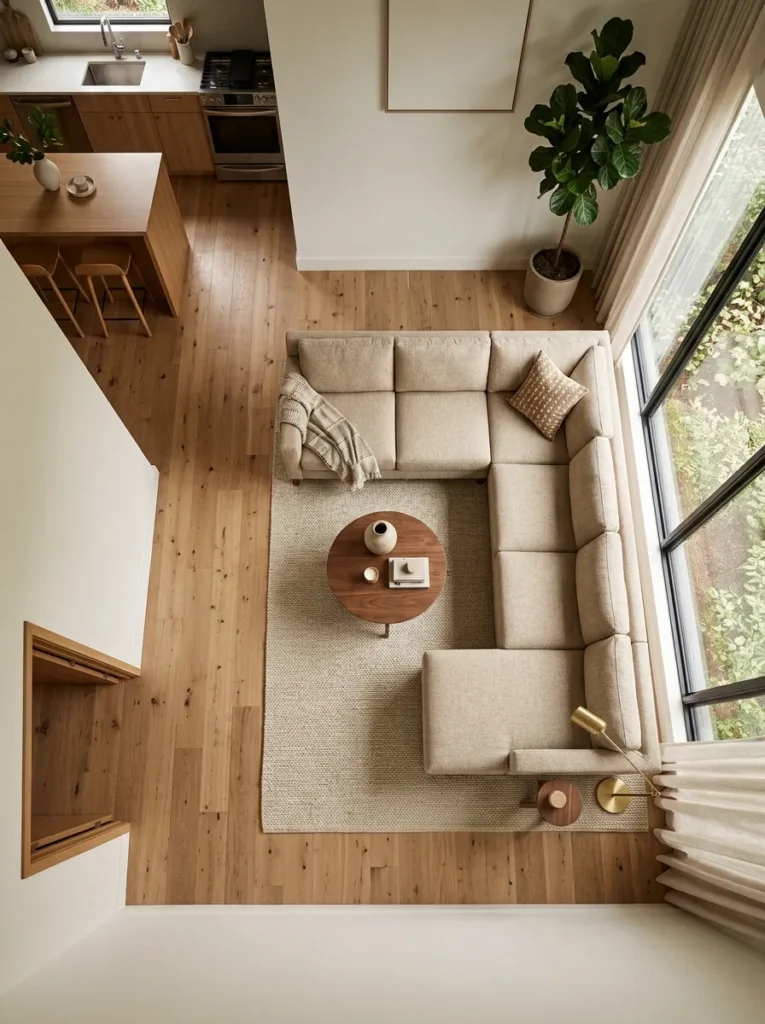
The chaise end of an L-shaped sectional is what makes the configuration work for specific rooms and fail in others. Left-facing (chaise on the left when you’re seated) and right-facing (chaise on the right) aren’t interchangeable — the direction determines which side of the room the sectional points toward and whether traffic can pass comfortably.
Map your room first. Stand in the main entrance and identify the natural pathways: the route to the kitchen, to the hallway, between the sofa and the television. The chaise should extend toward whichever wall has the most space to accommodate it without blocking those routes. A chaise that points directly toward a doorway blocks it; one that points toward a wall with sufficient clearance disappears into the room’s circulation logic rather than fighting it. Many online retailers now offer both configurations at the same price — confirm before ordering.
2. Float the Sectional Away From Every Wall
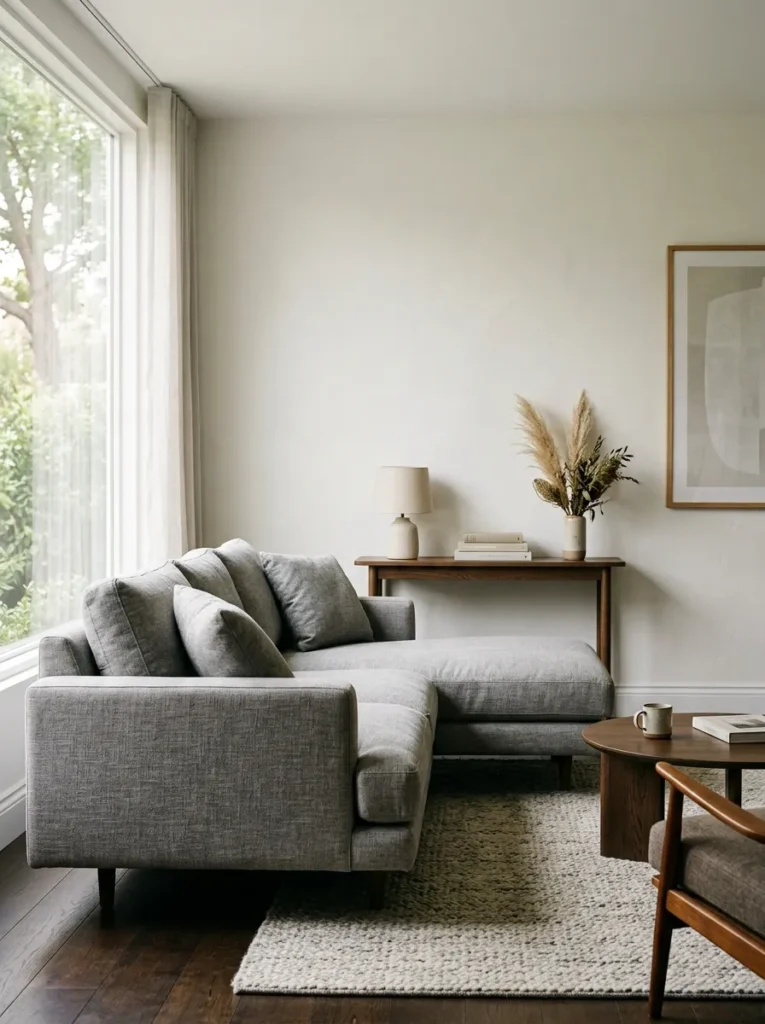
The instinct to push a sectional against the wall is almost universal and almost always the wrong spatial decision. A sectional has enough visual weight to anchor a room from its centre — it doesn’t need wall support. When pushed to the perimeter, the sectional produces a room where all the seating is at the edges and the centre of the room is an empty walking-through zone rather than a comfortable living space.
Floating a sectional 40–60cm from the wall behind it immediately changes the room’s organisation: the sofa becomes a room divider with a defined conversation zone in front and a useful narrow zone behind. In an open-plan space, the back of the sectional performs the specific function of separating the living area from the dining or kitchen zone without any physical partition.
3. Use a Large Rug to Define the Seating Zone
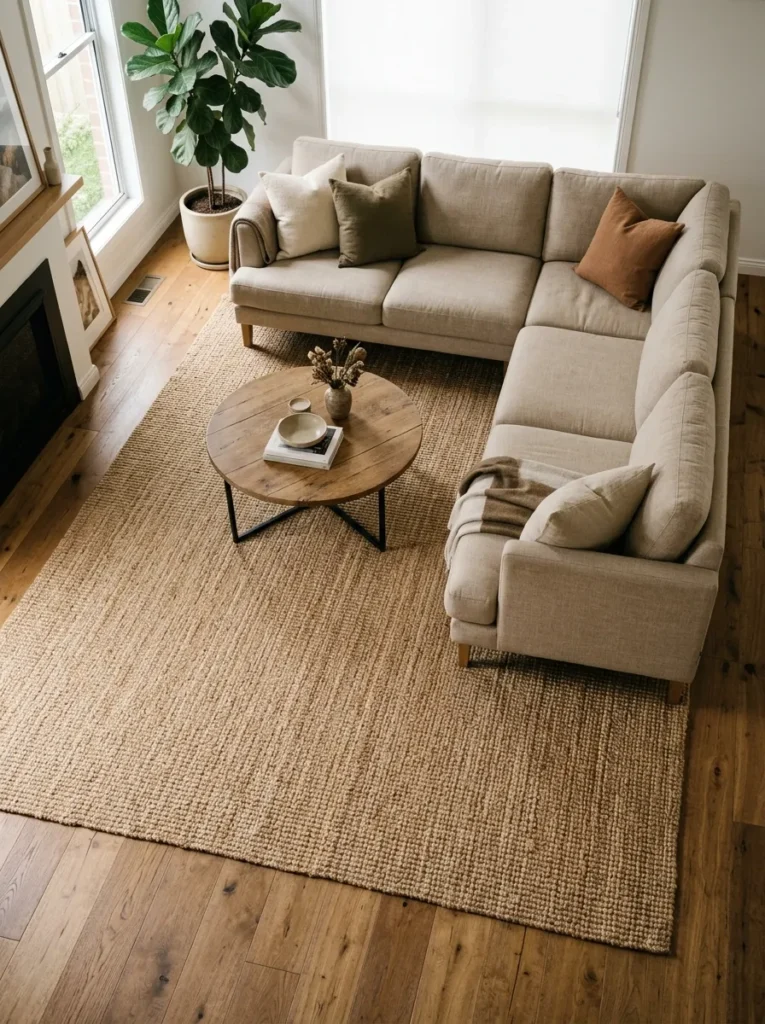
In a room with a sectional, the rug is the element that determines whether the sofa arrangement reads as a deliberate seating zone or as a large piece of furniture sitting on a floor. The most common mistake is a rug too small for the sectional — one that sits under the coffee table only, with the sofa legs on bare floor around it. The visual effect is a rug floating in the middle of the furniture rather than the furniture belonging to a defined zone.
A rug that extends at least 30–40cm beyond the front legs of every seating section grounds the arrangement as a whole. For most sectionals, this means going one rug size larger than seems natural. The rug doesn’t need to accommodate the chaise end — the primary seating area and coffee table are the sections that matter most for the rug’s size and placement.
4. Choose a Modular Sectional for Flexible Layouts
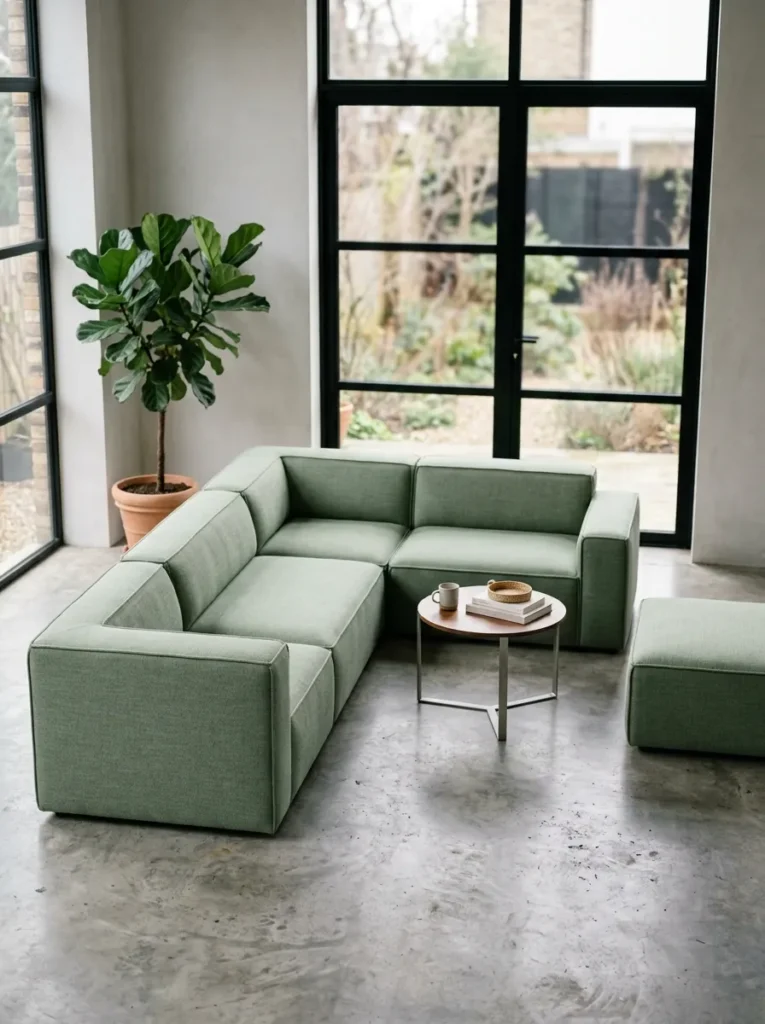
Standard L-shaped sectionals are a fixed configuration once delivered; modular sectionals consist of individual units — corner seats, standard sections, armless pieces, ottomans — that can be combined and reconfigured. In a household that rearranges rooms seasonally, has different uses for the living space across the week, or plans to move properties, a modular sofa provides a level of practical flexibility that a traditional L-shape doesn’t.
The trade-off is usually visible: modular sofas often show seams between sections and lack the integrated, seamless profile of a well-made fixed sectional. This matters more in some aesthetic contexts than others. In a contemporary, laid-back living room, visible module seams read as part of the aesthetic; in a more formal space, they may read as unpolished.
5. Position the Sectional Around a Fireplace Rather Than a TV
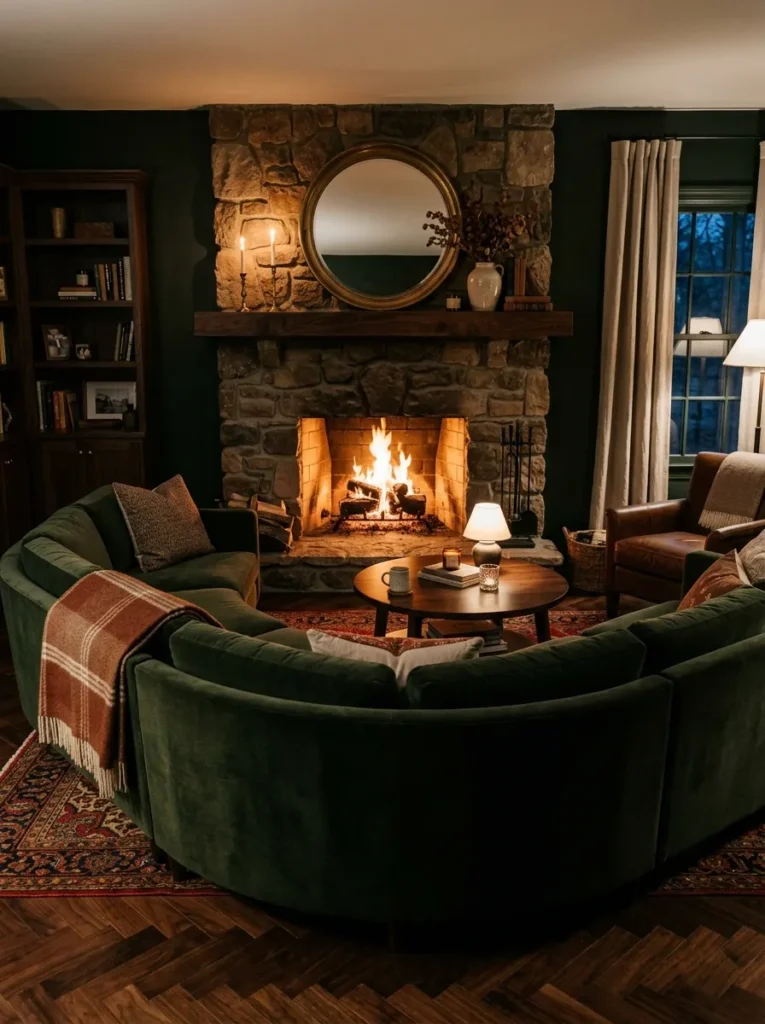
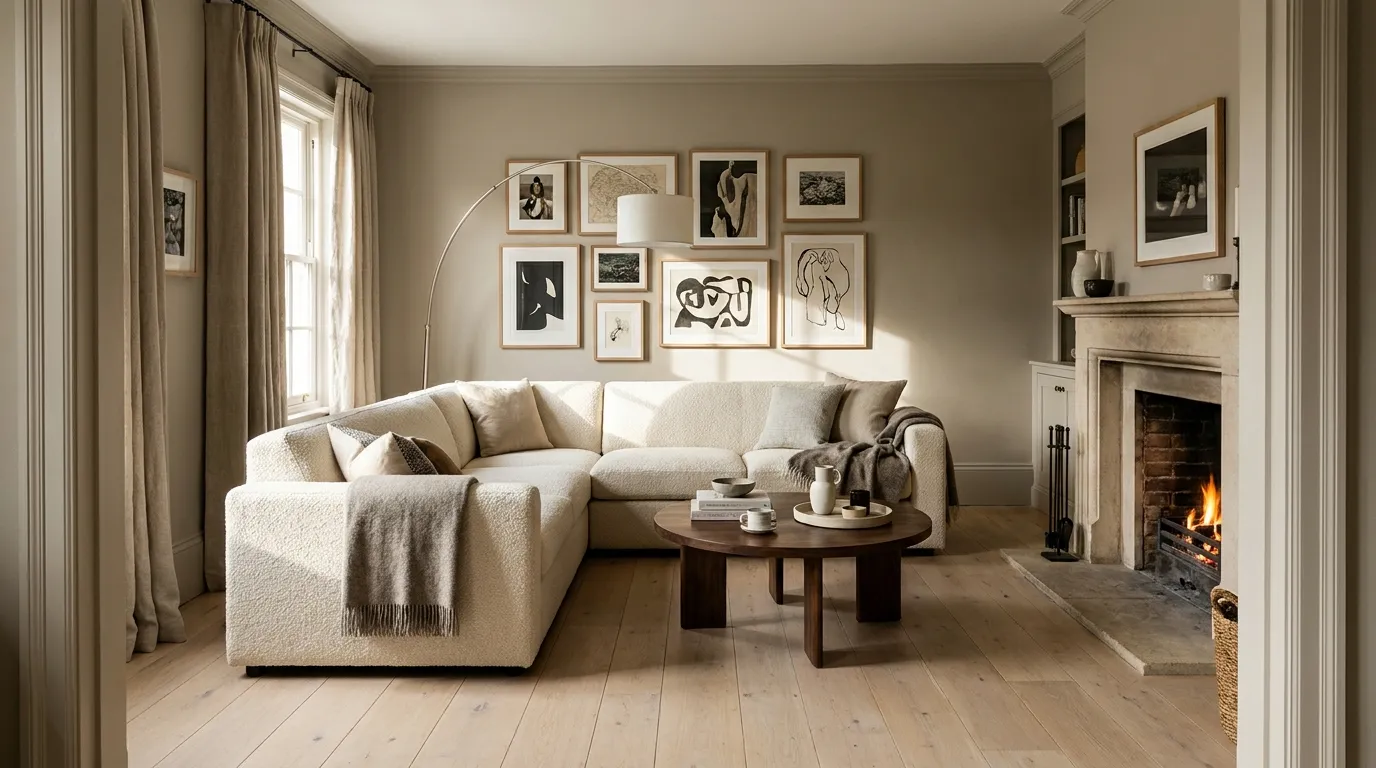
Most sectionals end up facing the television. The room becomes a viewing arrangement rather than a living room — the television takes functional precedence and the sofa angles toward it accordingly. Where there’s a fireplace as well as a television in the same room, the more considered arrangement is often the sectional positioned around the fireplace and the television positioned where it can be seen from that arrangement, rather than optimising the room around the screen.
This is particularly relevant in older properties or rooms where the fireplace is an architectural feature rather than a slot for a wall unit. A sectional angled to face the fireplace produces a completely different room atmosphere — one centred on conversation and warmth rather than passive viewing — and the TV can often be accommodated on a wall adjacent to the fireplace surround where it remains accessible without being the room’s primary focal point.
6. Choose a Low-Profile Sectional for Small or Low-Ceilinged Rooms
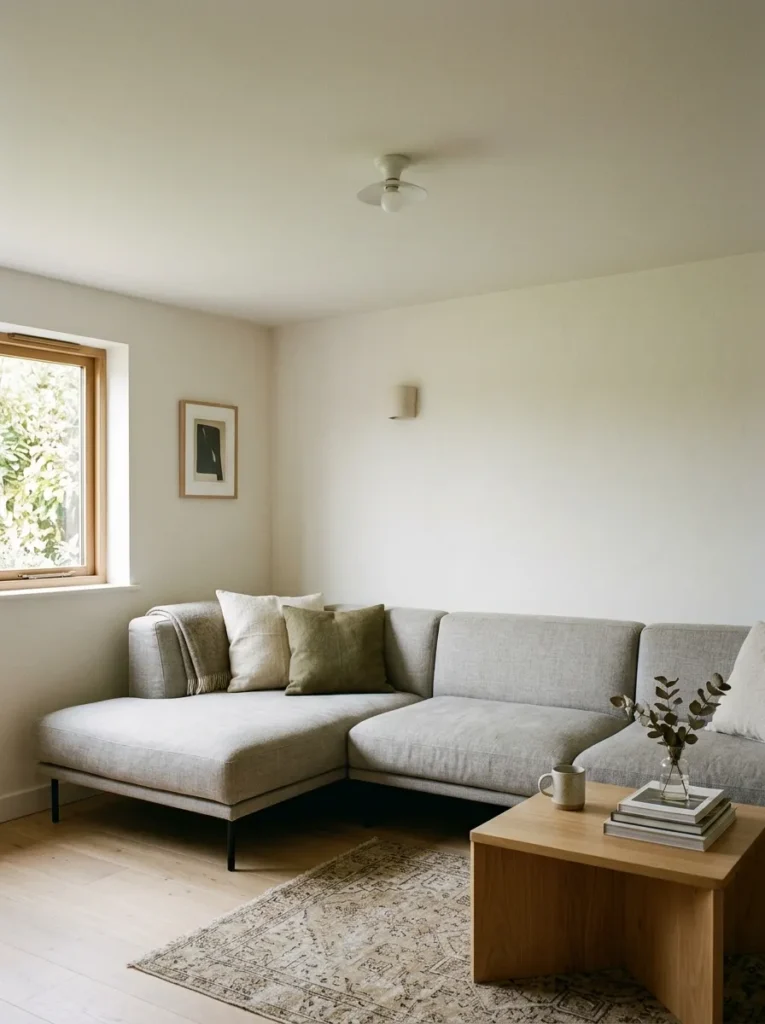
Sectionals come in a surprisingly wide range of seat heights and back heights. A high-backed, deep-seated sectional in a room with low ceilings reads as occupying more vertical space than it actually does — the sofa’s back competes with the ceiling in a way that makes the room feel squeezed. A low-profile sectional — lower seat depth, lower back height, legs (if present) rather than a plinth base — sits more lightly in the room and preserves more apparent ceiling height.
Seat depth is a comfort trade-off worth acknowledging: a shallow seat depth of 80–85cm suits someone who sits upright and prefers a firmer sitting position; a deeper 90–100cm suits someone who likes to curl up or sit with legs on the sofa. In a small room, a shallower seat depth both helps the room feel larger and means the sofa takes up less floor space — useful when circulation around a sectional is already tight.
7. Use the Sectional as a Room Divider in an Open Plan
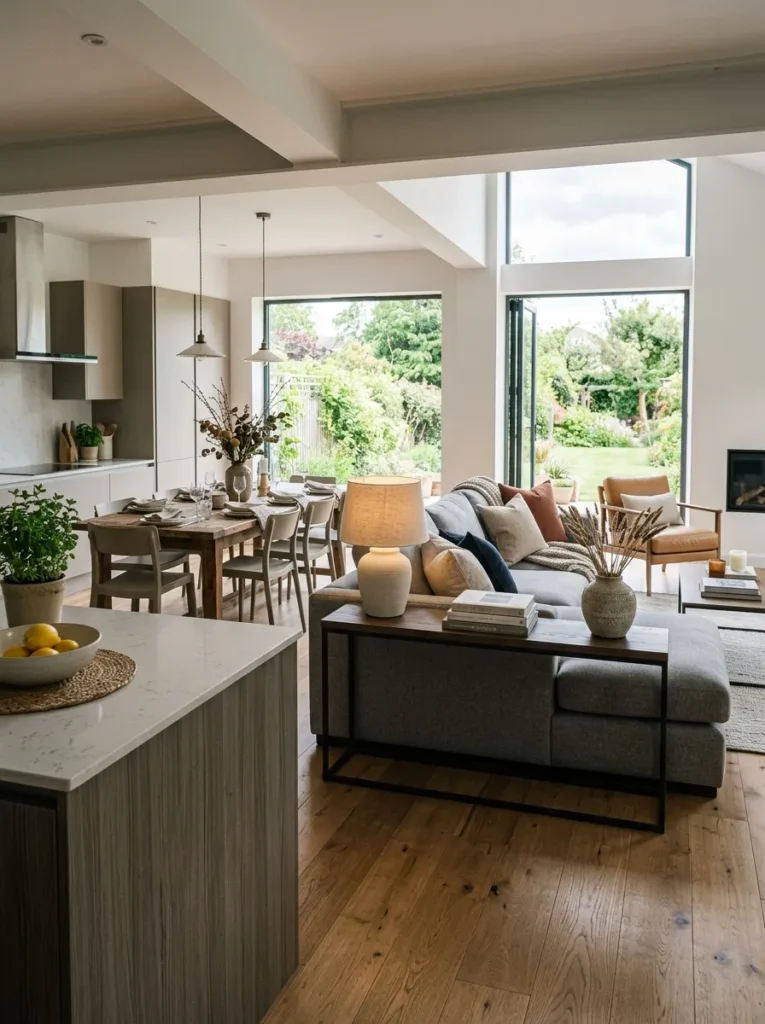
Open-plan living spaces often lack any visual or spatial separation between the living and kitchen or dining zones. A sectional positioned with its back to the kitchen or dining area creates that separation without any structural work — the sofa’s back acts as a soft partition and, at the right height, provides a visual boundary without blocking sightlines across the room.
The back of the sectional in this position should be finished as a design decision rather than hidden: a sofa table or narrow console positioned immediately behind the sofa keeps the back zone from becoming a circulation dead zone and gives the dining area something to look toward rather than looking directly at the sofa’s reverse. A table lamp on the console and a couple of objects on the surface creates a second vignette that reads from the dining side of the room.
8. Style the Chaise Section With a Weighted Throw
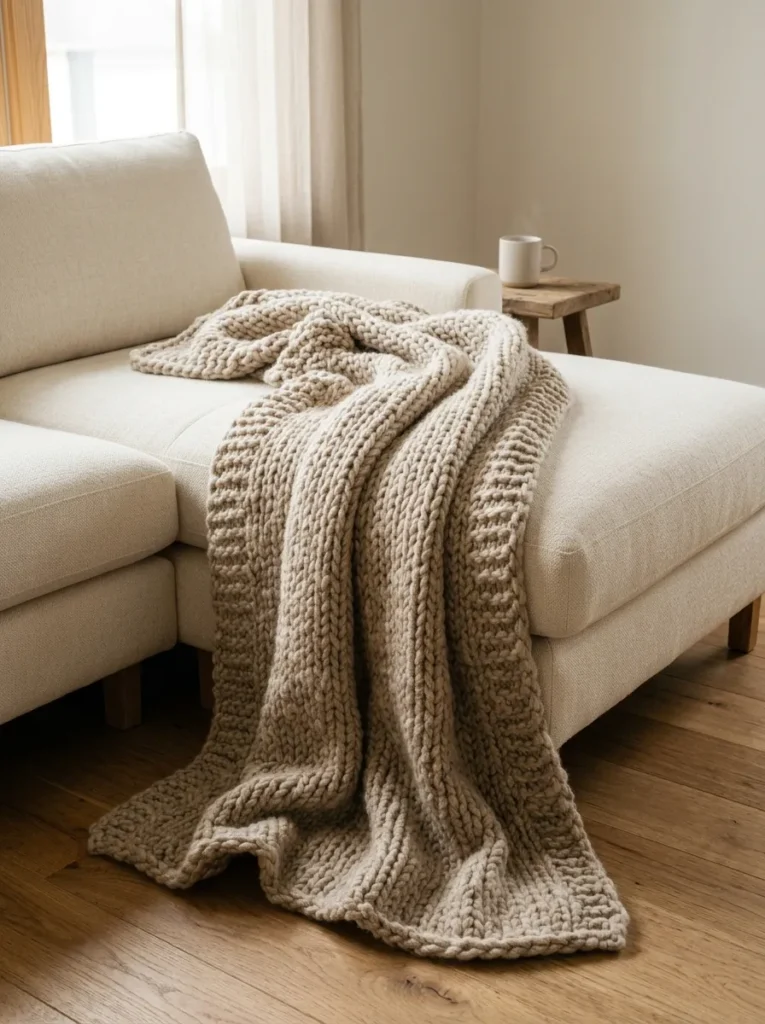
The chaise end of a sectional is usually the most-used part of the sofa — and often the part that reads most unstyled. Because it’s longer and lower, the chaise can look like an empty platform if left bare, particularly in neutral fabric. A large, weighted throw — a chunky knit in a complementary neutral, or a heavy woven blanket in a contrasting texture — draped loosely across the chaise gives that end of the sofa visual weight without making it feel overly dressed.
The throw should be large enough to actually cover the chaise rather than sitting as a small square on one cushion. A throw that drapes off the edge and pools slightly on the floor reads as generously casual; one folded neatly in the centre of the chaise reads as stiff. The distinction between those two looks determines whether the sofa reads as lived-in or showroom.
9. Pair a Sectional With a Round Coffee Table to Improve Traffic Flow
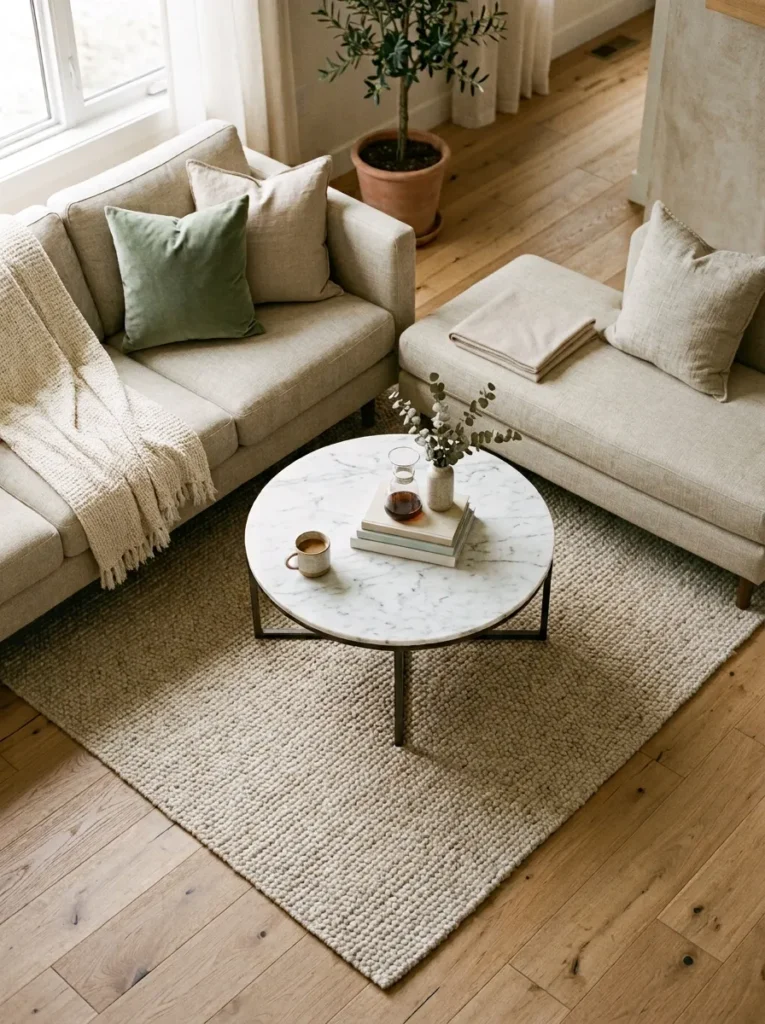
The coffee table that goes with a sectional needs to work geometrically with the L or U shape rather than simply filling the empty centre. A standard rectangular coffee table in front of a sectional leaves the corner section — the most used seat in most households — without easy access to a surface, and the table’s corners can create circulation problems in the gaps between the sofa and the table.
A round coffee table, or a set of round nesting tables, addresses both problems: the curved edge removes the awkward corner that a rectangular table creates in the sofa’s inner angle, and the shape is accessible from every seat in the arrangement. Size is critical — the table should be roughly two-thirds the length of the longest sofa section for visual balance, and the clearance between sofa edge and table should be at least 35–40cm for comfortable leg room.
10. Layer Cushion Sizes Rather Than Using Matching Sets
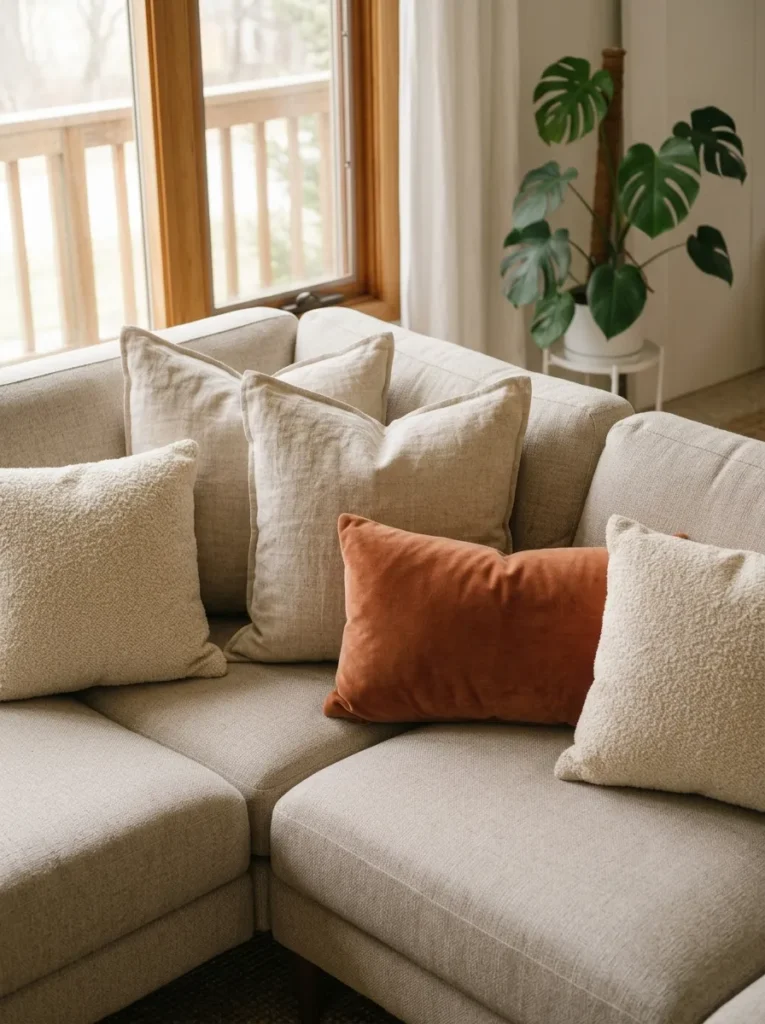
A sectional with a matching set of cushions in the same size, fabric, and colour is the visual version of a matching furniture suite — technically coordinated and somehow less interesting than the same elements chosen independently. Three or four different cushion sizes (standard 45cm, a larger 55cm, and a long lumbar) in complementary materials — velvet alongside linen, or a woven textile alongside a plain bouclé — reads as collected rather than purchased.
The colour relationship matters more than the individual colours: cushions in a tonal family, ranging from the sofa’s own fabric colour through two or three related shades, hold together without being identical. One cushion in a distinctly different material — a metallic-thread woven piece, a velvet in a deep contrasting tone — provides a focal accent without disrupting the overall palette.
11. Opt for Performance Fabric if the Household Includes Children or Pets
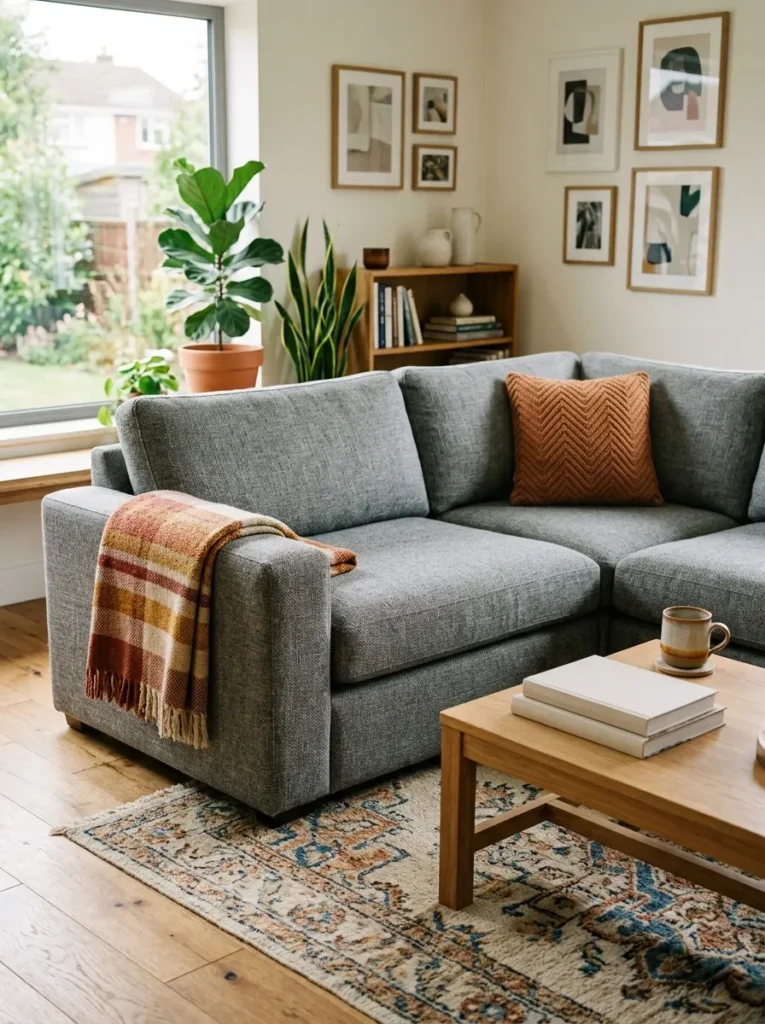
The sectional fabric decision is often made primarily on aesthetic grounds and then immediately complicated by practical reality. A pale linen sectional in a household with young children or a shedding dog is not a styling decision — it’s an ongoing maintenance relationship that most people underestimate at the point of purchase. Performance fabrics (various proprietary weaves that resist staining, moisture, and abrasion) now come in the same range of neutral tones and textures as standard upholstery and are worth specifying when the sofa will see heavy daily use.
Velvet, despite its visual appeal, is a high-maintenance choice in active households — it marks easily, shows pet hair, and is difficult to clean without specialist products. A textured bouclé in a mid-tone performs considerably better in the same context while reading similarly on camera.
12. Choose a U-Shaped Sectional for Large Rooms With Multiple Viewers
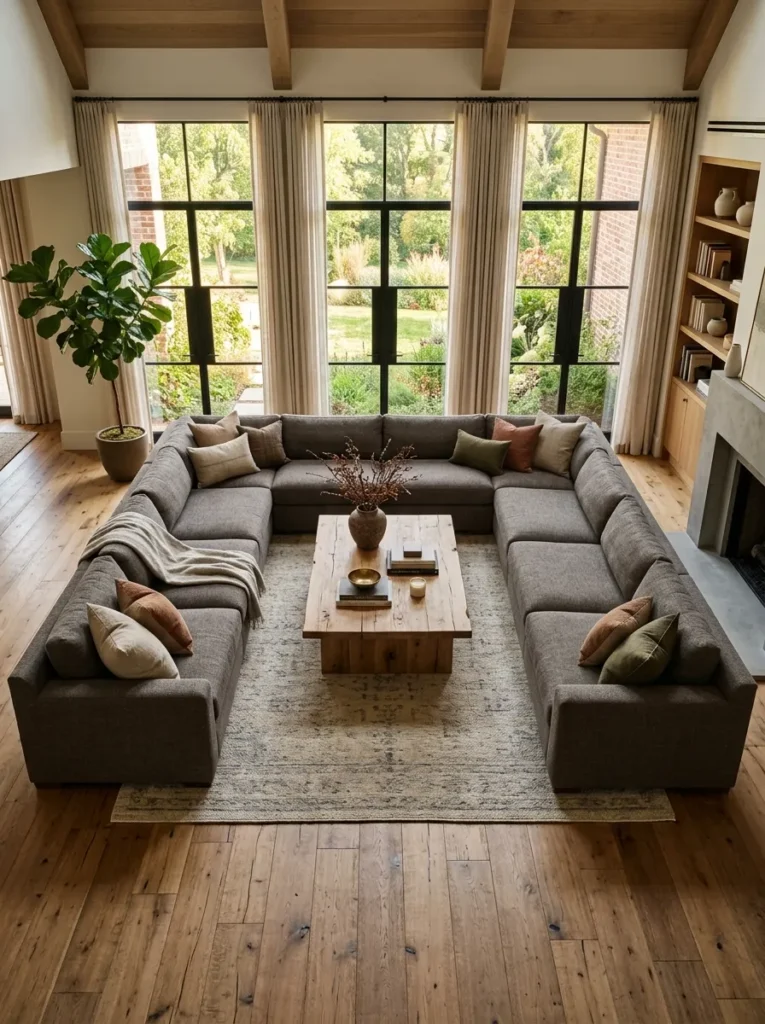
A U-shaped sectional — two facing arms with a connecting section — creates an enclosed seating zone that accommodates more people in a conversational arrangement than an L-shape can. It suits large living rooms (6 metres or more in the longer dimension), family rooms used for group television viewing, and entertaining spaces where the seating arrangement needs to work for eight or ten people rather than three or four.
The trade-off is the room space consumed by the U configuration: the open end of the U requires space in front of it (coffee table, space to move), the two arm ends require clearance behind them, and the overall footprint is substantially larger than even a generous L-shape. Measure the room in full before specifying — a U-shaped sectional that’s too large for the room compresses every other element of the layout until the room functions more as a sectional showroom than a living space.
13. Anchor the Sectional With Floor-to-Ceiling Curtains Behind It
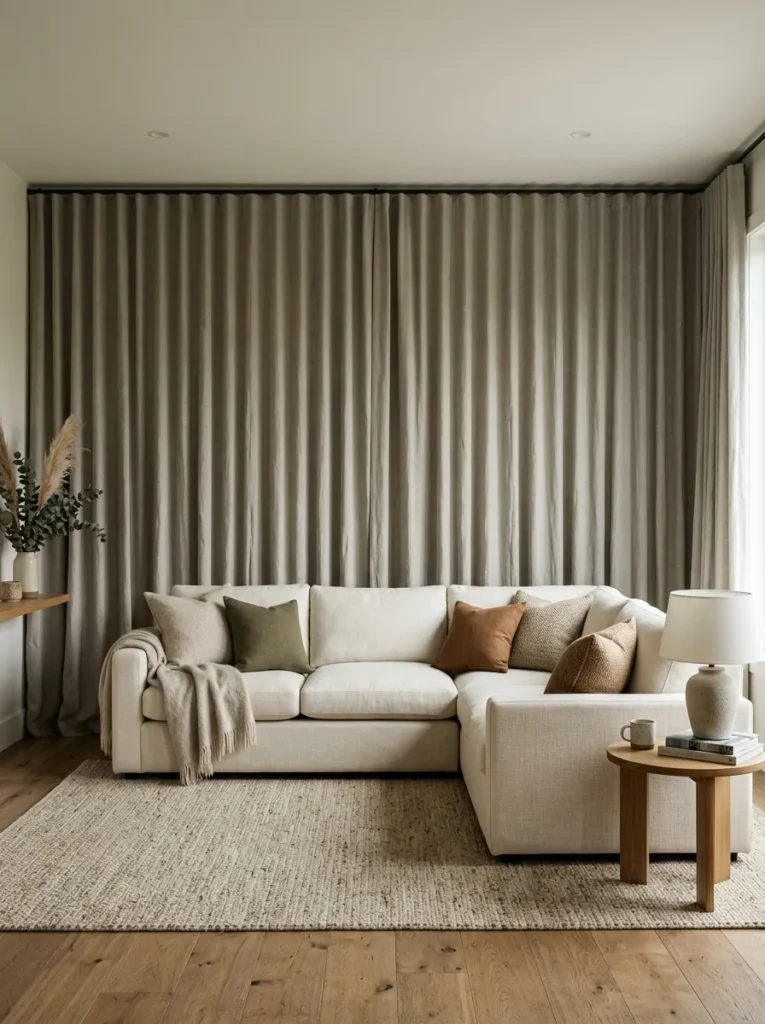
In a room where the sectional floats away from the wall, the wall behind it can feel unaddressed — a large expanse of paint or plaster with nothing to anchor it to the sofa arrangement in front. Floor-to-ceiling curtains on that wall, even without a window to cover (or across a full window wall), give the wall vertical dimension and softness that read as the sectional’s backdrop rather than an afterthought.
The curtain colour should respond to the sectional — not match it exactly, but share an undertone. A soft greige linen curtain behind a cream bouclé sectional stays within the same warm neutral family and lets the sofa read clearly against the soft textile backdrop. Heavily patterned or contrasting curtains behind a sectional compete with the sofa rather than supporting it.
14. Consider a Three-Piece Arrangement Over a Single L-Shape
An L-shaped sectional is one piece of furniture. A three-piece arrangement — a standard sofa, a separate corner unit, and an ottoman — covers the same footprint and provides more configuration flexibility for the same or smaller upfront cost. The visual result can be very similar to an integrated sectional, but the individual pieces can be separated when moving house, can be reupholstered independently if one section wears faster than others, and can be arranged differently if the room changes.
The visual difference between a well-chosen three-piece arrangement and an integrated sectional is subtle — the most visible difference is usually the lack of a continuous cushion seam at the corner, which the integrated sectional handles more cleanly. Whether that detail is worth the trade-offs in flexibility and cost is a decision that depends on the household’s timeline and moving plans.
15. Use the Sectional’s Inner Corner as a Deliberate Design Moment
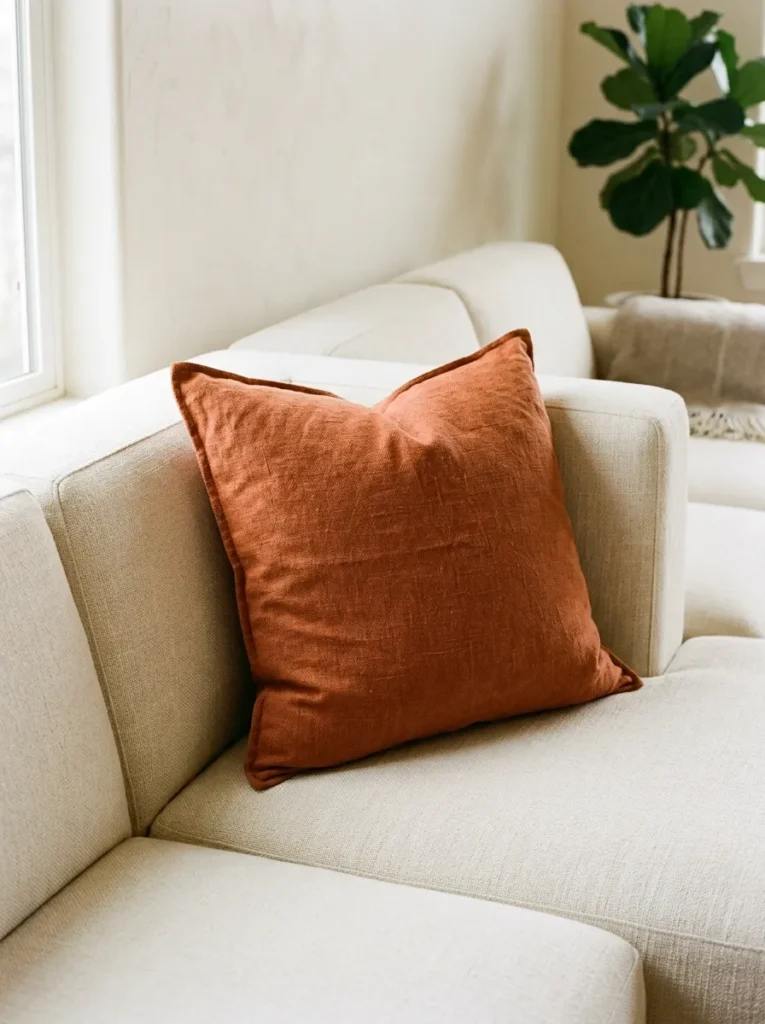
The corner of a sectional — the angle where the two sections meet — is the most awkward upholstery position in the room and, consistently, the least styled. Most people use it as an overflow cushion dump or leave it with the standard cushions that came with the sofa. The alternative is treating the corner as a small deliberate display zone: a slightly oversized pillow at 65cm square, or a pair of cushions stacked against the corner, or a single bolster that sits precisely in the angle.
None of these options is expensive; what they share is the logic of addressing the corner intentionally rather than ignoring it. A corner that’s been given a specific object reads as part of the styling composition; one that holds whatever happens to accumulate there reads as what it is.
16. Select a Sectional Colour That Works Under Your Specific Artificial Light
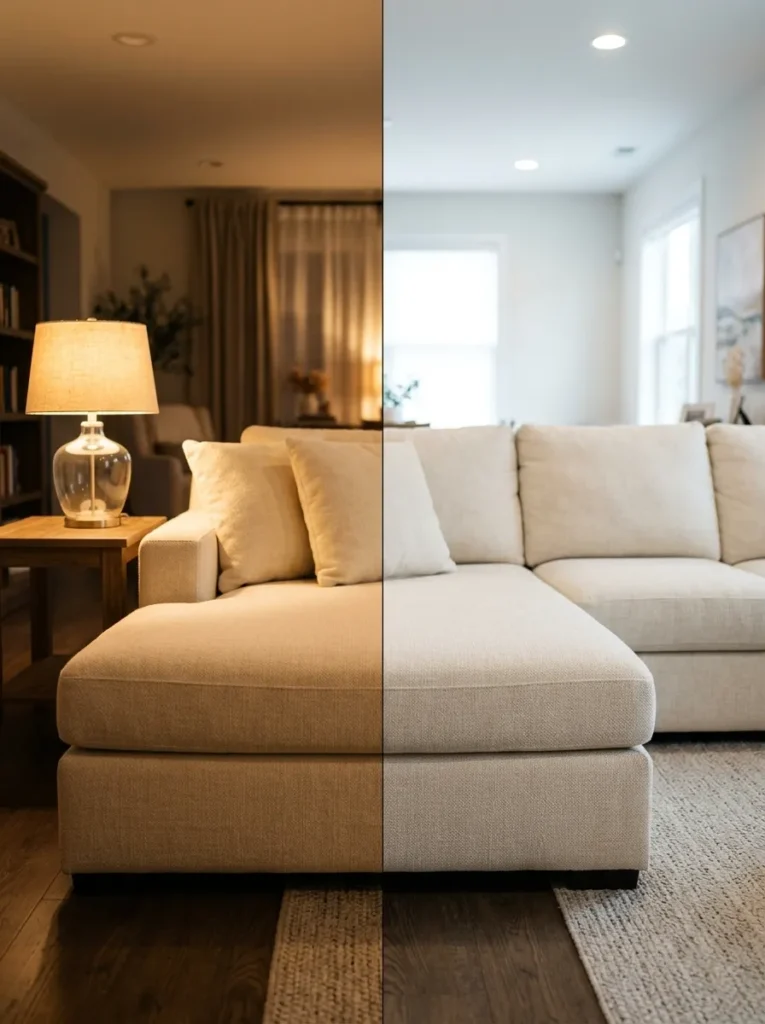
Sectional colour is almost always chosen in a showroom or from an online swatch that represents the fabric under lighting conditions entirely unlike the buyer’s living room. A warm cream that looks luxurious under a showroom’s warm track lighting may read as pale yellow under your room’s cool overhead bulbs. A warm terracotta that photographs vibrantly may read more muted under the same conditions.
Before committing, request a fabric sample large enough to read from across the room rather than a small swatch, and assess it in your living room at the time of day you use that room most — usually evening. The colour should be assessed at that time, under artificial light, against your floor and wall colours. If a sample isn’t available, the second-best option is a light-matched digital comparison, though this is an imprecise substitute for the real thing.
17. Build a Gallery Wall Behind the Sectional Rather Than Behind the TV
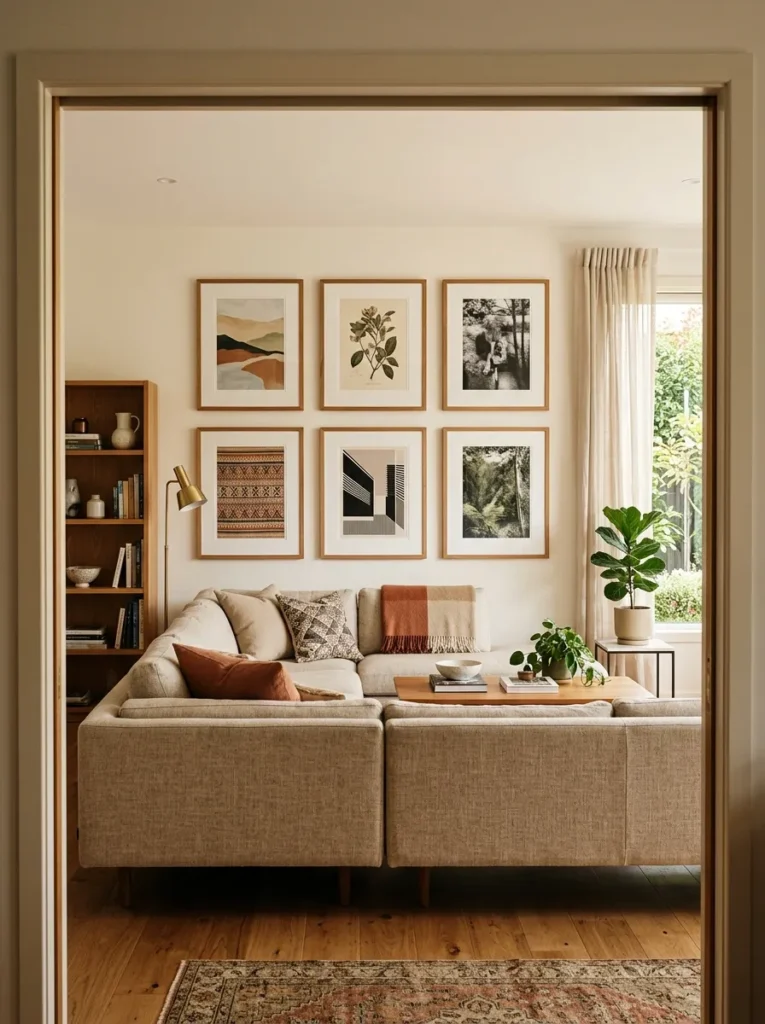
The wall behind a floating sectional is the natural focal wall of the room from the standing perspective — it’s what someone entering the space sees first, before they sit down. Most people hang art behind the television rather than behind the sofa, which means the room’s primary visible wall (the one behind the seating) remains unaddressed.
A gallery wall behind a sectional works well when the arrangement is relatively symmetrical — a few large pieces in the central zone above the sofa back, with smaller pieces working outward on each side. The lower edge of the gallery should sit roughly 15–20cm above the sofa back to preserve a clear visual separation between the furniture and the wall composition above it. Too close and the art reads as resting on the sofa; too high and the gallery disconnects from the arrangement below it.
18. Introduce a Floor Lamp Rather Than Relying on Overhead Light
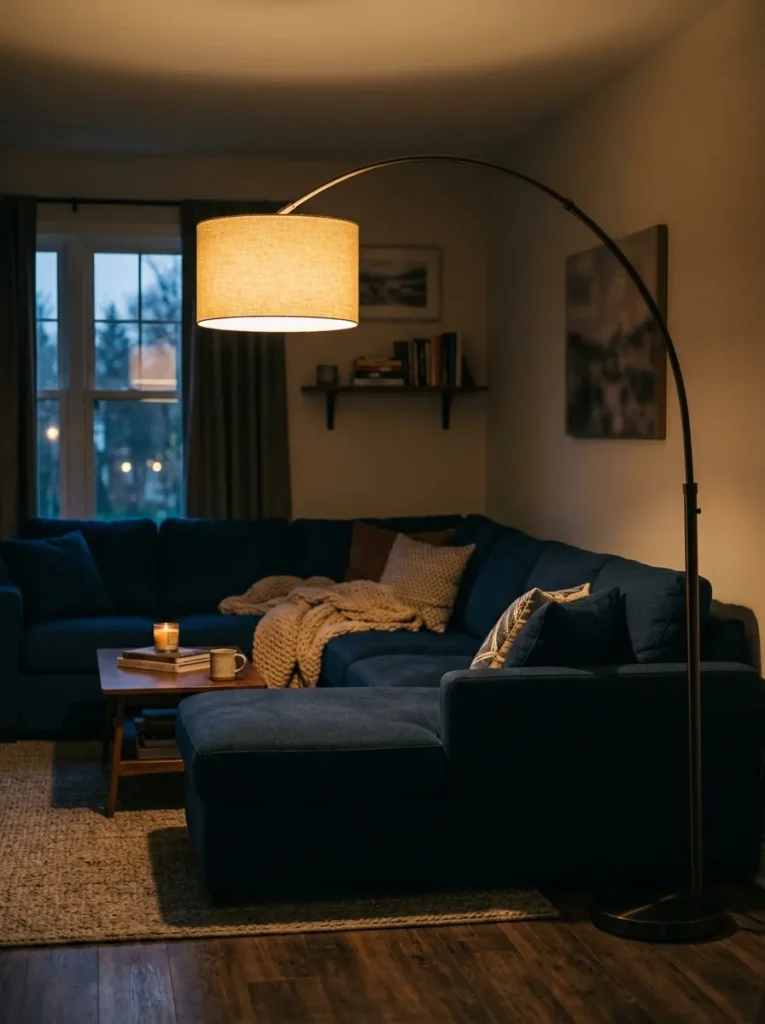
A sectional sofa used in the evening for reading, films, or conversation is poorly served by overhead lighting alone. A floor lamp positioned at the junction of the two sectional sections, or at the chaise end where reading is most likely to happen, provides a specific source of warm light at exactly the height and angle where it’s most useful.
An arc floor lamp — one with a wide arc that projects the shade over the sofa from a base positioned beside or slightly behind the arm — covers a broader seating area than a standard upright floor lamp beside the sofa’s end. The height of the shade should sit roughly 150–170cm from the floor to produce comfortable reading light without creating glare from the lamp visible above the shade when seated.
19. Anchor the Colour Scheme to the Sectional, Not the Walls
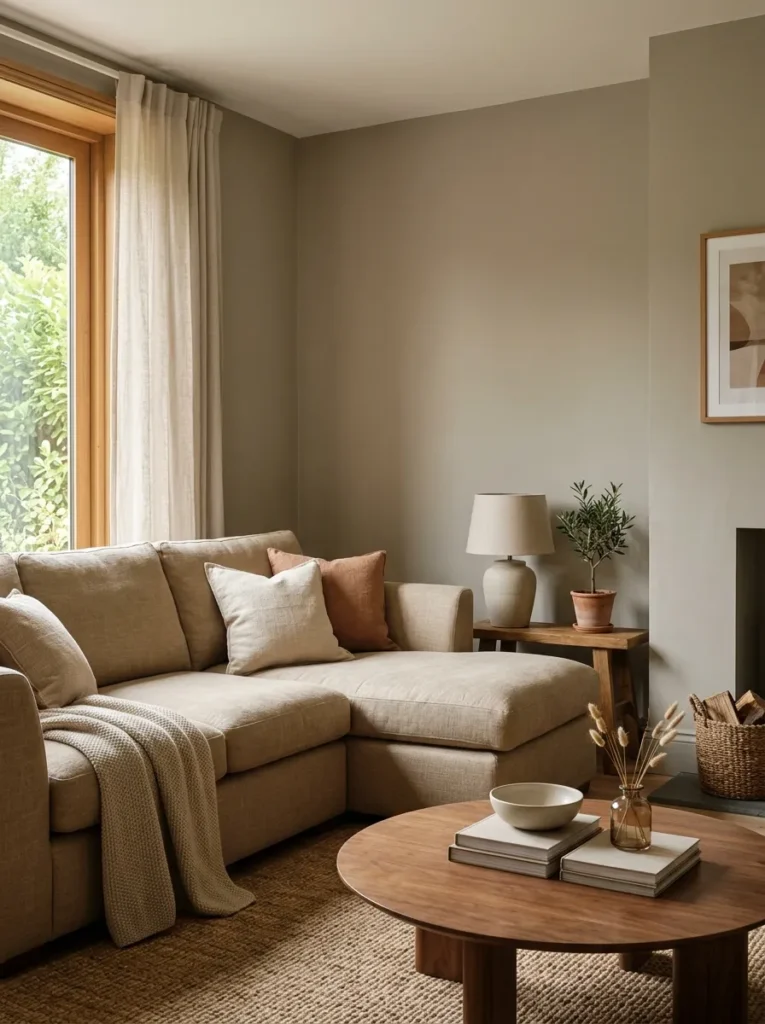
In a room where a sectional is the dominant piece, the temptation is to choose the wall colour first and then find a sectional that fits. The more reliable sequence is the reverse: choose the sectional fabric and colour, then find a wall colour that responds to it. The sectional occupies more visual mass than any wall, and its colour temperature (warm, cool, or neutral) should set the tone for the palette rather than responding to it.
A warm sand linen sectional paired with walls in a warm greige reads as a considered material story. The same sectional against a cool blue-grey wall creates a cool-warm tension that can work deliberately but requires other warm elements throughout the room to hold together. Starting from the sectional’s undertone and building outward produces more cohesive results than finding a sectional to fit a pre-existing palette.
20. Treat the Back of the Sectional as a Design Decision, Not an Afterthought
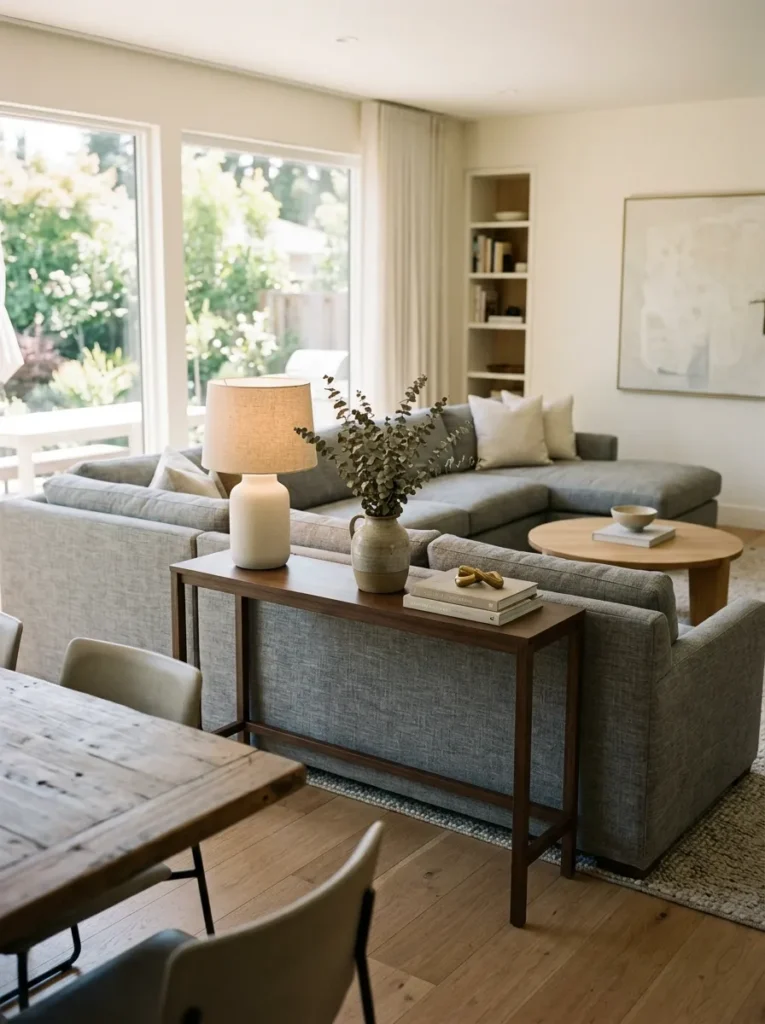
In most living rooms, the back of a sectional is invisible — pushed against a wall or facing a blank zone. But in rooms where the sectional is floating or used as a room divider, the sofa back becomes a visible surface that needs attention. Most sectional backs are finished in the same fabric as the front but with a flat, untextured panel without cushions — which reads as a visual flat plane that can look unfinished.
Solutions include a narrow console table positioned immediately behind the sofa (gives the back of the sectional a backdrop and creates a functional surface for lamps and objects), a throw draped deliberately over the back rail, or choosing a sectional with a tufted or panel-detailed back where the piece is likely to be seen from behind. In an open-plan space, this is one of the more consequential decisions in the whole room arrangement.
Common Mistakes That Undermine Sectional Sofa Arrangements
Buying before measuring the room in full. A sectional that’s slightly too large for the room compresses every other furniture decision. Measure the room, plan the layout on paper, and confirm the clearances before ordering.
Getting the chaise direction wrong. The most common sectional return reason is chaise direction. Map the room and confirm which direction creates usable pathways before specifying — left-facing and right-facing are not interchangeable.
Using a rug too small. A rug that sits only under the coffee table looks stranded relative to a sectional’s scale. The front legs of every seat should rest on the rug, or the rug should at minimum extend clearly beyond the coffee table on all sides.
Pushing the sectional against every wall. This creates an empty room centre and a seating perimeter. Float the sectional, even 30–40cm from the wall, and the room’s functional layout improves immediately.
Choosing fabric before assessing light conditions. The showroom colour is not the living room colour. Always assess fabric samples under the room’s actual artificial light.
Final Thoughts
Sectional sofa living room ideas succeed when the layout decision comes before the styling decision. Determining the chaise direction, the room position (floating versus wall-adjacent), and the traffic flow clears up most of the practical uncertainty before the aesthetic choices begin. Once the functional logic of the sectional in the specific room is resolved, the styling — cushion mix, rug size, curtain relationship, what happens to the corner seat, what goes behind the sofa — all become easier to get right.
Not every idea in this guide applies to every room. A large open-plan space has different priorities than a compact flat with a single sitting room. Identify the ideas that address the specific configuration and constraints of your space and save the inspiration ideas that genuinely match it — rather than the ones that require an entirely different room to achieve.
Save the ideas most useful to your space and revisit this guide when you’re ready to make the final layout and styling calls.