24 Neutral Dining Room Ideas That Feel Calm and Elegant
Neutral doesn’t mean boring, and it definitely doesn’t mean beige walls with a matching six-piece dining set from the same showroom floor. Most neutral dining room ideas you’ll find online are really just “remove all color” articles dressed up as design advice, which is why so many neutral dining rooms end up feeling flat instead of calm. There’s a real difference between the two, and it comes down to texture, proportion, and a handful of specific decisions most people skip entirely. This list covers the ones that actually matter — the choices that make a neutral room feel considered rather than unfinished. Some of these will take an afternoon. A few will mean rethinking furniture you already own.
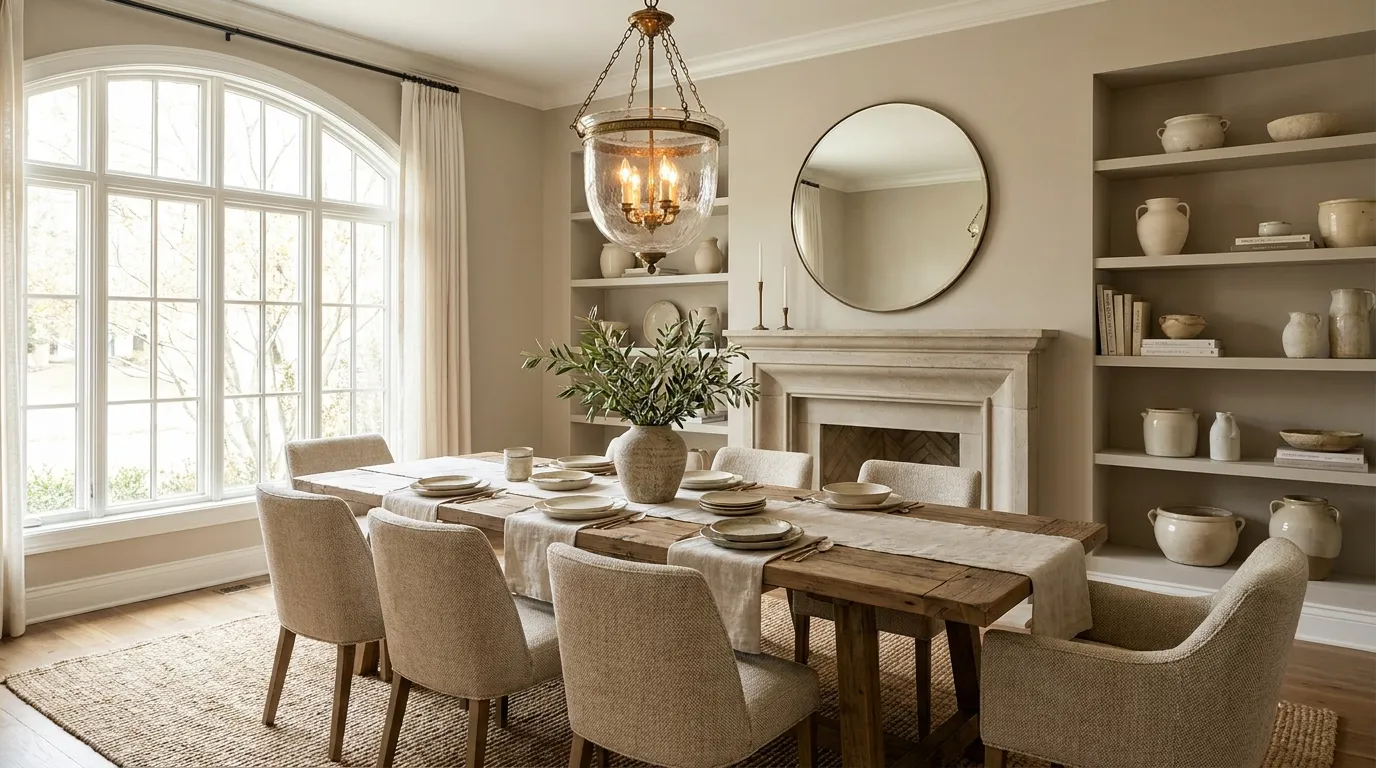
1. Paint Walls a Warm Greige, Not a Cool White
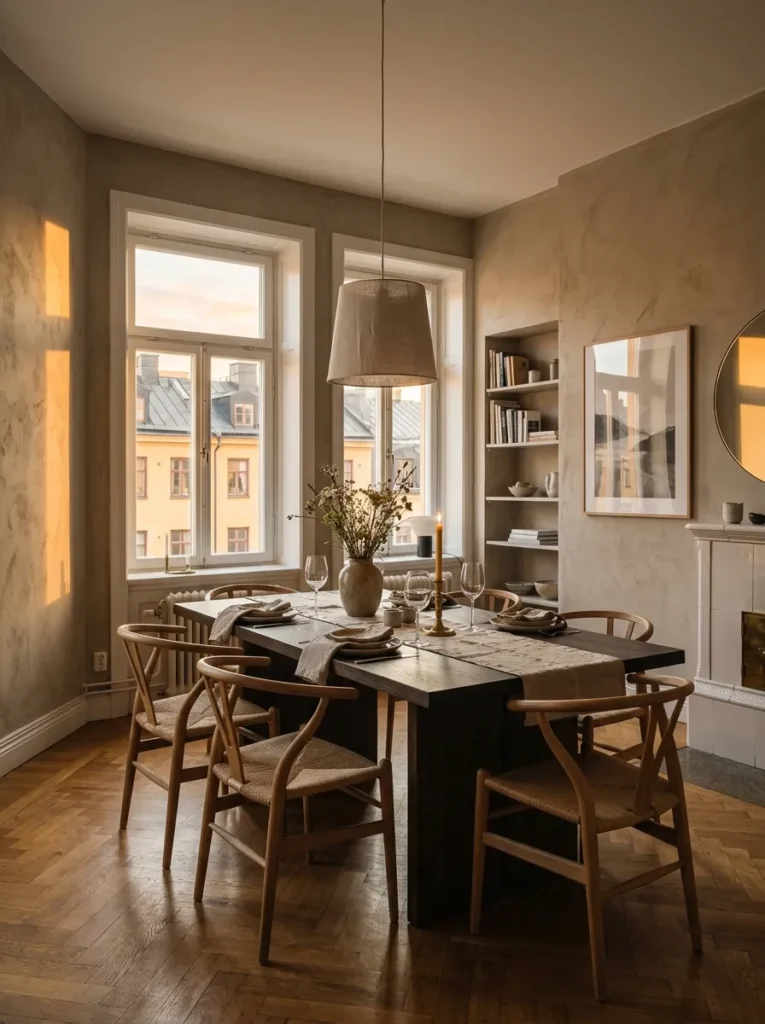
Cool white walls under most dining room lighting read as clinical rather than calm, especially once the sun goes down and artificial light takes over. A warm greige — something with a hint of taupe or the faintest brown undertone — keeps the room feeling soft instead of sterile. Test the color at both lunch and dinner hours before committing, since dining rooms get used at both ends of the light spectrum and a color that looks perfect at noon can go grey and cold by 7pm.
2. Dress the Table in Stonewashed Linen, Skip the Polyester Blend
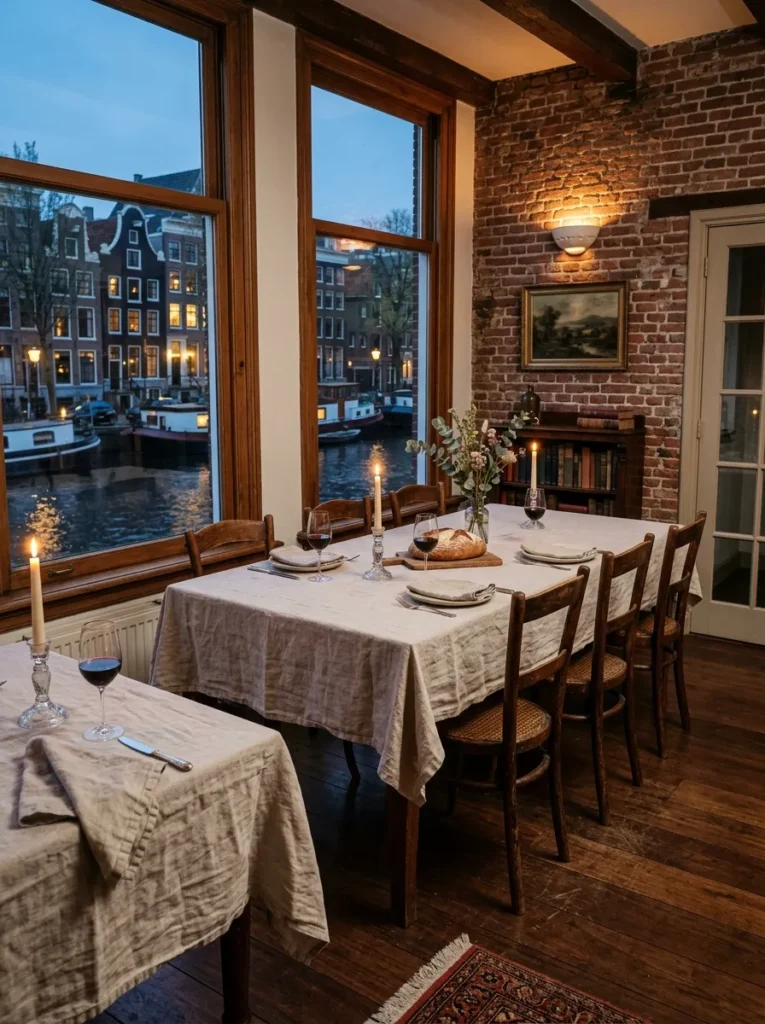
A linen tablecloth or runner does something synthetic fabric never will: it drapes with actual weight and softens with every wash instead of pilling. Go for a stonewashed or heavy-weave linen in oatmeal or bone rather than pure white, which shows every spill and looks harsh under warm lighting. This is a small cost difference that shows up in every single photo of the table, which for a Pinterest-focused room is not a minor detail.
3. Choose a Matte Oak or Walnut Table, Never High-Gloss
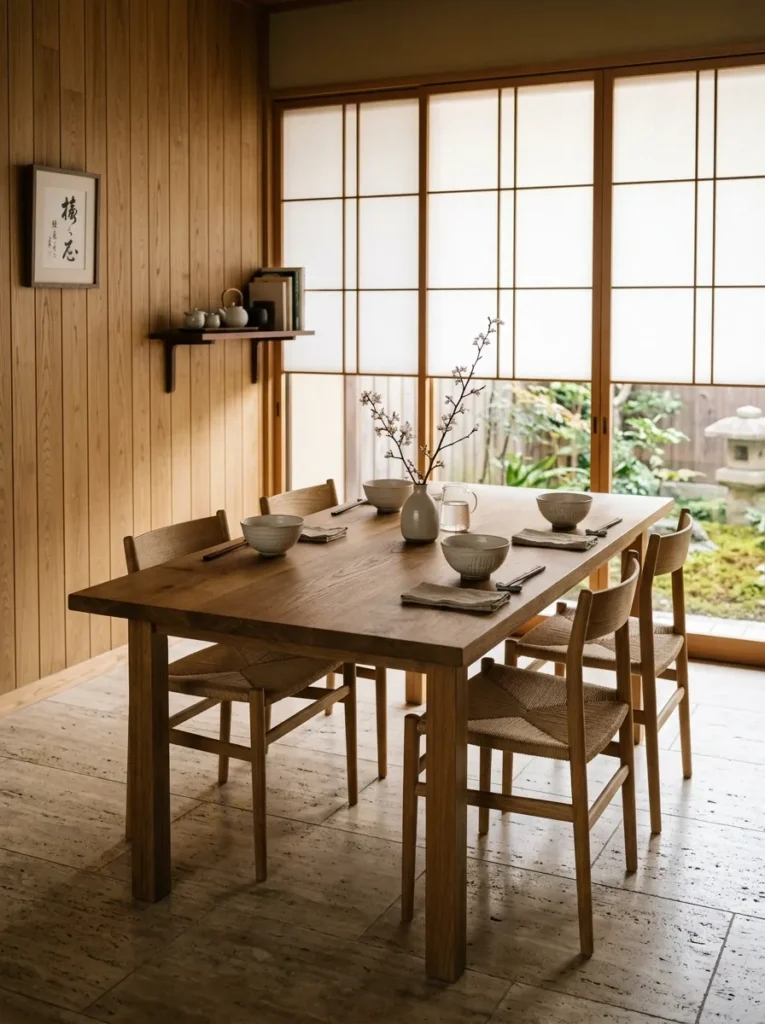
A glossy lacquered table reflects every overhead light source directly back at your dinner guests, which is distracting in a way most people don’t notice until it’s pointed out. A matte-finished oak or walnut table absorbs light instead of bouncing it, which is the entire reason calm dining room design tends to favor raw or lightly oiled wood over anything with shine. Choose a tabletop at least four centimetres thick — anything thinner reads as flimsy no matter how nice the wood grain is.
4. Mix Upholstered Chairs With Wood Ones, Not a Full Set
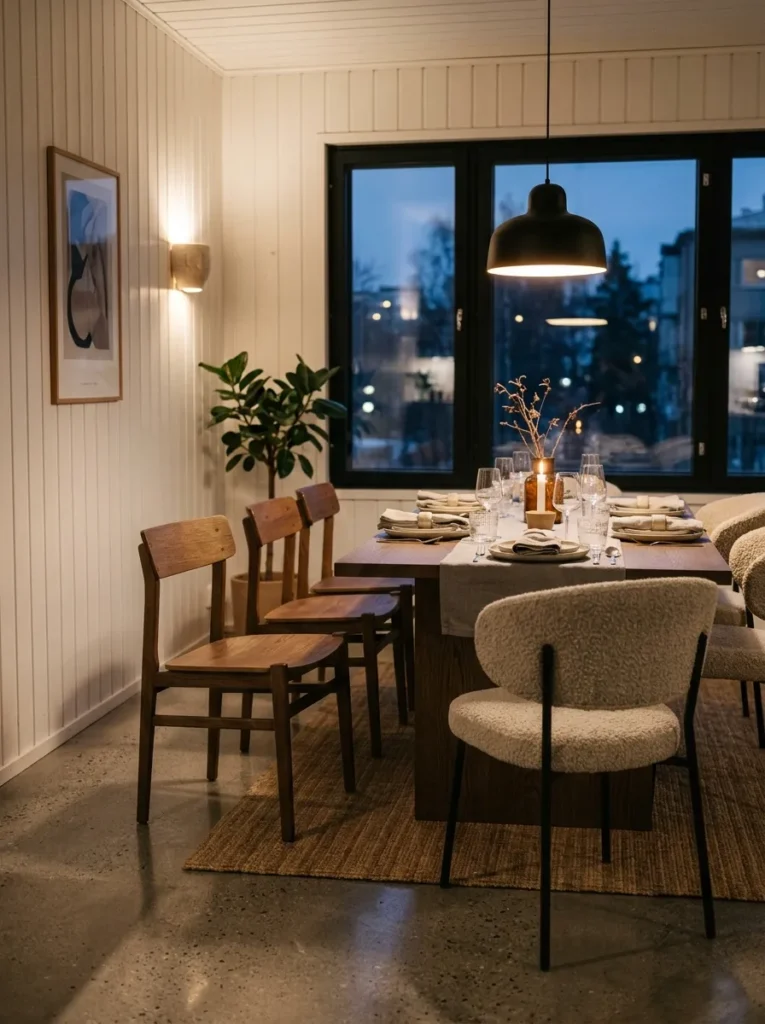
The matching dining set is always the safer choice and almost never the more interesting one. Pairing two upholstered bouclé or linen chairs at the head of the table with wood chairs along the sides gives the table a sense of having been assembled over time rather than purchased in a single box. Most people resist this because it feels riskier. It isn’t — it’s the decision that changes everything about how considered the room looks.
5. Hang the Pendant 70 to 80 Centimetres Above the Table
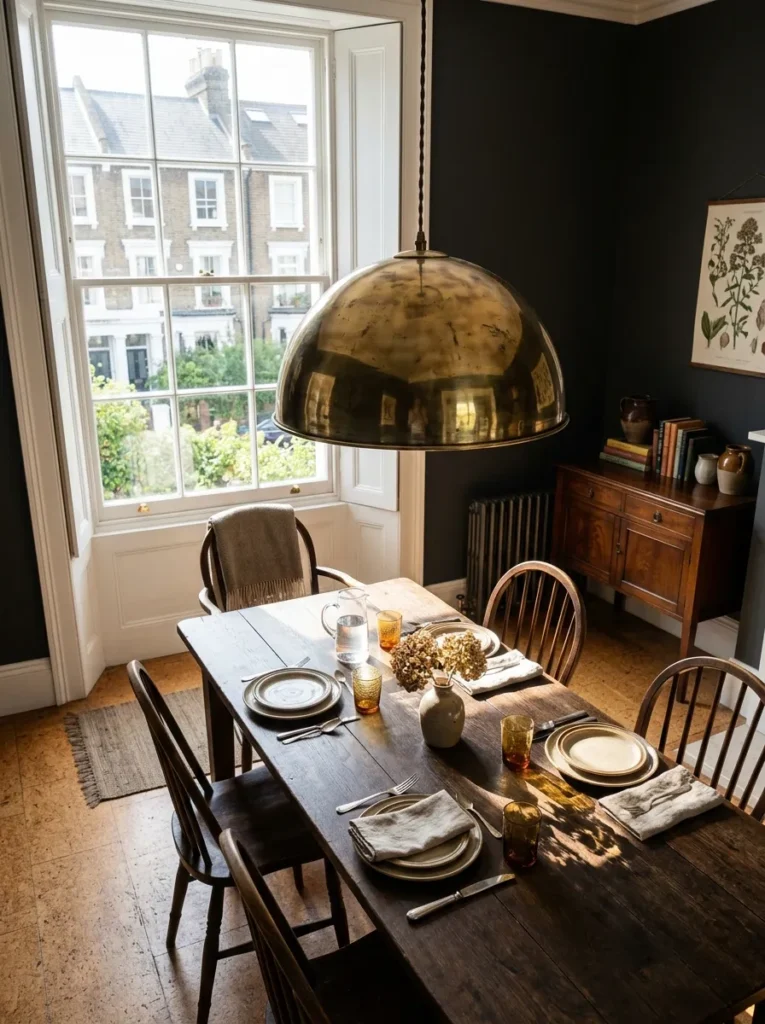
Pendant height over a dining table is one of the most commonly botched measurements in the entire room. Too high and the light washes out across the ceiling instead of the table; too low and guests are ducking around it all evening. Seventy to eighty centimetres from the tabletop to the bottom of the fixture is the range that keeps the light focused on the food and faces without anyone having to lean sideways to see across the table.
6. Layer a Wool Rug Under the Table, Sized Correctly
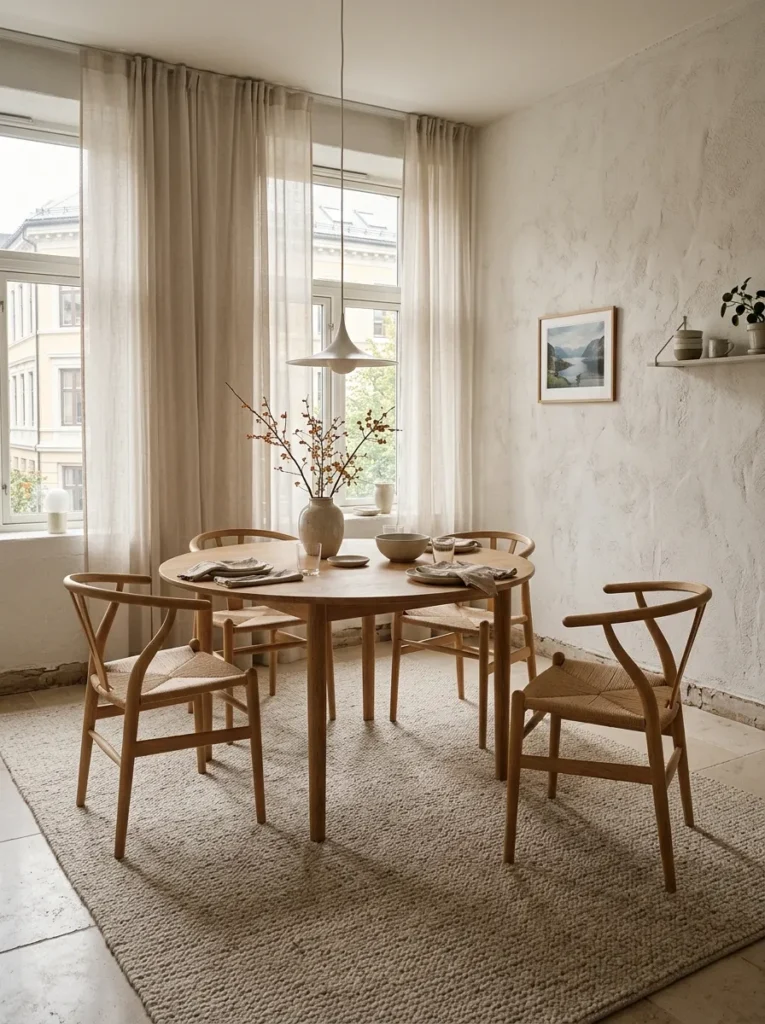
A rug that’s too small under a dining table is one of the fastest ways to make an otherwise well-designed room look unfinished. The rug needs to extend at least 60 centimetres beyond the edge of the table on all sides, so chairs stay on the rug even when pulled out. A low-pile wool in a neutral tone handles crumbs and chair legs far better than a high-pile weave, which is worth knowing before you fall in love with something plush.
7. Use One Sculptural Centerpiece, Not Seasonal Clutter
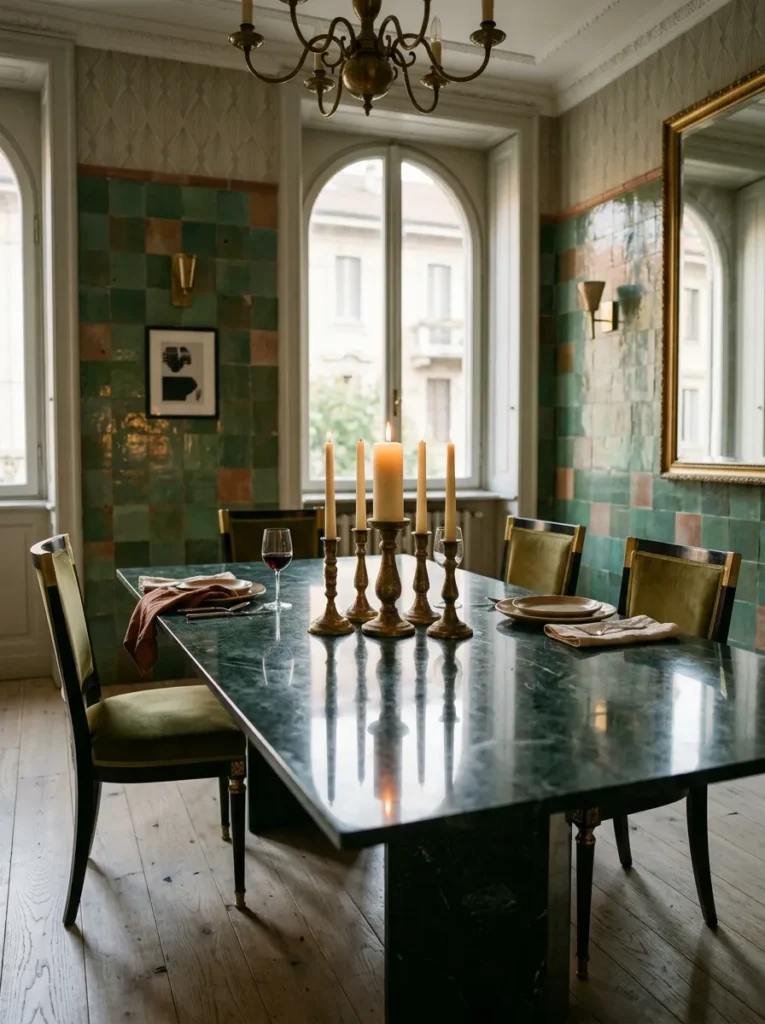
A single ceramic bowl or a cluster of unlacquered brass candlesticks does more for a table than a rotating cast of seasonal decorations ever will. Seasonal clutter — the pumpkins, the fake garlands, the themed runners — fights with the calm that neutral dining room ideas are supposed to deliver in the first place. Pick one piece with real sculptural weight and let it stay on the table year-round.
8. Add a Sideboard for Storage, Not Just Display
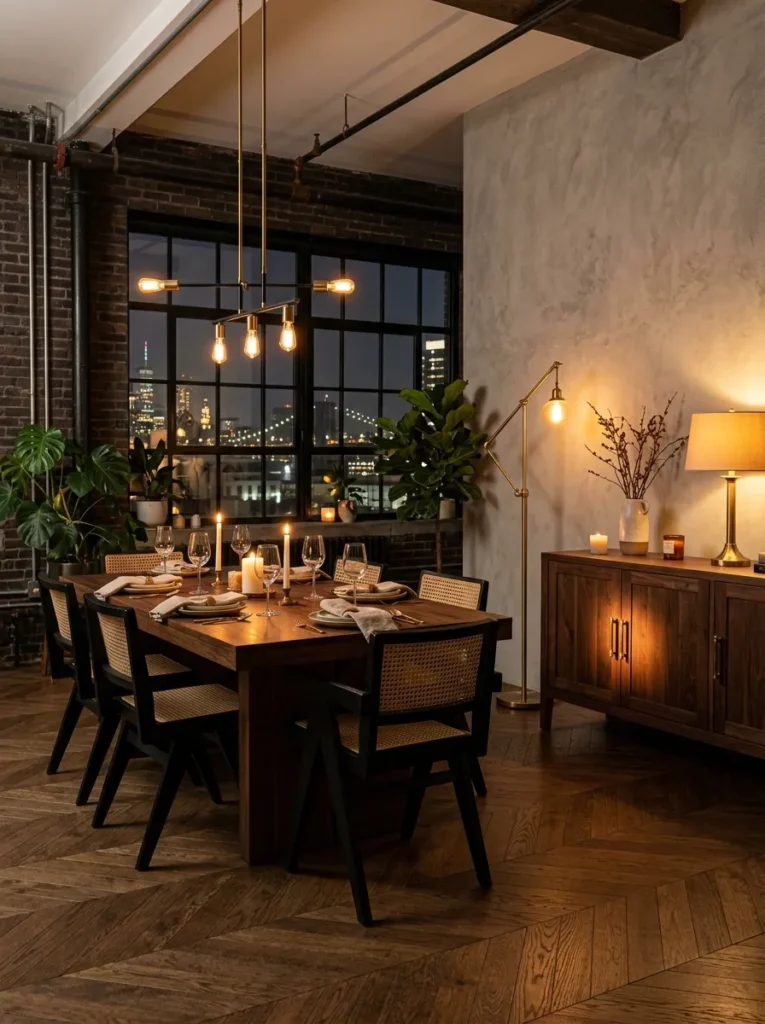
Visual clutter on a dining table is almost always spillover from a lack of storage somewhere else in the room. A low sideboard or buffet in the same wood tone as the table gives everything from table linens to serving dishes somewhere to live that isn’t the tabletop itself. Choose one with closed cabinet doors rather than open shelving here — this piece is for hiding things, not showing them off.
9. Hang One Large-Scale, Neutral-Toned Print
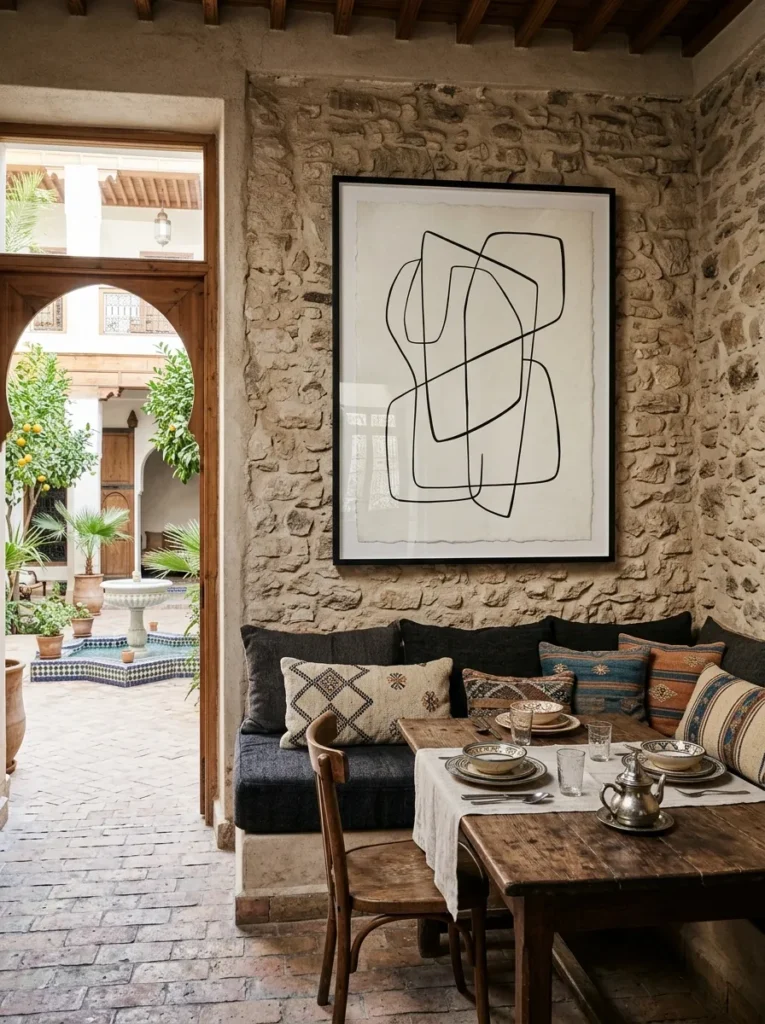
A gallery wall of small frames reads as busy in a room that’s trying to feel calm. One oversized print — an abstract line drawing, a black-and-white architectural photograph, a large botanical study — in a slim frame does more with less. Scale is the entire point here; a print that feels slightly too large for the wall is almost always the right size.
10. Frame Windows With Floor-Length Linen Drapery
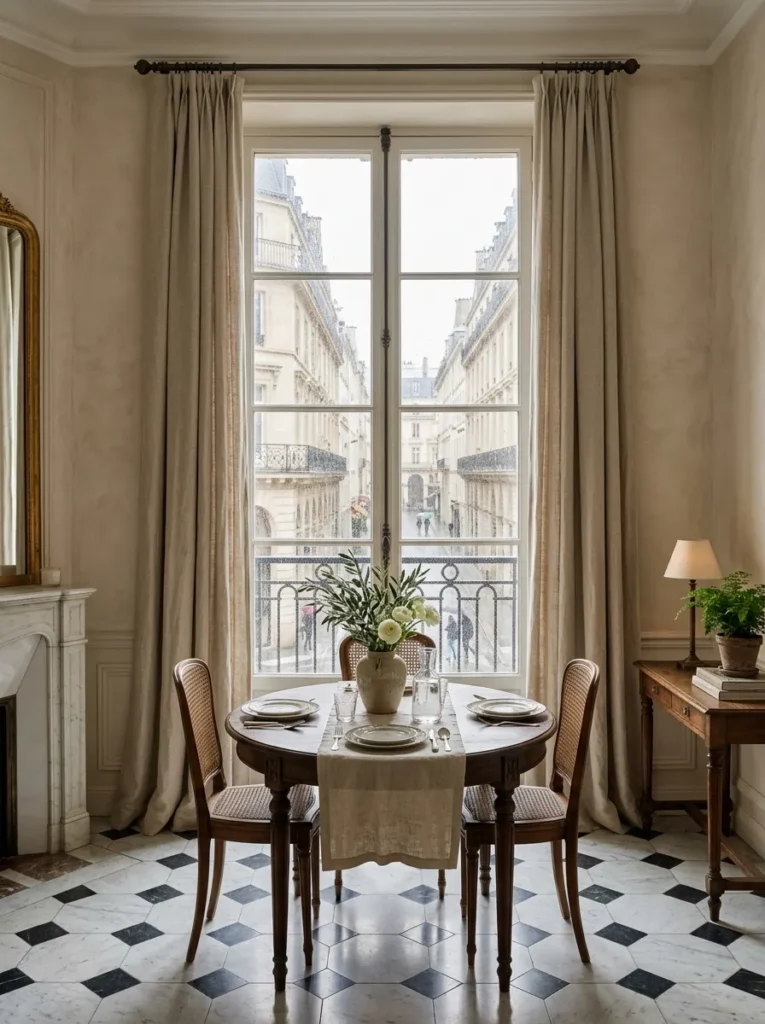
Short curtains or none at all leave a dining room feeling exposed rather than composed. Floor-length linen drapery in a neutral tone softens hard architectural lines and adds a sense of height to the room, especially when hung close to the ceiling rather than just above the window frame. That’s the whole point of mounting curtains high — it tricks the eye into reading the ceiling as taller than it is.
11. Use Candlelight for Every Evening Meal, Not Just Special Occasions
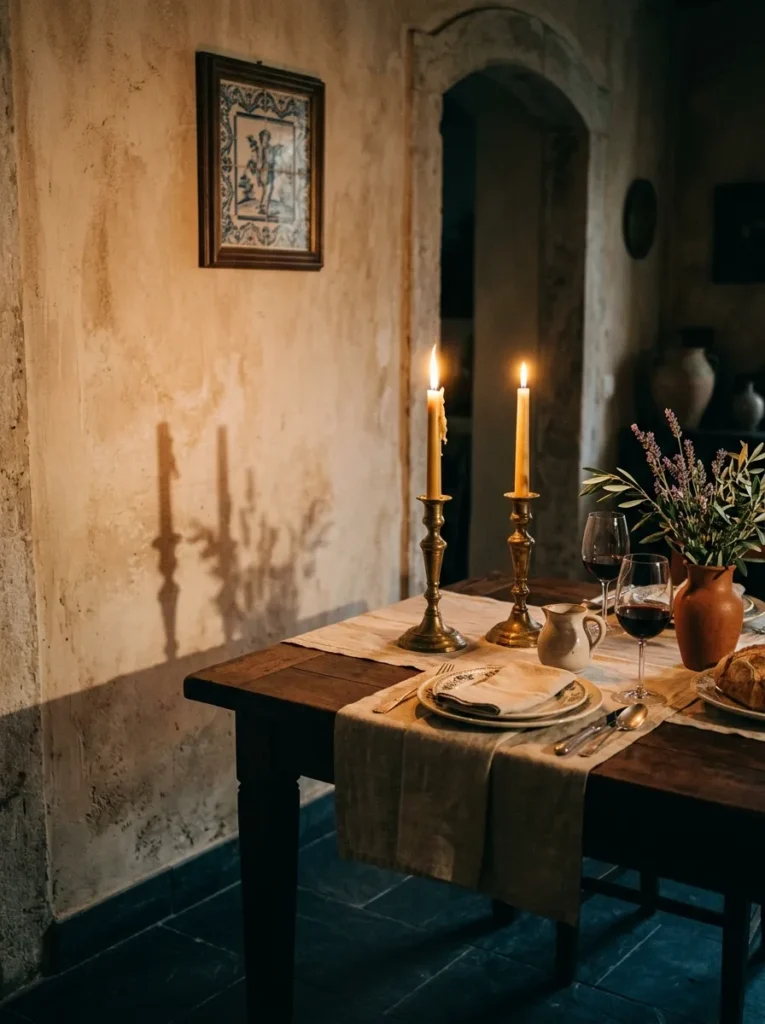
Overhead lighting alone flattens a dining room after dark. A pair of taper candles in aged brass holders, lit even for a Tuesday dinner, adds a layer of warmth that no dimmer switch fully replicates. It costs almost nothing and takes ten seconds, and it’s the detail most people save for guests instead of using for themselves, which they should reconsider.
12. Choose Bouclé or Heavy Linen Upholstery, Not Velvet
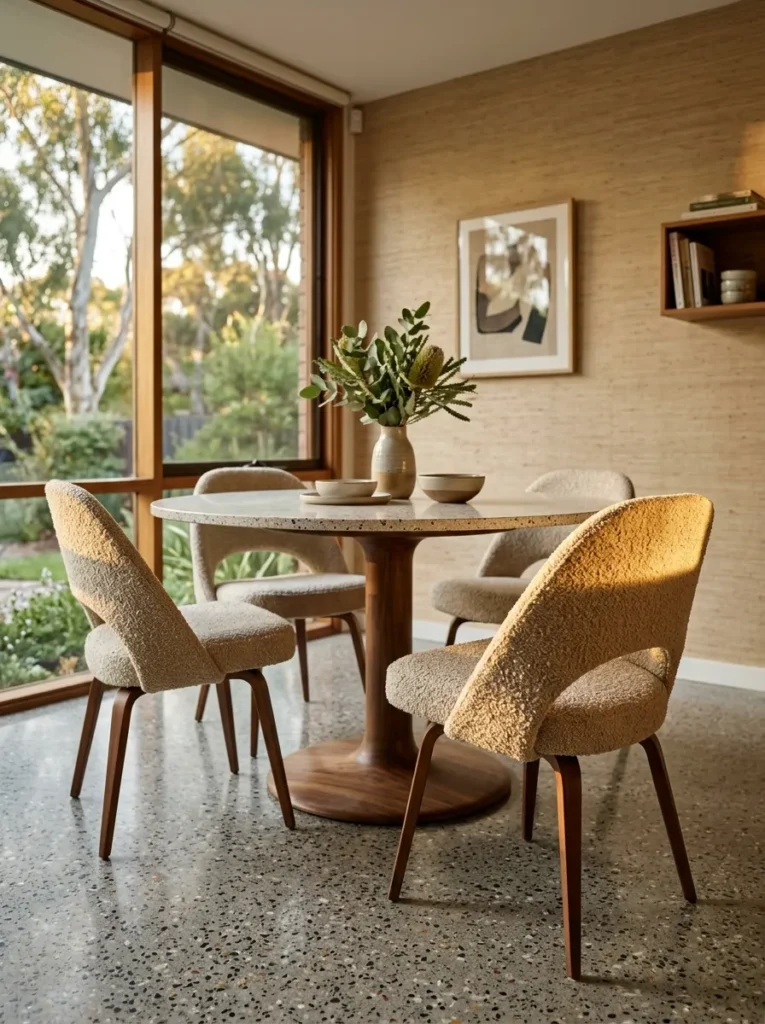
Velvet looks striking in a photo and shows every water mark and crumb in daily use, which matters enormously in a room built around eating. Bouclé and heavy linen upholstery hide minor spills far better and age into a lived-in texture rather than a worn one. This is a practical decision disguised as an aesthetic one, and it’s worth making before you fall for a fabric swatch that won’t survive six months of actual dinners.
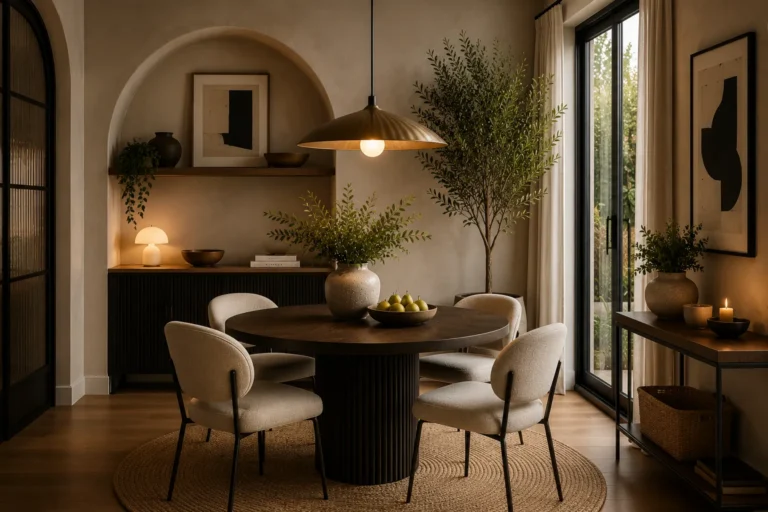
13. Anchor the Table With a Substantial Pedestal Base
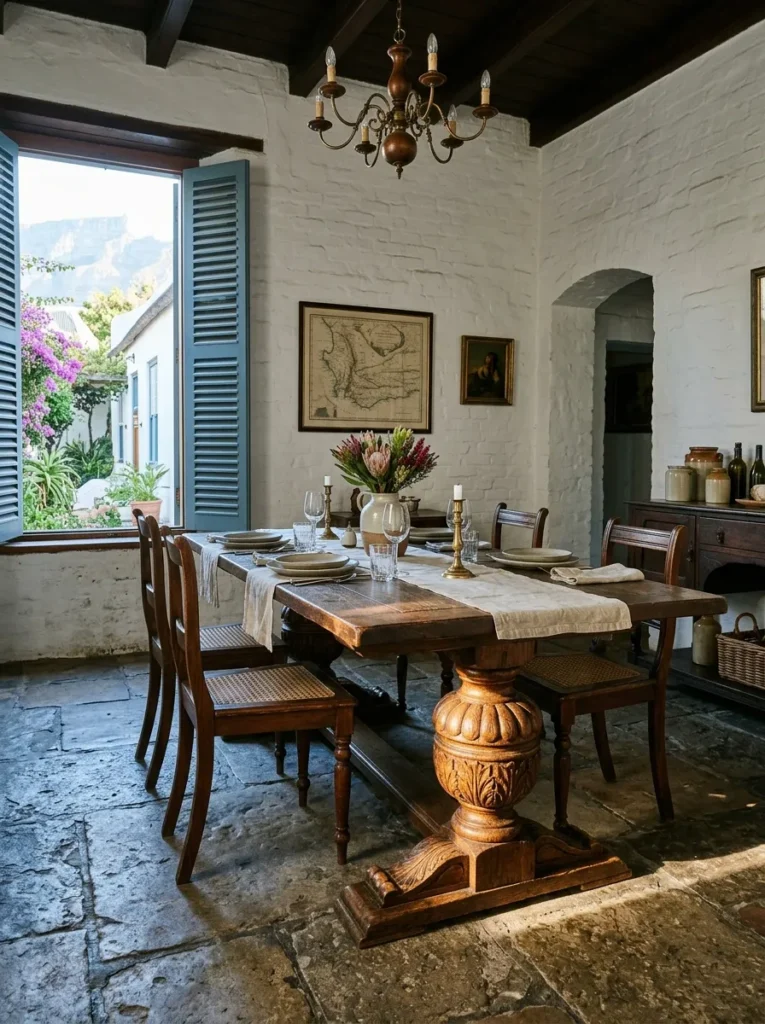
A table with four thin legs can look elegant in isolation and slightly flimsy once surrounded by chairs and place settings. A substantial pedestal base — turned oak, honed stone, or a solid block form — gives the table visual weight that holds its own against a room full of other furniture. This matters more in smaller dining rooms than large ones, where every piece has to justify its footprint.
14. Display Stoneware in a Glass-Front Cabinet
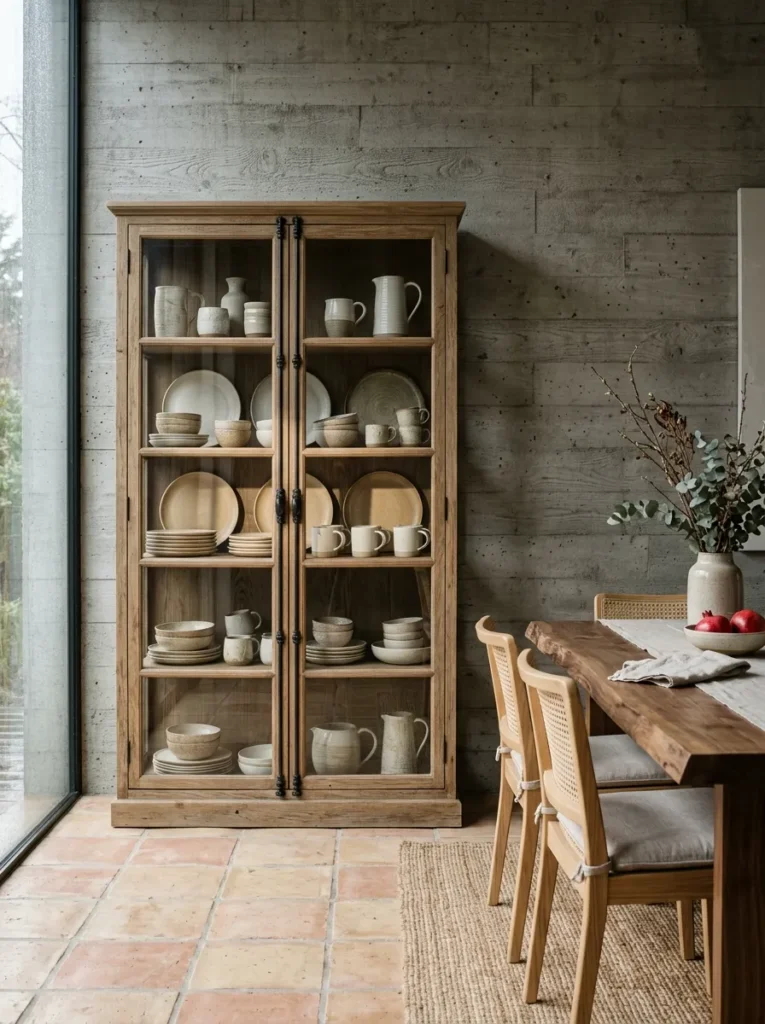
An open hutch or a glass-front cabinet filled with hand-thrown stoneware and simple glassware turns storage into part of the room’s decor instead of something hidden away. Keep the collection tonally consistent — all in cream, sand, or warm white — rather than a mismatched assortment of patterns, which undercuts the calm, elegant dining space this whole list is built around.
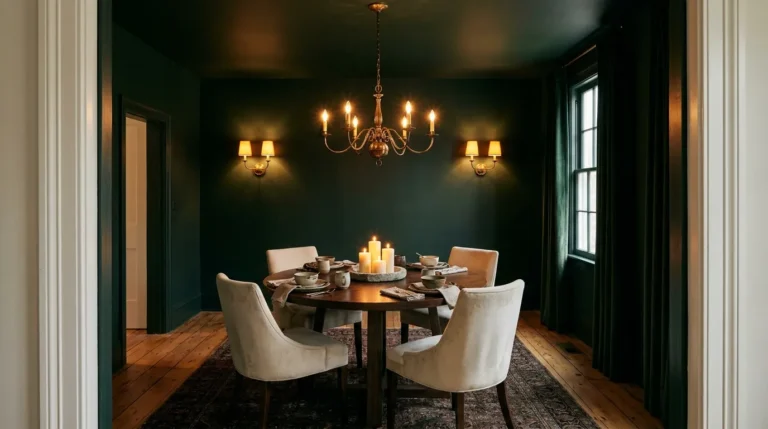
15. Layer Wall Sconces With a Dimmable Overhead Fixture
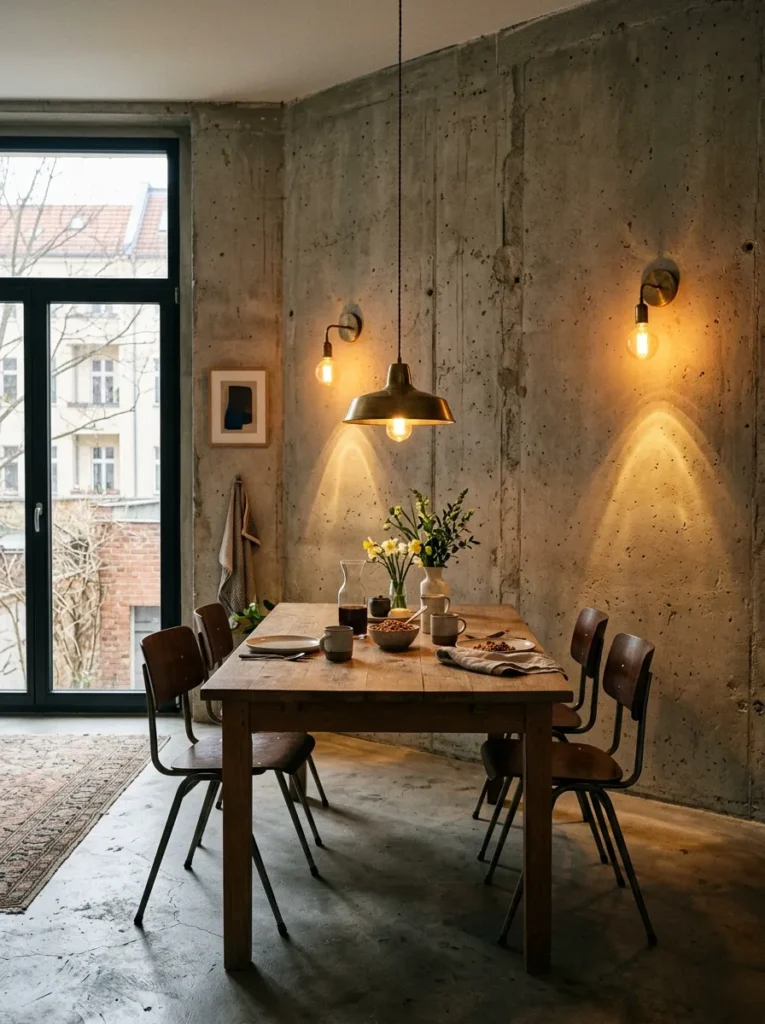
A single ceiling fixture on its own creates one mood and one mood only. Adding a pair of wall sconces at roughly eye level, wired to a separate switch from the dimmable pendant above the table, gives the room the ability to shift from bright and functional during the day to soft and intimate at night. Most dining rooms only get the first version.
16. Swap the Full Tablecloth for a Table Runner on Bare Wood
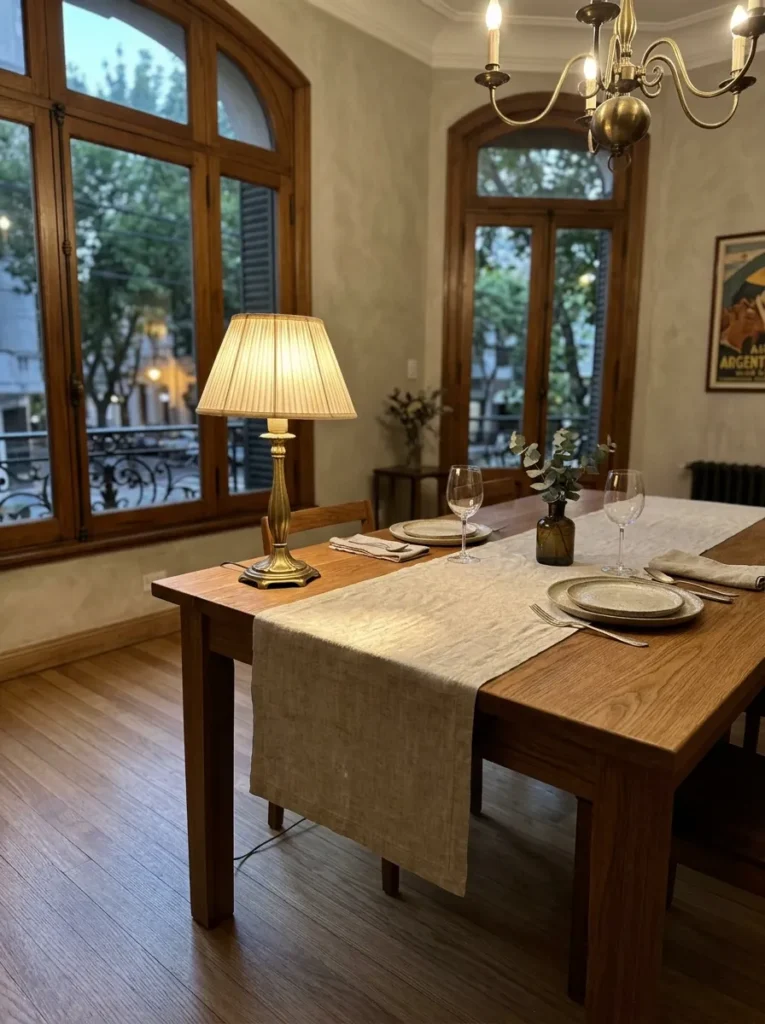
A tablecloth covers the table entirely; a runner down the center leaves the wood grain visible on either side, which reads as more intentional and considerably less formal. This works particularly well with a nicer table you actually want people to see rather than hide under fabric. Use a runner in raw linen or waffle-weave cotton, and let the table do some of the visual work for once.
17. Hang a Mirror to Expand a Small Dining Space
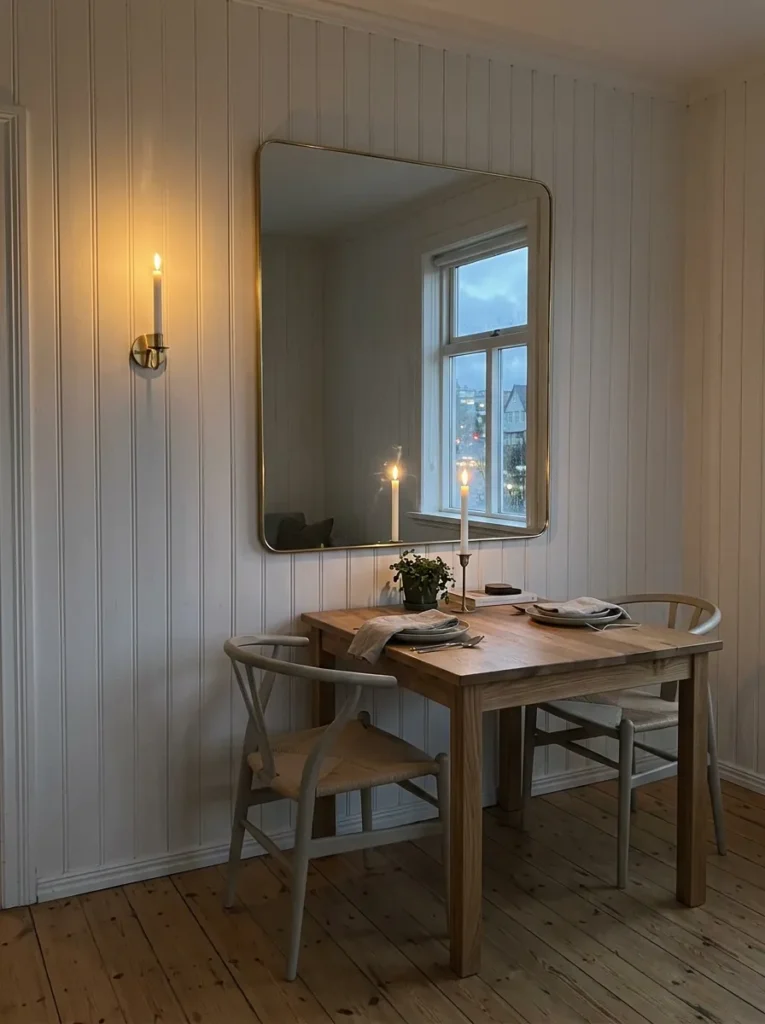
A dining room without much natural light benefits enormously from a large mirror placed to reflect whatever window or light source the room does have. This isn’t a decorative afterthought — it’s one of the fastest ways to make a cramped dining area feel like it has room to breathe. Skip an ornate frame here; a simple, thin-edged mirror keeps the reflection the focus rather than competing with it.
18. Keep Wood Tones Consistent Across Every Piece
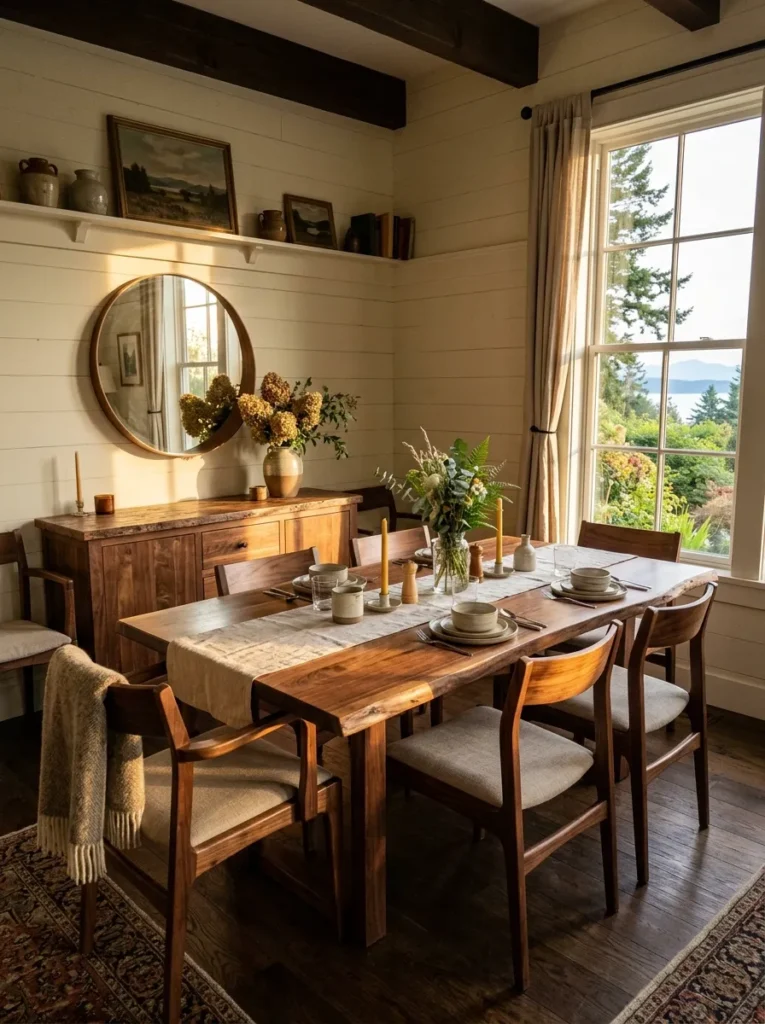
Mixing five different wood tones in one room — a walnut table, an oak sideboard, pine chairs — is one of the most common ways an otherwise thoughtful neutral dining decor scheme falls apart. Pick one dominant wood tone and let every other wood piece in the room echo it, even loosely. This is the sort of detail nobody consciously notices when it’s right and everybody feels when it’s wrong.
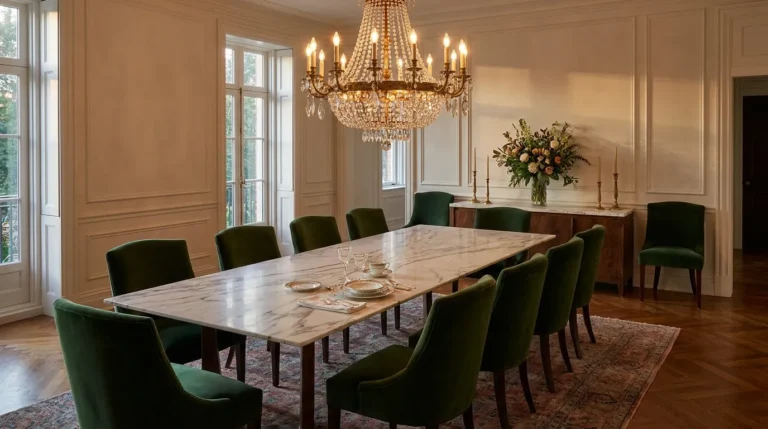
19. Choose a Statement Chandelier Only in Rooms With Height
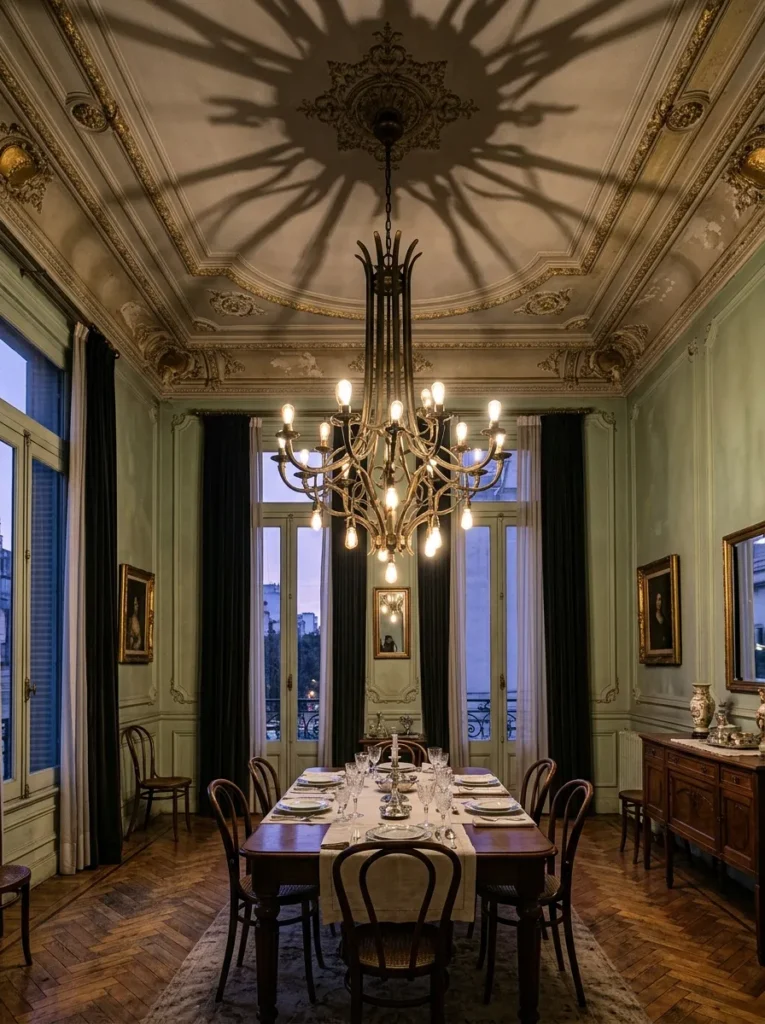
A chandelier that would look stunning in a room with three-and-a-half-metre ceilings can look absurd in a standard eight-foot room. Reserve a statement chandelier — sculptural, oversized, unlacquered metal — for dining rooms with genuine ceiling height, and default to a simpler pendant everywhere else. Scale mismatches like this are one of the fastest ways to undercut an otherwise elegant dining space.
20. Use Bare Branches or a Single Stem Instead of a Full Floral Arrangement
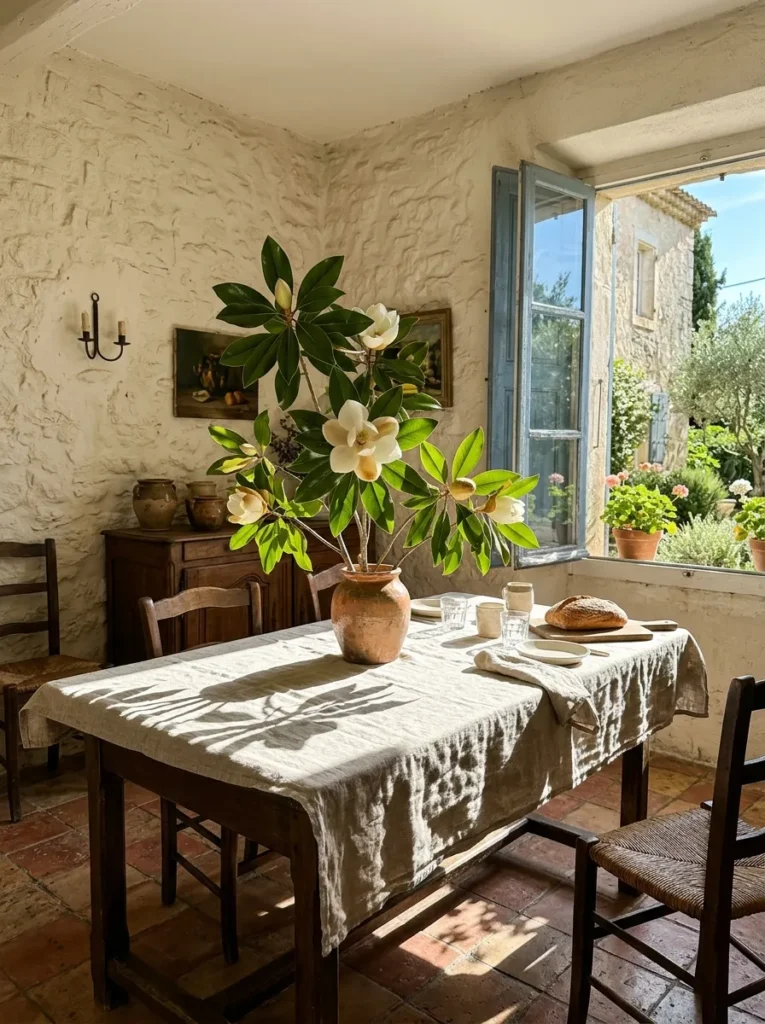
A full floral centerpiece demands constant upkeep and starts looking tired within days. A single oversized branch — magnolia, olive, or eucalyptus — in a plain ceramic vessel holds its shape for weeks and takes up more visual real estate with far less effort. That’s not just practically useful. It also looks more considered than a bouquet ever does.
21. Add a Window Bench for One Side of the Table
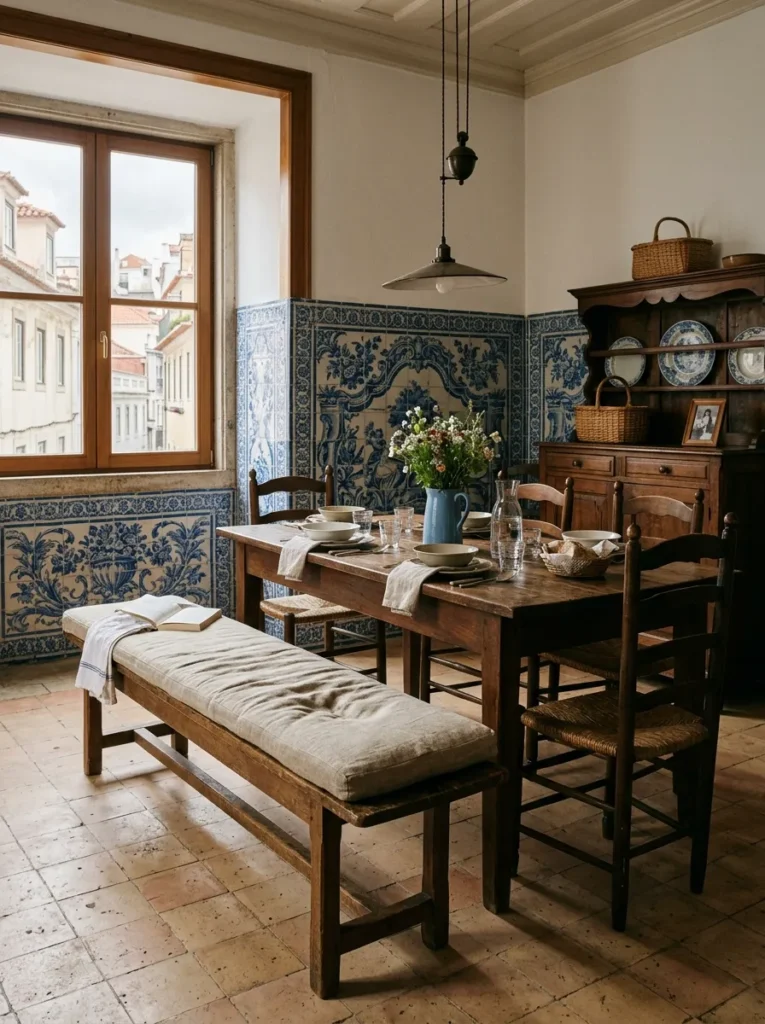
Replacing chairs on one side of the table with a simple upholstered or wood bench changes the entire feel of the room, especially in smaller spaces where chair legs and place settings compete for floor space. A bench also invites a more casual way of sitting down to a meal, which matters if the room otherwise reads as a little too formal to use on a weeknight.
22. Layer Linen, Wood, Stone, and Ceramic in Every Table Setting
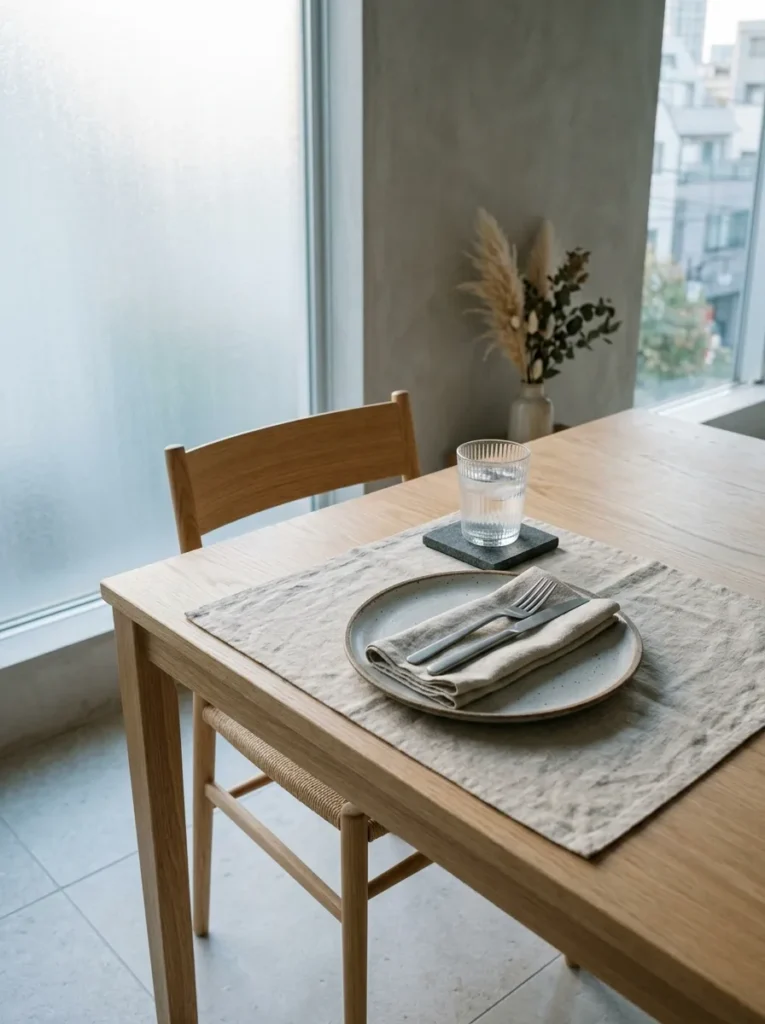
A table set entirely in one material — all ceramic, all glass — looks flat under any lighting condition. Mixing a linen placemat, a stoneware plate, a stone coaster, and a glass tumbler at every seat gives the table the same textural depth the rest of the room is working toward. Most people apply this idea to furniture and completely forget the table itself is part of the room.
23. Choose Woven Rattan or Cane-Back Chairs for Warmth
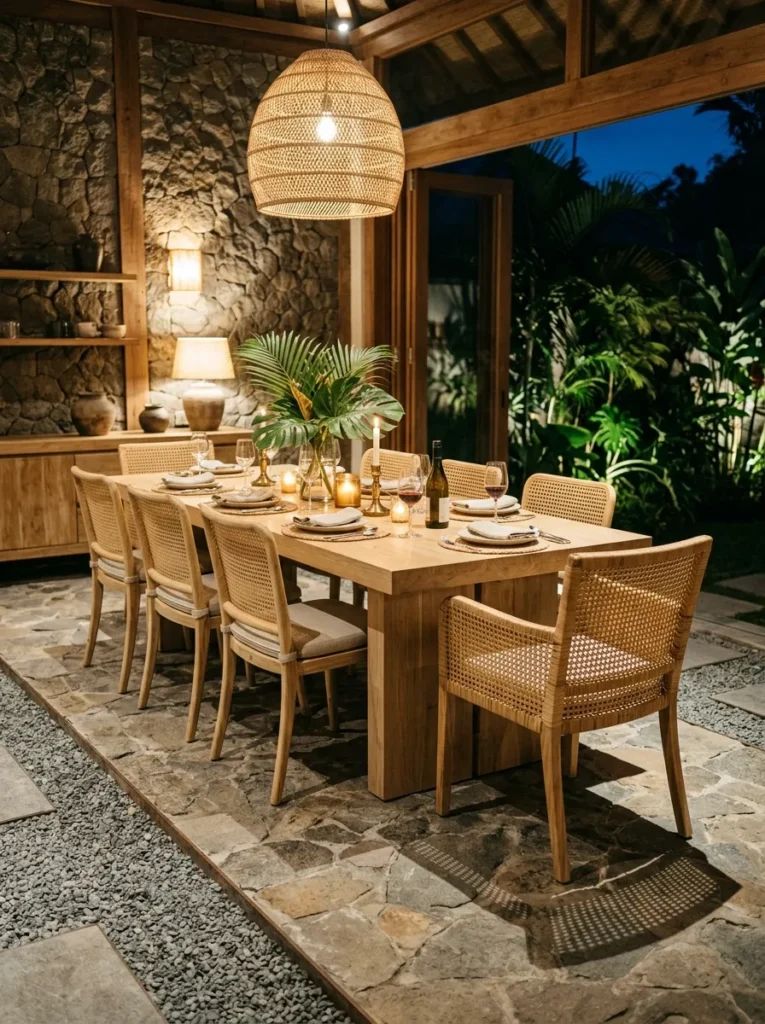
Neutral rooms risk feeling cold when every material is smooth — painted wood, glass, linen. Rattan or cane-back chairs introduce a natural, slightly irregular texture that keeps a calm dining room from tipping into sterile. This is a texture decision as much as a style one, and it’s the reason certain neutral dining room ideas photograph as warm while others photograph as empty.
24. Leave One Chair Deliberately Mismatched
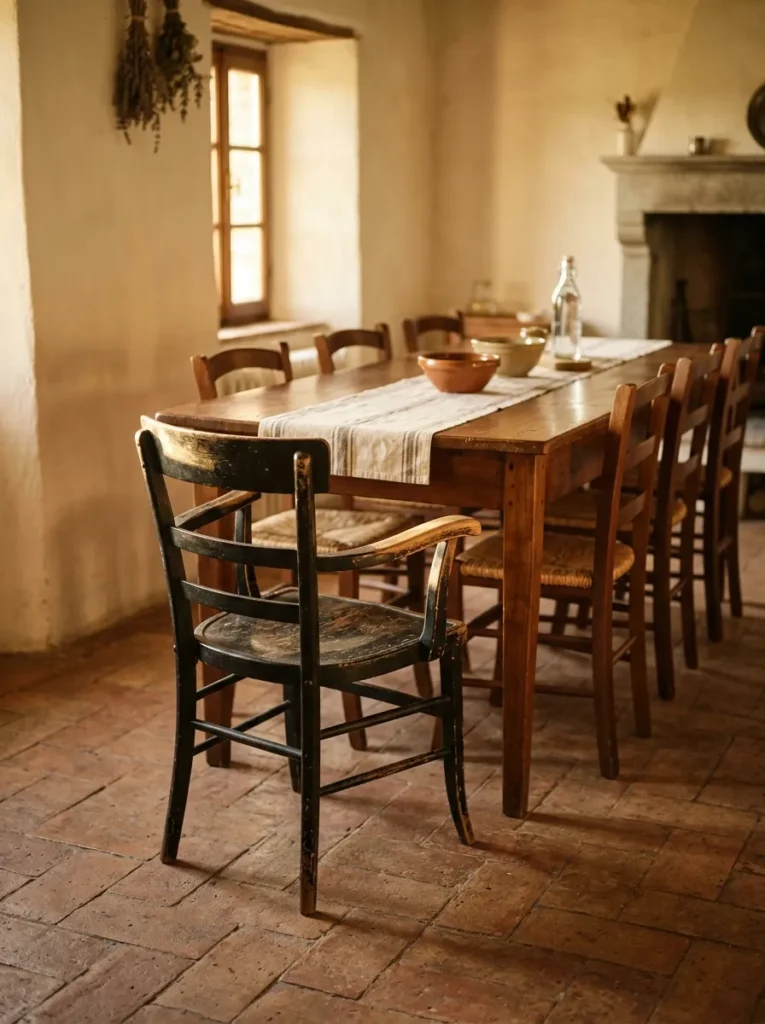
Here’s the one most lists skip entirely: a dining room where every single element matches perfectly stops feeling like a home and starts feeling like a showroom display. A single vintage chair pulled in from somewhere else — a different wood tone, a slightly different silhouette — signals that the room was assembled by someone with actual taste rather than a single catalogue order. Most people spend years trying to achieve perfect coordination. The better move is leaving one seam visible on purpose.
Final Thoughts
Twenty-four ideas is a lot to take in at once, and trying to apply all of them in a single weekend will leave the room feeling overworked instead of calm. Start with the table itself — the linen, the runner, the centerpiece — since those changes cost the least and are the easiest to undo if they don’t work. From there, move to lighting, since pendant height and layered sconces do more for the room’s mood than almost anything else on this list. The best neutral dining room ideas aren’t really about removing color at all; they’re about choosing texture and proportion carefully enough that the room doesn’t need color to feel finished. Get the table right first. The rest of the room tends to follow its lead.
Save these neutral dining room ideas for your next home refresh.