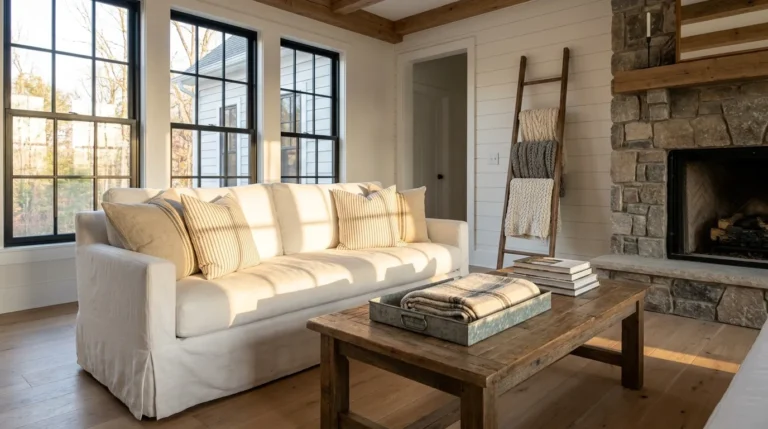
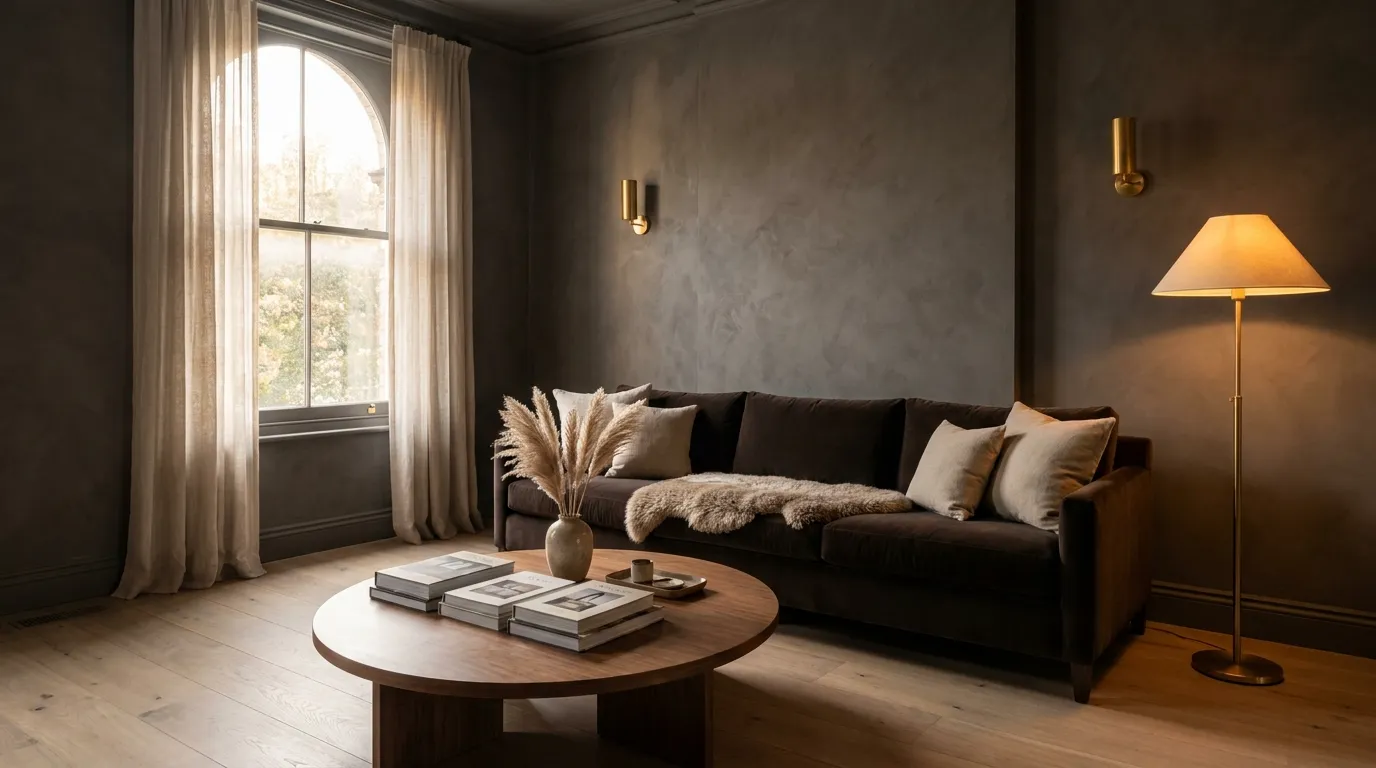
17 Dark Living Room Ideas That Feel Cozy and Dramatic
A dark living room sounds risky until you see it done right — then it’s the room everyone wants to sit in. The fear with dark living room ideas is usually that the space will feel like a cave, but the opposite happens when the undertones, lighting layers, and textures are chosen deliberately. Dark walls absorb light instead of bouncing it around harshly, which is exactly what makes a room feel enveloping and calm rather than cold and sterile the way an all-white room sometimes can.
This roundup gathers 17 distinct approaches to dark living rooms — from charcoal plaster walls to black ceilings to deep emerald built-ins — each suited to a different room shape, light condition, and design style. Every idea explains why the specific shade and material choice works, where it performs best, and how to avoid the heaviness that makes dark rooms feel wrong instead of cozy. Whether you’re working with a small apartment living room or a great room with soaring ceilings, there’s a version of dark and dramatic here that will actually function for daily life. Save the ones that match your space.
1. Charcoal Plaster Walls for Soft, Textured Depth
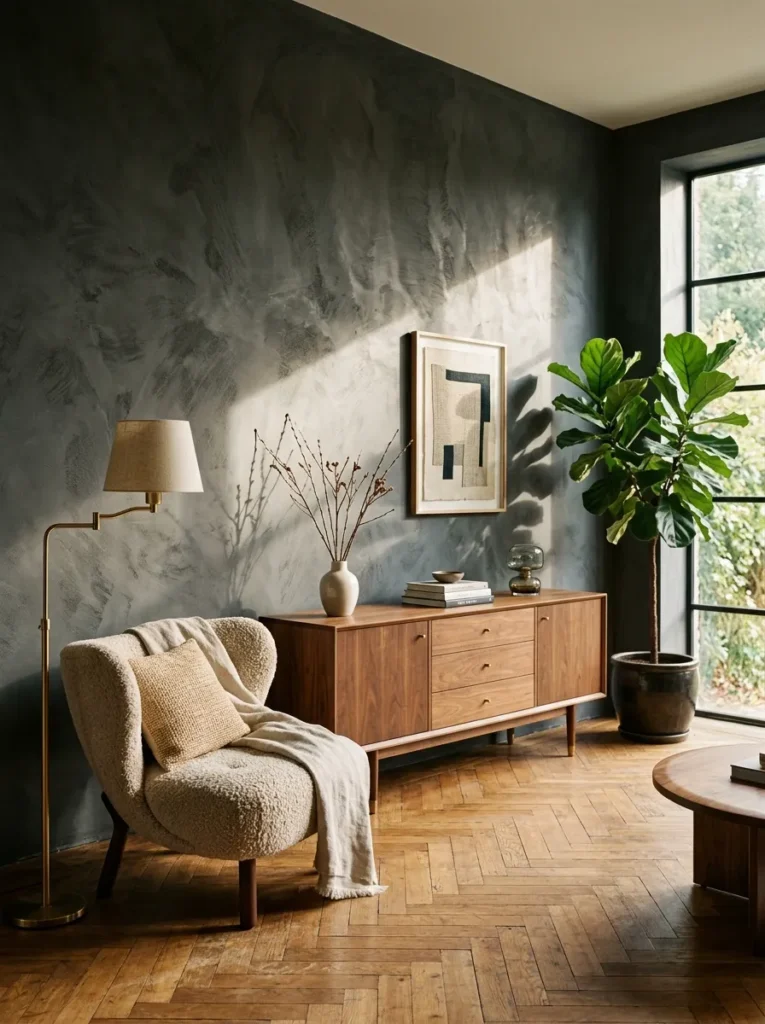
Limewash or microcement plaster in charcoal gray creates color depth that flat paint can’t achieve, since the slightly uneven texture catches and scatters light instead of reflecting it in one hard plane. This matters enormously in dark rooms, because flat dark paint can look like a void under artificial light at night, while textured plaster keeps reading as a surface with dimension. Best suited to rooms with at least one good light source, since the texture needs some light variation to actually show. Pair with warm wood tones to keep the room from skewing cold.
2. Black Ceilings to Add Drama Without Shrinking the Room
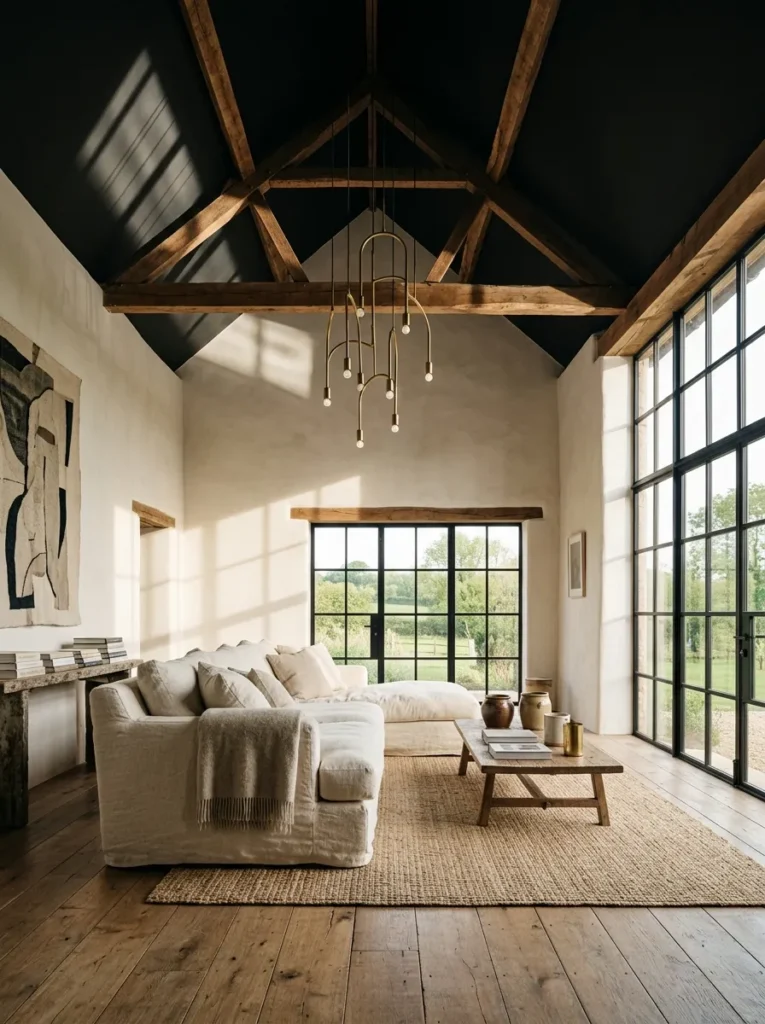
Painting the ceiling black seems like it would lower a room visually, but in spaces with crown molding, beams, or any architectural detail, a black ceiling actually draws the eye up and makes the detail more visible than white paint does. This works best in rooms with ceilings at least 9 feet high, where the dark plane reads as intentional drama rather than a low, pressing weight. Keep walls a shade or two lighter than the ceiling so the room doesn’t read as a single dark box, and rely on layered lamp lighting since overhead fixtures alone will feel flat against the dark plane.
3. Deep Emerald Built-In Shelving as a Color Anchor
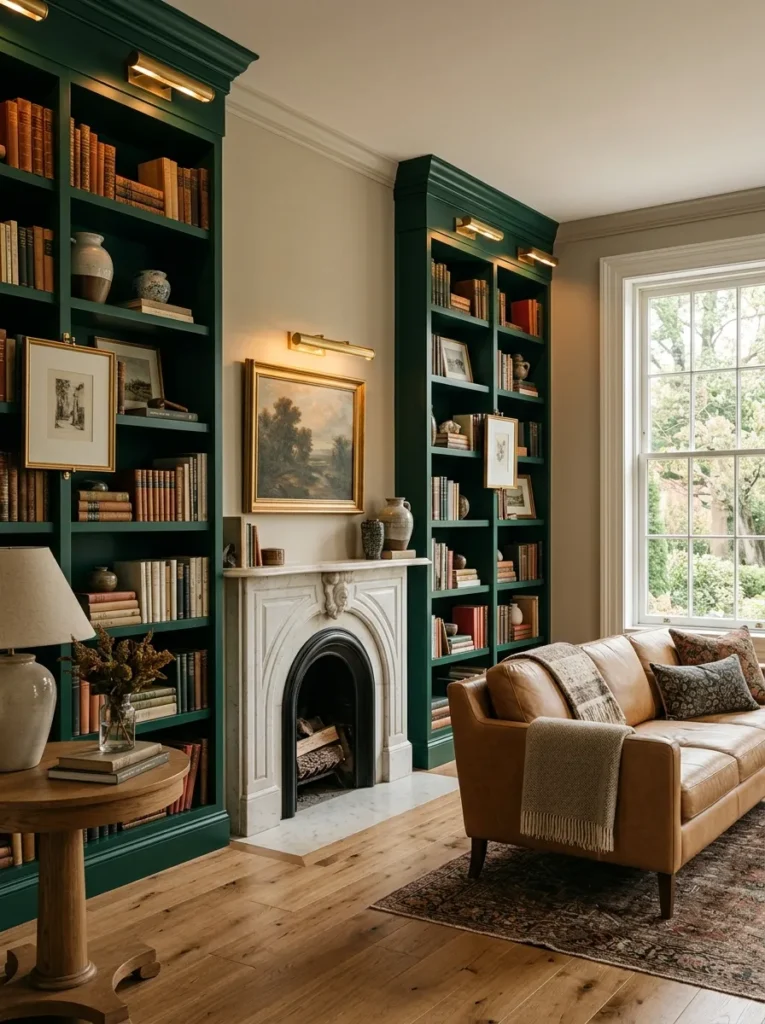
Painting built-in shelving or a media wall in deep emerald, rather than the entire room, gives you the drama of a dark living room idea without committing every wall to the same intensity. This approach works particularly well in living rooms that need to stay multipurpose — family rooms, open-concept spaces — where an all-dark scheme might feel too formal for daily use. The emerald reads as a focal point the eye keeps returning to, especially when styled with brass hardware and warm-toned book spines instead of white accessories that would compete with it.
4. Velvet Sofas in Ink Navy or Espresso Brown
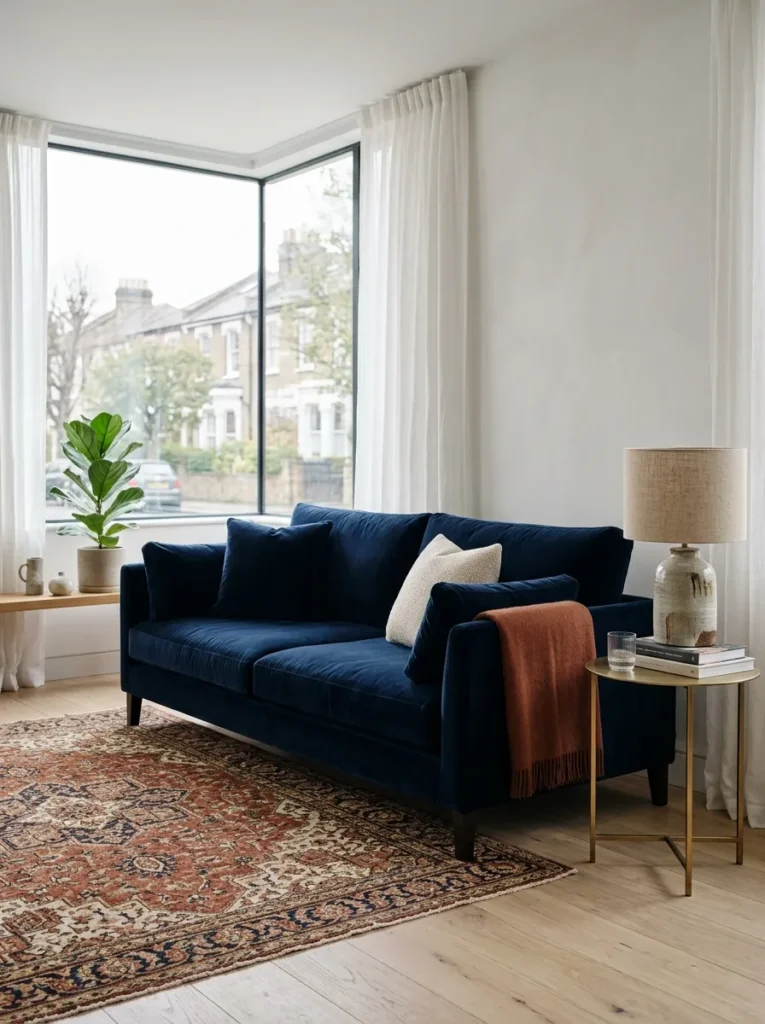
A velvet sofa in a deep, saturated color does double duty in a dark living room: the fabric’s nap catches light differently depending on the angle, which adds visual movement to a room that might otherwise feel static, and the color grounds the seating area as the room’s primary mass. Ink navy works in rooms with cooler-toned wood and metal finishes, while espresso brown suits rooms with warmer oak and brass. Avoid pairing a dark velvet sofa with an equally dark rug, since the floor needs enough contrast to keep the sofa from visually disappearing into the space.
5. Moody Living Rooms Anchored by a Stone Fireplace
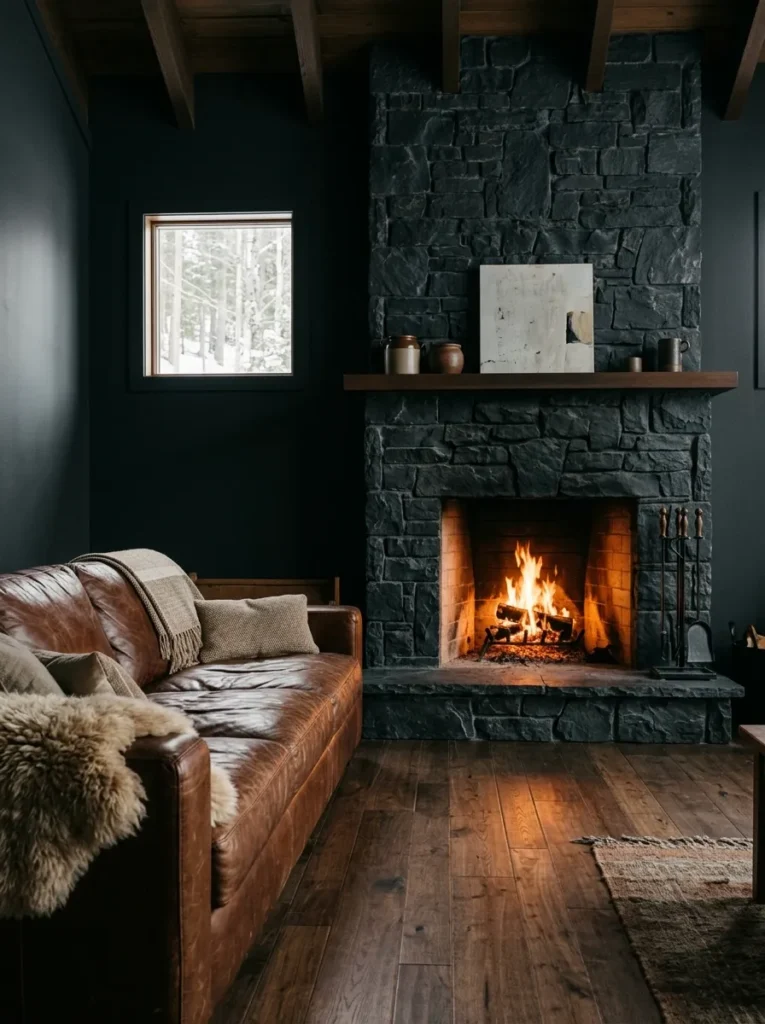
A dark living room built around a natural stone fireplace — slate, soapstone, or dark basalt — uses the fireplace’s existing material darkness as the starting point rather than fighting it with light paint around it. This is the right approach for living rooms where the fireplace is already the architectural focal point, since matching the wall tone to the stone rather than contrasting against it makes the whole room feel unified instead of split between “fireplace zone” and “everything else.” Add brass fireplace tools and a sheepskin throw to keep the stone from reading as cold.
6. Small Dark Living Rooms Using a Single Saturated Wall
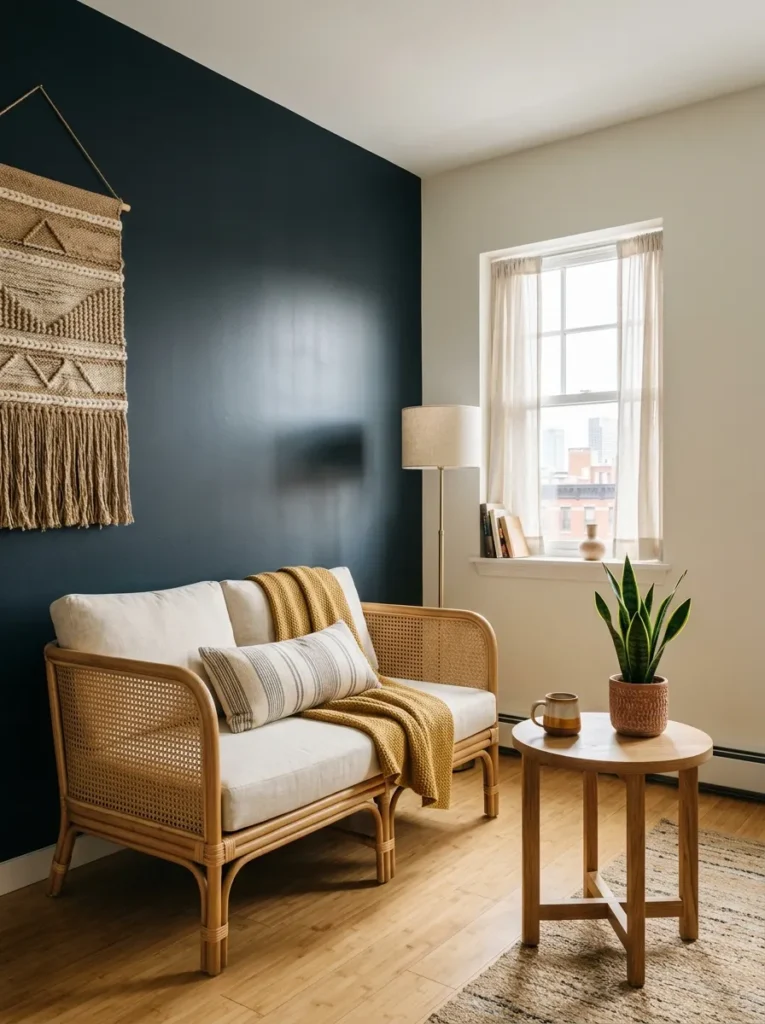
In smaller living rooms, painting just one wall in a deep color — rather than the full room — delivers drama without the risk of the space feeling closed-in, which is the most common worry with small-room dark paint. This works best when the saturated wall is the one with the least natural light, since dark paint absorbs light that’s already scarce on a dim wall but won’t be missed the way it would on a bright one. Keep the remaining walls in warm white or soft greige so the room maintains an exit point for the eye.
7. Dark Wood Paneling for Traditional Warmth
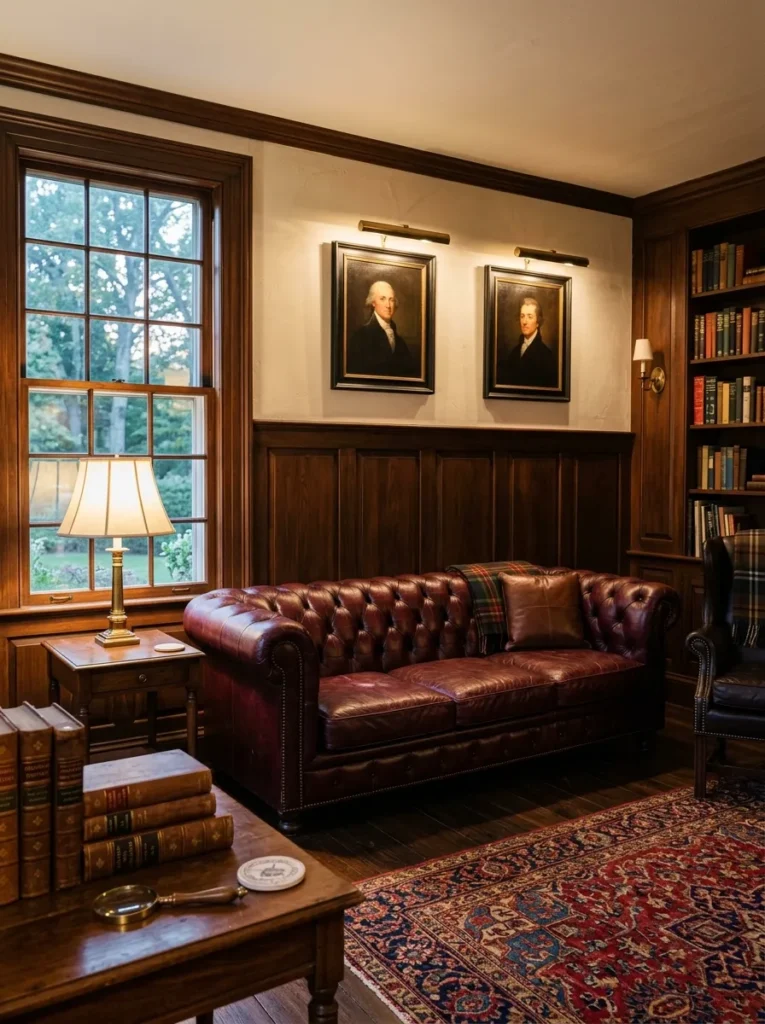
Tongue-and-groove or board-and-batten paneling stained in a deep walnut or espresso tone brings a dark living room idea that reads as classic rather than trendy, which matters if you want the room to age well over a decade rather than feeling tied to a specific design moment. This treatment works especially well in older homes with existing millwork or a library-style room, where the paneling can run partway up the wall with a lighter painted section above to keep the room from feeling like a windowless den.
8. Matte Black Accent Furniture Against Warm Neutral Walls
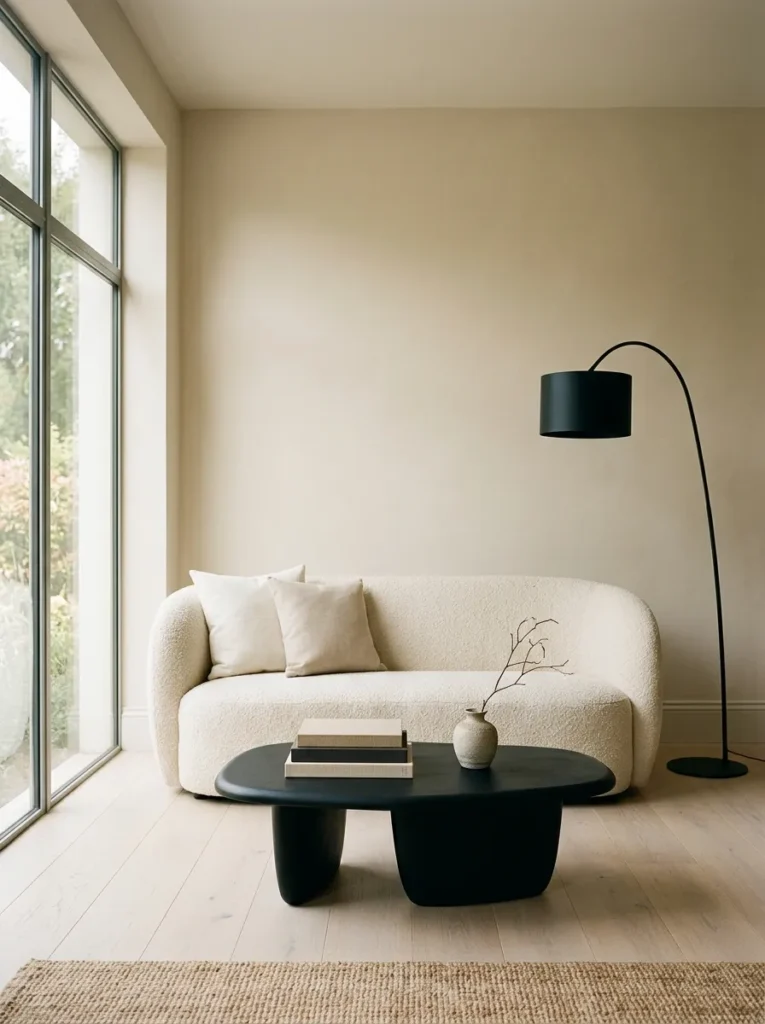
Rather than darkening the whole room, choosing a few pieces in matte black — a coffee table, console, or set of floor lamps — against walls in warm oatmeal or greige delivers a dark living room’s visual weight in concentrated doses. This is the most forgiving entry point for anyone hesitant about committing to full dark walls, since the black furniture can be swapped out later without repainting. Matte finishes matter here specifically, since glossy black furniture reflects light unpredictably and can look plasticky rather than rich.
9. Dark Living Rooms with a Skylight or Light Well
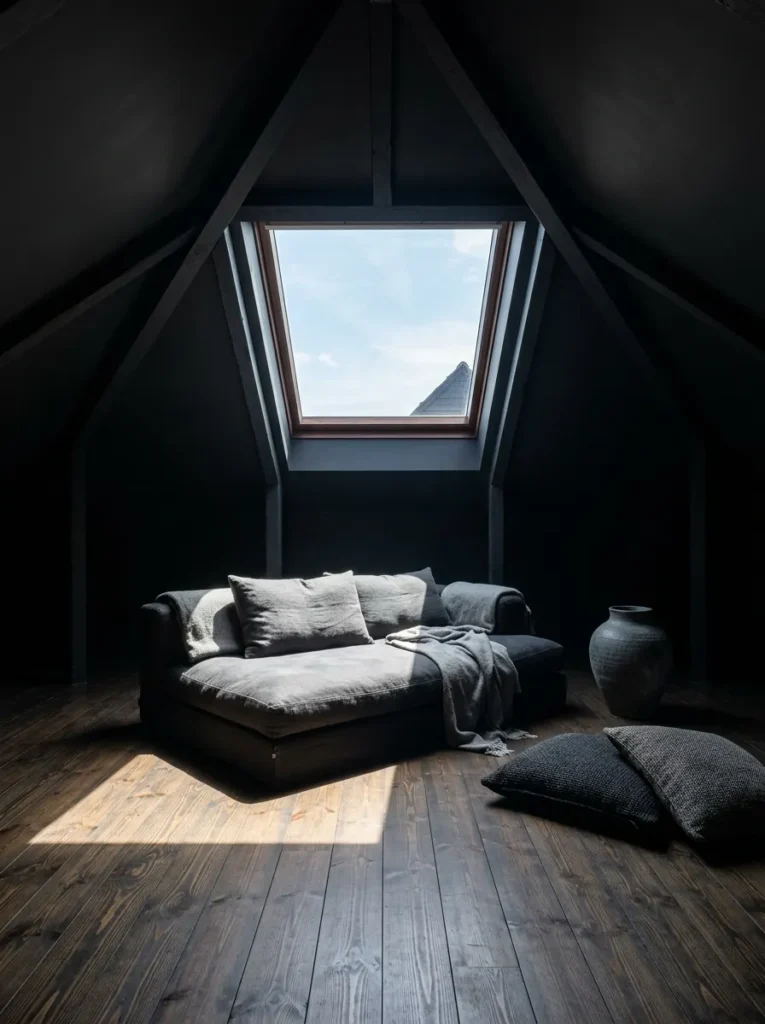
A dark color scheme works counterintuitively well in rooms with a skylight or light well, since the overhead natural light source eliminates the “cave” concern that holds most people back from dark walls in rooms with only side windows. This pairing lets you go as deep as true black on the walls, because the daylight falling from above creates natural highlight and shadow variation throughout the day that a side-lit dark room can’t replicate. Best suited to converted attic living rooms, lofts, or additions where a skylight was already part of the build.
10. Layered Brass and Warm Bulb Lighting for Evening Ambiance
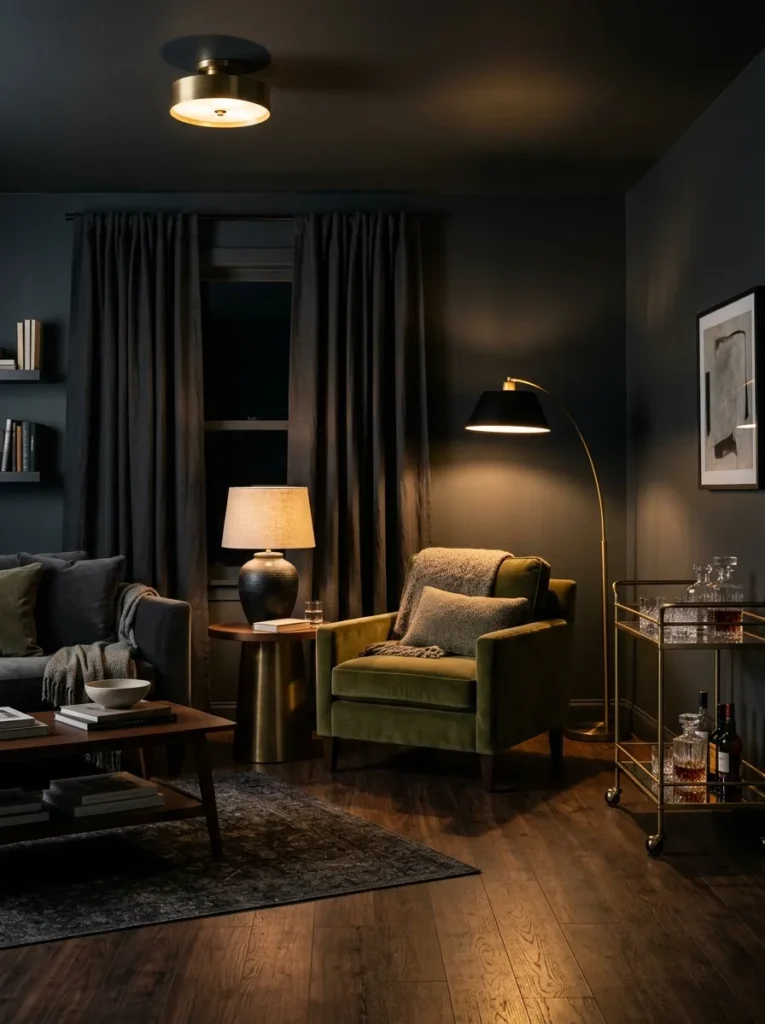
Dark living rooms live or die by their lighting plan, and the rooms that feel cozy rather than dim are the ones using at least three light sources at different heights — a floor lamp, a table lamp, and an overhead fixture — all in warm 2700K bulb temperature rather than cool white. Brass or aged-bronze fixtures specifically reflect warm light back into the room in a way chrome or black fixtures don’t, adding a secondary glow layer. This idea isn’t about a single furniture piece but a lighting strategy that should underlie every dark room on this list.
11. Dark Living Rooms with a Light Stone or Marble Fireplace Surround
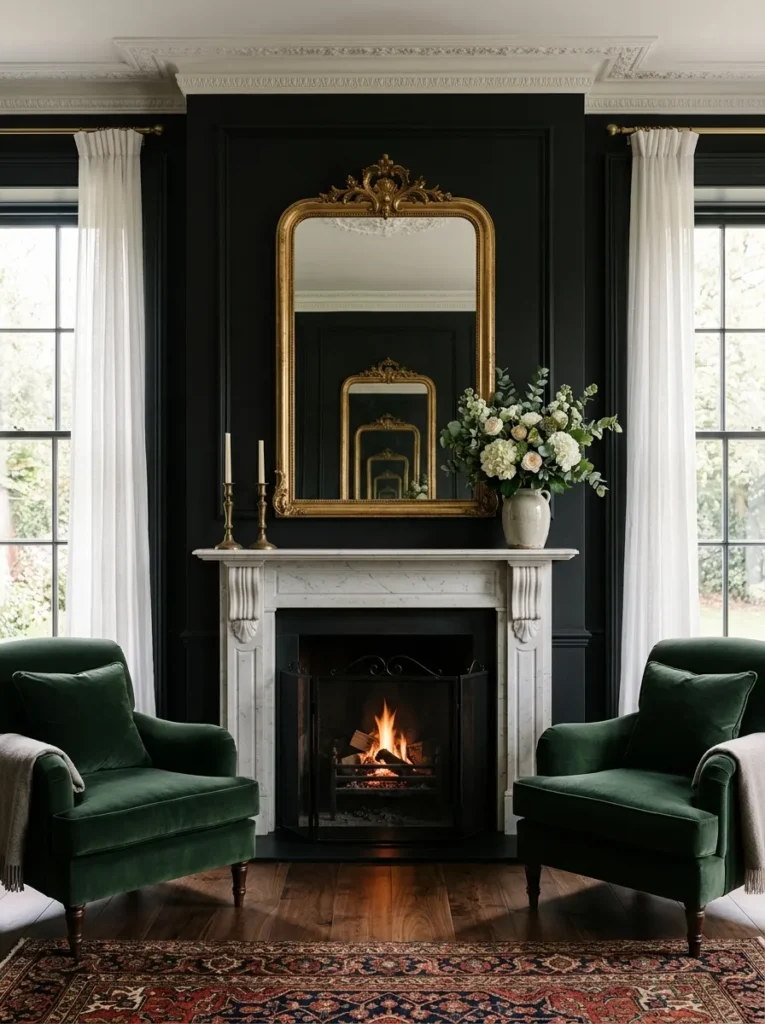
Where idea five matches dark walls to a dark stone fireplace, this approach does the reverse: keeping a light marble or limestone surround as the one bright element against deep charcoal or black walls. The contrast makes the fireplace the undisputed focal point of the room, since the eye is drawn to the brightest object in a predominantly dark field. This works best in living rooms with formal architectural details like a mantel or overmantel mirror, where the light stone echoes other light elements like trim or ceiling medallions.
12. Moody Library-Style Living Rooms with Floor-to-Ceiling Bookshelves
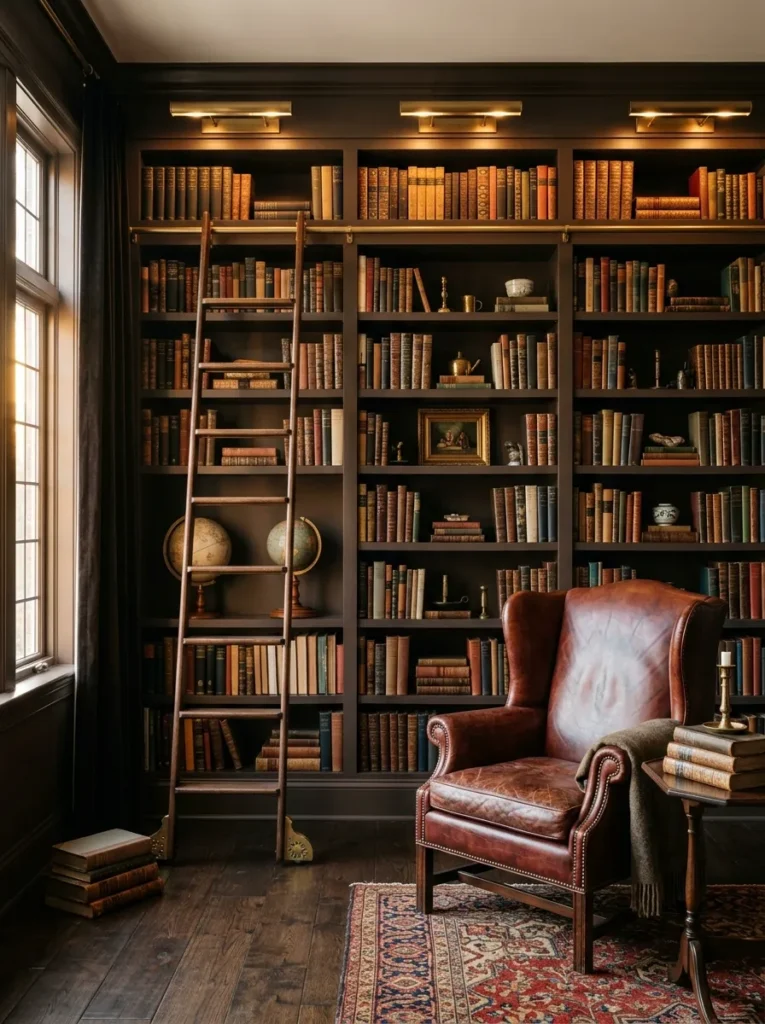
Floor-to-ceiling bookshelves painted to match dark walls create a cocooned, library-like feel that works particularly well in living rooms used primarily for reading, conversation, or evening relaxation rather than bright daytime activity. The trick to making this feel intentional rather than overwhelming is varying the shelf styling — some shelves dense with books, others nearly empty with a single object — so the eye has visual rest points within the dark expanse. This idea suits rooms with at least one full uninterrupted wall and good task lighting built into the shelving itself.
13. Dark Living Rooms with a Pale Boucle or Linen Sectional
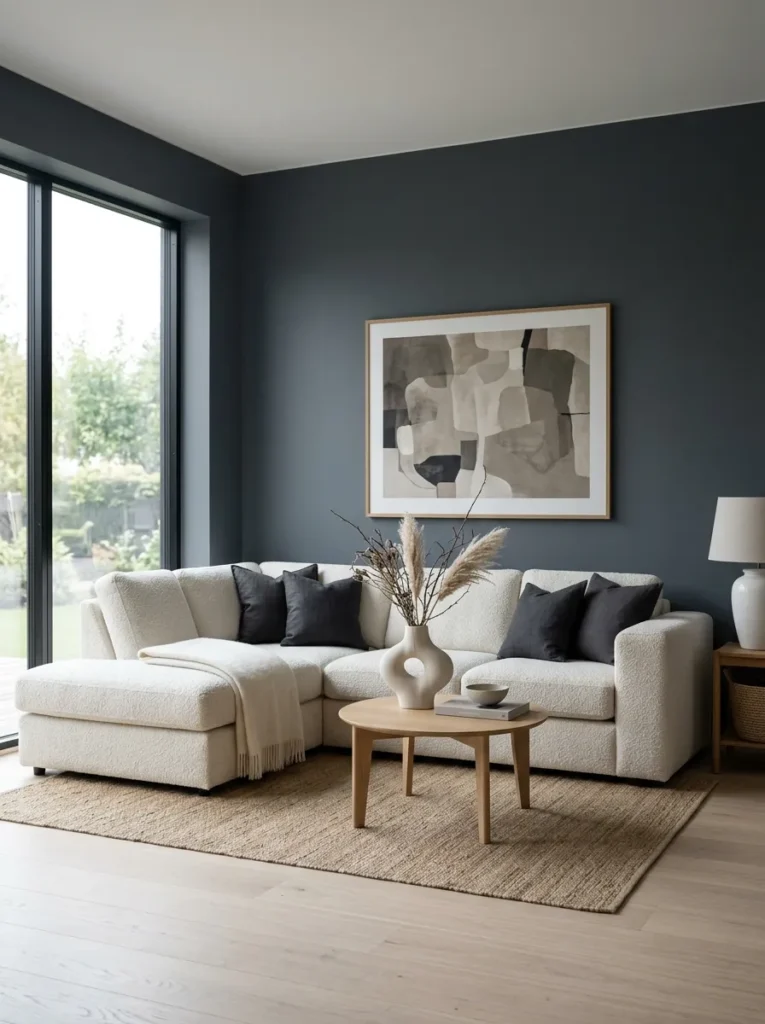
Contrasting a dark wall color with a pale, texture-rich sectional in boucle or heavy linen keeps a dark living room from feeling like a single dense block of color, since the seating becomes a soft, light counterpoint within the room. This pairing works especially well in contemporary or Scandinavian-influenced spaces where the goal is moody walls without a fully traditional or masculine feel. Add a few dark accent pillows in the same family as the wall color so the contrast doesn’t feel disconnected from the rest of the palette.
14. Dark Living Rooms Built Around a Statement Rug
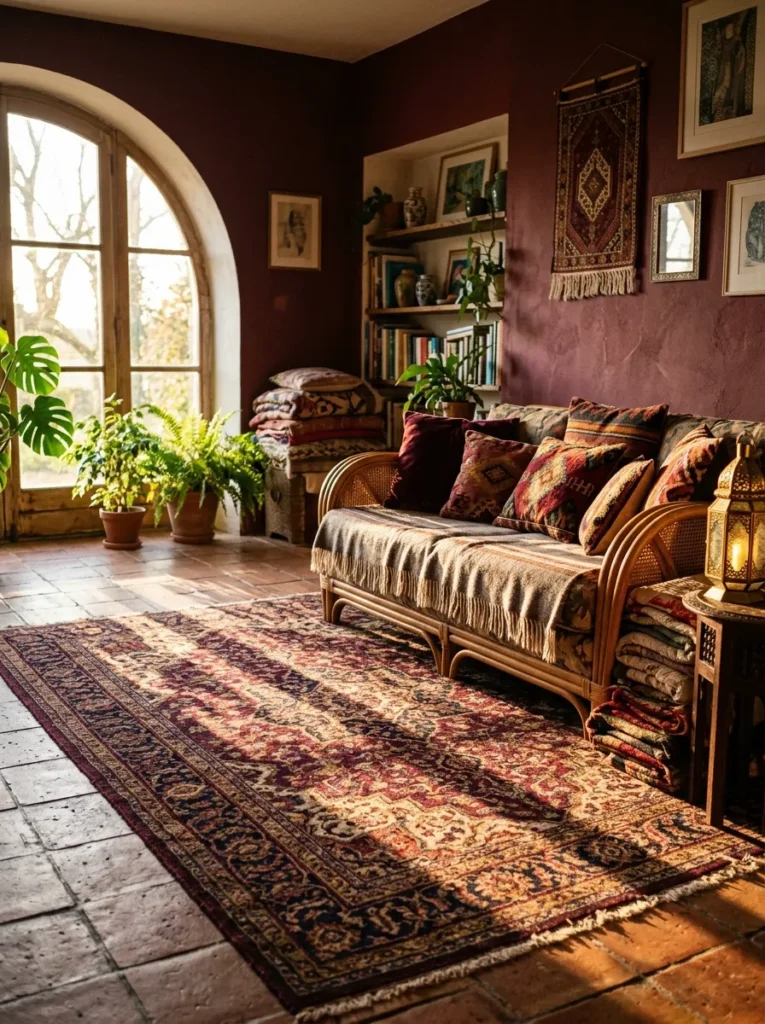
Rather than starting with wall color, this approach starts with a richly patterned or deeply colored rug — Persian, Moroccan, or a solid deep jewel tone — and pulls the wall color from within it. This is the right method for living rooms where you already own or love a specific rug, since matching wall darkness to a color already present in the rug guarantees the room reads as cohesive rather than assembled from unrelated dark pieces. Vintage and antique rugs in particular tend to have the slightly faded, complex color depth that flat-painted dark walls can otherwise lack on their own.
15. Dark Living Rooms with Warm Metallic and Glass Accents
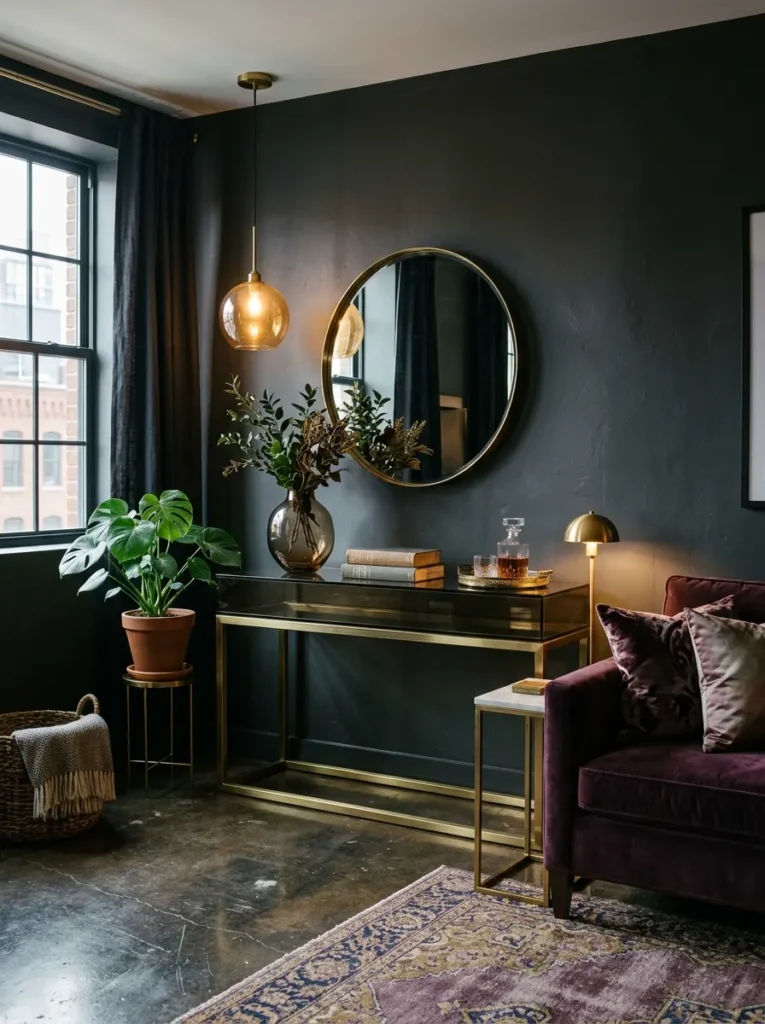
Mixing in aged brass, warm bronze, and amber or smoked glass — in a console, mirror frame, or side table — keeps a dark room from feeling matte and heavy throughout, since reflective surfaces catch and bounce the room’s lamp light in small glints. This works in any dark living room style but matters most in rooms without much natural light, where the metallic accents do the job daylight would otherwise do in adding visual sparkle and movement. Avoid mixing too many metal tones at once; pick one warm metal family and repeat it across three or four pieces.
16. Open-Concept Dark Living Rooms Using a Defined Color Boundary
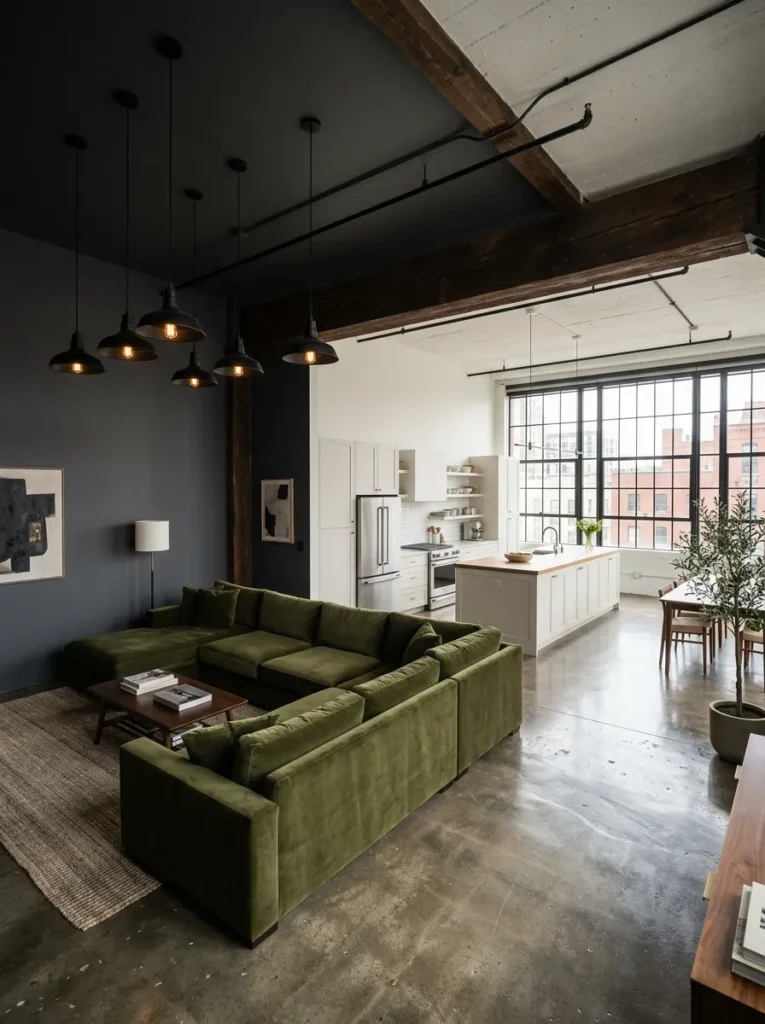
In open-concept homes, committing only the living room portion to a dark palette — while the kitchen or dining area stays lighter — requires a clear architectural boundary like a half-wall, ceiling beam, or flooring change to keep the transition from looking unfinished. This approach lets you have a dramatic, cozy seating zone without darkening an entire great room, which can otherwise feel oppressive at the scale of an open floor plan. Use the same dark tone on any visible structural element at the boundary, like a beam or column, to tie the zones together intentionally.
17. Dark Living Rooms with Warm Terracotta or Rust Undertones
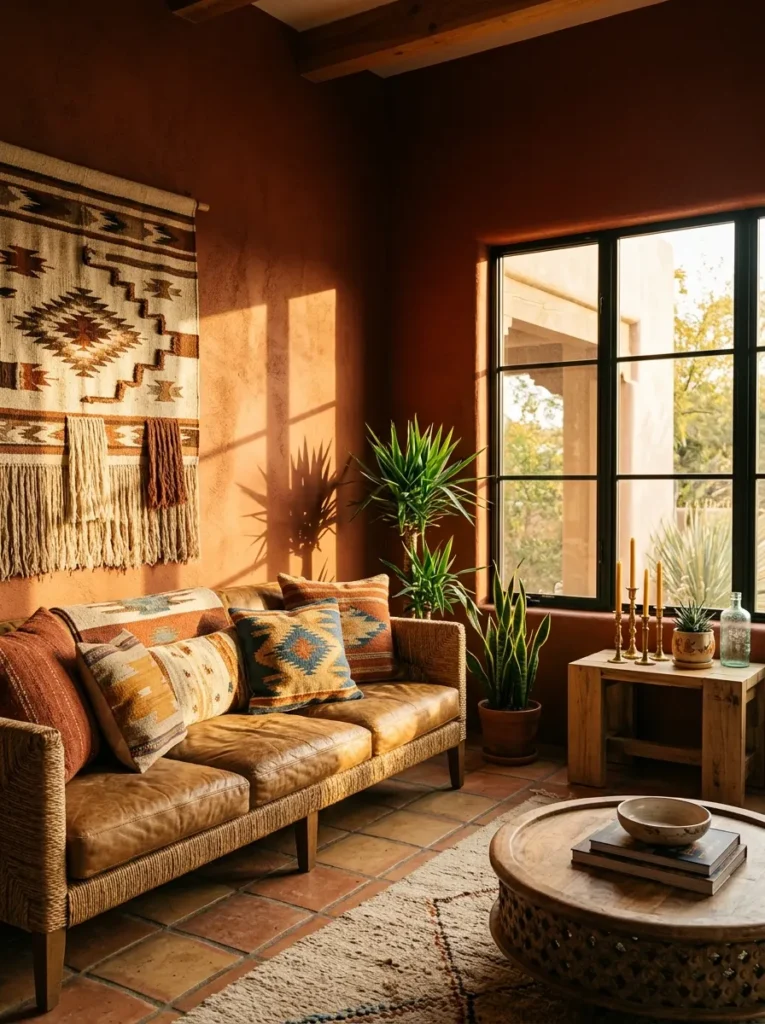
Rather than charcoal, navy, or black, choosing a deep terracotta or burnt rust as the dark anchor color delivers the same cozy drama with a warmer, earthier feel suited to Southwestern, Mediterranean, or bohemian-leaning interiors. This undertone choice matters most in rooms that get warm afternoon light, since terracotta intensifies beautifully under golden-hour sun in a way cooler darks can look muddy under the same light. Pair with woven textiles, aged leather, and unlacquered brass for a room that feels sun-warmed even after dark.
Final Thoughts on Dark Living Room Ideas That Feel Cozy, Not Cramped
The best dark living room ideas all share one thing in common: the darkness is deliberate, layered, and paired with enough warmth, texture, or contrast to keep the room from tipping into gloom. Whether you start with a stone fireplace, a single saturated wall, or a beloved rug and build the palette outward from there, a dark living room rewards a little planning with a space that feels genuinely cozy and dramatic rather than simply dim. Pick the approach that matches your room’s natural light and architecture, and let the rest of the palette follow from there.
Save this dark living room ideas guide to Pinterest so you have it ready when you’re planning your next room refresh.