17 Blue Bedroom Ideas That Feel Calm and Sophisticated
Blue earns its place as the most enduringly popular bedroom color for a reason that has nothing to do with trends: it’s the one color most consistently associated with rest, slower breathing, and a mind that’s ready to switch off. These 17 blue bedroom ideas go beyond “paint the walls blue” advice, focusing instead on which shade, which material, and which layering technique actually create that calm without tipping into cold or sterile.
Each idea explains exactly what it is, why that particular shade or application works the way it does, and how to bring it into your own room without redoing the entire space. Some ideas are structural, like a painted ceiling or a built-in window seat. Others are as simple as swapping a duvet for a deeper tone or adding a single brass accent to warm up a cool wall. Whether you want a moody, enveloping bedroom or a soft, airy one, you’ll find a version of blue here that fits the mood you’re actually after.
1. Deep Navy Walls: A Bold Blue Bedroom Idea Worth Committing To
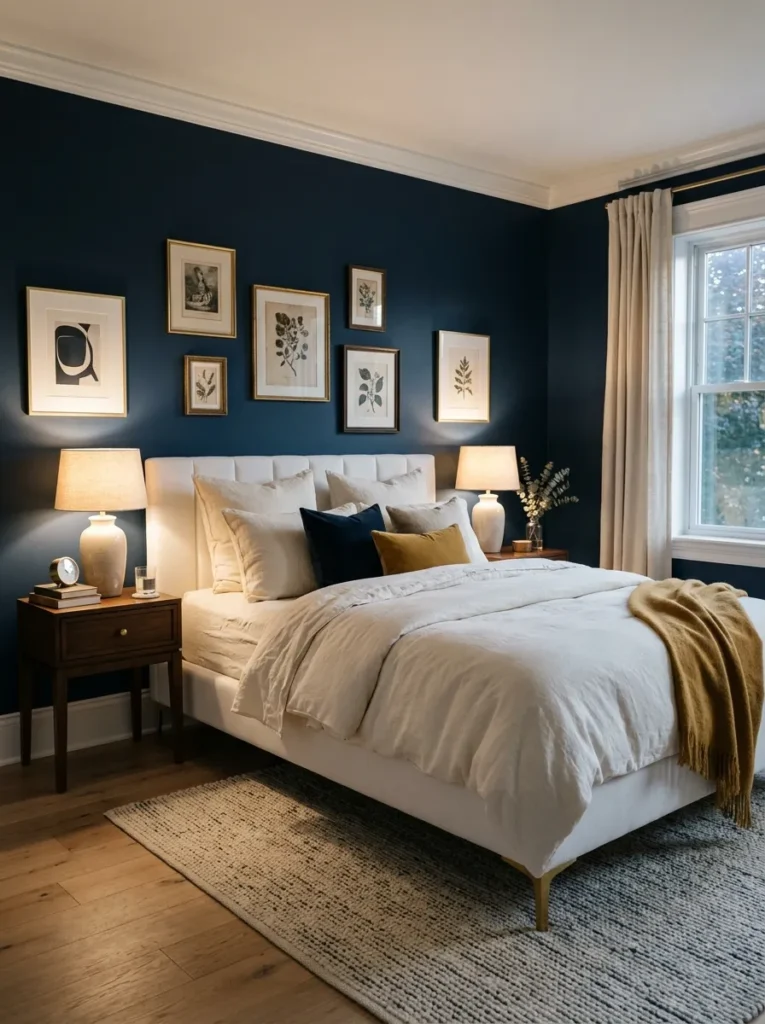
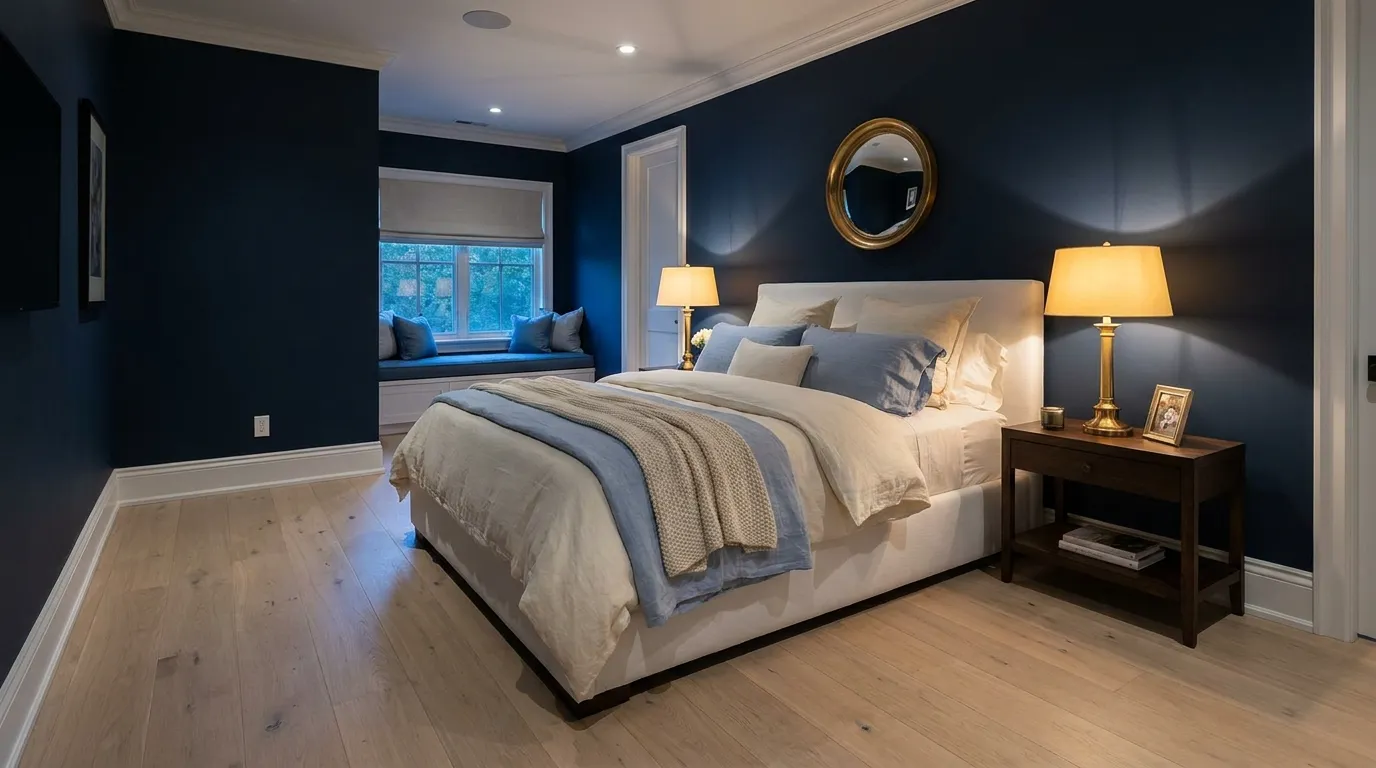
Navy walls give a bedroom a kind of enveloping calm that lighter blues can’t quite achieve, since the depth of the color absorbs light rather than bouncing it around the room the way pale tones do. The contrast matters as much as the navy itself here — keep trim, ceiling, and any millwork in a bright white, since that crispness is what stops the room from feeling heavy or cave-like. This idea works best in bedrooms that get reasonably good natural light during the day, since a north-facing room with minimal daylight can make a fully navy room feel darker than intended once evening falls.
2. Soft Dusty Blue Walls Paired with Warm Wood Tones
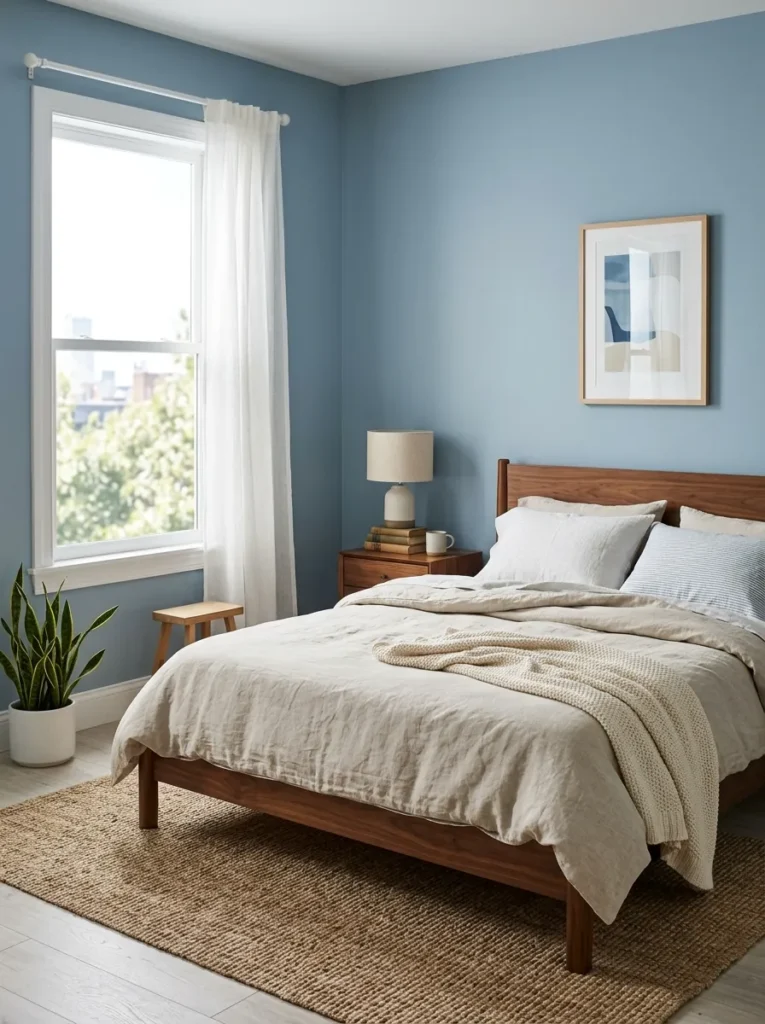
A dustier, grayed-down blue avoids the coolness that can make brighter blues feel sterile, and pairing it with warm wood tones — walnut, oak, or honey-toned pine — keeps the whole room from leaning cold. This combination works particularly well in bedrooms with limited natural light, since the warmth in the wood compensates for blue’s tendency to read flat under overcast or artificial lighting. Choose furniture with visible wood grain rather than a painted or lacquered finish, since the texture is doing real work here to balance the smoothness of a painted wall.
3. Blue and White Chinoiserie or Toile Wallpaper
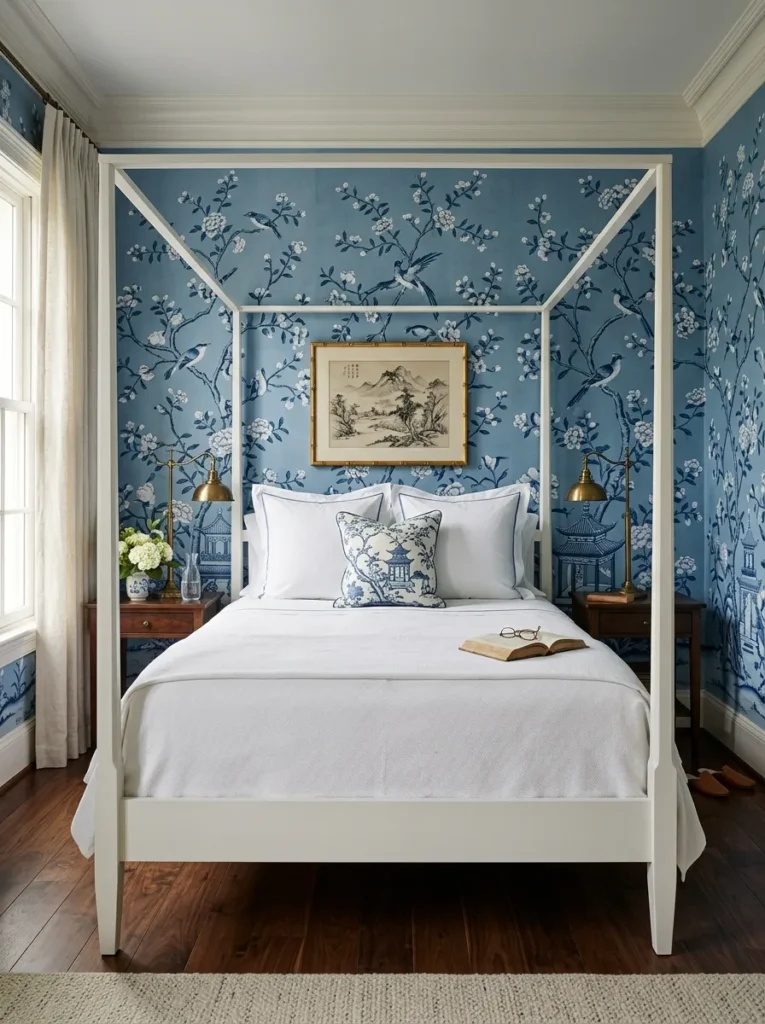
Chinoiserie and toile patterns bring a sense of heritage and intention into a bedroom that a solid paint color can’t replicate on its own, since the scenic, repeating pattern reads as collected and considered rather than simply chosen off a swatch. Wrapping all four walls works best in smaller bedrooms specifically, where the immersive pattern feels enveloping instead of overwhelming the way it might in a much larger room. Keep furniture and bedding simple and solid-colored against this kind of wallpaper — the pattern is already doing the room’s visual work, so anything else patterned competes rather than complements.
4. A Velvet Upholstered Headboard in a Rich Blue
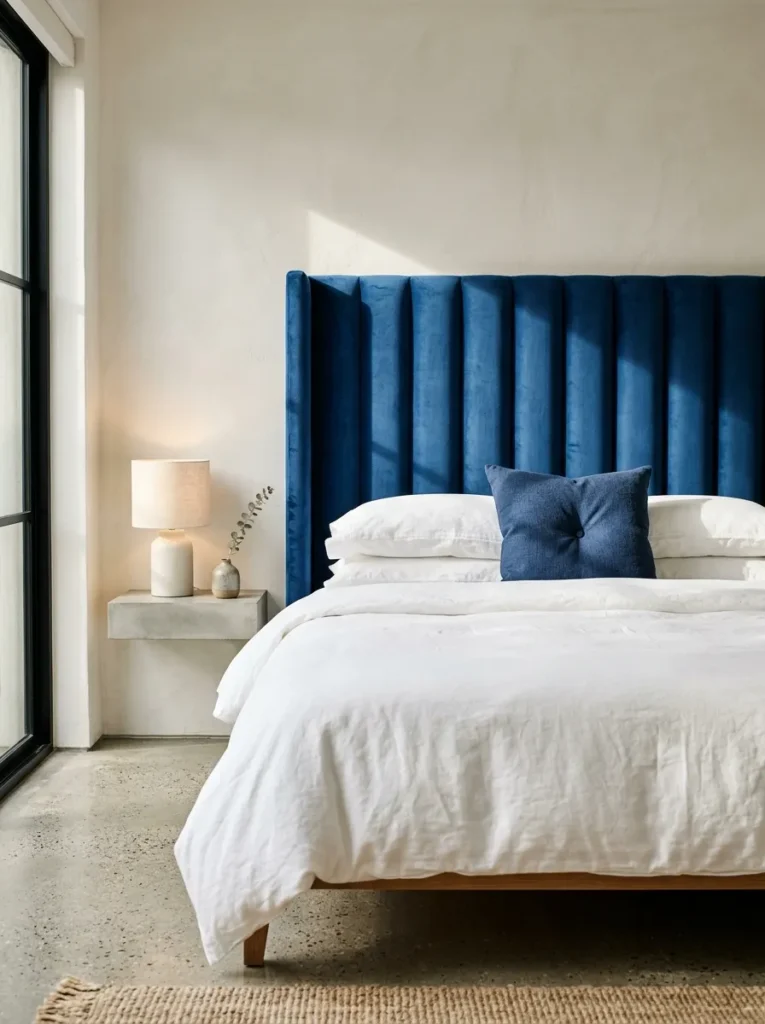
A velvet headboard introduces blue through upholstery rather than paint or wallpaper, which lets the rest of the room stay neutral while still committing fully to the color in the room’s most prominent furniture piece. Channel tufting or simple vertical tufting catches light differently than a flat panel headboard, giving the fabric depth that a solid block of color wouldn’t have on its own. This idea suits renters and anyone hesitant to commit to a colored wall especially well, since the headboard can move with you and the walls stay neutral underneath it.
5. Layered Bedding in Varied Tones of the Same Blue
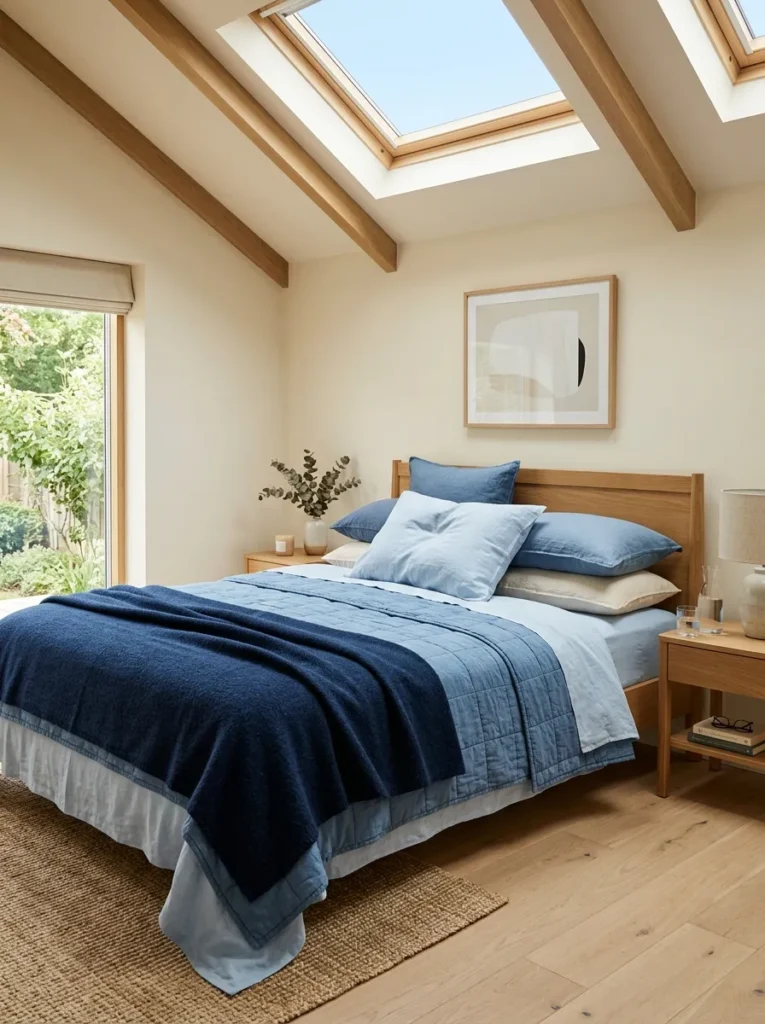
Layering several shades of the same color family on a bed creates depth that a single matching bedding set never achieves, moving from pale powder blue at the sheet level up to a deeper navy throw at the foot of the bed. This monochromatic layering technique works in any bedroom regardless of wall color, since it lives entirely within the bedding itself and doesn’t require repainting anything. Mix textures along with the tones — a crisp cotton sheet, a slightly nubby quilt, a soft knit throw — so the room reads as rich rather than flat despite staying within one color family.
6. A Sky-Blue Painted Ceiling
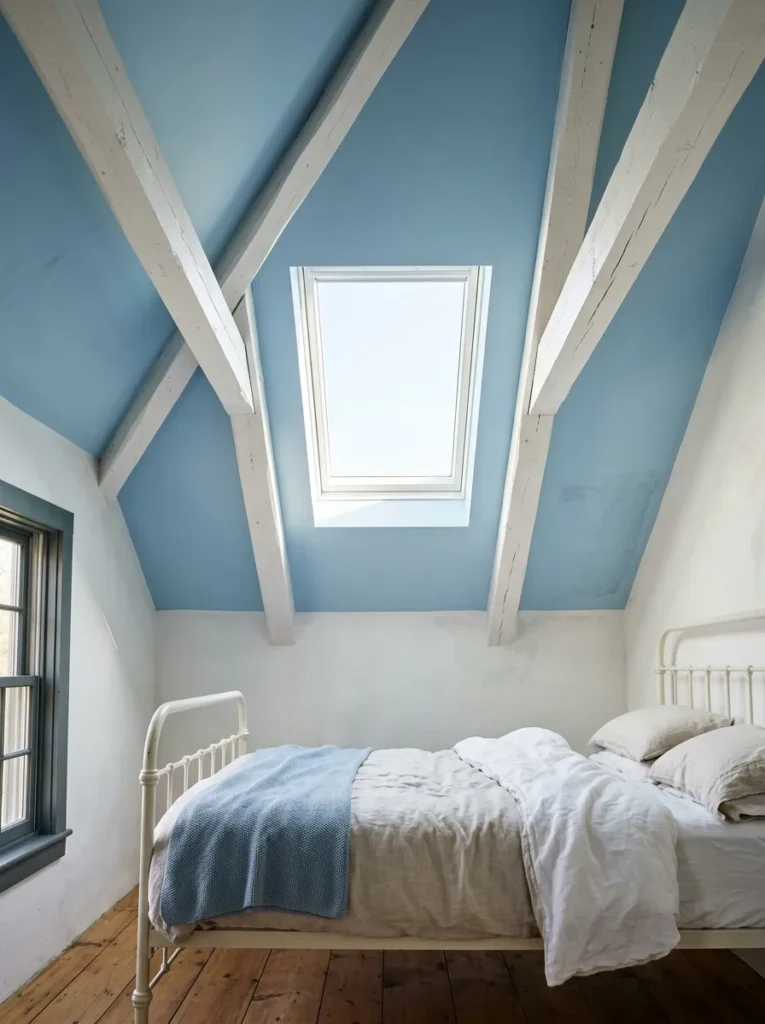
A pale sky-blue ceiling, sometimes called haint blue in its traditional Southern porch-ceiling form, brings color into a bedroom from the one surface most rooms leave entirely untouched. The effect reads as subtly expansive rather than enclosing, since a light blue overhead can make a ceiling feel slightly higher than a stark white one does. This idea works especially well in bedrooms with exposed beams or other ceiling architecture, since the color gives that detail a backdrop to stand out against rather than blending into a flat white plane.
7. Brass and Blue as a Warm-Cool Pairing
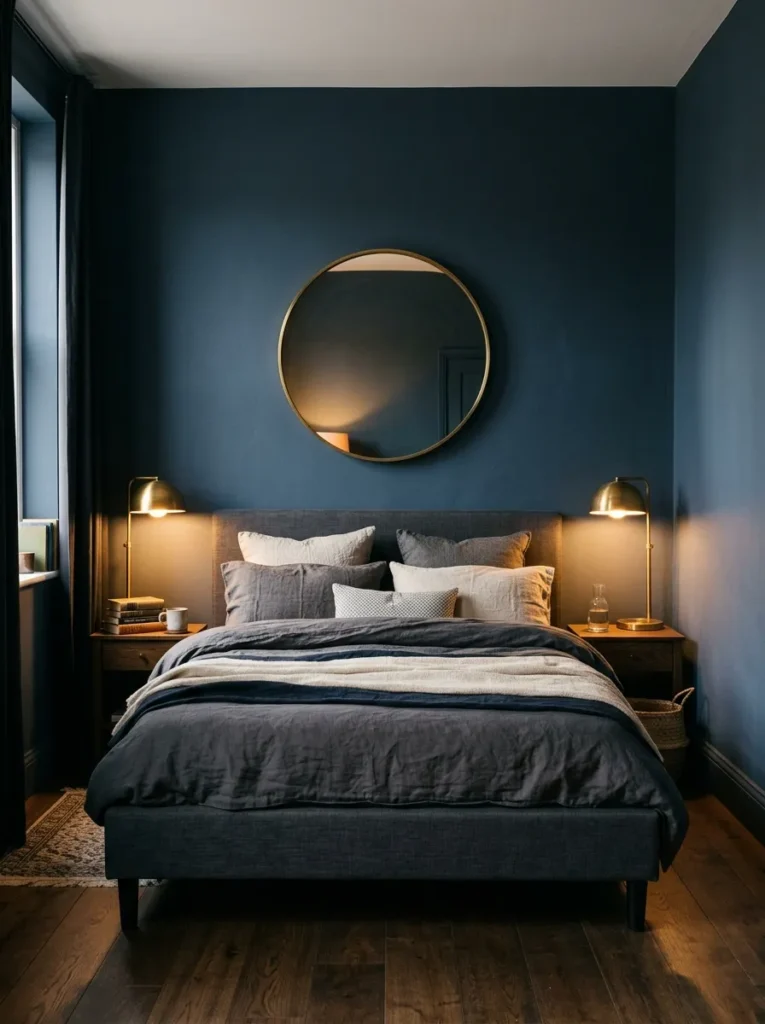
Blue is one of the coolest colors on the wheel, and brass is one of the warmest metals available, which makes the pairing do real corrective work in a room that might otherwise feel chilly or clinical. The warm glow of brass lamps or hardware against a deep blue wall softens the color’s coolness without diluting it, unlike adding warm-toned furniture, which changes the room’s material story more significantly. This idea is one of the easiest and lowest-cost on this list, since it can be achieved by swapping lamp finishes or hardware alone, without touching paint or major furniture.
8. Blue Grasscloth or Textured Wallcovering
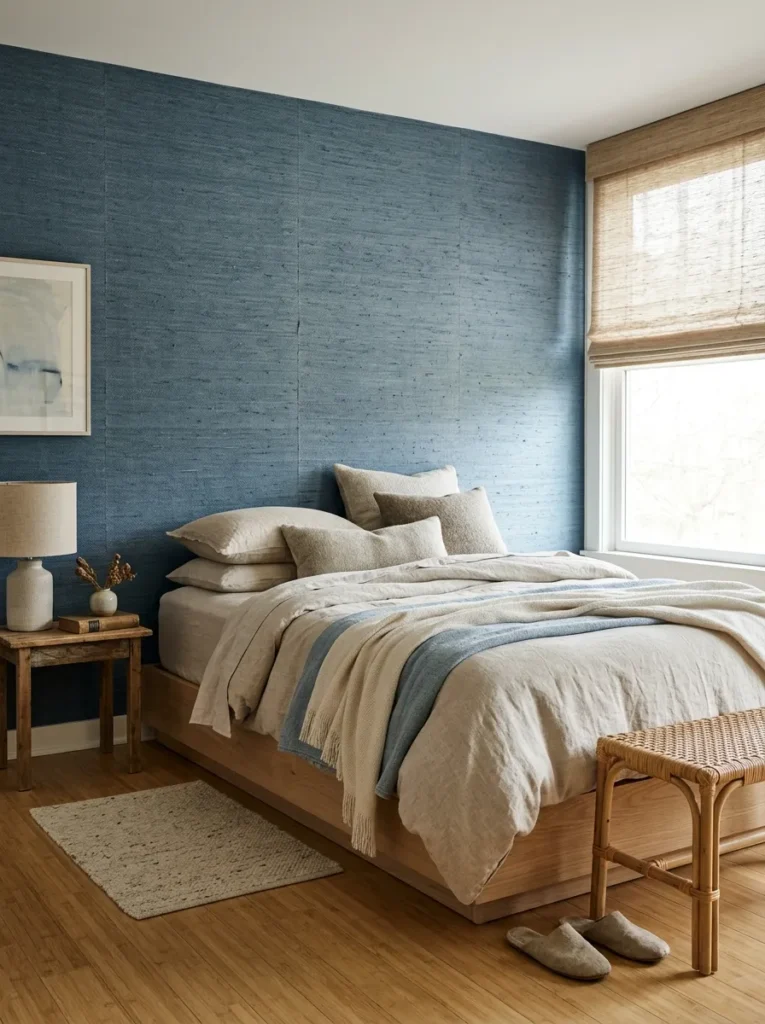
Grasscloth and other woven wallcoverings give blue a tactile, organic quality that flat paint can’t deliver, since the natural fiber catches and scatters light unevenly across its surface rather than reflecting it in one uniform plane. This texture also helps blue feel warmer and more grounded than a high-gloss painted finish in the same shade would, which matters in a color already prone to feeling cool. Reserve it for a single wall behind the bed if you’re hesitant to commit to the material throughout the room, since grasscloth is more expensive and harder to remove than paint.
9. A Blue Accent Wall: The Lowest-Risk Blue Bedroom Idea on This List
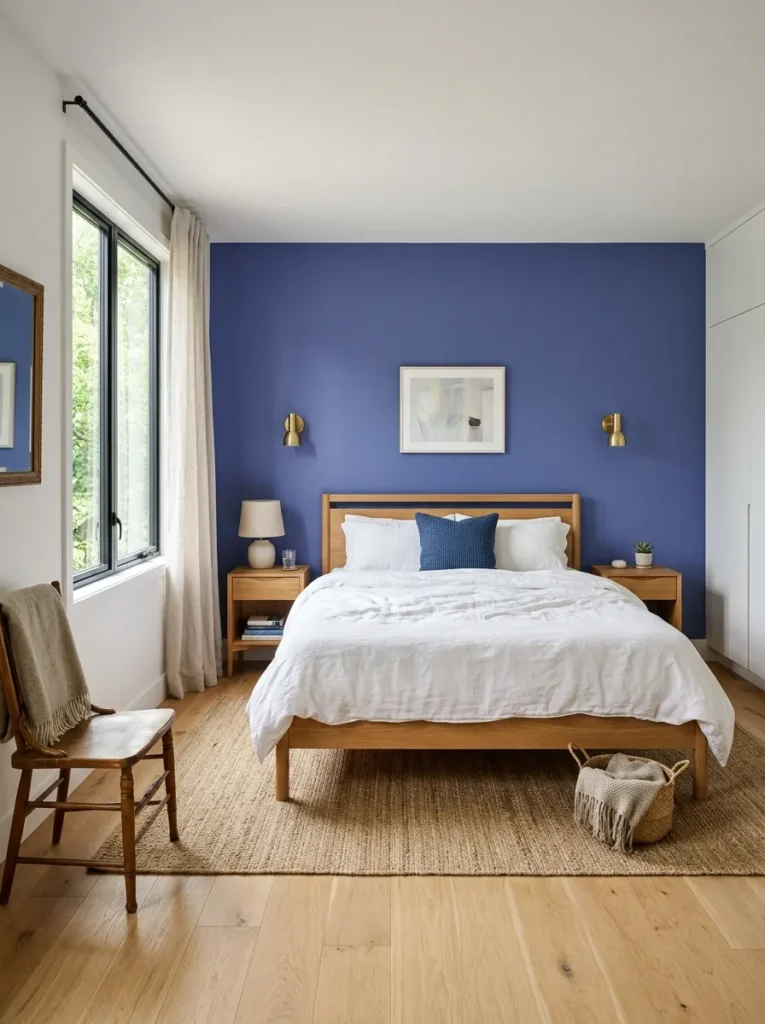
Committing to blue on a single wall rather than the entire room gives you most of the color’s calming effect without the risk of a fully saturated space feeling too dark or too committed if your taste shifts later. The accent wall should specifically be the one behind the headboard, since that’s the wall your eye returns to most often while in the room, not a side wall that’s mostly out of view when lying down. This idea also costs a fraction of repainting an entire bedroom, making it a smart entry point if you’ve never worked with a strong color before.
10. Indigo Block-Print Textiles for Global, Handmade Texture
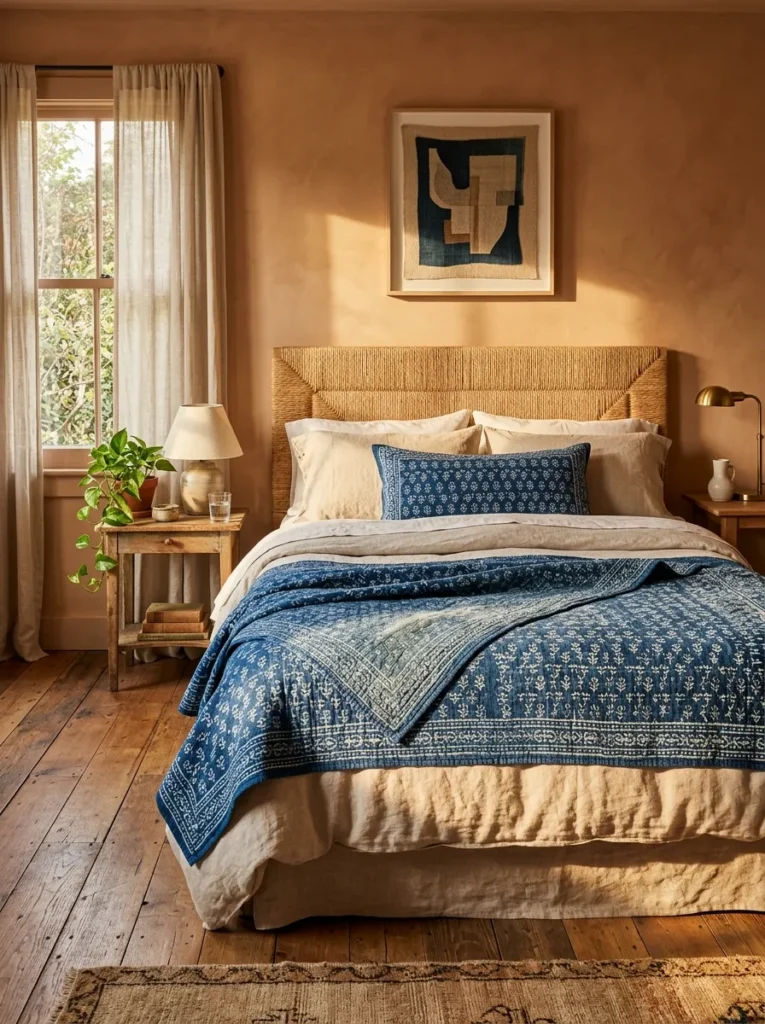
Indigo-dyed, hand block-printed textiles bring blue into a bedroom with visible handmade irregularity — slightly uneven print registration, subtle dye variation — that machine-printed fabric in the same color simply doesn’t have. This idea suits a warmer, more global design style specifically, pairing naturally with rattan, teak, and terracotta tones rather than the cooler whites and grays that suit a crisper navy or denim blue. Look for a quilt or coverlet over a full upholstered piece if you’re working with genuine block-print textiles, since the technique is traditionally suited to flat yardage rather than tightly upholstered furniture.
11. Two-Tone Walls with Blue Below and White Above
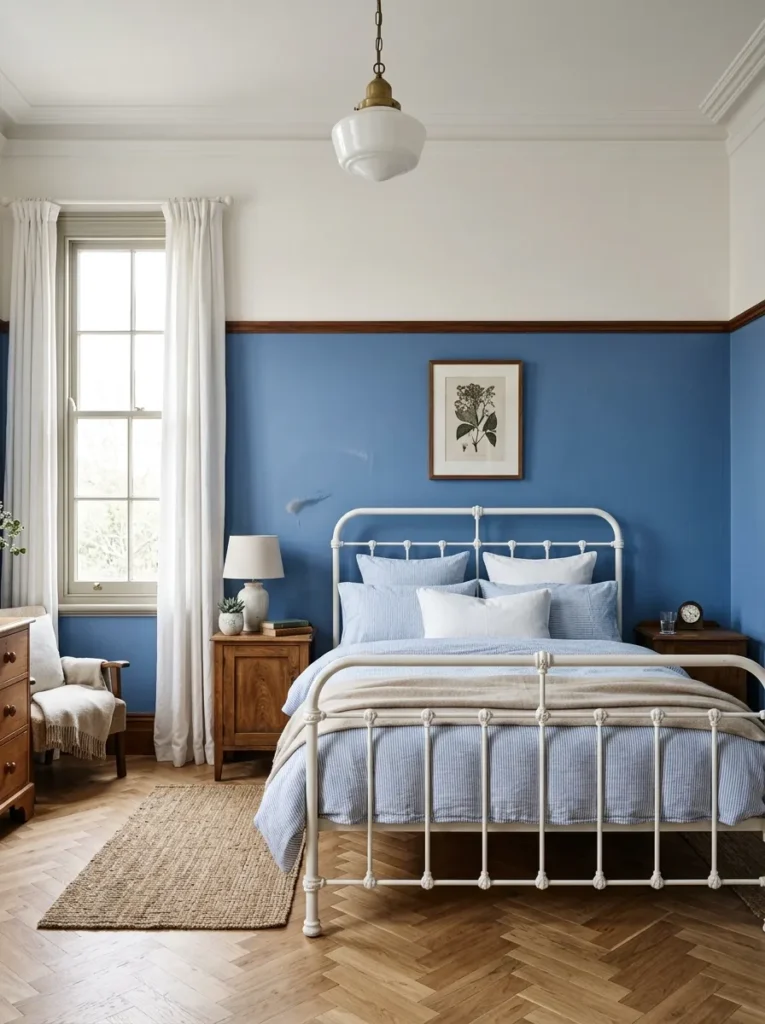
Splitting the wall into two tones with a chair rail or simple painted line gives a bedroom architectural dimension that a single flat color can’t, and it’s a particularly good option for rooms with taller ceilings where an all-blue wall might start to feel heavy from floor to ceiling. The proportion matters here — keep the blue section to roughly a third of the total wall height, since a taller blue section can begin to overwhelm the room the way a full accent wall would. This idea also gives you a natural place to run a chair rail or picture ledge, adding a functional detail along with the visual break.
12. A Built-In Blue Window Seat with Storage
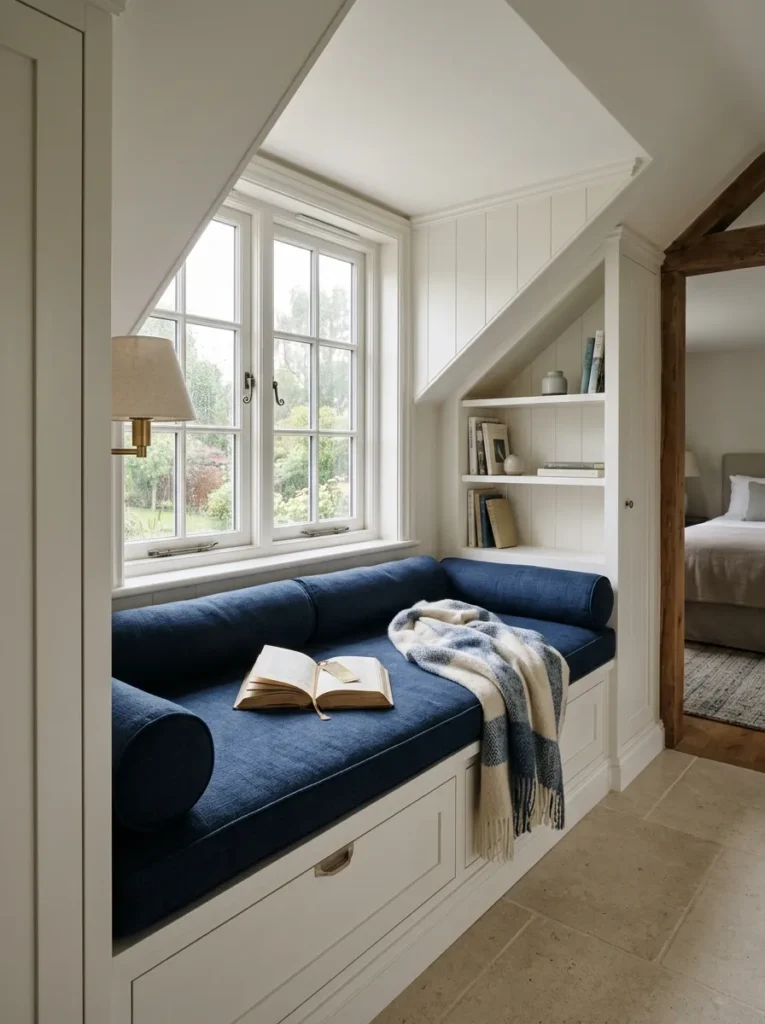
A built-in window seat upholstered in blue gives a bedroom a secondary, purposeful zone beyond just the bed, and storage built into the base underneath turns what would otherwise be decorative seating into genuinely useful space for linens or out-of-season clothing. This idea requires more construction than most others on this list, so it suits a renovation or a room with an existing window nook more than a quick styling refresh, but the payoff is a feature that functions as a reading spot as much as it photographs as one. Keep the cushion fabric performance-rated if the seat gets regular use, since standard upholstery fabric wears faster under daily sitting than a bed ever does.
13. A Cobalt or Sapphire Statement Light Fixture
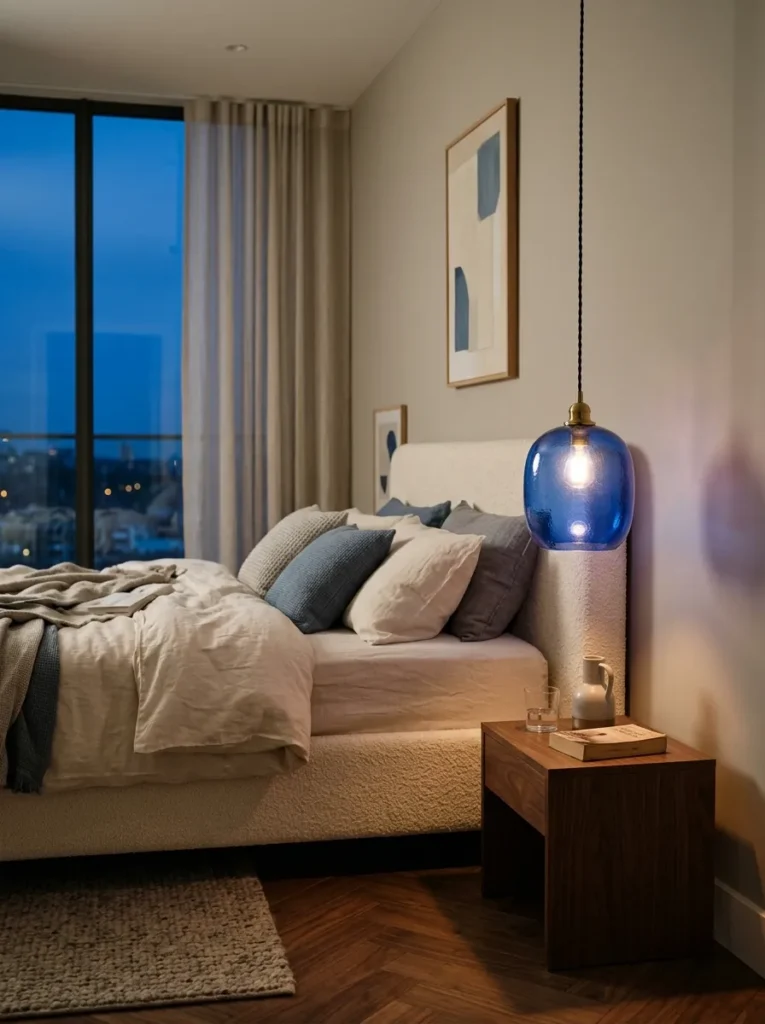
A jewel-toned glass pendant or sconce introduces blue as a glowing accent rather than a flat surface color, and the light passing through colored glass casts a subtly tinted glow across the surrounding wall that a solid-colored lamp shade never achieves. This idea works well in an otherwise entirely neutral bedroom, letting one fixture carry the room’s only real color statement without needing to coordinate it with anything else in the space. Hang it beside the bed in place of a traditional table lamp specifically, since the fixture’s color reads more intentional at that close, focal distance than it would mounted high on a distant ceiling.
14. Blue and White Ticking Stripe Textiles
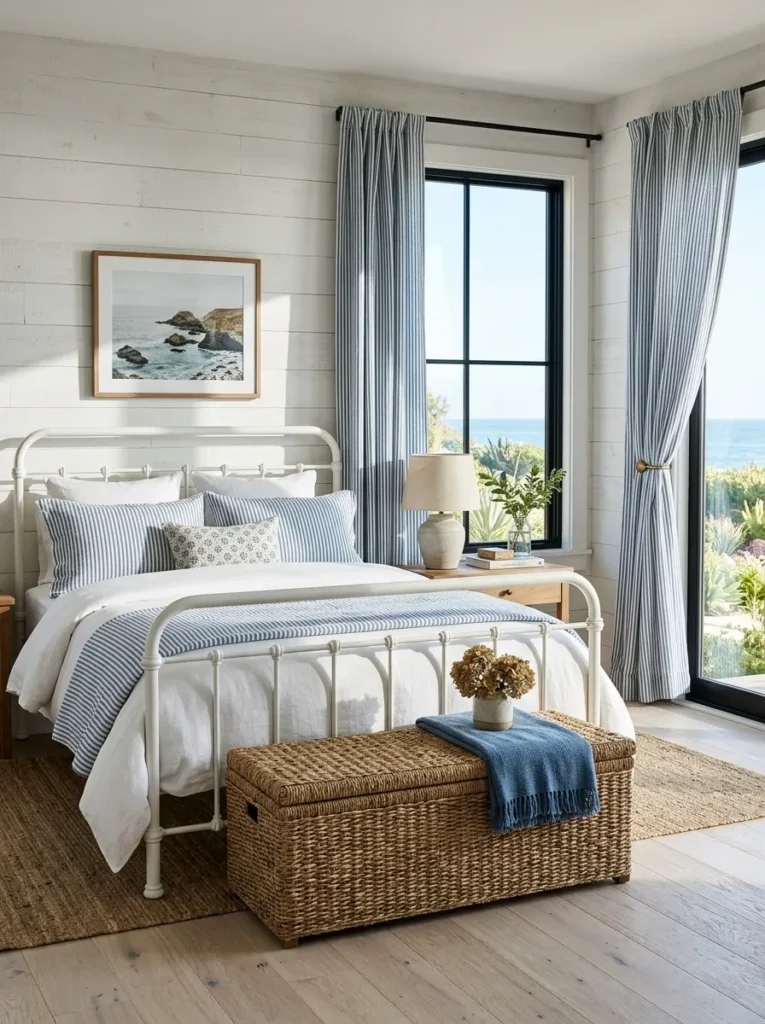
Ticking stripe brings blue into a bedroom through a classic, slightly utilitarian pattern that reads as timeless rather than trend-driven, since the stripe’s origins as a mattress and pillow ticking fabric give it a practical, unfussy history. Matching the stripe across bedding and curtains, rather than mixing it with a different blue pattern, keeps a coastal or classic bedroom feeling cohesive without veering into a fully matched, showroom-set look. This idea suits brighter, airier bedrooms specifically, since the crisp white-and-blue contrast reads best with strong natural light rather than a dim or north-facing room.
15. A Dark Teal-Blue Accent Furniture Piece
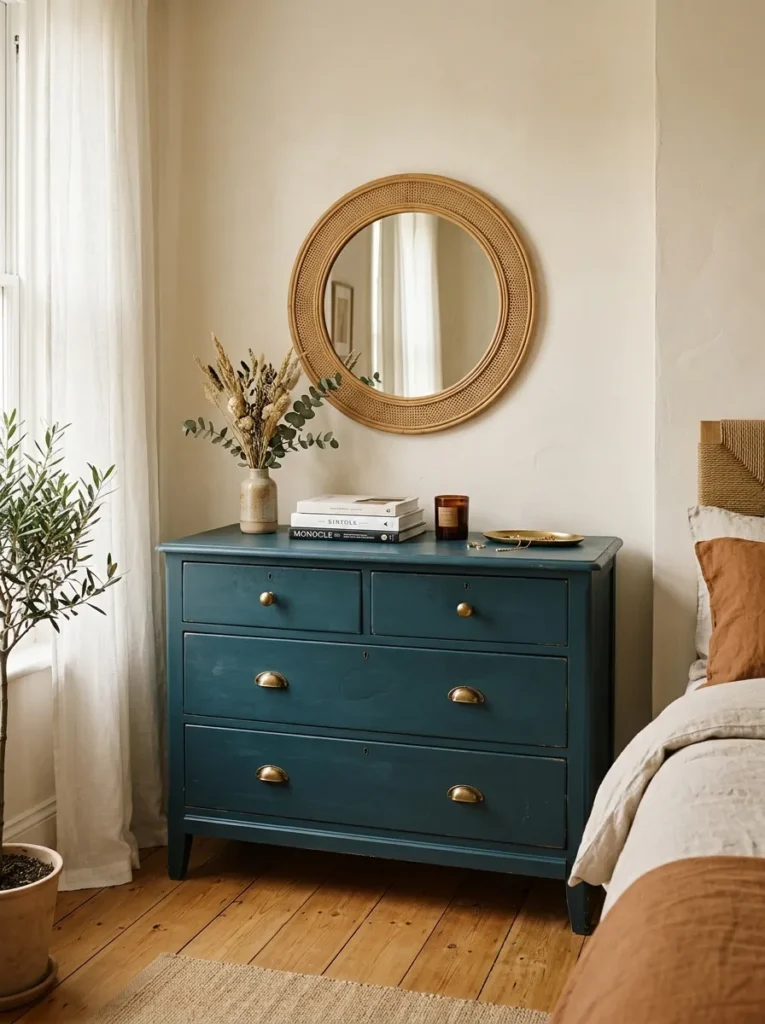
Painting or choosing a single furniture piece in a deep teal-blue, rather than the walls or bedding, lets a neutral bedroom carry one confident pop of color without committing the entire room to it. A dresser or nightstand works especially well for this since it’s substantial enough to register as a real statement but small enough that the color stays contained and easy to change later. This idea suits anyone furnishing on a budget too, since a single secondhand piece given a quality paint finish costs far less than coordinating new bedding, walls, and furniture all at once.
16. Blue Botanical or Floral Wallpaper
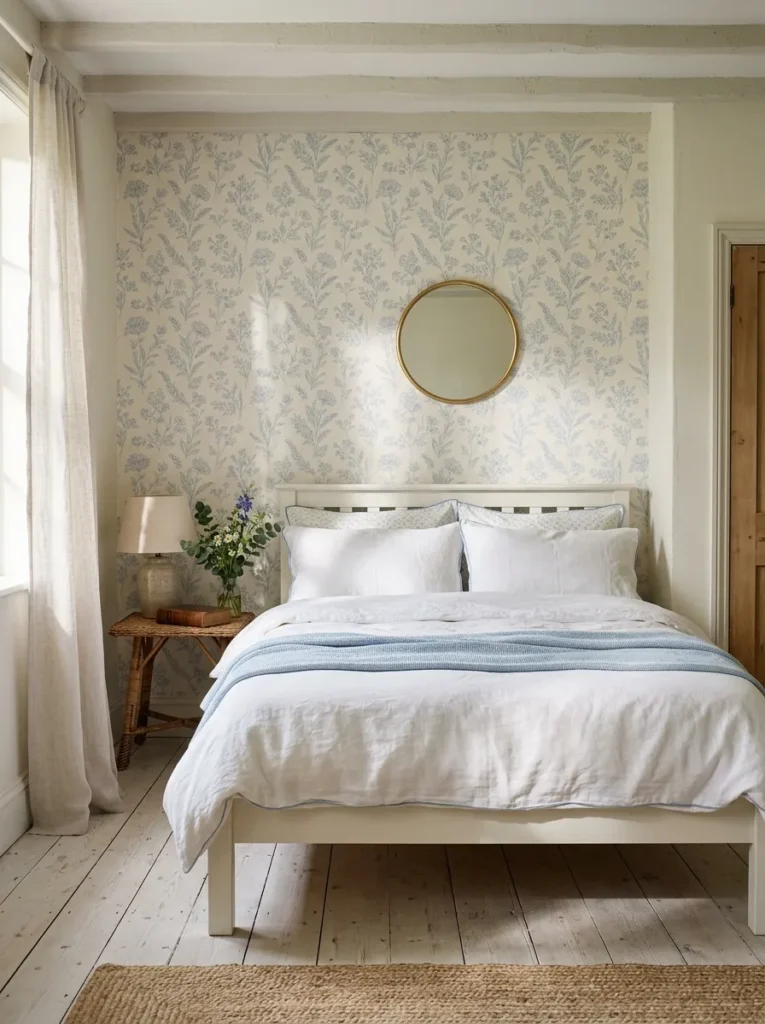
A soft botanical or floral print in blue tones brings nature indoors in a gentler, more romantic register than a graphic stripe or geometric pattern would, since the organic shapes echo the same softness associated with the color itself. Keeping the bedding plain and unpatterned against this wallpaper is essential, since a busy floral combined with patterned textiles competes for attention rather than letting the wall read as the room’s single focal feature. This idea suits a smaller bedroom or a single accent wall particularly well, where the pattern’s detail stays close enough to actually appreciate rather than disappearing across a large, distant wall.
17. Layered Blue Rugs for Texture Underfoot
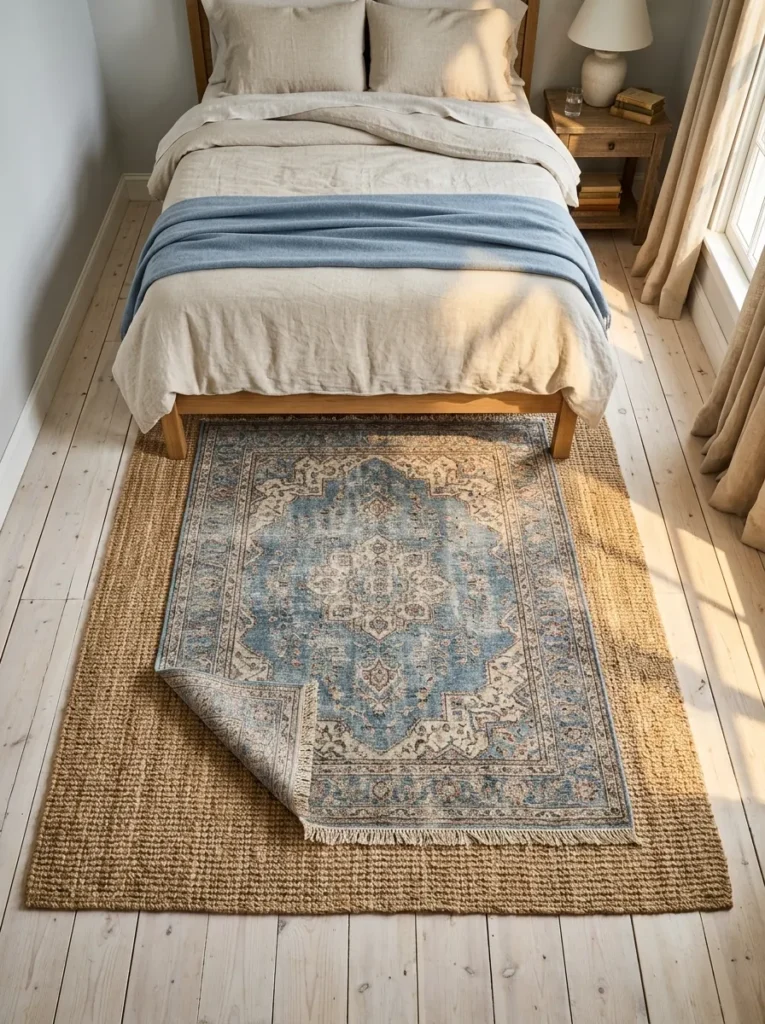
Layering a smaller patterned blue rug over a larger natural-fiber rug like jute or sisal brings the room’s color story down to the floor without requiring a single large rug in a bold blue, which can be a harder commitment both financially and visually. The jute base grounds the room in texture regardless of color, while the smaller rug introduces blue in a contained, controllable dose right where your feet land getting out of bed. Center the smaller rug at the foot of the bed rather than fully beneath it, which keeps the layering visible rather than hidden under the bed frame.
Final Thoughts on Designing a Blue Bedroom
The most successful blue bedroom ideas all share one quality: they treat blue as a tool for calm rather than a color to simply apply everywhere at once. A single accent wall, one confident piece of furniture, a layered set of bedding in tones of the same color — each does real work without asking the whole room to commit to the same intensity of color at the same time. Choose the version of blue and the application method that matches how much commitment you’re actually ready for, rather than starting with the boldest idea on this list.
If there’s one detail worth paying closer attention to than usual, it’s how a given blue looks at night under your actual lamp light, not just under daylight in the store or on a paint chip. Some blues turn flat and gray once the sun goes down, while others hold their warmth — test a swatch on your wall for at least a full day and evening before committing to paint an entire room.
Save this guide to your Pinterest board so you can revisit these blue bedroom ideas whenever you’re ready to bring more calm into your own space.