
20 Dining Chair Ideas That Blend Comfort and Style
Dining chairs are one of the most consequential furniture decisions in a home, and one of the most underestimated. They’re used every day, they surround the table from every angle, and they define the room’s character more consistently than almost any other element — including the table itself. A beautiful table with the wrong chairs reads as unresolved. An ordinary table with the right chairs can carry an entire dining room.
The challenge is that dining chairs require you to satisfy two requirements simultaneously: they need to be comfortable enough to sit in for a full meal, and considered enough to look right in the room they’re placed in. These two criteria pull in different directions more often than most guides acknowledge. The chair that photographs best is rarely the most comfortable. The most ergonomically correct chair isn’t always the most visually interesting.
These 20 dining chair ideas address both sides of that tension. Each one covers a specific direction — material, style, proportion, or mixing strategy — with enough practical context to help you understand what suits your table, your room, and the way you actually use your dining space. The goal isn’t the most stylish chairs on the market. It’s the right chairs for your specific situation.
1. Fully Upholstered Chairs with a Low, Tight Back

A fully upholstered dining chair — seat and back both covered in fabric, with no exposed wood frame — is the most comfortable option for extended meals and the one that reads most like a furniture investment rather than a table accessory. The tight, tailored back provides genuine lumbar support in a way that open-back chairs don’t, and the fabric surface adds warmth and texture to a room where hard surfaces (table, floor, walls) might otherwise dominate.
The practical consideration is cleaning. Upholstered dining chairs in households with children, pets, or frequent entertaining need fabric that can be spot-cleaned or, better, fully removed and washed. Performance fabrics — those marketed as stain-resistant or moisture-resistant — have improved significantly and are now available in textures that don’t read as plasticky or commercial. A tightly woven linen-cotton blend or a performance velvet handles daily use far better than a loosely woven or delicate fabric in the same application.
In terms of room relationship, fully upholstered chairs add significant visual mass. In a smaller dining room or one with heavy furniture already, a slimmer profile with a tight back reads less heavily than a fully padded barrel chair.
2. Parsons Chairs in a Neutral Performance Fabric

The Parsons chair — fully upholstered with straight lines and no exposed frame — is the most versatile fully upholstered dining chair format because its clean silhouette suits contemporary, transitional, traditional, and eclectic rooms without committing to a specific style period. It reads as a decision without announcing what that decision was.
The fabric choice is where the Parsons chair gets interesting. In a neutral — warm white, oatmeal, light grey, natural linen — it functions as a quiet supporting element that lets the table, rug, or pendant light carry the room’s visual interest. In a richer tone — deep sage, terracotta, dusty rose, navy — it becomes a color statement that can anchor the room as much as the table does.
The one proportion note: Parsons chairs tend to have a relatively high seat cushion due to the fully upholstered construction. Verify the seat height against the table’s apron clearance before purchasing — a seat-to-apron clearance of at least 10 to 12 inches is needed for comfortable seating without feeling cramped below the table.
3. Velvet Dining Chairs for Evening Atmosphere

Velvet upholstery on a dining chair does something that no other fabric achieves: it shifts the room’s character between day and evening. In natural daylight, velvet reads as rich and saturated. Under warm artificial light at dinner, it deepens and develops a quality closer to candlelight than furniture. A set of six velvet dining chairs around a dark wood table, lit by a warm pendant and a few candles, is one of the most atmospheric dining room combinations available.
The color is the decision that matters most with velvet chairs. Deep jewel tones — forest green, midnight blue, aubergine, burnt copper — develop the most visual depth and work with candlelight most beautifully. Lighter velvet (blush, sage, pale grey) reads as more versatile but loses some of the atmospheric quality that makes velvet distinctive in a dining context.
Velvet in a dining room requires realistic expectations about maintenance. It marks easily when rubbed the wrong way (which changes the nap direction and creates visible lighter patches), and it requires specific cleaning methods. For households where the dining table is used casually and frequently, a performance velvet — which has a shorter pile and a protective coating — is a more practical choice than a traditional cut velvet.
4. Linen-Covered Chairs in a Warm Neutral

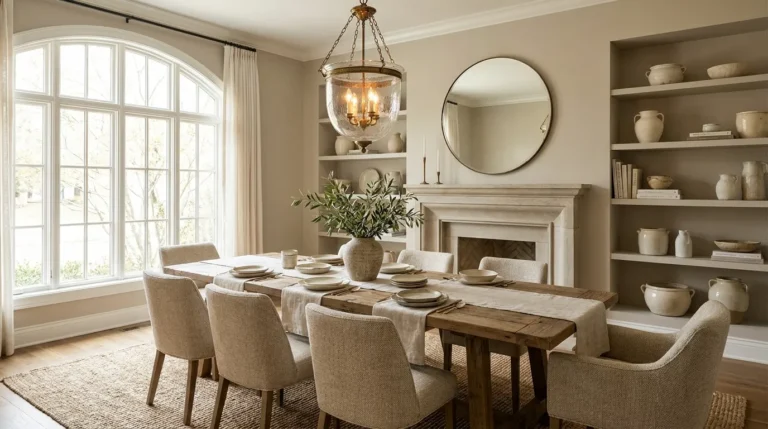
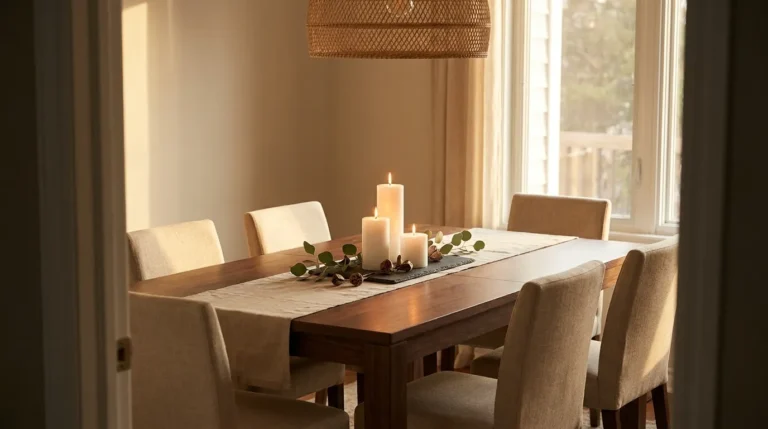
A linen or linen-look dining chair in a warm neutral — undyed natural, oatmeal, warm white, soft sand — is the design-world equivalent of a confident non-statement: it’s a chair that works in almost every room, with almost every table, and reads as considered without demanding attention. Its versatility is its value.
The specific quality that makes natural linen work in a dining context is its texture. Unlike flat-painted wood or solid-tone synthetic fabric, linen has a visible weave structure that creates surface interest even in the absence of pattern or color. Under directional light — a pendant above, afternoon sun from a side window — the weave catches and releases light in a way that keeps the chairs visually present without competing with anything else in the room.
For the maximum flexibility, choose a linen chair with a wood frame in a finish that either matches or deliberately contrasts the dining table. A light oak frame with natural linen suits a Scandinavian or transitional table; a darker walnut frame with the same linen creates a warmer, more grounded pairing.
5. Solid Wood Chairs with a Contoured Seat

An all-wood dining chair — no upholstery, just shaped and finished wood — is the most durable, easiest to clean, and in many cases the most honest material choice for a dining room used daily. The appeal depends entirely on the quality of the seat and back contouring. A flat wood seat is genuinely uncomfortable beyond 20 minutes. A seat with a carved saddle shape or a scooped profile distributes weight differently and extends comfortable sitting time considerably.
Wood species and finish affect both the look and the longevity. Oak, ash, and beech are durable hardwoods that suit most dining environments. Walnut is richer in tone but softer and more susceptible to surface damage. An oiled or wax-finished wood reads as warmer and more natural than a lacquered finish, but it requires periodic reapplication to maintain the surface.
All-wood chairs work best in dining rooms where the material palette already includes natural wood — a wood table, wood floors, or open wood shelving. In rooms full of upholstered pieces, painted surfaces, and soft textiles, all-wood chairs can read as sparse rather than clean.
6. Painted Wood Chairs for a Pop of Color

A painted wood dining chair — in the same format as a natural wood chair but with a solid painted finish — introduces color at the furniture level rather than the wall or textile level, which is a different kind of color decision. The color is functional, structural, and permanent in a way that a cushion or a throw isn’t.
Painted chairs work best when the color is specific and committed. A slightly-off white is a reasonable choice but reads as almost-natural-wood rather than a confident decision. A deep sage green, a dusty terracotta, a muted ochre, or a dark slate blue reads as intentional. The painted chair also pairs well with a natural wood table because the contrast between the painted finish and the wood grain creates a relationship that reads as considered rather than matched.
The practical note: painted wood chairs in high-contact areas — the back rail, the seat edge, the front legs — chip at corners over time. A matte or eggshell paint finish shows this less than a high-gloss one. Touching up a matte finish is also easier than maintaining a gloss.
7. Rattan or Cane Dining Chairs for Organic Warmth

Rattan and cane dining chairs bring a material quality to the dining room that no other chair type provides: genuine natural fiber with inherent warmth, texture, and visual lightness. Where upholstered chairs add mass and wood chairs add structure, rattan chairs add an airy, slightly organic quality that suits rooms decorated with linen, jute, wood, and natural ceramics.
The visual weight of rattan chairs is significantly lower than upholstered or solid wood alternatives, which makes them particularly useful in smaller dining rooms where visual lightness matters. Six rattan chairs around a table in a compact dining space feel less crowded than six upholstered chairs in the same configuration.
One practical consideration: rattan and cane are less comfortable for extended sitting than upholstered alternatives. The woven seat doesn’t conform to the body in the same way, and after an hour or more, the surface becomes noticeable. For households where meals are long and social, adding a seat cushion — in a natural linen or printed cotton that suits the room’s palette — addresses this without compromising the visual character.
8. A Rattan Chair with a Cushioned Seat Pad

Building directly on the rattan chair’s limitation (comfort over extended meals), a rattan chair with an integrated or fitted cushion seat pad solves the practical problem while maintaining the visual character. The cushion should fit the seat precisely — a loose or approximate cushion reads as an afterthought rather than a considered pairing.
The cushion fabric is an opportunity. A rattan chair with a plain natural linen cushion reads as neutral and versatile. The same chair with a cushion in a small-scale print — a simple stripe, a subtle geometric, a botanical pattern — introduces pattern at a contained, low-commitment scale. Because the cushion can be replaced when it wears or when preferences change, it’s one of the few dining room fabric decisions that’s genuinely reversible.
Tie-closure cushions are more secure than those with no attachment, but the ties should be proportionate and unobtrusive rather than decorative bows that compete with the chair’s natural material character.
9. Sculptural Molded Chairs in a Modern Dining Room

Molded chairs — made from a single continuous shell of plastic, fiberglass, or formed wood — are the most purely contemporary dining chair format. Their appeal lies in the contrast between their seamless, organic silhouette and the rectilinear dining table they typically sit beside. A classic tulip-base chair or a shell-form side chair reads as a mid-century reference that’s been current for decades and shows no signs of dating.
In a contemporary dining room with a clean-lined table, minimal pendant lighting, and a simple floor treatment, molded chairs provide the one element of formal interest in an otherwise restrained environment. Their smooth surfaces are extremely easy to clean, which makes them practical for daily use and child-friendly environments.
The base is a significant aesthetic decision with molded chairs. A pedestal base in polished or powder-coated metal reads as more refined; four metal legs read as more casual and slightly more retro. The base finish should relate to other metal elements in the room — light fixtures, cabinet hardware, or faucet finishes in an open-plan space.
10. Acrylic or Ghost Chairs for Visual Lightness

A transparent acrylic dining chair — commonly called a ghost chair — reduces visual clutter in a small or busy dining room by removing the visual mass of the chair almost entirely. From across the room, a table surrounded by acrylic chairs reads as a table with seating that isn’t competing for visual attention, which lets the table, the rug, the pendant, and the wall behind take precedence.
This works best in dining rooms where the floor is interesting — a patterned tile, a herringbone wood, a bold rug — because the transparent chairs allow the floor to remain visible rather than being interrupted by chair legs and upholstery. It also works in small apartments where the dining area is visible from the living zone and visual density in the dining corner would make the combined space feel smaller.
The maintenance reality: acrylic scratches more visibly than most other chair materials and should be cleaned with a soft cloth and plastic-safe cleaner rather than abrasive products. Scratches accumulate over time and the chairs lose their clarity. For long-term use, a higher-quality polycarbonate chair is more durable than entry-level acrylic at a similar visual result.
11. Leather or Faux Leather Chairs for Easy Cleaning

Genuine leather dining chairs age well and develop a patina that reads as richer over time — but they require conditioning, they’re sensitive to heat and direct sun, and they’re an investment that most dining chair purchases don’t justify at a full set of six. More practical for most households is a high-quality faux leather (PU leather or vegan leather) in a similar aesthetic.
Modern faux leather has improved dramatically. The thicker, grain-embossed versions are difficult to distinguish from genuine leather at normal viewing distances, are fully wipeable, handle heat better, and cost significantly less per chair. The trade-off is that they don’t develop the same character over time — they tend to look identical after ten years rather than more interesting.
Leather and faux leather dining chairs suit contemporary, industrial, mid-century, and transitional rooms. In a room full of natural, organic materials — wicker, linen, raw wood — a leather chair can read as too refined or too hard for the material register. In a room with clean lines and harder surfaces, it’s often exactly right.
12. Wishbone or Y-Back Chairs Across Styles

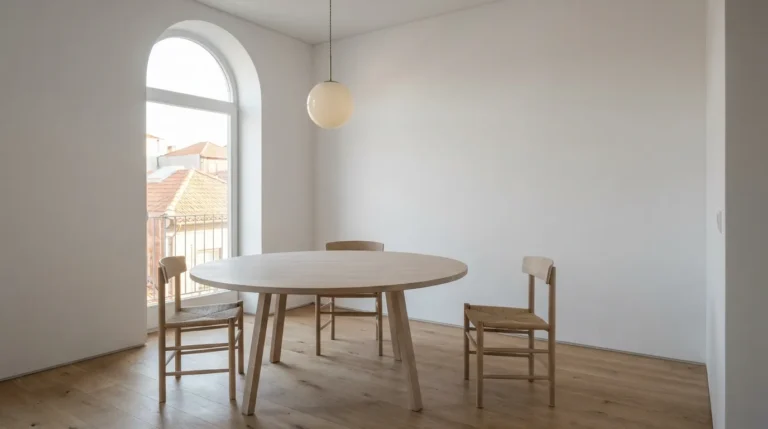
The wishbone chair — with its characteristic Y-shaped back splat and woven paper cord seat — is one of the most recognizable and versatile dining chair designs in existence. Its curved lines suit organic, Scandinavian, transitional, and even some traditional rooms, and its relatively modest scale makes it appropriate for both compact and generous dining spaces.
The woven paper cord seat is more comfortable than it looks: the weave has a slight give and distributes weight across the seat more evenly than a solid wood seat. It’s also surprisingly durable, though the cord can stretch or break over time in heavily used chairs — replacement is possible but requires skill and the right material.
The frame finish is the variable that most affects the chair’s styling range. A natural beech or ash finish reads as light and Scandinavian. A walnut finish reads as warmer and more refined. A painted black version reads as more contemporary and graphic. All three are genuine expressions of the same underlying design rather than compromises.
13. Mix Two Chair Styles for an Intentional Eclectic Look

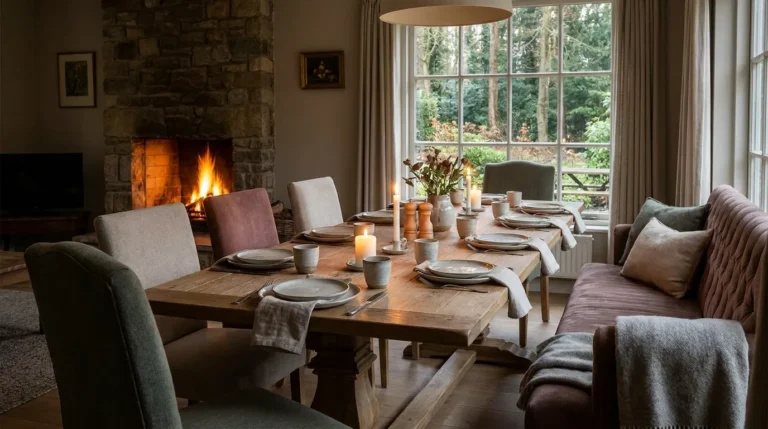
A dining table where every chair is identical reads as coordinated. A table where chairs are mixed with purpose reads as considered. The distinction matters: chairs mixed intentionally — with a clear shared element between them — create a gathered, personal quality. Chairs mixed accidentally — just different chairs that happened to be available — create visual noise.
The most reliable mixing strategy is to share one element across all chairs while varying everything else. All chairs in the same color, different shapes: a set of four upholstered chairs in the same dark sage green, mixing a Parsons silhouette and a rounded back form, reads as intentionally eclectic. All chairs in the same material, different profiles: a combination of natural oak chairs with different back treatments (solid splat, spindle back, Y-back) reads as collected rather than mismatched.
Avoid mixing chairs that have nothing in common. Two velvet chairs in jewel tones beside two acrylic chairs beside two painted rattan chairs, all in different colors, reads as an unresolved room rather than an intentional design.
14. Host and Side Chair Combinations

Using a different chair style at the head (or heads) of the table — the host position — than at the sides is a classic dining room convention that works because it creates a clear visual hierarchy without requiring any explanation. The host chairs typically have more presence: a higher back, an armrest, a richer upholstery, or a more architectural silhouette. The side chairs are quieter in comparison.
This works practically because the host chair is always visible in the long view of the dining room — it faces the doorway or the main room — while side chairs are viewed from the side and their full profile matters less. Positioning a more dramatic or considered chair in the host position gives the dining room a focal point from the room’s primary sightline.
The pairing should share something specific: the same finish, the same upholstery color, or the same base material. A high-back carved wood host chair paired with upholstered side chairs in a fabric that picks up the wood’s tone reads as orchestrated. The same host chair paired with ghost chairs reads as unrelated.
15. Mixing a Dining Bench with Chairs

Replacing one side of the dining table — typically the side against the wall or facing the room — with an upholstered or wood bench changes the seating’s entire social quality. A bench accommodates one more person than an equivalent row of chairs, allows seating in the middle between people (which individual chairs can’t), and reads as more relaxed and informal than a full set of chairs.
The bench should be upholstered if the chairs are upholstered (in the same or a coordinating fabric), or in wood if the chairs are in wood or mixed natural materials. A bench that’s dramatically different in material from the chairs reads as a mismatch rather than a deliberate choice.
The bench height relative to the table is the practical detail that matters most. A standard bench seat at 18 inches works with a standard 30-inch dining table. The table’s apron height needs to accommodate the bench — a deep apron on the bench side of the table can make the seating feel cramped, which is worth checking before purchasing.
16. Counter-Height Chairs for a Kitchen Island or Bar

Counter-height chairs — sometimes called counter stools — sit at a seat height of approximately 24 to 26 inches, designed for surfaces 34 to 36 inches high (counter height rather than standard dining table height). They’re a separate category from dining chairs but often confused with bar stools, which are taller still (28 to 30 inch seat for a 40 to 42 inch bar height surface).
Getting the height pairing right is the only truly critical decision in this category. A seat height that’s too low for the surface means eating with arms raised uncomfortably; too high and there’s inadequate clearance between the seat and the surface underside. Measuring the surface height and subtracting 10 to 12 inches gives the target seat height for comfortable use.
Style within the counter-height category follows the same logic as dining chairs: material, back height, and visual weight should suit the room’s overall direction. A kitchen island in a contemporary open-plan space is often best served by a backless or low-back stool with a slim profile; a more traditional or furniture-quality island benefits from a stool with a back and more visual presence.
17. Upholstered Armchairs at the Dining Table

An armchair at the dining table — a chair with armrests rather than a standard armless side chair — is more comfortable for prolonged sitting but takes up considerably more lateral space. Each armchair needs approximately 24 to 28 inches of width at the table compared to 18 to 22 inches for a standard side chair, which means a table that seats six with side chairs may seat only four with armchairs.
The comfort trade-off is real: armrests allow a more relaxed seated posture and suit dinner parties where guests linger well past the meal. For a household that uses the dining table primarily for quick weekday meals, the extra space consumption of armchairs may not be worth it. For one where long Sunday meals and entertaining are a priority, the comfort gain justifies the trade.
Armchairs at the dining table suit the host position more naturally than the side positions — placing them only at the heads of the table, with standard side chairs along the sides, captures most of the comfort benefit without sacrificing lateral seating capacity.
18. Natural Fiber Seats with Metal Frames

A chair that combines a natural fiber seat — rush, seagrass, woven leather, or hemp — with a metal frame creates a material contrast that suits both contemporary industrial spaces and transitional rooms with mixed material palettes. The natural fiber brings warmth and texture; the metal frame brings structure and lightness.
This combination is also among the most durable for dining use. Metal frames don’t warp, split, or chip in the way that wood does; natural fiber seats are wipeable (to a degree) and can often be replaced when they wear. The maintenance reality of a rush or seagrass seat is similar to rattan — it’s not as comfortable as upholstery for extended sitting, and the weave can become uneven over time with heavy use.
The metal frame finish creates the chair’s stylistic register. Powder-coated matte black reads as contemporary and graphic. Aged brass or warm gold reads as warmer and more eclectic. Bare or brushed steel reads as industrial. The finish should relate to other metal elements in the room rather than introducing a fifth or sixth metal tone to a space that already has several.
19. Curved Back Dining Chairs for Softness and Comfort

A dining chair with a curved or rounded back — one that follows the contour of the spine rather than sitting flat — is both more visually soft and more genuinely supportive than a straight-back equivalent. The curve in the back splat or shell conforms to the natural lumbar curve, which reduces the fatigue of extended sitting without requiring thick cushioning.
Curved back chairs are particularly useful in dining rooms that already have hard-lined furniture — a rectangular table, square-framed artwork, linear pendant lighting — where the curve provides the one organic line in an otherwise angular room. The effect is subtle but consistent: the room feels less rigid than it would with straight-backed chairs throughout.
The degree of curve matters for both aesthetics and ergonomics. A shallow curve is decorative but provides limited lumbar benefit. A more pronounced curve — visible from the side as a clear S-shape or backward C — provides genuine support and reads more dramatically as a design choice.
20. Statement Chairs Reserved for the Head of the Table

The most architecturally deliberate dining chair approach is using one genuinely distinctive chair — a piece that would read as an accent chair in another context — at the head of the dining table, with quieter side chairs completing the set. A carved antique chair, an oversized upholstered piece with a high carved back, a sculptural contemporary design: the chair at the head becomes the room’s focal point from the most important sightline in the room.
This is one of the few dining chair decisions that’s genuinely low-cost to execute, since you’re purchasing one distinctive piece rather than six. A single interesting chair found at an estate sale, a vintage market, or a specialty retailer — paired with five simple side chairs in a related material or finish — creates a dining room that reads as curated and individual without the budget of a full custom seating program.
The side chairs need to be restrained enough that the head chair reads clearly as the statement. If the side chairs are also dramatic or heavily detailed, the head chair loses its distinction and the room reads as chaotic rather than considered.
How to Choose Dining Chairs That Actually Work
Beyond the specific ideas, a few principles apply to almost every dining chair decision.
Get the seat height right before anything else. Standard dining tables are 29 to 30 inches tall. Standard dining chairs have a seat height of 17 to 19 inches, leaving 10 to 12 inches of clearance below the table apron. Measure your table’s apron height — the underside of the tabletop — rather than the table height, because a thick apron at a standard-height table can reduce clearance below the comfortable minimum. This is the technical detail most guides skip and most buyers regret.
Consider how long you actually sit. Households where dining is a 20-minute daily event and a few dinner parties per year have different comfort needs than those where Sunday lunch runs three hours. More comfortable chairs (fully upholstered, curved back, armrests) matter more in the second scenario and justify their additional cost and space requirements.
Think about the room from every angle. Dining chairs are visible from the living room in open-plan spaces, from the kitchen, from the hallway. A chair that looks right from the head of the table needs to also look right from the doorway and from the sofa across the room.
Match the visual weight to the table. A heavy, dark, substantial table reads as off-balance with very light or visually minimal chairs. A light, delicate table can be overwhelmed by six large upholstered chairs. The chair’s visual weight — determined by mass, opacity, and material density — should be in roughly the same register as the table’s.
Fabric and material choices compound over time. The fabric on dining chairs receives more contact, more friction, and more spills than upholstery almost anywhere else in the home. Performance fabrics, leather, and easy-clean materials suit the dining context better than delicate or dry-clean-only options, regardless of how beautiful the latter look on the showroom floor.
Final Thoughts
Dining chairs are the furniture decision that most directly affects how your dining room feels to use — not just to look at. A beautiful table with uncomfortable chairs creates a room people don’t linger in. The right chairs, with enough practical consideration to make them genuinely livable, create a room people want to stay in.
If you’re choosing from scratch, start with the comfort requirement and the seat height clearance, then work backward to the style. If you’re replacing an existing set that isn’t working, identify specifically what’s wrong — too uncomfortable, wrong scale, visually mismatched with the table, impractical material — before choosing a direction. The answer to each problem is different.
Among the ideas here, the ones that provide the best balance of visual impact, practical durability, and versatility are the linen upholstered chair (Idea 4), the wishbone chair (Idea 12), and the mixed chair strategy with one shared element (Idea 13). All three suit a wide range of tables, rooms, and uses without requiring significant maintenance trade-offs.
Save the ideas that fit your table and your life, and come back to the practical section when you’re narrowing down the decision.