
19 Modular Sofa Ideas for Flexible Living
A modular sofa is built from matching pieces. You can rearrange them, add to them, or take the whole thing apart on moving day. That core flexibility is why modular sofas have become the dominant seating trend in American living rooms — they solve problems that fixed sofas can’t: the room you’re in now may not be the room you’re in five years from now, the configuration that suits two people changes when a family grows, and the sofa that fits through the door of a third-floor apartment may need to come apart to get there.
The decision to buy a modular sofa is usually easy. The decisions that follow — how many modules, which configuration, which fabric, how to manage the visual weight of a large piece in a specific room — are where most people need more guidance than product pages provide. These 19 ideas work through every meaningful variable: configuration options for different room shapes and sizes, fabric choices matched to household conditions, visual strategies for making large modular pieces feel proportional, and the specific uses of modular design in open-plan homes, small spaces, and households that entertain regularly.
1. Understand the True Difference Between Modular and Fixed Sectionals

Before any configuration, color, or fabric decision: there’s a distinction worth clarifying because the words get used loosely. A modular sofa is built from matching pieces you can rearrange after you buy, not just one-time at delivery. What it isn’t is a one-piece sectional — there the shape is fixed the day you order, and more of the money goes into the frame.
This distinction has real practical consequences. A fixed sectional is cheaper for the same footprint and generally has a more seamless appearance, but it cannot be reconfigured, separated, or taken through tight doorways as components. A true modular sofa costs more per equivalent seating area but allows you to add sections when you move to a larger home, remove one section when you don’t need it, and rearrange the configuration for different occasions. If flexibility over time is the reason you’re choosing modular, confirm that the specific sofa you’re considering is genuinely rearrangeable — not just available in multiple fixed configurations at the time of purchase.
2. Start With an L-Shape Configuration as the Most Versatile Foundation

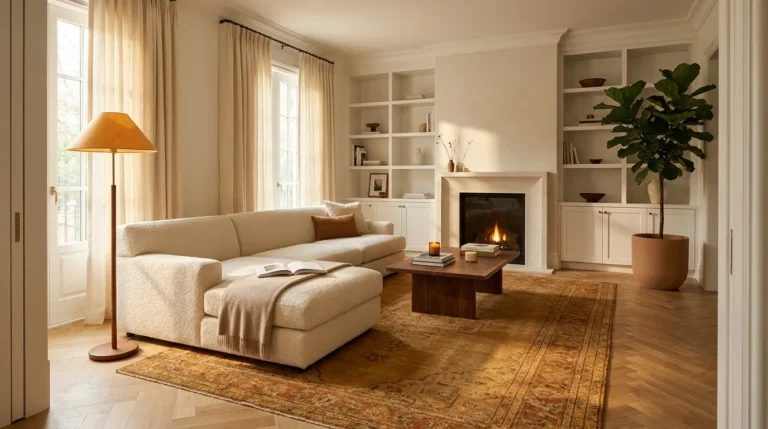
A modular sofa can be an L-shape one day, a long straight couch the next, and two separate loveseats when company comes over. Of these configurations, the L-shape is the most versatile starting point for most living rooms because it defines a corner of the seating area, creates a clear relationship between the sofa and the coffee table, and suits rooms that are wider than they are long or that have a corner the arrangement can anchor.
The L-shape’s chaise or corner extension should face into the room’s primary circulation path rather than blocking it: in a room where entry is from one end, the chaise should orient toward the room’s center or the window, not toward the door. This placement gives the chaise user a natural view across the room and keeps the room’s traffic flow clear of the sofa’s longest dimension. For long, narrow living rooms, a compact modular sofa sectional with an open chaise keeps the space flowing without blocking either end of the room.
3. Configure a U-Shape for Rooms That Prioritize Conversation and Seating Capacity

The U-shaped configuration — a central sofa section with two parallel facing arms extending forward — provides the maximum seating capacity within a modular system’s footprint and creates the room’s most intentional conversation arrangement. Everyone seated in a U-shape faces inward, which encourages interaction in a way that L-shapes and straight configurations don’t. For open-plan layouts, a larger sectional modular sofa can zone the living area and create a clear separation from dining or kitchen spaces.
The U-shape requires a generous room: the central section plus two facing arms typically extends 10 to 12 feet across its widest dimension, and the interior space of the U should be large enough for a substantial coffee table with 18 inches of clearance on all sides. In rooms where the U is too large, a partial U — one central sofa with one facing chaise arm rather than two full arms — provides a more intimate conversation arrangement without consuming the room’s full floor plan.
4. Use the Modular System’s Flexibility to Zone an Open-Plan Living Room

“Embrace the zoning capabilities of a modular sofa,” says one design expert. “In an open-plan home, use an L-shaped configuration to create a visual divide between the living and dining areas.” The modular sofa in an open-plan context does the architectural work of a partial wall or room divider without the permanence of construction: it defines the living zone from the kitchen, dining, or entry zone without blocking sight lines or natural light.
The sofa’s back-facing side — the element that defines the zone boundary — is as visually important as the front. A modular sofa with a finished, upholstered back reads as a deliberate room-dividing element; one with an unfinished or structural-looking back calls attention to the furniture’s functional nature in a way that undermines the zone-defining effect. If the sofa will be viewed from behind in an open-plan home, specify a model with a finished back at purchase rather than attempting to address it afterward.
5. Add a Chaise Module for the Dedicated Lounging Zone
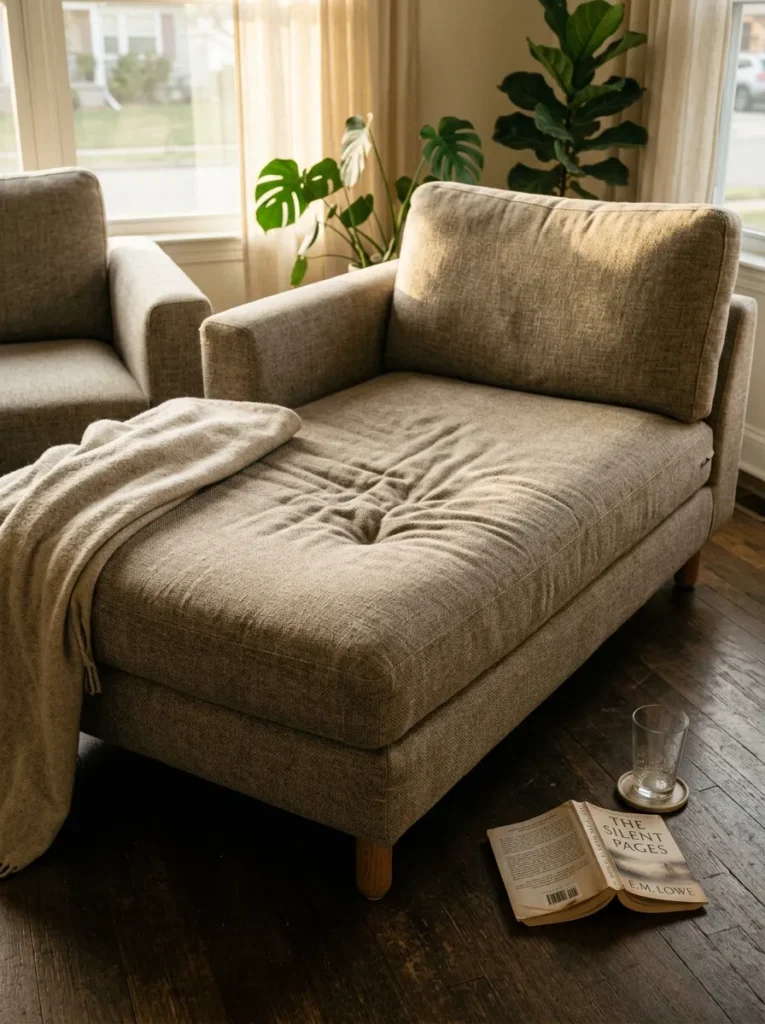
A chaise module — the armless extended seat section that provides full leg support in a lying position — is the single module addition most likely to improve daily quality of life from a modular sofa. The chaise transforms the sofa from a place to sit into a place to fully relax: reading, napping, watching a screen from a completely horizontal position, or simply having an end of the sofa with no armrest to navigate around when changing positions.
The orientation of the chaise — whether it extends to the left or right when facing the sofa — determines which part of the room faces the screen and which side has easier access for the primary users. Many modular sofas today offer customizable chaise orientation (left or right), which is a specification worth confirming before purchasing rather than discovering at delivery that the chaise faces the wrong direction for the room’s specific layout.
6. Choose a Straight Configuration and Add a Facing Loveseat for Maximum Flexibility

Instead of a fixed L or U-shape, a straight multi-seat sofa section combined with a separate facing loveseat from the same modular system gives the room a completely different arrangement capability: the two pieces function together as a conversation grouping around a central coffee table, or the loveseat separates entirely to create additional seating in a different room, or both pieces extend lengthwise for a long straight configuration for movie watching.
This two-piece approach is the most flexible arrangement within the modular sofa category because neither piece is too large for a small or medium living room independently, and both can be moved to entirely different positions — or different rooms — without the awkwardness of a single large L-shape that only works in one configuration relative to the room’s architecture. For households that move regularly or reconfigure their spaces seasonally, the straight-plus-loveseat combination maintains maximum flexibility.
7. Use Corner Modules to Turn a Sofa Line Into a Wrap-Around Arrangement

Corner modules — the square or diagonal units that connect two straight sofa sections at 90 degrees — are what create the truly wrap-around quality that distinguishes a great modular arrangement from a straight sofa with a chair placed at an angle. When two sofa sections join through a corner module, the connection reads as one continuous seating surface rather than two pieces set perpendicular to each other, and the corner position becomes the most desirable seat in the arrangement — the spot with access to both legs of the L.
Multiple corner modules allow a modular system to turn more than one corner, creating a fully enclosed U or even a more complex arrangement that suits large, irregularly shaped rooms. The corner module’s depth — typically equal to the sofa’s seat depth — determines how much visual weight it adds at the turn point. A corner module at the same depth as the sofa sections reads as continuous; one that’s significantly larger creates a visual bump at the junction.
8. Configure Two Facing Sections Without a Coffee Table for a Floor-Level Lounge

An alternative to the traditional coffee-table-centric arrangement uses two facing sofa sections positioned closer together — 24 to 30 inches apart rather than the conventional 36 to 48 — without any coffee table between them. The space between the facing sections becomes a social floor zone for drinks, books, and conversation accessories at arm’s reach rather than across a table.
This configuration works particularly well in households where the living room serves as a casual gathering space rather than a formal seating room, and where children or pets occupy the floor between the sofa sections regularly. The absence of a hard-edged coffee table removes a circulation obstacle and a surface-maintenance concern, and the closer facing distance creates a more intimate seating arrangement that suits smaller gatherings and conversation-focused use.
9. Choose a Compact Two or Three-Module Arrangement for a Small Living Room

A bulky, oversized sectional can crowd a small room, but a modular design with light fabrics and raised legs can create an illusion of space. In a small living room, the module count matters more than the specific configuration: a two-module modular sofa — a loveseat section plus one chaise — provides genuine lounging capacity without the floor footprint of a full sectional, and it positions correctly in rooms where a full L-shape would consume the available circulation paths.
The visual weight management of a modular sofa in a small room depends on three decisions: leg height (raised legs allow visible floor beneath the sofa, making the room appear larger), fabric tone (lighter fabrics recede visually; darker fabrics advance), and back height (lower backs make ceilings feel higher; taller backs provide more visual enclosure that suits larger rooms). A small-room modular sofa should satisfy all three: raised legs, lighter fabric in the room’s overall tone family, and a back height that doesn’t interrupt the sight line to windows or other room features.
10. Start Small and Expand the System When You Move or Your Space Grows

You can start with a compact modular sofa sectional for a small space and add more modules when you move, have kids, or start hosting more often. That long game flexibility is what makes modular furniture so popular in modern interiors. This staged-expansion approach is one of the most compelling financial arguments for investing in a quality modular system rather than a fixed sectional: the initial purchase is a smaller investment (fewer modules), but the later expansion doesn’t require replacing anything — it requires only adding the additional pieces to the existing set.
The practical requirement for this approach: confirm at purchase that the manufacturer offers a consistent product line where the specific modules available today will remain available in two or three years when expansion is planned. Some modular systems are discontinued or updated with slightly different proportions; purchasing a sofa with the intention of expanding it later only works if the later modules match the original pieces. A manufacturer’s track record for product consistency is worth researching before investing in a system specifically for its expansion potential.
11. Use a Modular Sofa to Replace Two Separate Seating Pieces in a Small Room

In a small living room currently furnished with a sofa and a separate armchair, a compact modular sofa — sized to provide equivalent seating to both pieces — often occupies less total floor area than the two separate pieces with circulation space between them. Two separate seating pieces require clearance around each: the path from the sofa to the armchair, the path from both to the coffee table, and the entry path into the seating arrangement. A single modular piece consolidates all of that seating within one continuous form.
The modular approach also eliminates the visual complexity of multiple different furniture forms — different legs, different arm profiles, different back heights — that can make a small room read as busy. A single modular sofa in a consistent fabric and form creates visual unity that a mixed seating arrangement rarely achieves, particularly when the existing pieces weren’t chosen as a coordinated set.
12. Choose Slip-Cover Modules for Washable, Family-Friendly Flexibility

For shoppers on a budget, a family-friendly upgrade with reversible back cushions can make it convert into a sofa bed — great for movie marathons, naps, or weekend guests. Modular sofas with removable, machine-washable covers take the practical flexibility of the modular format one step further: not only can the configuration change, but the covers can be washed after spills, swapped for a seasonal refresh, or replaced entirely when worn without replacing the sofa’s structural components.
The quality of the slipcover closure system determines whether the washable cover reads as a feature or as an awkward addition: well-designed covers have invisible closures that stay tucked, maintain crisp edges, and don’t shift during use. Poorly designed covers develop visible folds, pucker at corners, and gradually become disheveled through normal sitting. Testing the cover’s fit and closure quality — or reading reviews specifically about cover performance rather than overall comfort — is the most important research step for this specific feature.
13. Select Performance Fabric for Households With Children, Pets, or High Use

Pet owners with cats and dogs appreciate easy-clean performance fabric — fur lifts off in seconds and small marks wipe away with a damp cloth. Performance fabrics — typically tightly woven synthetic or synthetic-blend materials with stain-resistant treatments — have improved dramatically in appearance and texture and now offer a wide range of aesthetic options that suit design-forward modular sofas rather than only the utilitarian styles where performance fabrics historically appeared.
The key performance fabric specifications worth confirming: the fabric’s rub count (a measure of abrasion resistance, with 30,000+ double rubs considered heavy-duty for a sofa that will see regular daily use), its stain-resistance treatment (whether it’s applied to the surface or woven into the fiber — the latter lasts longer), and its cleaning code (W for water-based cleaning, S for solvent, WS for both — W or WS codes provide the most accessible daily maintenance). A modular sofa in a household with children or pets should meet all three criteria.
14. Use the Modular Sofa as a Bed for Regular Overnight Guests

The chaise module’s flat, extended surface and the modular system’s ability to reconfigure into a straight arrangement both serve overnight guests better than most fold-out sofa beds. The chaise alone, at standard sofa depth of 36 to 40 inches, is wide enough for most adults to sleep comfortably on their side, and at the length of a full-length chaise extension (typically 60 to 70 inches), it suits most adult heights.
A more complete sleeping configuration uses two or three straight modules arranged in a row — the combined length covering a full 78 to 84 inches when three standard 24 to 28-inch modules are linked — and the cushions laid flat to create a sleeping surface. This configuration suits modular systems where the back cushions are removable and the seat cushions are thick enough to provide genuine sleeping comfort. Specifying a modular system with this guest use in mind means prioritizing a thicker seat cushion (4 inches or more) over a shallower, more structured one that reads well aesthetically but doesn’t function as a sleeping surface.
15. Choose a Deep-Seat Module for Maximum Comfort in a Lounging-First Living Room

Deep enough to fall asleep on — the sofa described this way has a seat depth of 36 to 42 inches rather than the conventional 30 to 34 inches. Deep-seat modules suit living rooms where the primary use is lounging rather than upright socializing: the sofa where people curl up with legs on the cushion, sink into for long movie watching sessions, or nap on between activities. The deeper seat requires more floor space — the difference between a 30-inch and 40-inch seat depth is visible in how far the sofa projects into the room — but provides significantly more comfort for extended horizontal or semi-reclined use.
The practical requirement for a deep seat: the user’s back must still reach the sofa’s back cushions comfortably. For users under approximately 5’6″, a 40-inch seat depth leaves the back unsupported at the cushion — which is resolved by a collection of supportive pillows or cushions but not by the sofa’s structure alone. Deep seats suit taller users most comfortably without pillows; shorter users benefit from the addition of supportive lumbar or back cushions.
16. Opt for Boucle, Linen, or Velvet Fabric Based on the Room’s Use

The fabric choice on a modular sofa is the decision with the largest effect on both appearance and practical longevity, and it should follow from how the sofa will actually be used rather than from aesthetic preference alone.
Boucle — the looped, nubby woven fabric that remains widely popular in contemporary interiors — is visually distinctive and texturally rich, but it catches loose fibers, pet hair, and debris in its loops and is more difficult to clean than tightly woven alternatives. It suits households without pets and with relatively controlled daily use. Linen provides the organic, relaxed quality that suits most contemporary and transitional living rooms, cleans reasonably well, and develops a natural patina with use rather than deteriorating uniformly. Velvet in a modular sofa is best reserved for rooms with moderate use where the pile’s appearance can be maintained — it marks visibly when sat on from different directions and requires brushing to restore the nap. Performance fabric versions of all three appearances now exist, which allows the aesthetic preference while improving the practical resilience.
17. Add Storage Modules for Living Rooms Without Adequate Cabinet Space

Many modular sofas offer built-in storage, perfect for small apartments. Hidden compartments under seats store blankets, pillows, and more, keeping your space clutter-free. Storage-integrated modules — where the seat section lifts to reveal a hidden compartment in the module base — address the living room’s most common practical deficit without requiring additional furniture. The storage is accessible from a natural position (lifting a cushion rather than opening a cabinet door across the room), keeps frequently used items within reach of the seating area, and contributes no additional floor footprint beyond the sofa’s existing footprint.
Storage modules work best for items that are accessed regularly but not continuously: extra throw blankets, gaming controllers, remotes, chargers, magazines, and similar living-room essentials that need to be retrievable quickly. The storage compartment’s accessibility during normal sofa use — whether other people need to move to allow access, whether the cushion weight makes the lift easy — is worth testing before purchase, since a storage module used awkwardly provides less practical benefit than one that’s genuinely integrated into the daily routine.
18. Use the Modular System’s Separability at Moving Time

One of the modular sofa’s most underappreciated practical advantages appears only once every several years but matters significantly when it does: modules are easier to maneuver than one giant couch, but dimensions still matter. Measure doorways and elevators too. The ability to disassemble a modular sofa into individual modules — each independently maneuverable through a standard 30-inch doorway, into an elevator, and around a tight stair landing — eliminates the most stressful aspect of moving a large sofa.
Confirm the maximum module dimensions before purchasing for a home with challenging access: a tight staircase, a small elevator, or a door with limited swing clearance. Individual modules are typically 32 to 48 inches wide and 34 to 42 inches deep — considerably more manageable than a 90-inch one-piece sofa — but the combination of width, depth, and weight on a dense cushioned module can still be a two-person lift. Specifying lightweight modules (those using high-resilience foam rather than extremely dense alternatives) improves the move-day experience significantly.
19. Style the Modular Sofa With a Consistent Pillow and Throw Strategy

The visual character of a large modular sofa depends significantly on how it’s styled: the same modular sofa with sixteen scattered pillows in competing colors and sizes reads entirely differently from the same sofa with four deliberate pillows in a cohesive palette and one well-placed throw. The sofa’s scale gives it significant visual presence in the room, and the pillow arrangement either focuses or fragments that presence.
The approach that reads most resolved at the modular sofa’s scale: establish a consistent palette of two or three pillow colors within the room’s overall tonal family, limit the total number of throw pillows on the sofa to the number that allows someone to sit down without removing any, and drape a single throw at one end rather than distributing multiple throws at both ends simultaneously. The throw anchors one end of the sofa visually and implies the sofa is used in a specific orientation — which is true in most living rooms and creates a more natural, inhabited quality than a sofa styled identically at both ends.
How to Choose the Right Modular Configuration for Your Room
The configuration decision starts with the room shape and ends with the lifestyle. Start with your room shape. For long, narrow living rooms, a compact modular sofa sectional with an open chaise keeps the space flowing. For open-plan layouts, a larger sectional modular sofa can zone the living area.
Three questions identify the right configuration before any specific product is considered:
How many people does the sofa need to seat simultaneously? Each sofa module typically seats one person comfortably; a chaise module seats one reclining or two upright. Count the household’s typical gathering size, not the maximum guest count — a sofa sized for Thanksgiving is a sofa you’ll be navigating around every other day of the year.
Will the configuration need to change? If the sofa is for a current apartment that won’t change, a simpler modular system (fewer modules, one configuration) delivers equivalent comfort at lower cost. If the sofa is an investment intended to follow the household through multiple moves or life changes, a more extensive modular system with separable modules justifies its higher price.
What does the primary wall face? The sofa’s back should face the wall; the chaise or extension should orient toward the room’s natural focal point (window, fireplace, screen). Mapping this relationship before purchasing prevents the common regret of a chaise that faces a blank wall.
Final Thoughts
A modular sofa is one of the most practical furniture investments available for the reality of American domestic life — where households move, families grow, and the living room’s purpose shifts over years. The flexibility that makes modular sofas valuable isn’t just in their reconfigurability on any given Tuesday; it’s in their ability to travel with a household through genuinely different living situations without requiring replacement.
Start with the room’s actual dimensions and the household’s actual use patterns. Choose the fabric before the color. Confirm the system is genuinely rearrangeable. And size the configuration to the daily seating need rather than the occasional entertainment need — the room you live in every day is the room the sofa should serve.
Save the ideas here that match your room’s specific shape and your household’s specific habits, and return to this guide when a move or a life change prompts the next reconfiguration.