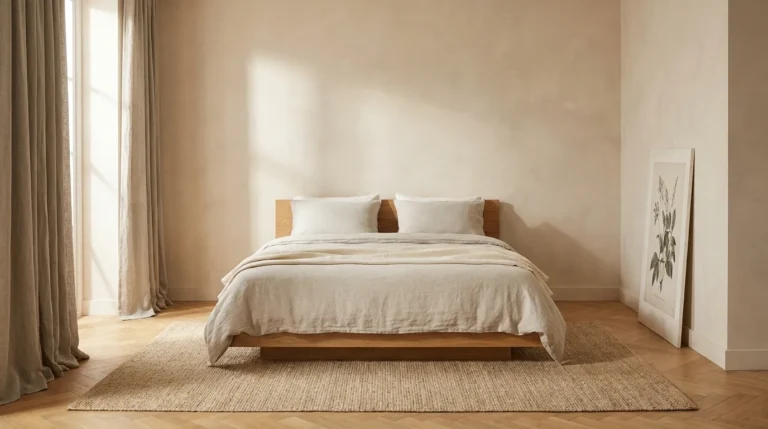
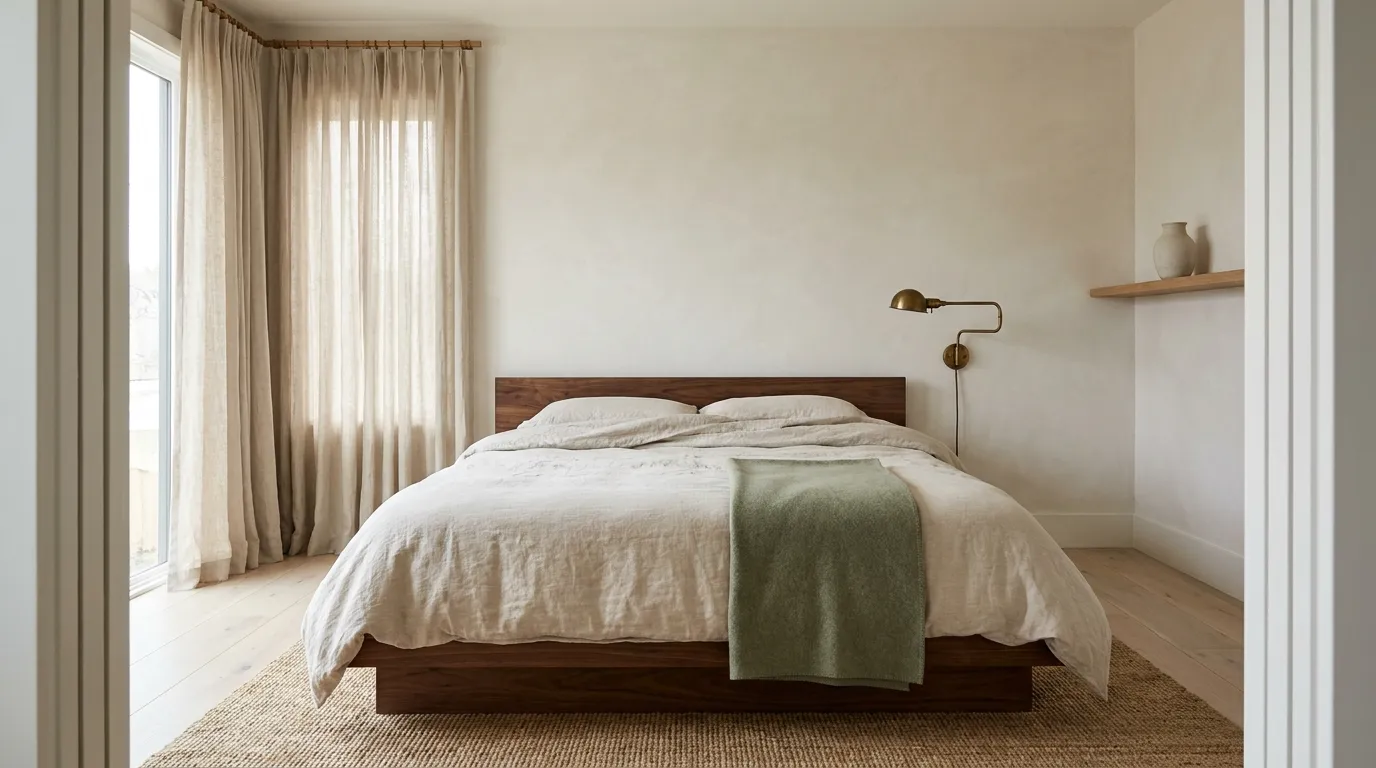
21 Japandi Bedroom Ideas That Feel Calm and Minimal
There’s a reason Japandi has staying power. Where other hybrid aesthetics tend to collapse under their own contradictions, the marriage of Japanese wabi-sabi philosophy and Scandinavian hygge sensibility produces something genuinely coherent: rooms that feel both considered and unforced, spare without feeling cold, and minimal without feeling empty.
The bedroom is where the style proves itself. Strip away the busy patterns, the decorative clutter, the furniture that announces itself — and what remains is a space that actually lets you rest. But achieving that stillness without landing in sterile territory requires more than choosing neutral colors and a low bed. It requires understanding which materials carry warmth, how much negative space is deliberate versus just bare, and where the Japanese restraint should yield to Scandinavian comfort. These 21 Japandi bedroom ideas work through both the visual logic and the practical decisions, so you can build the look with intention rather than guessing.
1. Start With a Low Platform Bed in Pale Oak or Walnut
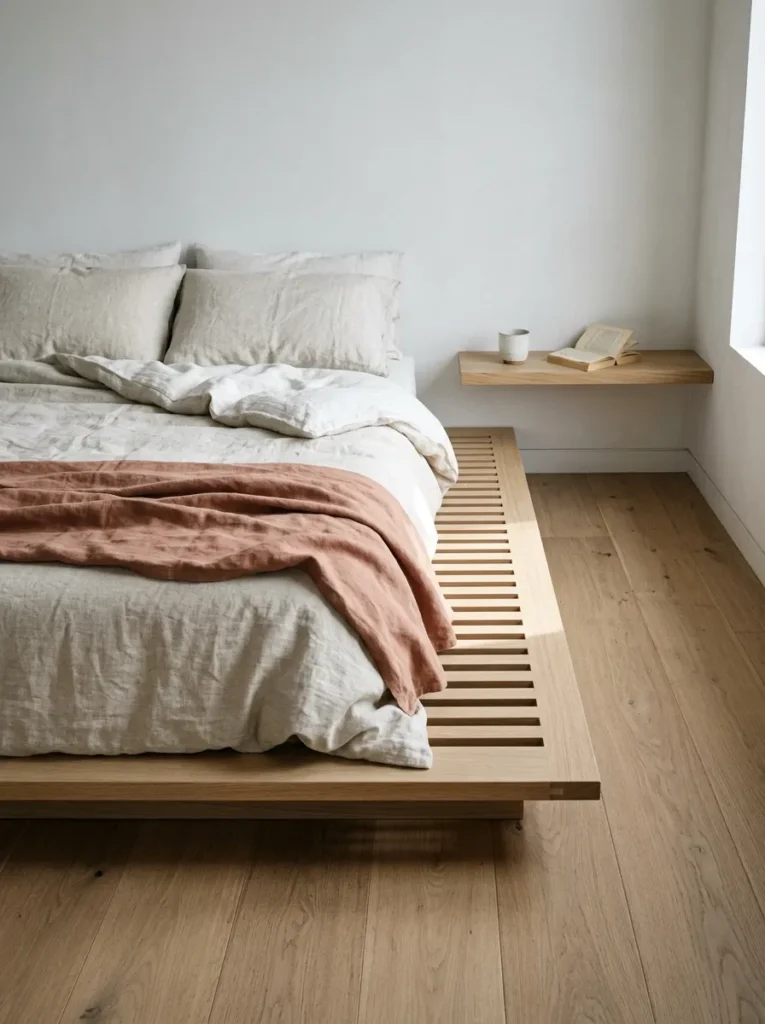
The bed is the anchor decision in any Japandi bedroom, and the frame sets the aesthetic register for everything that follows. A low platform bed — typically with a slatted base or a solid frame sitting 30–40 cm from the floor — immediately signals the right visual language. The low profile lengthens the perceived horizontal plane of the room, which works particularly well in rooms with standard ceiling heights because it draws the eye across rather than up.
Wood selection matters. Pale, low-contrast oak reads more Scandinavian; darker, grain-rich walnut pulls the palette toward the Japanese end of the spectrum. Both work, but commit to one and let it appear at least twice more in the room — a matching shelf, a bedside table — so it reads as a considered material choice rather than a random furniture purchase. Avoid bed frames with padded headboards in this context; a simple slab headboard or an integrated wooden panel is far more consistent with the style’s visual logic.
2. Choose an Off-White Wall Color With a Warm Undertone
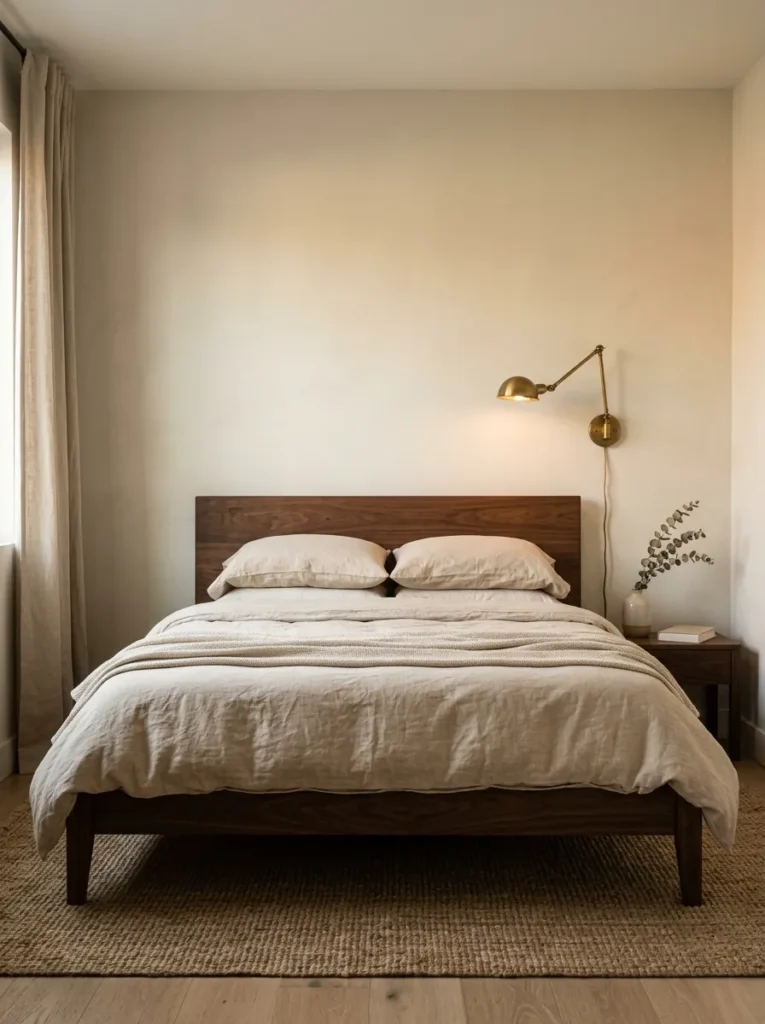
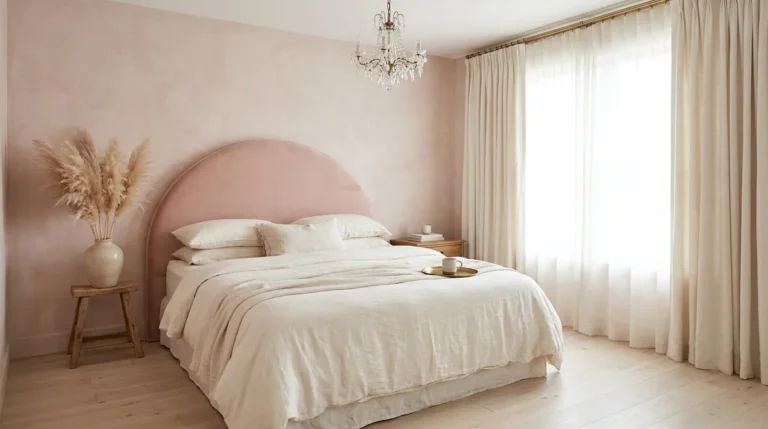
Pure white walls are a common Japandi mistake. They read clinical rather than calm, and they flatten the natural materials the style depends on. The walls in a Japandi bedroom should disappear — not shine. Look for off-whites with warm, slightly yellow or greige undertones: chalk whites, rice whites, and linen whites all sit in this territory.
The practical test is to hold your paint chip next to any natural wood or linen textile you’re planning to use. A white with a pink undertone will fight warm oak; one with a creamy or grey-beige undertone will recede gracefully. In rooms with limited natural light, a very slightly warmer shade prevents the walls from reading grey in the evening. This is not a dramatic color decision, but it changes the feel of every material in the room.
3. Layer Natural Linen Bedding Instead of a Duvet Cover Set
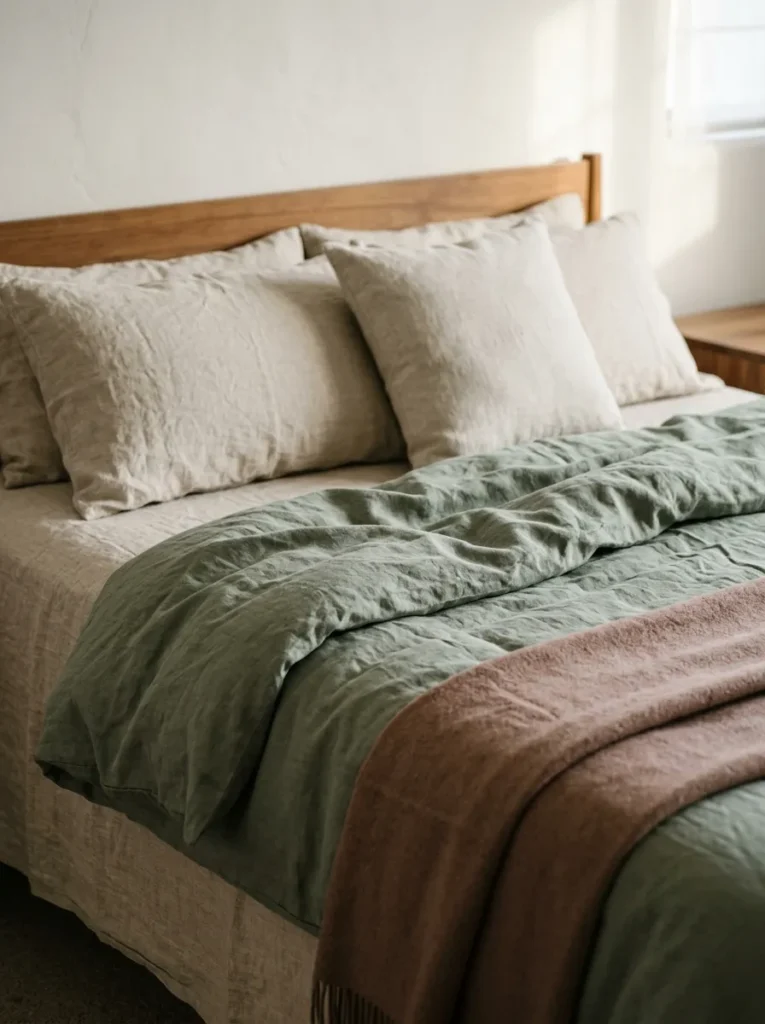
Coordinated bedding sets in crisp cotton produce a hotel-room finish that works against the Japandi goal. Natural linen — loose-weave, slightly rumpled, irregular in its texture — does something else entirely. It adds tactile depth without visual noise, and it sits comfortably between the Japanese appreciation for imperfect materials and the Scandinavian focus on comfortable textiles.
Layer rather than match. A natural oatmeal base sheet, an undyed linen duvet, and a single heavier throw in muted sage or dusty clay gives the bed visual interest without any pattern. The restraint is the point. Avoid high thread-count cotton that photographs glossy or overly smooth — it undermines the material integrity the rest of the room is working toward. For warmer climates, linen’s breathability is a genuine practical benefit, not just an aesthetic one.
4. Use Shoji-Inspired Room Dividers or Sliding Panels
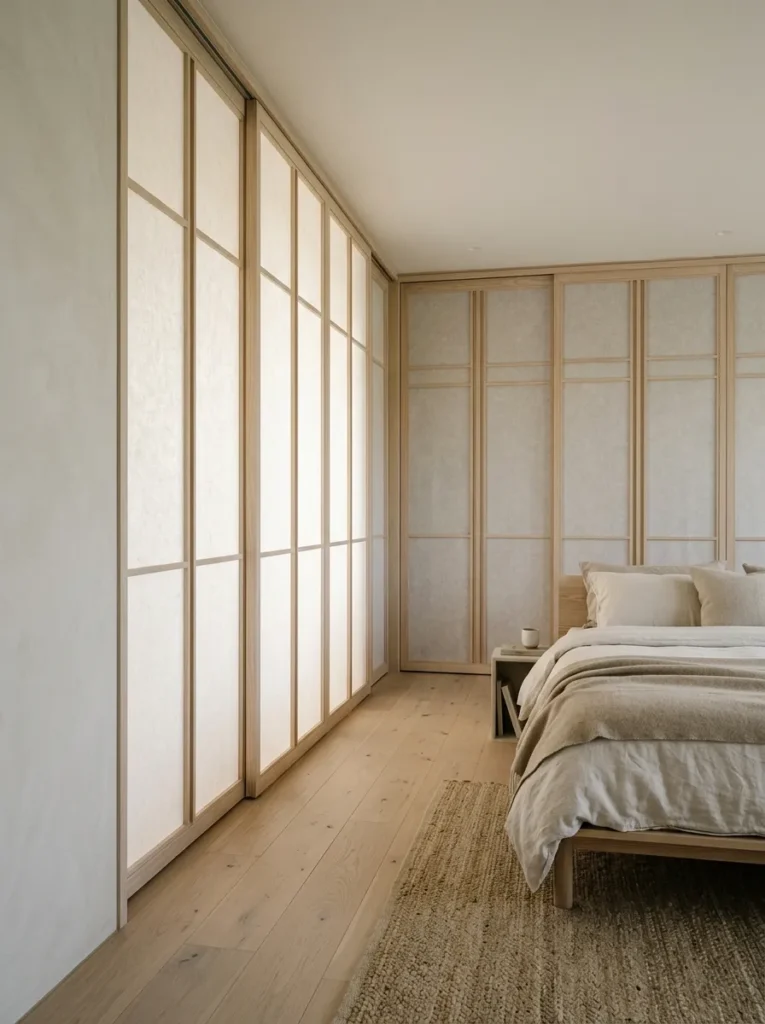
Full shoji screens are a statement — and if your bedroom ceiling height and room proportion can support them, a timber-framed panel with white or natural washi paper brings an authentically Japanese spatial quality into the room. They work especially well as wardrobe concealment: sliding panels across a built-in closet opening allow the storage to disappear entirely, which is half the battle in maintaining Japandi’s visual calm.
For smaller rooms or renters, panel curtains hung on a ceiling-mounted track achieve a close approximation — choose undyed linen, natural cotton muslin, or ivory silk for the panels. The key difference is that shoji screens divide space by filtering light rather than blocking it, which means they change the quality of light in the room in a way standard doors don’t. If you have an east-facing window, placing a shoji-style panel nearby creates a soft, diffused morning light effect that is remarkably consistent with the aesthetic’s mood.
5. Mount Wall Sconces at Bedside Rather Than Using Table Lamps
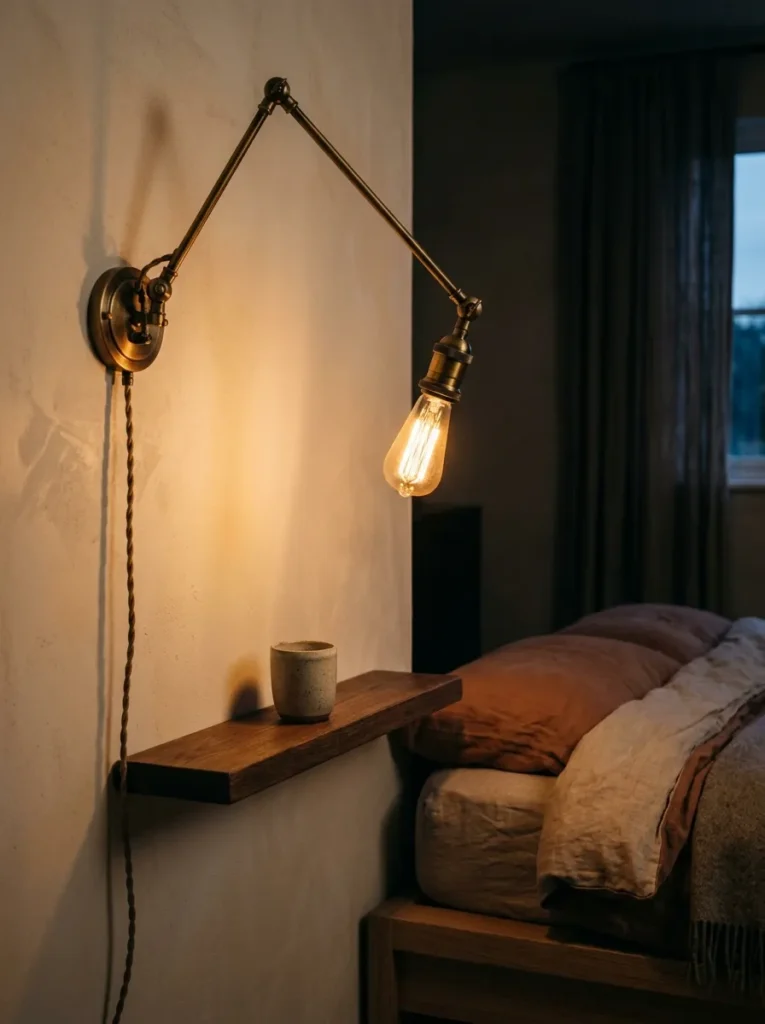
Table lamps require bedside tables substantial enough to support them — which means furniture with visual weight. In a Japandi bedroom where surface area is meant to remain quiet, wall-mounted sconces solve both the lighting problem and the clutter problem simultaneously. They free the bedside plane entirely, allowing for a much slimmer shelf or nothing at all.
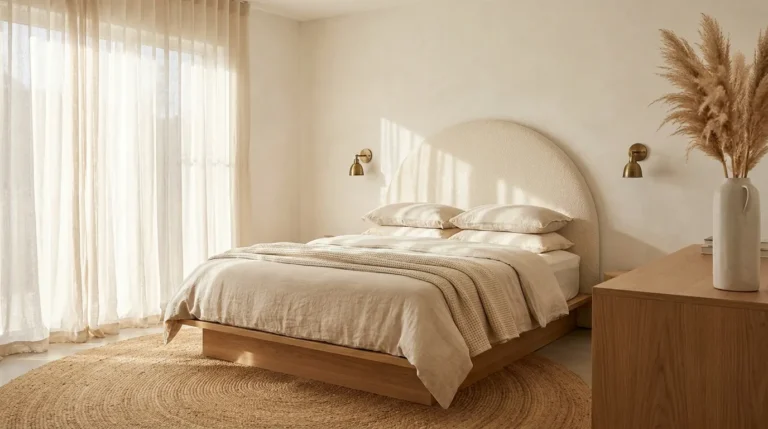
Choose sconces with articulated arms so they can be angled for reading. Materials should align with the room’s palette: aged brass, raw copper, matte black iron, or oiled bronze all work depending on whether your scheme leans warmer or cooler. Avoid chrome — it’s too sharp and reflective. The mounting height matters: position the sconce centre at approximately 150–160 cm from the floor so the light falls naturally across the pillow when you’re sitting up in bed, rather than glaring from above.
6. Introduce a Single Piece of Handmade Pottery on an Open Shelf
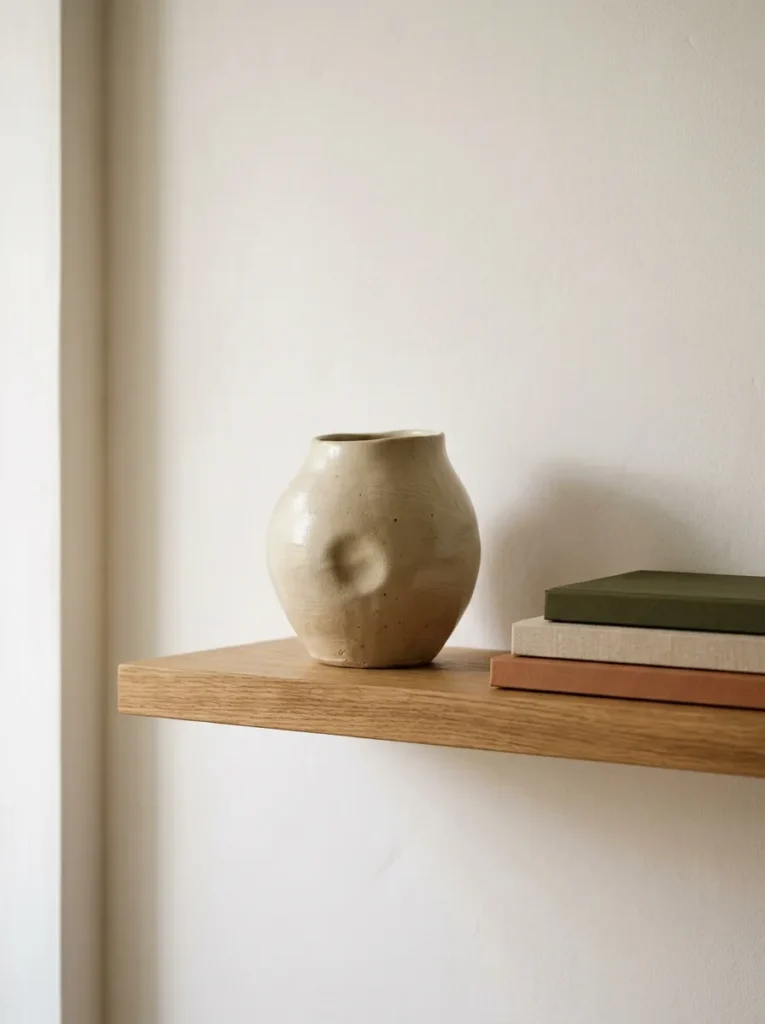
In Japandi interiors, decorative objects earn their place by being useful, imperfect, or meaningful — ideally more than one of those things. A single handmade ceramic vessel on an otherwise spare shelf demonstrates restraint in a way that a curated collection of objects cannot. The irregular glaze, the visible thumb impression in the clay, the slight asymmetry — these are visible expressions of wabi-sabi that a machine-produced vase will not replicate, regardless of how neutral its color.
One or two pieces is enough. A shelf with five ceramics is a collection; a shelf with one becomes a considered placement. If the shelf holds anything else, make it functional: a small stack of books lying flat, or a single dried stem. The visual discipline here is harder than it sounds, especially if you enjoy objects, but the result reads as genuinely intentional rather than styled for a photograph.
7. Choose Flooring That Reinforces the Natural Material Story
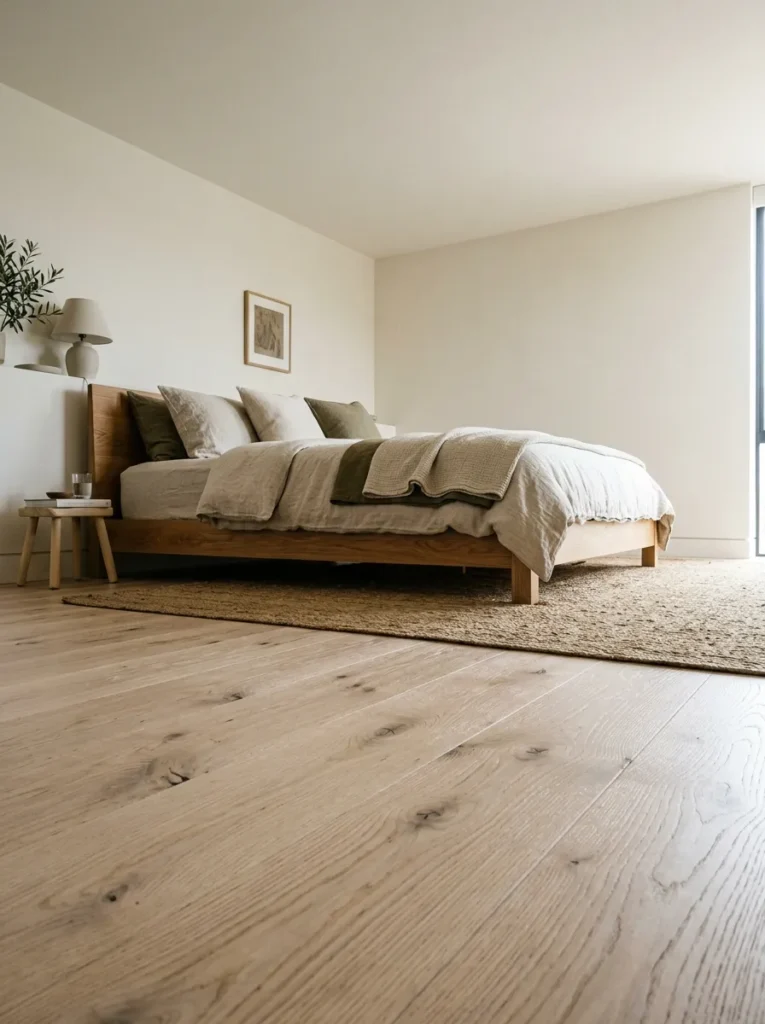
In a Japandi bedroom, the floor is not background — it’s a primary material. Wide-plank oak flooring with a matte oil finish is the most consistent choice: the grain is visible, the surface absorbs light rather than reflecting it, and the warmth of the wood reads clearly without any lacquer gloss. Pale ash works in similar ways. Darker-stained floors are possible but risk making the room heavy unless balanced carefully with lighter walls and textiles.
If you’re renting or working within a budget, consider how much of the floor is visible. A large area rug — natural jute, undyed wool, or a low-pile sisal — placed beneath and extending well beyond the bed frame can redefine the floor surface visually. Choose a rug that runs at least 60 cm beyond the sides of the bed so it grounds the furniture rather than floating beneath it. Avoid rugs with any pattern that competes visually with the room’s restraint.
8. Build a Floating Shelf System Instead of a Bedside Table
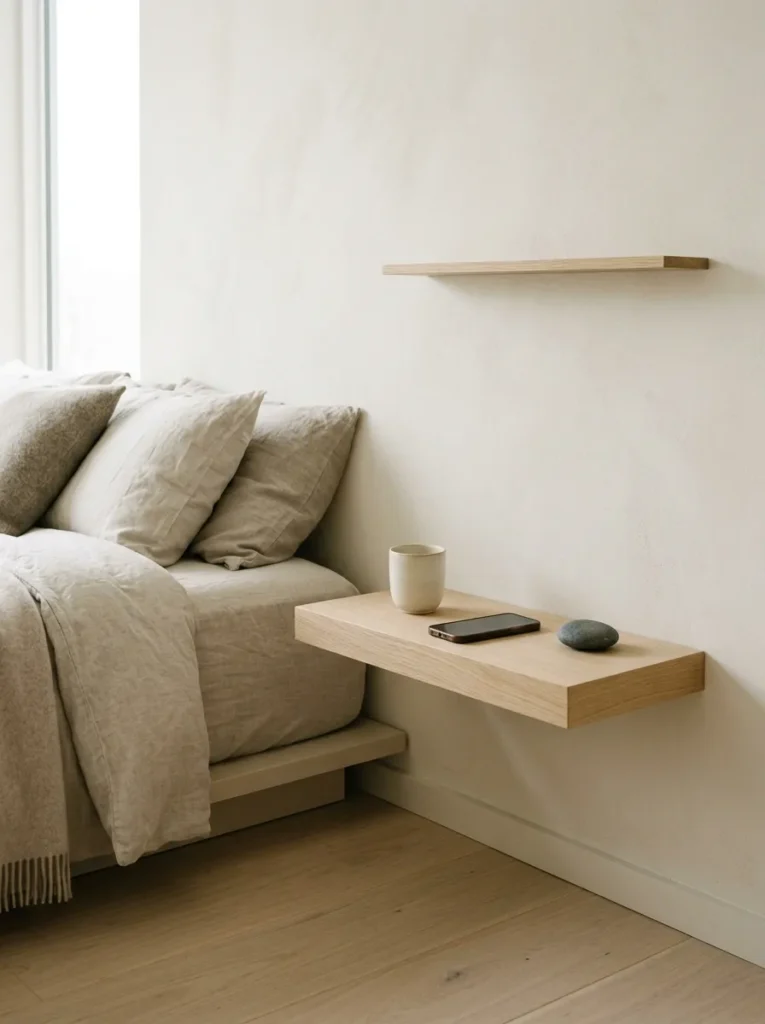
A wall-mounted timber shelf — 25–30 cm deep, 60–80 cm wide — positioned at bedside height (roughly seat height, around 55–60 cm from the floor for a low platform bed) provides the functional surface you need without the visual weight of freestanding furniture. It’s particularly effective in narrow bedrooms where a bedside table would consume circulation space.
The shelf should be made of the same timber species as the bed frame, or closely complementary. One shelf is usually enough. Two positioned asymmetrically on either side of the bed — at slightly different heights — create a deliberate imbalance that reads more Japanese than perfectly symmetrical arrangements do. Keep the surface nearly empty: a small ceramic cup for water, the phone, perhaps one object. The discipline of using less surface than you have is part of the aesthetic logic.
9. Hang Artwork Deliberately — One Piece, Low
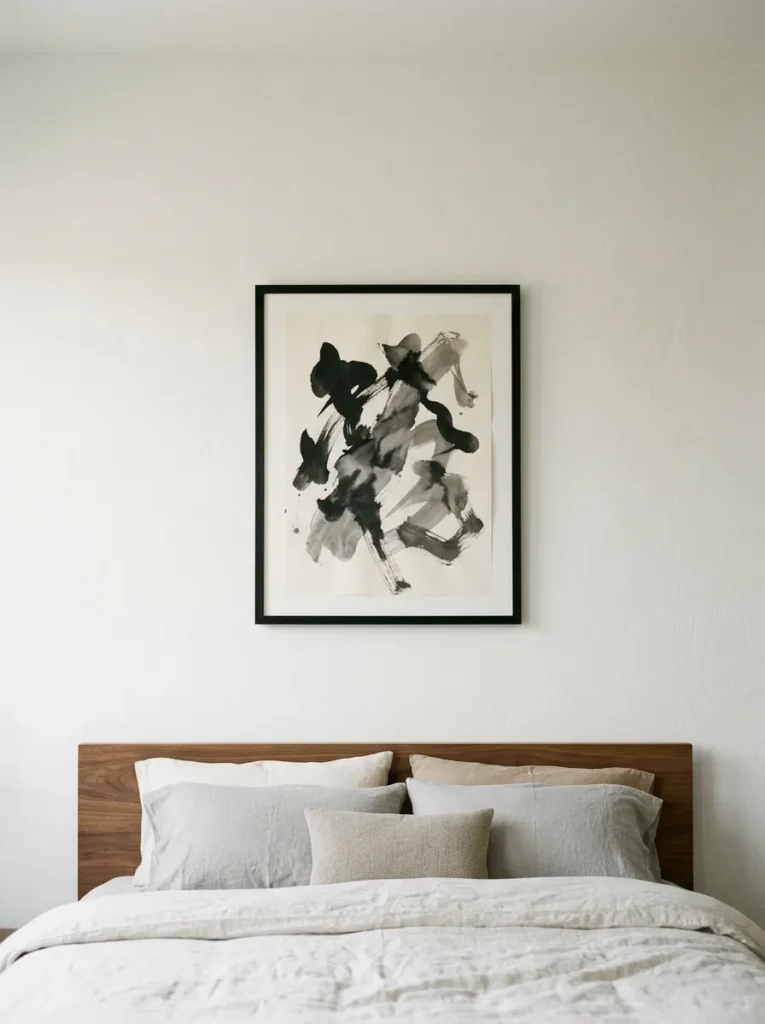
Japandi bedrooms often have one artwork rather than a gallery wall. The choice of what and where matters more than in rooms where multiple pieces dilute the commitment. Ink wash paintings, abstract charcoal drawings, botanical illustrations, and single-line drawings all carry the right restraint. The frame should be simple: natural maple, black-stained oak, or raw linen matting without an outer frame.
Hang the piece lower than standard gallery height — centre it at approximately 130–140 cm from the floor rather than the typical 145–150 cm. In a Japandi room with low furniture, this positions the artwork in better visual relationship with the bed and the horizontal plane of the room. A piece hung too high will float disconnected from the furniture below it. One well-placed artwork creates more atmosphere than four competing pieces.
10. Use a Neutral Stone or Concrete Surface as a Grounding Element
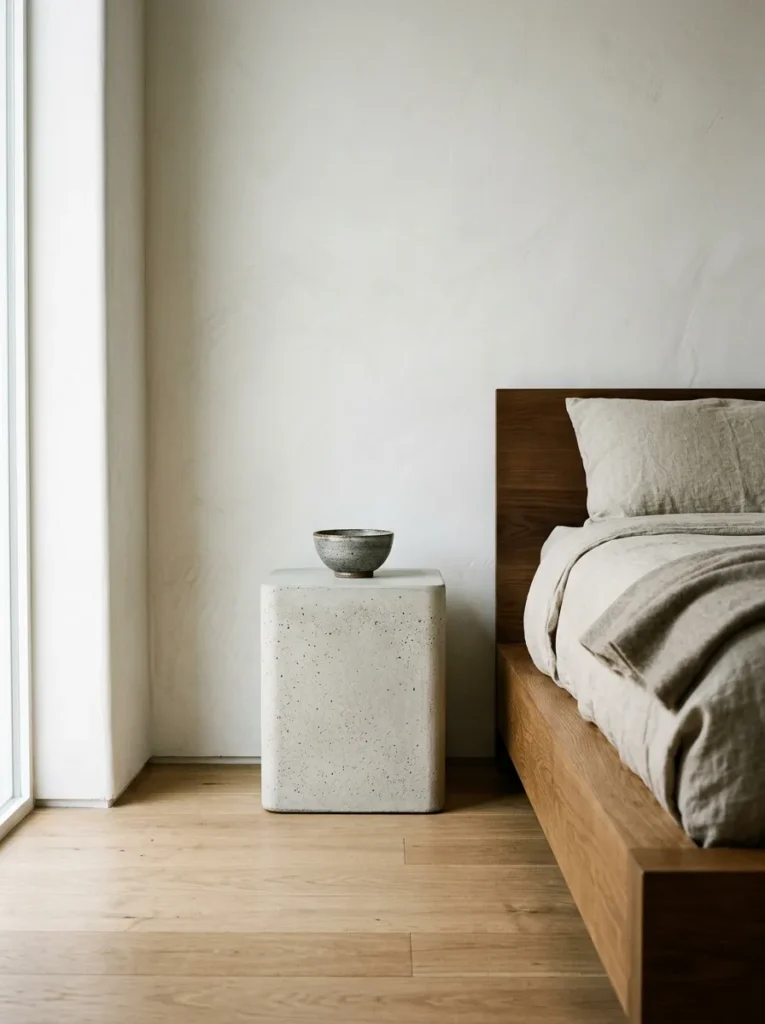
Not every Japandi bedroom needs stone, but a single hard, cool element creates a material contrast that makes the warm wood and soft linen read more distinctly. This might be a small concrete side table, a pale limestone tray on a shelf, or a textured plaster finish on one wall — not the whole room, just one surface or object.
Honed marble, unpolished travertine, and light grey concrete all work. Polished marble does not — the gloss surface pulls away from the matte, muted quality the style requires. The practical value of a concrete side table is also its solidity and weight: it feels substantive in a way that lightweight bedside alternatives sometimes don’t, which adds to the physical calm of the room rather than undermining it.
11. Keep the Color Palette to Three Tones Maximum
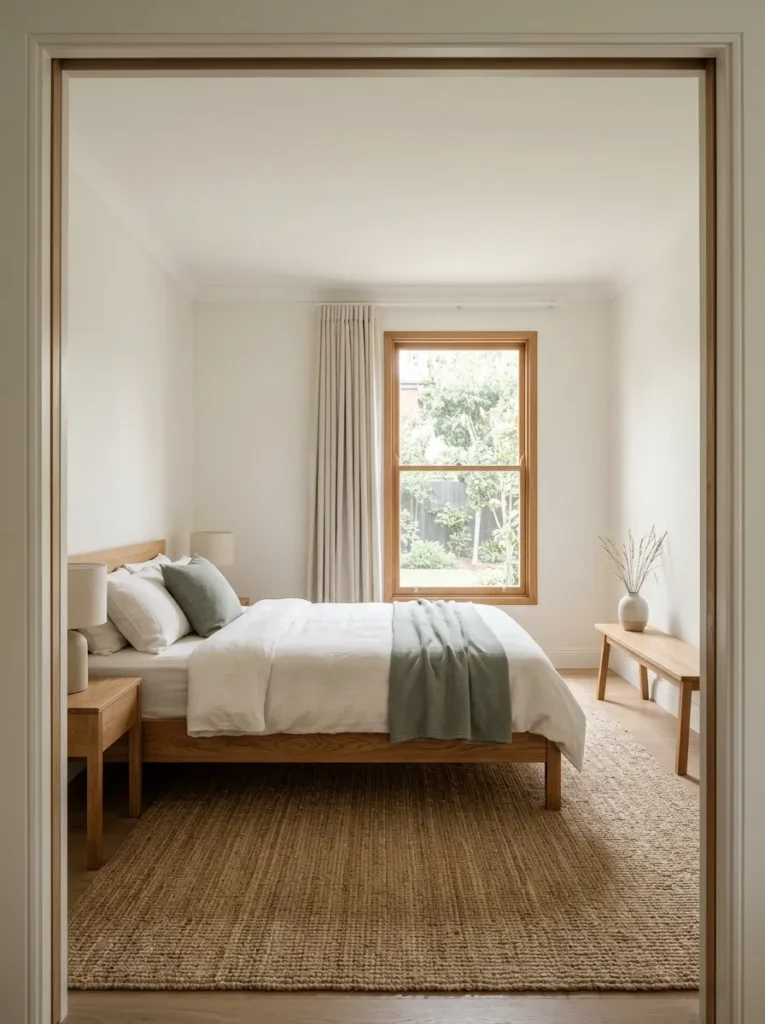
The Japandi palette is not just neutral — it’s edited. A successful scheme typically uses one dominant neutral (usually the wall color), one warm natural tone (the wood), and one accent that reads as an organic color rather than a design color: dusty sage, muted terracotta, charcoal, or soft indigo. Three tones used consistently across furniture, textiles, and objects produce a room that reads as deliberately composed.
The mistake most people make is adding a fourth or fifth tone through accessories — a differently colored throw, a different-toned cushion cover, a contrasting rug. Each addition feels small individually but collectively unravels the palette restraint. If you want seasonal variation, switch textiles rather than introducing new colors — the same sage appears warmer in heavyweight wool and cooler in fine linen, which gives enough range without breaking the palette.
12. Choose Curtains That Pool Slightly on the Floor
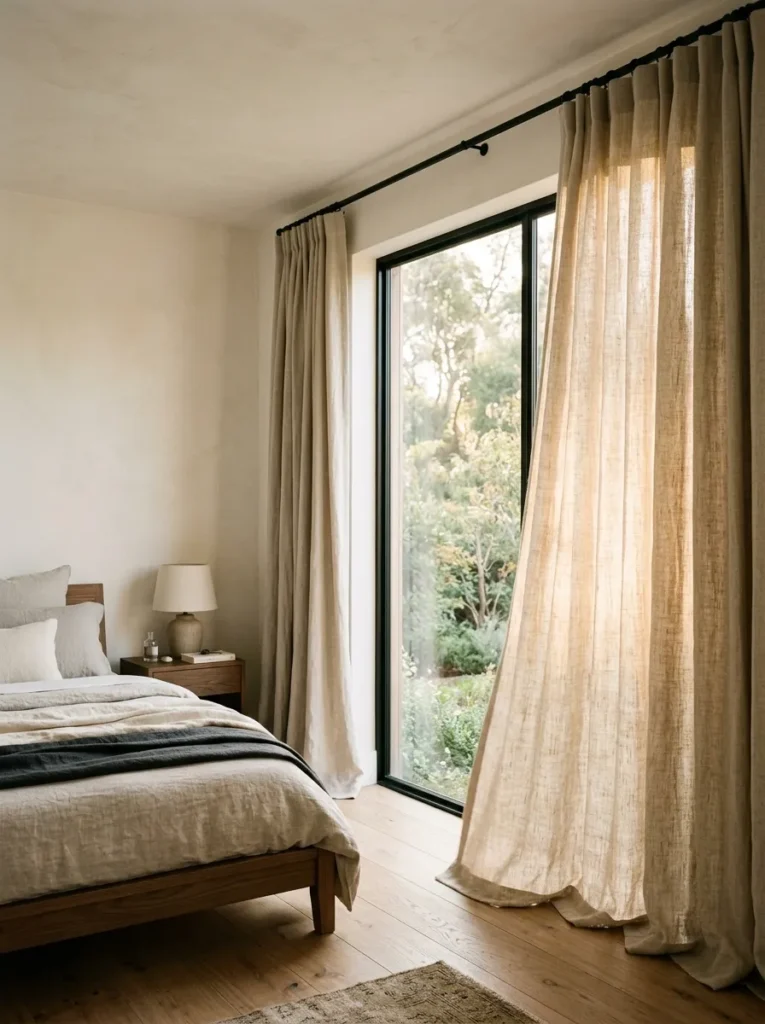
Floor-length curtains hung close to the ceiling — ideally within 10 cm of the cornice or ceiling line — are one of the most effective ways to increase the perceived height of a Japandi bedroom without any structural change. The fabric pooling very slightly on the floor (around 3–5 cm) adds a quality of softness and considered luxury that hemmed-to-the-floor curtains don’t produce.
Fabric matters. Unlined linen, cotton-linen blends, and cotton voile all allow diffused natural light through during the day, which maintains the airy, washed quality Japandi interiors depend on. Heavy blackout curtains in dark tones can work in bedrooms where sleep is prioritized, but pair them with a sheer panel for daytime use so the room retains its natural light character. Avoid patterned curtains, eyelets, or metal rings — rod pocket or pleat header styles with a simple timber or matte black pole are more consistent with the aesthetic.
13. Conceal Storage Completely — No Open Wardrobes in Small Rooms
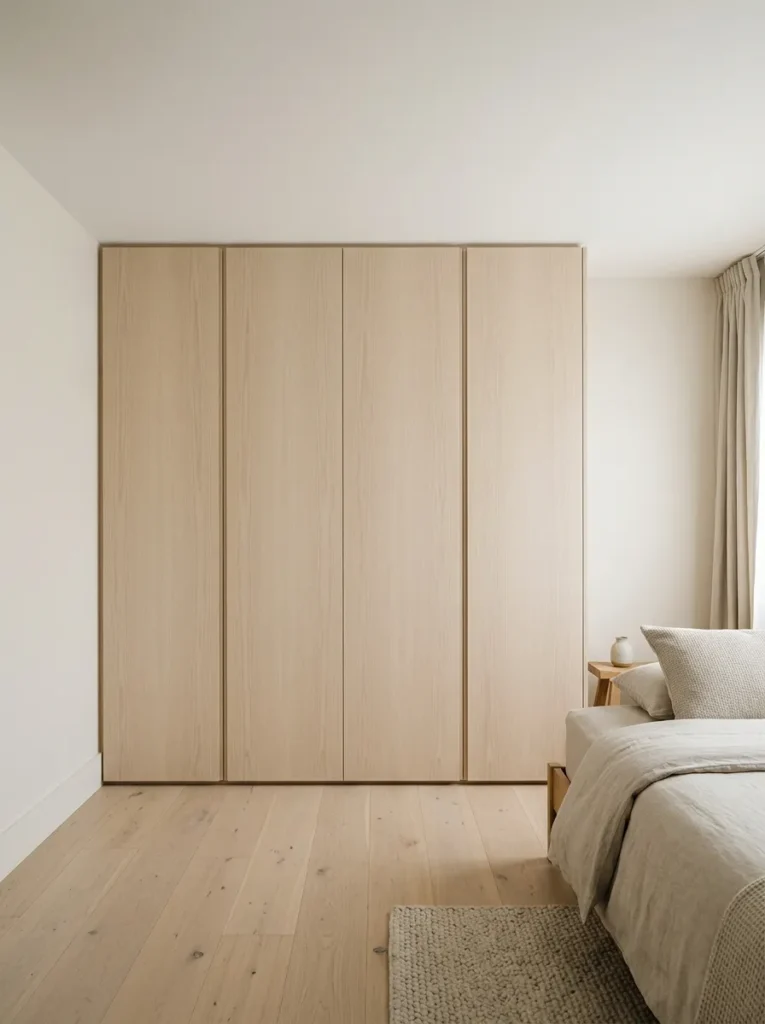
Japandi minimalism depends on negative space, and negative space is impossible to achieve when storage is visible. In larger bedrooms, open clothing rails can work if the clothing itself is edited and color-sorted — a wardrobe where every item is black, white, or grey reads as part of the aesthetic. In rooms under 15 square metres, this is rarely practical.
The better answer is full-height cabinetry with push-to-open or recessed finger-pull doors in a finish that either matches the wall or uses a complementary natural wood. Both approaches make the storage visually recede: wall-matching makes it disappear, natural wood makes it read as an architectural element rather than a piece of furniture. Avoid shiny door finishes, visible handles in contrasting metal, and units that stop short of the ceiling — the gap collects clutter and undermines the clean ceiling line.
14. Add a Low Wooden Stool or Bench at the Foot of the Bed
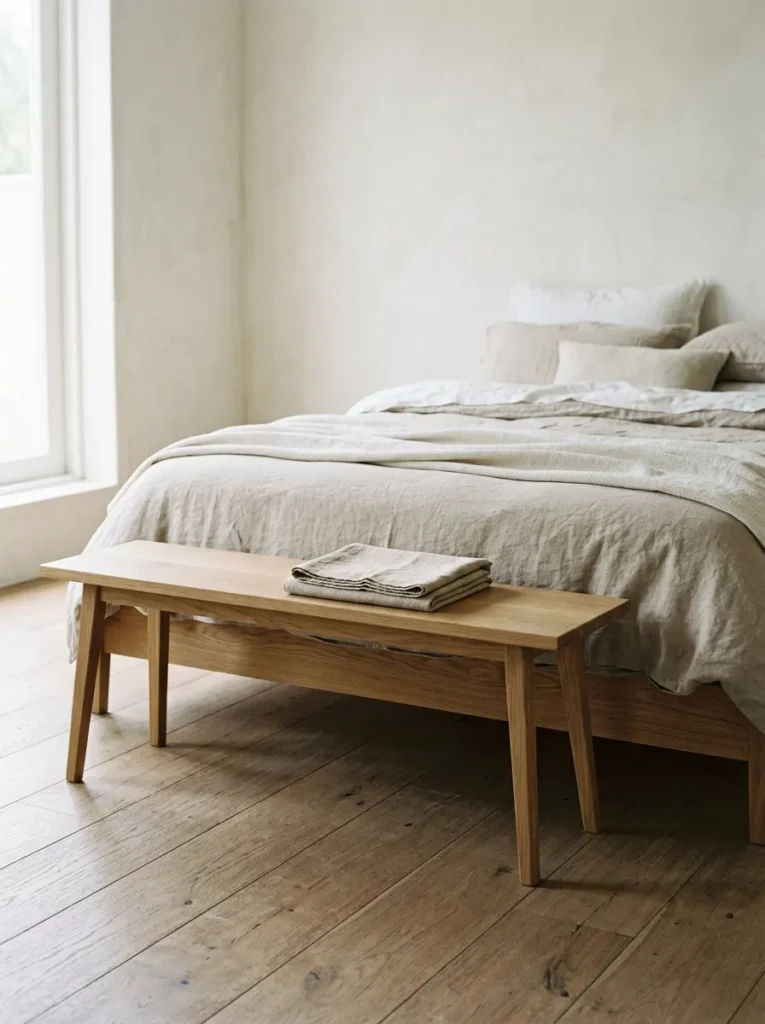
A low stool or bench at the foot of the bed serves as a functional ledge — for laying out clothes, for sitting when putting on shoes — but its more important role in a Japandi bedroom is compositional. It completes the horizontal layering of the room and adds a second piece of natural wood furniture that reinforces the material story without adding visual weight.
The piece should be visually simple: solid wood, no upholstery, or minimal upholstery in a material consistent with the bedding. A Japanese-influenced stool with slightly angled legs, a Scandinavian milking stool form, or a solid slab bench all work. Keep the height low — above 45 cm starts to read like conventional bedroom furniture rather than the grounded, horizontal quality that Japandi rooms aim for. Avoid painted or lacquered pieces here; the natural wood grain should be visible.
15. Layer Textiles by Weight, Not Pattern
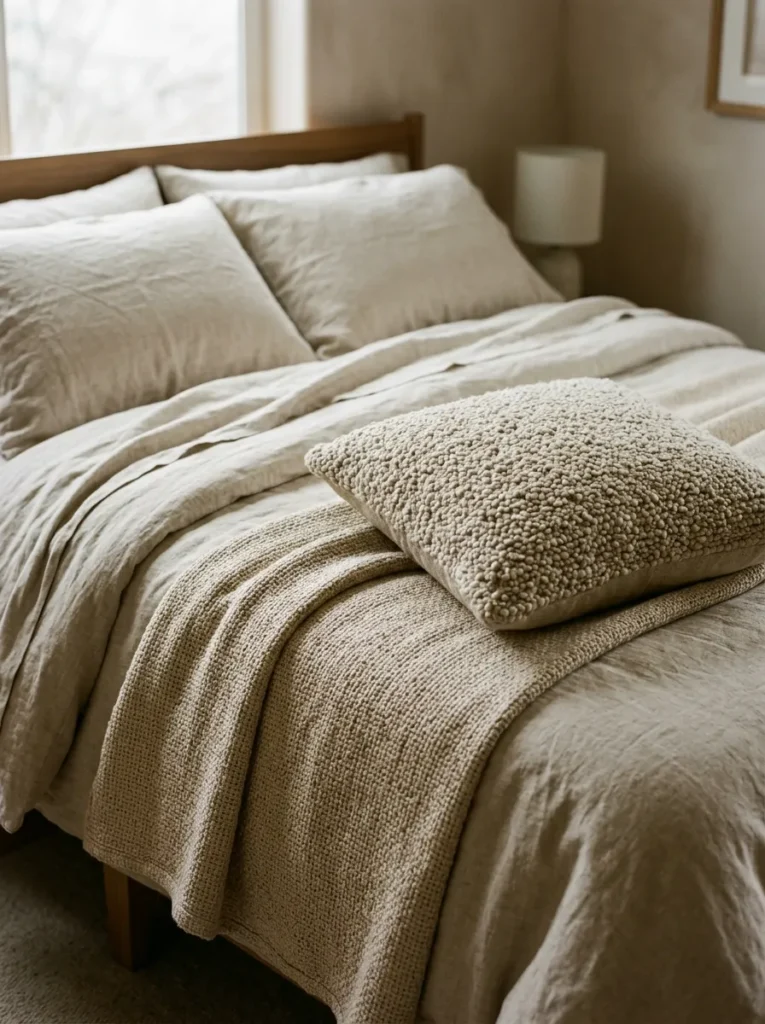
In a room where color is restrained and pattern is absent, texture becomes the primary source of visual softness. But texture through pattern is different from texture through material weight, and the Japandi approach requires the latter. This means combining a fine linen sheet with a medium-weight cotton throw and a heavier wool or boucle cushion — the variation comes from the hand and weight of each textile rather than from any print or weave pattern.
Two to three distinct textures is enough. More than that and the layering begins to read as maximalist despite using only one color family. The arrangement matters: a throw folded across the lower third of the bed, positioned off-centre, with one cushion leaned against the headboard rather than two symmetrically placed, creates an off-hand quality that feels lived-in without being messy. Symmetry in Japandi textiles produces a staged feeling that works against the aesthetic’s natural ease.
16. Incorporate a Indoor Plant With Strong Architectural Form
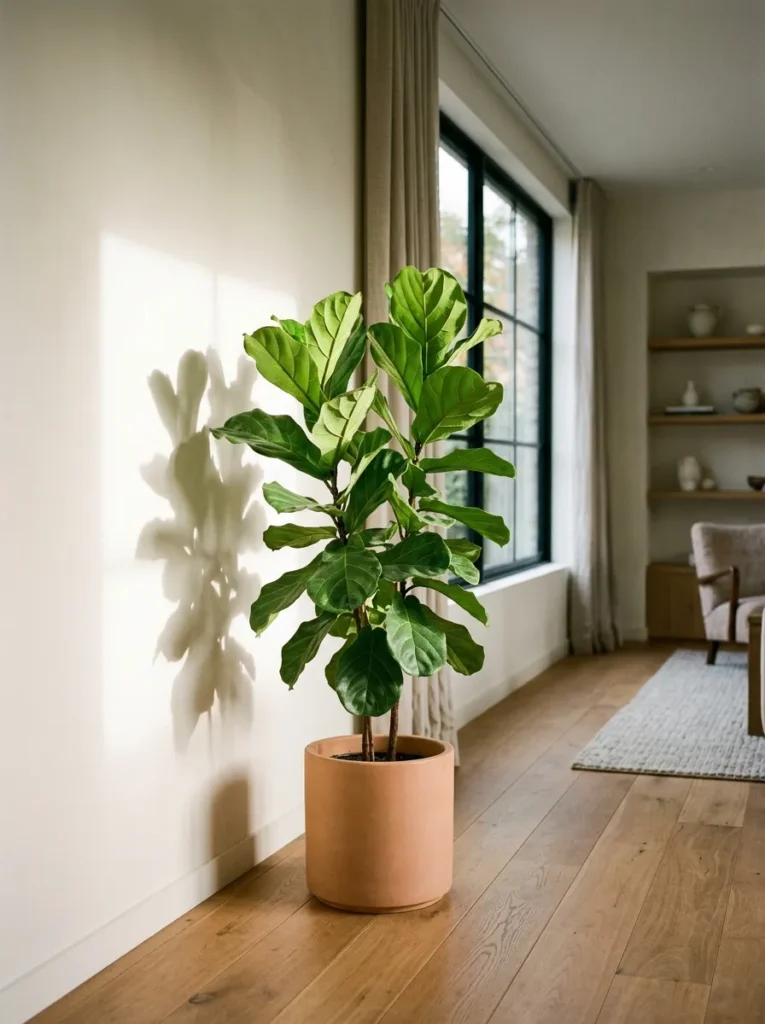
Plants appear in Japandi bedrooms not as decoration but as living material — specifically plants whose form reads as deliberate: a single tall Ficus lyrata, a compact Monstera with a few leaves, a Snake plant, or a cluster of three stems in a simple ceramic cylinder. The plant’s silhouette is what matters. Bushy, untidy, or small-scale plants in multiple containers turn the bedside shelf into a windowsill garden rather than an intentional placement.
One plant per room is usually the right number. Position it where it receives appropriate natural light — which in a bedroom with standard north or east-facing windows usually means closer to the window rather than at the far wall. A plant in the wrong light position will decline visibly, which undermines the aesthetic more than having no plant at all. The ceramic container should be unglazed, rough-surfaced, or simply matte rather than decorative.
17. Apply a Limewash or Clay Paint Finish to One Wall
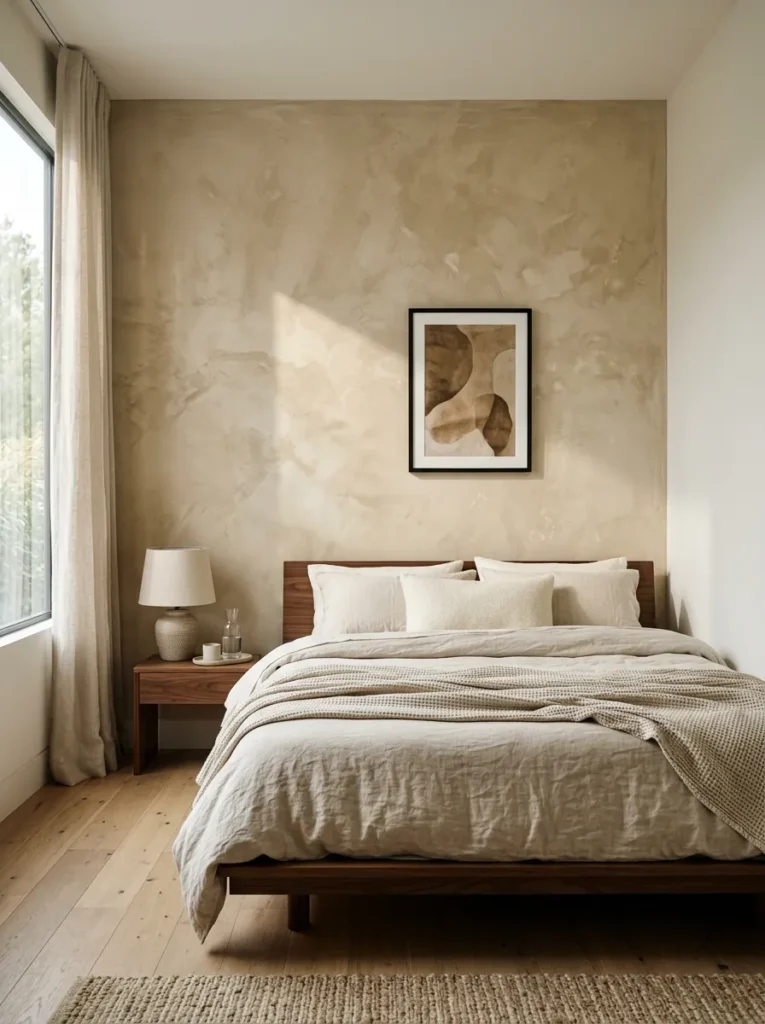
A single wall treated with limewash or clay paint introduces the kind of material depth that flat emulsion cannot replicate. The finish is slightly uneven, shifts in tone as the light moves through the day, and has a chalky surface quality that absorbs rather than reflects. Applied to the wall behind the bed, it acts as a soft focal point without requiring any artwork or architectural feature.
Limewash in warm stone tones — dusty white, pale sand, greige — works particularly well in bedrooms with oak furniture because the two materials share the same warm, earthy quality. In rooms with walnut or darker wood, a slightly cooler limewash in pale grey or blue-grey creates an effective contrast. The practical note: limewash is less washable than standard paint and will mark if touched repeatedly in a high-traffic area, but on a bedroom wall behind the bed it rarely presents this problem.
18. Use a Tatami-Inspired Mat or Natural Fibre Area Rug
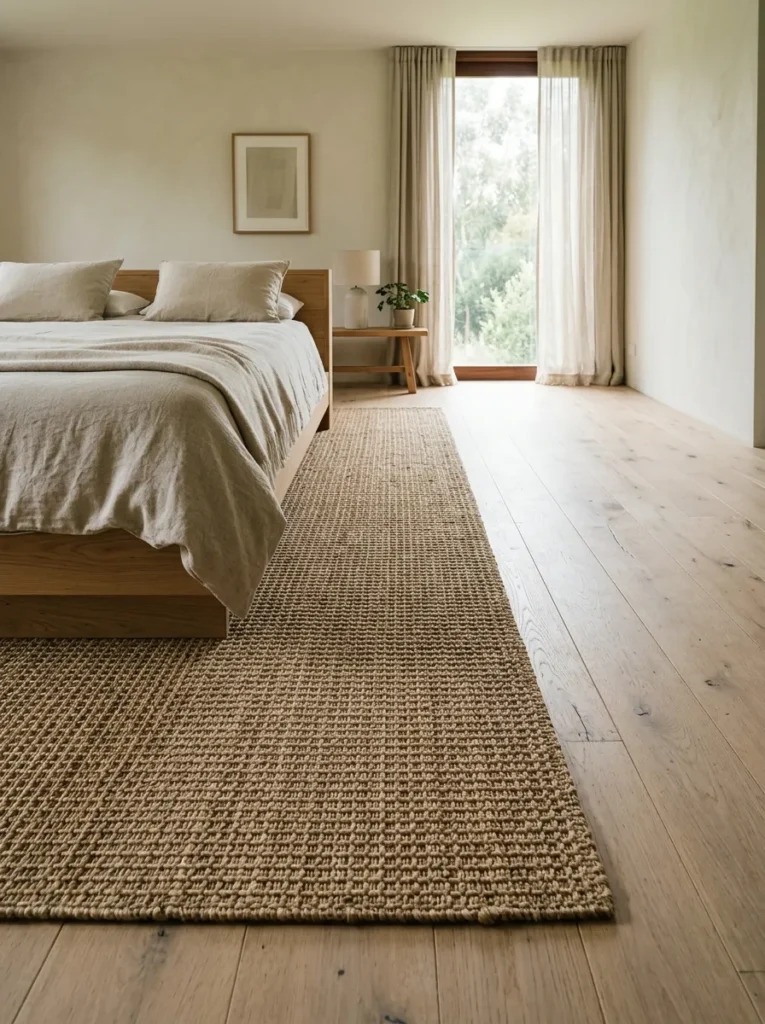
Traditional tatami has a very specific grain and material quality that is genuinely difficult to source outside of Japan. But woven sea-grass, sisal, and natural coir rugs produce a similar visual and tactile quality at a practical price point, particularly in a rectangular format that references the proportions of tatami panels. Place the rug to define the sleeping zone rather than to fill the room — a single mat positioned under and beside the bed anchors the bed arrangement without covering the floor completely.
The exposed timber floor on either side is part of the visual composition. In Japandi interiors, floor space is not something to be covered; it’s part of the room’s breathing room. A rug that fills the space from wall to wall removes this quality entirely. Size the rug so it extends 40–60 cm beyond the sides of the bed and 30 cm at the foot — close enough to ground the furniture without erasing the floor.
19. Create a Reading Corner With a Single Chair and Floor Lamp
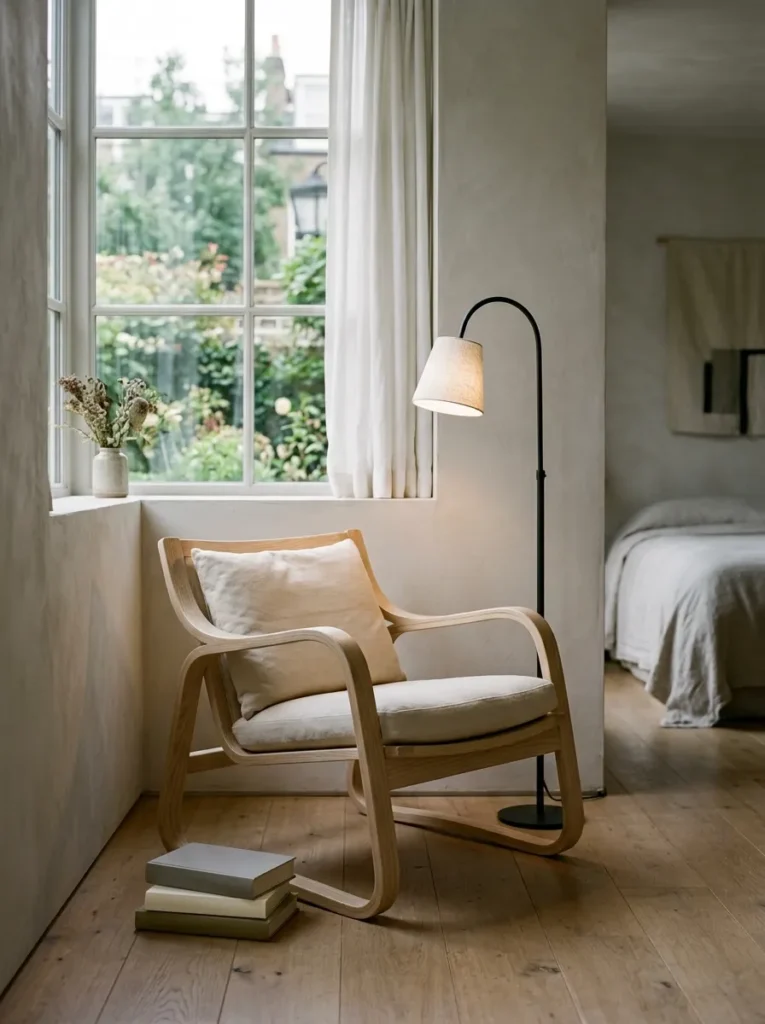
A deliberate reading corner in a Japandi bedroom — a carefully chosen chair, a floor lamp with a simple paper or cloth shade, and perhaps a small stack of books on the floor beside it — creates a secondary zone that makes the room feel purposeful rather than single-use. The chair should have a low, curved form: a bent-wood Danish armchair, a simple Japanese-influenced low lounge chair, or a moulded wood form with a simple cushion.
The floor lamp matters as much as the chair. A paper lantern-style shade diffuses light softly; a simple adjustable arc lamp in matte black or brushed brass directs light without decoration. Avoid lampshades with texture, fringe, or pattern. The corner works best when it’s positioned near a window — natural light during the day, the lamp at night — and when the chair faces slightly away from the bed, suggesting a space for being awake rather than merely another place to rest.
20. Leave Deliberate Empty Space — The Room Is Not Unfinished
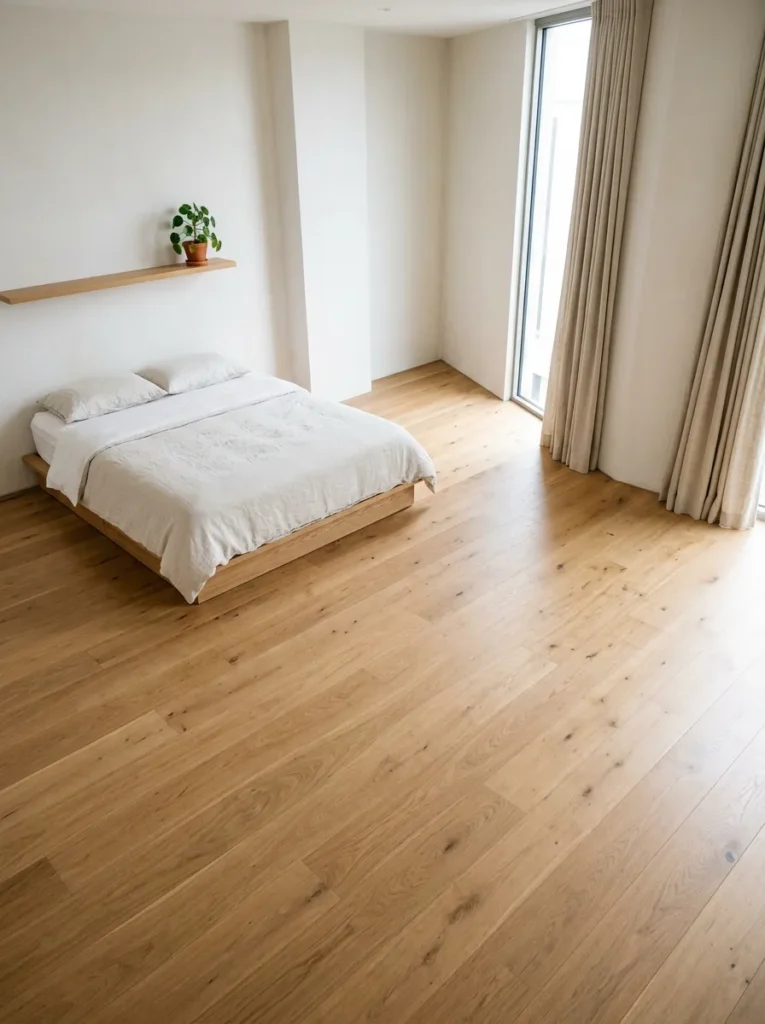
The most consistent mistake in Japandi bedrooms is treating every spare surface and wall as a problem to be solved. The empty corner is not a styling opportunity. The bare section of wall is not a hook that needs a hanging. The narrow ledge between the door and the wardrobe does not need a small table or a floor plant.
Negative space is active in Japandi interiors — it creates the breathing room that makes everything else read clearly. If you have placed furniture and can still feel the urge to add more, wait. Live in the room for two weeks before introducing anything further. The visual discomfort of empty space is often short-lived, and what initially reads as unfinished usually resolves into calm once you’ve adjusted to the quieter visual register. Japandi rooms are not empty because they’re incomplete. They’re empty because the emptiness is carrying weight.
21. Edit Ruthlessly — Return Something After Every Purchase
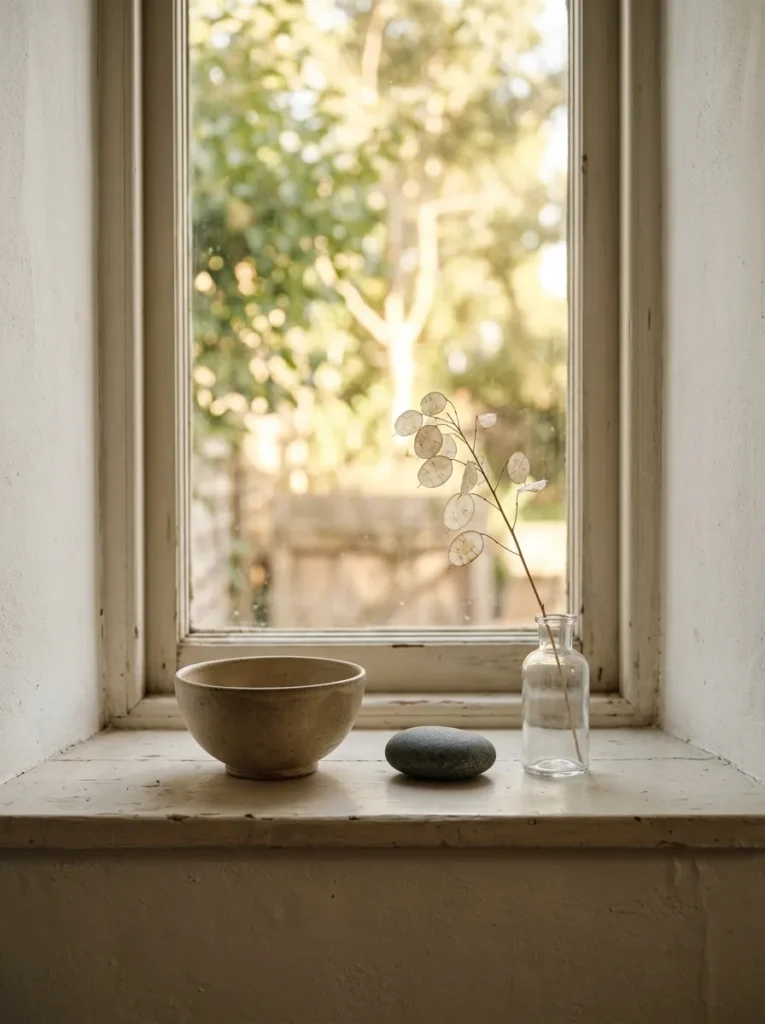
This belongs at the end because it’s less a design idea than a maintenance discipline, and Japandi bedrooms require it. Every piece you bring into the room should prompt a review of what’s already there. A new ceramic piece means asking whether the shelf can now hold one fewer item. A new plant means asking whether the other plant still earns its place.
The style doesn’t ask you to own nothing. It asks you to hold each object to a higher standard of usefulness, meaning, or visual quality. In practice, this means the room should look slightly more edited six months after you’ve completed it than it did on the day you photographed it. Accumulation is the natural direction; restraint requires active choice. The rooms that embody Japandi most convincingly are usually owned by people who genuinely enjoy the act of removing things.
How to Choose the Right Direction for Your Space
The most practical decision you’ll make before styling a Japandi bedroom is which end of the spectrum to work from: the warmer, more Scandinavian end or the sparer, more Japanese end. Neither is better — but they suit different room types and different people.
Rooms with limited natural light, cooler climates, or renters who want easy warmth tend to benefit from leaning Scandinavian: more textile layering, slightly warmer wall tones, a touch more furniture comfort. The aesthetic becomes cozy rather than austere.
Rooms with good natural light, larger floor areas, or owners who genuinely tolerate visual emptiness work better from the Japanese end: flatter surface use, more deliberate negative space, harder material contrasts between stone and wood.
The mistake is trying to split the difference everywhere. Choose a direction, commit to it more strongly in the primary elements (bed, walls, floor), and let the secondary elements (textiles, objects, plants) carry the opposite influence. That tension between restraint and warmth is what makes Japandi more interesting than either of its constituent styles alone.
Final Thoughts
Japandi bedroom ideas work best when you treat them as a sequence of decisions rather than a shopping list. Start with the floor and the walls — the two surfaces that affect everything else. Choose the bed frame next, because its material and height will define what the rest of the furniture has to respond to. Then add textiles, lighting, and objects in that order, evaluating whether each element earns its place before introducing the next.
Not every idea in this guide belongs in the same room. A tatami-inspired mat and wall-mounted sconces and a limewash wall and a reading corner and a handmade ceramic are all good choices — but used together in a single medium-sized bedroom, they begin to compete. Pick the ideas that address your room’s actual problems: poor light, cluttered storage, too much visual noise, or a lack of material warmth.