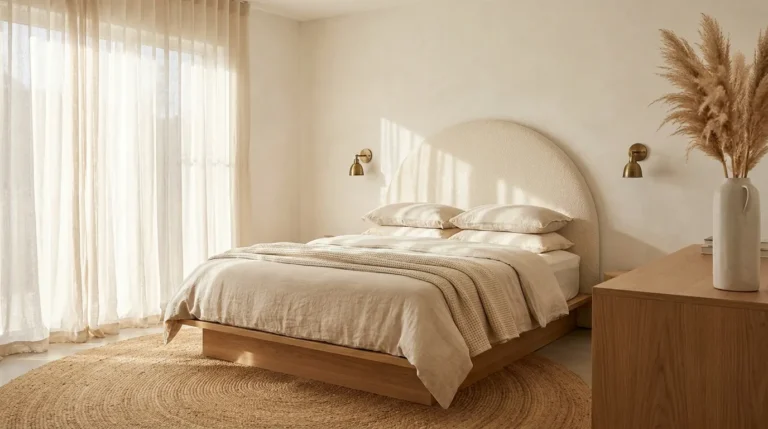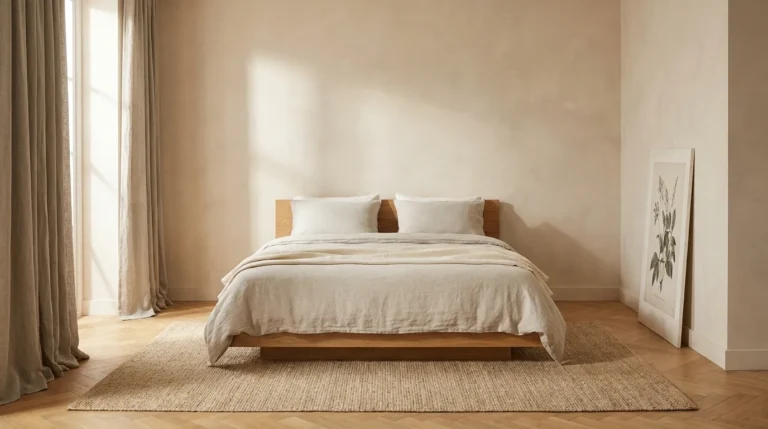
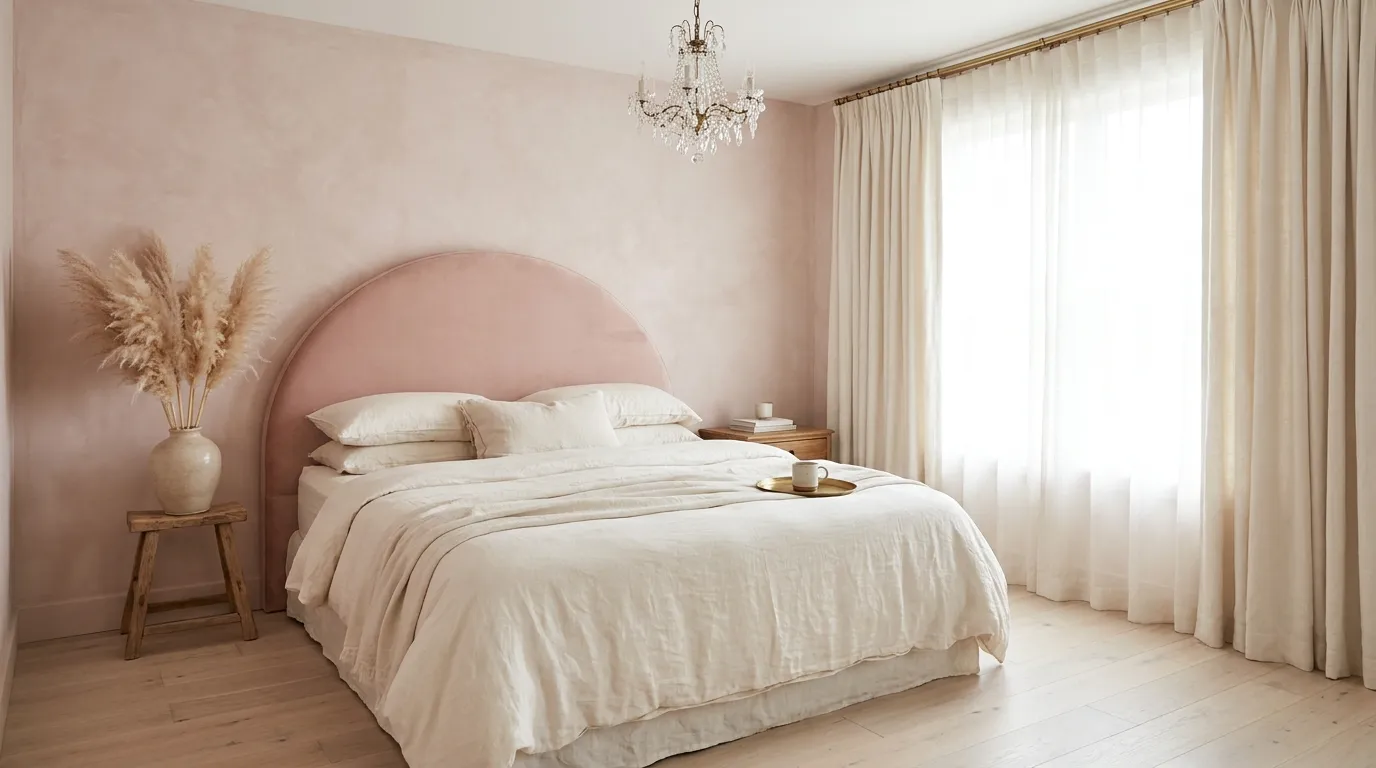
22 Feminine Bedroom Ideas That Feel Soft and Elegant
A feminine bedroom at its best isn’t about pink walls and floral prints — it’s about softness made deliberate and elegance made personal. The feminine bedroom ideas that hold up over time are the ones built on texture, material quality, and a considered palette rather than on a single decorative theme. A room can feel entirely feminine through the weave of its bedding, the curve of its furniture, and the warmth of its light without a single explicitly “feminine” object in it — and that restraint is exactly what separates a bedroom that photographs well once from one that feels quietly beautiful every morning for a decade.
This roundup covers 22 distinct approaches to the soft, elegant feminine bedroom — from a blush silk canopy to a Parisian-style all-white room with sculptural plaster molding, from a maximalist floral wallpaper feature wall to a minimalist room where the femininity lives entirely in the curve of the headboard and the weight of the linen. Each idea explains the specific design reasoning behind why the choice creates the softness and elegance it does, where it works best, and how to implement it without the most common mistakes that tip feminine into fussy. Save the ideas that match your room and your version of elegant.
1. A Soft Blush or Dusty Rose as the Room’s Primary Wall Color
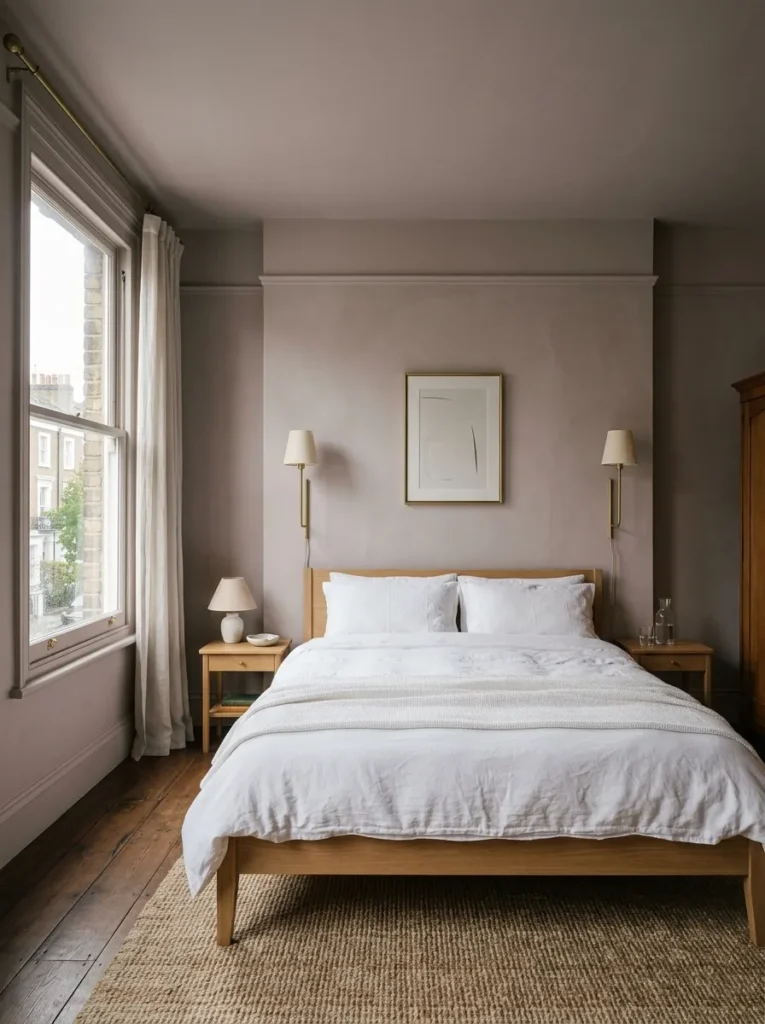
Blush and dusty rose — the muted, gray-tinged versions of pink rather than the bright candy tones — function as sophisticated neutrals in a feminine bedroom rather than as accent colors, which is why rooms painted in this family can hold their own against white linen, warm wood, and brass without looking like they belong to a specific age or decade. The key tonal distinction is the gray content of the pink: a blush with significant gray in its undertone reads as a grown-up wall color that happens to be warm and flattering; a blush without gray reads as pink. Apply as a full-room color — walls and ceiling in the same tone — for the most enveloping, sophisticated effect.
2. A Ruffled or Gathered Linen Bed Skirt
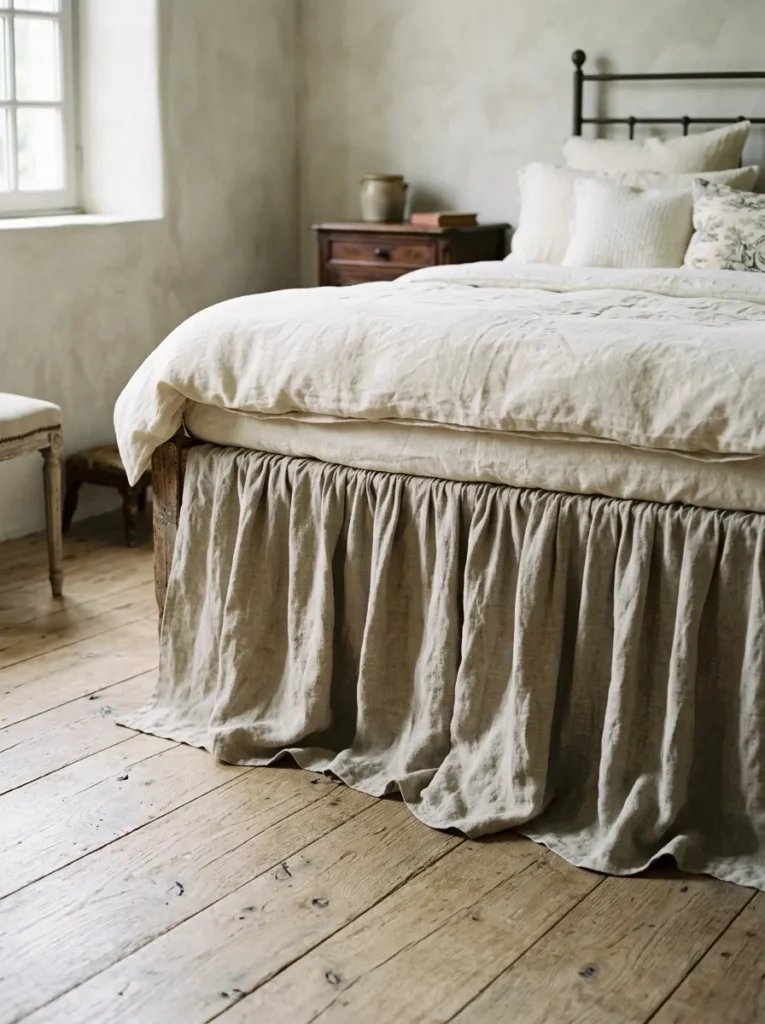
A bed skirt in gathered or softly ruffled natural linen — falling to the floor from the mattress edge in loose folds rather than box-pleated stiffly — adds the kind of soft, organic femininity to a bed that no amount of pillow styling achieves on its own, because it introduces movement and volume at the bed’s base where the eye naturally lands when entering the room. The gathered style rather than a formal pleated style is what keeps this idea in the elegant-rather-than-precious category. Choose undyed or barely-there blush linen that allows the folds to cast their own shadow rather than fighting the bedding above for attention.
3. A Curved Upholstered Headboard in Velvet or Boucle
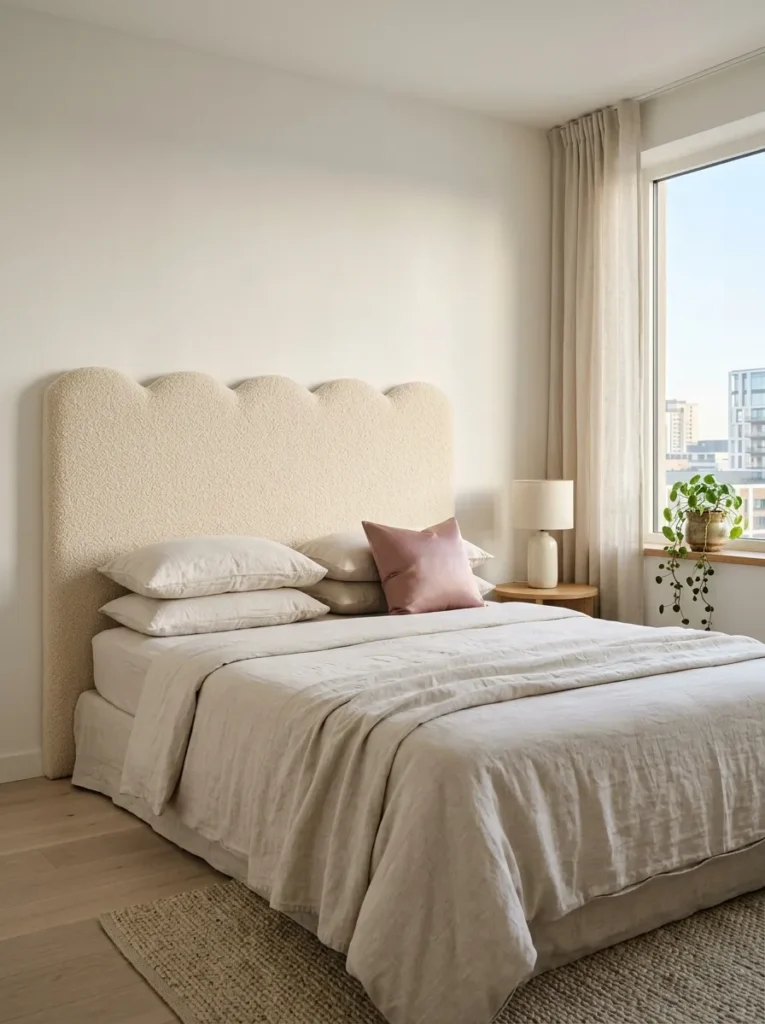
A headboard with a curved silhouette — arched at the top, rounded at the corners, or scalloped along its upper edge — introduces a softness to the bedroom’s primary focal wall that no square or rectangular panel can replicate, because curved lines are inherently gentler and more human-scaled than right angles. Upholstered in velvet or boucle, the curve also becomes a tactile element: a surface that looks as soft as it feels. The choice between fabrics shifts the room’s register — velvet reads as more formal and glamorous, boucle reads as softer and more contemporary. Both work in a feminine bedroom; the fabric should match the room’s existing palette depth.
4. A Parisian-Inspired All-White Room with Plaster Molding
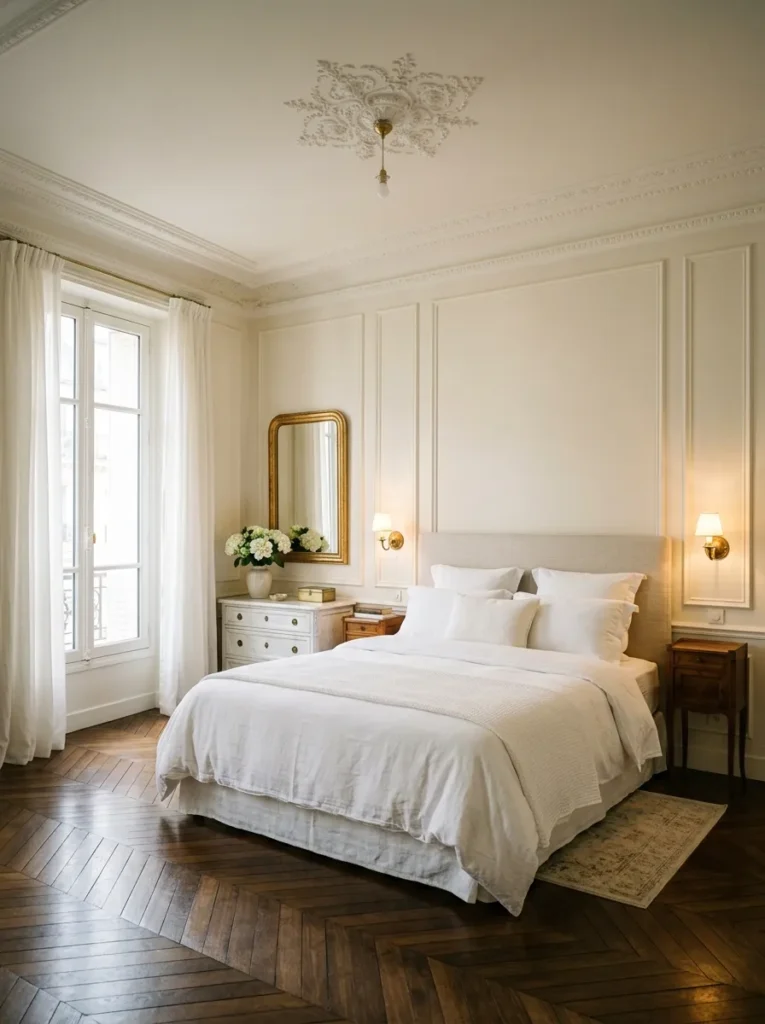
A bedroom built on a completely white palette — walls, ceiling, bedding, curtains all in the same family of warm white or ivory — achieves a specifically Parisian kind of femininity when the room’s architectural detail does the design work: plaster crown molding, a decorative ceiling rose, panel molding, or all three. The architectural detail in white-on-white reads as sculptural relief rather than color contrast, which is more sophisticated than any wall treatment involving a distinct color. The single material departure from white that completes this idea is warm metal — a brass sconce, a gold-leaf mirror frame — which catches the room’s natural light and provides the warmth that an entirely white room would otherwise lack.
5. A Four-Poster Bed Draped with Sheer Silk or Organza

A four-poster or tester bed frame hung with sheer silk, organza, or voile panels — gathered at the corners in soft folds rather than pulled taut and formal — creates the most classically feminine sleeping environment available without requiring any other room element to change, because the fabric’s translucency and the frame’s vertical lines establish both the softness and the architecture simultaneously. The panels should be cut long enough to touch or nearly touch the floor at the corners, since short panels look unfinished. Choose a tone that is nearly the same as the wall color — blush panels on a blush wall, ivory on white — so the canopy recedes into the room’s palette rather than standing as a contrasting object.
6. A Vintage French or Swedish Painted Bed Frame
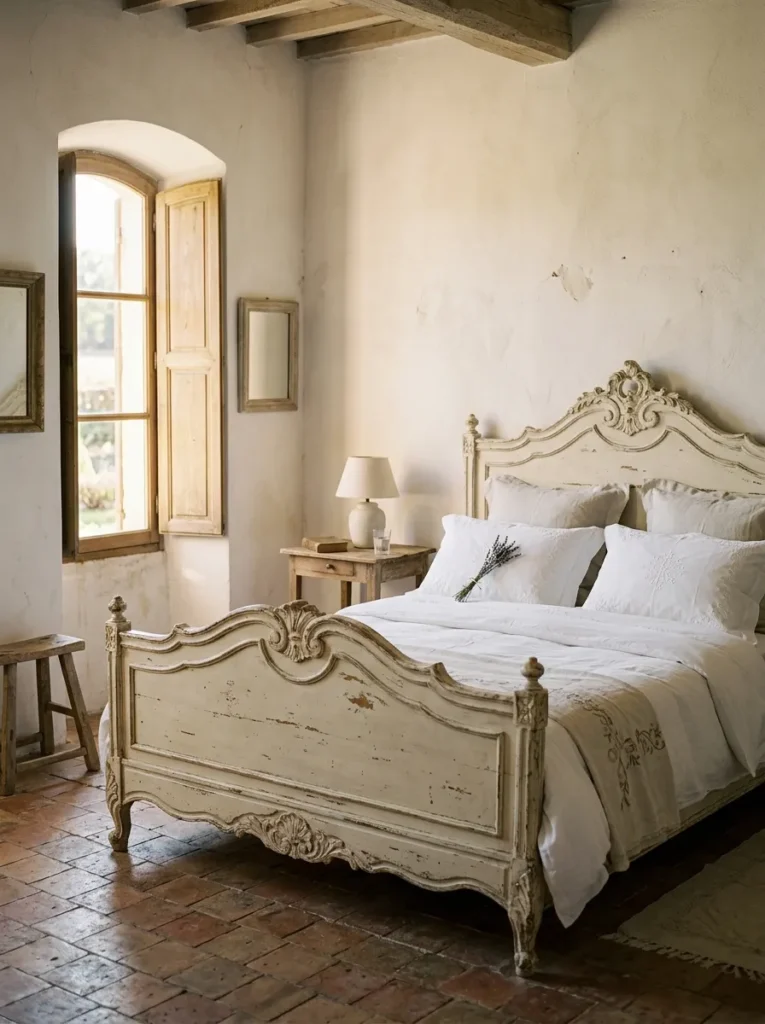
A painted antique or antique-style bed frame — a French lit bateau in chalky ivory or a Swedish gustavian frame in faded dove gray with carved detail — brings a specifically European feminine aesthetic into a bedroom that no contemporary bed frame fully replicates, because the visible paint aging, the carved scale of the headboard and footboard, and the low graceful curves of the frame read as belonging to a long, specific tradition of feminine interior design rather than to a current trend. Source genuine antique frames from European antique dealers or reputable online markets; reproduction pieces exist at every price point but lack the material authenticity of an original.
7. A Floral or Botanical Wallpaper on the Headboard Wall
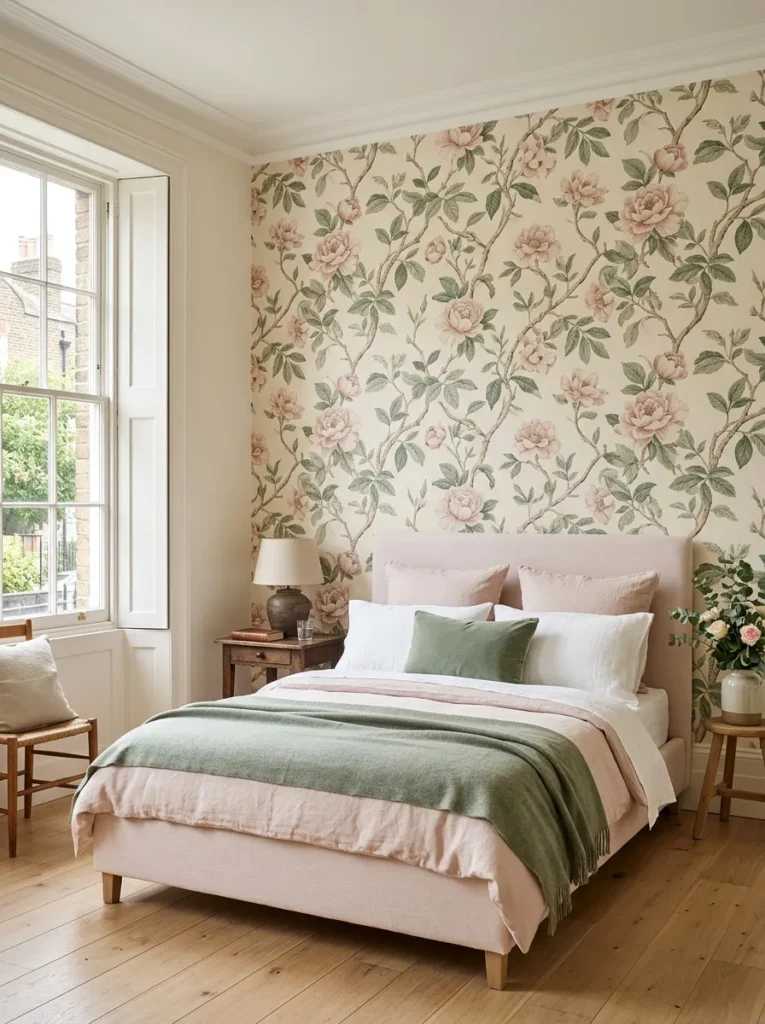
A large-scale floral or botanical wallpaper — in a colorway that pulls from the room’s palette rather than introducing a contrasting scheme — applied to the wall directly behind the bed creates the most visually dramatic feminine feature in a bedroom when executed at the right scale and proportion. The wallpaper’s scale relative to the room is the critical execution detail: a large-repeat pattern in a small room reads as confident; a small repeat in a large room reads as nervous and tentative. Choose a pattern with a generous white or light ground so the botanical detail floats within a pale field rather than competing against a dark background that reduces the room’s light.
8. A Dedicated Dressing Table with an Oval Mirror and a Velvet Bench
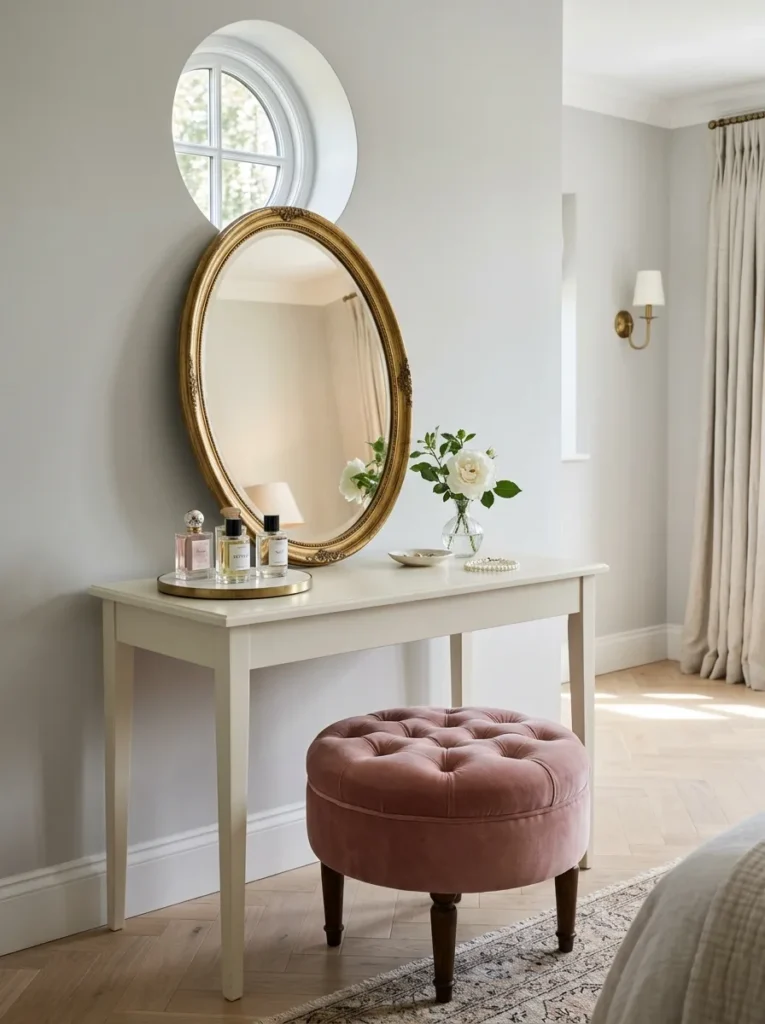
A dressing table built specifically as a feminine grooming space — with an oval or arch-top mirror, a narrow surface for perfume and jewelry, a slim velvet bench or cushioned stool — formalizes the morning ritual into a designed experience rather than a bathroom routine conducted over a crowded sink. The oval mirror is the pivotal element: its shape echoes the room’s curved furniture elsewhere and has the most explicitly feminine silhouette of any mirror form. The dressing table’s surface should be styled with considered restraint — three to five objects maximum — so the arrangement reads as intentional rather than accumulated.
9. Layered Soft Furnishings in a Tonal Pink-to-Cream Palette
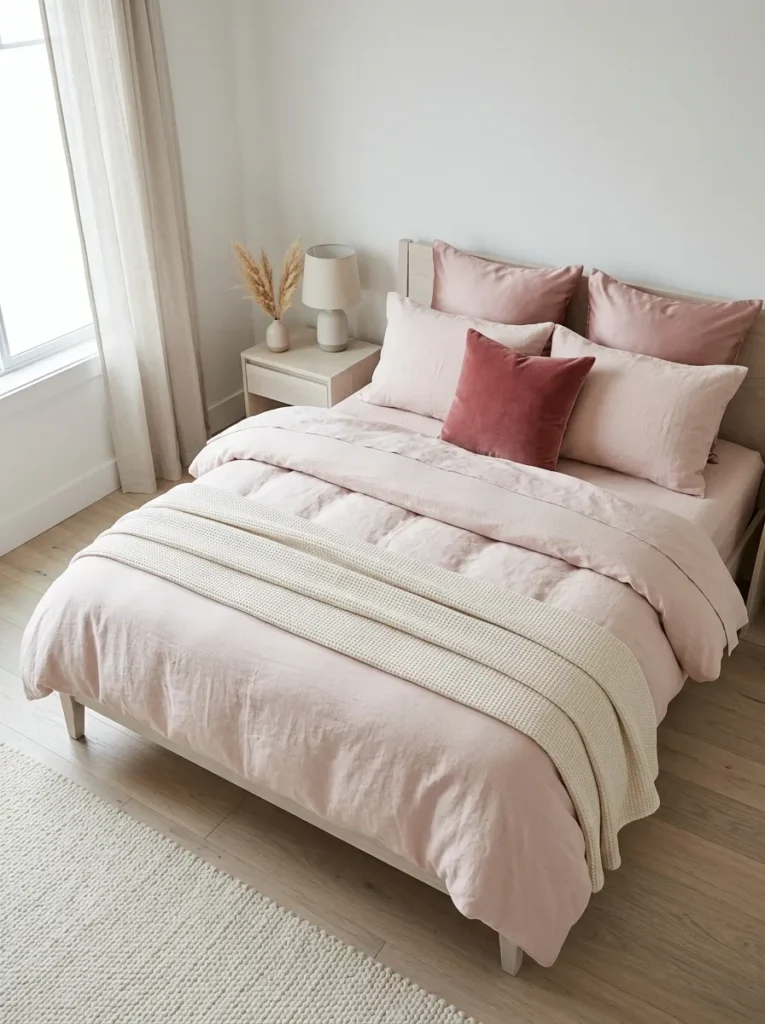
A bedroom where the entire textile layer — duvet, shams, throw, cushions, curtains — sits in a single tonal family from blush through dusty pink to cream achieves a feminine softness through palette cohesion rather than any single standout piece. This approach works because the eye reads the room as a unified soft composition rather than tracking between contrasting objects. The layering logic is material variation within the tone: a matte linen duvet, a velvet cushion, a silk sham, a waffle-weave throw all in the same pink-to-cream family provide enough textural difference to keep the arrangement interesting without introducing color contrast that breaks the palette’s cohesion.
10. A Statement Chandelier or Crystal Pendant Above the Bed
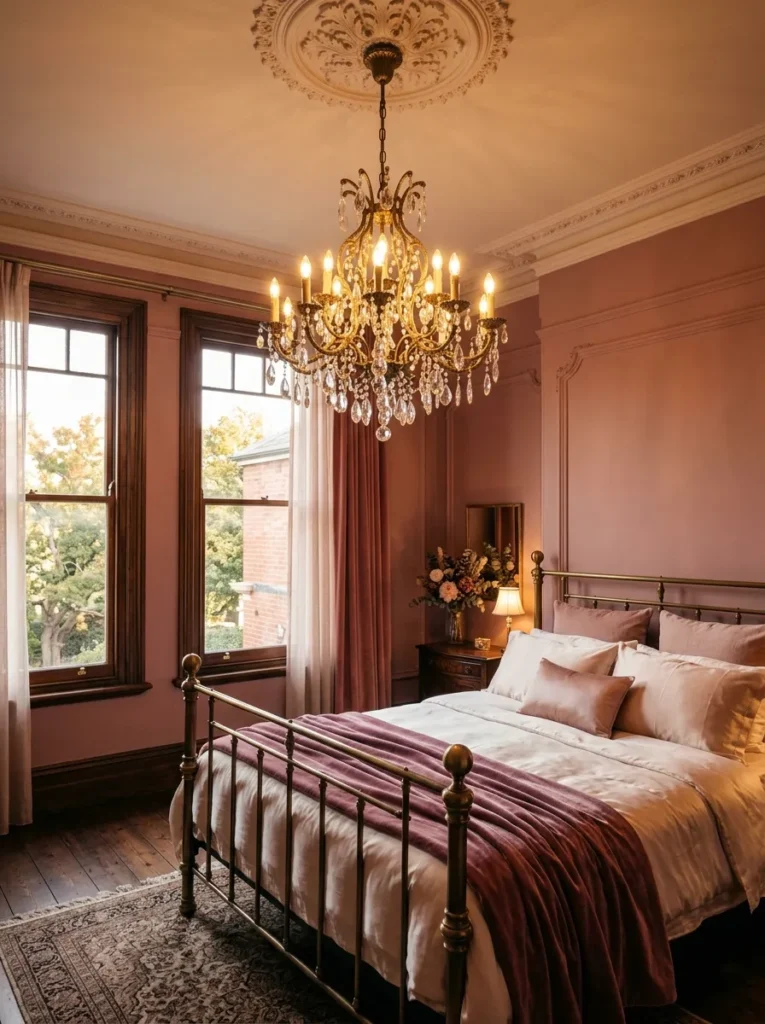
A chandelier or crystal-drop pendant hung above the center of the bed — at a height that allows it to read as a sculptural overhead element rather than a task light — is the single most impactful ceiling intervention in a feminine bedroom, because it introduces the room’s most overtly decorative element at a scale that no table lamp or wall sconce can match. Antique brass or aged gilt chandeliers suit traditional feminine rooms; white plaster or ceramic sculptural pendants suit contemporary ones; crystal-and-brass combinations suit rooms sitting between those registers. The fixture’s wattage should be low and the bulb temperature warm — 2200K — so the fixture reads as atmospheric rather than functional.
11. A Gallery Wall of Pressed Botanicals and Vintage Fashion Prints
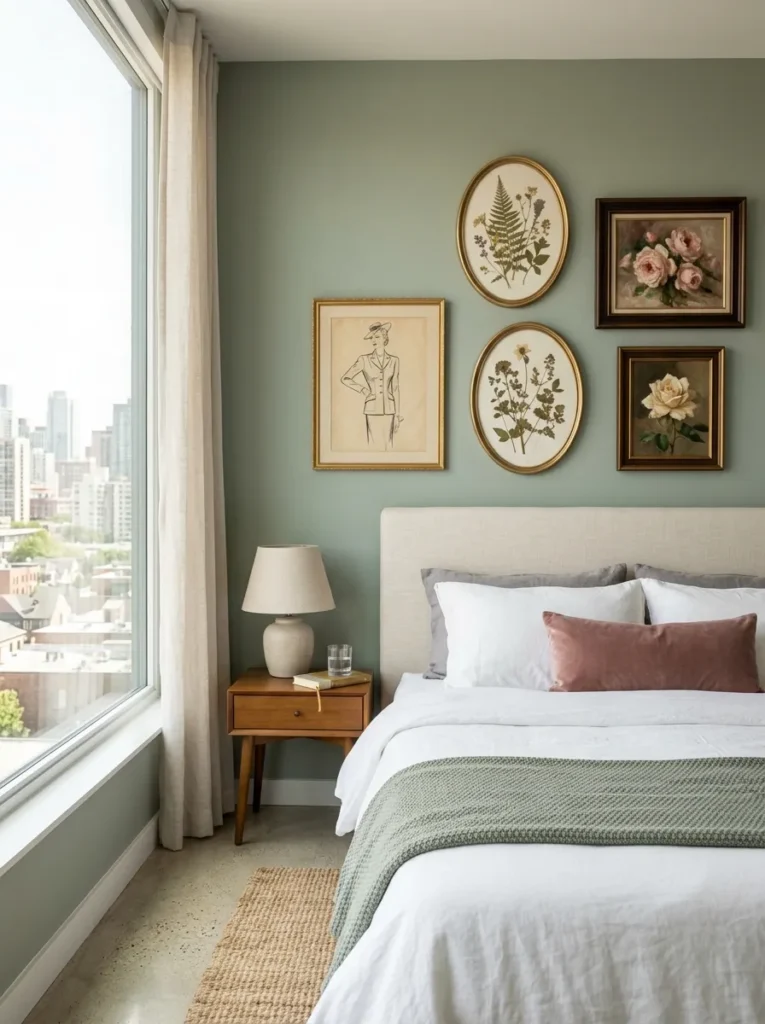
A gallery wall assembled from pressed botanical specimens in slim gilt frames, vintage fashion illustrations in oval mounts, and small-format oil studies of flowers creates a wall composition that is layered, personal, and specifically feminine without requiring a single piece of art that announces itself as “bedroom decor.” The mix of sources and formats is what gives the wall its collected quality: the pressed botanicals with scientific Latin labels, the fashion print with its 1940s line weight, and the oil study with its visible brushwork read as objects from different rooms of a house brought together rather than a purchased coordinated set.
12. Soft Sage Green and Blush as a Two-Tone Palette
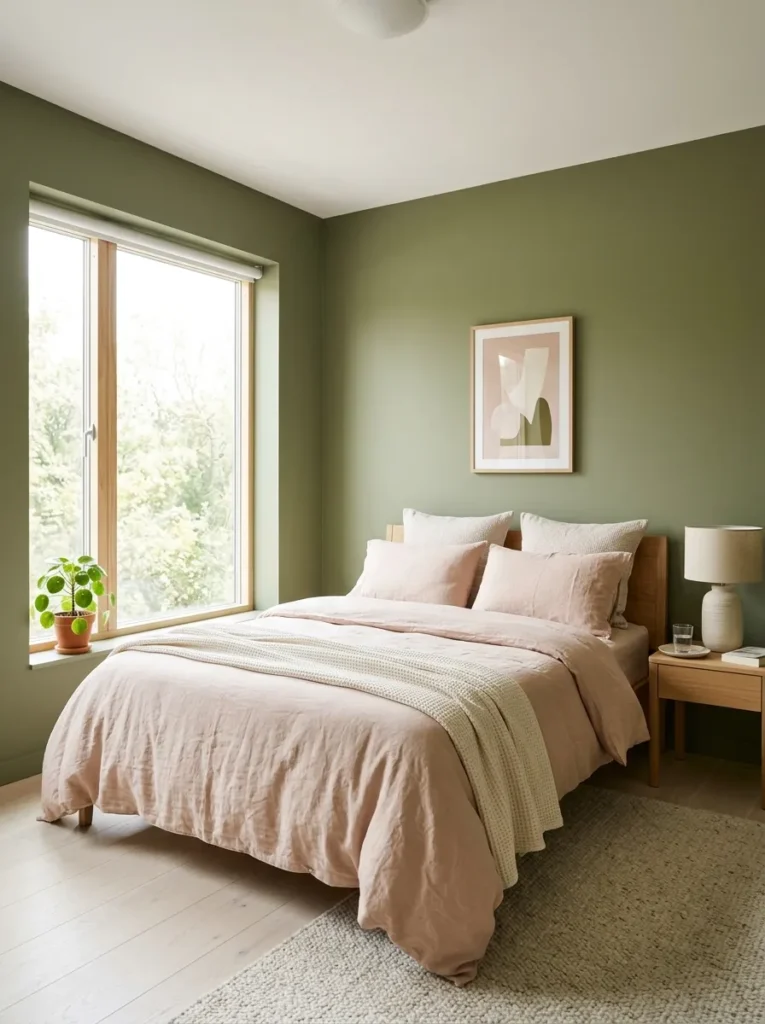
Pairing soft sage green — the warm, slightly olive-gray version rather than the cooler seafoam — with blush or dusty rose creates a two-tone feminine palette that is more sophisticated and more enduring than an all-pink room, because the sage provides a muted natural counterpoint that prevents the palette from reading as too sweet. This combination works because both tones reference the same natural source — a garden at dusk — and both have enough gray in their undertones to read as adults’ colors rather than children’s. Apply sage to the walls and blush to the bedding and soft furnishings, or reverse the application depending on which tone reads better in the room’s specific light.
13. A Silk or Sateen Duvet Cover for Maximum Bedroom Luxury
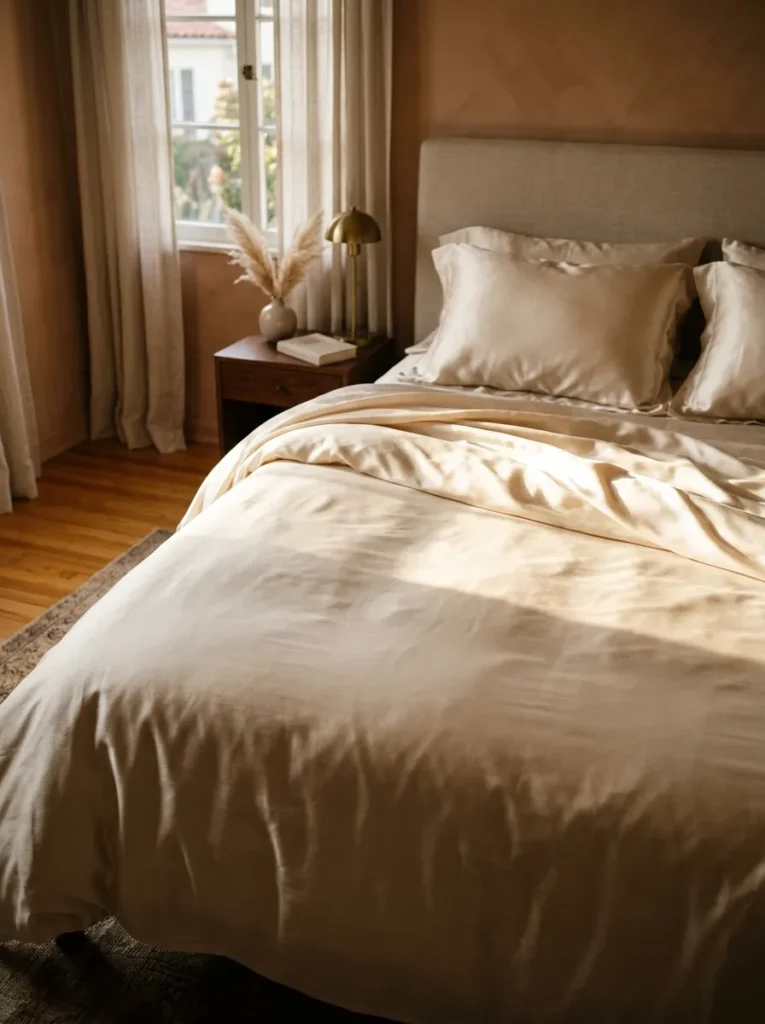
The material quality of the duvet cover is the single most physically immediate difference between a bedroom that feels luxurious and one that simply looks decorated, because the duvet is the largest surface in the room that people actually touch. A silk or silk-sateen duvet cover — in soft ivory, blush, or pale champagne — has a surface that reflects light differently from every angle, creating a fluid, dimensional quality that cotton and polyester can’t replicate. Layer over a linen or cotton duvet insert rather than a synthetic one so the entire bed has the softness and breathability that the exterior fabric promises.
14. A Vintage or Antique Mirror as the Room’s Primary Wall Piece
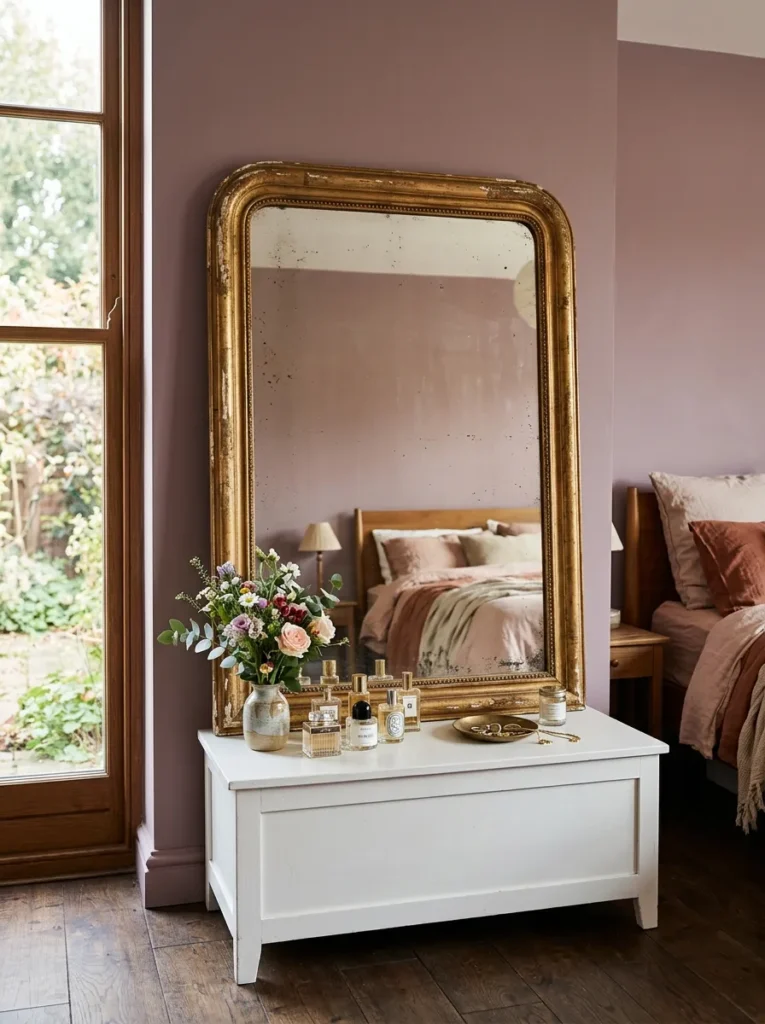
An oversized vintage or antique mirror — in a gilded, painted, or worn carved wood frame showing its age — used as the bedroom’s primary wall piece rather than artwork brings light, depth, and the material richness of an original object to the wall without requiring a significant art budget. Antique mirrors have a specific quality that new mirrors don’t achieve: the glass itself may be slightly oxidized at its edges, foxed in patches, or marginally imperfect in its reflection, all of which read as beauty and age rather than defects. Position it above the dresser, leaned against the wall rather than mounted flush, for the most relaxed and least institutional result.
15. A Window Seat or Reading Nook Dressed in Feminine Textiles
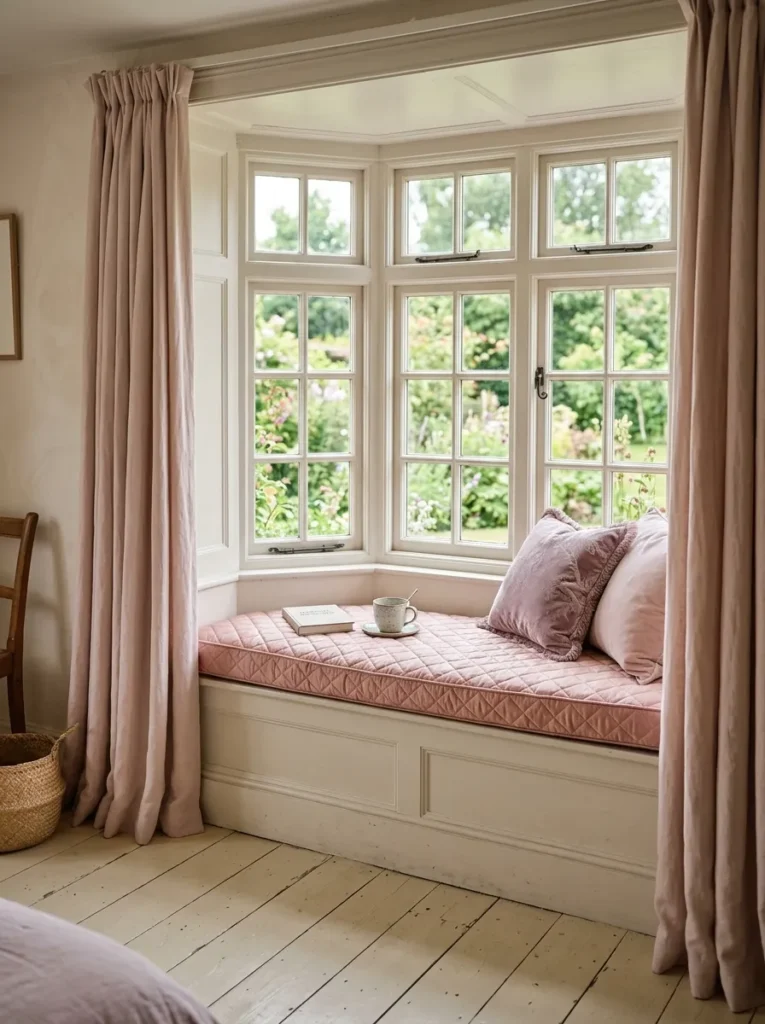
A window seat fitted with a deep cushion in a feminine material — quilted silk, velvet, or boucle — and flanked by floor-length curtains in a tonal complement creates a secondary zone within the bedroom where the feminine aesthetic is concentrated and heightened. The window seat works best in a bedroom with a bay or alcove window where the seat is architecturally framed, though a freestanding upholstered bench placed in front of any full-height window achieves a similar effect. Pile the seat with two or three additional cushions in varying fabrics from the room’s palette rather than leaving it as a flat surface.
16. A Mirrored Furniture Piece for Glamour and Light
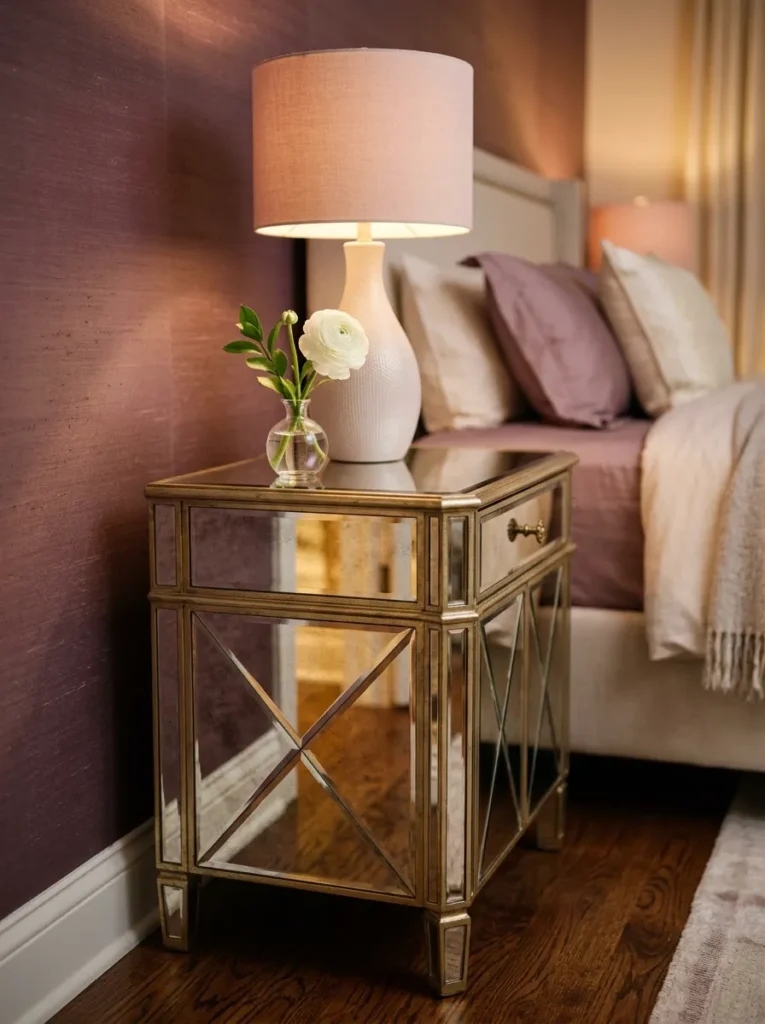
A single piece of mirrored furniture — a mirrored nightstand, dresser, or console table — in a feminine bedroom adds the quiet glamour of Art Deco design without requiring the entire room to commit to that aesthetic. The mirrored surface multiplies the room’s ambient light by reflecting it back into the space, which matters particularly in bedrooms with limited natural light. One mirrored piece reads as a deliberate design accent; more than two begins to read as a theme. Choose a piece with a beveled or antiqued mirror surface rather than a flat high-shine panel for a more sophisticated effect than the fully reflective version provides.
17. A Fabric-Wrapped or Upholstered Ceiling
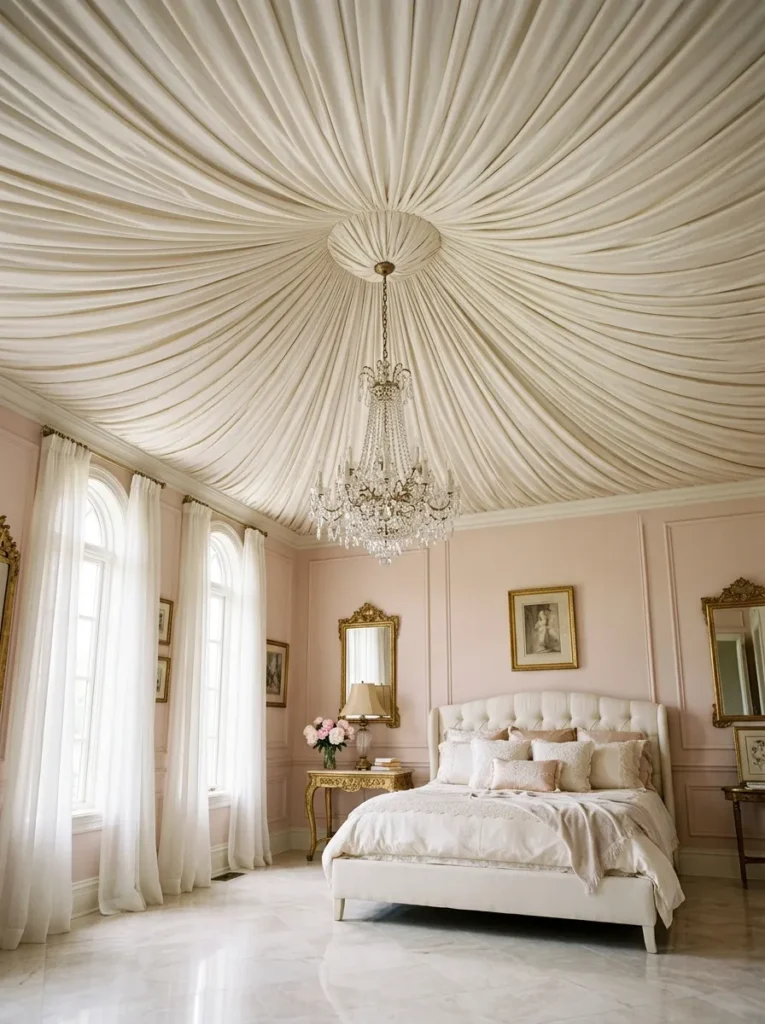
Fabric applied to the ceiling of a bedroom — a gathered silk or linen stretched across the full ceiling plane in the same or a toning color to the walls — is the most enveloping and unexpected of all feminine bedroom ideas because it converts the ceiling from an architectural afterthought into a soft architectural surface that changes the room’s acoustic and visual character simultaneously. This works in bedrooms with reasonable ceiling heights (8 feet minimum, 9 or 10 preferred) and suits rooms that are already committed to a rich, fully textile-driven aesthetic. The fabric’s tone should be fractionally lighter than the walls so the ceiling still reads as the highest surface rather than pressing down.
18. Monogrammed or Embroidered Linen Pillowcases
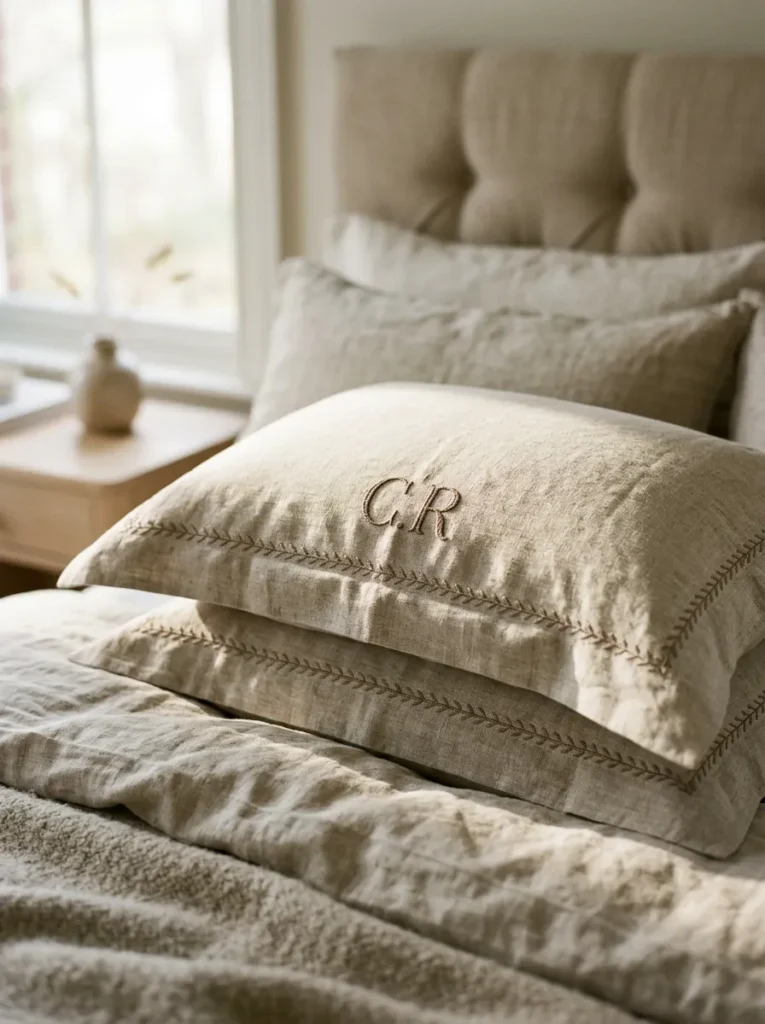
Swapping standard pillowcases for embroidered linen — either vintage monogrammed cases from an estate sale or new linen cases with a fine hand-embroidered border in a tone-on-tone thread — is among the smallest and most impactful of all feminine bedroom ideas because it introduces a handcraft tradition and a sense of personal ownership to the most intimate surface in the room. A monogram in a simple font embroidered in a thread just two or three shades deeper than the linen grounds the detail in restraint; an overly decorative monogram reads as theatrical rather than elegant. Source vintage monogrammed cases from European linen dealers for the most authentic version.
19. A Soft Floral or Damask Accent Rug
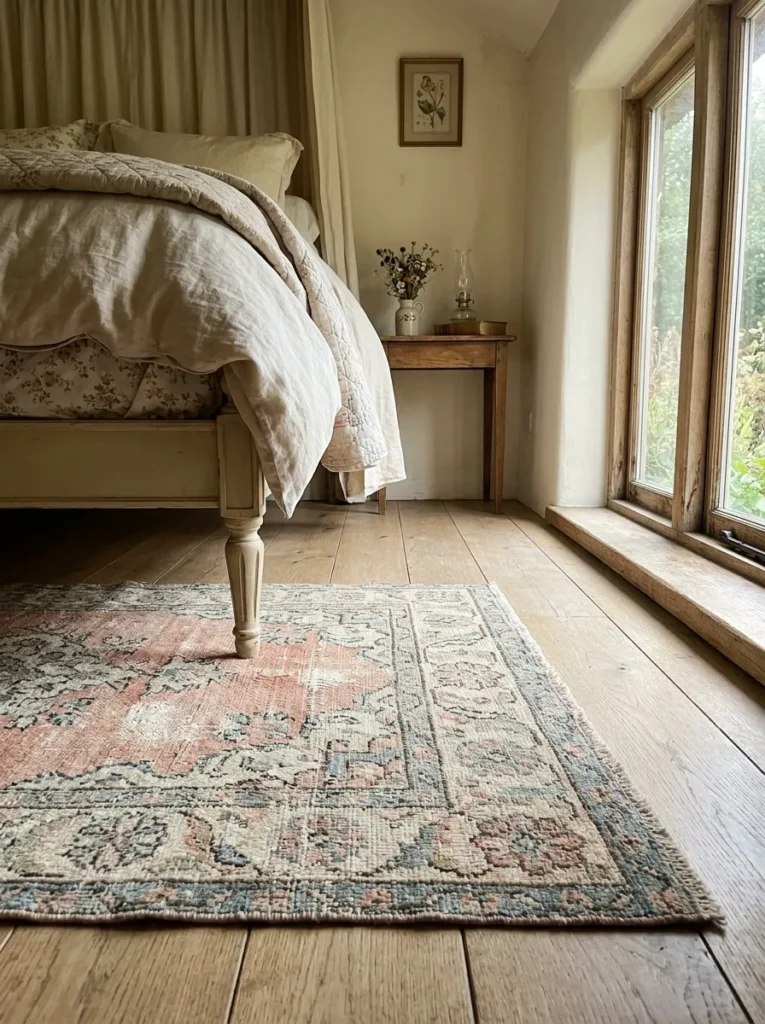
A rug with a soft floral or damask pattern — in a colorway that complements the room’s palette rather than contrasting it — gives the bedroom floor a surface character that a solid rug or a geometric pattern doesn’t achieve in a feminine room, because the organic motifs in the pattern reference the natural world rather than manufactured geometry. This works best as a smaller accent rug at the bedside rather than a large room-filling rug, since a smaller scale keeps the pattern as a detail rather than a dominant element. An antique or vintage rug with naturally faded tones suits this idea better than a new rug with sharp, saturated color.
20. An All-White Bedroom with Texture as the Sole Design Tool
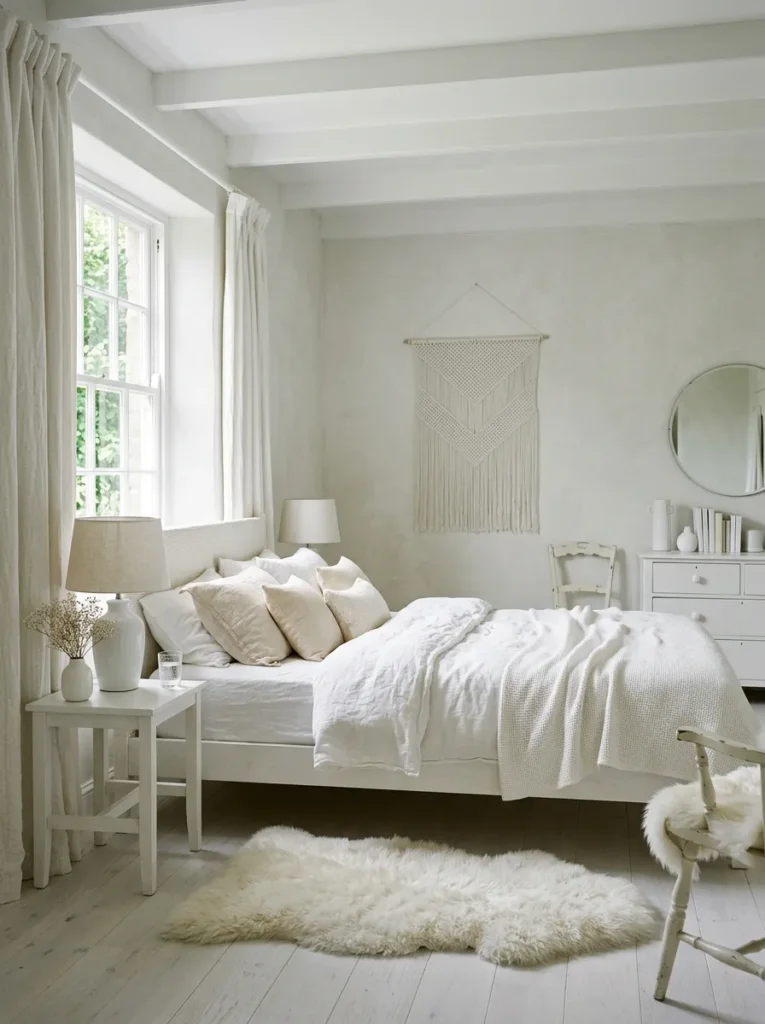
An all-white feminine bedroom — where every surface is a slightly different shade or texture of white — achieves an ethereal, floaty elegance that a colored room can approach but rarely reaches. The design is built entirely on material variation: matte white plaster walls, white linen bedding with visible weave, a white sheepskin at the bedside, white curtains in a heavier cotton, a white ceramic lamp. The palette’s coherence is what allows the room’s subtle imperfections — the plaster’s slight unevenness, the linen’s natural crinkle — to read as the design interest rather than as flaws. This approach demands rigorous consistency; any off-white that pulls yellow or gray against the others will immediately read as a mistake rather than a variation.
21. A Scalloped or Ruffled Edge as a Recurring Detail
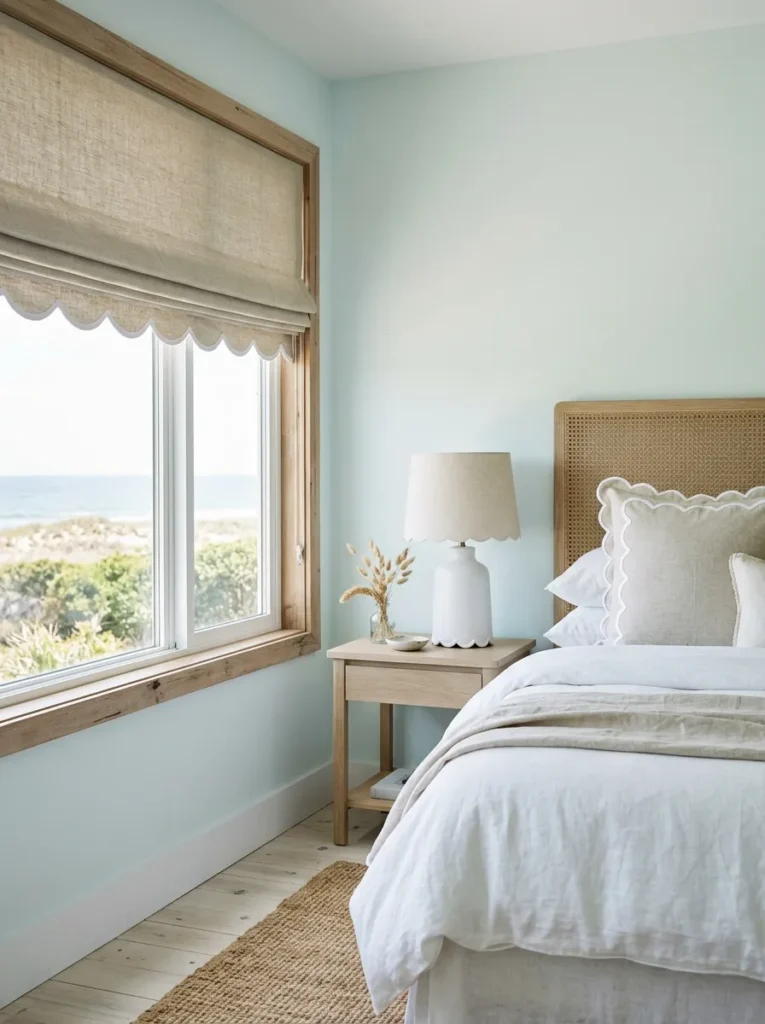
Choosing one feminine detail — a scalloped edge — and carrying it through three or four objects in the room creates a subtle recurring motif that gives the room a sense of cohesion without visible repetition. Scalloped edges appear on pillowcase borders, on a ceramic lamp base, on a linen duvet edge, on a bedside tray, and on the bottom of a window shade. None of these objects announces itself as a design statement individually; together, their shared edge language creates a room that feels considered at a level guests register without identifying. This is a detail-layering approach rather than a furniture or color approach, and it suits feminine bedrooms that are already complete but lack the final level of polish.
22. A Perfume and Jewelry Display as a Designed Vignette
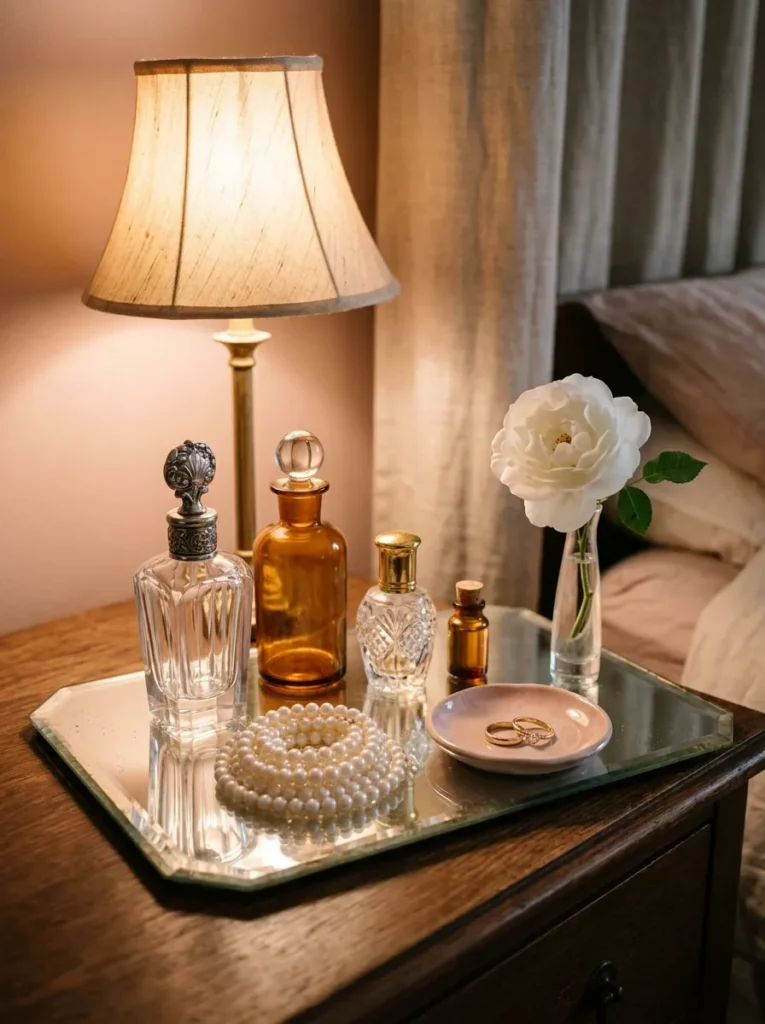
The most personal and most definitively feminine of all bedroom ideas is a considered display of perfume bottles and jewelry — not stored in a drawer or behind a door, but arranged as a still life on a mirrored tray, a glass cloche, or a marble slab on the dresser top. Vintage perfume bottles in crystal, amber, and colored glass have an intrinsic beauty as objects even when empty; contemporary bottles in interesting forms can be arranged with the same intentionality. The display should be edited to no more than seven or eight objects and arranged with the same spatial logic as a florist’s arrangement: varying heights, some overlap, a clear focal piece. The result is a vignette that is both personal and beautiful, which is the precise combination that no purchased decorative object can fully replicate.
Final Thoughts on Feminine Bedroom Ideas Worth Saving
The best feminine bedroom ideas share one quality with the best rooms in any category: they know what they’re trying to be and pursue it with enough specificity to arrive somewhere genuine rather than generic. A bedroom built around a single curved headboard in the right velvet, a considered dressing table, and a chandelier scaled to hold its own at the ceiling level is more successfully feminine than a room where every available surface has been decorated with the category’s symbols. Whether you start from the palette, the architecture, or the textile layer, let a small number of deeply considered choices carry the room rather than asking a large number of surface decisions to do the same work less well. That discipline is what the most charming and elegant feminine bedrooms share.
Save this feminine bedroom ideas guide to Pinterest so you have it ready for your next bedroom refresh or full room transformation.