24 Small Kitchen Storage Ideas That Maximize Every Inch
If your kitchen feels like it’s working against you instead of for you, you’re not alone. Small kitchens demand smarter decisions, not more stuff. These 24 small kitchen storage ideas focus on the overlooked inches most homes waste: toe-kicks, door backs, ceiling space, and the dead zone beside the fridge. Each one solves a specific frustration, whether that’s a cabinet that swallows your favorite pan or a counter buried under appliances you use every day.
This isn’t a list of generic “use baskets” tips. Every idea here explains exactly where it works, why it solves the problem, and how to pull it off without a full renovation. Some require a drill. Others need nothing but fifteen minutes and a tape measure. By the end, you’ll have a real plan for reclaiming square footage you didn’t know you had — and a kitchen that finally feels like it fits the way you actually cook.
1. Toe-Kick Drawers: A Small Kitchen Storage Idea Hiding in Plain Sight
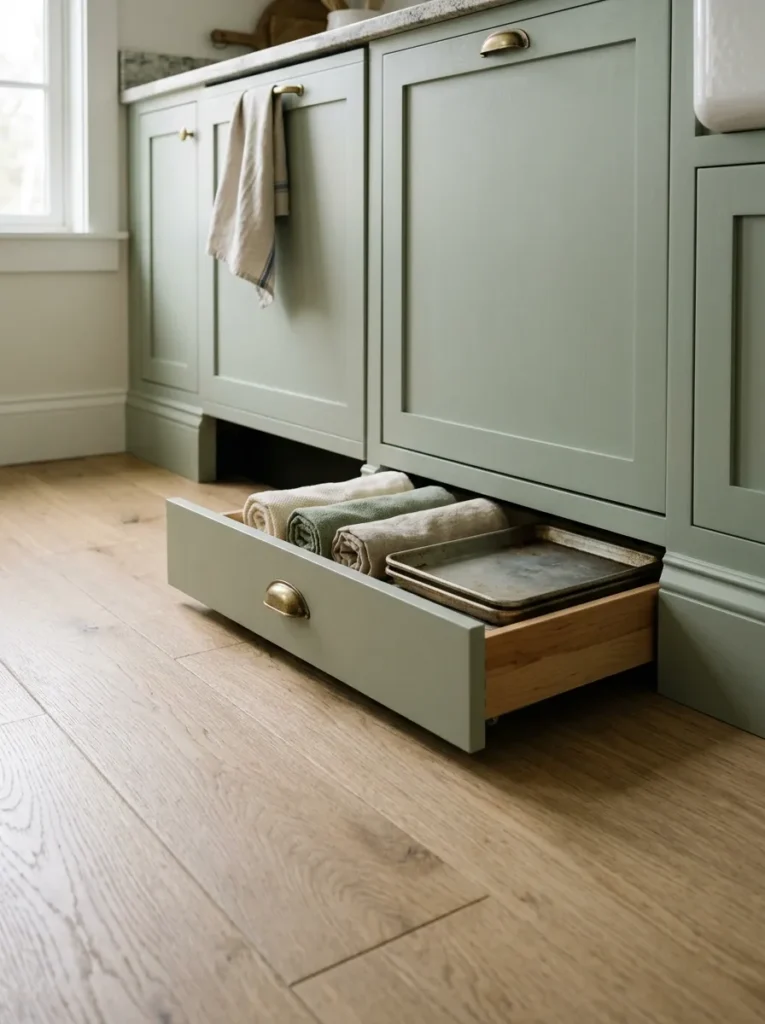
That four-inch gap at the base of your cabinets is doing nothing for you right now — and it’s one of the easiest retrofits in this entire list. Toe-kick drawers slide into that recessed space using a shallow drawer box and basic slide hardware, giving you a place for flat items that never fit anywhere else: baking sheets, cutting boards, step stools, or rolled linens. Most hardware stores carry kits designed specifically for this, and installation rarely touches your existing cabinetry. It’s the single biggest “free” storage upgrade in a small kitchen, because you’re not losing usable footprint anywhere else to gain it.
2. Vertical Tray Dividers in the Gap Beside the Fridge
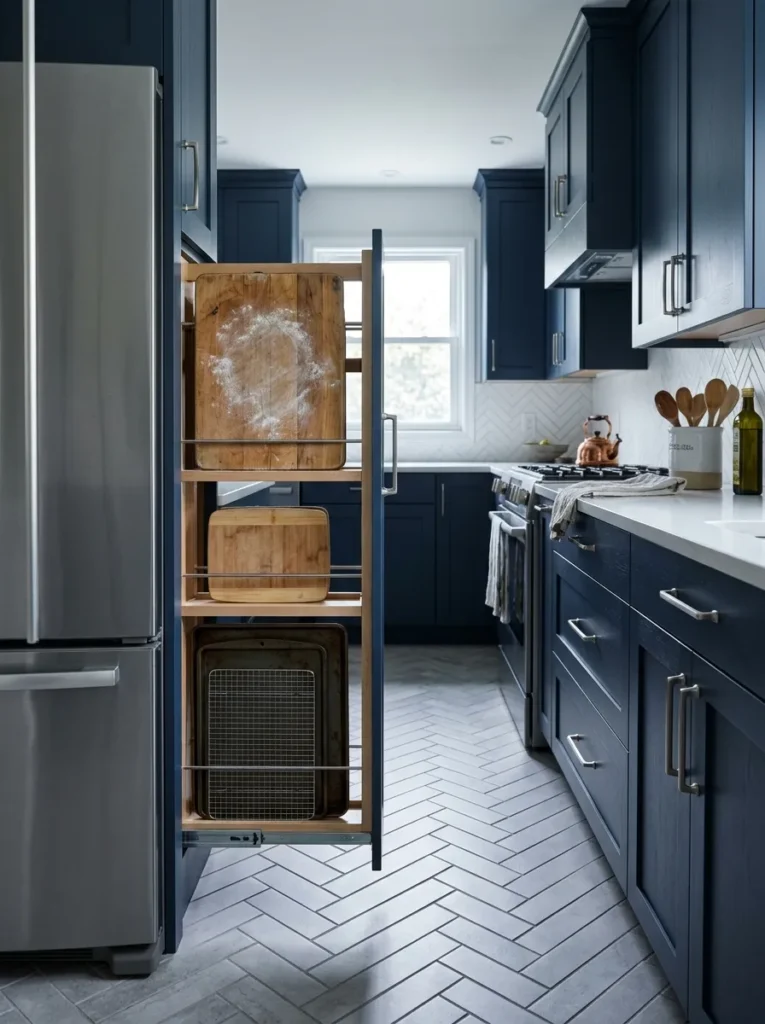
Most small kitchens have a six-to-ten-inch sliver of dead space next to the refrigerator, and most homeowners just let it collect dust. A vertical pull-out divider — either a slim cabinet insert or a freestanding rolling cart sized to fit — turns that gap into prime real estate for the awkward flat things that never stack well horizontally. Think baking sheets, cooling racks, cutting boards, and trays. The trick is measuring twice before buying, since these gaps are rarely a clean, standard width. A custom-cut insert from a cabinet shop costs more but disappears seamlessly into your layout.
3. Magnetic Knife Strip and Spice Wall Combo
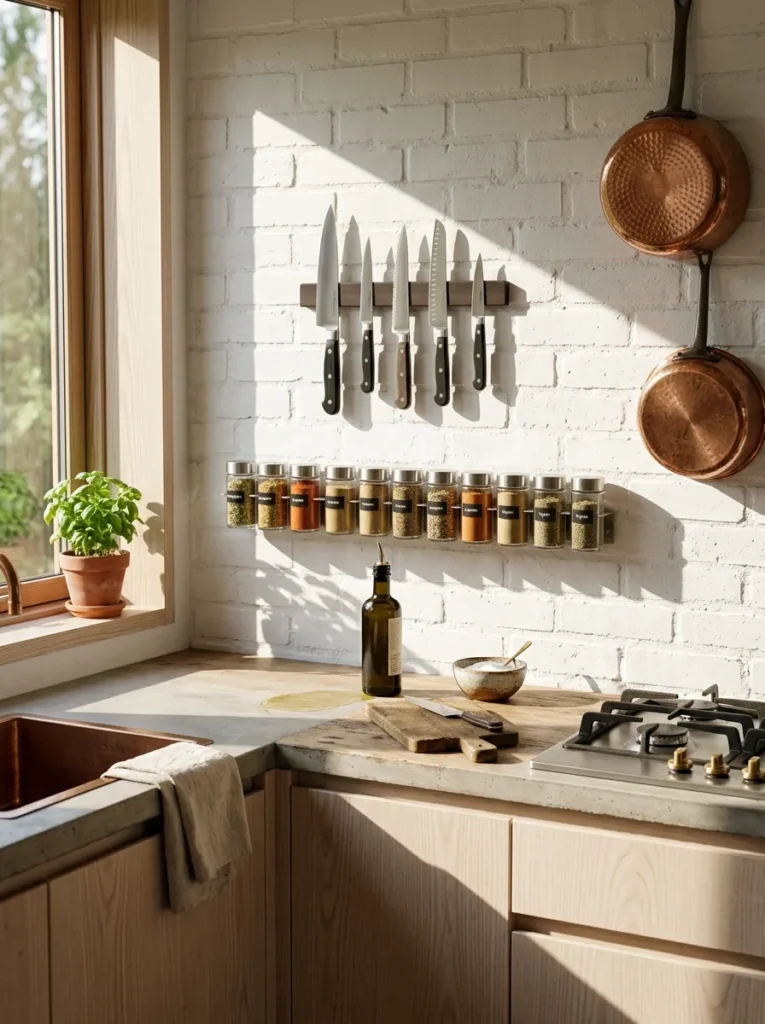
Counters in small kitchens disappear fast once a knife block and a spice rack show up, and both are repeat offenders for clutter. Mounting both vertically — a magnetic strip for knives, individual wall-mounted jars or a slim rack below it for spices — clears an enormous amount of counter real estate while keeping your most-used tools genuinely closer at hand than a drawer ever could. Install the strip away from the sink to avoid moisture-related rust, and choose magnetic spice tins specifically if you want the cleanest possible look. This works especially well directly beside the stove, where reach matters most.
4. Adjustable Pegboard Backing Inside Pantry or Cabinet
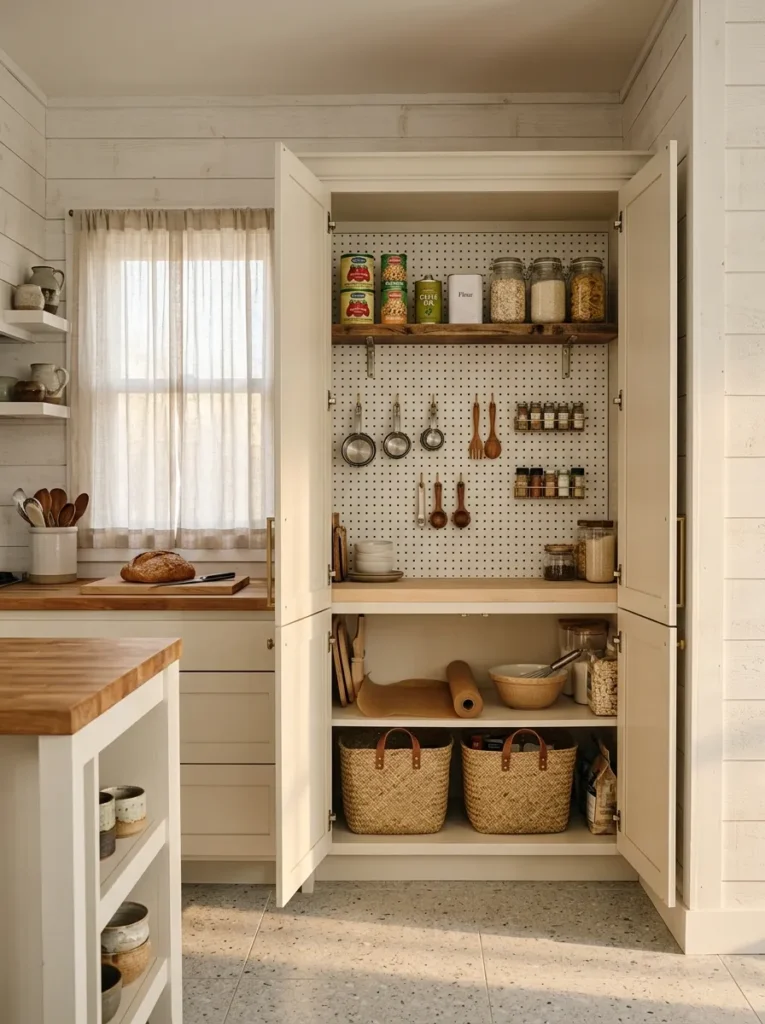
A pegboard back wall inside a pantry or deep cabinet is one of the only storage solutions on this list that can be reconfigured in under a minute, which matters more than people expect. Hooks, small shelves, and bins all move to new positions as your needs change — no new holes, no new hardware. It’s particularly useful for pantries with awkward depth, since you can pull items forward onto hooks instead of losing them in a dark back corner. Paint it to match your cabinet interior for a custom-built look without the custom-built price.
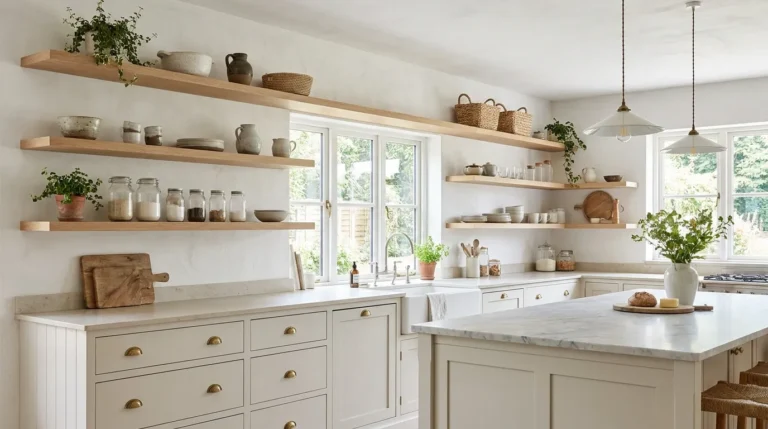
5. Stacked Open Shelving Above the Sink
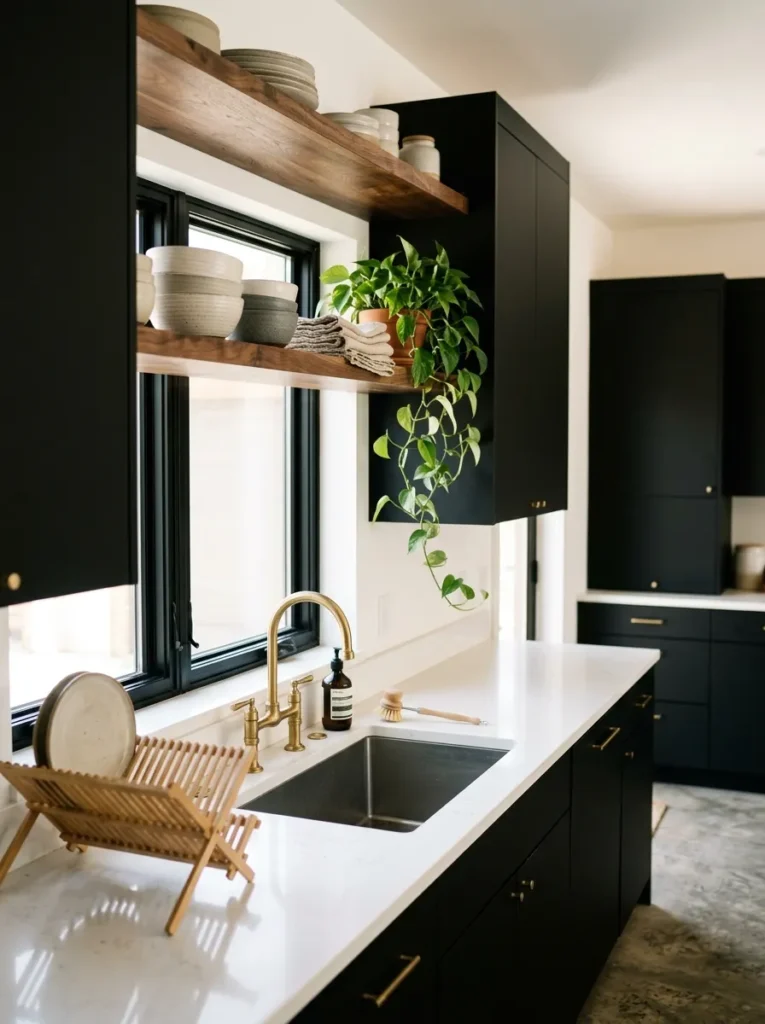
The wall above a kitchen sink is almost always wasted, usually filled by nothing but a window and empty space above it. Two stacked floating shelves reclaim that vertical zone for everyday dishware, glasses, or a small plant, putting items you reach for constantly within arm’s length of where you actually wash and dry them. Keep the bottom shelf shallow enough to clear faucet height, and stick to lightweight, frequently used pieces rather than anything heavy — wall anchors above a sink see more vibration than people assume, thanks to disposal use and dish-stacking impact.
6. Pull-Out Caddy System Under the Sink
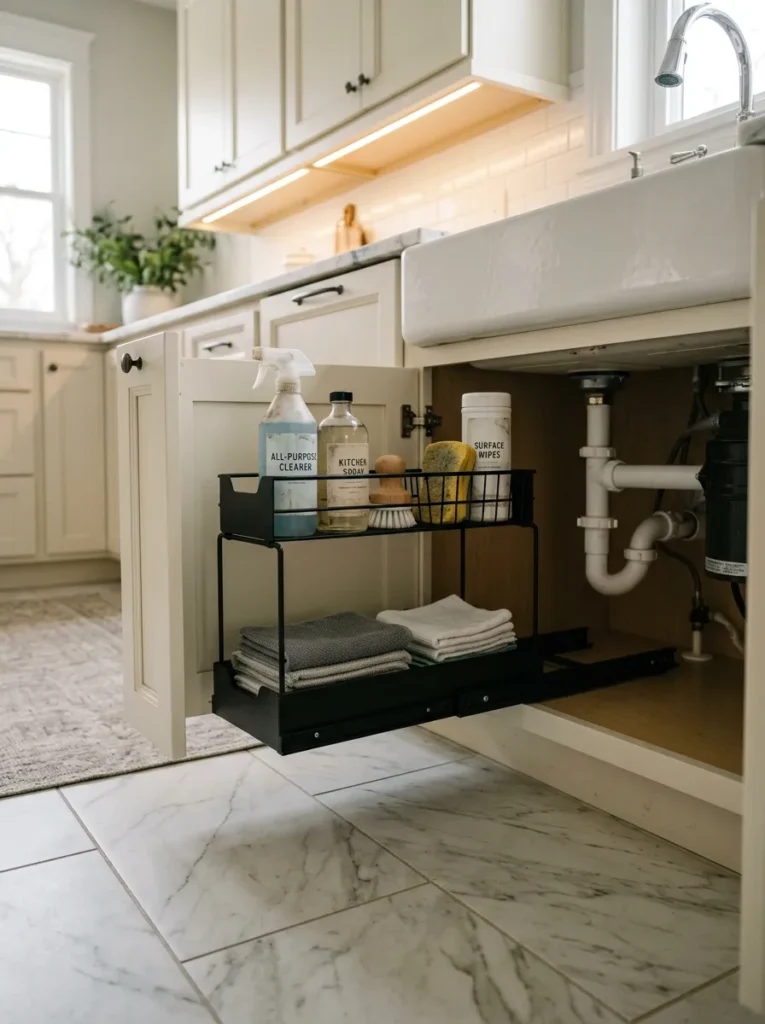
The space under the sink is famous for becoming a junk pile within a month of being organized, mostly because pipes interrupt every standard shelf or bin you try to use. A pull-out caddy system built around your specific pipe layout — usually a U-shaped sliding tray or a tiered rack with notched cutouts — solves this permanently by working with the obstruction instead of ignoring it. Measure the pipe height and spacing before buying anything, since most failed under-sink organization attempts come down to a product that simply didn’t account for plumbing.
7. Appliance Garage with a Tambour Door
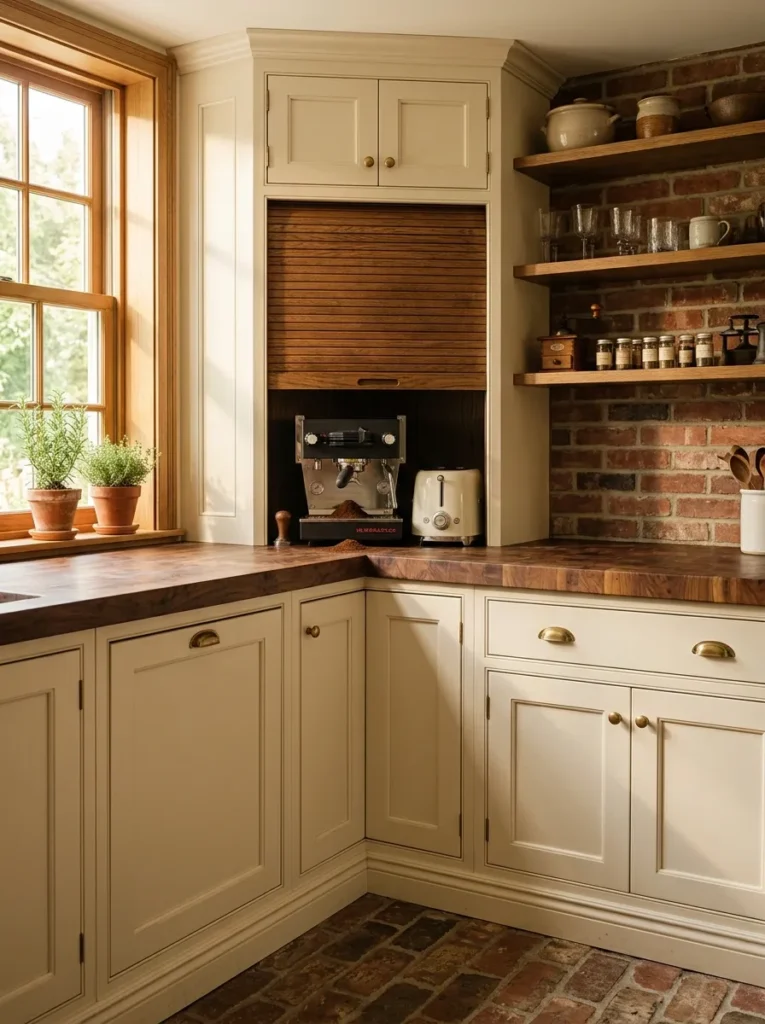
Small kitchen counters lose their usefulness fast once a coffee maker, toaster, and blender all stake permanent claims to the same few feet. An appliance garage — a corner or end-of-counter cabinet topped with a roll-up tambour door — gives those appliances a dedicated home that closes when you’re done, instantly restoring counter space for actual food prep. This works best built into a corner that would otherwise be an awkward reach anyway, turning a weak spot in your layout into one of its most functional features.
8. Hanging Pot Rail Mounted to the Wall or Ceiling
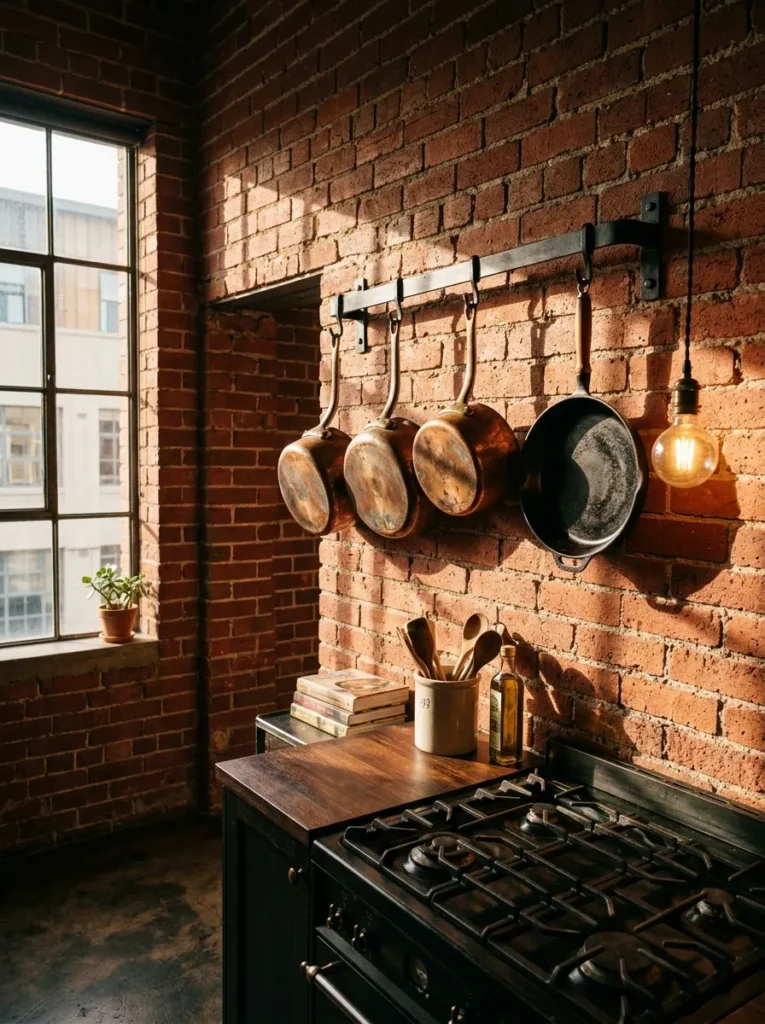
Pots and pans take up a disproportionate amount of cabinet space relative to how often most of them actually get used, and a wall or ceiling-mounted rail solves that by moving your most-used cookware entirely out of the cabinet equation. Mount it within easy reach of the stove, not just anywhere on the wall, since the whole point is cutting down on steps between storage and use. This idea suits kitchens with a strong design point of view already — it’s a visible, opinionated choice, not a hidden one, so it pairs best with cookware you don’t mind showing off.
9. Drawer Organizers with Fully Adjustable Dividers
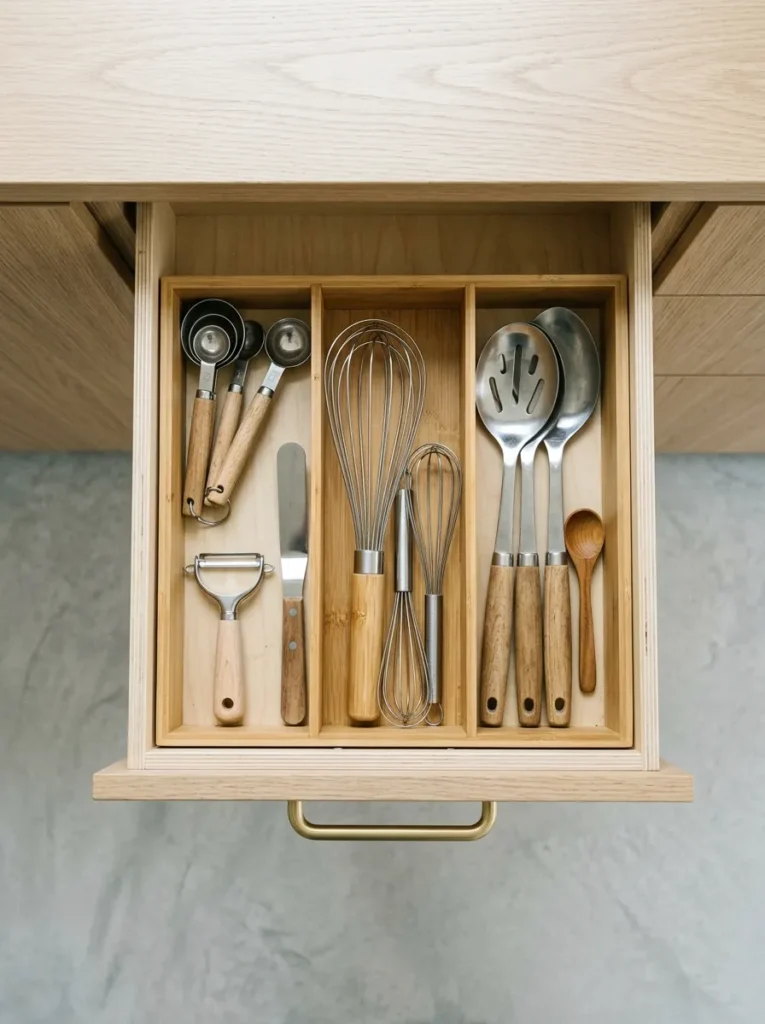
Fixed plastic utensil trays are one of the most common mismatches between a product and an actual kitchen, since no two households own the same mix of gadget shapes and sizes. Adjustable dividers — expandable bamboo or interlocking acrylic systems — solve this by reconfiguring around whatever you actually own instead of forcing your tools into someone else’s idea of a “standard” layout. Measure your drawer’s interior depth before buying, since the most common mistake is choosing a system that’s taller than the drawer can close around.
10. Lazy Susan Carousel for Corner Cabinets
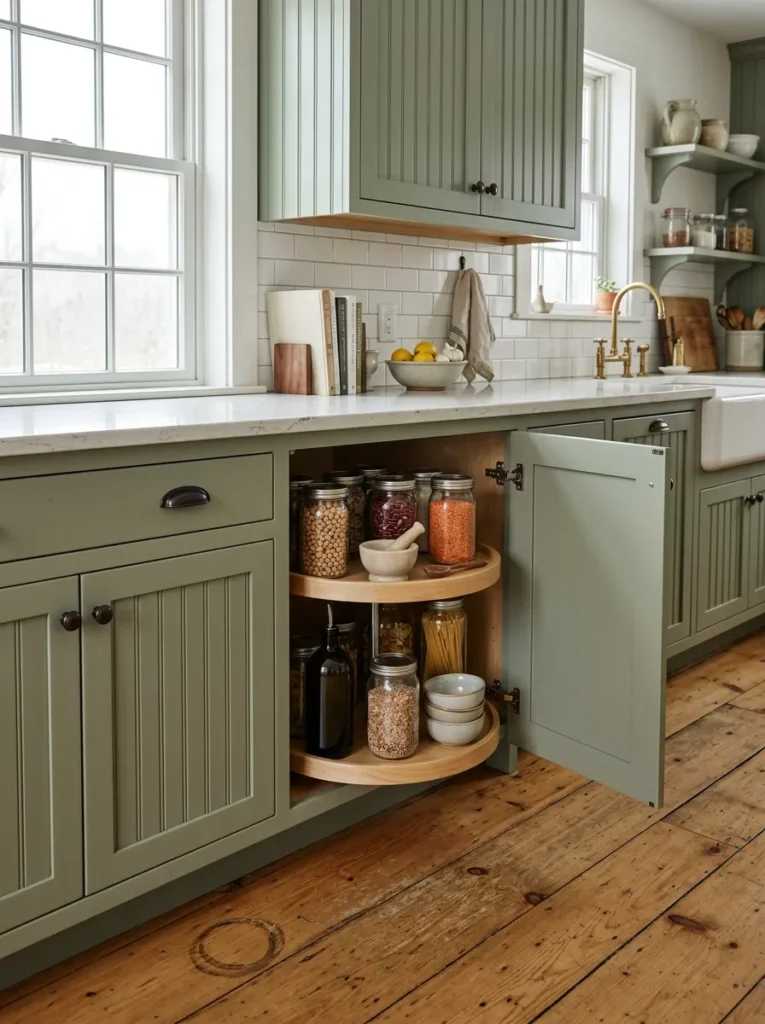
Corner cabinets are notorious for swallowing items whole, since the deepest part of the corner is nearly impossible to reach without unloading half the shelf first. A rotating carousel solves the access problem directly: spin instead of dig. Two-tier carousels maximize this further by doubling your usable surface within the same footprint. This is one of the rare upgrades worth paying a professional installer for if your existing cabinet doesn’t already have a lazy Susan base, since a poorly fitted carousel will jam against the cabinet walls within weeks.
11. Floating Shelves Flanking the Range Hood
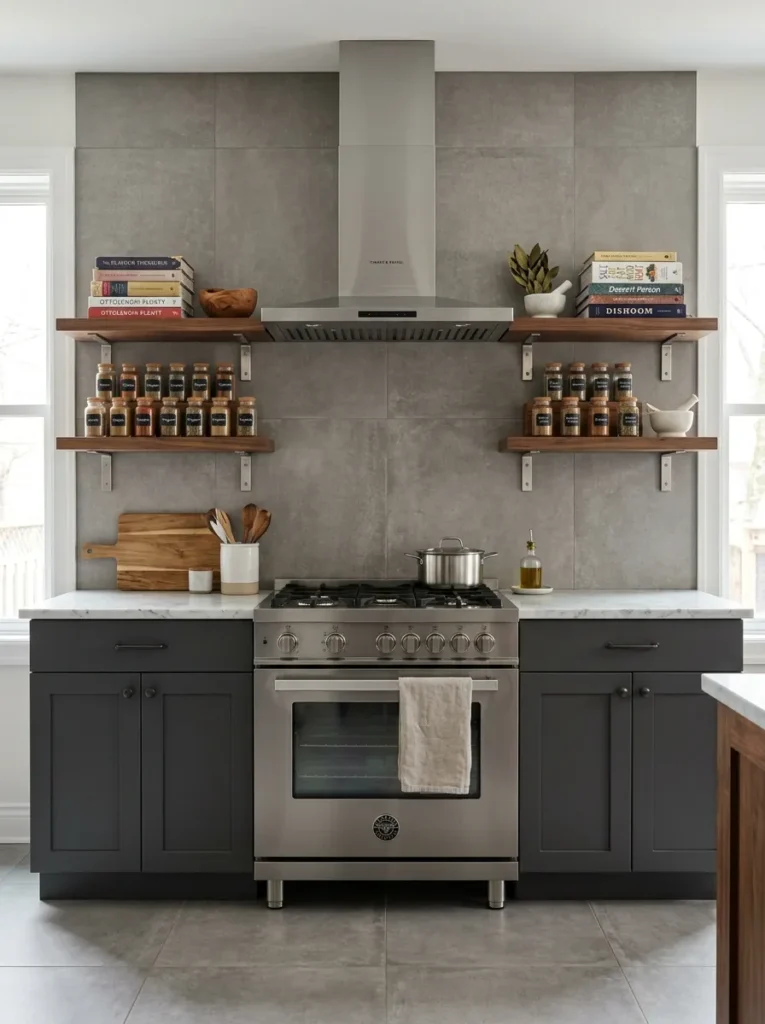
The wall space directly beside a range hood often goes completely unused because it feels like an awkward in-between zone — too narrow for full cabinetry, too prominent to ignore. A pair of matching floating shelves fills that gap intentionally, giving you a spot for cookbooks, oils, or spice jars that stay genuinely within reach of the stove. Keep the shelf depth shallow, six to eight inches at most, so nothing on them interferes with the hood’s airflow or becomes a heat hazard during high-temperature cooking.
12. Stackable Risers Inside Cabinets for Cans and Plates
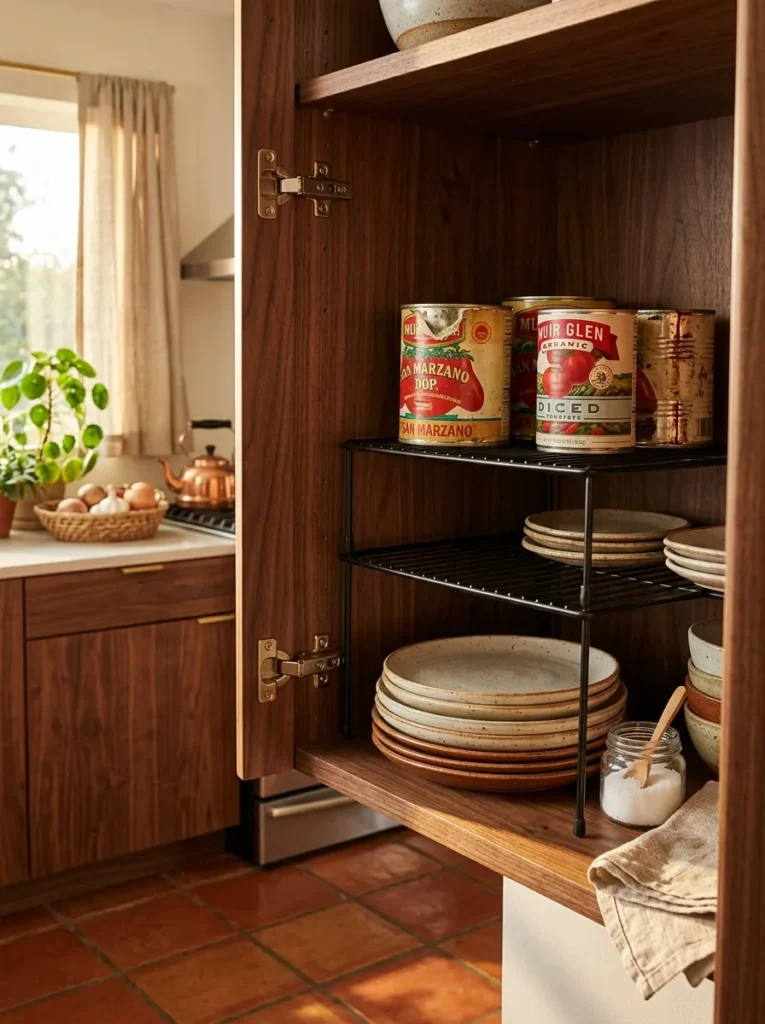
Most cabinet shelves are spaced to fit the tallest item you own, which wastes enormous amounts of vertical air above every shorter item beneath it. Stacking risers — simple wire or metal platforms with legs — exploit that wasted air by creating a second level within the same shelf, often doubling storage in cabinets that hold canned goods, mugs, or stacked plates. They cost very little and require zero installation, which makes this one of the fastest wins on this entire list if you’re not ready to commit to anything permanent.
13. Door-Mounted Racks on the Inside of Cabinet Doors
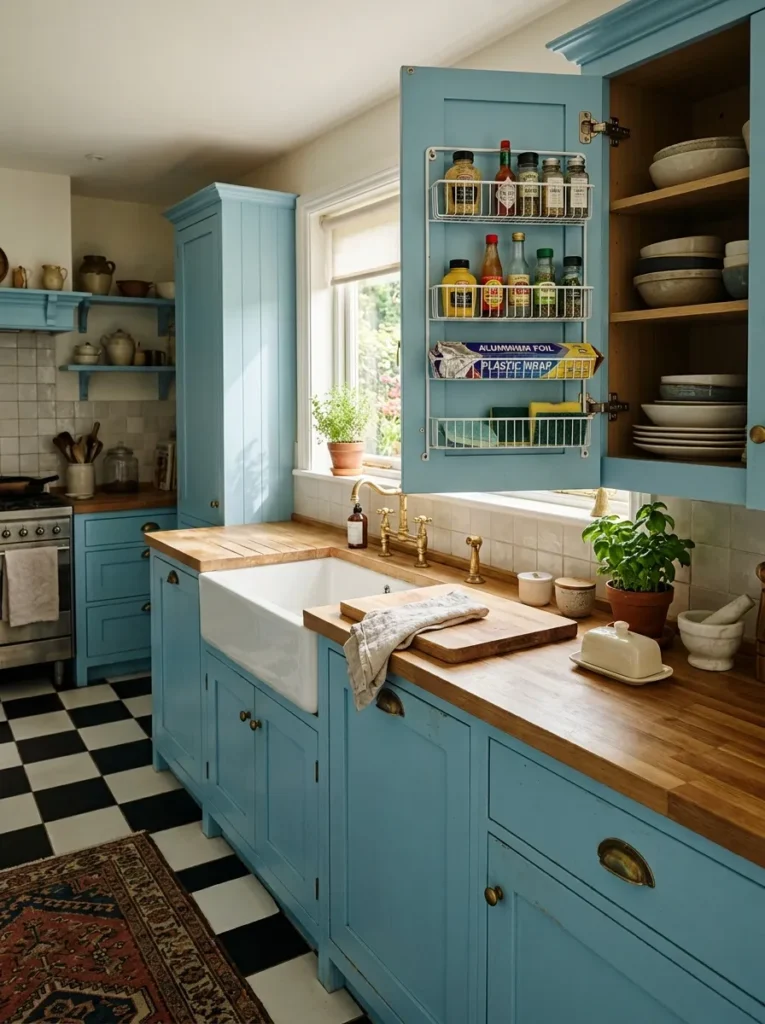
The inside of a cabinet door is essentially free real estate that most kitchens never touch, even though it can comfortably hold an entire category of small items that otherwise clutter a shelf. Door-mounted wire racks work especially well for foil, wrap boxes, small spice jars, or cleaning supplies, since the shallow depth keeps lightweight items secure without weighing the door down. Just confirm clearance before installing — measure how far the rack will protrude and make sure it clears any shelf or item directly behind the door when closed.
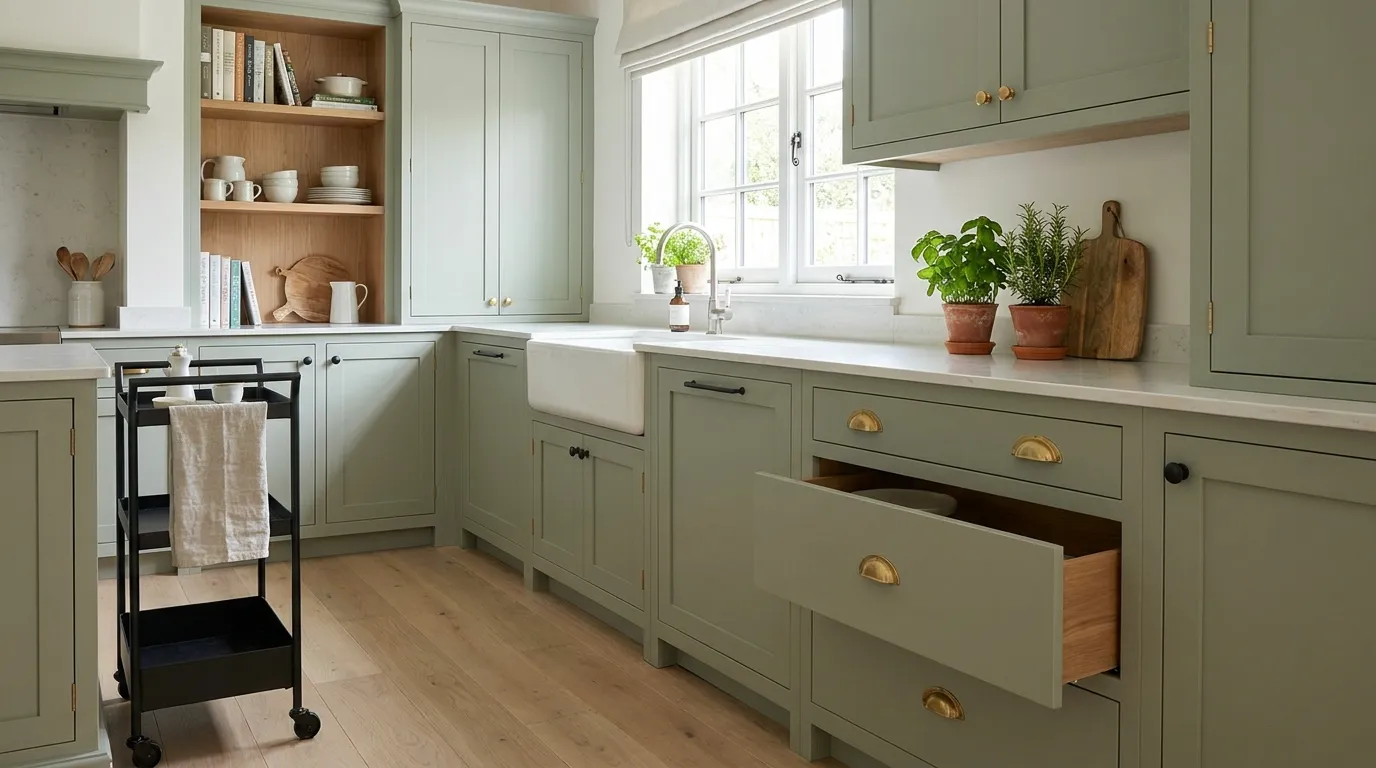
14. A Rolling Cart for Smart Storage in Small Kitchens Without an Island
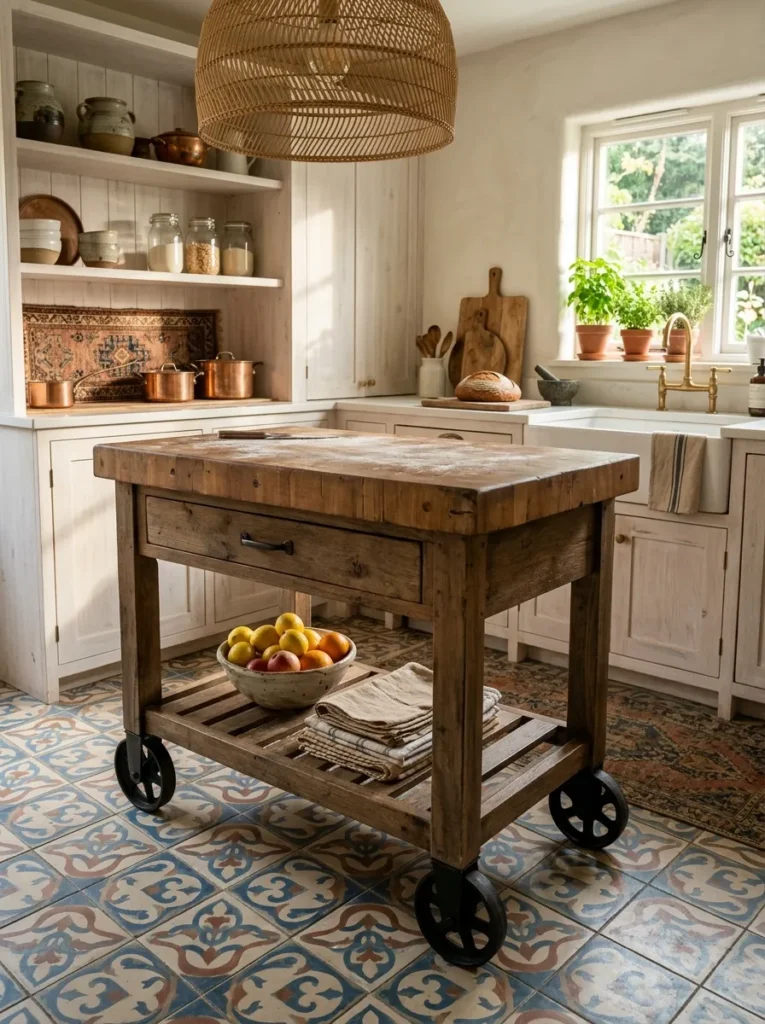
When a kitchen is too small for a fixed island, a rolling cart gives you nearly the same functional benefit without the permanent footprint. It works as extra counter space during cooking and rolls out of the way the rest of the time, plus most carts include at least one shelf or drawer for genuine storage, not just a flat surface. Look for one with locking caster wheels specifically — carts that drift while you’re chopping vegetables on them are more annoying than helpful, and that detail gets overlooked constantly in product reviews.
15. Wall-Mounted Fold-Down Table with Storage Below
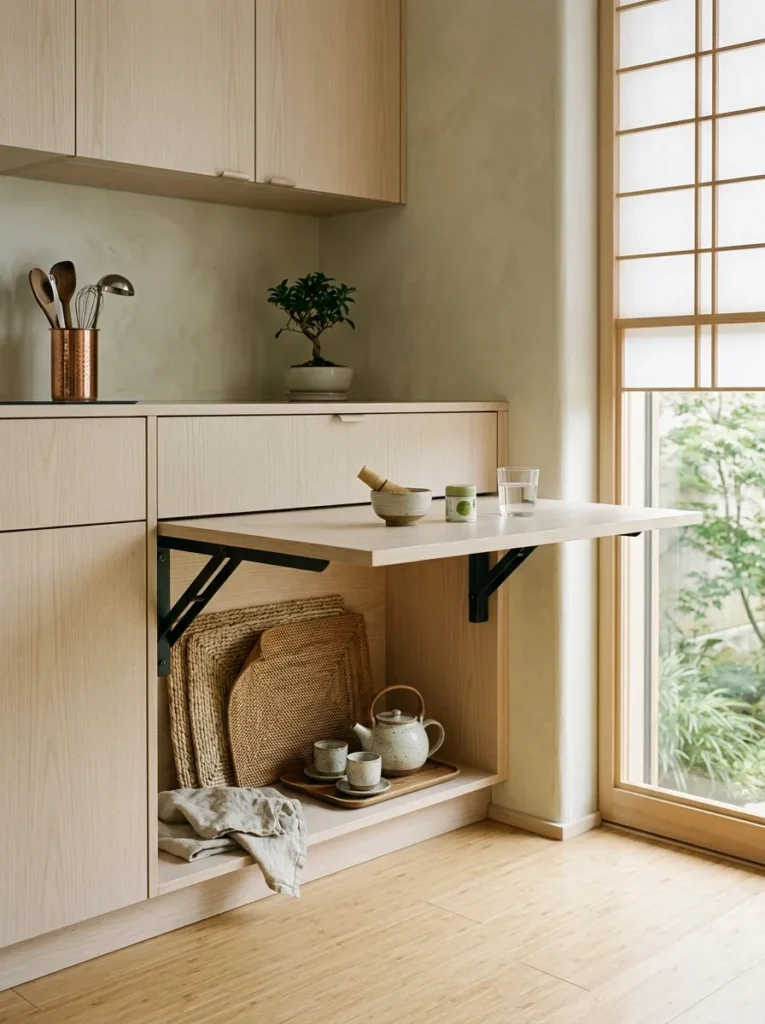
A fold-down table solves two small-kitchen problems with one piece of hardware: it gives you a surface for quick meals or extra prep space, and the wall cavity or shelving built beneath it becomes dedicated storage that would otherwise sit empty under a fixed table no one had room for anyway. Fold it flat against the wall when not in use to get the floor space back entirely. This idea works best in kitchens that don’t have room for a permanent dining nook but still want one occasionally.
16. Open Shelving Mounted on a Cabinet’s Exposed End Panel
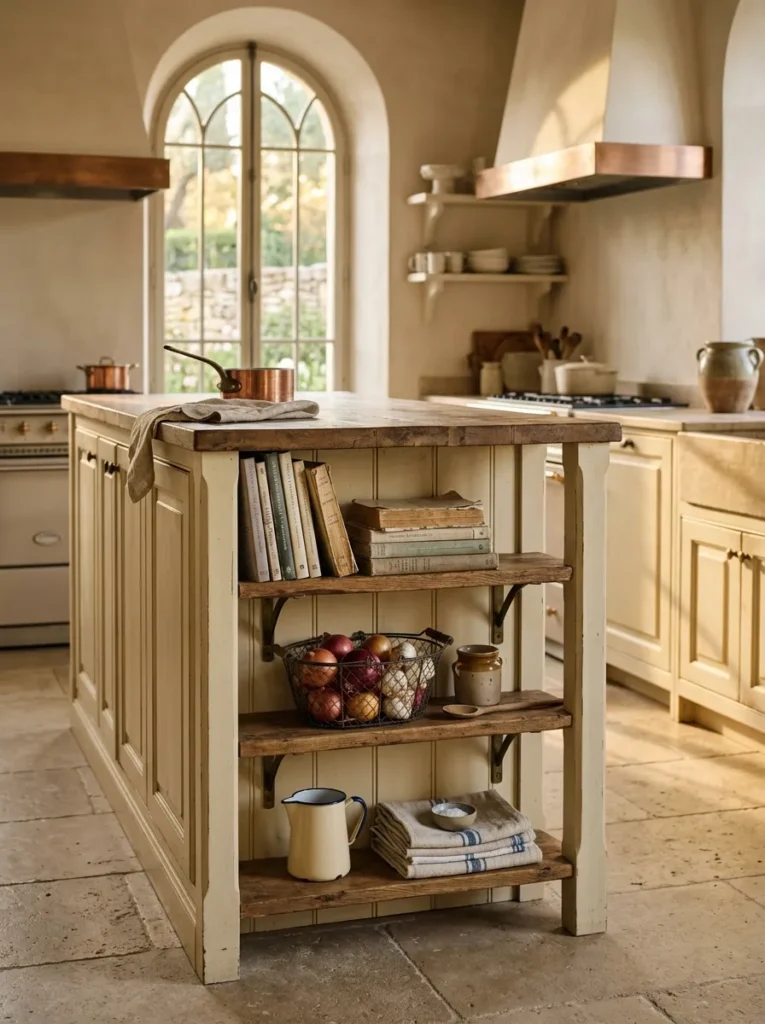
Every island or peninsula has at least one exposed end panel that typically does nothing but exist, and it’s one of the easiest places to add genuine storage without touching your floor plan at all. Three or four slim shelves mounted to that panel can hold cookbooks, a wire produce basket, or even rolled towels, turning a flat wall of cabinetry into a functional display. Keep weight in mind, since this is a single panel rather than a full cabinet box — heavier items need brackets rated for the load, not just decorative hardware.
17. Glass Jar Pantry Wall with Visible Labels
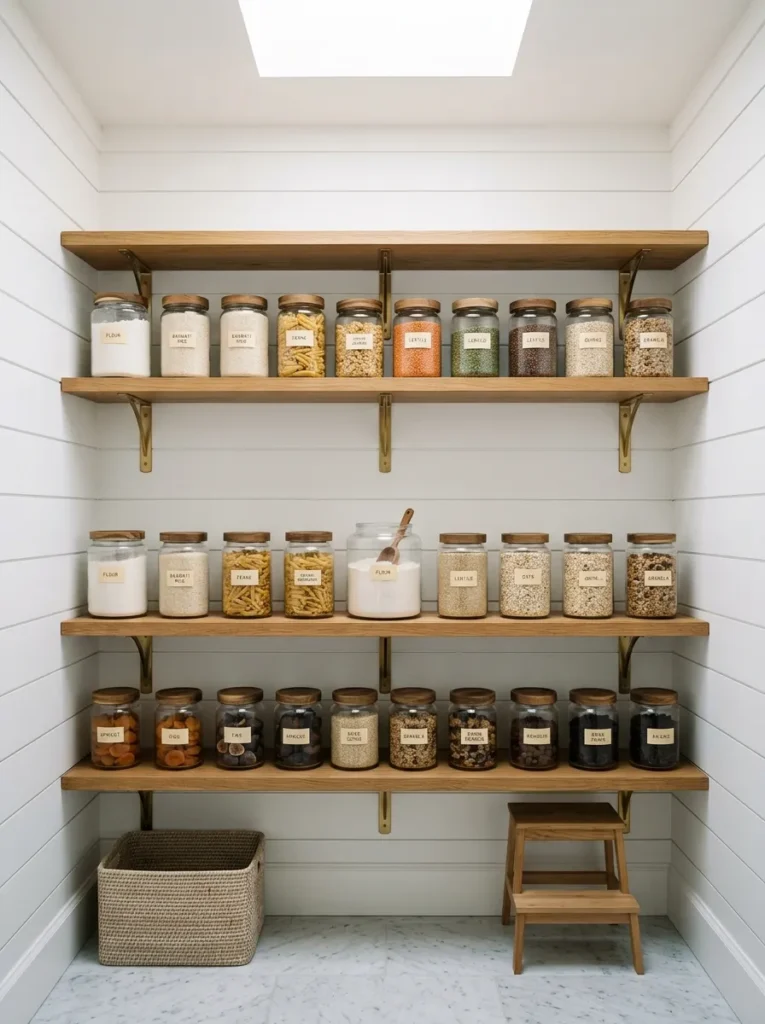
Transferring pantry staples into matching glass jars does more than look tidy — it actually compresses storage, since bulky cardboard boxes and bags waste space around their contents in ways uniform jars never do. A full wall of them also turns a strictly functional area into one of the most photogenic corners of the kitchen. The catch is consistency: mismatched jar sizes undo the visual and spatial benefit immediately, so it’s worth buying jars as a single matched set rather than collecting them piecemeal.
18. Pull-Out Spice Drawer Positioned Beside the Stove
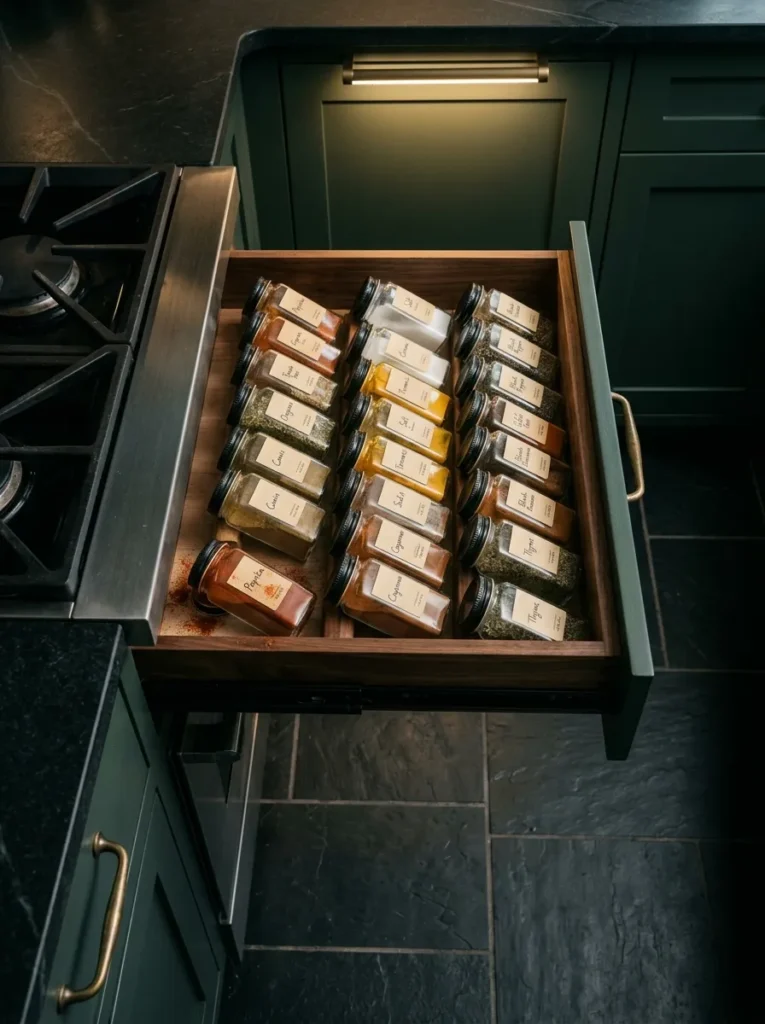
Spice drawers beat spice cabinets for one simple reason: you see every jar from above the instant you open them, instead of scanning rows from the side and pulling out three jars to find the one in back. Positioning the drawer directly beside the stove rather than across the kitchen also cuts down on the mid-recipe scramble that wastes time and risks a burnt pan. A shallow drawer insert with angled risers works best, since flat-laid jars in a deep drawer just recreate the same visibility problem you were trying to solve.
19. Over-the-Sink Cutting Board with Storage Shelf Below
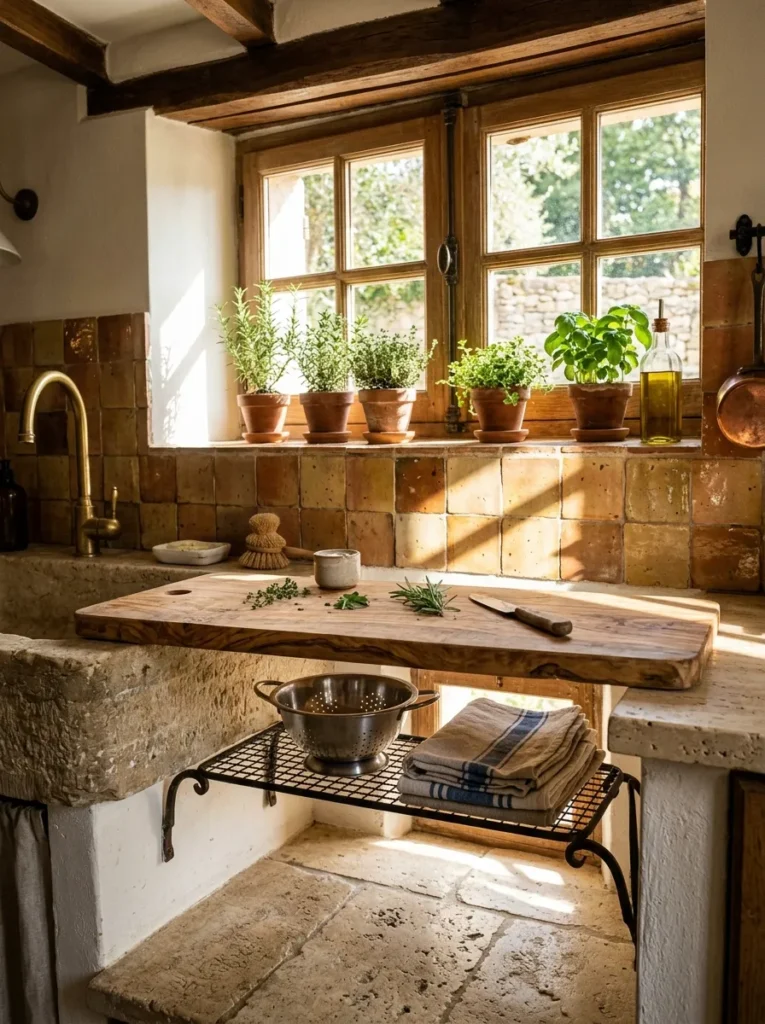
An over-the-sink cutting board already saves counter space by working directly above the basin, but most people stop there and ignore the open air beneath it. Adding a small shelf or wire rack underneath the board captures that extra zone for a colander, a stack of towels, or a drying rack that would otherwise sit on the counter. This idea works particularly well in kitchens with a single basin sink, since double basins typically don’t leave enough flat edge to support a board securely.
20. Baker’s Rack Filling an Awkward Corner
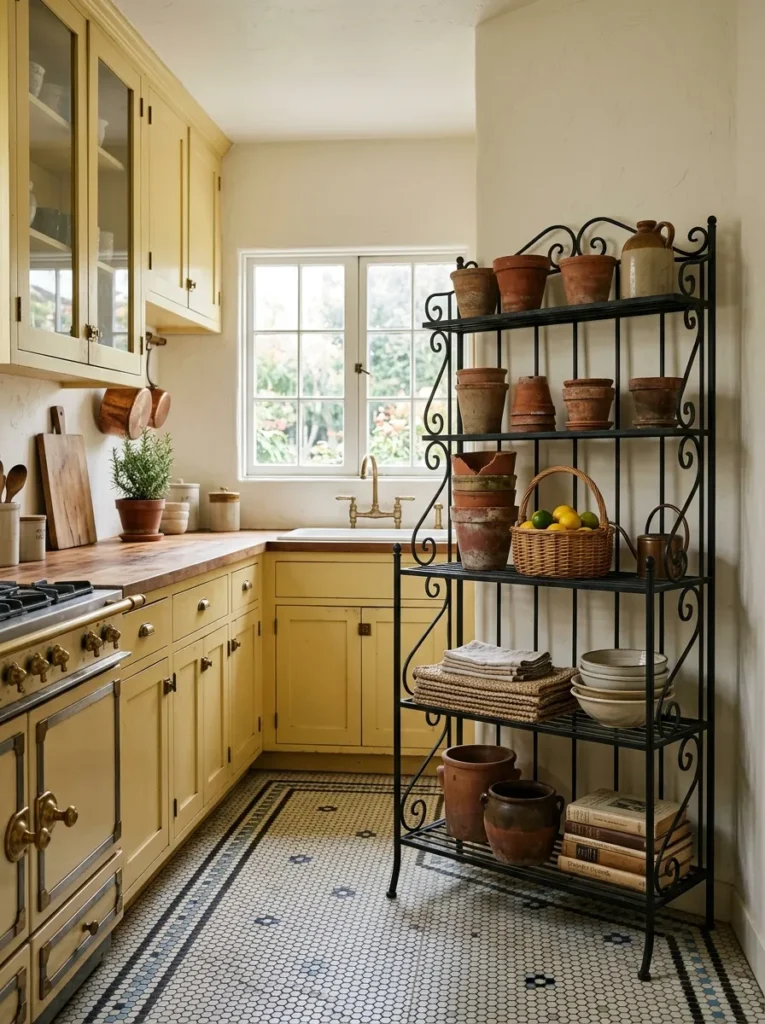
Every small kitchen has at least one corner too awkward for cabinetry but too large to ignore, and a freestanding baker’s rack is often the only furniture piece narrow and tall enough to actually fit it. Because it’s freestanding rather than built-in, it’s also one of the few ideas on this list that moves with you if you ever relocate. Use the bottom shelf for heavier items like small appliances or pot collections, and reserve the top for lighter decorative storage, since baker’s racks are taller and narrower than most furniture and top-heavy loading makes them unstable.
21. Under-Cabinet Stemware Rack for Wine Glasses
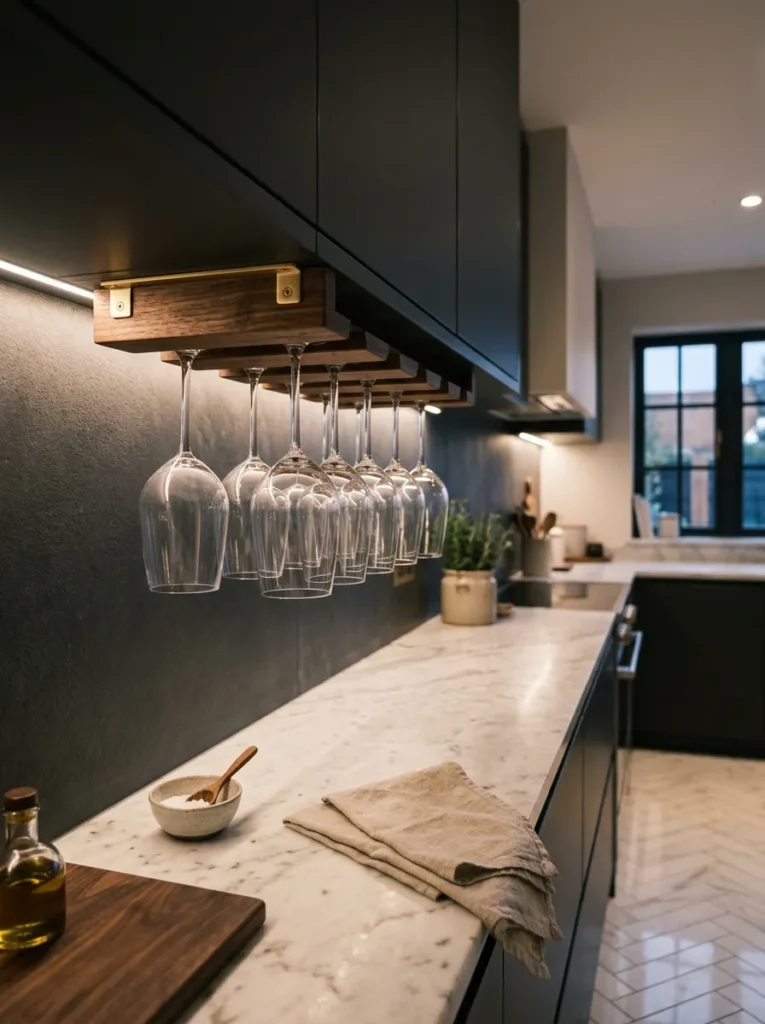
Stemware is one of the most space-inefficient items to store upright, since the bowl shape demands far more shelf height than the glass actually needs. Hanging glasses by their stems from an under-cabinet rack solves that completely, freeing an entire cabinet shelf for something else while keeping the glasses both visible and accessible. Mount it close enough to a counter edge that you can lift a glass straight down without it bumping the cabinet door, and skip this idea entirely if you have stemware with unusually thick or oddly shaped stems that won’t sit securely in standard slots.
22. Tension Rod Dividers for Vertical Tray Storage Under the Sink
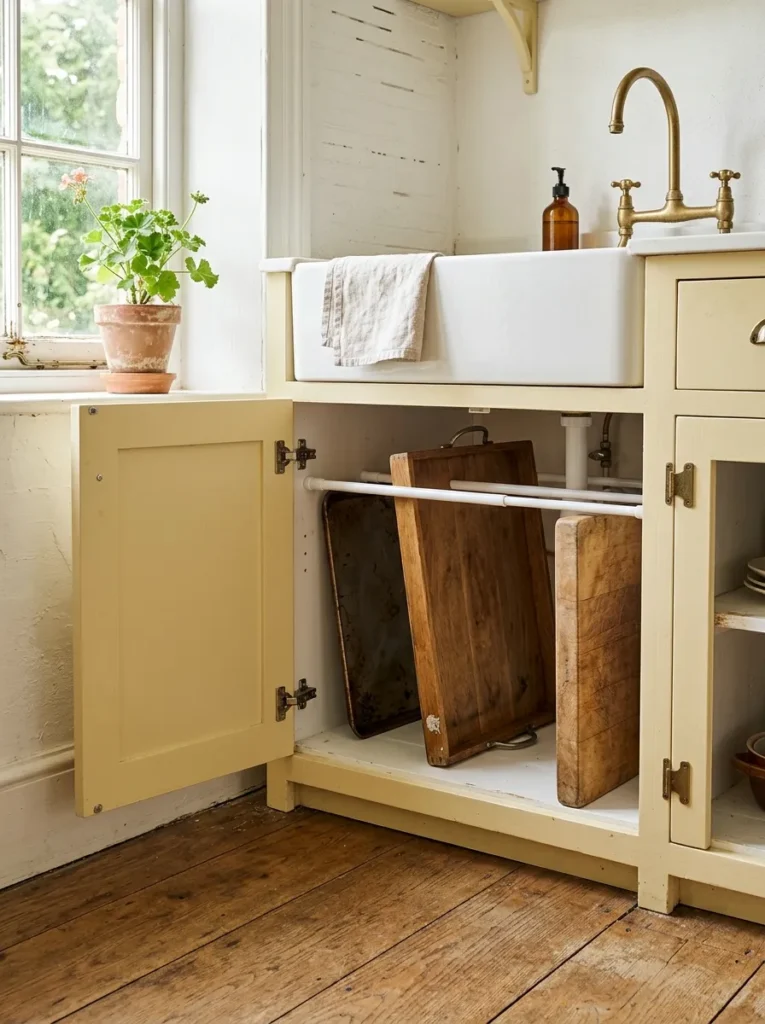
This is the lowest-cost idea on the entire list, and it solves the same problem as the vertical cabinet inserts mentioned earlier without spending anything on custom hardware. Two spring-loaded tension rods installed a few inches apart inside a cabinet create instant vertical slots for trays, cutting boards, or baking sheets that would otherwise stack flat and bury each other. It’s also fully removable, which makes it a smart option for renters who want the function without committing to anything permanent. Just confirm the rods are rated for the actual weight of what you’re storing, since baking sheets are heavier than they look stacked together.
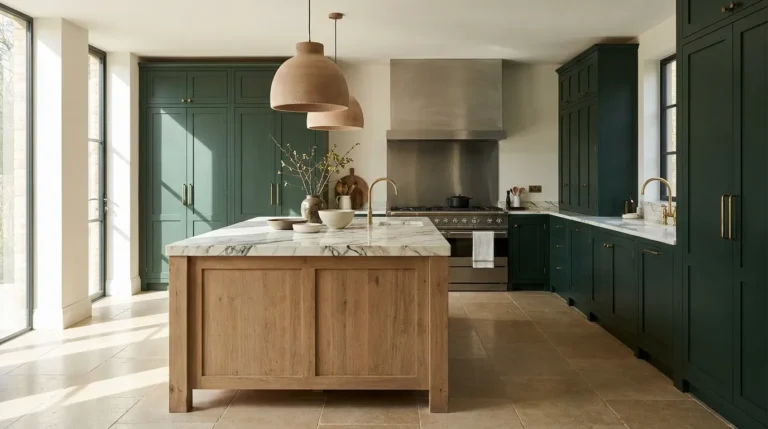
23. Ceiling-Height Cabinets Paired with a Rolling Step Stool
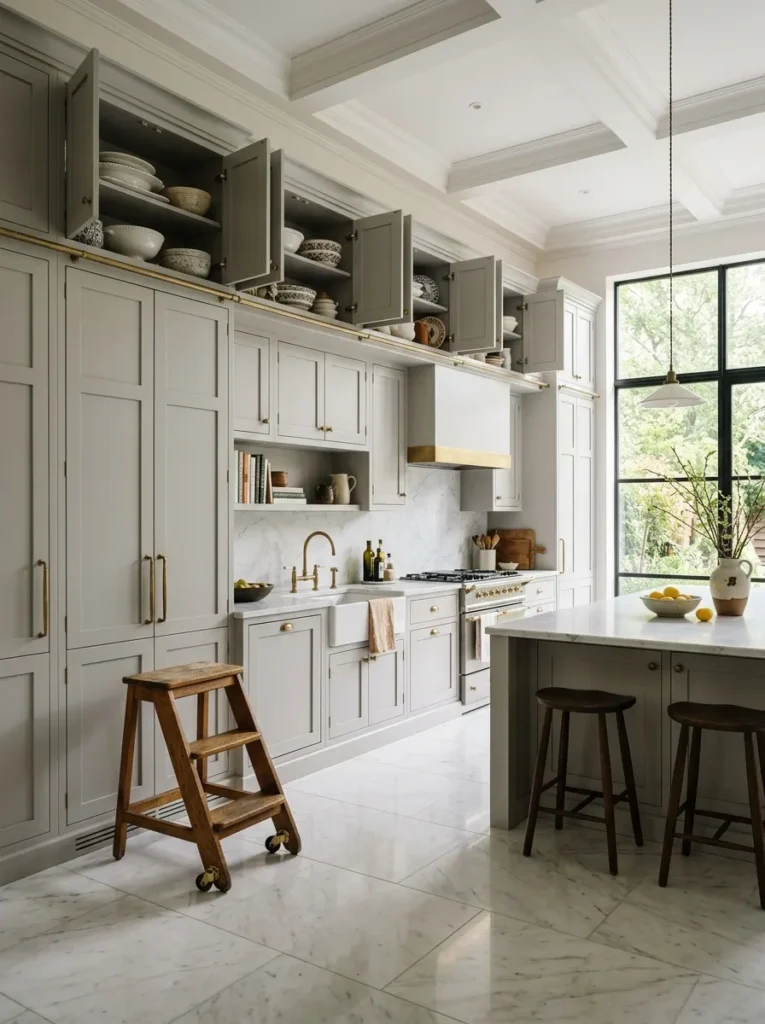
Most small kitchens stop their upper cabinets a foot or two below the ceiling, leaving a strip of dead air that collects dust on top instead of storing anything useful. Extending cabinetry all the way to the ceiling reclaims that space for items you don’t need daily — seasonal serveware, large platters, appliance boxes — while a rolling step stool keeps that height genuinely accessible instead of becoming an out-of-reach black hole. This pairing only works if you’re consistent about using the stool, though; ceiling-height storage that requires balancing on a counter defeats its own purpose.
24. Repurposed Bar Cart as Mobile Pantry Overflow
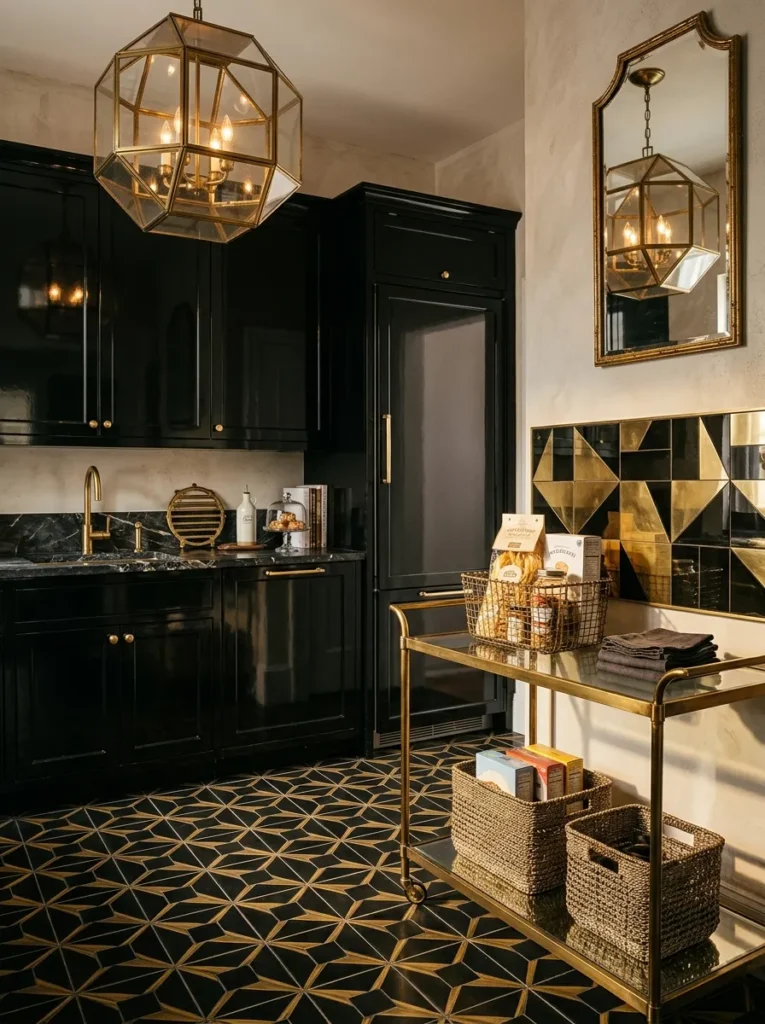
When pantry shelves run out before the groceries do, a bar cart makes a surprisingly practical overflow solution, since most are built with open shelving specifically designed for visible, grab-and-go access. Park it beside the refrigerator or in any leftover sliver of floor space, and use woven baskets on each tier to keep loose items like snack bags or produce from looking chaotic. It’s also one of the only ideas here that doubles as actual furniture, so it earns its keep even in a kitchen with no permanent storage gap to fill at all.
Final Thoughts on Maximizing a Small Kitchen
The best small kitchen storage ideas rarely come from buying more bins — they come from noticing the inches your kitchen was already giving you for free. A toe-kick, a cabinet door, the wall above your sink: none of it requires demolition, just attention. Start with one or two ideas that match your actual frustrations rather than trying all 24 at once, and resist the urge to fill every reclaimed inch immediately. A little empty space left on purpose is still better design than a drawer crammed full simply because it could be.
If there’s one tip worth pushing back on, it’s this: don’t organize your most-used items into the prettiest spot in the kitchen just because it photographs well. Function should win that argument every time, even when restraint means your open shelf holds plain everyday mugs instead of a curated still life.
Save this guide to your Pinterest board so you can revisit these small kitchen storage ideas whenever you’re ready to tackle your next project.