21 Dining Room Console Table Ideas That Add Style and Storage
A dining room console table — whether it’s technically called a sideboard, a buffet, or a console — is the piece of furniture that completes a dining room in the way that a sofa alone can’t complete a living room. It gives the primary wall a reason to exist beyond the chair backs leaning against it. It provides a serving surface for meals that the dining table can’t accommodate mid-course. It holds the extra plates, linens, glassware, and wine that dining rooms perpetually need somewhere to live. And when styled well, it creates the composed vignette that makes a dining room feel considered rather than functional.
The decisions that determine whether a console table elevates a dining room or simply occupies it are more specific than most styling advice suggests. The depth of the console relative to the circulation path behind the chairs, the height of the piece relative to the chairs and the wall art above it, the storage configuration relative to the household’s specific dining-room storage needs — these practical decisions underlie every visual choice. These 21 ideas work through both: the material, style, and arrangement options that make a dining room console table feel genuinely right for the room, and the practical guidance that makes the choice last.
1. Choose a Low-Profile Sideboard That Extends the Room’s Horizontal Line

The most architecturally resolved console table proportion for a dining room is one that reads emphatically horizontal — long and relatively low, typically no more than 36 inches tall, extending across a significant portion of the wall it occupies. This horizontal emphasis echoes the dining table across the room and creates a visual rhythm between the two dominant furniture pieces that makes the room feel composed rather than furnished by accident.
A low sideboard in the 60- to 72-inch length range suits most dining rooms with standard 8- to 10-foot wall space. The relationship between the sideboard’s length and the wall it backs: the sideboard should occupy 65 to 80 percent of the wall’s width, leaving deliberate negative space at each end rather than extending edge to edge (which reads as a piece that’s filling a gap) or stopping far short of the wall’s edges (which reads as a piece that’s too small for the space). Getting this proportion right before purchasing matters more than any single styling decision.
2. Select Warm Walnut for Material Quality That Ages Beautifully

Among the wood species used for dining room sideboards and consoles, walnut provides the combination of material richness, warm tone, and grain complexity that reads as genuinely considered rather than merely adequate. The flowing grain of walnut shifts across adjacent drawer fronts in ways that make each surface distinct, and the medium-dark brown with its warm undertone relates naturally to the warm colors of dining rooms — gold, terracotta, deep red, forest green — while providing enough contrast to work alongside lighter walls and pale stone countertops.
Unlike painted or lacquered consoles, which communicate their visual statement on first glance and don’t evolve further, a walnut console develops subtle patina and character over years of use. Seasonal changes, occasional polish, and the natural oils from handling all contribute to a surface that looks more resolved over time rather than wearing out. This is the quality that makes walnut worth the additional investment for a piece positioned as the dining room’s most prominent furniture after the table.
3. Consider a Modern Sideboard With Fluted Door Fronts

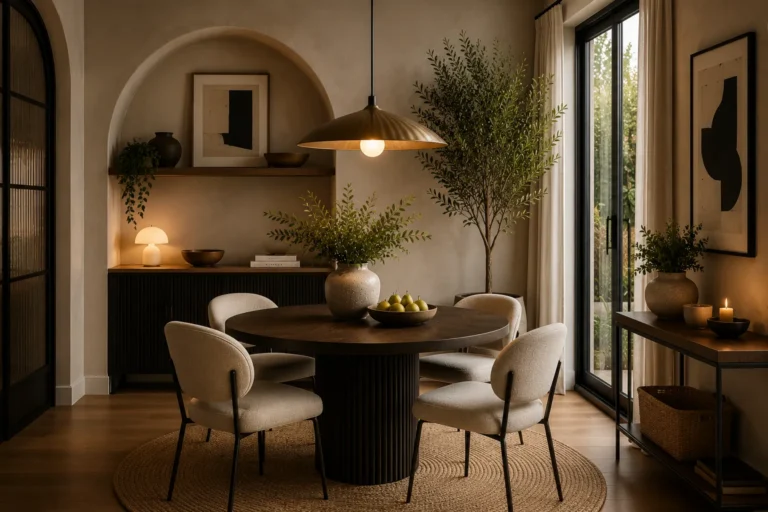
Fluted fronts — vertical grooves creating a ribbed surface across cabinet door faces or drawer fronts — have become one of the most widely specified sideboard details in contemporary dining rooms for the same reason they work in kitchens: the texture creates shadow lines that shift through the day as light angles change, adding depth to what would otherwise be a flat surface without introducing pattern or color that competes with the dining room’s other elements.
A sideboard with fluted fronts in natural oak or painted white reads as more considered at close range than the same silhouette in a plain flat finish, which suits the sustained looking that happens during a meal. The fluting is visible from the dining table across the room, which is the specific viewing distance that most matters for dining room furniture. Fluted fronts in a warm oak finish provide the organic texture that suits eclectic, contemporary, and Japandi-influenced dining rooms; in a painted matte finish they suit more transitional or classic contexts.
4. Use a Marble or Stone Top Console as the Dining Room’s Material Anchor

A marble or stone top on a dining room console or sideboard does what few other material choices accomplish: it introduces genuine geological material into the room, with the tonal variation and vein patterns that no manufactured surface fully replicates. The cool, smooth surface is also practical for a dining room context — it withstands heat from serving dishes placed directly from the oven, resists staining with appropriate sealing, and wipes cleanly after serving.
The stone top’s visual weight requires a base that can hold it proportionally. A heavy marble slab on a thin-legged base looks precarious rather than refined; the same marble on a substantial cabinet base reads as a composed material decision. The stone’s color should connect to at least one other material in the dining room — grey veining in the marble relating to grey in the dining chairs’ upholstery, warm cream in the stone relating to the wall color — to integrate the console into the room’s palette rather than positioning it as an isolated statement.
5. Match the Console’s Wood Tone to the Dining Table for Cohesion
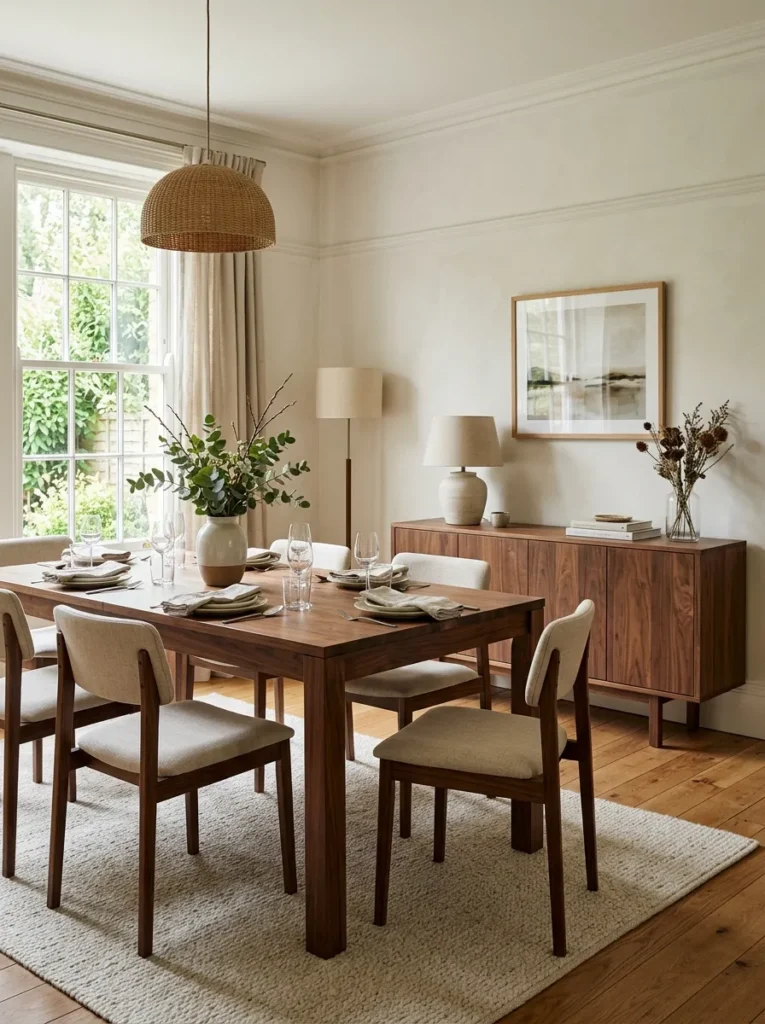
The dining room’s two dominant furniture pieces — the table and the console — create a visual dialogue across the room that either reads as cohesive or as two different furniture purchases installed in the same space. Matching the wood tone of the console to the dining table doesn’t require identical finishes; it requires the same warmth or coolness register. A warm walnut table suits a warm-toned oak or walnut console; a blonde Scandinavian table suits a natural oak or light ash console.
The matching doesn’t need to extend to the same wood species or the same manufacturer. A dining table in walnut veneer and a console in solid walnut will read as related because the tone and warmth match, regardless of any differences in grain pattern or specific shade. The practical benefit of this cohesion is that the room reads as planned rather than assembled — which is one of the qualities that distinguishes a well-designed dining room from a furnished one.
6. Style the Console Surface in Three Heights for Instant Visual Composition

The console’s top surface is the dining room’s most visible horizontal plane other than the dining table itself, and it receives sustained attention during every meal from guests seated facing it. The arrangement of objects on that surface determines whether the console reads as a designed feature or a storage surface with things placed on it.
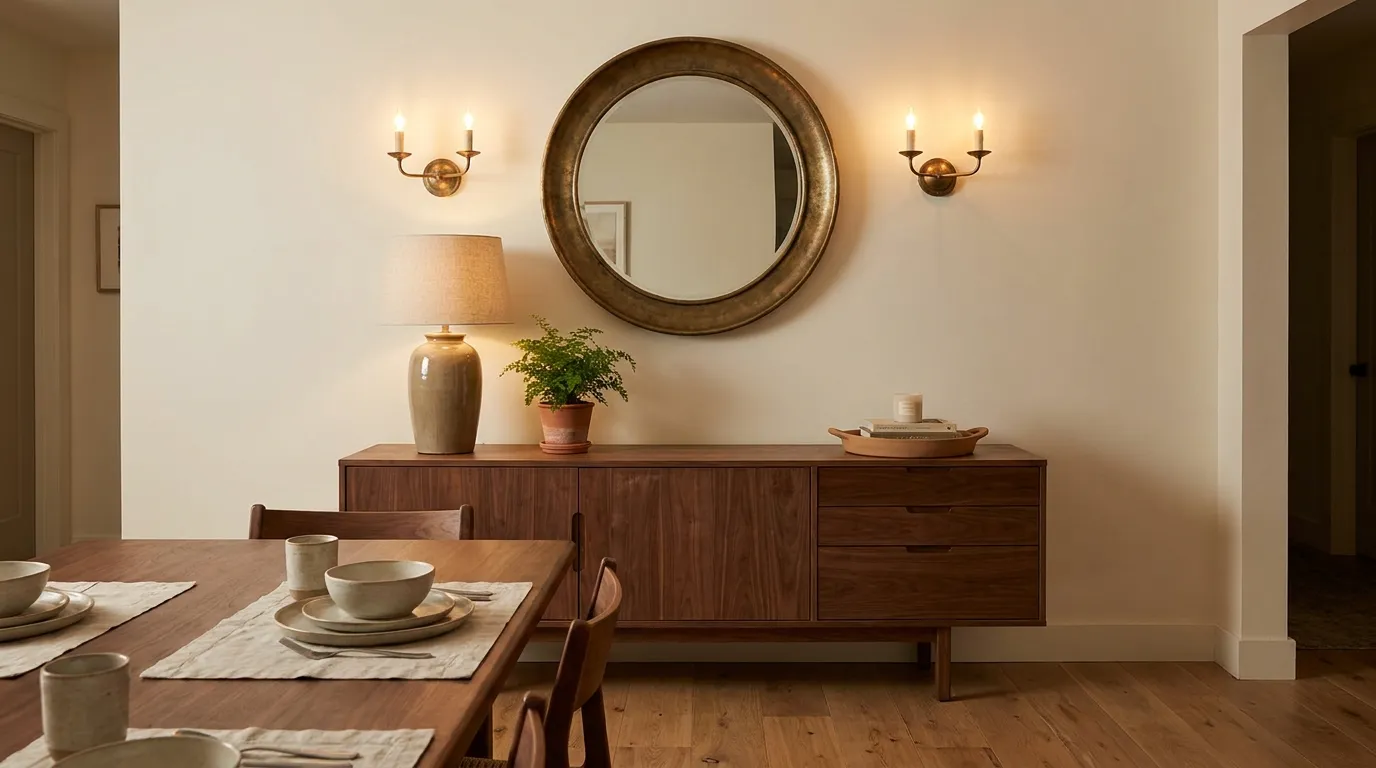
The three-height principle applies here as naturally as it does to a console in the entryway: a tall element at one side or the back (a lamp, a large vase, a sculptural piece), a medium element at the center or slightly offset (a plant, a pair of candlesticks, a stack of books), and a low element at the opposite end or front edge (a tray with objects, a small bowl, a low ceramic). This graduated arrangement creates the diagonal visual movement that makes a surface look styled rather than decorated. The objects should relate to each other in material or palette — all in the same warm neutral tone family, or all incorporating one metal finish — rather than being chosen individually for separate appeal.
7. Hang a Statement Mirror Above the Console for Scale and Light

A mirror above a dining room console serves the same function as one above an entry console: it creates vertical scale, bounces available light, and frames the lower composition as a complete wall element. In a dining room context, the mirror also reflects the table, chandelier, and guests across the room, which adds depth and liveliness to the dining experience in a way that artwork alone can’t.
The mirror’s width should relate to the console below — occupying roughly 60 to 85 percent of the console’s length creates a deliberate relationship between the two pieces. A mirror that’s wider than the console unbalances the vertical composition; one that’s significantly narrower reads as undersized for the furniture beneath it. The mirror should hang at a height that places its center at approximately 57 to 60 inches from the floor — standard art-hanging height — which positions the bottom of the mirror 6 to 8 inches above the console surface, the conventional clearance.
8. Add Sconces on Either Side of the Mirror for a Formal Composed Wall
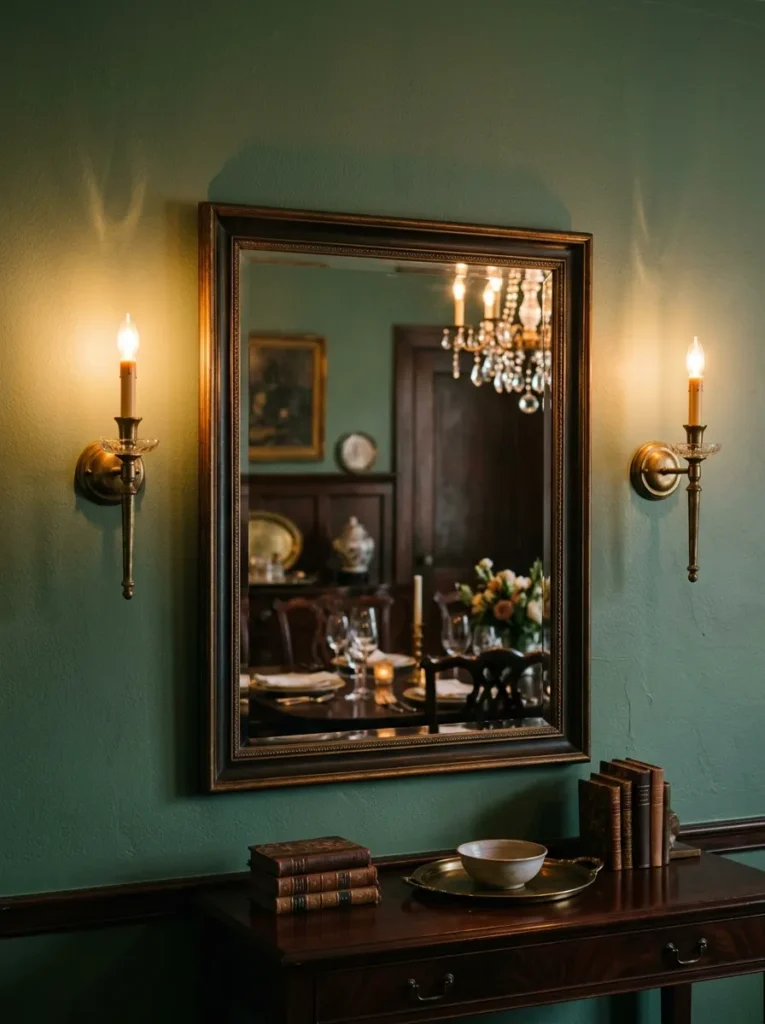
The combination of console, mirror, and flanking wall sconces creates the most formally resolved wall composition available in a dining room without built-in architectural work. The sconces frame the mirror and provide warm ambient light at the wall level, which supplements overhead pendant or chandelier light from a different height and direction, creating the layered lighting that makes dining rooms feel genuinely atmospheric rather than simply illuminated.
The sconces should be positioned symmetrically at the mirror’s outer edges — not immediately beside the frame but with 4 to 6 inches of breathing room between the fixture and the mirror glass — so the arrangement reads as a composed triptych rather than a mirror with lights attached. The metal finish of the sconces should match the mirror frame, the dining table hardware if any, or the chandelier — finish cohesion across the dining room’s metal elements is the detail that makes the whole room read as designed.
9. Use a Console With Closed Doors for Linens and Tableware Storage
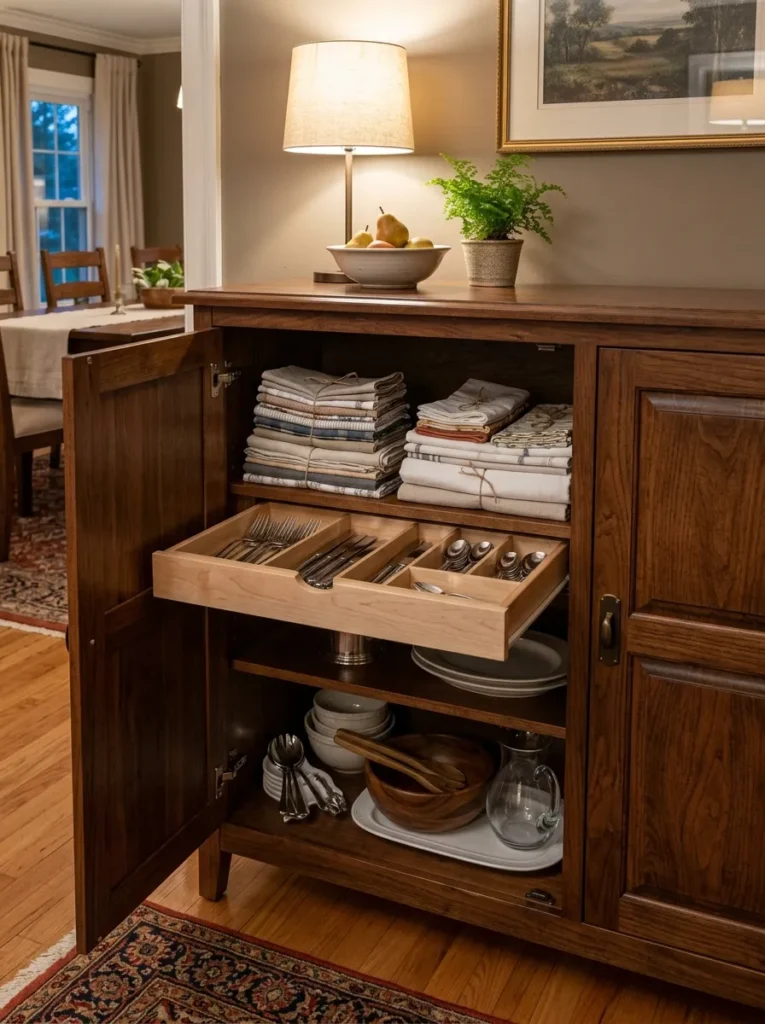
The dining room perpetually needs storage for the items used in dining — tablecloths, cloth napkins, placemats, extra flatware, serving pieces, candles, wine tools, and the auxiliary tabletop items that appear at dinner parties and disappear for months between them. A console with closed door storage addresses this need in the same room where the need arises, eliminating the trip to a remote linen closet or storage room during setup and cleanup.
The storage interior can be organized with drawer dividers for flatware and tools, folded linens on adjustable shelves sized to the specific linen dimensions the household uses, and removable trays or bins for candles, wine accessories, and small serving items. The closed doors keep the storage private during the meal and create the clean surface appearance that makes a dining room feel composed rather than functional.
10. Place a Large Statement Plant at One End of the Console

A substantial plant at one end of a dining room console accomplishes several things simultaneously: it establishes the console as a living feature of the room rather than a furniture piece positioned against the wall, it provides the organic height that lamps also provide but with different material quality, and it introduces color within the dining room’s palette without adding pattern that competes with the table setting.
The plant’s scale should be genuinely substantial — large enough that it reads as a compositional element rather than an accessory. A trailing pothos that reaches from the console’s surface down 18 inches below, a fiddle-leaf fig that extends 24 inches above the console, or an olive tree in a generous pot that stands 48 inches from floor to top all read as deliberate design elements. The pot material should connect to the console’s material story: terracotta suits warm wood consoles, matte black suits contemporary dark wood or lacquered consoles, natural white ceramic suits Scandinavian and organic dining rooms.
11. Style the Console for the Season With a Changeable Central Element

The dining room console sees more regular attention than most furniture in the house because it’s looked at from a fixed position — the dining table — throughout every meal. A console that looks identical in January and in July reads as static and forgotten; one that changes one element seasonally reads as maintained and considered.
The approach that sustains consistency while allowing change: establish the console’s fixed elements — the lamp, the mirror, the side object — and designate the central position as the seasonal one. A sculptural dried arrangement in autumn, a simple branch of forced spring blossoms in March, a loose cluster of summer herbs in a ceramic vessel in July. Each change requires perhaps ten minutes and the replacement of one arrangement while everything else stays undisturbed. The result is a console that looks fresh throughout the year without requiring a full restyle.
12. Mix Metals on the Console Surface Intentionally

Metal objects on a dining room console surface — candlesticks, bowls, trays, lamp bases — introduce a material that reflects the room’s light and creates warmth in ways that ceramic and wood don’t. The question that most people avoid by defaulting to all-matching metals is how to mix two or more metal finishes without the result looking inconsistent.
The answer is intentional placement rather than avoidance. A console surface with a brass lamp base, an aged bronze tray, and a matte black candle holder can read as cohesive if all three have warm undertones and if the objects are grouped in a way that makes the varied finishes appear deliberate. The grouping should pair the metals in proximity — the brass lamp beside the bronze tray — so the tonal relationship between the two warm metals reads as chosen rather than assembled from separate purchases.
13. Use the Console as a Serving Buffet During Dinner Parties

What makes a dining room complete is the addition of a buffet — it serves as additional tabletop and service space and allows extra storage space. The serving function is the dining room console’s most practical role during entertaining, and designing the console for this use from the start — choosing a depth that accommodates serving dishes, a surface material that handles heat, and a height that allows comfortable access — makes the piece genuinely functional rather than merely decorative.
The most practical serving configuration: a console 36 to 40 inches tall (counter height) with a durable surface, positioned with enough clearance on the non-wall side for two people to stand beside it simultaneously. The surface depth should be at least 18 inches to accommodate a full serving dish without the dish extending over the front edge. Warming serving dishes placed directly from the oven require either a stone or stainless top or a heat-resistant mat — specifying the console’s surface material with this use in mind prevents the regret of a beautiful wood top that develops heat rings.
14. Frame the Console With Symmetrical Artwork Instead of a Single Piece
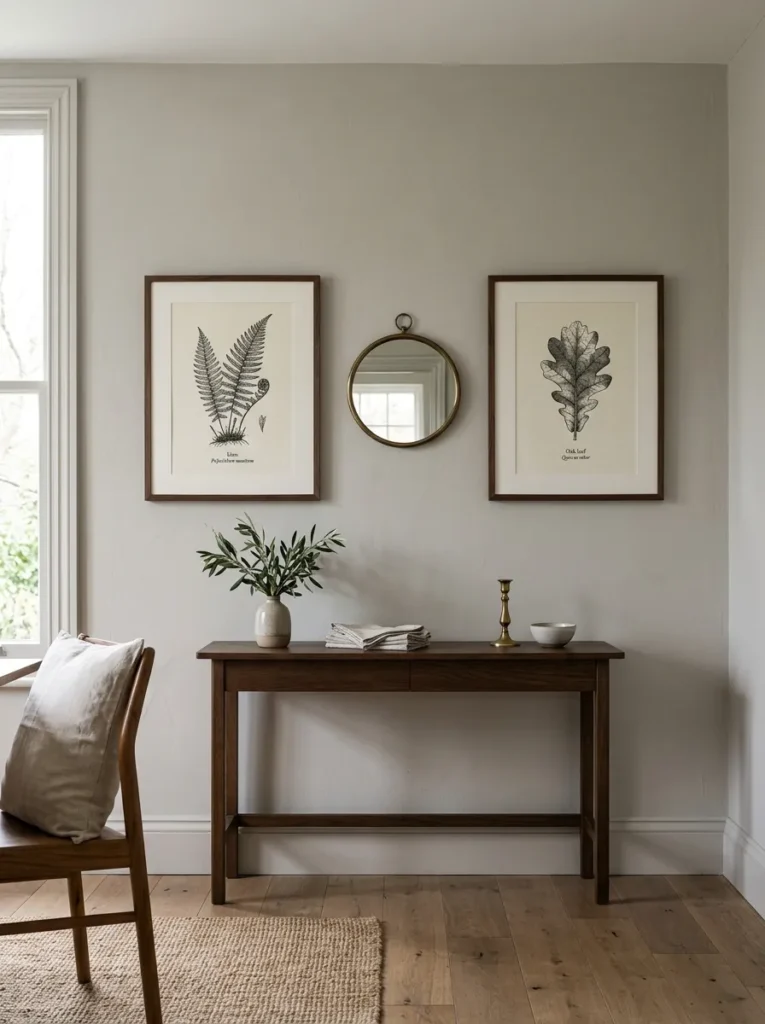
The wall above a dining room console typically receives one large artwork or mirror as its single element. The alternative that creates more visual complexity without greater cost: two pieces of artwork hung symmetrically on either side of a central point, leaving the wall’s center clear or anchored by a smaller central piece between them.
This symmetrical pair arrangement reads differently from a single large piece: it creates a clear left-right rhythm that frames the console below rather than simply covering the wall. Two identically framed prints in a related palette, hung at the same height with consistent spacing from the console’s center, establish the formal bilateral symmetry that suits traditional and transitional dining rooms. The same arrangement with slightly mismatched frames or different print sizes suits a more eclectic context. The key is deliberate pairing — two objects chosen for their relationship to each other — rather than two separately chosen pieces that happen to occupy adjacent positions.
15. Choose an Antique or Vintage Console for Character and Provenance

An antique sideboard or vintage console in a dining room achieves something that new furniture rarely manages: it communicates the sense that the room has been assembled over time rather than purchased as a package. The patina of a well-aged piece — the slightly uneven surface of old lacquer, the visible wear on drawer runners, the imperfect alignment of century-old hardware — reads as genuine history rather than manufactured character.
The vintage piece doesn’t need to match the rest of the dining room exactly — in fact, a deliberate style contrast often reads more thoughtfully than an exact period match. A mid-century credenza with tapered legs and simple fronts beside a more traditional dining table creates the collected quality of a well-traveled house. A Victorian sideboard with decorative carved details alongside a contemporary table reads as confident eclecticism. The critical requirement is that the vintage piece is in sound structural condition — beautiful patina on a piece with damaged joints or drawers that don’t close properly produces frustration, not character.
16. Use a Console With Open Lower Shelves for Wine and Display

An open lower shelf on a dining room console creates a natural display zone for items that are too large or visually interesting for closed storage: wine bottles lying horizontally, a collection of cookbooks, a ceramic serving vessel, or a set of linen-covered boxes. The shelf makes the console feel more substantial and gives it visual presence from floor to top rather than floating at one height above the floor.
The lower shelf styling should be consistent rather than cluttered. Two or three wine bottles lying horizontally beside a single larger ceramic reads as intentional; eight items in a disorganized row reads as storage that hasn’t been styled. The shelf depth determines what fits: a 12-inch deep shelf accommodates wine bottles horizontally and most standard book heights; a shallower shelf suits ceramics and smaller display items but not bottles.
17. Install In-Drawer Organizers for Flatware and Table Tools

The interior of a dining room console’s drawers is where practical organization makes the biggest daily difference. Flatware, serving tools, wine tools, candle lighters, tablecloth clips, extra napkin rings, and the small category of dining-specific accessories that accumulate without a specific home all benefit from a dedicated drawer within the console.
A fitted flatware tray — sized to the drawer’s interior dimensions rather than a standard approximate fit — holds the everyday silverware that the dining table requires without requiring a trip to the kitchen. A secondary drawer with a custom insert for serving tools, wine accessories, and specialty items eliminates the universal junk-drawer quality that dining room console drawers develop without a specific organizational system. The practical value of this organization is measured in the minutes before every dinner party: a well-organized console drawer means setup takes three minutes rather than fifteen.
18. Paint the Console in a Bold Accent Color to Anchor the Room
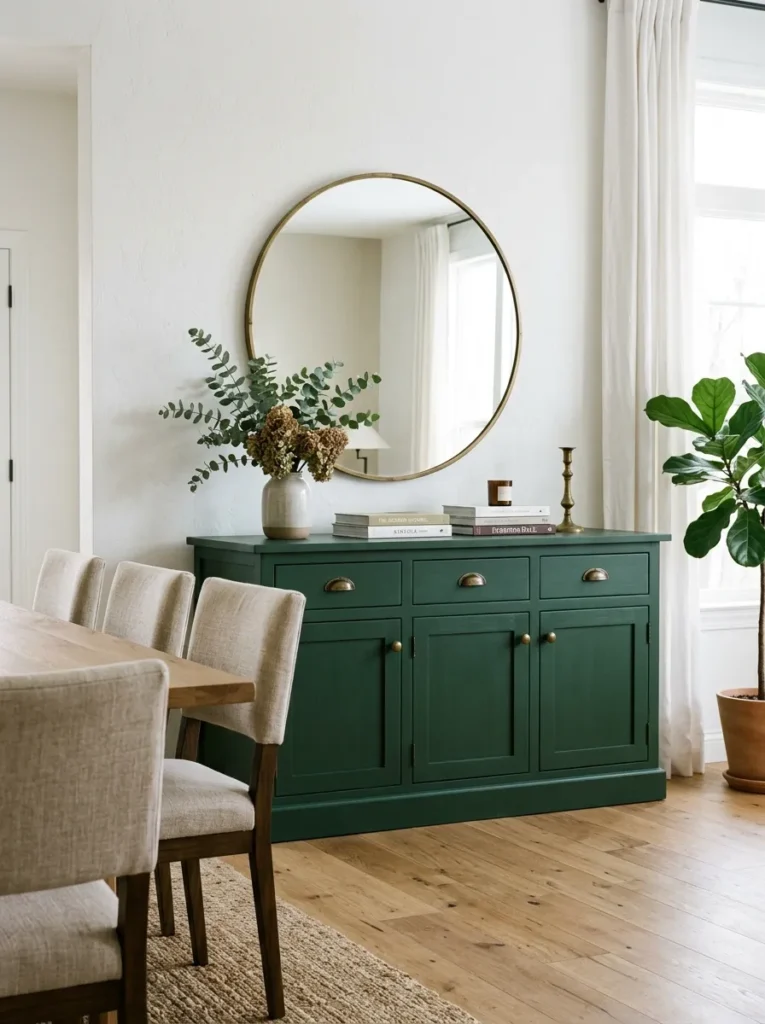
A dining room console painted in a specific, deliberate color — forest green, deep navy, warm rust, mustard yellow — becomes the dining room’s primary color commitment and gives the room a clear accent anchor that every other decision can reference. The painted console works particularly well in dining rooms with otherwise neutral palettes — white walls, natural wood table, linen chairs — where a single bold piece is needed to prevent the room from reading as understated to the point of blandness.
The paint finish matters as much as the color: a matte or chalky finish reads as the most restrained and considered version of any color, softening the boldness while maintaining the hue’s visual impact. Semi-gloss on a dining room console reads as slightly more kitchen-cabinet in quality, which can read out of place in a formal dining context. The console’s hardware should coordinate with the bold color — aged brass beside deep navy, matte black beside forest green, warm bronze beside rust — to complete the piece rather than leaving the color decision as the only design element.
19. Choose a Slim Console for a Small or Narrow Dining Room

In small dining rooms or dining spaces where the floor area is constrained, a console with genuine depth — the standard 16 to 20 inches — can reduce the circulation clearance behind the dining chairs to the point where movement is uncomfortable. A slim console in the 10- to 14-inch depth range preserves floor space while still providing a surface for display and modest storage, and it reduces the visual mass that a standard-depth console adds to a small room.
The trade-off for depth is storage capacity: a 12-inch console fits a single shallow drawer or open shelf rather than the full enclosed cabinet storage of a deeper piece. In a small dining room where storage is genuinely needed, a taller slim console — using vertical height to compensate for reduced depth — can provide comparable storage volume in a smaller floor footprint. The slim console works best when the wall behind it is treated with care — the piece itself has less visual weight, so the wall composition above it becomes more important rather than less.
20. Use a Console in a Non-Wall Position as a Room Divider

Most dining room consoles back against a wall. In open-plan spaces where the dining area is part of a larger kitchen-dining-living zone without clear architectural boundaries, a console positioned with its back toward the living area rather than a wall creates a visual boundary that defines the dining zone without the closure of a full partition wall. Guests in the living area see the console’s back; diners see its front and styled surface.
A console used as a room divider needs to be finished on all sides — both the front and the back should be presentable, which means the storage inside needs to be organized since the reverse is occasionally visible. Some consoles are designed with a finished back for exactly this use; others require a simple backing panel that matches the room’s overall palette. The console’s height in this position should be low enough that sight lines between the two spaces remain clear — above approximately 36 inches, a dividing console starts to feel like a wall rather than a soft boundary.
21. Create a Full Gallery Wall Above the Console With Plates and Art Mixed

The wall above a dining room console is one of the most natural positions in any home for a composed gallery — the dining room’s function (gathering around a table for extended periods) means guests will spend significant time looking at this wall, and a carefully composed gallery rewards that sustained attention. A gallery wall that mixes framed artwork, decorative plates, small mirrors, and other dimensional objects creates a surface complex enough to provide something new to look at over repeated meals.
The console functions as the gallery’s base — everything on the wall exists in visual relationship to the console surface below it. The gallery’s lower boundary should hover 6 to 8 inches above the console top, establishing the console as the composition’s base rather than having the gallery float disconnected from the furniture. The gallery’s outer boundaries should align with or be narrower than the console’s outer edges, so the wall arrangement reads as supported by the furniture rather than expanding beyond it.
What to Know Before Buying a Dining Room Console Table
The decisions that determine whether a dining room console genuinely works are mostly practical rather than aesthetic:
Depth and circulation. The console’s depth (front to back) determines how much floor space it claims. Standard dining chairs need approximately 18 inches of clearance from the chair back to the wall to pull in and out comfortably. A console with 18 to 20 inches of depth placed directly behind dining chairs reduces that clearance to zero. Either allow enough space between the dining table and the console for both the chair and the console depth, or choose a slim console for rooms where space is tight.
Height and proportion. A console below 32 inches reads as a credenza or low cabinet; above 40 inches it starts to read more like a buffet or hutch. The 34- to 38-inch range suits most dining rooms because it positions the surface at a height accessible for serving and styling without being tall enough to interrupt sight lines across the room.
Surface material and use. If the console will serve hot dishes during meals, the surface material must handle heat: stone and stainless are appropriate; most painted wood and veneer finishes are not without protection. This is the practical decision that most style-focused guides ignore.
Final Thoughts
A well-chosen dining room console table transforms the room’s primary wall from a background to a feature — one that stores what the dining room needs, provides a surface for serving and display, and creates the composed visual anchor that makes a dining room feel genuinely complete.
Start with the practical dimensions: depth, height, and length relative to the wall and the circulation path behind the chairs. Then choose the material and style that suit the dining table and the room’s overall palette. The styling of the surface — the objects, the mirror, the sconces — is the most rewarding part of the project, but it has to rest on a piece that fits and functions correctly in the space.
Save the ideas here that match your dining room’s scale, your household’s storage needs, and your own sense of how the room should feel, and return to this guide when you’re ready to style the console that’s already there or choose the piece that’s still needed.