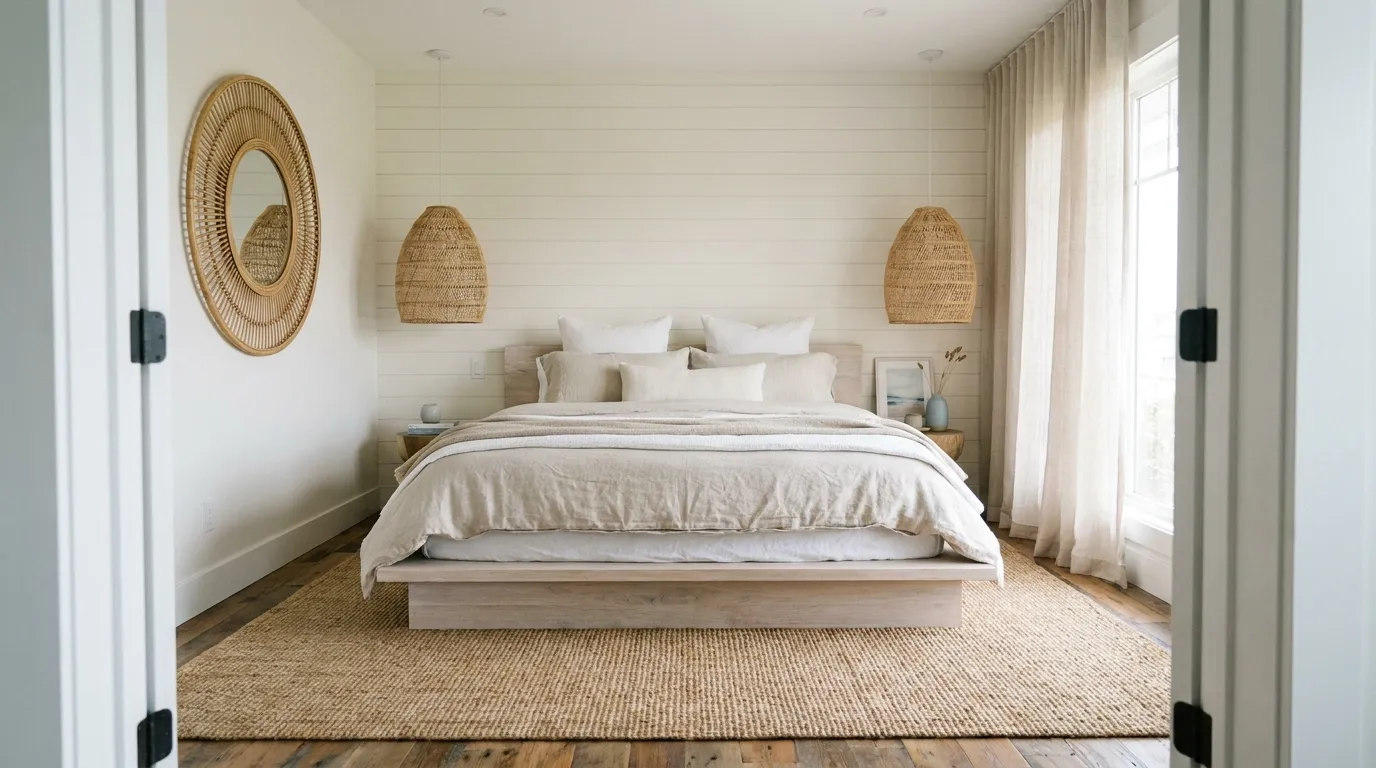
21 Coastal Bedroom Ideas That Feel Light and Relaxing
The line between a coastal bedroom that feels genuinely serene and one that looks like a gift shop at the boardwalk is thinner than most decorating guides acknowledge. Rope accents, seashell collections, and anchor motifs are easy defaults — and they tend to make a bedroom feel themed rather than restful. The rooms that actually capture the feeling of being near the water do it through light, materiality, and a color palette pulled from the natural coast rather than from nautical merchandise.
These 21 coastal bedroom ideas span the full range of approaches, from the foundational decisions about paint and furniture to the finishing choices in textiles and light. Several address the specific challenge of creating a coastal feel in an inland home or a smaller bedroom where the wrong moves make the space feel closed-in rather than breezy. Each idea includes enough context about what works, why, and what to watch for that you can adapt it to your actual room rather than just the ideal one.
1. Start With a Palette of Sand, Driftwood, and Sky — Not Just Blue and White

Blue and white is the shorthand for coastal, and it’s genuinely effective — but it’s also the palette most likely to tip into nautical cliché. The more versatile starting point is the actual color story of a beach: warm sand tones, bleached driftwood greys, soft warm whites, and the muted grey-blue of overcast coastal sky. These are quieter than bright cobalt and white, and they age better because they don’t read as a theme — they read as a room with a calm, considered palette.
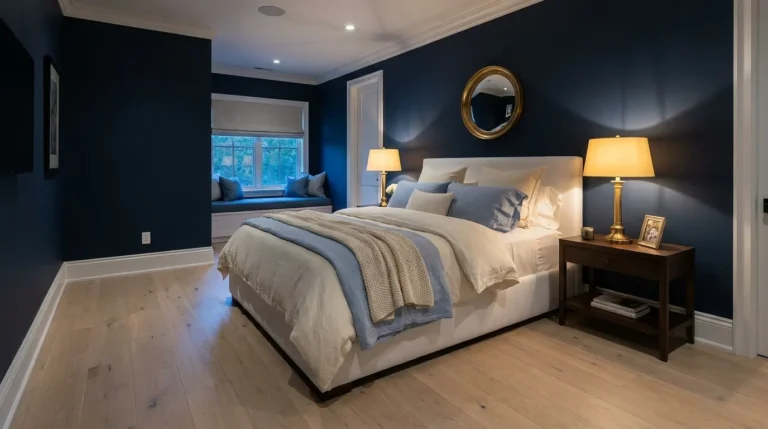
If you want blue in the room, bring it in through accents rather than as the dominant wall color. Sea glass blue, faded aqua, and weathered slate all feel more genuinely coastal than bright navy, which leans preppy rather than relaxed. The sand and driftwood tones in furniture and textiles do the grounding work; the blue arrives as the water element in the accents.
2. Paint Walls in a Warm White or Soft Greige, Not Stark Brilliant White
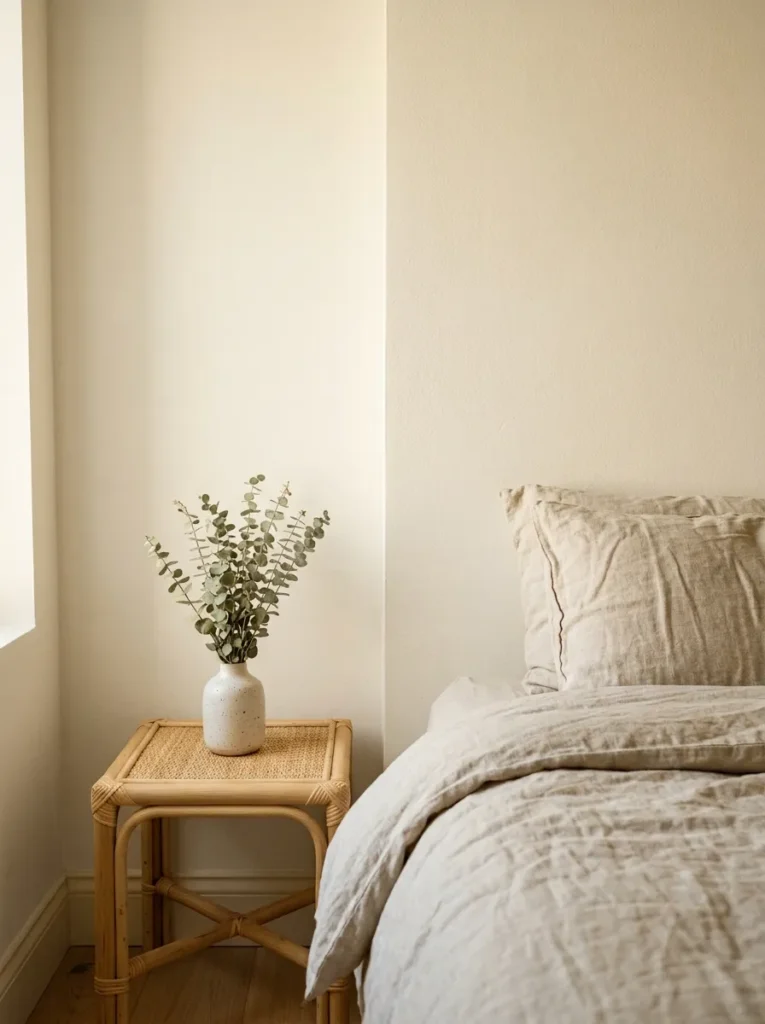
White walls are standard coastal advice, and the instinct is right — but the specific white matters considerably. Stark, cool brilliant white reads as clinical rather than beachy, particularly in bedrooms that don’t receive warm natural light. A warm white with a slight cream or greige undertone reflects morning light in a way that feels soft and sun-warmed rather than fluorescent.
In north-facing rooms or smaller bedrooms with limited window exposure, a warm greige — part grey, part beige — keeps the space from reading flat or dull. The coastal reading comes from keeping the walls light enough that the room never feels heavy. Test paint swatches at different times of day, particularly in the evening under artificial light, where cooler whites often look institutional.
3. Choose Furniture in Weathered or Bleached Wood Tones
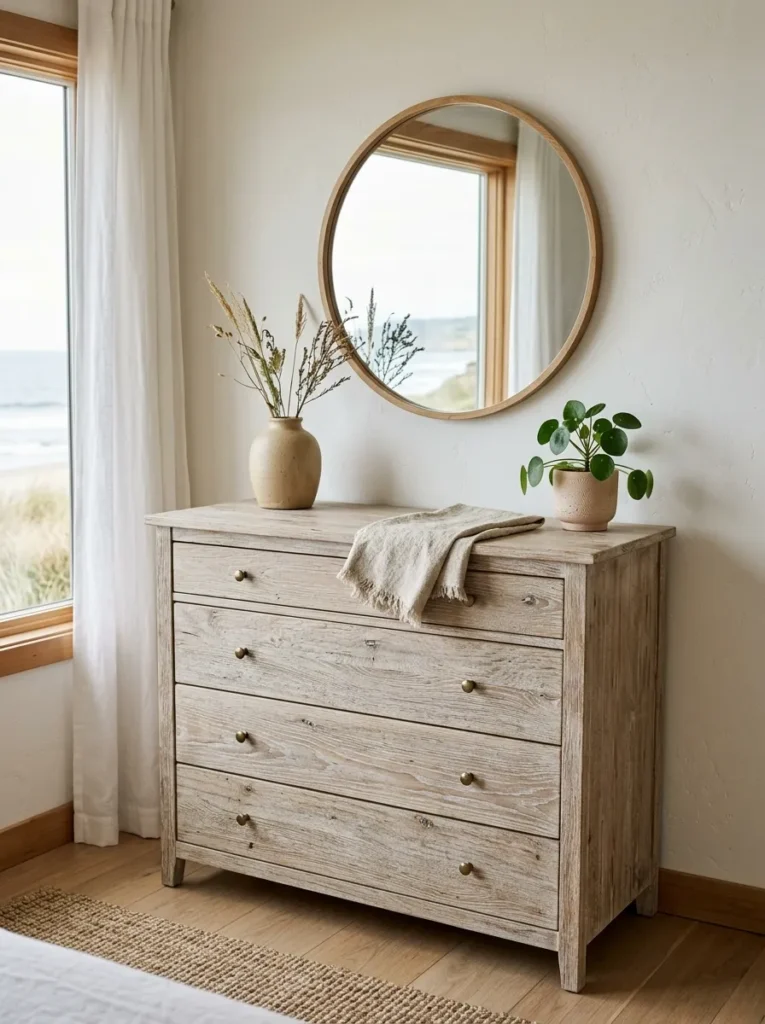
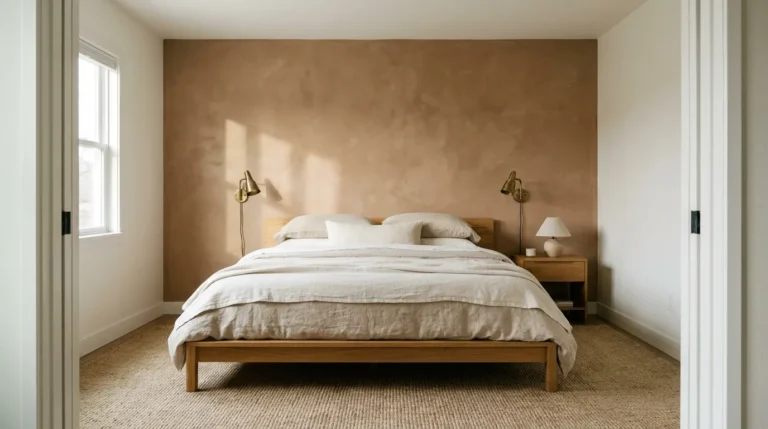
The material that does more work in a coastal bedroom than any other is wood — specifically wood that reads as naturally aged, sun-bleached, or organic rather than freshly lacquered. Whitewashed oak, naturally bleached teak, light ash, unfinished rattan, and wire-brushed pine all carry the material language of driftwood and weather-worn beach structures without literally being those things.
Dark mahogany or heavily stained wood works against the coastal feeling regardless of what surrounds it; the room starts to read as traditional or formal. If existing furniture is dark and replacing it isn’t practical, painting it in a matte white or driftwood grey updates the material story without a full furniture purchase. The leg profile matters too — tapered, angled, or organic legs read lighter than boxy or carved traditional bases.
4. Use Linen Bedding in Natural, Undyed, or Muted Tones

The bed is the largest surface in a coastal bedroom and the most important material decision after the walls. Crisp hotel-white cotton percale looks clean but reads as more formal than the relaxed quality coastal bedrooms aim for. Washed linen — particularly in natural undyed tones, soft sage, faded blue, or warm oatmeal — has the slightly rumpled, sun-dried quality that is central to the aesthetic.
The texture of washed linen also photographs and reads as intentionally relaxed rather than stiffly made, which suits the style perfectly. Layer a linen duvet with a lighter cotton knit throw draped across the foot of the bed rather than folding it to hospital precision. One or two euro shams in a slightly contrasting coastal tone — a soft blue behind natural linen pillowcases — add depth without requiring a fully coordinated set.
5. Hang Sheer Linen or Gauze Curtains to Filter Light Without Blocking It
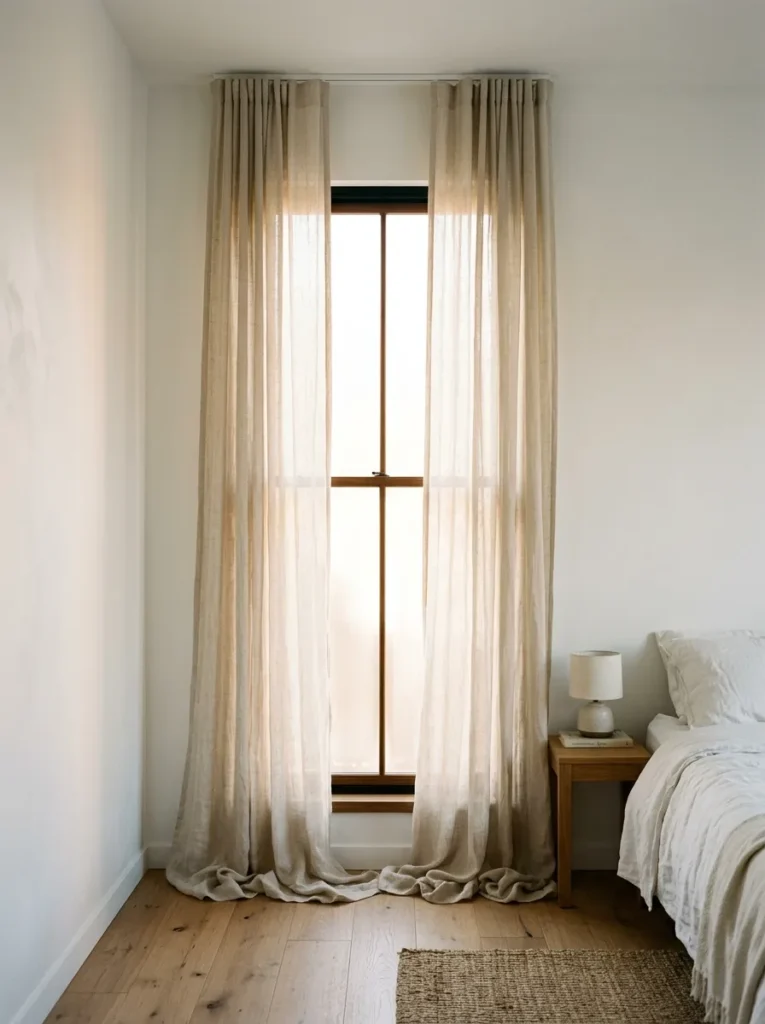
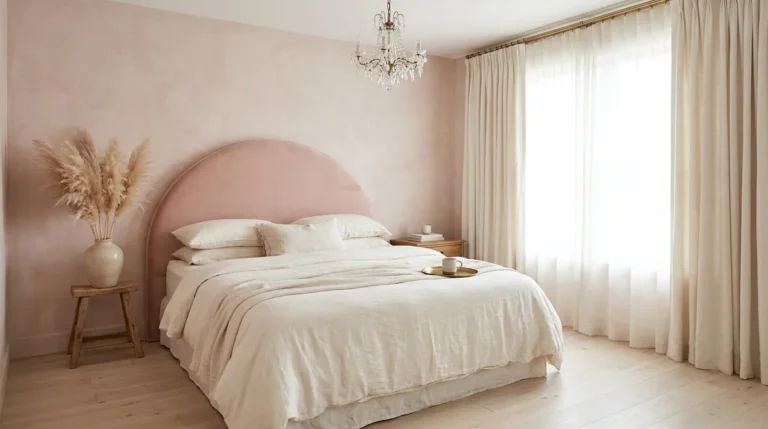
Window treatment is where coastal bedroom lighting is most directly controlled, and the difference between sheer curtains that filter light and heavier drapes that block it is the difference between a room that reads airy and one that reads closed-in. Sheer natural linen or cotton gauze panels hung from ceiling height allow morning light to diffuse through the fabric and fill the room with soft ambient glow.
The ceiling-height hanging point matters — curtain rods mounted close to the window frame make ceilings look lower and windows look smaller, both of which work against the coastal goal. Mounting the rod as close to the ceiling as practical, and using curtains that reach the floor, makes the window appear taller and the room more open. In rooms that need genuine light control for sleeping, a cellular shade or simple white Roman shade behind the sheers handles privacy without interfering with the daytime aesthetic.
6. Layer Natural Fiber Rugs for Texture at Floor Level
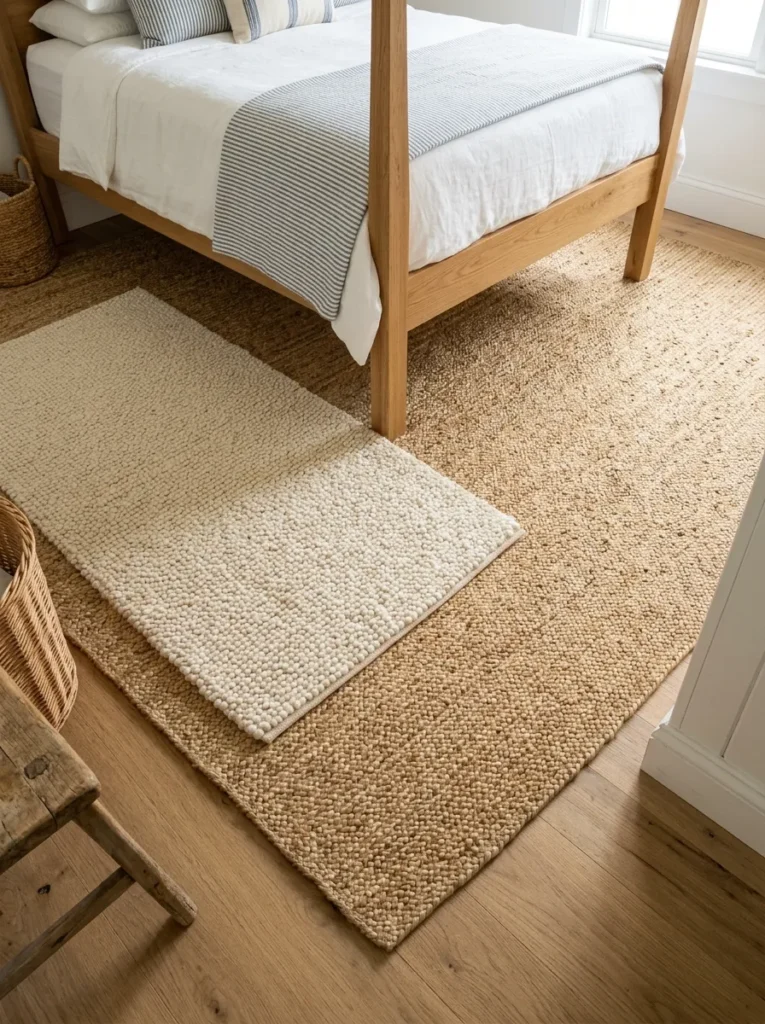
Bare hardwood or tile floors read as clean and appropriate in coastal rooms, but they can feel cold in the morning and lack the softness that makes a bedroom feel genuinely restful. A natural fiber rug — jute, sisal, seagrass, or woven cotton — brings the organic texture that anchors the coastal palette without adding color that competes with the rest of the room.
Jute and sisal have enough roughness that layering them under a softer cotton or wool rug in a muted color is often worth doing: the natural fiber rug provides texture, the layered softer rug provides the underfoot comfort that stepping out of bed requires. Size the main rug to extend at least 18 to 24 inches beyond the sides and foot of the bed so the floor doesn’t look like the rug was an afterthought that arrived after the furniture.
7. Introduce One Blue or Sea Glass Accent Without Going Full Monochrome
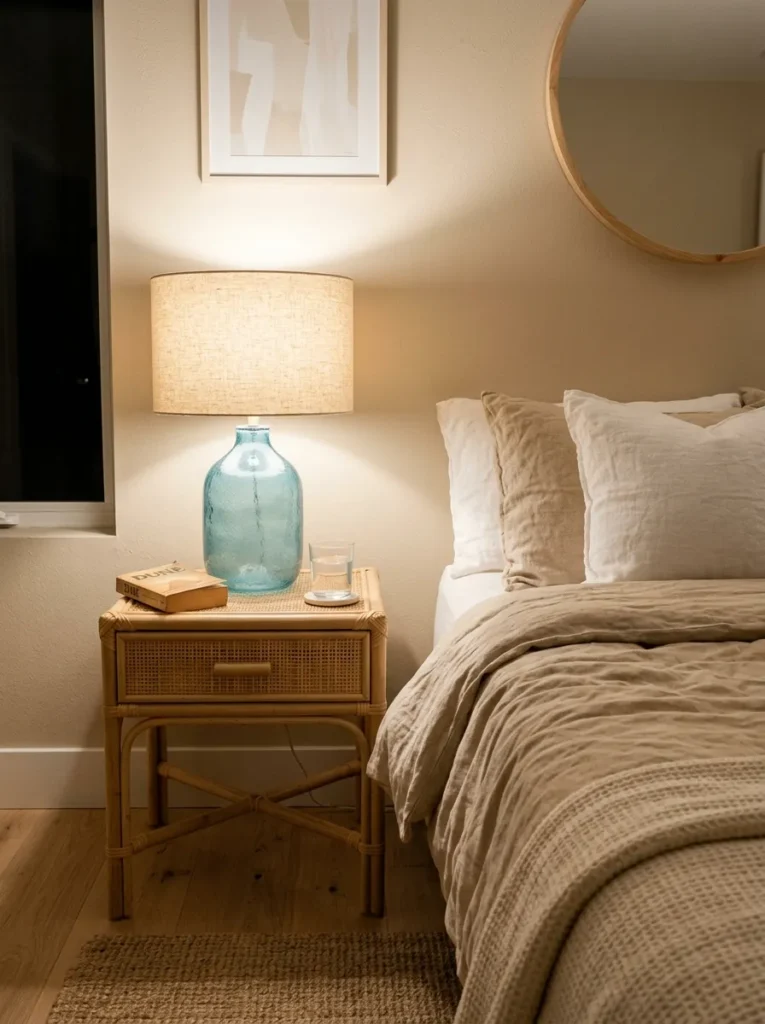
The coastal bedroom reader who wants color usually wants blue — but the question is how much, where, and which specific blue. A single accent in the right shade does more atmospheric work than a room where every textile, pillow, and accessory pushes the same hue. Sea glass blue, dusty aqua, and washed indigo all read as coastal without tipping into the nautical stripes-and-anchors territory.
A practical approach: choose one medium-scale element in the blue accent — an upholstered headboard, a pair of euro shams, a ceramic lamp base, or a throw blanket — and keep the surrounding palette neutral. When blue appears in only one or two deliberate places, it reads as a considered accent rather than a theme. Multiple competing blue elements tend to make the room feel designed around a color rather than a feeling.
8. Hang Rattan or Wicker Light Fixtures Overhead
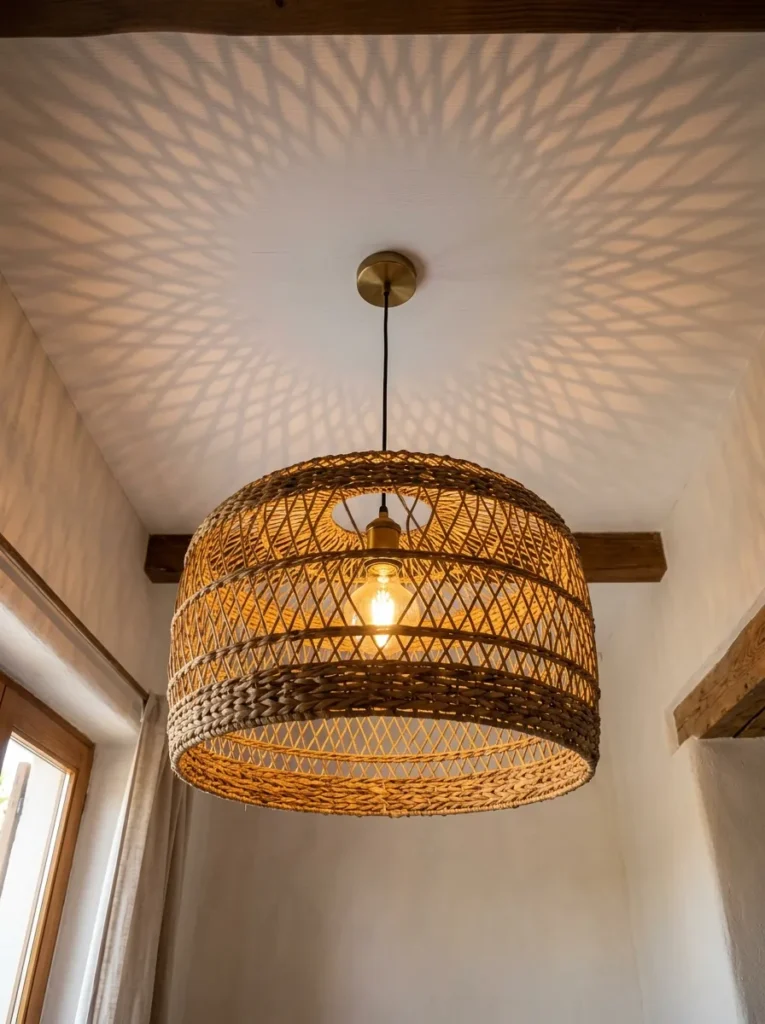
Ceiling fixtures in coastal bedrooms are an opportunity that most rooms underuse. A standard ceiling fan with plastic blades, a basic flush mount, or a generic chandelier all work against the material story the rest of the room is trying to tell. A rattan pendant, a woven seagrass shade, or a bamboo chandelier does two things simultaneously: it introduces organic texture at ceiling height where nothing else typically provides it, and it creates the softly filtered light that coastal rooms benefit from.
Woven fixtures diffuse light in a way that glass or metal can’t — the pattern of light and shadow through the weave is part of the effect. In a room with standard eight-foot ceilings, a drum-shaped or shallow pendant rather than a deep hanging style keeps clearance comfortable. Rattan is more durable than many people expect, doesn’t require the careful maintenance of real wood, and holds its tone well without finishing.
9. Choose Rattan or Woven Furniture for Nightstands and Accent Pieces
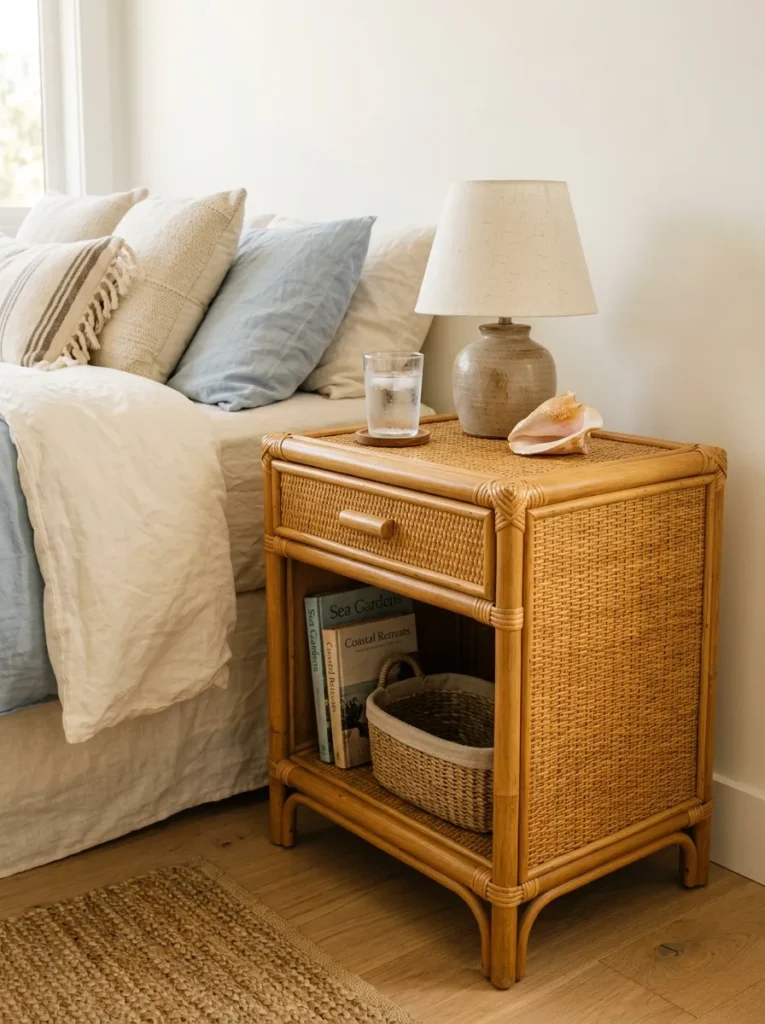
Nightstands, accent chairs, and small storage pieces in rattan, cane, or wrapped seagrass introduce the organic weave texture at eye level and at hand height — closer than the ceiling fixture and more visually present than the rug. A rattan nightstand beside a linen bed against a warm white wall is one of the most consistently effective combinations in coastal bedrooms because every element speaks the same material language.
Cane-front drawer fronts on a dresser achieve the texture with the functionality of a closed storage piece — a good option for rooms where an entirely open rattan nightstand would make clutter visible. The weave pattern in cane panels has enough visual interest to read as decorative detail at close range. Avoid overly polished or lacquered rattan finishes, which look synthetic; the naturally matte or slightly honey-toned finishes have more warmth.
10. Bring in Sea Glass, Ceramic, and Matte Pottery as Accent Objects
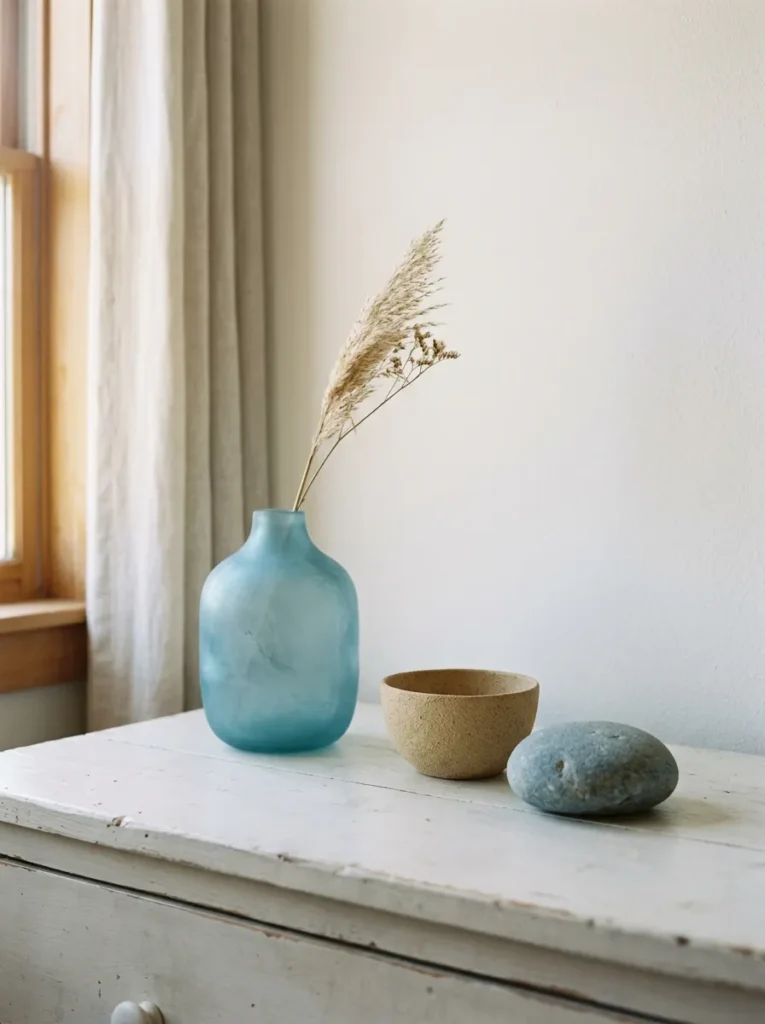
The decorative objects in a coastal bedroom are where most people default to the kitschy options — literal starfish, anchor-shaped things, “Beach” signs. The objects that actually reinforce a coastal feeling without announcing a theme are ones with the right material quality: weathered, matte, naturally toned, or translucent in ways that reference sea glass and tide pools.
Sea glass blue or frosted glass vases, matte ceramic vessels in sandy or ocean-washed tones, smoothed stone objects, and textured clay pieces all carry the coastal material language without depicting anything coastal directly. The distinction is between objects that look like the beach and objects that feel like it — the latter tend to make rooms that hold up as genuinely restful over time rather than rooms that look like a vacation rental prop room.
11. Use Driftwood or Organic Branch Elements as Decorative Accents
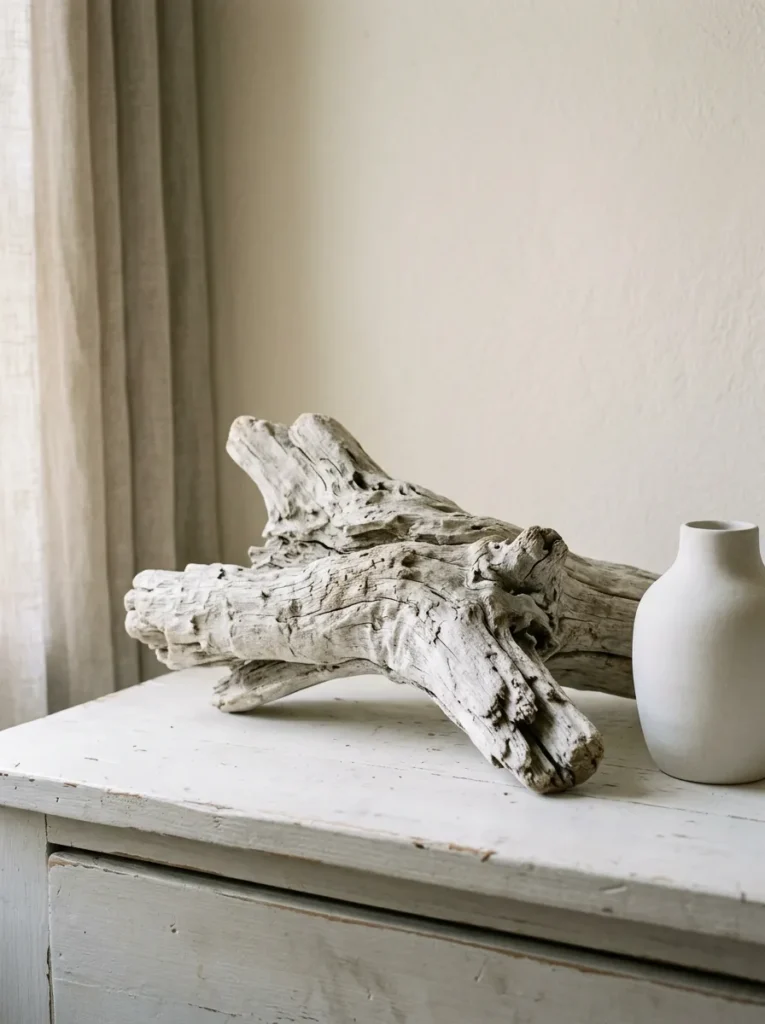
Driftwood, raw branch sculptures, and naturally shaped wood pieces do something in a coastal bedroom that carved or machined wooden objects don’t: they introduce the irregular, organic quality of materials shaped by nature rather than manufacturing. A piece of bleached driftwood on a nightstand, a twisted branch arrangement on a dresser, or a driftwood-base lamp reads immediately as coastal without requiring any coastal imagery.
The restraint principle applies here more than anywhere: one or two pieces with genuine visual interest read as a collection; six pieces scattered around the room read as a theme. One substantial piece — a large driftwood sculpture or a lamp with a natural base — makes more impact than multiple small ones competing for attention. Look for genuine driftwood or naturally dried wood pieces rather than resin imitations, which lose the material quality entirely.
12. Layer Bedding Textures With Knit, Linen, and Cotton Weave Together

The bed’s visual richness in a coastal bedroom comes from material variation rather than color variation. Three or four different textures — the slight sheen of washed cotton percale on fitted sheets, the soft rumple of linen on the duvet, the loose weave of a cotton blanket, the chunky texture of a knit throw — create the layered, effortlessly assembled quality that distinguishes a genuinely relaxed coastal bed from one that merely has a blue pillow on it.
Color discipline makes this work: keep the textile palette within two or three related tones (natural linen, soft white, washed blue, or warm oatmeal) so the texture variation is what the eye reads rather than a competing color arrangement. Throw the blanket or knit casually across the lower third of the bed rather than folding it with precision — the looseness is part of the aesthetic.
13. Install Shiplap or Board-and-Batten on One Wall for Coastal Architecture
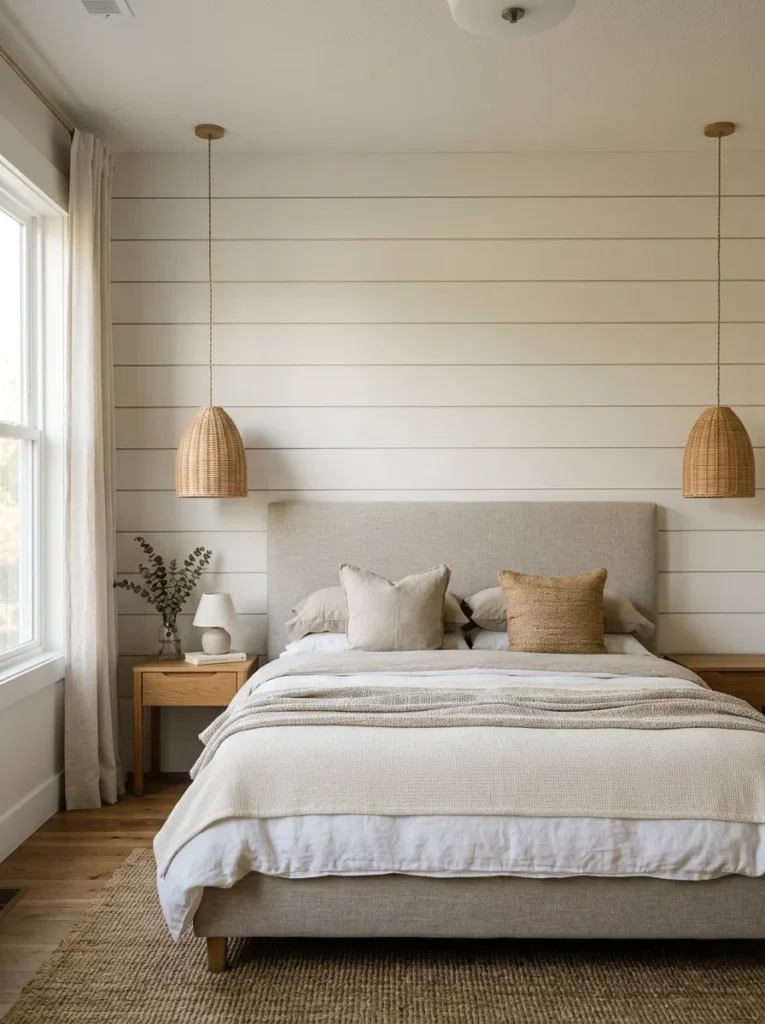
Coastal homes historically used horizontal wood planking — shiplap, tongue and groove, or painted board-and-batten — on interior walls as a practical building response to marine environments. In a bedroom context, a single wall treated with shiplap or board-and-batten paint brings this architectural quality to a room that otherwise reads as generic.
Painted white or in a soft greige tone, the planking creates shadow lines across the wall surface that shift with natural light throughout the day, adding dimension without any additional decor. Behind the bed on the headboard wall is the most common placement, where it reads as a built-in architectural headboard alternative as well as a wall treatment. The boards don’t need to be real shiplap — MDF planking with the appropriate reveal gap achieves the same visual result for significantly less cost and installation complexity.
14. Choose a Headboard in Natural Linen, Cane, or Woven Rattan

The headboard is the visual anchor of the bedroom and the piece most responsible for establishing the room’s style character before anything else is added. A tufted velvet or heavily carved wood headboard makes achieving a coastal feeling with the rest of the room significantly harder — the headboard will always pull the room’s identity toward the style it represents.
Natural linen upholstered headboards, cane-front panels, and rattan-wrapped frames all read coastal immediately and work with the widest range of surrounding material choices. A linen headboard in warm white or pale greige suits almost any coastal palette variation; a cane panel provides the organic woven texture at the most important visual focal point in the room. Avoid very high upholstered headboards, which can feel heavy and formal — low to medium height in natural materials reads more relaxed.
15. Maximize Natural Light Through Minimal Window Dressing
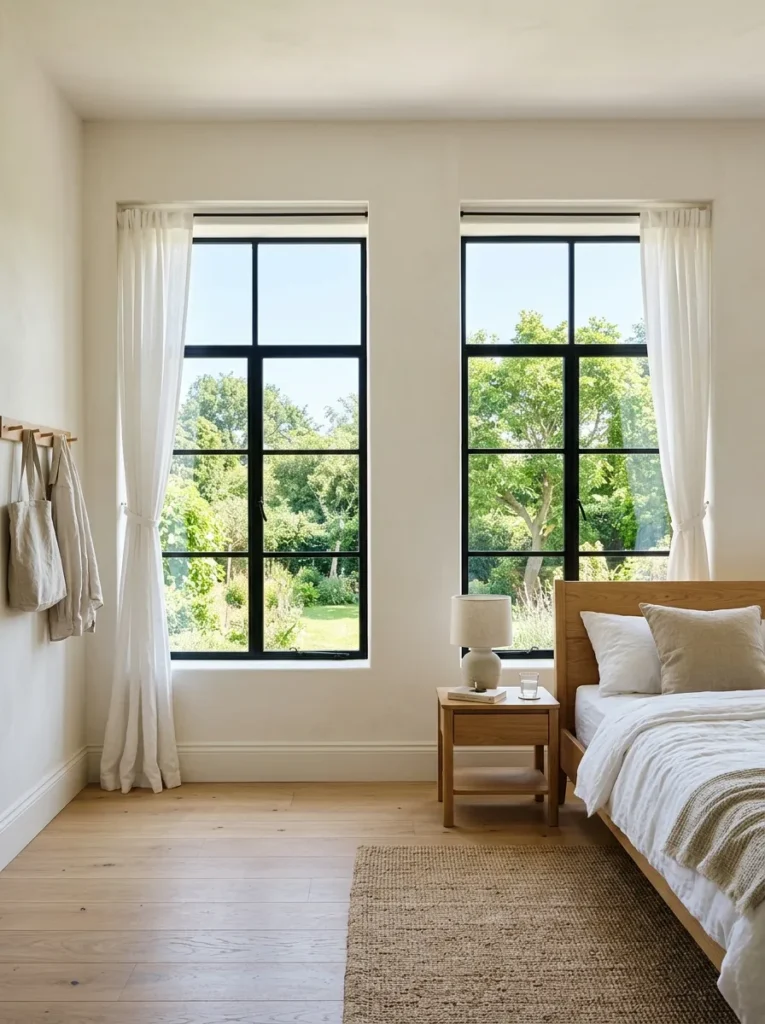
More important than any decorative choice in a coastal bedroom is the quality and quantity of natural light. Coastal style depends fundamentally on the room feeling bathed in soft, diffused daylight — and heavy window treatments, dark blinds, or valances that block the upper portion of the window work directly against this.
In a bedroom where privacy isn’t a concern during daylight hours, the simplest approach is no daytime window covering at all — curtain rods and panels in place for evening privacy, tied back during the day. In rooms where privacy matters, a simple cellular shade in white or ivory provides complete privacy when needed without darkening the room during the day. The window reveal itself — the wall depth between the window frame and the room — can be painted bright white to act as a secondary reflector of incoming light.
16. Layer Throw Pillows in Coastal Patterns Without Over-Theming

Decorative pillows are where coastal bedrooms most frequently tip into the themed direction: too many anchors, too many starfish, too many nautical stripes competing on the same bed. The approach that keeps a bed looking considered rather than costumed is to use pattern as a minority element within the pillow arrangement rather than the defining one.
Two euro shams in solid natural linen, two standard pillows in washed white, and two or three throw pillows — one in a very subtle stripe, one in a textured natural weave, and one in a muted coastal blue solid — creates a layered arrangement where no single element shouts its theme. The stripe reference is enough to communicate coastal without the bed looking like it was styled for a nautical-themed vacation rental. Coral pink, warm sandy orange, and soft sage are underused accents that work beside the blues without reinforcing the nautical reading.
17. Add a Woven Pendant or Rattan Table Lamp Beside the Bed
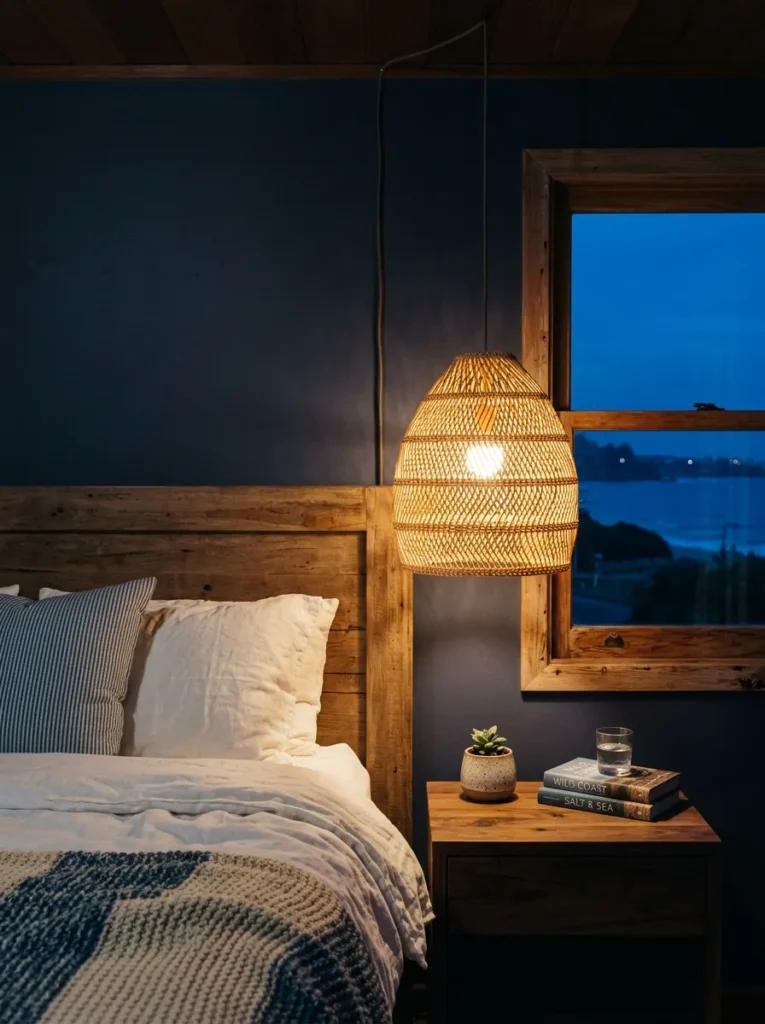
Bedside lighting in a coastal bedroom works best when it reinforces the material palette rather than introducing a new one. A ceramic lamp base in a sea glass blue glaze, a rattan-wrapped table lamp, or a woven pendant hung beside the bed instead of a traditional bedside lamp all bring coastal material texture to the functional lighting.
Hanging pendants beside the bed in place of table lamps free up the nightstand surface — useful in smaller bedrooms where the nightstand serves multiple functions. The shade material matters: a natural linen or woven rattan shade diffuses the light softly rather than casting sharp pools, which suits the ambient, relaxed quality a coastal bedroom aims for. Avoid anything chrome, glass, or metallic at the bedside, which pulls the room away from the organic material story.
18. Use Coastal Wall Art That Suggests Rather Than Depicts
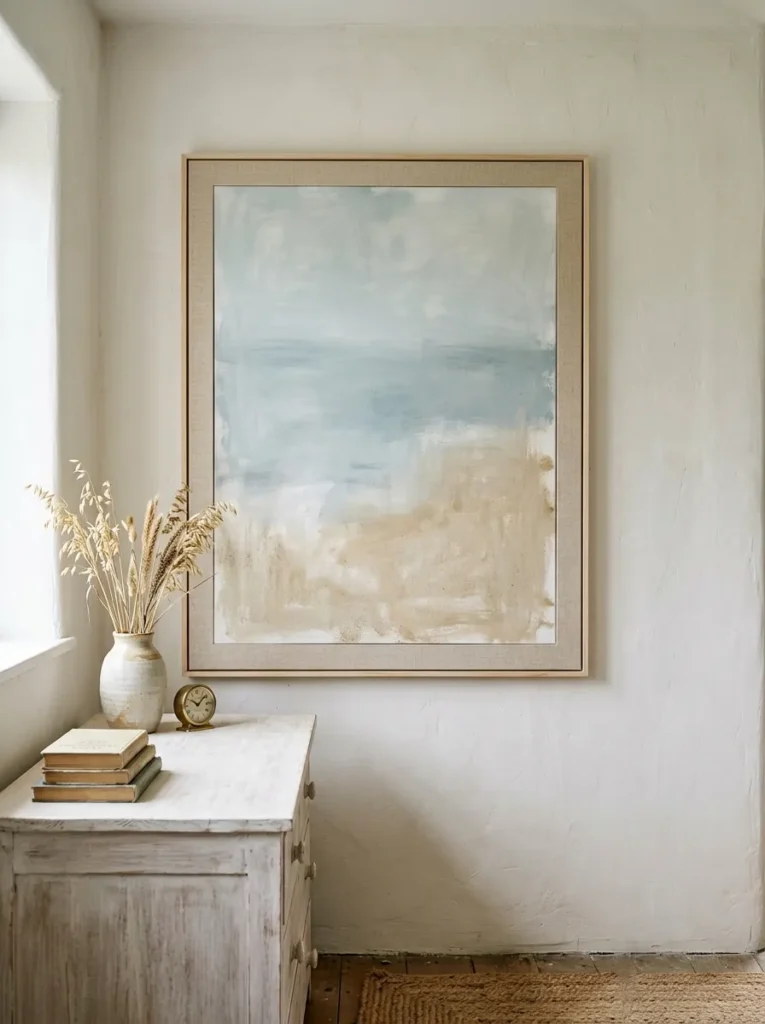
The wall art decision in a coastal bedroom is where restraint genuinely pays off. A painting of a specific beach scene, a photograph of crashing waves, or a collection of framed seashell illustrations all create the same problem: they tell the viewer exactly what they’re looking at, which tends to feel like a clue in a theme room rather than an element of a considered space.
Art that suggests coastal through palette, material, and abstraction rather than depicting it explicitly creates a more sophisticated result. Abstract seascape paintings where the division between sky and water is gestural rather than photographic, botanicals of coastal plants like sea oats or beach grasses, or simple photography of light on water rather than identifiable beaches all read coastal without announcing it. Framing in natural wood or simple white reads better than ornate or dark frames in this context.
19. Keep Storage Light and Open Where Possible
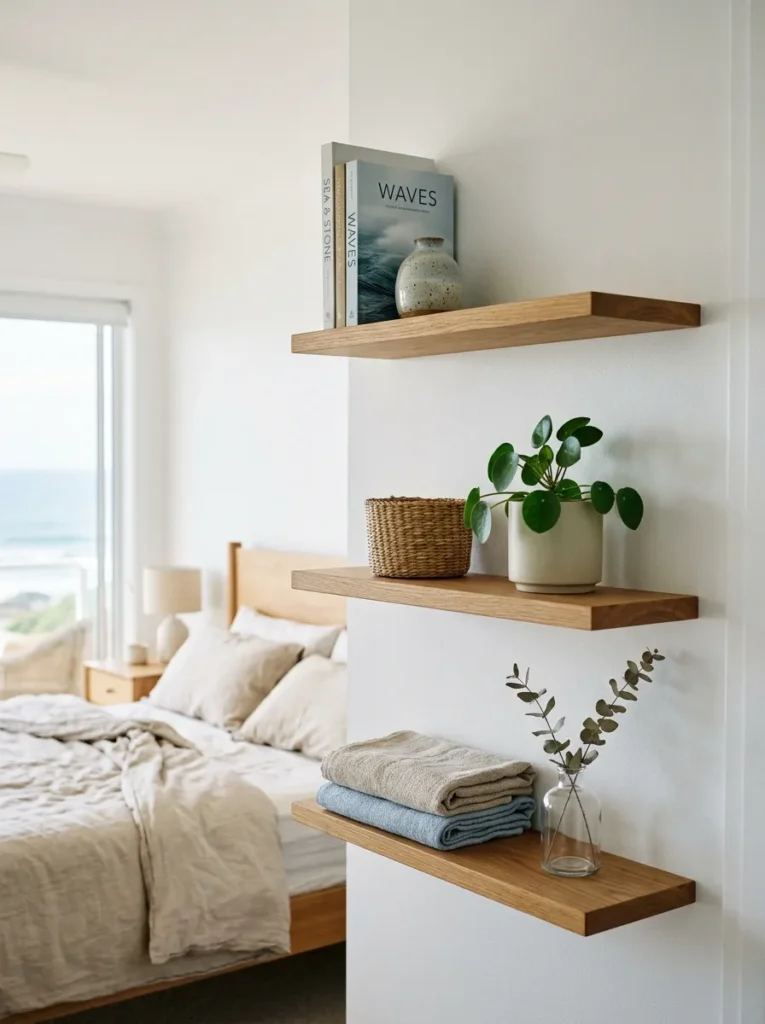
Closed-door storage isn’t wrong in a coastal bedroom, but the rooms that feel most genuinely breezy tend to have at least some open storage — a shelf, an open-fronted nightstand, an exposed section of a dresser — that keeps the room from feeling sealed and interior. The openness references beach structures: pavilions, cottages with open shelving, the general casualness of coastal living.
Open shelving with coastal ceramics, a few books with natural-tone covers, a small plant with interesting form, and one or two found objects communicates collected and relaxed rather than deliberately accessorized. The key is editing: remove half of what you think looks right and see whether the remaining pieces have more impact individually. Open shelves that are too densely packed lose the airy quality they’re supposed to provide.
20. Bring in One Living Plant With Good Form and Low Maintenance
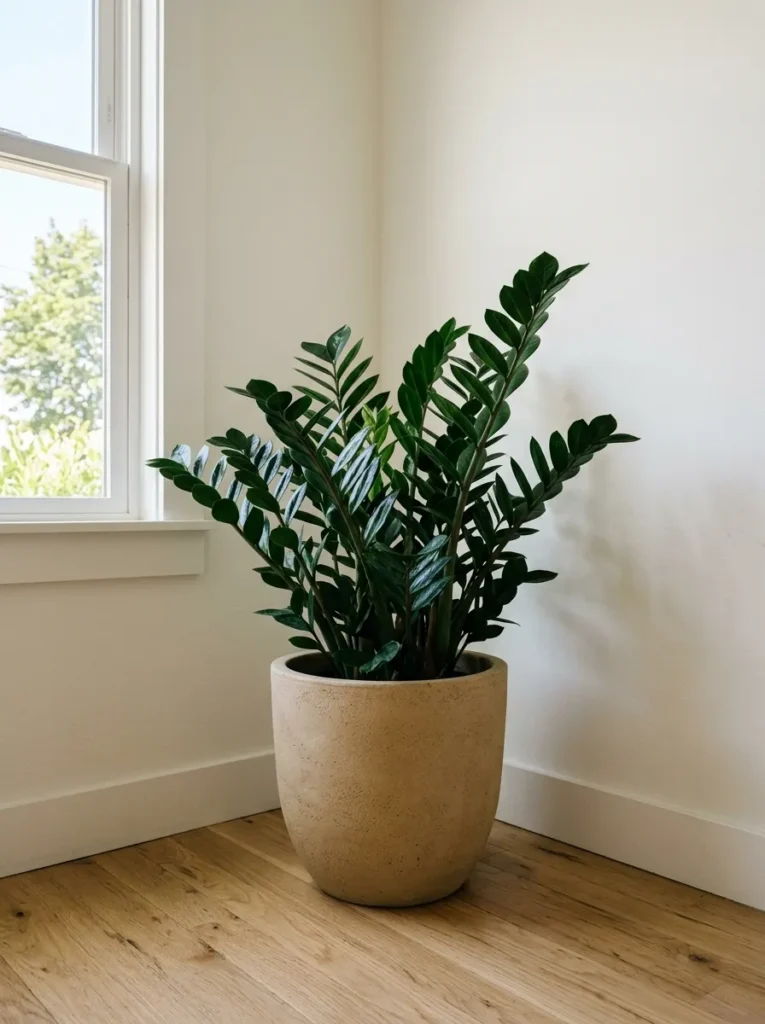
A plant in a coastal bedroom contributes the organic, living quality that dried flowers and ceramic objects approach but don’t fully achieve. The species selection matters: bright tropical plants like birds of paradise or variegated philodendrons bring too much visual intensity to a room that’s trying to feel quiet. Better choices for coastal bedrooms are those with simpler, more sculptural forms — a single ZZ plant in a matte sandy pot, a fiddle-leaf fig if the room has adequate light, or a compact olive tree whose silver-green foliage reads naturally in the coastal palette.
In bedrooms with limited natural light, a quality faux plant is genuinely the more practical choice and doesn’t compromise the aesthetic — the pot selection matters as much as the plant itself. A hand-thrown ceramic pot in a muted coastal tone (sandy cream, sea glass grey, washed blue) contributes to the room even when the light conditions won’t support a living plant.
21. Edit Out Everything That Reads as Kitschy or Over-Themed
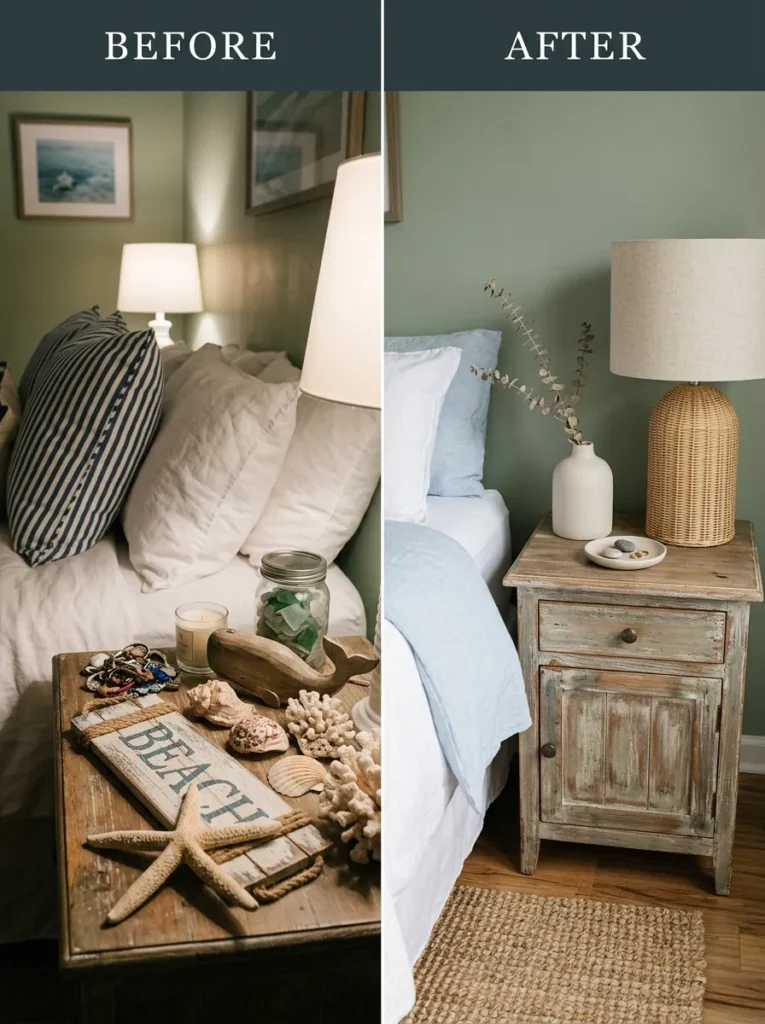
This last idea isn’t about adding anything — it’s about the editing pass that distinguishes a genuinely restful coastal bedroom from a collection of beach-themed purchases. Walk through the room (or look at a photo of it) and identify every object that announces its coastal reference rather than implying it: any item with a word or text declaring a beach or ocean concept, any object that is literally a seashell or starfish as a decorative element, any piece of fabric in a bright nautical stripe wider than about half an inch.
Remove or replace those pieces, and the room’s remaining material and color choices — the linen, the rattan, the bleached wood, the muted sea glass tones — almost always create a more convincing coastal feeling than the explicitly themed pieces did. The goal is a room where someone walks in and thinks “this feels like being near the ocean” rather than “someone really loves the beach.”
Coastal Bedroom Mistakes Worth Knowing Before You Start
Going too dark too soon. Coastal color palettes work by keeping the overall value of the room high — meaning light walls, light textiles, and light or natural furniture. One dark element can be the right contrast. Several dark elements tip the room away from airy toward conventional.
Treating blue as the only coastal color. Warm whites, sandy greiges, soft corals, muted sage, and bleached wood tones are equally coastal — and a room that leans on these with blue as an accent often reads more naturally than a room where blue is the dominant palette.
Undersizing the rug. In a bedroom trying to feel expansive and comfortable, a small rug that doesn’t extend beyond the bed’s footprint looks like an afterthought and leaves the floor feeling bare in the wrong way. Size up.
Mixing too many coastal subcategories. Nautical (preppy blue-and-white stripes, anchors, rope), tropical (bold botanicals, bright turquoise), and refined coastal (linen, driftwood, muted palette) all have different visual languages. Mixing them freely produces a room that reads as confusion rather than coastal. Choosing one as the primary direction and referencing the others lightly produces cohesion.
Over-accessorizing. Coastal rooms need negative space. A nightstand with one lamp and one small ceramic object reads more like the beach than the same nightstand covered in shells, stones, and layered frames.
Final Thoughts
Coastal bedroom design is really about a quality of atmosphere more than a specific set of objects — and that quality comes from light, natural materials, and a restrained palette far more reliably than it comes from beach-specific accessories. The rooms that feel most genuinely relaxing tend to be the ones where everything references the coastal palette and material story without any individual piece insisting on the theme.
If you’re working through these coastal bedroom ideas and feel unsure where to begin, start with two decisions: what goes on the bed and what covers the windows. Both affect the room’s light quality and its material register more than any other single choice, and both can be updated without structural changes. Everything else layers in from there.
Save the ideas here that suit your room’s natural light, your existing furniture bones, and the coastal feeling you’re actually after — serene and sun-warmed reads very differently from crisp and nautical, and both are valid directions.