24 Apartment Living Room Ideas That Maximize Small Spaces
Most small living room advice assumes the problem is square footage. It isn’t. The problem is usually furniture that was sized for a house, lighting that was designed for a showroom, and a refusal to leave anything empty. These 24 apartment living room ideas aren’t about tricking the eye into thinking a room is bigger than it is — they’re about making decisions that actually work with the space you have, which is a different thing entirely. Some of these will mean returning a sofa you already bought. That’s fine. It’s better to know now.
1. Choose a Storage Ottoman Over a Coffee Table
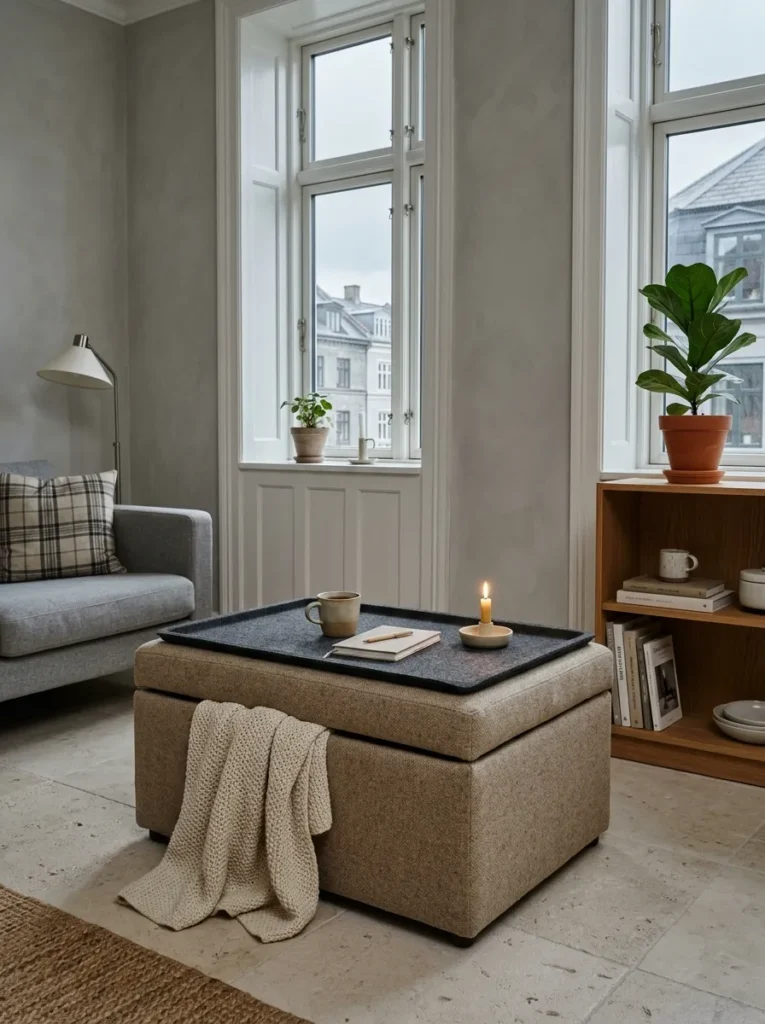
A coffee table is dead weight in a small apartment living room — it does one job and takes up the same floor space as a piece that could do four. A storage ottoman with a removable tray top holds blankets, remotes, and the inevitable pile of mail, then clears in seconds to become extra seating when people actually show up. Look for one upholstered in a performance fabric, not velvet, because velvet shows every footprint within a week. This is the decision that changes everything about how a small living room actually functions day to day.
2. Build Storage Vertically, Not Outward
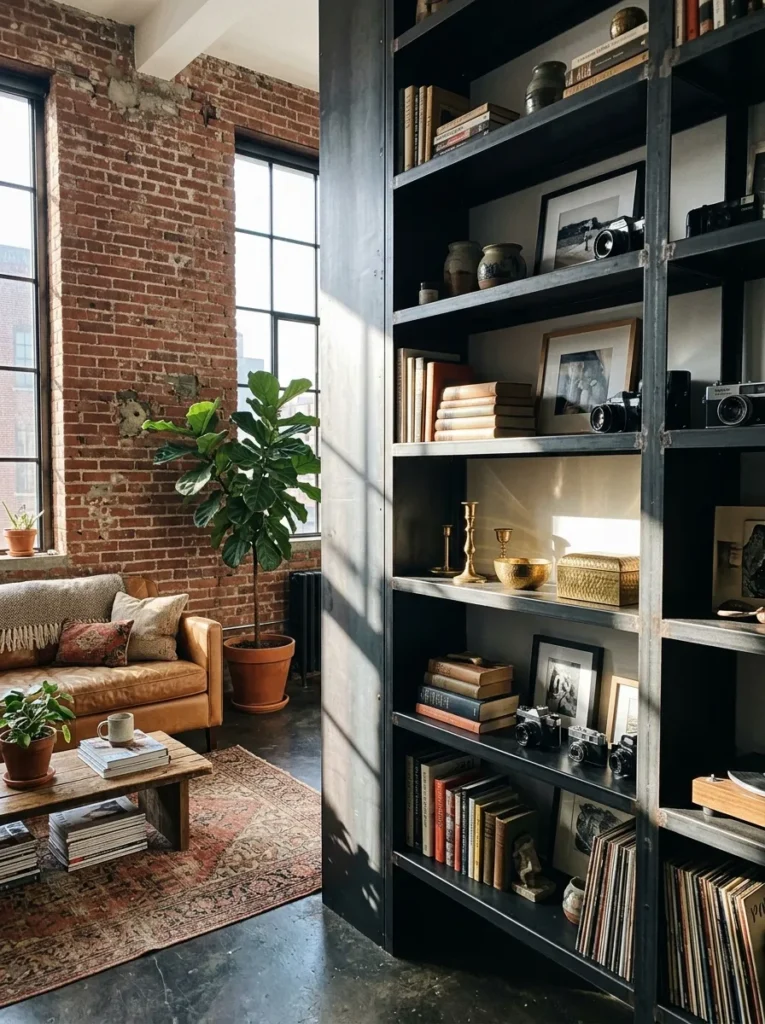
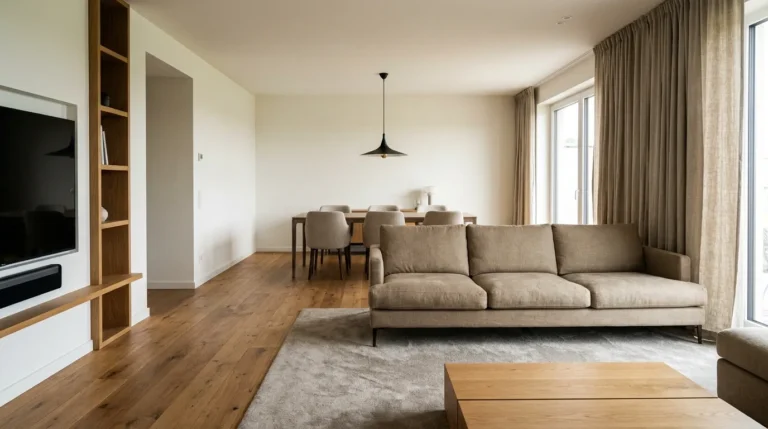
Floor space in an apartment is the scarcest resource you have, and most people spend it on a low, wide media unit that eats six feet of wall and holds almost nothing. Go vertical instead. A shelving unit that runs to the ceiling, even at 30 centimetres deep, holds more than a sprawling console ever will, and it draws the eye up, which makes the ceiling — and the room — read taller. Leave the top shelf intentionally sparse. A crowded top shelf cancels the whole effect.
3. Float the Sofa Off the Wall
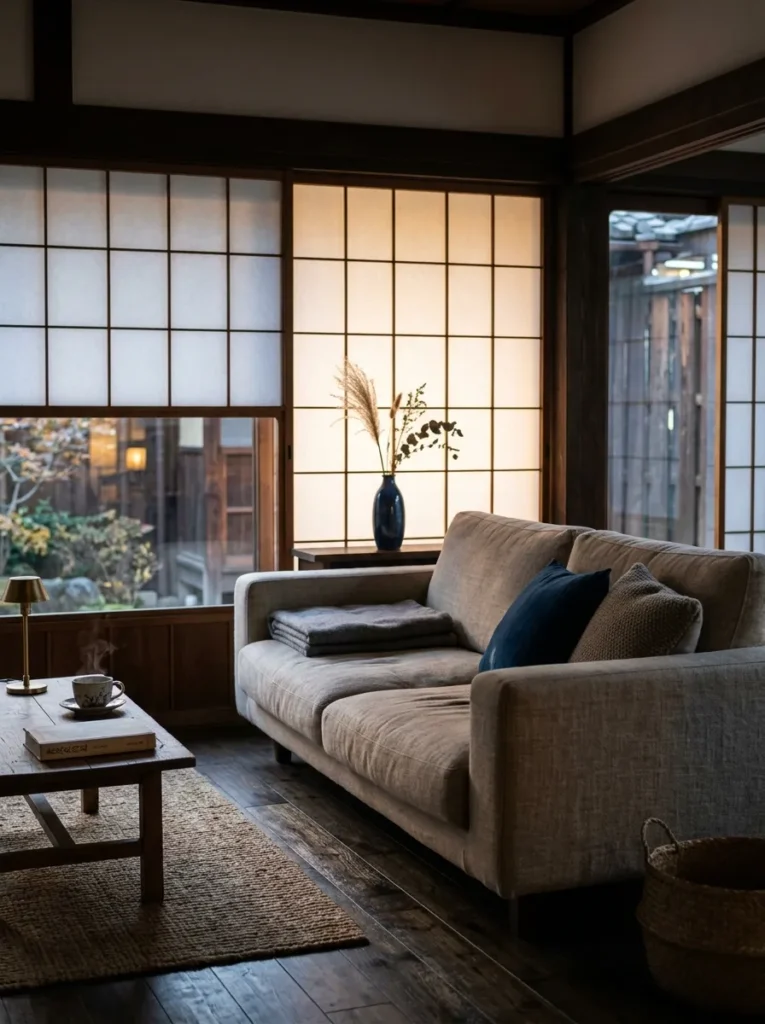
Pushing a sofa flush against the wall feels like the safe, space-saving choice. It almost never is. Pulling it forward even 15 centimetres creates a sliver of negative space behind it that makes the room read as planned rather than crammed, and it gives you somewhere to slide a slim console table for lamps and books. Most people get this wrong because they’re optimizing for floor space instead of for how the room feels when you’re standing in it.
4. Hang a Large Mirror Opposite the Window
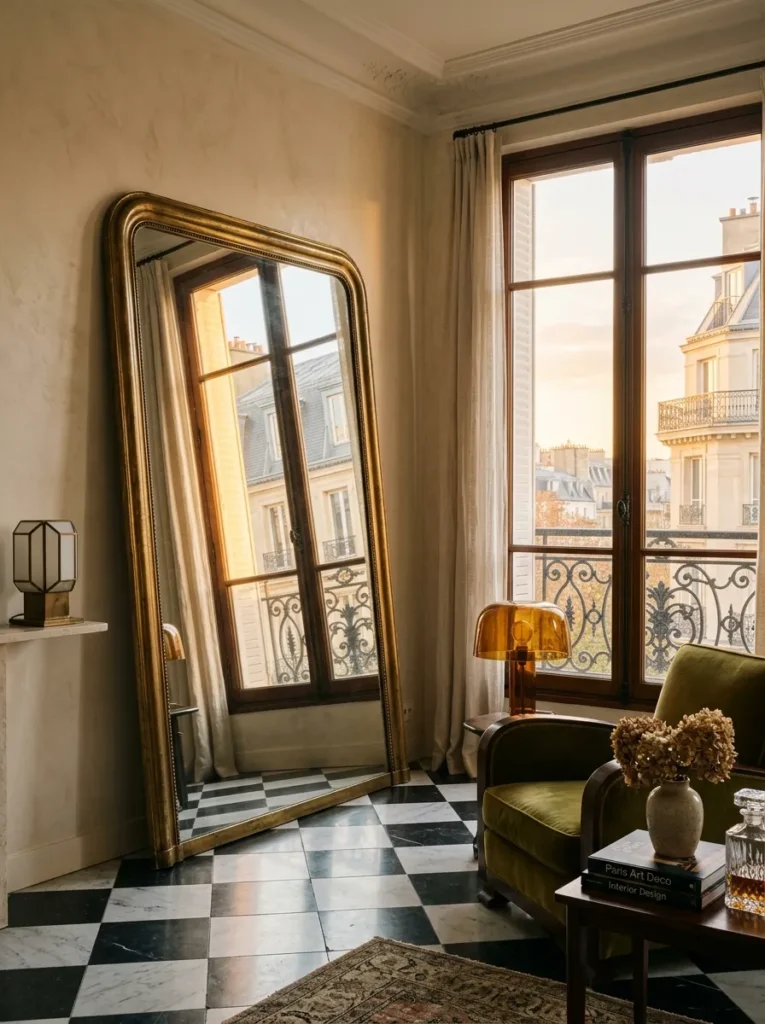
A mirror placed opposite a window doubles the light source in the room, and that matters more in an apartment than almost anywhere else, since apartment windows tend to be smaller and fewer. Go big — at least 90 centimetres tall — and lean it rather than mounting it dead center if the wall allows, which reads as more considered than a perfectly symmetrical hang. A small decorative mirror does nothing here. It needs scale to do the job.
5. Hang Curtains Close to the Ceiling, Not the Window Frame
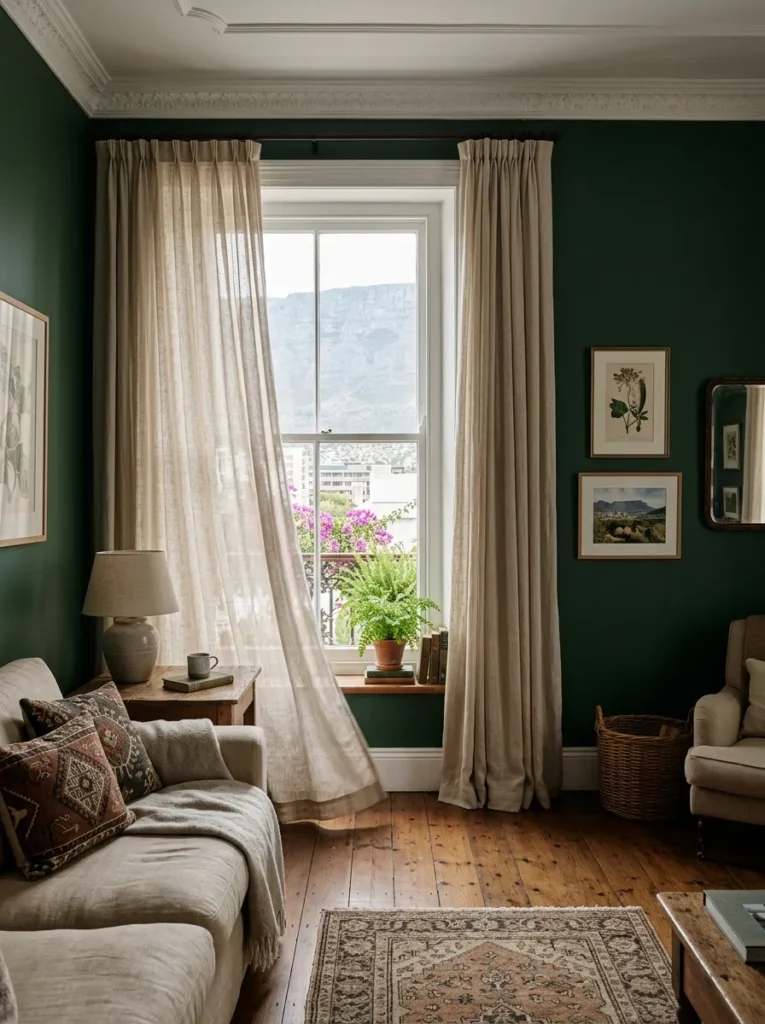
This is one of the cheapest, highest-impact small living room upgrades on this list and almost nobody does it. Mount the curtain rod 15 to 20 centimetres below the ceiling instead of directly above the window frame, and let the curtains run to the floor. The vertical line pulls the eye up and the whole wall reads taller, even though the window itself hasn’t moved an inch. Skip this and even expensive curtains will look like an afterthought.
6. Use Nesting Tables Instead of One Large Coffee Table
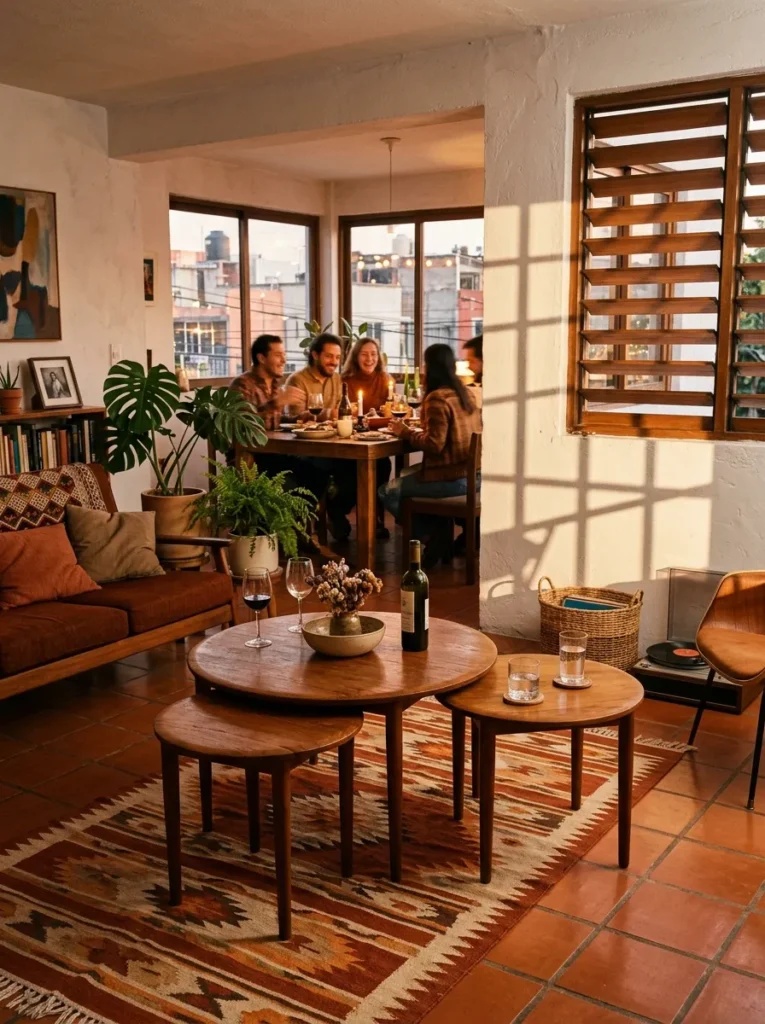
A set of two or three nesting tables solves the problem a single coffee table creates: you need surface area sometimes and floor space the rest of the time. Tuck them together for everyday use, pull them apart when you’re hosting, and reconfigure them entirely when you rearrange the room — which you will, because small apartments get rearranged constantly as life changes. A round profile is more forgiving in tight walking paths than sharp corners.
7. Mount the TV and Media Console on the Wall
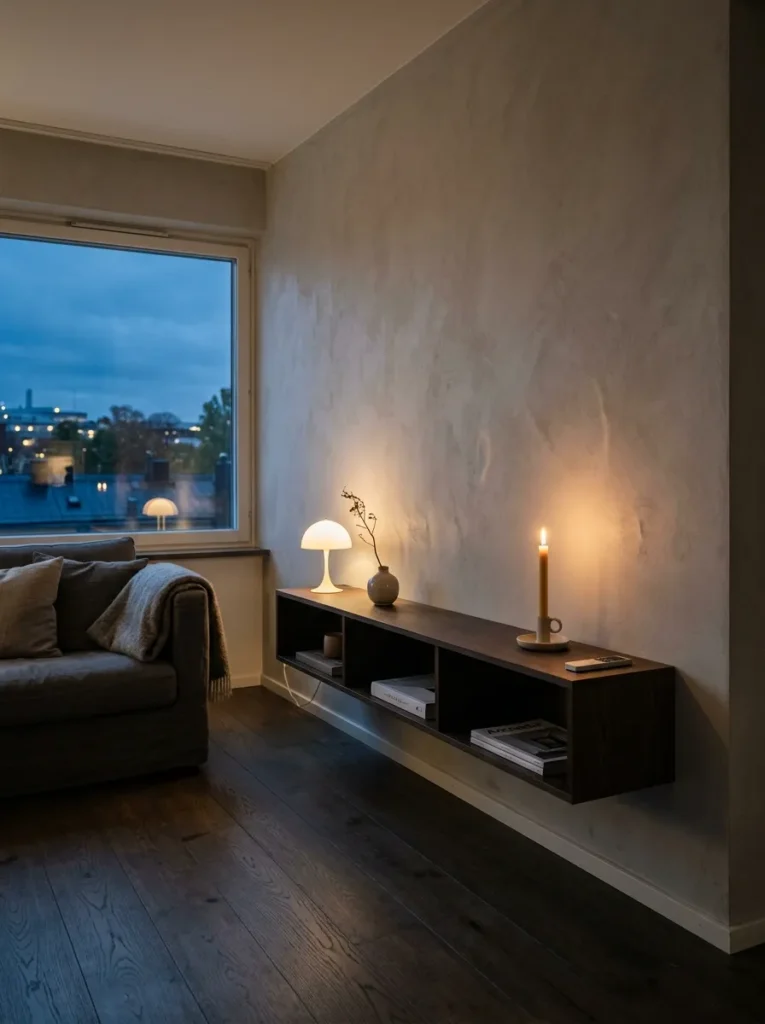
A floor-standing media console is one of the largest footprint commitments in a small living room, and most of what it holds could live somewhere else. A wall-mounted console with the TV above it reclaims the floor space entirely and lets you run a slim floating shelf instead of a deep cabinet. The small living room solutions that actually work tend to be the ones that remove furniture rather than rearrange it, and this is the clearest example.
8. Build a Window Seat With Hidden Storage

If your apartment has any kind of window nook, bay, or even a flat run of wall under a window, a built-in or freestanding bench with a lift-up lid does double duty as seating and storage that a chair never could. It also removes the need for a separate armchair, which frees up real floor space elsewhere. This only works if the storage underneath is actually used — for off-season items, not for things you need weekly, or you’ll be lifting that lid constantly.
9. Choose Small Living Room Furniture With Visible, Slim Legs
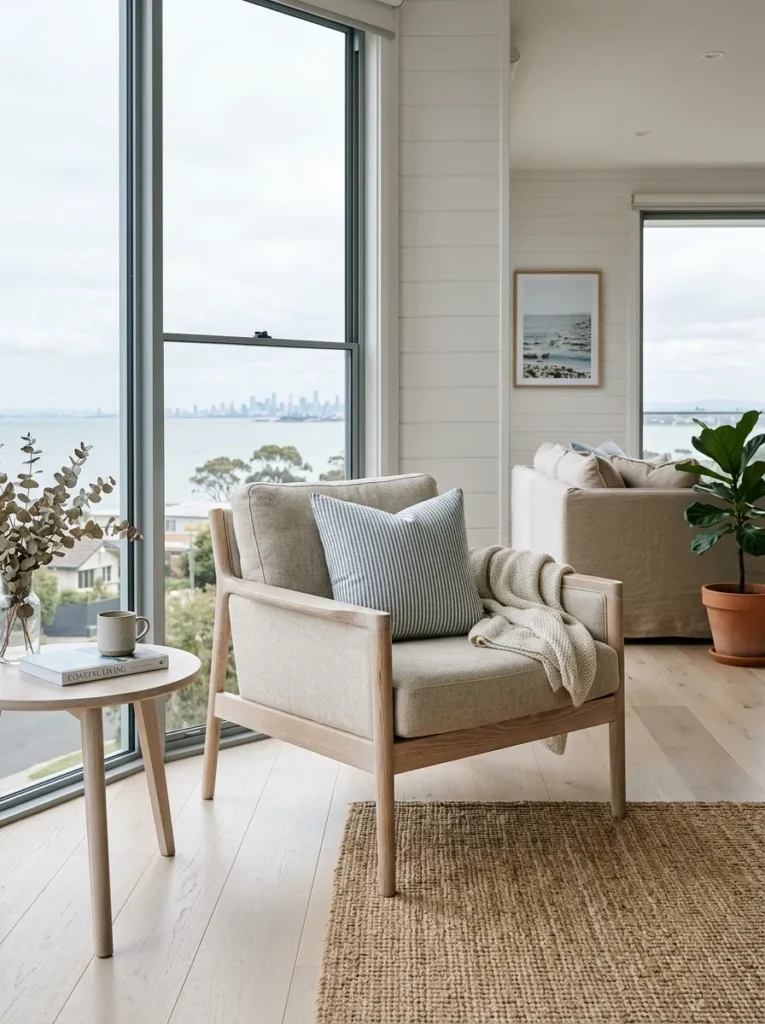
A sofa or chair that sits low to the ground on a solid base blocks the eye and makes a room feel like it’s filling up from the floor. The same piece on slim, exposed legs lets light and sightline pass underneath, and the room reads more open even though the furniture itself hasn’t shrunk. This is a small detail that changes more about how spacious a room feels than its size would suggest, and it costs nothing extra — it’s purely a question of what you choose to buy.
10. Anchor the Room With a Rug That Doesn’t Touch the Walls
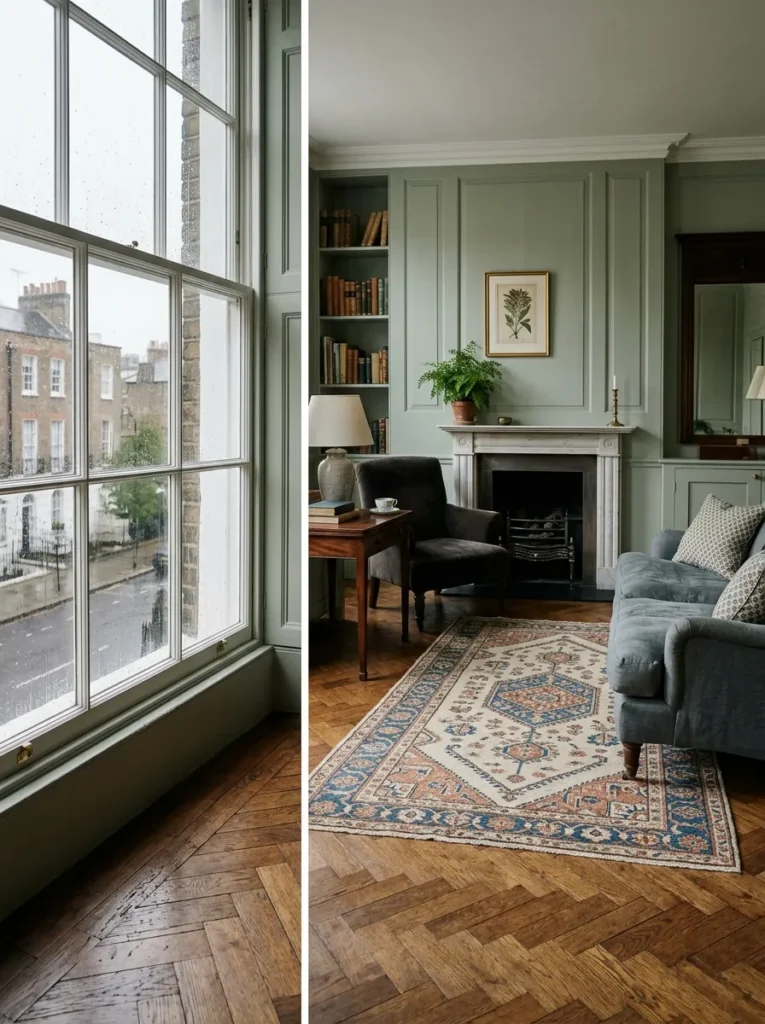
Wall-to-wall carpet or an oversized rug that nearly reaches every wall flattens the sense of zones in a small living room. A rug sized to sit a hand’s width from the furniture it surrounds, with floor visible at the edges, defines the seating area without claiming the entire footprint. The exposed floor border does more visual work than people expect. It reads as intentional, not incomplete.
11. Replace Overhead Lighting With a Floor Lamp
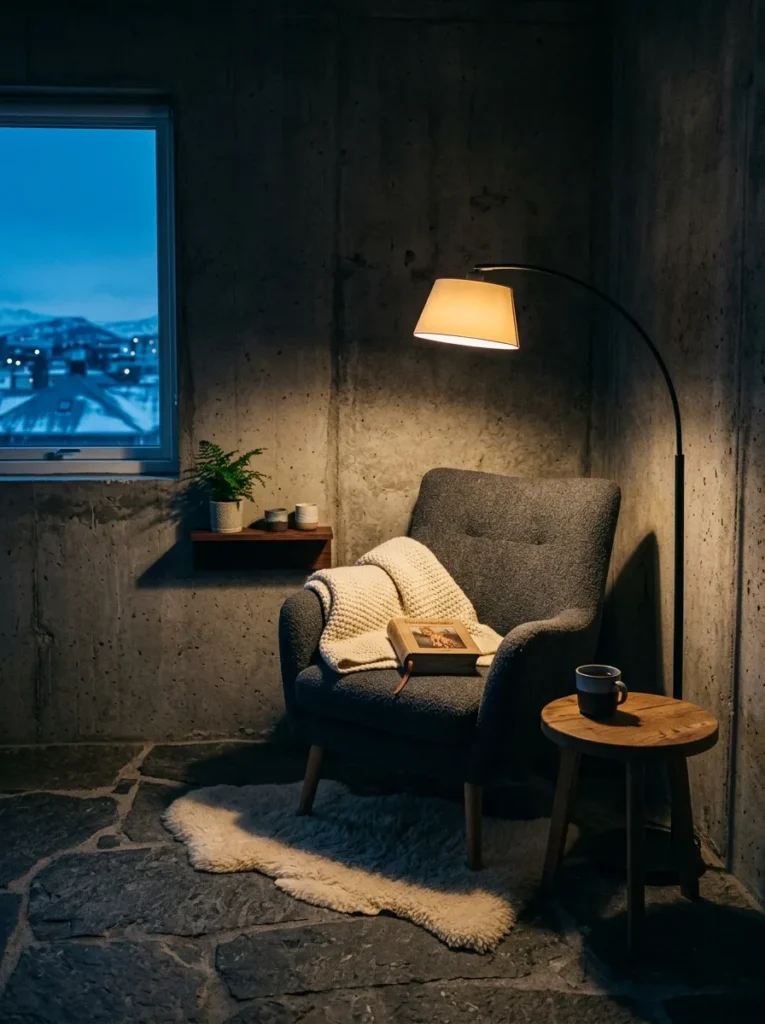
A single ceiling fixture lighting an entire apartment living room creates flat, even light that makes the whole space feel smaller and more clinical than it is. A floor lamp positioned beside a chair or sofa creates a pool of warmer, lower light that draws the eye to a specific spot in the room rather than illuminating all of it equally. Buy one with a dimmer built in. The difference between full brightness and 40 percent is the difference between an office and a living room.
12. Use an Open Bookshelf as a Room Divider
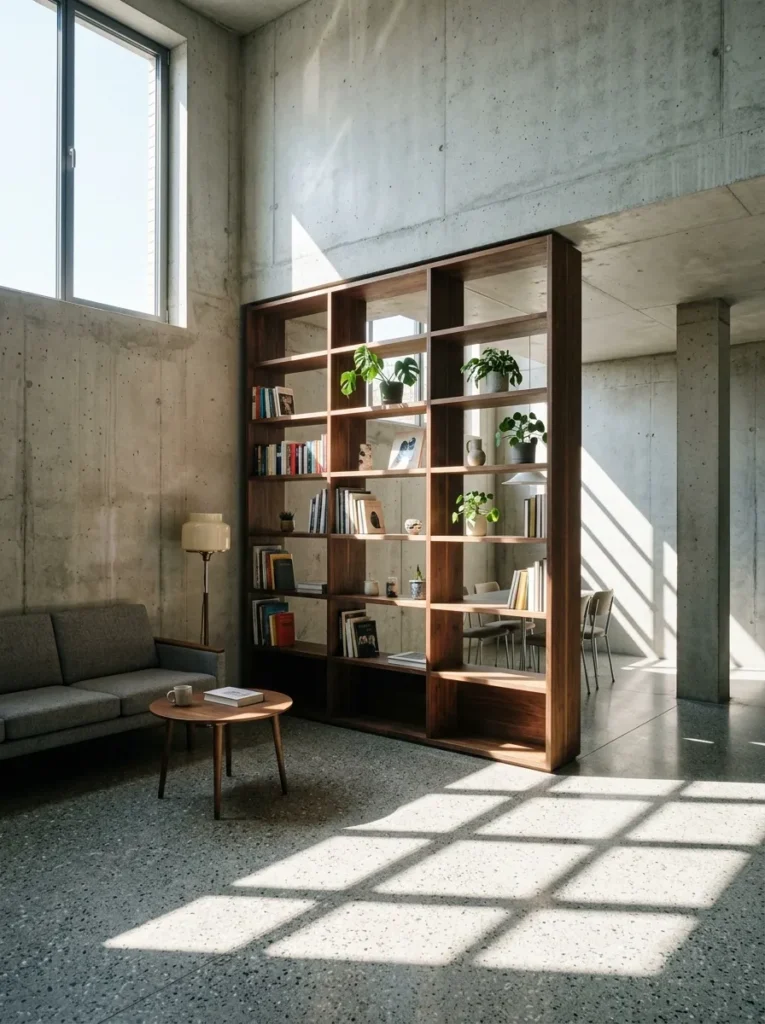
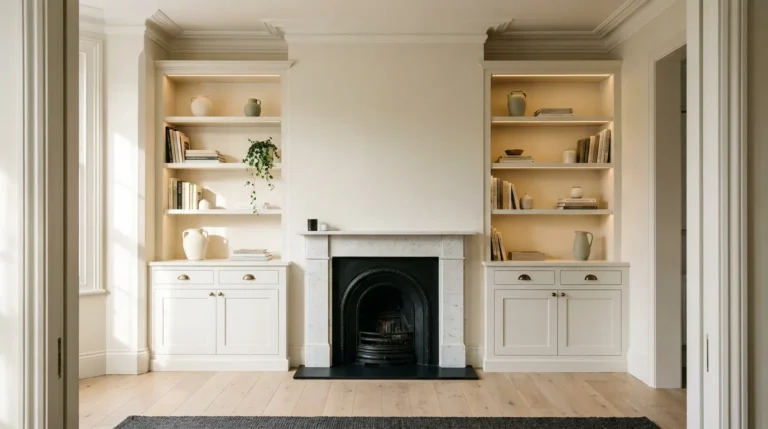
Studio and open-plan apartments often need to separate the living area from a sleeping or dining zone without committing to a wall. An open-backed bookshelf does this without blocking light the way a solid divider would, and it adds storage exactly where most studio layouts are short on it. Keep the back third of the shelves empty or styled sparingly — a fully packed divider reads as a wall anyway, which defeats the point.
13. Swap the Sofa-and-Armchair Combo for a Daybed
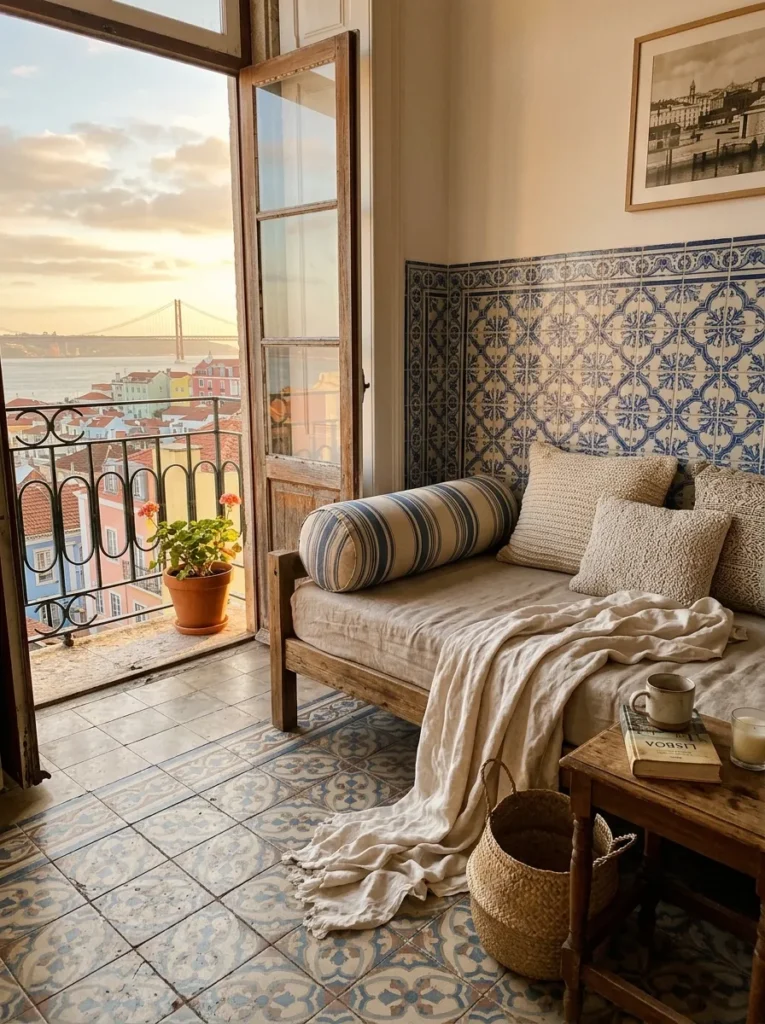
A daybed against a wall seats two to three people comfortably, doubles as an extra sleeping spot for guests, and takes up meaningfully less floor space than a three-seat sofa paired with a separate armchair. This is the matching set is always the safer choice and almost never the better one situation in furniture form. A daybed with a single bolster at one end looks intentional. Add throw pillows sparingly — three, not seven.
14. Scale a Gallery Wall to the Room, Not the Trend
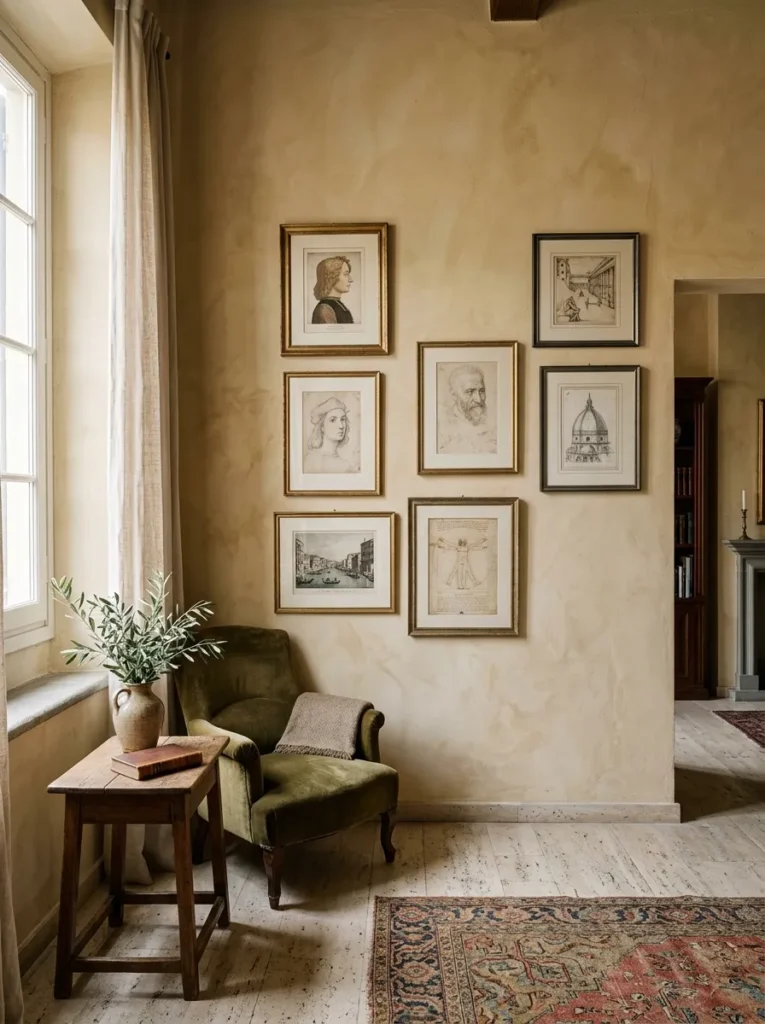
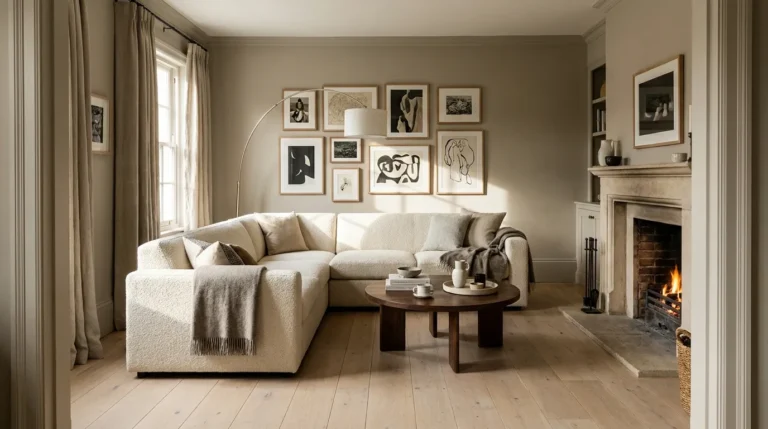
A gallery wall built from a Pinterest template often assumes a large blank wall that a small apartment living room simply doesn’t have. Scale it down to six or eight pieces in varied but related frame finishes, and leave at least 20 percent of the wall visibly empty around the edges. A gallery wall that runs edge to edge on a small wall reads as cluttered no matter how good the individual pieces are.
15. Choose a Folding or Extendable Side Table
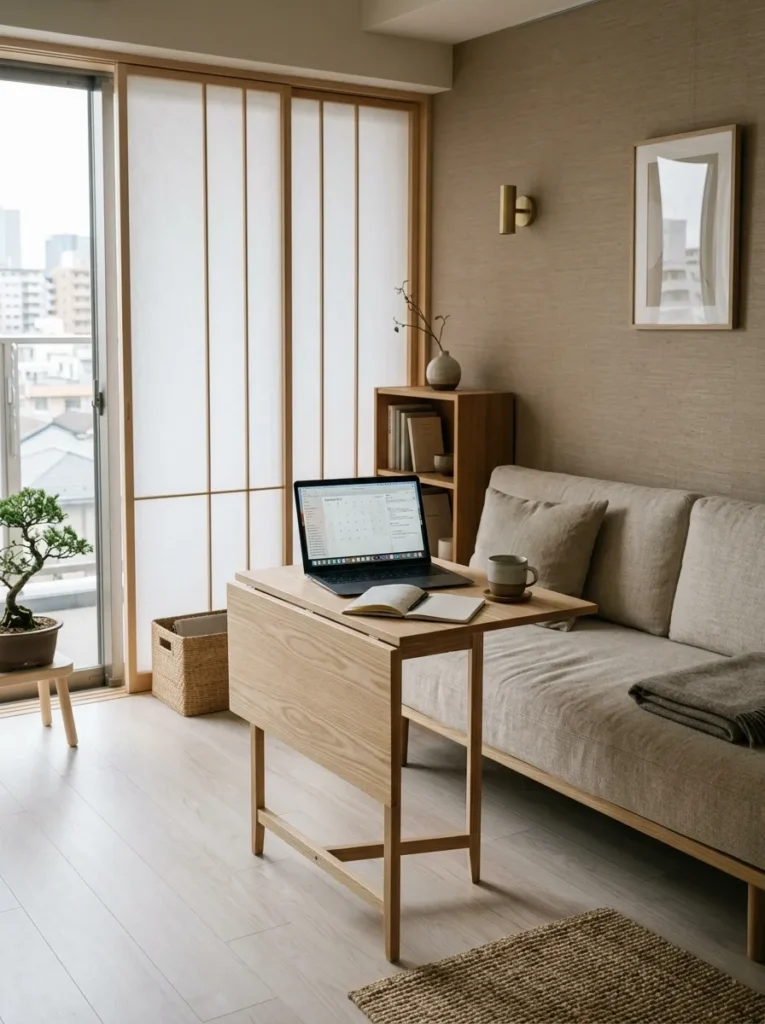
A table that folds flat against the wall or collapses to a slim profile when not needed solves the same problem nesting tables do, but for situations where even nesting tables take up too much room. Pull it out for a laptop, a meal, or a game night, then fold it away. This isn’t a compromise piece — the better designed versions look like permanent furniture even when collapsed.
16. Replace Heavy Drapery With Vertical Blinds or Sheers
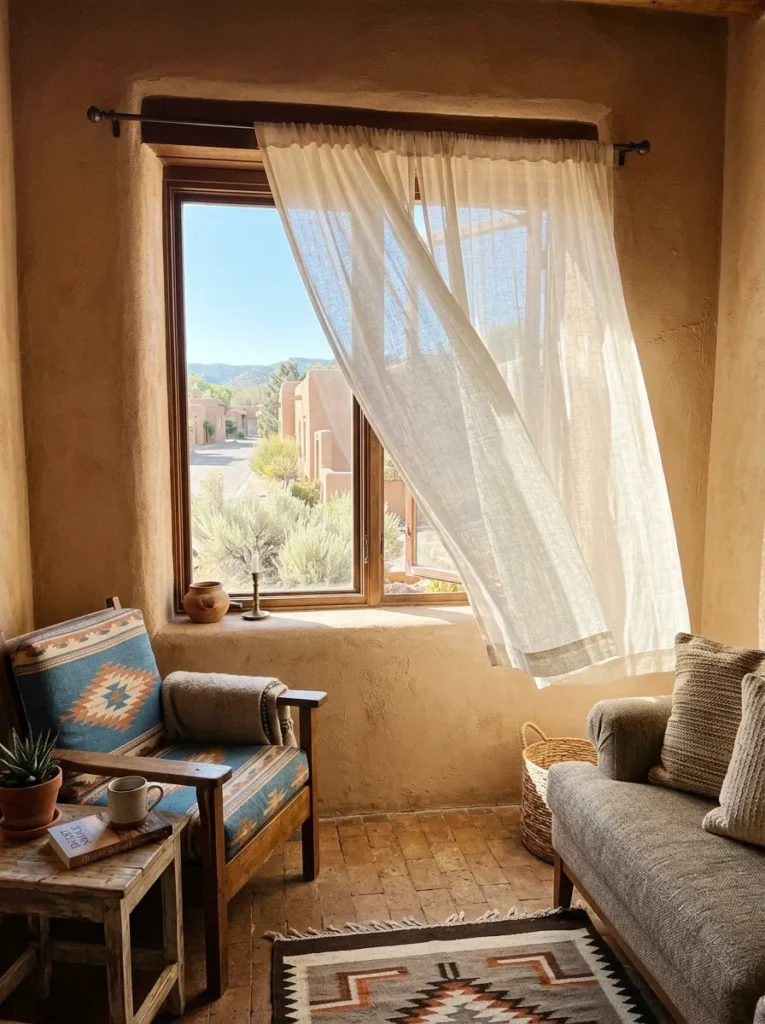
Heavy floor-length drapery in a small room can visually swallow a wall, especially in a darker fabric. Lightweight linen sheers or slim vertical blinds let more daylight through and take up far less visual real estate when open, which matters in a room that’s already working hard to feel bigger than it is. This isn’t about style preference. It’s about what each option does to the amount of light actually reaching the room.
17. Small Apartment Living Room Storage: Floating Shelves Over Bulky Units
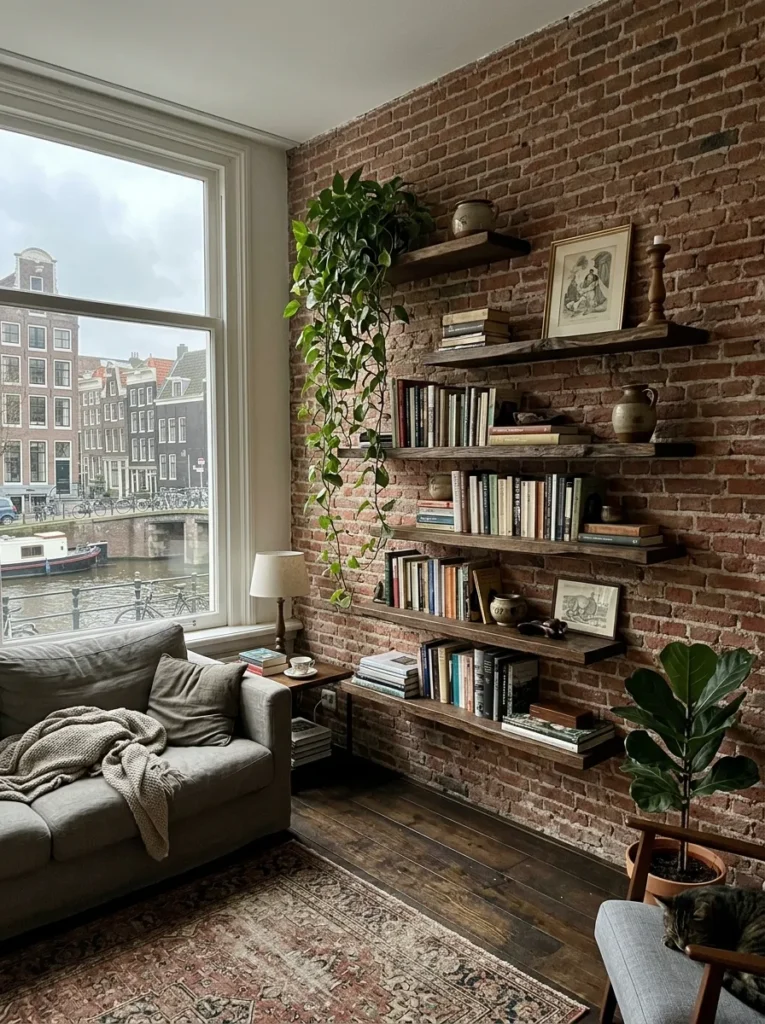
A freestanding cabinet has a footprint on the floor whether it’s full or half-empty. Floating shelves mounted at varied heights hold the same books and objects without ever touching the ground, and the visible floor beneath them keeps the room feeling open. Stagger the shelf heights instead of spacing them evenly — even spacing is the detail that makes floating shelves look like a kit rather than a design choice.
18. Build a Corner Banquette Instead of Two Chairs
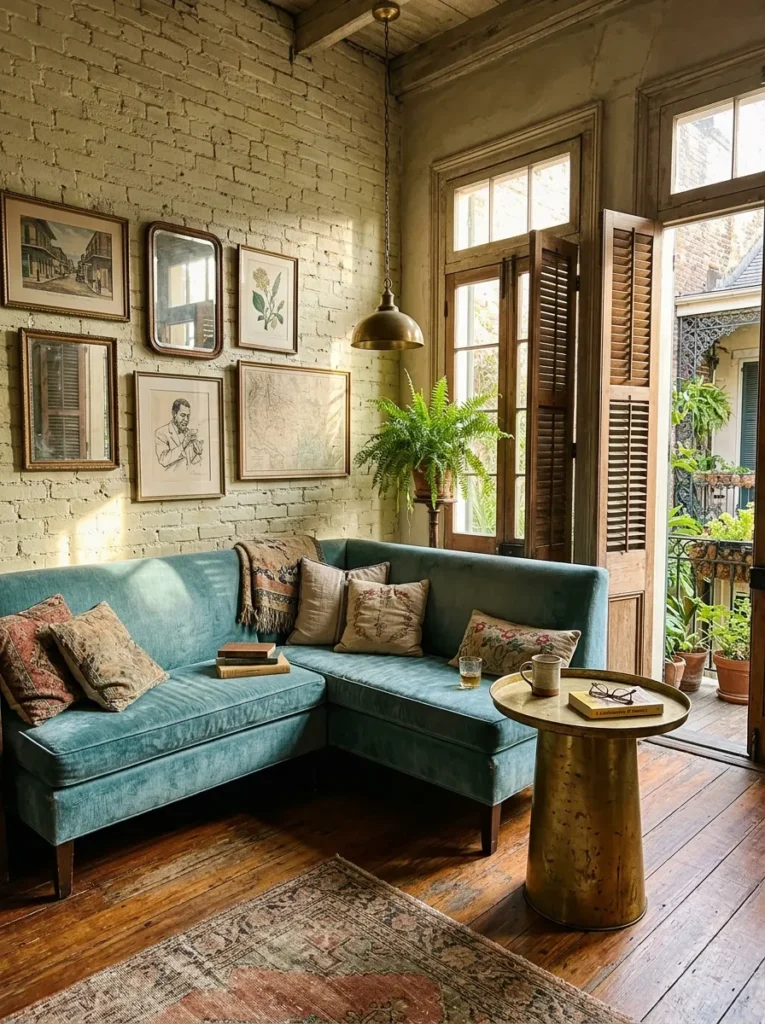
Two armchairs angled into a corner take up considerably more floor space than an L-shaped banquette seat built into the same corner, and the banquette seats more people. This works particularly well in apartments with an awkward corner that’s currently doing nothing — which most apartments have at least one of. Add a single round side table at the open end rather than a coffee table in front of it.
19. Choose Furniture on Legs, Not Furniture That Touches the Floor Edge to Edge
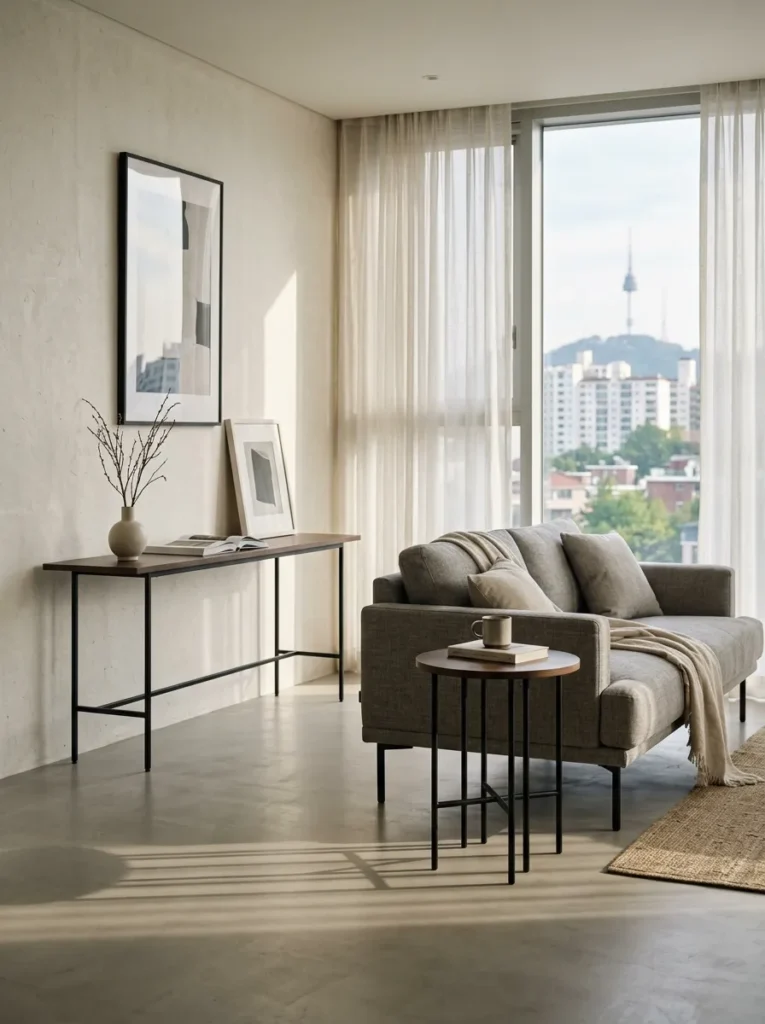
This deserves repeating beyond the sofa point, because it applies to nearly every piece in the room — side tables, media units, even the ottoman from the first idea. A consistent visual language of exposed legs throughout a small apartment living room creates a cohesion that makes the furniture feel like it was chosen together, even when it wasn’t bought that way. The floor you can see is doing more for the room than the floor you can’t.
20. If You Need a Sleeper Sofa, Buy the Right One
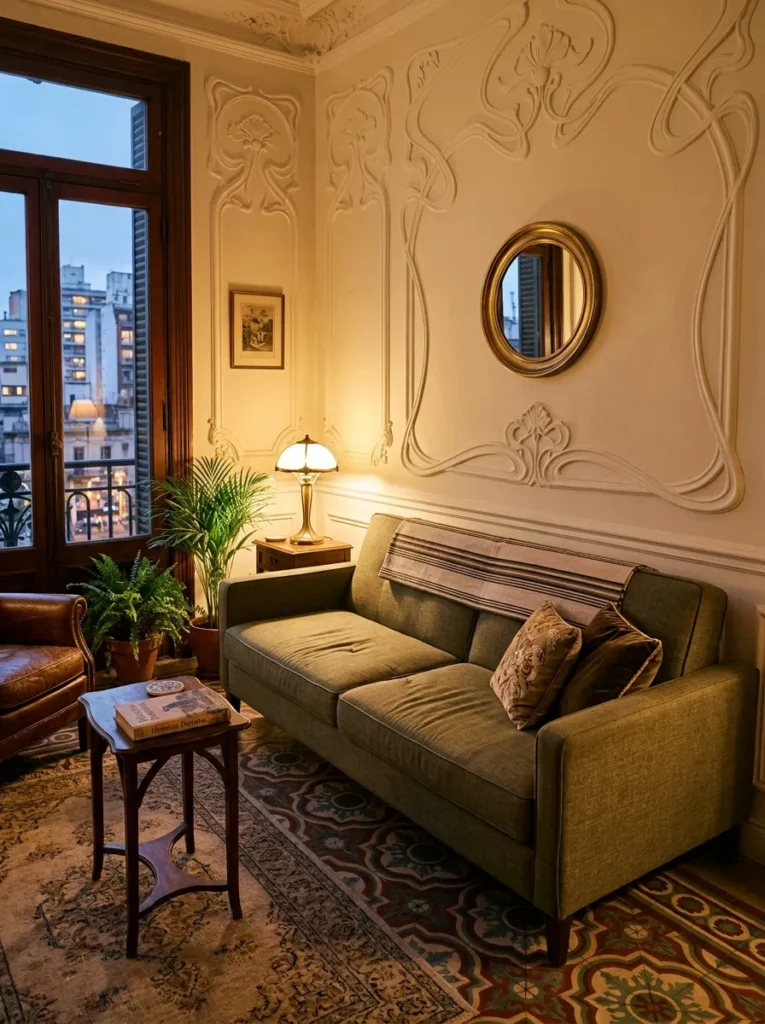
Most sleeper sofas are wider, deeper, and heavier-looking than a comparable regular sofa, which defeats the purpose in a small living room. Look specifically for a slim-profile sleeper with a thinner arm width and a mechanism that doesn’t add bulk to the base — these exist, they just cost more, and they’re worth seeking out by name rather than buying whatever the showroom has on the floor. A sleeper sofa that looks like a sleeper sofa all the time was the wrong purchase.
21. Use Pocket or Sliding Doors Where You Can
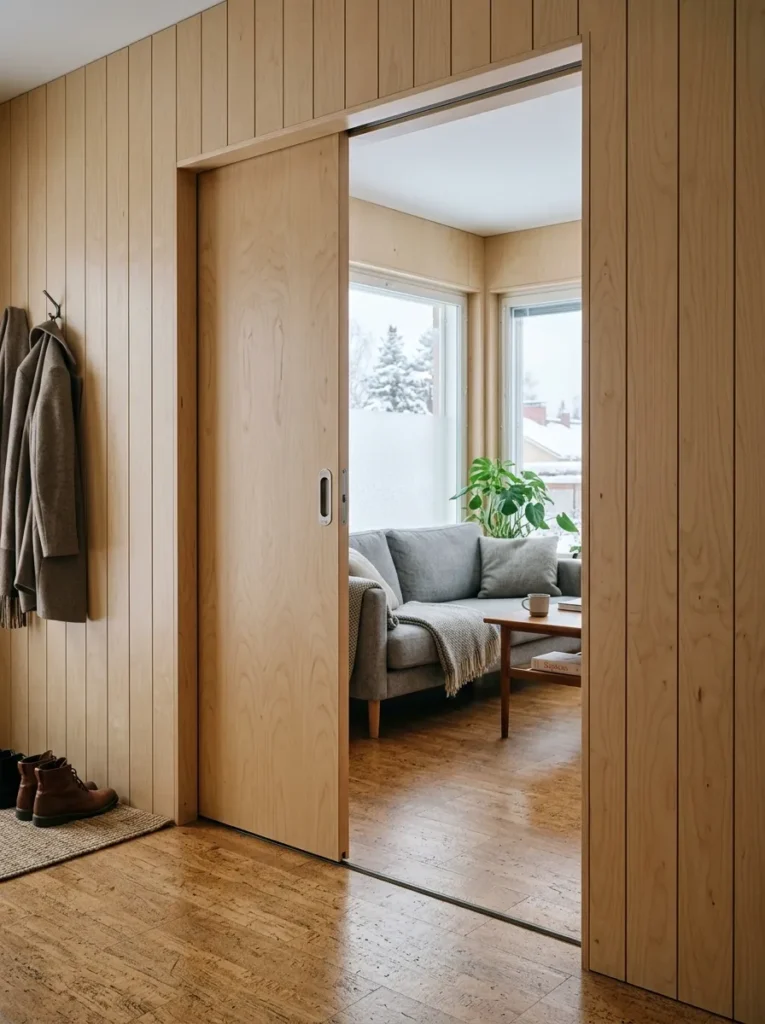
A swinging door needs a clearance arc of empty floor space that a small apartment can rarely spare, especially near a living room entry. A pocket door that slides into the wall, or a sliding barn-style door mounted on the surface, removes that arc entirely and gives the room back real usable space. This is a renovation-level change, not a weekend one, but it’s worth raising with a landlord or considering during a move-in negotiation.
22. Layer Three Light Sources Instead of Relying on One
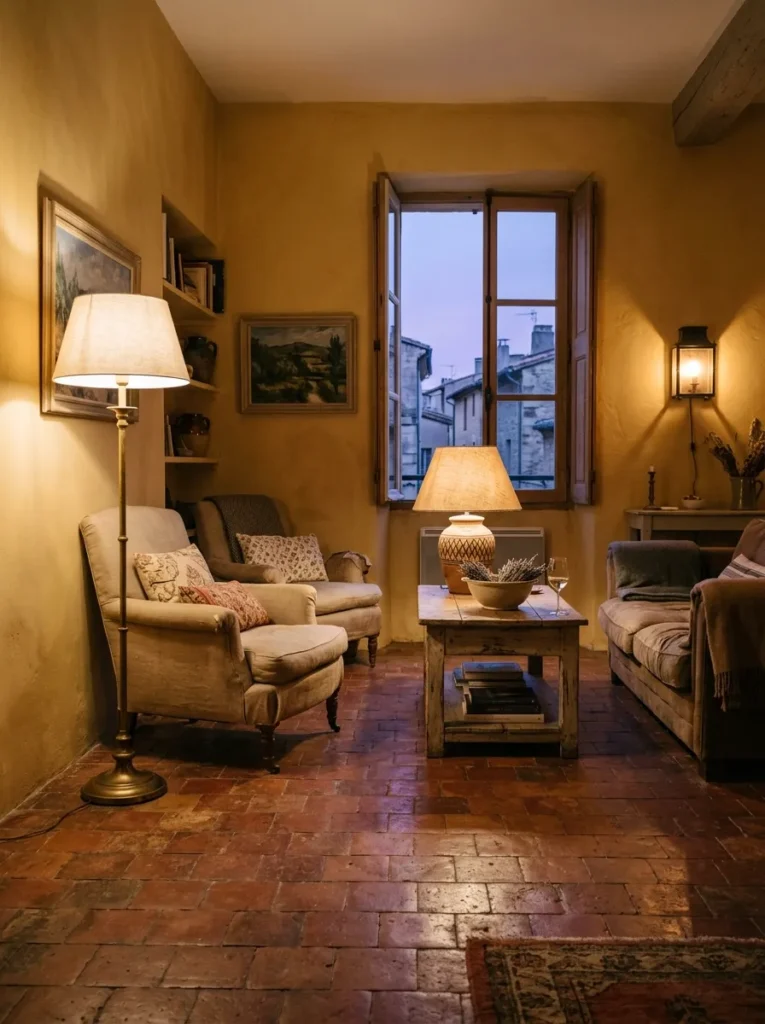
A single overhead fixture is the single biggest reason small living rooms feel sterile rather than cozy. Combine a floor lamp, a table lamp, and one accent source — a wall sconce, picture light, or LED strip behind a shelf — and turn the overhead off most evenings. The room will look larger in low light than it does in bright light, which sounds wrong until you actually try it.
23. Choose a Compact Sectional Over a Standard Sofa-Plus-Chair Layout
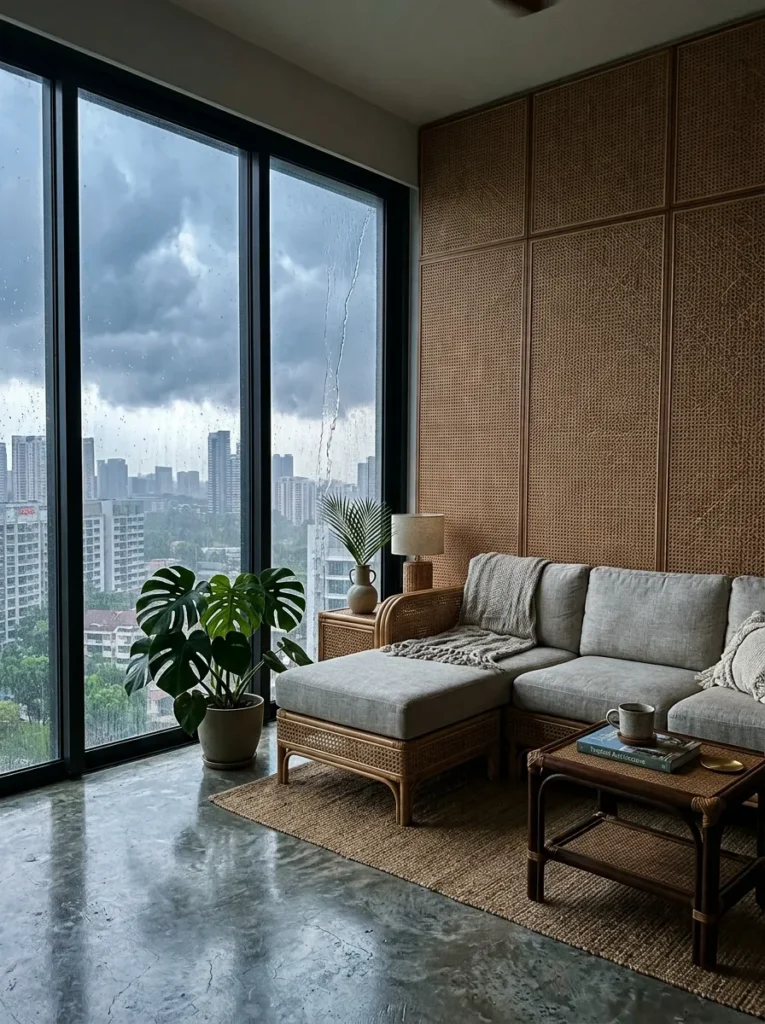
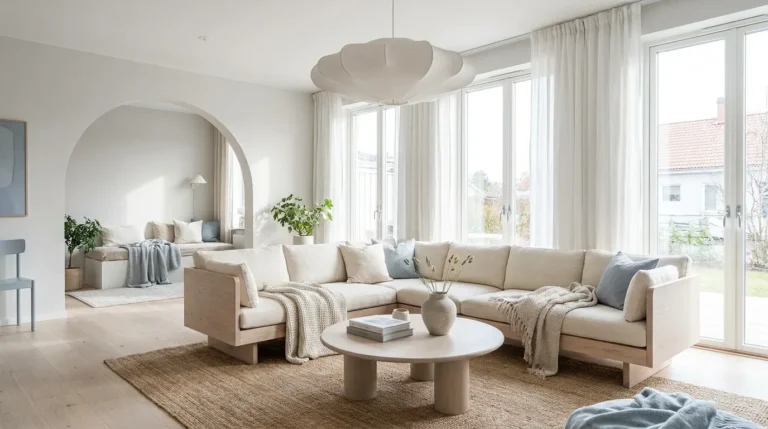
A small sectional with a chaise can seat as many people as a sofa and an armchair combined while taking up a similar or smaller total footprint, because it eliminates the gap and extra clearance a separate chair requires. Measure the chaise length specifically — anything over 150 centimetres starts working against you in a genuinely small room. This only works if you choose the compact version, not the showroom’s largest configuration.
24. Leave One Corner Completely Empty
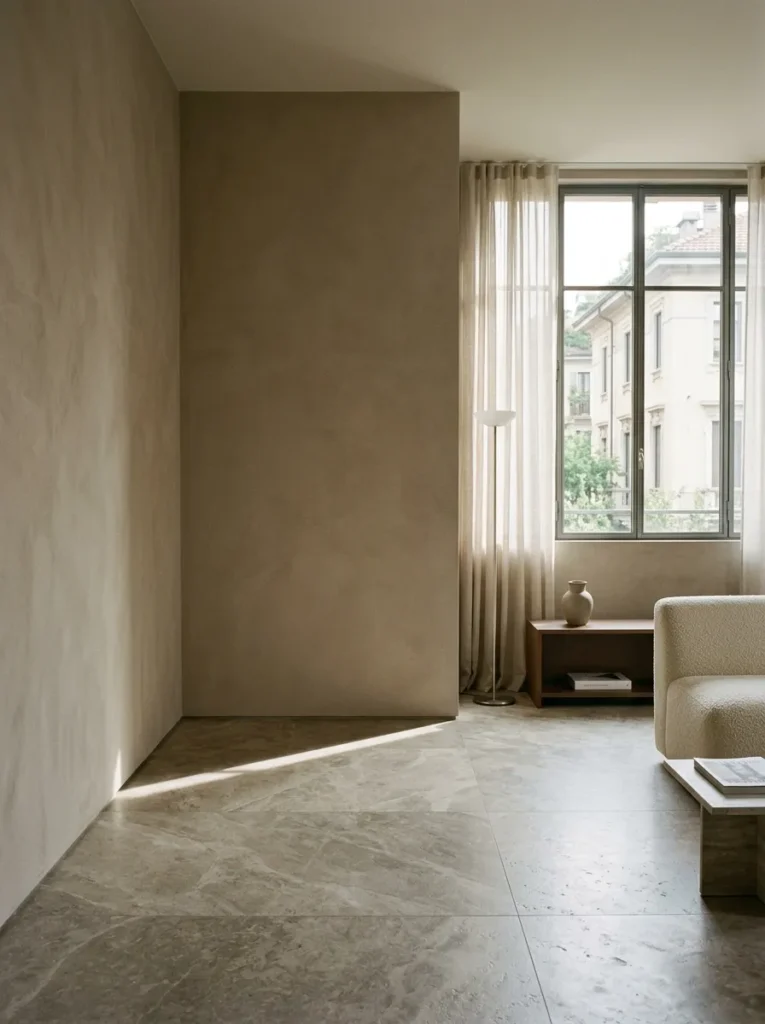
Every tip on this list has been about adding something — storage, light, a better-chosen piece of furniture. This one is the opposite, and it’s the one most people resist. Pick the corner of the room that currently holds a plant stand, a stack of magazines, or a chair nobody sits in, and leave it empty. Genuinely empty. A small apartment living room with one deliberately unfilled corner reads as more spacious than one where every inch is doing a job, because the eye needs somewhere to rest. This is the hardest idea on this list to actually commit to, and it’s the one that makes the room feel finished rather than full.
Final Thoughts
If you only take one thing from this list, take the legs — furniture that’s raised off the floor changes a room’s feel more than almost anything else here, and it costs nothing to choose it when you’re shopping anyway. Start with whatever’s cheapest to test: the curtain rod height, the rug size, the empty corner. None of these apartment living room ideas require a renovation budget, but they do require being willing to undo a choice you already made if it isn’t working. Not every idea here belongs in every apartment — pick the four or five that match your actual layout and ignore the rest.
Save these apartment living room ideas for your next small-space refresh.