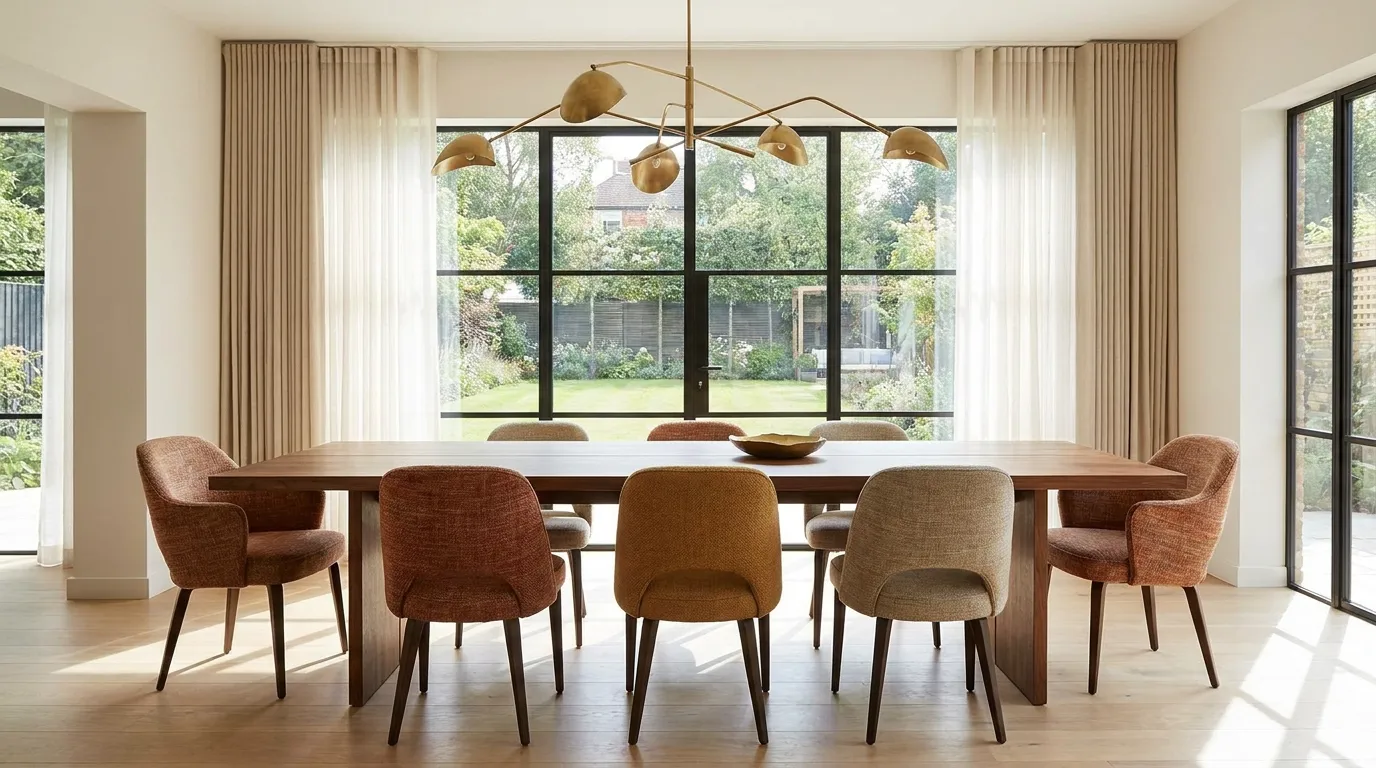
20 Modern Dining Room Ideas That Feel Elegant and Comfortable
The dining room is the one space most people redecorate in their heads and then never quite touch. It gets the leftovers — the furniture that didn’t fit elsewhere, the lighting fixture that came with the house, the rug that was a compromise. Modern dining room ideas tend to get lumped together as either sterile showrooms or forgettable neutrals, as though the only options are cold and impressive or warm and bland. This article disagrees with both. What follows are twenty ideas that treat elegance and comfort as the same goal, not competing ones — specific, opinionated, and built around rooms people actually sit in for hours.
1. Choose a Table That’s Too Big for the Room
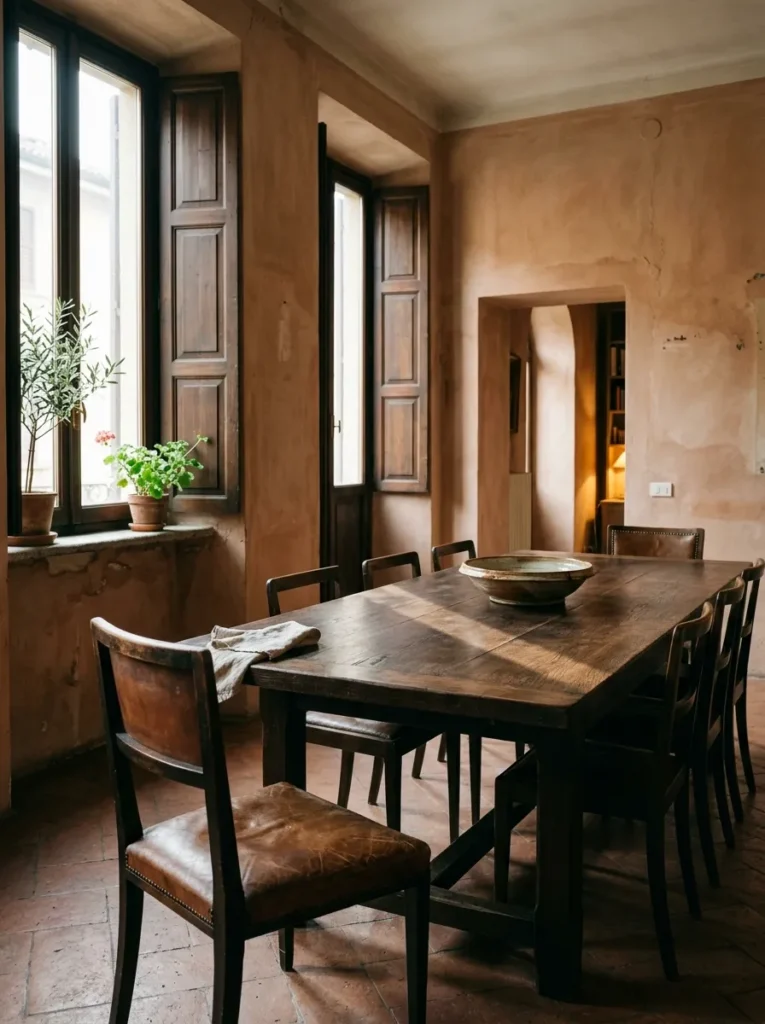
The advice you will always hear is to measure carefully and leave at least 90 centimetres of clearance around the dining table so chairs can pull out freely. That advice is correct. What nobody says out loud is that a table that fits the room perfectly tends to feel like it was selected for the room rather than for the people eating at it. A table sized generously — one that demands you angle past a chair to reach your seat — creates an entirely different energy. It signals that gathering is the point, not proportion.
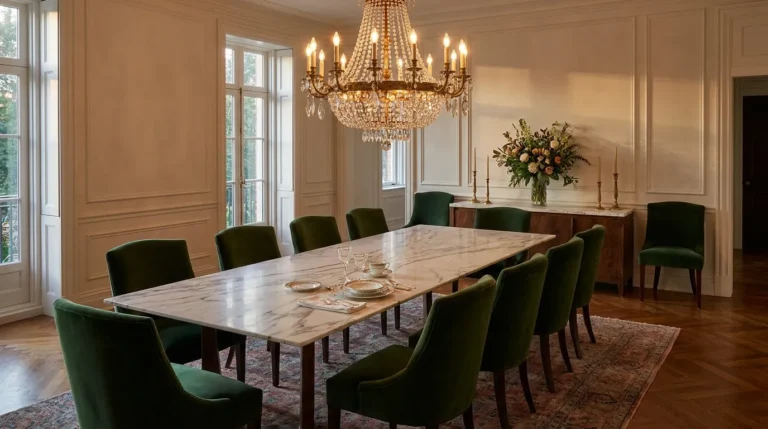
For a modern dining room, the material of that table does most of the work. An oversized table in smoked oak or honed nero marquina marble reads as a deliberate decision. The same dimensions in standard pine reads as an accident. Go large, then go specific on finish.
2. Hang the Pendant Lower Than You Think You Should
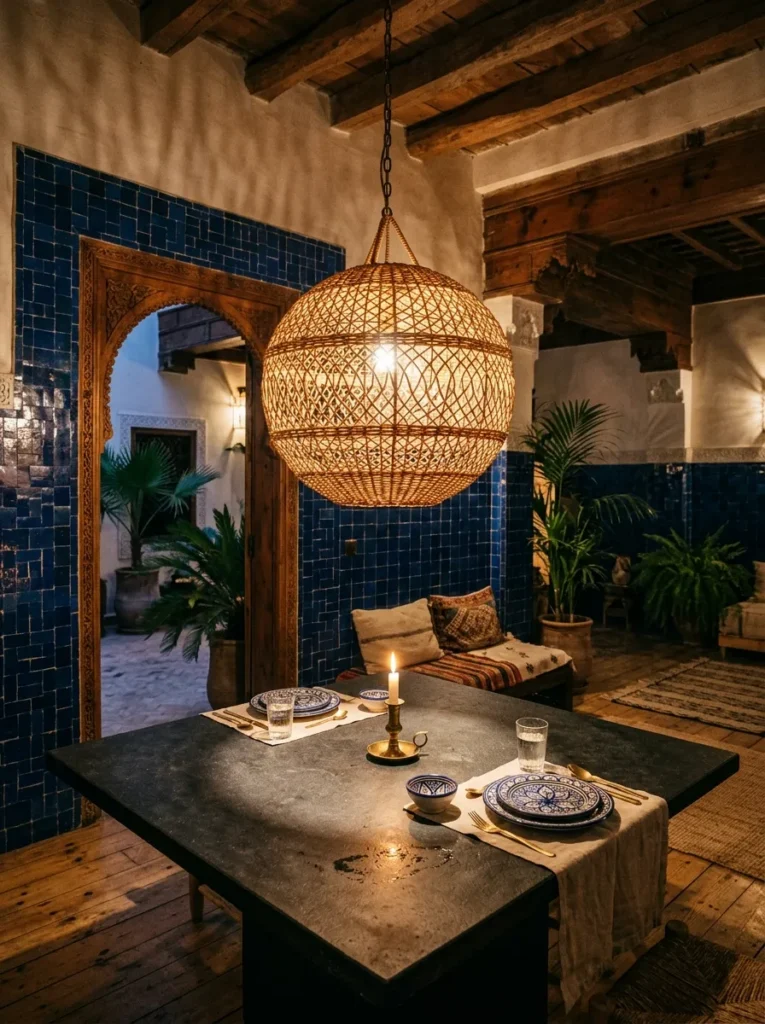
Most pendants in dining rooms float too high — installed at a height that avoids the complaint rather than achieves the effect. The correct hanging point for a pendant above a dining table is 70 to 80 centimetres above the surface. At that height the light pools onto the table, the faces around it are illuminated warmly from below, and the fixture becomes part of the conversation rather than a distant ceiling detail.
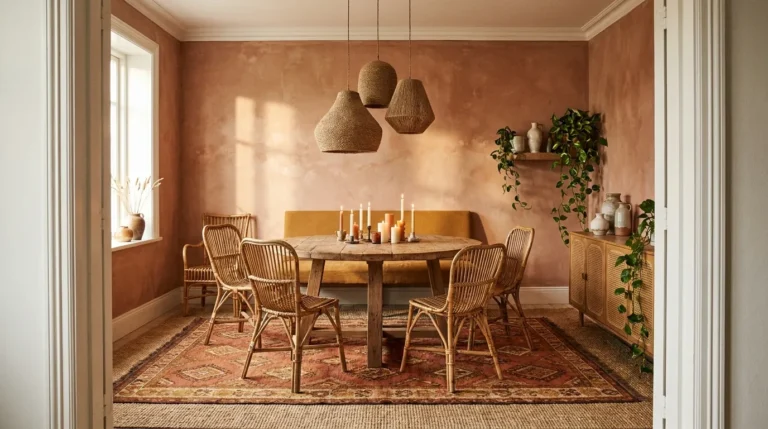
The reason this matters for a modern dining space specifically is that contemporary pendant designs — rattan spheres, blown glass, architectural blackened steel — were made to be seen up close. When they hang at 110 centimetres, they become vague shapes. At 75 centimetres, they become objects with presence and weight. Drop the pendant, and the room drops into evening mode the moment the lights come on.
3. Use a Rug That Extends Well Beyond the Chair Legs
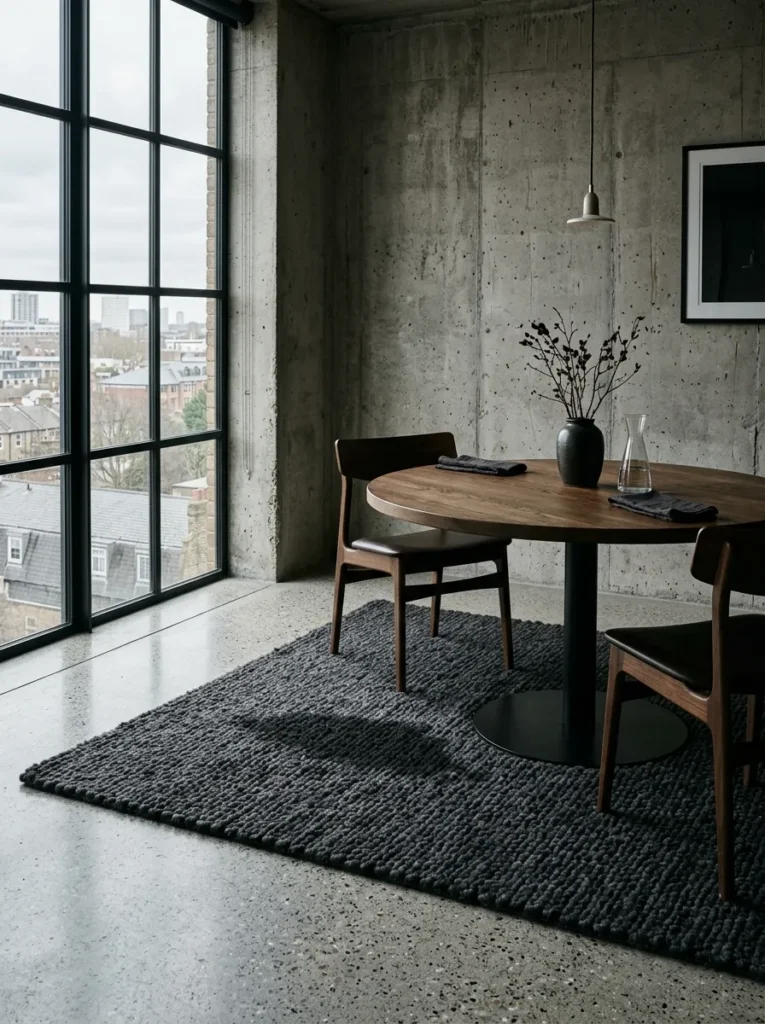
The half-measure rug is one of the most common errors in dining room design, and it makes the whole room feel unresolved. When a rug ends beneath the chair legs rather than beyond them, chairs snag the edge every time someone stands up — which they will, repeatedly, across every single meal. Beyond the practical irritation, a rug that only covers the table footprint makes the seating arrangement look like it landed on the rug by accident.
For a modern dining room, the rug should extend at least 60 centimetres beyond every chair leg when chairs are in their default seated position. This is not a decorating preference, it is a functional minimum. Size up from there. A 300 × 400 centimetre rug in a rectangular dining room rarely looks too big once the table and chairs are in place — it usually looks exactly right.
4. Mix Seating Instead of Buying the Matching Set
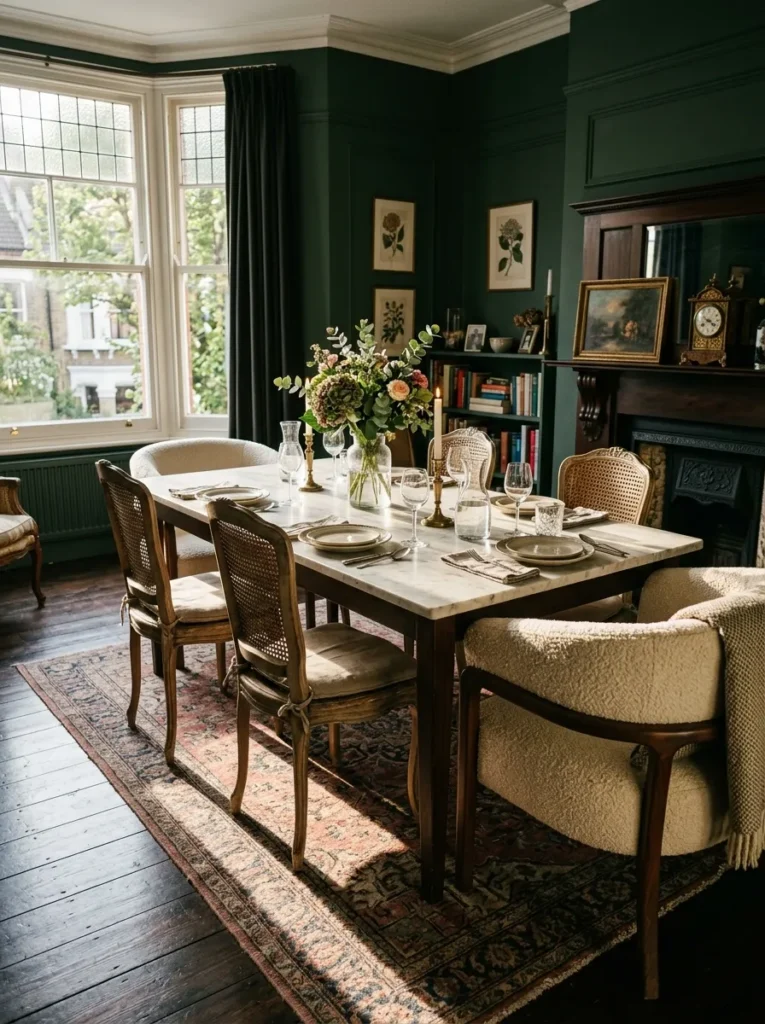
The matching dining set is the safer choice and almost never the better one. When every chair at the table is identical, the room reads as a showroom floor sample. Mixing seating — upholstered armchairs at the ends, lightweight side chairs along the length, or a bench on one side opposite individual chairs — gives the room a quality that matching sets structurally cannot produce: it looks like it accumulated over time.
Keep the palette coherent. Chairs in different silhouettes can share a fabric, a stain, or a leg finish and still read as intentional. The goal is variation within a system, not randomness. An armchair in bouclé at the head of a table surrounded by cane side chairs is not a mismatch — it is a considered decision that announces the head of that table.
5. Layer the Lighting with at Least Three Sources
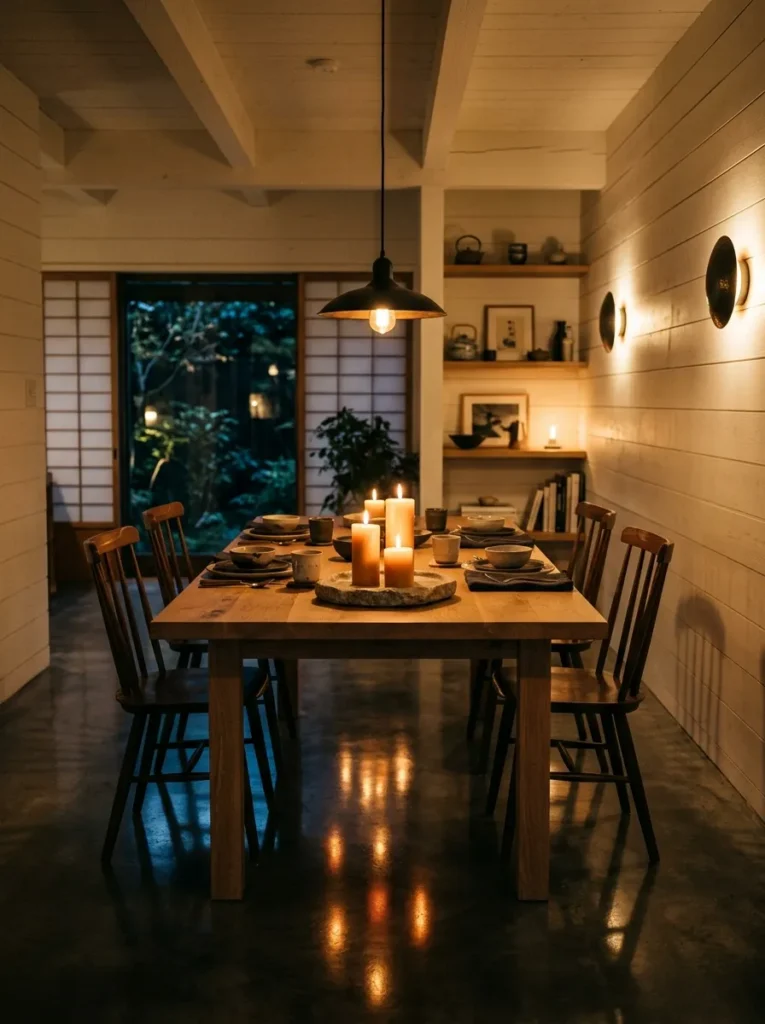
A single overhead pendant, however beautiful, produces one kind of light, and one kind of light produces one kind of room. The dining rooms that feel genuinely warm and alive at night are almost always running three or more light sources simultaneously — pendant above the table, wall sconces or a sideboard lamp for peripheral warmth, and candlelight for the table surface itself.
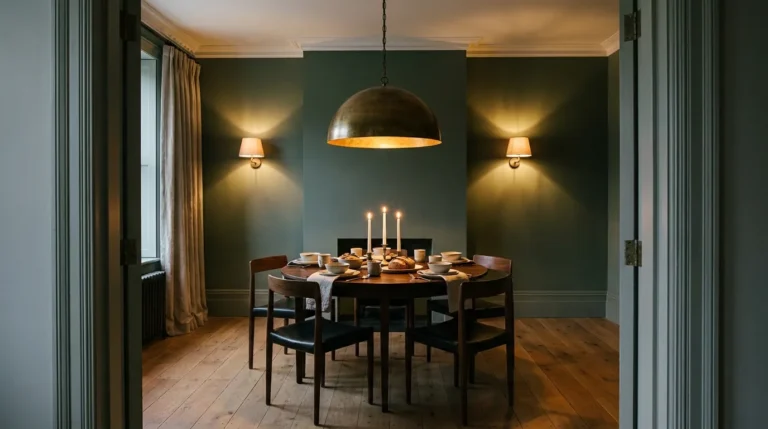
This is the decision that changes everything in a dining room and costs almost nothing to implement after the main fixture is already installed. A pair of plug-in wall sconces on a dimmer switch and three pillar candles on a concrete tray are the difference between a dinner party and a dinner. The lumen level drops, the shadow density increases, and suddenly the room has a quality that no amount of furniture shopping produces.
6. Build a Sideboard Into the Room’s Logic
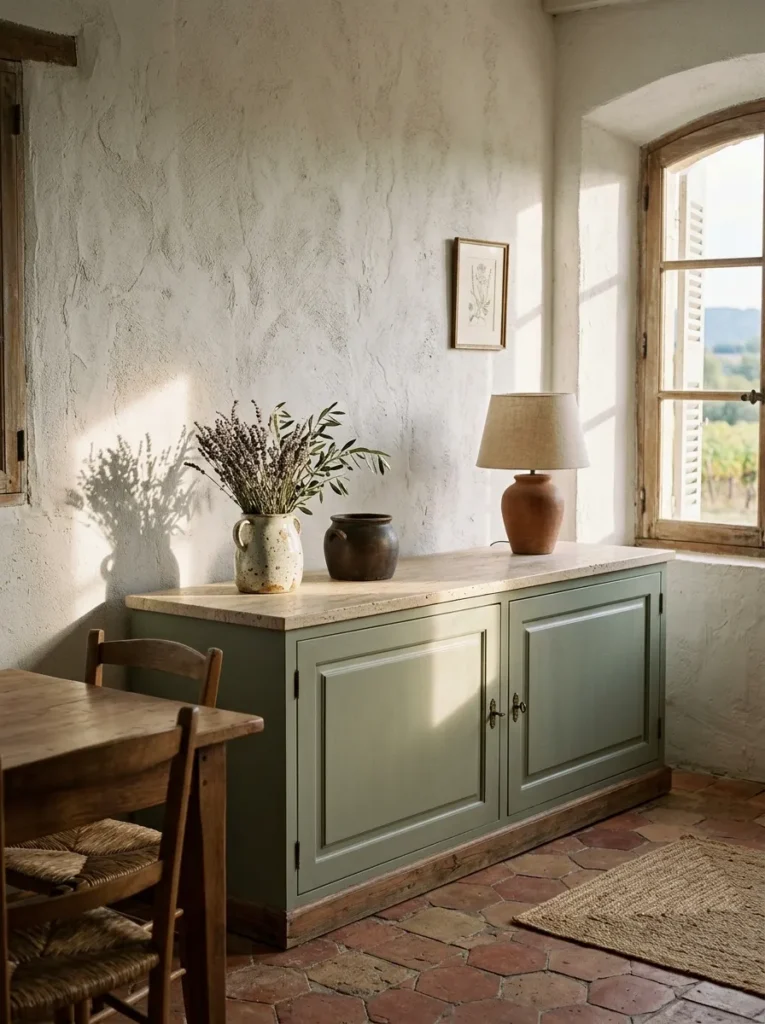
A sideboard is not decorative storage. It is the thing that allows a dining room to function as a dining room — the surface where wine is opened, where serving dishes land before they reach the table, where the spare glasses and the tablecloths live. A dining room without one forces everything through the table or back into the kitchen, and the room feels incomplete in a way that is hard to name but immediately obvious.
For modern dining spaces, a low sideboard in a matte lacquer or a natural stone top positions itself as furniture rather than cabinetry. Keep the top edited — two or three objects, a lamp, empty space. The restraint on the sideboard surface makes it look considered rather than dumped upon.
7. Pick a Wall Colour That Works in Candlelight, Not Daylight
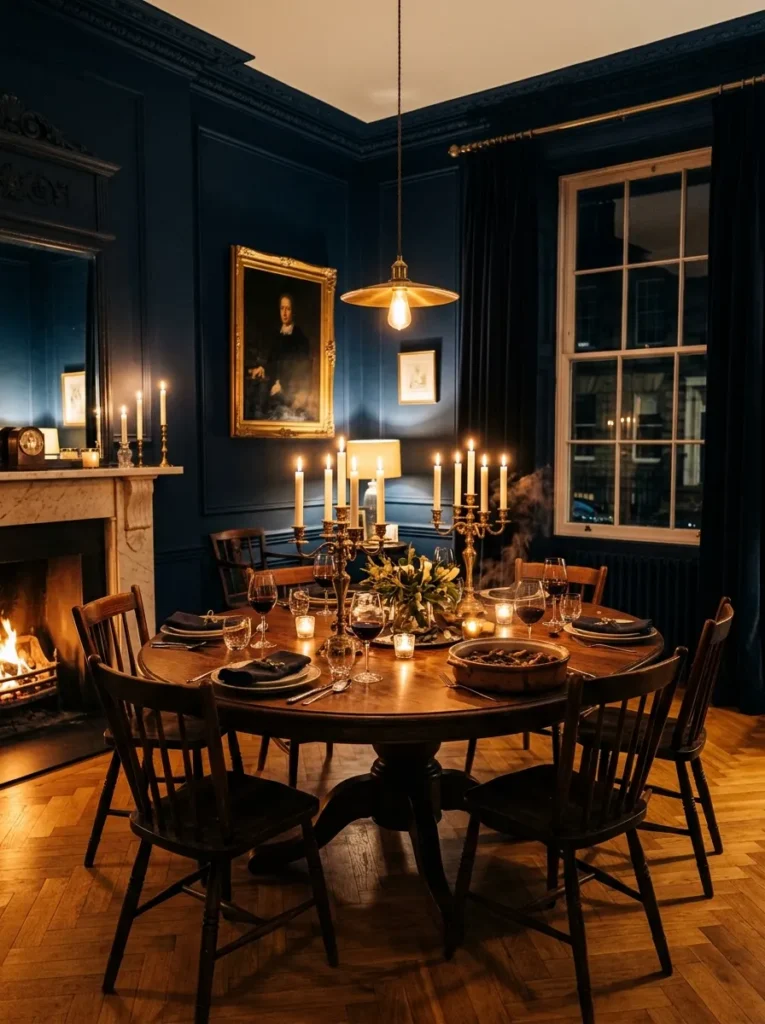
Most people choose wall colours by looking at swatches in the afternoon or by comparing chips against a white wall. The problem is that the dining room performs its most important work in the evening — and what reads as a warm terracotta at three in the afternoon can turn flat and murky by candlelight. The test that matters is what the wall looks like at eight at night with a pendant at 75 centimetres and three lit candles on the table.
Deep colours tend to do better in dining rooms than pale ones, which is counterintuitive. A dark forest green, an inky navy, or a saturated burnt umber absorbs light in the evening and returns warmth. Pale greige reflects whatever light hits it, including the cold blue of an LED bulb, for obvious reasons. Paint a dining room dark and it reads as intimate. Paint it pale and it reads as unfinished.
8. Invest in the Table Base, Not Just the Top
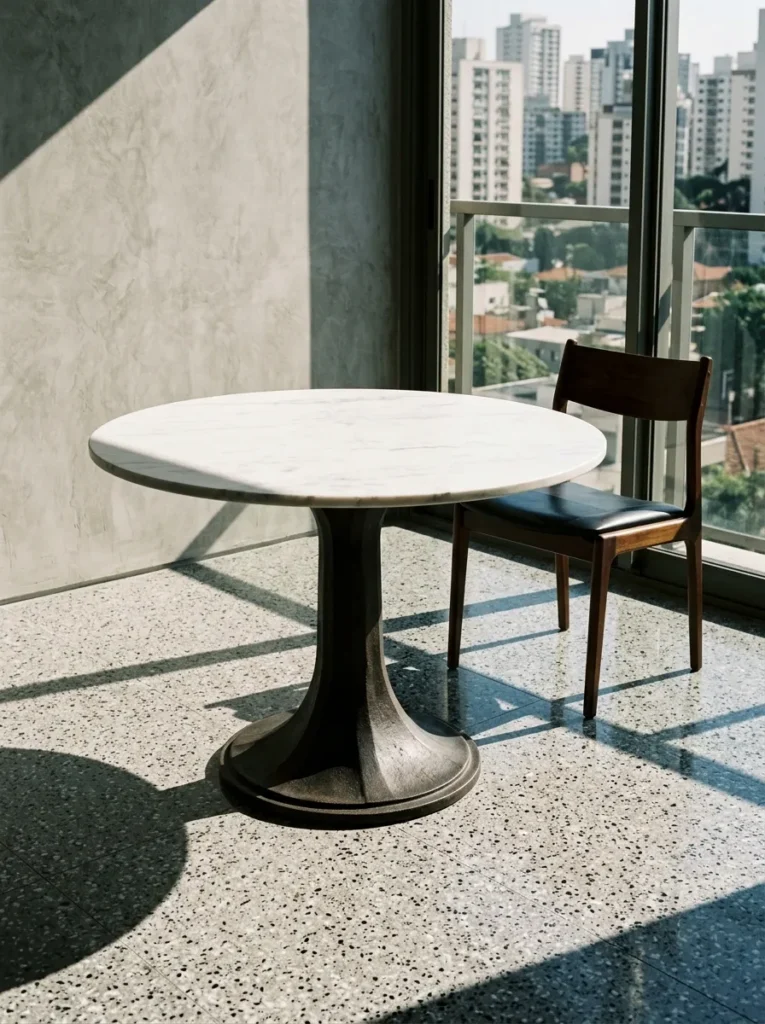
Most people buy tables based on the top — the marble, the wood, the finish. The base is treated as structural rather than visual. This is exactly backwards. The table base is what the eye falls to when a room is photographed, what guests notice during conversation because it sits at sightline, and what determines whether the table reads as furniture or as an appliance.
A pedestal base in cast iron or solid brass makes the same tabletop look architectural. A trestle base in welded steel reads industrial in the best possible way. A four-leg standard base in lacquered MDF reads as provisional regardless of what sits on top. Spend the budget on the base — the top can be upgraded later. The base almost never gets replaced.
9. Install a Modern Dining Room Feature Wall Behind the Seating
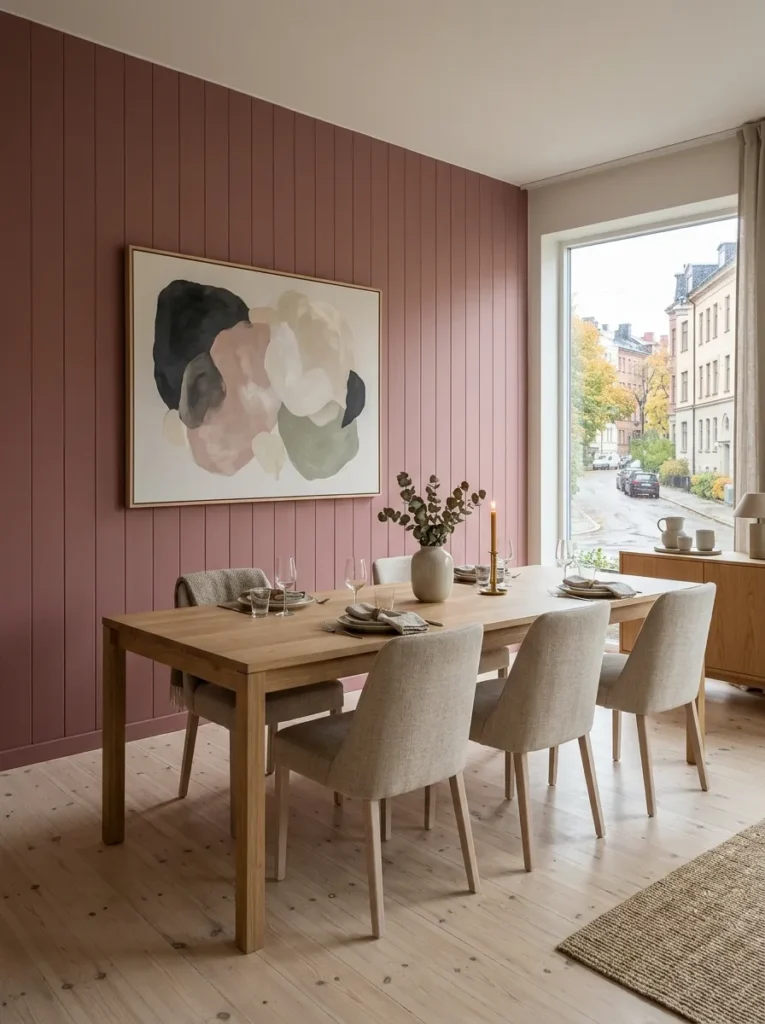
The long side of a dining room — usually the wall the seating faces — is one of the most photographed and Pinterest-saved spaces in any home, and most people treat it as the forgotten wall. A feature treatment here does more for the overall dining room design than almost any piece of furniture. It becomes the backdrop for every meal, every gathering, and every photo taken at the table.
The treatment does not need to be complicated. Limewash paint in a saturated colour applied with visible texture changes the atmosphere of the entire room. Full-height panelling in painted MDF reads as Georgian and expensive for a fraction of the cost of joinery. A single large-format artwork hung at seated eye level — which is lower than most people hang things, around 145 to 150 centimetres to the centre — anchors the wall without complicating it.
10. Choose Curtains That Pool on the Floor
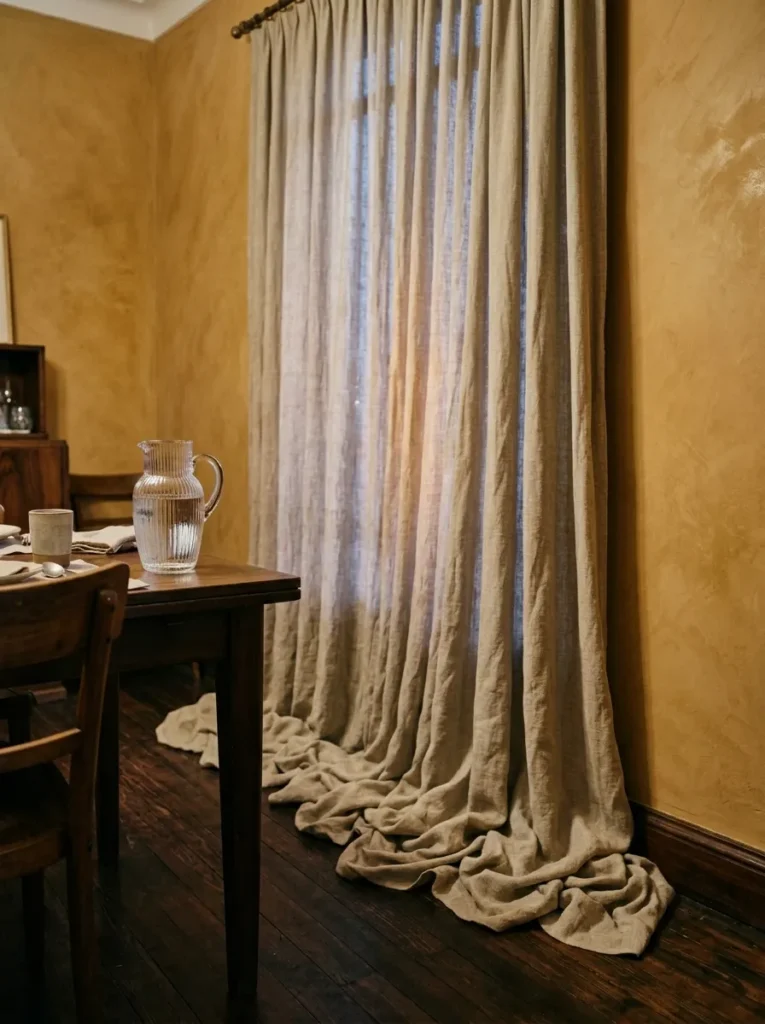
Curtains that hang to exactly the floor read as curtains. Curtains that pool 5 to 10 centimetres past the floor read as luxury — an almost unreasonable amount of fabric for a purely functional covering, which is precisely the point. Dining rooms are formal spaces in the original sense: they are rooms where the table is set, guests are received, and a degree of effort is visible in the details.
For a modern dining room, linen curtains in an undyed natural tone or a deep, saturated colour pool beautifully because the fabric is heavy enough to gather without puffing. Velvet pools more dramatically and works particularly well in rooms with dark walls. The key requirement is ceiling-to-floor hanging — any curtain that starts from a track lower than the ceiling line, or that hangs above the floor, immediately reduces the visual height of the room.
11. Use Texture on the Table, Not Pattern
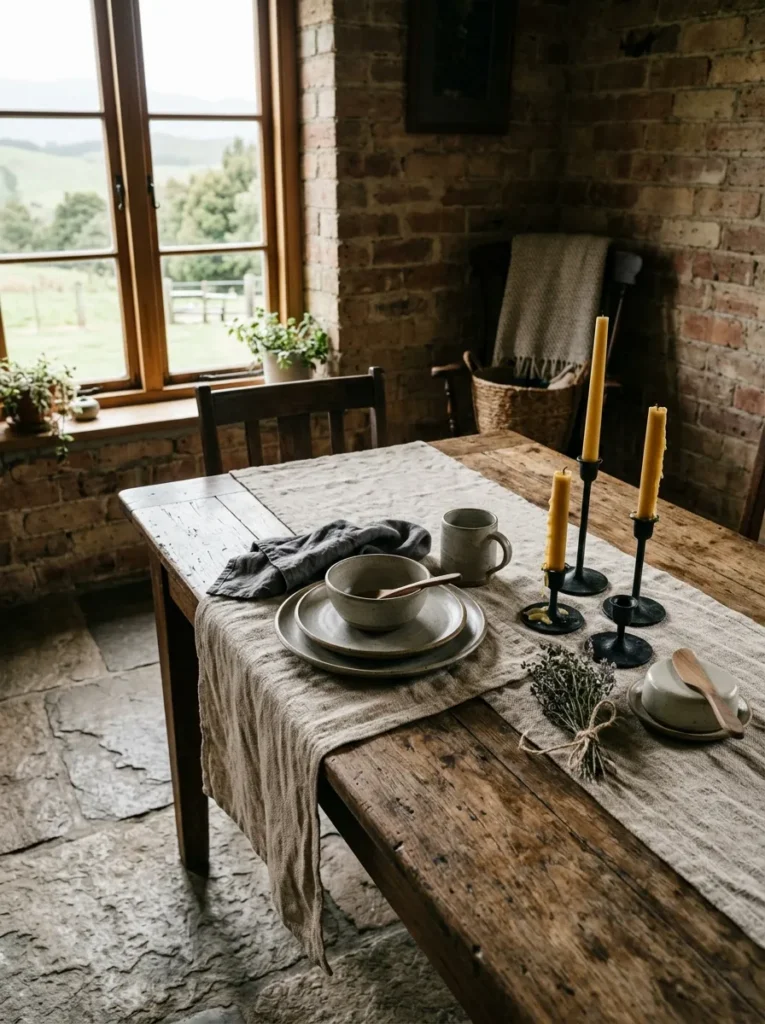
Table styling in dining rooms tends to default to patterned tablecloths or statement runners, which carry a seasonal quality that pulls the room out of any consistent design narrative. Texture does everything pattern does — adds visual interest, breaks up the expanse of the table surface — without dating the room or fighting with the furniture.
A rough-woven linen runner in undyed flax, a set of hand-thrown stoneware in a matte glaze, a cluster of varying-height beeswax candles in simple holders — this is texture-based table styling, and it photographs magnificently. The objects are simple. The surface reads as layered. It works in January and in June, which a printed tablecloth almost never does.
12. Put the Art Lower Than Feels Natural
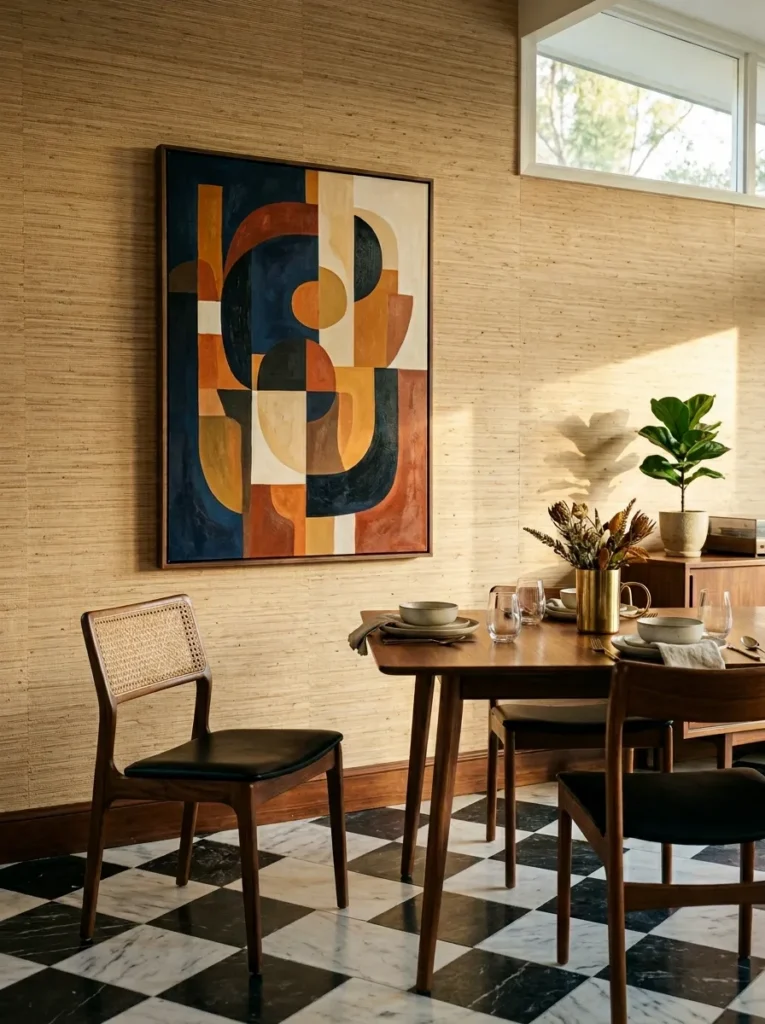
The standard instinct is to hang dining room art at standing eye level — around 160 to 165 centimetres to the centre. The problem is that dining rooms are used seated. Artwork hung at standing eye level sits above everyone’s sightline for the entire meal and becomes a ceiling detail rather than something anyone looks at. Hung at 145 to 150 centimetres to the centre, it sits in the natural gaze of people seated at the table.
This adjustment transforms how art functions in the room. A large canvas hung correctly is in conversation with the people eating beneath it. The same canvas hung twelve centimetres higher is a statement the room makes about itself, not a presence anyone actually relates to. Lower it. It will look slightly wrong on an empty wall and completely right the moment people sit down.
13. Add a Soft Layer Underfoot in a Hard-Floored Room
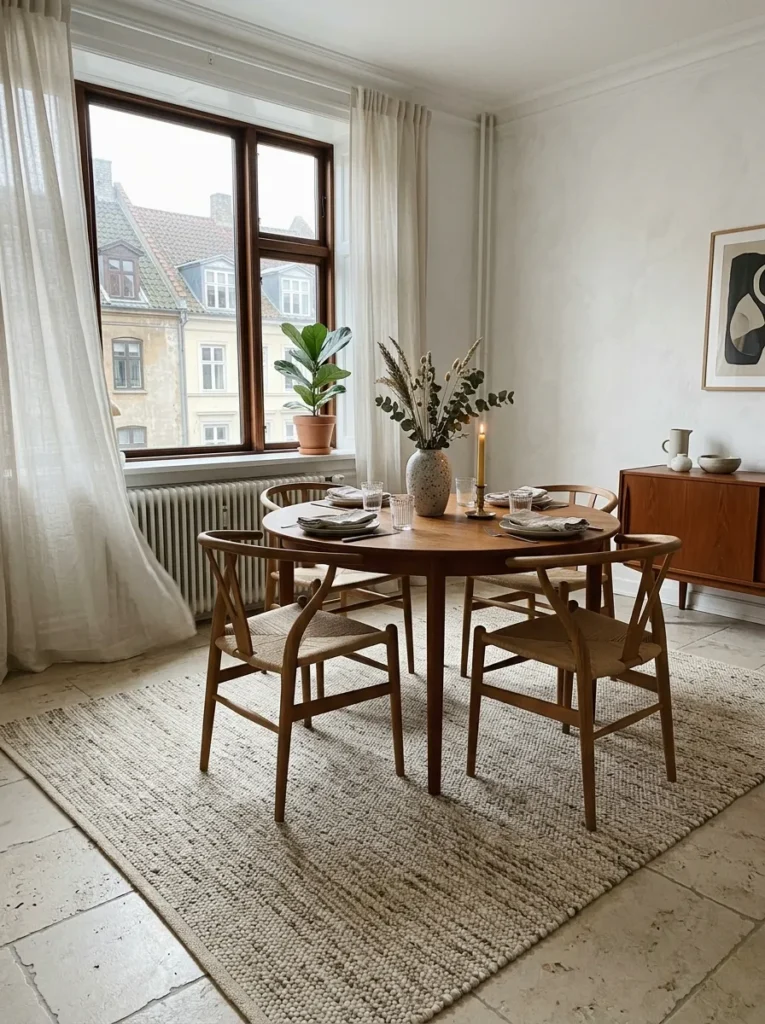
Stone, tile, and hardwood are the correct floor choices for a modern dining room — easy to clean, visually grounding, and architecturally credible. The problem is that hard floors create acoustic environments that make a dinner party sound like a restaurant at volume. Sound bounces off every surface, conversation gets loud to compensate, and by the end of the evening everyone is slightly hoarse.
A well-chosen rug, as discussed in tip three, solves the clearance problem. But a thicker rug — jute, wool flatweave, or tufted wool pile — also absorbs a meaningful amount of sound and makes the room feel warmer underfoot in winter. The acoustic contribution is rarely mentioned and is completely real. A dining room with a rug sounds different from the same room without one. Calmer, more contained, more intimate.
14. Let One Material Dominate and Repeat It
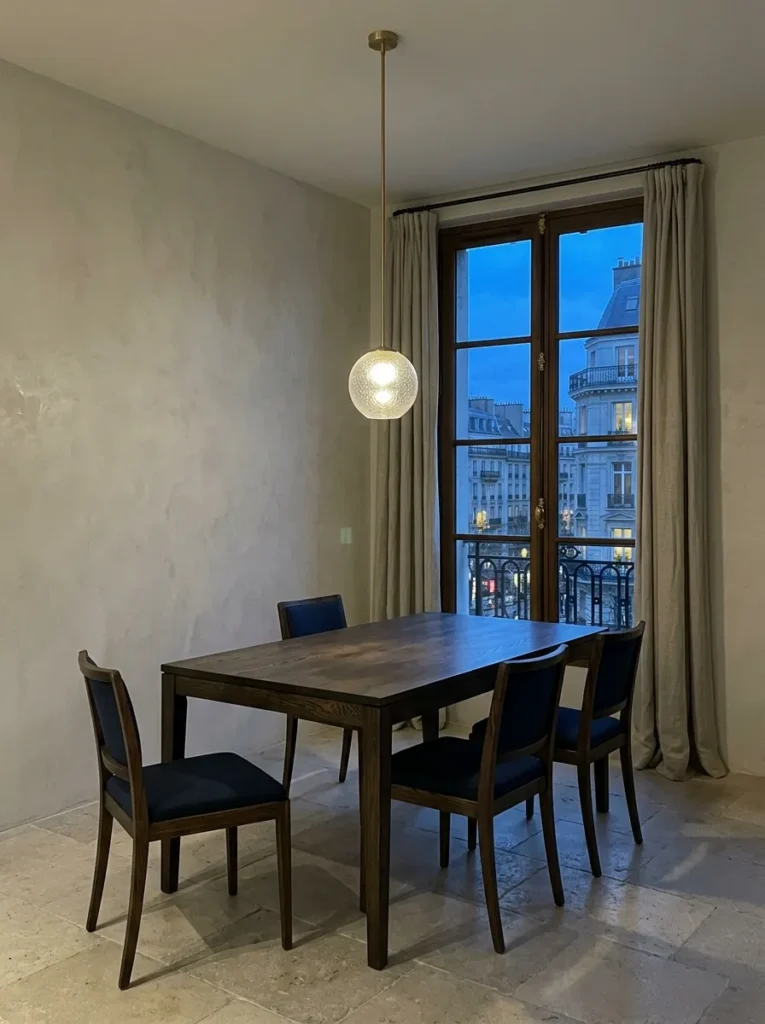
Dining rooms that feel designed rather than assembled tend to have one material running through multiple surfaces — the same oak in the table, the sideboard, and the window frame, or the same matte black in the pendant, the cabinet hardware, and the chair legs. This repetition is not a limitation, it is the mechanism by which a room achieves visual coherence.
Most people introduce too many materials — marble top, walnut legs, brass hardware, chrome pendant, painted walls in one tone, curtains in another. Each decision is reasonable in isolation. Together they produce a room that is busy without being interesting. Pick the dominant material first. Let everything else serve it.
15. Consider Upholstered Seating at the Ends
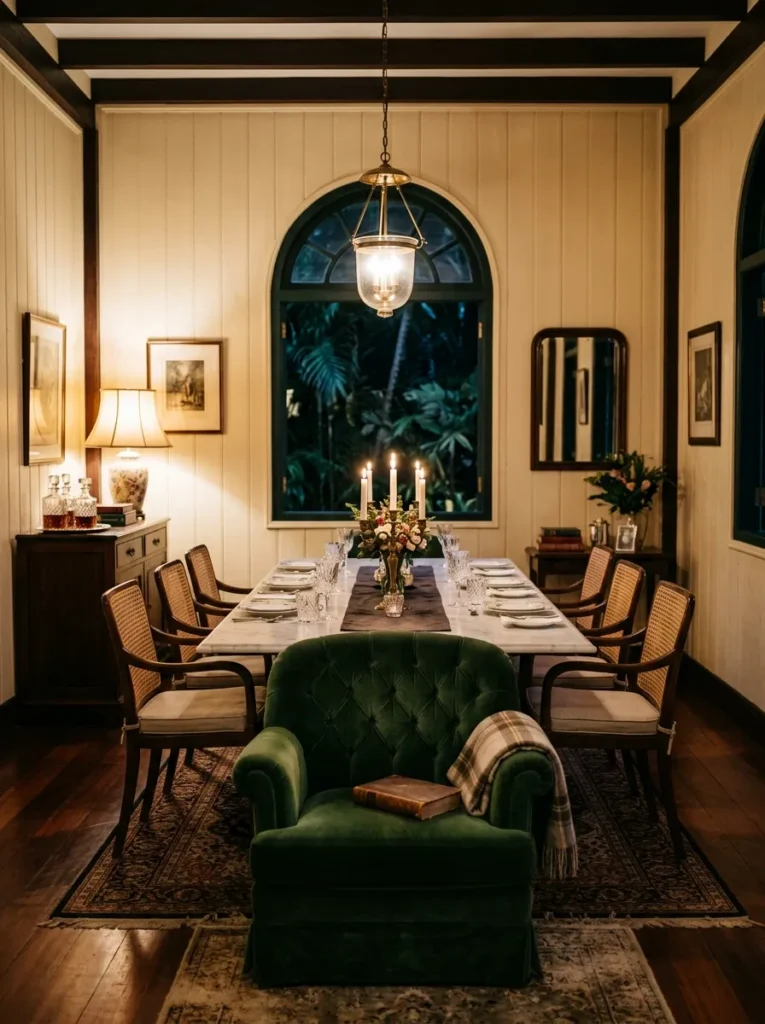
The head chairs of a dining table take more sustained occupation than the side chairs — longer conversations, the last guest still seated, the person who always lingers. Standard side chairs are functional for the duration of a meal. An upholstered armchair with a proper seat depth and back support is a different experience entirely, and the person who receives it notices immediately.
This is not exclusively about comfort. An upholstered armchair at the ends of a table provides a visual bookending that makes the whole arrangement read as complete. It is the dining equivalent of a sofa anchor in a living room — the piece that tells the eye where the seating arrangement begins and ends. The rest of the chairs can be lighter, simpler, less assertive.
16. Use Dimmer Switches on Everything
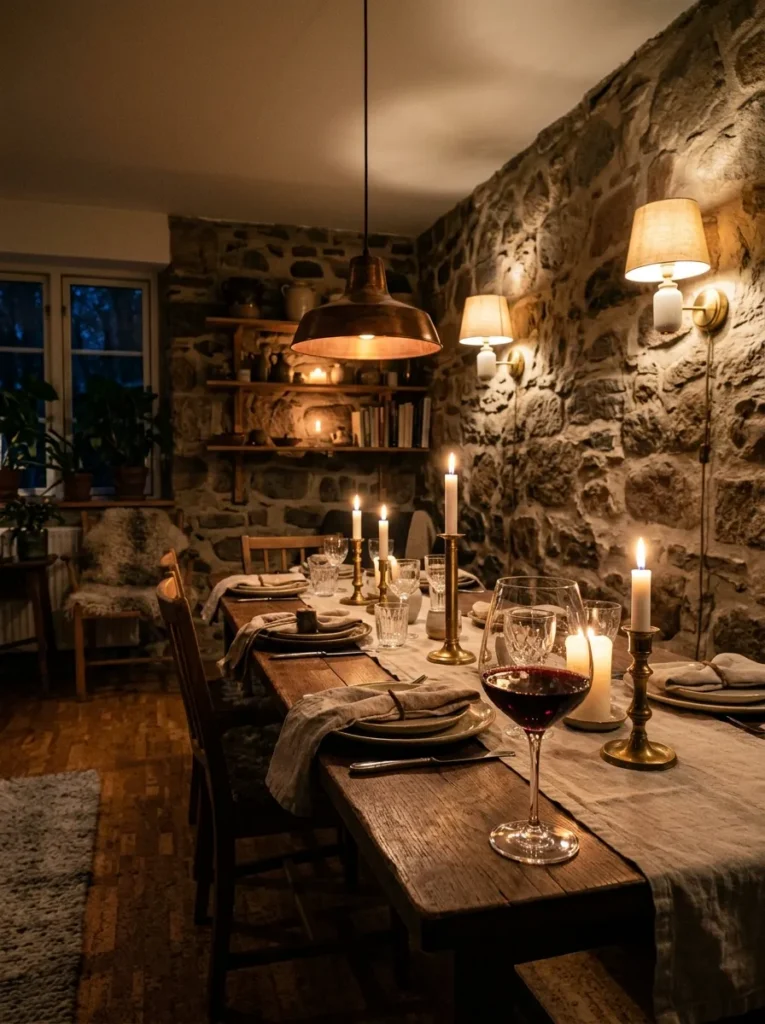
Fixed-brightness lighting in a dining room is an infrastructure problem. It means the room can only do one thing — provide the same light level for breakfast, homework, and a dinner party. Dimmers cost almost nothing to install during any electrical work and transform how the room performs across different uses and times of day.
The specific instruction: every light source in a dining room should be on a dimmer. The pendant, the wall sconces, the sideboard lamp. The setting that produces the best dinner party light — somewhere between 20 and 40 percent of maximum brightness on all sources simultaneously — is impossible to achieve with fixed switches. Get the dimmers, then spend the first three evenings in the room finding the precise combination that makes it look right. It will be obvious when you find it.
17. Keep the Centrepiece Lower Than the Sightline
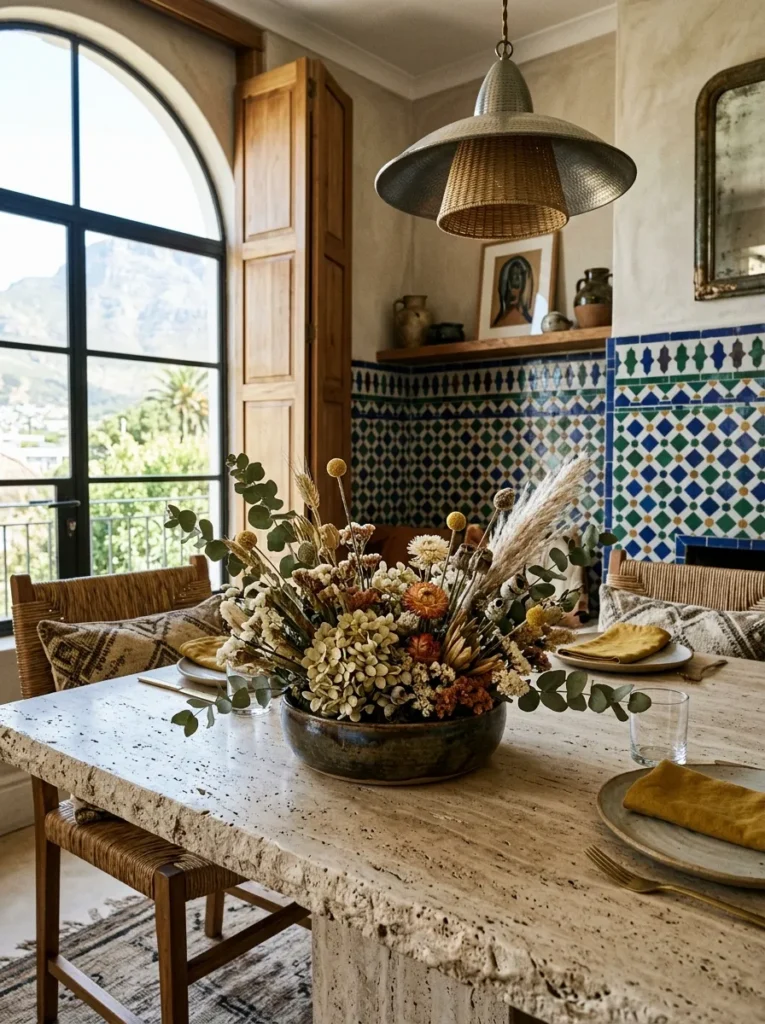
Tall centrepieces on dining tables — dramatic floral arrangements, candelabras at full height, sculptural objects above 45 centimetres — obstruct sightlines across the table and fragment conversation. People lean around them, speak past them, or quietly move them to a sideboard before the main course. This happens every time, for obvious reasons.
The correct height for a dining table centrepiece is under 30 centimetres. Low arrangements of flowers in a shallow vessel, a cluster of varying-height candles in holders under 25 centimetres, a single large textured object that sits flat and wide rather than tall and narrow — these allow everyone at the table to see each other without the centrepiece becoming a structural obstacle. The table looks considered. The conversation flows.
18. Use Full-Height Shelving as a Dining Room Wall
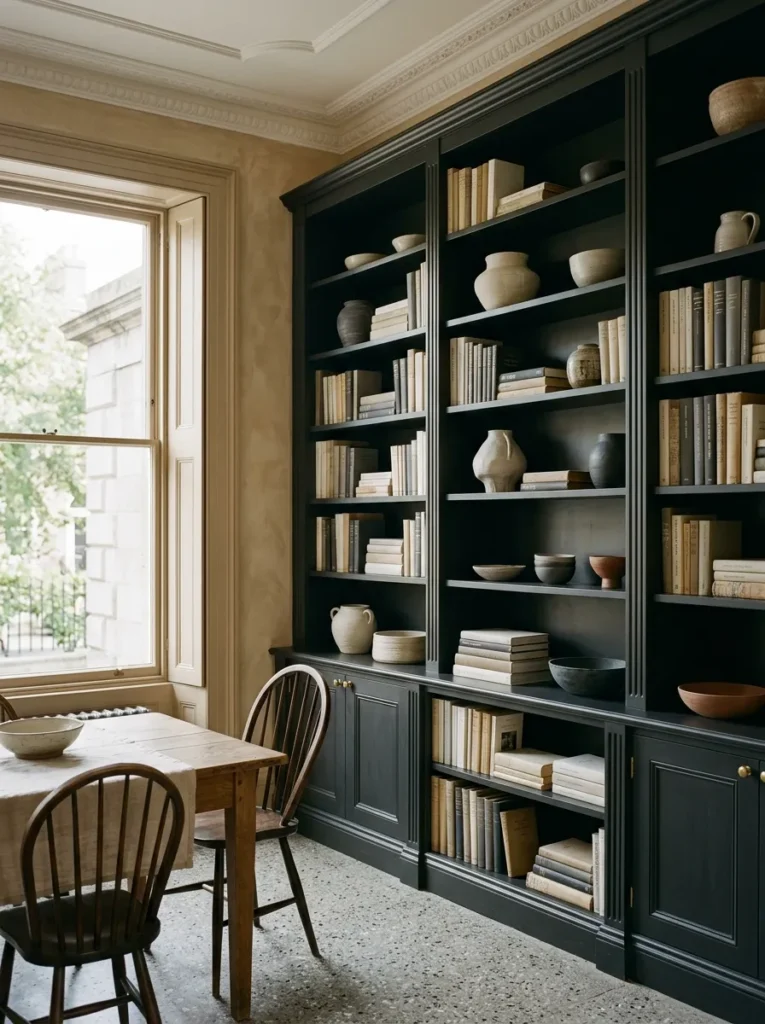
Built-in or freestanding full-height shelving on a dining room wall does something furniture alone cannot — it gives the room a sense of permanence, as though it has always been the dining room and always will be. The visual weight of floor-to-ceiling shelving grounds the space in a way that a sideboard, however beautiful, simply does not.
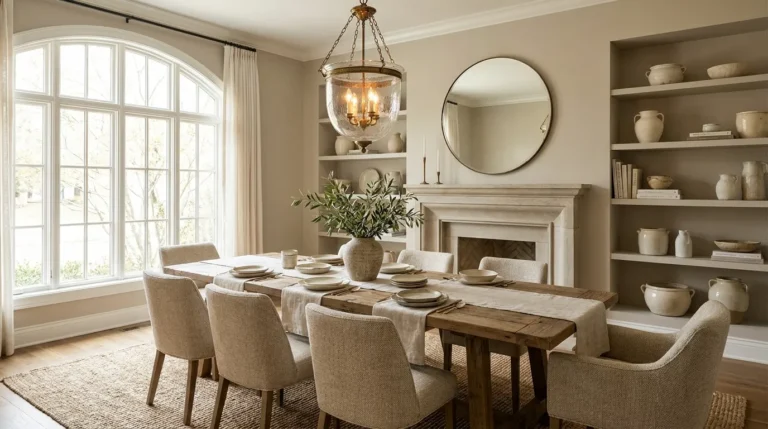
For a modern dining room, the shelving contents matter as much as the structure. Monochromatic books, ceramics in a limited palette, a few considered objects — not a collection of everything that needed a home. Styled shelving in a dining room reads as library-adjacent, which adds a quality of seriousness and comfort simultaneously. Keep roughly thirty percent of the shelf space empty. The restraint reads as confidence.
19. Add a Single Piece of Aged or Antique Furniture
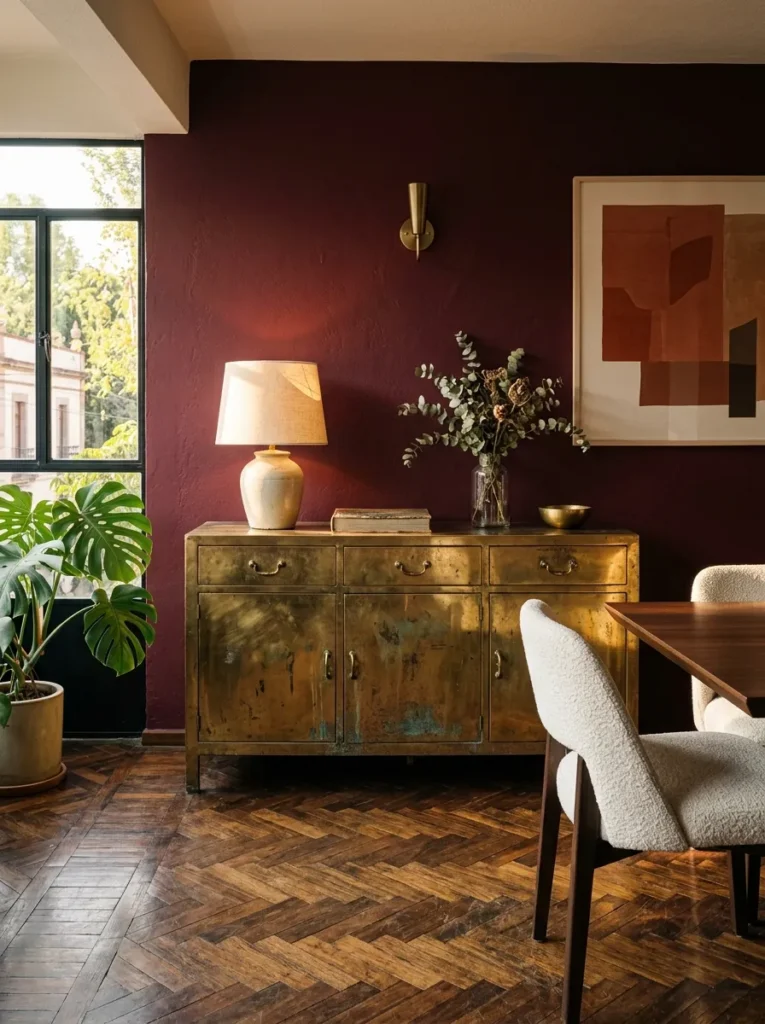
A dining room composed entirely of new furniture, however well-chosen, has a quality that is difficult to name but easy to feel: it looks like a hotel lobby or a staging job. One aged or antique piece — a patinated sideboard, a set of vintage chairs, an old mirror above the fireplace or behind the sideboard — introduces a quality that new furniture cannot manufacture, no matter the price point.
The antique does not need to match the modern furniture. It needs to belong to the same room. A lacquered modern dining table with a set of 1960s teak chairs is not a contradiction — it is the room signalling that it has a history and a perspective. That is a quality worth introducing deliberately.
20. Resist the Last Purchase
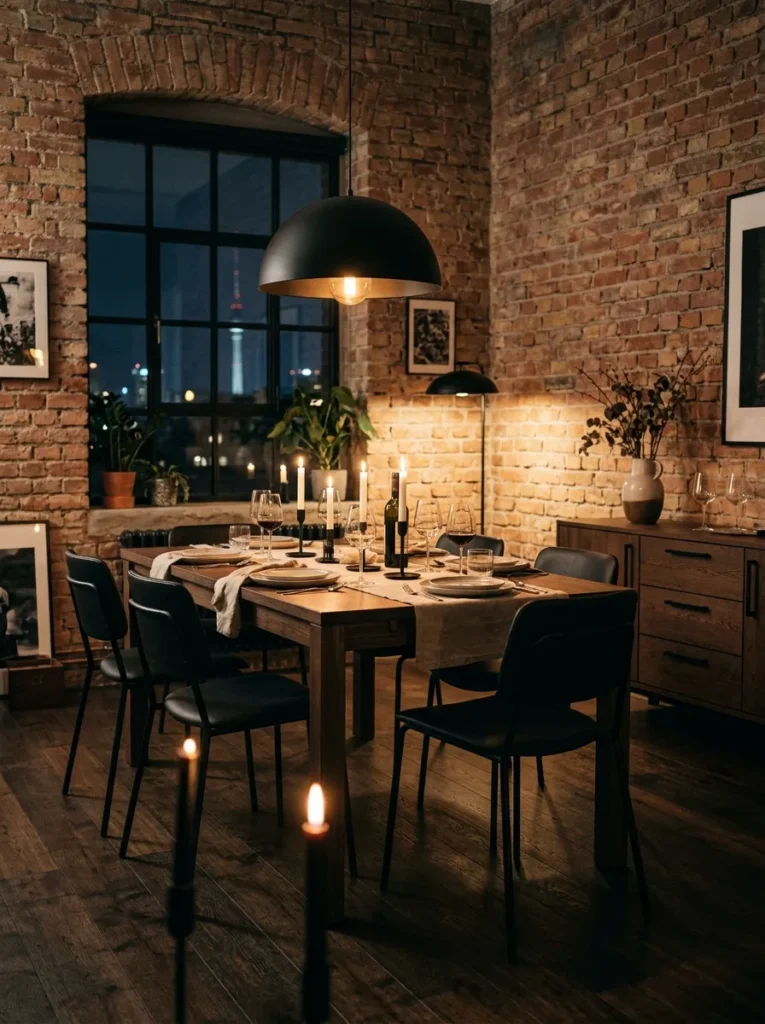
Every dining room has one object too many. It is rarely obvious while you are buying it. It becomes obvious six months after everything else is in place — the extra decorative object on the sideboard that prevents the surface from breathing, the second pendant that was added for symmetry when one was already doing the work, the fourth artwork that the wall did not actually need. The dining rooms that photograph beautifully and feel right to sit in are almost always the ones where someone stopped one decision earlier than felt complete.
This is not a design principle that comes naturally. The instinct is always to add. Restraint looks like a void until the room settles and the void reveals itself as intention. The most elegant modern dining rooms are usually missing something that their owners initially planned to include — and the room is better for exactly that absence.
Final Thoughts
The most useful place to start when applying modern dining room ideas is the lighting, not the furniture. Furniture can be accumulated gradually and decisions can be reversed. Lighting infrastructure — the position of a pendant, the presence of wall sconces, the presence of dimmers — is difficult and expensive to change once established, and it affects every other decision in the room. Get the lighting right first, even if it means sitting in a half-decorated room for longer than feels comfortable.
The second decision that repays the most attention is the table — specifically the base and the scale, not just the surface material. The table is the reason the room exists. Everything else serves it. Most rooms with a strong table can survive mediocre decisions elsewhere. The reverse is not true.
The final thought on dining room design, and the one that gets resisted most consistently: the room does not need to be finished. The dining rooms that feel most alive tend to have one or two things missing, one or two things that are not quite resolved. Completion has a quality of closure about it, and closure is not what you want in a room where the point is for people to stay.
Save these modern dining room ideas for your next home refresh or dinner party planning session.