18 Dining Room Ideas That Feel Warm and Inviting
Dining rooms have a specific job that no other room in a house has — they need to make people want to stay at the table longer than they planned. Not just eat and leave, but linger. Talk. Have one more glass. The rooms that do this well aren’t usually the ones with the most expensive furniture or the most perfectly coordinated décor. They’re the ones where the light is right, the materials feel honest, and the space has been thought about as somewhere for people rather than somewhere for things. Warmth in a dining room isn’t a colour or a style. It’s a feeling that comes from a specific set of decisions made carefully. These are those decisions.
1) Hang a Statement Pendant Low Over the Table
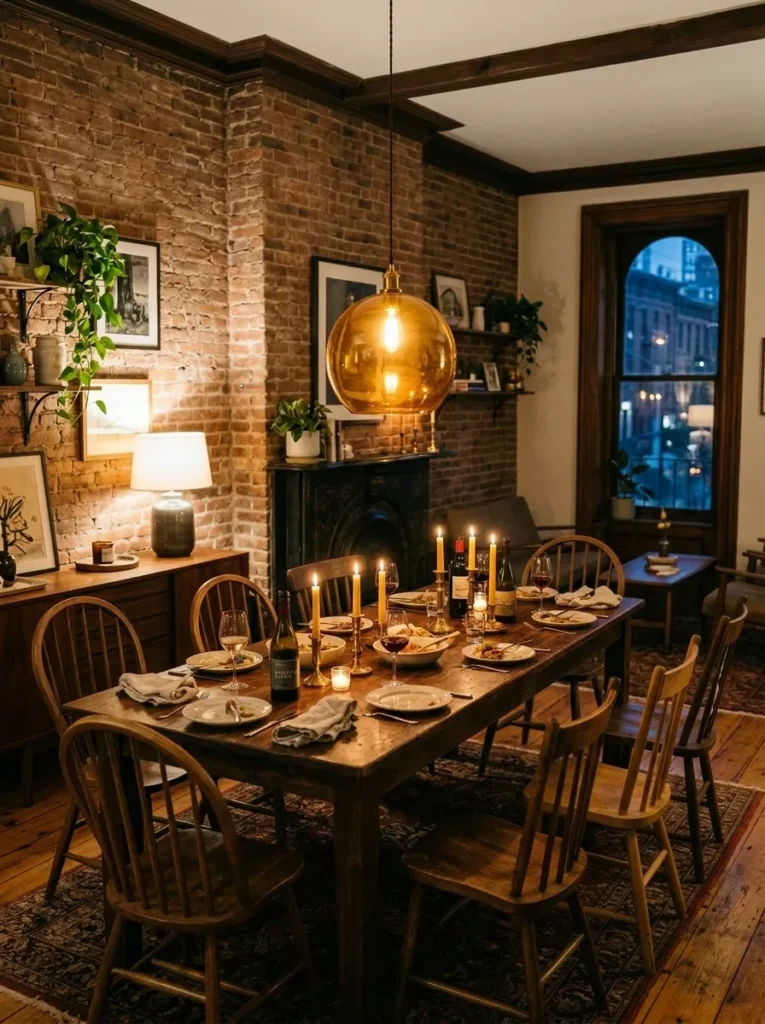
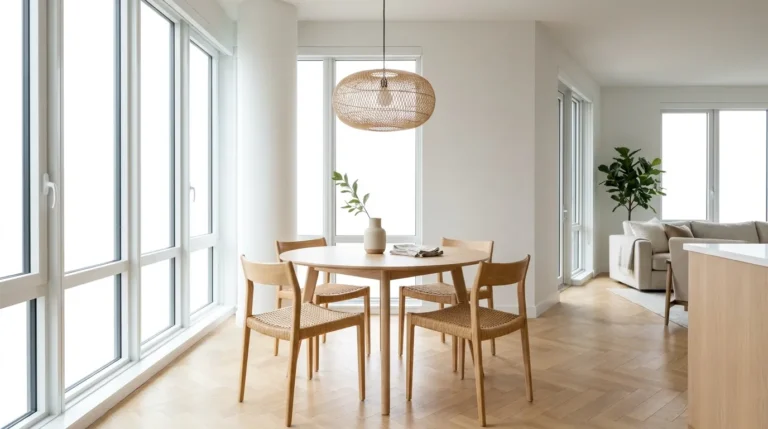
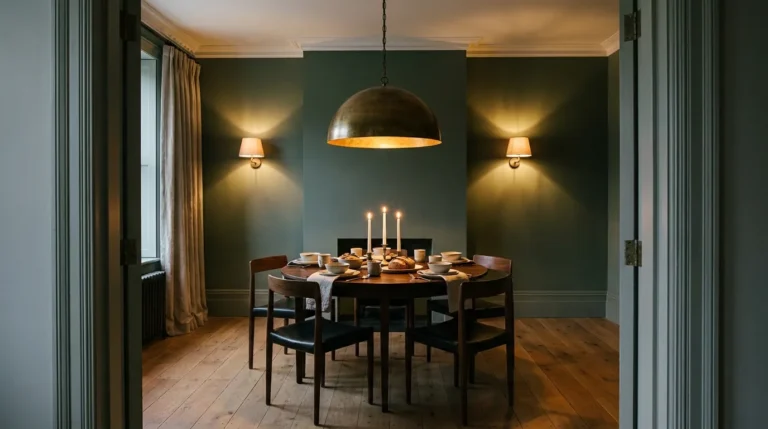
Nothing sets the tone of a dining room faster than the pendant light above the table. Hung low — lower than most people’s instinct tells them, roughly 70 to 80 centimetres above the table surface — it creates a pool of warm light that makes the table feel like the centre of something rather than just a surface in a room. The fitting itself matters too. Rattan, smoked glass, aged brass, hand-blown amber glass — these materials catch and warm the light in a way that a standard chrome pendant never does. Go bigger than feels comfortable and hang it lower than feels safe. Both decisions almost always look right.
2) Build Around a Large Reclaimed Wood Table
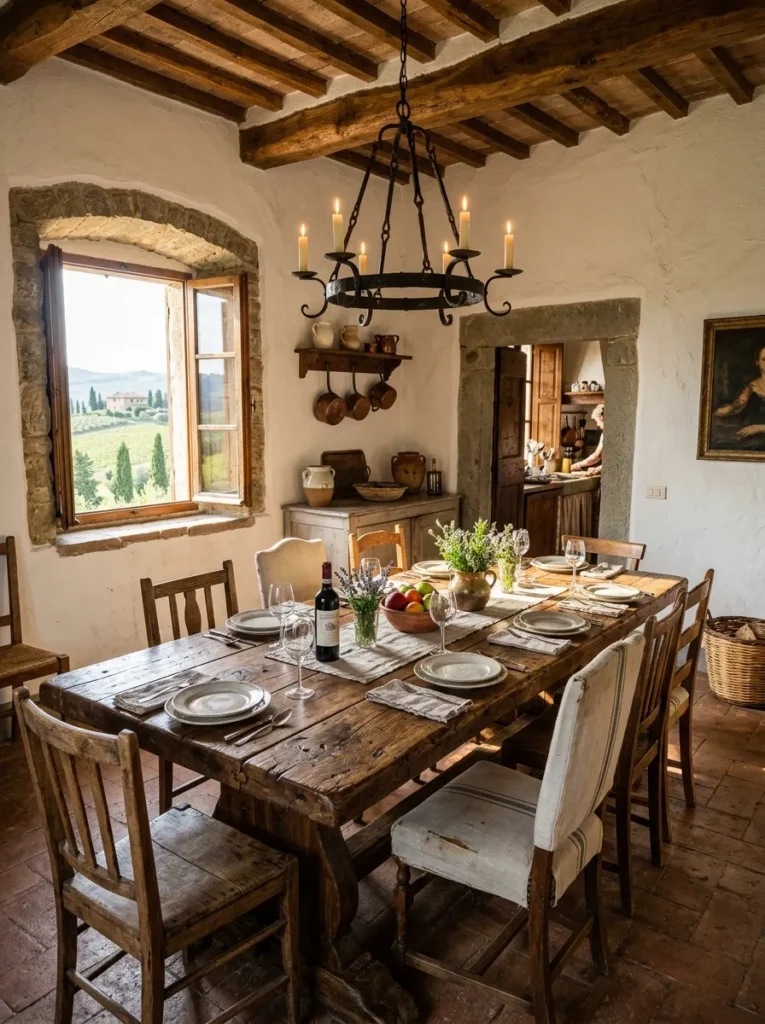
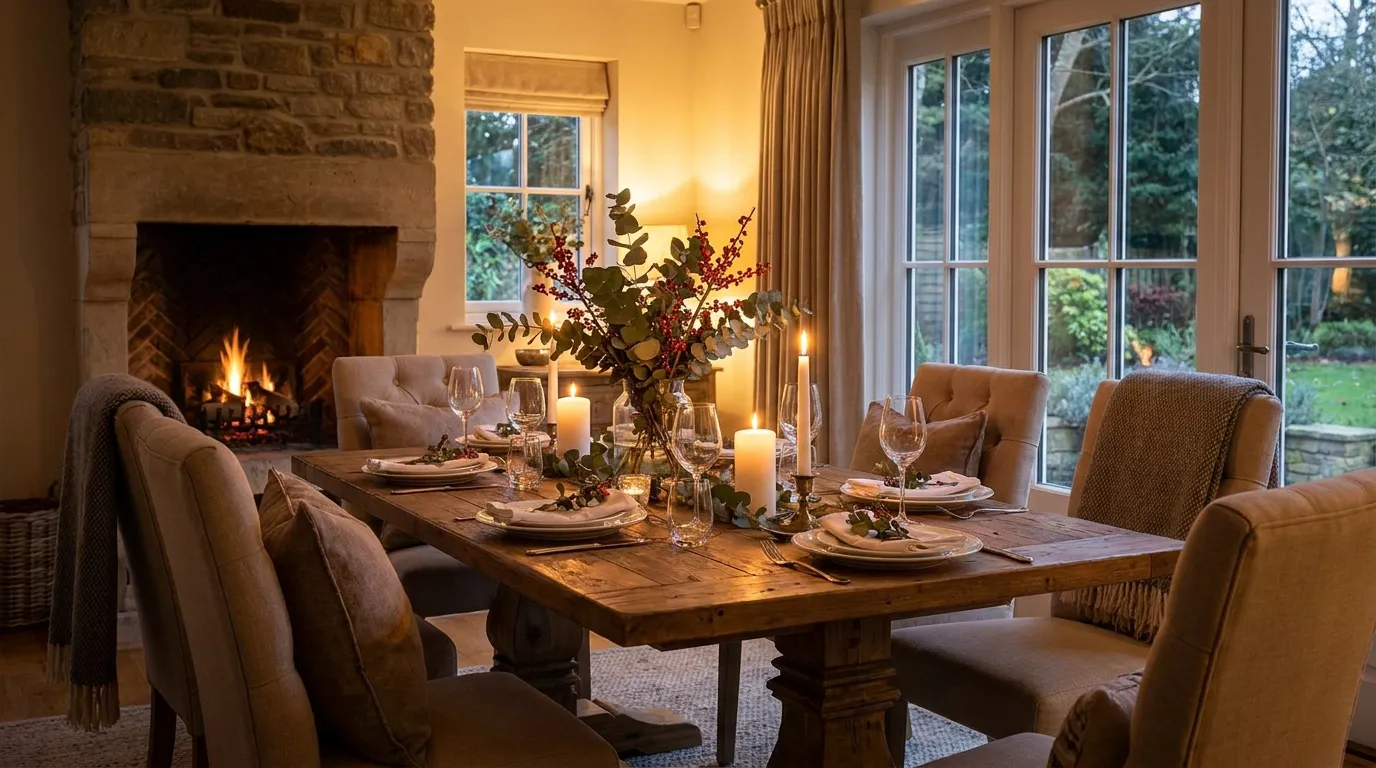
The dining table is the room. Everything else exists in relation to it. A large reclaimed wood table — one with genuine history in the grain, knots, and variation of the timber — anchors a dining room in a way that a new manufactured table simply can’t. The imperfections are the point. Marks in the wood, variation in tone, the visible evidence of age — these qualities make a table feel like it belongs rather than like it was delivered last Tuesday. Pair it with mismatched chairs in complementary tones and the whole room takes on an effortlessly gathered quality that no matching set can replicate.
3) Use Warm-Toned Paint on All Four Walls
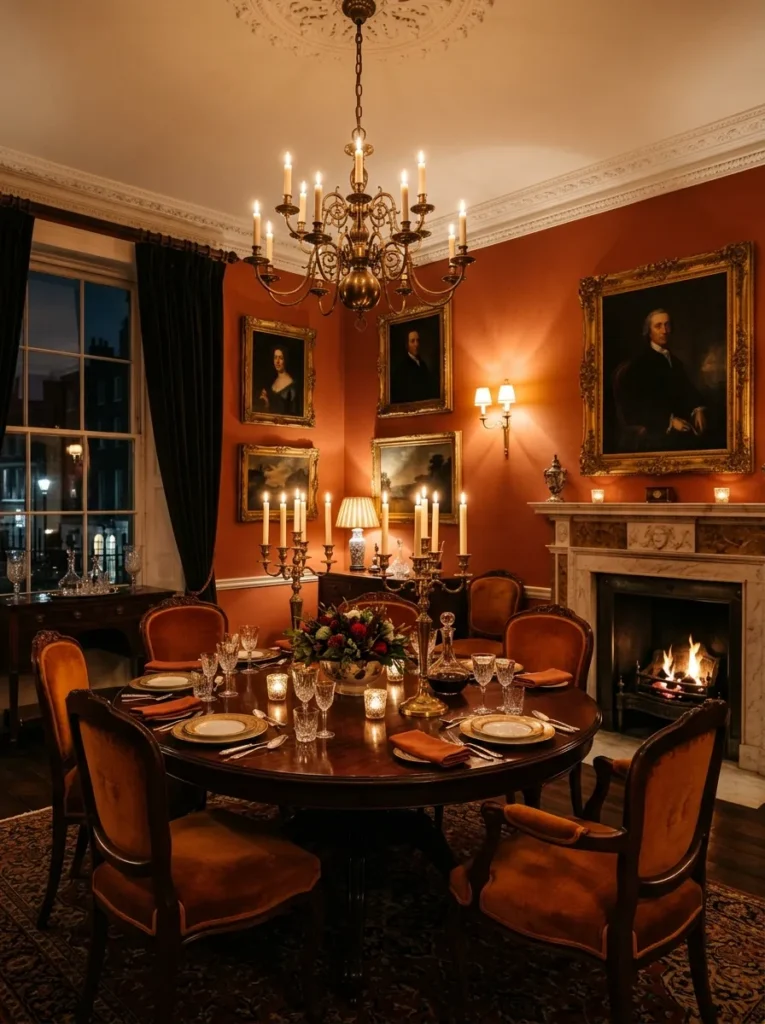
Dining rooms are one of the few spaces where committing to a deep, warm wall colour on all four walls actually works better than leaving them light. Terracotta, ochre, warm burnt sienna, dusty coral, aged olive — these tones make a dining room feel enclosed in the best possible sense. Not claustrophobic but intimate. The food looks better, the candlelight looks better, and people’s faces look better in a room painted a warm deep tone than in a white or pale grey one. It’s one of those decisions that sounds bold in theory and feels completely right the moment you sit down at the table.
4) Layer Candlelight Throughout the Room
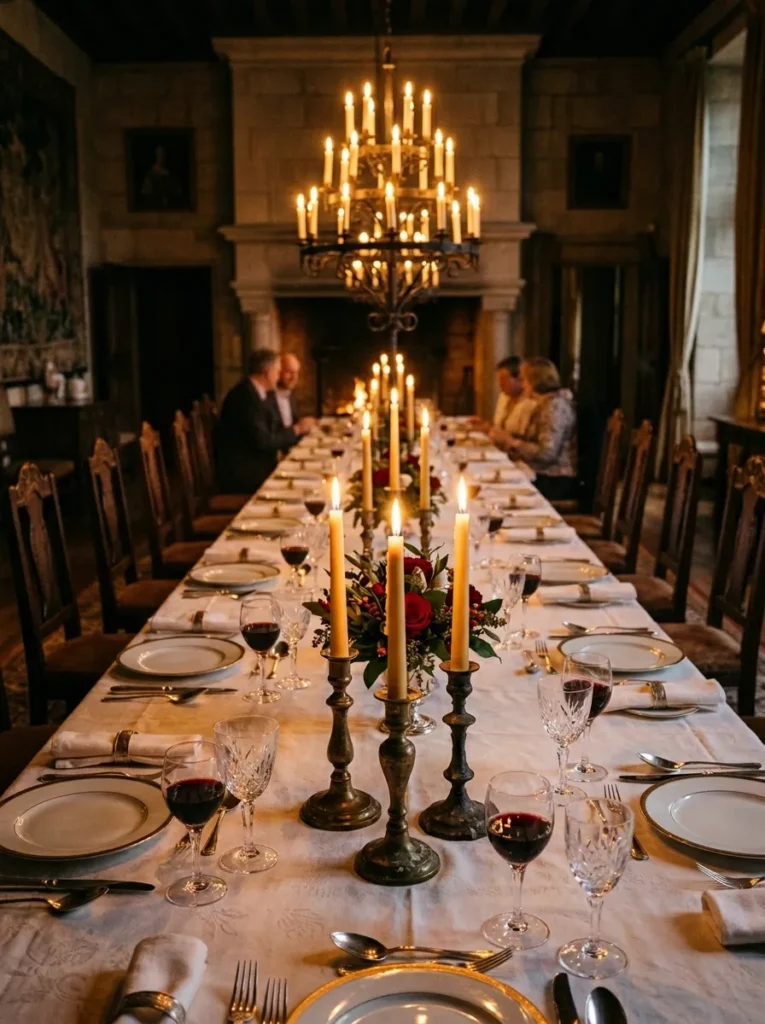
Candles in a dining room aren’t a decorative gesture — they’re a lighting decision. A dining table with three or five candles at varying heights, a pair of candlesticks on a sideboard, and a candelabra in a corner creates a quality of light that no electric fixture can replicate. The flicker, the warmth, the way it makes everything slightly golden — this is what makes a dining room feel like an event rather than just a meal. Unscented candles at the table so the food isn’t competing with fragrance. Taper candles in aged brass or ceramic holders rather than thick pillar candles, which tend to look heavy.
5) Add a Sideboard with Styled Surface
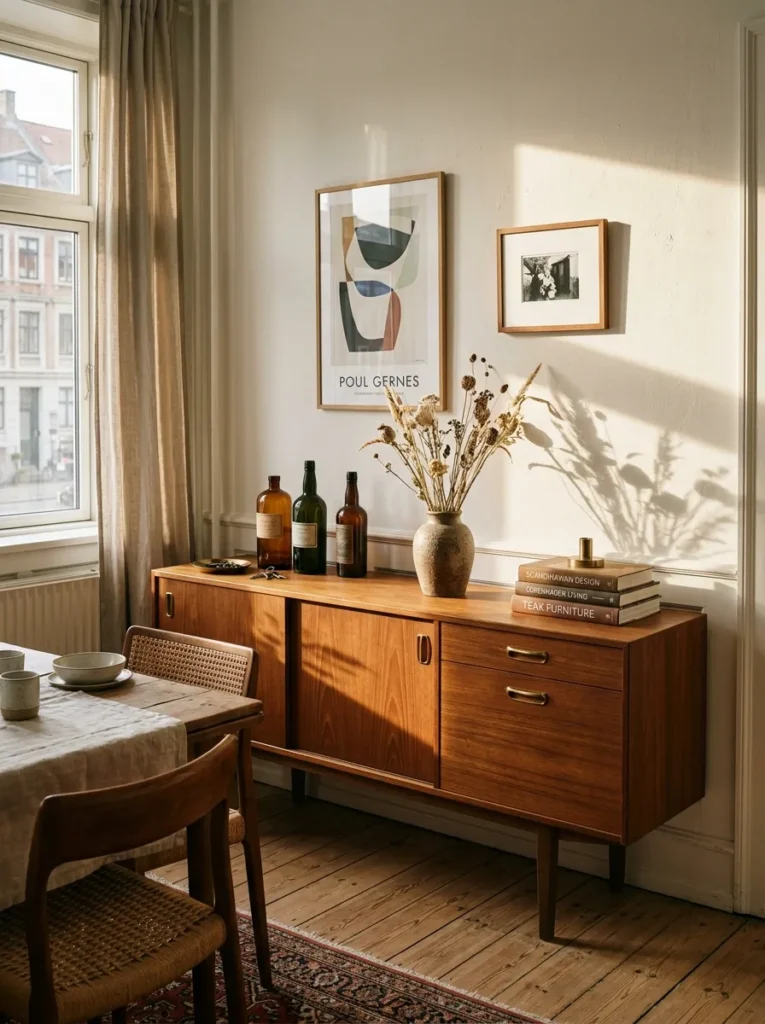
A sideboard along one wall of a dining room does three things: it provides storage for table linens, serving dishes, and bottles; it gives the room a horizontal anchor that pure table-and-chairs dining rooms lack; and the surface becomes a space for the most intentional styling in the house. A few bottles, a vase with branches or stems, a stack of books, a candle — the sideboard surface is where the dining room gets its personality. Keep it asymmetric and slightly sparse. An overfilled sideboard looks like storage. A considered one looks curated.
6) Choose Upholstered Chairs in a Tactile Fabric
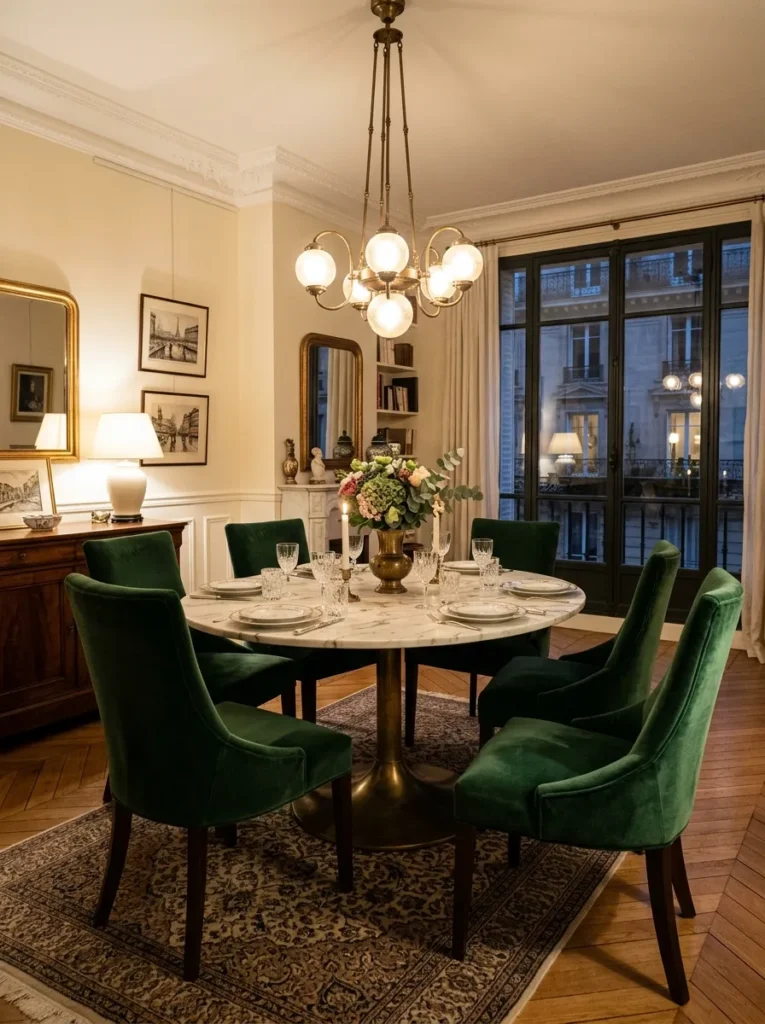
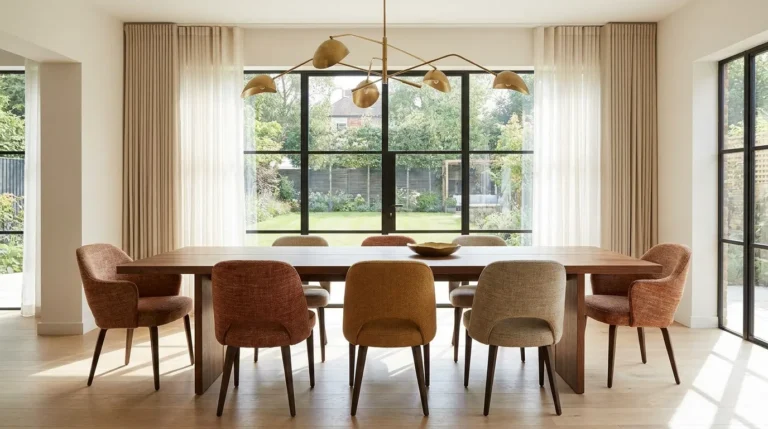
Hard wooden chairs are fine for quick meals. For the kind of dining that encourages lingering — the long Sunday lunches, the dinner parties that go on three hours longer than planned — upholstered chairs make a genuine difference. Bouclé, velvet, linen, and leather all work in a dining context. The fabric brings warmth and softness that wooden chairs simply don’t have, and when chairs are upholstered in a consistent material even mismatched frame styles read as coherent. High backs especially encourage people to settle in rather than perch forward ready to leave.
7) Install a Picture Rail and Hang Oversized Art
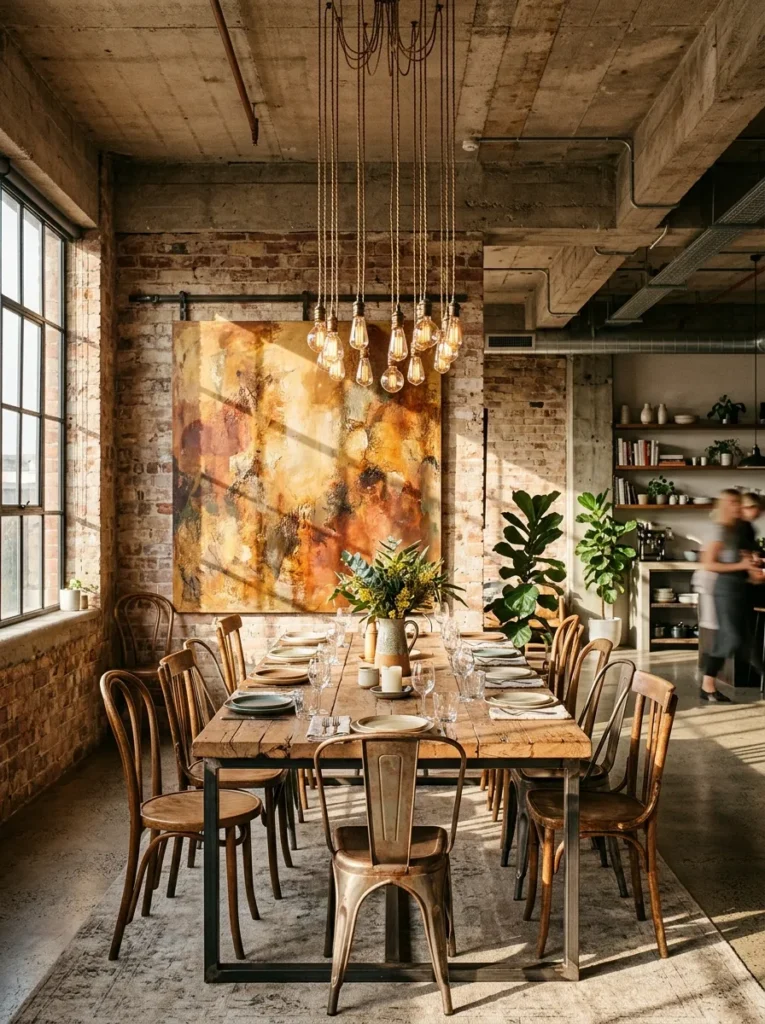
A dining room with bare walls above the dado line feels unfinished in a way that other rooms can get away with. Large-scale art — a single oversized canvas, a collection of framed prints in complementary tones, or a series of botanical prints — gives the walls the weight they need to match the visual presence of the table below. The picture rail is worth installing if it isn’t already there because leaning or hanging art at the right height rather than defaulting to eye level gives the room a more considered, gallery-like quality. Warm tones in the artwork — ochre, sienna, deep green, rust — reinforce the room’s overall warmth without being prescriptive.
8) Use a Large Vintage or Persian Rug Beneath the Table
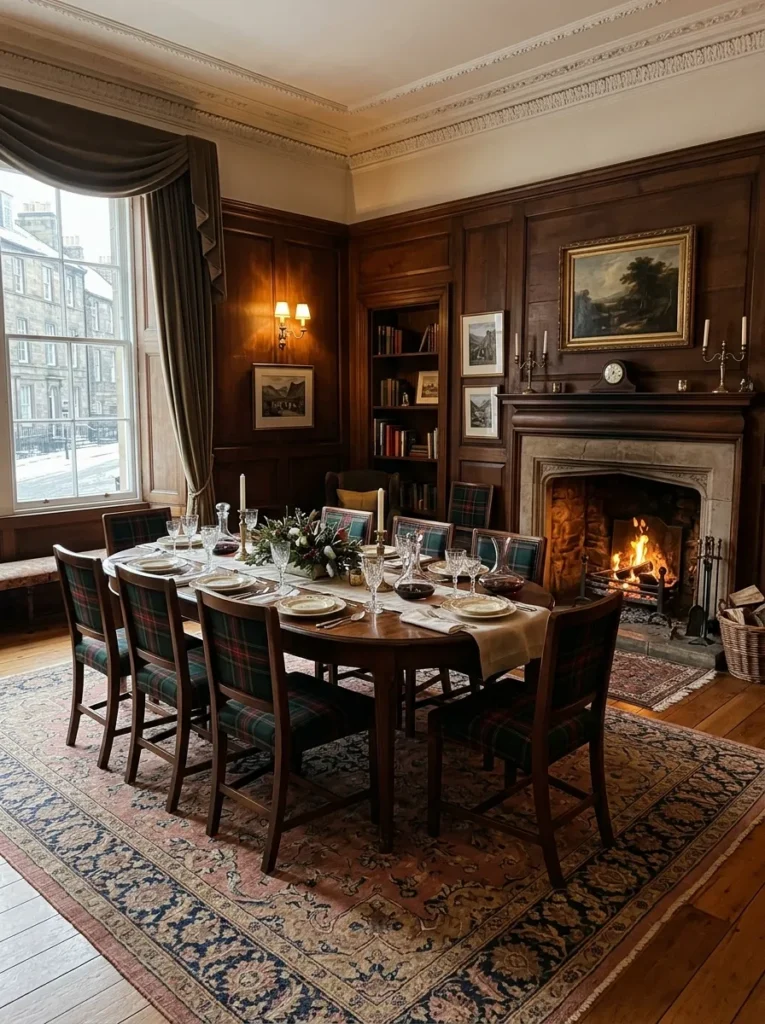
Most dining rooms either have no rug or have the wrong rug — too small, too pale, or a pattern that fights with everything else in the room. A large vintage or Persian-style rug in muted warm tones underneath the dining table grounds the whole seating area, softens the sound in the room, and adds a layer of history and character that new rugs can rarely replicate. The rug should extend well beyond the chairs when pulled out — at least 60 to 90 centimetres beyond the table edge — otherwise people sit half on and half off and it looks smaller than it is.
9) Create a Bar or Drinks Corner
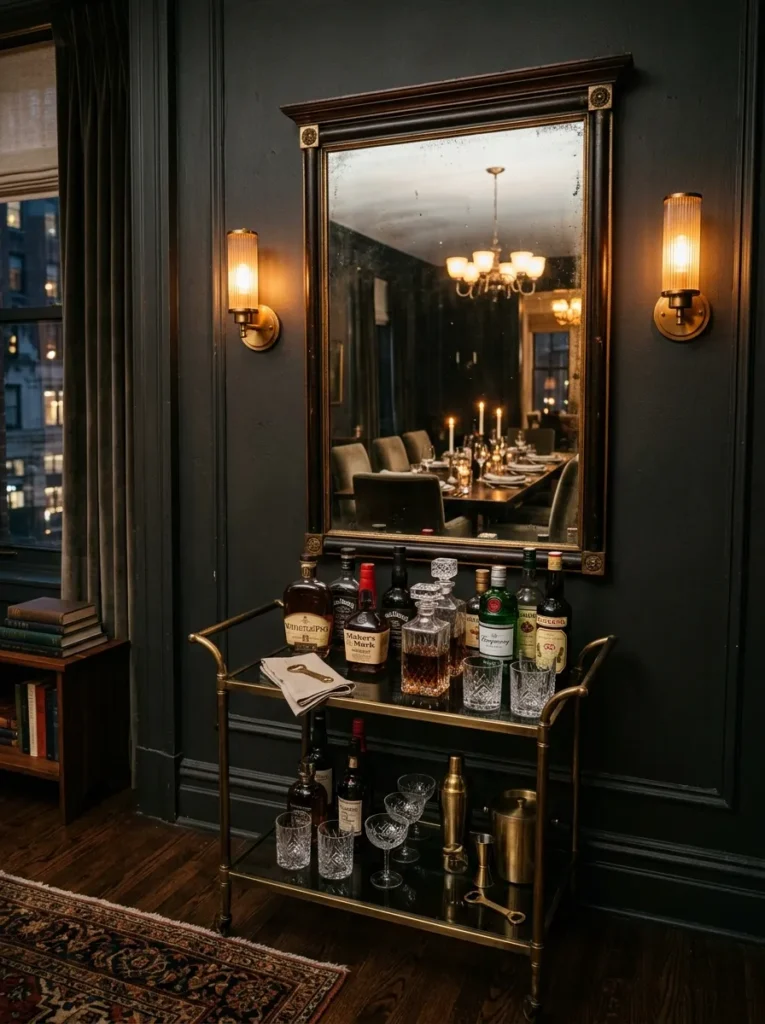
A dedicated drinks area in a dining room changes the social dynamic of the space entirely. It gives guests somewhere to gravitate, creates a ritual around the beginning and end of a meal, and removes the back-and-forth to the kitchen that interrupts conversation. A drinks trolley, a sideboard corner with bottles and glasses arranged openly, or a small built-in drinks cabinet — any of these works. The visual detail of good bottles, interesting glassware, and a few considered objects makes a drinks corner genuinely atmospheric rather than just functional.
10) Mix Chair Styles Around One Table
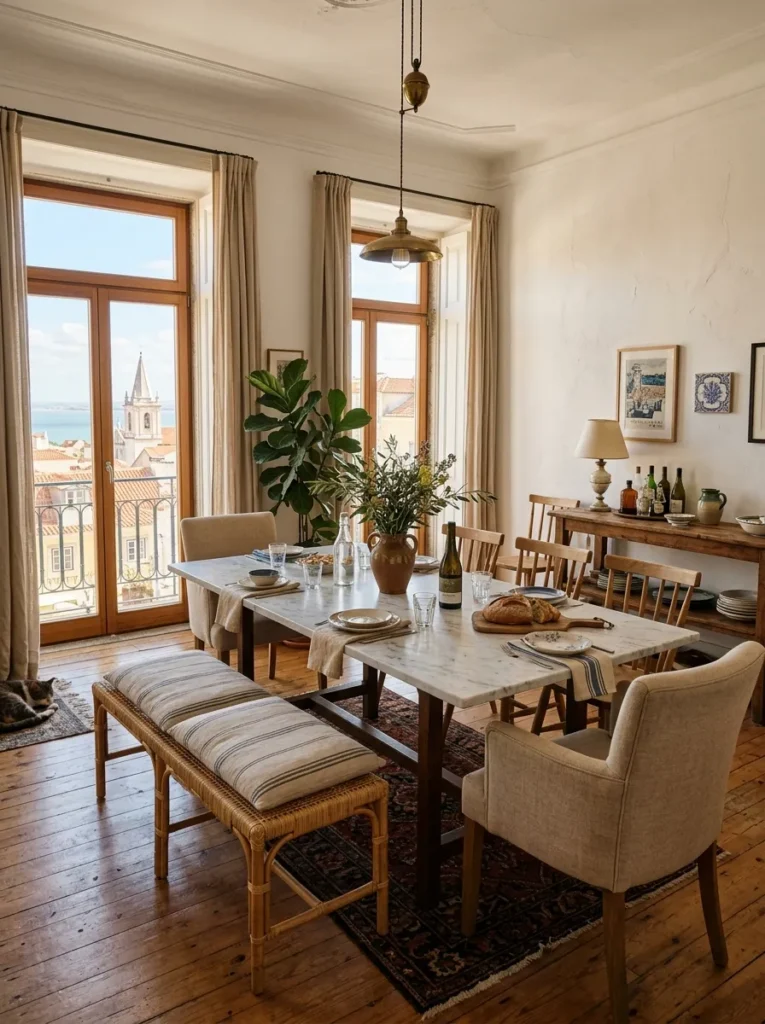
Matching dining sets — table and six identical chairs — are the safest choice and usually the least interesting one. Mixing chair styles around a single table creates a room that looks collected over time rather than purchased in one transaction. An upholstered carver at each end, wooden side chairs along one side, and a bench on the other is a combination that photographs beautifully and seats more people comfortably. The constraint is keeping the materials and tones within a consistent family — mixing styles only works when the colours and finishes are talking to each other.
11) Add Open Shelving or a Hutch for Display
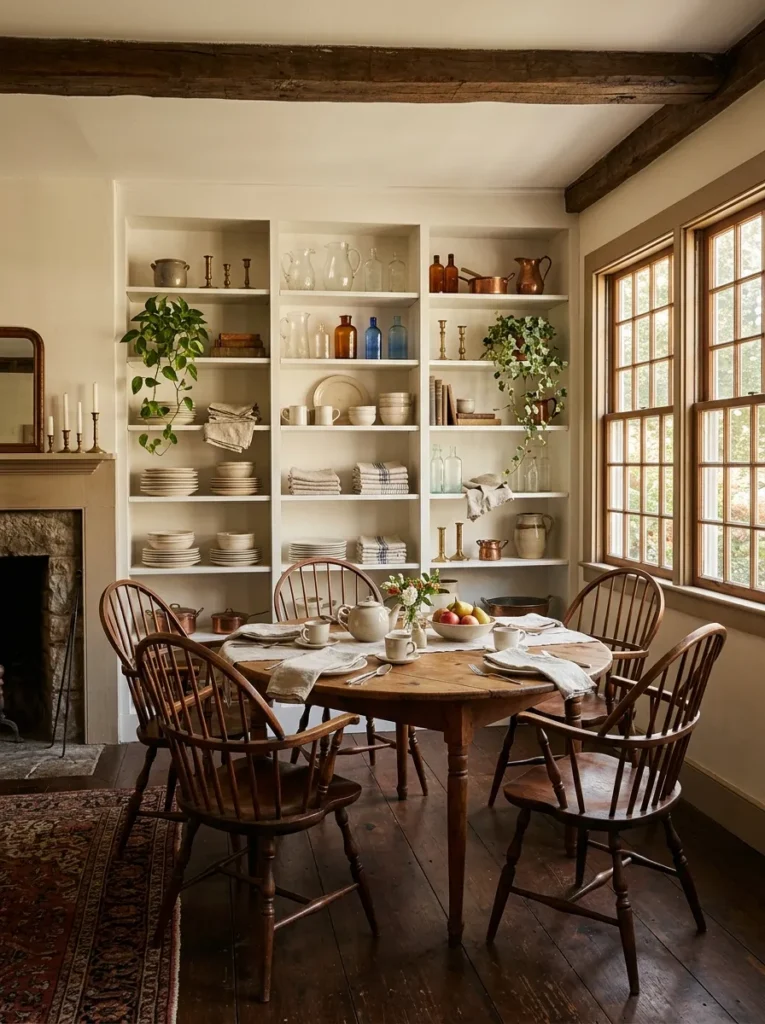
Open shelving or a classic hutch in a dining room turns everyday objects — plates, glasses, jugs, ceramic serving dishes — into part of the room’s decoration. A wall of open shelves styled with a mix of objects and practical dinnerware has a lived-in warmth that a closed cabinet doesn’t. The key is editing ruthlessly. Three beautiful plates displayed alongside a ceramic jug and two interesting glasses look intentional. Fifteen mismatched items stacked without thought look like storage. The discipline of curation is what makes open dining shelving work.
12) Use Linen or Cotton Table Linen as a Permanent Fixture
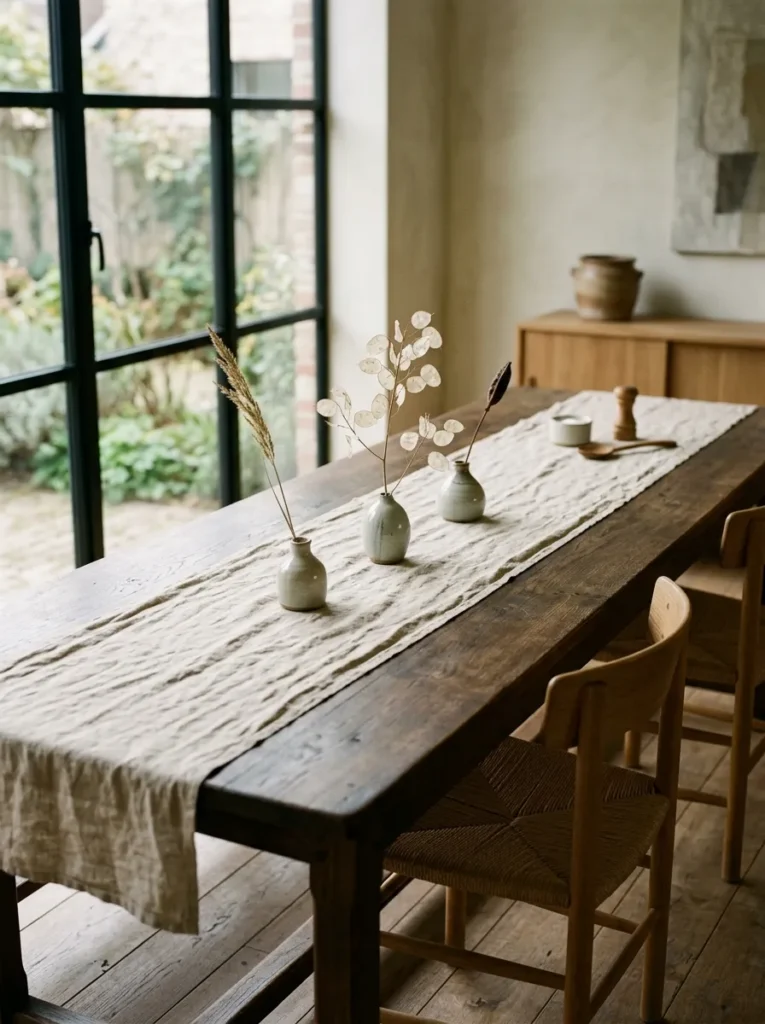
Most dining tables are either always bare or only dressed for special occasions. A simple linen table runner — left on the table permanently, slightly rumpled, unprecious about it — changes the texture and warmth of the table surface without making the room feel formal. Washed linen in natural, oat, or dusty terracotta tones ages beautifully and looks better the more it’s used. A runner rather than a full tablecloth keeps the wood of the table visible while adding textile softness. It also makes the table look set and ready rather than empty and waiting.
13) Introduce Exposed Brick or Raw Plaster on One Wall
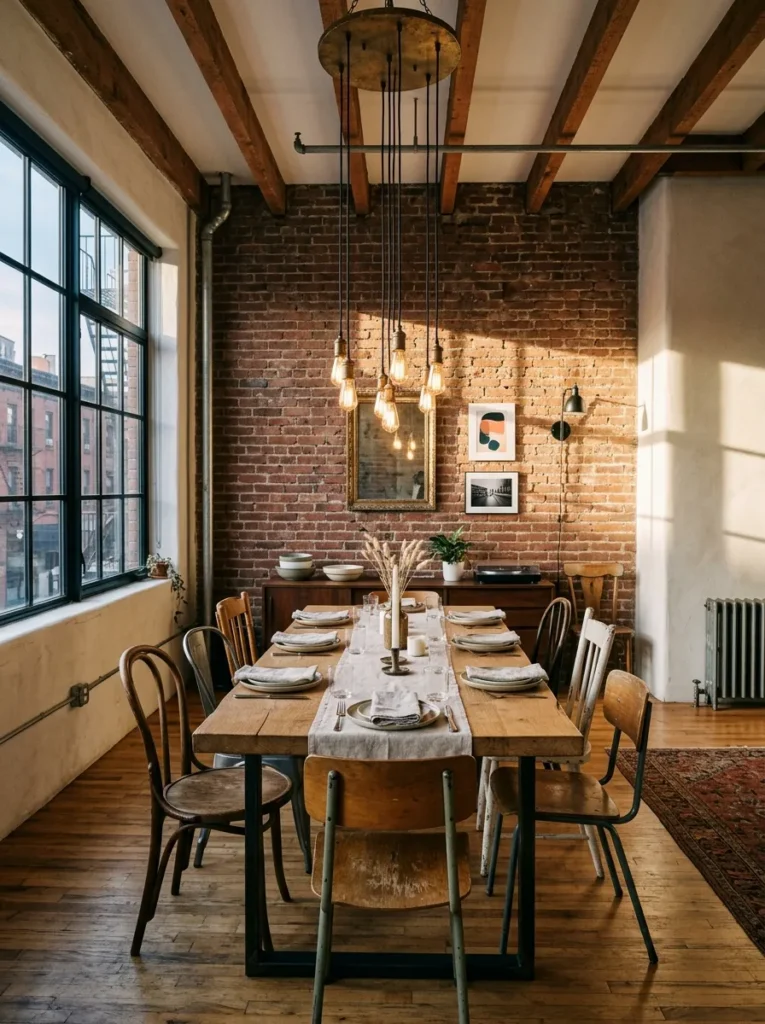
A single wall of exposed brick or rough raw plaster in a dining room introduces a texture and material honesty that painted walls don’t have. It immediately makes the room feel more like it has history, more like it was discovered rather than designed. In a room with warm paint on the other three walls, an exposed brick or plaster feature wall provides contrast without disruption. It’s the kind of detail that makes guests comment on the room before they’ve even sat down. Leave it unsealed or with a minimal clear coat — too much sealant flattens the texture and removes the quality that makes it worth having.
14) Keep the Lighting on a Dimmer — Always
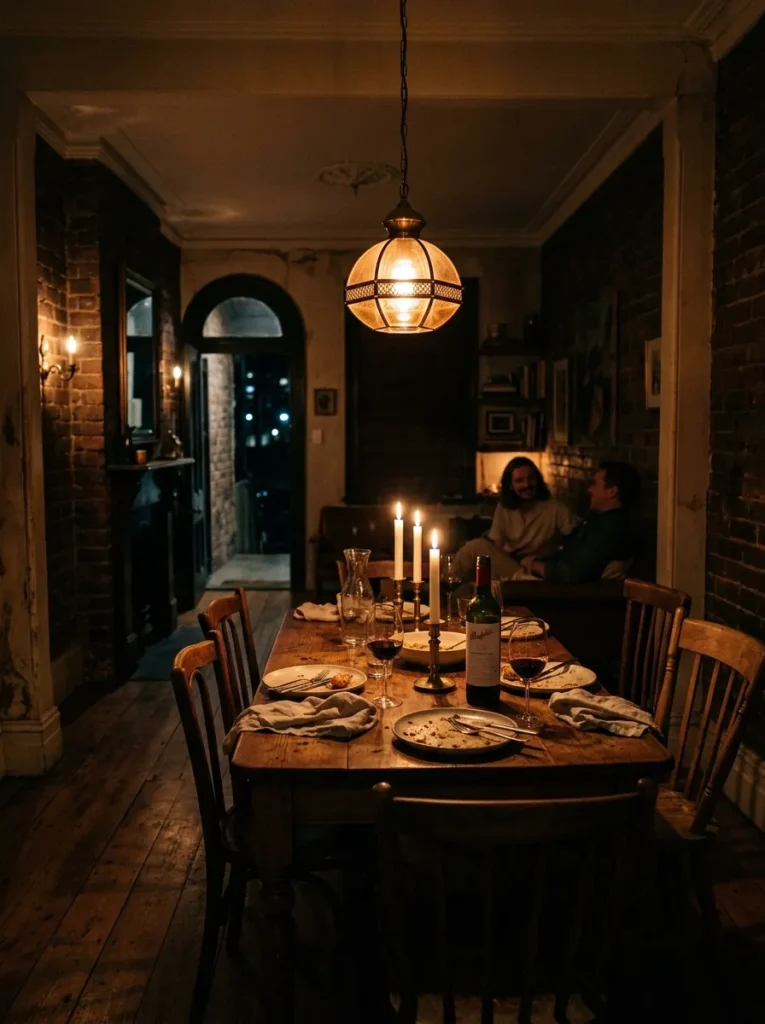
A dining room that can’t be dimmed is a dining room that works for one purpose only. Bright overhead light is right for breakfast. It is completely wrong for a dinner with friends at eight in the evening. Every light in a dining room — the pendant, the wall sconces, any downlights — should be on a separate dimmer circuit. The ability to bring the room down to thirty percent as the evening progresses, letting the candles take over, is the single most impactful atmospheric change available in a dining room. It costs almost nothing relative to any piece of furniture and has a more dramatic effect on how the room feels than almost anything else.
15) Bring In Organic Elements — Branches, Stems, and Raw Botanicals
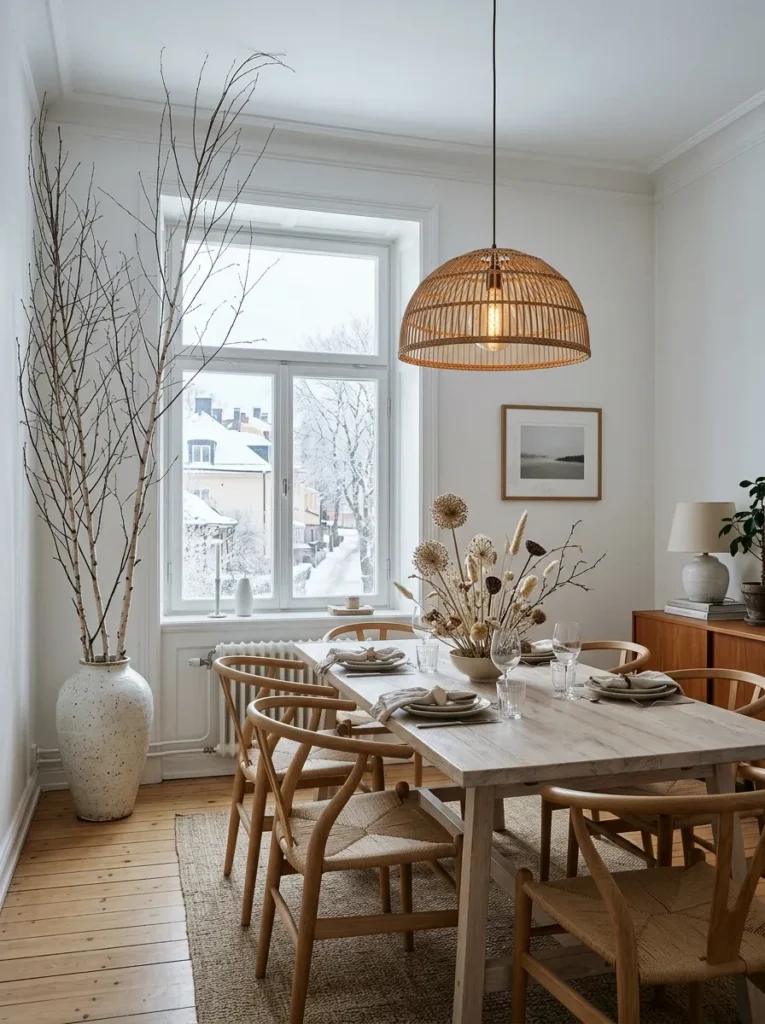
Flowers in a dining room are expected. Branches, dried stems, trailing vines, and botanical arrangements that feel foraged rather than florist-arranged are something else entirely. A tall vase of bare branches in winter, a loose arrangement of dried alliums and wheat, eucalyptus laid flat along the centre of the table — these bring organic irregularity into a room that can otherwise feel too composed. They also last far longer than fresh flowers, which means the room retains its warmth between occasions rather than looking stripped back and empty until the next arrangement arrives.
16) Install Wall Sconces for Secondary Lighting
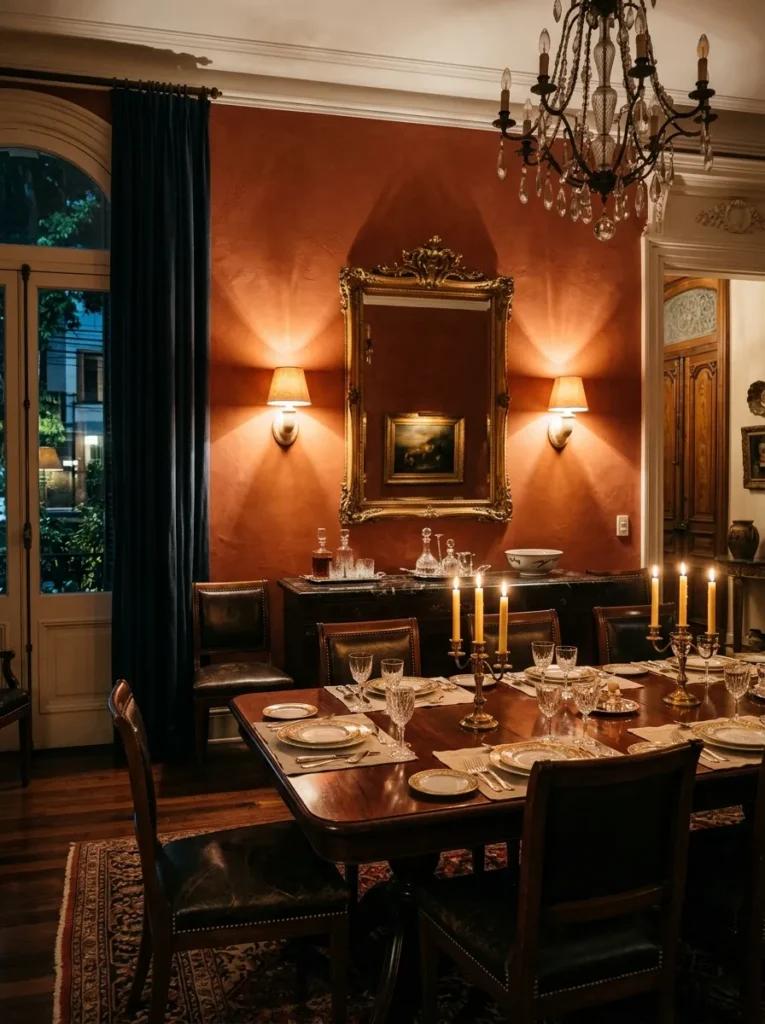
A pendant over the table is primary lighting. Wall sconces are what make a dining room feel like a room rather than a lit table in a dark box. Mounted on the walls at roughly shoulder height when seated — lower than most people’s instinct — they cast light across the walls and ceiling that fills the room with a warmth that downlights and pendants alone can’t achieve. Aged brass, ceramic shades, and smoked glass all work well. Even switched off, a pair of well-chosen wall sconces on either side of a piece of art or a sideboard gives the dining room walls the visual weight they need.
17) Use a Round Table for Smaller Dining Rooms
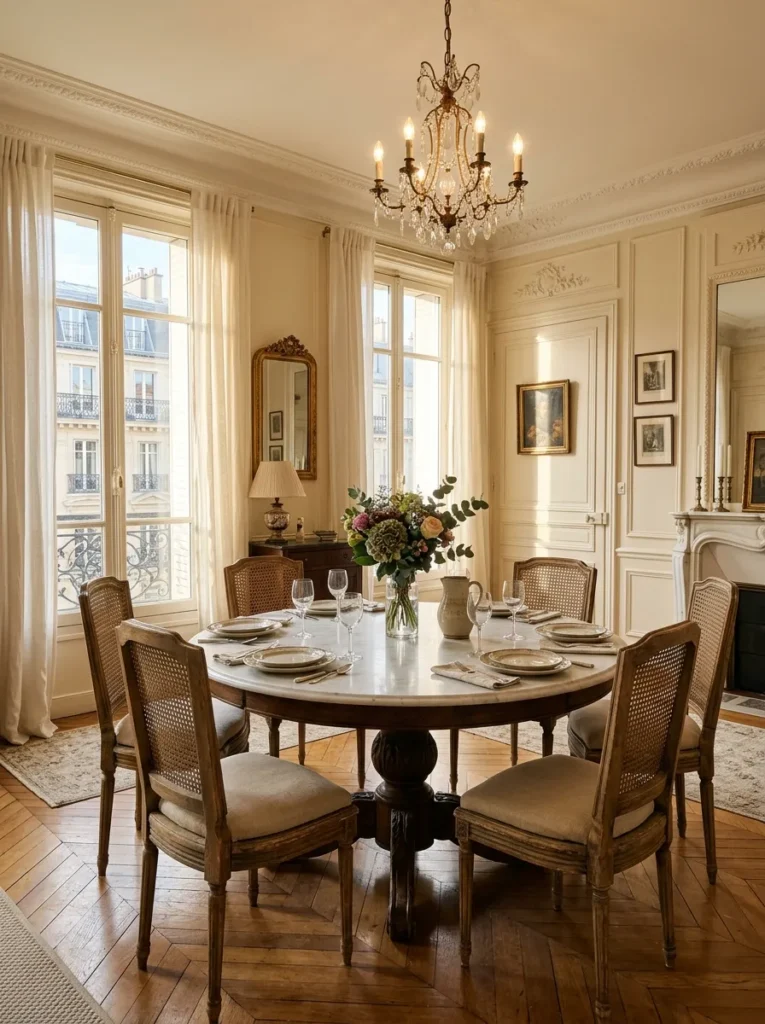
In a dining room that’s slightly too small for a rectangular table to breathe properly, a round table is almost always the better decision — and not just practically. Round tables change the social dynamic of a meal. There’s no head of the table, no one sitting at a corner, no seat that feels secondary. Everyone is equally part of the conversation, which is fundamentally what a warm and inviting dining room should facilitate. A large round table in reclaimed wood or marble on a pedestal base seats more people than its diameter suggests and leaves more floor space visible around it.
18) End the Room with a Moment — Not Just a Wall
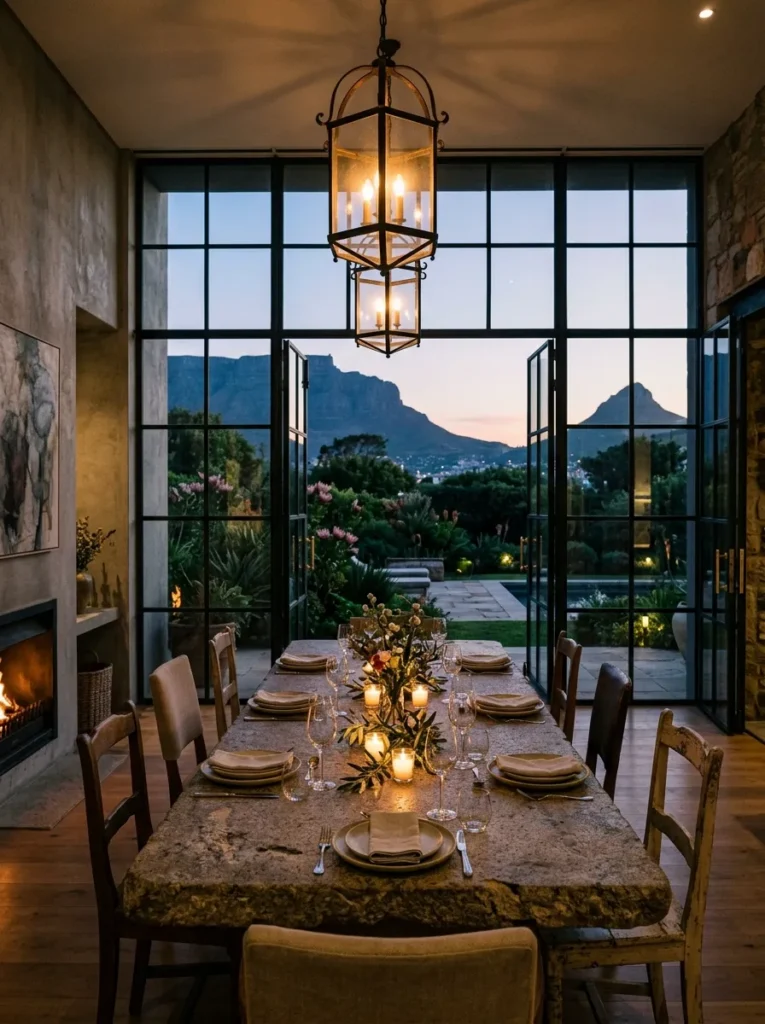
The far wall of a dining room — the one you see when you walk in, the backdrop to the whole space — deserves more thought than a coat of paint and whatever gets pushed in front of it. A large-scale mirror that reflects the pendant light and the table. A single dramatic piece of art at true scale. A floor-to-ceiling built-in with books and objects. A set of French doors opening to outside that makes the garden feel like part of the dining room when light allows. Whatever it is, that wall should have an answer when someone walks in. A dining room that ends in a considered moment feels complete in a way that one that simply stops at a painted surface doesn’t.
Final Thoughts
Warm and inviting dining rooms are never an accident but they’re also never complicated. They’re the result of a few decisions made with the actual experience of sitting at the table in mind — the light, the material underfoot, the height of the ceiling fixture, the texture of the chair you’re sitting in, the view across the table to the far wall. Get those things right and the room does the rest. People linger because it feels good to be there, and that’s the only measure of a dining room that actually matters.