18 Elegant Bathroom Ideas That Feel Luxurious and Timeless
Luxury bathrooms in design magazines tend to share one problem — they look incredible and feel completely unlivable. Marble everywhere, no storage, fixtures that cost more than a car. Real elegance in a bathroom is subtler than that. It’s the feeling you get when the light is right, the materials are honest, and nothing in the room is trying too hard. The ideas below are specifically about bathrooms — the fixtures, the finishes, the architectural decisions that separate a room that functions from one that genuinely feels like somewhere you want to spend time. Some of them involve a renovation. Some don’t. All of them are about making deliberate choices rather than just filling a room with things.
1) Install a Freestanding Bathtub as the Focal Point
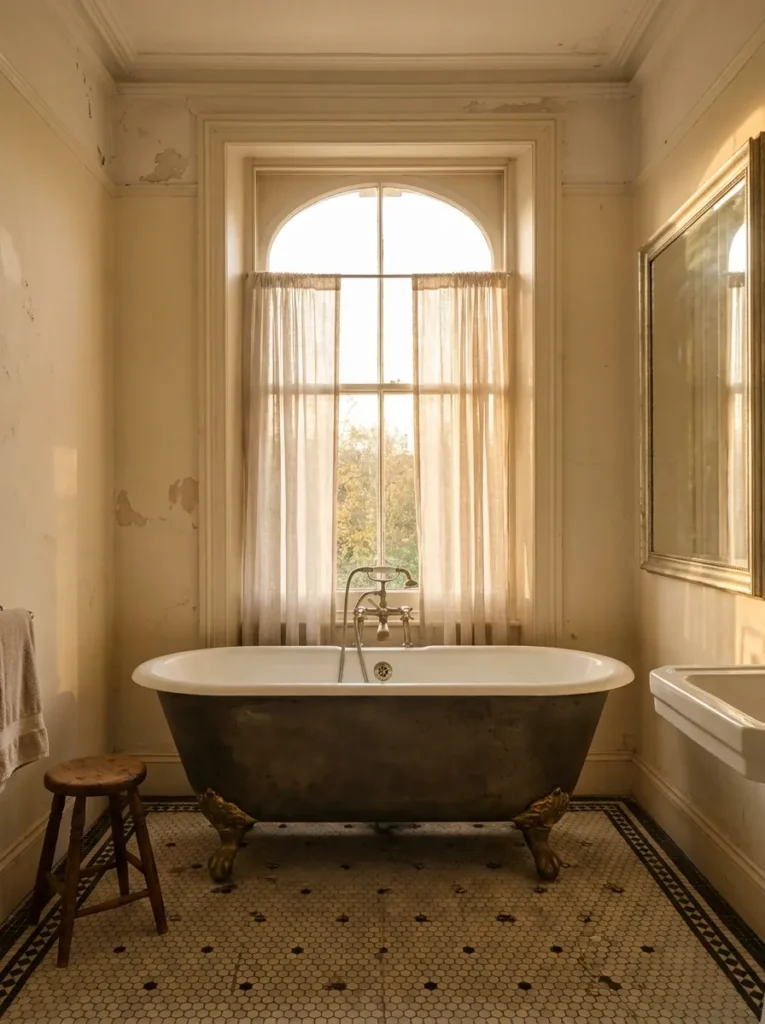
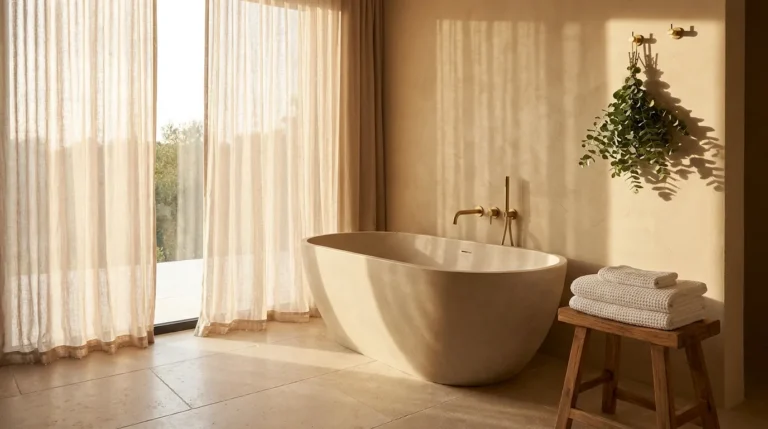
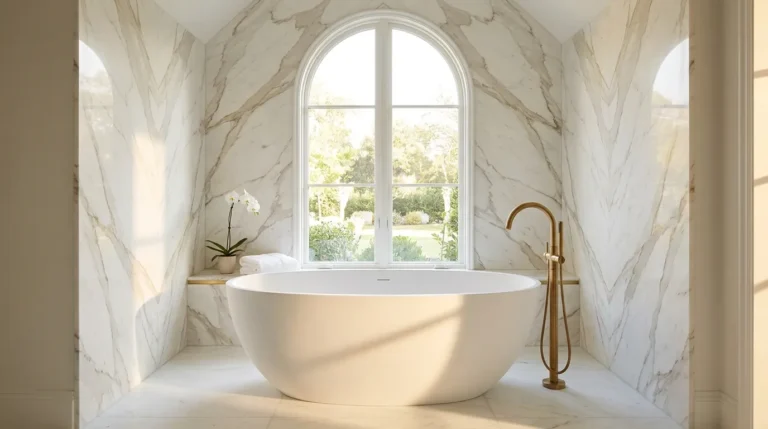
A freestanding tub is one of those decisions that reorganizes the entire room around it — in a good way. It becomes the first thing you see when you walk in and sets the tone for everything else. Slipper tubs in matte white, stone resin, or cast iron all read as classic rather than trendy, which is exactly the point in a room you want to feel timeless. Position it under a window if the layout allows, or centered on a feature wall. The space around it matters as much as the tub itself — don’t crowd it.
2) Use Unlacquered Brass Fixtures Throughout
Polished chrome is fine. Matte black had its moment. But unlacquered brass ages in a way that neither of those finishes can — it develops a patina over time that actually makes it look better, not worse. Faucets, towel rails, shower heads, and cabinet hardware in unlacquered brass give a bathroom a warmth and sense of age that new fixtures typically lack. It pairs naturally with marble, stone, and warm wood tones. The slight variation in color as it ages is a feature, not a flaw.
3) Clad Walls in Marble or Natural Stone
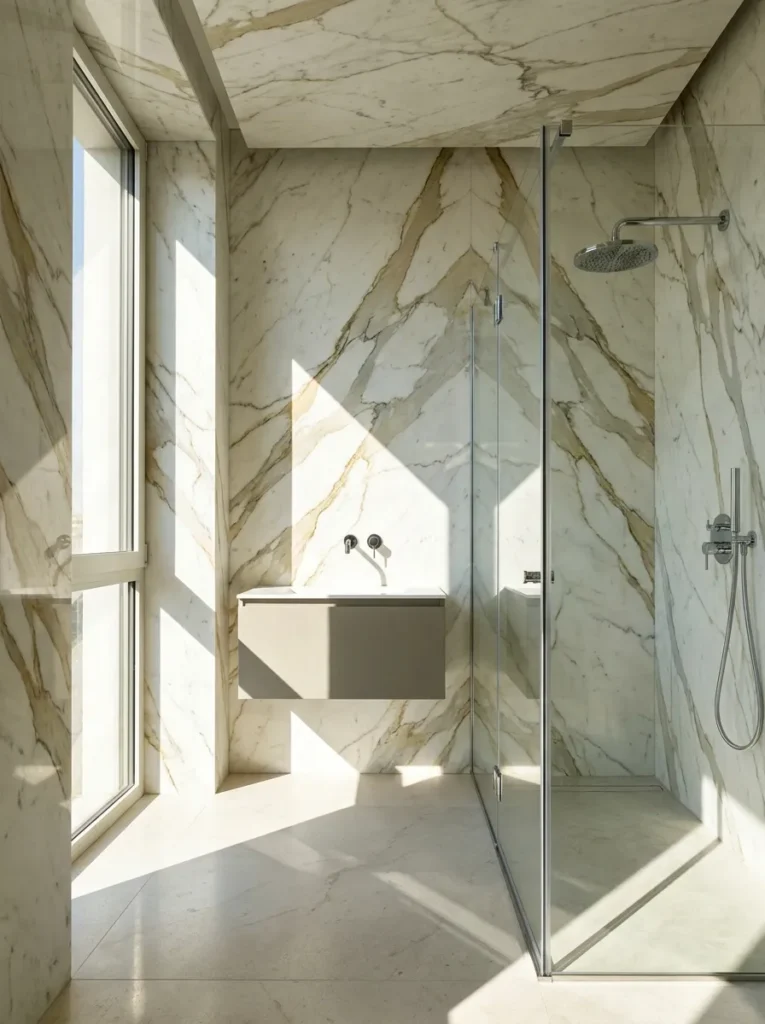
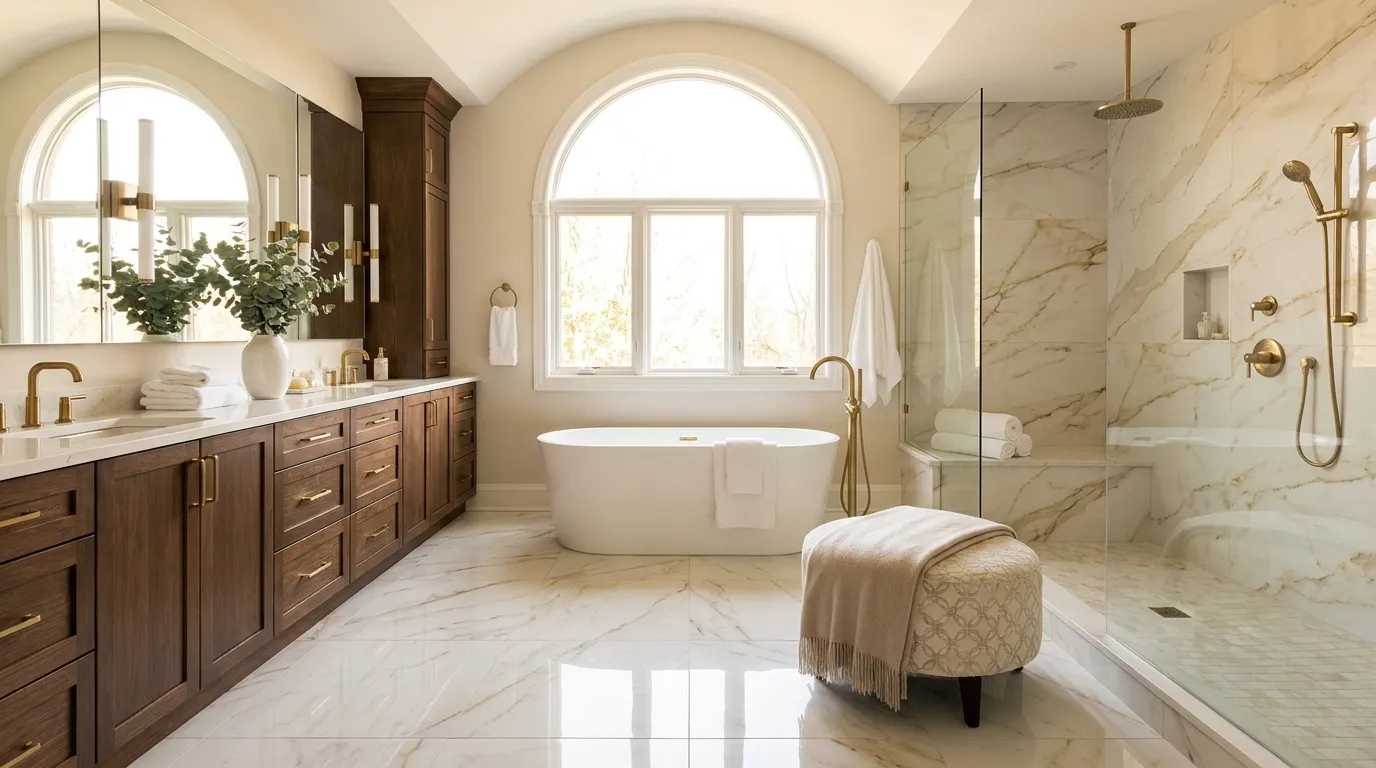
There’s a reason marble has been used in bathrooms for centuries — it’s genuinely beautiful, no two slabs look the same, and it gets better as it ages slightly. Calacatta, Carrara, and Statuario all work in a timeless bathroom, but so do travertine, honed limestone, and verde marble. The finish matters enormously — polished marble is glamorous but cold, while honed and leathered finishes feel warmer and more tactile. Even a single marble feature wall behind the bath changes the register of the whole room.
4) Design a Walk-In Wet Room
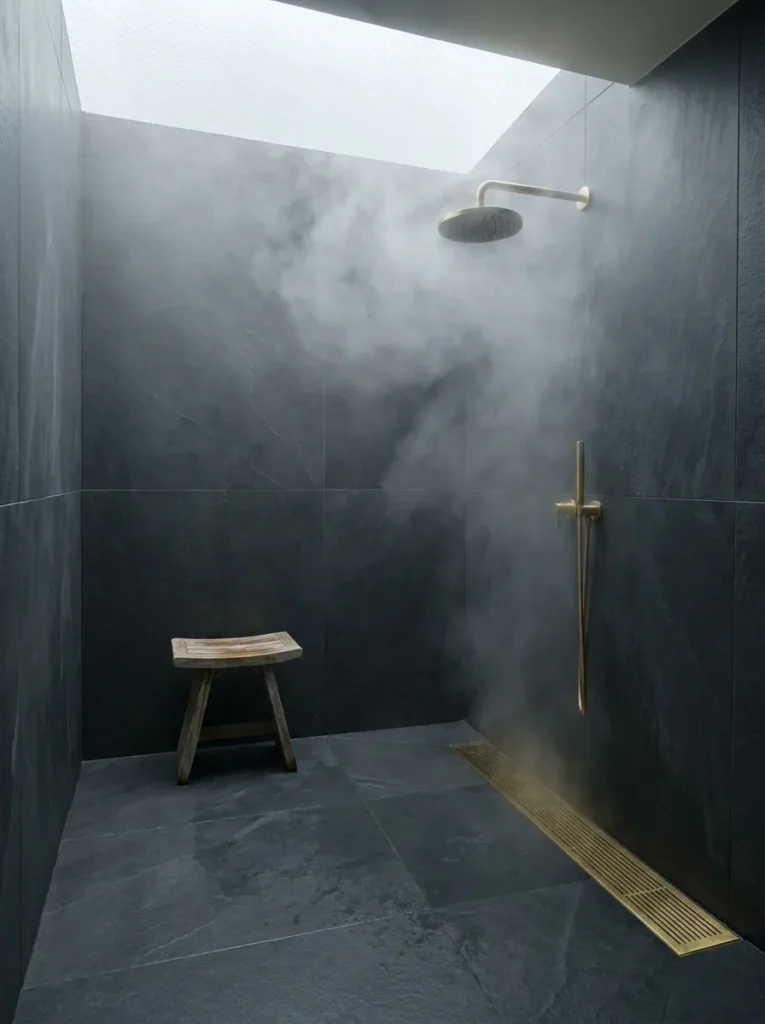
A wet room — where the shower is open, the floor is fully waterproofed and drains continuously, and there’s no enclosure interrupting the space — is one of the cleanest architectural moves you can make in a bathroom. It makes the room feel significantly larger because the shower isn’t boxed off as a separate zone. The tile work becomes visible from everywhere, which means it has to be good. Large format stone or concrete tiles with a linear drain running along one wall is the combination that works best. It rewards the investment in materials more than any enclosed shower can.
5) Use Large Format Floor Tiles with Minimal Grout Lines
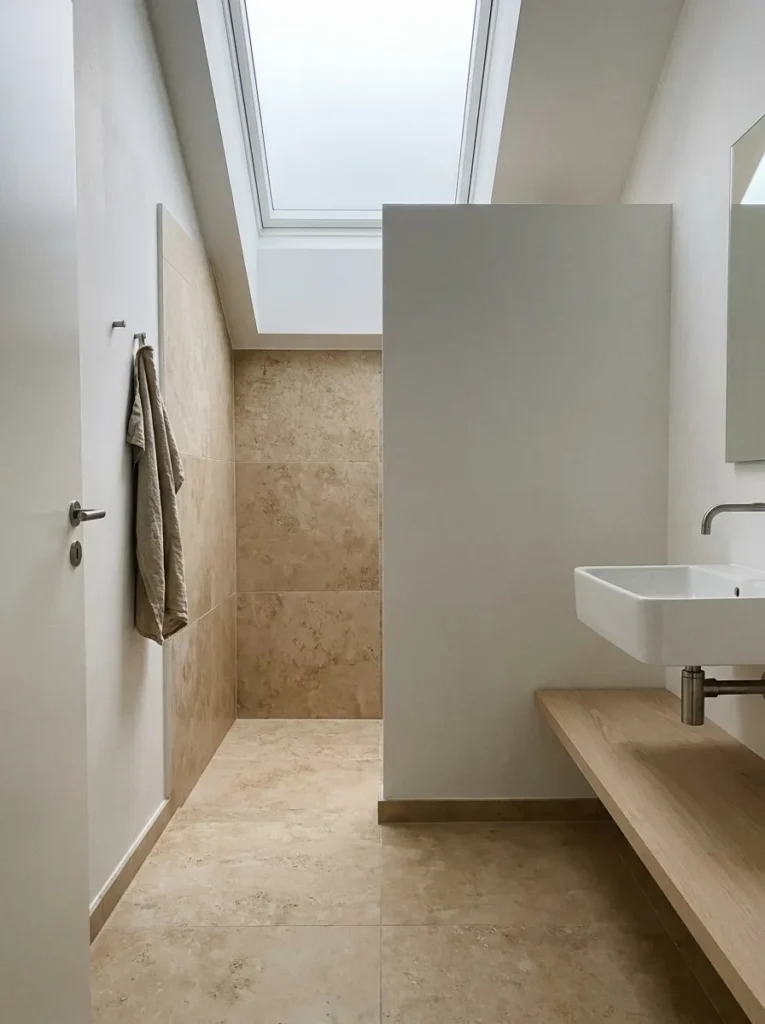
Small mosaic tiles have their place but large format tiles — whether in stone, concrete, or ceramic — create a sense of calm that smaller tiles don’t. The fewer the grout lines, the more expansive the floor reads, which matters especially in smaller bathrooms. Laid in a running bond or book-matched pattern in warm limestone, pale concrete grey, or travertine, the floor becomes a quiet backdrop that makes everything else look more considered. Keep the grout color close to the tile to maintain the seamless effect.
6) Install a Backlit or Illuminated Mirror Cabinet
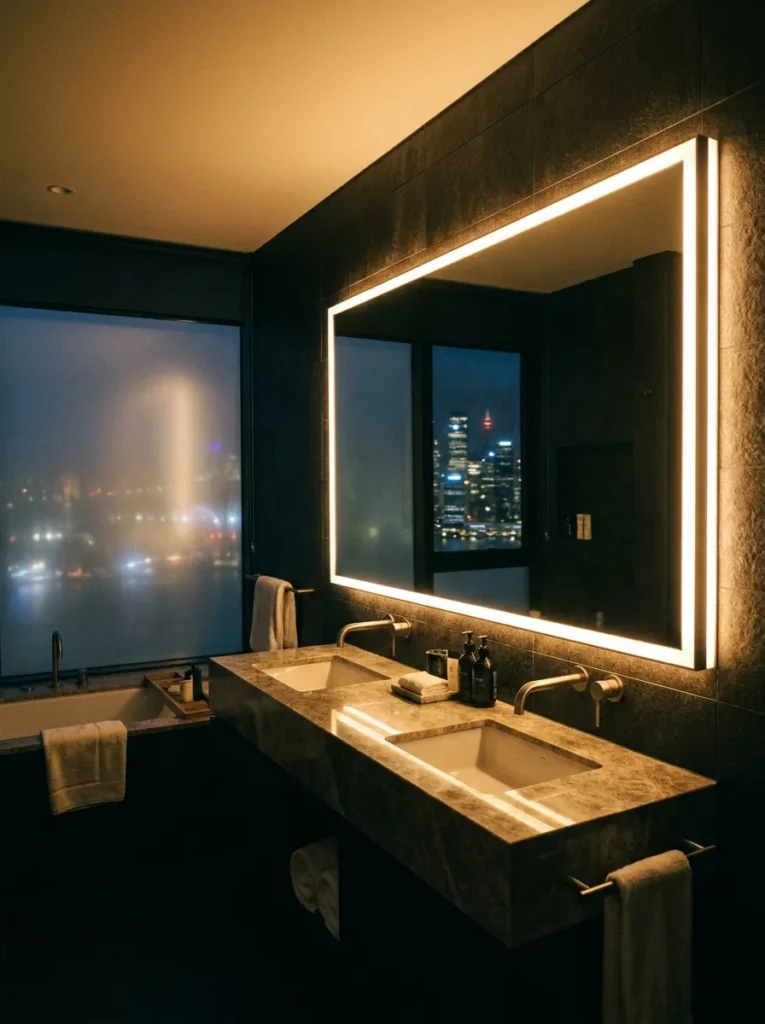
A standard mirror above a vanity is functional. A backlit mirror — one that emits a soft, even glow from behind or around the edges — is functional and genuinely flattering in a way that overhead lighting never manages. The light wraps around the face rather than casting shadows from above, which is why hotel bathrooms that feel expensive almost always use them. An illuminated mirror cabinet takes it further by hiding storage behind the mirror itself, keeping the vanity wall completely clean. Warm-toned backlighting at 2700K rather than cool white makes the difference between clinical and elegant.
7) Add a Double-Ended Bath with Central Taps
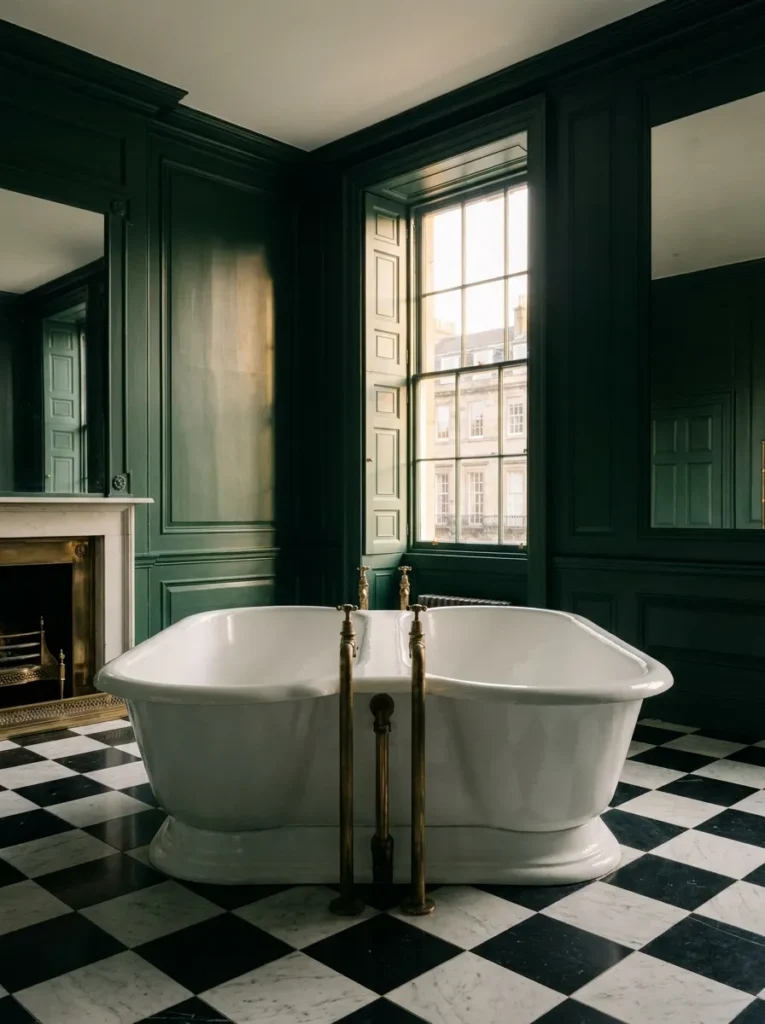
Most freestanding baths position the taps at one end, which means one person is always lying near the plumbing. A double-ended bath — symmetrical at both ends with the taps rising from the floor or from a central wall-mounted position — solves that and looks considerably more elegant in the process. The symmetry gives the bath a more architectural quality and the floor-mounted tap in particular is one of those details that photographs beautifully and functions even better. In a larger bathroom it’s one of the most refined decisions you can make.
8) Layer Warm Ambient Lighting with Dimmers
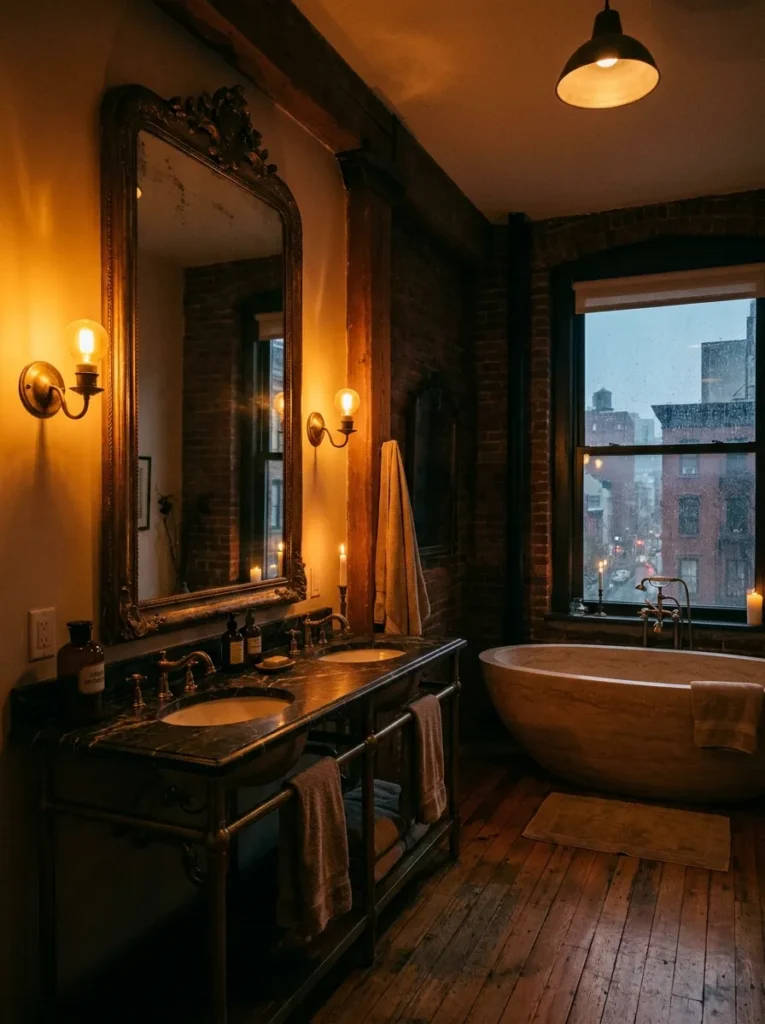
Overhead bathroom lighting is almost always wrong — too bright, too harsh, and completely unflattering. The bathrooms that feel luxurious almost universally have layered lighting: soft wall sconces on either side of the mirror, warm downlights on a dimmer over the bath, and perhaps a pendant above the vanity. The dimmer is non-negotiable. A bathroom that transitions from bright and functional in the morning to warm and atmospheric in the evening is doing something that fixed overhead lighting simply can’t. Warm bulbs at 2700K rather than daylight is the single easiest lighting improvement available.
9) Add Recessed Niches in the Shower Wall
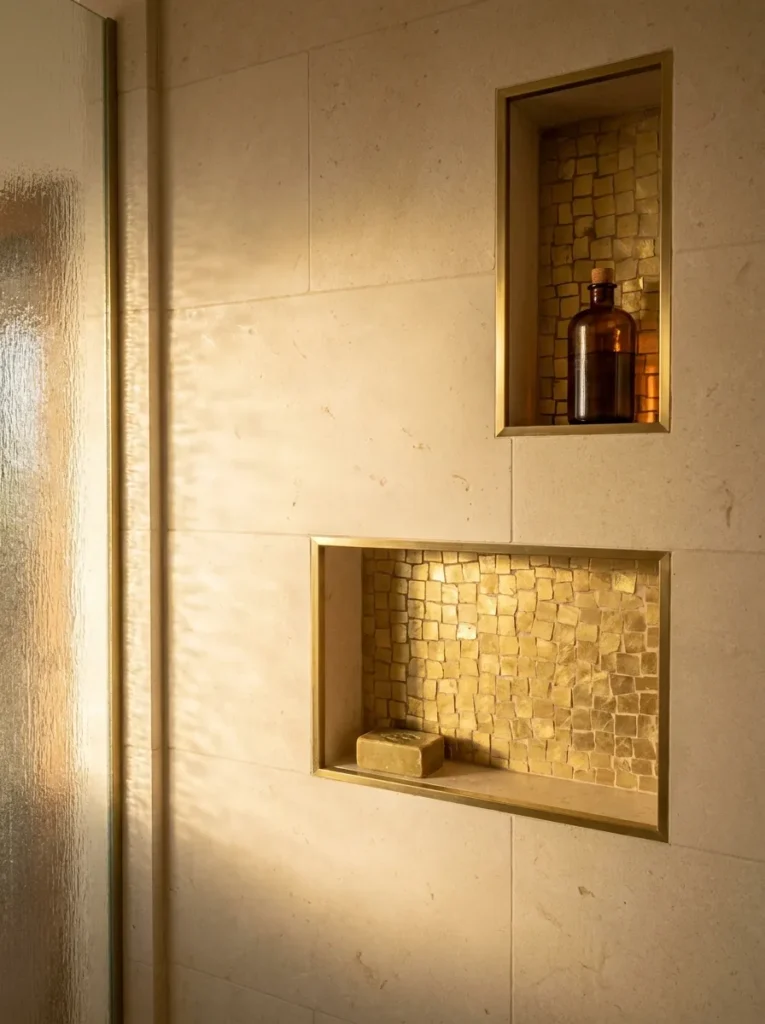
Built-in recessed shower niches look deliberate and clean in a way that corner caddies and hanging organizers never do. A properly tiled niche at shoulder height holds shampoo, soap, and bottles neatly while keeping the shower walls visually uncluttered. The detail that makes it genuinely elegant is tiling the niche in a contrasting material — a strip of unlacquered brass trim, a small mosaic tile, or a different stone — so it reads as an intentional design choice rather than simply a hole in the wall. Two niches at different heights look more considered than one.
10) Hang an Oversized Mirror Above the Vanity
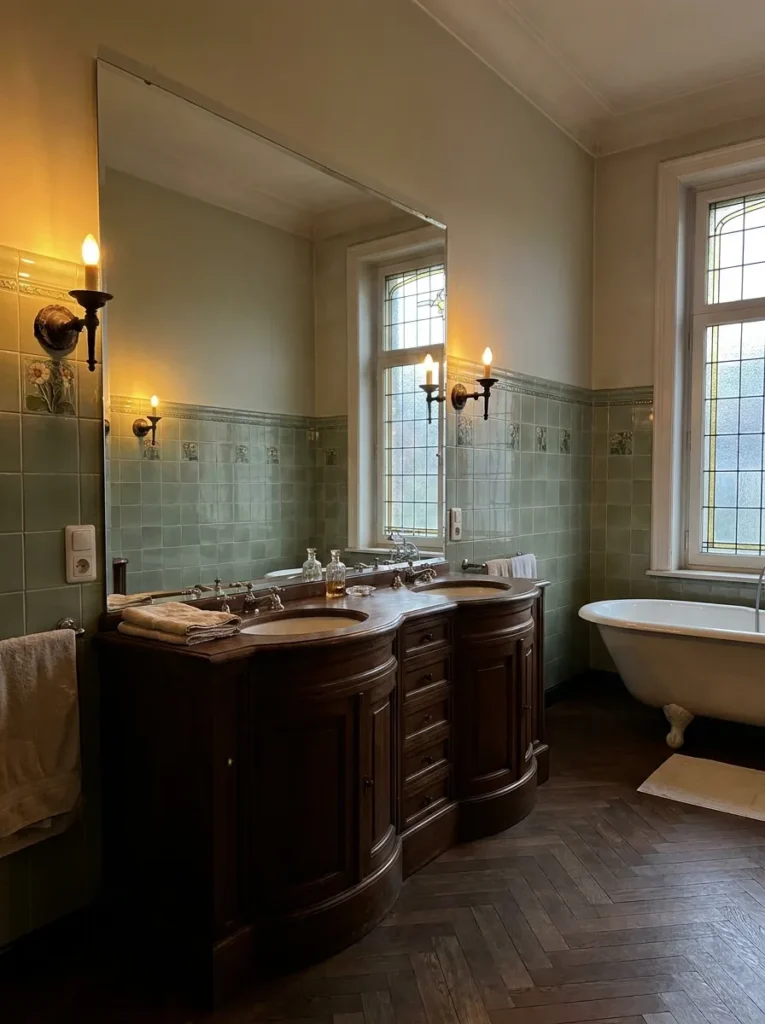
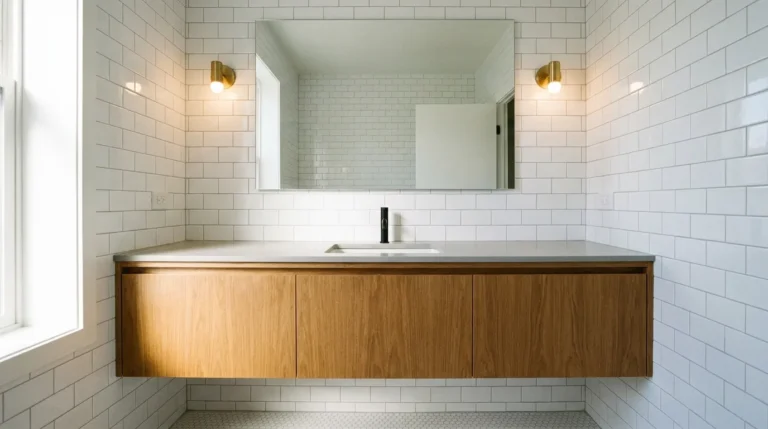
Small mirrors above bathroom vanities are one of the most common ways a bathroom undersells itself. An oversized mirror — one that runs close to the full width of the vanity and extends well above it — makes the room feel twice as large, doubles the light, and gives the whole vanity wall a more finished architectural quality. In a frameless version it feels modern and clean. With a simple brass or stone frame it reads as classic. Either way, go bigger than feels immediately comfortable and it will look right.
11) Install a Steam Shower Enclosure
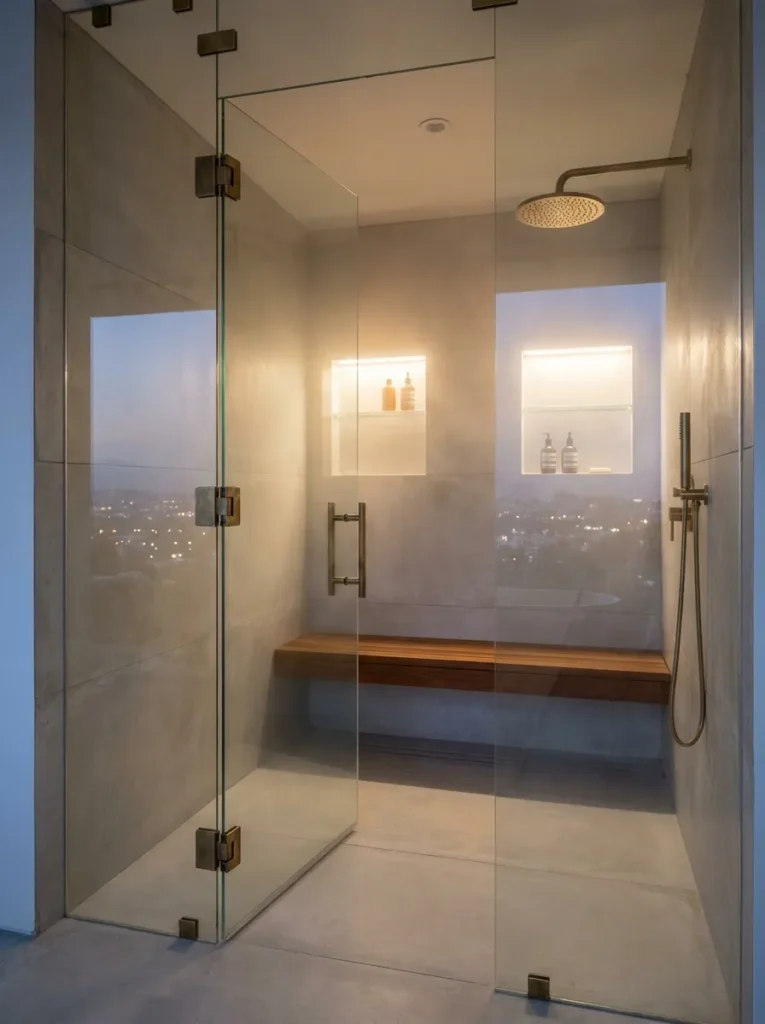
A steam shower takes the shower from a daily necessity to something closer to a ritual, which is exactly what a genuinely luxurious bathroom should offer. The enclosure needs to be properly sealed — a tight-fitting glass door, continuous tile from floor to ceiling, and a built-in steam generator — but the result is a bathroom feature that no other fixture can replicate in terms of daily experience. Teak seating inside, a recessed niche for oils, and a rain shower head alongside the steam head make the enclosure complete. It’s a serious investment that pays back every single morning.
12) Use Terrazzo Flooring or Wall Detail
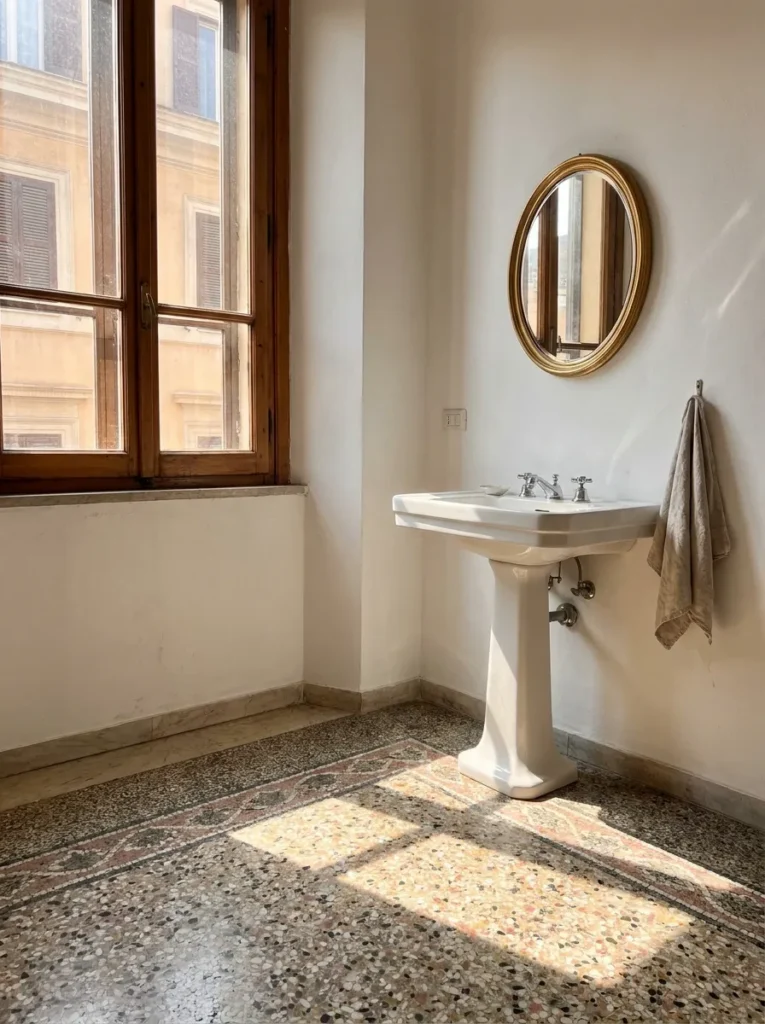
Terrazzo is one of those materials that looks dated in the wrong context and genuinely timeless in the right one. In a bathroom, large-format terrazzo tiles or poured terrazzo flooring in a warm neutral base — cream, warm grey, or pale blush — with subtle aggregate brings a texture and handcrafted quality that ceramic tile simply doesn’t have. It reads as both contemporary and classical, which is a difficult combination to achieve with most materials. A terrazzo floor paired with plain plaster walls and simple brass fixtures is a combination that will look as good in twenty years as it does now.
13) Add a Chandelier or Sculptural Pendant
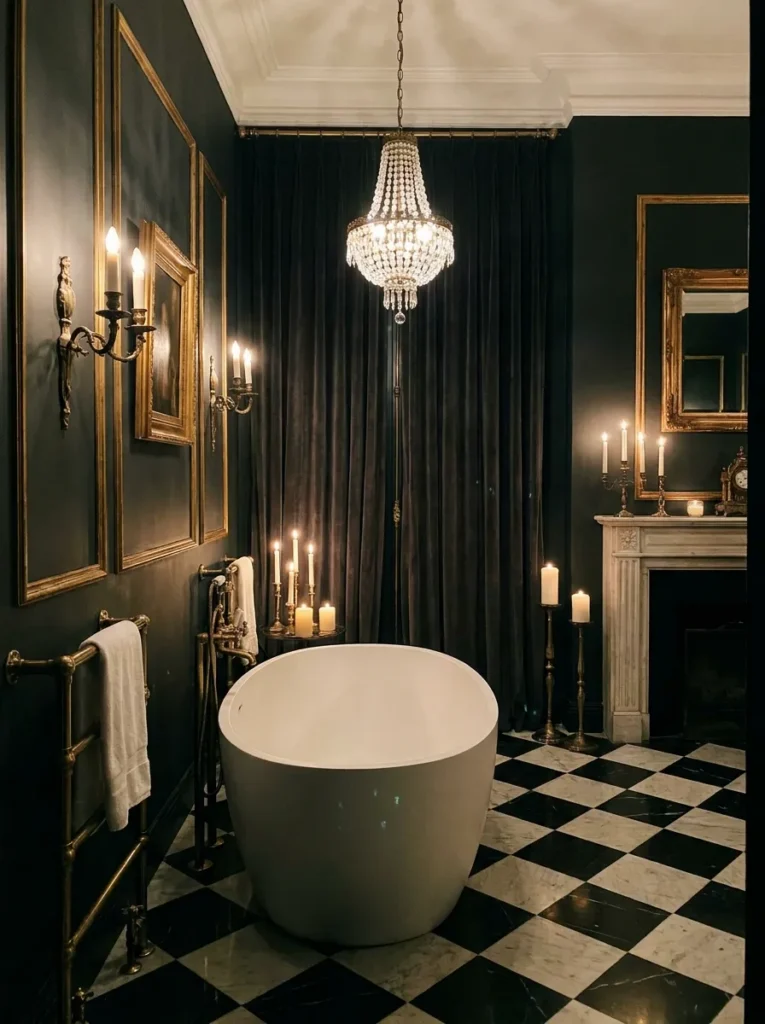
A chandelier or pendant in a bathroom immediately signals the room was thought about as a space rather than just fitted out with fixtures. Over a freestanding bath especially, a small crystal chandelier, a sculptural rattan pendant, or a simple aged brass fitting transforms the area into something that feels genuinely indulgent. It doesn’t need to be large — proportion matters more than scale here. Ensure it’s specified for bathroom use and positioned away from the water zone. Just the decision to hang something intentional overhead changes the entire atmosphere.
14) Install a Built-In Bath Surround with Shelf
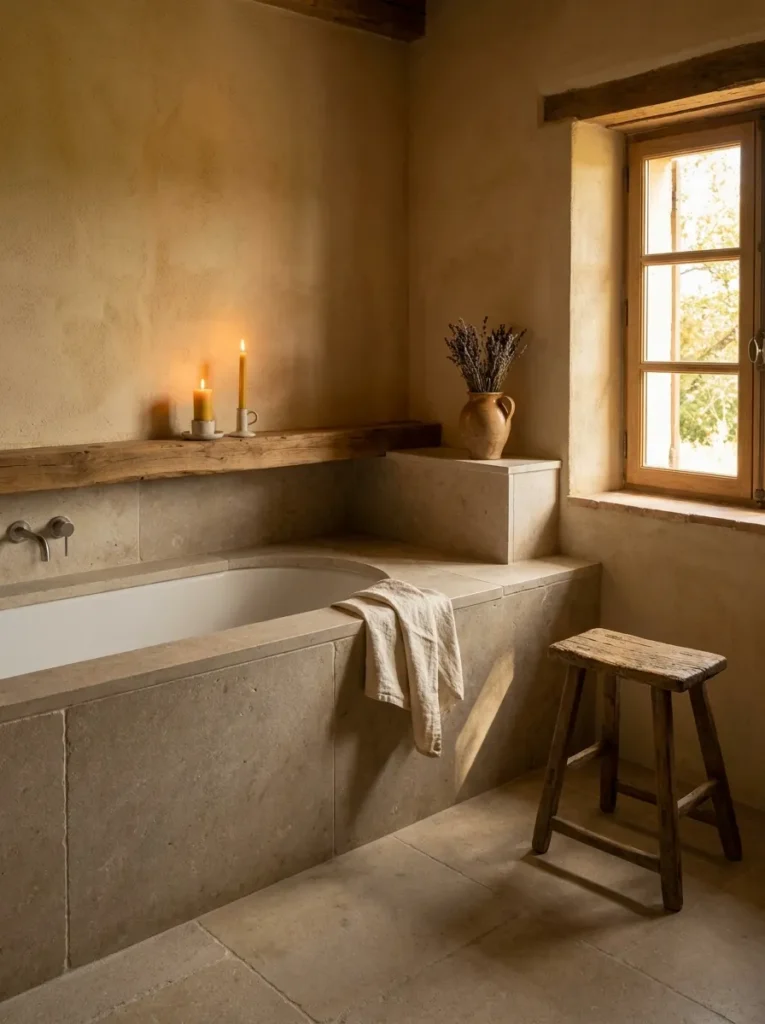
A freestanding bath gets most of the attention but a built-in bath with a proper surround — a continuous shelf running along one or both sides in marble, stone, or solid oak — adds function and a sense of permanence that a freestanding tub sitting in the middle of a room can lack. The shelf holds candles, a book, a glass, bath oils — all the things that make a bath an experience rather than just a chore. Clad the surround in the same material as the floor or walls for a seamless built-in effect that looks genuinely architectural.
15) Use a Vessel Sink on a Stone or Wood Plinth
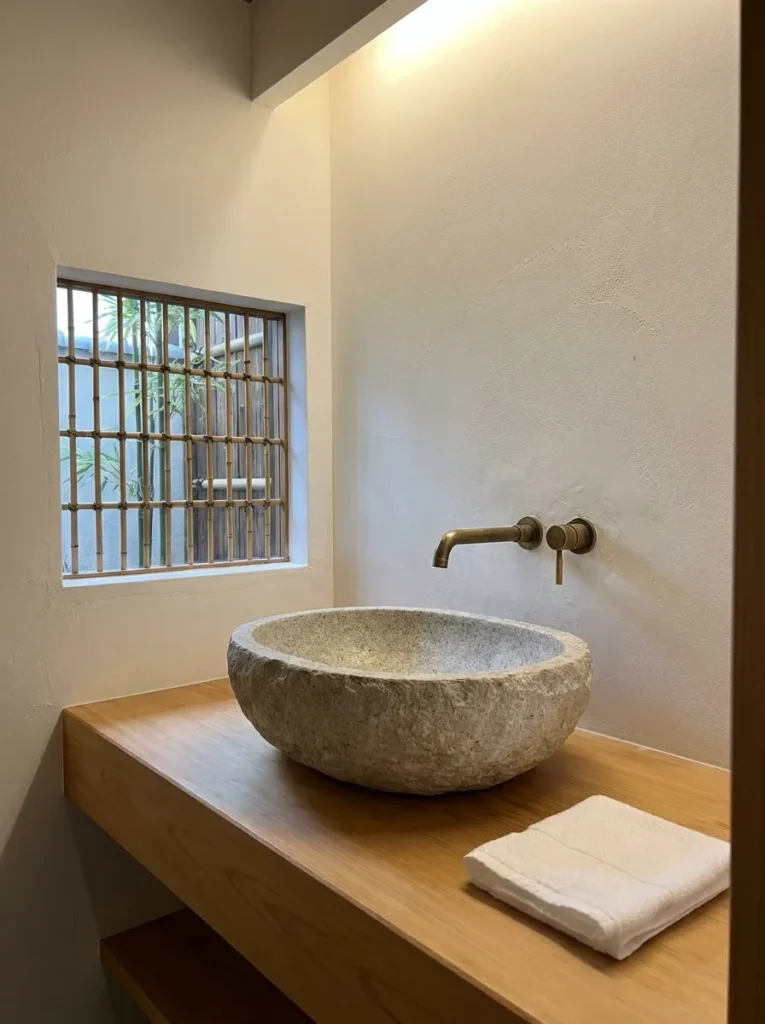
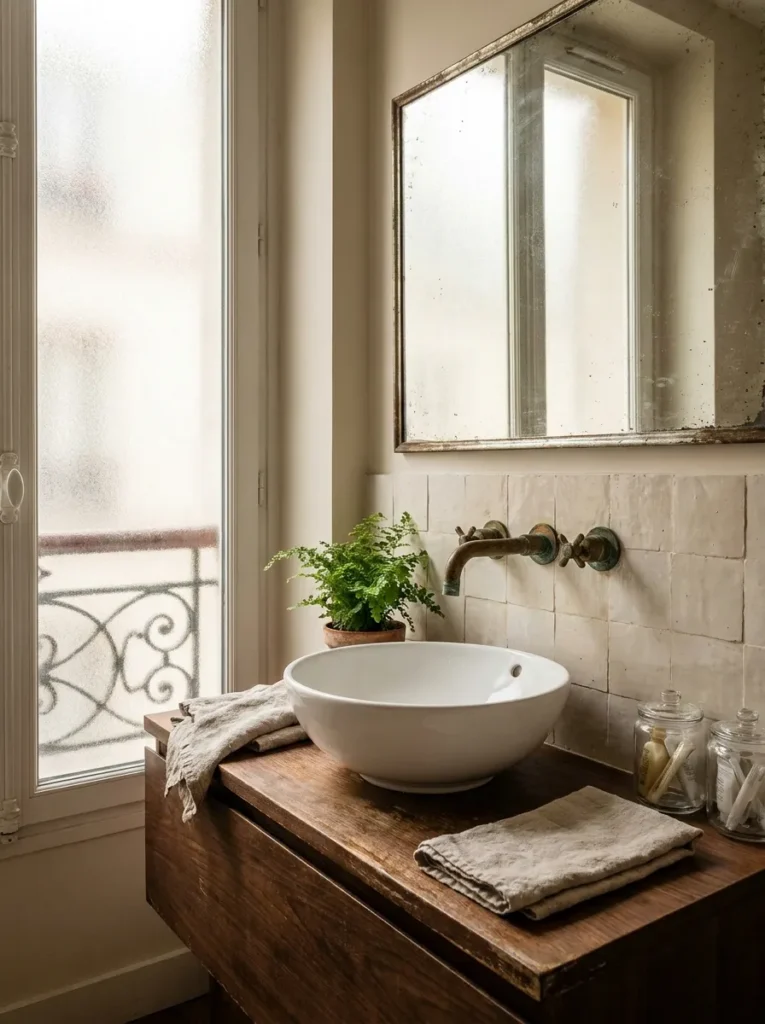
A vessel sink — particularly one in hand-thrown ceramic, carved stone, or matte concrete — turns the vanity into something closer to a sculptural object than a plumbing fixture. Placed on a simple stone plinth or a solid oak countertop, it becomes the focal point of the vanity wall in a way that standard undermount sinks never do. Keep everything around it restrained so the sink itself has room to be the thing. A wall-mounted tap rather than a deck-mounted one keeps the countertop surface clean and lets the basin sit without interruption.
16) Install Floor-to-Ceiling Wall Paneling in a Deep Tone
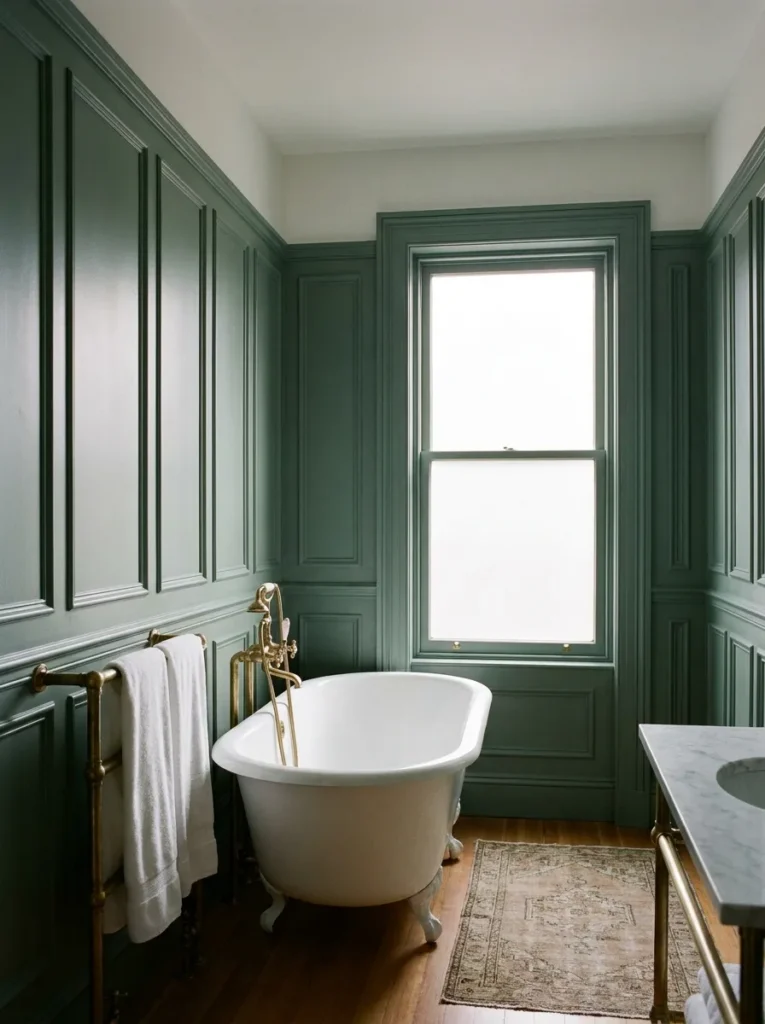
Tongue-and-groove paneling or raised panel wainscoting painted in a deep, calm tone — dusty sage, warm charcoal, or aged navy — gives a bathroom a sense of architecture and permanence that tile alone rarely achieves. Running it floor-to-ceiling rather than as a half-height dado makes it feel considered and intentional. Pair with simple white fixtures and aged brass hardware for a combination that reads as classic without being costume-y about it. The deep color also makes white towels and porcelain fixtures look crisper by contrast.
17) Frame the Shower in Fluted or Ribbed Glass
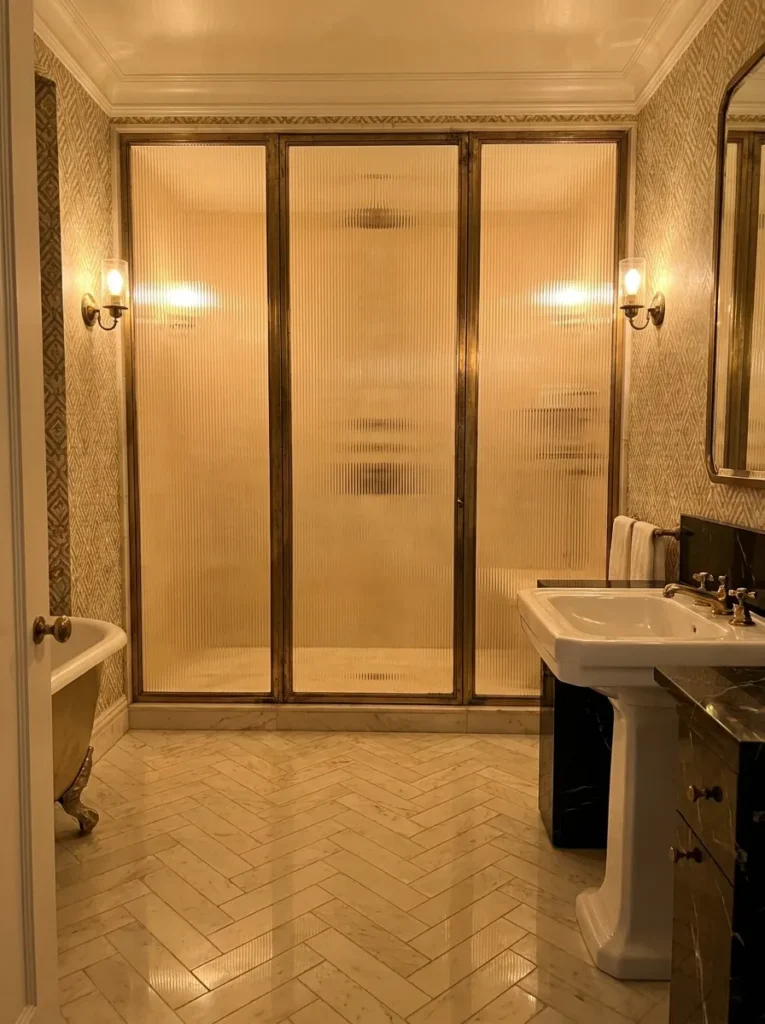
Clear frameless glass is clean and practical but fluted or reeded glass panels bring a texture and softness that plain glass doesn’t have. The vertical ribbing refracts light beautifully, creates a sense of privacy without closing the shower off entirely, and adds a decorative quality that reads as deliberately chosen rather than default. Paired with aged brass hardware the combination has an Art Deco quality that feels genuinely timeless. It works especially well in smaller bathrooms where a completely transparent enclosure can feel exposed.
18) Keep One Wall Entirely Bare
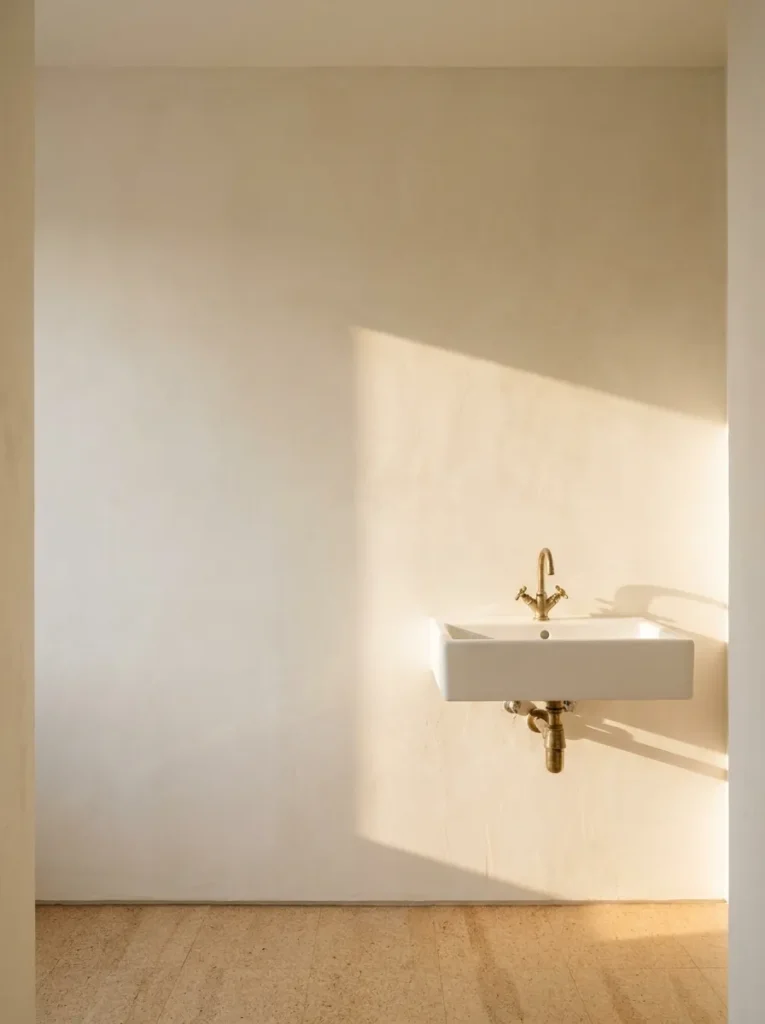
The instinct when finishing a bathroom is to fill every surface — art on the walls, accessories on every shelf, something in every corner. Resisting that impulse on at least one wall is what separates a bathroom that feels luxurious from one that feels over-decorated. A bare plaster wall in a warm tone, or a single large-format tile wall with nothing hung on it, gives the eye somewhere to rest. The materials you’ve chosen in the rest of the room look better when they have negative space to breathe against. The most confident design decision is often the one where you decide not to add anything at all.
Final Thoughts
Timeless bathrooms don’t follow trends — that’s the whole point. The materials and fixtures that were elegant fifty years ago are still elegant now, and they’ll still be elegant in another fifty. Marble, brass, stone, warm light, and honest natural materials don’t go out of style because they were never trend-driven to begin with. They’re simply good. Start with the one thing in your current bathroom that bothers you most — a harsh light, a cluttered vanity wall, a shower that feels like an afterthought — and fix that first. The rest tends to follow once you start making intentional decisions.