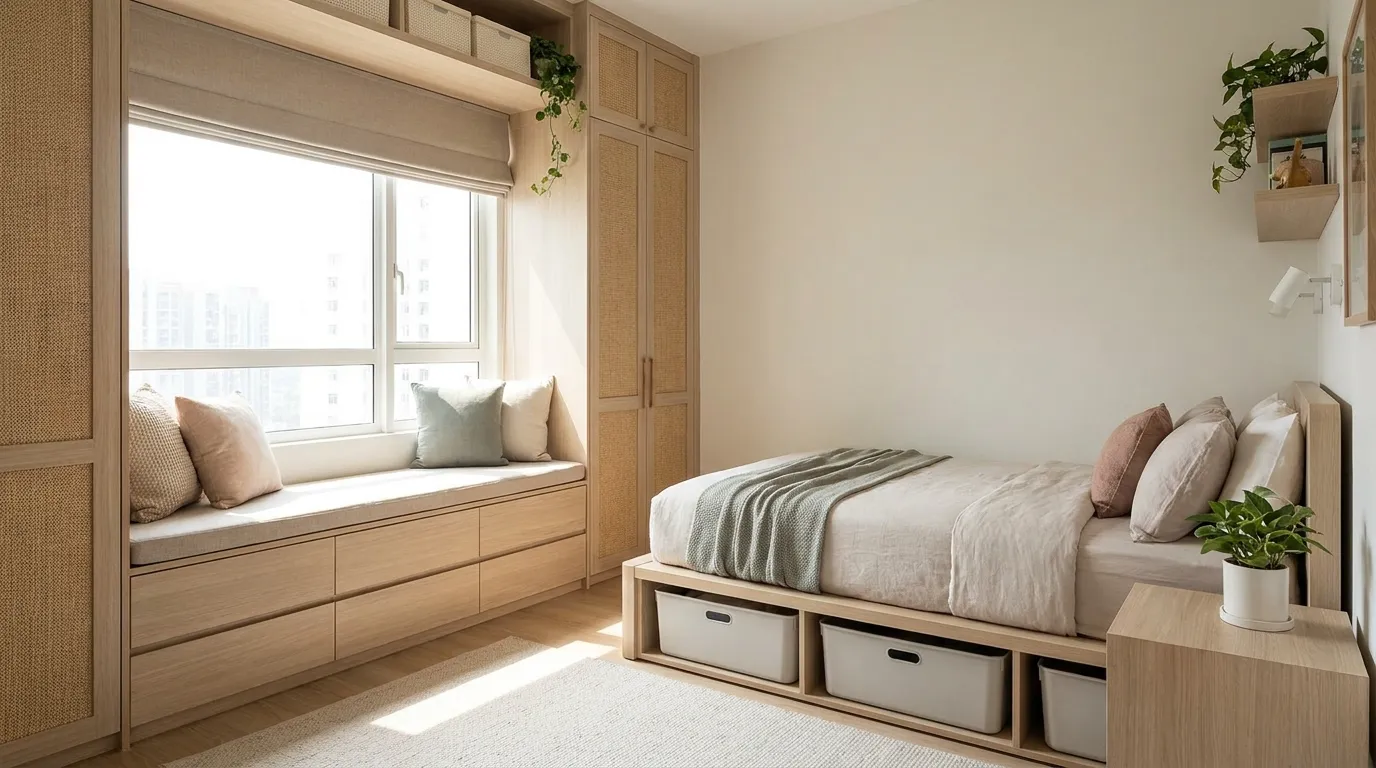
20 Small Bedroom Storage Ideas That Reduce Clutter Beautifully
Most small bedroom storage advice amounts to “buy a bed with drawers underneath,” repeated in twenty different fonts across twenty nearly identical lists. That advice isn’t wrong, exactly. It’s just incomplete, and it ignores the fact that storage in a small room is as much a visual problem as a practical one — clutter doesn’t just take up floor space, it takes up visual space too. What follows are twenty specific, photographable ideas that solve both problems at once, including several that most small bedroom storage articles never mention because they require more than a single trip to one furniture aisle.
1. Choose a Bed With Hydraulic Lift Storage Over Drawers
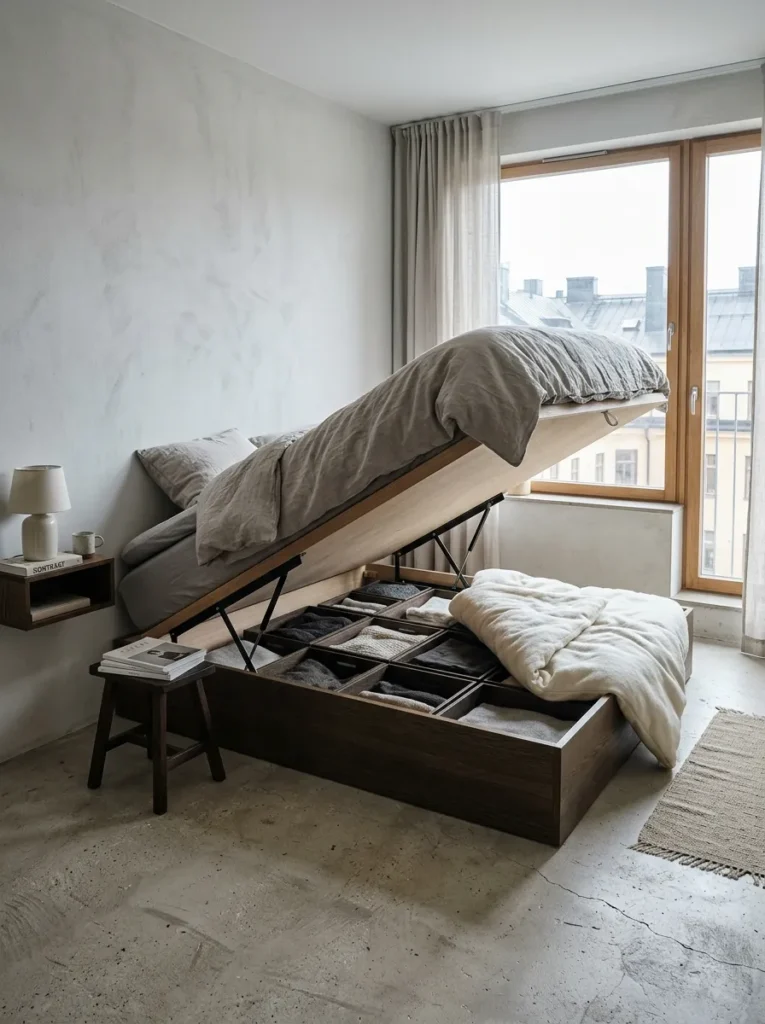
Drawer-based bed storage looks efficient until you actually try to use it — most divan drawers max out at 15 to 20 centimetres of usable depth, which rules out anything bulky like a duvet or a suitcase. A hydraulic lift bed, where the entire mattress platform tilts upward on gas struts to reveal a deep storage cavity beneath, gives you 25 to 30 centimetres of genuinely usable space and access to the whole footprint of the bed at once, not four narrow drawer-sized sections. The mechanism does cost more than a standard divan base. It is also the single most space-efficient storage decision available in a small bedroom, because it turns an area you were already using for sleeping into the single largest storage zone in the room without taking up an extra centimetre of floor.
2. Install a Ceiling-Mounted Wardrobe Rail Above Standard Hanging Height
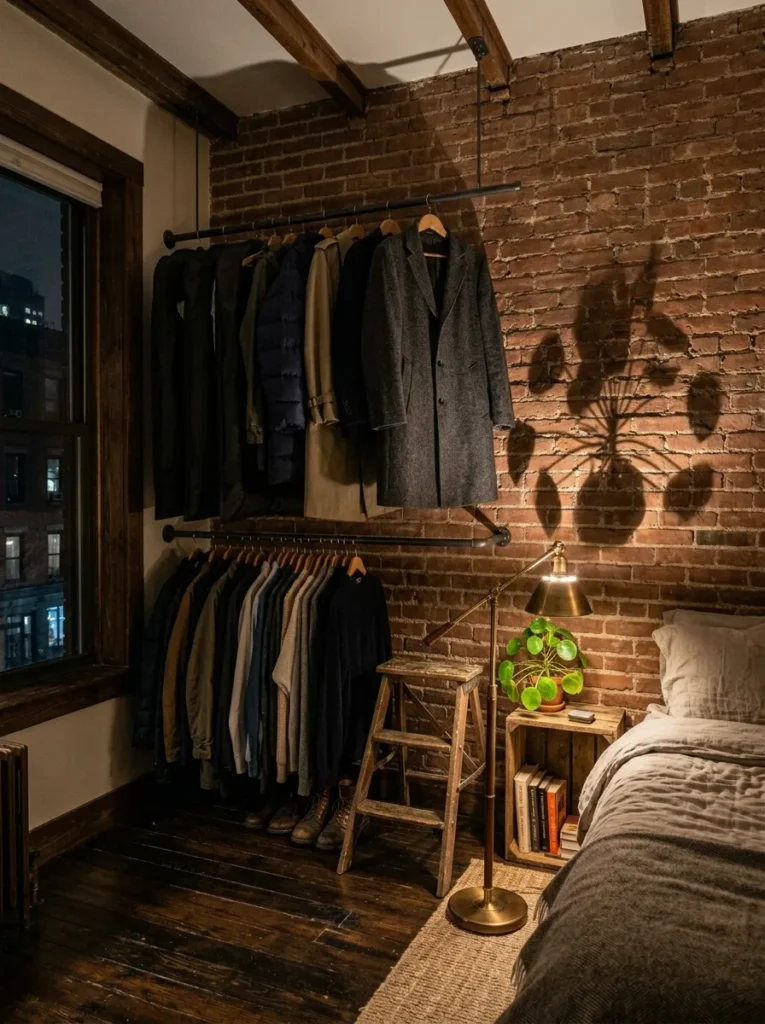
Most small bedrooms waste the top 40 to 50 centimetres of wardrobe space because the rail is hung at a single fixed height meant for everyday access. A second rail mounted from the ceiling at roughly 190 to 200 centimetres, paired with a simple pull-down hook or a step stool, lets you store out-of-season clothing, occasion wear, or guest linens above the primary hanging zone without building a second wardrobe. This is the decision most people get wrong by assuming vertical space above head height is unusable. It isn’t unusable. It’s just unreachable without a tool, and a fifteen-pound ceiling track solves that completely.
3. Use a Pegboard as a Bedside Organiser Instead of a Nightstand
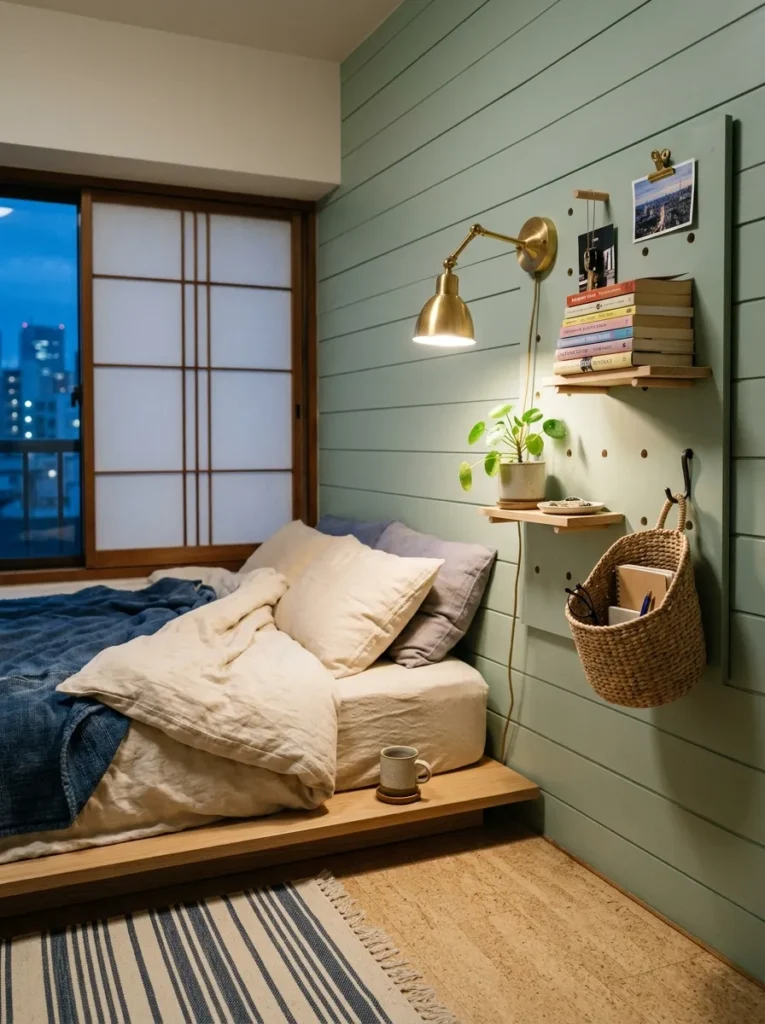
A nightstand with drawers is the default, but in a genuinely small bedroom even a slim one eats floor space that a wall-mounted pegboard simply doesn’t. A painted plywood pegboard panel, roughly 60 by 90 centimetres, mounted beside the bed and fitted with small shelves, hooks, and a basket on movable pegs, holds a lamp, a book, glasses, and charging cables with zero floor footprint at all. Rearrange the pegs seasonally as your needs shift — more hooks in winter for layers, a wider shelf in summer for a fan. It photographs unusually well too, since the asymmetry of a customised pegboard reads as considerably more interesting than a beige laminate nightstand ever will.
4. Add a Storage Bench at the Foot of the Bed
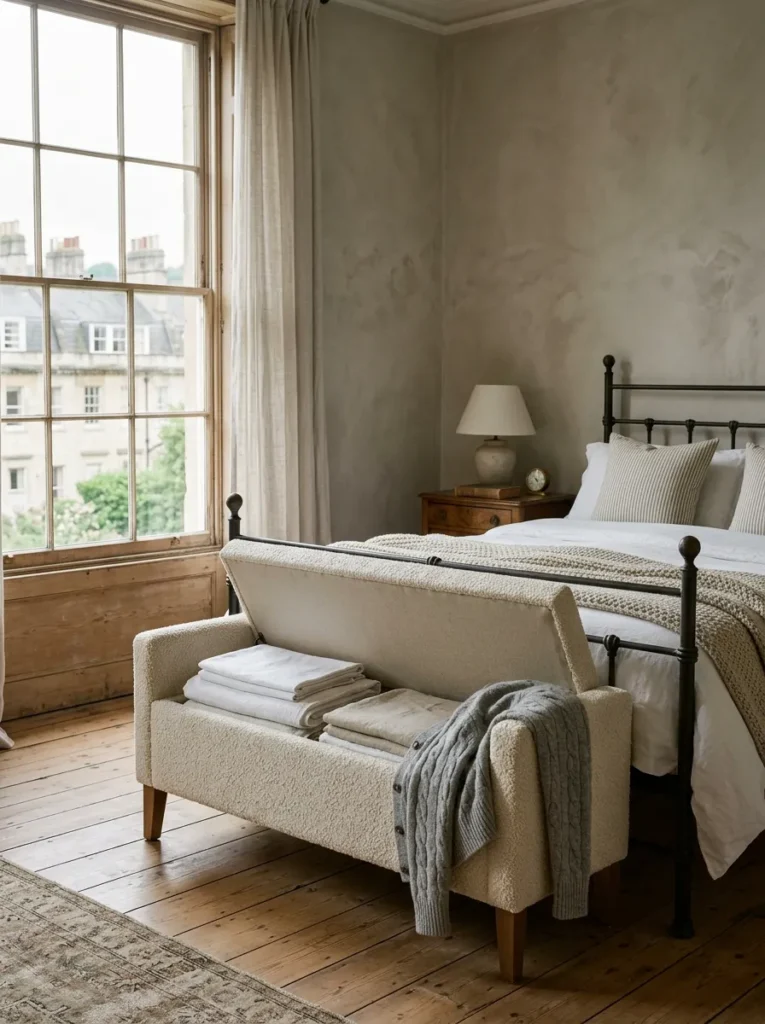
A storage bench at the foot of a small bed does three things a normal bench cannot: it provides a place to sit while dressing, a flat surface to lay out clothes the night before, and a hinged or lift-top storage cavity for out-of-rotation bedding or seasonal items. Choose one no deeper than 35 to 40 centimetres so it doesn’t crowd the walking path most small bedrooms can’t spare. Upholstered tops in a durable linen or boucle add a textural break from the bed itself, which matters more in a small room where every surface is doing double visual duty. This is one of the few storage pieces that earns its floor space by serving two functions at once rather than one.
5. Mount Floating Shelves Above the Headboard Instead of a Wall Gallery
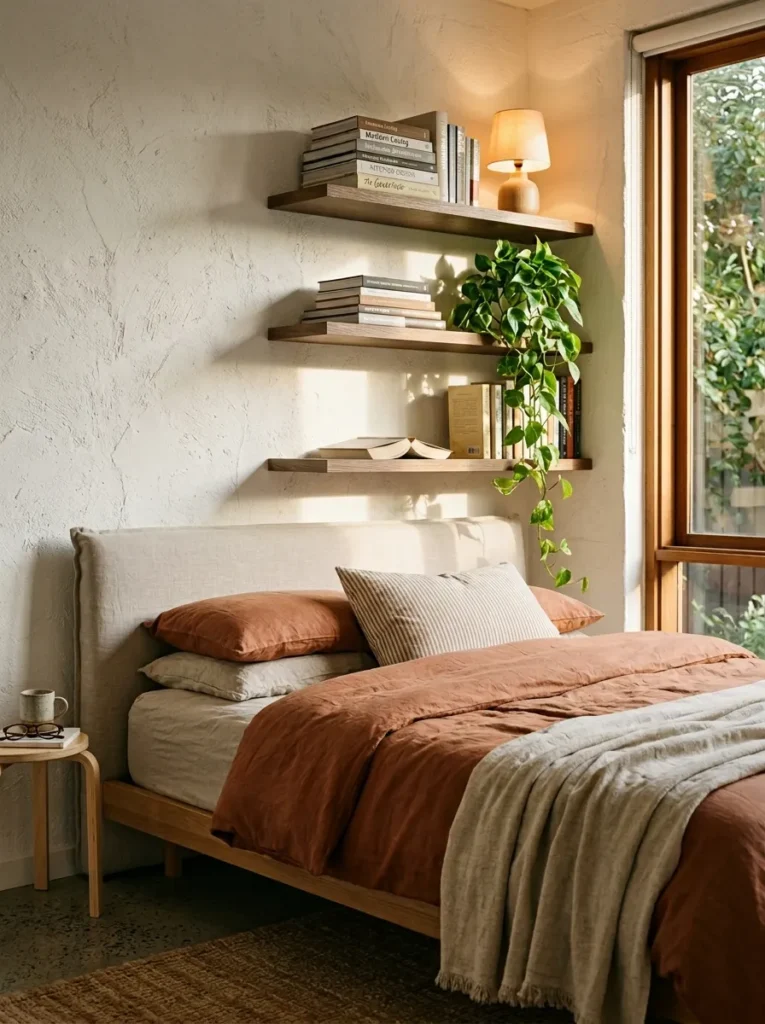
A wall gallery above the headboard is purely decorative. Floating shelves in the same position do the same visual job while adding real storage capacity — books, a small lamp, framed photos, a plant — without requiring any additional floor-standing furniture. Space them 25 to 30 centimetres apart vertically so each shelf can hold something of real height, not just flat picture frames. Choose a depth of at least 15 centimetres; anything shallower looks like an afterthought rather than a deliberate design choice. The wall above a bed is consistently the most underused vertical space in a small bedroom, and it’s underused for no good reason.
6. Choose a Headboard With Built-In Storage Compartments
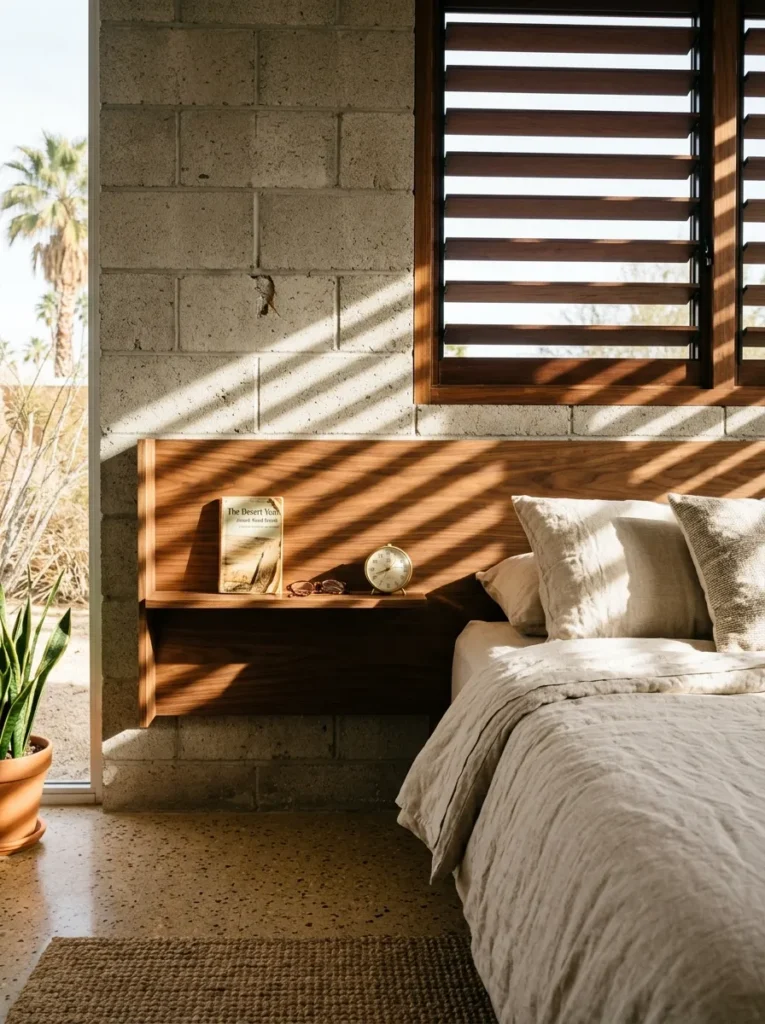
A headboard is usually treated as a purely decorative backdrop, but upholstered or wooden headboards with built-in side compartments or a shallow shelf along the top edge turn that wasted vertical real estate into genuinely useful space for books, a phone, or a small reading lamp. Look for headboards with a ledge depth of at least 12 centimetres, enough to hold a paperback without it sliding off the moment the bed is bumped. This is a particularly good small bedroom storage solution for rooms too tight for a nightstand on either side, since the storage moves with the bed itself rather than competing for adjacent floor space.
7. Use Slim Rolling Carts in Unused Vertical Gaps
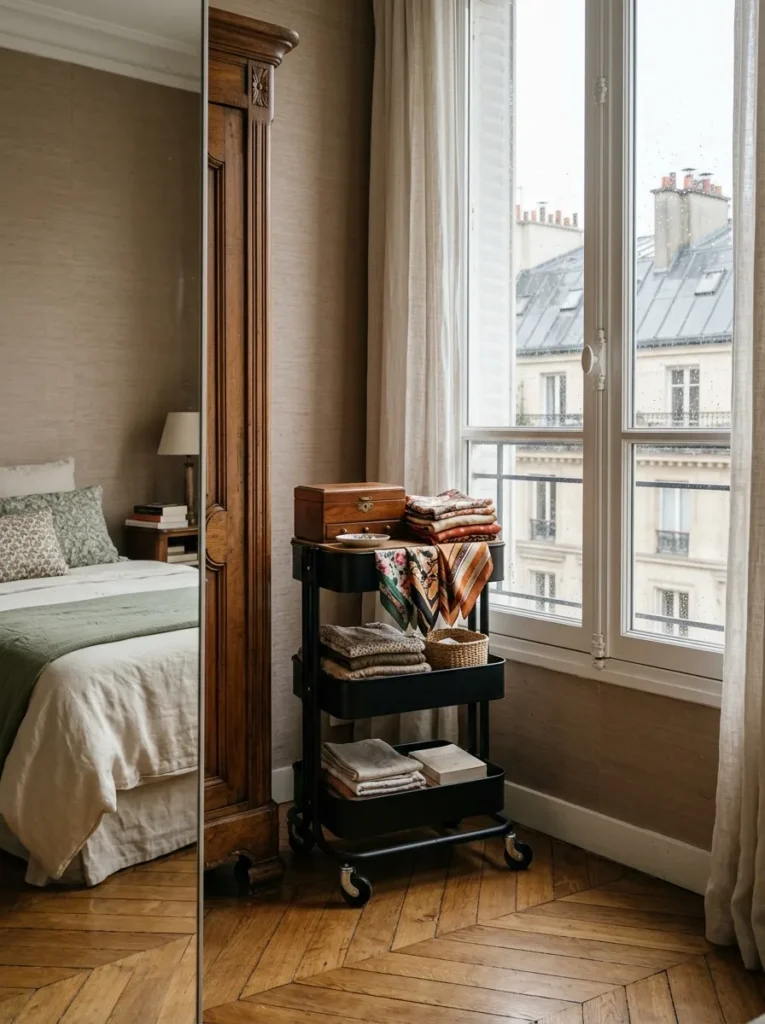
Every small bedroom has at least one narrow, awkward gap — between a wardrobe and a wall, beside a chest of drawers, at the end of a bed frame — that feels too small for anything. A slim rolling cart, 15 to 20 centimetres wide with two or three tiered baskets, fits into exactly that kind of gap and rolls out fully when needed. Use it for skincare, accessories, or folded items that don’t need a full drawer. The wheels matter more than people expect: a cart that has to be lifted out rather than rolled gets used once and then abandoned in place, defeating the entire purpose.
8. Install a Wall-Mounted Drop-Leaf Desk That Doubles as Storage
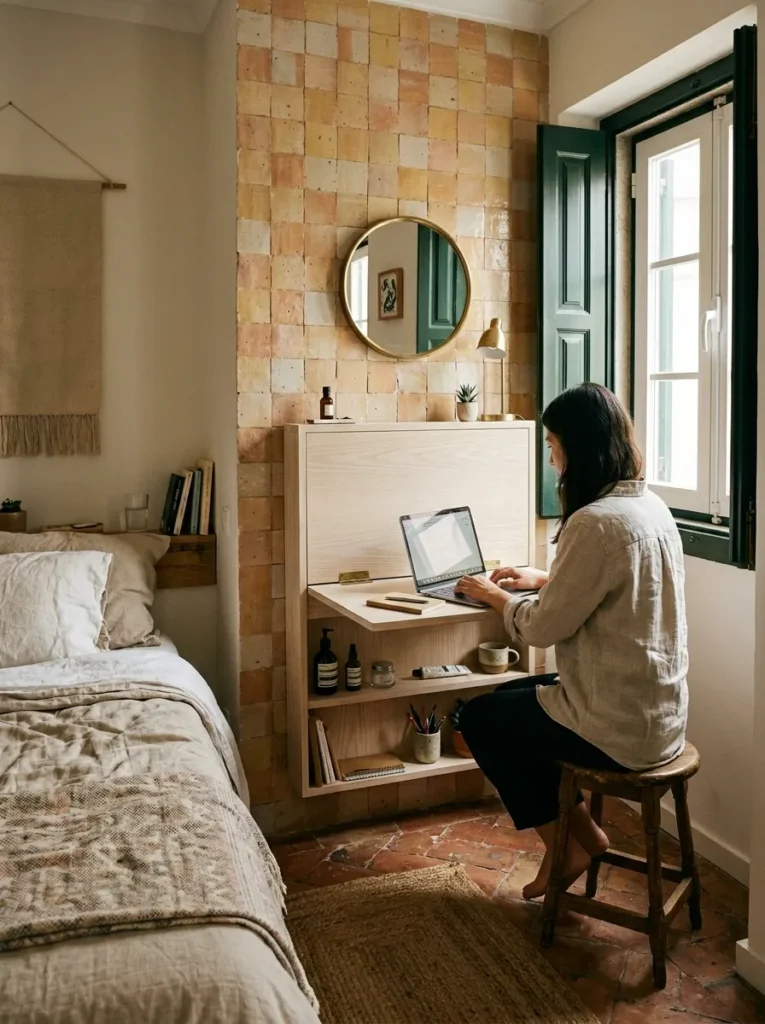
A vanity or desk in a small bedroom usually means permanently sacrificing floor space to a piece of furniture used for twenty minutes a day. A wall-mounted drop-leaf desk, hinged to fold flat against the wall when not in use, with a slim shelving unit built in beneath it for stationery or makeup, solves that without removing the function entirely. Choose a hinge rated for at least 15 kilograms if you’ll be using it as a vanity with a mirror and supplies. Folded down, it reads as a piece of wall art rather than furniture, which is precisely the disguise a small bedroom benefits from.
9. Choose Bedroom Storage Furniture in a Single Continuous Material
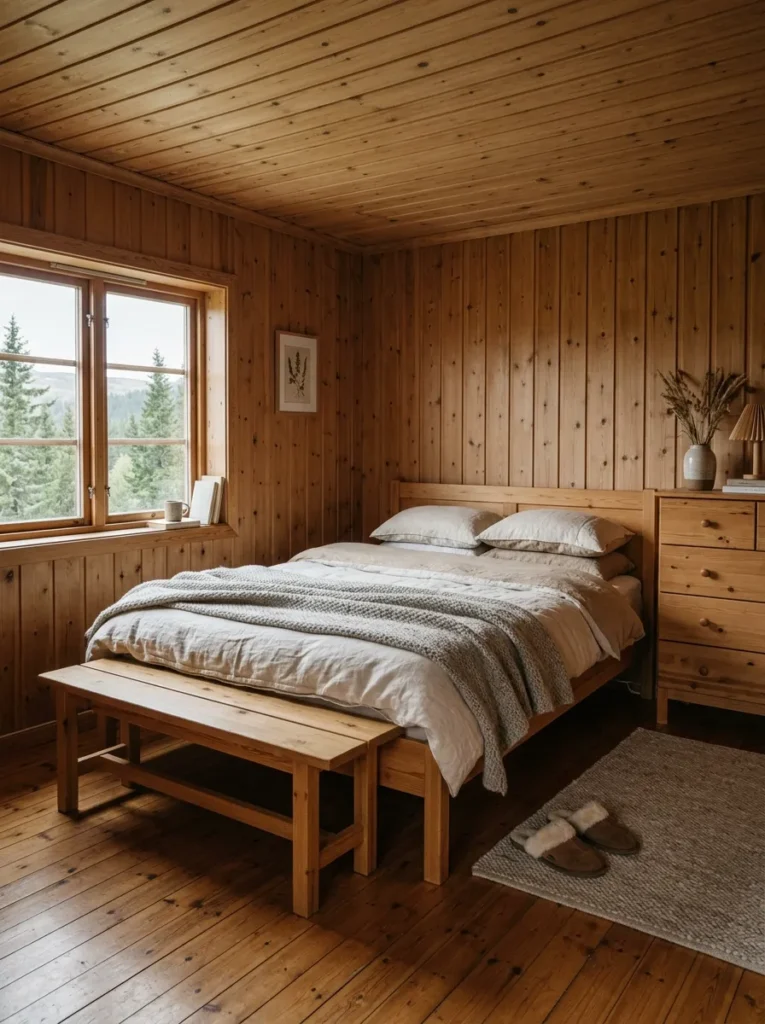
This is less a single object and more a rule that should govern every other choice on this list. When storage furniture in a small bedroom is chosen piece by piece — a pine chest here, a white laminate cube there, a black metal cart elsewhere — the room reads as cluttered even when the actual volume of stuff is well controlled. Choosing one wood tone or one finish family across the bed frame, the bench, the shelving, and any visible storage immediately makes the room look intentional rather than accumulated. This single decision does more to make a small bedroom feel calm than any individual storage object on this list, including the ones with more capacity.
10. Use Under-Bed Rolling Drawers With Labelled Fabric Bins
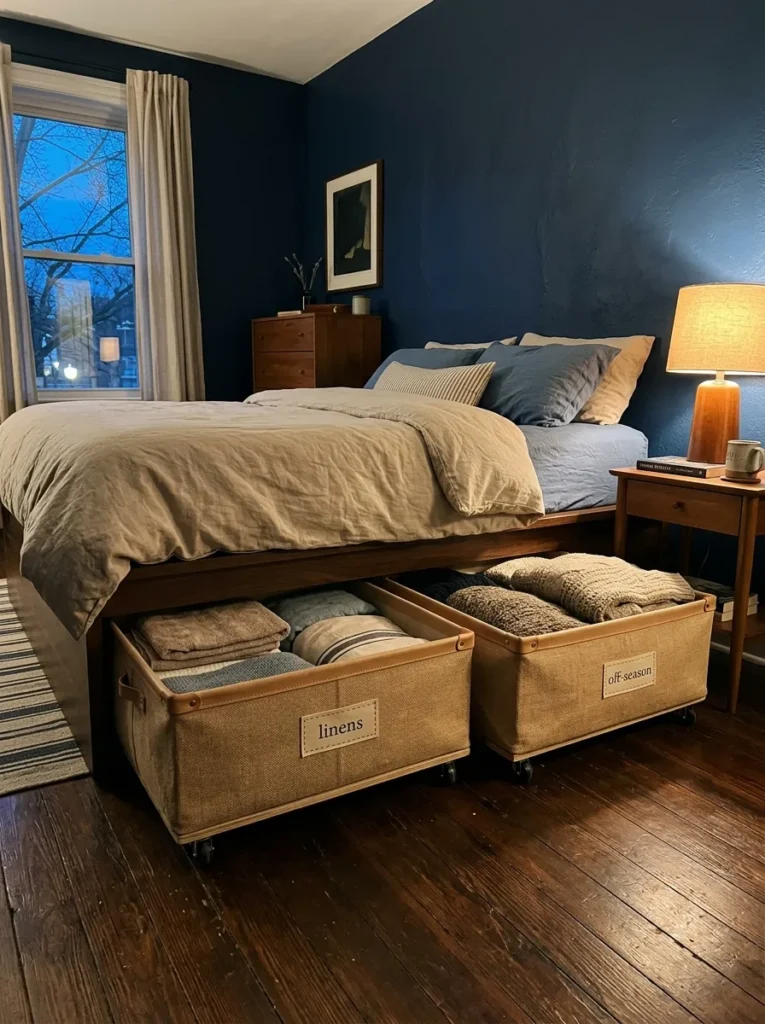
If your bed frame doesn’t have built-in storage and replacing it isn’t an option, under-bed rolling drawers in woven fabric or canvas with a rigid base solve most of the same problem for a fraction of the cost. Choose bins no taller than your bed’s clearance minus 3 centimetres, so they roll out cleanly without scraping the frame. Label them on the short end facing outward — “off-season,” “linens,” “shoes” — so you’re not unzipping four bins to find one item, which they will if left unlabelled, every single time. This is the cheapest entry on this entire list and one of the most effective.
11. Add a Corner Wardrobe Instead of a Standard Flat-Front One
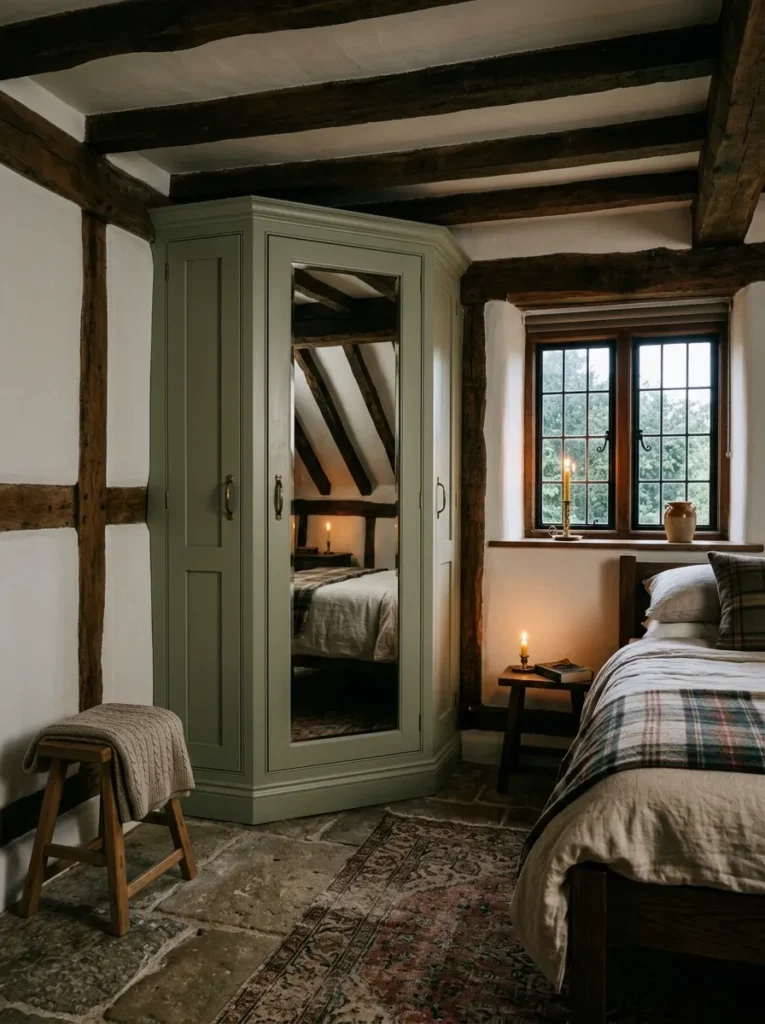
Standard flat-front wardrobes are designed for rooms with a long, uninterrupted wall, which most small bedrooms simply don’t have. A corner wardrobe, fitted diagonally into an unused corner, claims space that would otherwise sit completely empty and often allows for a wider hanging rail than a flat unit could manage in the same square footage. The trade-off is a slightly more complex installation, since corner units are rarely off-the-shelf and often need to be custom-built or assembled from a modular corner-specific kit. For a genuinely tight bedroom, that extra effort at the planning stage usually pays for itself in actual usable hanging space.
12. Mount a Vertical Shoe Rack Behind the Door
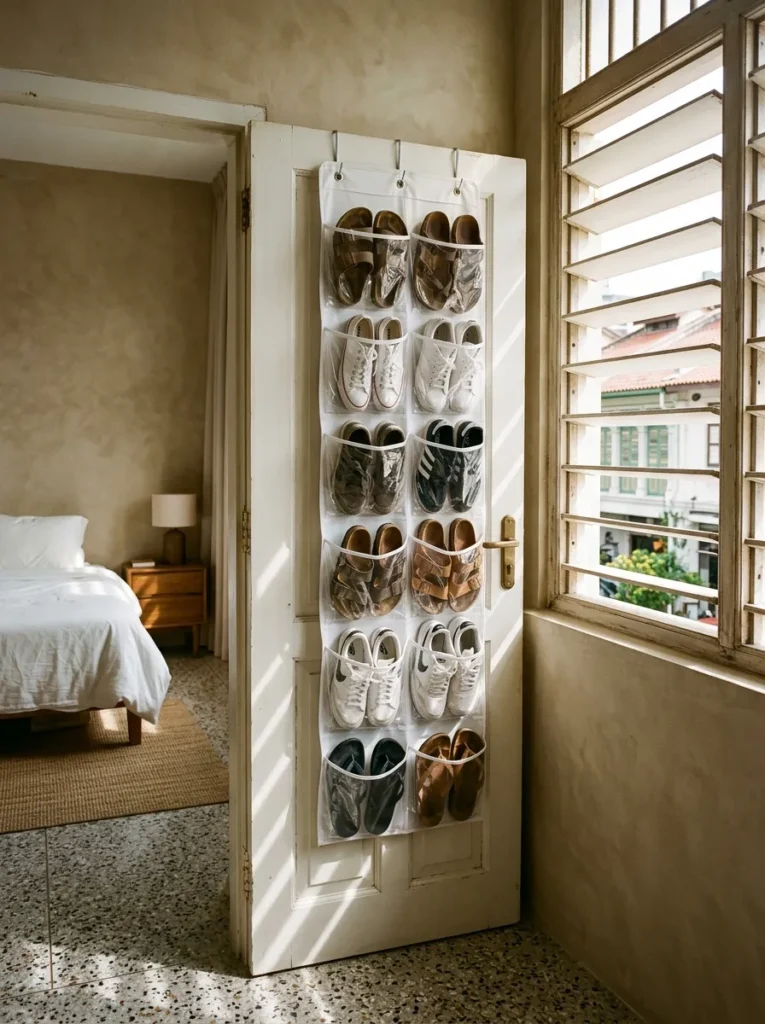
The back of a bedroom door is one of the most reliably wasted surfaces in the entire room, and a vertical over-the-door shoe rack with individual slotted compartments solves an entire category of floor clutter in a space that was otherwise doing nothing. Choose a rack with rigid dividers rather than fabric pockets; fabric sags within a few months under the weight of actual shoes, and a sagging rack looks worse than no rack at all. This is one of the few small bedroom storage solutions that requires no tools, no measuring, and no commitment — it hangs over the door frame and can be removed in under a minute if it doesn’t work out.
13. Choose a Tall, Narrow Chest Over a Wide, Short Dresser
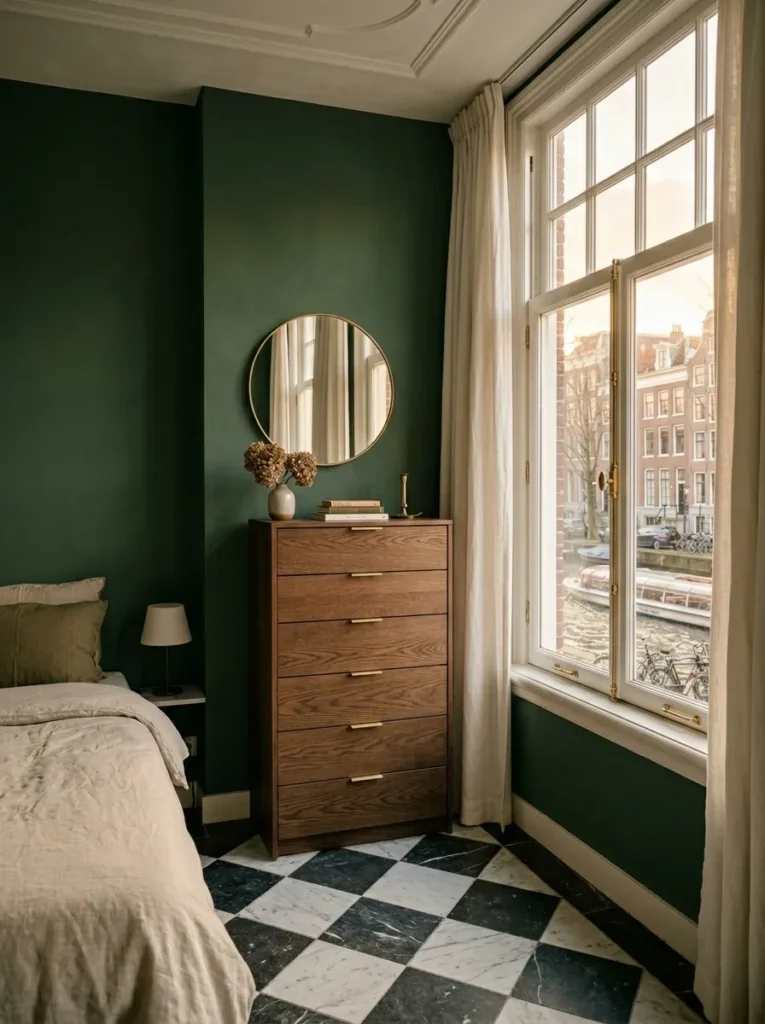
A wide six-drawer dresser is the default chest of drawers shape, but in a small bedroom it eats a disproportionate amount of wall space relative to its storage capacity. A tall, narrow chest — five or six drawers stacked vertically rather than spread horizontally, no wider than 60 centimetres — holds a comparable volume while claiming a fraction of the floor footprint. The narrower profile also leaves room for a mirror or art above it, which a wide dresser typically can’t accommodate without looking crowded. Most people instinctively reach for the wider option because it looks more substantial in a showroom, but substantial is exactly the wrong quality in a small room.
14. Use a Tension Rod Inside a Wardrobe to Create a Second Tier
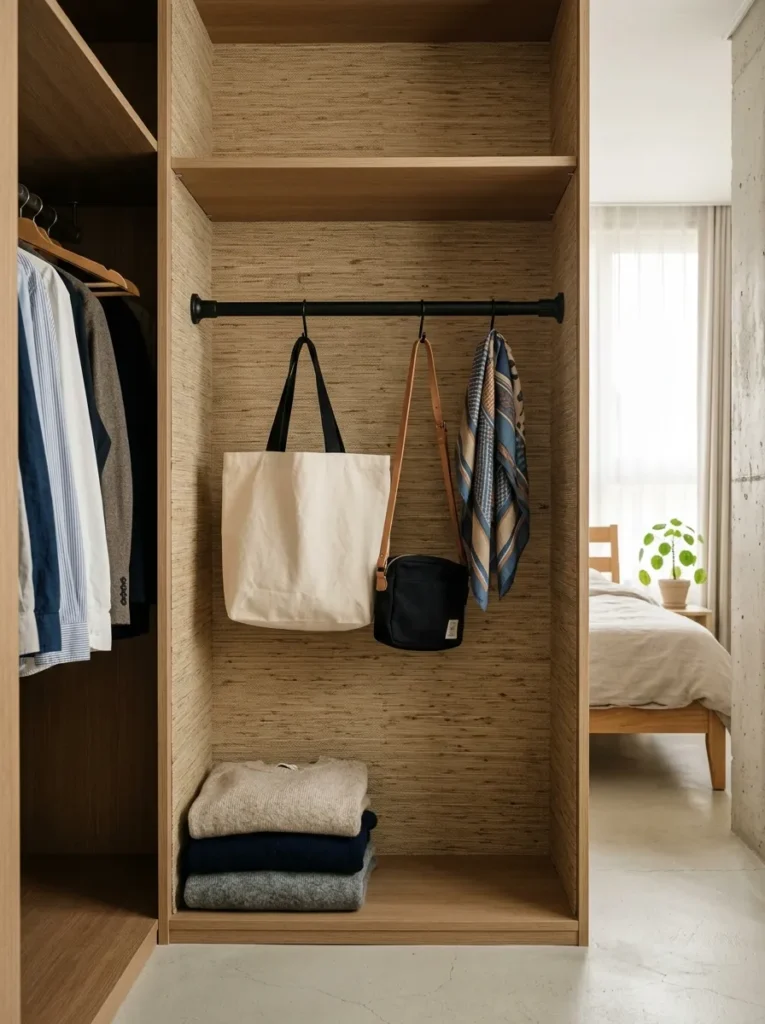
This costs less than almost anything else on this list and solves one of the most common wardrobe complaints in a small bedroom: too much vertical air space above folded items and not enough actual shelving. A simple spring-tension rod installed horizontally above a stack of folded clothing or shoe boxes creates an instant second tier for handbags, scarves, or additional folded items, without drilling a single hole. It won’t hold heavy weight, so keep it to lightweight items, but as a way to claim otherwise dead air inside a wardrobe, nothing else on this list is faster or cheaper to set up.
15. Choose Bedside Storage With an Asymmetric Pair Instead of Matching Tables
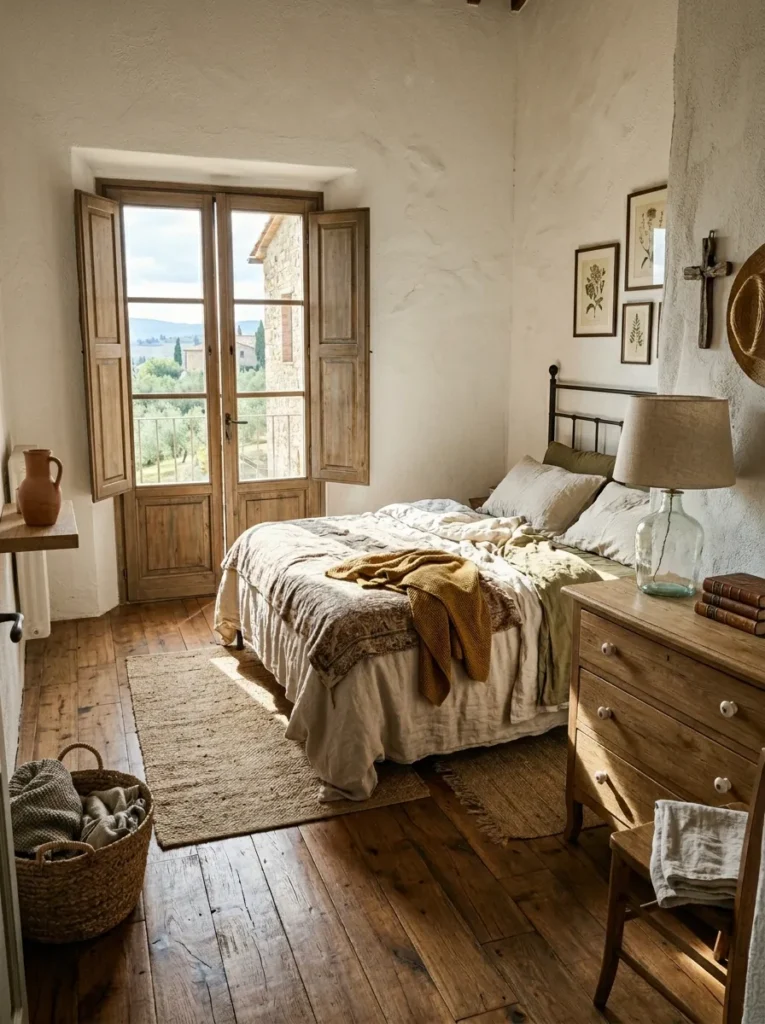
Matching bedside tables are the safer choice and almost never the better one in a genuinely small bedroom, because identical furniture on both sides forces you to size both pieces to fit the tighter side, wasting capacity on whichever side actually has more room. An asymmetric pair — a slim wall-mounted shelf on the tight side, a small two-drawer chest on the more spacious side — lets each side of the bed work with its own actual constraints rather than an arbitrary matching rule. It also, almost as a side effect, makes the room look considerably more designed and less like a hotel.
16. Add a Fold-Down Wall Shelf in the Closet for Luggage and Bulky Items
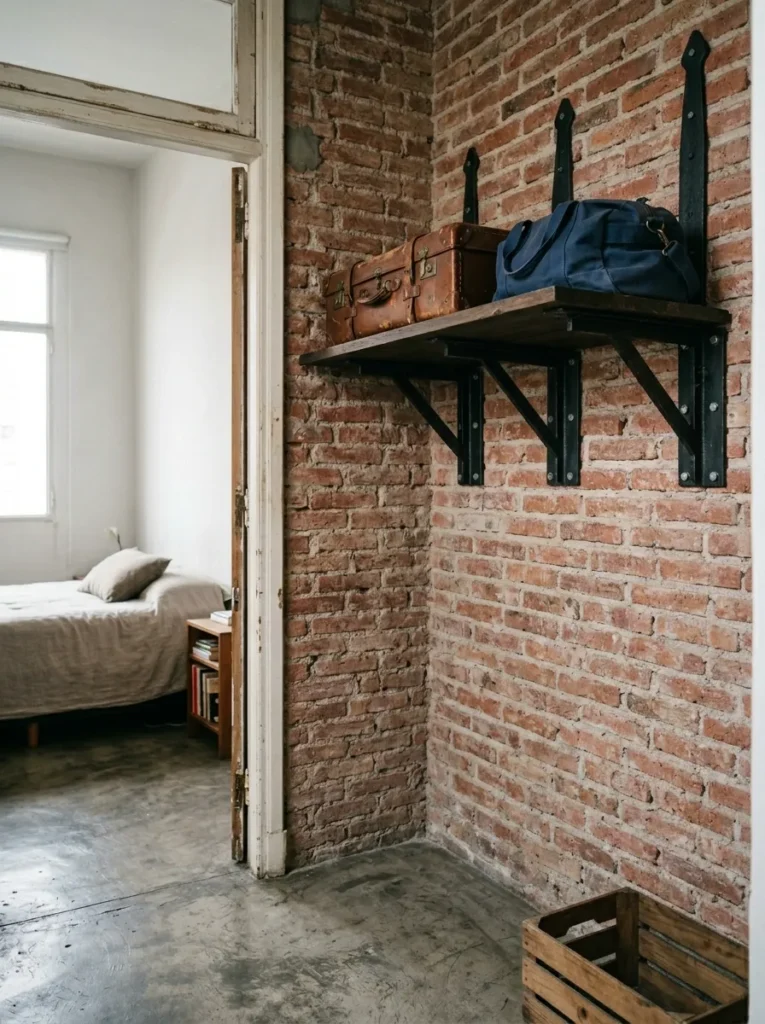
Suitcases and other bulky, infrequently used items are the single hardest category of object to store gracefully in a small bedroom, because they’re too large for drawers and too irregular for shelves designed around folded clothing. A hinged fold-down shelf mounted high inside a closet — rated for at least 25 kilograms and installed roughly 180 centimetres from the floor — gives bulky items a dedicated home above the everyday hanging zone, foldable flat against the wall when nothing is stored on it. This is a more involved installation than most ideas on this list, and worth doing properly with proper wall anchors rather than adhesive brackets that the weight will eventually pull free.
17. Use a Daybed With Built-In Drawers Instead of a Standard Bed Frame
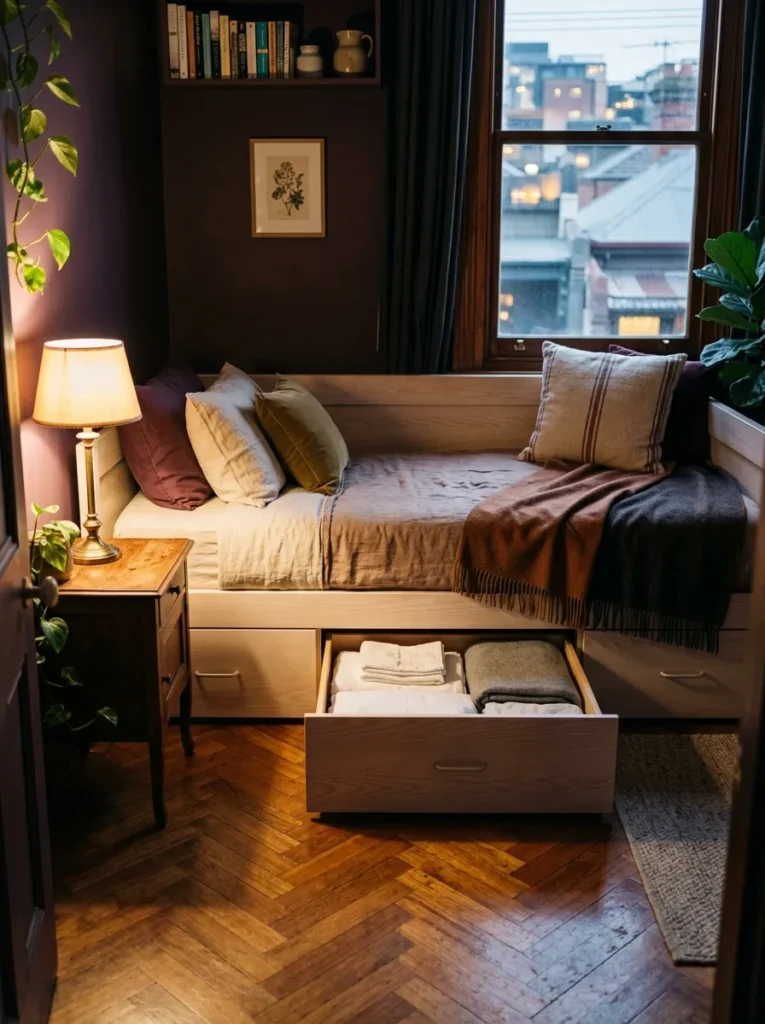
For bedrooms doing double duty as a guest room or home office, a daybed frame with built-in drawer storage along the base solves a problem standard bed frames don’t even attempt to address: it functions as seating during the day and sleeping at night while still offering drawer access from the front rather than requiring the mattress to be lifted. Choose drawers on full-extension runners rather than partial ones, since partial-extension drawers in a daybed frame typically only allow access to the front third of the drawer, which makes anything stored at the back functionally unreachable.
18. Choose a Mirrored Wardrobe Door to Add Light Without Adding Furniture
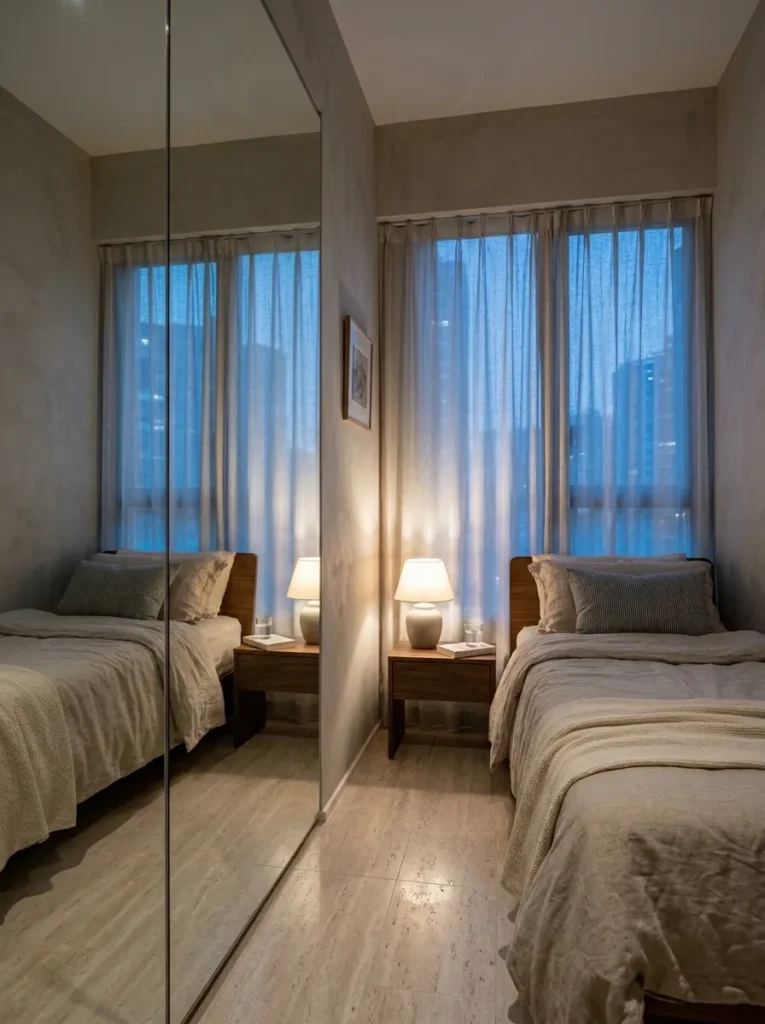
This isn’t storage in the literal sense, but it solves a problem storage furniture creates: every piece you add to a small bedroom reduces the amount of light bouncing around the room, and a room that feels dim feels smaller regardless of how well-organised it is. A full-length mirrored wardrobe door reflects window light back into the room and creates the visual illusion of doubled floor space, which matters enormously once you’ve filled the room with the other nineteen ideas on this list. Choose a single large mirrored panel over multiple smaller mirrored sections; the seams in a segmented mirror door break up the reflection and undercut the effect you’re going for.
19. Add a Slim Bookcase as a Soft Room Divider in an Open-Plan Bedroom
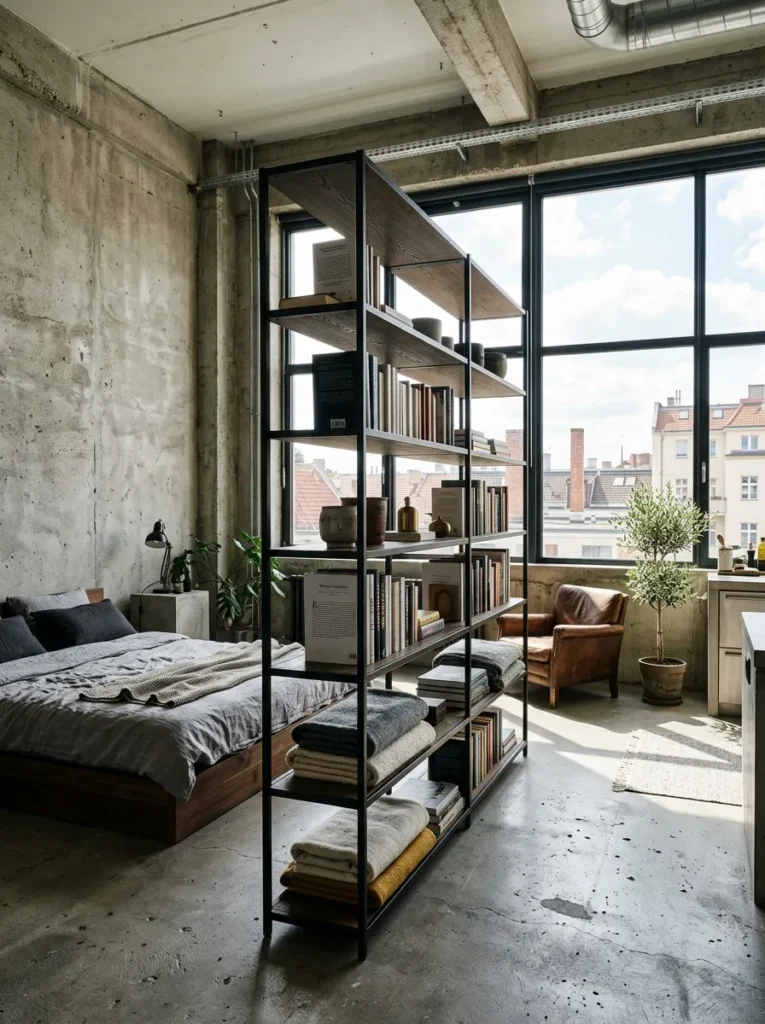
In a studio or open-plan layout, a bedroom area often has no defined edge at all, and small bedroom storage solutions usually ignore that problem entirely. A slim, open-backed bookcase — no deeper than 25 centimetres — placed perpendicular to the bed creates a soft visual boundary between the sleeping area and the rest of the room while providing genuine storage on both faces simultaneously. Open-backed shelving keeps light moving through rather than blocking it the way a solid-backed unit would, which matters considerably in a room that’s already working with limited square footage and no separate walls to begin with.
20. Store Less Than You Think You Need To
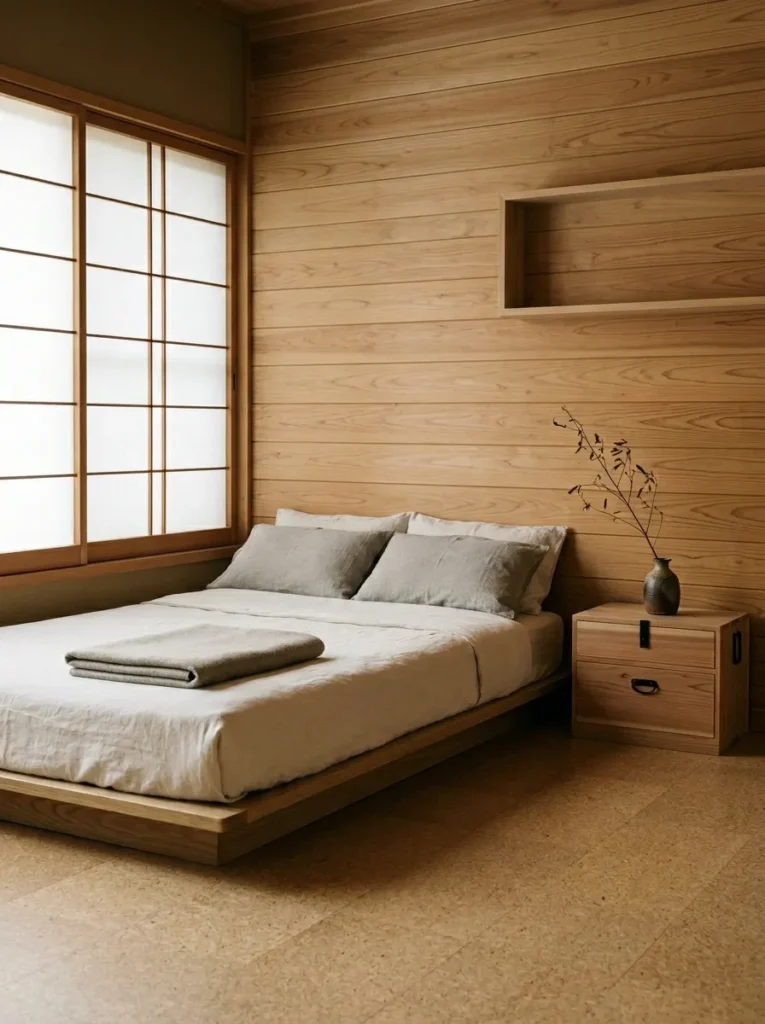
Every idea on this list is about finding more places to put things. This one is about not having as many things to put anywhere in the first place, and it is the idea most small bedroom storage articles are too afraid to include, because furniture sells and restraint doesn’t. Before adding a single piece from this list, take everything out of the room’s existing storage and only put back what you’ve actually used in the past six months. The bed with hydraulic lift storage, the corner wardrobe, the tall narrow chest — all of it works better, looks calmer, and gets used more consistently when it isn’t immediately filled back up to capacity the week it’s installed. The best-organised small bedrooms aren’t the ones with the most storage. They’re the ones with the least need for it.
Final Thoughts
If you only do one thing from this list, make it the bed. Whatever sits beneath your mattress is the single largest untapped storage zone most small bedrooms have, and getting that right makes every other decision easier because it absorbs the bulky, awkward items that clutter every other surface. These small bedroom storage ideas work best in combination rather than in isolation — a hydraulic lift bed paired with a tension rod and a single consistent wood tone will outperform any one expensive piece bought in isolation. Start with whatever is currently the most visible source of mess, not whatever looks the most impressive in a photograph. The room will tell you what it actually needs once the obvious clutter is gone.
Save these small bedroom storage ideas for your next organising project or bedroom refresh.