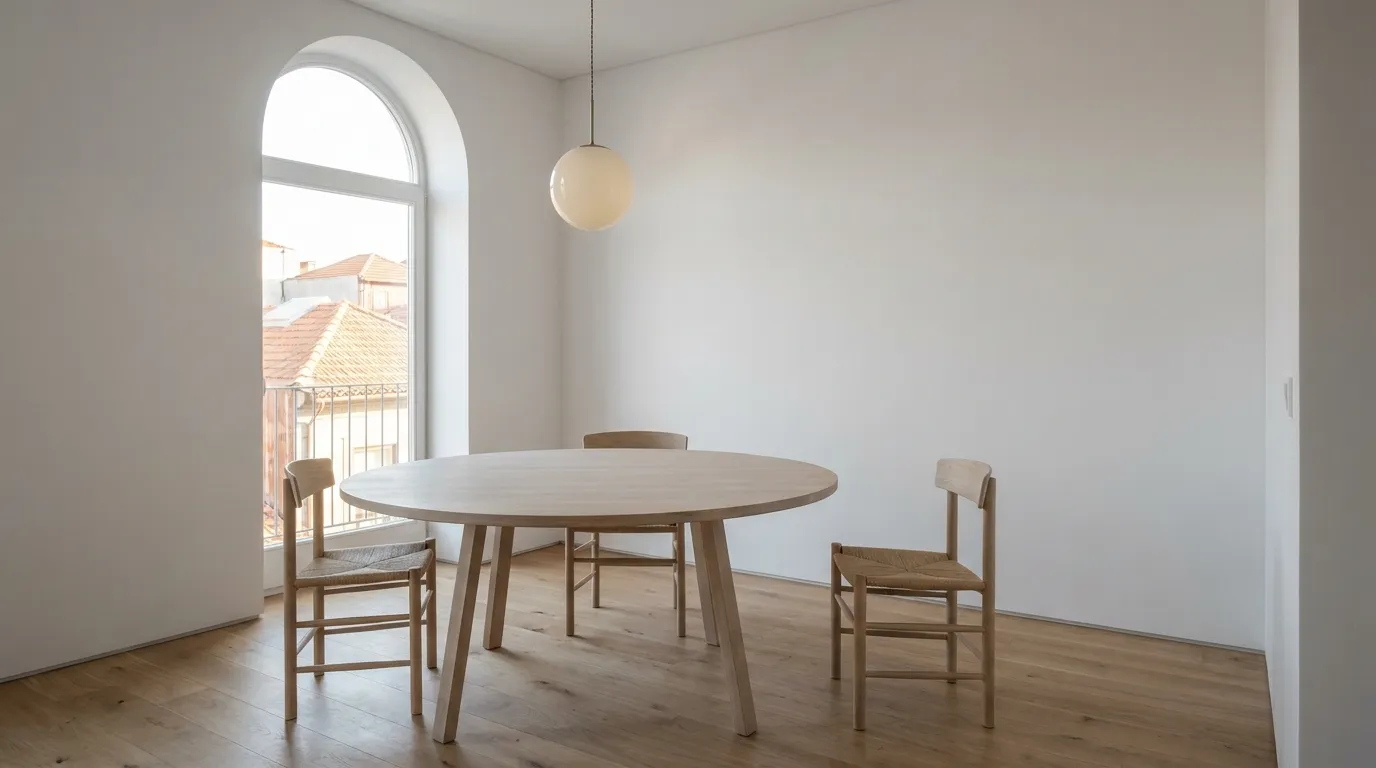
23 Minimal Dining Room Ideas That Feel Clean and Relaxed
Minimal doesn’t mean empty, and it definitely doesn’t mean cold — but that’s how most minimal dining room ideas get executed, which is exactly why so many of them look unfinished rather than calm. The difference between a dining room that feels restful and one that feels like a furniture showroom with the personality removed comes down to a handful of specific decisions, not a general commitment to “less.” These 23 ideas are about choosing the right things to remove and the right things to keep, in that order. Some of them will mean taking something off your table tonight.
1. Choose One Statement Pendant Over a Chandelier
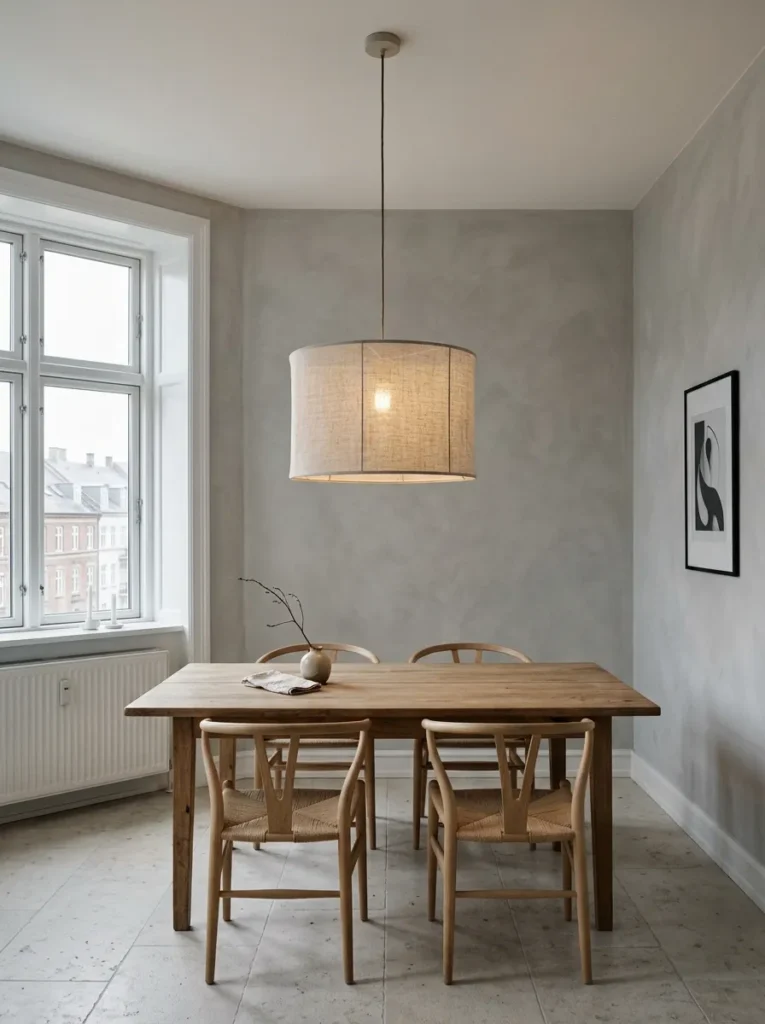
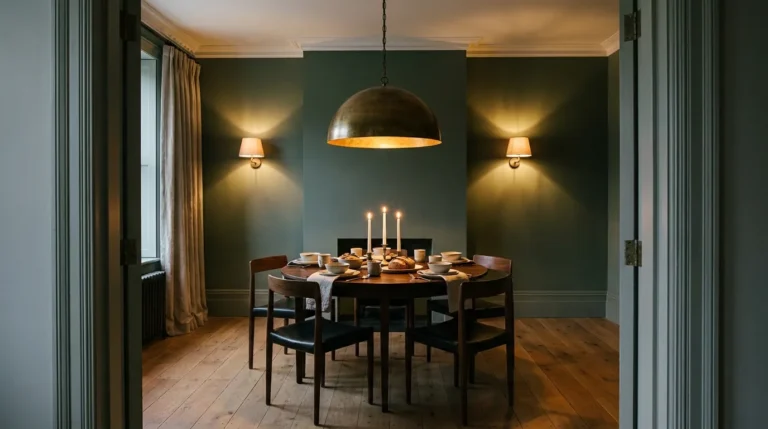
A chandelier in a small or mid-sized dining room is doing two jobs at once — lighting the table and announcing how much the room cost — and in a minimal space, that second job works against everything else you’re trying to do. A single, well-proportioned pendant hung 70 to 80 centimetres above the table surface lights the meal without competing for attention. This is the decision that changes everything about how the room reads the moment you walk in.
2. Commit to One Tone Family, Not a Palette
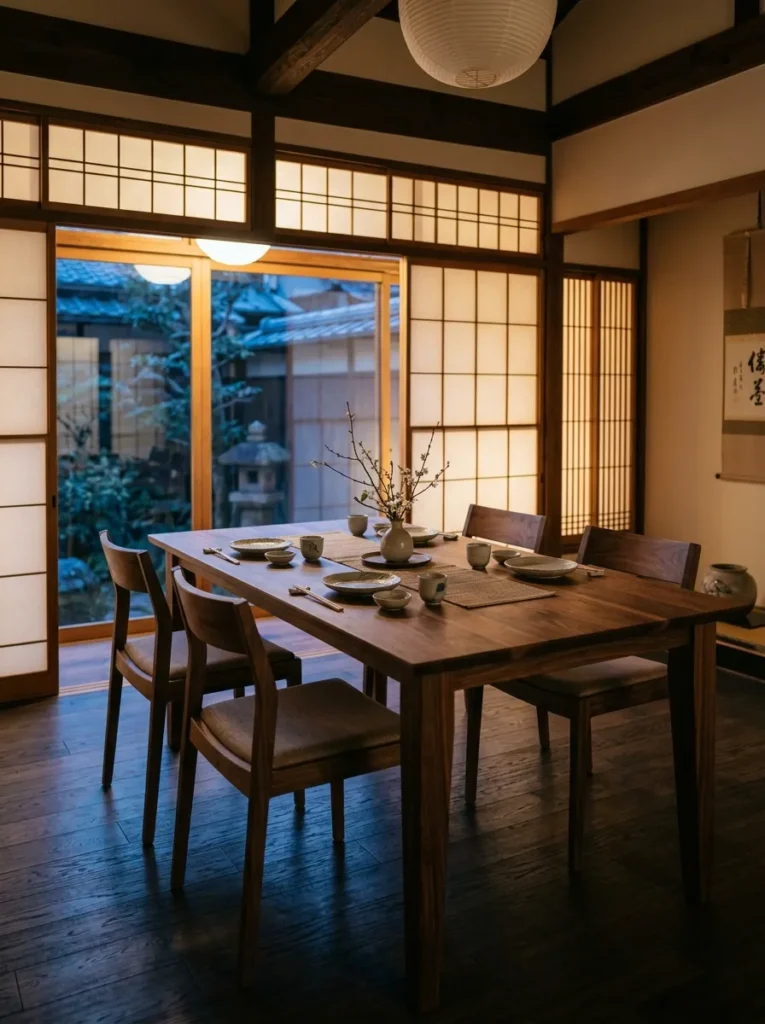
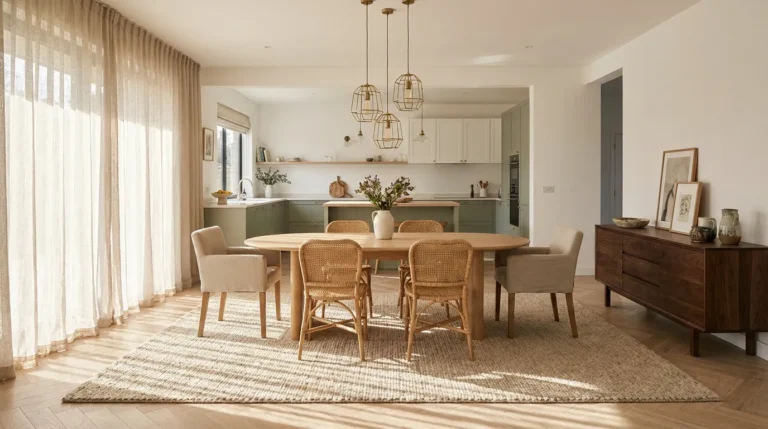
Most “neutral” dining rooms aren’t actually neutral — they’re a mix of warm beige, cool grey, and off-white all fighting quietly for dominance, and the eye registers that friction even if you can’t name it. Pick one tone family and stay inside it: warm ivory through to walnut, or cool grey through to charcoal, but not both. The room will feel intentional rather than indecisive, and that’s the entire difference between minimal and merely sparse.
3. Use a Bench on One Side Instead of Chairs All Around
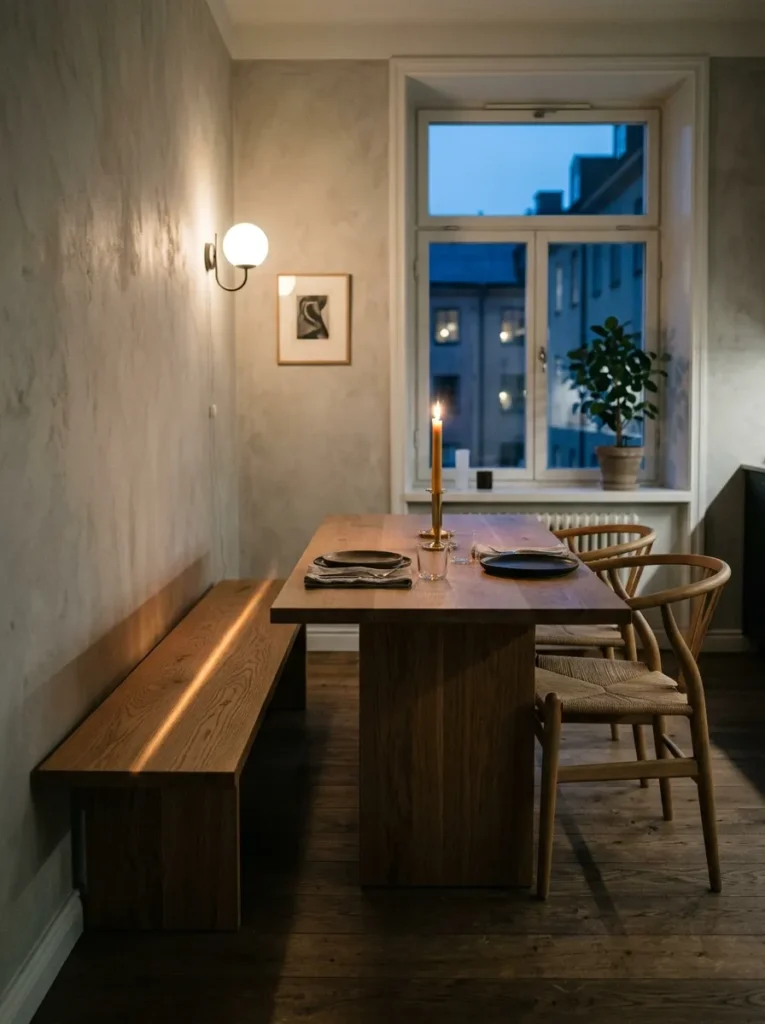
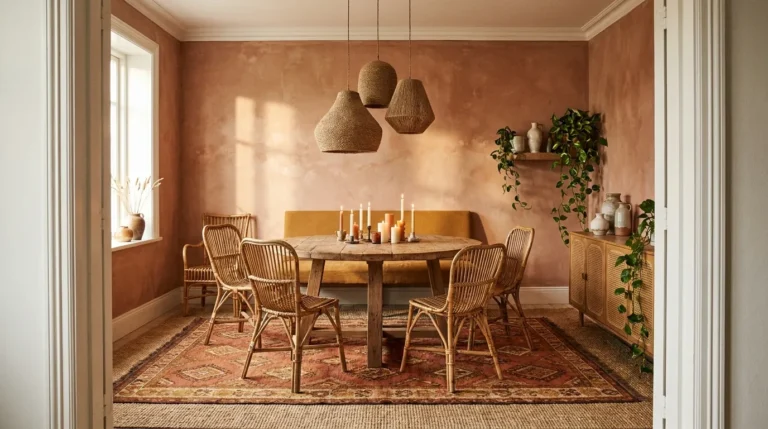
A bench along one side of the dining table removes the visual repetition of four or six identical chair backs, which is one of the busiest elements in a typical dining room without anyone noticing why. It also tucks fully under the table when not in use, which a chair with arms rarely does cleanly. Pair it with chairs on the opposite side for contrast — matching the bench too is the mistake that makes the whole thing look like a furniture set rather than a considered room.
4. Remove the Rug Entirely for a Cleaner Dining Space
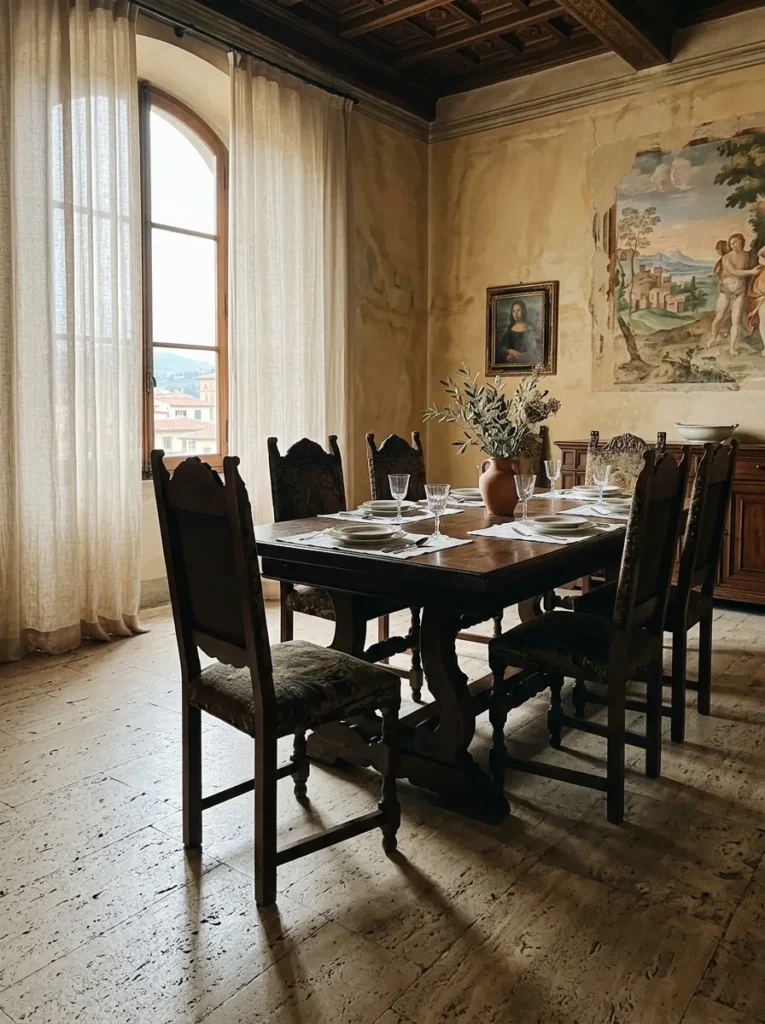
This is one most people resist immediately, because a rug under the dining table has been treated as a given for so long that leaving the floor bare feels like skipping a step. It isn’t. An exposed floor under a dining table — especially in herringbone, wide plank, or polished stone — reads as more deliberate than a rug ever does, and it removes one more pattern, texture, and crumb-catcher from the room. Try it before you buy the rug, not after.
5. Choose Round Over Rectangular in a Small Room
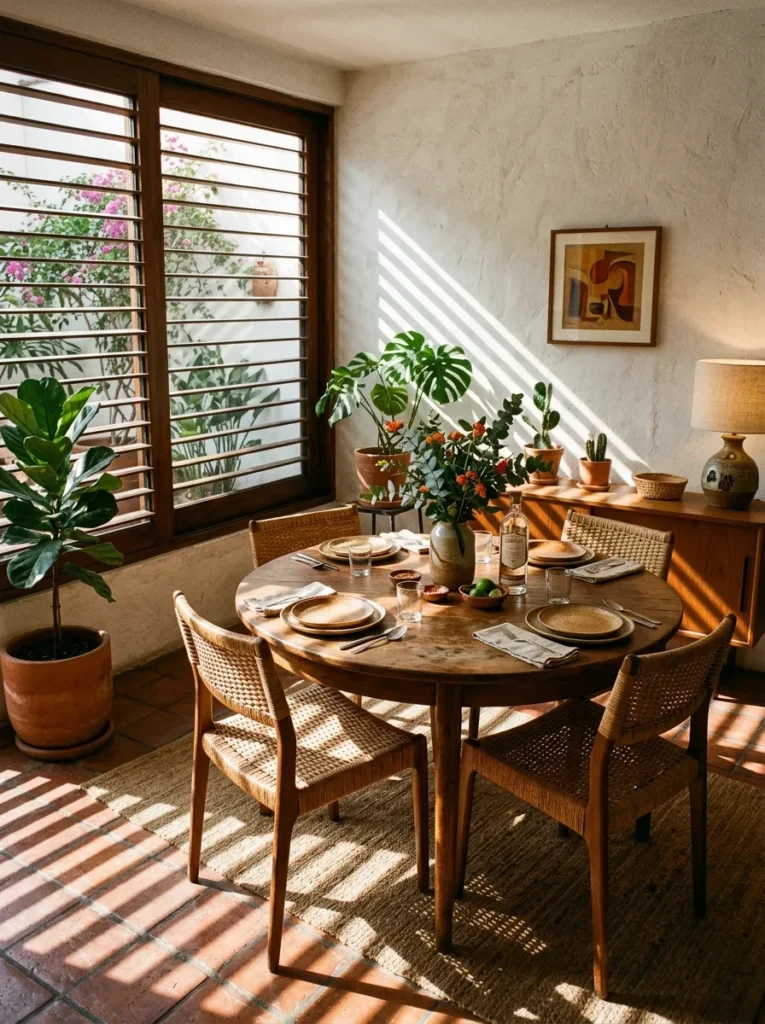
A rectangular table forces hard corners into a room that’s already tight on circulation space, and those corners are exactly where people bump into the table on their way past. A round table of the same approximate seating capacity has no corners to navigate around, and it tends to read as smaller than it actually is, which works in your favor in a minimal dining room where every piece of furniture is visually exposed. Most people get this wrong because rectangular feels like the default, not because it’s actually the better fit.
6. Leave the Table Bare Between Meals
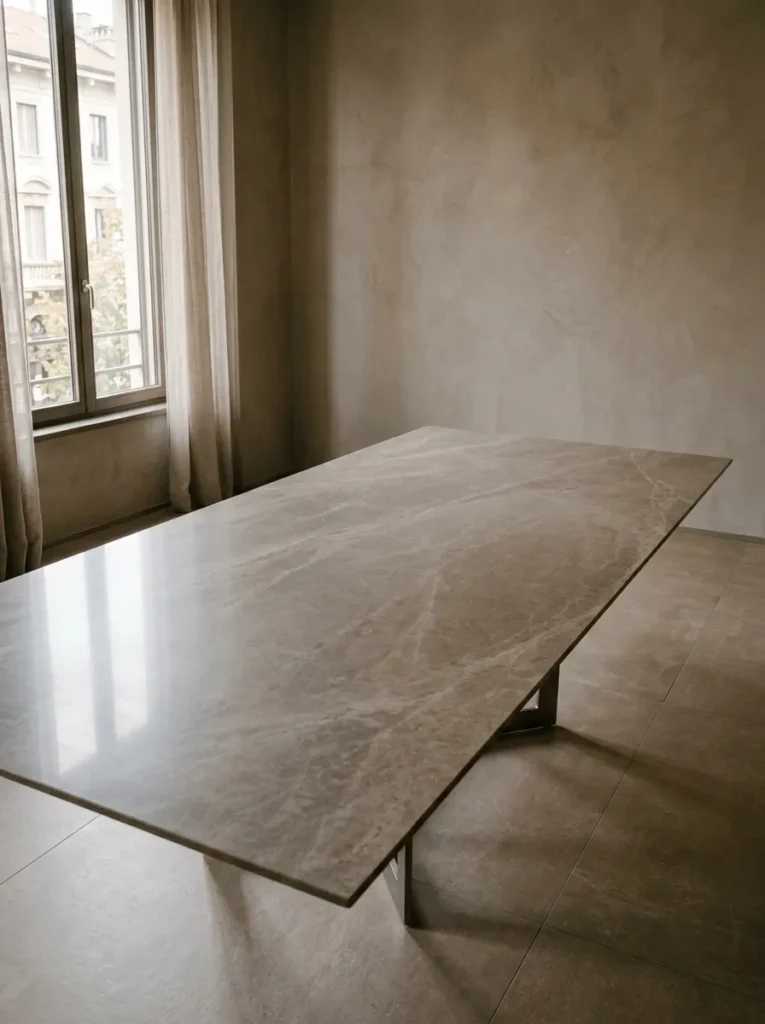
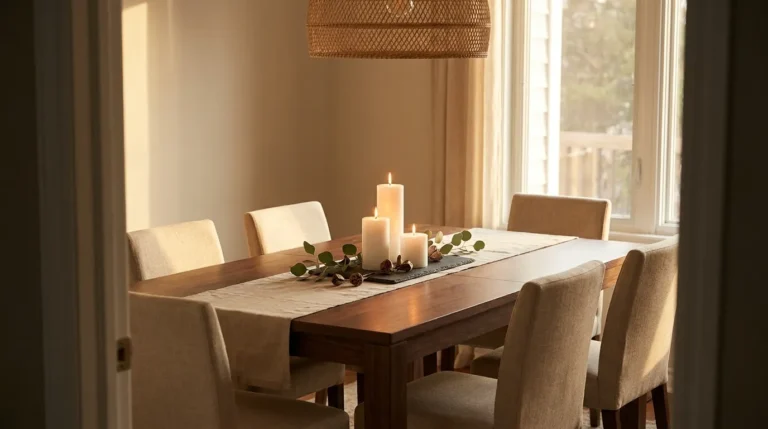
A runner, a bowl of decorative fruit, a candle arrangement that never gets lit — these are the things that quietly undo a minimal dining room the other 22 hours of the day when no one’s eating at it. Leave the table completely bare as the default state, and bring out what you need only when you’re using it. The table itself, in the right wood or stone, is the centerpiece. It doesn’t need help.
7. Replace the Sideboard With Open Shelving
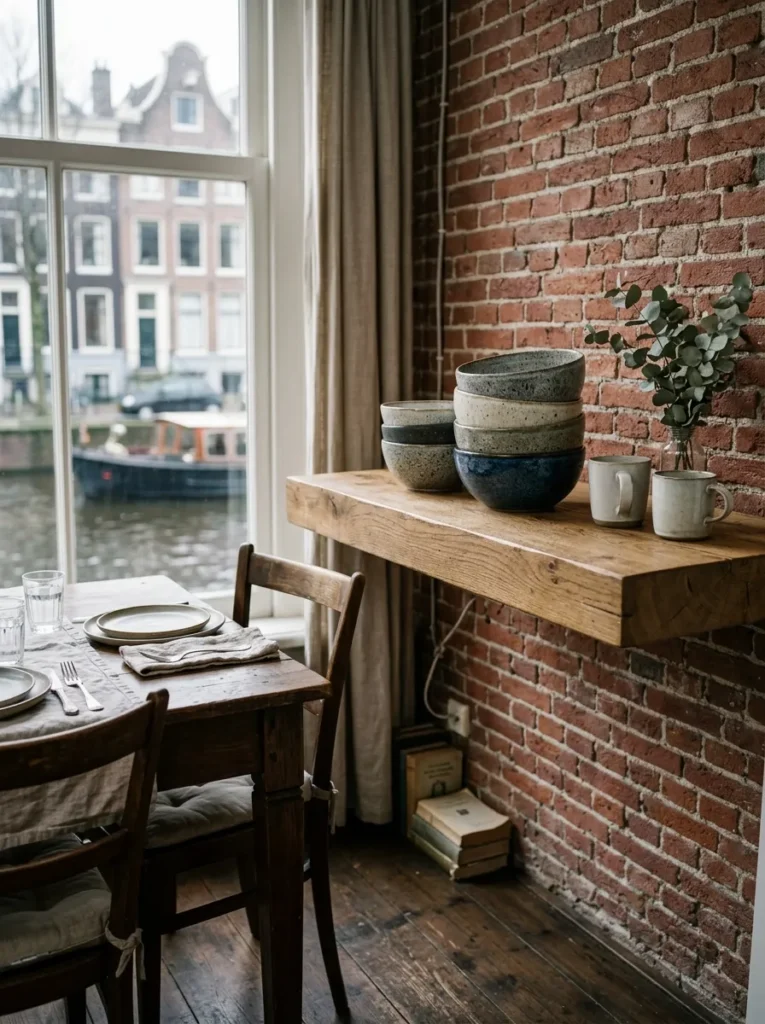
A sideboard is a box, and a box in a minimal room is something you have to actively manage so it doesn’t become a dumping ground for mail and spare chargers. Open shelving — even a single floating shelf at table height plus one above it — holds the same plates and glassware in plain view, which paradoxically keeps people more honest about what’s stored there because clutter on open shelving is visible immediately. This works especially well if you’re tight on floor space to begin with.
8. Push the Chairs Fully Under the Table When Not in Use
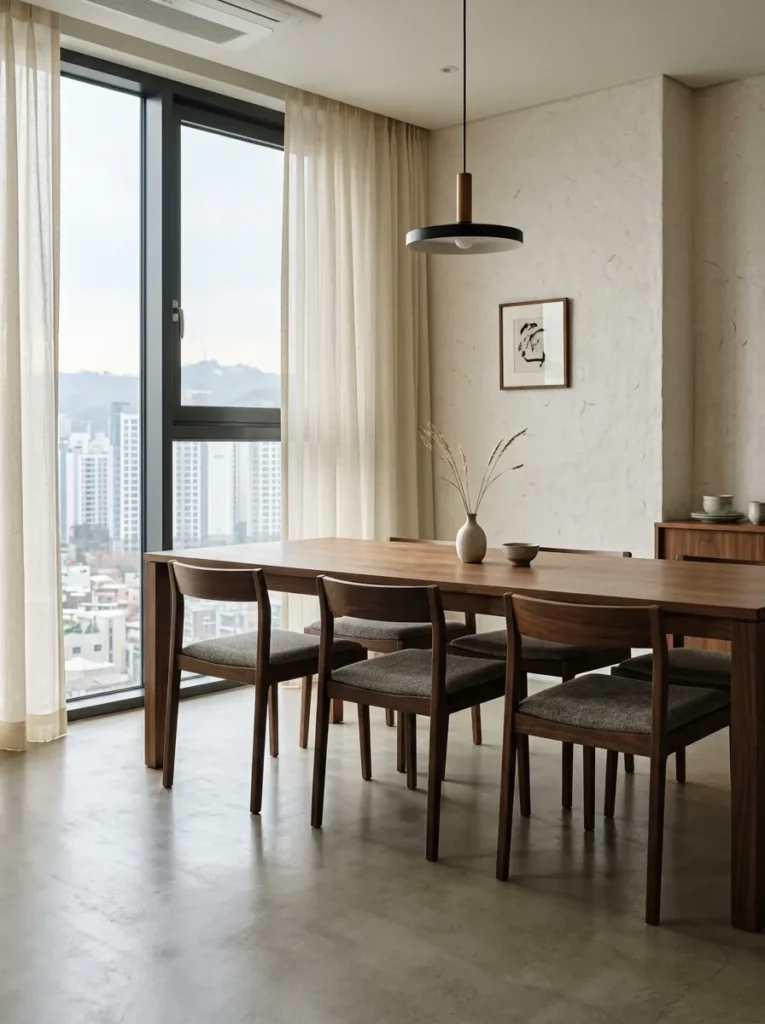
This sounds almost too simple to mention, but it’s the single fastest way to make a dining room photograph and feel larger than it is. Chairs pulled out at angles, even slightly, break up the floor plane and make the room read as occupied and slightly chaotic. Fully tucked chairs return the floor space to the room visually, even though nothing has physically moved except six inches of chair leg.
9. Hang One Large Piece of Art, Not a Gallery Wall
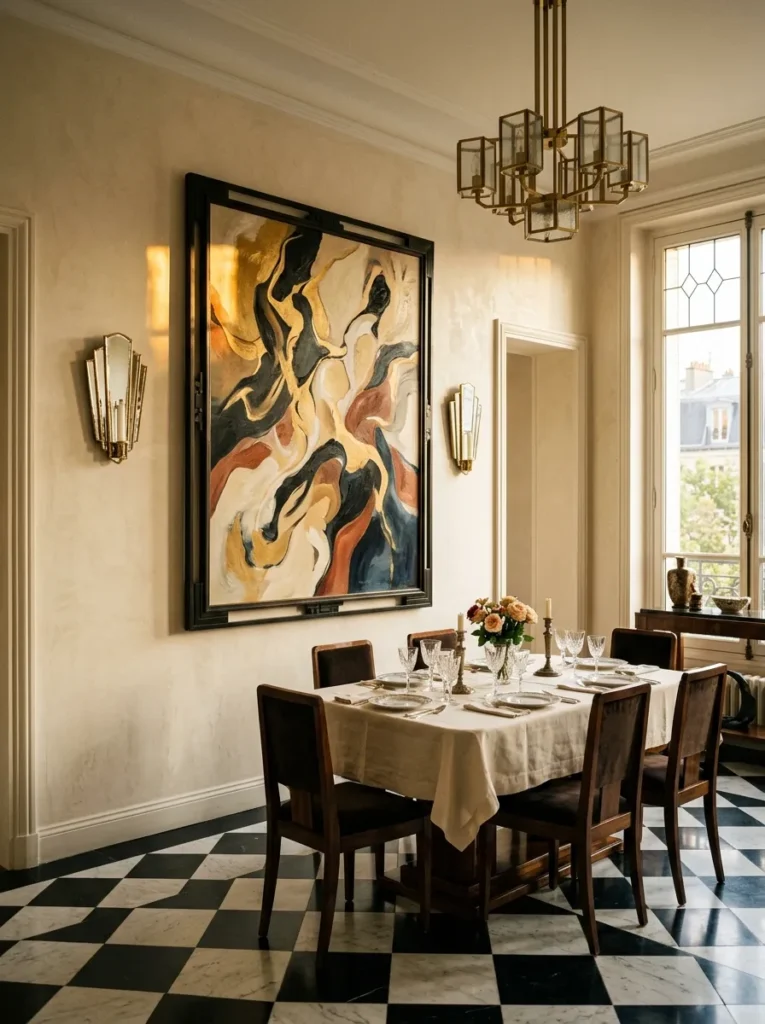
A gallery wall is a living room habit that gets imported into dining rooms by default, and it rarely earns its place there. A single large piece — at least 90 centimetres on its longest side — hung at the correct height relative to the table gives the eye one place to land instead of six. The matching set is always the safer choice and almost never the better one, and that applies to art just as much as furniture.
10. Skip the Window Treatment Where You Can
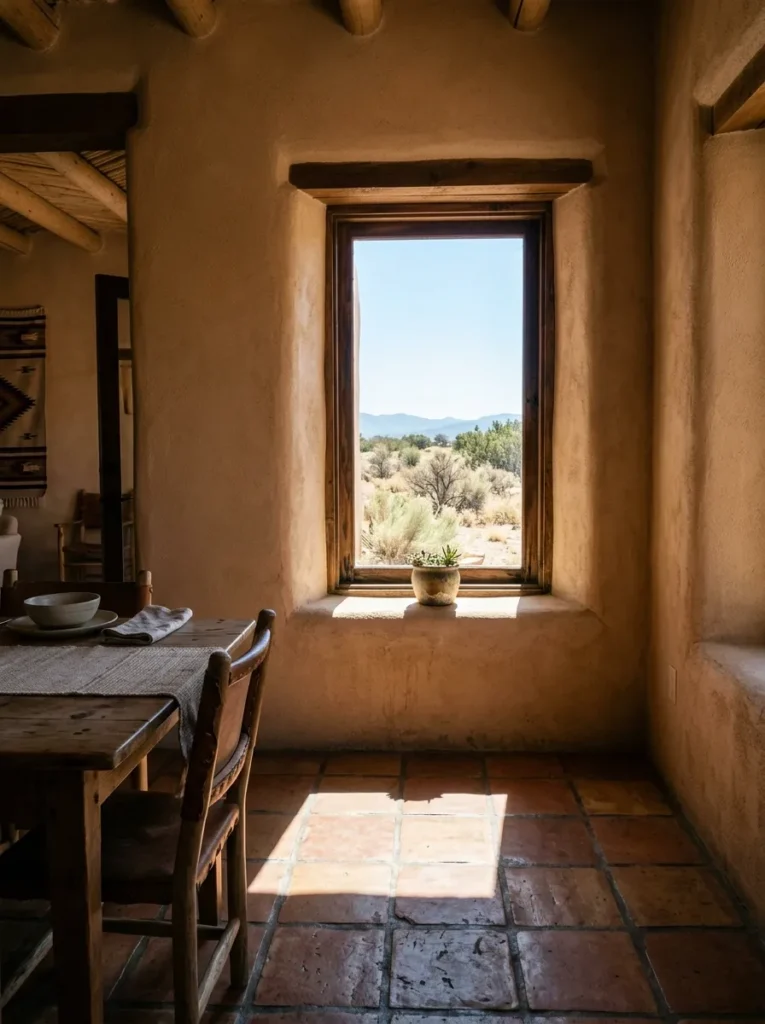
If privacy isn’t a concern, an undressed window in a minimal dining room does more for the space than almost any curtain could. The clean architectural line of the window frame becomes part of the room’s composition rather than something competing with fabric folds and hardware. Where privacy is genuinely needed, a single sheer panel does the job without adding the visual weight of layered drapery.
11. Use Plain Linen Napkins, Never a Printed Pattern
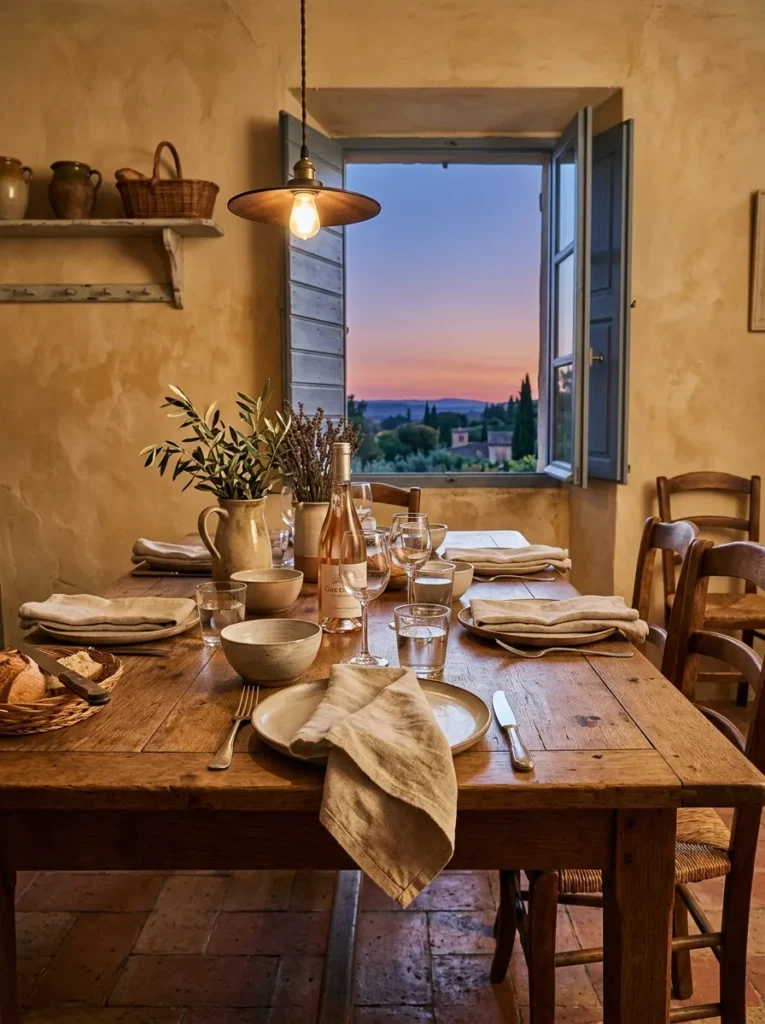
Patterned napkins are a small detail that does outsized damage in a minimal dining room, because pattern at the table is one of the few places guests look directly and up close. Plain linen, in a tone from the same family as your walls or table, disappears into the setting rather than competing with it. This is a five-dollar fix that costs nothing to test before you write off the whole approach.
12. Choose a Table With Visible, Defined Legs
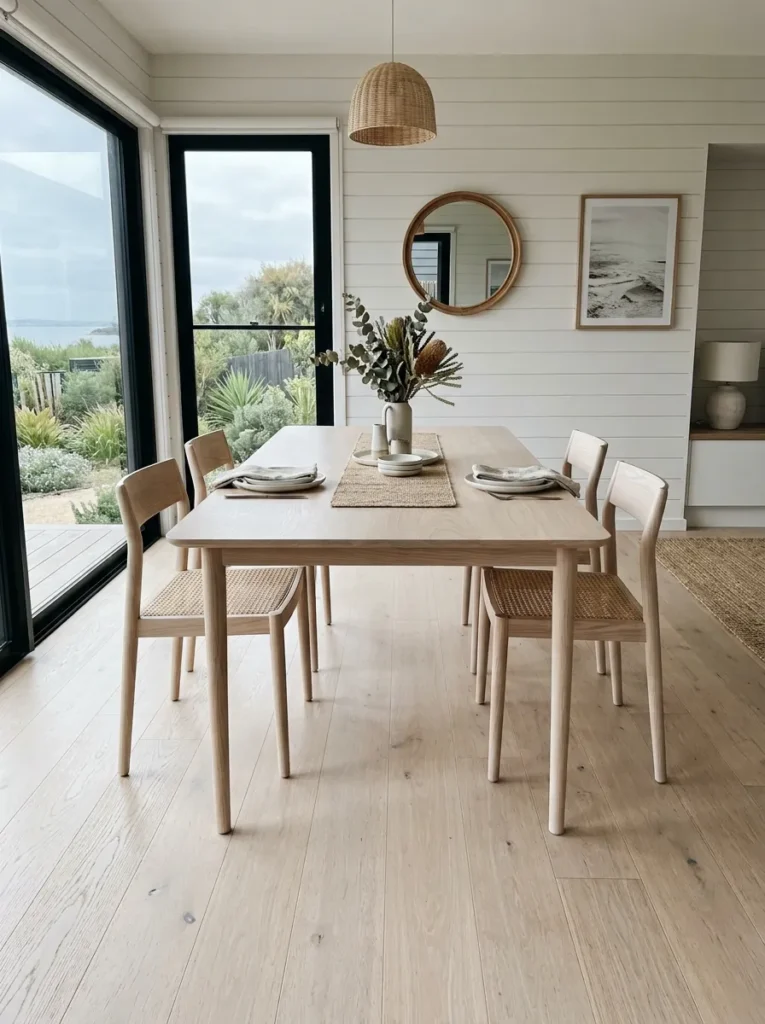
A pedestal base or pedestal with a pinwheel foot can look heavier than the tabletop it’s supporting, especially in oak or a dark stain, and that visual heaviness works against a minimal room’s whole point. Four slim, visible legs let floor and light pass underneath the table, which keeps the room feeling open even when the table itself is large enough to seat six. The base matters more than people assume when they’re shopping by tabletop alone.
13. Light From the Walls, Not Just From Above
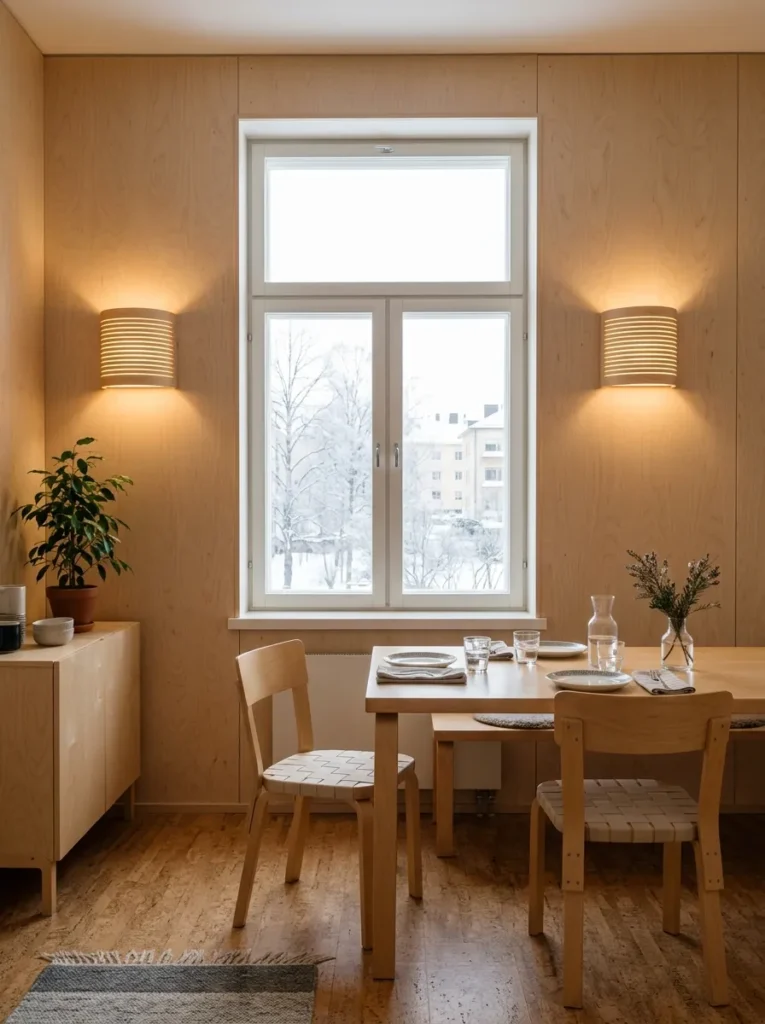
Two wall sconces flanking a piece of art or a window, set to a warm low temperature, do something a single overhead pendant can’t: they light the room itself, not just the table surface. This creates depth in a way that flat overhead lighting never manages, no matter how nice the fixture is. Put both on a dimmer. Full brightness during dinner is rarely the right call.
14. A Relaxed Dining Room Chair Set, Deliberately Plain
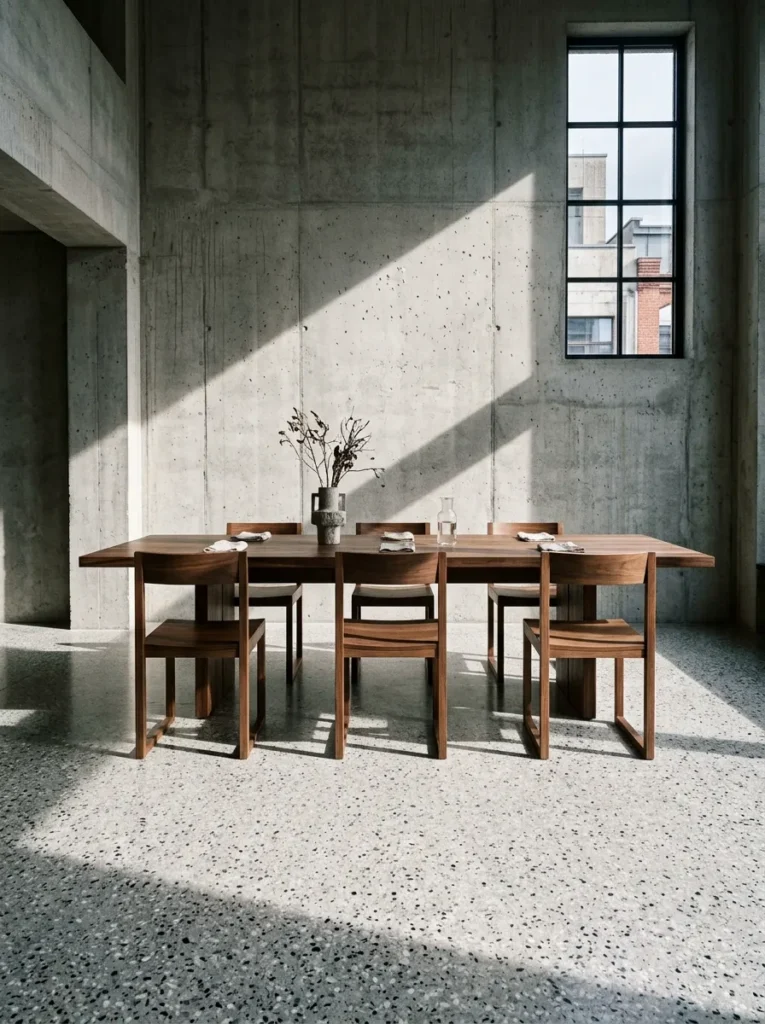
Mismatched chairs work in a maximalist or eclectic dining room, but in a minimal one they reintroduce the visual noise you’ve spent the rest of the room eliminating. A single chair design, repeated, in an unfussy silhouette — no carved details, no ornamental backs — lets the eye settle instead of cataloguing differences around the table. This is the rare case where the matching set actually is the better choice, not just the safer one.
15. Build a Dining Nook Into a Window Bay
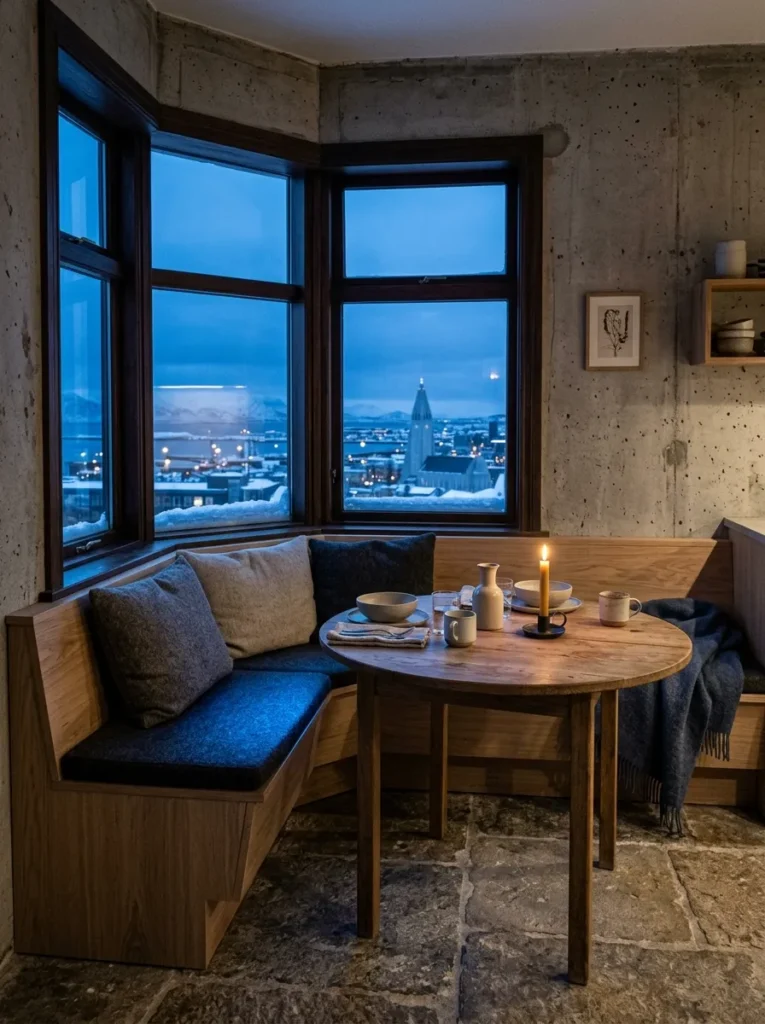
If your dining room has any window bay or recessed wall, a built-in bench seat with a freestanding table pulled up to it uses the architecture of the room instead of working against it. It also removes the need for chairs on at least one side, which is where the bench idea from earlier compounds with this one. A nook like this tends to feel more permanent and more considered than a table simply placed in the center of a room.
16. Use Glass or Lucite to Reduce the Table’s Visual Mass
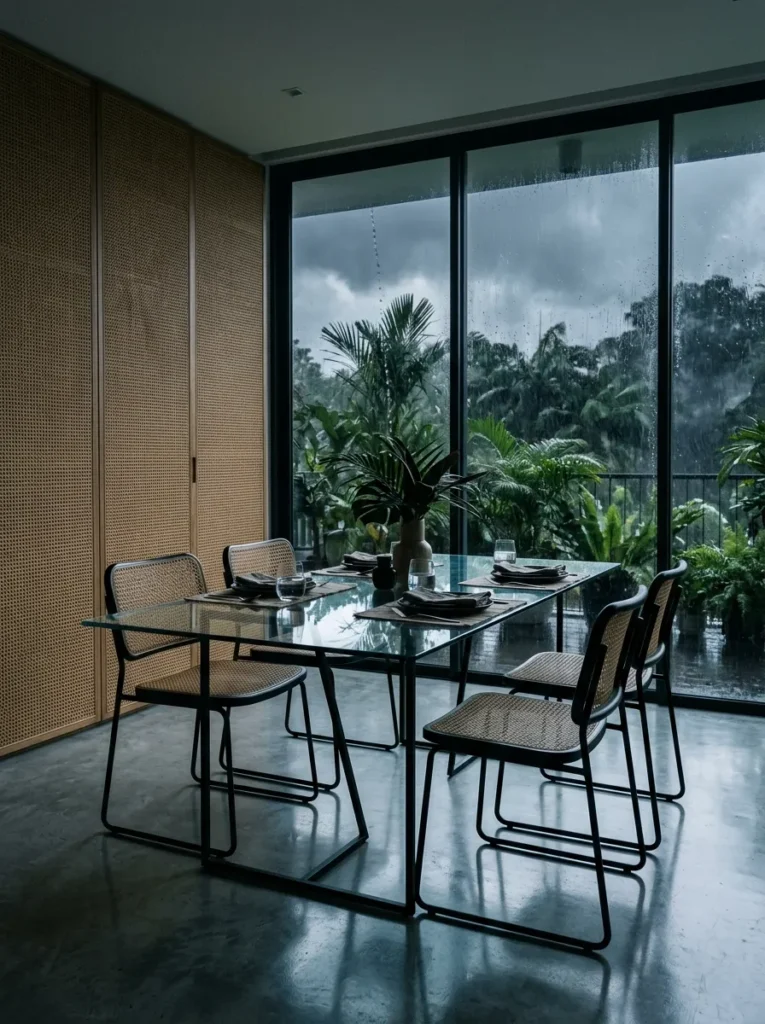
A solid wood or stone tabletop, however beautiful, occupies a large block of visual space in a small dining room. A glass or lucite top on a simple base lets the floor and the chairs read through it, which keeps the whole footprint feeling lighter even though the seating capacity hasn’t changed. This isn’t right for every household — it shows fingerprints, and not just from children — but in the right space it does something no opaque material can.
17. Repeat One Material From Table to Chairs
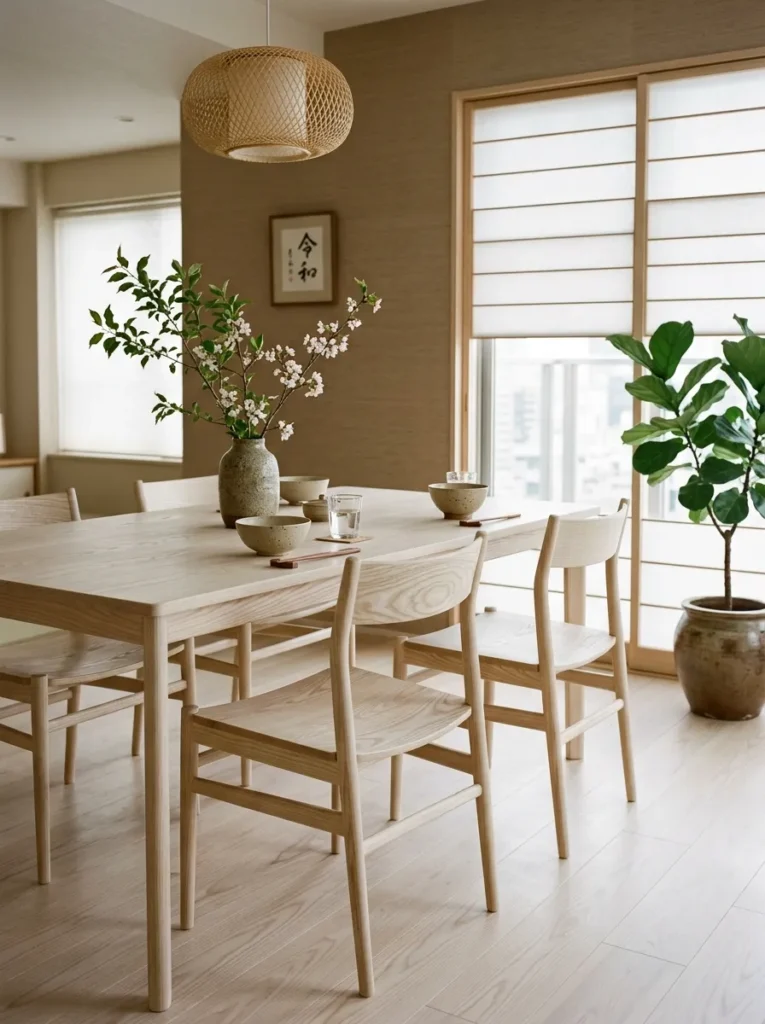
When the table and the chairs share a material — the same wood tone, the same metal finish on the legs — the eye reads the whole grouping as one considered piece rather than several separate purchases. This is a subtler version of the matching-chair-set idea, and it works even when the chair design itself is completely different from the table’s silhouette. Consistency in material does more work than consistency in shape.
18. Leave the Wall Behind the Table Completely Empty
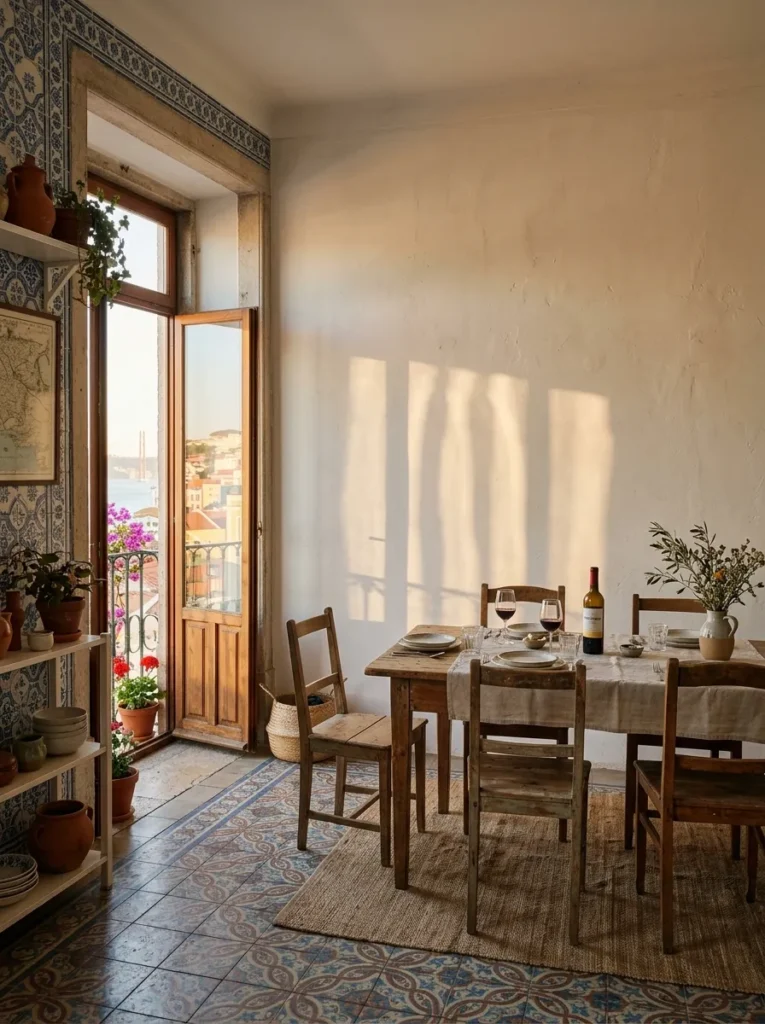
This is the inverse of the large-art-piece idea, and it belongs on this list precisely because it contradicts it — both are valid approaches depending on the room. A genuinely bare wall behind the table, painted in the same tone as the rest of the space, gives the table itself room to be the visual subject without anything pulling focus. Try this first if you’re not sure what art to hang. Sometimes the answer is nothing.
19. Put Every Dining Light Source on a Dimmer
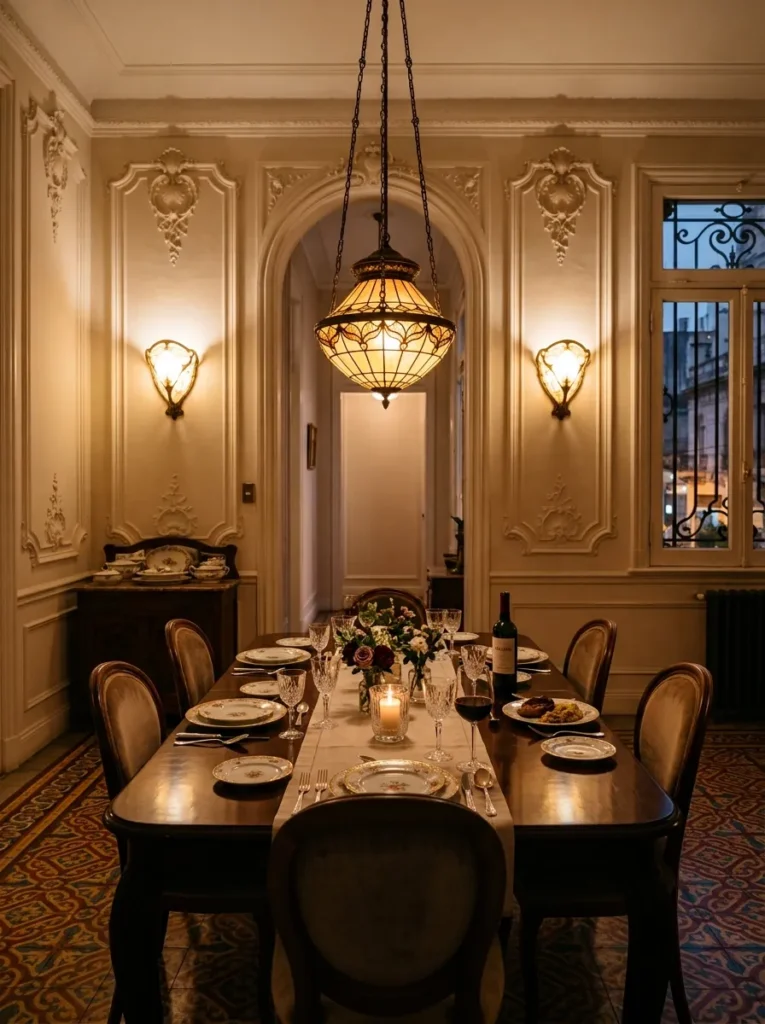
Full brightness is for cleaning up after dinner, not for eating it. A dimmer on the pendant, the sconces, or both lets the same fixtures serve two completely different functions depending on the hour, and it’s one of the cheapest upgrades on this entire list relative to the difference it makes. Most builder-grade dining rooms are wired without one. It’s worth the electrician visit.
20. Let Symmetry Organize the Room, Not Decoration
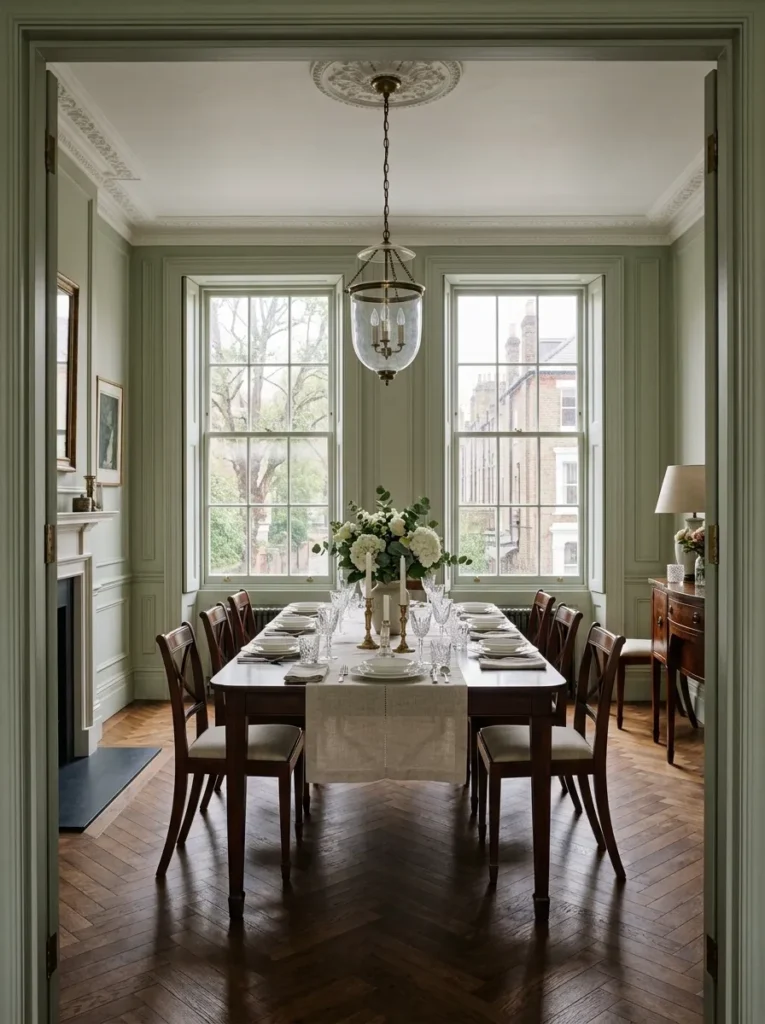
A centered table, evenly spaced chairs, a pendant hung dead-center, art aligned to the table’s midpoint — symmetry does the organizing work that ornament would otherwise have to do in a more decorated room. This is why minimal rooms can get away with so little decoration and still feel finished: the structure itself is doing the job. Get the symmetry right first. Everything else becomes easier to decide.
21. Choose a Low-Slung Fixture That’s Oversized but Spare
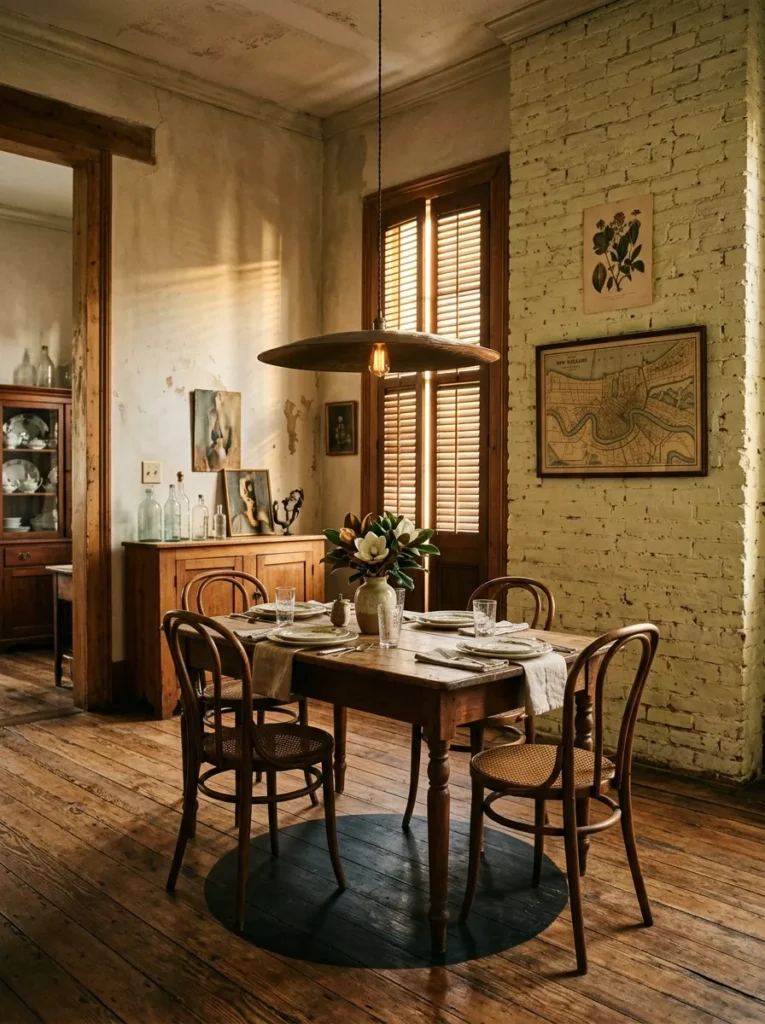
A single drum or disc pendant, wider than expected but minimal in form, reads as a deliberate statement rather than an oversight, even when it’s the only decorative object in the room. Scale, not detail, is doing the visual work here. Hang it low and let it be the one thing in the room that’s slightly bigger than strictly necessary.
22. Use a Plinth Base Instead of Table Legs
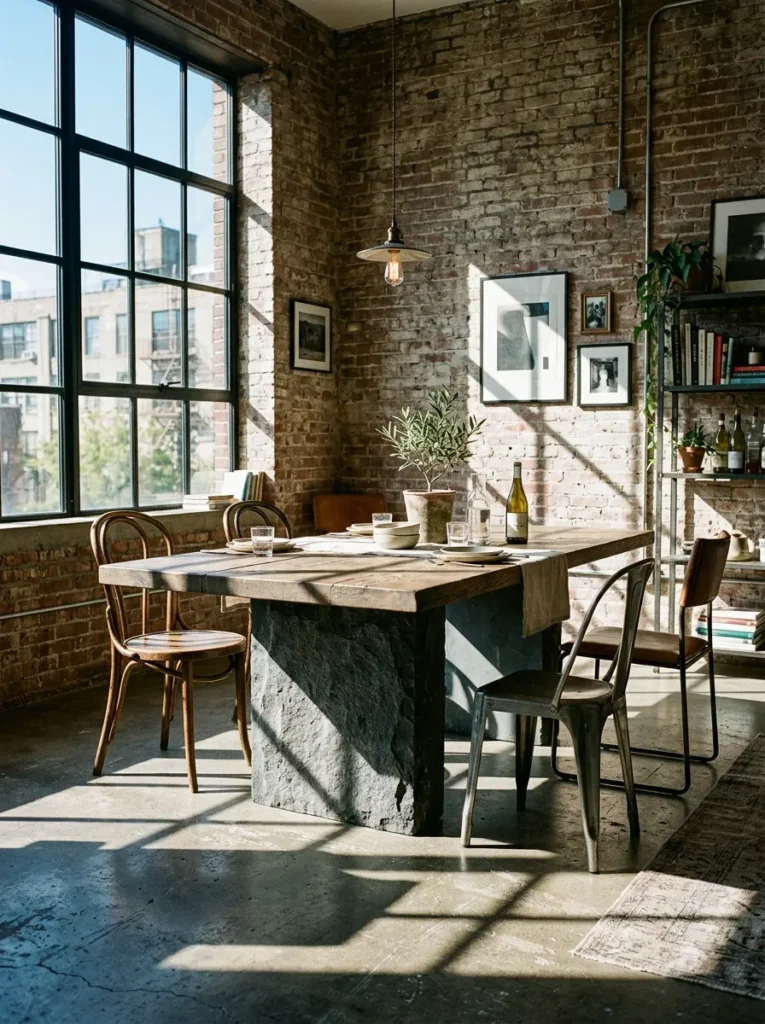
A solid plinth base — a single block rather than four legs — removes leg clutter entirely from underfoot, which matters more than people expect in a room where chairs get pushed in and out constantly. It also gives the table a sculptural quality that a leg-and-apron construction can’t match. This only works with a genuinely solid-feeling material; a plinth in a flimsy laminate looks like exactly what it is.
23. Leave One Wall in the Room Completely Bare, No Exceptions
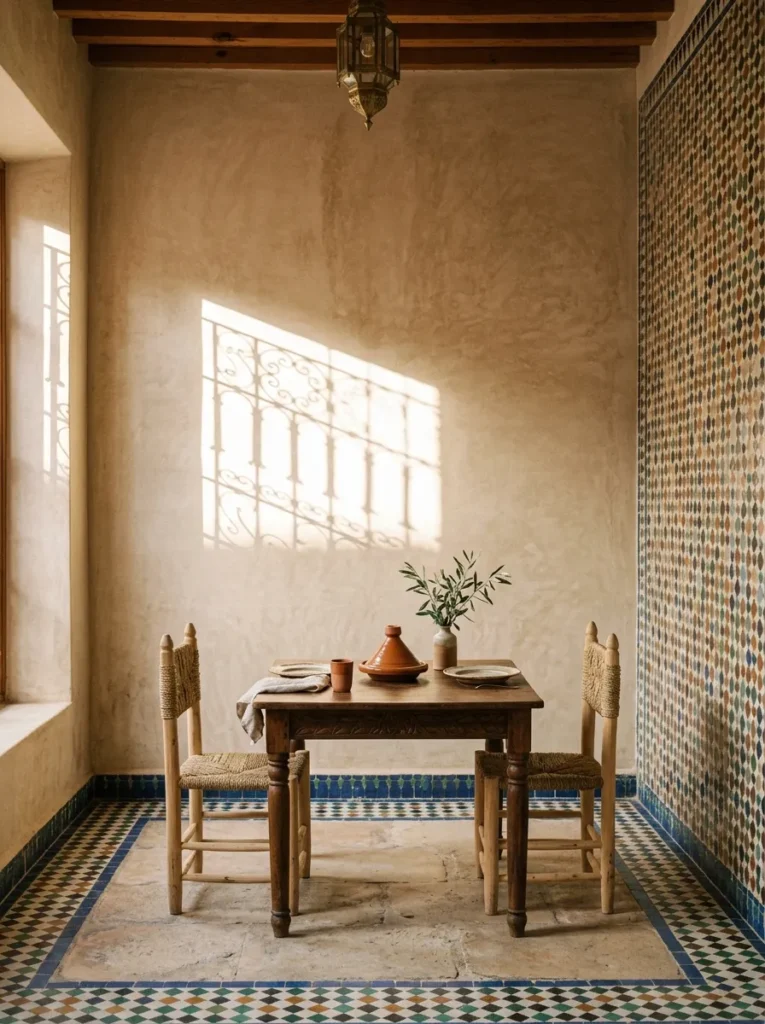
Every idea before this one has been about choosing what to keep. This one is about choosing what to permanently refuse. Pick a single wall in the dining room — not the one behind the table, a different one entirely — and leave it with nothing on it, ever, no matter how tempting a new print or shelf becomes. A room with one wall that’s allowed to simply be a wall reads as more confident than one where every surface has been assigned a job. It’s the hardest rule on this list to keep, and it’s the one that makes the whole room feel like it was designed rather than decorated.
Final Thoughts
If you take nothing else from this list, take the bare wall and the bare table — they cost nothing and they’re the two ideas most people skip because doing less feels like doing nothing. Start with whatever’s already half-true in your dining room: if you’ve already got good light, work on symmetry next; if your table’s already round, focus on the legs. Not every one of these minimal dining room ideas needs to apply at once, and trying to use all 23 in a single room will just produce a different kind of clutter. Pick the handful that match what your room is already trying to be, and let the rest go.
Save these minimal dining room ideas for your next dining space refresh.